Article Contents:
- Why round moulding can't be ordered as a single line item
- What minimum fields are needed in a line item
- Why substituting "the same diameter" is dangerous
- Why a long section is critical
- Example
- Why square meters are useless here
- Example of a furniture series
- Why different diameters are never combined in a single cutting plan
- Why different materials are also counted separately
- Example
- Color coding can be supplementary, but not primary
- What to do in case of a mismatch
- What to keep after the first purchase
- Why a photo does not identify the profile
- The specification version also matters
- Installation reserve
- Operational reserve
- Usable length matters more than the total amount
- Group A — handrail
- Group B — decorative vertical slats
- Group C — furniture parts
- What the final purchase list looks like
- Why a cheap meter can lead to an expensive order
- An item passport helps preserve identity between the estimate, warehouse, and installation
- During acceptance, diameter is best checked by measurement rather than visual comparison
- Phased delivery must preserve a single master specification
- The second batch is calculated based on the actual usable remainder, not by the formula “project minus purchased”
- Warehouse stock is best tracked by length ranges
- Different purposes of the same SKU can be combined commercially, but must not be lost in accounting
- When a replacement with another round profile can be considered
- Packaging of similar diameters must prevent mixing even before unloading
- Round rails and round handrails use the stock length differently
- The final commercial quote must be checked by pieces, not just by meters
- When it is still too early to release a round mouldings order
- The final quantity check must be done in three units at once
- 1. Ordering all round mouldings as a single line item
- 2. Not specifying the diameter
- 3. Not specifying the purpose
- 4. Treating the same diameter as a sign of interchangeability
- 5. Mixing up handrails and decorative rails
- 6. Mixing oak and beech
- 7. Mixing different finishes of the same profile
- 8. Counting only linear meters
- 9. Transferring the commercial length from one SKU to another
- 10. Cutting short parts first
- 11. Not building a cutting map
- 12. Not labeling the diameter on the bundle
- 13. Storing the reserve without identification
- 14. Reordering based on a photo
- 15. Replacing the product with another round profile on your own
- Decision tree: can two items be combined
- Wholesale order passport before payment
- How to check readiness of the second batch without recalculating from scratch
- What a new employee should be able to check without verbal explanations
- Final algorithm
- Can two round profiles of the same diameter be combined?
- Can PR-004 be considered a standard round blank of 50 mm?
- Why can't you simply divide meters by the commercial length?
- What matters more — meters or pieces?
- How to account for a decorative partition made of identical slats?
- Can leftover handrail be used in furniture?
- What should be done if many short offcuts remain after the first delivery?
- How to label similar diameters?
- How much reserve should be left?
- When is it too early to buy round moulding?

In a single project, round handrail, decorative vertical slats, cylindrical furniture parts, and short round elements are used at the same time. At an early stage, the estimate combines everything into one line: “round wooden moulding — 420 linear meters.”
For budgeting, this may be sufficient. For purchasing, it is not. A linear meter does not show diameter, SKU, material, commercial length, finish, purpose, or application area. Two visually similar round products can be physically different items and should not automatically replace each other.
Therefore, buying round moulding wholesale correctly means treating it not as an impersonal meterage but as a set of unambiguous product items.
Work sequence:
PURPOSE → SKU → DIAMETER → MATERIAL → FINISH → COMMERCIAL LENGTH → FINISHED PARTS → CUTTING MAP → QUANTITY OF WHOLE ITEMS → AREA → LABELING → RESERVE.
Main principle:
THE SAME ROUND SHAPE DOES NOT MAKE TWO ITEMS INTERCHANGEABLE.

Why round moulding cannot be ordered as a single line item
The line “round moulding — 420 m” hides too many different properties.
It may contain at the same time:
- handrails;
- decorative round slats;
- partition posts;
- cylindrical furniture components;
- short joinery parts;
- profiles of several diameters;
- beech and oak;
- different finish options.
If all of this is combined into a single sum, the warehouse does not understand which 100 meters belong to the staircase, which to the partition, and which to the furniture.
It is even more dangerous when two profiles look visually similar. For example, a diameter difference of a few millimeters may be almost unnoticeable in a bundle, but only become apparent when assembling adjacent elements.
Therefore, a linear meter is only a unit of length, but not the identity of the product.




Which fields are minimally required in a row
SKU / PURPOSE / DIAMETER / MATERIAL / COMMERCIAL LENGTH / FINISH / QUANTITY / ZONE.
only after that linear products wholesale becomes a manageable order rather than a total sum of meters.
Our factory also produces:

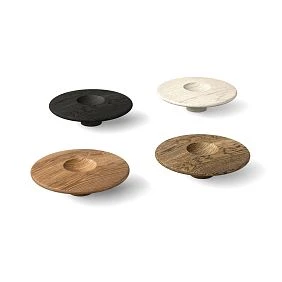
The appearance of a “just a round stick” is deceptive
Round products are similar in shape, but they can differ fundamentally.
| Parameter | Why it's important |
|---|---|
| Diameter | It affects the joint, visual scale, fastening, and purpose |
| Material | Determines the appearance, batch, and compatibility of the finish |
| commercial length | Determines the number of joints and the cutting layout |
| Article number | Identifies a specific product |
| Surface | Can be prepared for various types of further processing |
| Purpose | Does not allow one round product to be arbitrarily replaced with another |
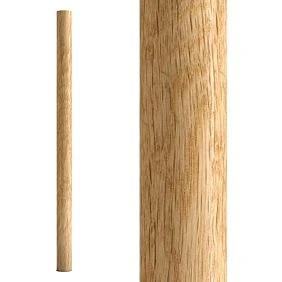
For example, PR‑004 from STAVROS is a specific round handrail 2400 mm long and 50 mm in diameter, made of beech or oak. It cannot automatically be considered a universal furniture post just because it is round.
For a general understanding of the group, the material is useful Round wooden balusters, but the wholesale specification must go down to the specific item.
Get Consultation
The classifier for round moulding should be built from purpose
The best first step is to divide all the round moulding in the project not by appearance, but by function.
For example:
| Code | Purpose | Diameter | Material | Article | Zone |
|---|---|---|---|---|---|
| KR-01 | Stair handrail | 50 мм | Oak | PR-004 | Stair A |
| KR-02 | Decorative vertical slat | ___ | Beech | ___ | Partition |
| KR-03 | Furniture part | ___ | Oak | ___ | Cabinets |
| KR-04 | Short carpentry element | ___ | Beech | ___ | Furniture series |
The internal code KR-01 is convenient for the project, but it does not replace the manufacturer's SKU. Both designations must exist in the order.
The purpose remains even after selecting the SKU. After a few months, the code PR-004 alone will not explain to a new assembler exactly where the batch belonged: to a staircase, furniture, or another area.
The diameter must be specified as a number, not with the words "thin" and "thick"
For a B2B order, the wording "medium round profile" or "thick round slat" is unacceptable.
The diameter affects:
- appearance;
- position in the design node;
- mounting;
- compatibility with adjacent parts;
- weight;
- amount of material;
- Purpose.
One project may have:
- diameter A — decorative slats;
- diameter B — furniture elements;
- diameter C — handrail.
Even if the visual difference is small, packaging units must be distinguished by labeling.
For a diameter of 50 mm, STAVROS has a separate material Round trim 50 mm. But the number 50 mm does not automatically mean the same product for all tasks.
The same diameter does not mean the same product
This is the central check of the entire specification.
Suppose the project has two round elements with a diameter of 50 mm:
- stair handrail;
- decorative vertical post.
A procurement mistake is to combine them into one line, “round profile 50 mm.”
The right question:
IS THIS THE SAME APPROVED SKU OR TWO DIFFERENT PRODUCTS?
If the SKUs are different, they remain different regardless of diameter.
If the SKU is the same and the project allows use in two zones, the quantity can be summed for procurement, but the internal distribution by zone is still preserved.
Why replacing with “the same diameter” is dangerous
If one item is missing, you cannot automatically substitute another 50 mm round profile. First, check:
- article number;
- the material;
- surface;
- product length;
- design feasibility of the substitution;
- Purpose.
The handrail is calculated based on the actual stair sections, not the total length of the route
If a round profile is used as a handrail, it must be calculated as a separate group. The total length of the staircase does not automatically equal the handrail requirement.
The working scheme includes:
- straight sections;
- inclined flights;
- horizontal landings;
- endings;
- joints;
- turns;
- sections where the handrail is absent;
- transition zones to another structure.
For each straight or inclined segment, the finished length is required. Only after that is it checked how many product units are needed.
Current product card round wooden handrail 50 mm PR‑004 specifies a configuration of 2400 × 50 mm in beech or oak. This means: for PR‑004, the product length of 2400 mm is confirmed. For another item code, it must be checked separately.
Why a long section is critical
If a stair segment has a finished length of 3000 mm, a single PR‑004 plank of 2400 mm does not cover it. This raises the question of a joint, another solution, or a different product. You cannot simply write “3 meters needed” and consider the task complete.
Example
The stair assembly contains:
- flight 2350 mm;
- landing 1100 mm;
- second flight 2280 mm.
The net total is 5730 mm.
Simple division:
5730 / 2400 ≈ 2,39.
The math suggests 3 product units. But three planks give 7200 mm and still do not guarantee a convenient cut for all three segments.
If you get 2350 mm from the first strip, about 50 mm will remain before accounting for the cut. From the second — 2280 mm, with about 120 mm remaining. A 1100 mm section requires a third full strip. In total, that is indeed three pieces.
But if the lengths were 1800 + 1100 + 1800 mm, two 2400 mm strips also do not provide an obvious solution: 1800 + 1100 = 2900 mm. As a result, three pieces may be required even though the net linear meterage is only 4700 mm.
This is exactly why sections should be converted into cutting layouts rather than dividing the total sum by the commercial length.
Decorative round rods are calculated by a typical section
For a vertical decorative composition, the logic is different. Here, the number of identical elements and the repeatability of sections matter more.
For example, one partition contains:
- 18 round rods;
- the finished length of each is 2400 mm;
- 12 identical sections.
Then the overall list of parts is:
18 × 12 = 216 identical slats of 2400 mm each.
This is far more useful than the line “518.4 linear meters.”
Bill of materials:
| Section | Elements per section | Finished length | Number of sections | Total parts |
|---|---|---|---|---|
| R-1 | 18 | 2400 мм | 12 | 216 |
If the commercial length matches the finished length, cutting is straightforward. If the original item is longer, the remainder can be allocated to another permissible part of the same SKU, material, and finish.
Why square meters are useless here
The partition area does not show the number of slats. You need:
- section width;
- spacing;
- number of elements;
- length of each;
- number of repetitions.
Serial production is advantageous because after calculating one section, the order scales without repeated manual arithmetic.
Round furniture parts need to be separated from long architectural elements
In furniture, a round profile often turns into many short repeating parts.
This could be:
- post of a small cabinet;
- short decorative insert;
- furniture frame element;
- small cylindrical module;
- repeating part of serial furniture.
In procurement, such a group differs from a handrail.
For a handrail, the main problem is long solid sections and joints. In furniture, it is the use of short parts and rational cutting of the entire series.
Example furniture series
The project requires:
- 200 parts of 420 mm;
- 120 parts of 650 mm;
- 40 parts of 900 mm.
These items can be combined into a single cutting plan only if the following match:
- article number;
- diameter;
- the material;
- finishing;
- the project-approved purpose.
If the leftover from a handrail matches only in diameter but belongs to a different product, it cannot be used in furniture without separate approval.
Oak and beech are always listed as separate items
Even with the same diameter and the same article number, different materials are not combined into a single purchasing line.
For PR-004, for example, beech and oak are available. These are two configurations of the same product.
Correct:
PR-004 / 50 mm / BEECH / 2400 mm / quantity.
PR-004 / 50 mm / OAK / 2400 mm / quantity.
Incorrect:
PR-004 / 50 mm / 120 m.
If the project uses a clear finish, the wood species is especially important visually: the texture and overall tone are visible in the finished interior.
For a general understanding of wood species, this material is useful: Oak Molding and beech. But in purchasing, the material must always be specified in each line.
Finish is a separate level of product identity
The same SKU made from one material can be used in several finish options.
For example:
- natural;
- tinted;
- for opaque painting;
- with another agreed finish.
Even if the geometry is completely identical, these are different purchasing and warehouse items.
Minimum labeling:
SKU + DIAMETER + MATERIAL + FINISH + ZONE.
If a project has two round oak profiles with a diameter of 50 mm, but one is natural and the second is dark, the label "PR-004 / 50 mm / oak" is no longer sufficient.
Linear meter and piece must exist simultaneously
A project usually thinks in meters: this is convenient for the budget and overall requirement.
The supplier and warehouse work with whole products of a specific length.
Therefore, both values are needed in the specification.
| Article | Diameter | Material | Net area | Product length | To order, pcs. |
|---|---|---|---|---|---|
| PR-004 | 50 мм | Oak | ___ | 2400 мм | By cutting |
| KR-02 | ___ | Beech | ___ | By card | By cutting |
Algorithm:
FINISHED PARTS → COMMERCIAL LENGTH → CUTTING → NUMBER OF WHOLE PRODUCTS → RESERVE.
This is exactly how wholesale purchase of building materials for any linear product.
The cutting map must exist before payment for the wholesale batch
After the SKUs and materials are determined, all finished parts are compiled into a cutting map.
Minimum fields:
| Part code | Article | Diameter | Material | Finished length | Quantity | Purpose |
|---|---|---|---|---|---|---|
| PR-01 | PR-004 | 50 мм | Oak | 2350 мм | 12 | Handrail, flight |
| P-01 | ___ | ___ | Beech | 2400 мм | 216 | Decorative partition |
| M-01 | ___ | ___ | Oak | 650 мм | 120 | Furniture |
This table is not needed for documentation. It allows you to:
- distribute long parts first;
- see repeating sizes;
- understand which leftovers are actually useful;
- separate SKUs and materials;
- get the purchase quantity in pieces.
Why different diameters are never combined in a single cutting plan
Physically, this is obvious. But in a combined line like “round linear stock — 420 m,” the error is easily hidden.
A 40 mm diameter does not cover a 50 mm requirement, even if the material and length match.
Why different materials are also counted separately
A leftover oak profile does not cover a beech item. Therefore, the total linear meters for the project can be summed only for the budget, but not for production cutting.
Long critical parts are distributed before short ones
A critical part is not necessarily "longer than two meters". A part is critical when, given the actual product length of the selected SKU, there are few cutting options for it.
For example, for PR‑004 with a length of 2400 mm:
- 2350 mm — a very critical part;
- 1800 mm — less critical;
- 700 mm — flexible;
- 320 mm — very flexible.
A 2350 mm part essentially takes up an entire plank. A 700 mm part can be obtained from many remnants.
Therefore, the map is built from top to bottom:
- the longest ones;
- long;
- medium;
- short;
- very short repeating elements.
This way, short parts help use up leftovers rather than destroying material that will later be needed for long ones.
Example
The original length is 2400 mm.
The project requires:
- 20 parts of 2050 mm;
- 40 parts of 700 mm;
- 60 parts of 300 mm.
After 2050 mm, about 350 mm remains before accounting for the cut. This is an almost ideal candidate for 300 mm parts.
If all 300-millimeter elements are cut from whole strips in advance, this opportunity is lost.
A short leftover is not waste if it matches another part
In production accounting, it is useful to divide leftovers into groups.
| Leftover type | What to do with it |
|---|---|
| Matches a known part | Reserve in the cutting map |
| Matches a range of short parts | Store separately by SKU and length |
| Too short for the specification | Technological waste |
| Damaged | Do not consider useful without re-evaluation |
The phrase "18 m of round moulding remains in stock" says nothing about its usefulness.
18 m may consist of:
- 7 whole products;
- 30 offcuts of 600 mm;
- 60 offcuts of 300 mm.
These are three completely different types of reserve.
Different diameters on the same site require strict labeling
Do not expect the warehouse to distinguish between two similar diameters "by eye".
It is useful to indicate on each packaging unit:
- project;
- article number;
- diameter as a number;
- the material;
- finish;
- purpose;
- zone;
- quantity.
For example:
HOTEL-A / PR-004 / Ø50 / OAK / STAIR A / 24 PCS.
Or:
HOTEL-A / KR-02 / Ø___ / BEECH / LOBBY PARTITION / 72 PCS.
The label "round moulding" on all bundles is useless. It repeats the category name but does not identify the product.
Color coding can be supplementary, but not primary
A colored sticker helps to quickly distinguish zones, but textual data must always remain. If the sticker is lost or the color is perceived differently, the article number and diameter must remain readable.
The application zone must be preserved even for combined purchasing
If the same article number, material, diameter, and finish are used in several places, the total volume can be summed up for ordering.
For example:
- Building A — 80 planks;
- Building B — 60;
- restaurant — 20.
Total order — 160 planks.
But in the internal statement, the origin of the quantity is preserved:
| Article | Zone | Quantity |
|---|---|---|
| KR-02 | Building A | 80 |
| KR-02 | Building B | 60 |
| KR-02 | Restaurant | 20 |
| KR-02 | TOTAL TO PURCHASE | 160 |
This way you can optimize the overall batch and at the same time not lose the distribution by site.
For organizing a large delivery, the material is useful delivery of finishing materials: a single master specification and clear distribution reduce the risk of mis-sorting.
It is better to calculate the wholesale requirement for a single SKU in full
If the same round profile is used in multiple zones and queues, a combined calculation helps:
- optimize cutting;
- see the real large-scale requirement;
- distribute whole items;
- understand the reserve;
- reduce the risk of over-ordering.
However, combining is only allowed when the product identity matches completely:
SKU + DIAMETER + MATERIAL + FINISH + COMMERCIAL LENGTH.
If even one parameter differs, it is a separate item.
When purchasing directly, it is useful to use logic building materials wholesale from the manufacturer: the manufacturer is sent the exact configuration, not the category "round profile".
Acceptance of round moulding should verify identity before cutting
Upon receipt, they check not only the number of packs.
Minimum check:
- article number;
- diameter;
- commercial length;
- the material;
- finish;
- quantity;
- zone marking;
- visible damage.
Mixed sorting of round products can be tricky. In a package, two close diameters may look identical, especially if the packs are still closed.
Therefore, several control diameter measurements in each suspiciously similar group are more useful than visual assessment.
What to do in case of non-conformity
Do not let a disputed pack go to cutting. After cutting, it is significantly harder to prove mixed sorting and restore the original quantity.
Recorded:
- marking;
- actual size;
- quantity;
- packaging condition;
- photograph if necessary.
For a completed order, a structure based on material is useful wholesale purchases of building materials: item code, material, length, and quantity must be recoverable from documents without guesswork.
A repeat order must reproduce the exact configuration, not “the same round trim”
A few months later, the project may require an additional batch: a new cabinet has appeared, the volume of furniture has changed, a handrail is damaged, a decorative partition section has been added. The weakest wording for a reorder:
“We need the same round trim as before.”
The correct wording restores product identity:
ITEM CODE / DIAMETER / MATERIAL / COMMERCIAL LENGTH / FINISH / PREVIOUS BATCH / PURPOSE.
For example:
PR-004 / Ø50 / OAK / 2400 mm / approved finish / order no.___ / staircase A.
If even one parameter is unknown, the new order cannot be considered a guaranteed repeat of the old one.
What to keep after the first purchase
- the final specification;
- article number;
- the material;
- diameter;
- commercial length;
- finish code;
- a photo or sample if necessary;
- batch data;
- application areas;
- actual remaining stock.
This way, a repeat order six months later doesn't start with a new search for a "similar round slat".
Why a photo doesn't identify the profile
From a photo, it's difficult to accurately determine the diameter, material, surface quality, and commercial length. Two products can be almost visually indistinguishable and still have different specifications.
A photo is useful as a supplement, but not as a replacement for the SKU and size.
The specification version also matters
If the first phase used KR-02 of diameter A, and in the second phase the architects replaced it with diameter B, the old order is not copied. The new version must clearly show the date of the change and the zones where it applies.
This is especially important with multiple buildings: the same internal code cannot be used for two different diameters without changing the version or the designation.
Reserve must be calculated separately for each product item
The phrase "let's keep 20 meters of round trim in reserve" is almost meaningless.
Need to know:
- which SKU;
- which diameter;
- which material;
- which finish;
- which lengths.
A round handrail reserve cannot be replaced with an offcut of furniture batten. An oak reserve cannot be substituted with beech. A 50 mm diameter is not replaced by a 45 mm diameter just because both fall into the same category.
Installation reserve
Needed before installation is complete:
- for cutting error;
- end damage;
- change in the actual section length;
- replacement of a damaged element;
- an unforeseen short piece.
Operational reserve
It remains after the project is handed over and should help with future repairs.
For a long handrail, it is wiser to keep one or two whole usable lengths than many short offcuts with the same total meterage.
Usable length matters more than the total sum
Let's imagine there are 12 meters of PR-004 in reserve in the warehouse.
Option A:
- 5 whole planks of 2400 mm each.
Option B:
- 20 segments of approximately 600 mm each.
The total length is the same — 12 m. But only Option A is suitable for replacing a 2200 mm handrail.
Therefore, the reserve is stored as:
SKU + QUANTITY OF WHOLE ITEMS + USABLE REMAINDERS BY LENGTH.
If we are talking about natural wood with a visible finish, it is better to tie the reserve to the original batch, because future material may differ visually in tone and texture.
For shade control, the principles from the article are useful materials in bulk.
Practical example: three groups of round profile on one project
Let's consider a hypothetical hotel and restaurant project.
Group A — handrail
PR-004 in oak is used, 2400 × 50 mm.
You need to:
- 24 sections of 2300 mm;
- 12 sections of 1100 mm;
- 8 sections of 700 mm.
Net length:
24 × 2.3 + 12 × 1.1 + 8 × 0.7 = 55.2 + 13.2 + 5.6 = 74 m.
But purchasing is not equal to 74 / 2.4 ≈ 30.84, that is, 31 planks.
First, we distribute the long parts:
- 24 parts of 2300 mm almost completely occupy 24 planks;
- for 12 parts of 1100 mm, two can be obtained from one plank: 1100 + 1100 = 2200 mm, so 6 planks are needed;
- for eight parts of 700 mm, theoretically three can be obtained: 700 × 3 = 2100 mm, so 3 planks are required.
Total simplified:
24 + 6 + 3 = 33 slats.
Purchase length:
33 × 2.4 = 79.2 m.
The difference between the net 74 and purchased 79.2 m is 5.2 m for a separate reserve and precise allowance accounting.
Group B — decorative vertical slats
Different SKU, different diameter, beech.
One section:
- 16 elements of 2500 mm.
10 sections:
160 parts of 2500 mm.
If the trade length of a specific SKU is less than 2500 mm, the item cannot be automatically ordered at all under the current geometry without revising the assembly or selecting another confirmed configuration.
That is, a clean 400 m does not yet mean that the required product is suitable.
Group B — furniture parts
The third SKU, oak, smaller diameter.
You need to:
- 100 parts of 600 mm;
- 80 parts of 450 mm;
- 120 parts of 300 mm.
This group has a completely different cutting economy. Short elements combine well within the original strips.
It makes no sense to count them together with the handrail, even if both products are round.
What the final procurement statement looks like
| Group | Purpose | Article | Diameter | Material | Net area | To order |
|---|---|---|---|---|---|---|
| А | Handrail | PR-004 | 50 мм | Oak | 74 м | 33 pcs. + reserve |
| Б | Decorative batten | ___ | ___ | Beech | 400 м | After checking the commercial length |
| В | Furniture part | ___ | ___ | Oak | ___ | According to the cutting map |
The overall figure of "about 500 m of round linear stock" tells the supplier nothing useful here.
Such an order should be placed according to the principles Wholesale building material suppliers: each line must uniquely identify the product.
The price of round linear stock is compared only after aligning specifications
Two offers cannot be compared by the price per linear meter alone if they differ in:
- diameter;
- the material;
- product length;
- surface preparation;
- finishing;
- number of whole products;
- packaging;
- delivery.
For example, offer A is 8% cheaper per meter, but has a commercial length that is less convenient for the project and requires more whole units. Then the final cost of the project may be higher.
You need to compare:
SPECIFIC LINE ITEM + REQUIRED NUMBER OF WHOLE UNITS + USEFUL REMAINDER + RESERVE + LOGISTICS.
For such a check, the following material is useful building materials at wholesale prices.
Why a cheap meter can lead to an expensive order
Option A:
- lower price;
- product length combines poorly with long parts;
- a lot of unusable waste appears.
Option B:
- the meter is slightly more expensive;
- cutting is significantly more efficient;
- fewer source items;
- fewer packaging units.
You should choose based on the total cost of the agreed requirement, not a pretty discount.
If the product is purchased through wholesale sale of construction materials, the approved line-by-line specification is what gets included in the package, not the total cost of the category.
An item passport helps maintain identity between the estimate, the warehouse, and installation
For each product group, it is useful to create a short passport. This is not a separate complex document, but a single card referenced by procurement, the warehouse, and installation.
| Field | Example content |
|---|---|
| Internal code | KR-01 |
| Article number | PR-004 |
| Purpose | Stair handrail |
| Diameter | 50 мм |
| Material | Oak |
| commercial length | 2400 мм |
| Finishing | approved option |
| Zone | Stair A |
| Quantity | Based on the final cutting map |
| Reserve | Separately |
A passport is needed because the same item passes through several documents. In the estimate it may be called a "round handrail," in the working drawing — KR-01, in the commercial proposal — PR-004, and in the warehouse — "oak 50 mm." Without a single card, these designations easily diverge.
If the supplier offers a replacement, the new product is compared specifically against the passport: not only the diameter, but also the article number, material, length, purpose, and finish.
When working through wholesale building material suppliers, this format is especially convenient: the commercial proposal can be checked line by line without retelling the entire project.
During acceptance, the diameter is best checked by measurement, not by visual comparison
If similar diameters are used simultaneously on a project, the eye is not always reliable. This is especially true for long, identically sanded parts in a bundle.
For a control check, you can use a suitable measuring tool and compare the actual diameter against the approved product item.
The procedure is simple:
- first read the marking on the pack;
- verify the article number and the declared diameter;
- select several control items;
- measure the diameter in an accessible area;
- compare with the document;
- if there is a discrepancy, isolate the pack until clarification.
The article does not assign a universal tolerance for diameter: it depends on the specific item, technology, and manufacturer's documentation. The task of acceptance is not to invent your own standard, but to verify compliance with the agreed position.
This is an important distinction. If the project ordered 50 mm, the warehouse should not decide that 48 or 52 mm is "almost the same" without confirmation.
Phased delivery must maintain a single master specification
On a large project, round moulding may not be needed all at once. Handrails are needed at one stage, decorative partitions later, furniture even later.
It is more correct to have a single master specification:
| Position | Total requirement | Batch 1 | Batch 2 | Batch 3 | Remainder |
|---|---|---|---|---|---|
| KR-01 | 33 pcs. + reserve | 18 | 15 | Reserve | ___ |
| KR-02 | 160 pcs. | 0 | 80 | 80 | ___ |
| KR-03 | By cutting | 0 | 0 | Entire series | ___ |
Each delivery reduces the overall balance. There is no need to create a separate specification for "batch 2" that ignores the first one.
This makes it possible to quickly see how much of the product has already been paid for, how much has actually been received, what remains intact, and what is still required.
In phased work, the delivery of finishing materials should be tied to the overall requirement rather than existing as separate, unrelated orders.
The second batch is calculated based on the actual usable remainder, not by the formula "project minus purchased"
Suppose the master specification requires 100 KR-02 strips. The first batch is 60.
After installation:
- 48 strips are fully used up;
- 6 remain intact;
- the remnants of another 6 strips yield 18 short parts that are suitable for the future area.
The simple formula 100 − 60 = 40 assumes an additional order of 40 strips. But six whole ones are already in stock, and the short leftovers partially cover future demand.
Correct order:
REMAINING FINISHED PARTS → MINUS WHOLE USABLE ITEMS → MINUS PARTS COVERED BY USEFUL LEFTOVERS → NEW CUTTING PLAN → ADDITIONAL ORDER.
The effect is especially noticeable in the furniture group with short parts. For handrails, the usefulness of a short leftover is usually lower.
It is useful to keep stock leftovers by length ranges
If you only store “KR-03 — 42 m”, it is impossible to understand what can actually be made from those 42 m.
More practical:
| Position | Length range | Quantity | Possible application |
|---|---|---|---|
| KR-03 | 2000 mm and more | ___ | Long furniture parts |
| KR-03 | 800–1999 mm | ___ | medium parts |
| KR-03 | 300–799 mm | ___ | Short repeating elements |
| KR-03 | less than 300 mm | ___ | Only if suitable parts are available |
The ranges in this example are conditional and should correspond to the actual project specification. The point is to store remnants in a form suitable for re-cutting.
Different purposes of the same SKU can be combined commercially, but not lost in accounting
Suppose the same approved item KR-05 is used:
- in a decorative partition — 120 pcs.;
- in a furniture series — 40 pcs.;
- in another cabinet — 60 pcs.
If the SKU, material, diameter, finish, and length fully match, 220 units can be ordered from the supplier as a single line item.
But internally, it is better to keep three requirements.
Why:
- you can see the consumption of each zone;
- the overspending of one does not silently "eat up" the other;
- it is easier to ship by cases;
- it is clear who owns the reserve.
Consolidating procurement should not turn into depersonalizing the project.
When replacing with another round profile can be considered
Replacement is permissible only after technical and architectural review.
First, the following are compared:
- purpose;
- diameter;
- the material;
- product length;
- appearance;
- mounting method;
- junctions;
- finishing;
- suitability for the specific assembly.
If the original item is a handrail and the alternative is a decorative strip of the same diameter, matching dimensions do not give the right to consider them equivalent.
If two products are in fact the same item under different commercial listings, this must be confirmed by the manufacturer's primary source, not assumed.
When purchasing building materials through wholesale procurement, the alternative item must be listed as a separate line until it is approved.
Packaging of similar diameters must prevent mixing even before unloading
Round profiles of different diameters sometimes look almost identical, especially if they are made from the same wood species and have the same finish. Therefore, packaging should be designed not only to protect the surface, but also for identification.
For each packaging unit, it is useful to keep:
- one SKU;
- one diameter;
- one material;
- one finish;
- a clear zone or purpose.
If elements from different zones are physically packed into one bundle, this is permissible only if the product item matches completely. For example, identical KR-02 for body A and body B can be transported together, but the document must make it clear how much relates to each
Round rail and round handrail use the product length differently
Even with the same diameter, the cutting economics can be opposite.
For the handrail:
- long solid segments are important;
- offcuts often have limited value;
- the number of joints affects the design node.
For a short decorative or furniture strip:
- one source plank can yield several parts;
- short offcuts can be very useful;
- batch production greatly improves cutting.
Therefore, a general reserve coefficient for "all round linear stock" is meaningless. The handrail and the furniture series should receive different maps and reserves.
The final commercial proposal must be checked by pieces, not only by meters
Suppose the commercial proposal contains:
PR-004 oak — 79.2 linear m.
With a commercial length of 2400 mm, this corresponds to 33 whole pieces.
On the invoice, it is better to also see the quantity:
PR-004 / oak / 2400 × 50 mm / 33 pcs. / 79.2 linear m.
This way, during acceptance, there is no need to divide the meters back by the length and guess how many planks should have arrived.
For another item with a different commercial length, the same total number of meters may mean a different number of units.
When comparing offers, it is useful to reduce building materials at wholesale prices to a single form: product + configuration + number of pieces + total linear meters + price.
When it is still too early to release an order for round moulding
A wholesale batch is not ready for payment if at least one significant item is unknown:
- purpose;
- article number;
- diameter;
- the material;
- product length;
- number of finished parts;
- finishing;
- application area.
Particularly dangerous are the wordings:
- “diameter to be confirmed on site”;
- “material oak/beech”;
- “standard length”;
- “round profile similar to”;
- “about 100 meters”.
Each of them means that the product identity is not yet finalized.
Paying for such a line transfers the uncertainty from the project table into the actual material. After delivery, correcting it is more expensive.
The final quantity verification must be performed in three units simultaneously
Before payment, it is useful to cross-check the same requirement in three representations at once: finished parts, whole product units, and linear meters. Each answers its own question.
- Parts show whether the project can be physically assembled.
- Units show how many whole products need to be ordered and received.
- Linear meters show the material and financial balance.
For example, KR-01 may require 44 finished sections, 33 whole PR-004 units, and 79.2 purchased linear meters. If the quotation states 79.2 m but 32 units, one of the figures conflicts with the other and requires verification before payment.
Such a triple check is especially useful for long parts, where the total meterage looks sufficient but the number of whole lengths is not enough.
Before placing the order, it is useful to separately assign a responsible person who will verify this relationship. In the logic of wholesale purchase of building materials technical confirmation of the item must precede commercial payment.
If the purchase is handled by an external building materials supplier, they are given an already finalized table, not a request to independently determine which diameter or material was meant.
After payment, the same triple is used at receiving: the warehouse sees how many strips should arrive, what total linear meterage they form, and which parts should be produced from them. This way the document remains the link between the project, purchasing, and installation.
15 typical mistakes when ordering round moulding wholesale
1. Ordering all round moulding as a single line item
Why it happens: the estimate already contains the total number of meters. Consequence: diameters, materials, and purposes are mixed in one line. How to prevent it: split the requirement at least by SKU, diameter, material, and function.
2. Not specifying the diameter
Reason: on the drawing, the profile is labeled only as “round strip.” Consequence: the supplier or warehouse cannot unambiguously identify the item. Prevention: always record the diameter as a number in millimeters.
3. Not specifying the purpose
Reason: after choosing the SKU, it seems that this is enough. Consequence: when distributing across the site, it is unclear where the batch belongs and whether substitution is acceptable. Prevention: keep the “purpose / zone” field even after purchase.
4. Treating the same diameter as a sign of interchangeability
Reason: the round shape and size match visually. Consequence: a handrail is replaced with a decorative or furniture item without project verification. Prevention: verify the SKU, material, and purpose, not just the diameter.
5. Mixing up a handrail and a decorative strip
Cause: both products are cylindrical. Consequence: one group is accidentally consumed for the other, after which a reorder appears. Prevention: separate codes and labeling.
6. Mixing up oak and beech
Cause: the shape and diameter are identical. Consequence: the specification, finish, and visual unity are disrupted. Prevention: material is a mandatory field for every line.
7. Mixing up different finishes of the same profile
Cause: the item code and size match. Consequence: the wrong color or finish goes into installation. Prevention: item code + material + finish + zone.
8. Counting only linear meters
Cause: meters are convenient for estimates. Consequence: a mathematically sufficient volume does not yield the required part lengths. Prevention: convert the requirement into whole salable products through cutting.
9. Carrying over the salable length from one item code to another
Cause: 2400 mm was used in the previous order. Consequence: the calculation of the new profile is based on a nonexistent configuration. Prevention: always take the length from the current card of the specific product and material.
10. Cutting short parts first
Cause: short elements are easier to put into work. Consequence: whole long strips get split up, and then there is not enough material for critical sections. Prevention: distribute long parts first.
11. Not building a cutting map
Cause: the total footage is already known. Consequence: it is impossible to understand the usefulness of leftovers and the actual quantity of source items. Prevention: a list of finished lengths and quantities for each position.
12. Not labeling the diameter on the bundle
Cause: they hope to distinguish profiles visually. Consequence: close diameters are discovered only after installation. Prevention: the Ø figure in the labeling of the packaging unit.
13. Storing the reserve without identification
Cause: the warehouse records only the total footage. Consequence: the reserve exists “on paper” but is not suitable for the required position. Prevention: reserve by SKU, diameters, materials, and lengths.
14. Placing a repeat order from a photo
Cause: the data from the old order is lost. Consequence: a similar but different product arrives. Prevention: keep the purchase passport and SKU.
15. Independently replace the product with another round profile
Cause: the required SKU is out of stock, and a similar diameter is available nearby. Consequence: the purchaser changes the design decision without verification. Prevention: replace only after confirming suitability for the specific function.
For systematic work with the assortment, it is useful to use finishing material suppliers, which are capable of working from an unambiguous specification, and not just offering a “similar round profile.”
If we are talking specifically about serial purchasing, construction materials wholesale should be considered as a set of specific product lines by zones and purpose.
Checklist and final algorithm before ordering
Before paying for a wholesale batch, the following fields must be completed for each round profile.
| Check | Status |
|---|---|
| Product purpose is defined | ___ |
| Exact SKU is specified | ___ |
| Diameter is specified as a number | ___ |
| Material confirmed | ___ |
| Finish confirmed | ___ |
| Product length verified for the specific configuration | ___ |
| List of finished parts compiled | ___ |
| Number of parts calculated | ___ |
| Long critical parts highlighted | ___ |
| Cutting map built | ___ |
| Number of whole products determined | ___ |
| Application zones preserved | ___ |
| Marking approved | ___ |
| Installation allowance calculated separately | ___ |
| Operational allowance calculated separately | ___ |
| Data for reorder saved | ___ |
Decision tree: can two items be merged?
Do the item codes match?
No → the items are different.
Yes → check the material.
Does the material match?
No → the items are different.
Yes → check the diameter.
Does the diameter match?
No → the items are different.
Yes → check the finish and commercial length.
Do the finish and length match?
No → the purchasing items are maintained separately.
Yes → check whether the project allows combined use and whether the product has the same purpose.
Purpose differs, but is the item completely the same?
The total volume can be summed for procurement, but the internal distribution by zones remains.
The item only looks similar, but the SKU is different?
Do not combine without project approval.
Wholesale order passport before payment
Before payment, it is useful to compile the final passport of the entire batch in one table. It is needed not by the supplier as additional bureaucracy, but by the project team itself: it can be used to check that not a single round position has remained depersonalized.
| Code | Article | Purpose | Ø | Material | Length | Pieces | Zone | Reserve |
|---|---|---|---|---|---|---|---|---|
| KR-01 | PR-004 | Handrail | 50 | Oak | 2400 | 33 | Stair A | ___ |
| KR-02 | ___ | Decorative batten | ___ | Beech | ___ | 160 | Lobby | ___ |
| KR-03 | ___ | Furniture | ___ | Oak | ___ | By cutting | Numbers | ___ |
After filling out the table, row-by-row validation is performed.
Is there an empty SKU? The position is not yet ready for order.
Is the diameter written in words? Replace with an exact number.
Is the material specified as "oak/beech"? Split into two rows or approve one option.
Is the length marked as "standard"? Verify the specific product length.
Is the quantity only in meters? Add the number of whole items.
No zone? Preserve the distribution even if the total volume is purchased in a single batch.
Only after such a check does the line stop being a preliminary estimate wording and become an executable order.
How to check the readiness of the second phase without recalculating from scratch
If the first phase is already closed, there is no need to reassemble the entire classifier for the second. The master specification is used, but the actual remaining quantities are updated.
Sequence:
- take the approved version of the first phase;
- remove fully closed zones;
- confirm that the item codes and diameters have not changed;
- enter the whole remaining quantities from the warehouse;
- add useful offcuts that correspond to future parts;
- build a cutting plan only for the remaining requirement;
- get a new reorder;
- do not mix leftovers of other materials and diameters.
This way the first batch becomes a source of actual data, not just a completed story.
If the second queue uses the same round wooden moulding, but a different finish or material, it still gets a separate purchasing line.
If the project changed the diameter, the old leftover is not deducted from the new requirement. It remains a reserve of the old system or is used only where this is separately permitted.
What a new employee should be able to check without verbal explanations
A good specification is considered complete if an employee who did not participate in the project development can answer the following from the document:
- which round products are used;
- what their diameter is;
- what material it is made of;
- where they are used;
- how many clean parts are required;
- how many whole products need to be purchased;
- what reserve remains;
- how to place a repeat order.
If answering requires calling the designer with the words "which exactly round rail was meant?", the specification is not yet unambiguous enough.
Final algorithm
COLLECT ALL ROUND ELEMENTS → DIVIDE BY PURPOSE → ASSIGN INTERNAL CODES → ADD SKU CODES → SPECIFY DIAMETERS → DIVIDE MATERIALS → DIVIDE FINISHES → CHECK COMMERCIAL LENGTHS → CREATE A MAP OF CLEAN PARTS → DISTRIBUTE LONG PARTS → USE OFF CUTS FOR SHORT ONES → COUNT WHOLE PRODUCTS → ADD RESERVE FOR EACH ITEM → SUMMARIZE IDENTICAL ITEMS BY ZONES → SAVE THE DISTRIBUTION → AGREE ON MARKING → ISSUE ONE FINAL SPECIFICATION → PLACE THE ORDER.
- Do not start with the total number of meters.
- Do not use the words "thin", "medium", "thick" instead of diameter.
- Do not confuse the product category with a specific SKU.
- Preserve the purpose of each line.
- Check the material.
- Check the product length.
- Do not treat any round remnant as universal.
- Distribute long elements first.
- Use short ones to optimize remnants.
- Do not mix finishes.
- Do not mix diameters.
- Do not mix oak and beech.
- Sum the volume only for fully identical SKUs.
- Keep the breakdown by zones.
- Check the item before cutting.
- Store the reserve in usable lengths.
- Place reorders according to the saved configuration.
When choosing a supplier and issuing a specification, it is convenient to rely on construction materials at wholesale prices not as a search for the lowest number, but as a comparison of identical product configurations.
If the order is transferred as a large batch, wholesale purchases of building materials must contain precise line items, not just the contract amount.
Summary and frequently asked questions about round moulding wholesale
Round wooden moulding looks simple only until the moment of wholesale purchasing. In a single project, a cylindrical shape may refer to a handrail, a decorative strip, a furniture part, or a special joinery element. Therefore, appearance never replaces product identification.
A strong specification is built like this:
PURPOSE → SKU → DIAMETER → MATERIAL → FINISH → LENGTH → DETAILS → CUTTING → QUANTITY IN PIECES → ZONE → RESERVE.
That is why round linear stock in bulk cannot be reduced to a single line of “400 meters.” Such a line is suitable for a preliminary budget, but not for ordering, acceptance, and installation.
General material about round wooden linear stock helps to understand the range of applications, while a specific order always comes back to the SKU.
Can two round profiles of the same diameter be combined?
Only if the product itself, SKU, material, finish, and commercial length match, and the project allows joint use. One diameter is not a sufficient condition.
Can PR-004 be considered an ordinary round blank of 50 mm?
No. PR-004 is a specific Round Wooden Handrail 2400 × 50 mm in beech or oak. Its use in another function requires a separate project review.
Why can't you simply divide meters by commercial length?
Because the project needs parts of different sizes. The total sum may mathematically fit within the minimum number of bars, but specific long parts will not allow such cutting.
What is more important — meters or pieces?
Both values are needed. Meters show the material balance, pieces show the actual quantity of salable items.
How to account for a decorative partition made of identical slats?
First create one typical section: number of elements × length of one slat. Then multiply by the number of identical sections and convert the parts into salable units.
Can the remainder of a handrail be used in furniture?
Only if it is the same approved article, material, diameter, finish, and the project allows such a use. Matching round shape alone is not sufficient.
What to do if after the first delivery many short offcuts remain?
Create a map of them by lengths and articles. If they correspond to future parts, count them as useful remainder. If not — do not subtract them from the reorder just because of the total meterage.
How to label similar diameters?
Indicate the diameter as a number on each packaging unit together with the article number, material, and zone. An additional color code is acceptable but does not replace the text.
What reserve should be left?
There is no universal percentage. Installation and operational reserves are calculated separately for each item, based on critical lengths, repeatability, and the possibility of future reordering.
When is it too early to buy round moulding?
If the purpose, exact article number, diameter, material, commercial length, or parts map have not been determined. At this stage, purchasing locks in uncertainty and increases the risk of ordering the wrong item.
Before the final sending of the specification to the supplier, it is useful to go through the list once more by purpose, not just by article number. If the same code accidentally appears for both a handrail and a furniture part, this is immediately visible. Such a check helps detect hidden merging of items that could have occurred when transferring data from the estimate. After it, each line should clearly answer three questions: what product it is, where it is used, and from which specific commercial variant it will be obtained. If even one answer requires verbal explanation, the line is not yet ready for a wholesale order.
For the warehouse, the same logic is useful after installation is completed: the remainder is returned not to the impersonal category of “round moulding,” but to a specific item with diameter, material, finish, and zone. Then the next request begins with the actual useful remainder, rather than repurchasing what is already on site.
After such preparation, buying round moulding wholesale means ordering not “a lot of round wood,” but the exact quantity of specific products for specific functions of the site.