Article Contents:
- Supply of finishing materials begins not with a shopping cart, but with a specification
- What is included in the supply of wooden finishing materials for a single project
- Wooden baseboard
- Wooden molding
- Wooden curtain rod
- At 2400 mm
- At 2600 mm
- Single delivery
- Delivery in batches
- Full specification with staged shipment
- What should be considered the main supply document?
- Is it enough to specify the total linear meters?
- Can I order samples first?
- How do I calculate skirting?
- How to calculate moulding?
- How do I calculate cornice?
- Should 10% always be added?
- Can the entire project be ordered in one batch?
- What should be checked upon acceptance?
- Where can I find wooden skirting boards, mouldings and cornices?
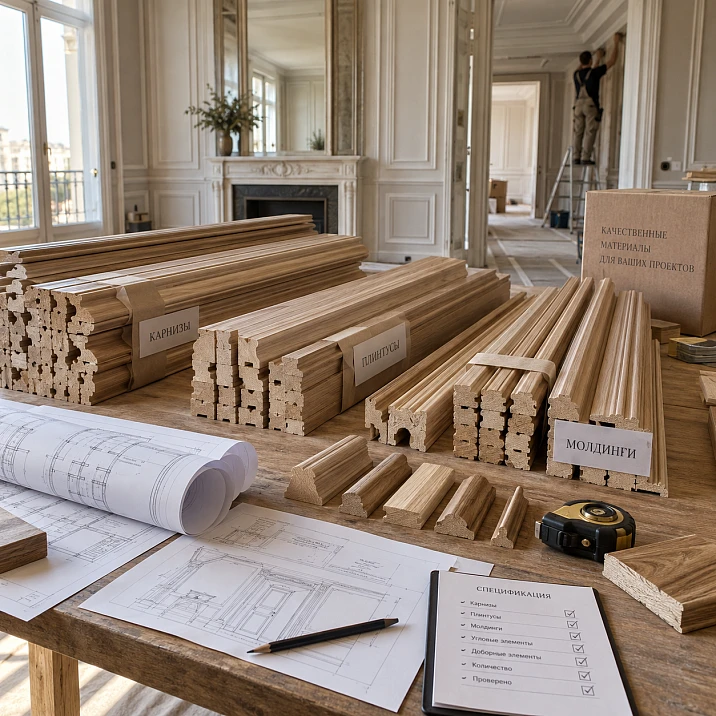
The supply of finishing materials for an interior project is rarely disrupted because the customer “couldn’t find a moulding.” More often, the problem arises later: the estimate has the total linear meters, but no breakdown by article numbers, lengths and rooms; samples have not been approved; part of the trim was ordered in one configuration, part in another; and the installers already on site discovered that several whole strips were missing.
For wooden mouldings, this scenario is especially inconvenient. Skirting boards are calculated by perimeter, moulding by frames and decorative lines, and cornice by the upper contour of the room. After calculation, the metres still need to be converted into a specific number of items of the length available for the chosen SKU. Only then is the batch, packaging and delivery schedule formed.
Therefore, the correct supply logic looks like this:
specification → samples → precise calculation → conversion of metres into pieces → project reserve → order → picking → delivery → acceptance.
If a project is supplied with wooden profiles, it is convenient to gather the main range in the category Wooden trim. It simultaneously presents mouldings, skirting boards, cornices and other wooden and MDF moulded products.
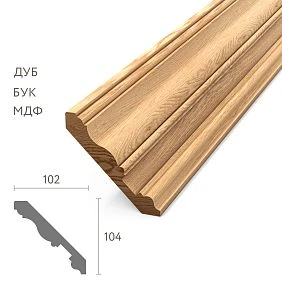
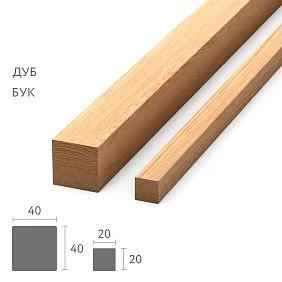
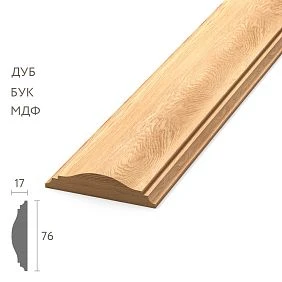
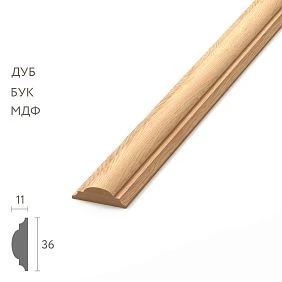
The supply of finishing materials begins not with a shopping cart, but with a specification
The phrase “120 metres of wooden decor are needed” is almost useless for procurement.
In a working specification, each item must be linked to a specific place of application. Minimum structure:
| Field | What to record | | --- | --- | | Room | living room, bedroom, hall, study | | Product type | skirting board, moulding, cornice | | SKU | exact SKU | | Material | beech, oak, MDF — according to the product card | | Profile size | full size from the product card | | Length of one item | actual commercial length | | Quantity | whole number of pieces | | Total metreage | control value | | Processing | selected configuration | | Finish | colour, tinting, enamel — according to the project | | Reserve | only according to the approved cutting plan | | Supply stage | batch 1, 2, 3 or a single batch |
Such a document solves two tasks at once. The finishing materials supplier sees exactly what needs to be picked, and the site foreman understands where each pack belongs.
The main mistake is mixing different product types in a single line:
moulding — 140 m.
The receiving clerk will not be able to check such an order by SKU, and the installer will not quickly understand what exactly is missing.




What is included in the delivery of wooden finishing materials on a single site
This article is not about any construction materials. The task is narrower: to organize the delivery of specific STAVROS wooden moulding.
Our factory also produces:

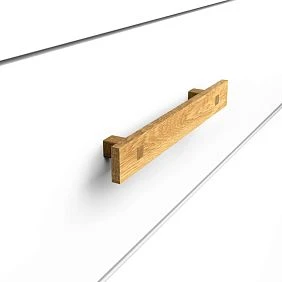
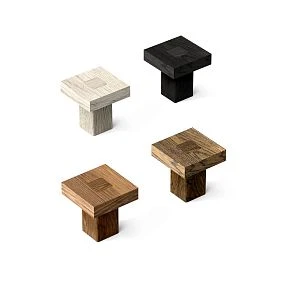
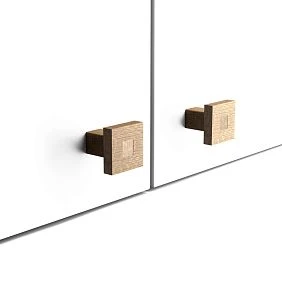
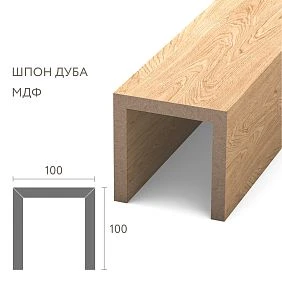

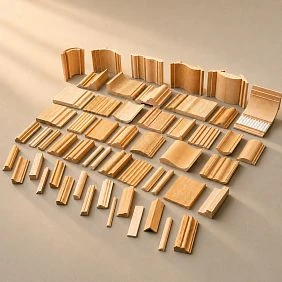
Wooden baseboard
It forms the lower contour of the room. Its initial calculation is indeed related to the perimeter, but after deducting openings and adding the design reserve, the linear meters need to be converted into whole products.
Get Consultation
Wooden moulding
It is used for frames, vertical lines, horizontal bands, trims, and furniture decor. It cannot be counted as a single room perimeter: each frame forms a separate contour.
Wooden cornice
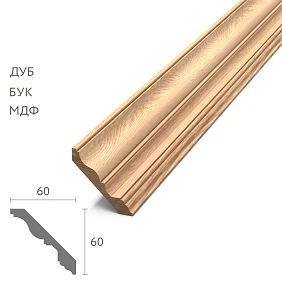
It works along the upper line of a wall, furniture, or another architectural element. When purchasing, the exact profile length, the number of internal and external corners, the cutting scheme, and the actual length of each wall are important.
If the profile has not yet been chosen, it is easier to compare several groups in the general category rather than build the delivery around the first SKU found.
Why finishing material suppliers ask for more data than the total linear meters
Let's imagine a request:
140 m of molding is needed.
For a preliminary budget, it can still be understood. For an order, no.
Unknown:
- which SKU;
- which material;
- what is the length of one strip;
- how many frames;
- where the joints will be;
- whether there are angled cuts;
- whether a single batch is needed;
- what to do with the leftovers;
- when the material is needed on site.
Two projects with the same 140 linear meters may require a different number of whole products.
For example, 140 m of a straight continuous line and 140 m of dozens of short frames are different cutting tasks.
Therefore, a good purchasing calculation starts with the project geometry, not with a rounded figure of "approximately 140 m".
First samples, then the main delivery of finishing materials
Before a large purchase, it is useful to check the actual profiles.
STAVROS has a separate section Order wooden molding samples: it presents samples of baguettes, linear products, and molding sample sets.
Using a sample, you can check what is hard to assess on a screen:
- the actual scale of the profile;
- depth of the relief;
- the texture;
- the visual mass on the wall;
- combination with furniture;
- the future color;
- the behavior of light on a complex surface.
But a sample does not replace a batch calculation. It answers the question “is this the profile we are choosing,” not “how many whole planks need to be ordered.”
Once the sample is approved, its article number and configuration are best transferred into a single supply sheet. Then the buyer does not choose a similar profile again right before payment.
Why wooden trim is better calculated as one agreed specification
In natural wood, project repeatability matters.
If half of the room is being completed now, and the missing 8–10 meters are ordered later, additional variables arise:
- current availability;
- new production lead time;
- repeat delivery;
- a new acceptance inspection;
- the need to reconfirm the material and finish;
- possible downtime for the installers.
On STAVROS pages, the selection of oak blanks by shade within an order is specified separately. Therefore, planning the quantity in advance is more rational than deliberately leaving a known shortfall for a future additional purchase.
This does not mean “always buy a huge stock.” The reserve should follow from the cutting plan, the number of corners, the repeatability of rooms, and the risk of damage, not from a universal percentage.
How to calculate the supply of wooden skirting board
Basic formula:
perimeter − door openings + approved reserve = calculated linear meters.
But the calculation does not end there.
Suppose:
- perimeter of rooms — 42.8 m;
- total width of openings without skirting board — 4.4 m.
Net length:
42.8 − 4.4 = 38.4 m.
Let’s assume that, based on the project cutting plan, a reserve of 8% is accepted. This is an example, not a universal norm.
38.4 × 1.08 = 41.472 m.
If wooden PLT-006 made of beech or oak with a length of 2400 mm is selected:
41,472 / 2,4 = 17,28.
It is not possible to order 17 pieces: that is only 40.8 m.
Need at least:
18 planks × 2.4 = 43.2 m.
Actual surplus after rounding up to whole items:
43.2 − 38.4 = 4.8 m.
That is why when ordering finishing materials, you need to count not only percentages but also the product length.
A single SKU can have different product lengths
PLT-006 clearly illustrates another purchasing pitfall.
In the current product page:
- the beech and oak options are 2400 mm long;
- the MDF and moisture-resistant MDF options are 2600 mm.
In other words, you cannot write in Excel:
PLT-006 — 18 pcs.
without specifying the material and length.
With the same required linear meters, the number of items will differ.
For example, for 41.472 m:
At 2400 mm
ceil(41.472 / 2.4) = 18 pcs.
Total:
43.2 m.
At 2600 mm
ceil(41,472 / 2.6) = 16 pcs.
Total:
41.6 m.
The difference is two whole planks.
Therefore, an article number without a configuration is not a complete supply line.
How to calculate the supply of wooden moldings
For molding, the scheme is different.
Suppose there are four identical frames measuring 1200×1800 mm on the wall.
Perimeter of one frame:
2 × (1.2 + 1.8) = 6 m.
Four frames:
6 × 4 = 24 m.
But ordering “24 meters of molding” is still not enough.
Need to know:
- length of one item;
- joint placement;
- pattern orientation, if it matters;
- number of corner cuts;
- whether the leftover from one frame can be used on another.
If the selected moulding is supplied in 2 m strips, simple math gives:
24 / 2 = 12 strips.
But after cutting, 12 may not be enough if the geometry of the frames does not allow every leftover to be used.
Therefore, the final amount of moulding is calculated from the cutting map, not just the total perimeter.
If the profile is still being selected, you can open the category Buy wooden molding and only then calculate the specific SKU.
How to calculate the supply of a wooden cornice
For a cornice, the initial value is the length of the upper contour.
Let's imagine a room 5.4×4.2 m.
Perimeter:
2 × (5.4 + 4.2) = 19.2 m.
If the selected cornice has a commercial length of 2.4 m, simple division:
19.2 / 2.4 = 8 pieces.
Mathematically, it comes out exact.
In practice, you also need to check:
- where the four corner joints will be;
- what segments result after cutting;
- Can leftovers be used?
- whether there are any niches or protrusions;
- whether the pattern runs without unsuccessful joints.
Therefore, eight items are only the lower mathematical boundary for this example, not an automatically ready order.
Specific profiles can be compared in the category buy wooden cornices.
Practical calculation is more important than a "10% margin"
The "add 10%" rule is convenient, but it cannot be used as a substitute for cutting.
Example:
net requirement — 22 m;
item length — 2.4 m.
With a 10% margin:
22 × 1.10 = 24.2 m.
In pieces:
24,2 / 2,4 = 10,08.
11 items are needed:
11 × 2.4 = 26.4 m.
Actual stock relative to net requirement:
26.4 − 22 = 4.4 m, that is 20%.
Another project with the same 22 m can fit into 10 planks if the cutting layout is convenient.
Therefore, the correct sequence is:
geometry → cutting map → number of whole products → control reserve.
Not the other way around.
Finishing materials wholesale: when one order is truly more convenient
A large delivery is especially logical when the project has many repeating rooms:
- hotel;
- restaurant;
- several apartments;
- large cottage;
- office;
- serial furniture;
- public interior.
Here the advantage comes not from the word "wholesale" itself, but from batch manageability.
The buyer receives a single specification, identical nomenclature, unified sample control, a clear quantity for each SKU, and fewer separate deliveries.
If you need to buy finishing materials wholesale, it is useful to first break down the order not by "total meters," but by specific product groups and installation stages.
Why the lowest price per meter does not mean the most advantageous supply
Comparing only the price of one linear meter is not enough.
The full procurement cost for a project consists of:
material + excess cutting + packaging + delivery + repeat delivery + downtime + urgent additional purchase + possible rework.
Let's imagine option A is 7% cheaper, but half of the batch arrives after installation.
If the crew is idle or the missing trim has to be ordered with a separate delivery, the initial savings quickly disappear.
That is why a finishing materials supplier is evaluated not only by the price list, but also by the ability to assemble the exact item list on the required date.
Buy finishing materials in bulk or split the delivery into stages
A single purchase is not always the best logistics.
There are three schemes.
Single delivery
Suitable if the site is ready to accept the entire volume, there is dry and safe storage, and installation of several groups begins almost simultaneously.
Delivery in batches
For example:
- first phase — skirting boards;
- second — mouldings;
- third — cornices.
So not everything is delivered to the site at once.
Full specification with phased shipping
The entire requirement is known in advance, but delivery is divided into stages.
For B2B fit-out this is often more convenient: the procurement manager does not lose the overall project volume, and the site receives only what is needed at the current stage.
The specific reservation option and shipping schedule must be confirmed with the seller — the article does not promise a service that is not included in the order.
How to align delivery with the installation schedule
The delivery of finishing materials must coincide not only with the date "when the material will be ready," but also with the actual construction schedule.
For example, skirting boards cannot be considered the first phase just because they are located at the bottom of the wall. Their installation may depend on the readiness of the floor, wall painting, and door installation. Moldings, on the contrary, in one project are installed before the final painting, while in another they arrive already prepared for a specific finish.
Therefore, it is useful to add a column to the schedule:
"Material is needed on site no later than ___"
and nearby:
"Previous work: ___"
This way the buyer sees that the cornice cannot be delivered a month early just for convenience if there is nowhere to store two-meter profiles.
For a large project, it is better to build the schedule by room:
Hall — ready by October 15
Living room — October 20
Study — October 28
Delivery then becomes part of the production plan, not separate logistics.
How to organize delivery by room instead of one big pile
For a large project, labeling is convenient:
Living room — package G
Office — package K
Bedroom 1 — package S1
Within each package or list:
- article number;
- quantity;
- length;
- the material;
- installation location.
This reduces the risk that installers will take molding from another room and later discover a shortage where it is actually needed.
If the supplier's physical packaging does not allow the order to be divided in this way, at least the internal room list for the site should retain room-by-room allocation.
Reserve control: stock must not be dissolved between rooms
Let's imagine that the project has three rooms and one reserve profile is calculated separately for each.
If all three spare strips are put into one common pile without labeling, the first crew may use them in one room. Formally, the material is still on site, but the reserve for the other two rooms has disappeared.
Therefore, in the list it is useful to separate:
main quantity
и
project reserve.
For example:
| Room | Main quantity | Reserve | Total to issue | | --- | ---: | ---: | ---: | | Living room | 18 pcs. | 1 pc. | 19 pcs. | | Study | 11 pcs. | 1 pc. | 12 pcs. | | Hall | 9 pcs. | 1 pc. | 10 pcs. |
This scheme is especially useful for repeating profiles of the same article: the warehouse sees the total volume, while the foreman sees who owns each reserve plank.
What to check when accepting wooden trim on site
Acceptance should follow the specification, not the principle of “the packs arrived — good.”
Check:
- article numbers;
- materials;
- profile size;
- length of the products;
- quantity;
- packaging;
- visible damage;
- compliance with the ordered configuration;
- completeness of several batches;
- marking by room.
It is especially important to check the length. The difference between 2400 and 2600 mm seems obvious, but it is precisely such parameters that affect quantity and cutting.
If an error is detected before cutting and painting begin, it is much easier to correct.
Acceptance sheet for skirting boards, mouldings and cornices
For a mixed delivery, it is better not to check everything in a single line.
Example:
| Group | Item code | Length | Material | Ordered | Accepted | Damaged | | --- | --- | ---: | --- | ---: | ---: | ---: | | Skirting board | PLT-___ | ___ | ___ | ___ | ___ | ___ | | Moulding | MLD-___ | ___ | ___ | ___ | ___ | ___ | | Cornice | KZ-___ | ___ | ___ | ___ | ___ | ___ |
If one item does not match, the others can be accepted independently.
This is more convenient than discovering after unloading that the total number of packs is correct, but several pieces are missing within one product group.
If there is not enough linear trim: why an urgent top-up costs more than a planned reserve
A shortage of five metres can halt not just “five metres of work”, but the entire stage.
There will be another stock check, a new order, another delivery, waiting for production, another material inspection, a separate acceptance and a shift in the installers’ schedule.
If the missing profile is made to order in 5–10 days, a small shortfall can turn into a week-long pause in the project.
Therefore, a reserve is not extra material “just in case”, but a pre-calculated part of the delivery if the cutting plan and the complexity of the project require it.
What to do with leftovers after installation
Leftovers are not always trash.
It is useful to divide them into three groups.
Whole items. They can be kept for future rooms or returned to the project reserve if the purchase terms allow it.
Long usable offcuts. They are labeled by article number and material.
Small offcuts. They can be kept as physical samples for future color or profile matching.
It is especially useful to keep a signed fragment after completing a large project:
MLD-___ / oak / finish ___ / project ___
For future local replacement, such a sample is sometimes more valuable than an old photo.
What to send to the finishing materials supplier for order calculation
A good request should not force the manager to guess the project.
Pass on:
- floor plan;
- specification by item codes;
- line lengths;
- selected materials;
- samples or approved profiles;
- required on-site date;
- delivery address;
- sequence of stages;
- contact of the person responsible for acceptance.
If the project has not yet been moved from visualizations to a specification, it is better to complete this stage first.
Phrase:
“The house needs to be beautifully finished with skirting boards and moldings”
does not allow an accurate calculation of the supply.
How to check the final statement before payment
Before ordering, go through five check questions.
1. Does every item have a product code?
If not — the item has not yet been defined.
2. Is the product length specified?
If not — it is impossible to correctly calculate the pieces.
3. Have meters been converted into whole items?
If not — the estimate is still provisional.
4. Is there a cutting plan for complex moldings and cornices?
If not, the percentage buffer may turn out to be arbitrary.
5. Is it clear what is arriving at the site and when?
If not, even the correct quantity may arrive at the wrong time.
After these checks, the supply of finishing materials becomes a manageable production task rather than a set of separate orders.
Who is responsible for the final quantity check before dispatch
On a large project, it is useful to appoint one person responsible for the consolidated schedule. The designer is responsible for the selected profiles, the site foreman for the actual room dimensions, the installer for the cutting, and the purchaser for the order. But before payment, one person must assemble this data into the final version.
Otherwise, it is easy to end up with four correct documents that contradict each other on quantity.
The final schedule must have a date and revision number, for example:
Trim supply / revision 5 / approved for order.
After this mark, any changes in the linear meters, material, or strip length are formalized as a new revision rather than a verbal message in a messenger. For a project with several rooms, this is a simple way to avoid ordering some materials according to an old version of the design.
When a large order doesn't need to be placed yet
It's not worth paying for all the wooden trim if:
- the design is still changing;
- the profiles haven't been approved;
- the samples haven't been checked;
- there's no room map;
- the quantity exists only in linear meters;
- Material not selected;
- the product lengths are unknown;
- the on-site storage plan isn't ready;
- the installation schedule hasn't been determined yet.
In such a situation, a large batch does not resolve the uncertainty — it locks it into the material.
Mistakes when ordering finishing materials
Mistake: ordering total linear meters without product codes.
As a result, it is impossible to properly receive and distribute the goods. The solution is a line-by-line specification.
Mistake: counting only meters.
Goods are shipped as whole items of a specific length. The solution is to convert each linear meterage into units.
Mistake: adding a universal 10% without cutting.
The actual remainder depends on the plank length and geometry. The solution is a cutting map first.
Mistake: mixing several versions of one product code in a single line.
For example, PLT-006 has different lengths depending on the material. The solution is to specify the full configuration.
Mistake: ordering the obviously insufficient volume later.
A repeat order creates extra logistics and the risk of work stoppage. The solution is to calculate the entire project before the first delivery.
Mistake: not checking samples before a large batch.
Texture and scale may look different from the render. The solution is physical approval where it is truly needed.
Questions before ordering a delivery
What should be considered the main delivery document?
A single specification with SKUs, materials, lengths, quantities, and room assignments.
Is it enough to specify the total linear meters?
No. Linear meters must be converted into whole items of a specific commercial length.
Can samples be ordered first?
Yes. STAVROS has a separate section for product samples, including trim and mouldings.
How do you calculate skirting?
Areas without skirting are subtracted from the perimeter, then the project reserve is taken into account and the result is converted into whole planks.
How to calculate molding?
For each frame or decorative line with a subsequent cutting map.
How do you calculate cornice?
Along the upper contour, taking into account the length of the specific product, angles and cutting.
Should you always add 10%?
No. A universal percentage does not replace cutting. The reserve must follow from the specific project.
Can the entire project be ordered in one batch?
Such a scheme can be arranged if the project is ready to receive the material and this is agreed with the seller. For a large project, phased logistics is also possible.
What should be checked upon acceptance?
Item code, material, profile size, length, quantity, packaging, and visible damage.
Where to find wooden skirting boards, mouldings, and cornices?
In the STAVROS mouldings section, and specific categories — after selecting the profile type.