




















































































Samples, catalogs, stands


 New
5-10 days
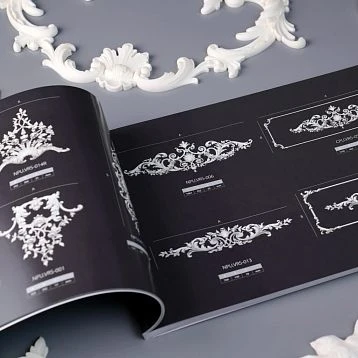
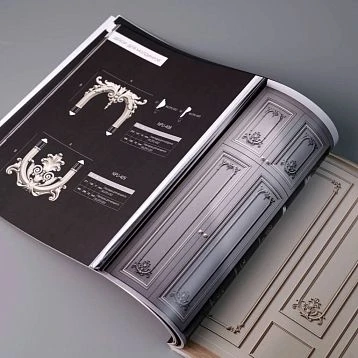
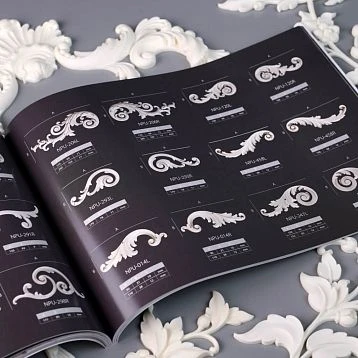
Printed catalog of polyurethane decor KATALOG-PU
6.55 $


 New
5-10 days
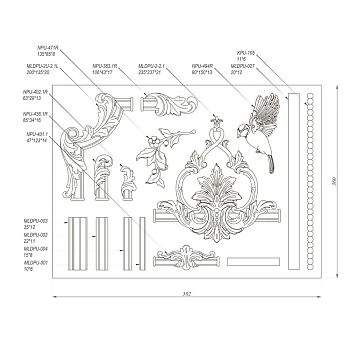
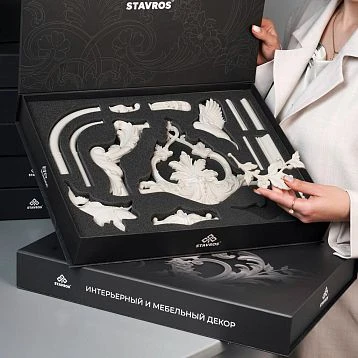
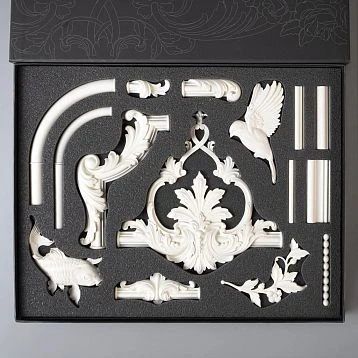
Showcase of stucco decor SOPU-001
115.23 $

 New
5-10 days
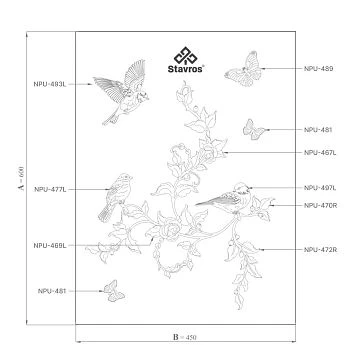
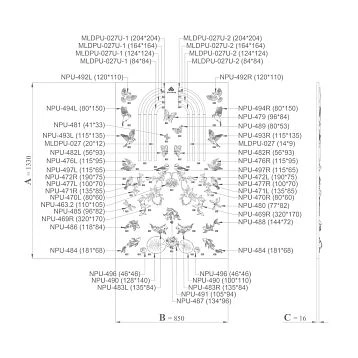
Exhibition stand SVPU-009
105.05 $
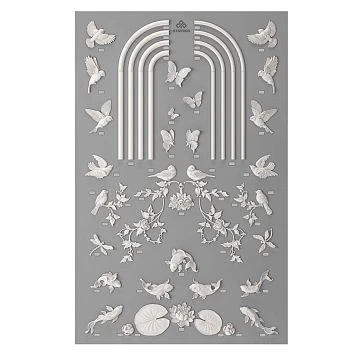



 5-10 days
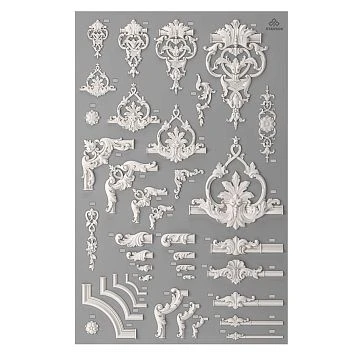
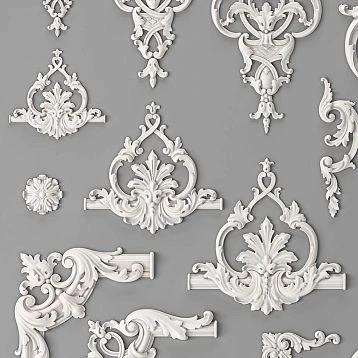
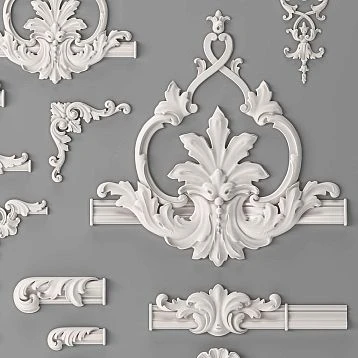
Exhibition stand SVPU-001
346.04 $
 5-10 days
Exhibition stand SVPU-002
572.64 $
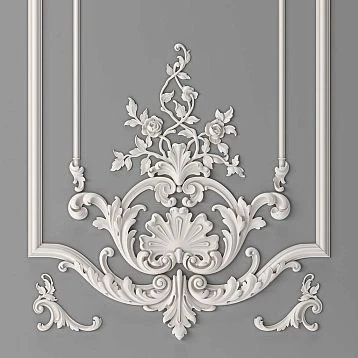
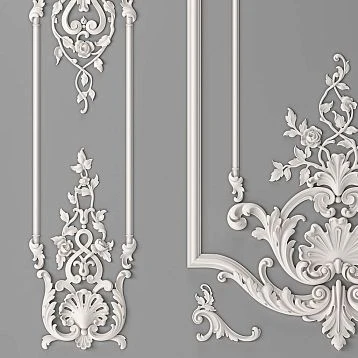
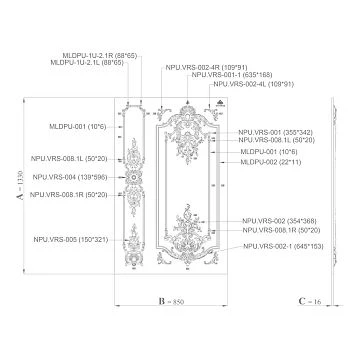 5-10 days
Exhibition stand SVPU-003
349.67 $
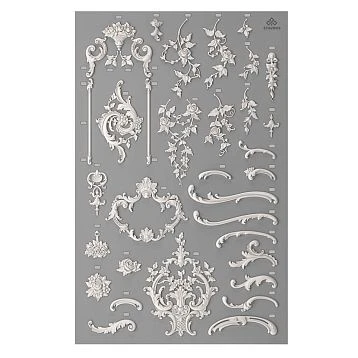
 5-10 days
Exhibition stand SVPU-004
417.52 $
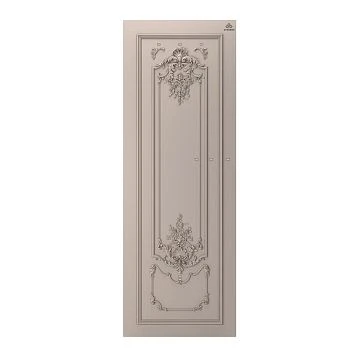
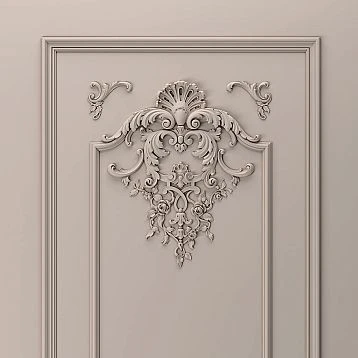
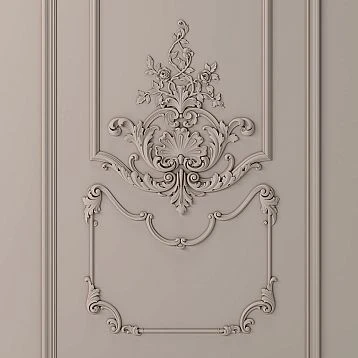
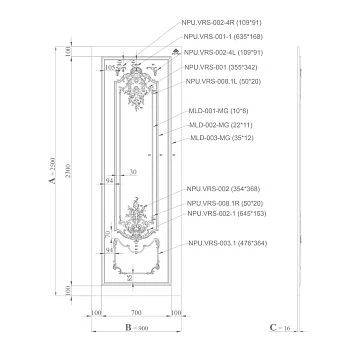 5-10 days
Exhibition stand Versailles SVPU-005
379.15 $
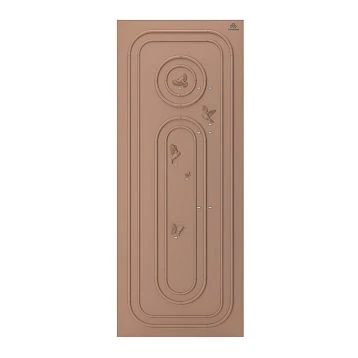



 5-10 days
Exhibition stand Japandi SVPU-006
451.80 $
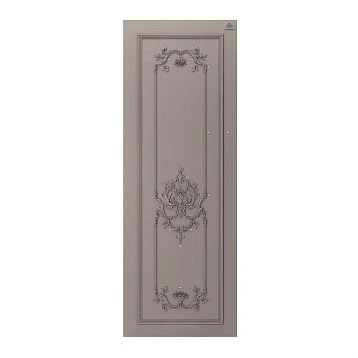
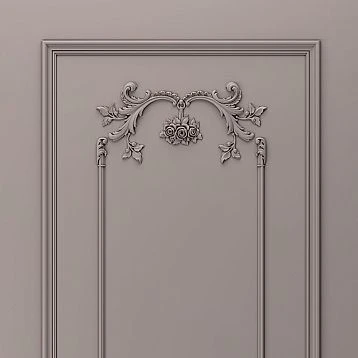
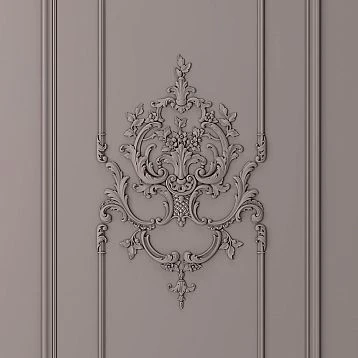
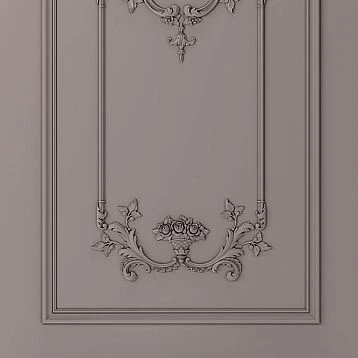
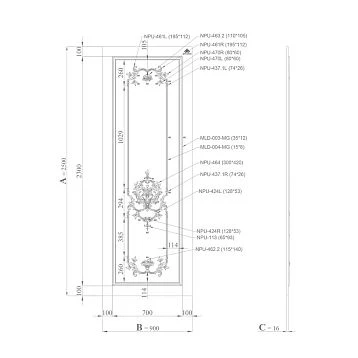 5-10 days
Exhibition stand Summer Garden SVPU-007
335.86 $
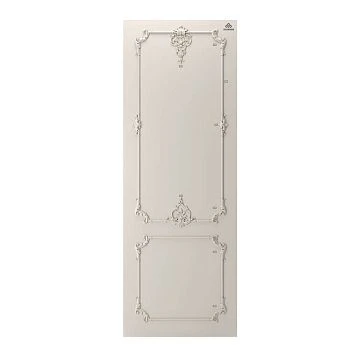
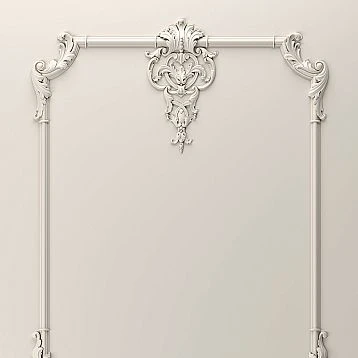
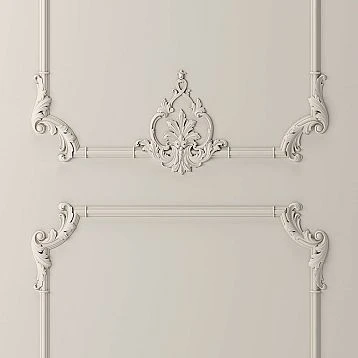
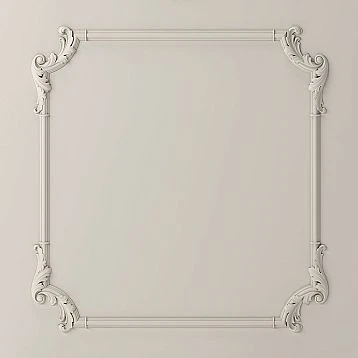
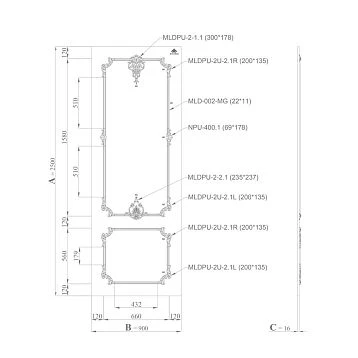 5-10 days
Exhibition stand Neoclassic Light SVPU-008
349.08 $
Molding Samples and Decor Catalogs for Professional Product Selection
Choosing architectural decoration from a photograph is useful at the first stage of a project, but certain decisions become much easier when the product can be evaluated physically. Molding samples, printed decor catalogs, showcases and presentation stands make it possible to compare actual proportions, profile depth, ornament scale and the relationship between different decorative elements before the final specification is prepared.
The STAVROS collection brings these professional presentation tools together in one section. Here designers, architects, decorators, dealers and project teams can find printed materials as well as displays assembled from real polyurethane decorative elements.
A catalog answers the question, “What is available?” A physical sample or display answers a different question: “How does it actually look at full scale?”
Used together, they provide a much clearer basis for selecting architectural decor.
Explore the complete polyurethane relief decoration collection when you are ready to move from product selection to specification.
Why Molding Samples Matter
Molding samples are useful because profile geometry is three-dimensional.
Two moldings that appear similar in a front-facing photograph can create completely different results once installed.
One may have a shallow profile and produce a subtle shadow. Another may project considerably farther from the wall and become a dominant architectural line.
A physical sample helps evaluate:
-
actual profile width;
-
projection from the wall;
-
relief depth;
-
edge geometry;
-
scale of decorative details;
-
relationship with neighboring profiles;
-
appearance under side lighting;
-
proportions at normal viewing distance.
This information is particularly valuable when several profiles must work together.
For example, a wall composition may combine panel molding, ornamental trim, rosettes and larger relief elements. Looking at each product separately on a screen does not always reveal whether their scales are compatible.
A physical reference makes that comparison much easier.
For available profiles, see polyurethane moldings and decorative moldings.
Polyurethane Molding Samples for Material and Profile Evaluation
Polyurethane molding samples can be useful when a project team needs to understand not only the drawing of a profile but its physical presence.
The most important question is often not whether a molding is attractive by itself. It is whether its dimensions and relief are appropriate for the particular room, wall panel or furniture composition.
A sample can help answer practical design questions:
-
Is the molding wide enough for the panel?
-
Does it project too far from the wall?
-
Is the ornament visible from several feet away?
-
Will the profile compete with nearby decorative elements?
-
Does the molding create the expected shadow?
-
Is the scale suitable for a door, wall or furniture application?
This becomes especially important with richly ornamented profiles.
Fine details that look prominent in a close-up product photograph may read much more quietly when viewed from across a room.
Conversely, a deep decorative profile may have far more visual weight in person than expected from a catalog image.
Physical samples allow the designer to make these decisions before the entire quantity is specified.
Decor Samples for Coordinating Architectural Elements
The term decor samples covers more than linear molding.
Architectural decoration often consists of several types of elements working together:
-
moldings;
-
decorative overlays;
-
rosettes;
-
brackets;
-
capitals;
-
ornamental trim;
-
wall accents.
The design problem is therefore not simply selecting individual products. It is creating a consistent hierarchy.
A molding establishes a line.
A rosette creates a focal point.
A corbel or bracket introduces depth and apparent support.
A capital completes a vertical architectural element.
A sample composition lets these relationships be evaluated together rather than one product at a time.
For example, a designer planning a classical wall can compare the scale of polyurethane rosettes with surrounding molding and determine whether the ornament should become the center of the composition or remain a secondary detail.
Similarly, polyurethane corbels and capitals can be compared with molding profiles before their final positions are established.
Printed Decor Catalogs for Offline Product Selection
A printed decor catalog remains useful even when the complete assortment is available online.
A physical catalog provides a structured overview that can be reviewed during a client meeting, taken to a project site or used while preparing a preliminary specification.
The STAVROS printed polyurethane decor catalog is a full-color A4 publication containing 122 pages. It includes product photographs, article numbers and dimensions for polyurethane interior and furniture decor.
This makes the catalog particularly useful during the early selection stage.
Instead of switching between numerous browser tabs, the designer can quickly compare product families, mark relevant models and then return to the website for current product information and detailed specifications.
The printed catalog therefore does not replace the online catalog. The two formats solve different parts of the workflow.
Using a Polyurethane Decor Catalog in a Project
A polyurethane decor catalog becomes most useful when it is treated as a working document rather than simply as a collection of pictures.
A practical workflow might begin with broad selection.
First identify the types of architectural elements required:
-
wall molding;
-
decorative trim;
-
rosettes;
-
brackets;
-
capitals;
-
ceiling elements;
-
overlays.
Then compare designs and proportions.
Once several candidates have been selected, use the product article numbers to locate the corresponding items online and verify the dimensions required by the project.
This sequence helps avoid a common problem: selecting decoration entirely by style before checking whether the dimensions work with the actual architecture.
Product scale should be evaluated before the decorative scheme is finalized.
Samples for Designers and Architects
Architects and interior designers often need to communicate decisions to clients who are not accustomed to reading technical drawings or judging scale from dimensions alone.
Physical samples are valuable in these conversations because they convert an abstract specification into something tangible.
Instead of explaining that one profile has greater projection than another, the designer can show both directly.
Instead of asking a client to imagine a relief element after painting, the sample can be positioned against the proposed wall finish.
This makes it easier to discuss:
-
ornament scale;
-
level of detail;
-
profile depth;
-
visual weight;
-
combinations of decorative elements;
-
placement within the interior.
A physical display is especially useful when several people participate in the approval process.
Everyone evaluates the same reference rather than interpreting separate photographs on different screens.
Samples for Interior Design Studios
For a design studio, molding samples can become part of a permanent materials library.
A useful library should not simply contain as many products as possible.
It should make comparison easy.
Profiles can be organized according to:
-
size;
-
application;
-
ornamental complexity;
-
architectural style;
-
profile depth;
-
compatibility with other elements.
This allows the designer to begin with project requirements rather than searching through hundreds of unrelated items.
A restrained contemporary wall may require a narrow profile.
A classical room with high ceilings may support significantly larger decorative elements.
A richly detailed furniture or door composition may require small-scale ornament that would disappear on a large wall.
Having physical references available makes these differences easier to judge.
Polyurethane Decor Showcases
A single loose sample is useful for studying one profile. A polyurethane decor showcase solves a different problem: it demonstrates how multiple elements relate to one another.
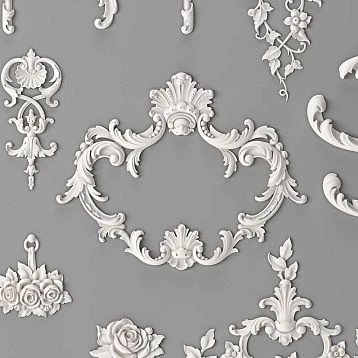
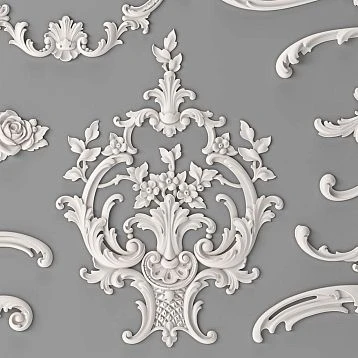
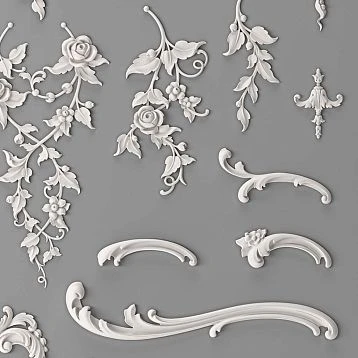
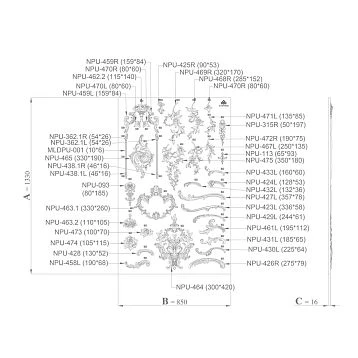
The STAVROS SOPU-001 polyurethane decor showcase combines a selection of molding and decorative elements into a ready-made presentation.
This format is useful where the objective is not merely to inspect material but to demonstrate an assortment.
A showcase allows a client to compare several types of relief, widths and ornamental motifs within one compact presentation.
It can be useful for:
-
interior design studios;
-
material libraries;
-
showrooms;
-
dealer presentations;
-
architectural offices;
-
client meetings.
The visual context matters.
A piece of molding viewed independently tells you what the profile looks like. A composed showcase gives a better impression of how different types of architectural decoration can coexist.
Exhibition Stands for Polyurethane Decor
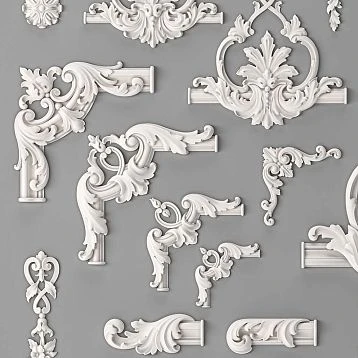
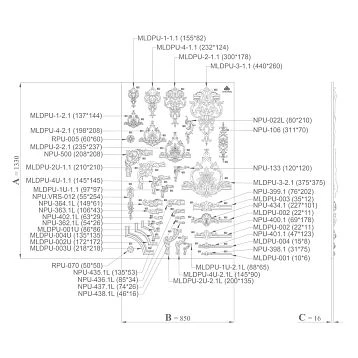
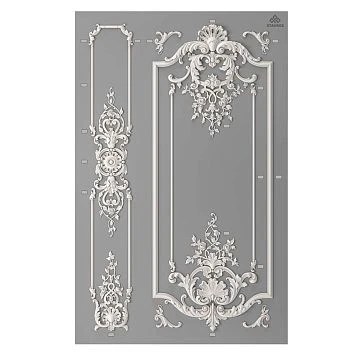
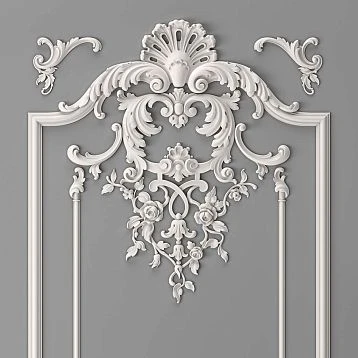
For a larger or more permanent presentation, STAVROS also offers exhibition stands assembled with polyurethane decorative samples.
An STAVROS polyurethane exhibition stand can present multiple decorative elements in one organized display.
This format is particularly relevant to showrooms and professional sales environments.
Rather than storing samples in boxes or presenting them one at a time, a display stand keeps the products visible and allows clients to compare them immediately.
A presentation stand also helps communicate scale.
A customer sees neighboring products simultaneously and can understand which elements are compact accents and which have greater visual weight.
That is difficult to reproduce with individual product images displayed at different zoom levels.
Why Full-Scale Decor Is Different from an Image
Architectural ornament depends heavily on shadow.
A photograph captures one lighting condition.
The actual product changes throughout the day as light direction and intensity change.
Deep relief produces stronger shadows. Shallow profiles produce subtler transitions.
Fine ornament may become more noticeable under side lighting, while broad smooth curves may be more important in softer ambient light.
A physical decor sample therefore provides information that a product photograph cannot completely reproduce.
It allows the designer to rotate the piece, view it from an angle and position it against different surfaces.
This matters because architectural decoration is rarely viewed directly from the front in a finished interior.
Cornices are seen from below.
Moldings are seen obliquely as people move through a room.
Brackets project from vertical surfaces.
Rosettes interact with surrounding moldings and wall panels.
The real viewing angle should influence product selection.
Comparing Molding Samples by Scale
When comparing molding samples, do not focus only on ornament.
Begin with overall dimensions.
A profile that works beautifully inside a compact cabinet or door composition may be too small for a large wall.
A molding intended for a tall room can overwhelm a narrow panel.
One practical approach is to place the sample directly against a full-size drawing or mock-up of the planned composition.
Mark the outer dimensions of the panel on the wall, then position the molding inside that boundary.
This immediately reveals whether the profile feels too narrow, too heavy or correctly proportioned.
The same method can be used with wall decor and larger relief elements.
Scale becomes much easier to judge when the sample is evaluated against the actual architectural field.
Comparing Ornamental Detail
Two profiles of identical width can still behave very differently.
One may have a smooth, restrained surface.
Another may include leaves, beads, scrolls or repeating classical ornament.
Detailed molding creates a higher visual density.
As a result, it can feel more substantial than a plain profile of the same dimensions.
A sample makes this difference obvious.
When several decorative products will appear in the same composition, compare their ornament side by side.
The patterns do not have to be identical, but they should have a compatible visual language.
For richly detailed linear elements, explore the decorative trim collection.
Using Samples to Plan Painted Decor
Architectural polyurethane is often integrated into the surrounding painted surface.
This means the final result may look very different from an unfinished sample.
When possible, evaluate the profile not only as an isolated white object but as part of the intended color scheme.
A monochromatic treatment—wall, molding and relief painted the same color—emphasizes geometry through shadow.
A contrasting finish makes the ornament much more visually dominant.
For design presentations, even a temporary color reference placed next to the sample can help a client understand this difference.
The purpose of a sample is not merely to confirm material. It is to reduce uncertainty before final quantities are ordered and finishing begins.
Catalogs and Samples During Specification
A practical specification process can combine digital information, printed catalogs and physical samples.
1. Define the architectural task
Identify where decoration will be used: walls, ceilings, doors, cabinetry or a combination of these.
2. Select the product family
Use the printed catalog and online categories to narrow the assortment.
3. Compare dimensions
Check width, height and projection against drawings or elevations.
4. Evaluate physical samples
Compare actual scale, depth and ornament where a sample or presentation display is available.
5. Test combinations
Position related molding and decorative elements together.
6. Record article numbers
Keep the product references connected to the project drawings and specification.
7. Verify the final products online
Return to the relevant STAVROS product pages for current dimensions, options and product information before finalizing the order.
This sequence reduces the risk of selecting elements that look compatible in separate photographs but prove disproportionate when assembled.
Product Displays for Showrooms and Dealers
A showroom has a different requirement from an individual design project.
The objective is not to evaluate only one selected profile but to present enough variety for customers to understand the possibilities of the range.
This is where showcases and exhibition stands become particularly useful.
A well-organized display can demonstrate:
-
different relief depths;
-
smooth and ornamental moldings;
-
small and large decorative elements;
-
complementary combinations;
-
different design directions.
Customers can then compare products physically before moving to the detailed catalog or online assortment.
For a dealer, architect or showroom consultant, this creates a more efficient selection process than opening products one by one without a common visual reference.
Printed Catalog or Physical Sample: Which Is More Useful?
They solve different problems.
Choose a decor catalog when you need breadth.
A catalog makes it possible to review many product families, compare styles, identify article numbers and build an initial shortlist.
Choose physical samples when you need depth.
A sample reveals actual scale, projection, surface character and the way relief responds to light.
Choose a showcase or exhibition stand when you need comparison.
It allows several products to remain visible together.
For many professional workflows, the best solution is not choosing one format over another but using them in sequence:
catalog → shortlist → physical comparison → final specification.
Build the Specification from Samples to Full-Size Decor
Once the appropriate profiles and decorative elements have been selected, move from the presentation tools to the actual product categories.
Explore:
Polyurethane relief decoration
Polyurethane corbels and capitals
Using the same product references throughout selection, presentation and specification makes it easier to keep the final design consistent.
Choose Samples, Catalogs and Display Stands for the Way You Work
A designer preparing one interior, an architectural office maintaining a materials library and a showroom presenting polyurethane decor to clients need different tools.
Use molding samples when actual profile size and relief are the deciding factors.
Use decor catalogs when you need to compare a wider assortment and create a shortlist.
Use polyurethane decor showcases when several decorative elements need to be evaluated together.
Use exhibition stands when the assortment needs a permanent, organized presentation in a studio or showroom.
The goal in every case is the same: make the architectural selection with a better understanding of real scale, relief and proportion before the decorative system is specified for the project.
Order a call
Do you have questions? Fill out the form and send it.
Your request has been sent!
Our manager will contact you within 5 minutes