Article Contents:
- Bulk materials: why the same species doesn't mean the same color
- Natural wood color variation and a finishing mistake are not the same thing
- Natural variation
- Finish variation

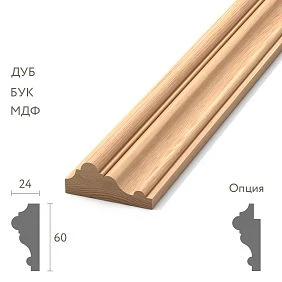
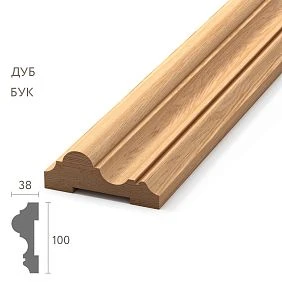
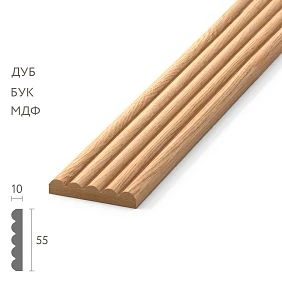
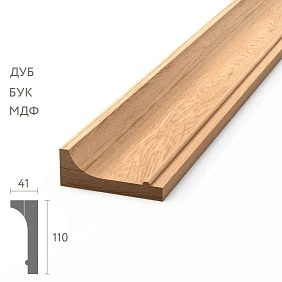
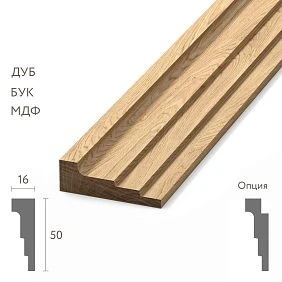
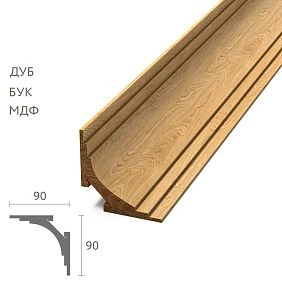
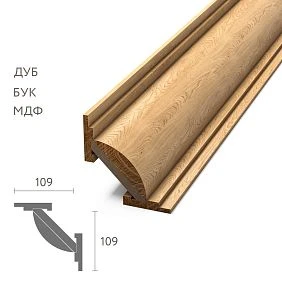
The project has approved an oak skirting board, moulding and cornice. All three elements must be perceived as a single wooden system: the lower line of the room, the wall frames and the upper cornice work within one tonal range. On paper the task looks simple — order the same species and the same colour. In practice, this is not enough.
If materials in bulk they are purchased in several batches, colour variation may appear not from a single cause, but from a combination of factors: natural variability of the wood, different surface preparation, a different finish composition, a different degree of gloss, a change in the batch of finishing material, or the loss of the original reference sample.
Therefore, a serious order cannot be described in one line as "oak, dark walnut". A chain is needed:
species → preparation → MASTER FINISH SAMPLE → finishing system → FINISH CODE → approved batch → acceptance → preservation of the reference sample → repeat order using the same reference sample.
The goal of the process is not to make natural wood visually identical to plastic. Wood retains its pattern, texture and natural differences. The task is to prevent chaotic, uncoordinated variation, where the skirting board, moulding and cornice look as if they were chosen for different interiors.
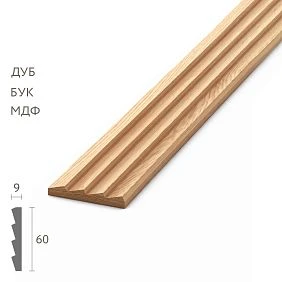
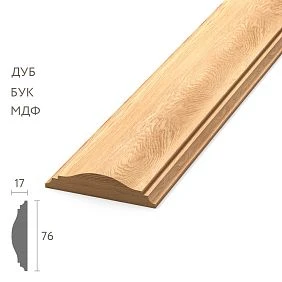
Materials in bulk: why the same species does not yet mean the same colour
Two oak planks may differ in their initial shade, grain pattern, prominence of pores and direction of texture. With a transparent or semi-transparent finish, these differences remain part of the visual result.
Natural variability is especially noticeable with:
- clear lacquer;
- oil;
- wax;
- light tinting;
- semi-transparent systems that preserve the wood grain.
With a fully opaque enamel, the influence of the natural texture on the perceived color is reduced. But other variables appear: preparation, primer, formulation, gloss, and application technique.




Color variation in natural wood and a painting error are not the same thing
For procurement, it is useful to distinguish between two types of differences.
Our factory also produces:
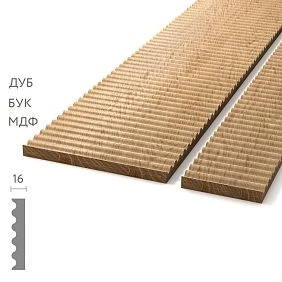
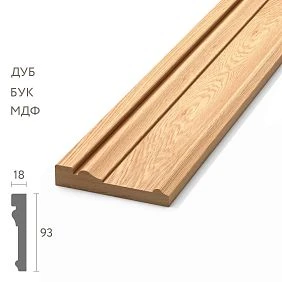
Natural variation
The natural difference between wooden parts: pattern, texture, fiber density, and the original shade of the species.
Get Consultation
Finish variation
Difference related to finishing technology:
- different surface preparation;
- different formulation;
- different batch of finishing material;
- change in the number of layers;
- a different degree of gloss;
- change in application technology.
This matters because the methods of control are different. Natural variation is not eliminated completely — it is brought to an acceptable range for the project. Technological discrepancy is sought during the finishing process.
Wooden skirting board: why it quickly shows color variation
The skirting board runs in a long continuous line along the perimeter of the room. It is located next to the floor, doors, and furniture, so adjacent planks are often compared directly.
If one part of the skirting board is noticeably warmer and the next is cooler or darker, the eye reads the transition as a break in the line. On a small decorative element, such a spread may be less noticeable.
Therefore, the skirting board is convenient to use as one of the main control elements of the project's color system.
Wooden moulding: why frames intensify differences in shades
In a moulding composition, some planks run vertically and others horizontally. Light falls on them at different angles, and the direction of the grain further changes perception.
Because of this, one small sample lying horizontally on the table poorly represents the future wall.
During approval, it is useful to assemble at least a fragment of the frame: horizontal + vertical + corner. This way you can see not only the color, but also how the wood reads in its real orientation.
Wooden cornice: why the top line may look darker with the same finish
The cornice is located under the ceiling and often falls into shadow. A deep profile creates its own light and shadow, and the direction of light differs from the lower part of the wall.
Therefore, a visually darker cornice does not yet prove that it was painted with a different composition.
One must distinguish:
- a real difference in finish;
- an optical difference due to light and geometry.
This is one of the reasons to check the set under real project lighting, not only in the office.
One project — one master finish sample
For a large order, a physical MASTER FINISH SAMPLE is needed — a control sample that can be referenced at all stages.
For example:
PROJECT-01 / OAK / FINISH-F03 / SAMPLE-S01 / APPROVED
The sample records:
- project;
- breed;
- preparation type;
- finishing system;
- color code or internal designation;
- gloss level, if critical;
- approval date;
- APPROVED status.
The key is that six months later it should be clear which physical sample was considered the reference.
To do this, the sample should be linked not only to the color name but also to a specific entry in the specification. For example, F03 is useless without a decoding if, after a few months, no one remembers what it meant. The project table should show: species — oak, preparation — approved for the project, finish — system F03, sample — S01, approval date — such and such.
If the master sample changes, the old one should not be destroyed immediately. It is better to move it to SUPERSEDED status and keep it as history. Then, in a dispute, it is possible to understand which reference was in effect for the first batch and which for subsequent ones.
Why a photograph of the reference color is insufficient
A photograph is useful as a document, but weaker than a physical sample for comparing the finish.
The image is affected by:
- light source;
- camera white balance;
- exposure;
- image processing;
- brightness and color profile of the screen.
Therefore, a photo can be stored together with the reference, but should not be used as the sole color standard for a complex interior.
A photograph is especially useful in another capacity: to capture how the sample looked next to the floor, door, wall, and other materials. In other words, a photo is context, not a replacement for the reference itself.
Where to store the master sample
Not in the installer's toolbox and not without labeling on site.
A controlled set is useful for the project:
- an identified reference sample held by the customer or the kit assembler;
- an identified copy within the production or procurement chain, if the process provides for this.
The number of copies is secondary. What matters more is that each one is unambiguously linked to a single FINISH CODE.
Oak and beech cannot be combined by color name alone
The name “medium walnut” describes a visual direction but does not guarantee the same result on different species.
Oak and beech differ in grain and surface structure. Under clear or semi-transparent finishing, this affects how the shade is perceived.
Therefore, the color specification must record:
species + finishing system + reference sample.
A color name alone is not enough.
Why you can't approve a tint on beech and then order oak
Even if the profile is the same and the shade name doesn't change, switching the wood species creates a new visual result.
If a project switches from beech to oak or vice versa, it's better to treat this as a new finish approval rather than a simple procurement substitution.
When the risk of natural color variation becomes lower
With opaque enamel, the wood grain is largely covered, so the natural variability of the species has less influence on the final color.
But the following remain:
- surface preparation;
- soil;
- formulation;
- number of layers;
- gloss level;
- differences between coating batches.
In other words, switching to enamel reduces one type of risk, but it doesn't eliminate process control.
Why the same RAL doesn't yet guarantee a visually absolutely identical result
A color code is useful, but a complex interior result depends on more than just it.
The perception is influenced by:
- base;
- preparation;
- type of coating;
- gloss level;
- lighting;
- profile geometry.
Therefore, for a critical project, it is better to link the color code to a physically approved sample and a description of the finishing system.
Wholesale building materials: why skirting boards, moldings, and cornices are best coordinated at the same time
If wholesale construction materials is purchased as a set; coordinating each element independently is risky.
| Element | Article | Species | FINISH CODE | Reference |
|---|---|---|---|---|
| Baseboard | PLT-… | Oak | F03 | S01 |
| Molding | MLD-… | Oak | F03 | S01 |
| Cornice | KZ-… | Oak | F03 | S01 |
The three products do not have to be manufactured at the same time. But they must be linked by a single color specification.
If the project involves several color zones, it is better not to try to describe them with words like “light oak” and “dark oak.” It is more reliable to assign separate codes: F03, F04, F05. Then the SKU is responsible for geometry, the FINISH CODE for the finish, and the master sample for the visual reference.
This linkage is especially useful with a large number of SKUs. For example, the same F03 can apply to PLT-A, MLD-B, and KZ-C, while another profile, MLD-D, already belongs to F04. Without a separate finish code, such differences are quickly lost in a long procurement list.
Why three separate samples need to be viewed side by side
If the skirting board was approved in April, the molding in May, and the cornice in June, the eye compares them from memory. That is weak control.
It is better to assemble a physical set and look at:
lower part of the interior + midline + upper line simultaneously.
This way you can see not only the color match, but also the overall tonal balance.
Before a bulk purchase, it is useful to check a control section of the project
On a large project, you can use a reference room, one wall, or a typical area, if the project format allows it.
The purpose of the control area is to check:
- the geometry of the profiles;
- the compatibility of the skirting board, molding, and cornice;
- the tone under real lighting;
- the scale of the texture on a large surface;
- the visual range of natural wood.
After such a check, the master sample becomes linked not only to the small swatch but also to the real interior result.
The control area is also useful because it shows the scale of natural variability. On a single piece of wood, you might happen to see a very calm texture, but after installing dozens of planks, the normal range for the species will become apparent. If the team has seen this in advance, they will not treat every difference as a defect after mass installation.
At the same time, the control area should not become a new independent reference. The approved MASTER FINISH SAMPLE remains the reference, while the interior area confirms that the chosen system works under real conditions.
Why a small sample and a fifty-meter wall look different
On a small fragment, the eye sees one texture. After installing dozens of meters, the overall color mass begins to be perceived.
The following become noticeable:
- repeatability;
- the difference between adjacent planks;
- the change in grain direction;
- the influence of light;
- the combination of several profiles.
Therefore, a large project requires a second level of control after a small sample.
What “one batch” means for the buyer
The phrase “everything must be from one batch” is too vague.
It is necessary to determine what exactly the project wants to control:
- raw materials;
- selection of blanks;
- production queue;
- finishing process;
- batch of finishing compound;
- master sample.
Even natural wood from a close production batch does not become absolutely identical in grain pattern. Therefore, the requirement should be formulated as a controlled range and a single reference standard, rather than as a promise of complete visual identity.
It is useful for the buyer to agree in advance on which parameters are truly controlled strictly: species, FINISH CODE, coating system, gloss level, and link to the master sample. And the natural grain of the wood is assessed within the agreed visual range.
Why natural wood cannot be required to be like a solid-color plastic material
A strong project preserves the character of natural wood. Too strict a requirement that “every plank must be visually identical” conflicts with the nature of the material.
The control task is different:
preserve naturalness while at the same time preventing uncoordinated tonal variation.
What to do if the entire trim order cannot be ordered in one batch
For example:
- batch No. 1 — March;
- batch No. 2 — July;
- batch No. 3 — November.
A control chain must be maintained between them:
- MASTER FINISH SAMPLE;
- FINISH CODE;
- article number;
- breed;
- preparation description;
- technical specification;
- previous order number.
This way, a new batch is tied to a real project standard, not to the phrase "do it like last time."
For a phased project, it is useful to keep a delivery log by finish:
| Batch | Date | SKU | FINISH CODE | MASTER SAMPLE | Verification result |
|---|---|---|---|---|---|
| B01 | … | PLT-A / MLD-A / KZ-A | F03 | S01 | APPROVED |
| B02 | … | MLD-A / KZ-A | F03 | S01 | CHECKED |
Then, after a few months, it is clear which batches have already been visually compared with the same reference.
A reorder six months later should not begin with the words "make the same one"
A good request looks like this:
PROJECT-A / MLD-XXX / OAK / FINISH-F03 / MASTER SAMPLE S01 / PREVIOUS ORDER №…
If there is a photo of the old batch, it can be attached, but the physical reference sample and specification remain the basis of control.
When a new reorder needs to be re-approved
Re-inspection is especially needed if:
- the material has changed;
- the finishing system has been changed;
- the reference sample is lost;
- the new batch differs noticeably;
- the new section directly adjoins the old one;
- the gloss level has changed;
- the design lighting has changed.
It is better to stop a differing batch before installation than to try to fix a long installed line.
A supplementary order that must continue an already installed skirting board or cornice on the same wall is especially critical. Here it is useful to place the new strip against the old one directly on site before mass cutting. If the difference is acceptable in a separate room, it may be too noticeable in a direct joint.
When a slight color variation is visually easier to tolerate
If the batches are on different floors or in separate rooms without direct visual contact, a slight difference is harder to notice.
This does not mean that control can be abandoned. But when distributing natural variation, the project can take into account the visual connection between zones.
Where the requirements for matching are especially strict
Maximum sensitivity occurs where a new batch directly continues an old one:
- a single skirting line;
- a single molding frame;
- one cornice;
- a unified door portal;
- a single long panel composition.
Here, adjacent elements are compared directly, so a new additional order should be checked especially carefully.
The shade should be checked under the lighting in which the interior will be used
The same wood finish is perceived differently under daylight, warm artificial lighting, and cool LED lighting.
Therefore, final approval of a complex tone is best carried out under a lighting scene close to the project conditions.
Why a sample on an office desk does not replace an on-site check
An office may be lit with neutral light, while the interior may be warm. The profile geometry, shadows, and adjacent materials also change perception.
A physical master sample is best checked next to the floor, wall, door, and other materials of the future interior.
How to accept a batch by color
You should not draw a conclusion from a single top rail.
For control, it is useful to compare several items:
- from different places in the batch;
- with MASTER FINISH SAMPLE;
- with each other;
- under comparable lighting.
A universal sampling percentage is not needed here: the depth of control is determined by the requirements of the specific project.
For a large batch, it is reasonable to take items not only from the top of one stack. If the packaging and the process allow, the sample is taken from different places in the batch. Otherwise, you might accidentally evaluate only one local area and miss the overall range.
If a difference is detected, first record the fact and the scale: how many items stand out from the general row, where they are located, and how much the visual result differs relative to S01. Only after that is a decision made about redistribution, rework, or replacement.
What to do if some planks differ noticeably
Do not automatically mix them with the rest of the batch.
Working scheme:
- set aside the differing items;
- mark;
- compare with the master sample;
- determine the scale of the deviation;
- decide whether it is acceptable for use in a less critical area;
- record the decision.
Color variation must not be hidden by random distribution
The approach of "spreading different planks across rooms — no one will notice" is not suitable for a controlled project order.
If redistribution is actually used, it must be deliberate: which planks, to which area, why the difference is visually acceptable there, and who approved it.
Building material in bulk: what should be in the color specification
If construction material wholesale when ordering for a repeatable interior solution, the minimum record must include:
- article number;
- breed;
- surface preparation;
- finishing system;
- color or internal code;
- gloss, if relevant;
- reference number;
- area of application;
- specification revision number.
This is how color stops being a verbal description and becomes part of the procurement documentation.
Every change requires a revision. If F03 is replaced with F03-R2 after additional approval, this must be visible in the document. Otherwise, the first and third phases may refer to different visual solutions under the same name.
Why the words "natural oak" are not enough
This is a direction, not a repeatable technical record.
For a large project, you need to understand: which exact species, what preparation, what the surface is coated with, which sample is approved, and which batch it belongs to.
Wholesale building materials: how to divide an order by color groups
If wholesale building materials includes several finishes, they need separate groups.
| FINISH GROUP | Description | Reference |
|---|---|---|
| FINISH-A | Oak, natural clear finish | S01 |
| FINISH-B | Oak, dark tint | S02 |
| FINISH-C | Beech, opaque enamel | S03 |
Each SKU is linked to a specific group, not just to the overall project name.
Why FINISH CODE should be separate from the article number
The article number MLD-XXX answers the question of which profile this is. It does not necessarily answer the question of how the profile should be finished in a specific project.
Therefore:
SKU ≠ FINISH SPECIFICATION.
The same profile can theoretically be used in different projects with different finishes. FINISH CODE separates the geometry of the product from the project finish.
How to label a finished batch
For a complex order, labeling that links the physical product to the specification is useful.
For example:
PROJECT-A / MLD-XXX / OAK / FINISH-F03 / BATCH-02
This way, the warehouse, the installer, and the kit assembler understand that they are not dealing with just an MLD-XXX, but with a specific version for a specific project.
Why color groups must not be mixed in the warehouse
If FINISH-A and FINISH-B are stored next to each other without clear labeling, a mix-up can occur even after correct production.
Similar shades that are easy to confuse in packaging or under poor warehouse lighting are especially dangerous.
The simplest protection is to label the packaging not only with the article number, but also with the project and FINISH CODE. Then MLD-XXX / F03 и MLD-XXX / F04 do not look like the same warehouse item.
Therefore, color identification must be preserved until installation.
Seven mistakes that create color mismatch
- Choosing the final color based only on a photograph.
- Approving the skirting board, molding, and cornice at different times without comparing them together.
- Change the finish while keeping the old shade name without re-verification.
- Lose the MASTER FINISH SAMPLE.
- Order a repeat batch without referencing the previous order and FINISH CODE.
- Mix different color groups in the warehouse.
- Begin installation of a critical batch before visual verification.
What the color approval log looks like
| Date | Project | FINISH CODE | Sample | Species | Solution |
|---|---|---|---|---|---|
| … | PROJECT-A | F03 | S01 | Oak | APPROVED |
| … | PROJECT-A | F03 | S01 | Oak | REORDER CHECKED |
This way, after a few months, you can restore not only the shade name but also the approval history.
What to do with the reference sample after installation is complete
Do not throw it away immediately if the project may need a post-installation reorder.
Along with the reference sample, it is useful to keep:
- FINISH CODE;
- breed;
- article numbers;
- the final specification number;
- the last order number;
- a photo of the finished interior as additional reference.
Then a repair or additional batch a year later starts with proper documentation, rather than an attempt to match the color from memory.
Хранить полезно не только сам деревянный образец, но и запись об условиях, при которых он был утверждён: порода, система отделки, блеск, дата, связанный заказ. Деревянный фрагмент без идентификации через год превращается просто в «какой-то образец ореха».
When a perfect match of a new batch is physically unrealistic
If a transparent finish on natural wood is used and the reorder occurs significantly later, the project must account for the natural variability of the material.
In such a situation, the goal is to bring the new batch as close as possible to the approved range and check it before it directly adjoins the old one, rather than promising absolute identity of every plank.
If direct adjoining is unavoidable and the difference is noticeable, it is better to resolve the issue before installation: select closer-matching elements, change the distribution across the area, or re-approve the finish. After a long line is installed, the choice of options becomes significantly narrower.
Final algorithm for ordering wooden moulding in a single tone
- Choose the wood species.
- Determine the finish type: transparent, semi-transparent, or opaque.
- Create a physical MASTER FINISH SAMPLE.
- Assign an identifier to the sample.
- Create a FINISH CODE.
- Link the FINISH CODE to each SKU in the project.
- Place the skirting board, moulding, and cornice side by side.
- Check the set under the project lighting.
- If necessary, check a typical room or wall.
- Lock the finishing system in the specification.
- Check the first production batch before mass installation.
- Do not automatically mix questionable or clearly mismatched items.
- Keep the color group marking in the warehouse.
- Keep the MASTER FINISH SAMPLE after installation.
- For a reorder, specify the previous order, FINISH CODE, and sample number.
- Check a new batch before mixing it with the old one.
For a large order of wooden trim, a uniform tone is created not by a single line on the invoice, but by a control system. The species sets the natural base, the master sample establishes the visual reference, the FINISH CODE links the skirting board, moulding, and cornice, and acceptance prevents a new batch from quietly going into installation with a different result.
The longer the project and the more repeat deliveries it has, the more important it is to preserve this chain. Then a reorder six months later begins not with the words "make the same oak," but with a specific reference to the species, profile, finish, reference sample, and previous batch.