Article Contents:
- Finishing material suppliers: why assortment is far from the main criterion
- Manufacturer, supplier, or distributor of finishing materials — what's the practical difference
- Manufacturer
- Supplier
- Distributor of finishing materials
- No exact dimensions
- No information about the material
- No drawing or technical diagram
- Cannot get a sample
- Cannot confirm the lead time
- Unclear whether the SKU can be repeated
- Price is quoted without a specific configuration
- How does a manufacturer differ from a distributor?
- Should you choose a supplier based only on assortment?
- Why take a sample before wholesale purchasing?
- Does STAVROS have moulding samples?
- Why is a repeat order important?
- Can you expect an identical oak shade in a new batch?
- What to ask about length before delivery?
- Why is the price per piece insufficient?
- How to check the molding for the second phase?
- What should be considered a red flag?
- Where can I view the wooden trim?
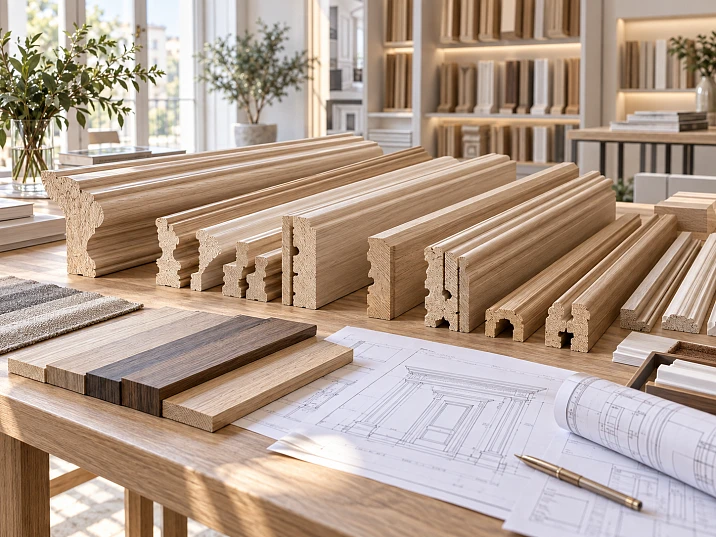
The designer has approved the interior, working drawings have been issued, and the specification is already accumulating tens or hundreds of meters of trim: baseboards, moldings, cornices, casings. At this stage, the question of "which profile looks better" becomes secondary. For a large order, something else matters more: who can reproduce the required article, confirm the material and length, provide a sample before purchase, meet the deadline, properly package the long-length items, and months later fulfill an additional purchase according to the same specification.
This is exactly how suppliers of finishing materials for an interior or furniture project should be compared. A large catalog by itself guarantees nothing. One seller may have a thousand items, but on a repeat order it will turn out that the profile has been discontinued, the drawing was not saved, the length has changed, or a small additional batch cannot be ordered.
For wooden trim, verification is especially important: the same project links the lower line of the room with a baseboard, the wall compositions with molding, and the top with a cornice. If these groups arrive uncoordinated, the error becomes visible only after installation.
Therefore, a supplier should be chosen not based on the promise that "everything is available," but based on the chain: production → exact article → material → dimensions → sample → repeatability → deadline → packaging → additional purchase.
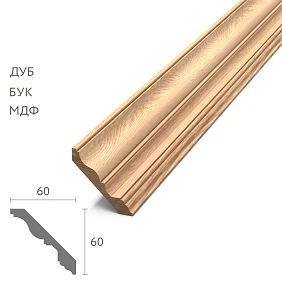
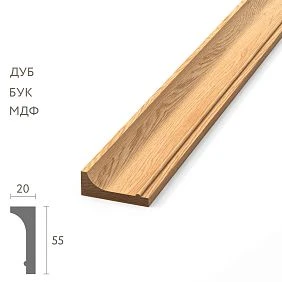
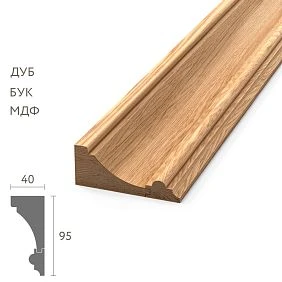
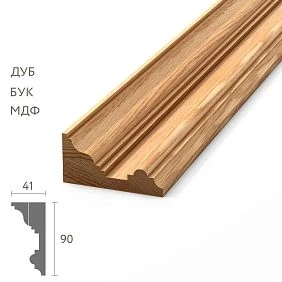
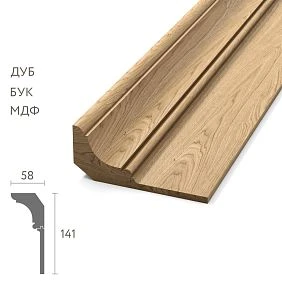
Suppliers of finishing materials: why assortment is far from the main criterion
A wide assortment is useful only when a manageable project can be assembled from it.
For the buyer, it is more important to check:
- whether there are accurate cards and drawings;
- whether the material of the specific configuration is specified;
- whether the standard length is clear;
- whether the part number is retained;
- whether a physical sample can be obtained;
- whether there is stock on hand;
- what the lead time is for custom production;
- how long-length items are packaged;
- whether a repeat small batch is possible.
It is precisely on these questions that a specialized manufacturer differs from a catalog that simply shows many beautiful photographs.
In the STAVROS catalog Wooden trim is assembled as a separate product group. For project procurement, this is a convenient starting point, but the decision is still made based on specific SKUs and their parameters.




Manufacturer, supplier, or distributor of finishing materials — what is the practical difference
The buyer does not necessarily need to understand corporate models. They need to understand who is responsible for product consistency.
Our factory also produces:


Manufacturer
If an organization manufactures the profile itself, it usually has a technological base: a drawing, tooling, material, standard length, and processing parameters.
For a project, the main question is:
can the same SKU be manufactured again in a few months?
Get Consultation
Supplier
A supplier may sell its own products or assemble an assortment from several manufacturing facilities.
This is not a drawback. But the buyer must understand who actually controls the profile if a repeat order is needed.
Distributor of finishing materials
The distributor works with the manufacturer's ready-made product line. Here it is especially important to find out whether access to the original SKU is preserved on the next purchase and whether it is automatically replaced with an "equivalent".
That is, the type of company is not important in itself. What matters is what happens when a request is made:
"We need another 20 meters of exactly the same profile that was used in the first phase."
What to check with a wooden trim supplier before the first order
That is why suppliers of finishing materials for large projects should be evaluated by the technical reproducibility of an order, not just by their product range.
For a large batch, it is useful to request not a promotional presentation, but a technical minimum.
| What to Check | What should be clear |
|---|---|
| Article number | unambiguous product designation |
| Cross-section | exact profile dimensions |
| Length | standard L for each configuration |
| Material | MDF, moisture-resistant MDF, beech, oak, etc. |
| Sanding | what preparation is available |
| Drawing | is there a technical drawing |
| Sample | can the profile be physically inspected |
| Availability | Warehouse or production |
| Repeat | can the same SKU be ordered later |
| Packaging | how long-length items are protected |
| Claim | how damages/non-conformities are recorded |
in the general catalog wood trim there are moldings, skirting boards, cornices, architraves, battens, and other profiles. But for the project it is not enough to know that the category exists: you need to check the line of a specific SKU.
Wooden molding: why the supplier must be checked for profile repeatability
Let's imagine a two-phase project.
The first phase requires 160 m of molding. Four months later the second phase opens — another 35 m.
The buyer needs not just a “similar molding,” but the same one:
- size;
- profile;
- radii;
- the material;
- quality of preparation;
- standard length.
For example, the current MLD-059 has a cross-section of 17×10 mm; MDF comes in a length of 2600 mm, beech and oak — 2400 mm. As of the check on September 10, 2026, prices are 550 ₽ for MDF, 1,020 ₽ for beech, and 1,350 ₽ for oak. Such a set of parameters shows why the words “MLD-059 molding” are sometimes not enough: the order must contain the full configuration.
If required Buy wooden molding for a serial project, first fix the SKU and material, and then save this record for the second phase.
For a concrete example, you can open MLD-059 17×10 mm.
What “profile repeatability” means in practice
Repeatability is not a promise that natural oak will have an identical pattern a year later.
It is something more specific:
- the same SKU;
- the same geometry;
- the same dimensions;
- the same material type;
- the same level of processing;
- a clear possibility of repeat production.
For natural wood, the shade and texture may still differ. Therefore, it is better to supply visible critical areas from a single purchase or reserve the material in advance.
Wooden skirting board: why the price of one plank does not show the cost of the project
Skirting board clearly demonstrates the difference between the “price of the product” and the “cost of the complete set.”
PLT-006 currently has several configurations:
| Material | Section | Length | Price as of 10.09.2026 |
|---|---|---|---|
| MDF | 100×16 mm | 2600 мм | 1 660 ₽ |
| Moisture-resistant MDF | 100×16 mm | 2600 мм | 2 110 ₽ |
| Beech | 100×15 mm | 2400 мм | 3 220 ₽ |
| Oak | 100×15 mm | 2400 мм | 4 780 ₽ |
Let's say a project needs 96 m of finished skirting board.
For MDF 2600 mm:
96 ÷ 2.6 = 36.92, minimum 37 lengths before checking the cutting plan.
For solid wood 2400 mm:
96 ÷ 2.4 = 40, minimum 40 lengths.
That alone is why comparing “which piece is cheaper” is not enough. The length, number of joints, and number of physical units change.
You can see an example in the product card wooden skirting board PLT-006.
Cheaper per meter does not always mean cheaper for the whole project
If one profile has a longer standard length, it can result in fewer joints.
But a long length can be inconvenient for specific walls, elevators, storage, or cutting.
If another material is more expensive but leaves fewer inconvenient offcuts in the project, the difference in total cost may shrink.
Therefore, a supplier who can discuss project procurement should respond not only with:
“the price per piece is such-and-such”
but also help the buyer work with:
- length;
- quantity;
- we will reveal;
- phasing;
- reserve.
Wooden cornice: what to find out before ordering a large batch
For a cornice, the cross-section and length are especially important.
For example, KZ-010 currently has a cross-section of 66×51 mm. MDF is produced in lengths of 2600 mm, beech and oak — 2400 mm.
As of September 10, 2026:
- MDF — 3,140 ₽;
- beech — 7,200 ₽;
- oak — 11,120 ₽.
If you need Buy wooden crown for several rooms, the buyer must clarify in advance:
- which material is approved;
- how many lengths are needed;
- what is in stock;
- what is going into production;
- how the batch is packaged;
- what to do for a late additional purchase.
A concrete example — cornice KZ-010 66×51 mm.
Wholesale suppliers of building materials and a specialized manufacturer: different tasks
A universal wholesaler is convenient when a single order requires dozens of diverse categories: mixes, fasteners, sheet materials, consumables.
But for complex decorative trim, the priorities are different.
A specialized manufacturer is especially useful where the following are critical:
- specific profile;
- exact cross-section;
- wood species;
- repeat order;
- finishing options;
- drawing;
- physical sample.
Therefore, wholesale building material suppliers and a wooden decor manufacturer solve different tasks. For a project, you should not declare one "better overall." You need to determine which part of the procurement requires narrow specialization.
Wholesale building material suppliers: separate universal procurement from decorative
When searching for a wholesale building materials supplier, it is easy to mix up two groups:
bulk building materials and specialized interior products.
For the first group, it makes sense to compare logistics, warehouse, price, and availability.
For wooden trim, the following are added to this:
- architectural compatibility of profiles;
- wood;
- surface quality;
- repeatability of the SKU;
- ability to buy more later.
That is, trim cannot be evaluated using the same three columns as bags of mix.
One profile in three places: how to check a system of baseboard, molding, and cornice
There are three main decorative lines in a room:
floor → baseboard;
wall → molding;
ceiling → cornice.
If they are purchased from a single specialized supplier, they still need to be checked as a system.
| Element | What to coordinate |
|---|---|
| Baseboard | height, projection, material, color |
| Molding | width, relief, scale of frames |
| Cornice | height, offset, profile character |
| All together | species, finish, level of detail |
One manufacturer does not replace the designer's work. But it reduces the risk that when replacing an item, the client will end up with a completely different geometry without re-checking.
Why a good supplier offers samples before a large order
Before purchasing 300–500 linear meters, the profile is worth seeing in person.
A photograph does not show accurately:
- the real scale;
- the depth;
- shadow;
- surface quality;
- the combination with the door and floor.
At the time of checking, the STAVROS catalog contains samples of wooden trim at a price from 99 ₽.
It is useful to label the sample:
item number / material / approval date / room.
After approval, it becomes part of the project documentation.
A sample should verify more than just appearance
On a small fragment, you can assess more than color.
Check:
- profile accuracy;
- cleanliness of edges;
- section size;
- surface;
- how the test swatch applies;
- conformity to the drawing.
If the project will be repeated across multiple rooms or sites, the saved sample becomes a reference point for future batches.
How to check a supplier's ability to fulfill a repeat order
Before the first purchase, ask the questions that usually come up too late:
- Is the profile a stock item or a one-off?
- Is the SKU retained?
- Is there a technical drawing?
- Is a repeat possible after 3–6 months?
- Can a small additional batch be ordered?
- Are standard lengths retained?
- Can the same species and finish be selected again?
- What happens if a specific configuration is temporarily unavailable?
If the manager cannot answer these questions before the first invoice, the risk of a second queue is higher.
Where repeat ordering is especially important
This check is critical for:
- hotels;
- restaurants;
- network spaces;
- residential complexes;
- furniture series;
- offices with phased renovation;
- facilities where finishing is delivered in stages.
In an apartment where all trim is installed once, the risk is lower. In a network project, the same profile may be needed again a year later.
Wholesale building material suppliers: what questions to ask before signing a contract
A broad commercial request is useful to turn into a specific questionnaire.
| Question | Why |
|---|---|
| What is in stock? | understand the actual speed of the first batch |
| What is produced? | separate the warehouse from the future order |
| What is the production time? | embed into the project calendar |
| What is the minimum volume? | understand the possibility of additional purchase |
| Is there a drawing? | fix the geometry |
| Can a sample be ordered? | check before a large batch |
| How is long-length cargo packaged? | assess transportation risk |
| How is a claim filed? | know the procedure before a problem arises |
| Can an SKU be repeated? | protect the second queue |
| Is a custom option possible? | understand production limits |
This way, comparing suppliers stops being a conversation about "who offers a bigger discount."
Red flags when choosing finishing materials suppliers
No exact dimensions
If the profile is described only with the words "wide classic," it cannot be properly entered into a working specification.
No information about the material
The phrase "natural wood" is insufficient for a large order.
No drawing or technical diagram
Not every simple profile needs a complex data sheet, but critical dimensions must be verifiable.
Cannot obtain a sample
For a large interior batch, this increases the risk of approving a product based only on a screen.
Cannot confirm the timeline
"Roughly fast" is not suitable for a project with an installation schedule.
It is unclear whether the SKU can be repeated
This is a direct risk for the second phase.
The price is quoted without a specific configuration
Material, length, and processing can change the cost. The "from" price is not the same as the price of a project line item.
How to prepare a request to get a proper quote right away
Bad:
"How much does the molding cost?"
Good:
| Field | Example |
|---|---|
| Product | Wooden molding |
| Article number | MLD-XXX |
| Material | Oak |
| Footage | 180 м |
| Standard length | from the product page / clarify |
| Reserve | 12 m separately |
| Object | interior project |
| City | Moscow |
| Required date | ___ |
| Repeat queue | possible in 4 months |
| Sample | required before the main batch |
Such a request immediately shows the supplier the real task.
Why it is better to specify the reserve as a separate line
In a large project, there are two types of reserve.
Installation — for cutting, damage, complex assemblies.
Operational — for replacement after handover.
If you write only:
180 m + 10%
it is unclear what should remain after installation.
Better:
the main calculation is 180 m; installation reserve is 10 m; storage reserve after handover is 8 m.
Then no one accidentally uses up the entire stock on the current construction site.
Why one delivery is not always better than several
Working with one supplier does not mean delivering the entire project in one day.
If the linear footage is needed in stages, physical deliveries can be split:
- samples;
- first phase;
- second phase;
- reserve.
The main thing is to keep one master specification and identical SKUs.
Delivering long-length material to a construction site too early also creates a risk: it has to be stored among other work, moved, and protected from damage.
How to receive long-length material at the site
Acceptance must be based on the specification, not a general delivery note of “linear footage — 200 m.”
Check:
- article number;
- the material;
- length;
- number of lengths;
- marking;
- packaging integrity;
- visible damage;
- compliance of the batch with the required stage.
If a mix-up is detected, it is better to record it before unpacking and especially before cutting.
How to evaluate packaging
Good packaging for long-length material should solve a simple task: the profile arrives at the site without damage to the face geometry and ends.
Some current STAVROS product cards include rigid packaging frames. For example, the cards for KZ-010 and MLD-059 currently show the addition of a packaging frame for 390 ₽ according to their configuration standards.
This is a useful comparison criterion: the buyer should understand not only the cost of the item, but also exactly how the long-length product will be protected.
The same supplier does not guarantee the same natural wood
This is an important limitation.
Even when the SKU is repeated, oak and beech remain a natural material.
A new batch may differ:
- pattern;
- tone;
- grain direction.
Therefore, for transparent or semi-transparent finishing, critical visible areas are best purchased in one batch or the material should be reserved in advance.
The supplier's task is to ensure repeatability of the product, not to promise impossible identity of every wood fiber.
How to choose between a general wholesaler and a specialized manufacturer
Use a simple decision fork.
Need many different general construction categories?
A general wholesale supplier may be more convenient.
Is the exact wooden profile and its repeatability critical?
Check the specialized manufacturer.
Need to reorder in a few months?
Find out right away whether the SKU is retained and the minimum reorder quantity.
Need a visual system of baseboard, molding, and cornice?
Preference goes to the one who can provide all approved profiles and samples within a single technical logic.
How to bring supplier commercial proposals to a single comparison basis
One of the most common tender mistakes is comparing final totals, even though participants calculated different configurations.
For example, in one proposal the molding is specified as MDF with a length of 2600 mm, in another as beech 2400 mm, and in a third the cost of delivery and packaging is listed separately. Formally, all three lines are called the same, but economically these are different proposals.
Before choosing a supplier, consolidate the commercial proposals into a single table:
| Parameter | Supplier A | Supplier B | Supplier C |
|---|---|---|---|
| Article number | ___ | ___ | ___ |
| Material | ___ | ___ | ___ |
| Cross-section | ___ | ___ | ___ |
| Standard length | ___ | ___ | ___ |
| Number of lengths | ___ | ___ | ___ |
| Base cost | ___ | ___ | ___ |
| Packaging | ___ | ___ | ___ |
| Delivery | ___ | ___ | ___ |
| Lead time | ___ | ___ | ___ |
| Sample confirmed | Yes / no | Yes / no | Yes / no |
| A repeat batch is possible | Yes / no | Yes / no | Yes / no |
Only after that does it make sense to compare the result.
If one supplier is 5% cheaper but offers a different length that increases the number of joints and waste, the formal savings may disappear. If another is more expensive but already includes packaging for long lengths and a reserve batch, its total project cost may be clearer.
For a large purchase, a more useful question is:
“How much will a fully comparable specification cost up to the moment of acceptance at the site?”
And not:
“Who has the lower price per single length?”
Trial batch before the main volume: when it is justified
A physical sample shows the cross-section and surface well, but it does not always answer questions about packaging, labeling, and actual delivery repeatability.
If the project is large and the schedule allows, you can arrange a small trial purchase of the selected item before the main volume.
Its task is not to get a wholesale discount, but to check the process:
- does the product match the card and drawing;
- does the actual length match the order;
- is the marking clear;
- how is the profile protected;
- what condition are the ends in upon arrival;
- is it convenient to receive the bars individually;
- how quickly does the supplier respond to a question about a discrepancy.
After acceptance of the control batch, the project team already understands what the main material flow will look like.
This step is especially useful when it comes to expensive oak trim, a complex profile, or a repeatable chain project. For a small order, it may be excessive — a sample and an exact specification are enough.
What to record after choosing a supplier so that the decision does not "dissolve" in correspondence
After the tender, a short procurement passport for the project should remain.
It records:
- selected supplier;
- exact part numbers;
- materials;
- standard lengths;
- approved samples;
- drawing versions;
- agreed deadline;
- packaging method;
- contact for claims;
- reorder procedure.
If an additional purchase is needed in six months, the team should not have to search old chats again for “which molding was used back then.”
For finishing material suppliers, the ability to work with such technical fixation is a separate sign of maturity. A good purchase ends not with paying the invoice, but with saved information by which the goods can be accepted, repeated, and checked later.
When it is more advantageous to use one wooden decor supplier for the entire project
One supplier is especially convenient if the project simultaneously uses:
- plinth;
- molding;
- cornice;
- platband;
- other profiles of the same system.
The advantage is not in the slogan "everything from one source," but in management:
- one specification;
- unified designations;
- fewer substitutions;
- one procurement calendar;
- easier to repeat the order;
- it is easier to sort out mismatches;
- fewer communication gaps.
But if part of the project fundamentally relates to a different material or manufacturer, there is no need to artificially combine it into one purchase.
When it is still too early to approve the supplier
Do not place a large order if:
- the profile was selected only from a photo;
- the drawing or dimensions have not been checked;
- the standard length is unknown;
- the material has not been determined;
- there is no answer regarding the repeat batch;
- the deadline is only verbal and vague;
- no understanding of packaging;
- the commercial proposal does not match the specification;
- the customer is still changing the profile design.
Pausing before invoicing is cheaper than replacing hundreds of meters after installation.
Final supplier evaluation table
For a tender or comparison of several companies, it is convenient to use a scorecard.
| Criterion | Supplier A | Supplier B | Supplier C |
|---|---|---|---|
| Exact cards and dimensions | 0–2 | 0–2 | 0–2 |
| Drawings | 0–2 | 0–2 | 0–2 |
| Samples | 0–2 | 0–2 | 0–2 |
| Materials and options | 0–2 | 0–2 | 0–2 |
| confirmed deadline | 0–2 | 0–2 | 0–2 |
| Packaging of long-length items | 0–2 | 0–2 | 0–2 |
| Option to purchase additionally | 0–2 | 0–2 | 0–2 |
| Working with claims | 0–2 | 0–2 | 0–2 |
| Ability to repeat SKU | 0–2 | 0–2 | 0–2 |
| Final project price | 0–2 | 0–2 | 0–2 |
You shouldn't determine the winner by amount alone. If a supplier scored 20 points but cannot confirm the repeat of a specific profile, for a network facility this may be a critical shortcoming.
Where to start checking the assortment
If a supplier is being evaluated specifically on wooden moulding, you should first open the general catalog molding products and check for the required product groups.
Next:
- buy wooden trim — for general selection;
- Buy wooden molding — if the project is already broken down into wall profiles;
- Buy wooden crown — for the upper architectural line;
- samples of wooden trim — up to a large batch.
After that, the supplier is evaluated not by a promise, but by specific items.
Summary: what the supplier must prove before a large order
When comparing finishing materials suppliers, the final choice should rely not only on the availability of a catalog and price. For a serious interior project, the supplier must be able to confirm a specific technical and organizational workflow.
The buyer needs answers:
- which exact SKU;
- which material;
- what sizes and length;
- is there a sample;
- what is the lead time;
- how the product is protected;
- can the profile be repeated;
- can a small additional batch be ordered;
- how a non-conformity is handled.
If these questions are resolved, price becomes a normal commercial criterion.
If not, the low cost of a single piece of trim may turn out to be the most expensive saving on the project.
Questions before choosing a supplier of wooden trim
How does a manufacturer differ from a distributor?
For the customer, the main difference is who controls the profile and whether they can confirm a repeat order of the same SKU.
Should a supplier be chosen based only on the product range?
No. Exact dimensions, material, samples, lead times, packaging, and the ability to reorder matter.
Why take a sample before a wholesale purchase?
It allows you to physically check the cross-section, surface, scale, and test finish before ordering hundreds of meters.
Does STAVROS have molding samples?
Yes. At the time of checking on September 10, 2026, the catalog includes molding samples from 99 ₽.
Why is a repeat order important?
If a project is done in phases, the same profile may be needed several months later. An analogue with similar geometry is no longer equal to the original item.
Can an identical oak shade be expected in a new batch?
No. Natural wood varies. Repeatability of the article number does not mean an identical wood pattern.
What to ask about long-length items before delivery?
Standard length, packaging, number of pieces, acceptance rules, and method of protection against damage.
Why is the price per piece insufficient?
Different configurations have different lengths, material, and number of required lengths. You need to compare the cost of the entire project.
How to check the molding for the second phase?
Keep the SKU, drawing, material, sample, and specification of the first batch.
What should be considered a red flag?
Lack of exact dimensions, samples, a confirmable deadline, and an answer regarding reordering.
Where to view wooden trim?
In the STAVROS catalog with filtering by product type, material, and other parameters.