Article Contents:
- The first document should be a responsibility matrix
- Three models for procuring wooden trim
- Model A — the customer buys the material
- Model B — the contractor buys
- Model C — procurement is handled by a fit-out specialist
- Cannot be changed without approval
- Can be adjusted within the scope of authority
- ORDER-BY
- NEED-BY
- 1. No one ordered on time
- 2. The wrong SKU was ordered
- 3. The wrong quantity was ordered
- 4. The material arrived too early or too late
- 5. After installation, it is unclear who owns the leftovers
- Who should choose wooden trim?
- Who should calculate the quantity?
- Can the customer buy the material themselves?
- Can the contractor replace a missing molding?
- When is a procurement specialist needed?
- Who is responsible for an erroneous purchase?
- How does DELIVERED differ from ACCEPTED?
- What must be kept after placing an order?

The designer chose a wooden baseboard, molding, and cornice. The client approved the visualization. The contractor received the working documentation. A week remains before installation — and suddenly it turns out that no one placed the order: the client believed the contractor was buying the material, the contractor expected the purchase to be made by the client, and the designer was sure that the procurement specialist was handling it.
There is also a more expensive version of the same mistake: the contractor did buy the material, but independently replaced the approved molding with a "similar" one because the required item was out of stock.
Therefore wholesale purchase of building materials for an interior project should begin not with an invoice or delivery, but with the distribution of responsibility:
who selects → who approves → who calculates the quantity → who requests the price → who places the order → who pays → who monitors the deadline → who accepts → who has the right to approve a replacement → who owns the leftovers.
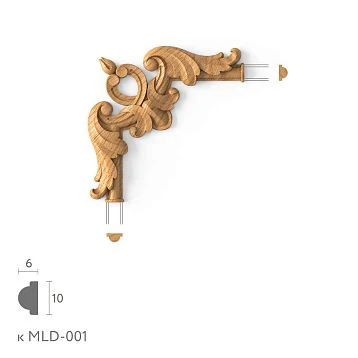
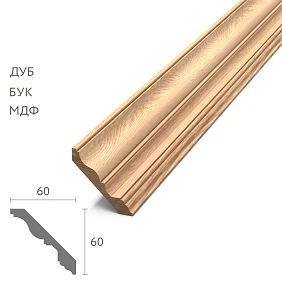
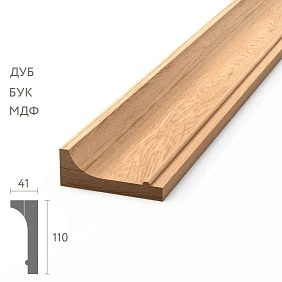
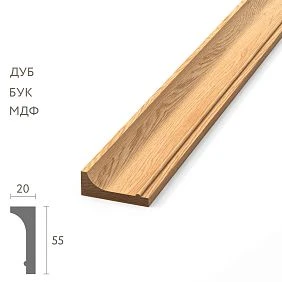
This is especially important for wooden trim: baseboards, moldings, cornices, and casings may look similar in photographs, but the project is tied to specific item numbers, materials, dimensions, and finishes. One unauthorized "equivalent" can alter an already approved architectural line.
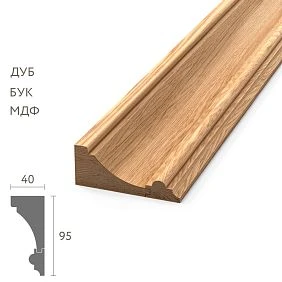
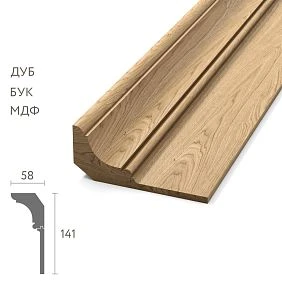
The current assortment can be checked in the section STAVROS wooden molding. But the product card itself does not answer the organizational question: who on the project is responsible for ensuring that this particular SKU is ordered on time and received correctly.
The first document should be a responsibility matrix
The estimate shows the money. The specification shows the product. Neither of them by itself answers the question of who performs each action.
For each operation, it is better to assign a responsible role in advance.
| Task | Primary responsible party | | --- | --- | | Select the profile | designer / project engineer | | Approve the solution | client or authorized person | | Confirm technical parameters | project engineer / specifier | | Calculate the quantity | designated specification specialist | | Request a commercial proposal | purchaser / specifier / contractor | | Place the order | person designated by the contract | | Pay | party according to the accepted procurement model | | Monitor the deadline | owner of the procurement line | | Accept on site | designated person responsible for acceptance | | Approve a replacement | only persons authorized by the project | | Account for leftovers | contractor / supply / client according to the accepted scheme |
Job titles may differ. In a small company, one person combines several functions. What matters is not the title, but the absence of a gray area.
For each line, there must be an answer to the question:
Who specifically should perform this action, and how will we know that it has actually been completed?




Three models of purchasing wooden trim
There is no universally best model. The choice depends on the contract, the scale of the project, and the competencies of the participants.
Our factory also produces:


Model A — the customer purchases the materials
The customer independently pays for the approved items and hands them over to the contractor for installation.
Advantages:
- the customer sees the actual price;
- controls exactly what is being purchased;
- keeps the order history directly;
- the material remains a separate purchase of theirs.
But along with control, they also take on responsibilities:
- not to miss the deadline;
- to receive the correct quantity;
- check the item codes;
- approve the delivery;
- organize the acceptance;
- place the reorder on time.
This model works if the client either knows how to handle procurement themselves or receives a ready-made technical specification from the project.
Get Consultation
Model B — the contractor purchases
The material is included in the contractor's supply.
This is convenient if one party is simultaneously responsible for the work schedule, actual consumption, and installation.
But the contractor cannot be left with an unlimited wording:
materials according to the design project.
Specific items and limits of authority for substitution must be fixed.
Model C — procurement is handled by a specifier
The specifier links:
design → SKUs → specification → quotations → order → delivery schedule → site.
This model is especially useful when there are many SKUs, deliveries are staged, different manufacturers are involved, or changes occur regularly.
The specifier does not have to be a separate full-time position. On a small project, the function can be performed by a designer, purchaser, or contractor's employee — if their responsibility is formally defined.
When the customer buys the material
Independent purchasing works well when the specification has already been prepared professionally.
The customer should receive not a message:
Buy about 200 meters of oak skirting board.
But a line:
PLT-___ / oak / size ___ / length ___ / net requirement ___ / installation reserve ___ / to order ___ pcs.
Then the customer performs a commercial operation, rather than redesigning the procurement from scratch.
If they have to decide on their own how much to add "just in case", which material to choose in the product card, and whether the profile can be substituted, the roles are mixed up.
Choosing a profile and calculating the quantity are different competencies
A person may be excellent at choosing interiors but poor at calculating linear stock.
For skirting, knowing the room perimeter is not enough.
Need to consider:
- actual installation sections;
- doorways;
- built-in furniture;
- commercial length;
- cutting map;
- usable remnants;
- installation reserve.
Suppose the net requirement is 91 m, and the commercial length is 2.4 m.
Mathematical minimum:
91 / 2.4 = 37.92, that is, 38 planks.
Purchased length:
38 × 2.4 = 91.2 m.
On paper there is almost no margin — only 0.2 m. The actual wall cutting may require more than 38 planks. Therefore, the person responsible for the quantity must calculate not only the total linear meters.
Wooden skirting board: what to get before payment
Before buying skirting board, a schedule is useful:
| Room | Net requirement | Commercial length | By cutting | Reserve | To order | | --- | ---: | ---: | ---: | ---: | ---: | | Living room | ___ | ___ | ___ | ___ | ___ | | Hallway | ___ | ___ | ___ | ___ | ___ | | Study | ___ | ___ | ___ | ___ | ___ |
The person responsible for procurement does not have to guess the calculation method. They must see the total and the basis for it.
If the linear meters changed after the control measurement, the new figure gets a new date or revision.
This way the old version does not continue to live in correspondence alongside the new one.
When the procurement of trim is handed over to the contractor
Handing over procurement to the contractor makes sense if they manage:
- schedule;
- supply;
- installation;
- actual measurements;
- consumption at the site.
But the contractual and design documentation must comply:
Which parameters can the contractor change independently?
For architectural trim, it is reasonable to separate:
Cannot be changed without approval
- article number;
- material, if it has been approved;
- geometry;
- size;
- visible profile;
- finish, if it is part of the design solution.
Can be adjusted within the scope of authority
- quantity after confirmed measurement;
- receipt date;
- internal breakdown of the delivery;
- logistics scheme.
Specific authorities are determined by the contract and the project.
Why the phrase "materials per project" is insufficient
The project must have a procurement breakdown.
Instead of:
wooden molding per project
You need to:
MLD-___ / material ___ / full size ___ / length ___ / quantity ___ / replacement only upon approval.
For cornice:
KZ-___ / material ___ / size ___ / length ___ / quantity ___ / project version ___.
For the skirting board:
PLT-___ / material ___ / size ___ / length ___ / quantity ___.
This is how the contractor understands where their freedom of procurement decision ends.
Can the contractor replace a wooden molding with an analogue
Only if the project allows such a procedure in advance.
Working scheme:
replacement proposed → new SKU recorded → dimensions and material verified → designer assesses impact → customer or authorized person approves → specification receives a new revision → only then is the purchase processed.
Incorrect scheme:
the required one was unavailable, so a similar one was taken.
Even if the replacement is visually successful, the absence of a procedure creates an accountability problem.
If the client does not accept the result later, the parties begin to argue after payment and installation.
Who pays for an erroneous replacement
There is no universal answer.
It depends on the contract, the distribution of authority, the facts of approval, and the specific situation.
Therefore, the practical solution is to determine before the first purchase:
- who has the right to initiate a replacement;
- who is obliged to technically verify it;
- who gives final approval;
- in what form consent is recorded;
- who bears the risk of an unapproved purchase.
The article cannot replace a contract, but the project can eliminate a significant portion of disputed areas in advance.
When a dedicated kit coordinator is needed
A kit coordinator is especially useful when the following occur simultaneously:
- many SKUs;
- multiple suppliers;
- phased deliveries;
- custom-made items;
- frequent project changes;
- multiple decision-makers;
- a large volume of approvals.
Its function is not to “find something cheaper.”
They must maintain a specific position throughout the entire chain:
DESIGN → APPROVED → QUANTITY CONFIRMED → RFQ → ORDERED → READY → DELIVERED → ACCEPTED.
And at any moment be able to say where each line item is.
How a specifier differs from a designer
The designer is primarily responsible for the design solution:
- which profile;
- what scale;
- which material;
- where it is applied.
The specifier translates the solution into a procurement system:
- exact article number;
- link;
- quantity;
- commercial proposal;
- the deadline;
- order status;
- delivery.
On a small project, the designer can perform both functions.
But within the process, it is still useful to separate:
decision approved
и
item actually ordered.
This is not a single status.
How a procurement specialist differs from a site foreman
The site foreman manages the execution of construction work and the actual situation on site.
The procurement specialist manages the purchasing nomenclature.
Functions may overlap.
For example, the site foreman confirms the actual wall dimension, while the procurement specialist recalculates the quantity and places the order.
That is why you need to assign actions, not argue about job titles.
One material — one owner of the procurement line
Let's say the project has MLD-021.
This line must have one person who knows its current status.
They must answer:
- whether the profile is approved;
- whether the quantity is confirmed;
- whether a price request has been sent;
- whether a supplier has been selected;
- whether the item has been ordered;
- when it will be ready;
- whether it has been delivered;
- whether there is a change;
- whether it has been accepted at the site.
This does not mean that all actions are performed by one person.
But one person controls the integrity of the line and does not allow it to "fall between roles".
Which statuses to assign to each item
A convenient sequence:
DESIGN — profile is selected.
APPROVED — the design solution is approved.
QUANTITY CONFIRMED — quantity is confirmed.
RFQ — quote requested.
QUOTE RECEIVED — quote received.
ORDER APPROVED — commercial terms approved.
ORDERED — order actually placed.
READY — ready for shipment.
DELIVERED — physically received at the site or warehouse.
ACCEPTED — passed the site's required inspection.
HOLD — discrepancy found, release for installation stopped.
This system quickly answers the question:
Have we already ordered the curtain rod or only received the price?
Wholesale procurement of building materials: what ORDERED actually means
When wholesale purchases of building materials Status ORDERED must mean a specific completed action.
Minimum:
- the order has been sent to the supplier;
- the SKUs have been confirmed;
- the quantity has been locked in;
- the commercial terms have been agreed;
- there is a confirmation from which the agreement can be reconstructed.
Does not qualify:
the manager was supposedly messaged
Or:
the buyer said they did everything.
Such formulations do not constitute a controlled status.
Where to store order confirmation
Critical information should not exist only in one employee's personal messenger.
The following should be stored in the shared project folder or system:
- the current specification;
- order confirmation;
- article numbers;
- materials;
- quantities;
- price;
- dates;
- supplier contact;
- order number;
- the linked project revision.
If an employee falls ill, goes on vacation, or changes jobs, the procurement history remains accessible to the project.
ORDER-BY and NEED-BY: two different dates
At least two dates are useful for each item.
ORDER-BY
The last safe moment when the order must be placed, taking into account the confirmed lead time and the time buffer accepted by the project.
NEED-BY
The date when the material must be available for the next stage of work.
In between lies:
order confirmation → production or assembly → packaging → transportation → acceptance → internal movement to the installation area.
Phrase:
the contractor said they would make it
does not replace this chain.
If the production or delivery time changes, the owner of the procurement line must see the impact on NEED-BY.
Who confirms the quantity of the wooden cornice
The designer can select KZ-XXX and show it on the drawing.
But the actual quantity must be based on the current dimensions of the corresponding stage of the project.
For example, in the project the wall length is:
5200 mm.
After the finishing work, the control measurement is:
5165 mm.
The difference:
5200 − 5165 = 35 mm.
For a single wall, this may not be critical in terms of quantity. Across dozens of rooms, the total difference already affects the linear meters and cutting.
Therefore, the project must determine in advance:
who performs the final measurement before the final purchase?
It does not have to be the designer. It could be the site foreman, the measurer, the procurement specialist, or another assigned role.
Who is responsible for the installation allowance
A typical conflict:
customer:
I bought exactly as much as was sent to me.
contractor:
But who was supposed to add the allowance for cutting?
Such a dispute means that the specification was incomplete.
Separate fields are needed:
| Indicator | Value | | --- | ---: | | Net requirement | ___ | | Quantity per cutting plan | ___ | | Installation reserve | ___ | | Operational reserve | ___ | | Total to order | ___ |
Then it is clear who generated each figure and what exactly was paid for.
Who owns the leftovers after installation
This also needs to be decided in advance.
If the customer purchased the material directly, the model may be one.
If the contractor purchased it within a fixed all-inclusive price, the contractual model may differ.
Before work begins, it is useful to determine:
- to whom full remaining stock is transferred;
- who stores the operational reserve;
- what happens to usable offcuts;
- which remnants are considered customer-supplied material;
- which are reflected in the contractor's internal records.
There is no need to leave this issue until the last day of the project, when the packaging has already been mixed.
Purchasing building materials: five conflicts without distributed responsibility
When purchase of construction materials five organizational conflicts most often come to light.
1. No one ordered on time
Solution: line owner + ORDER-BY.
2. Ordered the wrong SKU
Solution: approved specification + order verification before payment.
3. Bought the wrong quantity
Solution: assigned person responsible for the final calculation and control measurement.
4. Material arrived too early or too late
Solution: ORDER-BY + NEED-BY + confirmed schedule.
5. After installation, it is unclear who owns the leftovers
Solution: leftover and reserve rule in the project procurement model.
Every conflict arises not because the participants “work poorly,” but because a specific operation has no owner or verifiable status.
What to do if the project changed after ordering
Let's imagine:
molding MLD-A has already been ordered.
The designer is changing the layout and wants MLD-B.
First, you need to determine:
- how much MLD-A has already been produced;
- whether the order can be canceled or changed;
- whether it can be used in another area;
- how much MLD-B will be required;
- whether the deadline changes;
- whether the budget is changing;
- who approves additional expenses.
The change must go through as a separate operation, not as a new line that quietly replaces the old one.
What a CHANGE ORDER for wooden trim looks like
Example:
| Was | Became | Reason | Quantity change | Cost change | Approved | | --- | --- | --- | ---: | ---: | --- | | MLD-A | MLD-B | design change | ___ | ___ | ___ |
Additionally fixed:
- date;
- initiator;
- what has already been ordered under the old version;
- what happens to the old material;
- from which zone the change applies.
The payment mechanism for a change order depends on the contract.
The practical purpose of the table is to show the impact of a decision before the new item is purchased.
Who should accept the trim on site
Not a random worker who happened to be near the truck.
The person responsible for acceptance must have:
- the current specification;
- article numbers;
- the material;
- quantity;
- understanding which parameters are checked immediately;
- procedure for a disputed item.
It is not only the fact that is checked:
the boxes arrived.
It is necessary to establish:
whether the exact product configuration that was ordered arrived.
Physical receipt and technical acceptance are not the same thing
The driver, security, or unloading staff can confirm the number of transport units.
This does not yet mean that someone has checked:
- article numbers;
- the material;
- commercial lengths;
- compliance with the specification;
- visible damage;
- marking.
The project must distinguish:
DELIVERED — delivered;
ACCEPTED — accepted per internal procedure.
A check may exist between these statuses.
What to do if the wrong profile is detected before installation
The material receives the status:
HOLD.
The following are then recorded:
- article number;
- quantity;
- photo;
- expected position;
- actually received;
- discrepancy;
- date;
- responsible person.
Until a decision is made, the disputed profile is not handed over to the crew.
This is fundamental: before installation, the cost of an error is usually much lower than after.
If the error was discovered after installation
Then the following are added to the cost of the material:
- dismantling;
- re-preparation of the surface;
- new product;
- re-installation;
- possible painting;
- impact on the timeline.
That is why purchasing responsibility must apply before the material is handed over to the installers.
Inspection after a defect appears is already consequence management.
RACI example for wooden mouldings
RACI is convenient to use as a starting model.
R — performs the action.
A — ultimately accountable/approves.
C — participates in consultation.
| Process | Customer | Designer | Procurement specialist | Contractor | | --- | --- | --- | --- | --- | | Profile selection | A | R | C | C | | Technical specification confirmation | C | R | R | C | | Quantity calculation | C | C | R | C/R | | Request for quotations | C | — | R | C/R | | Budget approval | A | C | R | C | | Order placement | A/C | — | R | R/C | | Deadline control | C | — | R | R | | Acceptance | C | — | C | R | | Replacement proposal | C | R/C | R | R/C | | Final replacement approval | A | R/C | C | C |
This is an example, not a universal legal allocation of responsibility.
On a real project, the matrix must correspond to the contract and the actual team structure.
How to check the matrix for workability
For each line, ask four questions:
- Is there a specific
R? - Is there a person who makes the final decision?
- Are five people not assigned as responsible at the same time?
- Do the participants understand where the result of the action is recorded?
If the task "place an order" simultaneously has the customer, contractor, and assembler without specifying roles, this is not a strengthening of control, but a potential gray area.
Better to have one executor and a transparent approval chain.
Minimum procurement item card
For each critical SKU, you can maintain:
| Field | Value | | --- | --- | | Project | ___ | | Zone | ___ | | SKU | ___ | | Material | ___ | | Size | ___ | | Length | ___ | | Quantity | ___ | | Line owner | ___ | | Status | ___ | | ORDER-BY | ___ | | NEED-BY | ___ | | Supplier | ___ | | Order number | ___ | | Substitution allowed | yes / no / approval | | Acceptance | ___ | | Balance | ___ |
On a small project, such a card can be maintained in a single table.
Complex ERP is not required. Unambiguity is.
When three roles can be combined in one person
On a small renovation, one designer-procurement specialist can indeed:
- choose a profile;
- draw up a specification;
- request a price;
- place the order.
This is normal.
But even in this case, actions must have different statuses.
A person should not assume:
I selected a product — so it is automatically ordered.
Selection, approval, calculation, and order placement remain different operations, even if they are performed by one person.
When it is better not to transfer purchasing to the client
Independent purchasing can be a poor model if the client:
- does not want to maintain a specification;
- does not understand product lengths;
- cannot control deadlines;
- is not ready to handle substitutions;
- cannot organize acceptance;
- expects the contractor to be responsible for all supply.
Then formal savings on the procurement service can create more coordination work.
When it is better not to give purchasing entirely to the contractor
Full handover to the contractor may be unsuccessful if:
- the design contains many critical item codes;
- the client wants to personally approve every substitution;
- several specialized suppliers are involved;
- the contractor does not maintain detailed procurement documentation;
- the contract does not define the procedure for approving equivalents.
In such a project, a separate procurement function or a joint model is more useful.
How to choose a responsibility model before the first purchase
A simple decision tree can be used.
Is the client ready to manage items, deadlines, and documents themselves?
If yes, model A can work.
Is the contractor under the agreement responsible for supply and able to maintain accurate SKUs?
If yes, model B may be more efficient.
Many SKUs, several suppliers, phased deliveries, many approvals?
Then a dedicated kit assembler function reduces the risk of lost lines.
Are roles still combined?
Assign one owner to each procurement item and keep the status transparent.
You need to choose not the "most professional job title," but a process in which every operation has an executor and a checkpoint.
Final responsibility scheme for wooden trim
- The designer selects the design solution.
- The authorized person approves it.
- Specific SKUs are included in the specification.
- The designated person confirms the quantity.
- An owner is assigned to each line.
- Are recorded
ORDER-BYиNEED-BY. - The commercial proposal is verified against the approved specification.
- Status
ORDEREDis set only after the order is actually placed. - Any replacement requires separate approval.
- A project change is processed as a change order.
- During delivery, are separated
DELIVEREDиACCEPTED. - Discrepancy is received
HOLD. - After installation, whole remnants and reserve are taken into account.
- The procurement history remains in the shared project system.
This is how the responsibility tree becomes as important a document as the quantity sheet.
Questions before starting procurement
Who should choose the wooden trim?
The design solution is usually formed by the designer or project engineer, but the final roles are determined by the specific project.
Who should calculate the quantity?
The assigned specialist who works with current dimensions, product lengths, and cutting. This is not necessarily the same person who selected the profile.
Can the customer purchase the material themselves?
Yes, if it receives an exact specification and assumes control of the order, timelines, delivery, and reordering.
Can the contractor replace a missing molding?
Only within a predefined approval procedure. Unauthorized replacement creates a risk of non-compliance with the project.
When is a kit coordinator needed?
When there are many SKUs, suppliers, stages, changes, and approvals, and the project needs a single owner of procurement information.
Who is responsible for an erroneous purchase?
This is determined by the contract, authority, and the specific situation. A universal rule without reviewing the documents is incorrect.
How DELIVERED does it differ from ACCEPTED?
DELIVERED means the fact of delivery. ACCEPTED — completion of the acceptance inspection stipulated by the project.
What must be kept after placing an order?
The current specification, order confirmation, item codes, quantities, dates, order number, supplier details, and the history of agreed changes.