Article Contents:
- A catalog is only the first stage of supplier qualification
- First, identify the project's critical items
- Building material suppliers: the first thing to request is an exact product specification
- Wooden skirting board: what to check on a sample before approval
- Wooden moulding: why a complex profile requires a reference sample
- Wooden cornice: check not only the pattern but also the actual cross-section
- Wholesale building material suppliers: a sample does not prove the ability to fulfill the entire volume
- How to verify profile repeatability before a large order
- Standard
- Control batch
- Main batch
- Is a catalog enough to choose a supplier?
- Why order a sample?
- Should you make a control batch?
- What is more important for a repeat order?
- Can a molding be replaced with a similar one?
- What to keep after approving a sample?
- Where to get STAVROS drawings?
- Where to order samples?
- When can qualification be considered complete?

A supplier for a large interior project cannot be qualified based on a catalog, price, and a beautiful sample alone. If a project involves hundreds of meters of wooden skirting boards, moldings, and cornices, the buyer is interested in something else: whether each profile can be unambiguously identified, reproduced several months later, the same species and size obtained, a reference sample approved, and then a production batch accepted according to clear criteria.
Therefore construction materials suppliers for project procurement are assessed in several stages:
item code → technical documentation → material → sample → reference sample → control batch → main batch → repeat order → acceptance.
The first sample answers the question “does the product suit the project.” The control batch answers a different question: “can the supplier reproduce the selected item in series.” And the contract and product data sheet are needed so that three months later the buyer does not try to reconstruct the original specification from a photo in a messenger.
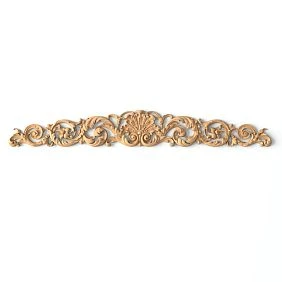
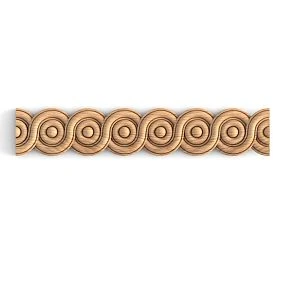
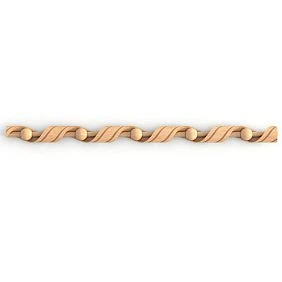
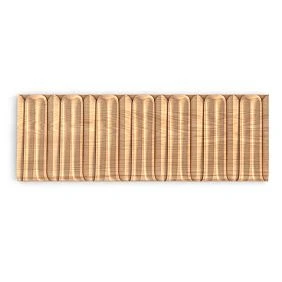
For checking standard profiles, it is convenient to use the catalog wooden trim, and for physical checks — the section of STAVROS product samples.

The catalog is only the first stage of supplier qualification
A large catalog is useful for initial selection, but by itself it proves nothing about a specific item for a project.
Before including a wooden profile in the project, the following must be confirmed:
- exact article number;
- full name;
- the material;
- cross-section;
- standard length;
- available finishing options;
- availability of a technical drawing;
- physical sample;
- reorder terms;
- production time;
- packaging and labeling.
If a manager suggests "an oak molding about 50 mm," that is not enough.
For the project, you need a line that can be repeated without verbal explanations:
MLD-___ / oak / A×C×L ___ / finish ___ / reference no.___
It is exactly this entry that must then pass through the specification, invoice, production, packaging, and acceptance.




First, identify the critical items of the project
Not all materials are equally risky to replace.
The most sensitive items are those that form a repeating visible geometry:
- wooden skirting board;
- wall moulding;
- wooden cornice;
- platband;
- complex carved profile;
- a profile repeated on several floors.
If one moulding is used in twenty identical wall frames, replacing it with an "almost identical" profile will change the entire rhythm of the composition.
Therefore, critical SKUs should be placed in a separate register before the tender.
| Project code | SKU | Purpose | Replacement without approval | | --- | --- | --- | --- | | P-01 | PLT-___ | skirting board | no | | M-04 | MLD-___ | hallway frames | no | | K-02 | KZ-___ | cornice | no | | R-01 | REYKA-___ | hidden area | subject to approval |
This way the buyer immediately understands where an alternative can be discussed and where an exact match is required.
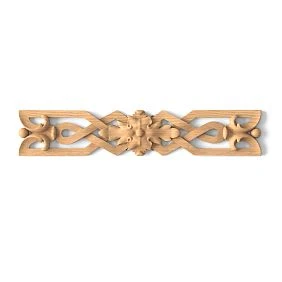
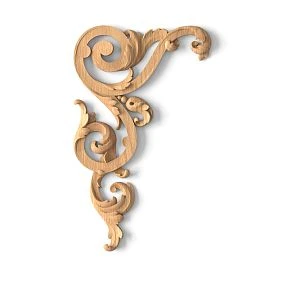
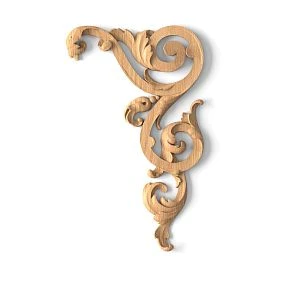
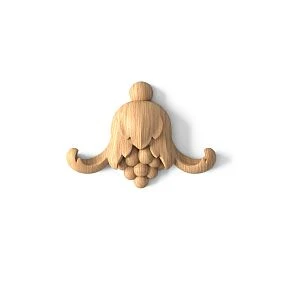
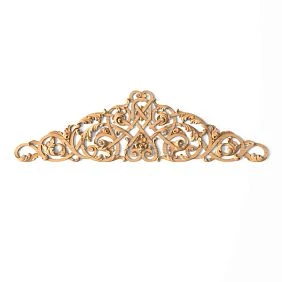
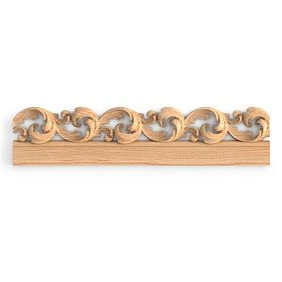
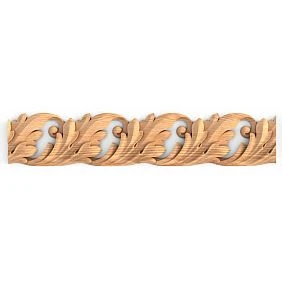
Our factory also produces:

Building material suppliers: the first thing to request is the exact product specification
When choosing building material suppliers the first useful document is not a commercial proposal, but an identifiable specification.
For each item, the following is required:
- article number;
- size;
- length;
- the material;
- type of finish;
- link to the product page;
- technical drawing or catalog;
- date of data relevance.
STAVROS publishes a separate section with catalogs and DWG drawings of products. For a designer, this is more convenient than transferring geometry from a photo or an advertising description.
It is important not to try to decipher dimension letters on your own without a drawing. If the product card shows A, B, C or other parameters, the physical meaning of each designation must be read from the official product diagram.
Get Consultation
Wooden skirting board: what to check on a sample before approval
A skirting board sample is not needed to decide whether it is "beautiful or not."
It is used to check:
- actual cross-section;
- quality of the front surface;
- readability of the profile;
- the material;
- scale next to the door casing;
- joint of two fragments;
- future finish;
- compliance with the working drawing.
If the project specifies opaque enamel, it is useful to make a control paint sample on the actual profile.
If tinting is planned, the sample should help evaluate both the wood itself and the future coating system.
Sample approval should end not with the words "suitable," but with the assignment of a number:
Reference PLT-___ / No.P01 / approved ___
Wooden molding: why a complex profile requires a reference sample
Even a slight change in the cross-section of the molding can affect the wall composition.
Changes:
- outer frame dimension;
- position of the miter cut;
- visual line thickness;
- distance between frames;
- jointing with other profiles;
- perception of the profile under side lighting.
Therefore, for a complex molding, a physical reference sample is more useful than a dozen photographs.
If the project is large, it is better to keep the approved fragment until all deliveries are complete. It becomes a reference point for the first, second, and subsequent batches.
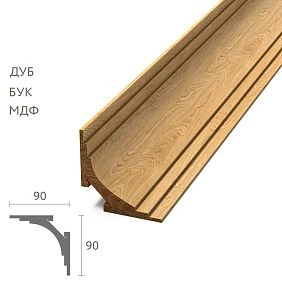
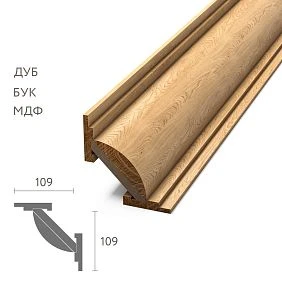
Wooden cornice: check not only the pattern, but also the actual cross-section
A large cornice is especially sensitive to a size error.
The designer needs to check against the drawing:
- the full profile;
- junction points;
- actual length;
- geometry of corners;
- connection with the ceiling and wall;
- the joining of individual planks.
A decision cannot be made based only on a frontal photograph.
A cornice may look the same from the front but differ in projection or another part of the cross-section. For an already designed portal, ceiling line, or furniture top, this may require reworking the assembly.
Wholesale building material suppliers: a sample does not prove the ability to fulfill the entire volume
Wholesale building material suppliers should be evaluated not only by a single sample, but also by serial reproducibility.
One good sample answers the question:
can one suitable part be manufactured?
A large project asks a different question:
can this result be repeated over hundreds of meters and then again several months later?
The buyer needs to find out:
- whether this is a standard catalog item;
- whether it is produced serially;
- what volume can be confirmed by the required date;
- is technical documentation retained;
- how are batches identified;
- what are the reorder terms;
- whether the same configuration can be ordered later.
A standard profile with a permanent item code and documentation is easier to control than a product described only as a “molding to sample.”
How to verify profile repeatability before a large order
For critical trim, it is reasonable to use a three-stage scheme:
reference sample → control batch → main batch.
This is a recommendation for project quality management, not a statement that every supplier is obligated to officially provide such a service.
Reference
One or more fragments approved by the project team.
Control batch
A small quantity of serial products used to check whether the selected profile is repeatable in production mode.
Main batch
It is launched after the inspection has not revealed any critical discrepancies.
Compare:
- article number;
- the material;
- full cross-section;
- length;
- surface;
- relief;
- marking;
- packaging.
The size of the control batch is determined by the project itself. There is no universal rule that it must be 10 or 20 pieces.
How to document the comparison of the control batch with the reference sample
The inspection must be documentable.
| Parameter | Reference | Control batch | Result | | --- | --- | --- | --- | | SKU | MLD-___ | MLD-___ | matches | | Material | oak | oak | matches | | A×C×L | ___ | ___ | check | | Surface | reference No. 1 | batch No. ___ | check | | Relief | reference No. 1 | batch No. ___ | check | | Marking | specified | actual | check |
If a project uses its own tolerances, they must be agreed upon separately in the technical specification. It is not acceptable to invent universal tolerances for all profiles.
Wholesale building material suppliers: the question of reordering must be asked before the first delivery
for wholesale building material suppliers one of the main qualification questions is:
If after installing 600 m you need another 35 m of the same profile, which SKU, material, lead time and terms of repeat production will apply?
It is best to get the answer in writing.
Especially for multi-stage projects:
- hotels;
- apartment complexes;
- restaurant chains;
- serial furniture;
- properties with several buildings.
A reorder should not begin with the phrase:
“We need the same molding we bought in spring.”
It should begin with the saved technical line.
Why a stable SKU is sometimes more important than a price difference
Suppose offer A is 6% cheaper.
But the supplier has no stable profile identification or clear reorder procedure.
Offer B is slightly more expensive, but:
- there is a permanent SKU;
- there is a drawing;
- there is a sample;
- the configuration is preserved;
- a reorder can be placed using the same data.
For a one-time small purchase, this difference may be insignificant.
For a project built in phases over nine months, SKU stability may prove more important than the initial discount.
This does not mean that an expensive supplier is always better. The point is that price should be compared together with the risk of reordering.
Building materials supplier: the material must be part of the project SKU
A building materials supplier must record the material as precisely as the SKU itself.
Bad line:
PLT-006
Better:
PLT-006 / oak / size ___ / length ___ / finish ___
The reason is simple: the same profile can have several materials and product configurations.
If the material is missing from the specification, there is room for error during reordering.
Building materials supplier: how to verify the deadline without a vague “we’ll make it”
A building materials supplier must confirm not only the approximate deadline, but also the stage to which this date applies.
One must distinguish:
- production time;
- readiness for shipment;
- the actual dispatch date;
- transit;
- acceptance window at the site.
Phrase:
"Lead time 10 days"
does not answer the question of whether in 10 days the goods will be manufactured, packed, handed over to the carrier, or already at the site.
For a tender, a more useful wording is:
readiness for shipment — ___; planned arrival date — ___; permissible staging — ___
This way the installation schedule is linked to real logistics, not to a single number from correspondence.
How to create a passport for an approved product
For each critical item, a separate passport is useful.
| Parameter | Value | | --- | --- | | Project code | M-04 | | SKU | MLD-___ | | Name | wooden molding | | Material | oak | | Size | ___ | | Length | ___ | | Finish | ___ | | Reference | No.___ | | Reference photo | file ___ | | Drawing | version ___ | | Permissible substitution | no / only by agreement | | First batch | No.___ | | Approval date | ___ |
This document stays with the project regardless of who is currently handling the procurement.
If the employee changes, the new purchaser receives not the correspondence, but the passport.
Wholesale building material suppliers: why the first serial delivery should be qualified separately
wholesale building material suppliers they may produce a good sample, but the project needs stability in the actual delivery.
The first serial batch is checked for:
- compliance with the product passport;
- marking;
- separation of article numbers;
- packaging condition;
- material match;
- completeness;
- quality of the visible surface;
- preservation of the approved profile.
If problems are found here, they must be resolved before the next large batch.
This way, the project does not carry a single unresolved defect across hundreds of meters of material.
How to qualify packaging and labeling before the contract
For long-length linear trim, packaging is part of supply controllability.
Before signing the contract, it is useful to ask:
- how the transport unit is labeled;
- whether the item code is visible without fully opening it;
- whether the material is indicated;
- whether the length is indicated;
- whether the quantity is indicated;
- can a location be linked to a specific batch;
- how are the ends protected;
- how are different SKUs separated within a single delivery.
Current STAVROS materials describe the marking of trim with the article number, dimensions, production date and batch number, as well as protective packaging for transportation.
This matters to the buyer because the goods must remain identifiable after arriving at the site.
Bad situation:
the packaging says “oak molding — 4 packs,” while the specification lists five different moldings.
Good:
article number / material / length / quantity / batch.
Large building material suppliers: a company’s size does not yet mean it is suitable for complex decor
У large building material suppliers there may be strong logistics, a wide range and large warehouses.
But for complex wooden moulding, you need to check separately:
- specialization;
- availability of technical documentation;
- possibility to obtain a sample;
- profile repeatability;
- work with natural wood;
- procedure for serial reordering.
A large universal distributor may be more convenient for general construction nomenclature.
A specialized manufacturer may be more convenient where precise geometry of the decorative profile is critical.
You cannot appoint a winner in advance — you need to compare based on the task of the specific project.
A large supplier of construction materials or a specialized manufacturer
If a project simultaneously purchases dozens of heterogeneous construction categories, large supplier of building materials consolidation may be convenient.
If a project includes a complex system of wooden skirting boards, moldings, and cornices, other parameters come to the fore:
- profile;
- the material;
- samples;
- drawings;
- reproducibility;
- repeat production;
- packaging quality.
Therefore, the qualification table should evaluate not an abstract “company size,” but the ability to cover the project’s critical items.
How to vet a supplier if the project runs in phases over 6–12 months
A multi-stage project requires a separate question about data retention between deliveries.
It is useful for the purchaser to find out:
- whether the item code is retained without renaming;
- can the same drawing be obtained again;
- how the material will be identified;
- is the first batch number recorded;
- who is responsible for the repeat order;
- what happens if the standard configuration changes.
The project itself must also maintain its own archive.
Minimum:
reference sample + passport + drawing + first invoice + batch number + marking photo.
If the supplier's manager changes after eight months, the project must still have enough information for an accurate reorder.
What to do if the supplier's manager has changed
A change of manager should not turn a repeat order into a new approval from scratch.
The new contact person is sent:
- the previous order number;
- exact article number;
- the material;
- size;
- reference number;
- photo of the marking;
- the required quantity;
- a link to the current specification.
If a supplier can restore an item only by the old manager's name, that is a weak point in the process.
Proper identification should live in documents, not in a specific employee's memory.
What to check in a wooden trim supply contract
A contract does not have to turn into a technological treatise.
But the commercial part must match the technical part.
It is useful to check whether the following are specified:
- exact name;
- article number;
- the material;
- size or reference to the specification;
- quantity;
- the deadline;
- delivery phasing;
- sample approval procedure;
- acceptance procedure;
- procedure for recording discrepancies;
- rules for approving substitutions.
If the sample is approved, it is better to link the delivery to a specific reference number in the contract or its annex.
How to record an approved sample
An unlabeled sample quickly turns into “that piece of wood that was lying in the meeting room.”
It or the accompanying card must include:
- article number;
- the material;
- size;
- date;
- reference number;
- project;
- approval mark.
It is useful to take several photos:
- general view;
- side profile;
- marking;
- comparison with an adjacent element of the composition.
A photograph does not replace the physical reference sample, but it helps prove which specific sample was approved.
What to do if the second batch differs from the first
Suppose the first batch passed acceptance and has already been installed. Two months later, the second one arrives, and some profiles have a visually different surface or their geometry raises doubts.
There is no need to immediately mix it with the leftovers of the first batch.
Correct order:
- separate the disputed batch;
- retrieve the product data sheet;
- find the approved reference sample;
- verify the SKU and material;
- verify the drawing and dimensions;
- document the differences with photos and measurements;
- send the supplier a specific list of discrepancies;
- only after resolution should the material be approved for installation.
This way, the dispute is discussed not in terms of "it seems slightly different," but by specific parameters.
Who should approve a profile replacement
The purchaser should not unilaterally confirm a replacement just because the new SKU is cheaper or available faster.
For critical items, a decision usually requires at least a technical and visual check.
Within the project, it is useful to define roles in advance:
- the procurement specialist receives a replacement proposal;
- the designer compares the geometry;
- the designer checks the composition;
- the person responsible for the project confirms the change;
- the new version of the specification receives a revision number.
This way, the dispute about "who approved replacing the molding" does not arise after installation.
What to do if the supplier offers an "almost identical" profile
A replacement cannot be confirmed over the phone.
Algorithm:
- obtain the exact SKU of the proposed replacement;
- obtain the current drawing;
- compare dimensions;
- request a physical sample;
- attach it to the design composition;
- check the finish;
- obtain approval from the designer or architect;
- issue a new revision of the specification.
Until the new revision is approved, the original SKU remains valid.
This is especially important for molding and cornice, which form a repeating pattern throughout the room.
If a replacement is needed only for a hidden area
Sometimes an alternative profile can be used where it is not part of the main composition.
For example, part of the baseboard is completely hidden by built-in furniture.
But the decision must still be made by the project.
In the item passport, you can specify in advance:
visible area — replacement is prohibited;
hidden area — allowed only upon approval.
This way, the buyer does not extend a private approval to the entire project.
What red flags are visible even before the contract
The supplier should be double-checked if:
- there is no permanent item code;
- dimensions are given approximately;
- the material is not documented in writing;
- the sample cannot be identified;
- there is no drawing;
- the manager cannot explain the reorder terms;
- the replacement offer sounds like “it’s almost the same”;
- the deadline keeps changing without a clear reason;
- the packaging and documents refer to the item differently;
- there is no clear labeling for the production batch.
One red flag does not always mean rejection.
But if critical questions remain unanswered, it is premature to include the item in a large project.
Supplier qualification matrix before the contract
For a tender, it is convenient to use a binary table.
| Check | Yes | No | Comment | | --- | --- | --- | --- | | The profile has a permanent item code | ☐ | ☐ | ___ | | There is a current drawing | ☐ | ☐ | ___ | | The material is fixed | ☐ | ☐ | ___ | | A physical sample has been received | ☐ | ☐ | ___ | | The reference sample is labeled | ☐ | ☐ | ___ | | The first batch has been checked | ☐ | ☐ | ___ | | Reordering is clear | ☐ | ☐ | ___ | | The lead time is clear | ☐ | ☐ | ___ | | Labeling has been agreed | ☐ | ☐ | ___ | | Acceptance is clear | ☐ | ☐ | ___ | | The replacement procedure is documented | ☐ | ☐ | ___ |
Such a table is useful even when the supplier ultimately does not change: it forces the project team to close the issues before the first large shipment.
How to compare two candidates without the subjective “this one is more reliable”
Suppose there are two proposals.
| Criterion | Candidate A | Candidate B | | --- | --- | --- | | Price | lower | higher | | Permanent SKU | yes | yes | | Drawing | yes | yes | | Sample | yes | yes | | Serial inspection | not performed | performed | | Reorder | terms not fixed | fixed | | Batch labeling | to be clarified | confirmed | | Lead time | 15 days | 18 days |
In this form, the decision becomes concrete.
The project may choose A if the lead times and repeatability are additionally confirmed.
Or B if the cost of risk matters more than the price difference.
The main thing is to compare the same criteria.
When it's still too early to include the supplier in the specification
It's better not to close the qualification if:
- only the appearance has been selected;
- no physical sample has been received;
- there is no exact SKU;
- the material varies between quotes;
- the drawing does not match the sample;
- a repeat order has not been discussed;
- the first batch of a critical profile has not been inspected;
- the contract does not reference the specification;
- The proposed replacement has not yet been approved by the designer.
In this state, the contract records uncertainty rather than resolving it.
Mistakes in qualifying a wooden moulding supplier
Mistake: choosing by catalog and price.
The catalog confirms the assortment, but not the repeatability of a specific profile. The solution is a sample, a specification sheet, and batch verification.
Mistake: treating one good sample as proof of quality for 1,000 m.
A sample is a single unit. The solution is to separately verify serial reproduction.
Mistake: not specifying the material.
On a repeat order, you may receive a different configuration. The solution is to include the material in the product line.
Mistake: not asking about reordering before the first delivery.
The problem becomes apparent only after installation. The solution is to define the reorder procedure in advance.
Mistake: verbally approving a "nearly identical" molding.
The geometry of the composition will change. The solution is a new SKU, a sample, and a new revision.
Mistake: storing the reference sample without labeling.
A few months later, it is impossible to prove which exact profile was approved. The solution is a reference number and a specification sheet.
Questions before signing the contract
Is a catalog enough to choose a supplier?
No. For critical profiles, you need exact SKUs, documentation, and physical verification.
Why order a sample?
To verify the actual profile, material, scale, surface, and compatibility with the project.
Is a control batch necessary?
For a large, critical order, this is a reasonable risk management procedure, but its format and scope are determined by the project and agreed with the supplier.
What is more important for a repeat order?
A stable item code, retained technical documentation, material, and the data sheet of the approved product.
Can a molding be replaced with a similar one?
Only after a technical and visual comparison and an official specification change.
What should be stored after sample approval?
The physical reference sample itself, its number, photo, drawing, and product data sheet.
Where can STAVROS drawings be found?
In the STAVROS catalogs and drawings section, PDF catalogs and an archive of DWG product drawings are available.
Where can I order samples?
In a separate catalog of STAVROS product samples.
When can qualification be considered complete?
When the critical SKU is identified, the sample is approved, the requirements for the production batch and reorder are clear, and the contract references the current specification.