Article Contents:
- A commercial proposal is not yet an order
- Purchase Requisition and Purchase Order are different documents
- PURCHASE REQUISITION — PR
- PURCHASE ORDER — PO
- REQUESTER
- TECHNICAL APPROVER
- BUDGET APPROVER
- BUYER
- SPEC-PG-R06
- QUOTE-458-R02
- PO-2026-0147-R00
- RELEASE 01
- RELEASE 02
- RELEASE 03
- DRAFT
- PENDING APPROVAL
- APPROVED
- SENT
- ACKNOWLEDGED
- PARTIALLY DELIVERED
- CLOSED
- CANCELLED
- PO
- RECEIPT
- INVOICE / SUPPLIER DOCUMENT
- Is a commercial offer already considered an order?
- Is it mandatory to use the term Purchase Order?
- Why have a Purchase Requisition if there is already a PO?
- Why is it better to specify units in a PO?
- Is supplier acknowledgment required?
- Can a PO be changed over the phone?
- What to do in case of underdelivery?
- When is a PO closed?

The project has already done almost everything necessary: the wooden skirting board, molding, and cornice have been approved, the quantity has been calculated, the supplier has been selected, and the commercial offer has been agreed upon. But this does not yet mean that the supplier is officially authorized to start the order.
There must be a separate authorization point between “the terms are suitable” and “we are ordering.” For wholesale purchases of building materials This may be a Purchase Order — PO, that is, a formalized buyer's order to a specific supplier for a specific volume and terms.
The working chain looks like this:
PROJECT REQUIREMENT → APPROVED SPECIFICATION → SUPPLIER QUOTE → BUDGET APPROVAL → PURCHASE ORDER → SUPPLIER ACKNOWLEDGEMENT → PRODUCTION / PICKING → DELIVERY.
The main purpose of a PO is not to complicate procurement with paperwork, but to eliminate ambiguity. The supplier must understand:
- what exactly is ordered;
- in what configuration;
- how much;
- under which commercial proposal;
- which version of the specification the order relates to;
- when delivery is needed;
- where it should be shipped;
- which batch or release is currently approved.
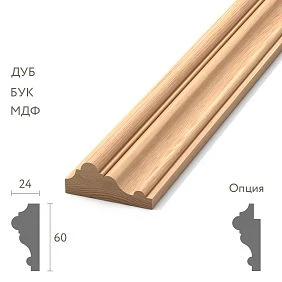
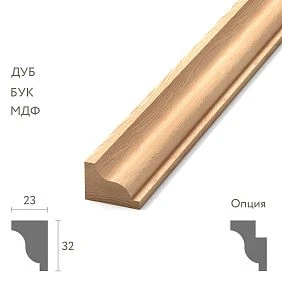
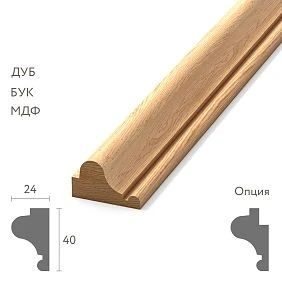
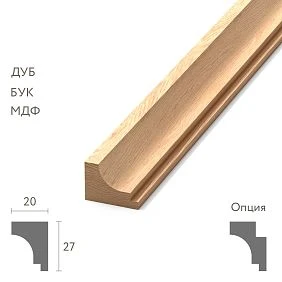
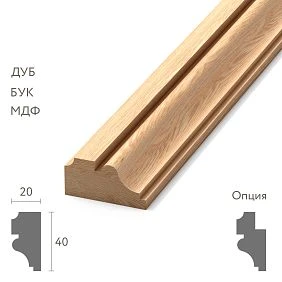
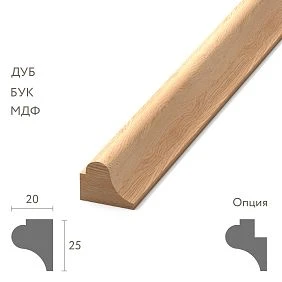
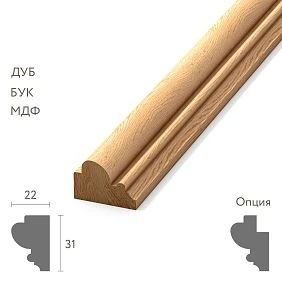
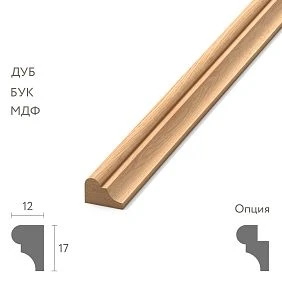
For skirting boards, mouldings and cornices this is especially important: the words "oak moulding 40 mm" do not identify the product precisely enough. In the catalogue STAVROS wooden molding one project may use multiple profiles, materials, lengths, and finishes. This means the official order must reference a specific product line item, not a general description.
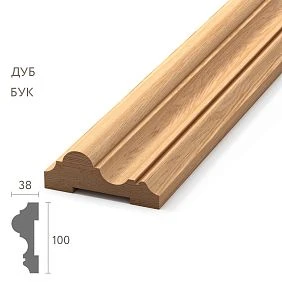
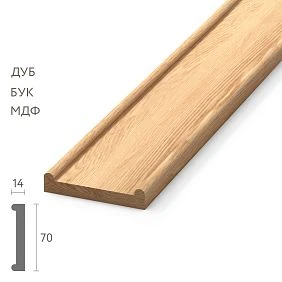
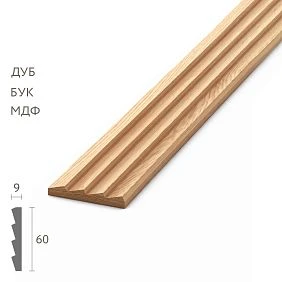
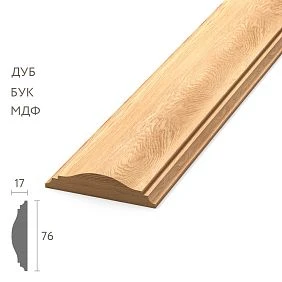
A quotation is not yet an order
A quotation means:
the supplier offers such goods, price, lead time, and terms.
A Purchase Order means:
the buyer has officially authorized ordering specific items on the agreed terms.
These are two different events.
If a company works only via correspondence, uncertainty quickly arises.
The manager wrote:
Everything works, go ahead.
But what exactly does "everything" mean?
- which version of the quotation;
- what volume;
- whether a reserve is included;
- whether the message applies only to the first batch;
- whether the budget is approved;
- whether this is the final finish;
- whether delivery is included;
- whether the employee had the authority to release the order.
On a small order, such ambiguity may not become apparent. On a project with several hundred or thousands of items, it turns into a source of discrepancies.




Purchase Requisition and Purchase Order are different documents
It is useful to distinguish between two concepts.
Our factory also produces:

PURCHASE REQUISITION — PR
Internal request:
the project needs to purchase these materials.
The PR initiates the internal approval process.
Get Consultation
PURCHASE ORDER — PO
External order to a specific supplier:
we are purchasing these items in this quantity on the approved terms.
Not every company uses these exact English names. You can work with a "purchase request" and an "official order." The function of the document is what matters.
The PR answers the question:
can the company initiate this purchase?
PO responds:
what exactly was sent to the supplier as an authorized order?
An internal request should not consist of a single amount
Bad:
wooden decor — 850,000 ₽.
Such a line does not allow verifying the item.
Stronger:
| Field | Value | | --- | --- | | Project code | HOTEL-A | | Spec revision | SPEC-PG-R06 | | SKU | PLT-A / MLD-B / KZ-C | | Material | OAK | | Quantity | ___ | | Required date | ___ | | Budget code | ___ | | Requester | ___ | | Reason | Main fit-out / Batch 02 |
Now the internal approver understands exactly what is being authorized for purchase.
Procurement of construction materials: separate the roles
When procuring construction materials, it is useful to distinguish between functions.
REQUESTER
Confirms:
the material is indeed required for the project.
TECHNICAL APPROVER
Checks:
the item matches the approved project.
BUDGET APPROVER
Confirms:
the expense is permitted within the budget.
BUYER
Creates and sends the order to the supplier.
On a small site, these functions may be performed by one or two people.
On a large one — by different people.
The main thing is not the job title, but the absence of a situation where one employee simultaneously selects the item, approves the budget, and sends the order without an independent control point, even though the company's internal rules imply separation of duties.
Technical and financial approval must not be mixed
The designer confirmed:
MLD-B is suitable.
This means a technical decision.
But this does not yet mean:
the company authorized spending 1.2 million ₽.
The financial approver confirmed the amount.
This also does not mean:
any molding can be ordered for this amount.
To issue a PO, both layers must align:
TECHNICAL APPROVAL + COMMERCIAL / BUDGET APPROVAL.
Then the buyer does not decide the design or the budget again.
They execute an already authorized decision.
Approval Matrix: who has the right to issue an order
For large purchases, an authority matrix is useful.
A conventional scheme:
- small order — purchaser;
- above the internal limit — project manager;
- even higher — additional financial approval.
The company sets the specific amounts itself.
There is no universal limit.
In the PO process, something else matters: any order can be traced through the chain:
who requested → who technically verified → who approved the expenses → who sent it to the supplier.
What a wooden skirting board line should look like in a PO
Weak line:
oak skirting board — 200 m.
Stronger:
PLT-XXX / OAK / approved section / L=2400 / FIN-02 / 86 pcs / SPEC-PG-R06
If the project uses an internal code:
P-01 / PLT-XXX / OAK / 2400 / 86 pcs
This line links the item to the project.
It does not attempt to rewrite the entire design project, but it contains enough data so that the supplier does not interpret the order on their own.
Why it is better to issue a PO in product units rather than only in meters
The project requirement can indeed be calculated in linear meters.
But the delivery consists of specific items of a certain length.
For example:
requirement — 206.4 m;
length of one plank — 2.4 m.
Mathematically:
206.4 / 2.4 = 86 pcs.
It is useful to record in the PO:
86 pcs × 2400 mm
and not only:
206,4 m.
Why?
Because 206.4 m can be made up of a different number of items of a different length, and this already affects cutting, joints, and logistics.
For molding, SKU is especially important
Description:
molding 40 mm
is not a normal identification.
The PO records:
- SKU;
- the material;
- cross-section or reference to approved specification;
- product length;
- quantity;
- finish;
- approved revision number.
If the project does not allow substitution, this also needs to be reflected in the procurement logic.
Phrase:
MLD-B or equivalent
is dangerous because it turns the supplier into a designer.
If an alternative profile is allowed, it must be identified in advance and technically agreed upon.
Why the length of a wooden cornice is included in the PO
A single SKU may also be insufficient for a cornice if different versions have different lengths.
Length affects:
- number of items;
- Cutting;
- number of joints;
- transportation;
- the number of packing units.
Therefore, a strong line:
KZ-XXX / OAK / L=2400 / 96 pcs
and not only:
KZ-XXX / 230 m.
The product unit must be unambiguous.
The PO must reference the source documents
The minimum linkage may look like this:
SPEC-PG-R06
Technical base.
QUOTE-458-R02
Commercial proposal.
PO-2026-0147-R00
Official order.
Then, after a few months, it is possible to restore:
- which specification was in effect;
- under which commercial proposal the order was placed;
- which PO was sent;
- whether it was changed after issuance.
This is especially important on multi-stage projects.
Why the entire project does not need to be rewritten into the PO
A Purchase Order should not turn into an 80-page architectural album.
Its purpose:
- identify the items;
- specify the quantity;
- fix the price;
- reference the applicable documents;
- specify the delivery date and location;
- record the current revision.
If a drawing is important for the item, the PO may reference:
SPEC-PG-R06 / Drawing M-03
If an approved sample is important:
Sample S01 / Approved.
Identity must be recoverable, but the PO itself remains a procurement document.
Always specify which quote the order was issued against
Supplier sent:
QUOTE-458-R01
Then:
QUOTE-458-R02.
In R02, the price and lead time changed.
If the PO does not contain a quote reference, the supplier and buyer may open different versions.
Therefore:
Supplier Quote: Q-458-R02 dated ___
Now the commercial basis is unambiguous.
Before issuing the PO, verify that the quote is up to date
A quote is not necessarily valid indefinitely.
Before ordering, the buyer checks:
- price;
- availability;
- the deadline;
- packaging;
- logistics;
- the validity period of the terms, if specified;
- relevance of the current configuration.
If the quote was received a month ago, you cannot automatically assume that everything remains the same.
Correct order:
QUOTE VALIDATED → PO RELEASED.
The PO must be linked to the project budget
Useful fields:
PROJECT: HOTEL-A
COST CODE: FINISH-WOOD-TRIM
BUDGET LINE: ___
A few months later, the finance department may need to determine what the expense relates to.
This is especially important if the trim is purchased in several batches.
Without a project and cost code, impersonal expenses appear:
another order of wooden decor.
Wholesale purchase of building materials: order by line items
for wholesale purchase of building materials it is better not to use a single general line:
wooden trim — 1,250,000 ₽.
Working format:
| Line | SKU | Material | Length | Qty | Unit Price | Total | | --- | --- | --- | ---: | ---: | ---: | ---: | | 10 | PLT-A | Oak | 2400 | 180 | ___ | ___ | | 20 | MLD-B | Oak | 2400 | 320 | ___ | ___ | | 30 | KZ-C | Oak | 2400 | 80 | ___ | ___ |
Each item gets its own line number.
Now the question can be formulated precisely:
PO-147 / Line 20
And not:
a question arose regarding the molding.
Why the PO line number is useful after order submission
The line number helps to link:
- quantity change;
- short delivery;
- mis-sorting;
- claim;
- price change;
- new date;
- partial release.
If an order consists of 40 line items, the word "molding" may refer to five different SKUs.
PO-147 / Line 20 leaves no ambiguity.
It is better to show the main quantity and reserve separately
For example:
Line 10A — Installation Quantity: 180 pcs
Line 10B — Project Reserve: 12 pcs
Why is this useful?
Because the purposes are different.
If the entire reserve is mixed with the installation quantity, after delivery it is unclear:
- what is intended for the current front;
- what should remain in the warehouse;
- what can be issued to the crew;
- what constitutes the operational stock.
Separation does not necessarily require a separate price, but it does require separate accounting logic.
One PO does not necessarily mean one physical delivery
The project needs:
1200 planks.
The overall order is authorized.
But the site accepts batches:
RELEASE 01
400 pcs.
RELEASE 02
450 pcs.
RELEASE 03
350 pcs.
Check:
400 + 450 + 350 = 1200 pcs.
That is:
PO TOTAL AUTHORIZED QTY = 1200.
And the release schedule responds:
when each part should actually be shipped.
It is better not to mix these concepts.
Release Schedule separately from PO
PO responds:
how much the company has authorized to purchase.
Release schedule answers:
when each part should be delivered.
This is especially useful for a long project.
A single general commercial order can have multiple delivery schedules if such a scheme is agreed with the supplier.
Or it can be the other way around: each batch gets a separate PO.
There is no universally best option.
The choice depends on the contract, budget, storage, and the supplier's way of working.
Blanket PO: when a framework order can be convenient
On a multi-stage project, the company sometimes uses a framework order or an agreement with subsequent releases.
The point:
- the overall commercial outline is agreed;
- batches are released later;
- the project does not receive the entire volume at once.
But this format should not be declared the best by default.
It is convenient only if:
- the total volume or limit is known;
- terms are clear;
- release procedure is defined;
- supplier accepts this scheme;
- the project can track the remaining authorized volume.
Otherwise, separate POs per batch are more transparent.
Supplier Acknowledgement: the supplier must confirm the order
Sending a PO is not the end of the process.
Procurement systems may use supplier acknowledgment: the supplier accepts, rejects, or proposes a change to the order.
In practice, it is useful for the project to receive confirmation:
- PO numbers;
- SKU;
- quantities;
- prices;
- timelines;
- addresses;
- key terms.
Status:
PO SENT
is not yet equal to:
PO ACKNOWLEDGED.
This is especially important if the deadline is critical.
SENT does not mean ACCEPTED
The email has been sent.
The buyer sees:
Sent 11:42.
This only confirms sending.
Does not confirm:
- that the supplier has seen the document;
- that they agree with the price;
- that they can provide the required volume;
- that they have accepted the date;
- that they see no discrepancies in the line items.
Therefore, for a critical order, the useful status chain is:
APPROVED → SENT → ACKNOWLEDGED → IN FULFILLMENT.
Status names may differ in a specific ERP.
The logic remains the same.
What to do if the supplier disagrees with part of the PO
The supplier may respond:
Line 10 confirmed.
Line 20 — the deadline needs to be changed.
Line 30 — quantity unavailable.
You cannot silently consider the PO fully confirmed.
The buyer must:
- record the discrepancy;
- assess the impact;
- agree on the change;
- if necessary, issue a change order or a new revision of the PO.
That is, acknowledgment is not a formality, but a check that both parties' expectations match.
Purchase Order Register
The main working tool:
| PO | Project | Supplier | Spec Rev | Quote Rev | Amount | Status | | --- | --- | --- | --- | --- | ---: | --- | | PO-147 | Hotel A | Supplier A | R06 | R02 | ___ | ACK | | PO-148 | Office B | Supplier B | R03 | R01 | ___ | PENDING | | PO-149 | House C | Supplier A | R04 | R03 | ___ | CLOSED |
Additionally useful:
- PO date;
- buyer;
- required date;
- acknowledgment date;
- open amount;
- open quantity;
- current revision.
This way, the buyer sees not only documents but also open commitments.
PO working statuses
DRAFT
Being prepared.
PENDING APPROVAL
Awaiting internal approval.
APPROVED
Purchase approved within the company.
SENT
Sent to supplier.
ACKNOWLEDGED
Supplier confirmed the order according to the agreed procedure.
PARTIALLY DELIVERED
Partially delivered.
CLOSED
All required lines are closed.
CANCELLED
Order cancelled according to the accepted procedure.
This is an example of a status system, not a universal standard for all companies.
What counts as an unauthorized order
Typical scenario:
the manager writes to the supplier:
urgently start 80 panels, we'll send the PO later.
If the company operates through PO-control, such an order bypasses the established authorization point.
Problems appear later:
- who authorized it;
- from which budget;
- what price;
- what specification;
- what finish;
- what is the required date;
- who is responsible for the overage.
Sometimes an emergency order is genuinely needed.
In that case, the company should have a separate emergency procedure rather than making unauthorized ordering a normal practice.
A PO cannot be changed by a phone call without a record
Was:
120 moldings.
They asked over the phone:
make it 135.
If the change is genuinely approved, it must leave a documentary trace.
For example:
PO-147-R00 — 120 pcs
after the change:
PO-147-R01 — 135 pcs
The old revision does not disappear.
It becomes SUPERSEDED or receives another archival status in the system.
This way, history can be restored.
Why revision control is needed even for a single PO
Without versions, files appear:
PO new.pdf
PO new final.pdf
PO the very latest.pdf
This is the same problem as with specifications.
More precisely:
PO-147-R00
PO-147-R01
PO-147-R02
It is the revision number that is specified in correspondence and acknowledgment.
Three-way check before payment
The main topic of the article is procurement authorization, not accounting verification of the invoice.
But one control principle is useful.
Before payment, three entities can be compared:
PO
What was officially ordered.
RECEIPT
What was actually received.
INVOICE / SUPPLIER DOCUMENT
What was invoiced for payment.
For example:
ORDERED = 120
RECEIVED = 112
INVOICED = 120
Such a situation requires verification, not automatic payment of the entire amount.
Specific tolerances and matching rules are set by the company.
Purchasing materials for construction should be linked to the project
When purchasing materials for construction, it is useful to keep:
- Project ID;
- Zone;
- Cost Code;
- Required Date;
- Spec Revision;
- PO Line.
Otherwise, six months later all that remains is:
we bought 300 moldings.
But it is unclear:
- for which site;
- for which zone;
- why exactly this SKU;
- which version of the project was in effect;
- how much is still open.
Linking a PO to a project turns procurement history into manageable documentation.
Receiving must know the PO number
Arriving at the warehouse:
PO-147 / Release 02.
The receiver opens this specific purchase order and checks:
- SKU;
- the material;
- length;
- quantity;
- release;
- marking.
Now the goods can be linked to what was actually ordered.
Without a PO number, the receiver has to rely on:
were supposed to deliver the molding.
For a large project, this is not enough.
A shortfall must not rewrite the original PO
PO:
120 pcs.
Actual:
112 pcs.
Correct entry:
ORDERED = 120
RECEIVED = 112
OPEN = 8
There is no need to change the PO retroactively to 112 just to match the numbers.
Otherwise, the very fact of underdelivery disappears.
The open balance must be visible before closing.
An excess delivery also requires an explanation
Ordered:
100 pcs.
Received:
105 pcs.
There is no need to automatically accept all five additional strips with the words:
they will come in handy.
It is necessary to understand the reason:
- error;
- agreed reserve;
- separate change;
- bonus delivery;
- incorrect configuration.
If the excess quantity was not authorized, its commercial status must be agreed separately.
When a PO can be closed
Not necessarily on the day of the last truck.
A PO is closed when:
- all lines have a final status;
- open quantities are clear;
- shortages are closed or officially cancelled;
- changes are reflected;
- returns are accounted for;
- documents are reconciled;
- no disputed items remain.
For partial releases, this is especially important.
The last physical delivery does not always mean that the procurement history is complete.
When a complex PO process is not needed
Not every order requires a multi-level approval matrix.
For a small one-time purchase, the following may be sufficient:
- an approved specification;
- a confirmed price;
- a single responsible person;
- a formal purchase order letter;
- supplier confirmation.
But even in a simplified version, it is useful to retain five things:
what → how much → at what price → by what deadline → who approved it.
The complexity of the procedure can be reduced.
The clarity of the order cannot.
Required Date and Promised Date must be stored separately
In the PO, the buyer specifies the Required Date — when the material is needed for the project. After confirmation, the supplier may provide their own Promised Date — the date they actually confirm.
If they match, the line remains without a conflict.
If the buyer needs it by November 15, but the supplier confirms only November 21, you cannot simply leave the PO with the old date and hope everything resolves itself. The discrepancy must be recorded and a decision made:
- agree on a new date;
- change the construction schedule;
- split the delivery;
- use the buffer;
- look for an alternative route;
- change the PO or schedule according to the accepted procedure.
This is especially important for wooden trim, because one critical molding or cornice can block a finished area.
In the Purchase Order Register, it is useful to keep nearby:
REQUIRED DATE / PROMISED DATE / VARIANCE
For example:
15.11 / 21.11 / +6 days
Now the delivery date is controlled not by a general phrase like "in November," but by a specific deviation from the project requirement.
Ten mistakes when placing a wholesale purchase
Mistake 1. Treating a quotation as an official order.
A quotation is an offer, not a command to buy.
Mistake 2. Starting a purchase without budget approval.
A technically correct item may turn out to be an unauthorized expense.
Mistake 3. Not specifying the SPEC revision.
The supplier is working from an outdated version.
Mistake 4. Not specifying the Quote revision.
Buyer and supplier use different prices.
Mistake 5. Writing only meters.
The number of product units is not recorded.
Mistake 6. Not specifying length.
The cutting layout and number of planks change.
Mistake 7. Mixing reserve with the main quantity.
After delivery, the purpose of the stock is lost.
Mistake 8. Changing the PO verbally.
The order history becomes unprovable.
Mistake 9. Treating SENT as confirmation.
Supplier has not yet confirmed the order.
Error 10. Close PO when open quantity.
Underdelivery disappears from control.
Final algorithm
- Approve the product specification.
- Obtain the current commercial offer.
- Check Quote Revision.
- Check price and lead time.
- Confirm the budget.
- Create a Purchase Requisition or internal request.
- Obtain the necessary approvals.
- Issue PO.
- Assign PO number.
- Specify current SPEC revision.
- Specify Quote reference.
- Record SKU, material, length, and qty.
- Separate the main volume from the reserve.
- Specify required date and address.
- Add a release schedule if necessary.
- Send the PO to the supplier.
- Obtain supplier acknowledgment.
- Fix discrepancies before launch.
- Make all changes in a new revision.
- Accept by PO and line number.
- Reconcile ordered / received / open.
- Close the PO after completion.
This is how a quotation becomes a managed order only after clear authorization, and the supplier receives not a vague "go ahead" but a precise document linked to the specification, budget, and project schedule.
Questions about the Purchase Order for trim
Is a quotation already considered an order?
Not necessarily. A quotation describes the proposed terms. An official order must be separately authorized according to the buyer's rules.
Is it mandatory to use the term Purchase Order?
No. A company may call the document a "supplier order." What matters is that it unambiguously records the authorized purchase.
Why have a Purchase Requisition if there is already a PO?
A PR is used as an internal purchase request, while a PO is used as an order to a specific supplier. On a small project, these stages may be simplified.
Why is it better to specify units in a PO?
Because a specific number of items of a certain length is supplied. Meters remain the calculated requirement.
Is supplier acknowledgment needed?
If the company's procedure requires supplier confirmation, this is a useful control: SENT is not equal to ACKNOWLEDGED.
Can a PO be changed by phone?
A change can be discussed verbally, but it is better to finalize it with a new revision or an approved change document.
What to do in case of underdelivery?
Do not overwrite the original ordered quantity. Record ORDERED, RECEIVED и OPEN.
When is the PO closed?
When all lines have received a final status, open quantities are settled, changes are reflected, and documents are reconciled.