































Article Contents:
- What Is Decorative Wood Molding?
- Wood Molding vs. Wood Trim
- Why Use Decorative Wood Trim?
- Decorative Wood Molding as a Material Detail
- When Visible Grain Matters
- When Paint Matters More Than Grain
- Oak Decorative Molding
- Beech Decorative Molding
- MDF Decorative Molding
- Oak vs. Beech vs. MDF
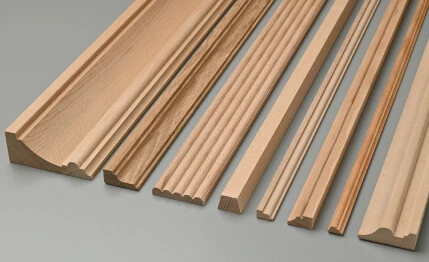
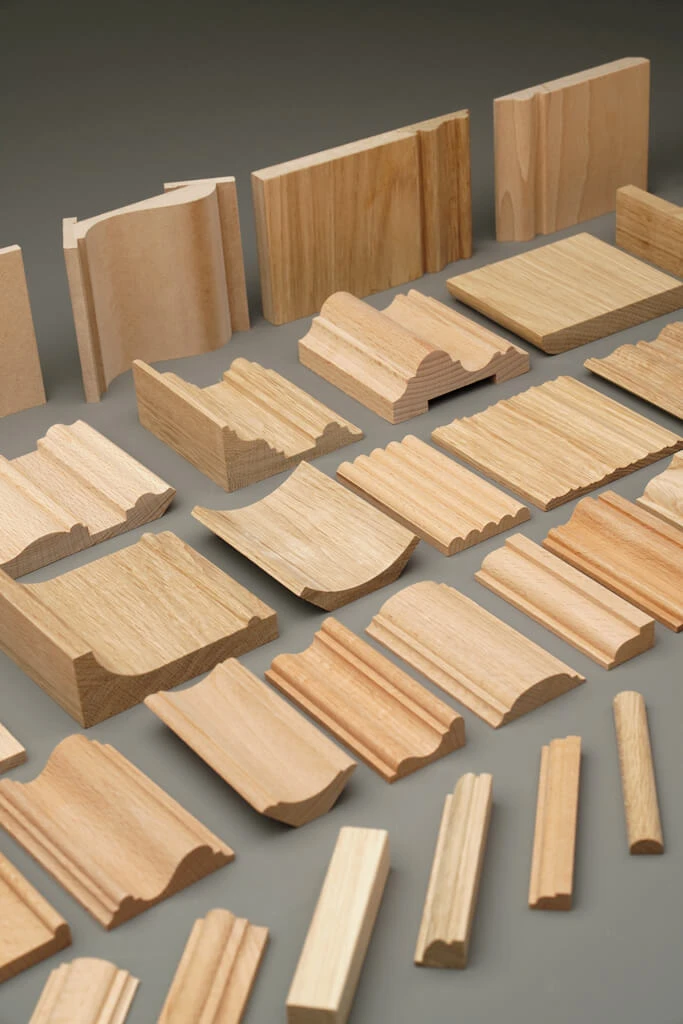
- Decorative Wood Molding Profiles
- Flat Wood Trim
- Rounded Wood Molding
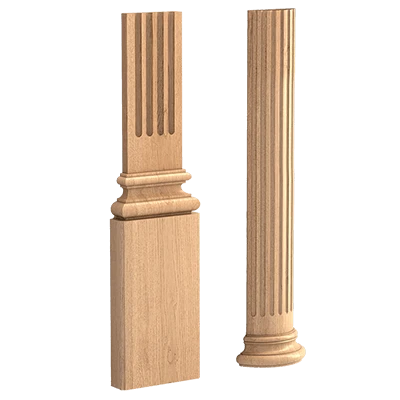
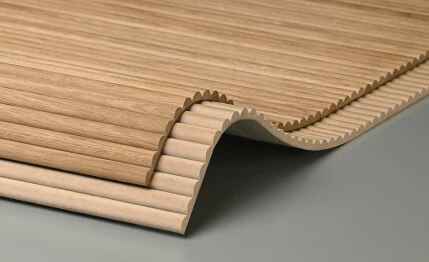
- Grooved and Reeded Molding
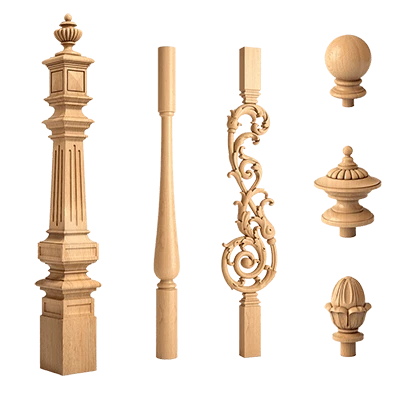
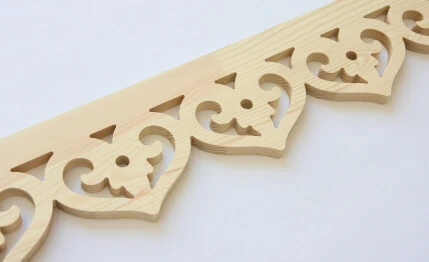
- Carved Wood Molding
- Carved Molding Is Not Just “More Decorative”
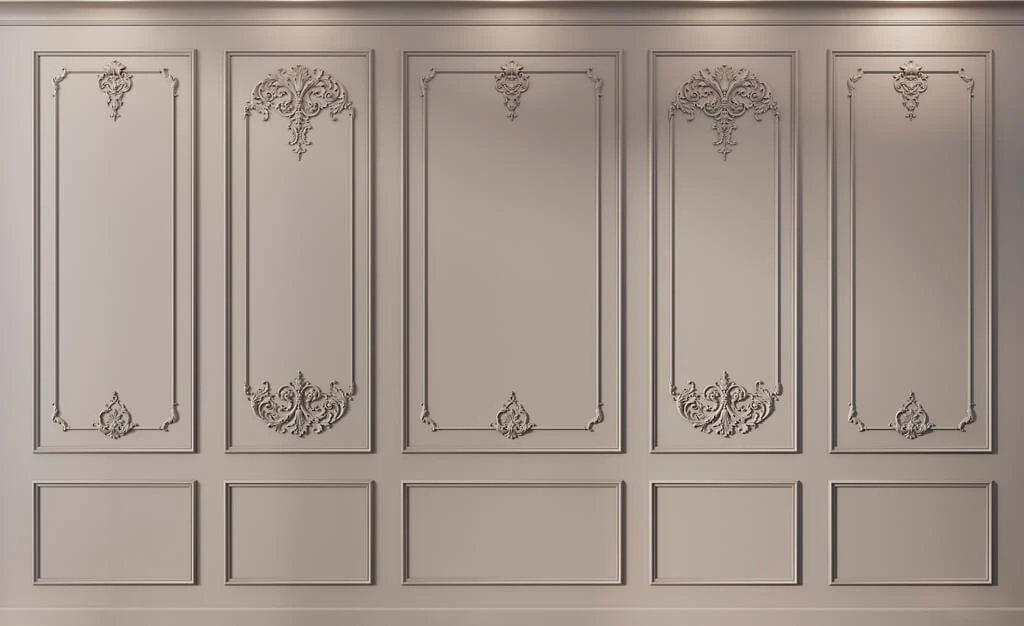
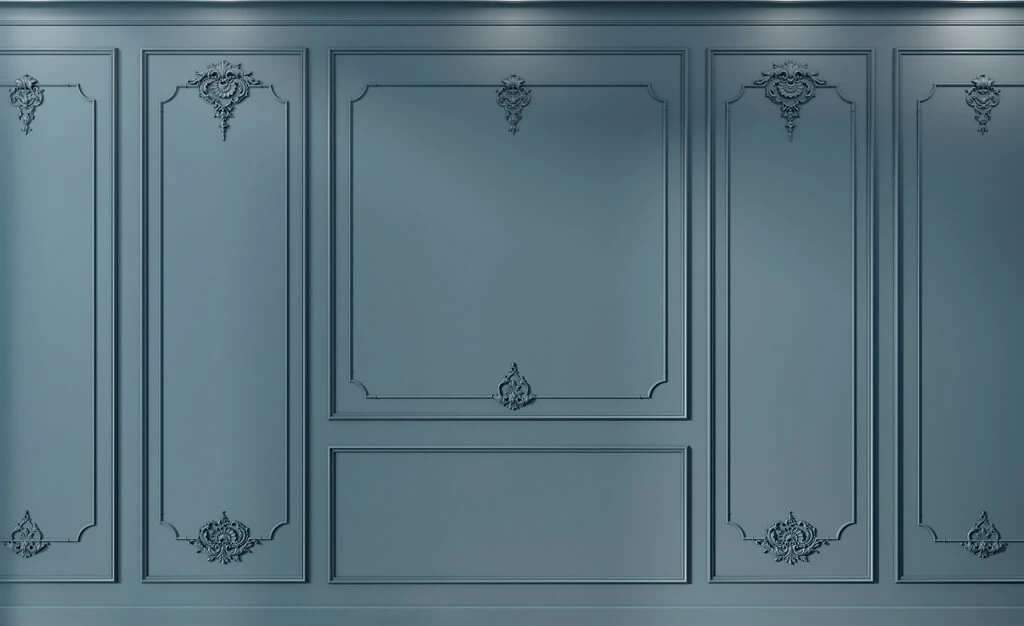
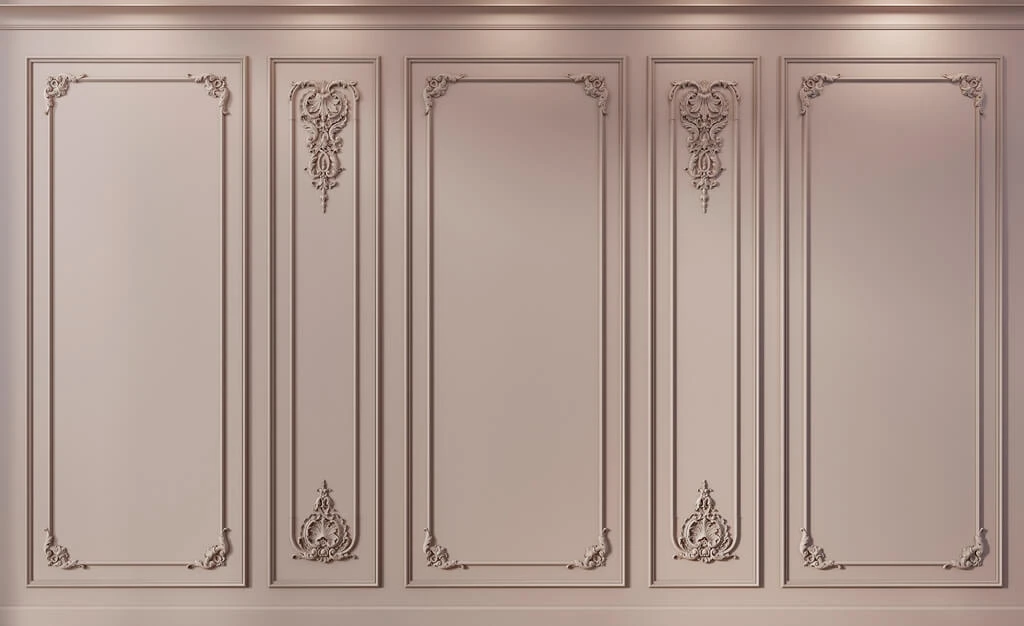
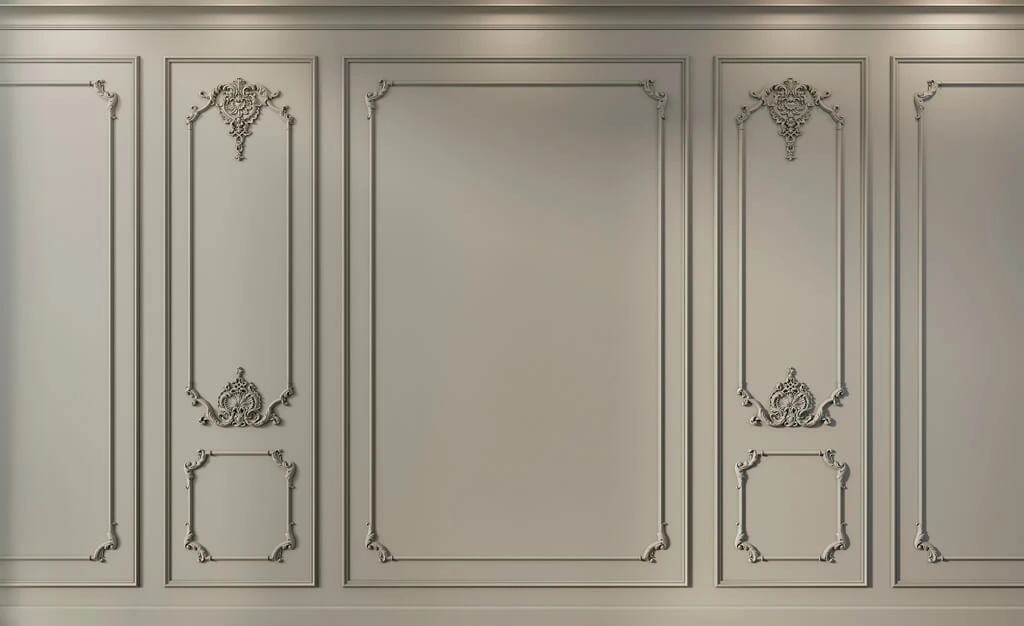
- Decorative Molding for Walls
- Wood Picture Frame Molding
- Wood Wall Molding vs. Polyurethane Wall Molding
- Do Not Use Material Labels as Style Labels
- Decorative Wood Molding for Furniture
- Furniture Molding as a Frame
- Wood Trim on Cabinet Doors
- Furniture Molding and Paint
- Furniture Molding and Veneer
- Wood Molding for Doors
- Wood Molding Around Windows
- Wood Molding Around Openings
- Decorative Wood Trim for Wall Panels
- Wood Molding and Wainscoting
- Wood Molding and Baseboards
- Wood Molding and Crown
- Decorative Wood Trim Around Mirrors
- Decorative Wood Molding in Classical Interiors
- Decorative Wood Molding in Neoclassical Interiors
- Decorative Wood Molding in Modern Interiors
- Decorative Wood Molding in Art Deco Interiors
- Decorative Wood Trim in Scandinavian Interiors
- Decorative Wood Molding in Transitional Interiors
- How Profile Width Changes the Design
- How Profile Depth Changes Shadow
- Small Rooms Need Scale Control
- Large Rooms Can Support Stronger Profiles
- Stain-Grade vs. Paint-Grade Wood Molding
- Stain-grade molding
- Paint-grade molding
- Install first, paint afterward
- Pre-finish before installation
- What is decorative wood molding?
- What is the difference between wood molding and wood trim?
- What is the best wood for decorative molding?
- Can MDF molding be called wood molding?
- Can decorative wood molding be painted?
- Can decorative wood molding be stained?
- Can wood molding be used on walls?
- Can wood molding be used on furniture?
- Can wood molding be used on doors?
- Can wood molding be used around windows?
- How do I choose molding width?
- Should all wood trim in a room match?
- Do wood molding corners have to be mitered?
- Can carved wood molding use corner blocks?
- How do I calculate wood molding quantity?
- Should I buy extra molding?
- Can wood molding hide uneven walls?
- Can wood molding be repaired?
- Is wood molding suitable for humid rooms?
- What makes decorative wood molding look high-end?
- Layout 1: One large wood frame
- Layout 2: Repeated vertical frames
- Layout 3: Lower wood paneling + upper painted wall
- Layout 1: Single inset frame
- Layout 2: Double rectangular frame
- Layout 3: Frame + center ornament
- 1. Will the grain remain visible?
- 2. Is the molding for a wall or for furniture?
- 3. Is the profile simple or carved?
- 4. How will the molding terminate?
- 5. What is the finish sequence?
Decorative wood molding is one of those interior details that can look almost invisible when it is chosen correctly—and strangely out of place when it is not. A narrow profile can finish the edge of a cabinet, frame a wall panel, connect a door casing to nearby millwork, or add one clean shadow line to an otherwise flat surface. A wider carved profile can become an architectural feature in its own right.
The key is to stop thinking of wood trim as one generic product. In the U.S. market, decorative wood molding, decorative wood trim, wood molding and trim, wood wall molding, interior wood trim, and wood molding for furniture can describe very different applications. Some profiles are meant to be stained so the grain remains visible. Others are paint-grade. Some are smooth and minimal. Others are carved and ornamental. Some are appropriate for walls, while others make more sense on furniture fronts, doors, frames, or panel systems.
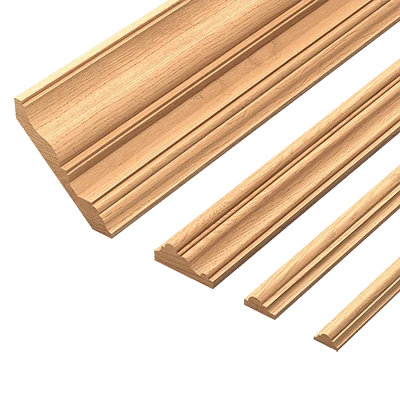
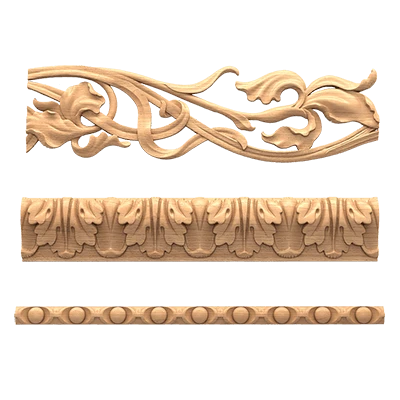
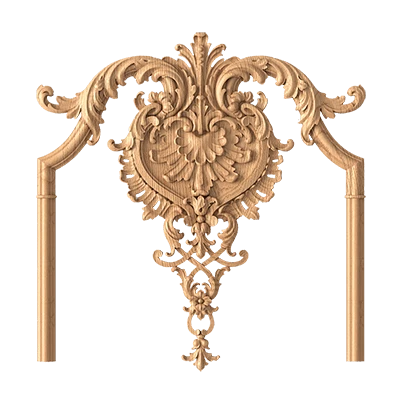
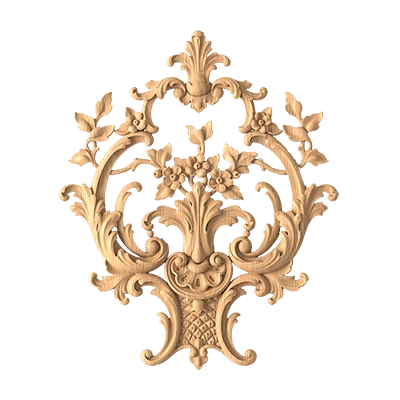
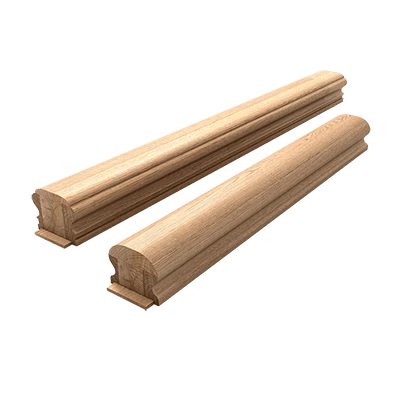
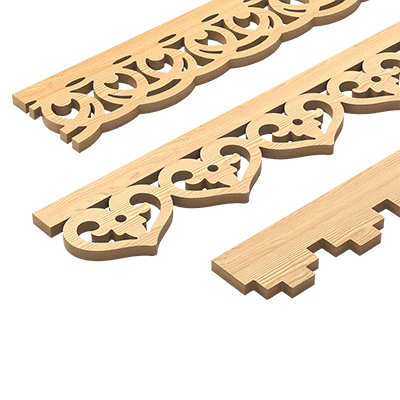
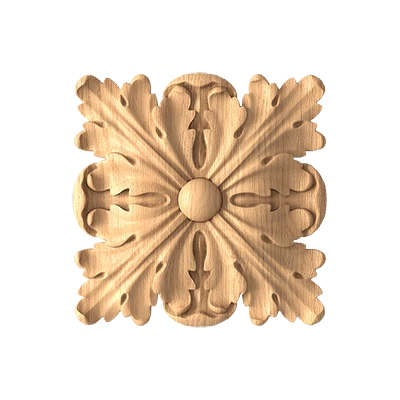
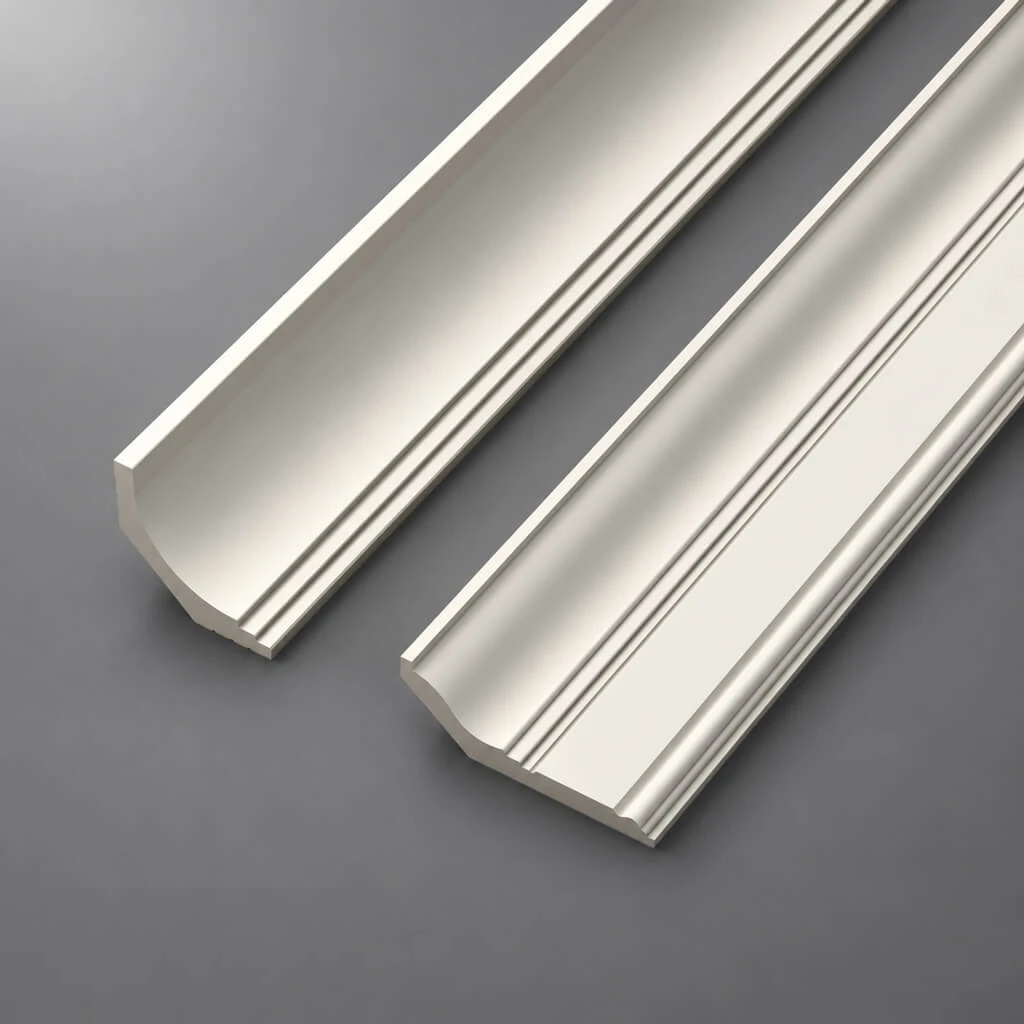
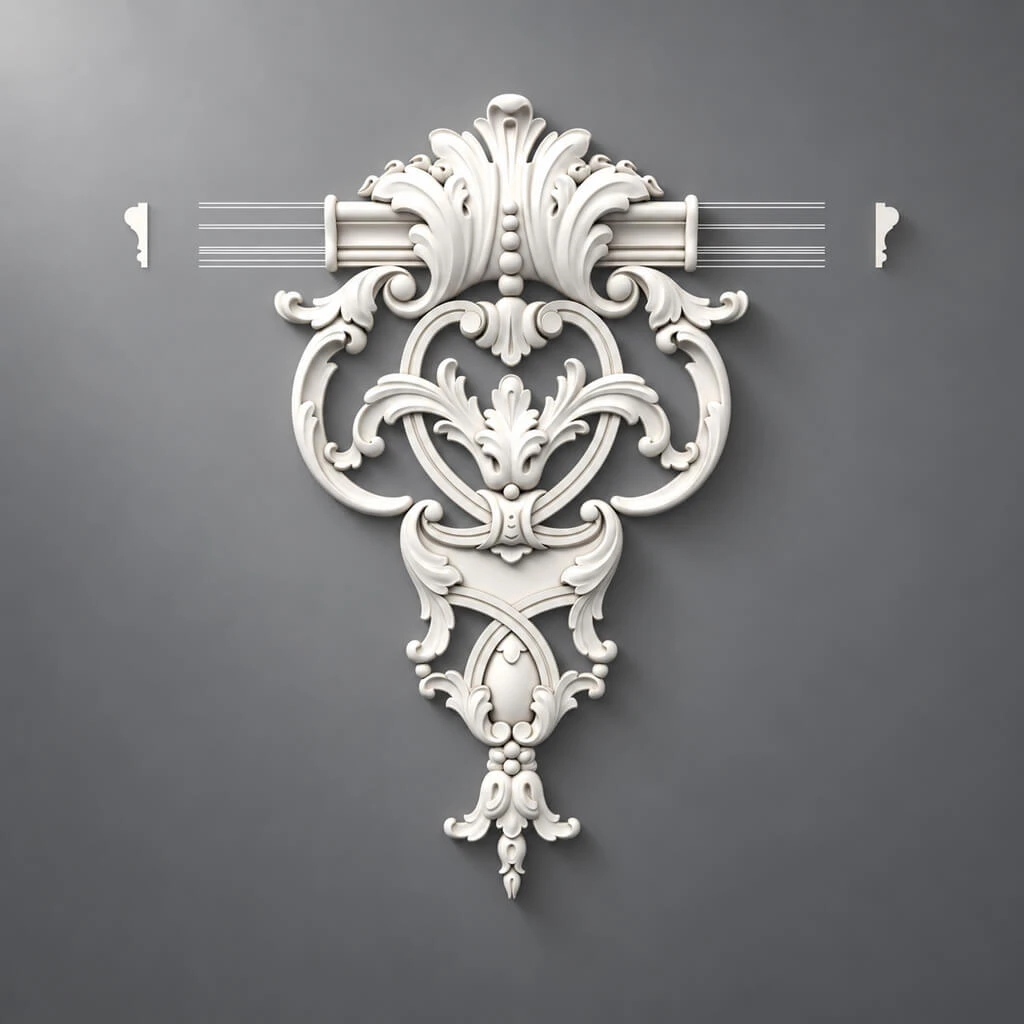
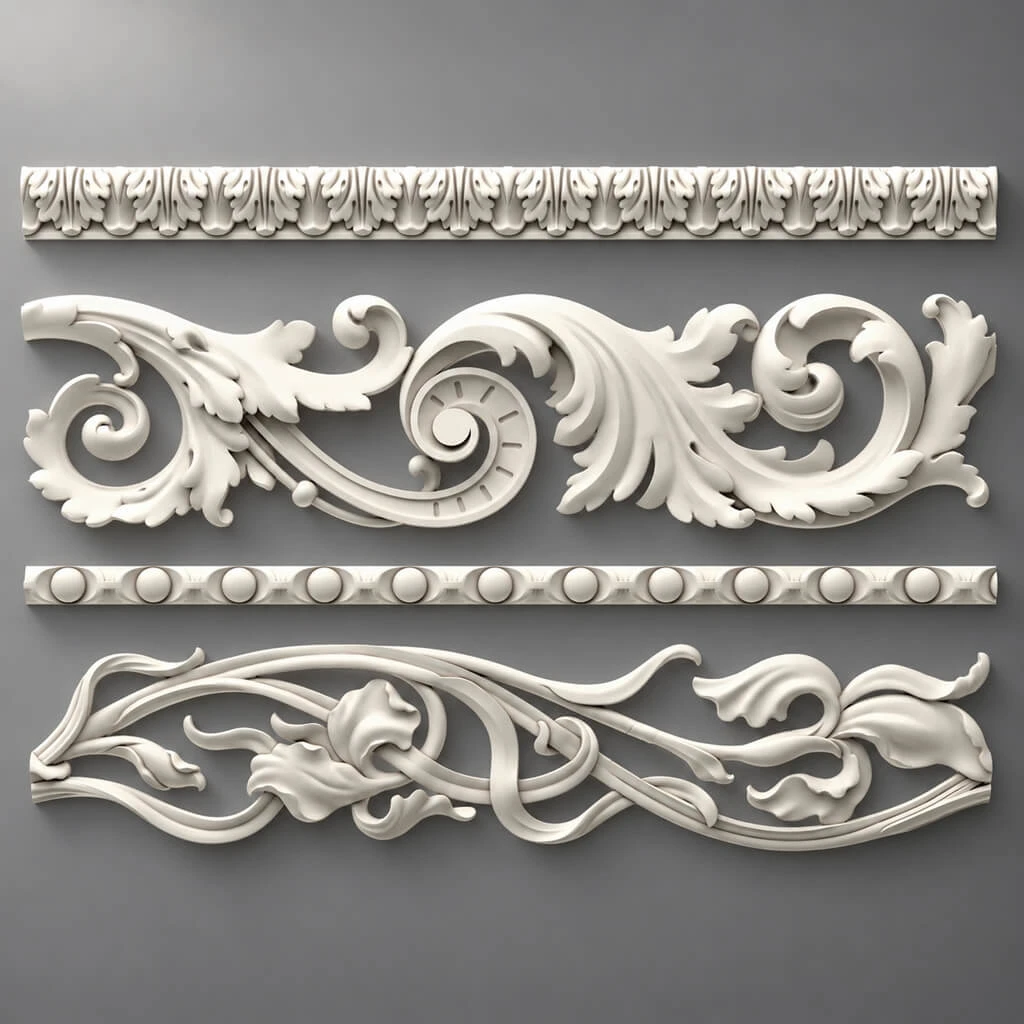
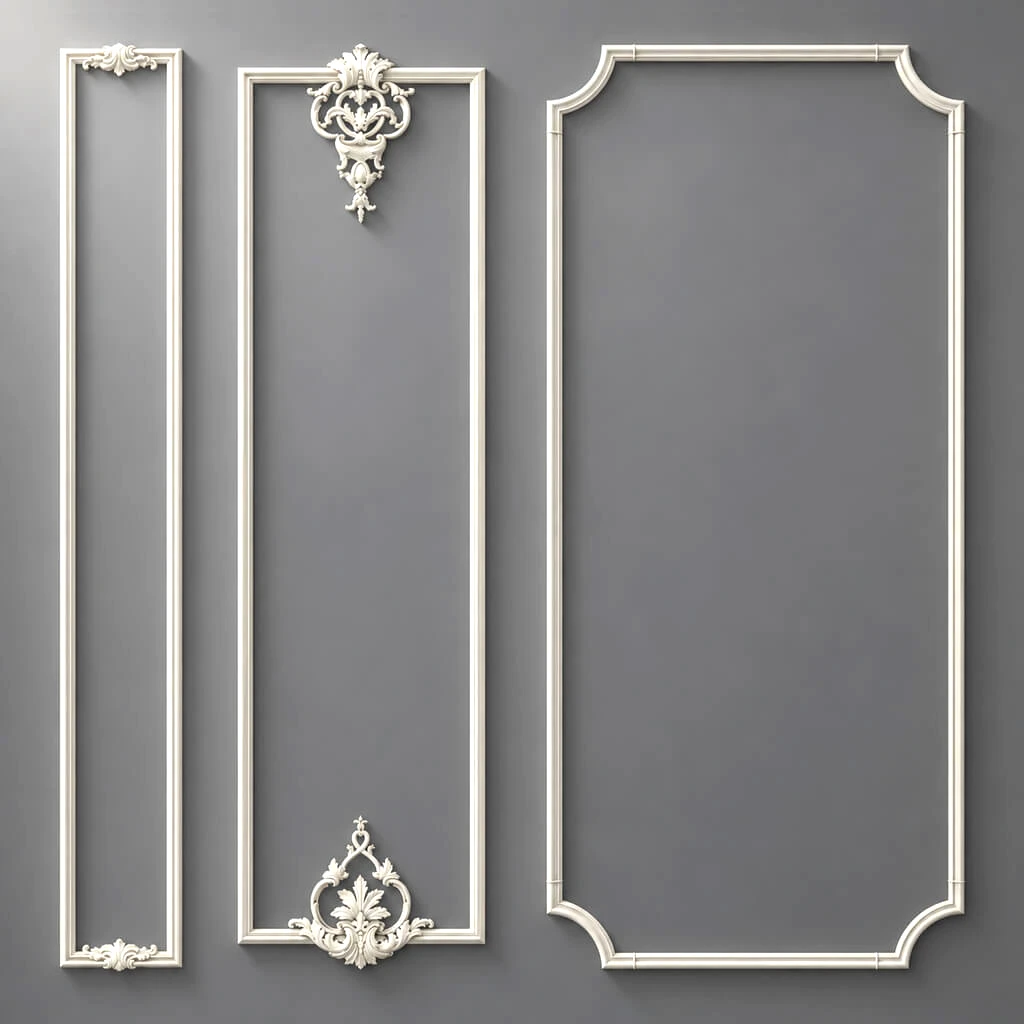
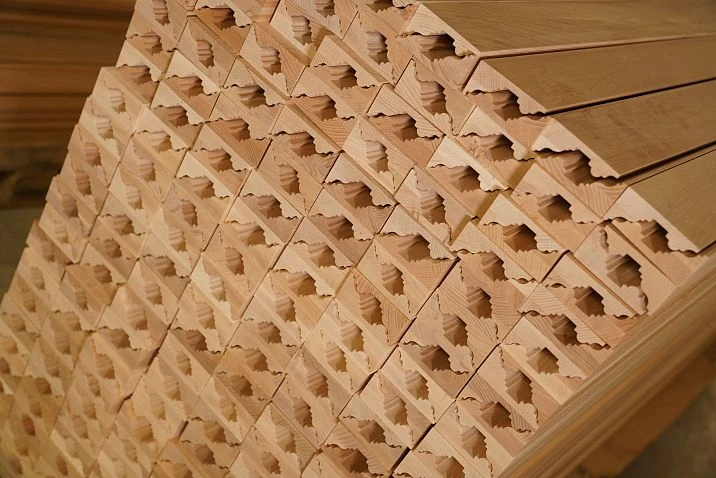
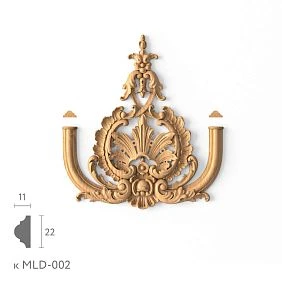
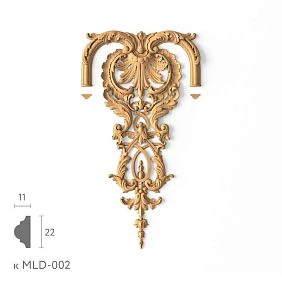
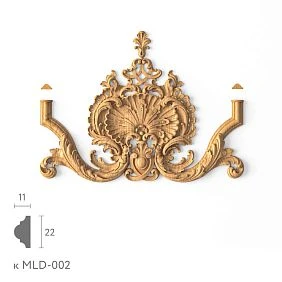
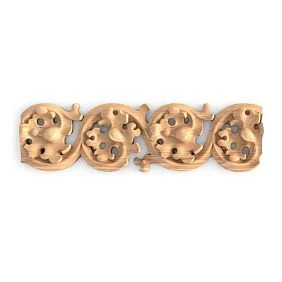
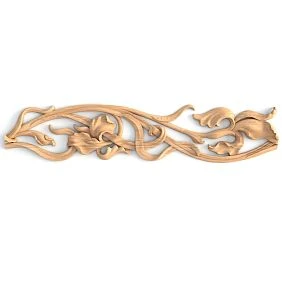
STAVROS groups many of these products under decorative wood molding and trim, including profiles made from oak, beech, and MDF. The catalog also includes carved wood molding and wood molding decor such as corner and center elements designed to work with selected molding families.
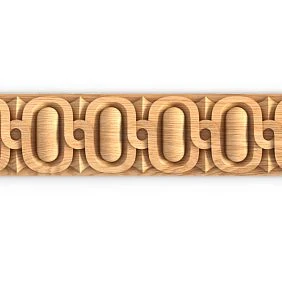
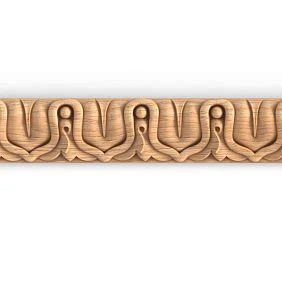
What Is Decorative Wood Molding?
Decorative wood molding is a shaped linear trim element used to finish, frame, transition, or ornament architectural and furniture surfaces.
It can be used on:
- walls;
- wall panels;
- ceilings;
- doors;
- windows;
- cabinet doors;
- furniture fronts;
- mirrors;
- built-ins;
- shelving;
- decorative frames;
- custom millwork.
The word “molding” describes the shaped profile. “Trim” is broader and can include molding, casing, baseboards, rails, edge trim, and other finishing pieces.

Wood Molding vs. Wood Trim
In everyday U.S. usage, these terms often overlap, but they are not identical.
Wood molding usually refers to a shaped linear profile with a defined cross-section.
Wood trim is a broader category that can include:
- molding;
- casing;
- baseboards;
- chair rail;
- picture-frame trim;
- panel trim;
- edge trim;
- furniture trim.
For SEO, both terms are useful. For design, the exact function matters more than the label.
Наша фабрика также производит:
Смотреть весь Каталог продукции
Why Use Decorative Wood Trim?
Wood trim can solve several visual and practical problems at once.
It can:
- frame a surface;
- hide a controlled joint;
- create a transition between materials;
- protect an exposed edge;
- add a shadow line;
- create architectural rhythm;
- connect furniture visually to the room;
- introduce natural grain;
- support a Classical or Traditional composition;
- add detail to an otherwise minimal interior.
What it should not be described as is a structural reinforcement by default. Decorative molding may protect edges or help finish an assembly, but it does not automatically strengthen the building structure or furniture carcass.
Получить консультацию
Decorative Wood Molding as a Material Detail
Natural wood brings something paint-grade synthetic trim cannot fully reproduce: variation.
Even when two profiles are machined to the same cross-section, the visible grain, color, pore structure, and figure can vary from piece to piece.
That variation can be either:
- the main reason to choose wood;
- or a problem to control through sorting and finishing.
The right answer depends on the project.
When Visible Grain Matters
Use stain-grade wood when the grain is meant to remain visible.
Typical applications include:
- oak wall molding;
- stained door casing;
- wood trim around panels;
- furniture molding;
- library millwork;
- traditional cabinetry;
- mirror frames;
- natural-wood interiors.
When Paint Matters More Than Grain
If the finished profile will be covered with opaque paint, visible grain may not justify the cost of premium stain-grade lumber.
In paint-grade applications, MDF or carefully selected beech can make more sense depending on the profile, exposure, and project requirements.
Oak Decorative Molding
Oak is one of the strongest choices when the molding itself should look like wood.
It offers:
- visible grain;
- good machining potential;
- a familiar architectural character;
- compatibility with stain and clear finishes;
- strong visual connection to oak doors, cabinets, flooring, and furniture.
STAVROS offers multiple oak molding and trim profiles in its wood-and-MDF trim category.
Beech Decorative Molding
Beech generally reads as more uniform and less dramatically grained than oak.
That makes it useful for:
- paint-grade profiles;
- carved details;
- furniture trim;
- more restrained natural finishes;
- projects where consistency is more important than strong grain.
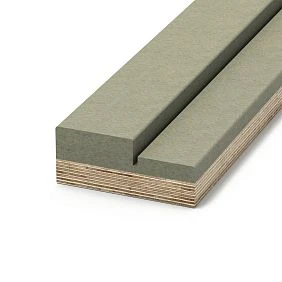
MDF Decorative Molding
MDF is useful when the final design is paint-driven.
It can be appropriate for:
- painted wall molding;
- panel framing;
- cabinet trim;
- Modern Classic interiors;
- monochromatic walls;
- precise linear profiles.
Do not call MDF “solid wood.” It is an engineered wood-based material and should be described accurately.
Oak vs. Beech vs. MDF
| Material | Best visual use | Typical finish | Main design advantage |
|---|---|---|---|
| Oak | Visible-grain trim | Oil, stain, clear finish, paint | Strong natural grain and architectural character |
| Beech | Carved or more uniform wood trim | Clear finish, stain, paint | Controlled appearance and good machining |
| MDF | Paint-grade trim | Opaque paint | Consistent surface and precise profile geometry |
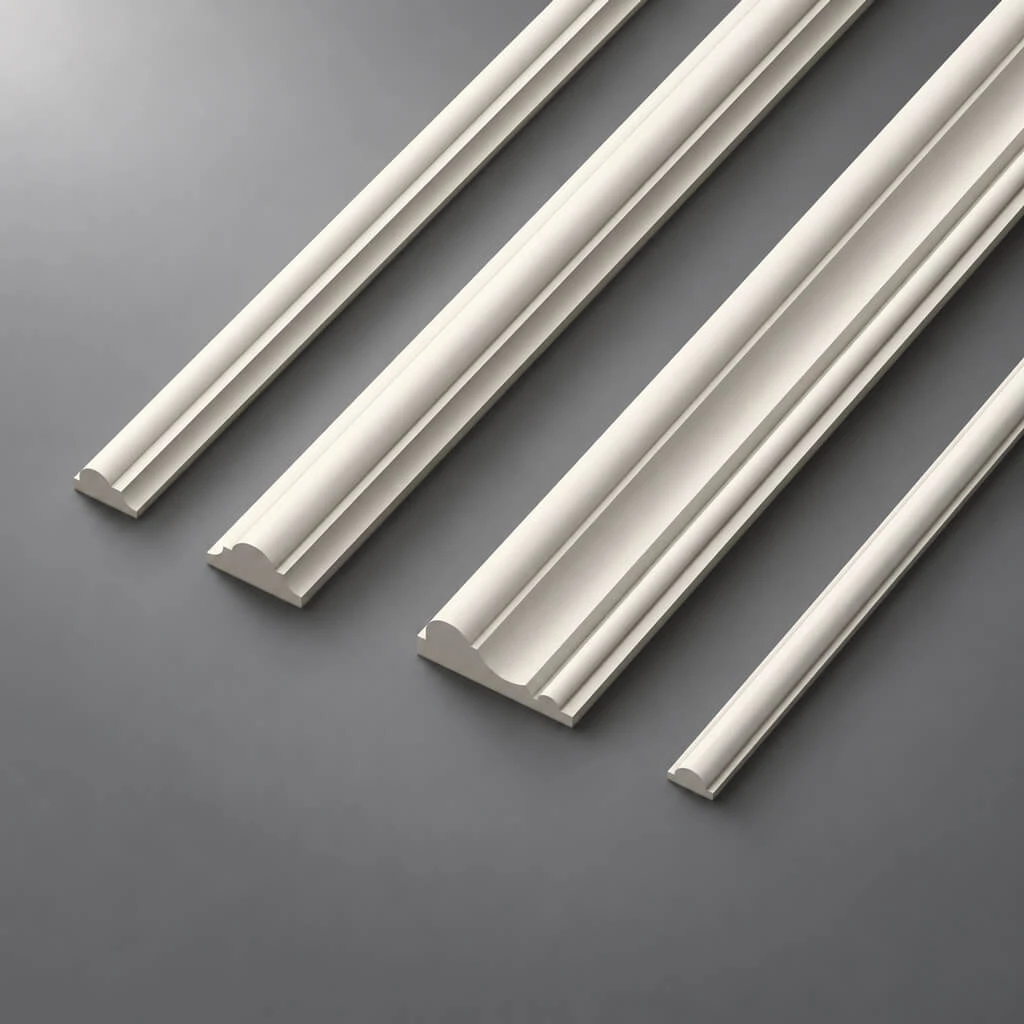
Decorative Wood Molding Profiles
Profile shape changes both style and function.
Common families include:
- flat rectangular trim;
- rounded profiles;
- beaded profiles;
- convex molding;
- concave molding;
- stepped molding;
- grooved trim;
- reeded profiles;
- carved ornamental molding;
- decorative baguette-style profiles.
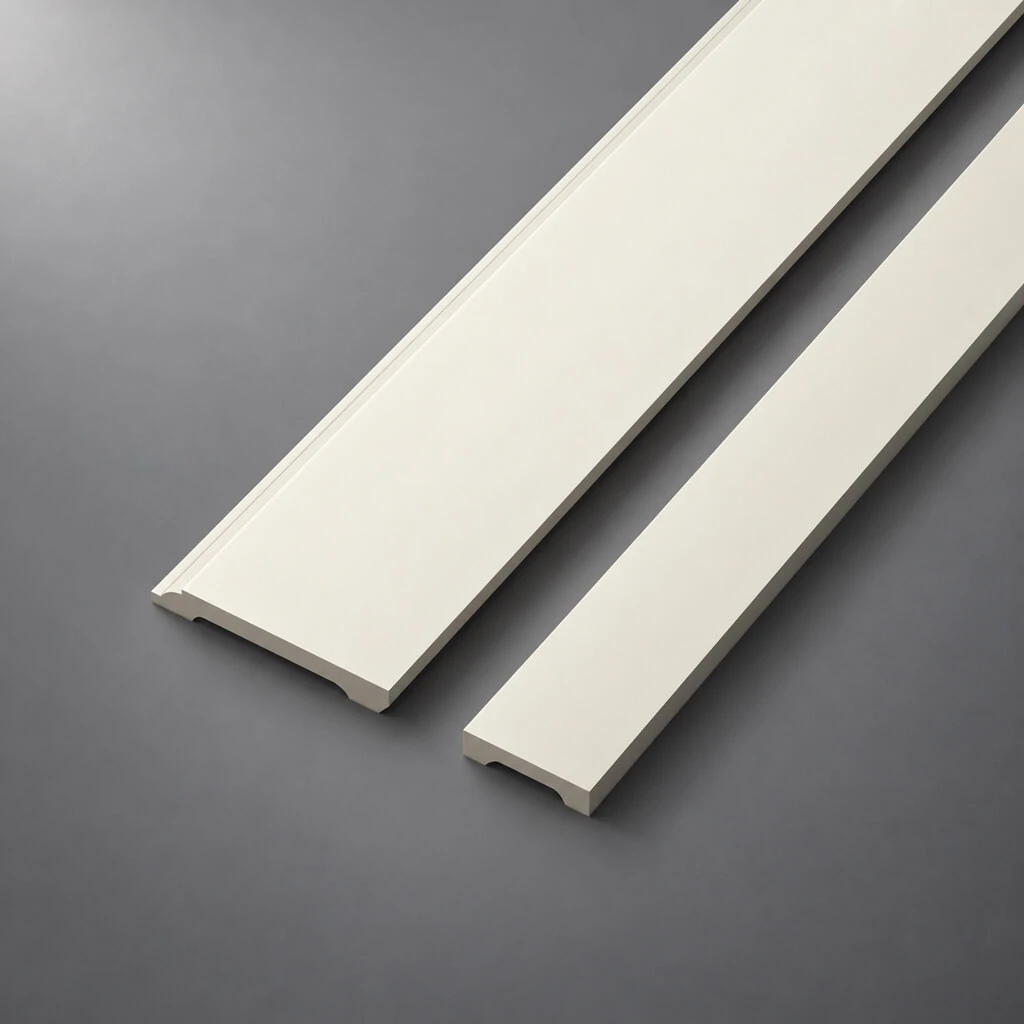
Flat Wood Trim
Flat trim is the most flexible choice for modern interiors.
It can frame:
- wall panels;
- cabinet doors;
- mirrors;
- openings;
- built-ins;
- furniture fronts.
Rounded Wood Molding
Rounded profiles create softer highlights and shadows than flat trim.
They can work in:
- furniture;
- transitional interiors;
- wall frames;
- decorative edge details.
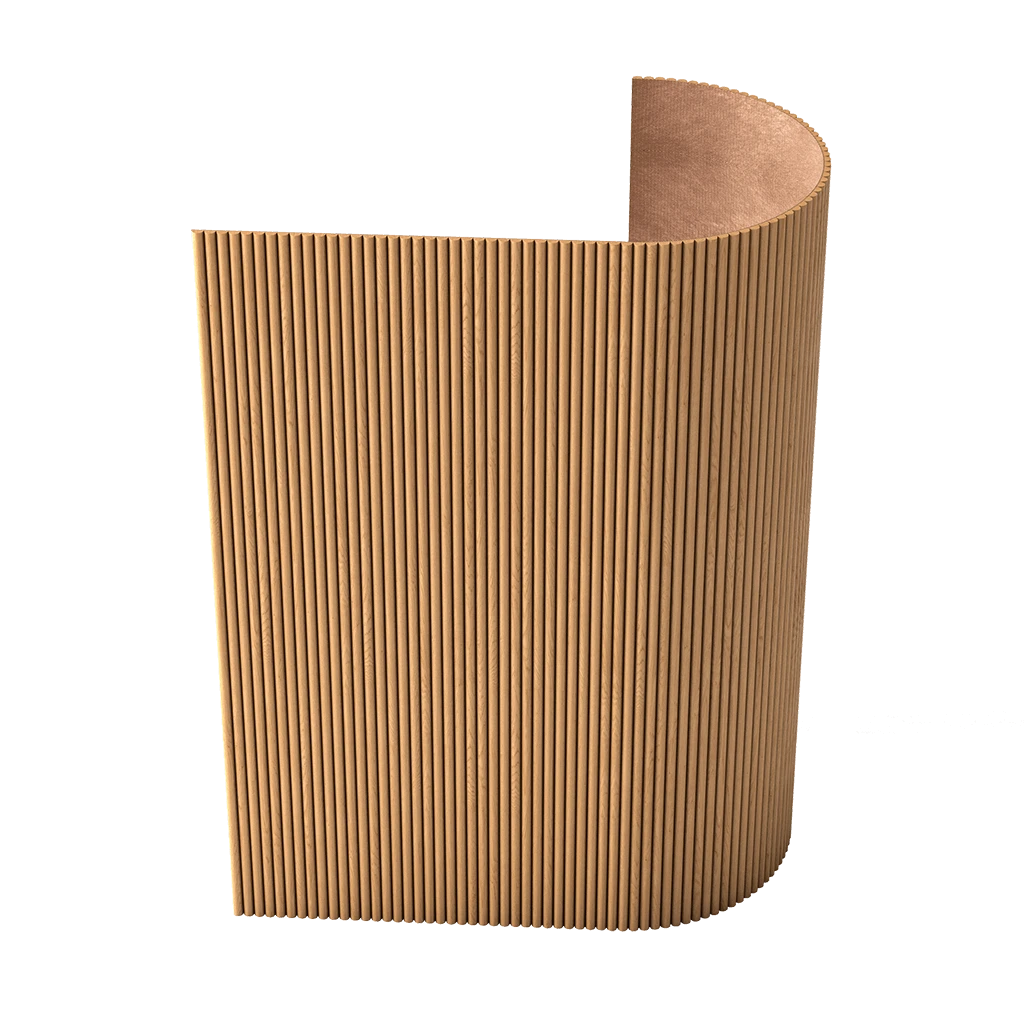
Grooved and Reeded Molding
Grooves and reeds create a stronger directional texture.
These profiles can work well in:
- Art Deco-inspired interiors;
- cabinet fronts;
- wall panels;
- furniture detailing;
- modern millwork.
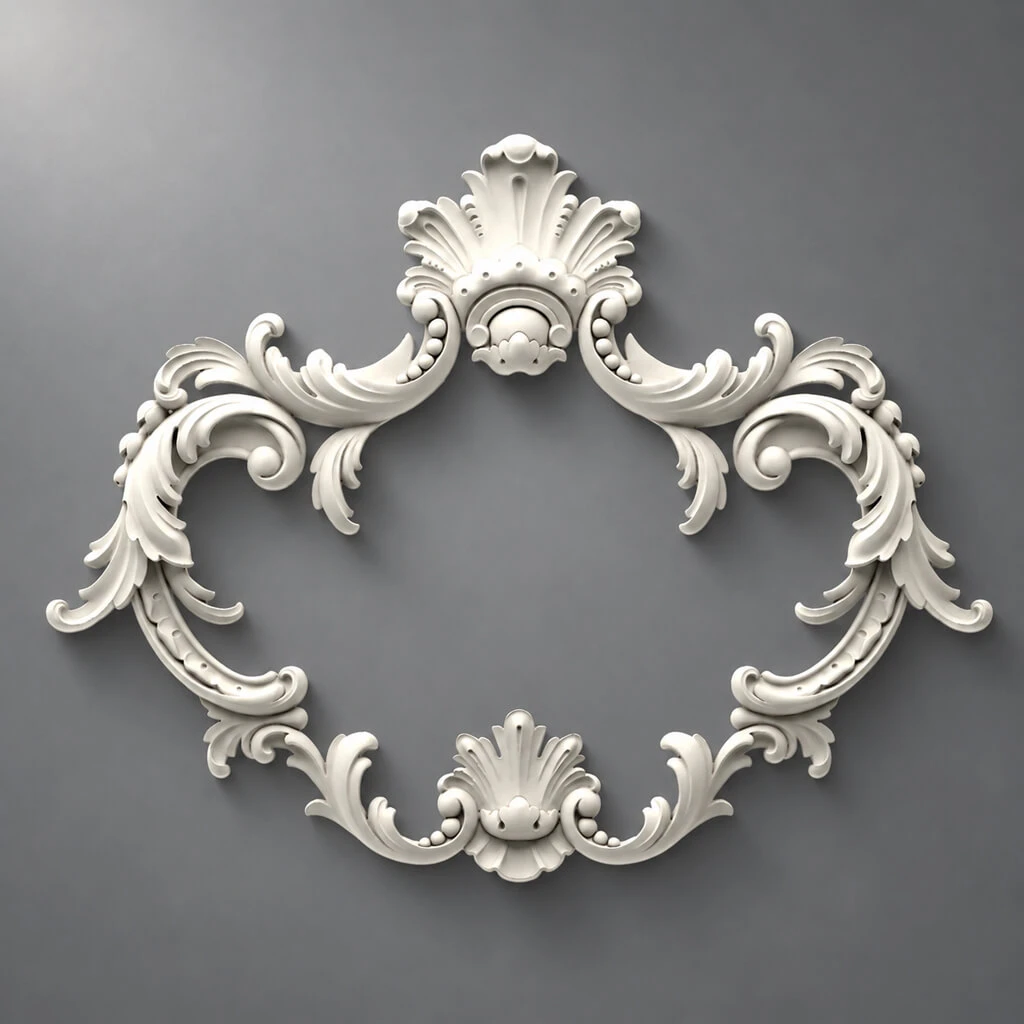
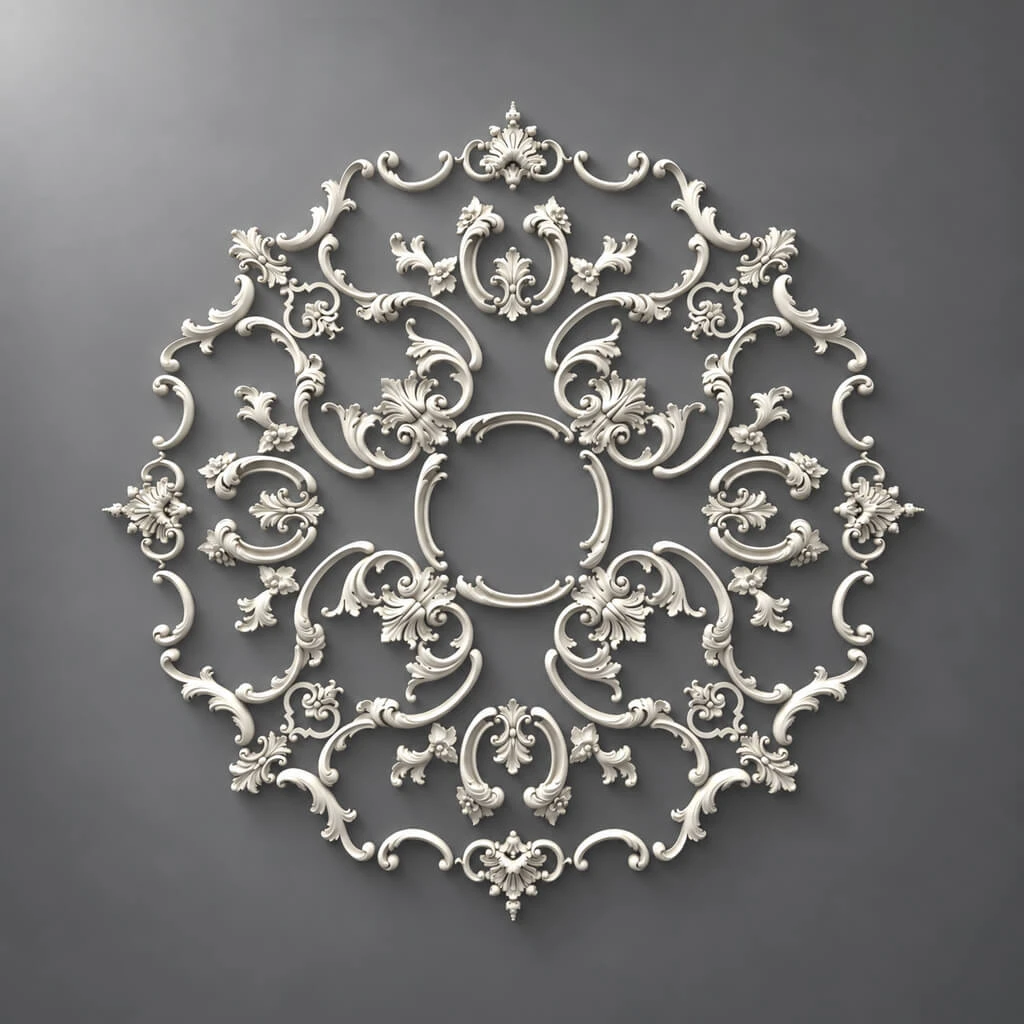
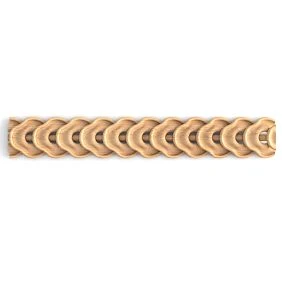
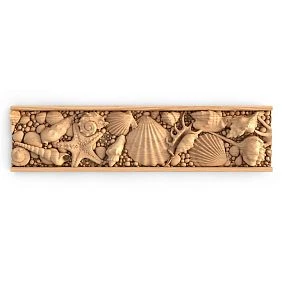
Carved Wood Molding
Carved wood molding is appropriate when ornament is part of the architecture rather than an afterthought.
It can include:
- floral motifs;
- classical ornament;
- egg-and-dart-inspired patterns;
- scrollwork;
- repeating leaves;
- geometric carving.
Carved Molding Is Not Just “More Decorative”
A carved profile changes the scale of the entire composition.
It works best when the room also supports:
- substantial baseboards;
- architectural doors;
- formal wall paneling;
- carved furniture;
- classical proportions;
- controlled symmetry.
Decorative Molding for Walls
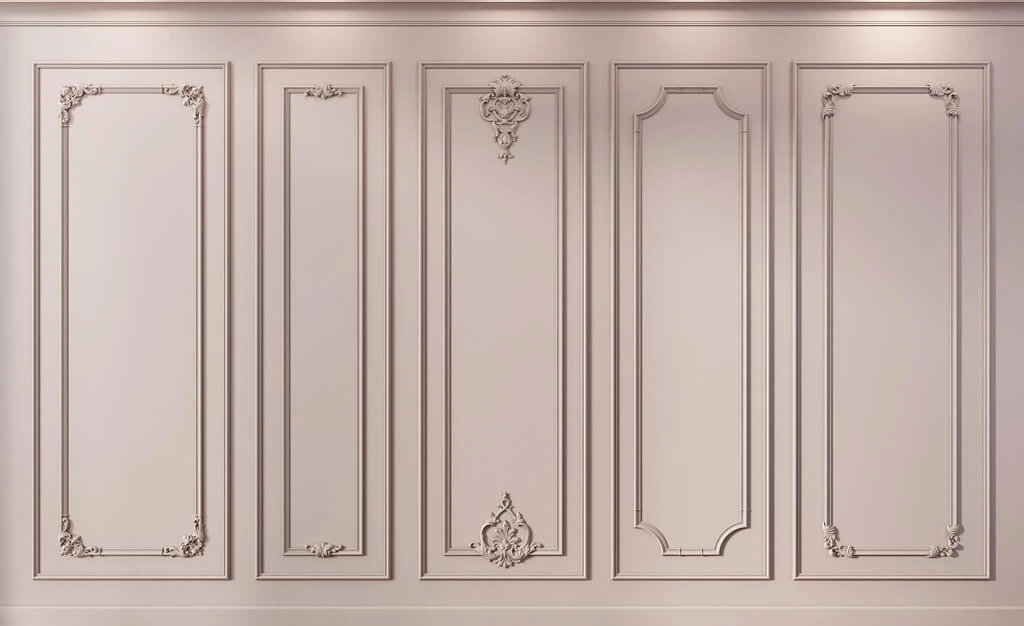
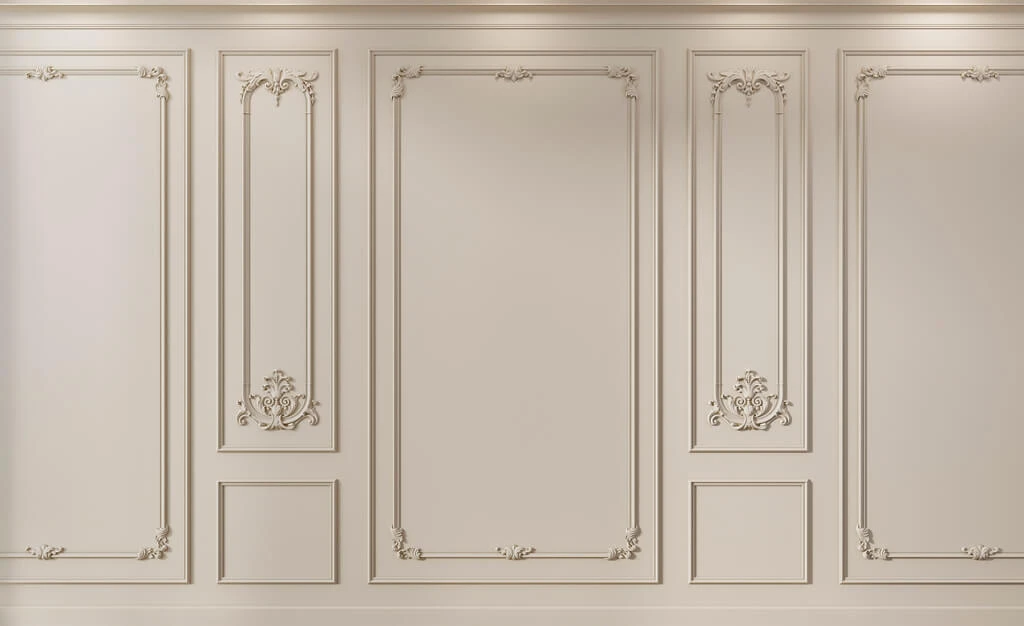
Wood wall molding can create:
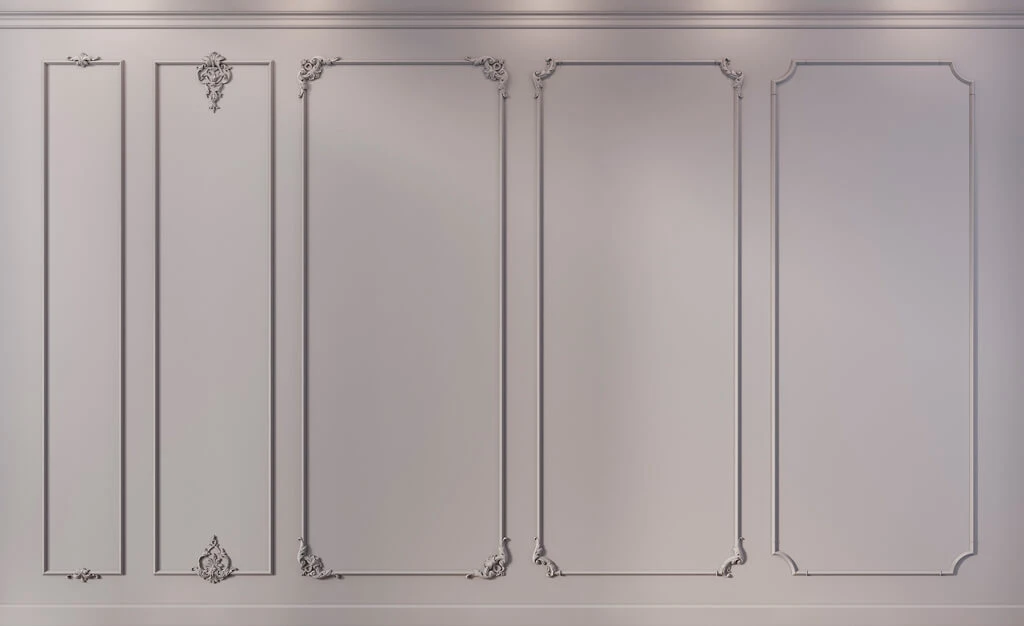
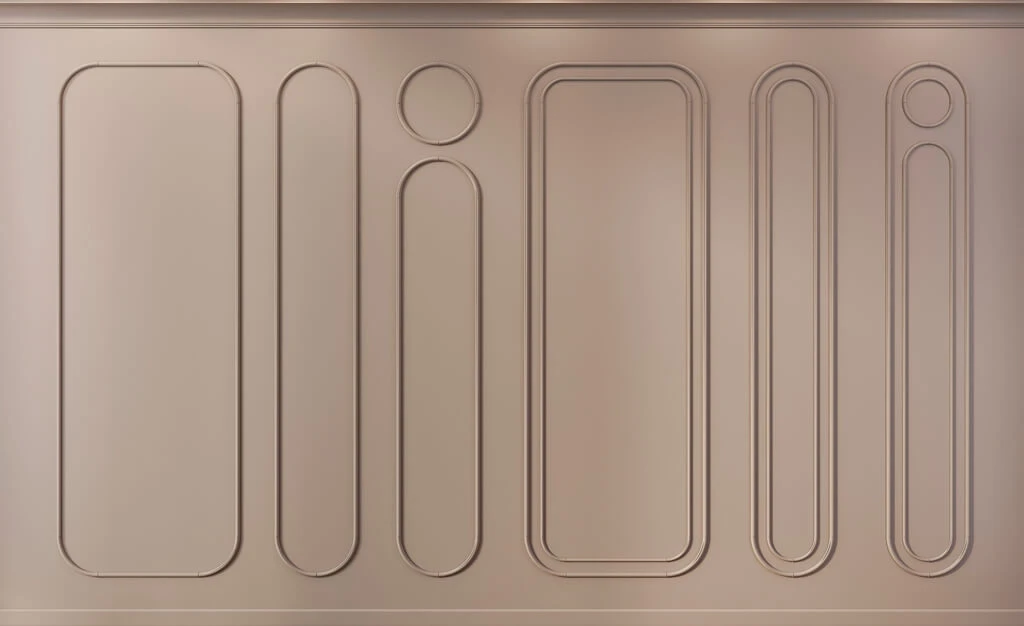
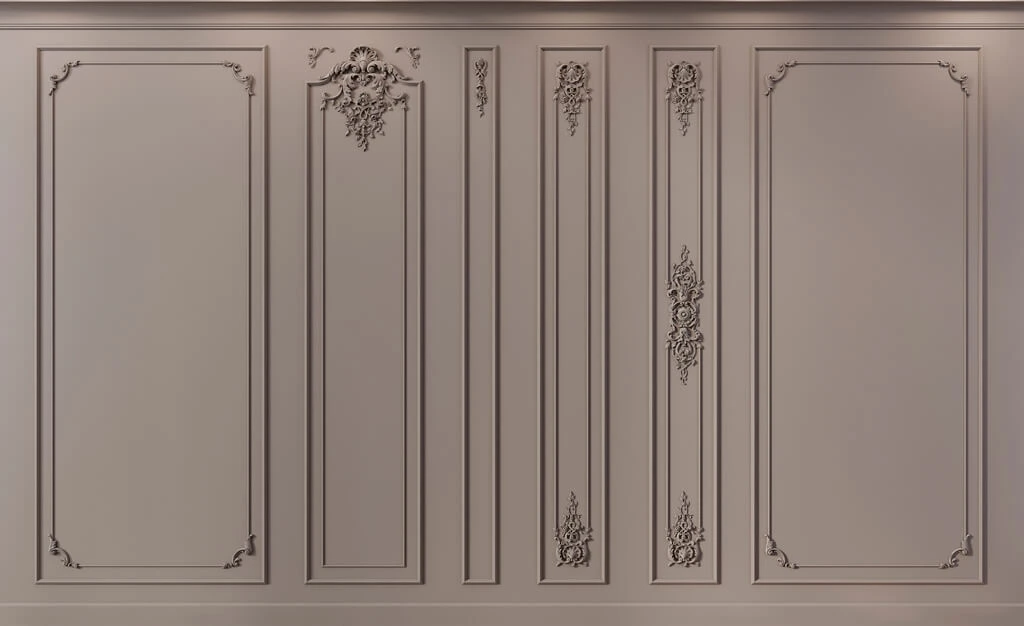
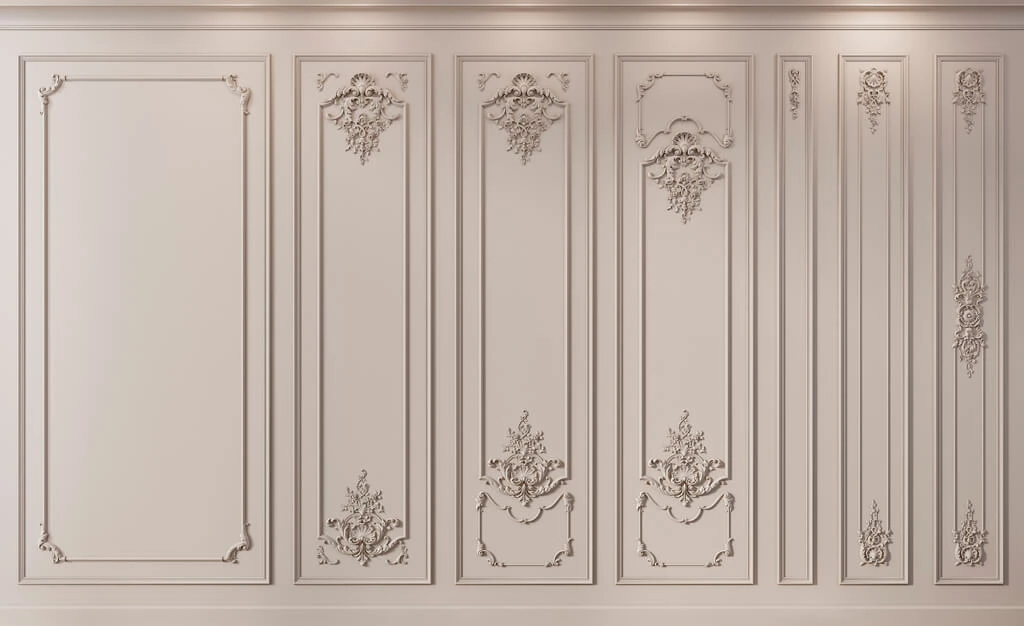
- picture-frame panels;
- full-height panel grids;
- wainscoting;
- chair-rail compositions;
- decorative borders;
- accent frames around artwork or mirrors.
For broad wall-layout principles, see the STAVROS guide to wall molding ideas.
Wood Picture Frame Molding
Wood can be especially effective for picture-frame molding when the rest of the room already uses visible wood.
For example:
- oak wall frames + oak doors;
- wood molding + stained baseboard;
- wood wall frames + natural-wood furniture;
- wood molding around textile wallcovering.
Wood Wall Molding vs. Polyurethane Wall Molding
Wood and polyurethane solve similar visual problems but create different material effects.
Use wood when:
- grain matters;
- stain or clear finish is desired;
- the project uses natural millwork;
- repairable real-wood surfaces are preferred.
Use paint-grade polyurethane molding when:
- the profile should disappear under paint;
- the design is relief-driven rather than grain-driven;
- the product geometry fits the application.
Do Not Use Material Labels as Style Labels
Wood is not automatically Traditional, and polyurethane is not automatically Modern.
Profile geometry, scale, finish, and placement determine style more than the raw material alone.
Decorative Wood Molding for Furniture
Wood molding for furniture is one of the strongest applications for narrow decorative profiles.
It can be used on:
- cabinet doors;
- dressers;
- wardrobes;
- sideboards;
- console tables;
- display cabinets;
- built-ins;
- kitchen cabinetry.
Furniture Molding as a Frame
A narrow molding can divide a flat furniture front into a framed composition.
It can create:
- one large center panel;
- two stacked rectangles;
- symmetrical door frames;
- decorative borders around veneers;
- Art Deco geometric layouts.
Wood Trim on Cabinet Doors
Before adding molding to a cabinet door, check:
- door thickness;
- hinge clearance;
- drawer and adjacent door movement;
- handle location;
- profile projection;
- paint or stain sequence;
- edge distance.
Furniture Molding and Paint
If the entire cabinet door and molding will be painted as one surface, paint-grade MDF or beech may be appropriate depending on the design and fabrication method.
If grain is intended to remain visible, oak or another stain-grade species becomes more relevant.
Furniture Molding and Veneer
Wood molding can frame veneered furniture surfaces, but color and grain should be coordinated carefully.
The molding can either:
- match the veneer;
- contrast intentionally;
- be painted while the veneer remains natural.
Wood Molding for Doors
Wood trim can be used around a door opening or directly on the door slab. Those are different applications.
Around the opening, the material functions as casing or architectural trim.
On the slab, the molding creates panel geometry or applied decoration.
For applied door-slab compositions, see decorative door molding.
Wood Molding Around Windows
Window trim should coordinate with the casing, stool, apron, wall paneling, and baseboards.
For detailed window relationships, see interior window trim molding.
Wood Molding Around Openings
Open passageways can use wood molding to create a cased opening, formal portal, or simple trimmed transition between rooms.
For that application, see archway molding and open doorway trim.
Decorative Wood Trim for Wall Panels
Wood molding is one of the most effective ways to finish wall panels because it can define the edge, reinforce the visual grid, and connect the panel system to the rest of the room.
It can be used to:
- frame a flat wood panel;
- separate panel modules;
- create a raised border;
- finish the top edge of wainscoting;
- form a chair-rail line;
- connect paneling to door casing;
- create a transition to painted wall surfaces.
For broader panel material selection, see decorative wood wall panels.
Wood Molding and Wainscoting
Wood molding can be part of a full wainscoting system or simply frame lower-wall panels.
The main elements usually include:
- baseboard;
- lower panel field;
- vertical stiles or applied molding;
- horizontal rails;
- chair rail or cap;
- upper painted wall.
Wood Molding and Baseboards
Baseboards and wall molding should look like parts of the same trim language even when they are not the same profile.
Coordinate:
- thickness;
- projection;
- wood species;
- finish;
- profile complexity;
- joint method.
Wood Molding and Crown
In traditional interiors, wood wall molding often works with wood crown or cornice.
In more contemporary interiors, the wall molding may remain natural wood while the ceiling transition is painted.
Both can work if the hierarchy is clear.
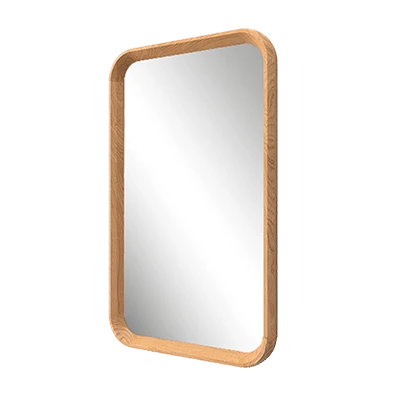
Decorative Wood Trim Around Mirrors
Wood trim can be used to create:
- simple rectangular mirror frames;
- wide architectural surrounds;
- carved decorative frames;
- panel compositions with a mirror centered inside.
For mirror-specific layouts, see mirror frame molding.
Decorative Wood Molding in Classical Interiors
Classical interiors can support more profile depth and ornament.
Useful elements include:
- carved molding;
- panel frames;
- egg-and-dart-style ornament;
- decorative corners;
- substantial baseboards;
- pilasters and capitals;
- frieze details.
The goal is not maximum decoration. The goal is a believable hierarchy.
Decorative Wood Molding in Neoclassical Interiors
Neoclassical trim uses classical proportion with cleaner detail.
Use:
- larger panel fields;
- simpler molding;
- fewer carved motifs;
- strong symmetry;
- controlled stain or monochromatic paint;
- more negative space.
Decorative Wood Molding in Modern Interiors
Modern wood trim usually relies on profile geometry and material rather than ornament.
Good choices include:
- flat strips;
- narrow rectangular molding;
- rounded profiles;
- grooved trim;
- natural oak;
- dark stained wood;
- painted MDF.
Decorative Wood Molding in Art Deco Interiors
Art Deco works especially well with:
- dark wood;
- fluted trim;
- repeated geometric frames;
- brass accents;
- mirror;
- high-contrast finishes.
Decorative Wood Trim in Scandinavian Interiors
Use light wood, restrained profiles, minimal carving, matte finishes, and simple transitions.
The wood itself should provide most of the visual interest.
Decorative Wood Molding in Transitional Interiors
Transitional interiors are ideal for mixing visible wood with painted trim.
For example:
- oak furniture molding + painted wall molding;
- stained door casing + simple painted baseboards;
- wood panel frame + neutral wall paint;
- natural oak molding around a built-in.
How Profile Width Changes the Design
Narrow profiles feel lighter and more graphic.
Wide profiles feel more architectural and substantial.
Choose width based on:
- wall size;
- furniture scale;
- ceiling height;
- panel size;
- viewing distance;
- profile depth;
- style.
How Profile Depth Changes Shadow
Two moldings with the same face width can look completely different if one projects farther from the surface.
More projection means:
- stronger shadow;
- more visible relief;
- greater risk of visual heaviness;
- more noticeable joints.
Small Rooms Need Scale Control
Small rooms can still use decorative wood molding, but the profile should not overwhelm the wall.
Good strategies include:
- narrower molding;
- fewer frames;
- larger panel fields;
- lighter wood;
- same-color painted trim;
- minimal carving.
Large Rooms Can Support Stronger Profiles
Large rooms and long walls can support:
- wider molding;
- deeper projection;
- carved ornament;
- double frames;
- more substantial cornices;
- formal paneling systems.
Stain-Grade vs. Paint-Grade Wood Molding
This is one of the most important purchasing decisions.
Stain-grade molding
The visible surface must be suitable for clear or translucent finish.
Important considerations include:
- grain consistency;
- color variation;
- surface defects;
- matching between lengths;
- joint quality.
Paint-grade molding
Surface consistency and edge quality matter more than natural grain appearance.
MDF or beech may be appropriate depending on the profile and application.
Natural Finish
A clear finish highlights the wood itself.
Use it when the room already includes:
- natural wood doors;
- wood furniture;
- wood flooring;
- stair details;
- architectural millwork.
Stained Wood Molding
Stain can:
- darken the profile;
- reduce contrast between different pieces;
- coordinate trim with flooring or cabinetry;
- create a more formal appearance.
Always approve stain on the actual wood species.
Painted Wood Molding
Paint can unify several materials into one architecture.
For example:
- beech molding + MDF wall panels;
- wood casing + paint-grade wall trim;
- carved wood molding + painted furniture.
Oil, Wax, and Clear Coatings
The source article emphasizes oils, waxes, and clear coatings. These can be appropriate for certain wood profiles, but the coating system should be selected based on:
- wood species;
- expected wear;
- location;
- desired sheen;
- maintenance;
- color stability.
Metallic and Patinated Finishes
Carved wood molding can be accented with:
- gold leaf;
- metallic paint;
- bronze effects;
- silver effects;
- patina.
Use these finishes selectively so the ornament remains readable.
How Decorative Wood Molding Is Made
The manufacturing process depends on profile complexity.
Common steps can include:
- material selection;
- drying and conditioning;
- straight-line machining;
- profile shaping;
- CNC machining for complex geometry;
- carving or relief work;
- sanding;
- finishing;
- quality control.
Traditional Carving
Hand finishing and carving remain relevant for decorative wood molding where:
- surface nuance matters;
- the profile includes ornament;
- historical character is required;
- the project uses custom decorative details.
CNC Machining
Modern CNC production can improve repeatability and precision, especially across repeated decorative profiles.
It is useful for:
- consistent cross-sections;
- repeat ornament;
- custom digital profiles;
- series production;
- matching parts across larger projects.
Laser Cutting Is Not a Universal Wood-Molding Process
The source article mentions laser cutting as a general production method. For wood molding, routing, shaping, CNC milling, carving, and sanding are typically more relevant to dimensional profiles. Laser processing may be useful for some flat decorative components, but it should not be presented as the standard method for every molding profile.
Digital Modeling
CAD and digital modeling are valuable when:
- a custom cross-section is required;
- the molding must align with furniture geometry;
- repeated carved elements need consistency;
- the project requires CNC production.
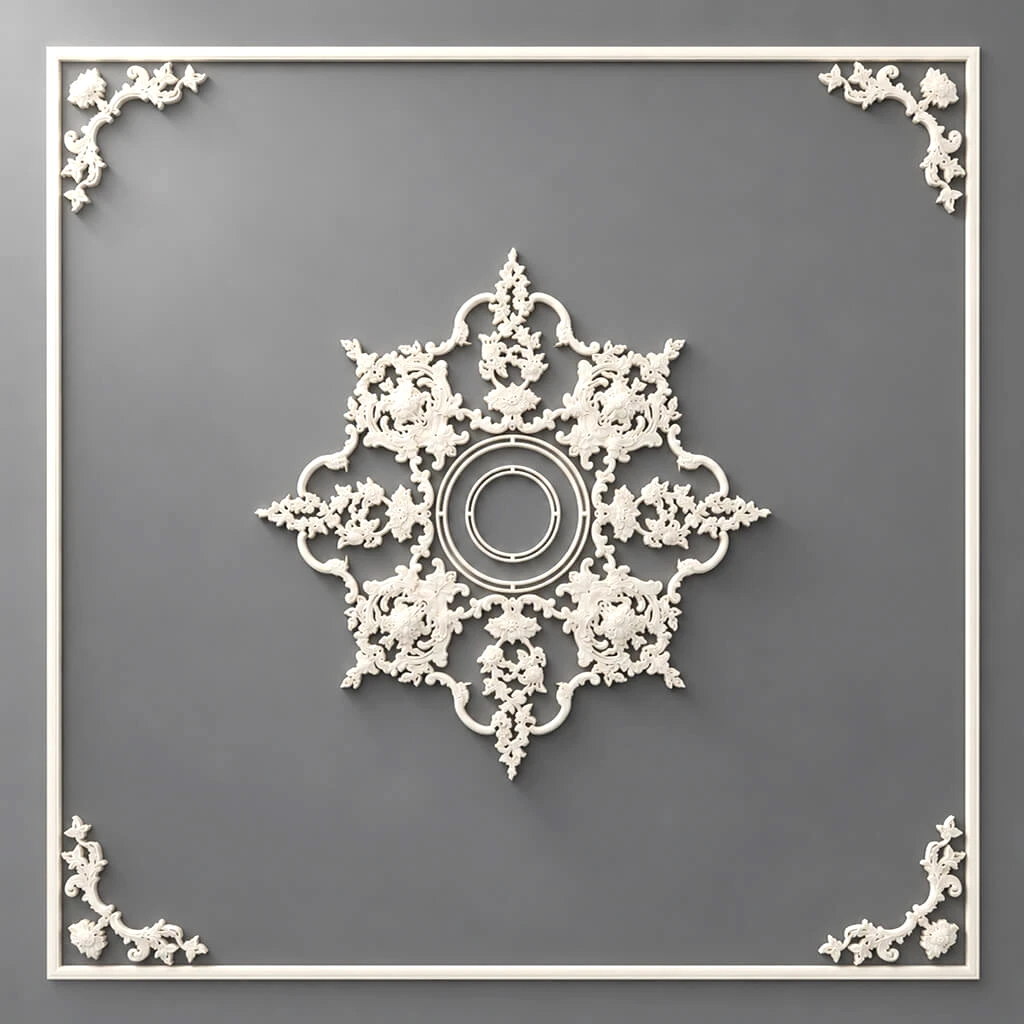
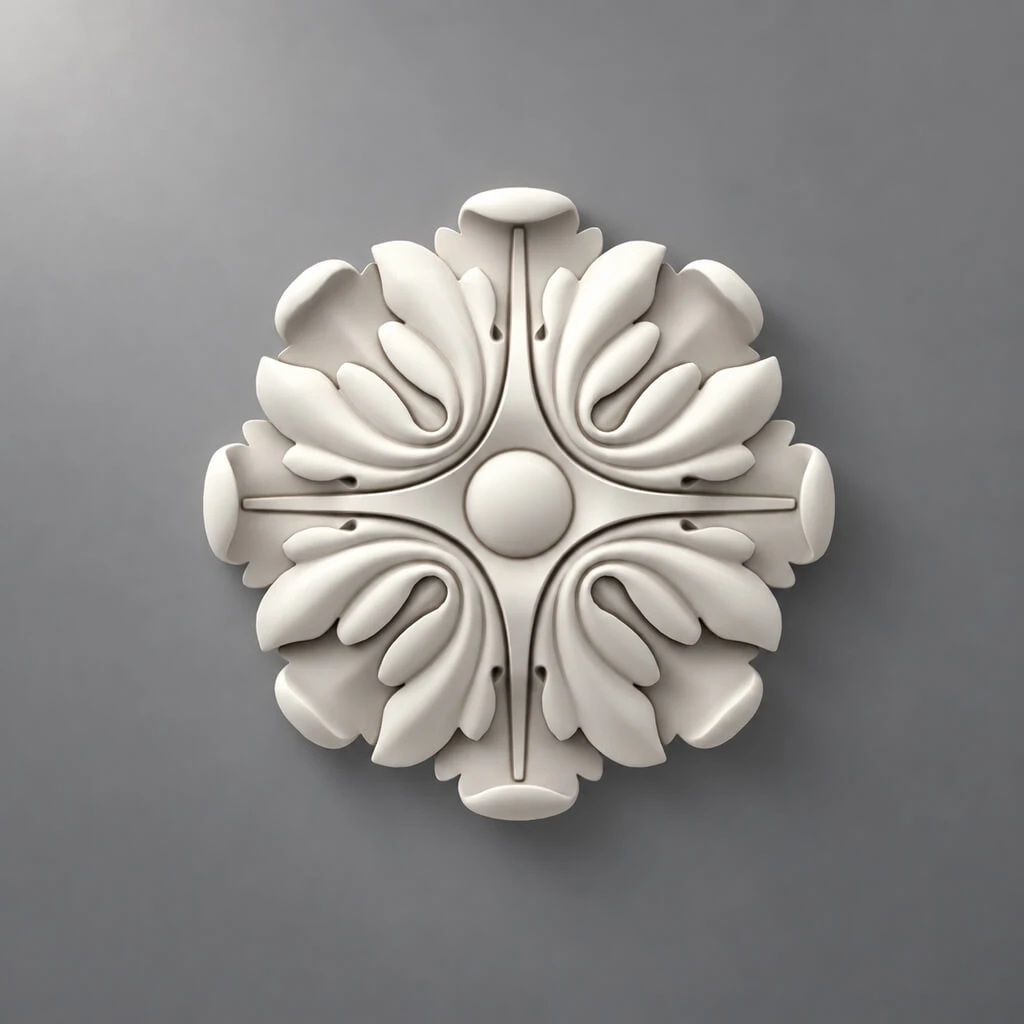
Decorative Corner Elements
Wood molding decor can include matching corner and center elements that reduce the need for complex miter joints and create a more ornamental composition.
They are useful for:
- wall frames;
- furniture fronts;
- door decoration;
- mirror frames;
- classical panel layouts.
Corner Blocks vs. Mitered Corners
A corner block can:
- eliminate a 45-degree joint;
- introduce a focal ornament;
- simplify alignment of carved profiles;
- make the frame more formal.
A mitered corner is cleaner and more restrained.
Center Ornaments
Center elements can be placed:
- above a furniture panel;
- at the center of a wall frame;
- above a mirror;
- over a door panel.
One well-scaled focal piece is usually stronger than several unrelated ornaments.
How to Choose a Profile for Walls
For wall applications, evaluate:
- profile width;
- projection;
- panel dimensions;
- wall size;
- baseboard height;
- door and window casing;
- crown;
- paint or stain;
- room style.
How to Choose a Profile for Furniture
Furniture molding needs tighter dimensional control because moving parts are nearby.
Check:
- door thickness;
- hinge position;
- handle clearance;
- drawer gaps;
- edge distance;
- profile projection;
- finish thickness.
How to Choose a Profile for Doors
For door slabs, select a molding that fits the available flat field and does not interfere with:
- lever or knob;
- lock hardware;
- door edge;
- hinges;
- adjacent panels.
How to Choose a Profile for Windows
Window applications should coordinate with:
- casing;
- stool;
- apron;
- wall paneling;
- curtain hardware;
- adjacent baseboard.
Do Not Choose a Molding From a Close-Up Photo
Profile photos are useful for detail, but scale must be judged in the actual room.
Order or review a physical sample whenever possible.
How to Measure Decorative Wood Molding
Measure the finished surface—not the rough framing.
For wall frames and furniture frames, record:
- finished width;
- finished height;
- distance from adjacent edges;
- profile face width;
- profile projection;
- corner method;
- number of repeated frames;
- stock length of the selected molding.
Basic Linear-Foot Calculation
For a simple rectangular frame:
2 × width + 2 × height = basic molding length.
Then account for:
- miter cuts;
- pattern repeat;
- defects or color sorting;
- returns;
- test cuts;
- actual stock lengths.
Why a Cut List Is Better Than a Generic Waste Percentage
A flat waste percentage is easy, but not always accurate.
A better method is to build a cut list for every wall or furniture front and optimize those pieces against the available stock lengths.
This matters most when:
- the molding is expensive;
- the profile is carved;
- grain matching matters;
- the project contains many short pieces;
- long continuous runs are required.
Pattern Repeat in Carved Wood Molding
Carved molding often has a repeating ornament. That repeat affects cutting.
Two pieces can be the same length and still look different if the ornament lands differently at the corners.
Before final cutting:
- identify the repeat;
- decide where the pattern should center;
- dry-fit focal frames;
- avoid tiny partial motifs at important corners.
Grain Matching
For stain-grade work, grain continuity can be just as important as profile continuity.
Decide whether the project should look:
- uniform and carefully matched;
- naturally varied;
- book-matched or sequence-matched in selected areas;
- intentionally contrasted.
Color Sorting
Natural wood varies in tone.
For large installations, sort molding before cutting so dark and light pieces do not appear randomly unless that variation is intentional.
Installation Starts With Layout
The most expensive molding can still look wrong if the layout is poorly planned.
Before fastening anything:
- draw the elevation;
- mark centerlines;
- locate doors and windows;
- confirm baseboard and crown;
- mark furniture;
- confirm outlets and switches;
- tape the molding width on the surface.
Use a Full-Scale Tape Mockup
Painter's tape is one of the cheapest design tools available.
Use it to test:
- frame size;
- spacing;
- molding width;
- relationship to furniture;
- distance from baseboard and ceiling;
- visual balance.
Substrate Preparation
The surface should be:
- clean;
- dry;
- stable;
- reasonably flat;
- free from loose paint or finish;
- suitable for the chosen adhesive or fastener.
Decorative trim should not be used to conceal active moisture, structural movement, or unstable substrate conditions.
Installing Wood Molding on Walls
Wood molding may be installed with:
- finish nails;
- pin nails;
- adhesive;
- mechanical fasteners;
- a combination of fastening methods.
The exact method depends on profile size, substrate, location, and finish.
Installing Molding on Furniture
Furniture applications demand more precision because the molding becomes part of a moving object.
Before installation:
- remove or protect hardware;
- confirm door movement;
- dry-fit the frame;
- check symmetry;
- use adhesive compatible with the furniture substrate;
- avoid fasteners that penetrate the finished face or interfere with hardware.
Mitered Corners
Miters are common for rectangular molding frames.
Good miters require:
- accurate saw setup;
- consistent stock thickness;
- flat substrate;
- dry-fitting;
- controlled clamping or fastening.
Butt Joints
Butt joints are appropriate for:
- Craftsman-style trim;
- flat modern profiles;
- head casing assemblies;
- certain furniture applications.
Do not force a 45-degree joint where the design language calls for square construction.
Inside Corners
Depending on profile shape, inside corners may use:
- mitering;
- coping;
- butt joints;
- corner blocks.
Outside Corners
Outside corners expose the end grain and joint more strongly.
Use accurate cutting and consider:
- mitered returns;
- solid corner blocks;
- decorative corner pieces;
- edge reinforcement where the trim is vulnerable to impact.
Coping Wood Molding
Coping can produce a cleaner inside corner for certain profiles than a simple miter, especially where walls are not perfectly square.
The choice depends on profile geometry and installer skill.
Returns
A return finishes the exposed end of a molding profile by turning it back into the wall or surface.
Returns are especially useful where:
- chair rail stops at an opening;
- crown terminates before a cabinet;
- wall molding ends on a flat surface;
- a furniture molding run stops visibly.
Adhesive Selection
Do not treat “construction adhesive” as one universal product.
Use an adhesive compatible with:
- wood species;
- MDF;
- painted substrate;
- finished furniture;
- wall material;
- intended environment.
Fastener Placement
Place fasteners where they can be filled or concealed without damaging the visible profile.
For stain-grade work, fastener placement matters more because filler can remain visible.
Installing Before or After Painting
Both sequences are possible.
Install first, paint afterward
Best when:
- wall and molding share one paint color;
- joints need to disappear;
- the entire composition is paint-grade.
Pre-finish before installation
Best when:
- molding is stain-grade;
- the wall finish is different;
- shop finishing provides better quality;
- the profile is difficult to coat in place.
Stain-Grade Joint Strategy
For visible wood, avoid relying on heavy filler at joints.
Prioritize:
- accurate cuts;
- good color matching;
- clean end grain;
- minimal gaps;
- careful touch-up.
Paint-Grade Joint Strategy
Paint-grade trim allows more joint blending, but the goal is still precision.
Large gaps should be corrected, not buried under excessive filler.
Maintenance of Decorative Wood Trim
Maintenance depends on finish and location.
For routine care:
- dust regularly;
- use a soft cloth;
- avoid harsh abrasives;
- follow the finish manufacturer's cleaning guidance;
- repair coating damage before moisture reaches raw wood.
Maintaining Clear-Finished Wood
Clear-coated wood should be inspected for:
- scratches;
- worn edges;
- water marks;
- finish failure;
- UV-related color changes where sunlight is strong.
Maintaining Oiled Wood
Oiled finishes may require periodic refreshment depending on the product, use, and wear.
Follow the coating manufacturer's maintenance schedule rather than using a fixed universal interval.
Maintaining Painted Wood or MDF
Painted trim can often be touched up locally, but sheen and color matching become more difficult as the finish ages.
Keep finish records when the project uses a custom paint specification.
Repairability
One advantage of real wood is that many dents, scratches, and finish problems can be repaired locally.
But repair method depends on:
- wood species;
- finish;
- depth of damage;
- whether the profile is carved;
- whether the piece can be removed.
Sustainability and Material Claims
The source article emphasizes wood as a renewable material. That can be true, but sustainability depends on sourcing, forestry practices, transport, yield, finish chemistry, product lifespan, and end-of-life.
If FSC or another certification is important to a project, verify it for the actual product and supply chain rather than assuming all wood trim is certified.
Common Mistake #1: Choosing the Profile Before Choosing the Application
Wall, furniture, door, and window trim have different requirements.
Common Mistake #2: Using Stain-Grade Oak Under Opaque Paint
If grain will disappear, compare more appropriate paint-grade materials.
Common Mistake #3: Calling MDF Solid Wood
Use accurate material terminology.
Common Mistake #4: Choosing by Face Width Only
Projection changes the visual effect just as much.
Common Mistake #5: Ignoring Grain Direction
Natural wood is directional.
Common Mistake #6: Ignoring Color Variation
Sort stain-grade lengths before cutting.
Common Mistake #7: Using Heavy Carved Molding in a Small Minimal Room
Profile language should match the architecture.
Common Mistake #8: Treating Decorative Molding as Structural Reinforcement
Trim can protect edges and cover joints, but it is not structural framing by default.
Common Mistake #9: Hiding Active Cracks With Molding
Fix the substrate first.
Common Mistake #10: Using the Same Joint for Every Style
Miters, butt joints, coping, and corner blocks all have valid uses.
Common Mistake #11: Skipping a Full-Scale Mockup
A profile can look very different at room scale.
Common Mistake #12: Ignoring Pattern Repeat
Carved ornament needs corner planning.
Common Mistake #13: Installing Furniture Molding Without Checking Hardware
Door swing and handle clearance come first.
Common Mistake #14: Overfilling Bad Joints
Re-cut inaccurate pieces.
Common Mistake #15: Mixing Too Many Wood Species
Coordinate molding with doors, furniture, flooring, and panels.
Common Mistake #16: Using Decorative Wood Trim Outdoors Without Product Approval
Interior wood molding should not be assumed exterior-rated.
Common Mistake #17: Using Wood Trim in High-Moisture Locations Without Planning
Species, finish, substrate, ventilation, and exposure matter.
Common Mistake #18: Installing Before the Wall Layout Is Final
Coordinate openings, outlets, furniture, baseboards, and crown first.
Common Mistake #19: Choosing Finish From a Screen
Approve a real sample on the actual species.
Common Mistake #20: Letting SEO Terminology Replace Product Accuracy
Use “wood,” “oak,” “beech,” “MDF,” “carved,” and “paint-grade” only where the actual product supports those descriptions.
Designer Checklist
Before specifying decorative wood molding, confirm:
- application;
- profile family;
- material;
- stain-grade or paint-grade;
- face width;
- projection;
- corner method;
- grain direction;
- finish;
- relationship to baseboard and crown;
- door/window intersections;
- furniture hardware;
- stock length;
- sample approval.
Installer Checklist
Before cutting:
- sort material;
- check moisture and conditioning requirements;
- verify substrate;
- mark layout;
- confirm reference lines;
- dry-fit focal frames;
- plan stock optimization;
- confirm finish sequence;
- prepare appropriate fasteners and adhesive.
SEO Intent: Decorative Wood Molding and Trim
This article should own the wood-specific trim cluster rather than the polyurethane molding cluster.
Primary and supporting phrases include:
- decorative wood molding;
- decorative wood trim;
- decorative wood molding and trim;
- decorative wood trim moulding;
- decorative wood trim molding;
- wood molding and trim;
- wood wall molding;
- interior wood trim;
- wood molding for walls;
- wood molding for furniture;
- oak molding;
- beech molding;
- MDF molding;
- carved wood molding.
Close keyword variants should support one page rather than being treated as separate search-volume totals.
Internal Linking Strategy
Use decorative wood molding and trim for the main commercial category.
Use carved wood molding for ornamental wood profiles.
Use wood molding decor for matching corner and center elements.
Use oak, beech, and MDF molding MLD-011 as an example of one profile available in several materials.
Use grooved wood molding MLD-055 when discussing medium-width decorative profiles.
Use compact wood molding MLD-059 when discussing smaller linear profiles for furniture and interiors.
Frequently Asked Questions
What is decorative wood molding?
It is a shaped linear wood or wood-based trim profile used to frame, finish, transition, or decorate walls, furniture, doors, windows, mirrors, and millwork.
What is the difference between wood molding and wood trim?
Molding is a shaped profile. Trim is a broader term that can include molding, casing, baseboards, rails, and other finishing pieces.
What is the best wood for decorative molding?
There is no single best species. Oak is strong when visible grain matters; beech is useful for more uniform or paint-oriented applications; MDF is practical for paint-grade trim.
Can MDF molding be called wood molding?
It is better described as MDF or engineered wood-based molding rather than solid wood.
Can decorative wood molding be painted?
Yes. If the profile will be fully painted, compare paint-grade wood and MDF rather than automatically choosing premium stain-grade material.
Can decorative wood molding be stained?
Yes, when the molding is made from stain-grade wood suitable for a transparent or translucent finish.
Can wood molding be used on walls?
Yes. It can create picture-frame molding, panel frames, chair rails, wainscoting, borders, and other architectural compositions.
Can wood molding be used on furniture?
Yes. It is commonly used to frame cabinet doors, dressers, wardrobes, built-ins, mirrors, and other furniture surfaces.
Can wood molding be used on doors?
Yes, either as casing around the opening or as applied trim directly on the door slab.
Can wood molding be used around windows?
Yes, as part of a coordinated casing and interior trim system.
How do I choose molding width?
Base it on wall or furniture scale, profile projection, viewing distance, adjacent trim, and the size of the framed field.
Should all wood trim in a room match?
Not necessarily, but species, undertone, sheen, profile complexity, and scale should be coordinated.
Do wood molding corners have to be mitered?
No. Depending on style and profile, you can use miters, butt joints, coping, or decorative corner blocks.
Can carved wood molding use corner blocks?
Yes. Matching decorative corners can simplify the frame and create a more formal composition.
How do I calculate wood molding quantity?
Calculate the perimeter or run length for every element, build a cut list against the actual stock length, then add a practical allowance based on cuts and pattern repeat.
Should I buy extra molding?
Usually yes, but the correct allowance depends on stock length, cut plan, grain matching, defects, and pattern repeat rather than one universal percentage.
Can wood molding hide uneven walls?
It can cover a controlled joint or minor visual irregularity, but it should not be used to conceal unstable or seriously uneven construction.
Can wood molding be repaired?
Often yes. Repairability depends on species, finish, damage depth, and whether the piece can be refinished or replaced.
Is wood molding suitable for humid rooms?
Only when the species, finish, substrate, ventilation, and moisture exposure are appropriate. Interior wood trim should not be assumed suitable for repeated saturation.
What makes decorative wood molding look high-end?
Correct scale, clean joints, consistent grain and color, appropriate finish, and integration with the room matter more than simply choosing a highly ornate profile.
Final Design Principle: Profile, Material, and Application Must Agree
The strongest decorative wood molding does not feel pasted onto the interior. It looks inevitable because the profile fits the scale, the material belongs with the other millwork, the finish supports the design, and the joints are handled cleanly.
Use decorative wood trim when the project needs natural grain, stain-grade detail, paint-grade MDF geometry, furniture framing, panel edging, or architectural transitions. Use carved wood molding when ornament is part of the architectural language. Use matching wood molding corner elements when they strengthen the composition and simplify the joint.
Choose the application first, then the profile, then the material, then the finish. That sequence produces a better result than starting with a decorative pattern and trying to force it into the room afterward.
Quick Selection Matrix for Decorative Wood Molding
| Application | Recommended material direction | Profile character | Finish direction |
|---|---|---|---|
| Wall picture frames | Oak, beech, or MDF | Narrow to medium, clean or lightly profiled | Stain, clear finish, or paint |
| Furniture fronts | Oak, beech, MDF | Compact, low projection | Match cabinet or contrast intentionally |
| Classical wall panels | Oak or carved beech | Deeper, ornamental | Stain, paint, patina, metallic accent |
| Modern millwork | Oak or MDF | Flat, rounded, grooved, minimal | Natural, dark stain, matte paint |
| Door slab decoration | Wood or MDF | Low projection, carefully scaled | Usually coordinated with door finish |
| Mirror frame | Oak, beech, carved molding | Depends on room style | Natural, stain, paint, metallic accent |
| Panel edging | Oak, beech, MDF | Simple transition profile | Match or intentionally contrast the panel |
Decorative Wood Molding in Living Rooms
Living rooms can support several levels of wood trim, from one restrained wall frame to full architectural paneling.
Strong options include:
- oak picture-frame molding on a painted wall;
- natural wood trim around decorative wall panels;
- carved wood molding around a mirror or artwork;
- wood trim connecting a fireplace wall to built-ins;
- decorative wood molding around a TV composition when the electronics and mounting are resolved first.
Decorative Wood Molding in Dining Rooms
Dining rooms are especially suitable for wood molding because furniture placement is relatively stable and symmetry often works naturally.
Use wood trim for:
- wainscoting;
- large wall frames;
- chair rail;
- sideboard wall compositions;
- mirror framing;
- formal door and window casing.
Decorative Wood Molding in Bedrooms
Bedrooms usually benefit from quieter trim.
Good applications include:
- one large frame behind the bed;
- wood trim integrated with the headboard wall;
- decorative frames around bedside sconces;
- natural oak trim combined with upholstered panels;
- painted MDF molding in monochromatic wall compositions.
Decorative Wood Molding in Home Offices
Home offices can support darker stain-grade wood because the room often already includes bookshelves, desks, and cabinetry.
Use molding to:
- connect built-ins to the architecture;
- frame shelving bays;
- create wall panels behind a desk;
- finish the edge of cabinetry;
- introduce a formal library character.
Decorative Wood Trim in Entry Halls
Entry halls are high-visibility and often high-contact spaces.
Choose profiles with:
- controlled projection;
- durable finish;
- clean baseboard transitions;
- strong alignment with door casing;
- enough relief to read from the entrance without becoming fragile.
Decorative Wood Molding in Kitchens
Kitchen applications are usually furniture-driven rather than wall-driven.
Wood molding can be used on:
- cabinet doors;
- hood surrounds;
- island panels;
- display cabinets;
- decorative end panels;
- upper cabinet cornices.
Keep the profile clear of door movement, hinges, appliance panels, and handle zones.
Decorative Wood Molding in Commercial Interiors
Restaurants, hotels, retail spaces, offices, and showrooms can use wood trim to create a more permanent architectural identity.
Commercial projects should additionally consider:
- fire-performance requirements;
- maintenance;
- impact exposure;
- replaceable sections;
- finish durability;
- large viewing distances;
- repeatability across multiple rooms.
Decorative Wood Molding and Built-In Cabinetry
Built-ins look most convincing when wall trim and cabinetry share a visual logic.
Coordinate:
- stile width;
- rail height;
- molding profile;
- baseboard;
- cabinet crown;
- door casing;
- wood species;
- finish sheen.
Decorative Wood Trim and Wall Paneling
When molding is used with paneling, decide whether the trim should:
- sit on top of the panel face;
- frame the panel from outside;
- cover a panel edge;
- create a reveal between materials;
- function as a rail or stile.
Those are different construction details and should be drawn before ordering.
Decorative Wood Molding and Stone
Wood and stone can work together because they provide opposite textures.
Typical combinations include:
- wood molding beside a stone fireplace;
- wood panel trim around a stone insert;
- natural oak trim against limestone or marble;
- dark stained molding beside light stone.
Leave a clean joint between materials rather than forcing one finish to imitate the other.
Decorative Wood Molding and Metal
Metal can sharpen the look of wood trim.
Good pairings include:
- oak + blackened steel;
- walnut-tone stain + brass;
- painted black molding + bronze;
- light oak + brushed stainless steel.
Decorative Wood Molding and Glass
Wood trim can frame glass cabinet doors, partitions, mirrors, and display areas.
Coordinate:
- glass thickness;
- retaining method;
- edge protection;
- profile projection;
- hardware.
Three Reliable Wall-Molding Layouts
Layout 1: One large wood frame
Use one large rectangular frame centered on the dominant wall. This is the safest approach when natural wood itself is the visual accent.
Layout 2: Repeated vertical frames
Use three or more evenly proportioned frames across a wide wall. This works well behind a sofa, dining table, or long console.
Layout 3: Lower wood paneling + upper painted wall
Use wood trim to create a lower architectural field while keeping the upper wall quiet. This gives the room a traditional structure without full-height wood coverage.
Three Reliable Furniture-Molding Layouts
Layout 1: Single inset frame
A narrow molding frame centered on a cabinet door is the most flexible option.
Layout 2: Double rectangular frame
Use two nested profiles only when the door is large enough to support the extra visual density.
Layout 3: Frame + center ornament
Use a molding frame with one matching center applique or crest for Classical furniture. Keep the ornament centered and leave enough negative space around it.
How to Avoid Furniture-Molding Problems
Before gluing a molding frame to a door, make sure:
- the handle still has hand clearance;
- the hinge opens fully;
- two adjacent doors do not collide;
- the molding does not extend beyond the door edge;
- the profile can be cleaned easily;
- the finish sequence is practical.
Ordering Decorative Wood Trim
A professional order should include more than the total footage.
Record:
- profile SKU;
- material;
- grade;
- finish requirement;
- stock length;
- total linear quantity;
- number of long uninterrupted pieces required;
- number of corner elements;
- number of center ornaments;
- sample approval status.
Ask for Samples When Finish Matching Matters
A sample is especially important when:
- the molding will be stained;
- the project must match existing cabinetry;
- grain scale matters;
- the profile is deeply carved;
- the finish sheen is critical;
- the molding will sit directly beside another wood species.
Specification Example
A simple specification could read:
Decorative wood molding, selected profile from STAVROS wood-and-MDF trim collection, oak or beech as scheduled, stain-grade where visible grain is required, factory-sanded, field- or shop-finished to approved sample, installed with joints aligned and color-sorted across continuous runs.
The exact profile, dimensions, finish, fasteners, adhesive, and substrate requirements should then be listed separately for the project.
Why Decorative Wood Trim Deserves Its Own SEO Page
Wood molding has a different search and purchase intent from polyurethane molding. People searching for decorative wood trim may care specifically about:
- oak;
- beech;
- solid wood;
- stainability;
- visible grain;
- furniture use;
- carved profiles;
- matching cabinetry;
- repairability;
- natural material.
That is why this page should remain clearly wood-focused rather than becoming another general molding guide.
Before You Buy: Five Questions
1. Will the grain remain visible?
If yes, choose a stain-grade wood and approve the finish on a real sample.
2. Is the molding for a wall or for furniture?
Furniture usually requires tighter scale and clearance control.
3. Is the profile simple or carved?
Carved molding needs pattern-repeat and corner planning.
4. How will the molding terminate?
Resolve corners, returns, casing intersections, and baseboard transitions before ordering.
5. What is the finish sequence?
Decide whether the molding will be prefinished, stained after installation, or painted with the surrounding surface.
Final Buying Rule
Do not buy decorative wood molding only because the profile itself looks attractive.
Buy it because its material, scale, projection, finish, and application all work together in the actual room or furniture piece.
That is what turns a small strip of wood into architecture.
Working With Existing Trim in a Renovation
Renovation projects often begin with trim that is already in place. Before adding new decorative wood molding, compare the existing baseboards, casing, crown, and built-ins.
Ask whether the new molding should:
- match the existing profile language;
- match only the wood species and finish;
- contrast intentionally as a new design layer;
- replace an older trim element entirely.
Trying to “almost match” an existing historic profile can look less convincing than using a clearly complementary new profile.
Matching New Wood Molding to Existing Doors
Door color is often the strongest wood reference in a room.
When matching trim to existing doors, compare:
- species;
- grain;
- undertone;
- stain density;
- sheen;
- age-related color change.
A new stain sample may need adjustment because old finished wood can darken, amber, fade, or change tone over time.
Matching New Wood Molding to Flooring
The molding does not have to be the same color as the floor.
It can:
- match closely;
- share the same warm or cool undertone;
- contrast clearly;
- coordinate with furniture instead of flooring.
A forced near-match that is visibly off can be more distracting than a deliberate contrast.
Matching Wood Trim to Furniture
Furniture can be the better reference point when the molding is used on cabinetry, built-ins, or wall panels around a furniture composition.
For example:
- oak molding with oak shelving;
- dark stained trim with walnut-toned furniture;
- painted molding matching cabinet color;
- carved molding coordinated with carved furniture details.
When Not to Use Decorative Wood Molding
Wood molding is not always necessary.
Skip it when:
- the room already has too many competing trim profiles;
- the wall is intentionally minimal and flush;
- the furniture front is too small for another layer;
- the available edge clearance is insufficient;
- the material will be exposed to conditions unsuitable for the product;
- the trim exists only to hide a problem that should be repaired instead.
The Best Decorative Wood Trim Often Looks Simple
High-quality millwork is not defined by ornament density. A clean oak profile with precise joints can look more refined than a heavily carved molding that is too large for the room.
Good wood trim depends on four things:
- proportion;
- material quality;
- finish quality;
- installation precision.
If those are correct, even a very simple molding can become one of the most convincing architectural details in the interior.