



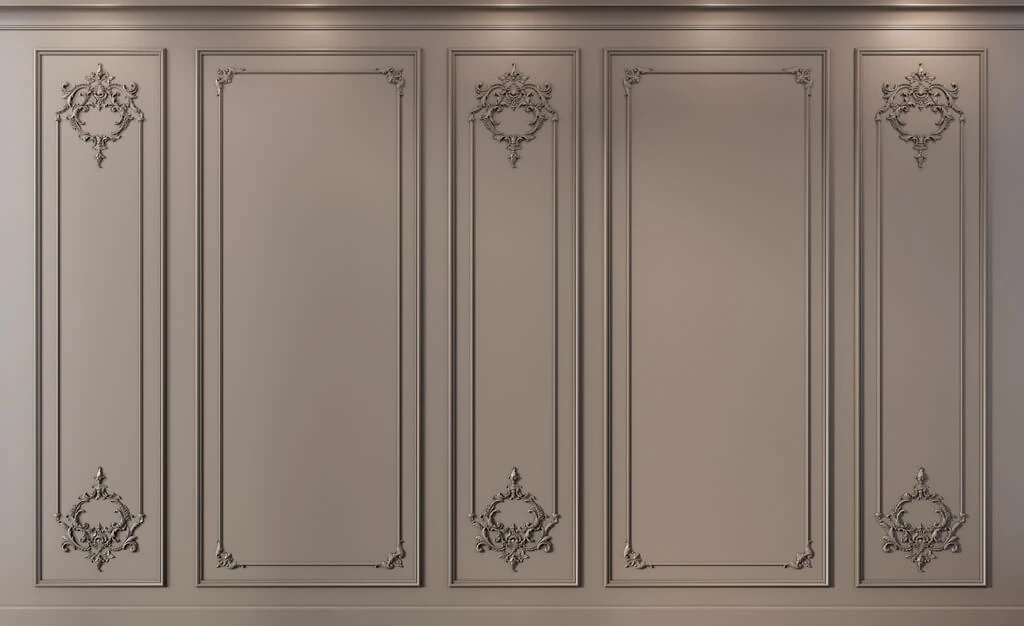
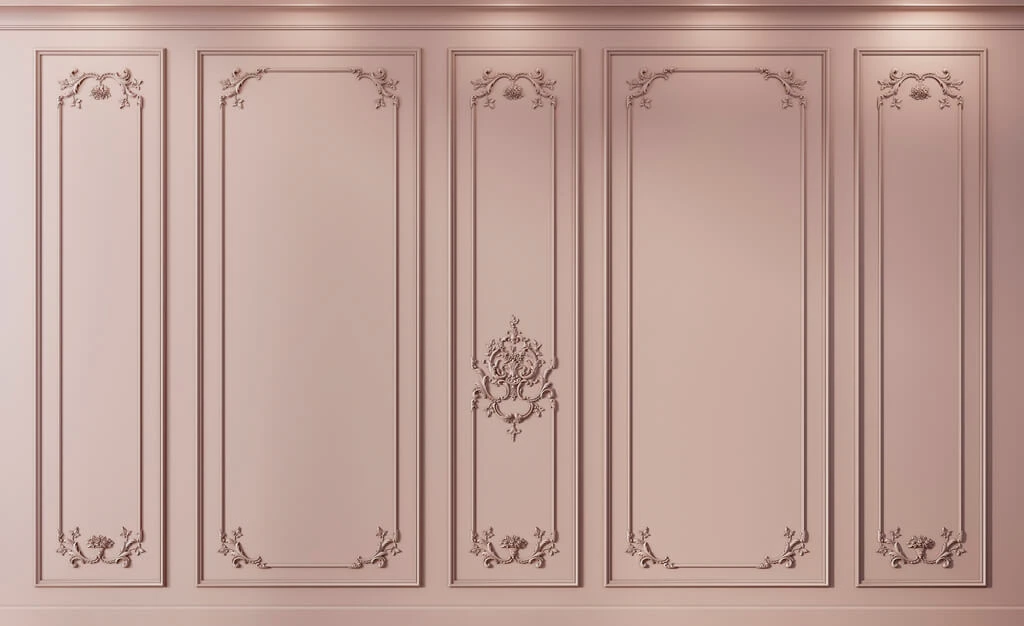
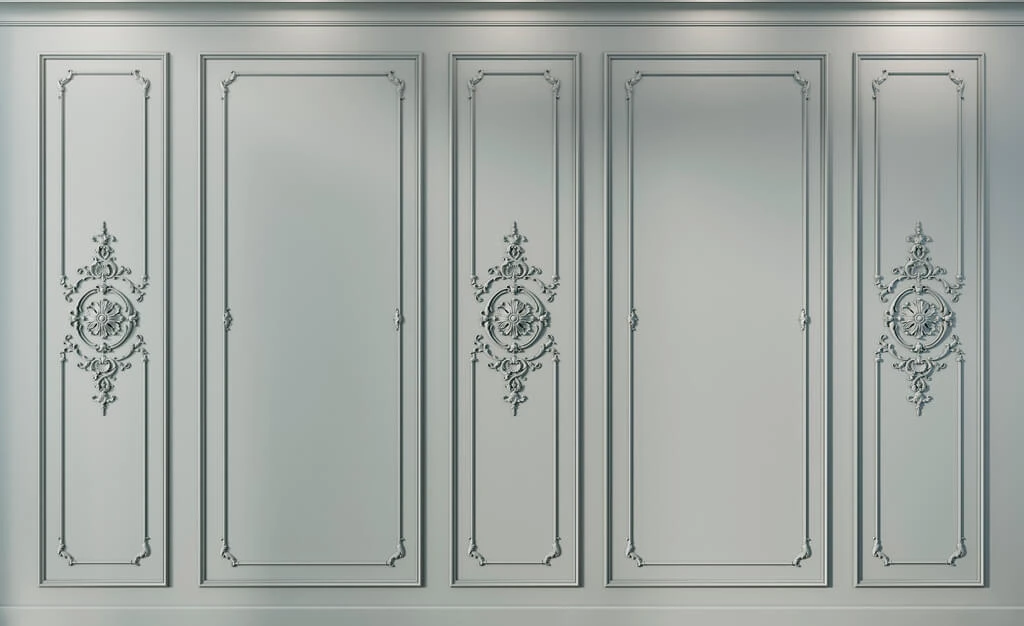
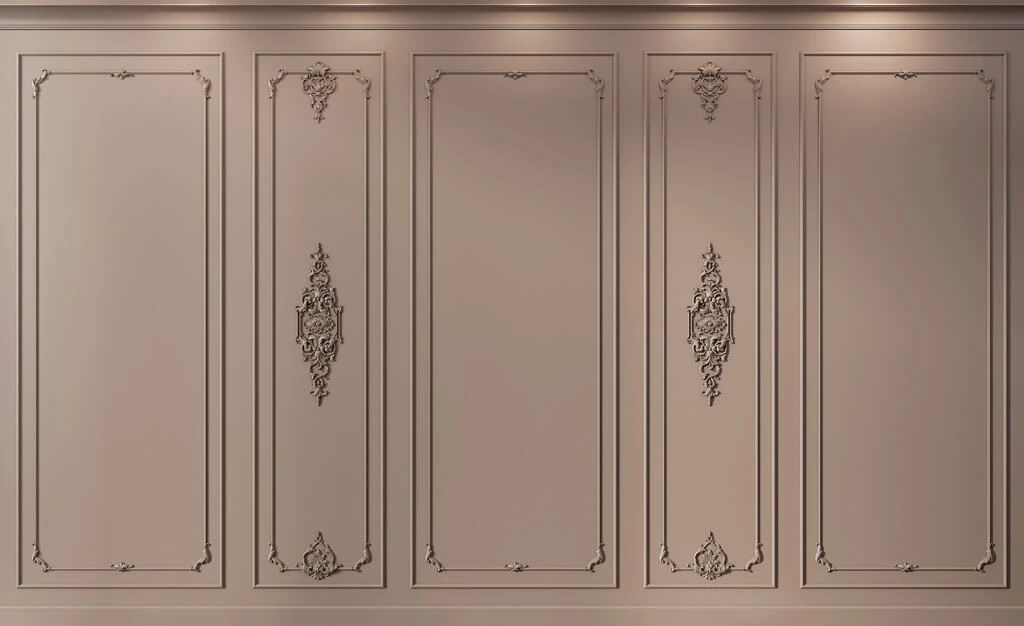























Article Contents:
- What Does “Mirror Frame Molding” Actually Mean?
- System 1: A True Physical Mirror Frame
- System 2: A Mirror Mounted Separately With Molding Around It
- System 3: The Mirror as One Panel in a Wall-Molding System
- Why Integrated Mirrors Look More Expensive
- Mirror Frame Molding and Boiserie
- Start With the Mirror—or Start With the Wall?
- Mirror Frame Molding Is a Proportion Problem
- Small Mirror Frame Molding: MLDPU-001
- Medium-Fine Mirror Frame Molding: MLDPU-004
- Medium Mirror Frame Molding: MLDPU-002
- Larger Mirror Compositions: MLDPU-003
- Mirror Size and Molding Width
- The Reveal Between Mirror and Molding
- Should the Molding Touch the Mirror?
- Rectangular Mirrors: The Most Flexible Geometry
- Square Mirrors
- Round Mirrors
- Oval Mirrors
- Arched Mirrors
- Mirror Frame Molding for a Bathroom Vanity
- One Large Vanity Mirror vs. Two Mirrors
- Mirror Frame Molding With Sconces
- Entryway Mirror Frame Molding
- Living-Room Mirror Frame Molding
- Dining-Room Mirrors
- Bedroom Mirrors
- Hallway Mirrors
- Mirror Frame Molding Above a Fireplace
- Mirror Frame Molding Around a Mantel Composition
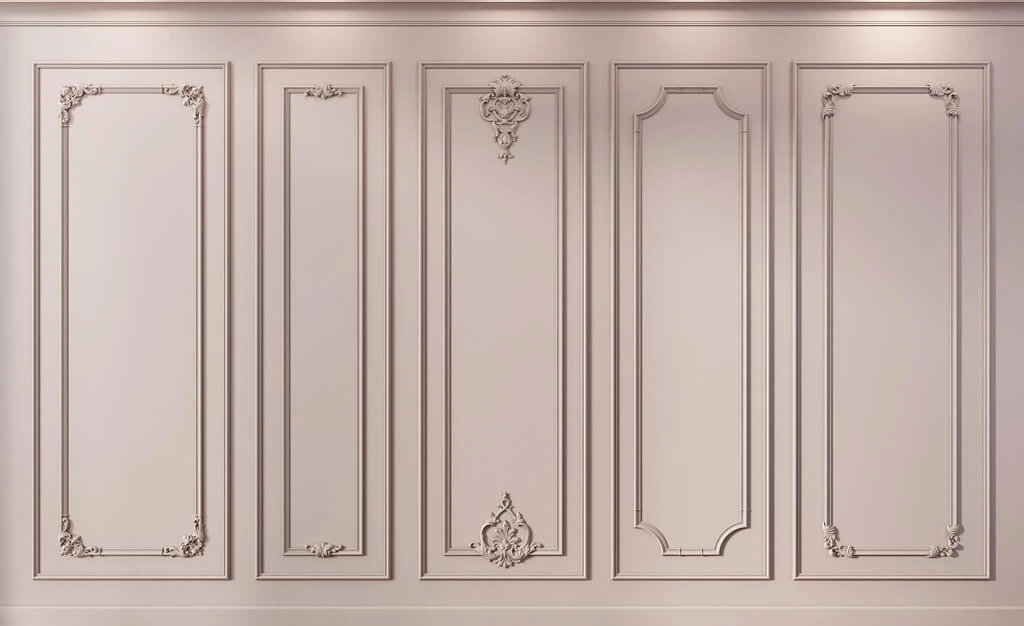
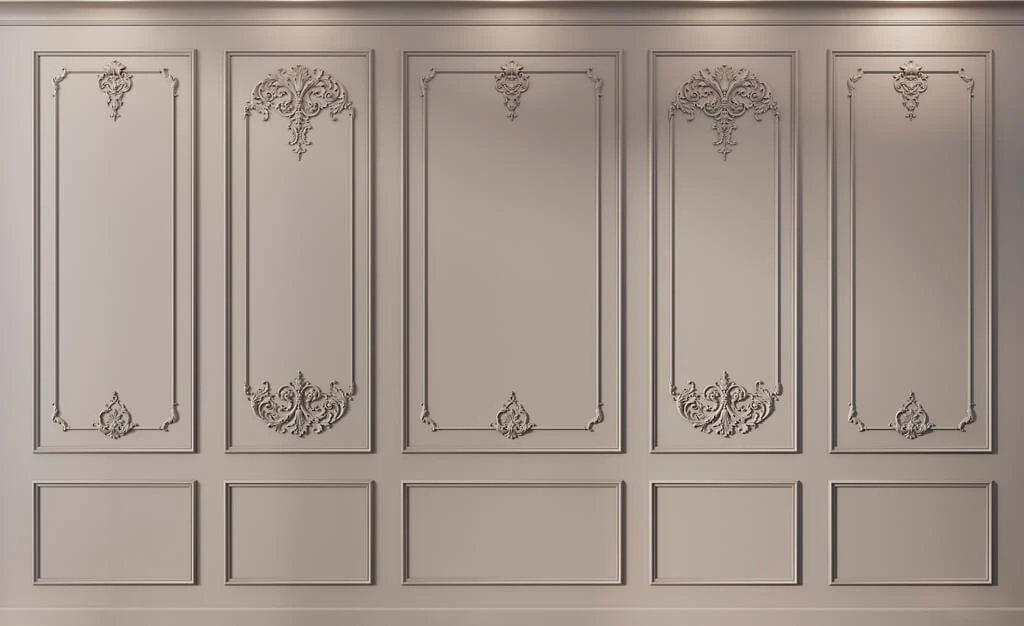
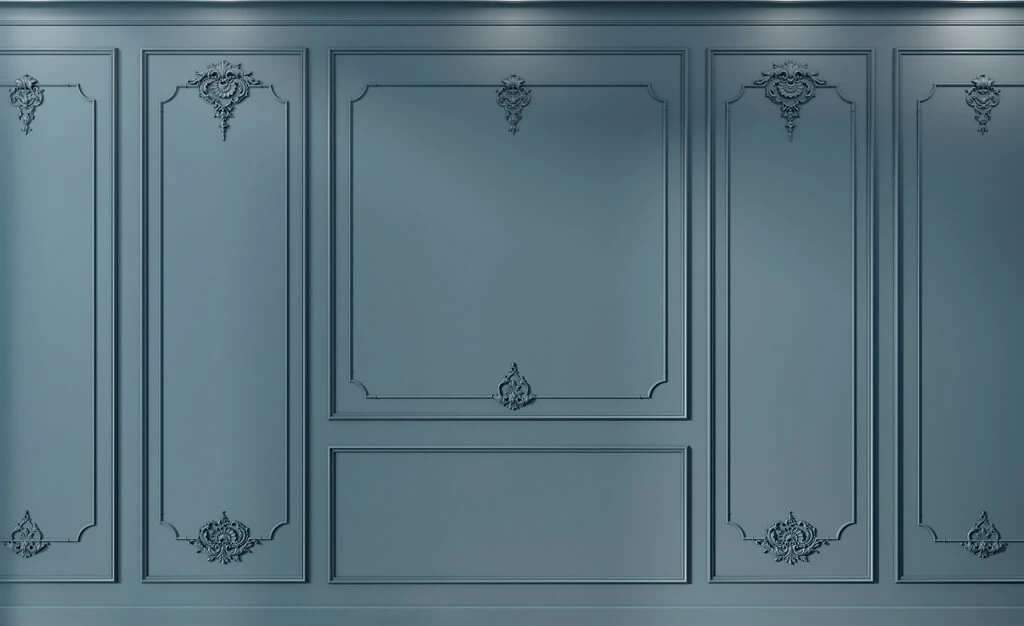
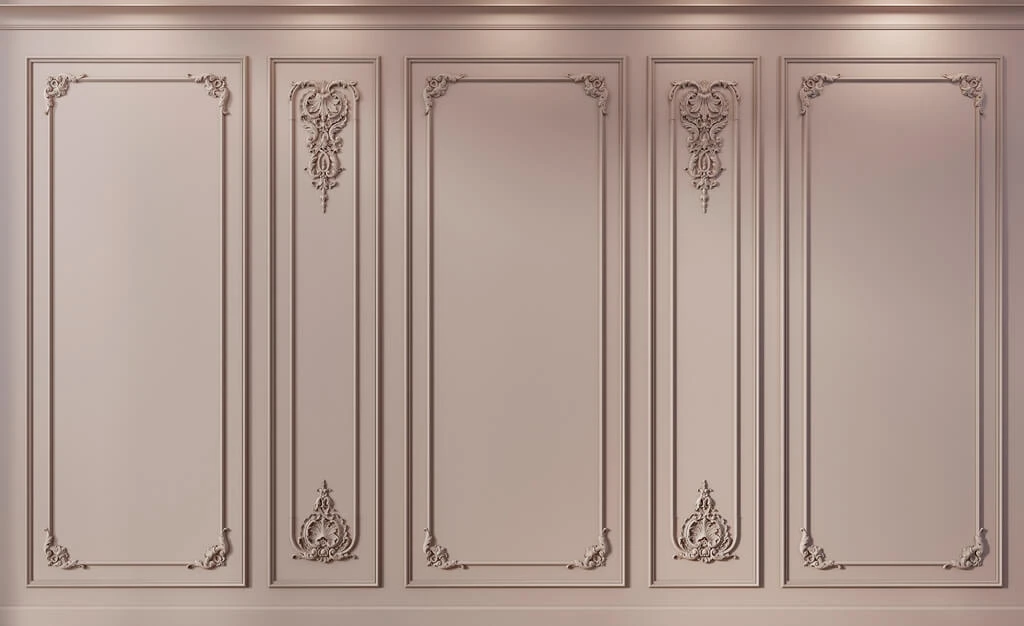
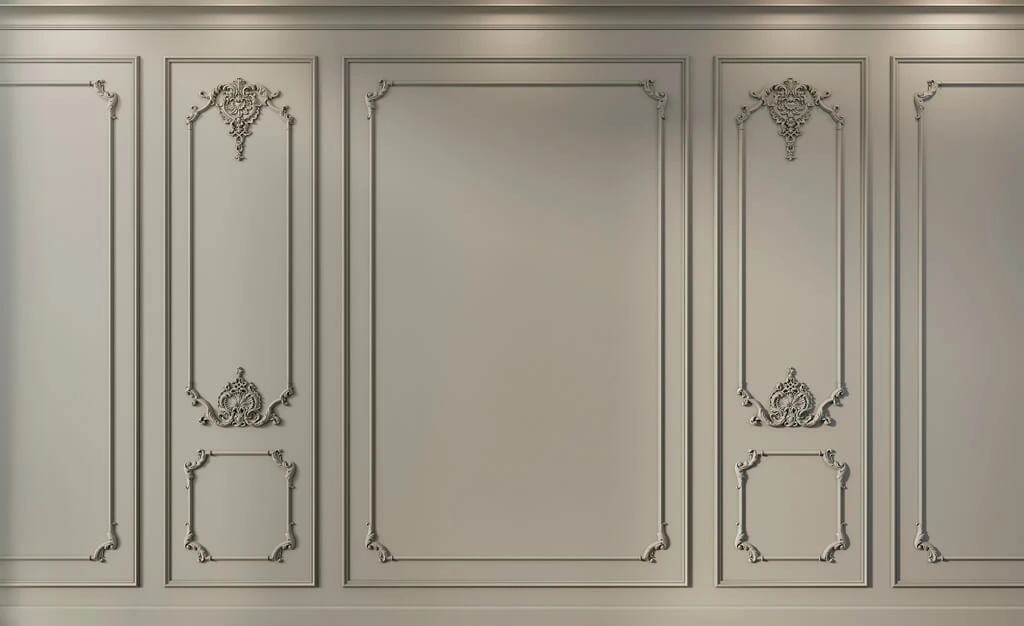
- Mirror Frame Molding in a Wall-Panel Grid
- How to Align Mirror Panels With Furniture
- Mirror Frame Molding and Wall Molding Ideas
- Mirror Frame Molding and Decorative Corner Elements
- Mitered Corners vs. Decorative Corners
- Decorative Appliques Around Mirrors
- Do Not Turn Every Mirror Into a Baroque Object
- Neoclassical Mirror Frame Molding
- Parisian-Inspired Mirror Frames
- Art Deco Mirror Frame Molding
- Black Mirror Frame Molding
- White Mirror Frame Molding
- Dark Monochromatic Walls and Mirrors
- Metallic Accents
- Modern Mirror Frame Molding
- Transitional Mirror Frames
- Traditional Mirror Frames
- Mirror Frame Molding for Art Deco Bathrooms
- Mirror Frame Molding for Powder Rooms
- Mirror Frame Molding for Dressing Areas
- Floor Mirrors
- Leaning Mirrors
- Mirror Frame Molding Around Built-In Vanities
- Mirror Frames and Cabinet Molding
- Mirror Frame Molding and Door Trim
- Mirror Frame Molding and Baseboards
- Mirror Frame Molding and Crown
- How to Design a Mirror as the Center Panel
- How to Design Mirror Side Panels
- How to Design Repeated Mirror Panels
- How to Design a Mirror Within a Larger Frame
- Mirror Frame Molding With Wallpaper
- Mirror Frame Molding With Fabric Panels
- Mirror Frame Molding With Stone or Tile
- Mirror Frame Molding With Wood Paneling
- How to Measure for Mirror Frame Molding
- Calculate the Outside Frame Before Cutting
- How to Calculate Linear Molding
- Stock Length and Cut Optimization
- How to Lay Out a Mirror Frame on the Wall
- Use a Full-Scale Tape Mockup
- Check the Reflection Before Finalizing the Mirror Position
- Mirror Mounting Is Separate From Decorative Molding
- Mirror-Safe Adhesive Matters
- Large Mirrors Need More Than Aesthetic Planning
- Tempered or Safety-Backed Mirror
- Installing Polyurethane Molding Around a Mirror
- Install the Mirror Before or After the Molding?
- Mitered Corners
- Decorative Corners
- Example: Series 002 Corner System
- Left and Right Orientation
- Joint Finishing Around Reflective Glass
- Painting Mirror Frame Molding
- Same-Color Frame and Wall
- Contrasting Mirror Frame
- Painting the Inner Reveal
- Mirror Frame Molding and Lighting Temperature
- Side Lighting and Relief
- Backlit Mirrors and Molding
- Front-Lit Mirrors and Molding
- Mirror Frame Molding in a Bathroom: Material Strategy
- Cleaning Around Bathroom Mirrors
- Mirror Frame Molding Above a Sink
- Mirror Frame Molding Over Tile
- Mirror Frame Molding Over Wallpaper
- Mirror Frame Molding and Movement
- Mirror Edge Protection
- Creating a Double Frame
- Creating a Stepped Art Deco Frame
- Creating a Classical Frame With a Top Ornament
- Creating a Mirror Panel With Corner Ornaments
- Creating a Mirror Panel With a Frieze
- When a Ready-Made Mirror Frame Is Better
- When Applied Polyurethane Molding Is Better
- When Wood Molding Is Better
- When MDF Is Better
- Common Mistake #1: Using Decorative Molding as the Mirror Support
- Common Mistake #2: Choosing the Profile Before Choosing the Mirror Size
- Common Mistake #3: Ignoring the Reflection
- Common Mistake #4: Making the Reveal Inconsistent
- Common Mistake #5: Overdecorating Small Mirrors
- Common Mistake #6: Making Every Mirror in the Room a Focal Point
- Common Mistake #7: Forcing Rigid Molding Around Curves
- Common Mistake #8: Ignoring Sconce Canopies
- Common Mistake #9: Using a Fireplace Application Without Checking Heat Conditions
- Common Mistake #10: Using Exterior Claims for Interior Products
- Common Mistake #11: Copying Exact Dimensions From Inspiration Photos
- Common Mistake #12: Choosing a Frame That Competes With the Mirror
- Common Mistake #13: Ignoring Wall Irregularities
- Common Mistake #14: Using Too Many Different Profiles
- Common Mistake #15: Forgetting Future Mirror Replacement
- Common Mistake #16: Assuming a Round Mirror Needs a Round Molding Frame
- Common Mistake #17: Treating Black Paint as an Art Deco Design by Itself
- Common Mistake #18: Making Every Panel the Same Width
- Common Mistake #19: Placing the Mirror Too High
- Common Mistake #20: Treating the Mirror as an Afterthought
- Specification Checklist for Designers
- Specification Checklist for Installers
- SEO Intent: Mirror Frame Molding Is the Core Topic
- How This Article Fits the STAVROS Content Cluster
- Frequently Asked Questions
- What is mirror frame molding?
- Is mirror frame molding the same as a mirror frame?
- Can polyurethane molding be used around a mirror?
- Can polyurethane molding hold a heavy mirror?
- What STAVROS polyurethane molding works for small mirror frames?
- What works for a larger mirror?
- Can I frame a round mirror with straight polyurethane molding?
- Can I add decorative corner pieces to a mirror frame?
- Can I add appliques above a mirror?
- How much space should be between the mirror and molding?
- Should the mirror frame match the wall molding?
- Should the mirror frame match the baseboard?
- Can mirror frame molding be used in a bathroom?
- Can mirror frame molding be used over tile?
- Can I use mirror frame molding above a fireplace?
- What is the best mirror-frame style for Art Deco?
- What is the best mirror-frame style for Neoclassical interiors?
- Can a mirror be integrated into wall molding?
- How do I calculate molding for a mirror frame?
- Should I mount the mirror before the molding?
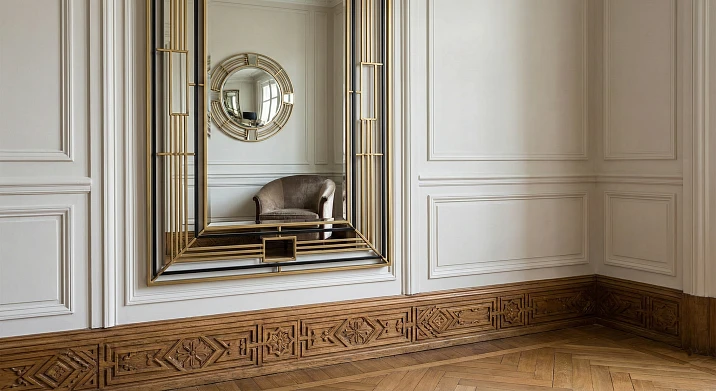
A mirror becomes architectural when its frame does more than surround glass. The right molding can connect the mirror to wall panels, cabinetry, doors, baseboards, lighting, and the proportions of the room. A poorly scaled frame makes even an expensive mirror feel isolated. A well-designed frame can make a simple sheet of mirror glass look as if it was planned with the room from the beginning.
For U.S. homeowners and designers, this subject appears under search phrases such as mirror frame molding, mirror frame trim, molding for mirror frames, decorative mirror frame, and mirror frame design ideas. Those phrases describe several different construction methods, and choosing the wrong one can lead to incorrect materials, poor proportions, or unsafe installation.
This guide focuses on the architectural use of molding around mirrors. It explains the difference between a true freestanding mirror frame and decorative molding installed around a separately supported mirror, how to integrate a mirror into picture-frame wall molding or a boiserie-inspired panel system, how to choose profile size and ornament, and where paint-grade polyurethane molding fits into the design.
STAVROS also produces complete wood and MDF mirror frames. Those products are structurally different from applied wall molding. The distinction matters: a decorative polyurethane molding can frame the visual field around a mirror, but it should not be assumed to carry the weight of the glass unless a specific assembly is engineered for that purpose.
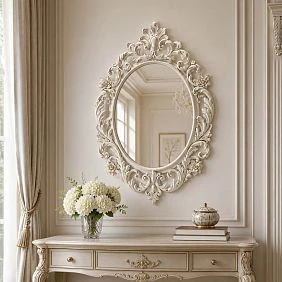
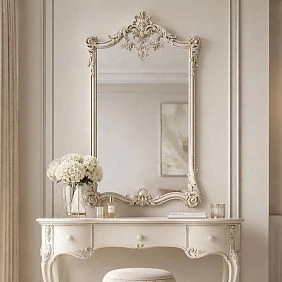
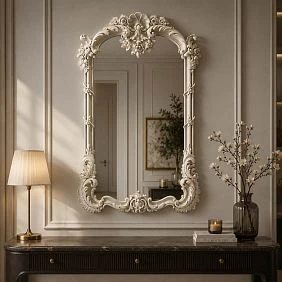
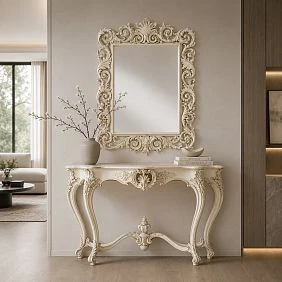
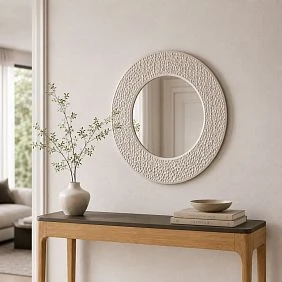
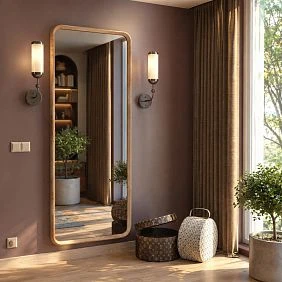
What Does “Mirror Frame Molding” Actually Mean?
The term mirror frame molding is used for at least three different design systems:
- A true mirror frame. The molding or frame physically holds or receives the mirror.
- An applied decorative frame around a wall-mounted mirror. The mirror is supported independently; molding creates an architectural border around it.
- A mirror integrated into a wall-panel composition. The mirror occupies one field within a larger system of wall molding or boiserie-style frames.
All three can look similar in photographs. Technically, they are very different.

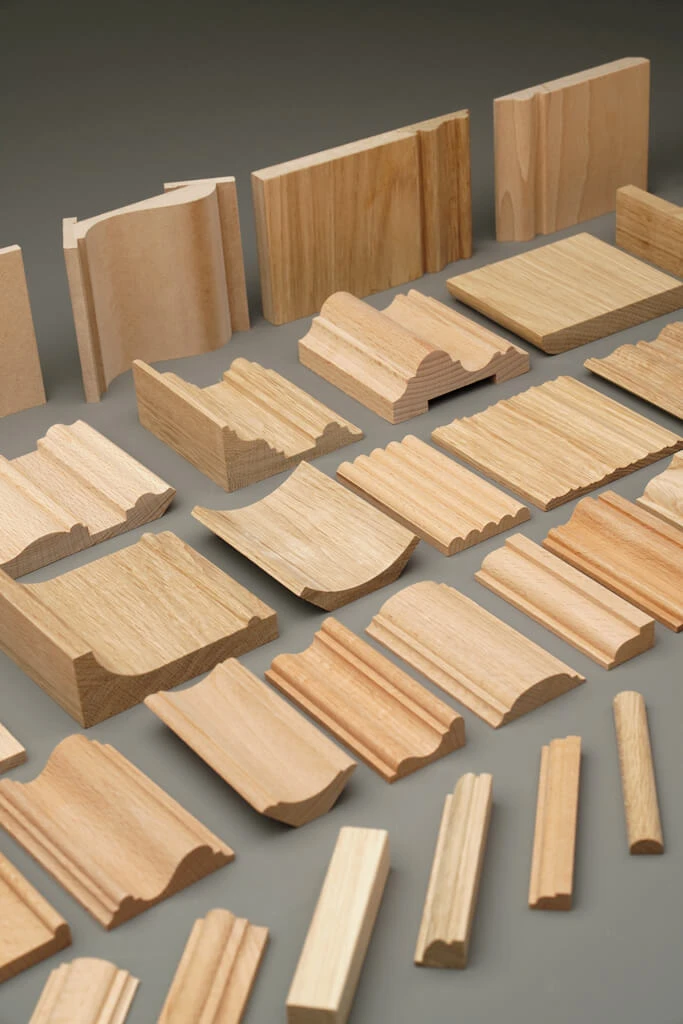
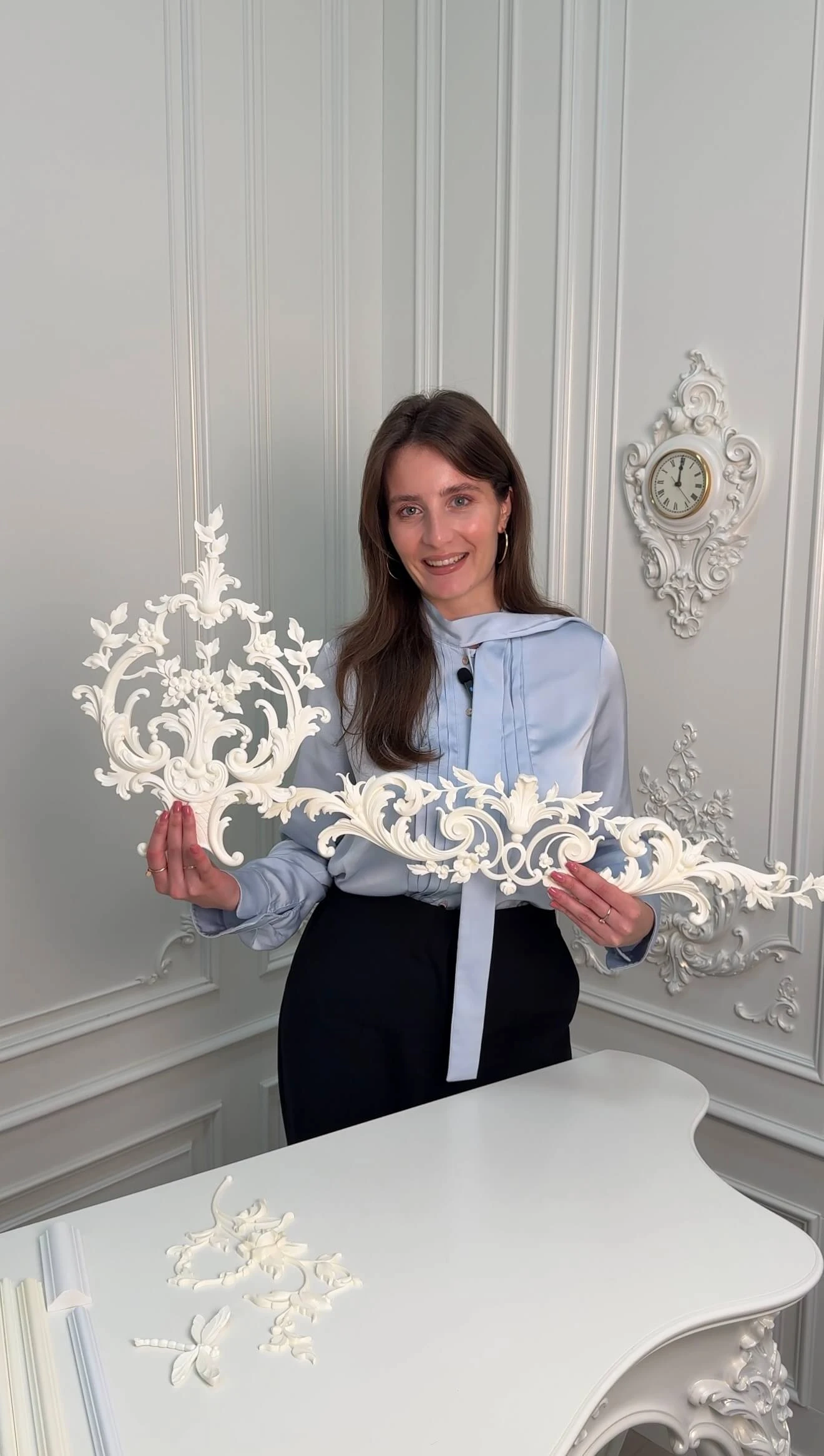
System 1: A True Physical Mirror Frame
A true frame is furniture or millwork. It supports, receives, or mechanically contains the mirror and usually includes a rabbet, slot, backing, clips, or another method of retaining the glass.
This is the correct approach for:
- freestanding mirrors;
- leaning floor mirrors;
- mirrors intended to be removed as one object;
- ornate carved wood frames;
- traditional framed wall mirrors;
- mirrors where the frame itself must carry the glass.
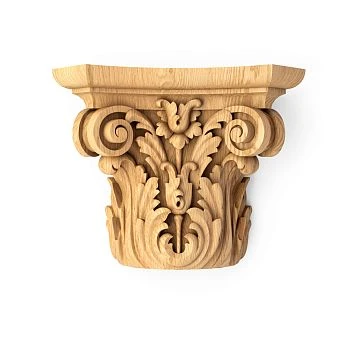
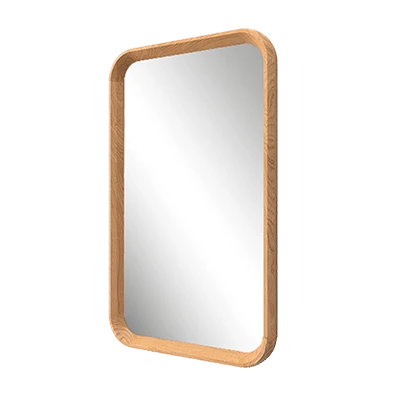
For this use, browse STAVROS decorative mirror frames in wood and MDF. These are complete frame products rather than decorative strips applied to the wall.
Наша фабрика также производит:

Смотреть весь Каталог продукции
System 2: A Mirror Mounted Separately With Molding Around It
This is one of the most useful applications for polyurethane molding.
The mirror is attached to the wall with a mirror-safe mounting system appropriate to its size and substrate. The molding is then installed around the mirror as a separate decorative layer.
The molding does not need to carry the mirror. Its job is visual: define the perimeter, create shadow, coordinate with wall panels, and turn the mirror into part of the architecture.
This system works well in:
- bathroom vanities;
- entry halls;
- living rooms;
- dining rooms;
- home offices;
- bedrooms;
- closet dressing areas;
- built-in furniture compositions.
Получить консультацию
System 3: The Mirror as One Panel in a Wall-Molding System
This is the most architectural approach.
Instead of hanging a mirror on top of a completed wall, you design the wall first as a sequence of fields. One of those fields becomes mirror glass.
The mirror may occupy the full inner area of a panel or sit inside a larger painted field. The surrounding molding repeats the profile used elsewhere on the wall.
The result is not “a mirror with trim.” It is a wall composition in which one panel happens to reflect the room.
Why Integrated Mirrors Look More Expensive
A conventional mirror is an object placed on the wall. An integrated mirror appears to belong to the wall.
The difference comes from alignment:
- the mirror aligns with adjacent panels;
- its top and bottom edges align with architectural datums;
- the frame profile matches or relates to wall molding;
- the mirror width responds to furniture below it;
- lighting is positioned relative to the frame;
- negative space is planned rather than leftover.
That is the same reason custom built-ins feel different from freestanding storage: the object and the architecture share one geometry.
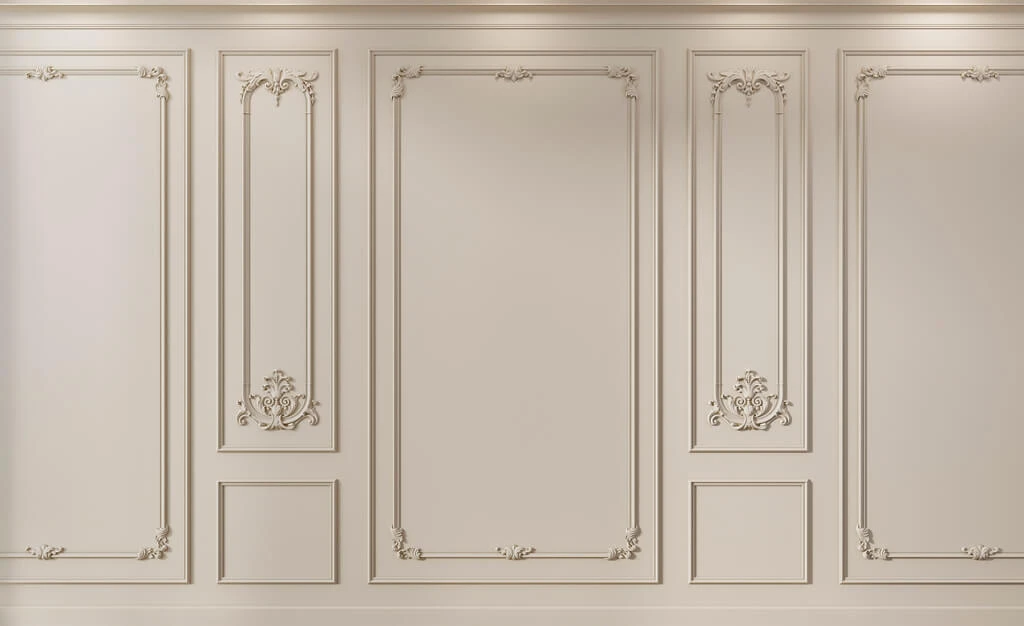
Mirror Frame Molding and Boiserie
Traditional French boiserie used wood paneling, molding, and architectural divisions to organize entire walls. Modern interiors often borrow the logic without reproducing every historical layer.
A contemporary boiserie-inspired wall may use:
- painted wall surface instead of full wood paneling;
- applied molding frames;
- a stronger baseboard or lower-wall zone;
- one or more mirror panels;
- simple crown or ceiling trim;
- monochromatic paint.
This lighter approach works well with polyurethane panel molding because the profile can create the visual architecture without requiring the entire wall to be paneled in wood.
Start With the Mirror—or Start With the Wall?
There are two valid workflows.
If you already own the mirror, design the wall grid around its exact dimensions.
If the wall composition is more important than the mirror itself, design the panel layout first and order mirror glass to fit the selected field.
The second approach usually produces the strongest architectural result because the mirror becomes subordinate to the room's geometry instead of forcing the entire wall to accommodate an arbitrary mirror size.
Mirror Frame Molding Is a Proportion Problem
The most common mistake is choosing a profile because it looks attractive in a close-up product photo.
A molding profile has to be judged against:
- mirror width;
- mirror height;
- wall size;
- ceiling height;
- viewing distance;
- furniture below the mirror;
- adjacent wall molding;
- lighting fixtures;
- frame depth.
A 10 mm profile can look elegant around a vanity mirror and almost disappear around an eight-foot floor mirror. A 35 mm profile can anchor a large formal mirror and overwhelm a small powder-room mirror.
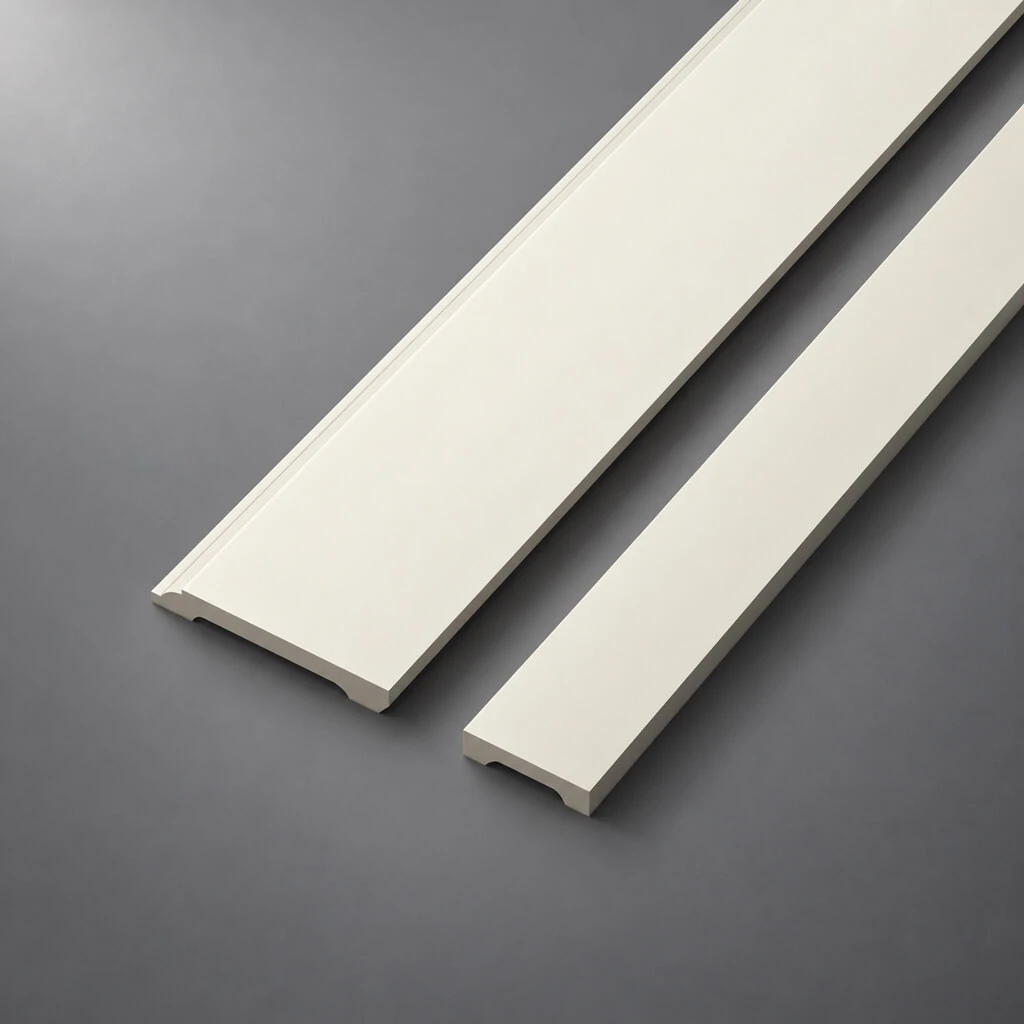
Small Mirror Frame Molding: MLDPU-001
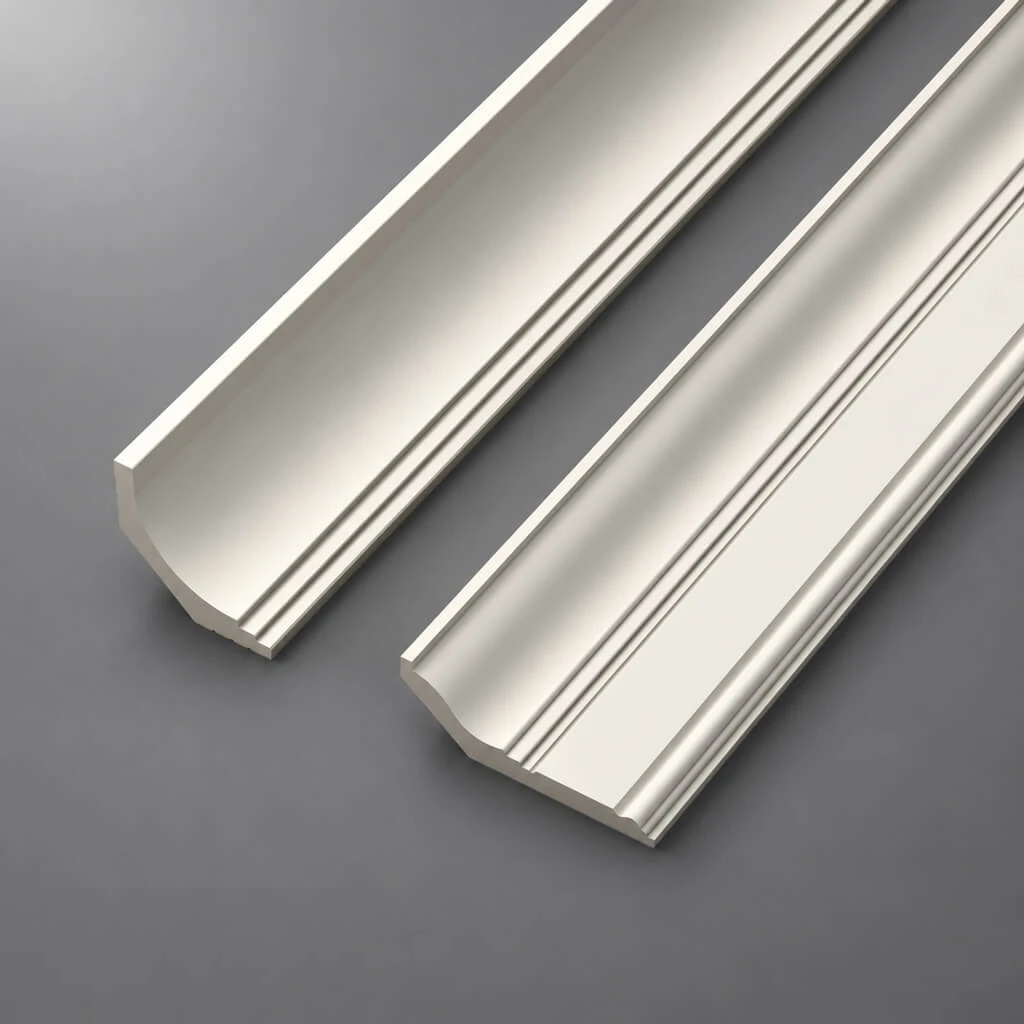
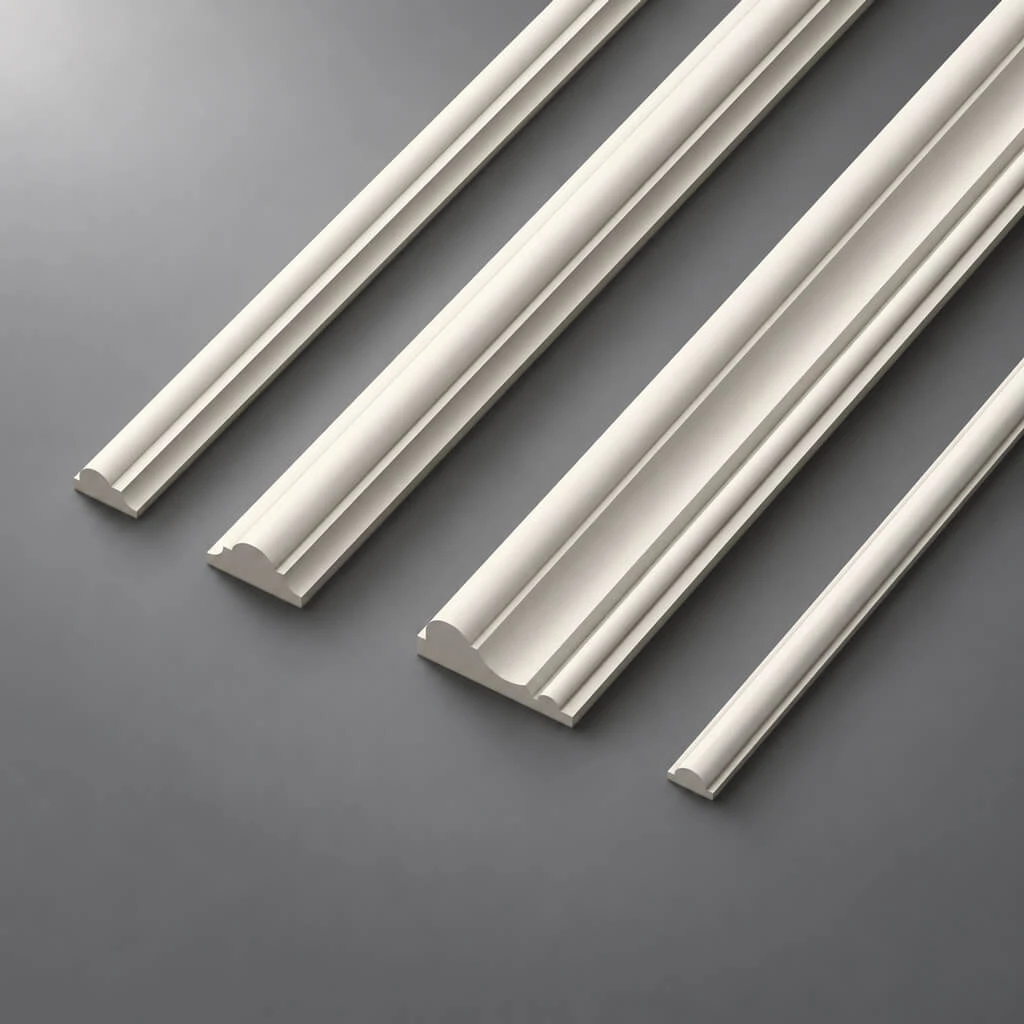
For delicate paint-grade framing, the MLDPU-001 polyurethane molding is a compact option. Its section is approximately 10 × 6 mm with a 2600 mm stock length.
This scale can work for:
- small vanity mirrors;
- narrow decorative borders;
- inner frames inside a larger wall panel;
- paired mirrors;
- furniture-mounted mirror panels;
- secondary trim around a more dominant outer frame.
Medium-Fine Mirror Frame Molding: MLDPU-004
The MLDPU-004 polyurethane molding measures about 15 × 8 mm. It creates a stronger shadow than MLDPU-001 without becoming visually heavy.
It is useful when the mirror needs a clear frame line but the room still calls for restrained detail.
Medium Mirror Frame Molding: MLDPU-002
The MLDPU-002 polyurethane molding is approximately 22 mm wide and 11 mm deep.
This profile has more architectural presence and is easier to read from across a living room, dining room, or entry hall.
It can work for:
- large rectangular mirrors;
- mirror panels in wall molding systems;
- console-table compositions;
- dining-room mirrors;
- large vanity mirrors;
- built-in mirror panels.
Larger Mirror Compositions: MLDPU-003
The larger MLDPU-003 family belongs on substantial walls, large mirrors, formal rooms, and compositions viewed from a greater distance.
Do not select it merely because a wide frame feels “luxurious.” The larger the molding, the more negative space the mirror and wall need around it.
Mirror Size and Molding Width
There is no universal table that says a 36-inch mirror must use a certain molding width.
A better method is to evaluate the ratio between:
- profile width;
- mirror width;
- outside frame dimensions;
- distance from mirror to surrounding objects.
As the mirror grows, the molding usually needs more visual weight, but the relationship is not linear. A very large minimalist mirror can still look excellent with a narrow architectural reveal.
The Reveal Between Mirror and Molding
A decorative frame does not always have to touch the edge of the glass.
A small reveal can make installation easier and visually separate the mirror from the molding. The reveal may be painted wall, a narrow substrate strip, or another finish depending on the system.
The important point is consistency. A reveal that is 3/8 inch on one side and 3/4 inch on another will make the mirror look off-center even if the glass itself is level.
Should the Molding Touch the Mirror?
Only if the assembly is designed that way.
For an applied architectural frame, a controlled gap is often preferable because the mirror can be installed, replaced, and adjusted independently.
Do not rely on decorative molding as the only mechanical retention method for heavy mirror glass unless the frame system is specifically designed to do that.
Rectangular Mirrors: The Most Flexible Geometry
A rectangle works naturally with linear molding because all four corners can be resolved with simple miters or compatible decorative corner elements.
It also integrates easily with wall panels, cabinets, consoles, sconces, and symmetrical room layouts.
Square Mirrors
A square mirror is more static and graphic.
It works well over compact vanities, consoles, and fireplaces where the wall itself is wide enough to support the shape.
Square mirrors are also useful in Art Deco compositions because their geometry can align with square wall panels and repeated grids.
Round Mirrors
Round mirrors are visually powerful, but standard rigid straight polyurethane molding does not automatically bend into a circle.
Do not force standard MLDPU profiles around a round mirror unless the exact product is designed to flex.
A round mirror can instead sit inside a rectangular molding field, creating a strong circle-in-rectangle composition.
Oval Mirrors
Like round mirrors, oval mirrors work beautifully inside rectangular wall panels because the contrast between curved glass and straight molding creates hierarchy.
Use a purpose-made oval frame if the molding itself must follow the glass perimeter.
Arched Mirrors
An arched mirror creates an architectural-window effect.
For a rigid linear molding system, the easiest solution is often to place the arched glass within a larger rectangular panel rather than trying to curve a standard profile around the arch.
Mirror Frame Molding for a Bathroom Vanity
Bathroom mirrors are one of the most common opportunities for decorative molding, but they need practical planning.
Consider:
- faucet and backsplash height;
- countertop width;
- medicine cabinet depth if present;
- sconce position;
- electrical boxes;
- mirror edge treatment;
- cleaning access;
- humidity and finish-system compatibility.
The mirror should usually align with the vanity or sink composition rather than with the entire wall.
One Large Vanity Mirror vs. Two Mirrors
A double vanity can use one continuous mirror or two separate mirrors.
One large mirror makes the room feel broader and simpler. Two mirrors create stronger vertical rhythm and provide a natural place for a center sconce or decorative panel between them.
If two mirrors are used, keep their molding profiles and frame dimensions identical unless the vanity itself is intentionally asymmetrical.
Mirror Frame Molding With Sconces
Sconces can sit:
- outside the frame;
- inside a larger wall panel that also contains the mirror;
- between two mirrors;
- above the mirror;
- on the mirror itself in specialized installations.
Plan electrical boxes before the molding layout. A fixture canopy that overlaps a molding profile looks accidental and can complicate installation.
Entryway Mirror Frame Molding
An entry mirror often sits above a console table and acts as the room's first focal point.
A strong composition can use:
- one large mirror;
- a molding frame slightly wider than the console;
- two sconces;
- one central applique above the mirror;
- wall molding that extends the composition vertically.
This is where mirror frame molding can connect furniture and architecture most effectively.
Living-Room Mirror Frame Molding
Living-room mirrors are often larger and viewed from farther away, so they can support medium or stronger profiles.
Good locations include:
- above a console;
- between windows;
- opposite a window;
- within a wall-panel grid;
- on one side of a fireplace;
- as a pair flanking cabinetry.
Dining-Room Mirrors
Dining rooms are particularly suited to formal mirror compositions because the furniture arrangement is stable and the room benefits from reflected light and depth.
A wide mirror above a sideboard can be framed with molding that aligns to the sideboard edges or sits inside a larger architectural wall frame.
Bedroom Mirrors
Bedroom mirror placement is highly personal. Rather than making claims about what people “should” or “should not” reflect, design around practical sight lines, daylight, dressing functions, and the user's preferences.
Wall-integrated mirrors can work well near wardrobes, dressing tables, and full-height closet zones.
Hallway Mirrors
A long hallway benefits from rhythm. One very large mirror can create a strong focal point, while several equal mirror panels can break a long wall into repeated bays.
Keep the opposite wall relatively calm so the reflections do not multiply too many visual elements.
Mirror Frame Molding Above a Fireplace
A mirror above a fireplace can become the center of a room, but the decorative system must respect the fireplace assembly.
Separate the visual design from the technical requirements of the fireplace. Mantel clearances, heat exposure, venting, combustible-material restrictions, and local code requirements take priority over decorative preferences.
Use molding only where the exact material and installation conditions are suitable. Do not describe a polyurethane profile as heat-resistant unless that property is documented for the specific product.
Mirror Frame Molding Around a Mantel Composition
Instead of framing the mirror alone, you can design one large architectural field that includes the mantel, mirror, and upper wall.
The molding can establish:
- a center axis aligned with the fireplace;
- a large rectangle around the mirror;
- side panels for sconces;
- a decorative top field;
- small appliques or corner ornaments.
This approach is stronger than treating the mirror as an isolated object floating above the mantel.
Mirror Frame Molding in a Wall-Panel Grid
A mirror can occupy one panel in a repeated wall grid.
For example, a dining-room wall might contain three large vertical frames. The center field becomes mirror glass; the side fields remain painted or receive artwork.
The mirror then reads as part of the rhythm rather than as an interruption.
How to Align Mirror Panels With Furniture
Use furniture centerlines as architectural datums.
A mirror above a console, dresser, sideboard, or vanity should usually relate to the width and center of the furniture below it.
The mirror does not have to be exactly the same width, but the relationship should be intentional.
Mirror Frame Molding and Wall Molding Ideas
The broader STAVROS guide to wall molding ideas explains picture-frame molding, panel layouts, and room-by-room wall compositions.
Use that guide to establish the wall architecture first. Then decide which field should become the mirror.
Mirror Frame Molding and Decorative Corner Elements
A simple mirror frame can use mitered corners. A more formal composition can use decorative corner pieces.
STAVROS offers polyurethane corner molding and series-specific decorative corners. These pieces should be treated as coordinated components, not universal ornaments.
Mitered Corners vs. Decorative Corners
Use mitered corners when you want the frame to read as one continuous line.
Use decorative corner elements when the corner itself should become a focal node.
The choice is stylistic, not merely technical.
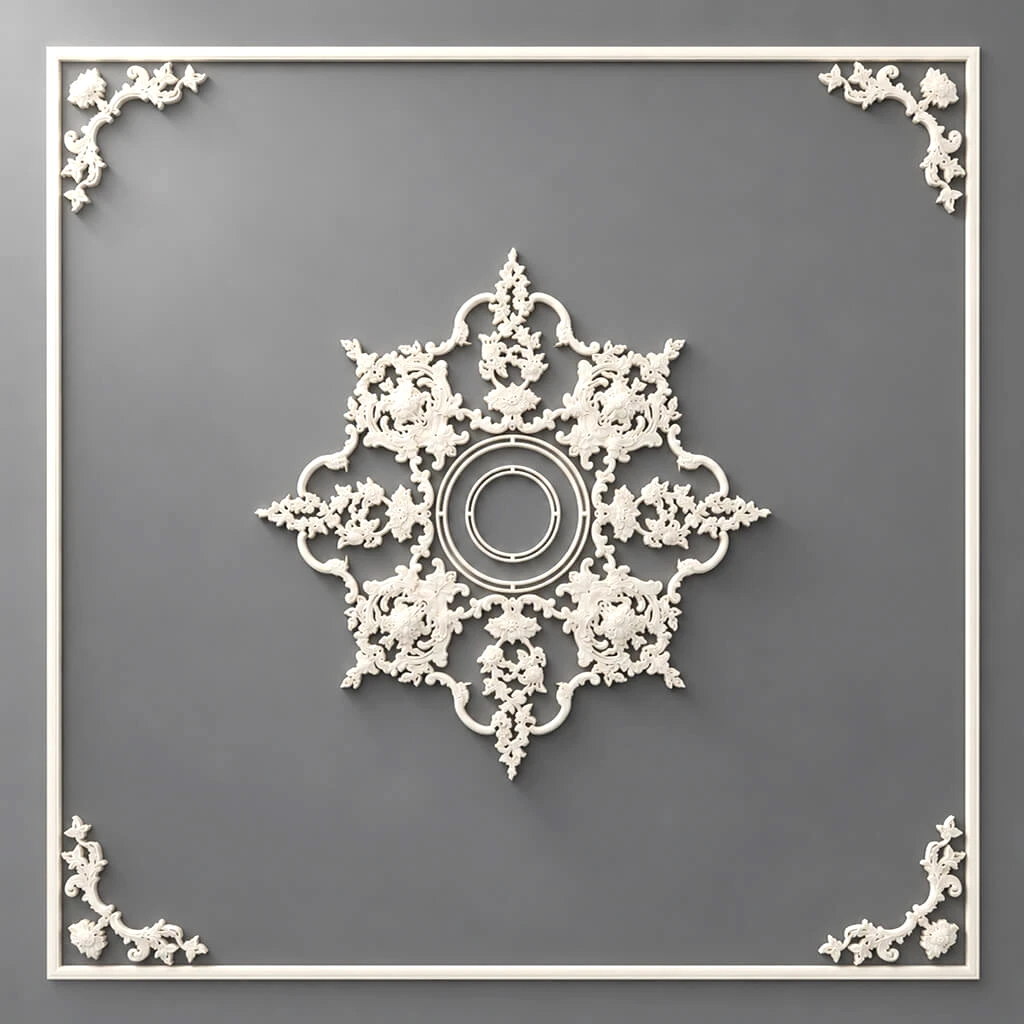
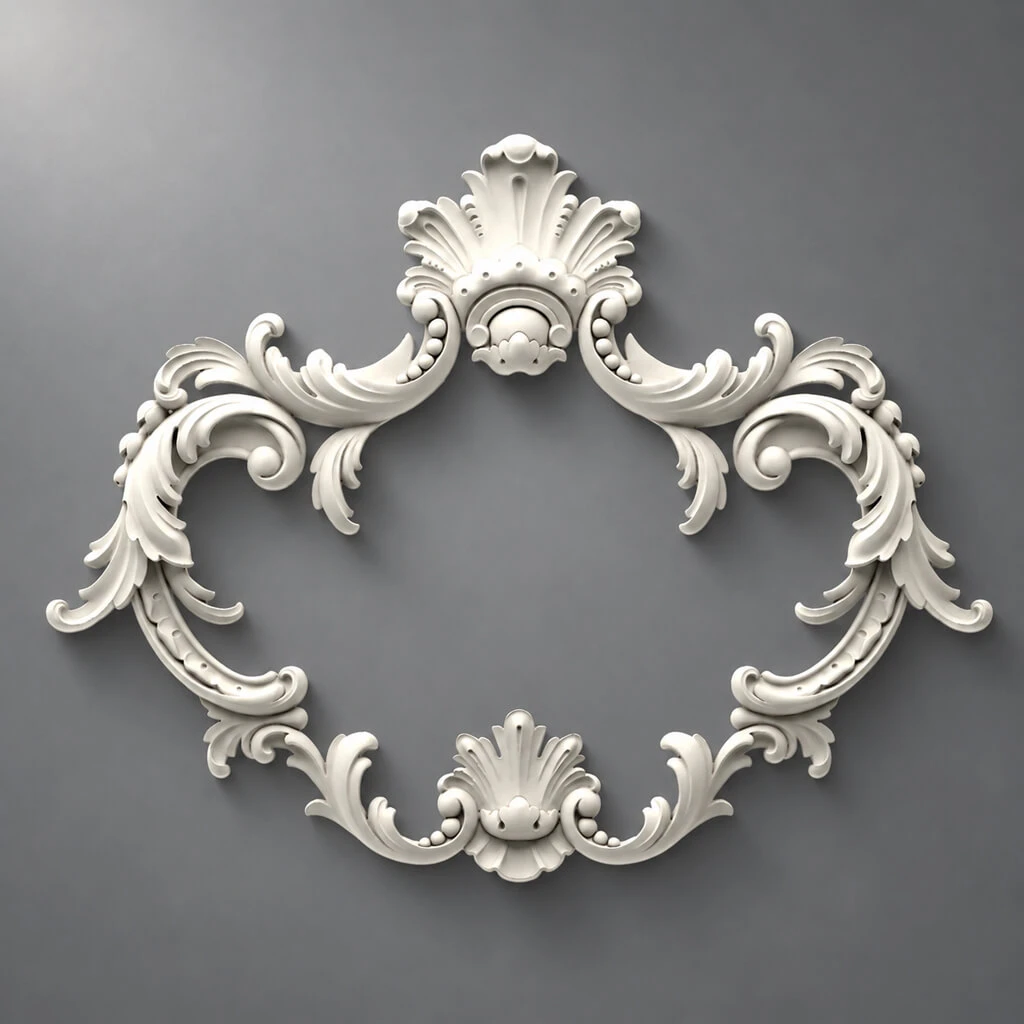
Decorative Appliques Around Mirrors
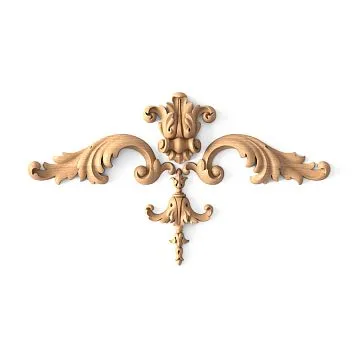
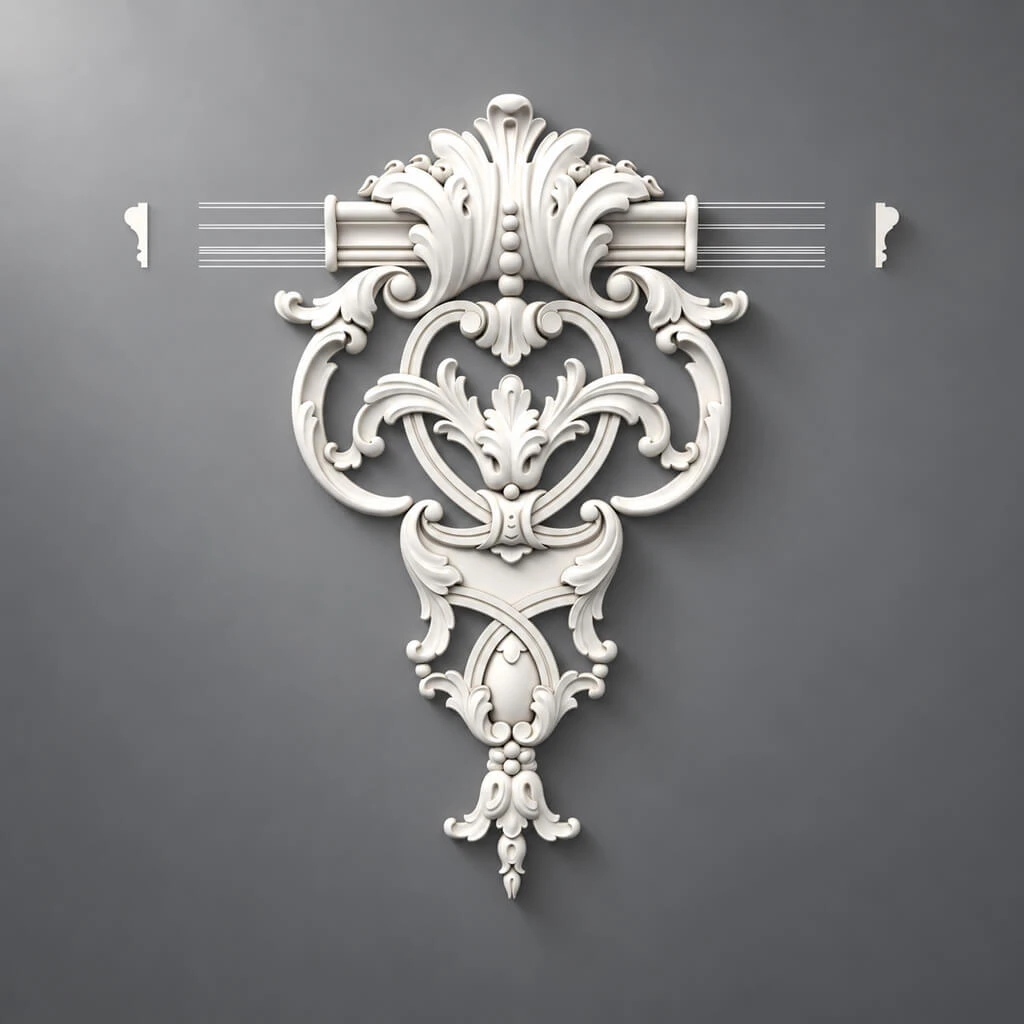
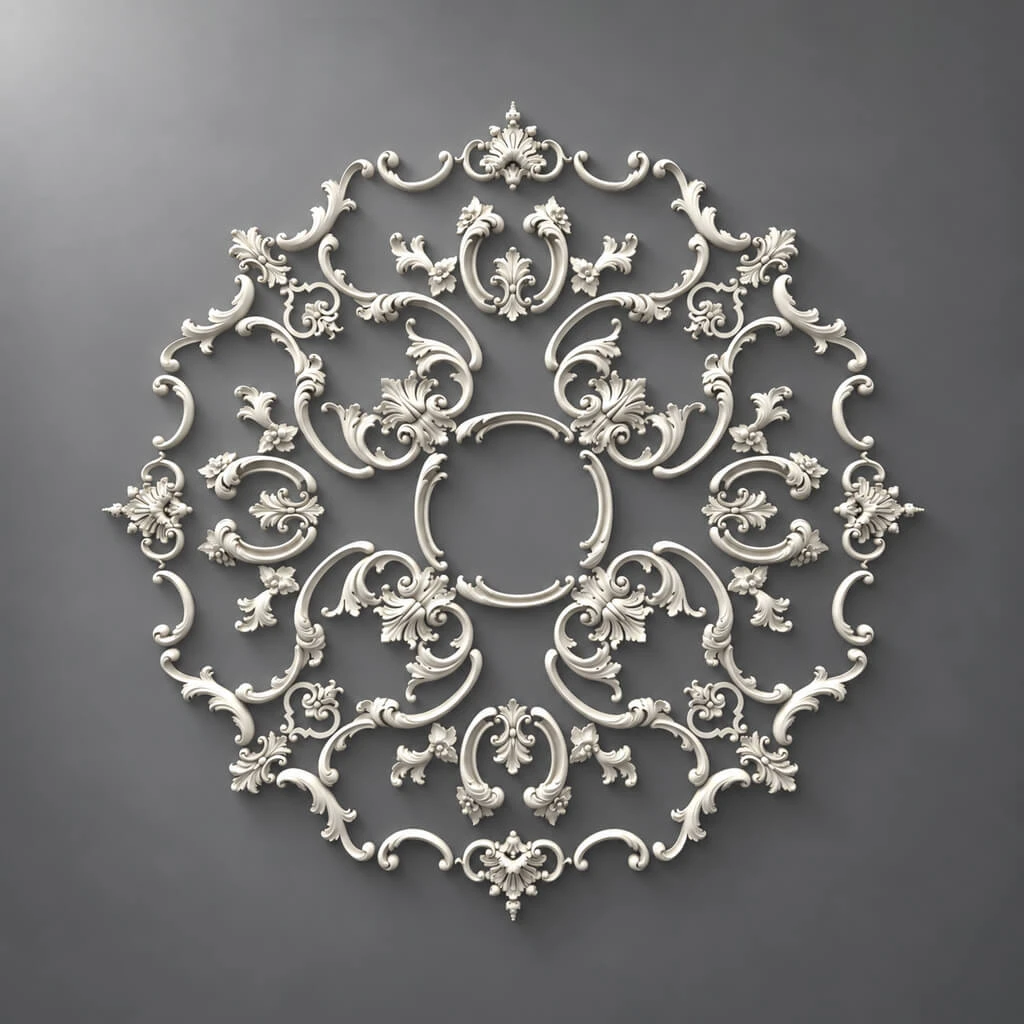
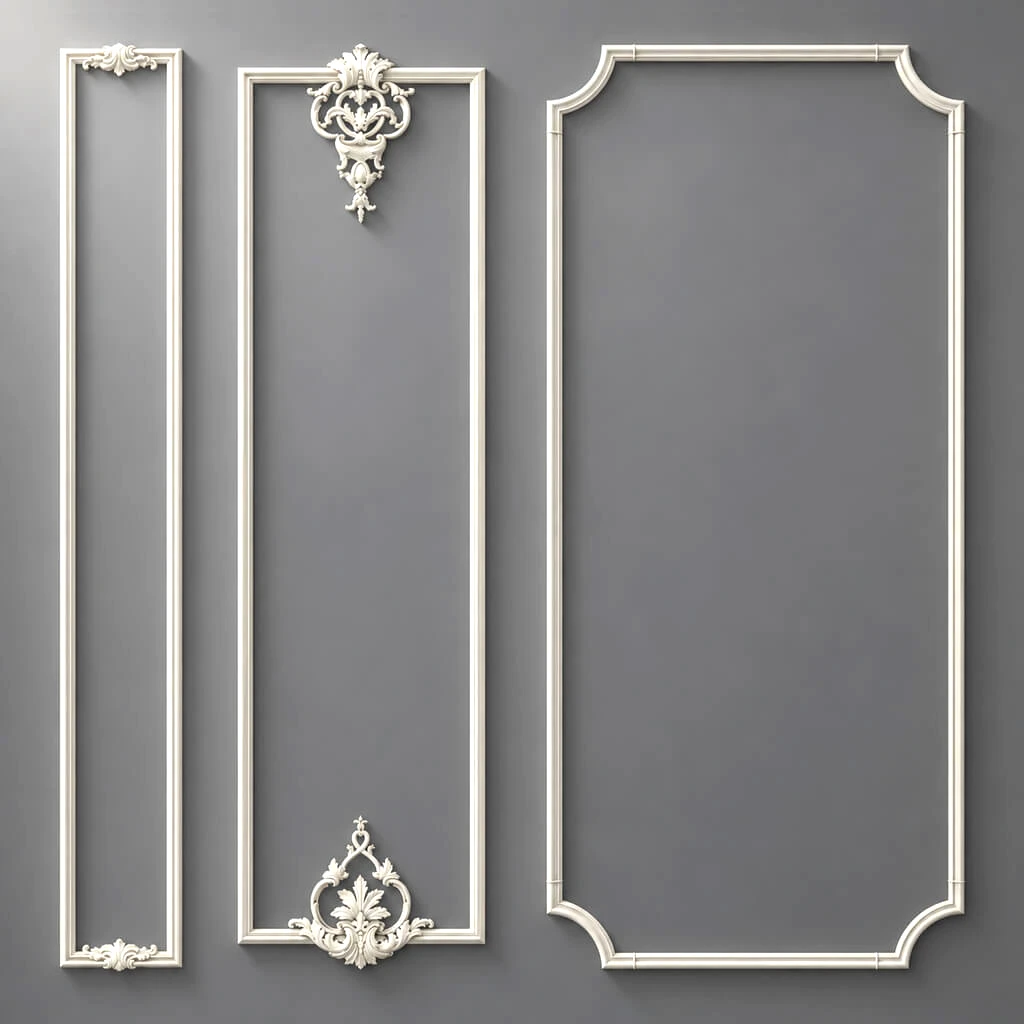
A mirror frame can be enriched with polyurethane appliques and onlays placed above, below, or to the sides of the mirror.
Common arrangements include:
- one centered applique above the mirror;
- paired side ornaments;
- a top cartouche;
- a bottom floral drop;
- four corner accents;
- a horizontal decorative band above a vanity mirror.
Do Not Turn Every Mirror Into a Baroque Object
Ornament works best when hierarchy is clear.
If the molding profile is already highly decorative, the applique can be simpler. If the frame is plain, the central ornament can be more expressive.
Negative space is part of the composition.
Neoclassical Mirror Frame Molding
Neoclassical mirror framing is one of the most flexible approaches for contemporary American interiors.
Use:
- symmetry;
- restrained molding profiles;
- rectangular frames;
- same-color paint;
- limited corner ornament;
- balanced sconces;
- generous wall space around the composition.
The goal is architectural order, not historical reproduction.
Parisian-Inspired Mirror Frames
Parisian-style interiors often integrate mirrors into tall wall panels rather than treating them as standalone accessories.
The strongest version uses:
- vertical proportions;
- narrow panel molding;
- high baseboards;
- light neutral paint;
- subtle ornament;
- mirrors aligned with door and window heights.
Do not copy dimensions from a Haussmann apartment into a lower-ceiling room. Preserve the proportion, not the literal measurement.
Art Deco Mirror Frame Molding
Art Deco is built around geometry, repetition, contrast, and controlled luxury.
For mirror frames, that can mean:
- black or deep-colored molding;
- rectangular or stepped frames;
- symmetrical mirror pairs;
- geometric wall panels;
- brass or bronze accents;
- high-contrast lighting;
- strong vertical lines.
The mirror becomes an active graphic element rather than a soft classical panel.
Black Mirror Frame Molding
Black framing is effective because it creates a clear silhouette around reflective glass.
It works especially well with:
- white walls;
- warm gray walls;
- brass lighting;
- black door hardware;
- dark baseboards;
- Art Deco interiors;
- modern entryways.
Because black paint emphasizes every line, corner quality and frame squareness become especially important.
White Mirror Frame Molding
White-on-white molding creates a quieter architectural effect.
The frame is defined primarily by shadow, while the mirror provides the visual contrast.
This works well in bathrooms, bedrooms, dining rooms, and Neoclassical spaces.
Dark Monochromatic Walls and Mirrors
Painting wall molding and wall surface in the same dark color can create a sophisticated background for mirror glass.
The mirror becomes the brightest element because it reflects light, while the molding remains sculptural through relief.
Metallic Accents
Gold, brass, bronze, and silver accents can be introduced selectively.
Good locations include:
- raised molding edges;
- corner ornaments;
- central appliques;
- small reveals;
- sconce finishes;
- mirror frame inner lips.
A small amount of metal is usually more effective than coating every profile.
Modern Mirror Frame Molding
Modern mirror framing usually favors simple geometry and reduced ornament.
Use one large rectangular frame, narrow profile, clean corners, same-color paint, and a generous reveal.
The mirror should look integrated, not decorated.
Transitional Mirror Frames
Transitional interiors sit between traditional and modern. This makes them ideal for medium-scale molding with a restrained profile.
A simple frame with subtle relief can coordinate with contemporary furniture while adding enough architecture to avoid a flat look.
Traditional Mirror Frames
Traditional interiors can support larger profiles, multiple molding layers, carved wood frames, decorative corners, and central appliques.
But hierarchy still matters. A heavily carved mirror frame does not also need the most ornate wall molding, crown, and furniture in the same sight line.
Mirror Frame Molding for Art Deco Bathrooms
An Art Deco bathroom can combine rectangular mirrors, black molding, white or stone-like wall surfaces, and warm metal sconces.
The mirror frame should be coordinated with vanity width and light placement. Do not rely on decorative molding to cover uneven mirror installation.
Mirror Frame Molding for Powder Rooms
Powder rooms can support stronger decoration because they are small and experienced for short periods.
Ideas include:
- one ornate mirror frame;
- a dark monochromatic wall;
- metallic corner accents;
- a central applique above the mirror;
- wall molding that continues around the vanity wall.
Mirror Frame Molding for Dressing Areas
Full-height mirrors in dressing rooms should prioritize clear reflection and body-scale viewing.
Keep the frame relatively narrow if the mirror itself is already tall and close to adjacent cabinetry.
Floor Mirrors
A floor mirror is structurally different from a wall mirror surrounded by applied molding.
If the mirror is freestanding or leaning, use a frame designed to physically support the glass. Decorative wall molding is not a substitute for that frame.
Leaning Mirrors
Large leaning mirrors can be visually dramatic, but their support and anti-tip restraint must be considered.
Do not assume friction against the wall is enough. Use an appropriate restraint system for the actual mirror and frame.
Mirror Frame Molding Around Built-In Vanities
Built-in dressing vanities can use the same molding language as adjacent cabinets.
For example, a narrow MLDPU profile can frame cabinet doors, then repeat around the mirror field at a slightly larger scale.
This makes the furniture and wall feel like one custom installation.
Mirror Frames and Cabinet Molding
If the mirror is located above or inside cabinetry, coordinate it with the cabinet trim.
The STAVROS guide to cabinet molding and trim covers profile selection for kitchen cabinets, built-ins, furniture, and wardrobe doors.
Use the same family of proportions without necessarily using the exact same profile width.
Mirror Frame Molding and Door Trim
In entry halls and bedrooms, a mirror may sit near a door. The mirror frame should relate to the door molding and casing rather than competing with them.
Keep one hierarchy stronger. If the door has heavy classical trim, the mirror frame can be simpler.
Mirror Frame Molding and Baseboards
The baseboard is the visual foundation of the wall. A mirror panel system should acknowledge it.
Vertical molding lines should either terminate clearly above the baseboard or integrate into a full panel system. Avoid arbitrary near-collisions.
Mirror Frame Molding and Crown
Leave enough wall above the mirror frame for the crown or ceiling line to remain visually independent.
A mirror frame that almost touches crown molding can make the wall feel compressed unless the design intentionally creates a full-height panel.
How to Design a Mirror as the Center Panel
A classic three-part wall composition uses one wider central field and two narrower side fields.
The center can become mirror glass while the side panels remain painted, wallpapered, or decorated with sconces.
This is one of the strongest ways to make a mirror feel architectural.
How to Design Mirror Side Panels
Two narrow mirror panels can flank:
- a fireplace;
- a console;
- a bed;
- a built-in cabinet;
- a central artwork;
- a television wall.
Keep the mirror panels symmetrical unless the room itself is intentionally asymmetrical.
How to Design Repeated Mirror Panels
Several narrow mirrors can create a rhythmic wall, especially in a hallway or dining room.
Use identical molding profiles and repeated spacing so the effect feels architectural rather than like a gallery of unrelated mirrors.
How to Design a Mirror Within a Larger Frame
The mirror does not need to fill the entire molding frame.
You can place a smaller mirror inside a larger painted panel, leaving a deliberate field around it. This gives space for sconces, appliques, or decorative corners.
Mirror Frame Molding With Wallpaper
Wallpaper can occupy the field between the mirror and the outer molding frame.
This is especially effective when the mirror is smaller than the architectural panel.
Choose a pattern scale that does not become visually chopped by the mirror perimeter.
Mirror Frame Molding With Fabric Panels
In highly decorative interiors, textile wall panels can flank or surround a mirror.
The mirror should remain visually dominant, while the fabric provides softness and acoustic texture.
Mirror Frame Molding With Stone or Tile
Bathroom and fireplace-adjacent compositions may use tile or stone around a mirror.
In those cases, the decorative molding must coordinate with the thickness and edge detail of the harder material.
Do not assume a lightweight applied molding can bridge large substrate transitions without preparation.
Mirror Frame Molding With Wood Paneling
A wood-paneled room may call for a true wood frame rather than polyurethane.
When the wall itself is stained or clear-finished, matching wood grain is part of the design language.
Polyurethane is strongest where the finish is painted and material continuity comes from color rather than grain.
How to Measure for Mirror Frame Molding
Measurement depends on which of the three frame systems you are building.
For a true physical frame, dimensions are governed by the mirror glass, the frame rabbet or retention system, and the finished outside size.
For applied wall molding around a separately mounted mirror, measure:
- mirror width and height;
- desired reveal between glass and molding;
- molding face width;
- outside frame width and height;
- distance to nearby sconces, outlets, switches, and furniture;
- distance to baseboard, crown, casing, and adjacent wall panels.
Calculate the Outside Frame Before Cutting
If the mirror is 36 inches wide and you want a 1-inch reveal plus a molding that is approximately 1 inch wide on each side, the outside frame will be roughly 40 inches wide. That is only a planning example; real dimensions depend on the actual product section and how the frame is detailed.
Always dimension from the real profile, not from a nominal catalog description.
How to Calculate Linear Molding
For a rectangular frame:
2 × outside frame width + 2 × outside frame height = basic linear molding length.
Then compare that total to the actual stock length of the selected molding and build a cut plan.
A cut plan is more accurate than simply adding a generic percentage because tall vertical pieces, short horizontal pieces, and decorative corners can create very different waste patterns.
Stock Length and Cut Optimization
Many STAVROS MLDPU profiles are supplied in long straight sections. Before ordering, map every required cut against the stock length.
For multiple mirrors, optimize all frames together. Offcuts from one large frame may provide the short top or bottom pieces for another.
How to Lay Out a Mirror Frame on the Wall
Do not install the mirror first and improvise the frame around it.
Mark the complete composition:
- centerline of the wall or furniture;
- mirror outline;
- molding outline;
- sconce locations;
- top and bottom architectural datums;
- adjacent panel edges;
- baseboard and crown clearances.
Then step back and evaluate the wall from the actual entry point of the room.
Use a Full-Scale Tape Mockup
Painter's tape is one of the best design tools for mirror-frame planning.
Tape the outside frame dimensions on the wall, including side panels if the mirror will be part of a larger composition. If sconces are planned, mark their canopies too.
The mockup reveals scale problems that are hard to see on a drawing.
Check the Reflection Before Finalizing the Mirror Position
A mirror is not simply a shape. It displays the room behind you.
Stand at normal viewing positions and check what the mirror will reflect:
- a window;
- a chandelier;
- a doorway;
- artwork;
- cabinetry;
- unfinished service areas;
- television screens;
- clutter-prone zones.
The reflected view should be part of the design decision.
Mirror Mounting Is Separate From Decorative Molding
Heavy mirror glass should be supported using a method appropriate to its weight, size, substrate, edge treatment, and installation conditions.
That can include mirror-safe adhesive, mechanical clips, channels, cleats, or a purpose-built frame. The correct method should be specified by the mirror fabricator or installer.
The surrounding polyurethane molding should be treated as decoration unless the assembly is specifically engineered otherwise.
Mirror-Safe Adhesive Matters
Not every construction adhesive is suitable for mirror backing.
Some adhesive chemistries can damage the reflective coating. Use a product explicitly approved for mirrors when adhesive is part of the mounting system.
Large Mirrors Need More Than Aesthetic Planning
Large mirrors can be heavy, awkward to handle, and dangerous if poorly supported.
For oversized installations, consider:
- glass thickness;
- edge finish;
- safety backing;
- wall substrate;
- anchor locations;
- handling access;
- installation sequence;
- future replacement.
Tempered or Safety-Backed Mirror
Mirror safety requirements depend on the application and local code. Mirrors in certain locations, particularly where impact is possible, may need specific safety treatment.
Do not assume standard mirror glass is appropriate everywhere.
Installing Polyurethane Molding Around a Mirror
The basic decorative workflow is:
- confirm mirror location and support;
- mark the molding frame;
- cut the four pieces;
- dry-fit the frame;
- confirm reveal consistency;
- apply compatible adhesive to the molding;
- fix the molding without shifting the layout;
- finish small joints;
- prime repaired areas if required;
- paint the frame.
For more detailed cutting and joint technique, use the STAVROS guide on how to install polyurethane molding.
Install the Mirror Before or After the Molding?
Both sequences are possible.
If the molding must maintain a precise reveal around the actual glass, installing the mirror first can simplify visual alignment.
If the mirror needs service access or the wall is being painted as one system, the molding frame may be installed and finished first, followed by the mirror.
The correct sequence depends on how the glass is retained, how the edges are finished, and whether the mirror can be removed later.
Mitered Corners
For a rectangular frame with no decorative corner blocks, 45-degree miters create the cleanest continuous profile when the frame is square.
Test the saw setup on scrap before cutting the final pieces. Tiny angle errors become especially visible around reflective glass.
Decorative Corners
If the design uses series-specific corner pieces, layout should start from the actual footprint of those corners.
Do not calculate the frame as if it were a plain rectangle and then add ornaments afterward. The decorative pieces occupy real space and affect the straight molding lengths.
Example: Series 002 Corner System
For a larger formal frame, the STAVROS series 002 includes left and right polyurethane corner elements coordinated with MLDPU-002.
This can create an ornate mirror surround without requiring every joint to be expressed as a plain miter.
Left and Right Orientation
Directional ornament matters.
When a corner SKU is marked L or R, plan the quantities by position. A rectangular frame may require two left and two right pieces depending on the system.
Joint Finishing Around Reflective Glass
Mirror glass reveals imperfections because nearby lines are reflected and doubled visually.
Keep joints crisp. Use only enough filler to correct minor gaps. Excess filler can soften the profile and become more noticeable than the original joint.
Painting Mirror Frame Molding
Paint unifies the molding with the architecture around it.
Common strategies include:
- same color as the wall;
- same color as nearby cabinetry;
- black or charcoal contrast;
- warm white against a colored wall;
- metallic accent over a neutral base;
- two-tone outer and inner frame layers.
Same-Color Frame and Wall
This is the most architectural treatment.
The molding is visible through relief and shadow, while the mirror remains the focal reflective surface.
This approach is especially effective in Neoclassical, Parisian-inspired, and transitional interiors.
Contrasting Mirror Frame
A contrasting frame behaves more like furniture or artwork.
Black, dark brown, bronze, or white can create a strong perimeter. Use contrast when you want the mirror to become an object rather than disappear into the wall system.
Painting the Inner Reveal
A narrow reveal between glass and molding can match the wall, match the frame, or become a small accent color.
Keep the reveal precise. A deliberately painted 1/2-inch strip looks designed; an inconsistent leftover strip looks like an installation error.
Mirror Frame Molding and Lighting Temperature
Warm lighting softens profiles and metallic finishes. Cooler lighting makes white and black geometry appear sharper.
Evaluate the frame under the actual evening lighting, not only in daylight.
Side Lighting and Relief
Sconces placed beside a mirror create grazing light across the molding. This can make a shallow profile appear much deeper.
If the molding contains ornate relief, side lighting can be dramatic. If the joints are poor, it can also expose every defect.
Backlit Mirrors and Molding
Backlit mirrors create a luminous halo. A molding frame can sit outside that light zone, but the spacing should be designed so the halo remains visible.
Do not crowd the molding against the illuminated edge unless the intended effect is to suppress the halo.
Front-Lit Mirrors and Molding
When light is mounted above or beside the mirror, the frame becomes part of the fixture composition.
Coordinate molding projection with sconce depth so neither element visually overwhelms the other.
Mirror Frame Molding in a Bathroom: Material Strategy
A bathroom assembly should be evaluated as a system.
Do not make blanket claims such as “polyurethane is waterproof, therefore the frame is waterproof.” Performance depends on the molding, adhesive, filler, paint, substrate, ventilation, and exposure.
Use compatible products and keep water-management responsibilities separate from decoration.
Cleaning Around Bathroom Mirrors
Choose profiles that can be cleaned easily if the mirror sits over a vanity.
Deep floral relief close to faucets may collect dust, hairspray, cosmetics, and cleaner residue more quickly than a simple stepped profile.
Mirror Frame Molding Above a Sink
Leave enough clearance between the bottom molding and backsplash or faucet so the area can be cleaned.
A narrow inaccessible gap can collect moisture and residue.
Mirror Frame Molding Over Tile
When molding crosses or terminates against tile, substrate thickness and edge transitions matter.
Do not assume the same adhesive or preparation works equally on painted drywall, glazed tile, stone, and MDF.
Mirror Frame Molding Over Wallpaper
If molding is attached over wallpaper, the bond is only as strong as the wallpaper's bond to the wall.
For permanent installations, mounting to a sound prepared substrate is generally more reliable than relying on a decorative wallcovering layer.
Mirror Frame Molding and Movement
Mirrors, walls, wood trim, MDF, and polyurethane do not all respond to temperature and humidity in the same way.
Do not rigidly trap mirror glass between hard components without an appropriate detail. Follow the mirror fabricator's installation requirements.
Mirror Edge Protection
Polished mirror edges are durable in normal use but still vulnerable to chips during installation.
Keep molding installation tools away from exposed glass edges and use appropriate temporary protection.
Creating a Double Frame
A double frame uses two concentric molding profiles.
The outer frame creates architectural scale; the inner frame adds refinement around the mirror.
This can work especially well on large dining-room or entry mirrors, but the two profiles should have a clear hierarchy.
Creating a Stepped Art Deco Frame
Art Deco frames can use two or three nested rectangular profiles with controlled offsets.
Keep the steps consistent on all four sides and avoid so many layers that the frame consumes the mirror.
Creating a Classical Frame With a Top Ornament
A restrained rectangular frame can be upgraded with one central ornament above the mirror.
This is often more elegant than placing ornate decoration on every corner.
Creating a Mirror Panel With Corner Ornaments
For a more formal composition, use a compatible corner system and keep the center of the frame relatively open.
The corner elements then become the main ornament while the mirror provides visual depth.
Creating a Mirror Panel With a Frieze
A horizontal decorative band above a mirror can create a furniture-like or architectural top.
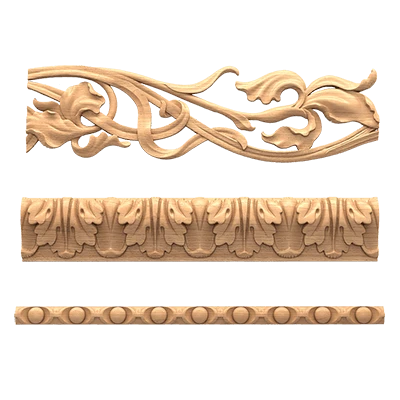
STAVROS decorative polyurethane molding and trim can be used for ornamental bands where the exact profile suits the scale and application.
When a Ready-Made Mirror Frame Is Better
Choose a complete wood or MDF frame when:
- the mirror must be movable;
- natural wood grain is important;
- the mirror is freestanding;
- a carved frame is the main decorative object;
- the frame must physically retain the glass;
- you want a finished furniture object rather than a wall-integrated composition.
When Applied Polyurethane Molding Is Better
Choose applied polyurethane molding when:
- the mirror will remain fixed to the wall;
- the frame is part of a larger wall-panel system;
- the finish is paint-grade;
- you want to repeat the same profile elsewhere in the room;
- you need a lightweight decorative layer;
- corner or applique systems are part of the design.
When Wood Molding Is Better
Use wood when visible grain, staining, carved authenticity, or traditional millwork construction is central to the design.
STAVROS has a separate collection of wooden mirror frames for projects where the frame itself should be a finished object.
When MDF Is Better
MDF is useful for paint-grade custom frames, broad flat geometries, and workshop-fabricated assemblies. It can be a practical choice when the design needs wider structural frame members rather than small applied decorative profiles.
Common Mistake #1: Using Decorative Molding as the Mirror Support
A decorative border is not automatically a structural frame.
Common Mistake #2: Choosing the Profile Before Choosing the Mirror Size
Profile scale must respond to the glass and wall.
Common Mistake #3: Ignoring the Reflection
A beautifully framed mirror reflecting clutter is still a poor composition.
Common Mistake #4: Making the Reveal Inconsistent
Unequal spacing makes the glass appear crooked even when it is level.
Common Mistake #5: Overdecorating Small Mirrors
A tiny mirror surrounded by wide molding and several appliques can lose all visual balance.
Common Mistake #6: Making Every Mirror in the Room a Focal Point
Use one dominant mirror and let secondary mirrors remain quieter.
Common Mistake #7: Forcing Rigid Molding Around Curves
Standard rigid MLDPU profiles should not be bent around round or arched mirrors unless the exact product is designed for that use.
Common Mistake #8: Ignoring Sconce Canopies
Electrical boxes and fixture bases must be included in the elevation before molding is installed.
Common Mistake #9: Using a Fireplace Application Without Checking Heat Conditions
Decorative suitability near a fireplace is product- and assembly-specific.
Common Mistake #10: Using Exterior Claims for Interior Products
Exterior performance should never be assumed from material name alone.
Common Mistake #11: Copying Exact Dimensions From Inspiration Photos
Copy proportions and hierarchy, not measurements from another room.
Common Mistake #12: Choosing a Frame That Competes With the Mirror
The frame should support the reflection, not overpower it.
Common Mistake #13: Ignoring Wall Irregularities
Large mirror glass makes bowed walls and uneven molding lines easier to see.
Common Mistake #14: Using Too Many Different Profiles
One main profile plus one secondary profile is often enough.
Common Mistake #15: Forgetting Future Mirror Replacement
Design the frame so the glass can be serviced or replaced when practical.
Common Mistake #16: Assuming a Round Mirror Needs a Round Molding Frame
A round mirror inside a rectangular architectural panel can be more successful and easier to execute.
Common Mistake #17: Treating Black Paint as an Art Deco Design by Itself
Art Deco depends on geometry, hierarchy, repetition, and material accents—not simply black trim.
Common Mistake #18: Making Every Panel the Same Width
Equal panels work in some rooms, but a wider center panel around the mirror often creates stronger hierarchy.
Common Mistake #19: Placing the Mirror Too High
Mirror height should respond to the intended viewing function and furniture below it, not only to the center of the wall.
Common Mistake #20: Treating the Mirror as an Afterthought
The strongest compositions are designed around the mirror from the beginning.
Specification Checklist for Designers
A professional mirror-frame specification should identify:
- mirror size;
- mirror thickness and edge treatment;
- mounting method;
- safety backing or glass requirement if applicable;
- molding manufacturer and SKU;
- frame outside dimensions;
- mirror-to-molding reveal;
- corner treatment;
- applique or frieze SKU;
- paint color and sheen;
- sconce locations;
- clearance to furniture;
- relationship to wall panels;
- mockup requirement.
Specification Checklist for Installers
Before installation, confirm:
- the wall is suitable for the mirror mounting system;
- mirror dimensions match the drawing;
- the molding SKU matches the specification;
- all decorative corner pieces are present;
- electrical work is complete;
- the mirror reflection has been reviewed;
- the frame layout is level and square;
- adhesives are compatible;
- paint and finish sequence is known.
SEO Intent: Mirror Frame Molding Is the Core Topic
The broad informational and product cluster around mirror frame molding, mirror frame trim, and molding for mirror frames is material-neutral.
That means the article should answer the complete design problem first: true frames, applied molding, integrated wall panels, scale, lighting, mounting, and material choice.
Polyurethane should enter only where it accurately describes the STAVROS product being linked.
How This Article Fits the STAVROS Content Cluster
This page should own the mirror-frame intent: mirror frame molding, mirror trim, integrated mirror panels, mirror proportions, lighting, materials, decorative corners, and mounting logic.
The article on wall molding ideas should own broader picture-frame wall layouts.
The article on decorative corner molding should own corner blocks and series compatibility.
The cabinet guide should own cabinetry, and the door guide should own decorative applied molding on door slabs.
Frequently Asked Questions
What is mirror frame molding?
It is molding used to create a decorative border around mirror glass or to build a frame system that visually integrates the mirror into the wall.
Is mirror frame molding the same as a mirror frame?
Not always. A true mirror frame physically holds or supports the mirror. Applied wall molding may only create a decorative border around a separately mounted mirror.
Can polyurethane molding be used around a mirror?
Yes, as decorative paint-grade trim when the profile, adhesive, substrate, and installation method are appropriate.
Can polyurethane molding hold a heavy mirror?
Do not assume so. Heavy mirror glass should use an appropriate independent support or a frame engineered to retain it.
What STAVROS polyurethane molding works for small mirror frames?
MLDPU-001 and MLDPU-004 are compact profiles suitable for delicate paint-grade framing.
What works for a larger mirror?
MLDPU-002 or the larger MLDPU-003 family can create stronger architectural presence when the mirror and wall scale support them.
Can I frame a round mirror with straight polyurethane molding?
Not by forcing standard rigid molding around the curve. A round mirror can instead sit within a rectangular molding panel.
Can I add decorative corner pieces to a mirror frame?
Yes, if the corner elements are compatible with the selected molding series and correctly oriented.
Can I add appliques above a mirror?
Yes. A central applique, cartouche, floral ornament, or horizontal trim band can create a focal top when the scale is appropriate.
How much space should be between the mirror and molding?
There is no universal reveal. Choose a consistent gap that suits the profile, mirror size, and installation method.
Should the mirror frame match the wall molding?
It can match exactly, or it can use a related profile at a different scale. The design language matters more than identical dimensions.
Should the mirror frame match the baseboard?
Not necessarily, but the visual weight of the two should be coordinated.
Can mirror frame molding be used in a bathroom?
Yes, when the full assembly—molding, substrate, adhesive, filler, primer, paint, and ventilation—is suitable for the environment.
Can mirror frame molding be used over tile?
Yes in some installations, but substrate preparation and adhesive compatibility need to be checked for the exact tile and molding.
Can I use mirror frame molding above a fireplace?
Only where fireplace clearances, heat conditions, material limitations, and local requirements allow it.
What is the best mirror-frame style for Art Deco?
Strong rectangular geometry, stepped profiles, black or deep-colored trim, and restrained brass or bronze accents are effective Art Deco directions.
What is the best mirror-frame style for Neoclassical interiors?
Symmetrical rectangular frames, restrained relief, monochromatic paint, balanced sconces, and limited ornament.
Can a mirror be integrated into wall molding?
Yes. One of the strongest approaches is to treat the mirror as one field within a larger picture-frame molding or boiserie-inspired wall system.
How do I calculate molding for a mirror frame?
Calculate the outside perimeter of the molding frame, then optimize those lengths against the stock length and account for corner treatment and cut waste.
Should I mount the mirror before the molding?
Either sequence can work. The decision depends on the mirror support, desired reveal, finish sequence, and whether the glass must remain serviceable.
Final Design Principle: Frame the Reflection and the Architecture Together
A successful mirror frame is not simply a border around glass. It determines how the reflection belongs to the wall.
That means thinking about two images at once: the physical composition in front of you and the reflected composition inside the mirror.
The molding should relate to the room. The mirror should reflect something worth seeing. The frame should fit the scale of the glass. Lighting should reveal the profile without exposing bad joints. Corner ornament should support the style rather than become decoration for its own sake. And the mirror itself should remain independently and safely supported.
For broad U.S. search intent, the core language is mirror frame molding, mirror frame trim, molding for mirror frames, decorative mirror frame, and mirror frame design ideas.
For STAVROS product linking, use material-specific anchors only where they are accurate: polyurethane mirror frame molding for applied paint-grade architectural frames, decorative polyurethane trim for ornamental bands, polyurethane appliques and onlays for focal relief, polyurethane corner elements for compatible decorative corners, and wood and MDF mirror frames when the project requires a complete physical frame.
The mirror should not look as though it was hung on a finished wall at the last minute. The strongest result is when the wall, molding, mirror, furniture, and light all appear to have been designed in one drawing.