
























Article Contents:
- What Is Decorative Corner Molding?
- Three Completely Different Types of “Corner”
- 1. A flat picture-frame corner
- 2. An inside room corner
- 3. An outside room corner
- Polyurethane corner elements
- Wood corner elements
- Plaster corner ornament
- MDF and mixed systems
- What is decorative corner molding?
- Do I need corner blocks for wall molding?
- What is the difference between a corner block and a corner overlay?
- Can I use decorative corner molding instead of a 45-degree miter?
- What is decorative inside corner molding?
- What is outside corner molding?
- Can polyurethane corner molding be painted?
- Can I use any polyurethane corner with any polyurethane molding?
- What does L or R mean in a corner product code?
- How many corner pieces do I need for one rectangular frame?
- Can I use corner ornament on furniture?
- Can corner molding be used around mirrors?
- Can I use ornate corner molding in a modern interior?
- What is the best corner molding for Neoclassical interiors?
- What is the best corner molding for classical interiors?
- What are crown molding corner blocks?
- Does STAVROS have polyurethane corner elements?
- How do I know if a corner element fits MLDPU-002?
- Should I install corner pieces before the molding?
- How do I make corner joints disappear after painting?
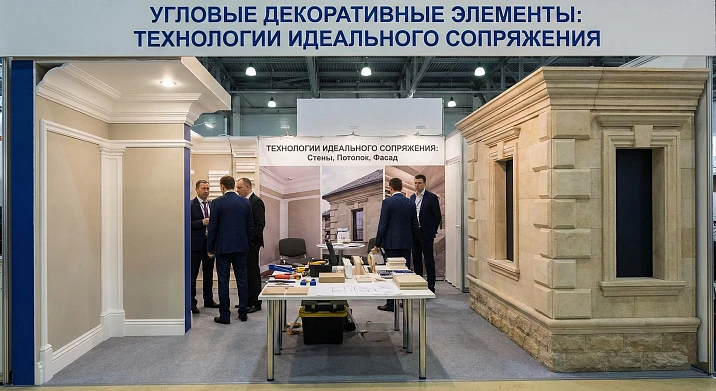
A corner is where decorative molding stops being a simple line and becomes architecture. On a straight wall, almost any well-chosen profile can look convincing. At a corner, however, every decision becomes visible: the angle, the cut, the pattern, the joint, the scale, and whether the detail was designed as part of a system or improvised at the end.
That is why searches such as decorative corner molding, decorative molding corners, corner molding pieces, decorative inside corner molding, wall molding corners, and polyurethane corner molding describe several different products and several different design problems. Some people are looking for a block that replaces a difficult miter. Others want a decorative overlay at the corner of a wall frame. Others are trying to solve an actual inside or outside room corner. Those are not the same task.
The most useful way to approach corner trim is therefore to separate geometry from decoration. First decide what kind of corner you have. Then decide whether you need a simple miter, a purpose-made corner component, a decorative overlay, or a different trim system altogether.
STAVROS offers verified polyurethane products for this kind of work, including the polyurethane corner molding and molding-decor category, along with linear polyurethane wall molding and separate polyurethane decorative elements. The important word is compatible: a corner piece is useful only when its geometry, orientation, scale, and ornament make sense with the molding system around it.
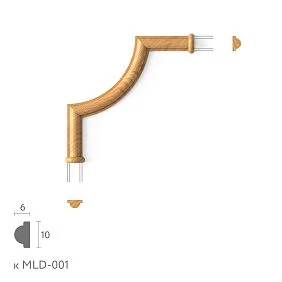
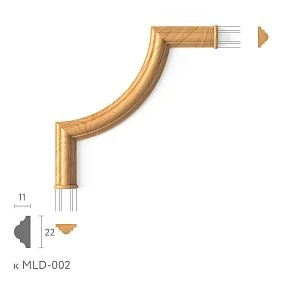
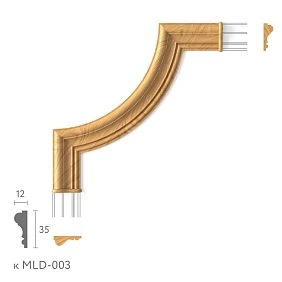
What Is Decorative Corner Molding?
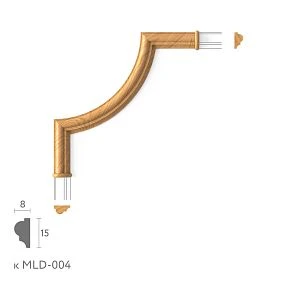
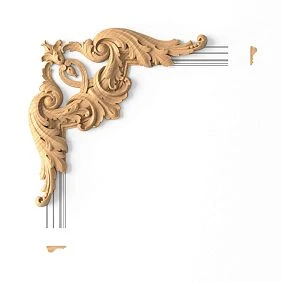
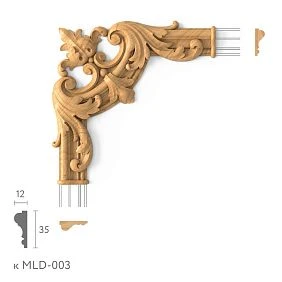
Decorative corner molding is a general term for trim or ornament used to resolve, emphasize, or decorate a corner. Depending on the context, it can mean:
- a molding profile that wraps an inside or outside wall corner;
- a prefabricated corner block that receives straight trim pieces;
- a decorative overlay applied over a mitered frame corner;
- a left- or right-oriented ornament designed for a specific molding series;
- a rosette-like square corner accent;
- an ornamental connector used where horizontal and vertical molding meet.
This range of meanings explains why search results for corner trim can look inconsistent. A carpenter searching for outside corner trim may be looking for protective building trim. An interior designer searching for decorative corner molding may be looking for an ornamental wall-panel accent. A homeowner searching for crown molding corner blocks may want to avoid cutting compound crown miters.
Before choosing a product, identify the exact architectural condition.
Three Completely Different Types of “Corner”
Наша фабрика также производит:
Смотреть весь Каталог продукции
1. A flat picture-frame corner
This is the corner of a rectangular wall frame, furniture panel, door applique, or other composition installed on one flat plane. The molding itself does not turn onto another wall. Two straight pieces simply meet at a right angle on the same surface.
This is the easiest geometry. A conventional 45-degree miter works when the frame is square. A decorative corner overlay can be added instead if the design calls for ornament.
Получить консультацию
2. An inside room corner
This is where two walls meet inward. The molding changes plane and travels from one wall to the next.
The geometry depends on the actual room angle, which may not be exactly 90 degrees. A purpose-made inside corner component can simplify some profiles, but only when it is intended for that exact type of molding.
3. An outside room corner
This is a projecting corner at a wall return, column-like projection, chimney breast, soffit, or other architectural bump-out.
Outside corners are visually exposed and physically vulnerable. They need especially clean geometry because the edge catches light and impact.
Mitered Corner vs. Decorative Corner Element
A corner element is not automatically “better” than a miter. These are two different design languages.
A clean miter keeps the molding line visually continuous. It is ideal when the profile itself should remain the focus or when the design is modern, transitional, or restrained.
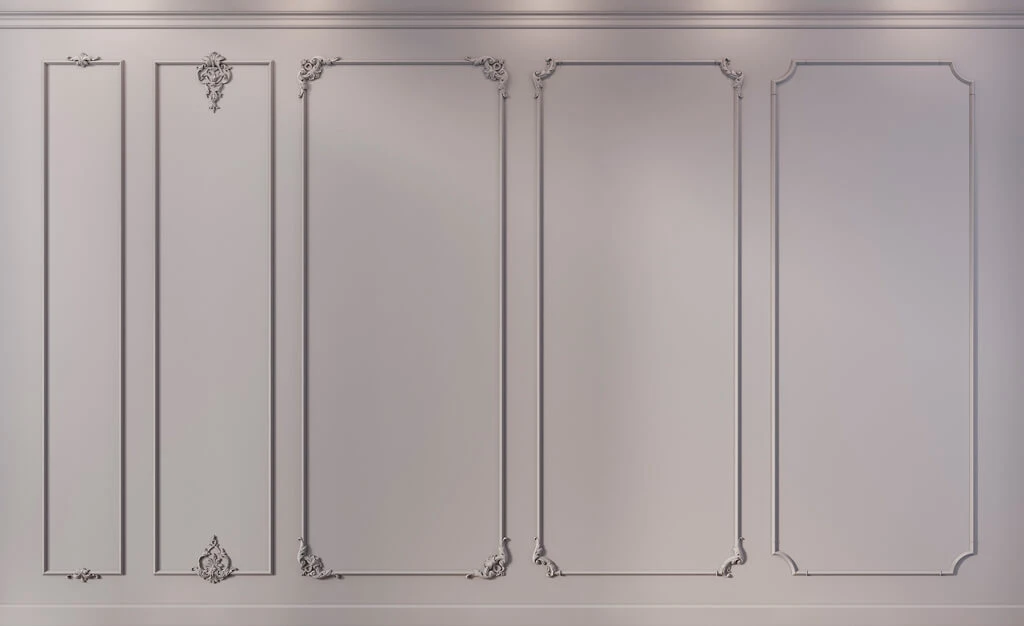
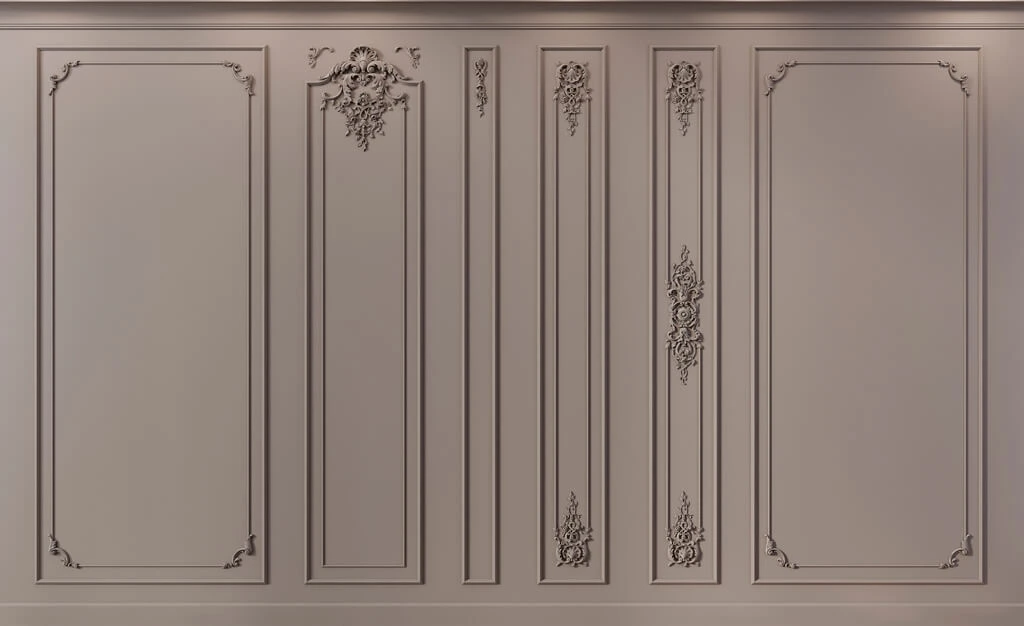
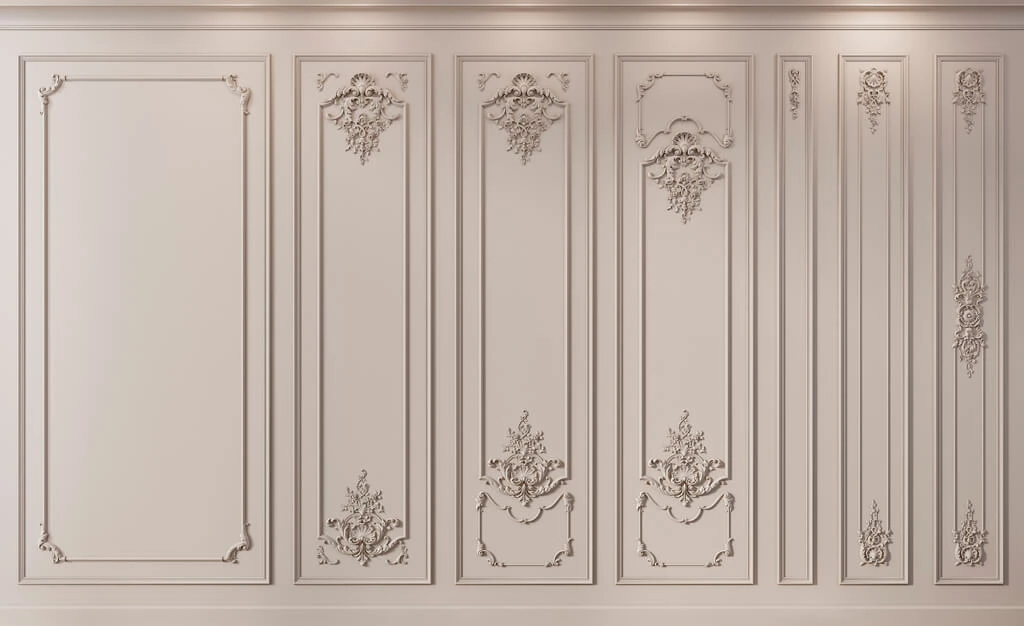
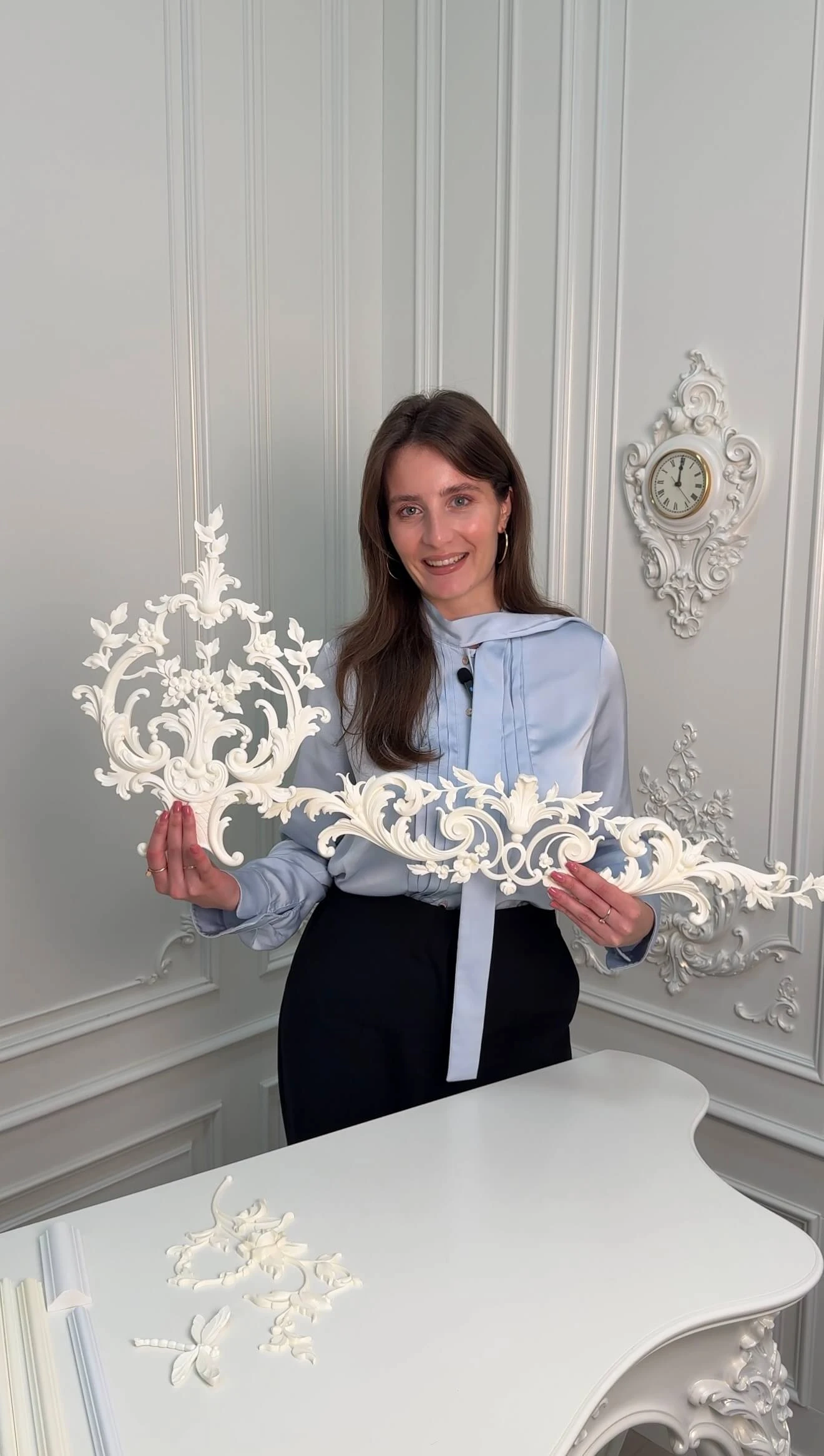
A decorative corner element turns the corner into an event. It can introduce floral ornament, a scroll, a rosette, a leaf, or a directional motif. In classical and Neoclassical compositions, this can make the wall frame feel designed rather than merely assembled.
The decision should be aesthetic first, technical second.
When a Simple Miter Is the Better Choice
Use a miter when:
- the profile is plain or lightly profiled;
- the wall design is minimalist or contemporary;
- you want the frame to read as one uninterrupted line;
- the corner element would be too large for the frame;
- the molding has no matching ornament system;
- the room already contains enough decorative detail.
A perfectly fitted miter can be more sophisticated than an unnecessary corner ornament.
When a Decorative Corner Element Is the Better Choice
Use a decorative corner element when:
- the design is classical, Neoclassical, Rococo-inspired, Empire-inspired, or otherwise ornament-led;
- the corner should become a focal point;
- the molding series includes purpose-made corner components;
- the ornament is directional and designed to turn at the corner;
- the frame is large enough to give the ornament breathing room;
- the composition includes other coordinated appliques or center ornaments.
Corner Blocks Are Not the Same as Corner Overlays
A corner block usually functions as a geometric receiver. Straight trim terminates into the block, which can reduce or eliminate the need for a miter.
A corner overlay is often decorative rather than structural to the joint. It may be applied over an already assembled frame or sit at the corner as an ornamental node while the underlying molding geometry remains intact.
This distinction matters because many decorative polyurethane pieces are overlays, not universal blocks designed to accept any profile.
Why Compatibility Matters More Than the Word “Polyurethane”
Two products can both be polyurethane and still be completely incompatible.
The corner element must coordinate with:
- profile width;
- profile projection;
- ornament direction;
- overall scale;
- frame geometry;
- series or collection;
- left/right orientation where applicable.
Do not choose a corner piece simply because the material and color match.
A Real STAVROS Example: MLDPU-002 With Left and Right Corner Elements
The STAVROS system around MLDPU-002 shows how a corner treatment should be specified.
The linear MLDPU-002 polyurethane molding is a medium-scale profile. Its decorative corner system includes separate left and right elements rather than one generic corner piece.
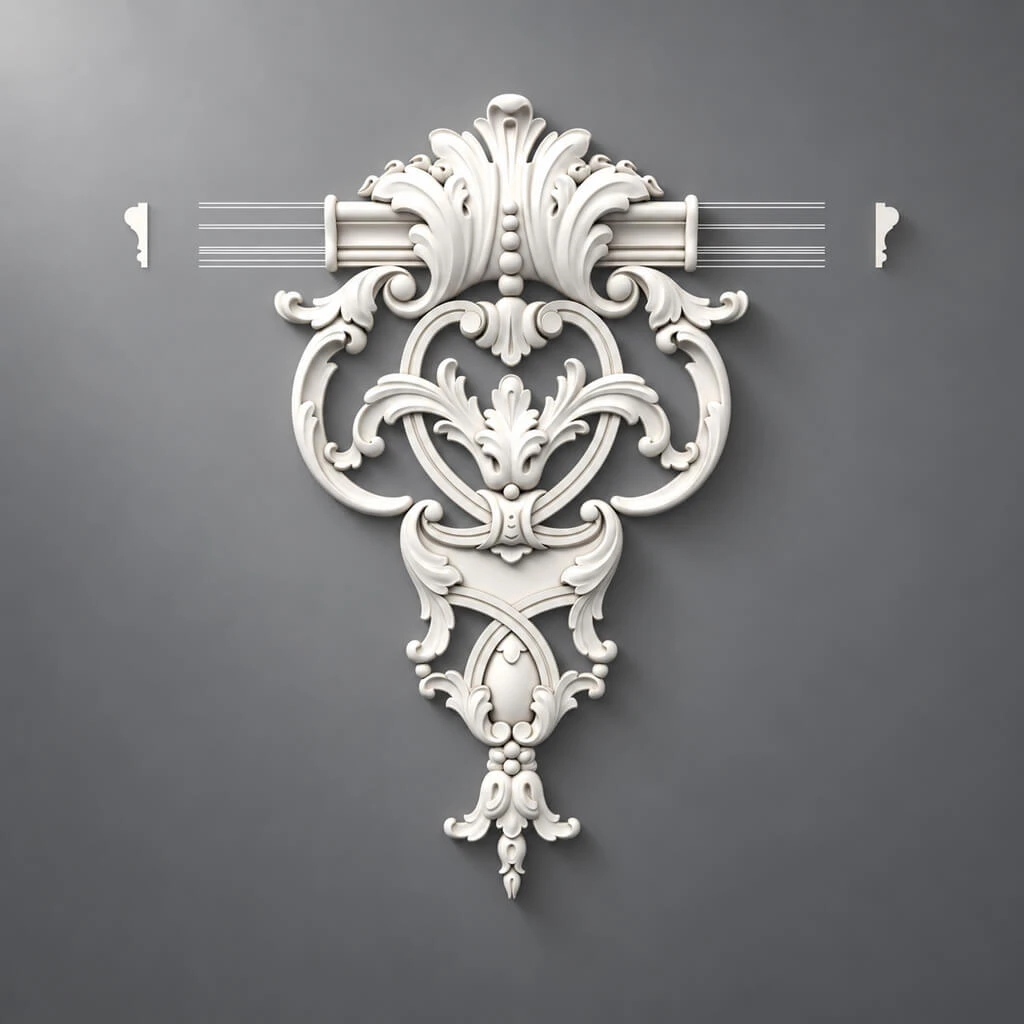
The MLDPU-2U-2.1L left corner element is a polyurethane decorative corner made for the left positions of the 002 frame system. The corresponding right-hand component is MLDPU-2U-2.1R.
This matters because the ornament is directional. A left element is not simply a right element rotated casually into place. The visual movement of the leaves and scrolls is designed around orientation.
Left and Right Corner Pieces: Why L and R Matter
Directional ornament is one of the most overlooked details in decorative molding.
If a corner ornament is symmetrical, orientation may not matter. If the ornament flows, curls, or grows in one direction, left and right pieces are mirror partners.
Using the wrong orientation can create a composition that technically fits but visually runs backward.
For a rectangular decorative frame using directional corner overlays, you may need two left and two right pieces, depending on the exact system and orientation specified by the manufacturer.
Do Decorative Corner Pieces Replace the Miter?
Sometimes. Sometimes they do not.
Some corner blocks are designed so straight molding pieces terminate against them with square cuts. Other decorative overlays are mounted over an already formed corner or over a frame assembly.
Do not assume from the product photograph. Read the installation information for the exact series.
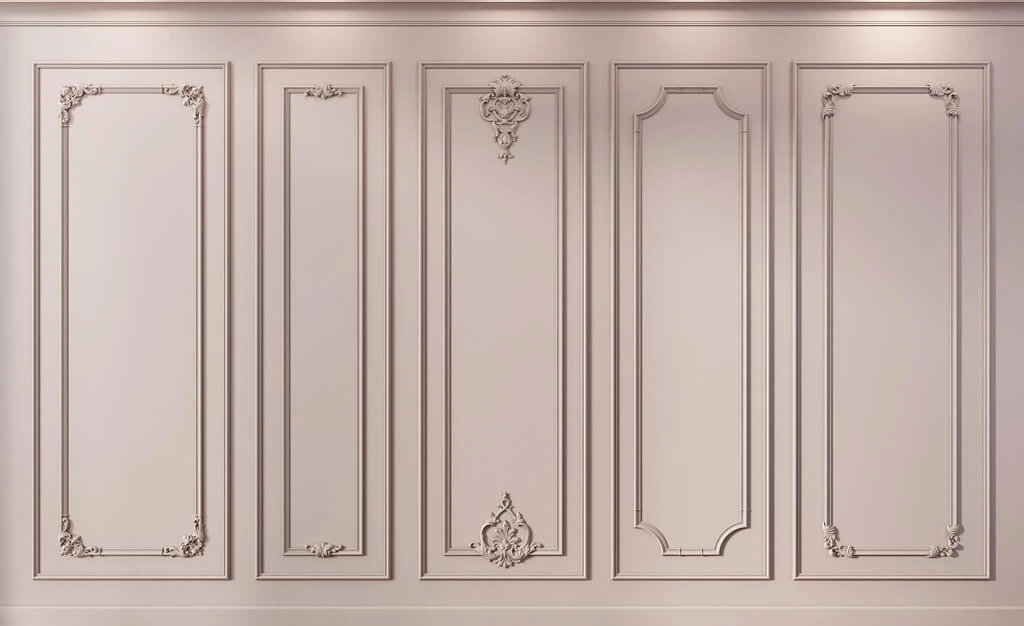
Decorative Corner Molding for Wall Frames
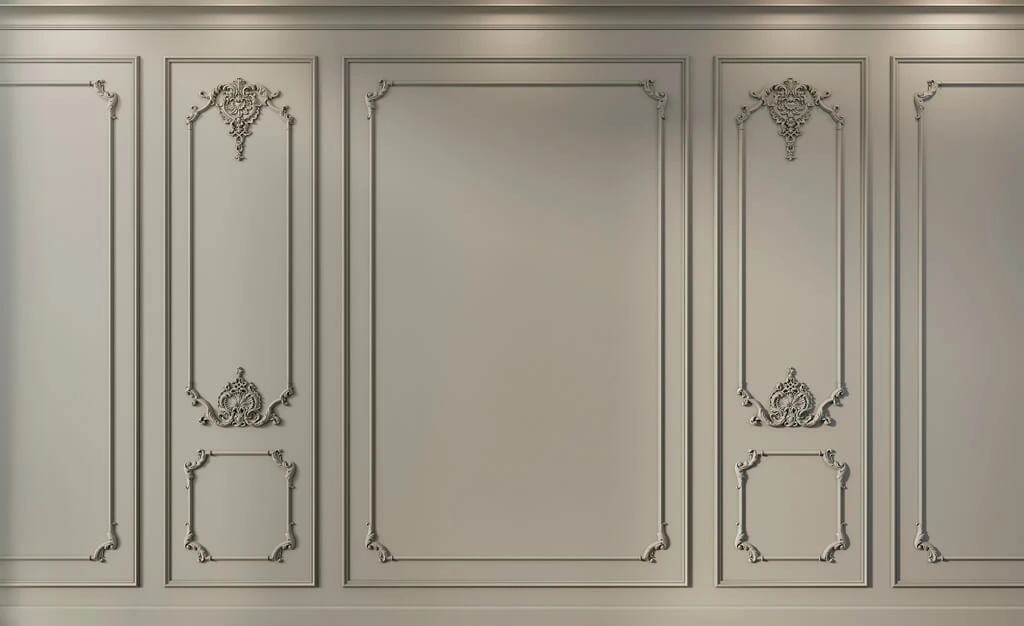
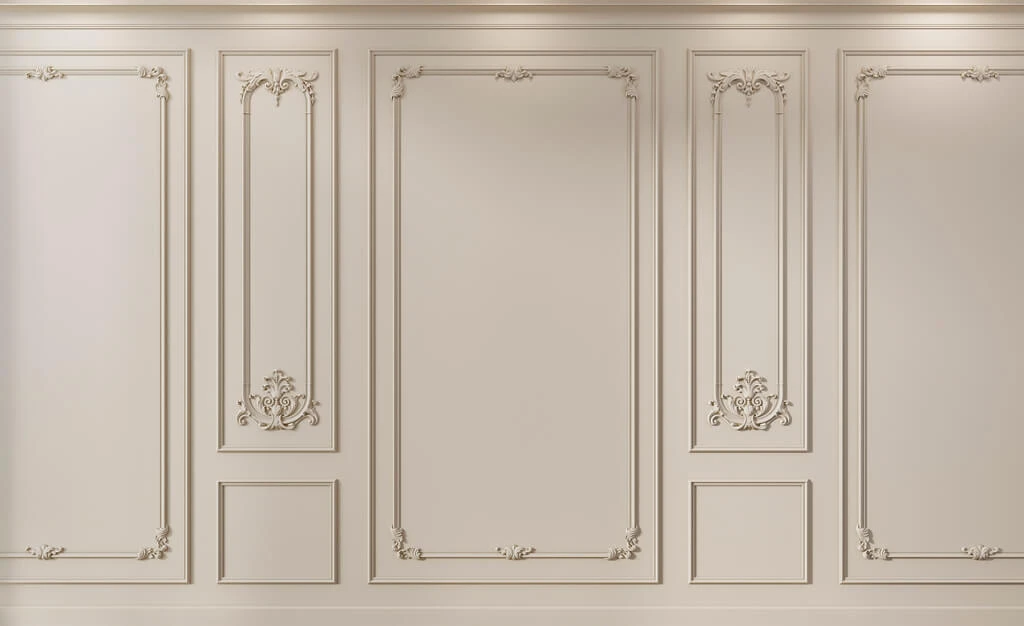
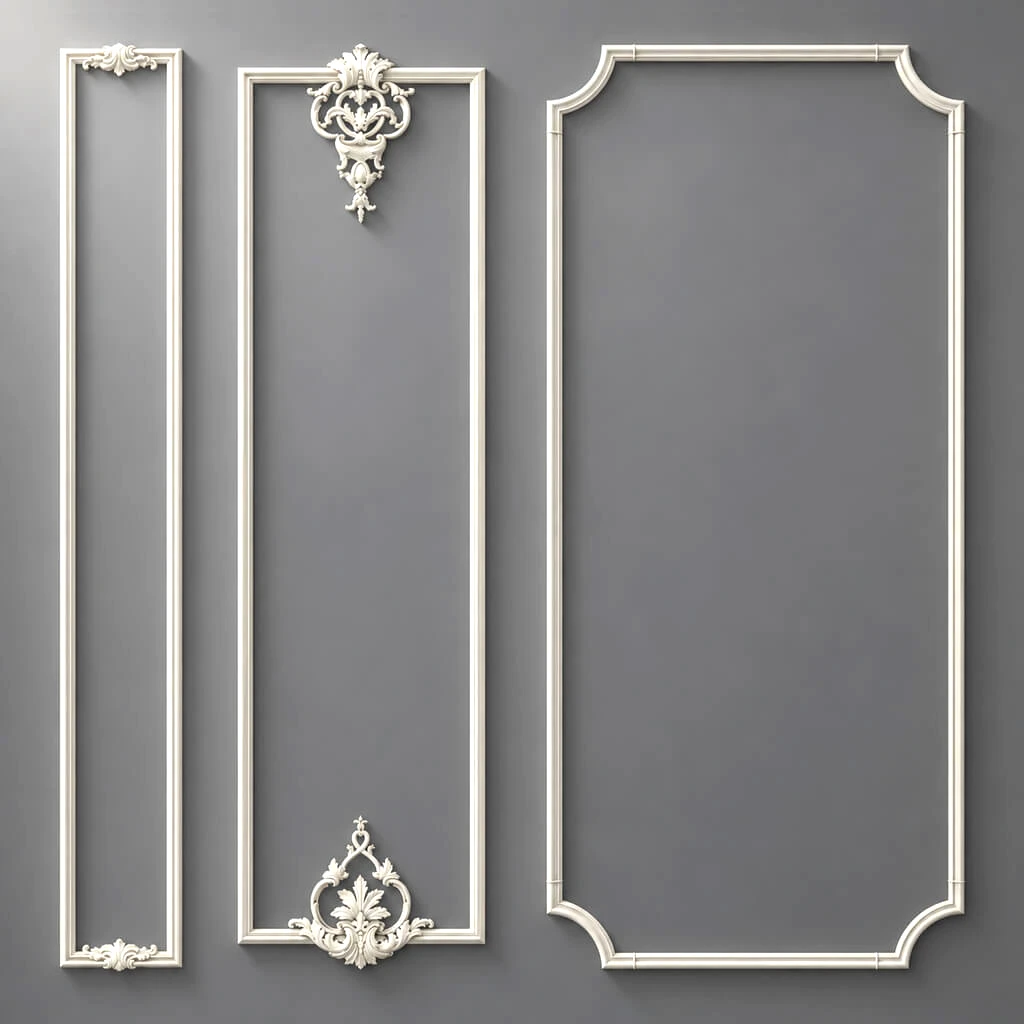
Wall frames are one of the best applications for decorative corner pieces because the geometry is controlled and the viewer sees the corners directly.
Use corner ornaments to:
- emphasize a large center frame;
- create a classical furniture-like wall panel;
- add floral detail to an otherwise simple molding profile;
- coordinate a wall frame with central appliques;
- create stronger hierarchy on an accent wall.
For the linear part of the frame, use a compatible polyurethane wall molding profile. For corner ornament, select from the molding-decor family only after compatibility has been checked.
Decorative Inside Corner Molding
The phrase decorative inside corner molding can describe two different things.
It can mean a profile used where two walls meet. Or it can mean ornament placed in the inside corner of a decorative frame.
Those products are not interchangeable.
For a true room corner, the molding must physically resolve the change of plane. For a flat wall frame, the “inside” corner is only visual—it still exists on one flat surface.
Inside Room Corners Are Rarely Perfectly Square
The source article assumes a 90-degree room corner. Real construction often varies.
If an inside corner measures 88 degrees, two 45-degree miters will not close perfectly. The installer needs to measure the actual angle and adjust the cuts or use a compatible corner solution designed for the profile.
This is one reason ornate crown and complex molding can be challenging even for experienced installers.
Decorative Outside Corner Molding
Outside corners are more exposed visually and physically.
A decorative outside corner may be appropriate when the trim turns around:
- a wall projection;
- a column-like box;
- a pilaster-like architectural feature;
- a furniture corner;
- a framed architectural return.
But be careful with the search phrase outside corner molding trim. In U.S. search results it can also refer to protective or construction trim rather than decorative architectural ornament.
Outside Corner Wall Molding vs. Protective Corner Trim
An architectural molding is primarily visual. A protective corner trim is primarily functional.
If the corner is in a hallway, commercial corridor, or high-contact zone, decorative polyurethane may not be the best way to protect the edge from carts, furniture, or repeated impact.
Choose the product based on the real job, not just the search phrase.
Decorative Molding Corners for Neoclassical Walls
Neoclassical interiors use ornament selectively.
The strongest approach is usually:
- simple or moderately profiled molding;
- large rectangular frames;
- one coordinated corner ornament family;
- monochromatic paint;
- generous negative space.
Corner pieces should clarify the architecture, not turn every frame into a decorative object.
Ornate Corner Molding for Classical Interiors
Traditional classical interiors can support more elaborate corner treatment.
Botanical motifs, acanthus leaves, scrolls, shells, and rosette-like ornaments can soften the geometric tension where horizontal and vertical moldings meet.
The ornament should still be proportional to the frame. A large 8-inch corner overlay on a tiny cabinet panel will look oversized regardless of how beautiful the carving is.
Why Botanical Ornament Works So Well at Corners
A corner is mathematically rigid: two straight lines intersect at a fixed angle.
Botanical ornament introduces curves into that point. Leaves and scrolls can visually “turn” the eye from horizontal to vertical, making the transition feel intentional rather than abrupt.
This is why corner leaves and scrolling motifs appear repeatedly in classical decorative architecture.
Geometric Corner Molding for Art Deco and Modern Interiors
Not every decorative corner needs flowers.
For Art Deco and modern interiors, use:
- stepped geometry;
- fan motifs;
- nested squares;
- simple rosettes;
- linear blocks;
- clean corner connectors.
The corner should reinforce the geometry of the room rather than introduce an unrelated historical motif.
Corner Molding on Furniture
Furniture is an excellent place for decorative corner overlays because the frame is viewed at close range and the scale is controlled.
Applications include:
- wardrobe doors;
- cabinet fronts;
- drawer panels;
- mirror frames;
- console fronts;
- painted doors;
- built-in cabinetry.
The STAVROS molding-decor category contains several PU corner elements that can be used in furniture and frame compositions when compatible with the selected profile.
Corner Molding on Doors
A flat door can be given a paneled appearance with applied molding and corner ornament.
Before adding decorative corners, check:
- handle clearance;
- hinge clearance;
- door-to-casing clearance;
- door-to-door clearance on paired doors;
- projection of the corner ornament;
- paint system.
A beautiful corner overlay that catches on an adjacent door is a failed detail.
Corner Molding Around Mirrors
Decorative corner pieces can turn a plain mirror surround into an architectural frame.
Use them when the mirror is large enough to support the ornament and when the corners remain visible after installation.
If the mirror itself has a heavy decorative frame, keep the wall molding simpler.
Corner Molding Around Artwork
For artwork, corner ornaments should frame the architectural field, not imitate the frame of the painting too literally.
Leave enough space between the wall molding and artwork so the two layers remain legible.
Corner Molding for Large Wall Panels
Large wall panels are where corner ornament can be especially convincing.
A large frame creates enough negative space for a corner piece to read clearly without crowding the center.
This works well behind sofas, beds, sideboards, fireplaces, and large mirrors.
Corner Molding for Small Wall Panels
Small panels usually need restraint.
A simple miter may look better than a decorative corner. If you do use ornament, choose a compact corner element with shallow projection.
Corner Elements for Double and Triple Frame Systems
Some classical walls use nested molding frames: a wide outer profile, a medium inner profile, and sometimes a third fine bead.
In these compositions, corner ornaments should be assigned to one hierarchy level. Do not place a different decorative block on every nested frame.
A strong strategy is to ornament only the outer frame and keep inner frames mitered.
Corner Blocks for Crown Molding: A Separate Product Family
Corner blocks for crown molding is a significant U.S. search phrase, but it should not be confused with wall-frame corner overlays.
Crown molding bridges the wall and ceiling. Its corner blocks must work with the crown’s wall drop, ceiling projection, and spring angle.
STAVROS currently has a separate crown molding category containing HI WOOD high-density polystyrene profiles. Those products should be specified by their actual material and compatible components.
Do not send the exact anchor “polyurethane crown molding corner block” to that category unless a verified polyurethane crown system exists.
Crown Molding Corner Blocks vs. Mitered Crown Corners
A crown corner block can simplify installation by allowing straight or simpler cuts at the ends of crown profiles, depending on the system.
A mitered crown corner creates a continuous profile but requires more precise cutting, especially when the actual room angle is not square.
The choice depends on style, product system, and installer skill.
Wall Molding Corners vs. Crown Molding Corners
This distinction deserves repetition because search terminology can blur it.
Wall molding corners usually exist on a flat wall-frame layout.
Crown molding corners exist at the wall-ceiling junction and involve three-dimensional profile geometry.
A product designed for one should not be assumed to work for the other.
How to Choose a Decorative Corner Molding Piece
Use this sequence:
- Identify the corner type.
- Identify the molding SKU.
- Confirm whether a matching corner element exists.
- Check left/right orientation.
- Compare scale.
- Check projection.
- Review ornament direction.
- Dry-fit before adhesive.
- Confirm paint and finish strategy.
1. Identify the Corner Type
Is it a flat frame corner, inside room corner, outside room corner, furniture corner, crown corner, or an ornamental intersection?
If this is unclear, do not buy the corner element yet.
2. Identify the Exact Molding SKU
“Polyurethane molding” is not specific enough.
A corner element designed for MLDPU-002 may not align with MLDPU-001 or MLDPU-004. Width, projection, and relief differ.
3. Check Series Compatibility
The safest system is one where the manufacturer explicitly lists compatibility.
The STAVROS MLDPU-2U-2.1L/R pair, for example, is designed around the 002 family rather than being a universal decorative corner for every molding.
4. Check Left and Right Orientation
If the product code includes L or R, treat that as functional information, not decoration.
Directional ornament creates flow. Mirror-paired elements preserve that flow around the frame.
5. Check Scale
Corner ornaments should be judged against the complete frame, not just the molding strip.
A 200 mm decorative element can work confidently on a large wall frame and overwhelm a small cabinet panel.
6. Check Relief Depth
Relief creates shadow and physical projection.
Deep corner ornament becomes more sculptural but may interfere with nearby cabinet doors, frames, curtains, or narrow circulation.
7. Check Ornament Density
If the molding itself is already highly ornate, the corner does not necessarily need to be even more elaborate.
Sometimes a simpler corner creates better hierarchy.
8. Dry-Fit the System
Place the linear molding and corner piece together before installation.
Check:
- profile alignment;
- visible gaps;
- ornament flow;
- scale;
- orientation;
- frame proportions.
9. Decide the Paint Strategy
Corner elements generally look most integrated when painted in the same color and sheen as the molding system.
Contrasting paint turns the corner into a stronger decorative accent and should be used intentionally.
How to Lay Out a Frame With Decorative Corners
When decorative corner pieces are part of the frame, they affect the frame dimensions.
Do not draw a rectangle first and then “add” corner ornaments afterward. The ornament occupies real width and height.
Start with the corner components, determine their footprint, then calculate the straight molding lengths between them.
Start With the Corner Elements or the Linear Molding?
It depends on the system.
If the corner piece is a true connector that defines the frame endpoints, layout can begin from the corners.
If the corner piece is an overlay installed over a finished frame, build the frame first.
Always follow the exact product instructions rather than one universal rule.
Measuring Between Corner Elements
If straight moldings terminate into corner blocks, measure the clear distance between the receiving edges of the two corner pieces.
Do not simply subtract decorative width from total frame width without checking the actual product geometry.
Installation Surface Preparation
The wall or furniture surface should be sound, clean, dry, and compatible with the adhesive.
Remove loose paint, dust, grease, and unstable finish. Primer may be appropriate on porous or repaired areas, but it is not a universal requirement for every substrate.
Adhesive Selection
Use an adhesive compatible with both the exact polyurethane element and the substrate.
Some STAVROS PU product pages mention mounting adhesive, acrylic adhesive, or high-tack hybrid adhesives. The final selection should follow the product and adhesive manufacturer guidance.
Do not assume that all “liquid nails” products use the same chemistry.
Temporary Support
Corner pieces can rotate or slide while adhesive cures.
Use low-tack tape or another approved temporary support method as necessary. Large relief elements may need more controlled support than a small flat overlay.
Joint Finishing
The junction between molding and corner ornament should read as one system after paint.
Use compatible filler or paintable sealant for small gaps. Avoid building up so much filler that the profile edge becomes soft or distorted.
Painting Decorative Corner Molding
Paint is what visually unifies the corner piece with the linear molding.
Use thin coats so fine relief remains crisp. For deep ornament, use a brush to reach recesses without flooding them.
If the wall, molding, and corner ornament are the same color, light and shadow become the primary design tools.
Monochromatic Corner Molding
This is the safest choice for contemporary Neoclassical interiors.
Paint the wall, molding, and decorative corner element the same color. The corner remains visible through shadow but does not become a separate color accent.
Contrasting Corner Accents
Use contrast sparingly.
A metallic highlight, darker glaze, or slightly different sheen can emphasize ornament. But a completely different corner color at every frame can make the wall feel fragmented.
Patina and Gilding
Decorative corner elements are good candidates for patina because relief creates recesses naturally.
For traditional interiors, a glaze or metallic highlight can increase depth. The finish system must be compatible with the primer and polyurethane substrate.
Common Mistake #1: Treating Corner Elements as Mandatory
They are not.
A good miter is often the best solution. Use corner ornament when it improves the design, not because the frame “needs” decoration.
Common Mistake #2: Buying a Generic Corner Piece by Material Alone
“Polyurethane” does not mean compatible.
Check the molding series, dimensions, orientation, and profile.
Common Mistake #3: Confusing a Wall-Frame Corner With a Room Corner
A flat decorative corner overlay does not solve a true two-wall inside corner.
Common Mistake #4: Confusing Crown Corner Blocks With Wall Corners
Crown geometry is different because the profile bridges wall and ceiling.
Common Mistake #5: Using a Left Piece on the Right
Directional ornament can look visibly wrong even when it physically fits.
Common Mistake #6: Oversizing the Ornament
Corner pieces should not consume most of the frame.
Leave negative space so the ornament can be read.
Common Mistake #7: Mixing Unrelated Ornament Families
A floral Rococo corner with a severe Art Deco molding rarely feels coherent.
Common Mistake #8: Assuming Every Room Corner Is 90 Degrees
Measure the actual angle before cutting or selecting a fixed connector.
Common Mistake #9: Hiding Bad Geometry With Filler
Filler can finish small gaps. It cannot correct a corner element that is incompatible with the molding.
Common Mistake #10: Ignoring Projection
A deep corner ornament can interfere with cabinetry, doors, curtains, or traffic.
Common Mistake #11: Using Decorative Trim as Impact Protection
Outside corner architectural molding is not automatically a protective corner guard.
Common Mistake #12: Assuming Flexible Corner Components Exist for Every Series
Flexible polyurethane products exist in the market, but standard STAVROS MLDPU and NPU corner products should not be described as flexible unless the exact SKU says so.
Common Mistake #13: Using PU Crown Keywords on Polystyrene Crown Products
Material-specific SEO should match the product.
The current STAVROS Crown Mouldings category is HI WOOD polystyrene, so exact polyurethane crown anchors should not be used for that destination.
Common Mistake #14: Overdecorating Every Corner
One focal panel with ornate corners can be stronger than twelve heavily decorated frames.
Common Mistake #15: Ignoring Lighting
Deep relief can look subtle in daylight and dramatic under a wall sconce. Review the corner under actual room lighting.
Decorative Corner Molding in a Living Room
Use decorative corners on one primary wall rather than everywhere.
A large center frame behind a sofa or above a console can carry corner ornament, while secondary wall frames remain mitered.
Decorative Corner Molding in a Bedroom
A large frame behind the bed can support decorative corner pieces when the headboard and nightstands create a strong symmetrical composition.
For a minimalist bedroom, simple miters are usually better.
Decorative Corner Molding in a Dining Room
Dining rooms can carry more ornament because furniture is stable and the wall is viewed for long periods.
Use corner accents on a central sideboard panel, mirror frame, or a series of large repeated panels.
Decorative Corner Molding in a Home Office
A dark monochromatic office can use subtle corner ornament without looking overly classical.
Paint the corner element the same color as the wall so relief remains the main effect.
Decorative Corner Molding in an Entry Hall
Entries are good locations for a single formal panel with a mirror or console.
A strong corner detail can make the entry feel architectural without requiring molding on every wall.
Decorative Corner Molding in Furniture Design
Furniture allows closer viewing, so corner ornament quality matters.
Use precise, series-compatible pieces and make sure left/right orientation is correct. After priming and painting, the linear molding and corner overlay should read as one design.
How Corner Ornament Works With Wall Molding Ideas
The separate STAVROS article on wall molding ideas covers frame layouts, panel proportions, room-by-room designs, and picture-frame molding.
Use that article to design the wall first. Then decide whether decorative corners strengthen the layout.
How Corner Ornament Works With Installation Planning
For cutting, mitered corners, adhesive, joint finishing, and paint preparation, use the detailed guide on how to install polyurethane molding.
This article focuses on selecting and designing the corner treatment rather than repeating the entire installation workflow.
How Corner Ornament Works With Appliques
Corner accents and central appliques can create a complete ornamental composition.
A useful hierarchy is:
- linear molding defines the frame;
- corner elements articulate the four nodes;
- a central applique creates the focal point;
- paint unifies the system.
Browse polyurethane decorative elements for center, horizontal, vertical, curved, and corner forms.
How to Specify Corner Molding on a Drawing
A professional elevation should identify:
- linear molding SKU;
- corner element SKU;
- left/right orientation;
- frame outside dimensions;
- distance from baseboard and crown;
- corner element footprint;
- molding lengths between corner elements;
- paint color and sheen;
- installation method;
- joint finish.
How to Order Corner Pieces
Do not order only by counting frames unless you understand orientation.
A simple symmetrical corner set may require four identical blocks. A directional system may require two left and two right pieces per frame.
For large projects, create a schedule by room and frame number.
Example Corner Schedule
| Frame | Linear molding | Left corners | Right corners | Notes |
|---|---|---|---|---|
| Living Room A | MLDPU-002 | 2 × MLDPU-2U-2.1L | 2 × MLDPU-2U-2.1R | Large center panel |
| Living Room B | MLDPU-002 | 0 | 0 | Simple mitered side panel |
| Dining Room A | MLDPU-002 | 2 × MLDPU-2U-2.1L | 2 × MLDPU-2U-2.1R | Mirror panel |
This type of schedule prevents orientation mistakes during ordering and installation.
Decorative Corner Molding and SEO Terminology
For U.S. search behavior, several phrases are relevant but should not all be treated as exact synonyms.
Decorative corner molding is the best broad phrase for architectural ornament at corners.
Decorative molding corners describes the same general intent with reversed word order.
Decorative corner molding trim often describes trim-oriented products and decorative corner pieces.
Decorative inside corner molding is narrower and may refer either to a room corner or a decorative frame corner.
Wall molding corners is useful for picture-frame wall applications.
Polyurethane corner molding adds a material qualifier and is appropriate only when the linked products are genuinely polyurethane.
Material Options for Decorative Corner Molding
Corner ornament can be made from polyurethane, wood, plaster, MDF-based trim systems, polystyrene, and other decorative materials. The correct choice depends on where the corner is used and how the rest of the molding system is built.
Polyurethane corner elements
Polyurethane is especially useful for paint-grade corner ornament because it can reproduce relief while remaining relatively light and easy to integrate with factory-made molding systems.
Its real advantage is not simply “lightweight.” It is repeatability. If a system has left and right corner pieces, you can build several frames with the same decorative logic.
Wood corner elements
Wood makes sense when the surrounding trim is stained or clear-finished wood, when visible grain is part of the design, or when the project belongs to a traditional millwork system.
Wood also introduces different movement and finishing considerations. A painted polyurethane corner on a stained oak frame will rarely feel coherent unless the contrast is intentional.
Plaster corner ornament
Plaster remains important in historic interiors, restoration, and custom sculptural work. It can be cast, modeled, repaired, and blended into larger ornamental plaster compositions.
For a modern repeatable picture-frame wall, however, plaster corner pieces can add unnecessary mass and labor when the desired effect can be achieved with lighter manufactured components.
MDF and mixed systems
Some decorative systems intentionally combine MDF linear profiles with polyurethane ornamental corner pieces. STAVROS documents this type of pairing in the 002 system, where polyurethane corner decor can work with MLDPU-002 as well as compatible MLD-002-MG configurations.
The visual system can still read as one architectural composition after proper preparation and painting, but the installer must understand that the underlying materials are different.
How to Size a Corner Element
Corner ornament should be sized to the frame, not to the room in isolation.
Consider four variables:
- the width of the linear molding;
- the overall frame dimensions;
- the amount of negative space inside the frame;
- the viewing distance.
A large corner ornament can be appropriate on a six-foot-tall wall frame and overwhelming on a 20-inch cabinet panel.
Scale Example: The 002 Series
The MLDPU-2U-2.1L/R corner elements are roughly 200 × 135 mm with substantial relief. That scale makes sense in large wall frames, sizable doors, and representative furniture fronts.
For smaller compositions, the same decorative language may need a smaller series. Matching the ornament to the linear profile is not enough; the whole frame needs visual balance.
How Much Empty Space Should Be Around the Corner Ornament?
Do not allow the ornament to fill the corner zone completely.
Negative space gives the eye time to read the floral or geometric form before it reaches the next ornament or central applique.
In a large frame, the corner piece should feel anchored but not crowded by the inner field or neighboring trim.
Corner Ornament and Frame Proportion
Tall, narrow frames generally benefit from vertically oriented corner ornament. Wide horizontal frames can support longer corner motifs that flow along the top and side edges.
If the ornament extends mostly along one axis, check that its direction supports the frame rather than making the corner appear visually heavier on one side.
Decorative Corner Molding in Large Rooms
Large living rooms, dining rooms, hotel lobbies, and formal halls can support more sculptural corner pieces because the viewing distance is greater.
A deep relief that looks exaggerated in the hand may read correctly from twelve feet away.
In large rooms, corner ornament can help wall frames remain visible even when the wall color and trim color are the same.
Decorative Corner Molding in Small Rooms
Small rooms need restraint.
Use compact corner elements, shallow relief, or simple miters. One focal frame with decorative corners can be more effective than applying ornament to every panel.
Powder rooms can be an exception because a deliberate jewel-box design can support stronger ornament, but the scale still has to be controlled.
Decorative Corner Molding for Cabinets
Cabinet fronts are viewed from close range, so craftsmanship and alignment matter more than sheer scale.
Before adding corner overlays to a cabinet door, verify:
- the clear flat area inside the door rails;
- handle and knob positions;
- hinge swing;
- adjacent door clearance;
- drawer clearance;
- paint buildup at the edge of the ornament.
On paired doors, mirror the corner orientation carefully so left/right ornaments read as a matched set.
Decorative Corner Molding for Wardrobes
Tall wardrobe doors can support elongated corner ornament because the frame itself is vertical.
A common strategy is to use ornate top corners and simpler bottom corners, or to keep all four corners consistent and add a central decorative element above the door midpoint.
Do not let the ornament conflict with long vertical handles.
Decorative Corner Molding for Drawer Fronts
Drawer fronts usually need smaller corner pieces than doors.
If the decorative corner is too large, it can make the drawer look visually cramped and interfere with the pull.
For furniture, mock up the ornament with removable tape before committing to adhesive.
Decorative Corner Molding for Mirror Frames
Corner ornament can make a simple painted mirror surround feel custom.
The best result usually comes from choosing one level of emphasis:
- simple molding with ornate corners;
- ornate molding with restrained corners;
- simple molding and simple corners with a strong top applique.
Using all three at maximum intensity usually produces visual overload.
Decorative Corner Molding for Door Panels
Applied wall-style molding can be used on flat interior doors, but the door is a moving object rather than a wall.
That means projection matters. A deep corner overlay may contact casing, hardware, or another door. The assembly also experiences vibration every time the door closes.
Use a compatible adhesive and keep the layout clear of handles and locksets.
Decorative Corner Molding for Wall Niches
A niche already has depth. Corner ornament can emphasize the opening, but it should not visually compete with objects displayed inside.
Use corner details at the outer wall frame rather than covering every return surface.
Decorative Corner Molding for Headboard Walls
A large wall frame behind the bed is an excellent place for corner ornament because the bed establishes a strong centerline.
Choose a frame large enough that the corner pieces remain outside the headboard silhouette. Otherwise the ornament can appear trapped behind the furniture.
Decorative Corner Molding for Sofa Walls
Behind a sofa, corner ornament works best when the frame is clearly wider than the sofa and the corner pieces remain visible above side tables or lamps.
Do not design the frame from an empty wall and then place furniture later. The furniture is part of the elevation.
Decorative Corner Molding for Dining-Room Sideboards
A sideboard wall can support a formal center frame with decorative corners, mirror, artwork, or central applique.
This is one of the best opportunities to combine decorative corner molding with a restrained linear profile because the wall has a stable symmetrical furniture arrangement.
Decorative Corner Molding in Transitional Interiors
Transitional interiors balance traditional architecture with contemporary furniture.
Use corner ornament selectively—usually one focal wall or one large frame. Paint everything in the wall color to reduce the historical feel.
Decorative Corner Molding in Contemporary Interiors
Contemporary interiors can use corner elements when the ornament is geometric, simplified, or visually quiet.
Botanical decoration can also work, but it should be treated as a sculptural accent rather than a full classical system.
Decorative Corner Molding in Art Deco Interiors
Art Deco favors corners because the style is built around geometric transitions.
Stepped blocks, fan forms, sunbursts, and nested geometry can make corners deliberate without relying on floral motifs.
Decorative Corner Molding in Classical Interiors
Classical rooms allow the corner to become a full ornamental node.
Use coordinated floral or scroll ornament, but keep hierarchy clear. The corner should relate to other focal elements such as ceiling medallions, corbels, over-door ornament, or fireplace details.
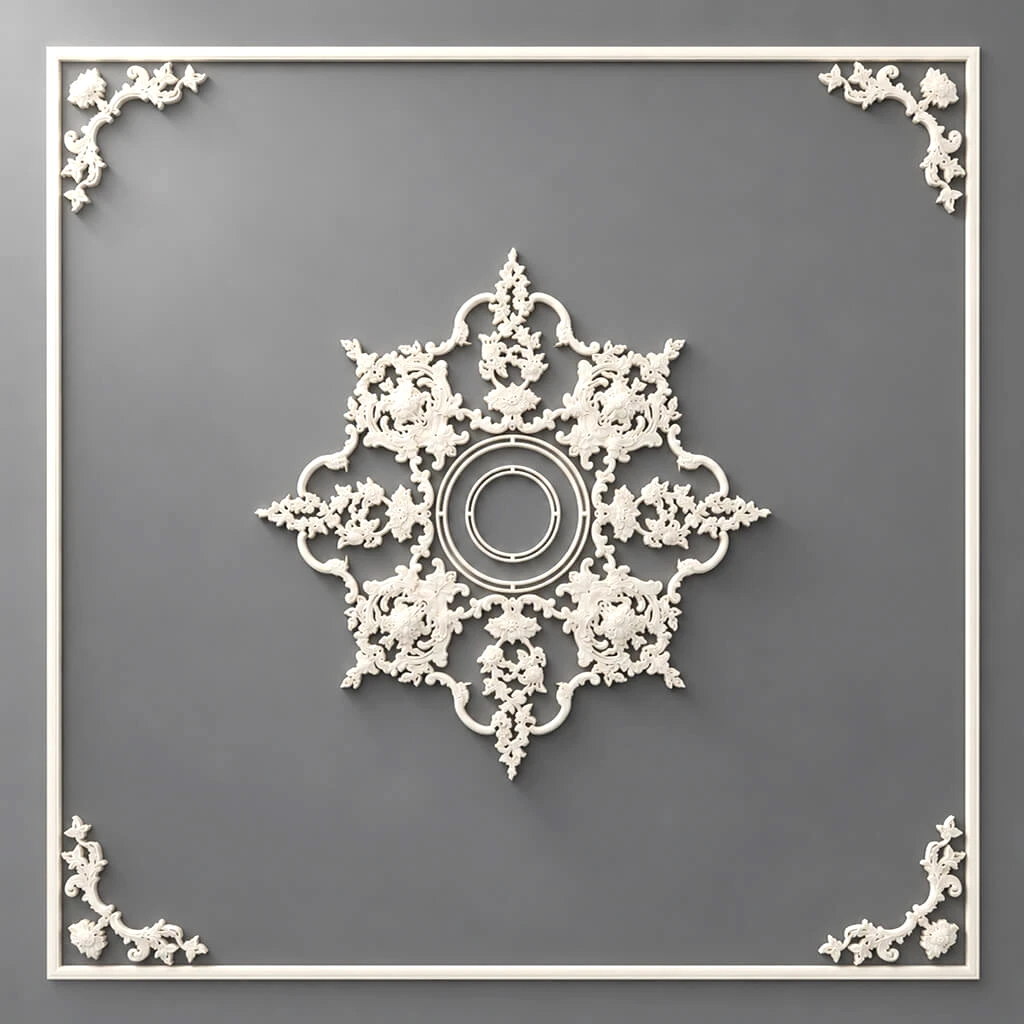
Corner Ornament and Ceiling Medallions
Wall corner ornament can be coordinated with polyurethane ceiling medallions by matching the level of detail rather than copying motifs literally.
A very ornate ceiling medallion with completely plain walls may feel disconnected. Conversely, highly ornamented wall frames with no ceiling hierarchy can make the room feel visually bottom-heavy.
Corner Ornament and Corbels
Decorative corbels are larger three-dimensional forms, so they should remain higher in the hierarchy than small molding corners.
If the room uses polyurethane corbels, choose corner ornament that supports rather than competes with them.
Corner Ornament and Crown Molding
A room can use ornate wall-frame corners and restrained crown, or vice versa.
Do not assume every decorative system needs ornament at the ceiling, wall frames, doors, mirrors, and furniture simultaneously.
Planning Left/Right Orientation on a Large Project
For multiple rooms, create a corner schedule before ordering.
Label each frame on the elevation: A, B, C, and so on. For every frame, record the required left/right corner counts and the linear molding SKU.
This prevents the common mistake of ordering four identical directional pieces for a frame that actually requires mirror pairs.
Receiving and Inspection
When corner elements arrive, inspect them before installation.
Check:
- SKU;
- left/right orientation;
- material;
- dimensions;
- surface damage;
- ornament quality;
- fit against a sample of the specified molding.
Do not wait until the installer is on the wall to discover that the corner belongs to another series.
Mockup Before Full Installation
Build one complete sample corner or one full frame before installing the entire room.
The mockup should include:
- actual molding;
- actual corner element;
- actual adhesive;
- joint filler;
- primer;
- final paint color and sheen.
View it under the real lighting. This is the fastest way to judge whether the corner ornament is too large, too ornate, or exactly right.
Installation Tolerances
Decorative corner pieces can hide tiny visual transitions, but they should not be used to disguise serious layout errors.
If the frame is out of square, one corner element may appear rotated relative to another. If the molding lengths are inconsistent, the ornament will not correct the geometry.
Square the frame first; decorate it second.
Paint-Grade Integration
The best paint-grade result occurs when the wall, linear molding, corner elements, and joint repairs all receive a coherent finish system.
Different substrates may absorb primer or paint differently, so repaired areas should be prepared according to the coating system rather than covered with heavy paint.
Using Metallic Accents
If metallic paint is part of the design, apply it as a highlight rather than a substitute for good relief.
A small touch of bronze or gold on the raised leaves can reveal the ornament. Fully metallic corner blocks on every frame create a much stronger decorative statement.
Maintenance and Repair
Most painted corner elements require only gentle dusting and cleaning appropriate to the paint finish.
If a small chip occurs, repair may be possible with compatible filler and touch-up paint. If a directional corner piece is badly damaged, replacing the exact L or R component may produce a cleaner result.
Document the SKU for Future Repairs
Keep a record of the corner product code and matching molding series. If possible, retain one spare left and right component on large residential or commercial projects.
This is inexpensive insurance against future damage or remodeling.
Commercial Interiors
Hotels, restaurants, boutiques, and showrooms can use decorative corner molding to create a high-design effect from repeatable components.
Commercial projects should also consider cleaning, impact exposure, replacement stock, fire documentation where required, and installer consistency across repeated rooms.
When Not to Use Decorative Corner Molding
Skip corner ornament when:
- the wall is already visually busy;
- the frame is too small;
- the style is strongly minimalist;
- the profile has no compatible corner system;
- the ornament interferes with furniture or hardware;
- the main goal is impact protection rather than decoration;
- the room has too many competing focal points.
Specification Checklist
Before ordering, confirm all of the following:
- exact molding SKU;
- exact corner SKU;
- material;
- left/right orientation;
- compatibility;
- corner element dimensions;
- relief depth;
- frame dimensions;
- number of frames;
- quantity by orientation;
- adhesive system;
- joint finishing method;
- primer and paint system;
- spare pieces for future repair.
Frequently Asked Questions
What is decorative corner molding?
It is a decorative trim or ornament used to resolve or emphasize corners in wall frames, furniture, doors, room trim, or other architectural compositions.
Do I need corner blocks for wall molding?
No. Most wall frames can be built with mitered corners. Corner blocks or overlays are optional design elements unless the specific molding system requires them.
What is the difference between a corner block and a corner overlay?
A corner block often acts as a receiving component for straight trim. A corner overlay is primarily decorative and may sit over or at the corner of an existing frame.
Can I use decorative corner molding instead of a 45-degree miter?
Only when the product system is designed for that installation method. Some corner elements replace miters; others are overlays.
What is decorative inside corner molding?
The term can refer to molding used at a true inside room corner or to a decorative corner element within a flat wall frame. Verify the product application.
What is outside corner molding?
It is trim used at a projecting corner. In search results, the phrase can refer to decorative architecture or protective construction trim, so product intent must be checked.
Can polyurethane corner molding be painted?
Yes, when the paint system is compatible with the specific product and primer.
Can I use any polyurethane corner with any polyurethane molding?
No. Profile dimensions, ornament, projection, and series compatibility matter.
What does L or R mean in a corner product code?
It normally identifies left or right orientation. Directional decorative pieces may be mirror images and are not visually interchangeable.
How many corner pieces do I need for one rectangular frame?
A four-corner frame needs four corner positions, but the mix of left/right pieces depends on the exact system.
Can I use corner ornament on furniture?
Yes. Check scale, projection, adhesive compatibility, handle clearance, and door movement.
Can corner molding be used around mirrors?
Yes. It can turn the mirror area into an architectural panel when the ornament is proportional to the frame.
Can I use ornate corner molding in a modern interior?
Yes, but use it selectively and usually in a monochromatic finish so the relief reads as architecture rather than applied decoration.
What is the best corner molding for Neoclassical interiors?
A restrained profile with controlled botanical or geometric ornament, coordinated with the linear molding and painted in the same wall color.
What is the best corner molding for classical interiors?
Larger and more sculptural corner elements can work when the room scale, molding profile, and other ornament support them.
What are crown molding corner blocks?
They are purpose-made components for resolving the wall-ceiling corner within a crown molding system. They are different from flat wall-frame corner overlays.
Does STAVROS have polyurethane corner elements?
Yes. The Molding Decor category includes verified polyurethane corner and molding-decor products, including left/right elements for specific molding series.
How do I know if a corner element fits MLDPU-002?
Check the product compatibility statement. For example, MLDPU-2U-2.1L and MLDPU-2U-2.1R are designed for the 002 system.
Should I install corner pieces before the molding?
Only if the product system is designed that way. Connector blocks and overlays can use different sequences. Follow the exact product instructions.
How do I make corner joints disappear after painting?
Start with correct geometry and compatible parts, then use appropriate joint filler or paintable sealant for small gaps, prime repaired areas if required, and apply consistent finish coats.
Final Design Principle: Treat the Corner as a Node, Not a Problem
The best corner treatment is not the one that hides the most mistakes. It is the one that belongs to the architecture.
Sometimes that means a clean miter. Sometimes it means a simple corner block. Sometimes it means a large polyurethane corner ornament that becomes the most expressive part of the frame.
The decision begins with geometry. Is this a flat wall frame or a true room corner? Is it inside or outside? Does the trim turn onto another plane? Does the product series have a matched corner component? Is the ornament directional? Is the element proportional to the frame?
Only after those questions are answered should you choose the decorative language.
For STAVROS projects, use polyurethane corner molding and molding-decor products when the exact series compatibility is confirmed. Use polyurethane wall molding for the linear frame, and add polyurethane decorative elements when the composition needs central or secondary ornament.
A well-designed corner does more than connect two lines. It explains how those lines belong together. That is what separates decorative trim from architectural composition.