Article Contents:
- Wooden connecting rosette: not just decor, but a joint node
- What does "connecting rosette" mean in architectural decor
- Where to use RS connecting rosettes
- Pilasters and Columns
- Decorative beams and ceiling structures
- Door and window portals
- Fireplace surrounds and wooden panels
- Furniture facades with architectural motifs
- How a connecting rosette differs from furniture, ceiling, and wall rosettes
- How to close the joint of a pilaster, column, or beam
- Joint of a pilaster with a wall or beam
- Transition of a column into a beam
- Beam intersection node
- How to choose the size of a connecting rosette
- Material: oak or beech for a connecting rosette
- Oak
- Oak
- How to combine RS rosettes with STAVROS pilasters and columns
- RS models: when to choose RS-001, RS-002, RS-003, or RS-004
- RS-001: universal starting size
- RS-002: medium scale for enhanced composition
- RS-003: expressive element for representative spaces
- RS-004: maximum scale for architectural structures
- Installation of a junction box: from marking to finishing coating
- Preparation and Marking
- Surface Preparation
- Applying adhesive
- Additional fixation
- Finishing
- Mistakes when choosing a junction box
- Wooden junction box in different interior styles
- Classic and neoclassic
- Renaissance and Empire style
- Provencal style and shabby chic
- English style and cabinet interior
- How to choose a set: from the socket to the decor system
- Where to buy a STAVROS wooden junction box
- FAQ: Answers to Popular Questions
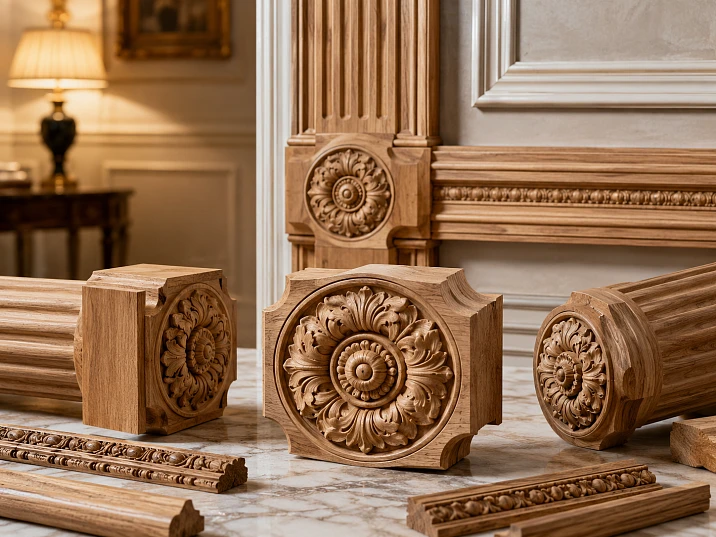
Before you continue reading — let's agree on one important point. When the search bar shows a query for "connector socket," the first few pages of results are filled with RJ-45 connectors, optical couplers, and pneumatic fittings. Our topic is a completely different world. Here we are talking about a wooden connector socket — a carved architectural element that connects pilasters, columns, beams, and portals into a single cohesive composition. It is decor, structure, and artistic statement all at once.
An interior without properly designed joints is like text with unclosed parentheses. Formally, everything is there, but it's impossible to read. It is the wooden connector socket that closes this parenthesis, turning a set of architectural elements into a coherent story.
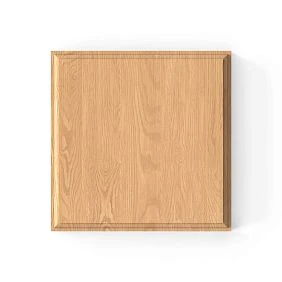
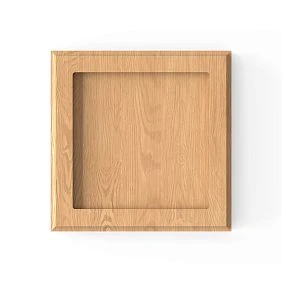
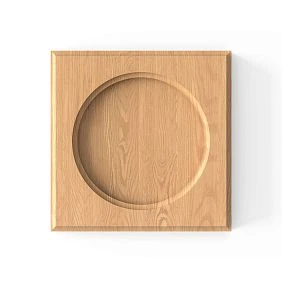
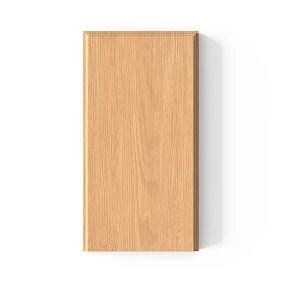
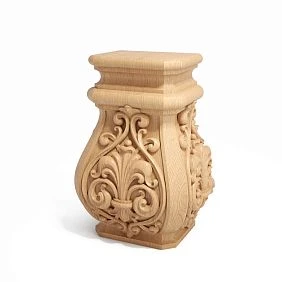
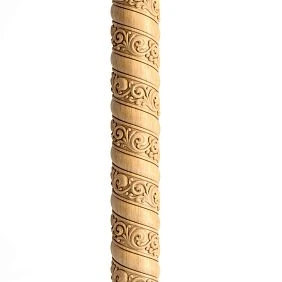
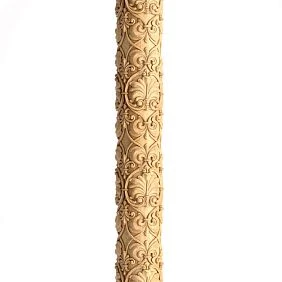
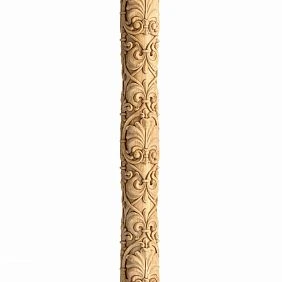
Wooden connector socket: not just decor, but a joint node
What distinguishes a connector socket from an ordinary decorative one? The question is not rhetorical — the correct choice depends on the answer.
An ordinary decorative socket works as an independent accent. It is hung on a wall, mounted on a ceiling under a chandelier, placed on a furniture facade as a central medallion. It speaks for itself — like a brooch on a strict dress.
Connecting Rosette solves a fundamentally different task. It appears where two or more architectural elements meet and need a visual "lock." A pilaster ends — and the socket marks this finale. A column transitions into a beam — and the socket makes this transition legitimate, beautiful, intentional. A portal requires a corner point — the socket creates it.
In other words, connector socket for pilasters — This is an element with a specific architectural purpose. It does not decorate arbitrarily. It works at a point where, without it, there is a feeling of incompleteness, randomness, or failure in the composition.
The RS series from STAVROS (RS-001, RS-002, RS-003, RS-004) is created specifically for these tasks. These are not renamed ceiling medallions or furniture accents moved to another category. These are specialized products for architectural joint design.




What does "connecting rosette" mean in architectural decor
Allow me to delve a little deeper into the term — because confusion arises here constantly.
In classical architecture, the junctions of vertical and horizontal load-bearing elements were always decorated in a special way. The node is a point of maximum structural and visual tension. It is here that forces intersect, here that form is "born." Architects of antiquity and the Renaissance understood: this moment cannot be left empty. It must be designed — meaningfully, expressively, with ornamental precision.
A wooden connecting rosette is the heir to this tradition. It arrives where an accent is needed and solves the problem elegantly: it covers the technical joint, hides possible fitting imperfections, and marks the "corner" or "node" in the architectural composition.
This is fundamentally important for those seeking an answer to the question "what is a connecting rosette?" in relation to wooden decor: it is not just a round ornament, but a functional decorative element with a clear constructive meaning.
Our factory also produces:
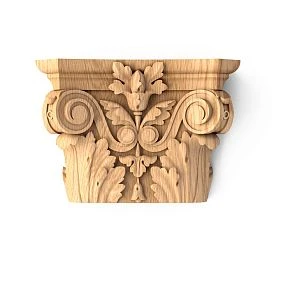
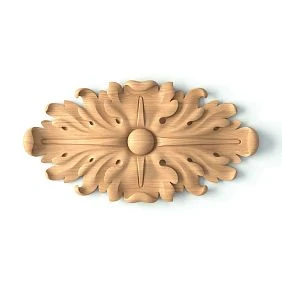
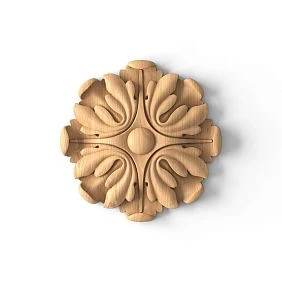
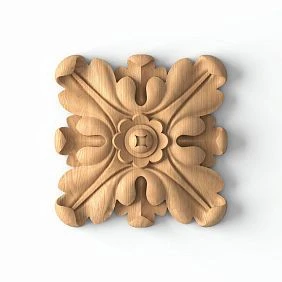
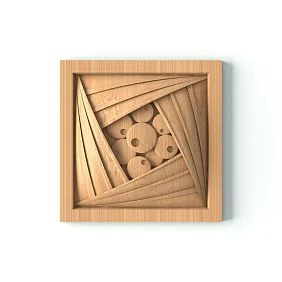
Where to use RS connecting rosettes
The range of applications is wider than it seems at first glance. Let's break down the main scenarios — each with specific practical logic.
Get Consultation
Pilasters and columns
This is the main, basic scenario. Buy wooden pilaster — This is one solution. But a pilaster as a separate element always requires completion. Where it connects with the capital on top, with the base at the bottom, or with an adjacent element horizontally, a joint occurs. And this joint needs decorative finishing.
The connecting rosette RS here acts as a "node overlay": it masks the transition point and simultaneously makes it artistically significant. A client looking at the finished composition does not see the joint as a technical detail — they see a completed ornamental motif.
Decorative beams and ceiling structures
Wooden beams in interiors are a stable trend that has not lost its position for over a decade. But beams rarely stand alone: they intersect, adjoin walls, converge at nodes. It is at these nodes connecting rosette for beams performs its function — gives the intersection completeness and visual weight.
Door and window portals
Wooden portals are a complex architectural structure where vertical posts and a horizontal lintel meet. The corner nodes of the portal are a classic place for a rosette. It is here that a "corner lock" is traditionally placed — a carved element that connects the post and lintel and decorates this transition.
Fireplace surrounds and wooden panels
A fireplace in a classic interior is a portal in the full sense of the word. Its posts, shelves, pilasters converge at points that require a decorative accent. The connecting rosette in this context is an element that "assembles" the entire structure into one and gives it hierarchy.
Wooden wall panels with vertical and horizontal framing also use corner rosettes as assembly points for the ornamental grid.
Furniture fronts with architectural motifs
Classic-style cabinets, libraries, sideboards, and benches often feature portal decor elements. In these pieces, the connecting rosette works the same way as in interiors: it covers corner joints and creates nodal accents.
How a connecting rosette differs from furniture, ceiling, and wall rosettes
To avoid confusion among the variety of decorative wooden rosettes — let's categorize types by purpose. This is not an academic classification but a practical guide.
| Rosette type | Where it is used | Key function |
|---|---|---|
| Furniture | Cabinets, doors, and panel fronts | Decorative accent without a structural purpose |
| Ceiling | Ceiling center for chandelier | Wiring concealment, visual center |
| Wall | Panel, decorative compositions | Ornamental point in the wall plane |
| Connecting | Joints of pilasters, columns, beams, portals | Design of the connection node of two elements |
See the difference? Wooden rosette R-084 — is a beautiful decorative medallion that lives in the plane. The connecting rosette RS is an element that has construction partners: it does not exist in isolation from a pilaster, column, or beam.
That is why it is incorrect to replace one with the other. Buying a ceiling rosette and trying to use it as a connecting one means getting a visual absurdity: an element without constructive meaning in a place where constructive meaning is necessary.
How to close the joint of a pilaster, column, or beam
This is a practical question asked by designers and builders at the finishing stage. Let's examine typical situations.
Joint of a pilaster with a wall or beam
A pilaster is a vertical architectural element that adjoins a wall. Where it connects with a horizontal element — a beam, frieze, or cornice — an angular joint occurs. Without decoration, this place looks unfinished: the profiles do not match perfectly, and the ends are in different planes.
How to design the joint of a pilaster in this case? A connecting rosette made of wood is placed over the corner node and covers it. It takes on the role of a visual "lock" that holds the entire vertical-horizontal structure together.
Transition of a column into a beam
A classic scenario for rooms with wooden support columns. Where a cylindrical or square column transitions into a horizontal beam, the joint is an architecturally responsible place. A decorative connecting rosette for columns here acts as a "capital in reverse" — it does not complete the column from below or above, but marks the connection point in the middle of the structure.
Intersection node of beams
Two wooden elements intersect at a right angle — a classic ceiling node. The intersection point often looks rough: ends, glue, fasteners. Connecting rosette made of solid oak or beech mounted on top of the node, turning a technical solution into an architectural accent.
Key rule: the rosette is chosen not "for the ceiling" or "for the wall," but for the specific element it works with. The width of the pilaster, the cross-section of the beam, the scale of the column — all of this determines the required size and depth of the rosette's relief.
How to choose the size of a connecting rosette
Size is the first and most important selection parameter. A mistake here is costly: the rosette either gets lost in the scale of the structure or overwhelms it with its mass.
Basic guideline: the rosette at the junction should be comparable in width to the element it decorates. If the pilaster is 100–120 mm wide, a 105×105 mm rosette (like RS-001) will be an organic solution. For wider pilasters or massive beams, larger rosettes are needed.
Principles for selecting size:
-
Width of the element — the rosette should not be noticeably narrower or wider than the "host" of the joint.
-
Room height and composition scale — in high formal halls, small rosettes get lost; in small rooms, large ones look heavy.
-
Depth of relief — the richer the surrounding decor, the more expressive the carving should be. If moldings and pilasters have high relief, a rosette with a flat ornament will look like a random element.
-
Symmetry — if there are multiple sockets (portal corners, beam nodes), they must be strictly the same size.
-
Distance to adjacent elements — the socket must not overlap the molding profile or encroach on the thread of the adjacent pilaster.
Before ordering, professional designers perform a dry layout — they arrange elements at actual scale without glue to check proportions. This prevents costly mistakes.
Material: oak or beech for the connecting socket
Both materials — oak and beech — are available in the STAVROS RS series. The choice between them depends not on personal taste, but on specific usage conditions and final finish.
Oak
Oak is a dense, porous wood with a pronounced natural texture. This texture is its main advantage and the key reason for choosing it. If the socket is intended for tinting, oil, wax, or another semi-transparent coating, oak reveals itself fully. The grain pattern, the play of light and shadow on the relief carving, the warm amber tone under oil — all of this makes an oak socket a living, organic element of the interior.
Oak is suitable for:
-
interiors in classic, English, Empire, Biedermeier styles;
-
spaces with tinted or oil finishes;
-
projects where a pronounced natural wood texture is important;
-
combinations with solid wood pilasters of the same species.
Beech
Beech is a dense, non-porous wood with a more uniform and smooth surface. This feature makes it an ideal choice for enamel and opaque coatings. Under white or colored enamel, beech provides an even, "clean" surface without visual texture noise.
Beech is suitable for:
-
Provence, shabby chic, neoclassical interiors with white, cream, gray paint;
-
projects where rosettes are lacquered or painted to match the walls;
-
combinations with wooden pilasters in light finishes.
It is also important to consider the gluing option: STAVROS offers two options — "for enamel" (without matching lamellas by texture, for opaque coating) and "for tinting" (with matching lamellas, for transparent coating). This affects the final appearance of the product and must be agreed upon before placing an order.
How to combine RS sockets with STAVROS pilasters and columns
A single socket is a detail. A system of coordinated elements is architecture. That is why STAVROS builds its catalog around the principle of compatibility: RS series sockets were designed in conjunction with pilasters and columns from the same catalog.
What does it mean to "combine" correctly?
Unity of ornamental language. If carved pilaster features a plant ornament with an acanthus leaf — the socket at the same point must be consistent with the same iconography. A geometric socket next to floral carving creates a stylistic break.
Material consistency. Oak pilaster — oak socket. Beech pilaster for enamel — beech socket for enamel. This is a basic rule that is surprisingly often violated — resulting in a "mixed" look.
Width consistency. The socket should "hold" the width of the pilaster, not exceed its dimensions. If the pilaster is 100 mm wide — a 105×105 mm socket maintains this width. A wider socket "breaks" the vertical line of the pilaster.
Logic of the compositional sequence. If there are four pilasters in the interior — the same socket should be placed at each corner joint. Mixing RS-001 in some nodes and RS-003 in others is only acceptable with a very deliberate stylistic decision. In most cases, it looks like a configuration error.
RS models: when to choose RS-001, RS-002, RS-003, or RS-004
Four models — four characters. Let's analyze each in terms of scale and purpose.
RS-001: universal starting size
Connector Rosette RS-001 has dimensions of 105×105×24 mm. It is a compact, "targeted" element for pilasters about 100 mm wide — the most popular size in residential interiors. RS-001 works well in small and medium spaces: living rooms, bedrooms, studies, libraries. The 24 mm depth provides enough relief for clear reading of the ornament even with side lighting.
If you are assembling an architectural composition with pilasters for the first time and looking for a starting point — RS-001 is a logical choice for a standard residential project.
RS-002: medium scale for enhanced composition
Connecting Rosette RS-002 is suitable for pilasters and posts of medium cross-section — when the width of the structural element requires a larger decorative accent. RS-002 is appropriate in dining rooms, meeting rooms, and in the design of door portals with wide framing. It "holds" the space more convincingly than RS-001, but does not overload the average interior.
RS-003: expressive element for representative spaces
Connecting rosette RS-003 — a choice for formal areas: halls, living rooms with high ceilings, executive offices, representative reception areas. When architectural decoration is meant to convey status and scale, RS-003 provides the necessary visual weight.
RS-004: maximum scale for architectural structures
Connecting socket RS-004 — this is a solution for large wooden structures: massive columns, decorative beams of large cross-section, full-height portals. The STAVROS description directly indicates its use for connecting wooden pilasters, columns, and beams. RS-004 is an element that does not get lost in the scale of a large space and does not fade next to the rich carving of adjacent details.
If your project involves wooden columns with a diameter of 150 mm or more, or beams with a cross-section of 140 mm or more — RS-004 is your tool.
Installation of a connecting rosette: from marking to final coating
Installing a wooden connecting rosette is a simple operation, but requires precision. A mistake here is costly: it's nearly impossible to reglue a carved element without loss.
Preparation and marking
Start with a dry layout. Place the rosette in the intended position without glue. Check symmetry relative to the axes of the pilaster or beam. Use a level and a marking pencil. Ensure the rosette's profile does not overlap important lines of adjacent elements.
Surface preparation
The surface under the rosette must be dry, clean, free of dust and grease stains. If the base is wood, sand it at the installation site for better glue adhesion. If the base is plaster or MDF, ensure its strength: the rosette should not tear off the base layer under load.
Applying adhesive
STAVROS recommends the following technique: apply glue (construction or woodworking PVA depending on the base) to the back of the rosette. Press it against the surface briefly. Then remove it from the surface and leave it open for 3–5 minutes — this allows the glue to 'grab' oxygen and achieve the desired viscosity. After that, firmly press the rosette to the base and hold for 5–10 seconds.
Additional fixation
For large rosettes (RS-003, RS-004) or when mounting on vertical surfaces, additional fixation with thin finishing nails or painter's tape is recommended until the glue is fully dry.
Final finishing
Before painting or tinting, dust the surface, apply a primer in an even layer, let it dry, and matte it (light sanding for adhesion). The final coating — varnish or enamel — is applied in two layers with interlayer drying. The steps are detailed in the STAVROS tips section. Properly executed finishing ensures the rosette lasts for decades without needing replacement or restoration.
Mistakes when choosing a connecting rosette
This section saves money and nerves. Let's break down typical mistakes — those that occur regularly even among experienced craftsmen.
Mistake 1: Ceiling rosette instead of a connecting one. A ceiling rosette is a flat decorative element without constructive meaning. Installing it in a pilaster node will not provide the desired architectural effect: it looks randomly glued on rather than working within the system.
Error 2: The size of the pilaster was not checked before ordering. The most common mistake. The rosette was bought based on a picture, without measuring the actual element. The result is a mismatch in proportions and a re-order.
Error 3: Mixing different carving styles. Baroque curls next to geometric classical carving is eclecticism that needs to be controlled. In most residential projects, mixing styles within one compositional zone is a mistake.
Error 4: Incorrect thickness. A rosette that is too thin gets lost on a textured surface; one that is too thick creates an unsightly "growth." The depth of the relief should be coordinated with the overall richness of the decor.
Error 5: Ignoring the final finish when ordering. The grade of veneer ("for enamel" or "for tinting") is chosen before ordering. If you plan to tint the product but ordered veneer "for enamel," you will get contrasting tonal spots that cannot be hidden with a translucent coating.
Error 6: A rosette without a system. A rosette on one joint and nothing on the others is worse than having no rosette at all. Either decorate all similar nodes, or rethink the entire composition.
Error 7: Confusion due to irrelevant search results. Search for "connector rosette price" and you end up on electrical outlets. This is a semantic trap. Refine your query: "wooden connector rosette" or go directly to the STAVROS catalog — there are no unrelated categories there.
Wooden connector rosette in different interior styles
Let's look at how RS rosettes work in specific style contexts — this helps with decision-making at the design stage.
Classicism and neoclassicism
Here, the connector rosette is a mandatory element. Without it, pilasters and columns look "underdressed." Carved ornamentation in the spirit of acanthus leaves, meanders, or rosettes creates the desired historical tone. The material is oak for tinting or beech for white enamel, depending on the color concept.
Renaissance and Empire
The scale is enlarging, the relief becomes richer. RS-003 or RS-004 in these styles are the right choice. Massive columns, high ceilings, rich carvings — here you need an element with weight and expressiveness.
Provencal style and shabby chic
In these directions, the wooden rosette is coated with white or cream enamel, often with light traces of patina. Beech "under enamel" is an ideal base. RS-001 or RS-002 in the white framing of the door portal is an elegant and light solution.
English style and study interior
Oak, tinting, dark tones, rich texture. Here Carved Decor STAVROS reveals itself especially organically: rosettes, pilasters, moldings in a single ensemble create the atmosphere of a library or hunting hall.
How to choose a set: from rosette to decor system
Professional architectural decor is always a system. Solid wood products STAVROS organized so that they can be composed into coordinated ensembles.
The basic set for designing a pilaster composition includes:
-
Buy wooden pilaster — vertical element;
-
Connecting rosette RS (RS-001, RS-002, RS-003 or RS-004) — nodal accent;
-
Capital — top finish of the pilaster;
-
Base — bottom finish of the pilaster;
-
Molding — horizontal framing element.
Each of these elements in the STAVROS catalog is consistent in style and proportions. This eliminates the situation where "one element is good, but the rest are chosen at random."
For those working with wooden panels:
-
STAVROS carved decor includes corner elements, overlays, cornices and friezes — everything needed to assemble a panel composition with proper accents at nodal points.
Where to buy STAVROS wooden connecting rosette
We come to the main question — how and where to place an order.
Buy wooden socket from STAVROS means getting a product made of natural oak or beech of Russian production with a quality guarantee. STAVROS has been operating since 2002, has completed projects for the Hermitage, the Konstantinovsky Palace, the Alexander Palace and other cultural heritage sites. This is not a marketing fact — it is a benchmark of precision and the level of detail of each product.
Buy wooden socket can be done directly through the website stavros.ru — with Contact us to confirm shipping to your destination. via CDEK and DPD. Showrooms operate in St. Petersburg and Moscow. Orders are accepted from 1 piece, which is critically important for private projects and small volumes.
Prices and availability on the website are updated daily. Items in stock are shipped within 3 business days. Custom manufacturing — 5–10 business days. If non-standard sizes are needed, this is discussed subject to the batch size.
Buy decorative wooden socket for a connecting task — choose the RS series: RS-001, RS-002, RS-003 or RS-004 depending on the project scale and parameters of structural elements.
If you are in St. Petersburg or Moscow — visit the STAVROS showroom in person. There you will see the products in real life, verify the quality of carving and precision of proportions, and a manager will help you select a set for your specific project.
FAQ: Answers to popular questions
What is a wooden connecting socket and what is it used for?
This is a carved decorative element that is mounted at the junction of two or more wooden architectural elements — pilasters, columns, beams, portal posts. It simultaneously covers the technical joint and makes it artistically significant. Unlike ordinary decorative rosettes, the connecting rosette has a specific structural purpose.
How is the RS connecting rosette different from a ceiling rosette?
A ceiling rosette is a decorative medallion for the center of the ceiling, usually under a chandelier. The RS connecting rosette is a nodal element for the joint of pilasters, columns, or beams. Different tasks, different proportions, different meaning in the interior.
How do I know what size rosette I need?
Measure the width of the pilaster or the cross-section of the beam at the node where the rosette will be placed. The rosette should be comparable in width to this element. RS-001 (105×105 mm) is suitable for pilasters about 100 mm wide. For wider elements — RS-002, RS-003, or RS-004.
What is better: oak or beech?
Oak — for tinting, oil, and translucent coating with pronounced texture. Beech — for enamel and opaque painting with a smooth surface. The choice is determined by the final finish of the entire composition.
Can a connecting rosette be used on furniture?
Yes, if the furniture has elements of architectural decor — portals, pilasters, columns. In this case, the connecting rosette works in the same nodes as in the interior.
How to properly install a connecting rosette?
Dry layout → marking → applying glue → open exposure for 3–5 minutes → firm fixation for 5–10 seconds → additional fixation if necessary until dry → sanding joints → primer → matting → final coating in two layers.
How long to wait for an order from STAVROS?
In-stock items are shipped within 3 business days after placing an order. Custom manufacturing takes 5–10 business days. Contact us to confirm shipping to your destination. via CDEK and DPD.
Can I order a custom size?
Yes, STAVROS accepts custom orders for bulk quantities. Details are clarified with a manager by phone at 8 (800) 55-46-75 or by email [email protected].
Where in Moscow and St. Petersburg can I see STAVROS sockets in person?
In STAVROS showrooms in both cities. Addresses and opening hours are on the contacts page of the stavros.ru website.
Can I order a socket together with pilasters and moldings as a set?
Yes. STAVROS offers all architectural decor elements from a single catalog, ensuring compatibility in style, material, and proportions. A manager will help you select a coordinated set for your project.
A connecting socket is a small element with great architectural meaning. It is these details that turn a set of materials into an interior, and an interior into a space with character. Choose your model in the STAVROS connecting sockets section and complete your architectural story with dignity.