











































































Article Contents:
- Why polyurethane stucco decor works particularly well in new buildings
- What tasks does stucco decor solve in a new apartment
- Decorates empty walls
- Creates an accent area
- Helps zone a kitchen-living room
- Visually elongates walls and partitions
- Adds style to the interior without complex finishing
- What to choose for a new building: moldings, overlays, or a ready-made kit
- Moldings — if you need a custom layout
- Decorative overlays — if you need an accent and ornament
- Ready-made kits — if you want a complete solution
- Combination of elements — if the wall is non-standard
- Ready-made STAVROS collections for apartment renovation
- Neoclassic — for a calm architectural wall
- Neoclassic Light — for a light modern renovation
- Japandi — for minimalist light interiors
- Versailles Light — for a more classic and expressive solution
- Where to use stucco decor in a new building
- In the living room
- In the bedroom
- In the hallway and corridor
- In the kitchen-living room
- In the TV area
- On the wall with a mirror or console
- How to choose the size and composition for the wall
- Mistakes when choosing stucco decoration for a new building
- Too small decor on a large wall
- Too much ornament in a small room
- Incorrect frame height
- Mixing Incompatible Styles
- Buying individual elements without an overall scheme
- Polyurethane in a new building: technical facts
- Should you make stucco in only one room or throughout the entire apartment
- Color and light: how to reveal decor in a new building
- Why it's profitable to buy ready-made STAVROS wall decor
- Frequently asked questions
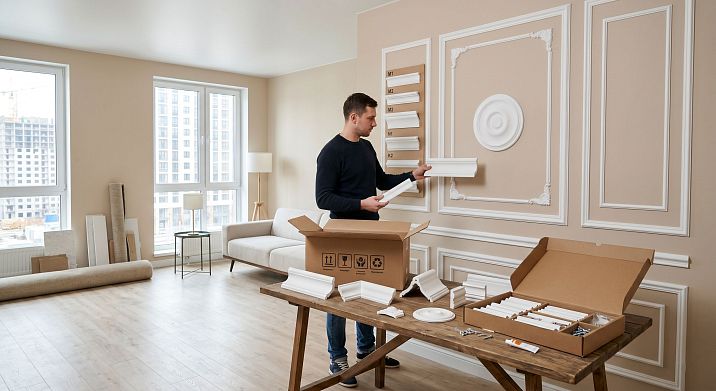
A new build is a blank slate. Fresh plaster, smooth walls without a single crack, high ceilings with good geometry. It would seem everything is perfect. But this very perfection becomes a trap: empty white walls, devoid of any architectural feature, turn the apartment into a box. An expensive, new one — but still a box. There are walls, but no interior.
This is where the conversation about stucco decor for walls in a new building. Polyurethane moldings, decorative overlays, and ready-made kits are tools that turn bare walls into architectural surfaces. Without demolition, without complex work, without plaster craftsmen. It's a fast, precise, and predictable solution for those who want an interior with character, not just painted walls.
Polyurethane wall decor has become a standard tool in modern renovations precisely because it meets the real conditions of a new build: the material is lightweight, mounted with glue, paintable in any color, can be installed on an already painted wall, and can be repainted again if needed. This is architectural decor for people who value results.


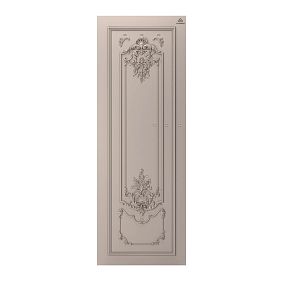
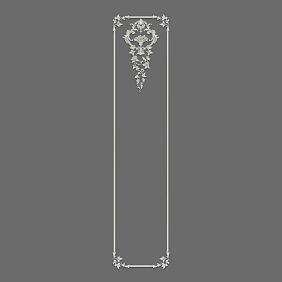
Why stucco decor made of polyurethane works especially well in a new build
The paradox of a new build is this: the smoother and cleaner the walls, the sharper the feeling of emptiness. In older housing stock, there are niches, arches, ceiling height variations, window slopes with thick profiles — all of this creates the architectural character of the space. In a new build, there is none of this. There is a geometrically precise white plane waiting for something to be done with it.
Stucco in modern apartment renovations solves this problem systematically. Moldings create horizontal and vertical divisions on the wall — frames, bands, vertical lines. Ready-made kits add ornamental accents. Decorative panels fill large areas with relief patterns. The result: the same apartment, the same square meters — but a completely different feel of the space.
Another feature of a new build: settlement. In the first two to three years after construction, the building actively settles, and the walls in new houses experience loads that can cause microcracks in the finish. Polyurethane decor in this context is an ideal material: it is flexible, does not crack with minor deformations of the base, is easy to repair and replace if necessary. Gypsum stucco in similar conditions will behave significantly worse.
Finally: time. Renovation in a new build is always a race. Decor for white walls in a new build made of polyurethane is installed in one to two days, painted together with the walls — no additional finishing stages.Buy stucco decor for walls in an apartment, install, paint — this is a realistic weekend project.




What problems does stucco decor solve in a new apartment
Our factory also produces:
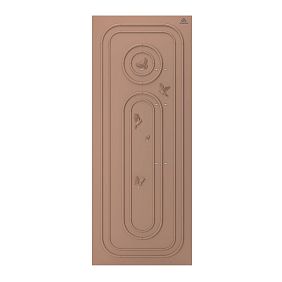
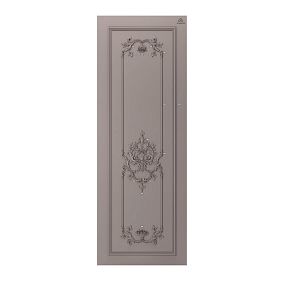
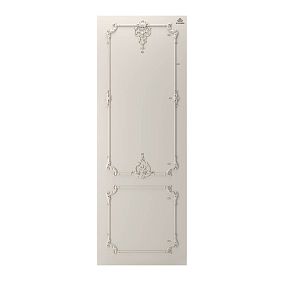
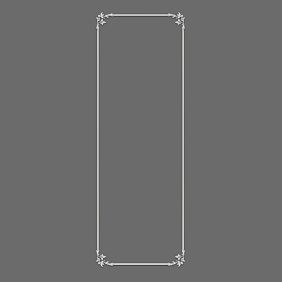
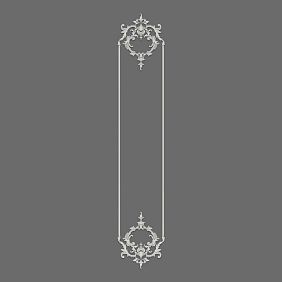
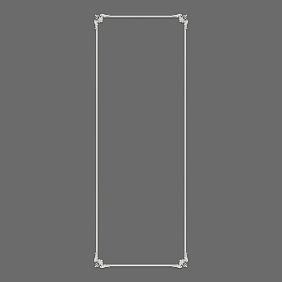
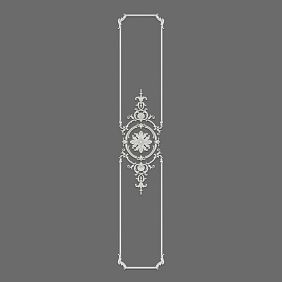
Decorates empty walls
An empty wall is the first and main challenge every new homeowner faces. How to decorate an empty wall in a new build? Molding frames, decorative panels, ready-made kits — each of these tools turns a bare surface into an architectural feature.
A frame made of moldings on the wall is the most accessible and most effective technique. One to three frames depending on the wall width, monochrome painting to match the background, a light relief in the light — and the wall ceases to be just a space divider. It becomes part of it.
A detailed analysis of this scenario is in the article about polyurethane decor for an empty wall.
Get Consultation
Creates an accent zone
An accent wall in a new build made of polyurethane is a quick way to create a visual focus in any room. Behind the sofa in the living room, at the head of the bed in the bedroom, behind the desk in the study — one wall with decor sets the tone for the entire space.
A molding system or a ready-made set behind the sofa creates an architectural backdrop that makes the living room feel complete. This works even in the most minimalist interiors: under monochrome paint, the decor adds volume and relief without disrupting the overall purity.
Helps zone a kitchen-living room
Open-plan layout is the standard in modern new builds. The kitchen and living room are combined, with zoning existing only visually. Wall decor with moldings is one of the most elegant ways to mark zone boundaries without physical partitions.
A molding system on the wall behind the dining table visually separates the dining area from the living room. Decor behind the sofa works similarly: the molding frame marks the relaxation zone, creating its own architectural context.
Visually elongates walls and piers
In new builds, low ceilings of 2.5–2.6 m are common. Vertical moldings and a vertical rhythm of frames create an optical illusion of height: the eye moves upward along the vertical lines, and the space is perceived as taller than it actually is.
Narrow piers between windows, doors, and built-in wardrobes are another characteristic of new builds. Verticalstucco decor for an apartmentin the pier turns an architecturally unnecessary plane into a deliberate design element.
Adds style to the interior without complex finishes
The strongest argument: polyurethane wall decor in an apartment makes the interior look more expensive without complex finishing work. No designer wallpaper with tricky installation, no tiles, no decorative plaster with its labor-intensive application. Just moldings, glue, and paint — and the wall looks like it's from a magazine.
What to choose for a new build: moldings, overlays, or a ready-made set
Moldings — if you need a custom layout
Wall moldings for a new build — this is the basic building material of any decorative system. Moldings are used to create frames of any size, horizontal bands, and vertical lines.
Moldings for a blank wall are the optimal choice when the wall is non-standard in width, when furniture is arranged asymmetrically, or when a system with a non-standard number of frames is needed. Working with moldings requires a scaled layout and careful 45° cuts for clean corner joints.
The profile width is selected based on ceiling height: up to 2.6 m — 12–20 mm, 2.6–2.9 m — 20–30 mm, from 3 m — 30–45 mm. A thinner molding on a high wall gets lost; too wide a molding with low ceilings creates a feeling of heaviness.
The installation technique is in the article abouthow to install polyurethane molding.
Decorative overlays — if you need an accent and ornament
decorative wall overlaysmade of polyurethane are ornamental elements that are installed at key points of the molding system: in the corners of frames, in the center of the panel, as vertical accents.
Overlays do not work on their own — they enhance the molding system, adding character to it. Floral corner overlays give the system a neoclassical code. Geometric square accents — a modern or Japandi character. Ornamental rosettes — a classic status.
Buy decorative wall elementsbetter in the same collection as the moldings: this ensures stylistic unity of the system.
Ready-made sets — if you want a complete solution
For most renovation situations in a new buildingready-made sets of stucco decor for the apartmentis the optimal choice. The set already includes moldings of the required length, corner overlays, and central ornamental elements. There is no need to count the number of slats, calculate angles, or check the compatibility of elements.
A ready-made set for a new building is a predictable result. All that is required: correctly choose the collection and the desired size. Even a person without experience in working with decor will get a professional result.
More about sets — in the article about ready-made wall molding decor sets.
Combination of elements — if the wall is non-standard
In some cases, neither a pure set nor pure moldings provide the optimal solution. A wall with a niche, a wall with an abnormally wide pier, a wall with asymmetrically placed sockets or sconces — all of these require a combined approach: a basic set as a foundation, additional moldings for non-standard areas.
Decor for moldings in the interior— crosses, T-connectors, corner inserts — helps build complex systems that do not fit into the standard frame scheme.
Ready-made STAVROS collections for apartment renovation
The difference between STAVROS and most polyurethane decor suppliers is the availability of developed stylistic collections. These are not just a set of moldings of different profiles. These are systems where elements are already coordinated with each other in style, scale, and proportions.
Neoclassic — for a calm architectural wall
Stucco decor in neoclassical style for an apartment— this is the «Neoclassic» collection. A molding with a pronounced classical profile, floral corner overlays with moderate relief, an ornamental central insert. This is a modern interpretation of the classic frame system — without historical overload, but with a clear architectural character.
«Neoclassic» works well in living rooms and halls of new buildings with ceilings from 2.7 m. The molding width of 30–38 mm sets a scale corresponding to this height. Monochrome painting in the color of the wall — cream, warm gray, deep blue — reveals the relief through the play of light.
This is a choice for those who want an interior with historical roots but live in a modern home.
Neoclassic Light — for easy modern renovation
Light neoclassical wall moldings — the Neoclassic Light collection. This is a lighter version of the classic system: a thinner molding profile of 16–24 mm, a delicate ornament without baroque richness, and a scale designed for standard ceilings of 2.5–2.8 m.
Neoclassic Light is the most versatile choice for a new building. It works in the living room, bedroom, hallway, and study. It fits organically into both a neutral modern interior and a more styled space with classic furniture.
It is with Neoclassic Light that it is recommended to start for those who are working with molding decor for the first time: the collection forgives small calculation errors and looks convincing even with compromise solutions.
Japandi — for minimalist light interiors
Wall decor in Japandi style in a new building — this is the answer to the request for 'decor without overload'. The Japandi collection is based on geometry: straight thin molding, square corner accents without floral elements, minimal ornament.
In interiors with wooden surfaces, natural textiles, and a neutral palette, Japandi decor creates exactly the architectural background that is needed: present but unobtrusive. This is stucco decor for a light interior in its most consistent execution.
"Japandi" works especially well in bedrooms and studies of new buildings, where an environment for relaxation or concentration is needed. No ornamental noise — only rhythm and form.
Versailles Light — for a more classic and expressive solution
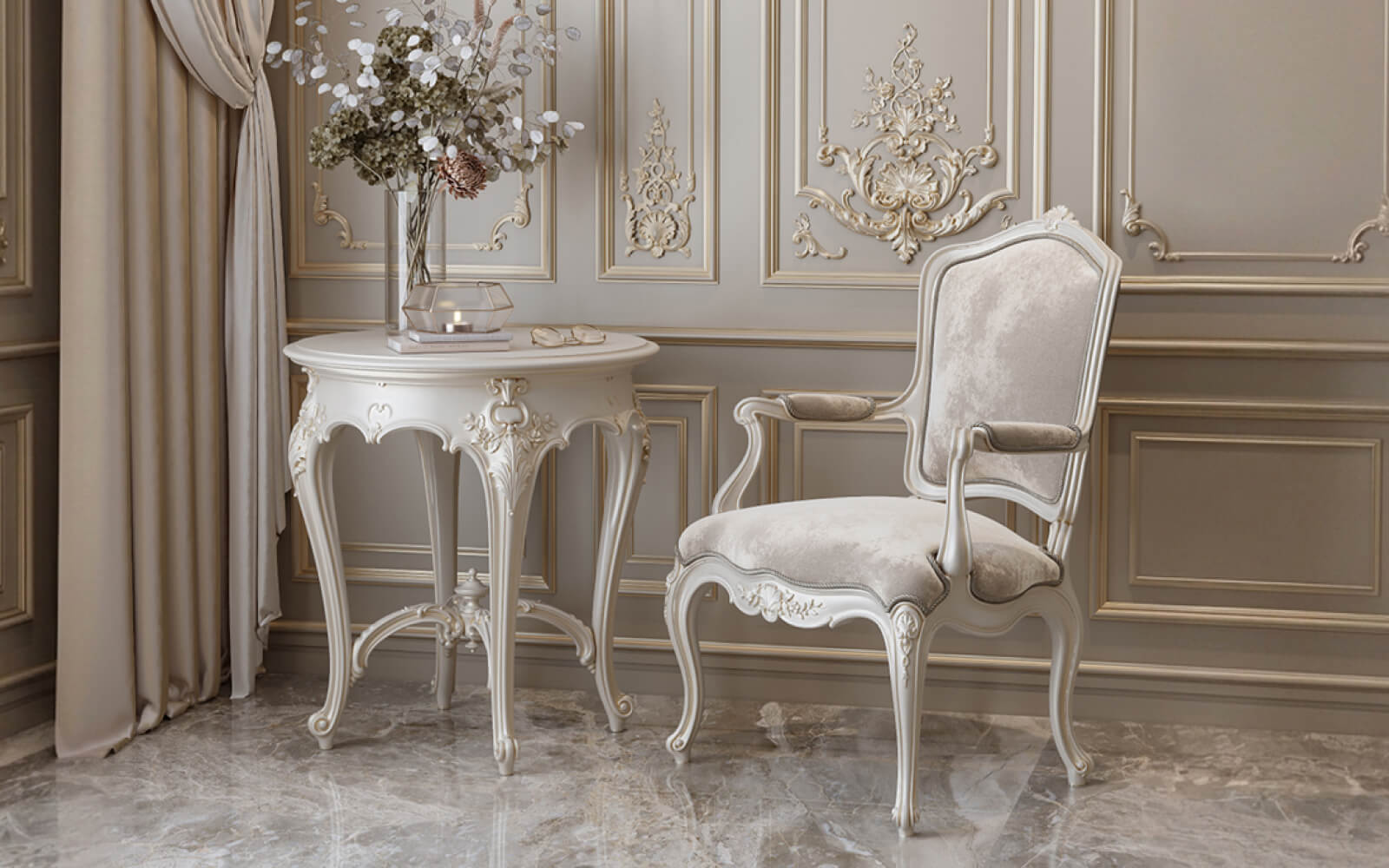
Classic wall decor in a new apartment — the "Versailles Light" collection. This is maximum expressiveness: rich floral relief, wide molding profile, corner overlays with high classic ornament.
"Versailles Light" in a new building is a bold statement. Suitable for apartments with ceilings of 2.8–3 m and higher, with classic or neoclassical furniture, with natural wood parquet and representative lighting. In a small apartment with a standard layout, "Versailles Light" requires caution: rich relief in a small area creates a feeling of crampedness.
Where to use stucco decor in a new building
In the living room
The living room is the main space of the apartment, and the walls play a key role here. The wall behind the sofa, the TV area, the wall with a painting or mirror — each of these surfaces seeks its own architectural solution.
Stucco decor for the living room in a new building is based on one principle: one dominant wall with decor. This is either the wall behind the sofa or the wall with the TV. Decorating both at the same time risks visual overload.
Behind the sofa — a molding system the width of the furniture. Behind the TV — molding frames on the sides of the screen with a horizontal frieze underneath. A detailed scenario is in the article aboutpolyurethane wall decor behind the sofaandTV zone decor.
In the bedroom
A bedroom requires delicate decor: it doesn't need ostentation, it needs peace. A molding set at the head of the bed in a monochrome finish is quiet luxury that makes the bedroom complete without visual strain.
Moldings for a bedroom in a new build — collections "Neoclassic Light" or "Japandi". Thin profile, soft ornament or pure geometry, monochrome. This format creates the right atmosphere for relaxation.
More about the bedroom — in the article about a molding set for the bedroom.
In the hallway and corridor
An entryway in a new build is usually a small narrow space that welcomes guests and creates a first impression. Molding decor here works around the mirror area: a frame around the mirror plus vertical moldings on the sides create an architectural scene from a utilitarian entryway.
Wall decor in a new build entryway made of polyurethane — also a series of frames along the long corridor wall. The rhythm of frames turns a monotonous corridor into a gallery. More details — in the material about wall decor in the entryway and corridor.
In the kitchen-living room
A kitchen-living room is a typical new build layout. Molding decor here solves the zoning problem: a decorated wall in the dining or living area visually separates it from the kitchen space.
Molding for a kitchen-living room in a new building — lightweight collections without excessive ornamentation. In the wet kitchen area, polyurethane is not afraid of moisture, which is a significant advantage over gypsum counterparts.
In the TV area
The TV zone is a separate decorative scenario that requires precise calculation. Molding frames on the sides of the TV create an architectural context for the screen. A horizontal molding frieze below the TV completes the system and visually grounds it.
Moldings for the TV zone in a new building should account for the equipment: TV, console, audio system. No frames directly behind the screen — only on the sides and below. Details in the article aboutdecorating the TV zone with polyurethane.
On a wall with a mirror or console
A mirror with a molding frame is one of the most powerful decorative techniques in an apartment. The mirror ceases to be just a functional item and becomes an architectural object. This works in the hallway, living room, bedroom, and study.
A console with a mirror and a molding frame around it is already a full-fledged decorative scene. Add vertical moldings on the sides — you get an architectural niche without physically recessing the wall.
How to choose the size and composition for the wall
Rule number one: the decor should be proportionate to the wall. Too small decor on a large wall is worse than none. It makes the space not finished, but modest.
Wall width and number of frames. Up to 1.5 m — one central frame. 1.5–2.5 m — one large or two symmetrical frames. 2.5–3.5 m — two to three frames. More than 3.5 m — three to five frames or a series of decorative panels.
Ceiling height and molding scale. 2.4–2.6 m — profile 12–20 mm, lightweight collections. 2.6–2.9 m — 22–32 mm, "Neoclassic Light" or "Neoclassic". 2.9–3.2 m — 30–45 mm, "Neoclassic" and "Versailles Light".
The composition center is not the center of the wall. It is the center of the key object: a sofa, bed, TV, or mirror. The vertical axis of the decor should pass through the center of this object.
Bottom and top margins. The bottom edge of the system is 20–30 cm from the top edge of the baseboard. The top edge is 15–25 cm from the ceiling or cornice. This gives the system "breathing room."
Balance of frame and field. The inner field of the frame is at least 30×40 cm. The fields between frames are 15–30 cm. A frame narrower than 30 cm inside looks like a decorative stamp, not an architectural element.
Symmetry is mandatory. For frame systems tied to furniture, symmetry is not an option. Even a slight shift in the center is perceived as an error.
Vertical elements. In narrow wall sections, use one to three vertical moldings with equal spacing. The spacing between moldings is 15–25 cm, depending on the width of the wall section.
Mistakes when choosing stucco decor for a new building
Experience shows that most mistakes are made not during installation, but at the selection stage. Here are the most common ones.
Too small decor on a large wall
One small frame 60×80 cm on a wall 3.5×2.7 m is not decor. It is a dot. Rule: the width of the decorative system should be at least 50–60% of the wall width. The height of the system should be at least 50% of the working wall height.
Too much ornament in a small room
"Versailles Light" in a 14 sq. m room with 2.5 m ceilings creates the feeling of a tightly packed box. Rich ornamentation requires scale. In small rooms — "Neoclassical Light" or "Japandi": delicate relief does not overwhelm.
Incorrect frame height
The center of the frame at a height of 120 cm from the floor is too low. The frame appears glued to the floor. The center at a height of 180–190 cm is too high, the decor "floats." The correct center height is 155–165 cm from the floor. This is the eye level of a standing person.
Mixing incompatible styles
Floral corner overlays from "Versailles Light" together with geometric moldings for "Japandi" is a conflict that cannot be resolved by painting. All system elements must be from the same collection or from stylistically compatible lines.
Purchasing individual elements without an overall scheme
This is the most expensive mistake: buying molding, overlays, and corner elements separately, without a preliminary scheme — and ultimately discovering that the elements do not match in scale or that there is not enough molding. A ready-made kit eliminates this scenario.
Technical nuances of installation — in materials about installing polyurethane moldingsandinstallation of polyurethane molding.
Polyurethane in a new building: technical facts
A new building is a specific construction environment, and materials for its finishing must match this. Why polyurethane is better suited here than alternatives — we will analyze based on specific parameters.
Weight. Polyurethane molding weighs 8–15 times less than a gypsum analog of the same profile. This means that for installation on plasterboard partitions (which are common in new buildings), no special fasteners are needed — glue is sufficient.
Flexibility. Polyurethane is an elastic material. With minor wall deformations (which are inevitable in a new building during the first 2–3 years due to shrinkage), the decor does not crack or peel. Gypsum cracks under similar conditions.
Moisture resistance. Polyurethane does not absorb moisture. This is critically important for kitchen areas, hallways, and bathrooms with open ventilation.Polyurethane products for apartment renovationwill last the entire service life of the finish without degradation.
Painting. Any acrylic interior paint adheres to polyurethane without special preparation (after priming). Repainting is possible an unlimited number of times. The color changes simultaneously with the wall — no additional work required.
Installation. Polyurethane-based adhesive + finishing nails. No chemical fasteners, no anchors, no drilling into load-bearing structures. Installation does not require a construction background.
Should you install molding in just one room or throughout the entire apartment?
This is a frequently asked question. The answer depends on the overall interior concept.
The 'single accent' scenario: decor only in the living room behind the sofa or only in the bedroom at the headboard. This is the safest approach: one expressive element that sets the tone for the entire space. Suitable for small apartments and for those trying molding decor for the first time.
The 'room-by-room' scenario: each room has its own decorative solution. Living room — 'Neoclassical', bedroom — 'Japandi', hallway — vertical moldings. This approach requires a unified stylistic code: collections must be stylistically compatible.
The "unified system" scenario: one collection throughout the entire apartment. This creates a sense of a designed, cohesive space. "Neoclassical Light" or "Japandi" in this format work in any room — from the living room to the hallway.
An important rule: decor doesn't have to be everywhere. Sometimes one expressive accent in the main room is more important than moldings on every wall.
Color and Light: How to Reveal Decor in a New Building
Choosing a color is not just about aesthetics. It's a technology for creating an effect.
Monochrome. Decor and wall in the same shade — the most professional and most difficult solution to execute. The relief is visible only in light, shadows are soft. This works in any style and under any lighting.
Decor lighter than the background. The wall in a saturated color, moldings in white or cream. High contrast, strong architectural effect. Works in neoclassical and classical styles.
Decor darker than the background. The wall in a light tone, moldings in a slightly darker one. A delicate option for modern interiors. Creates depth without aggressive contrast.
To reveal the relief, side lighting is necessary: sconces directed toward the wall, or a spotlight with a narrow beam aimed at the decorative panel. With direct frontal lighting, the polyurethane relief flattens and becomes almost invisible.
Why It's Profitable to Buy Ready-Made Wall Decor from STAVROS
STAVROS is not just a catalog of moldings. It is a system in which each collection is developed as a complete stylistic tool.Buy wall moldings for an apartmenthere means choosing from a system with guaranteed stylistic unity of elements.
Four collections — four stylistic solutions. "Neoclassic" — for architectural walls with character. "Neoclassic Light" — for modern renovations in a standard apartment. "Japandi" — for minimalist interiors. "Versailles Light" — for expressive formal spaces.
Stucco for walls in a new buildingfrom STAVROS comes with technical consultation: on collection selection, calculation of the number of elements, and layout verification. This minimizes the risk of errors during DIY installation.
Factory geometry — each molding is straight, with a precise profile along its entire length. Each overlay is symmetrical. This ensures a professional result without professional experience. Delivery across all of Russia.
Frequently Asked Questions
Can polyurethane stucco be used in a new building?
Yes, and polyurethane is one of the best choices specifically for new buildings. The material is lightweight, installed with glue without special fasteners, does not crack during building settlement, is not afraid of humidity, and can be painted in any color along with the wall.
What is better for an apartment: moldings or a ready-made kit?
A ready-made kit — if the wall is standard and a quick, predictable result is important. Individual moldings — if a non-standard layout or custom scheme is needed. In most cases, a ready-made kit works better for new buildings.
Is stucco decoration suitable for modern renovations?
Yes. The Neoclassic Light and Japandi collections are specifically designed for modern interiors: light profiles, delicate patterns, or pure geometry. When painted in a monochrome color, such decor looks like an organic part of a contemporary space.
Can polyurethane stucco be painted the same color as the walls?
Yes. This is the main and most popular usage scenario. The decor is installed, joints are filled, and everything is painted in a single color. Repainting is allowed an unlimited number of times.
Which style should I choose for a small apartment?
Neoclassic Light or Japandi. Both options provide a delicate relief without excessive ornamentation. In a small room, it's important not to overload the walls: thin molding and monochrome painting are the optimal solution.
Where is the best place to place moldings: in the living room, bedroom, or hallway?
It's best to start with the main space — the living room, the wall behind the sofa or the TV area. This will give the maximum visual effect with minimal cost. The bedroom is the second priority: the wall at the head of the bed. The hallway is the third: the area with a mirror.