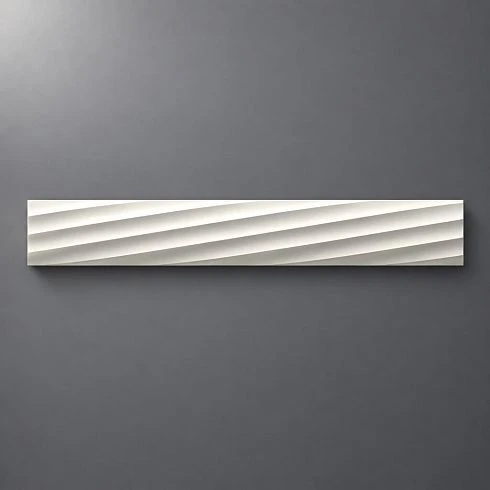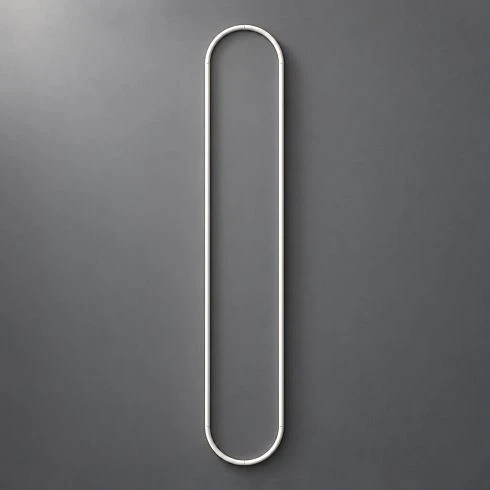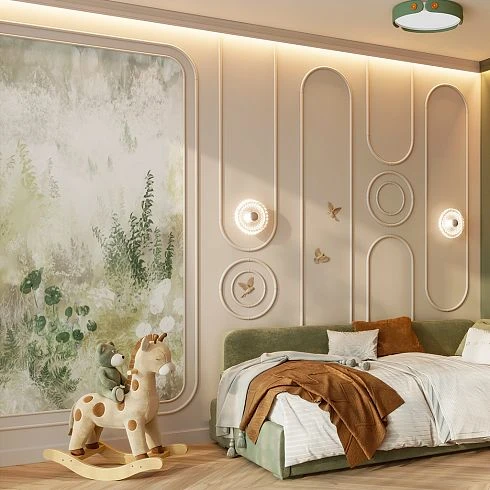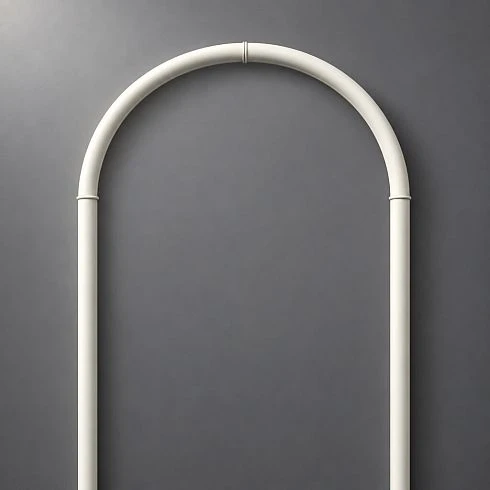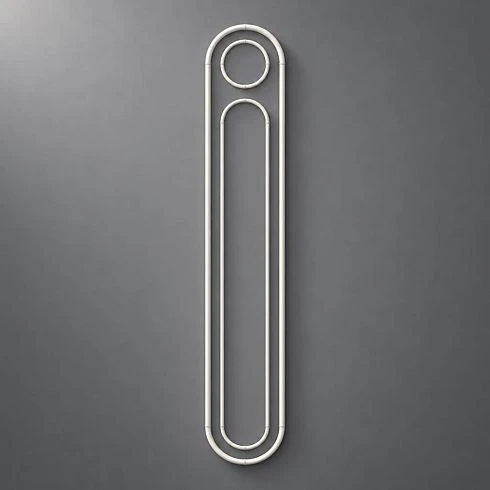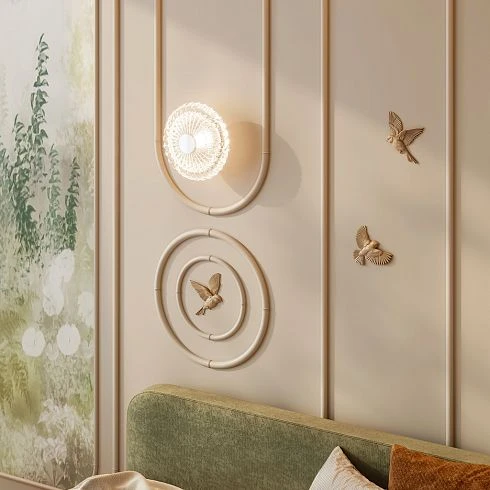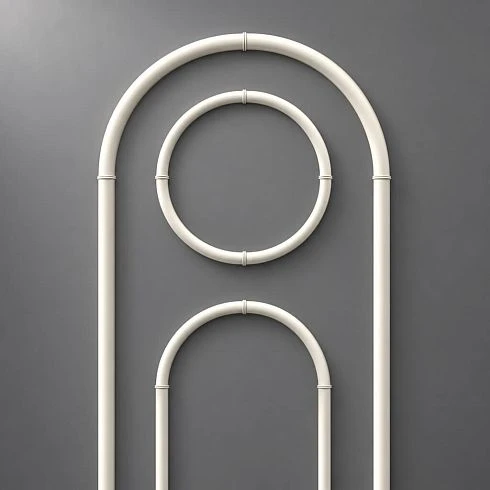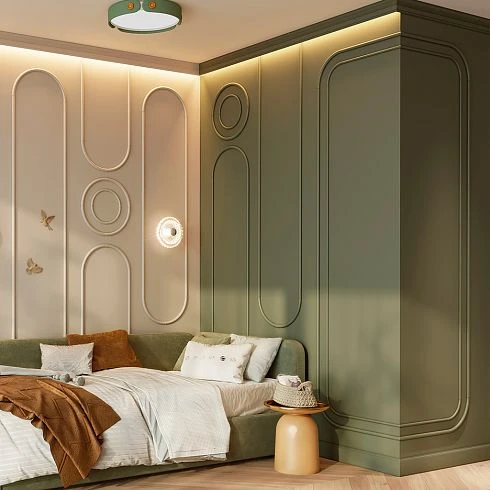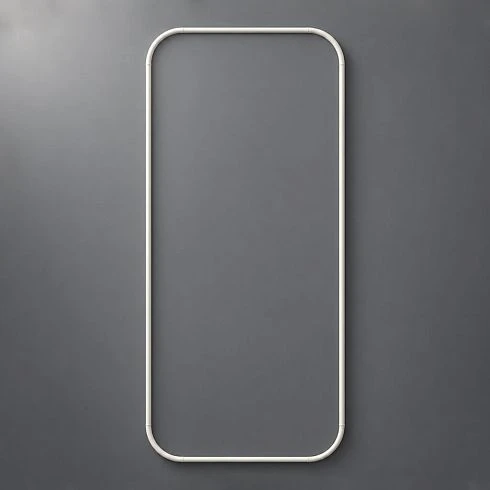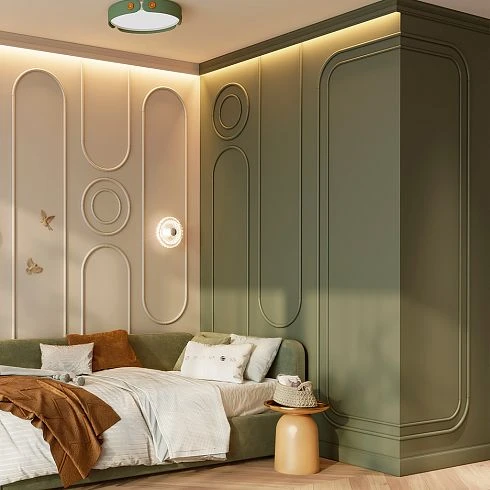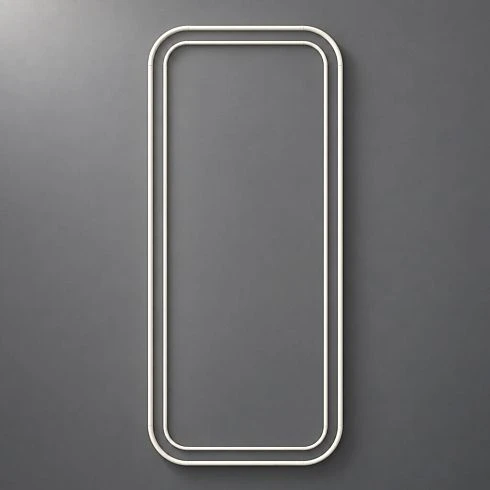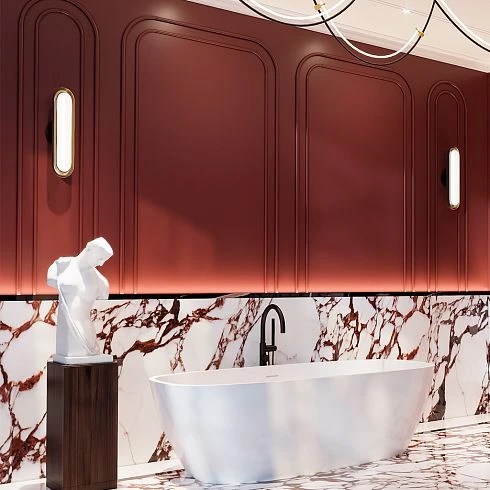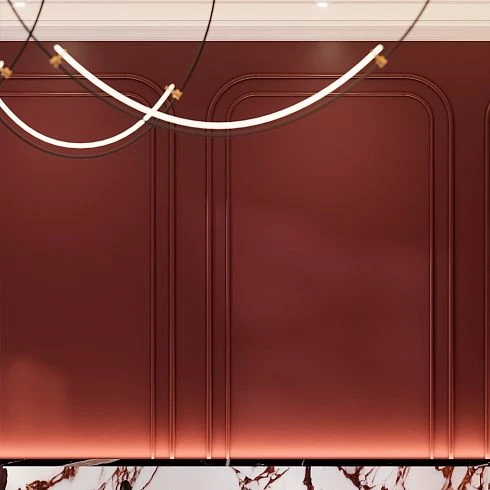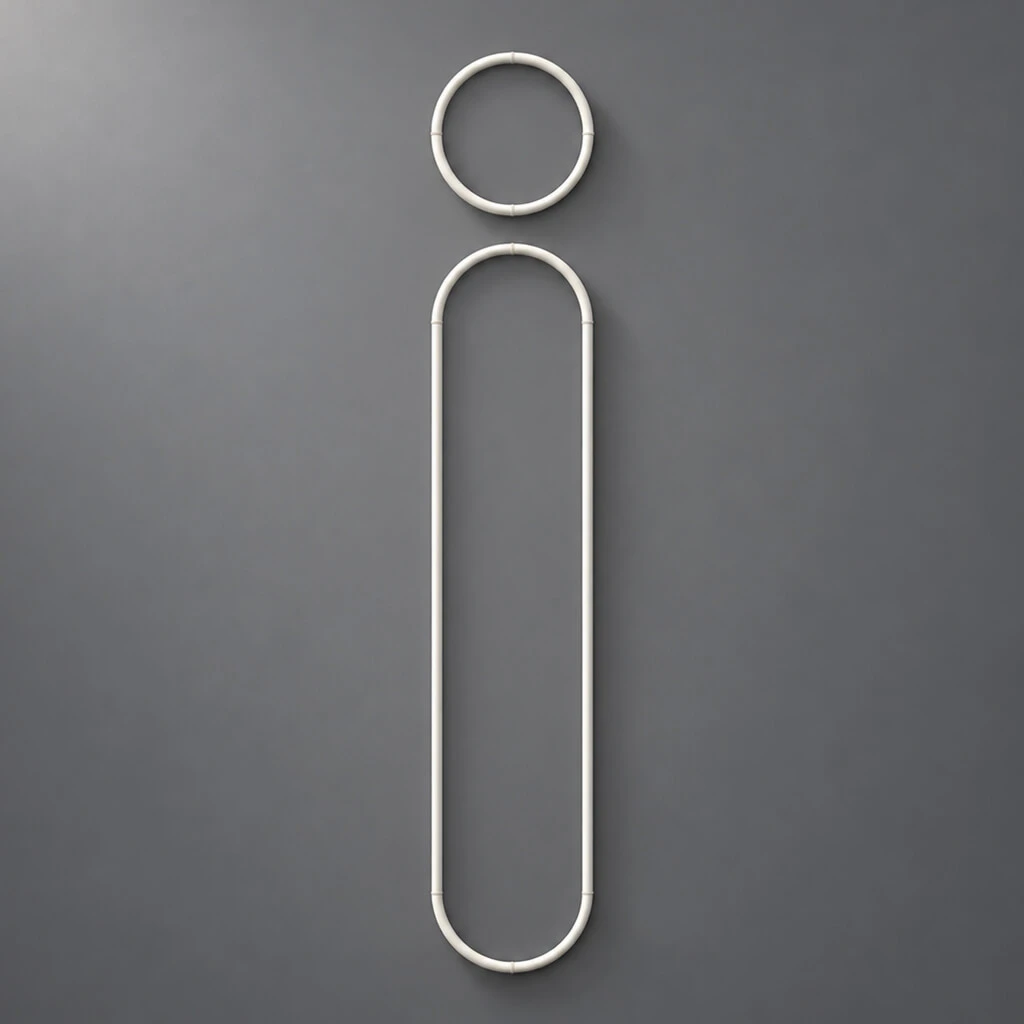
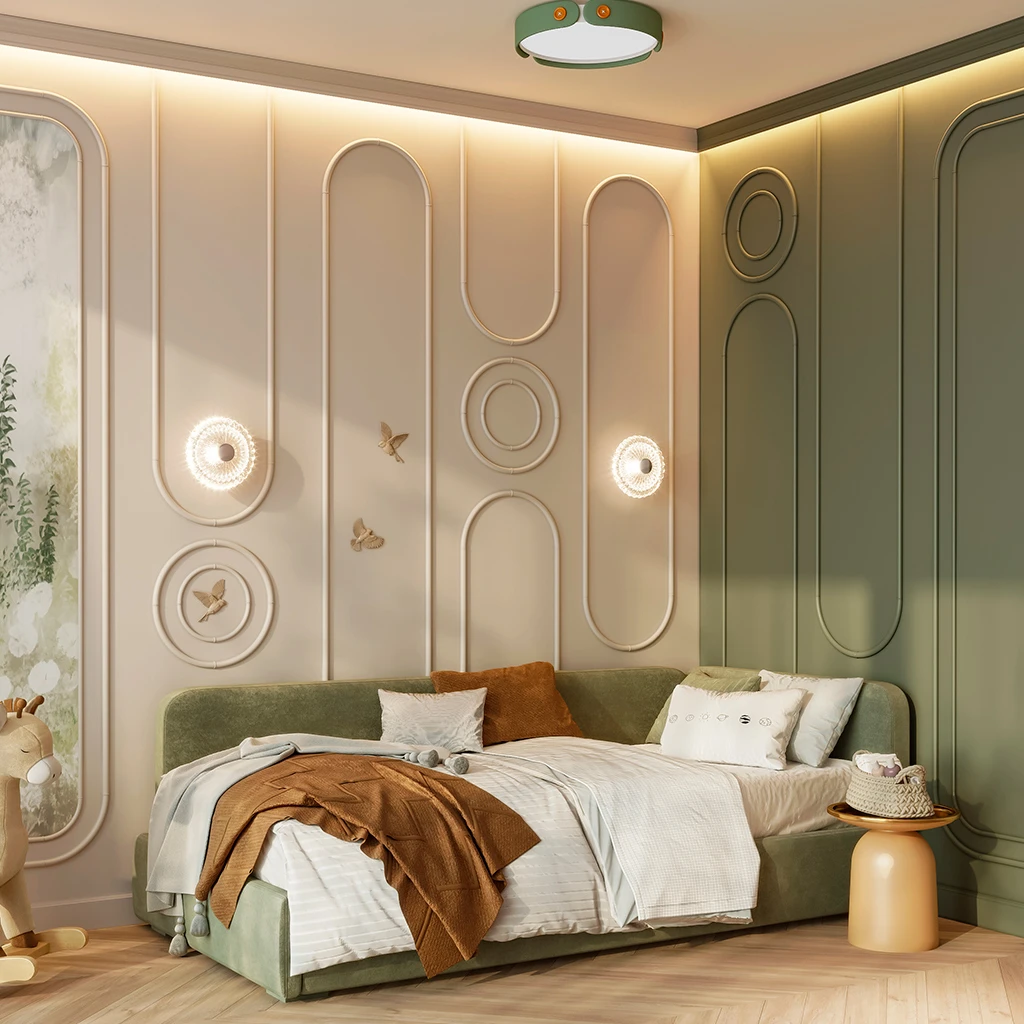
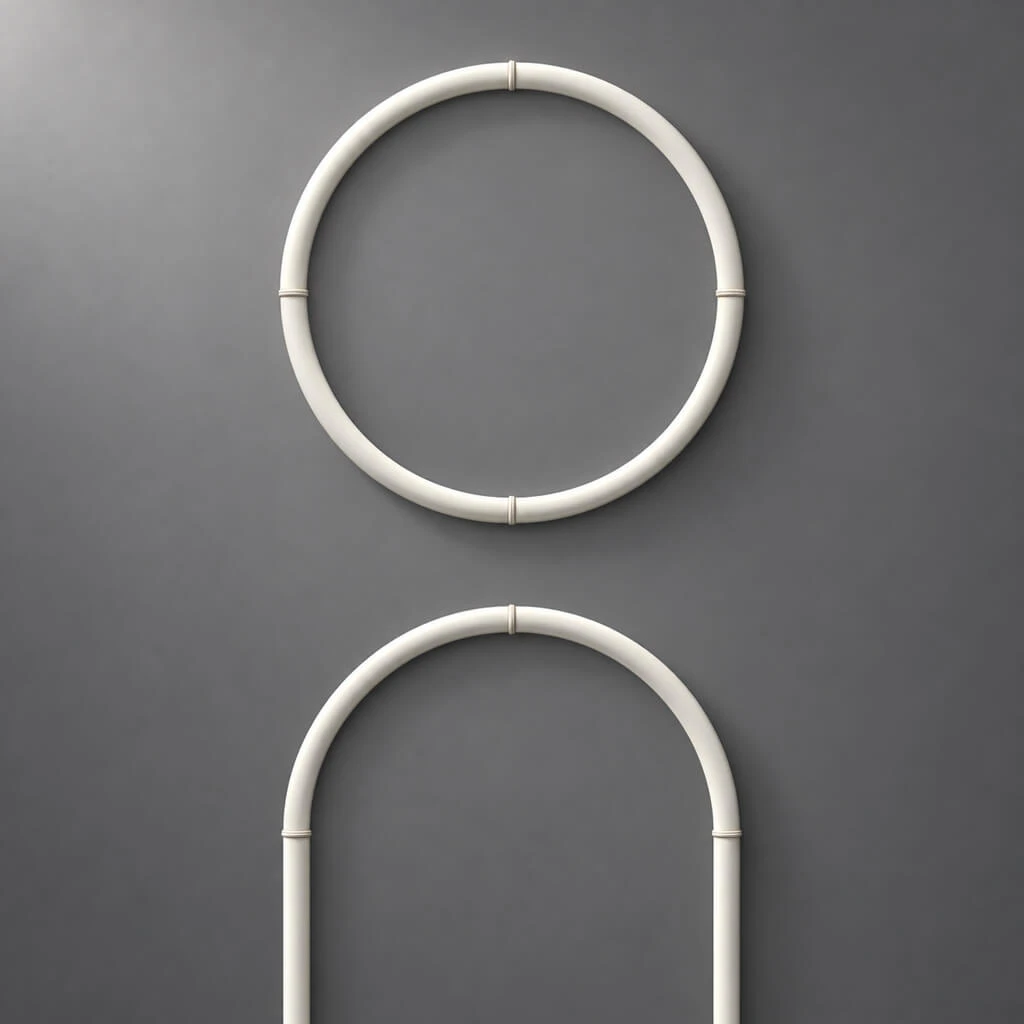



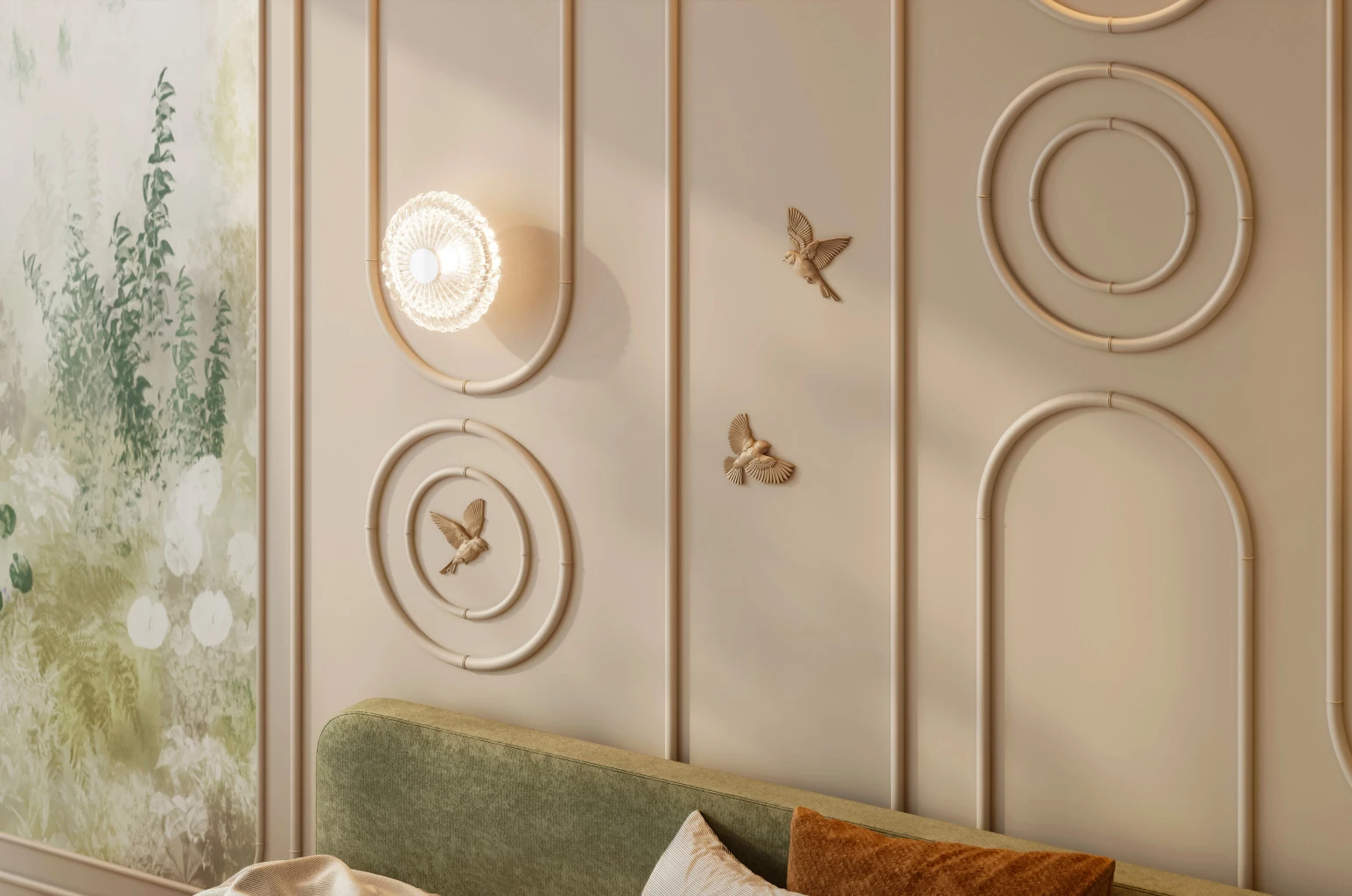
The circle within the elongated arched frame becomes the main graphic accent and gives the wall expressiveness without decorative overload. Clean geometry, smooth rounding, and the thin lines of the molding preserve the calm, minimalist character of the "Japandi" collection and form a noticeable vertical composition.
A ready-made set of stucco wall decor allows you to immediately reproduce a well-thought-out scheme. For a different task, the moldings and geometric elements of the collection can be selected separately and assembled into your own composition for a specific wall.
We have been on the market for over 20 years and are ready to offer you the best combination of aesthetics, quality, and practicality. Our polyurethane is not just a material, but a reliable foundation for flawless details, resistance to moisture and cracks, as well as convenient and quick installation. The company's success began in 2002, when two artists – Andrey Ragozin and Evgeny Tsapko – created a small creative workshop for making carved wooden products. The work of the craftsmen was quickly noticed, and within a year they were invited to participate in the reconstruction of the Konstantinovsky Palace in Strelna.
Every product in our range is the result of years of experience, thoughtful technology, and attention to detail. We constantly update our collections, follow and shape trends in interior design ourselves. From elegant neoclassicism to bold Art Deco, you will find the perfect accent for the interior of your dreams.
Choose durable polyurethane decor STAVROS — beauty proven by time and real projects, not just words.
We save your time, peace of mind, and budget
We solve your tasks with maximum speed
Streamlined process reduces all risks
Quality service regardless of order volume
Reliable partner — the foundation of your business
Our showrooms are located in Saint Petersburg and Moscow. Production is located in Saint Petersburg.
Moscow contacts: /contacts_all/
Contacts of Saint Petersburg: /contacts_all/
Send us the product codes, quantities and delivery destination. Contact our team to confirm availability and order details.
Please contact us to confirm shipping availability, costs and delivery times for your destination.
Delivery cost depends on the size, weight of the item, and delivery address.
Please ask our team to confirm shipping costs and delivery arrangements for your destination before placing an order.
Prices and availability of items on the website are always current. Data is updated daily.
Note: items in stock are stored on the warehouse in unpolished form and shipped within 3 working days.
If the item is not in stock, average production time: 5–10 working days.
This is the quality of polishing of the items.
Standard — machine polishing, at a more attractive price.
Prestige — detailed hand polishing, items do not require further work.
More details: /information/kachestvo/
This is the type of veneer of the items.
Under enamel: produced by gluing wooden laminates without color and texture matching. Contrast tonal and textural differences are noticeable. This blank should be chosen if the item is intended for opaque coating.
Under tinting: produced by gluing wooden laminates with color and texture matching. Tonal and textural differences may occur. This blank should be chosen if the item is intended for semi-transparent finish.
More details: /information/kachestvo/
Beech — dense, non-porous wood, most often used for items covered with enamel.
Oak — dense, porous wood with clearly visible natural grain. Due to its strength and decorative properties, it is often used in items with semi-transparent coating, highlighting the wood pattern.
Custom-made, if non-standard items are required, we can produce products from other types of wood, including blanks provided by the customer, manufactured according to our technical specifications.
All our furniture legs can withstand a vertical load of at least 100 kg.
Average production time for custom-made items: 5–10 working days.
Most items are stored on the warehouse in unpolished form. We need time to polish and pack orders.
Yes, we manufacture non-standard items according to individual projects, but we only accept orders with a minimum quantity.
We can manufacture items of the desired size, but we only work with bulk orders. For details, please consult the sales department manager.
Yes, some of our products can be used outdoors. For example, polyurethane items, as well as carved door casings made of pine.
Other items are produced to order using PUR glue, if minimum quantity is available. No warranty is provided for such products, as outdoor conditions are considered aggressive.
Please contact our team to confirm available finishes, minimum quantities and a quotation for your order.
More details: /information/sovety/
Apply adhesive to the decor. Place it on the surface and press briefly. Then, lift the decor from the surface and leave it open for 3–5 minutes. Press the decor firmly onto the surface and hold for 5–10 seconds.
More details: /information/sovety/
Ideally, you should prepare a design project before placing an order.
You can do this yourself by downloading drawings of our products from our website, or you can order a project from us.
If the number of decorative elements and fittings is small, our company's manager can assist you with selection.
Unfortunately, this service is not provided.
The packaging method depends on the type of items, but in each case, we ensure sufficient protection for safe transportation.
We most often use corrugated cardboard and stretch film. Fragile items are additionally secured on a rigid base to prevent damage during transport.
Please confirm the minimum order quantity for your selected products and finishes with our team.
Please contact our team to discuss measurement and installation requirements for your project and destination before ordering.
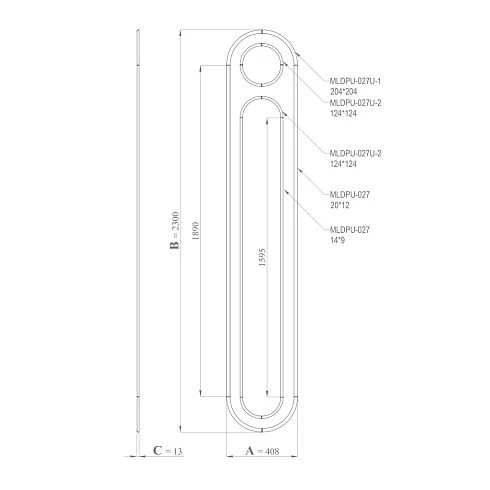
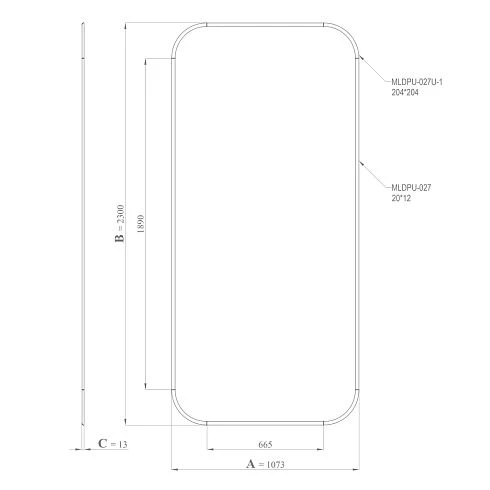
For American homes, the appeal is not a promise that one configuration will fit every room. It is the chance to add a distinctive geometric focal point with comparatively little wall width. The product listing identifies two polyurethane component types: curved MLDPU-027U-1 elements in the selected 204 × 204 mm size and matching MLDPU-027 half-round linear molding in the 20 × 12 × 2600 mm size. Use the manufacturer's actual drawing to determine the number of components and the placement of cuts for your intended layout.
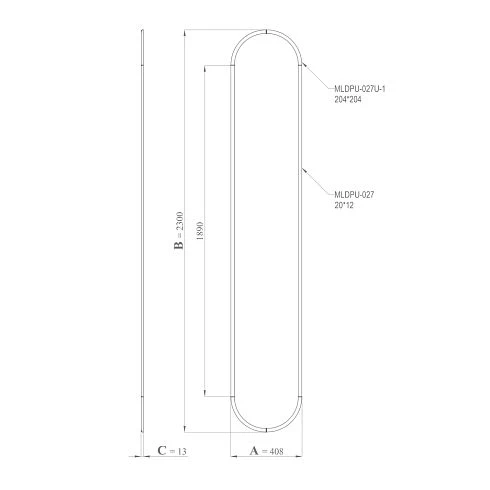
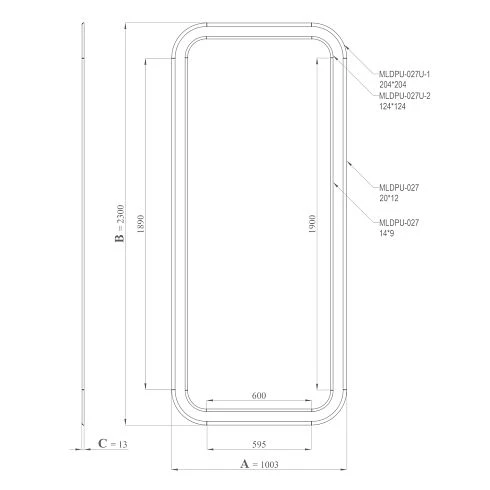
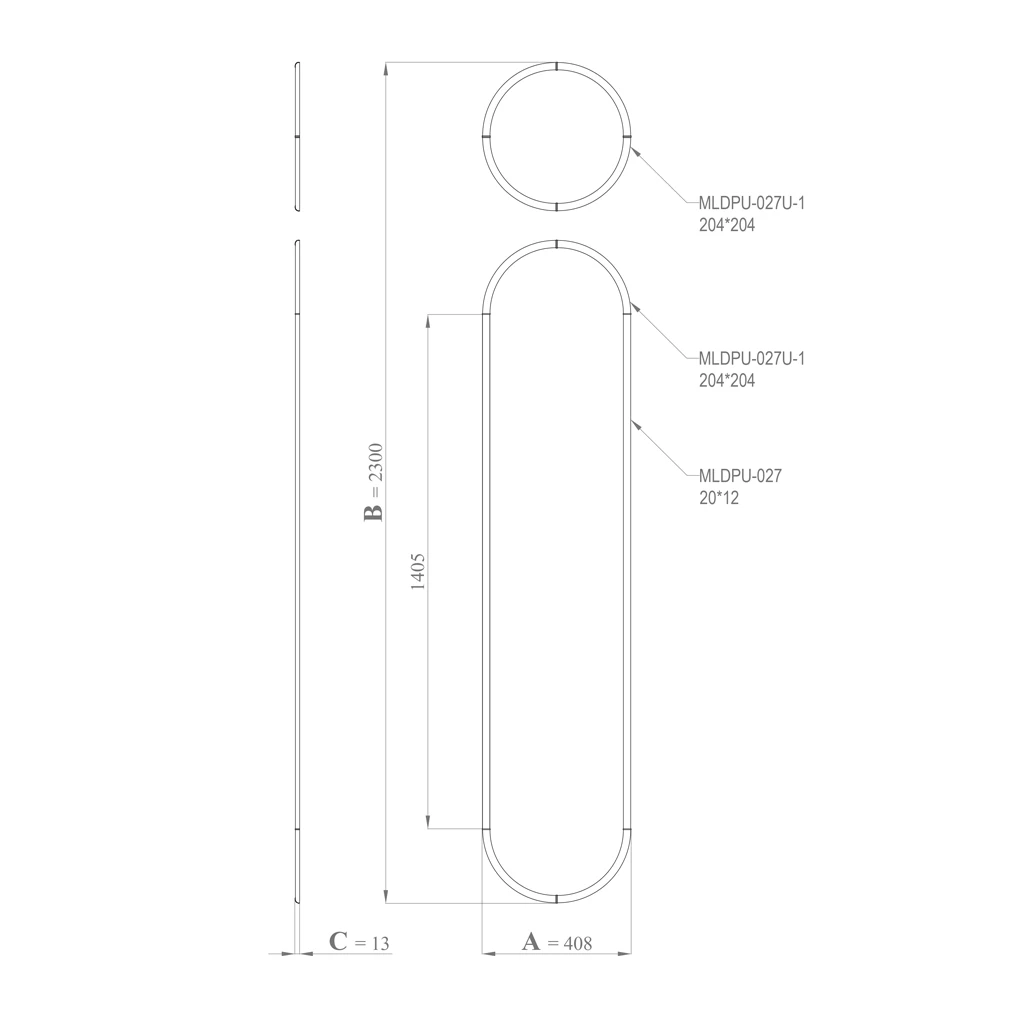
The manufacturer publishes an overall A × B × C reference of 408 × 2300 × 13 mm. That translates to roughly 16.06 inches across, 90.55 inches high, and 0.51 inches in nominal reference projection. The 2300 mm dimension describes the planned decorative composition, not the length of one molding strip. A finished installation may need a different layout if you change the wall height, ceiling clearance, or relationship to adjacent furnishings.
| Specification | Manufacturer value | Approximate US value |
|---|---|---|
| Reference composition width | 408 mm | 16.06 in |
| Reference composition height | 2300 mm | 90.55 in |
| Reference depth | 13 mm | 0.51 in |
| Curved component MLDPU-027U-1 | A 204, B 204, C 13, D 23, L 287 mm | A/B 8.03 in; L 11.30 in |
| Linear molding MLDPU-027 | 20 × 12 × 2600 mm | 0.79 × 0.47 × 102.36 in |
| Material of listed parts | Polyurethane | Polyurethane |
The public composition table identifies MLDPU-027U-1 and MLDPU-027, but the visible online quantity selectors do not provide a reliable bill of materials in the extracted page text. A circular feature in the reference design should not be mistaken for a separately confirmed, single-piece circle supplied under an additional stock number. Treat the drawing as the source of truth for the actual sequence of bends, straight runs, and intersections; verify the number of pieces in your order independently.
Thirteen millimeters is the C dimension published for the overall reference and the curved component. It is not a blanket statement about every visible surface. MLDPU-027 is separately listed with a 20 mm face dimension and a 12 mm profile dimension. The rounded junction has its own drawing values, including D = 23 mm. Do not derive the apparent circle diameter, the contour's inside opening, or the wall projection at every point from the overall C measurement alone.
Traditional picture frame molding repeats rectangles with equal corners; this arrangement works differently. The eye first reads a slender, upright arch and then notices the round form organized inside it. That combination introduces variation without adding floral appliques, scrollwork, or ornate capitals. In a Japandi room, the outline may become the only applied ornament on an otherwise quiet wall, allowing the wall surface itself to remain part of the design.
A circle concentrates attention toward a center rather than toward four distant corners. The tall frame keeps that focal point from looking like an isolated medallion or wall plaque. When a room contains strong straight lines—cabinet edges, doors, shelving, or vertical slats—the rounded insert adds a useful counterpoint. For the intended effect to survive installation, the inner shape must sit at the position shown in the selected drawing; do not assume it should automatically be centered at half the 2300 mm reference height.
The unoccupied wall around and within the molding should remain visibly intentional. Crowding the arch against a door casing may make it read as an unfinished trim detail, while placing it among many competing decorations can dilute the circular accent. In Japandi-inspired interiors, controlled emptiness is a design choice. A single narrow composition can have a stronger architectural presence than several overlapping frames, especially on a short return wall or alongside a substantial piece of furniture.
Before selecting an accent location, record the clear width between fixed boundaries: door trim, cabinet side panels, windows, corner returns, outlets, wall switches, and furniture. A reference width of approximately 16.06 inches describes the decorative assembly, not the amount of empty breathing room it requires. For example, a wall strip of exactly that width leaves no visual side margin. Mark the contour on removable tape, step back, and decide whether the treatment feels deliberate from the entrance to the room.
A 90.55-inch-high design is tall enough that it will need careful positioning in many American interiors. A nominal eight-foot ceiling is about 96 inches, but actual usable height can be reduced by baseboards, crown molding, uneven floors, or soffits. Subtract the finished reference height from the measured clear wall height and determine how that remaining space should be divided. A centered layout is one possibility, not an automatic rule: the neighboring door heads and furniture lines may provide a better alignment datum.
A narrow molding arrangement can look graceful from straight ahead and unexpectedly compressed at an oblique angle. Stand where residents actually approach the wall: through the front door, along a hall, or from the sofa. Check whether a floor lamp casts a sharp side shadow, whether a door leaf hides half the circle, and whether the opening competes with a mirror. These practical viewpoint tests matter more than copying a reference composition at the same scale regardless of surrounding architecture.
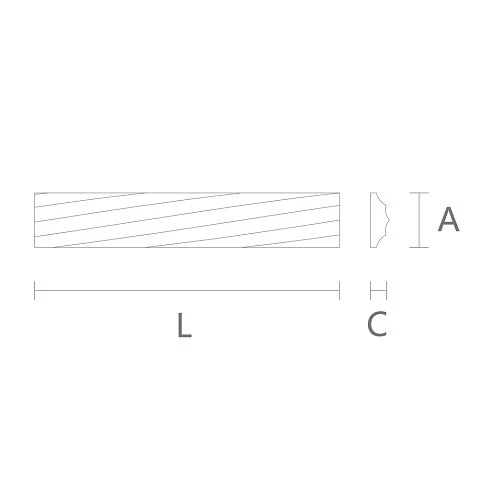
For CPU-3-5, the selected curved component is MLDPU-027U-1 with published drawing labels A = 204 mm, B = 204 mm, C = 13 mm, D = 23 mm, and L = 287 mm. The A and B values identify the selected 204 mm version, while C, D, and L refer to other dimensions in its manufacturer's drawing. Those measures should be read from the original diagram rather than treated as interchangeable width, thickness, and arc radius values.
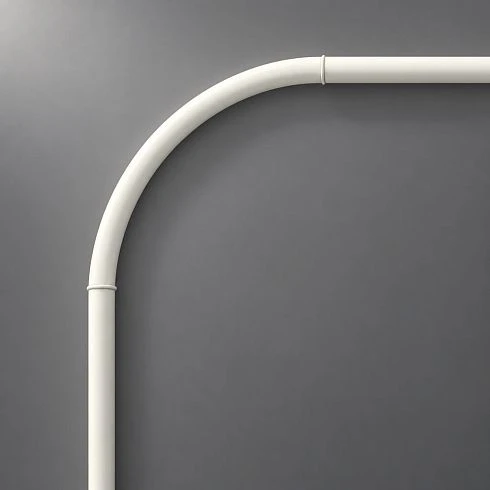
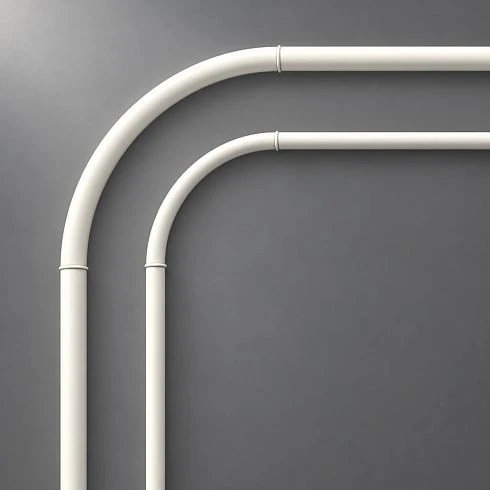
The matching straight component is MLDPU-027 polyurethane half-round molding in the 20 × 12 mm cross-section, sold in 2600 mm stock lengths. The manufacturer also offers a 14 × 9 mm modification under the same MLDPU-027 article. That smaller profile is a different option, not a substitute for the curved U-1 part selected here. A product page or purchase order that says only “MLDPU-027” is incomplete for this application.
When the straight molding and curved transition have mismatched cross-sections, the raised line may stop flowing continuously at the joint. Even an accurately cut strip cannot remove a difference in the shapes of the adjoining faces. STAVROS explains this issue in its MLDPU-027U-1 compatibility guide. Before committing to a complete installation, compare one curved piece and one straight piece side by side and confirm that the visible profile continues as designed.
The title's circle-within-an-arch concept is a description of the reference composition, not a replacement for the fabrication plan. Obtain the current drawing, identify the intended centerlines, and place the exterior arch and round motif on a single measured sketch. Establish where straight segments finish and curved segments begin. If a full circle is constructed from multiple curved components, the drawing must determine how they meet; the stock part's 204 mm A/B values alone are not a reliable finished-circle diameter.
An attractive curved frame depends on the smooth handoff between straight and curved portions. At a tangent transition, a line should appear to keep moving in one direction rather than make an abrupt visual kink. Keep the mockup large enough to inspect the top arch and inner circle independently. Check that any joints are positioned where they can be assembled and finished without forcing the polyurethane pieces into a shape their geometry does not provide.
Polyurethane molding can be formed into many manufactured profiles, but that does not mean a selected rigid item is safe to bend on site to an arbitrary radius. The curved MLDPU-027U-1 part has specified factory geometry. If a project requires a substantially larger circle, a different arch shape, or a different location for the rounded feature, confirm the feasibility and compatible components with the supplier first. The original CPU-3-5 listing does not establish an unlimited custom-curving capability.
For a material takeoff, draw the outer perimeter in one line style and the round detail in another. Label every segment that will use the selected 20 × 12 mm linear molding, and label each manufactured curved element separately. This prevents a common mistake: calculating the visible outside outline but forgetting the additional linework needed for the circle. It also makes it easier to verify that every planned joint has a corresponding compatible component.
One MLDPU-027 strip is 2600 mm, approximately 102.36 inches long. The complete reference composition is 2300 mm tall, but neither number provides a ready-made cutting list. Curved components occupy part of the contour, straight pieces may be needed for multiple runs, and saw kerfs remove material. For each strip, write down the parts to be cut and their intended orientation. When planning multiple decorative frames, nest the required short runs into full lengths before estimating the number of strips to purchase.
A complete cut plan should specify each straight section, its finished length, the intended joint type, and the allowance for blade cuts or minor measurement corrections. Do not assume that all stock remnants are usable: a remnant may be too short, damaged at an end, or incompatible with the next cut's direction. Check pieces on the wall with removable markings before final cutting. For repeat installations, save the cut schedule so any adjustment to one frame can be applied consistently to the remaining frames.
CPU-3-5's narrow footprint offers a possible accent where conventional wide panel molding would compete with traffic areas. An entry wall adjacent to a console can be effective if the circle stays visible above the furniture rather than disappearing behind a table lamp or tall vase. Keep door casing and light switches in the measurement plan, and do not mount the frame across an access panel. In a hallway, one composed motif often reads more clearly than many near-identical panels squeezed between doors.
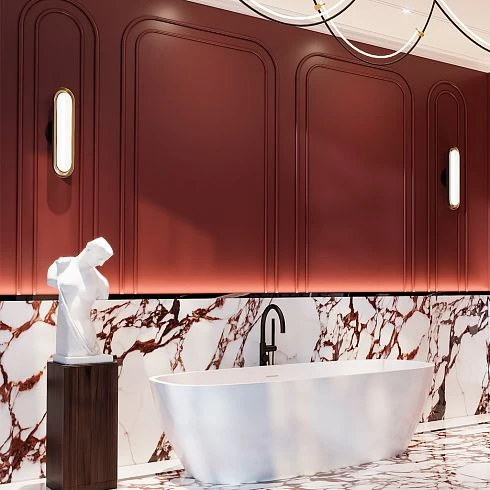
In a bedroom, a circle inside an arch can bring a quiet focal point to the wall beside a dresser, an upholstered chair, or a wardrobe. If a large upholstered headboard already occupies the primary wall, consider placing the decorative molding on a secondary wall instead of surrounding the bed with multiple competing outlines. A low-contrast paint finish works well for a subdued atmosphere: the geometry emerges when daylight moves across the half-round profile instead of relying on a strong painted border.
Built-in shelving and broad media walls typically create strong rectangular grids. A tall, narrow arch with a circular detail can soften that architectural rhythm on a neighboring clear wall. Make sure the contour does not land exactly where a television mount, speaker, art rail, or cabinet door needs clearance. If the room contains natural wood cabinetry, try a warm wall shade that keeps the raised polyurethane line understated. The intent is visual balance, not an imitation of carved wooden joinery.
A home office may benefit from a small but recognizable architectural feature behind an occasional chair or near a reading shelf. The circular detail gives the wall a point of interest during video calls without filling the entire background with patterned wallpaper. Before fixing the elements, evaluate the intended camera framing and the position of task lighting. A bright light close to the wall may exaggerate shadows at every molding joint, making careful finishing particularly important.
The CPU-3-5 public composition lists polyurethane for MLDPU-027U-1 and for the straight MLDPU-027. This differs from the Neoclassic Light sets in the catalog that combine polyurethane ornaments with primed MDF straight molding. Do not substitute an MDF trim specification into the CPU-3-5 purchase line or describe the set as all wood. The difference matters to component matching, surface preparation, and selection of finishing products compatible with the installed substrate and trim.
A half-round section gives the raised contour a soft crest instead of the stepped ledges associated with many classical moldings. Light hitting the edge can create a narrow highlight and a faint adjacent shadow; the effect depends on paint sheen, wall texture, illumination, and angle of view. The circle and arch share that restrained graphic vocabulary. If you prefer a highly carved relief with deep floral detail, CPU-3-5 is intentionally a different design direction.
Applied trim can visually divide a surface, but it does not correct an unstable wall, make cracks structurally sound, waterproof a finish, or replace suitable wall preparation. An uneven substrate may make joints open or create shadows that vary along the frame. Repair underlying issues before installation. Ask the manufacturer or qualified installer about any special treatment required for unusual substrates, high-temperature locations, or potentially damp environments; no universal performance rating is established by the public SKU table.
Color-drenching—the technique of painting the trim and adjacent wall in a matching shade—can be particularly convincing for CPU-3-5. The contour remains legible because it projects from the wall, but its line does not fragment a small area into separate contrasting parts. Warm white, putty, greige, or light clay are options for a quiet Japandi setting. Test the actual finish in morning and evening light, because a shade that appears flat under overhead lighting may reveal much stronger highlights from a nearby window.
If a complete monochrome look feels too subtle, consider using molding a few tones lighter or darker than the background rather than switching abruptly to glossy white. This approach helps the inner circle read as a deliberate motif while retaining the overall soft character. Check samples on both sides of the room. An accent color on the circle alone is another design possibility, but the extra contrast should be chosen carefully so it does not undermine the intentional restraint of the arch.
Japandi-inspired rooms often feature wood, linen, paper-like textures, and simple furniture forms. A clean painted wall can provide a calmer background for CPU-3-5 than a heavily figured wallpaper. Where subtle texture is desired, confirm that the surface is level enough to receive applied trim. Follow the molding manufacturer's paint and primer guidance, and test compatibility on a sample piece. Avoid claims that any paint chemistry, adhesive, or coating will work on polyurethane without a documented compatibility check.
Unpack the components, verify the full article names and dimensional options, and inspect for transit damage before trimming any piece. Hold one MLDPU-027U-1 against one MLDPU-027 strip selected at 20 × 12 mm to confirm the intended profile transition. Then examine the circle and outer arch layout shown in the drawing. This step can reveal an ordering error or an incomplete cut plan while adjustment is still possible, rather than after adhesive has been applied to the wall.
Make sure the substrate is sound, clean, sufficiently even, and suitable for the adhesive specified by its manufacturer. Establish an accurate vertical datum with a level or laser, then mark the reference width and height. Plot both the external arch and the internal circular detail, checking the exact centerline against the drawing. Before attaching anything, inspect the marks from the main viewing location and confirm they do not interfere with switches, furniture, or building elements that must remain accessible.
The correct order depends on the manufacturer's plan and adhesive system. In general, identify the reference pieces that establish the geometry, place them without forcing joints, and work outward through the associated straight segments and curved portions. Provide temporary support where the adhesive instructions call for it. Do not use a generic five-minute pressing time or a fixed screw pattern from an unrelated molding product. Keep the circle visually centered relative to the chosen design datum, not a guessed location based only on overall height.
Once the approved fixing system has cured under the manufacturer's conditions, review the trim for small gaps, uneven lines, and visible transitions. Use only compatible joint treatment and finishing materials, and avoid filling a profile mismatch with excessive compound. Inspect from an oblique viewing angle with the room's normal lights on; sidelight often reveals faults that are hidden under direct frontal illumination. Record the paint color and product choice for later touch-ups. A clean, continuous line is central to the design's success.
CPU-3-2 is also presented as a 408 × 2300 mm narrow arched arrangement using the MLDPU-027 family. CPU-3-5's manufacturer description calls attention to the additional circular feature inside the tall arch. That visual difference is the reason to choose one design over the other; the shared stock part names do not make the patterns identical. Compare their product drawings, piece quantities, and cut paths before selecting one.
CPU-3-1 has a wider published 1073 mm reference width and emphasizes rounded-corner framing. CPU-3-5 is 408 mm wide and adds the circle-inside-arch composition. A shopper with a large clear wall may prefer the broader silhouette of CPU-3-1, while an area beside a cabinet or on an entry return may better suit a narrower motif. The practical choice should follow site dimensions, visual proportion, and the drawing rather than a comparison of names alone.
CPU-3-4 is also a 408 mm-wide Japandi design, but its published composition lists two different curved corner variants and two different straight MLDPU-027 profile cross-sections. CPU-3-5 lists the larger MLDPU-027U-1 and its matching 20 × 12 mm molding. Do not transfer a CPU-3-4 bill of materials into CPU-3-5 or accidentally order the thinner 14 × 9 mm straight profile. Shared collection styling does not imply identical construction.
The STAVROS Japandi collection includes several ready-made decorative layouts. Look at the overall shape, component variety, occupied width, and drawing detail for each one. These factors are more useful than descriptions such as “premium” or “luxury,” which do not explain how a molding set will actually fit a wall. CPU-3-5 earns its place through the paired round and arched shapes in a restrained vertical format.
Check that the selected product is CPU-3-5, that the corresponding drawing shows the intended circle-and-arch geometry, and that the curved part is MLDPU-027U-1 in the 204 × 204 mm option. The straight profile must be MLDPU-027 at 20 × 12 × 2600 mm. Validate quantities against the current order configuration because the public text extract does not establish the number of individual items. Confirm packaging, delivery arrangements, and any additional installation supplies with the seller rather than assuming they are part of the displayed set.
If your available surface cannot accommodate 408 × 2300 mm with appropriate clearances, a custom arrangement may require different quantities and possibly different components. Measure finished wall dimensions after other trim and cabinetry have been considered. Keep the product drawing together with the order and cut plan so everyone involved uses the same reference. This reduces the chance that an installer will interpret the composition as a generic arch and omit the round element inside it.
CPU-3-5 provides a manufacturer-defined decorative concept, but the public page does not confirm that adhesives, tools, primers, fixings, or special curved installation hardware are included. Its component measurements also do not guarantee compatibility with every background surface. Plan those additional materials separately according to the intended wall construction and supplier recommendations. For projects involving fire-rated assemblies or unusual moisture exposure, obtain relevant technical documentation rather than relying on broad product marketing claims.
The manufacturer's concise Russian description identifies a circle inside an elongated arched frame. This is the visual motif that sets CPU-3-5 apart from a basic rectangular wall frame or a simple single arch. Consult the current product drawing before cutting or installing, especially if the full arrangement is being modified.
STAVROS lists 408 × 2300 × 13 mm, approximately 16.06 × 90.55 × 0.51 inches. The reference is narrow and tall, but it still needs sufficient top and bottom wall clearance. The overall height is not identical to the stock molding length.
Both identified component types are polyurethane. The curved item is MLDPU-027U-1, and the straight half-round profile is MLDPU-027. Some other STAVROS collections use primed MDF strips, but those should not be used as a description of this particular set.
Use MLDPU-027 with a 20 × 12 mm cross-section and 2600 mm stock length. The 14 × 9 mm modification is not the specified match for MLDPU-027U-1. The manufacturer's compatibility information explains why a smaller cross-section can create a visible step at a joint.
No. The manufacturer lists A and B dimensions of 204 mm for the selected curved component, together with C, D, and L drawing values. These do not establish the finished internal circle diameter independently of the complete layout drawing and assembly sequence.
The public composition table identifies MLDPU-027U-1 and MLDPU-027 as component types. It does not verify a separately listed circular ring SKU. The circle is part of the referenced decorative geometry; the precise assembly and piece count must be confirmed from the drawing and order specification.
No. Both share a 408 mm-wide published reference and related polyurethane parts, but CPU-3-5 specifically emphasizes a circular feature inside its arch. Compare the diagrams rather than assuming the same cut schedule or number of pieces applies to both sets.
It may be a suitable visual accent next to a doorway if the available clear wall allows proper spacing. Measure the door casing, switch positions, floor trim, swing clearance, and line of sight. The published width is the composition dimension, not a guaranteed minimum wall field for every installation.
The published item table does not independently verify adhesive, tools, or fixing hardware as part of the included contents. Ask the seller to confirm the shipment specification and follow the manufacturer's current installation instructions for the chosen surface and materials.
A low-contrast finish in a warm neutral tone often lets the circular and arched geometry create interest through shadow rather than color. Matte or low-sheen finishes can be considered after confirming paint compatibility with the polyurethane product and substrate. Samples under the room's actual lighting are more reliable than a color name alone.
CPU-3-5 offers a specific way to introduce decorative wall molding into a contemporary interior: a 16.06-inch-wide reference composition combining a long arch with an internal round accent. Its strength is geometric clarity rather than deep ornament. Check the drawing, verify the MLDPU-027U-1 / MLDPU-027 20 × 12 mm pairing, and prepare an accurate material schedule before installation. Used on a wall with appropriate breathing space, the form can become a measured point of contrast against straight cabinetry, doors, and other everyday architectural lines.
Our manager will contact you within 5 minutes