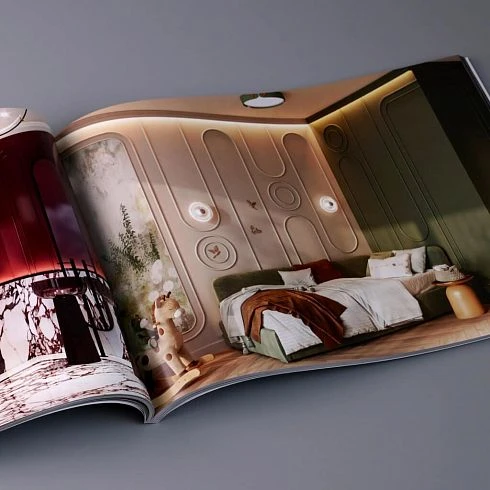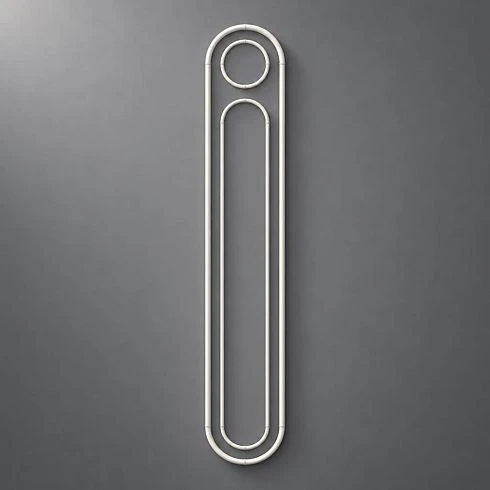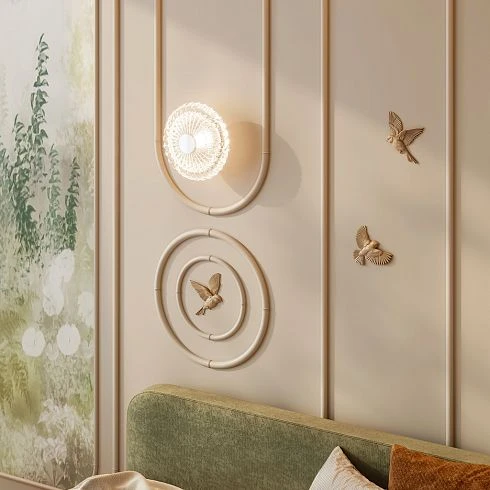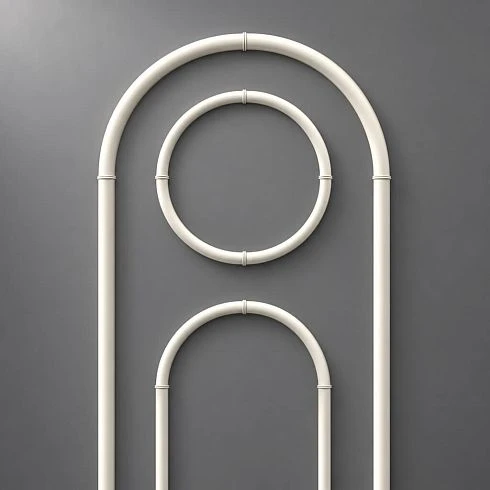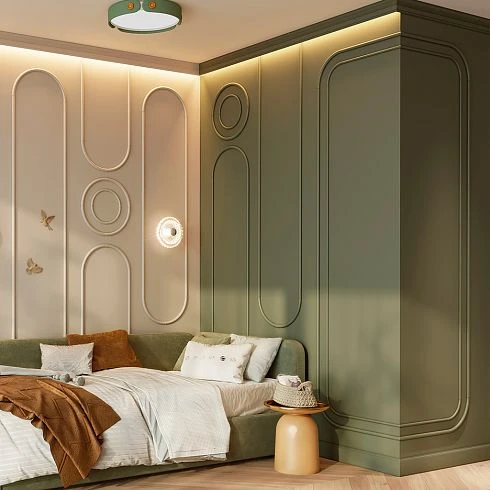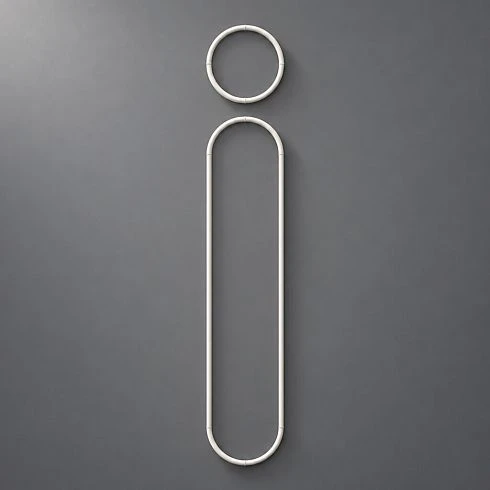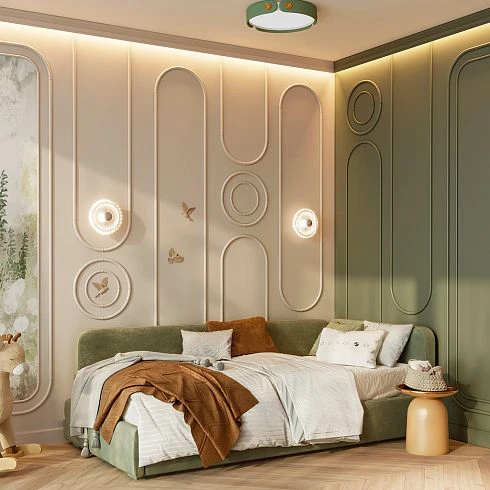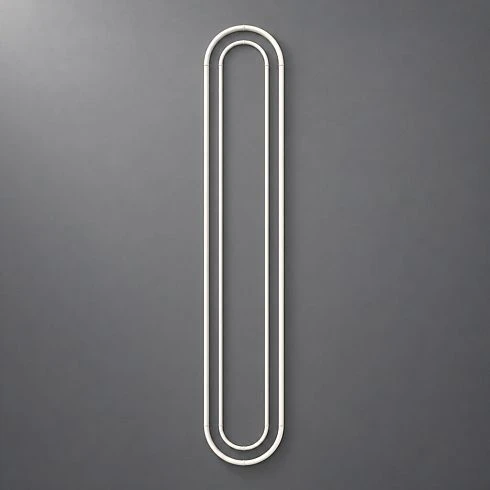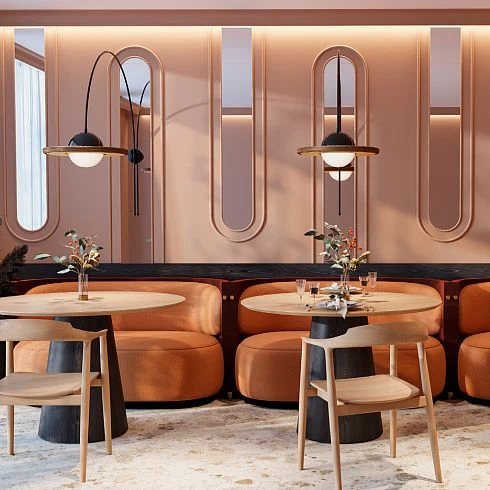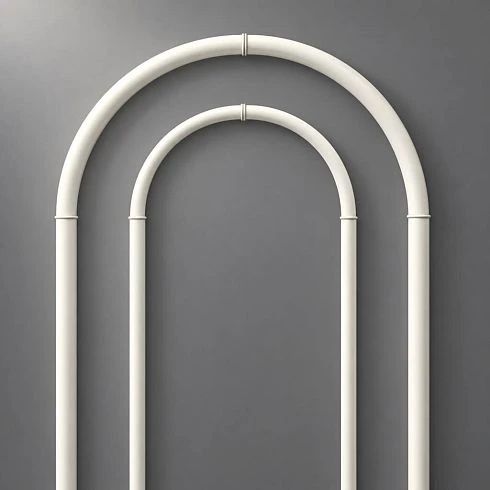
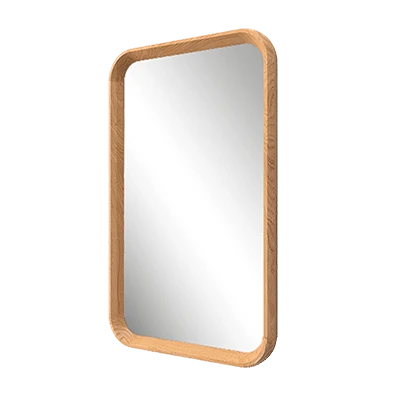

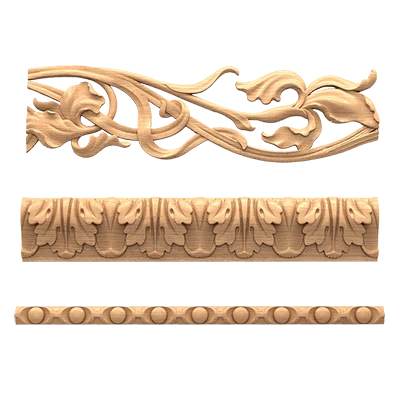
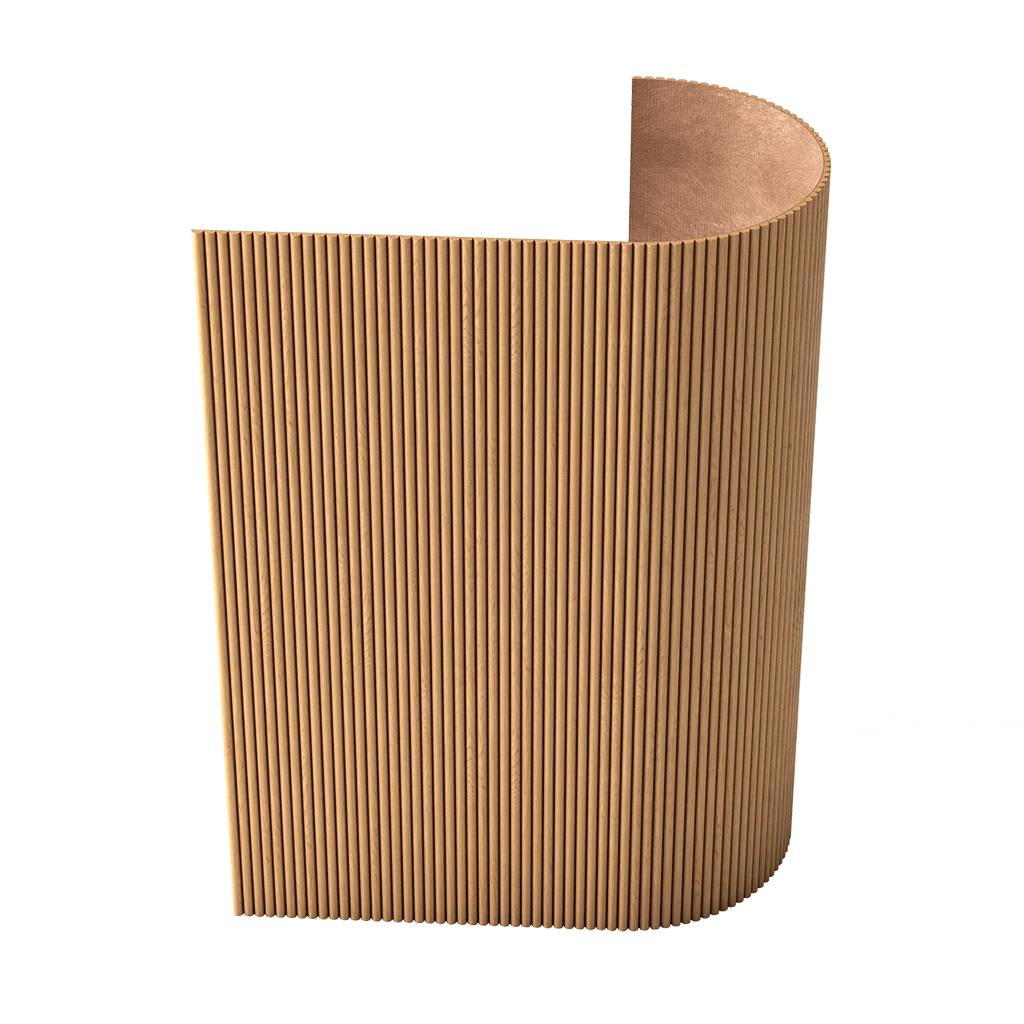
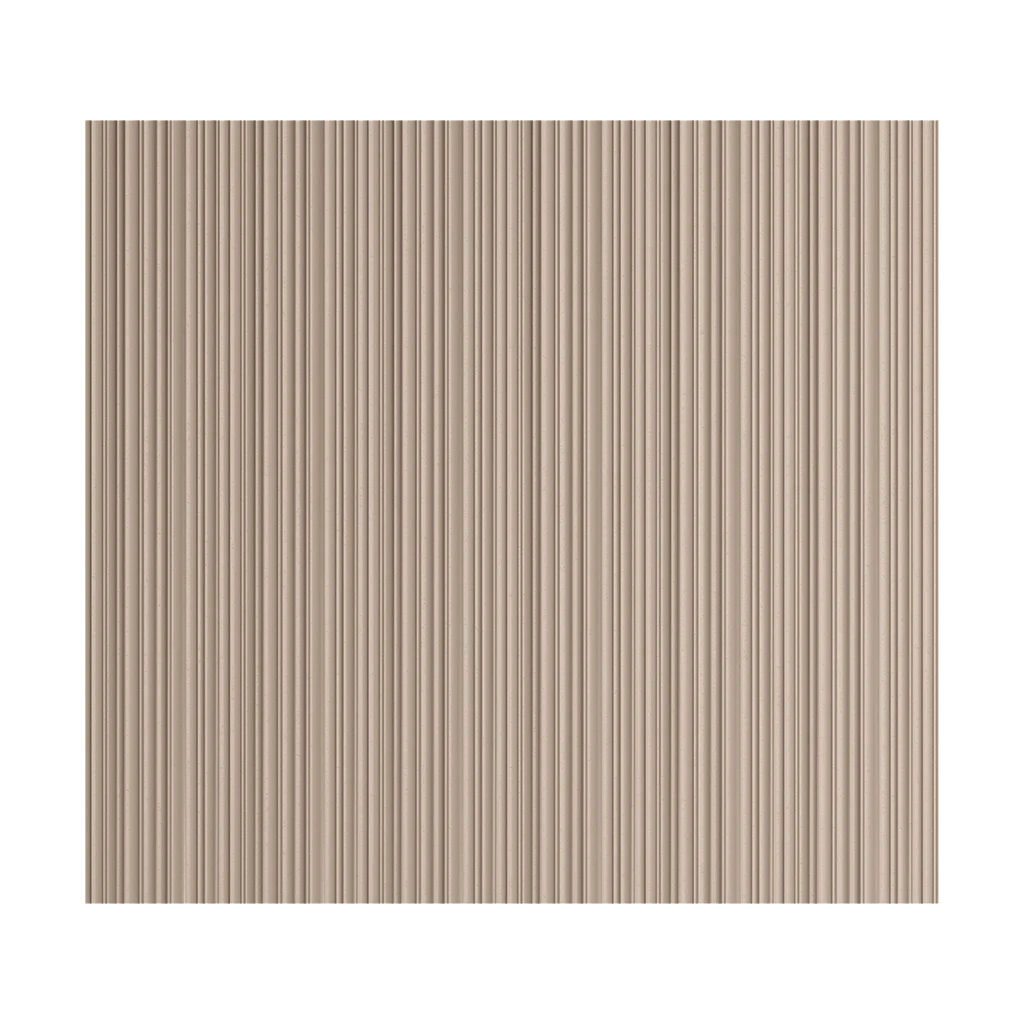
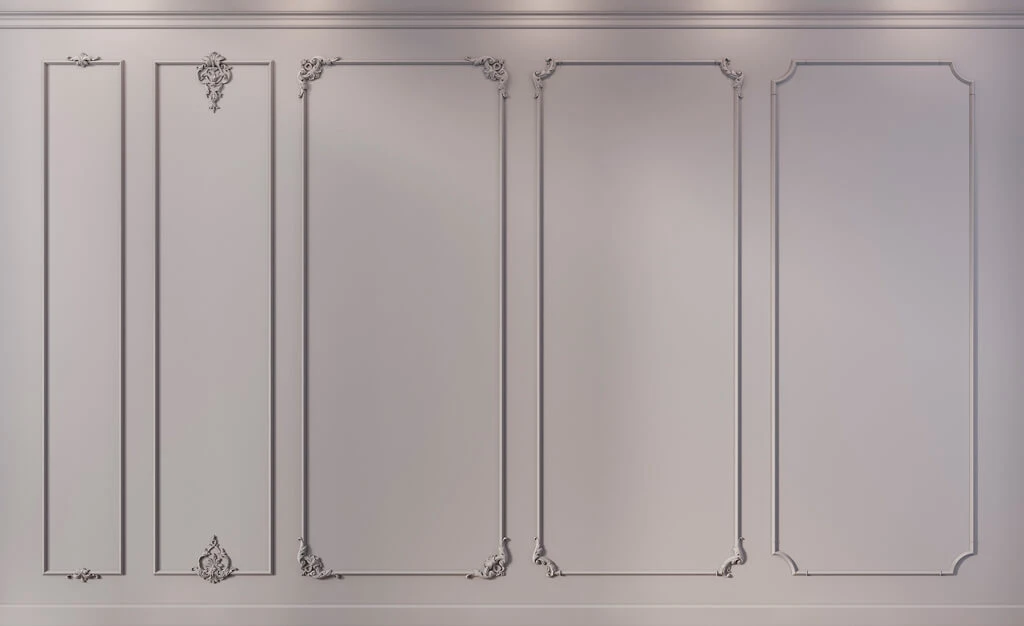
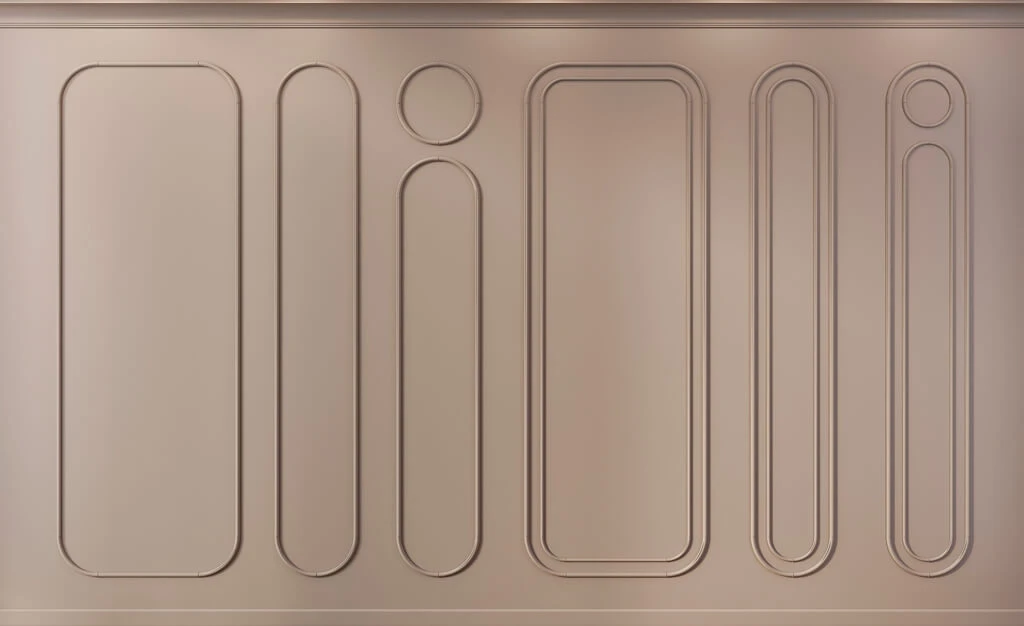
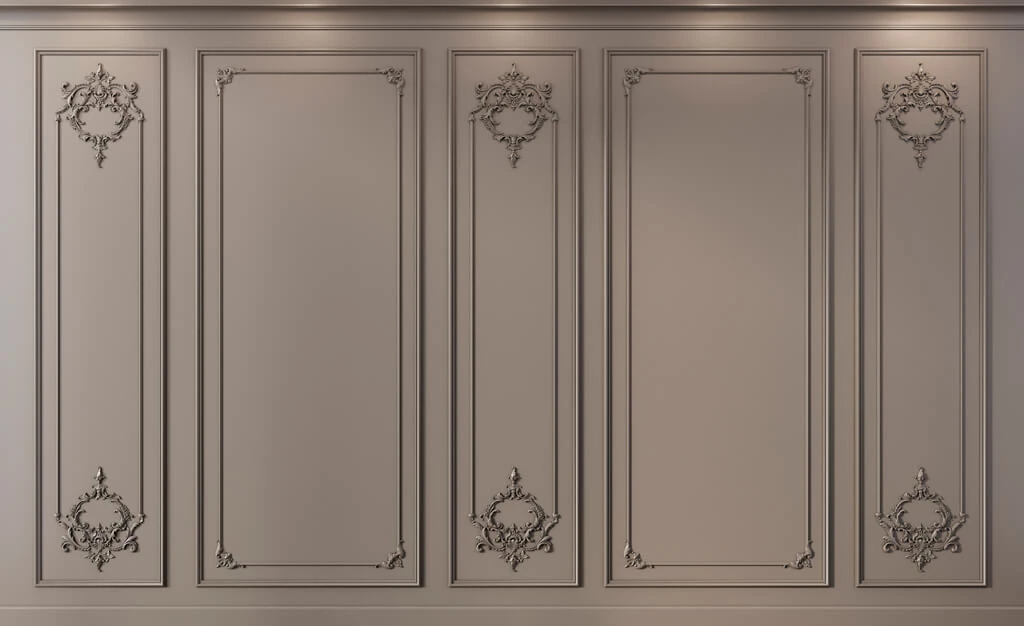
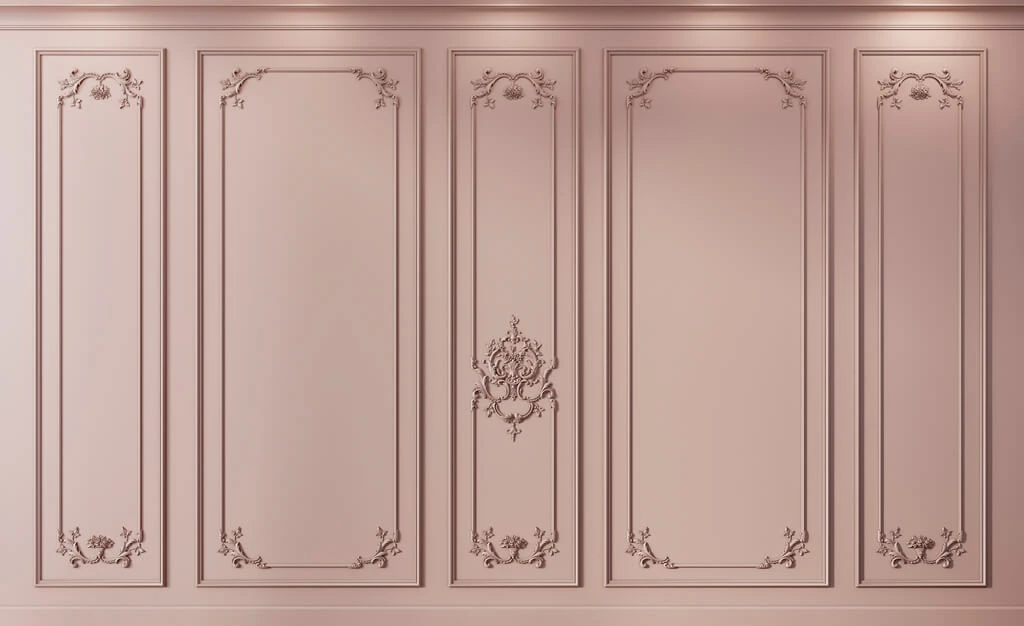
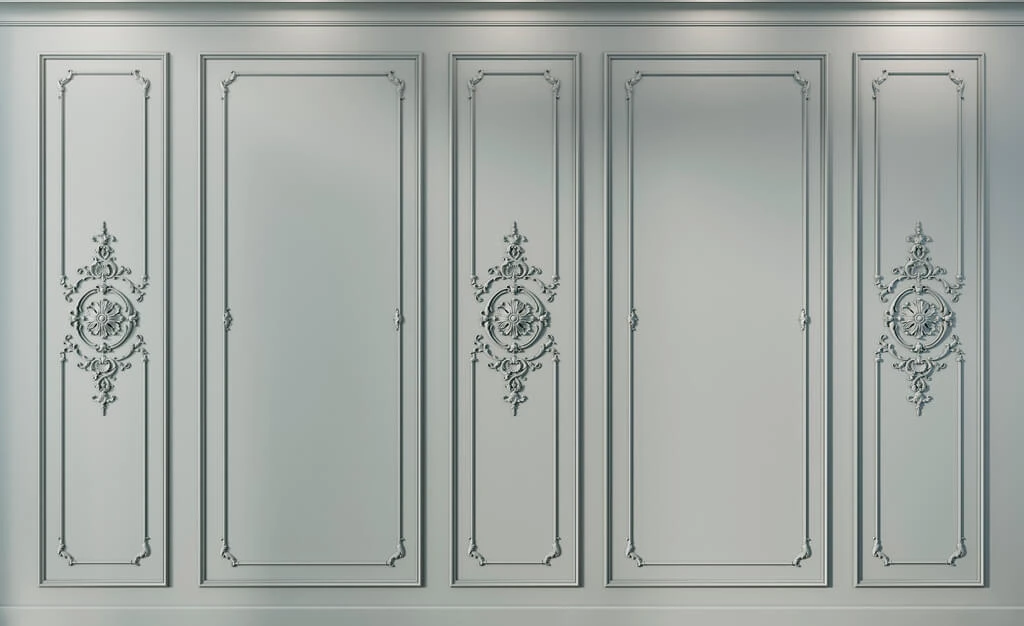
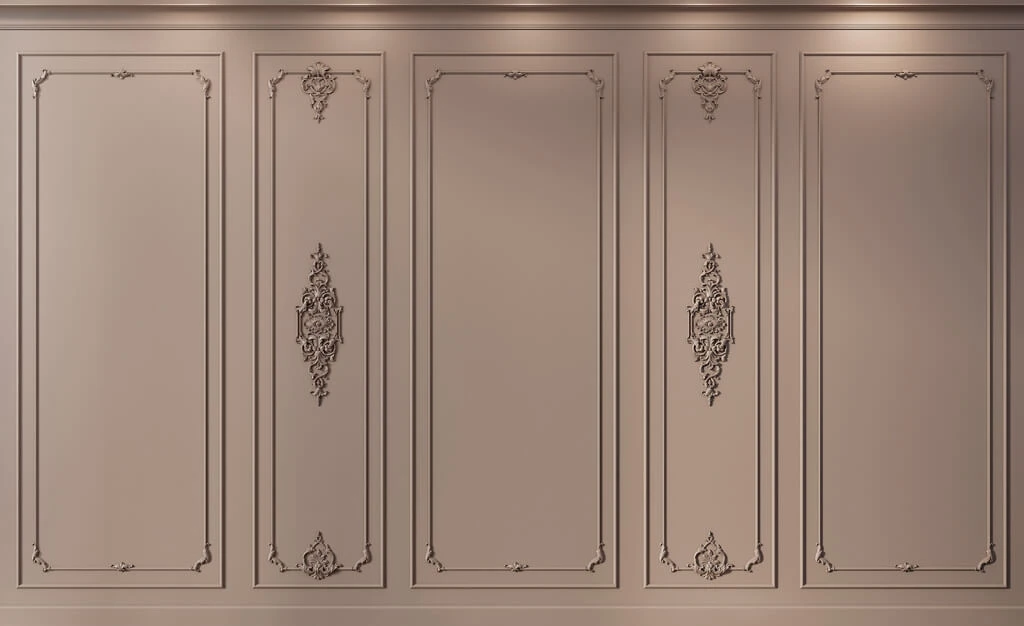
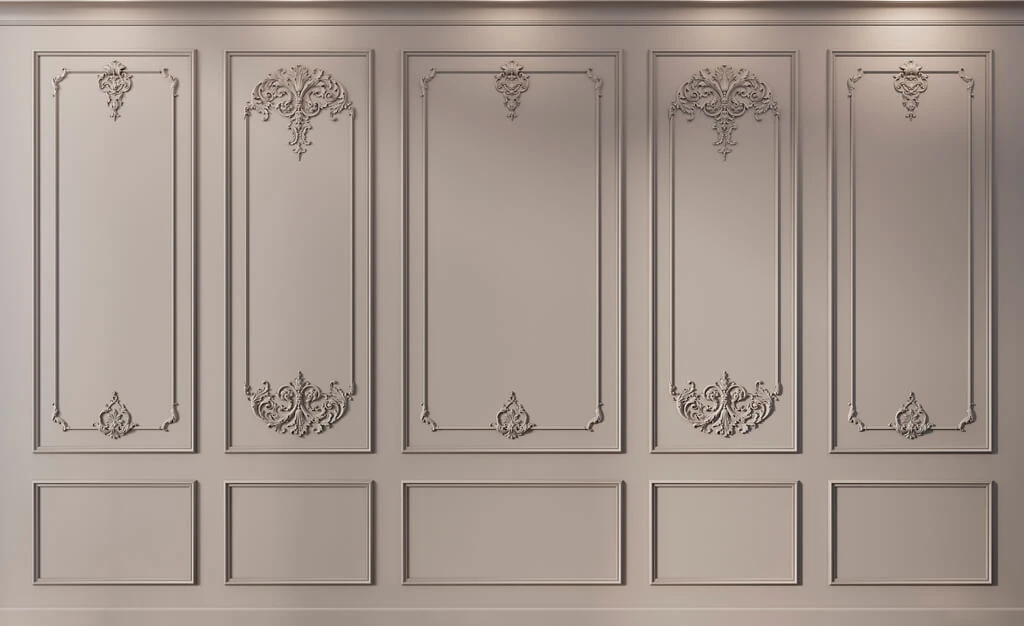
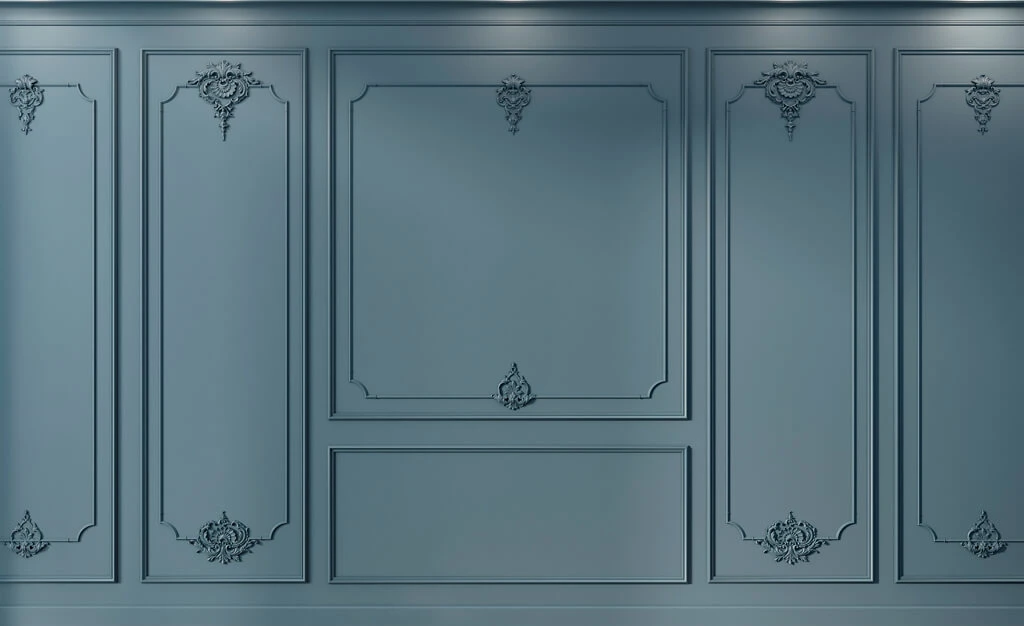
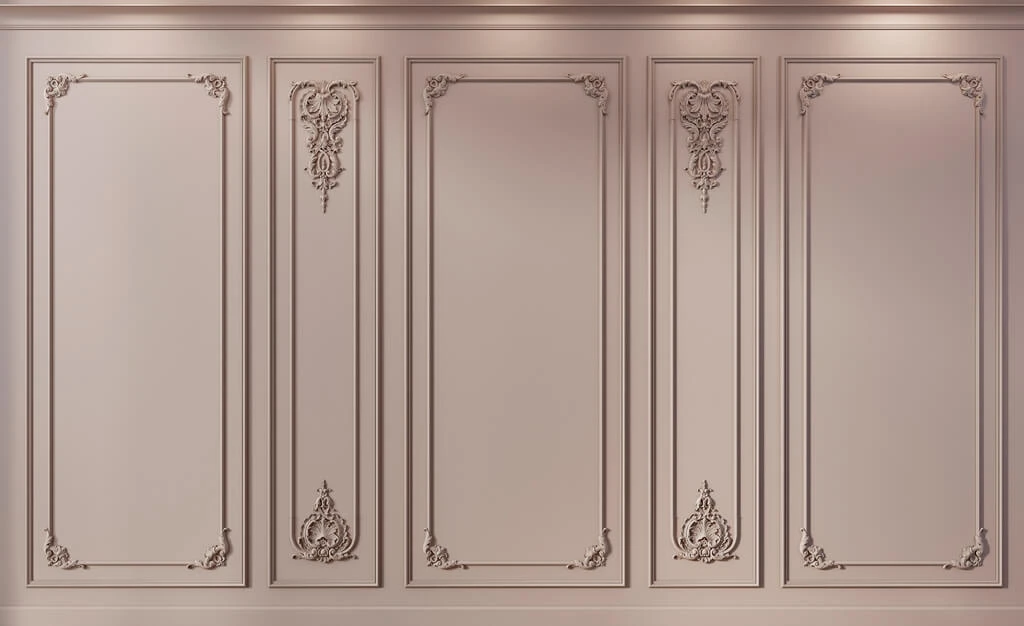
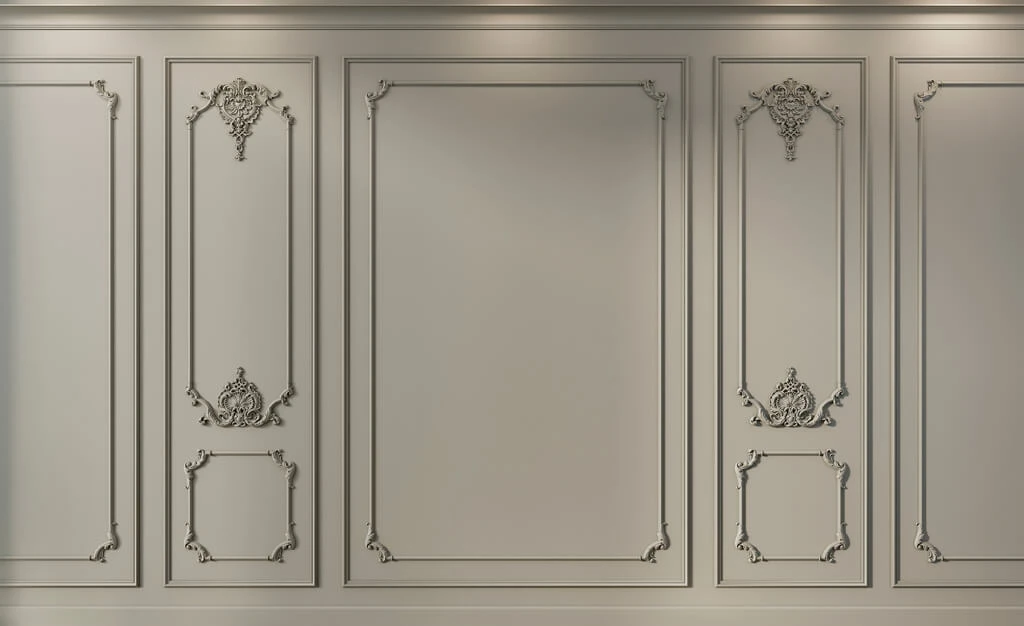
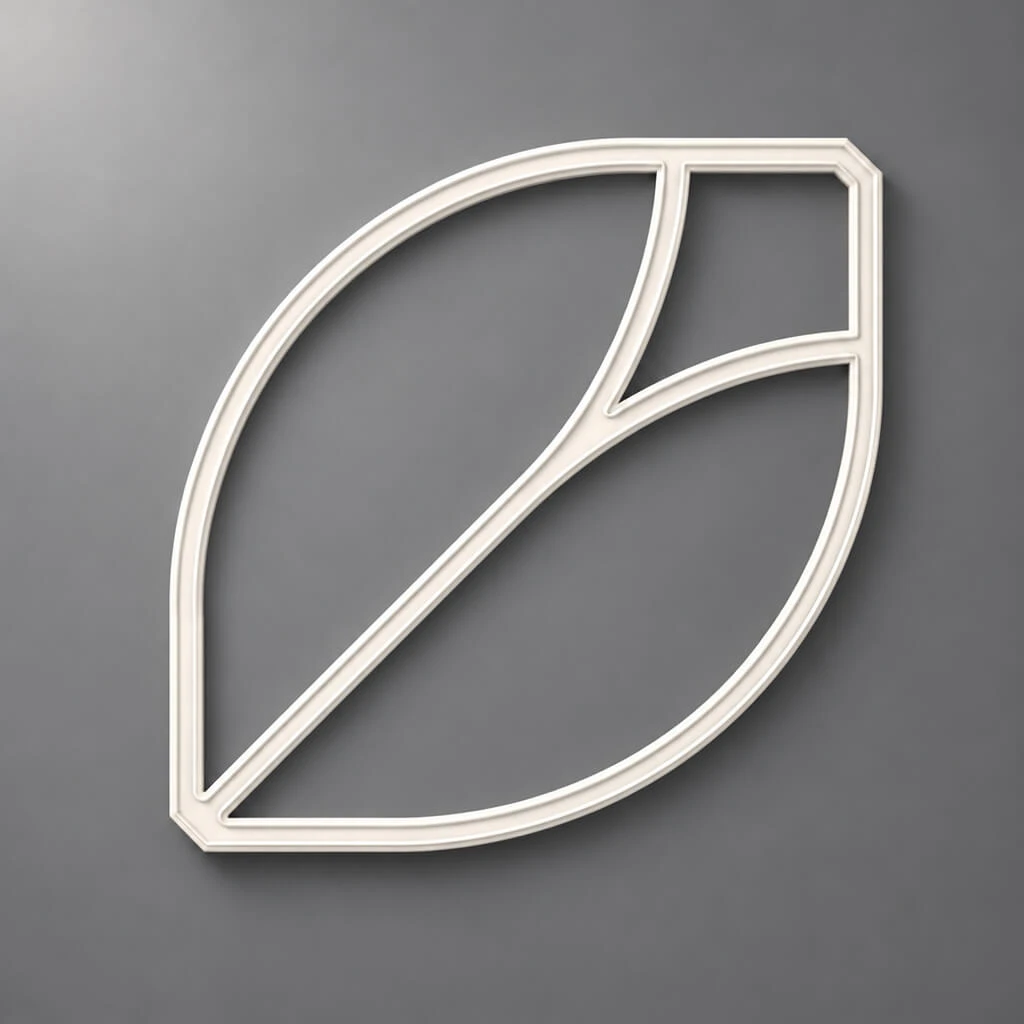
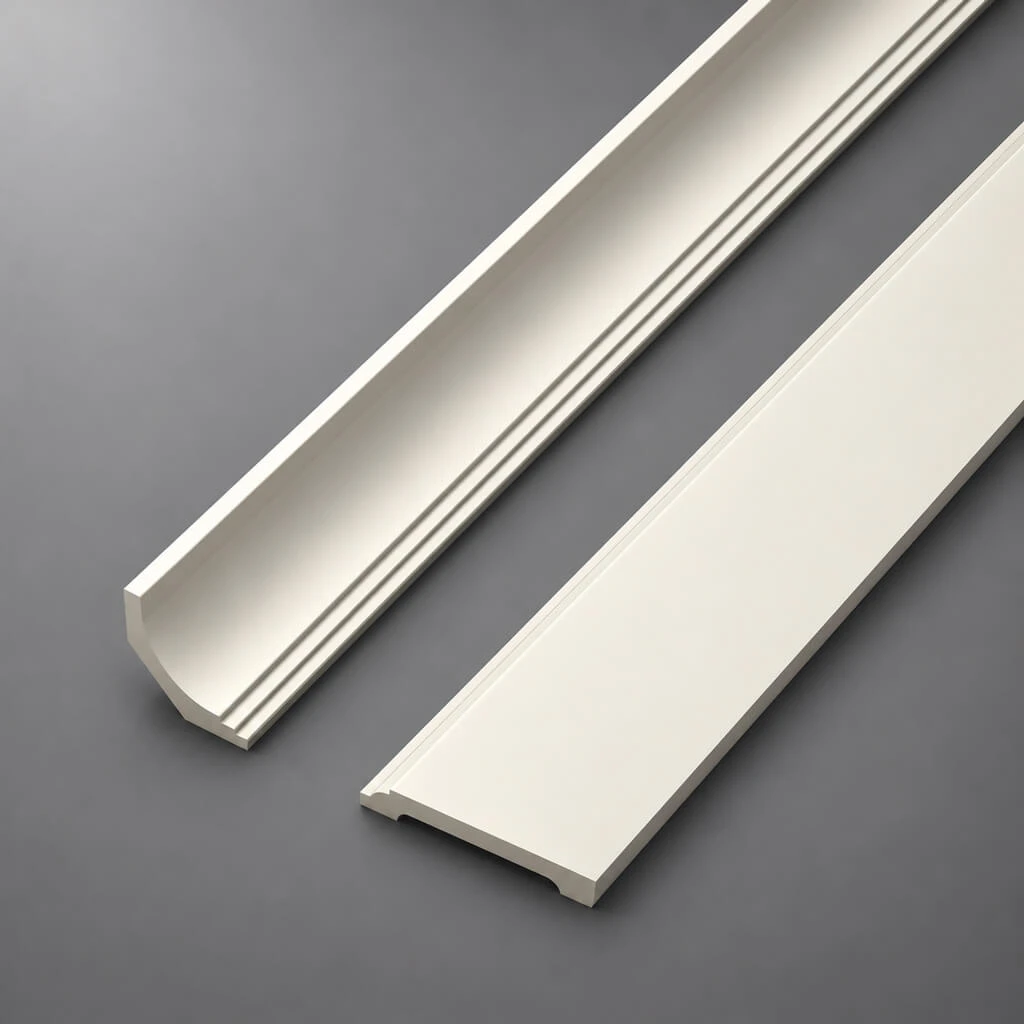
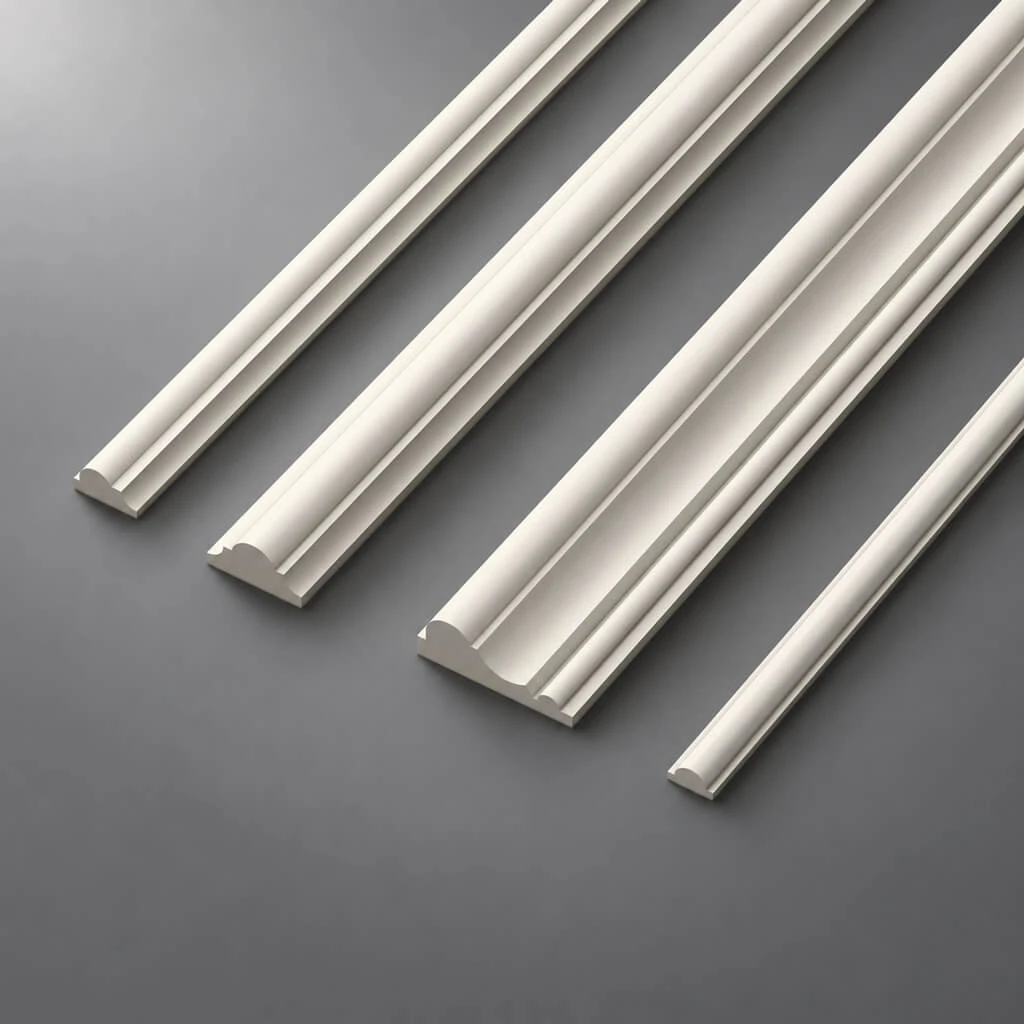
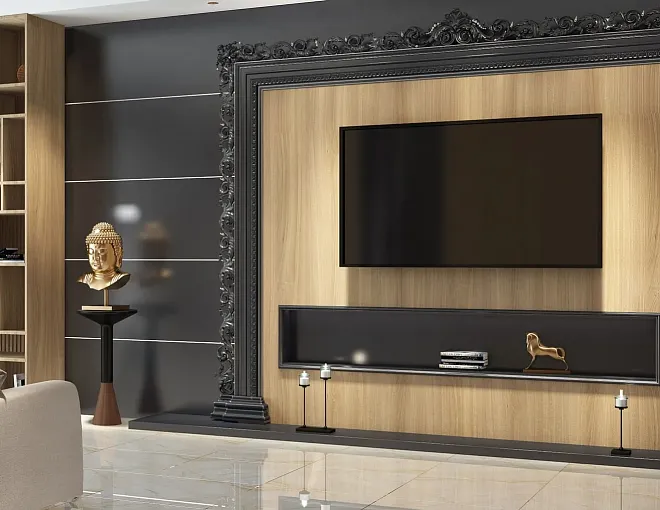
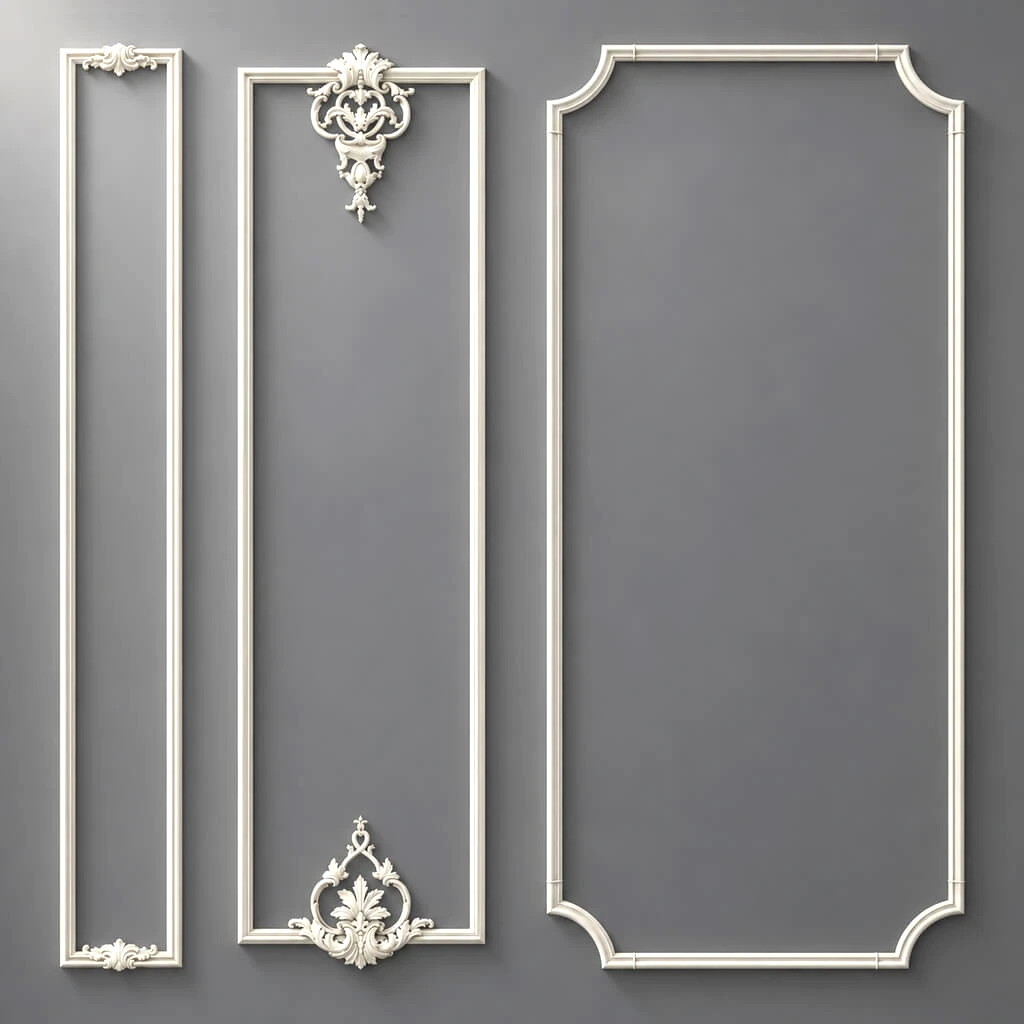
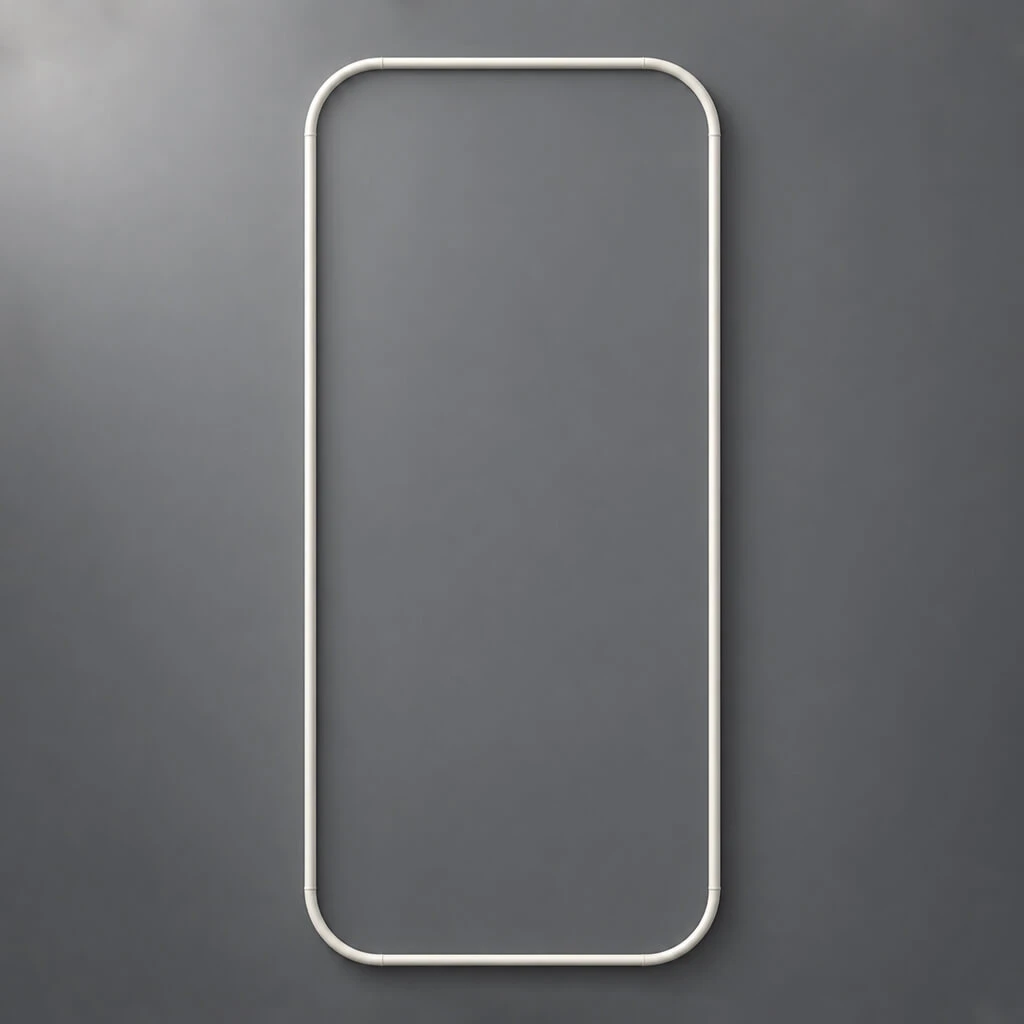
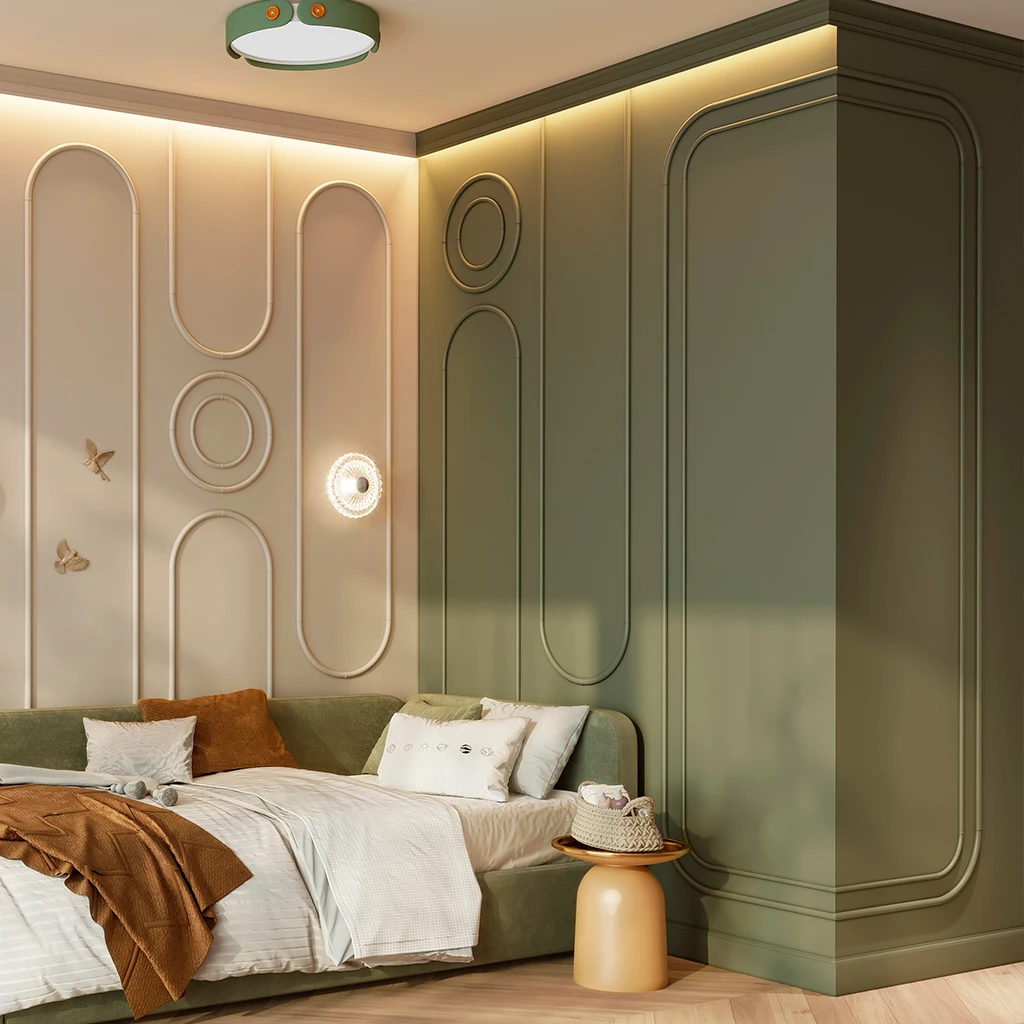
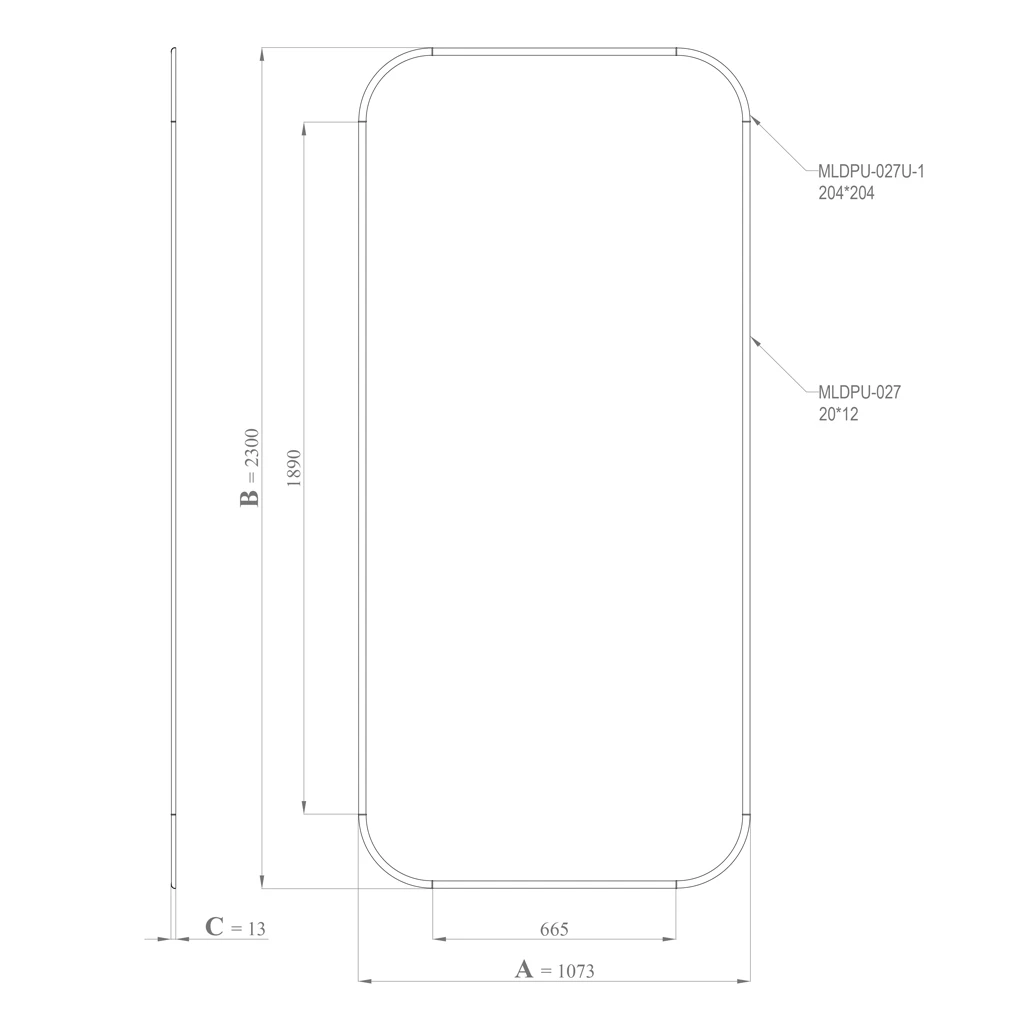
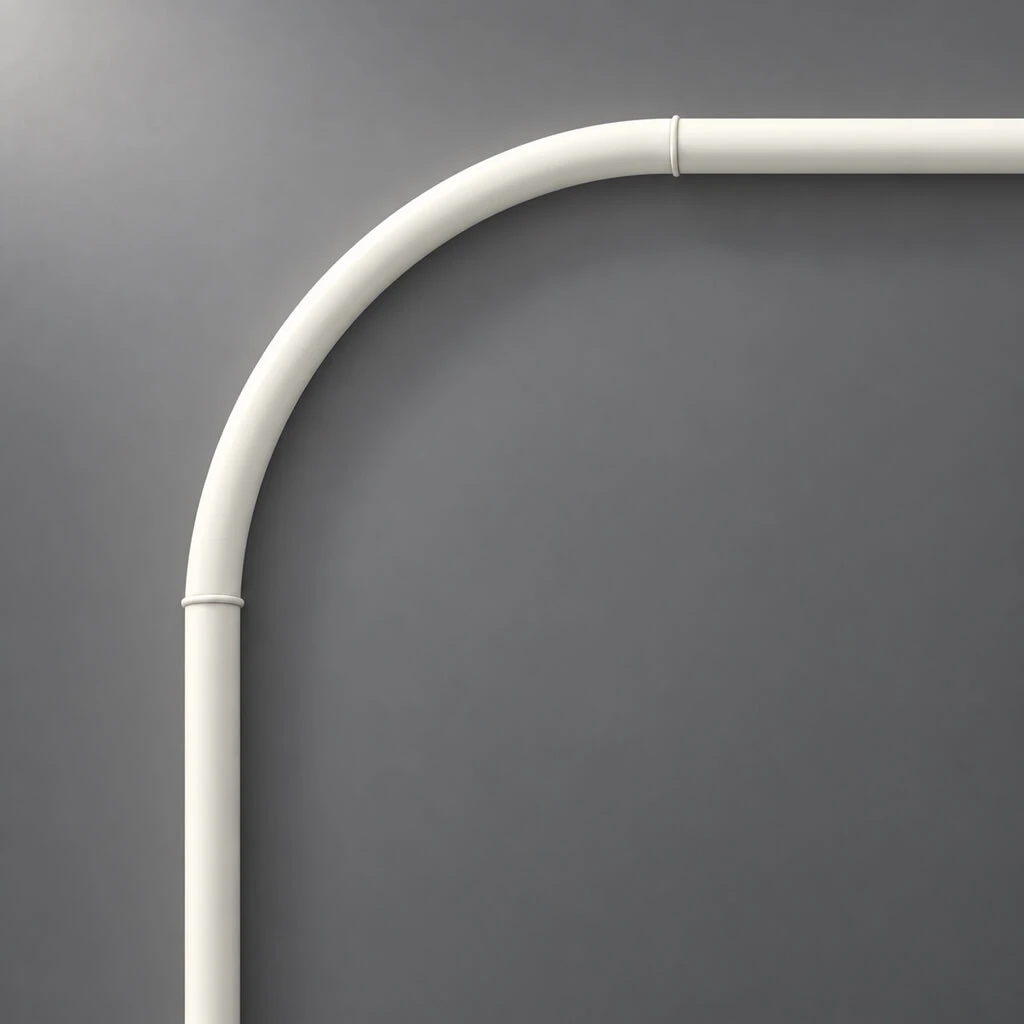
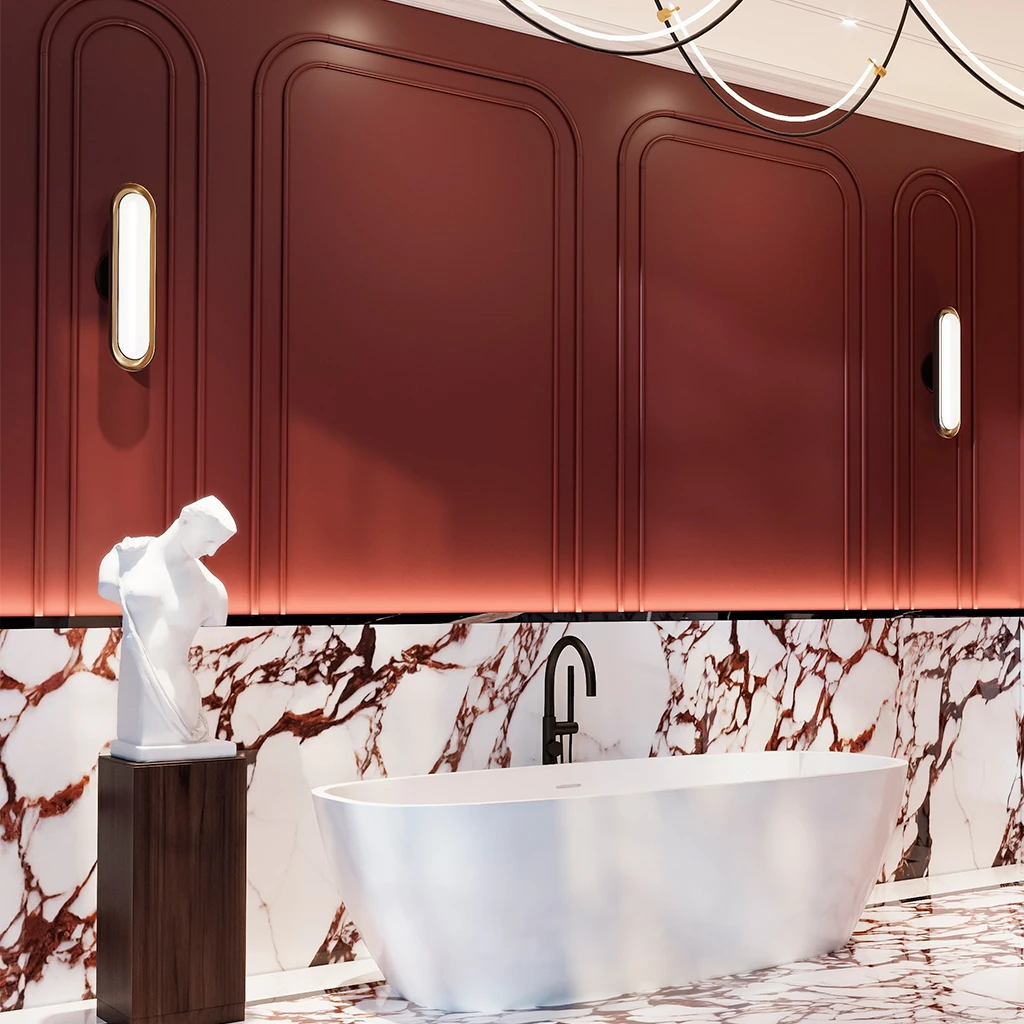
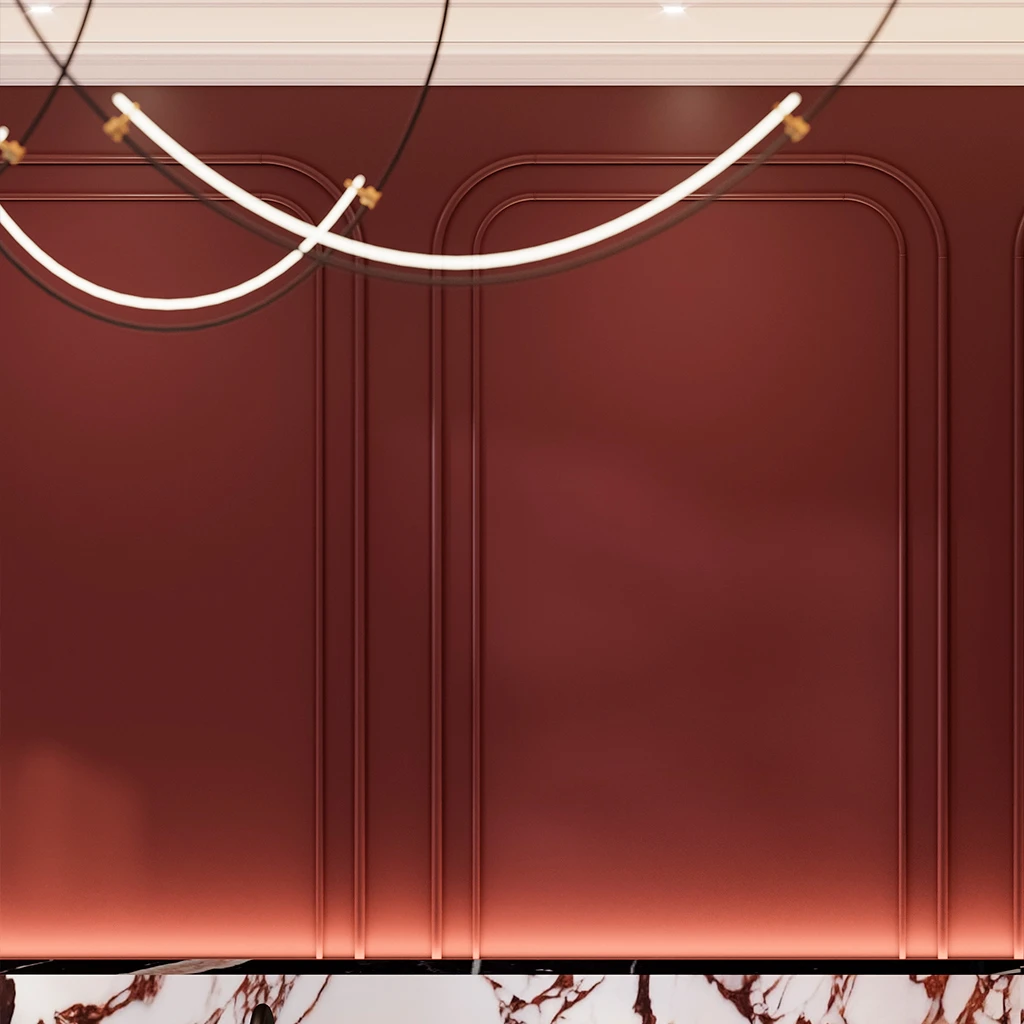



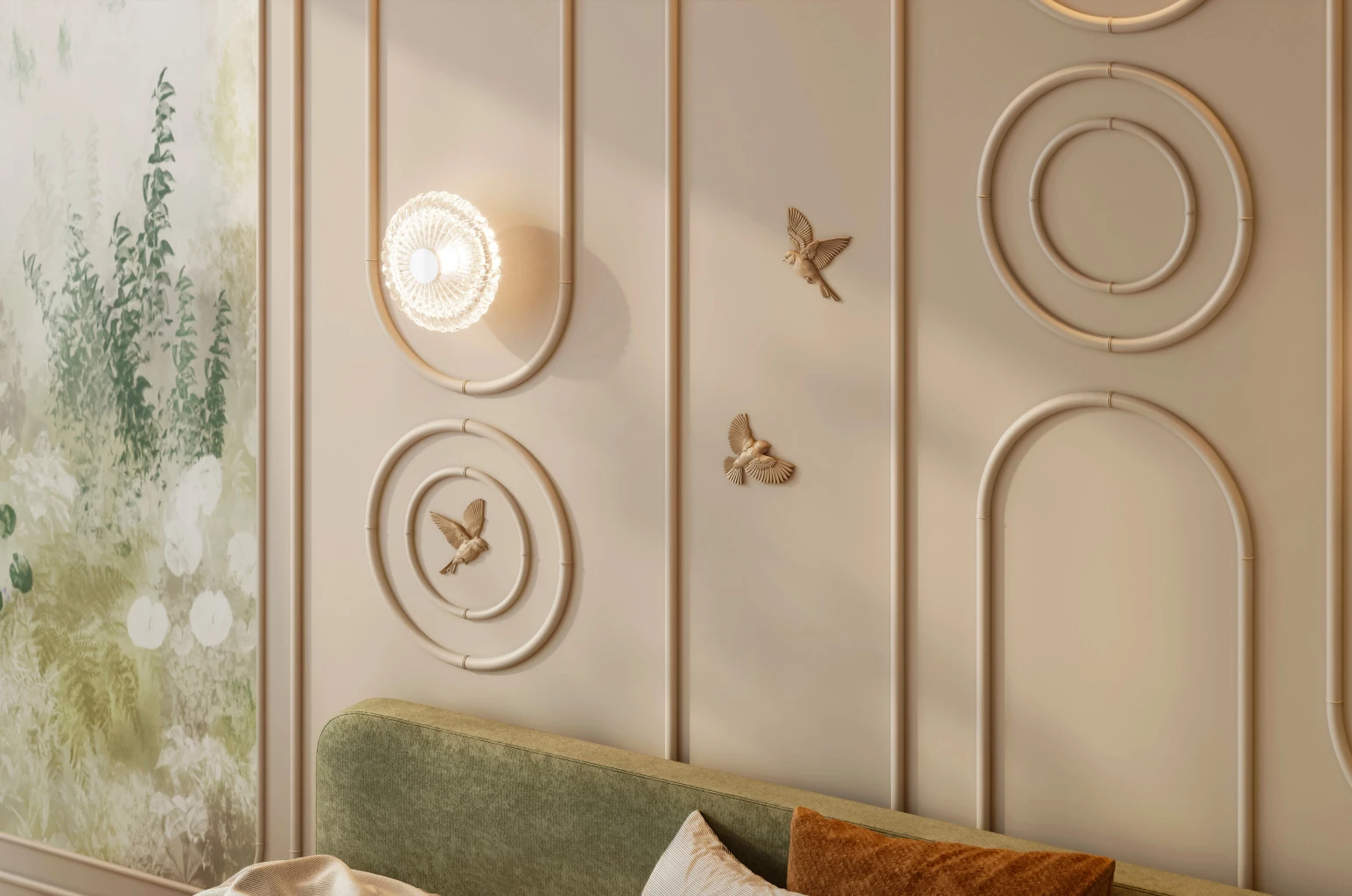
The rounded corner element softens the strict geometry of the frame and creates a balance of conciseness and expressive detail characteristic of Japandi. The thin moulding forms an elongated contour, preserves plenty of free space and sets a calm architectural rhythm on the wall without decorative overload.
The ready-made wall decor set is already assembled as a complete composition. It can be used on its own or incorporated into a more elaborate design together with other CPU items from the Japandi collection. For a different configuration, the mouldings and corner elements of the collection can be selected separately and used to create your own solution.
We have been on the market for over 20 years and are ready to offer you the best combination of aesthetics, quality, and practicality. Our polyurethane is not just a material, but a reliable foundation for flawless details, resistance to moisture and cracks, as well as convenient and quick installation. The company's success began in 2002, when two artists – Andrey Ragozin and Evgeny Tsapko – created a small creative workshop for making carved wooden products. The work of the craftsmen was quickly noticed, and within a year they were invited to participate in the reconstruction of the Konstantinovsky Palace in Strelna.
Every product in our range is the result of years of experience, thoughtful technology, and attention to detail. We constantly update our collections, follow and shape trends in interior design ourselves. From elegant neoclassicism to bold Art Deco, you will find the perfect accent for the interior of your dreams.
Choose durable polyurethane decor STAVROS — beauty proven by time and real projects, not just words.
We save your time, peace of mind, and budget
We solve your tasks with maximum speed
Streamlined process reduces all risks
Quality service regardless of order volume
Reliable partner — the foundation of your business
Our showrooms are located in Saint Petersburg and Moscow. Production is located in Saint Petersburg.
Moscow contacts: /contacts_all/
Contacts of Saint Petersburg: /contacts_all/
Send us the product codes, quantities and delivery destination. Contact our team to confirm availability and order details.
Please contact us to confirm shipping availability, costs and delivery times for your destination.
Delivery cost depends on the size, weight of the item, and delivery address.
Please ask our team to confirm shipping costs and delivery arrangements for your destination before placing an order.
Prices and availability of items on the website are always current. Data is updated daily.
Note: items in stock are stored on the warehouse in unpolished form and shipped within 3 working days.
If the item is not in stock, average production time: 5–10 working days.
This is the quality of polishing of the items.
Standard — machine polishing, at a more attractive price.
Prestige — detailed hand polishing, items do not require further work.
More details: /information/kachestvo/
This is the type of veneer of the items.
Under enamel: produced by gluing wooden laminates without color and texture matching. Contrast tonal and textural differences are noticeable. This blank should be chosen if the item is intended for opaque coating.
Under tinting: produced by gluing wooden laminates with color and texture matching. Tonal and textural differences may occur. This blank should be chosen if the item is intended for semi-transparent finish.
More details: /information/kachestvo/
Beech — dense, non-porous wood, most often used for items covered with enamel.
Oak — dense, porous wood with clearly visible natural grain. Due to its strength and decorative properties, it is often used in items with semi-transparent coating, highlighting the wood pattern.
Custom-made, if non-standard items are required, we can produce products from other types of wood, including blanks provided by the customer, manufactured according to our technical specifications.
All our furniture legs can withstand a vertical load of at least 100 kg.
Average production time for custom-made items: 5–10 working days.
Most items are stored on the warehouse in unpolished form. We need time to polish and pack orders.
Yes, we manufacture non-standard items according to individual projects, but we only accept orders with a minimum quantity.
We can manufacture items of the desired size, but we only work with bulk orders. For details, please consult the sales department manager.
Yes, some of our products can be used outdoors. For example, polyurethane items, as well as carved door casings made of pine.
Other items are produced to order using PUR glue, if minimum quantity is available. No warranty is provided for such products, as outdoor conditions are considered aggressive.
Please contact our team to confirm available finishes, minimum quantities and a quotation for your order.
More details: /information/sovety/
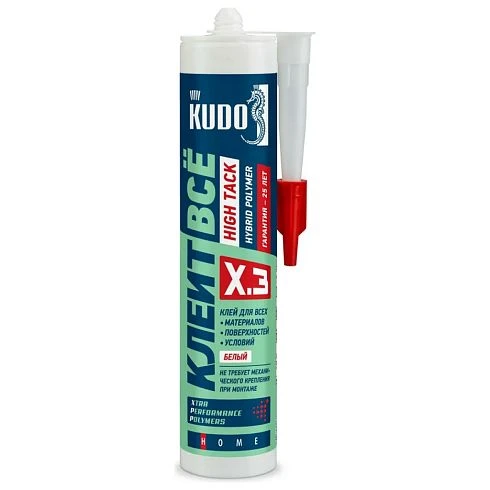
Apply adhesive to the decor. Place it on the surface and press briefly. Then, lift the decor from the surface and leave it open for 3–5 minutes. Press the decor firmly onto the surface and hold for 5–10 seconds.
More details: /information/sovety/
Ideally, you should prepare a design project before placing an order.
You can do this yourself by downloading drawings of our products from our website, or you can order a project from us.
If the number of decorative elements and fittings is small, our company's manager can assist you with selection.
Unfortunately, this service is not provided.
The packaging method depends on the type of items, but in each case, we ensure sufficient protection for safe transportation.
We most often use corrugated cardboard and stretch film. Fragile items are additionally secured on a rigid base to prevent damage during transport.
Please confirm the minimum order quantity for your selected products and finishes with our team.
Please contact our team to discuss measurement and installation requirements for your project and destination before ordering.
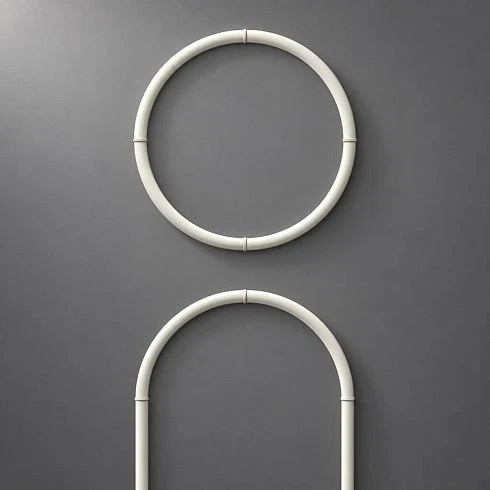
The defining detail is the rounded change of direction. Instead of cutting every meeting point into a sharp square, the compatible corner component lets the molding line move through a controlled curve. That small difference gives the outline a softer character while maintaining the architectural clarity expected from contemporary decorative wall molding. CPU-3-1 can frame a narrow focal area, define a feature behind furniture, or become one element in a broader wall design. The finished result depends on its position, the surrounding wall margins, and the chosen paint finish.
Before choosing a wall molding kit, distinguish three measurements: the overall proposed composition, the individual molded corner, and the uncut length of each straight profile. They describe different things and should not be mixed during quantity planning.
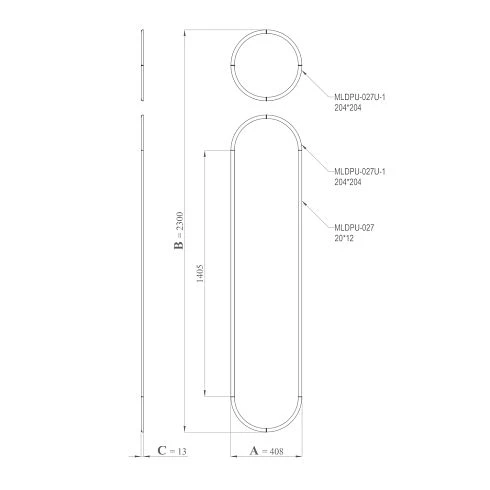
| Item | Published specification | Practical meaning |
|---|---|---|
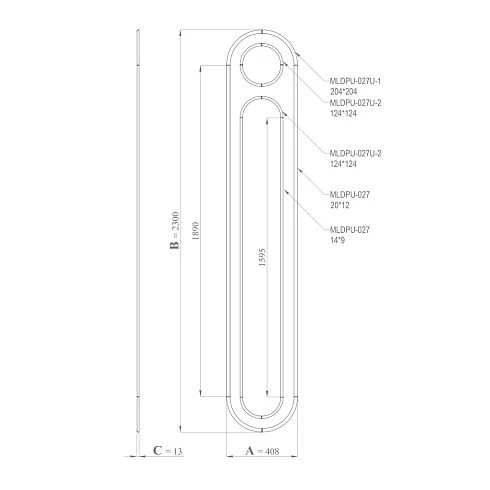
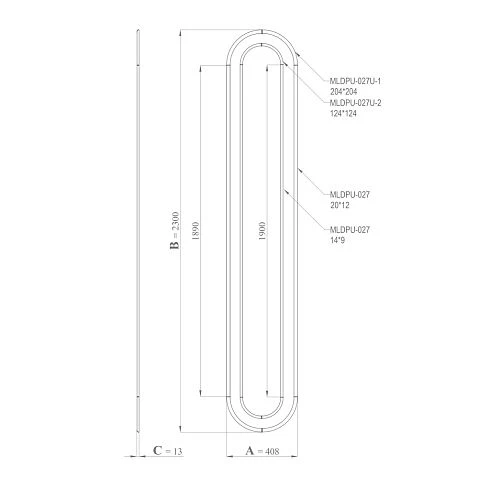
| CPU-3-1 reference frame | 1073 x 2300 x 13 mm / 42.24 x 90.55 x 0.51 in | Outside reference arrangement; not a cut list |
| Corner: MLDPU-027U-1 | A = 204, B = 204, C = 13, D = 23, L = 287 mm | Selected corner variant in this composition |
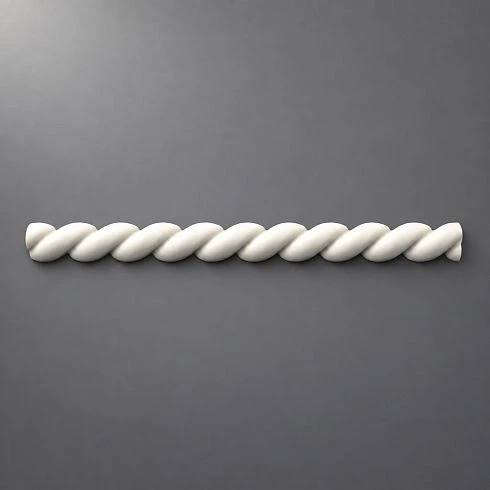
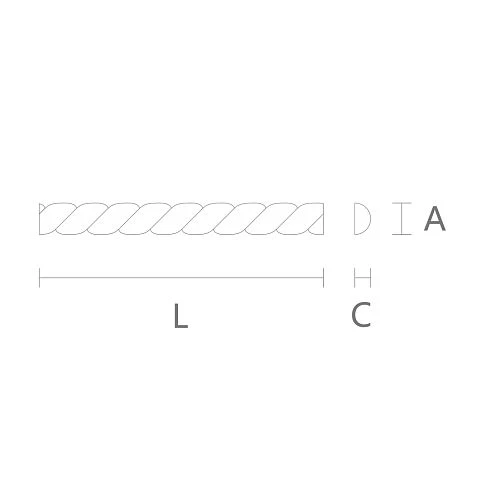
| Straight: MLDPU-027 | A = 20, C = 12, L = 2600 mm | Compatible half-round polyurethane molding stock |
| Material | Polyurethane, both listed component types | No primed MDF profile is listed for CPU-3-1 |
| Design family | STAVROS Japandi | Softly rounded, restrained architectural wall detail |
Dimensions follow the manufacturer's A/B/C/D/L notation. On the rounded corner, C = 13 mm and D = 23 mm are separate drawing parameters, not interchangeable statements about maximum clearance. Refer to the product drawing when those values affect neighboring trim, furniture, or wall fixtures.
A frame measuring 42.24 inches wide is not made by cutting a straight piece to that dimension and repeating it four times. The rounded components occupy part of the outline, so each linear run depends on the tangent and junction points shown in the drawing. The 102.36-inch (2600 mm) profile length is the length of an individual stock molding, not the assembled frame height. Check the number of pieces and the complete takeoff against the current order specification before cutting.
MLDPU-027 is sold in more than one cross-section. The CPU-3-1 composition specifies 20 x 12 mm, while another MLDPU-027 option measures 14 x 9 mm. The two sizes share a name but do not have identical junction geometry. The 204 mm MLDPU-027U-1 corner is intended to transition into the 20 x 12 mm version for this frame. If you replace it with the thinner profile, the molded line may not meet cleanly at the corner. Review the MLDPU-027 half-round molding options rather than assuming any profile bearing 027 is suitable.
Rectangular picture frame molding often uses four straight lengths meeting at mitered, right-angle corners. That approach looks crisp and can be appropriate for traditional paneling. CPU-3-1 creates a related wall-frame effect but changes the visual pace at the turns. Its corner element creates a softer passage between the vertical and horizontal parts of the outline. The result is still geometric: the frame remains orderly and proportioned. It simply avoids the pointed character of a conventional square meeting.
The corner MLDPU-027U-1 has a smooth contour rather than a leaf, scroll, or rosette motif. This makes it useful when the goal is architecture rather than ornament. In a monochromatic finish, the eye follows one continuous raised line around the frame. The change of direction becomes visible in the highlights along the curve instead of through a separate contrasting decorative insert.
The manufacturer offers MLDPU-027U-1 in several sizes; the 204 x 204 mm version is used in the published CPU-3-1 composition. Its reference L dimension is 287 mm. Other variants may be appropriate for a redesigned custom frame, but their overall shape and footprint differ from the pictured reference. Do not substitute a smaller corner while expecting the same finished proportions.
Rounded wall trim is effective when repeated with intention. A single CPU-3-1 composition can define an accent area, while a sequence of similar outlines can give a long wall an even rhythm. The spacing between frames is not a fixed product dimension. It needs to respond to doors, furnishings, existing baseboards, and the visual width of the wall. Leave enough unadorned space so the rounded contours remain legible.
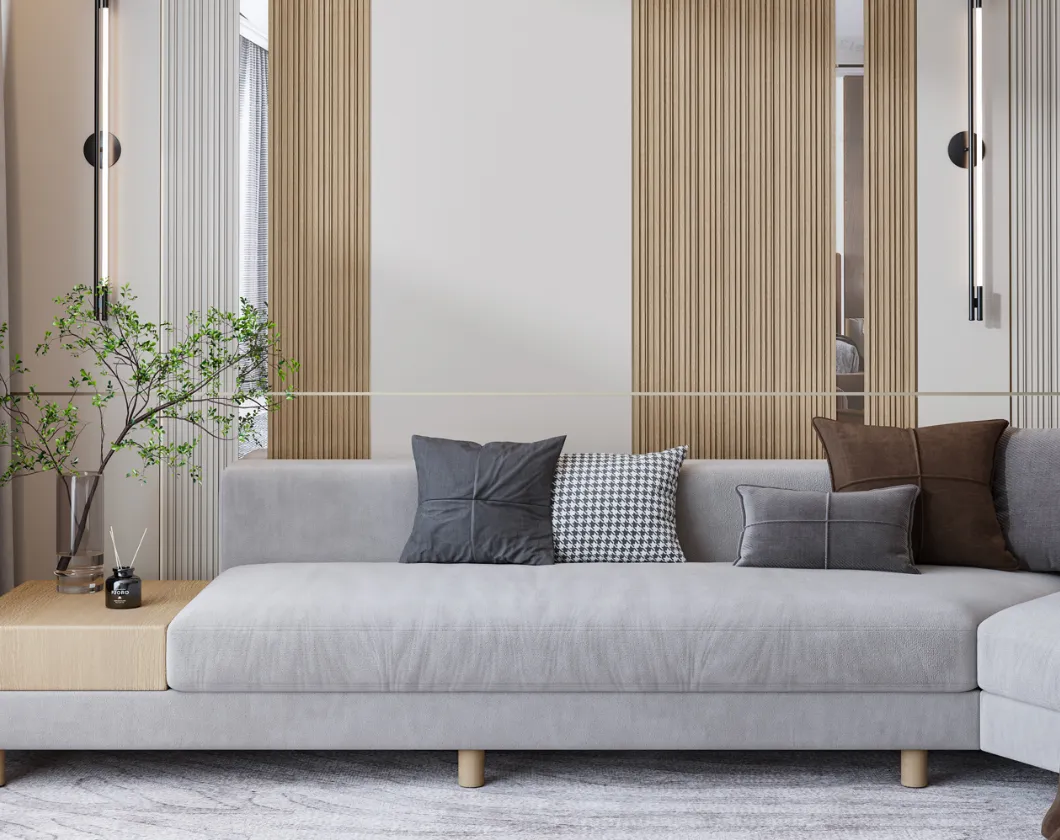
Japandi combines an appreciation for Japanese restraint with the practical comfort and warmth often associated with Scandinavian interiors. In an American living space, this usually means a clear floor plan, calm natural colors, wood or wood-look surfaces, textured fabrics, and fewer carefully selected details. A molded polyurethane wall frame does not itself become a natural material because it is used in a Japandi room. Its role is to provide a quiet architectural outline that complements the materials around it.
The CPU-3-1 profile is well suited to that role because it has a smooth, uncomplicated surface. It does not require high-contrast paint or additional ornament to communicate its form. Against warm white or muted taupe, the line appears mainly through shadow. Against a deeper clay or soft charcoal wall, it can create a more defined but still restrained composition.
An effective Japandi accent wall leaves areas where the eye can rest. Avoid packing every available square foot with decorative frames. Instead, place the composition where it supports a sofa, a bed, an entry console, or a quiet piece of art. If the room already includes prominent wood slats, shelves, or textured wall coverings, consider reducing the number of molded outlines so the elements do not compete.
Natural oak tones, linen upholstery, stoneware, woven textiles, and matte wall finishes can contrast pleasantly with the smooth molded contour. The frame can sit on a painted wall next to a wood-paneled section, or it may enclose a subtle color shift without requiring a separate panel insert. Such decisions are design options, not requirements of the kit. Any adjacent finish still needs to be suitable for its own substrate and installation environment.
The published reference width is 1073 mm (42.24 inches), and the reference height is 2300 mm (90.55 inches). These values help determine whether the proposed outline suits a particular wall section. Begin with the full usable surface, not just the area that looks empty in a photograph. Measure the distance between door trim, windows, cabinetry, wall controls, and large furniture.
A tall frame needs room to breathe. Decide where its lower edge will sit relative to the baseboard, then check the remaining margin beneath crown molding, ceiling trim, or the ceiling itself. The reference height does not prescribe a universal floor-to-frame distance. In rooms with ordinary ceilings, even modest changes to the top and bottom margins can affect whether the composition feels centered or crowded.
Behind a sofa, the visible sides of the outline may matter more than whether it sits at the mathematical center of the entire wall. Behind a bed, the headboard creates its own centerline. In a hall or entryway, the nearby door casing may establish the most relevant vertical reference. Make a scaled elevation or mark the proposed outline with removable tape before final attachment. Check the effect from the doorway and normal seating positions.
Identify switches, receptacles, thermostats, wall sconces, security devices, and access panels before laying out the molding. A raised profile must not cover a required service point or interfere with a fixture plate. Mark the corner footprints as well as the straight line: a 204 mm corner takes up more surrounding wall area than the narrow 20 mm face of the straight profile might initially suggest.
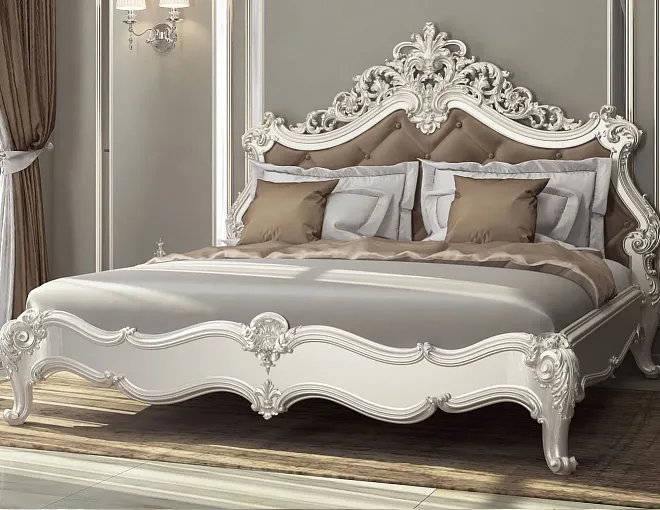
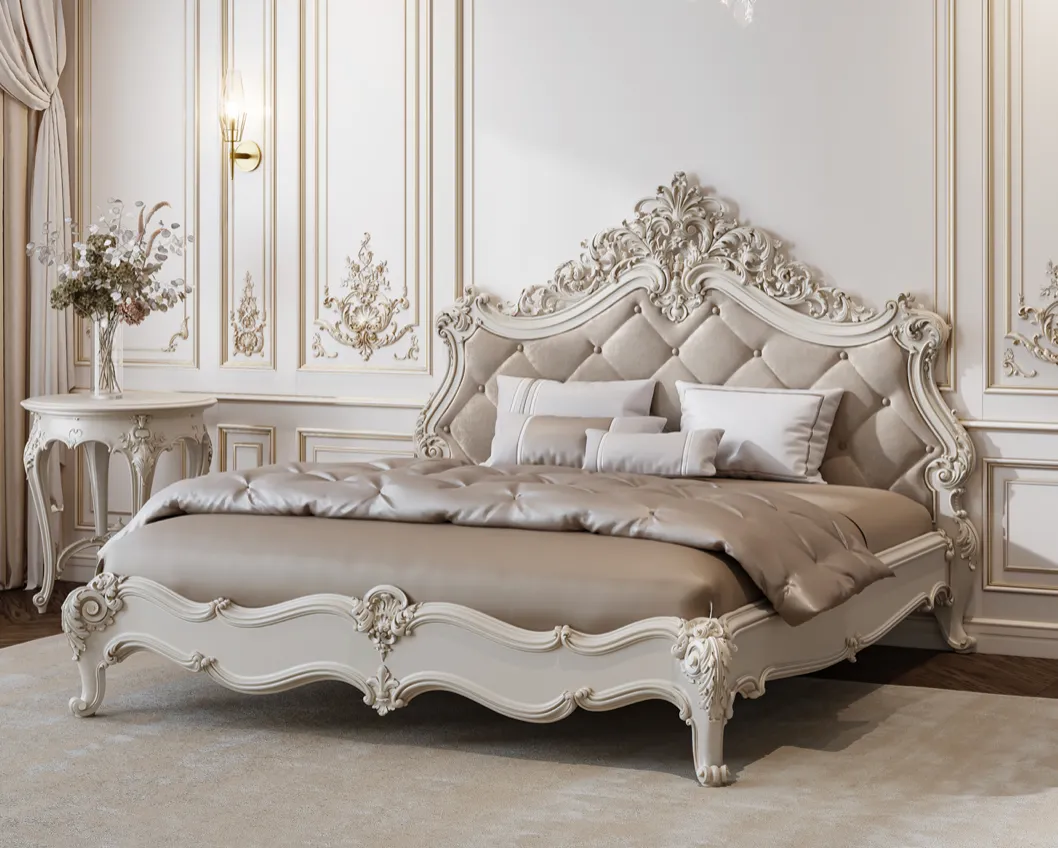
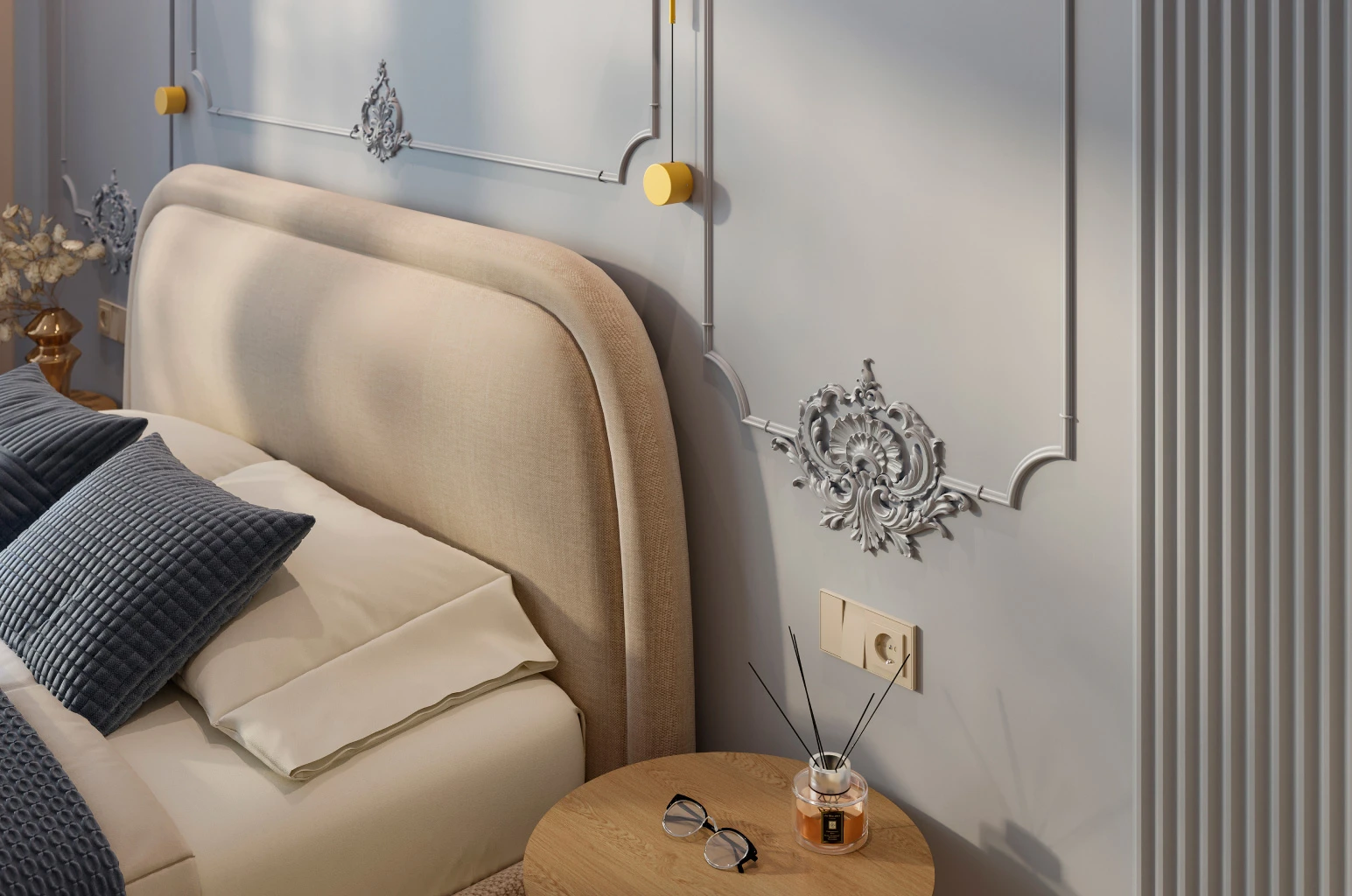
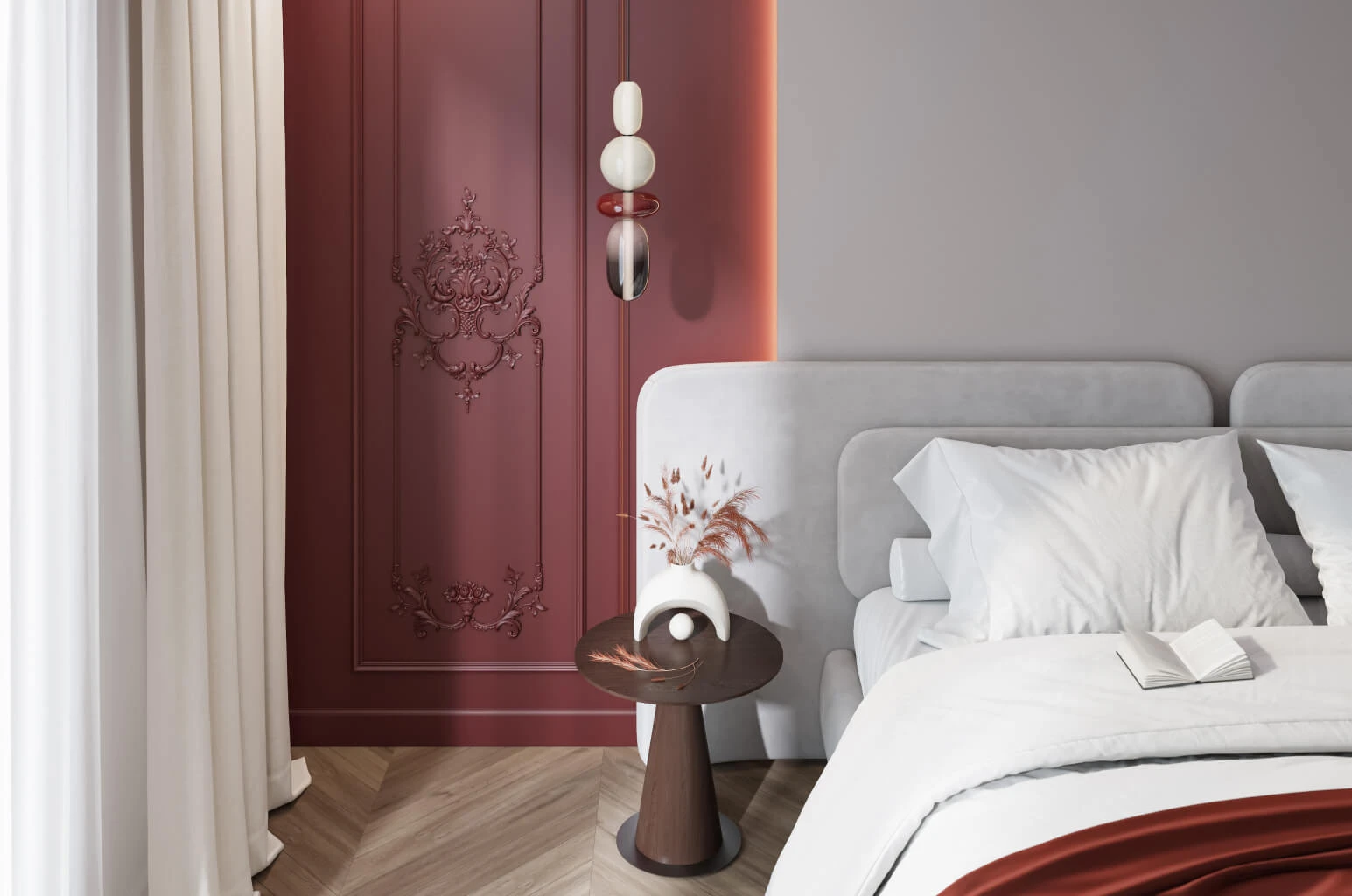
A wall frame behind a headboard can create an architectural focal point without a large piece of art. CPU-3-1's gently rounded outline works particularly well when the bed, bedding, and bedside tables already have soft forms. The 42.24-inch reference width may suit a particular zone rather than the full width of a king-size bed; evaluate the exact composition against the headboard dimensions instead of assuming one frame must span the furniture. A centered arrangement or a repeated set of frames may be considered depending on the wall.
For a subdued look, choose a compatible finish close to the wall color. Warm ivory, mushroom, and clay-colored paint allow the smooth molding to appear through shadows. A bright white contrast creates a more graphic result and may feel less understated in a small bedroom. Place the highest parts of the frame where they remain visible above the headboard and are not obstructed by a lamp or artwork.
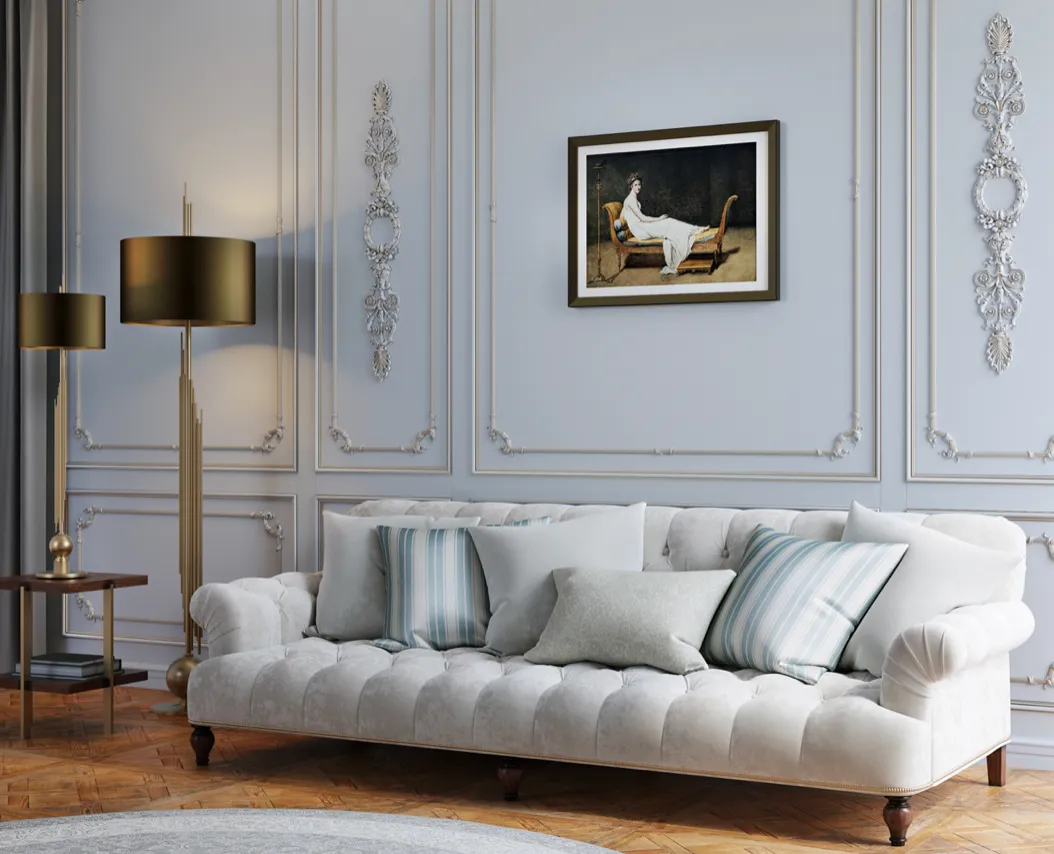
In a living room, the reference composition can create one measured decorative field beside or behind the seating area. Its continuous curve softens the transition between vertical and horizontal lines, particularly when the furniture has rounded arms, organic coffee tables, or low-profile silhouettes. If a television or substantial shelving already dominates the room, avoid adding multiple frames of competing scales. A single well-positioned wall molding frame can be more effective.
When considering a gallery wall, decide whether the framed molding surrounds an artwork group or acts as a decorative element in its own right. Do not let the molding crowd the edges of hanging pictures or fixtures. The available clear area inside the frame must be measured after accounting for the molding and curved-corner footprints.
A dining area can benefit from a clear, repeated wall rhythm. CPU-3-1 offers a softer alternative to heavily stepped traditional panel trim, making it appropriate for dining spaces with simple wood furniture and upholstered chairs. One wall feature can anchor a sideboard or create visual definition without enclosing the dining area physically. In a larger room, repeated outlines should share consistent spacing and alignment.
Take care around chair backs, wall-mounted lights, and furniture that may contact the wall. The molding is decorative; it should not be treated as an impact guard or chair rail unless the manufacturer's technical documentation specifically approves that use. Position the profile outside likely contact zones where practicable.
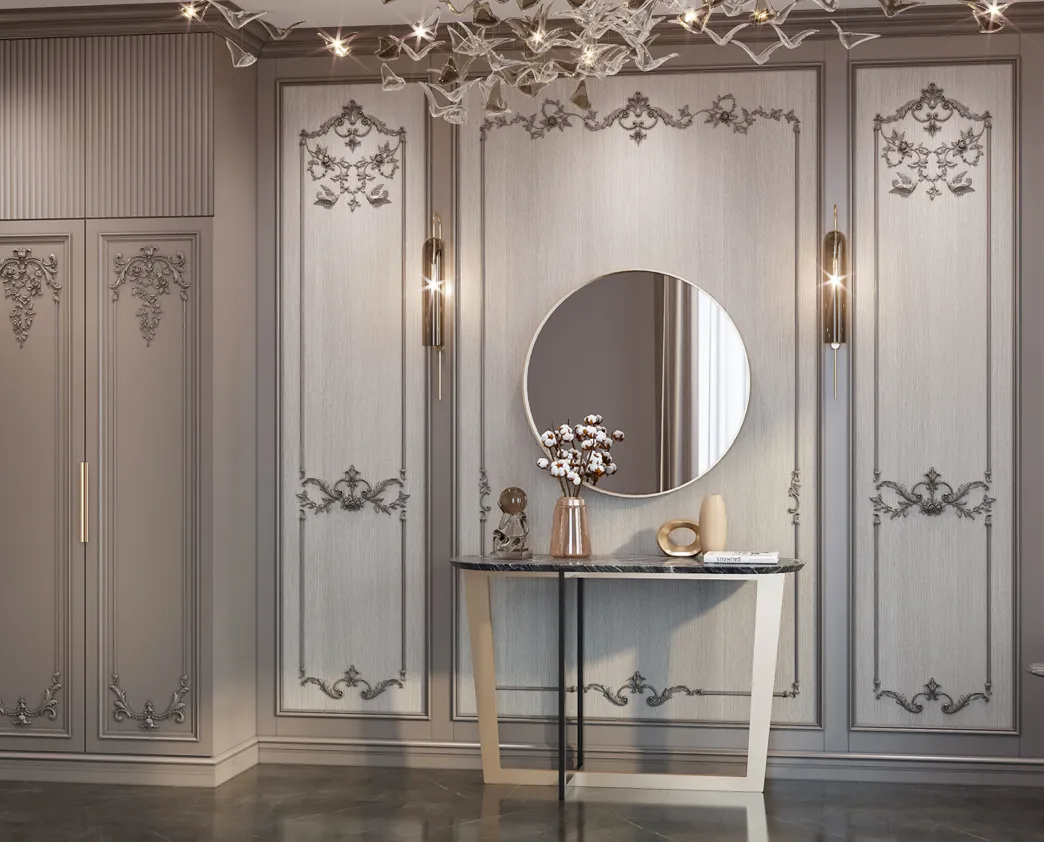
An entryway often has limited surface area between doors and closets. The 42.24-inch frame can be evaluated as an accent on one uninterrupted section, with a console or mirror positioned nearby. The rounded shape can echo curved mirrors and simple hardware without creating an overtly classical entry. In a home office, a lightly painted frame adds some depth to the background of a desk or reading chair while leaving the wall visually quiet.
Neither location requires a special decorative finish. A carefully prepared wall and a consistent low-sheen paint may be sufficient. The exact choice should reflect available light, other trim profiles, and the scale of the furniture.
CPU-3-1 differs from the mixed polyurethane-and-MDF sets in other STAVROS collections. Both named parts in this particular composition are polyurethane. The distinction matters when comparing material specifications or planning a compatible finishing and attachment system.
The corner is a molded transition rather than a conventional miter cut. The selected version is specified by A = 204 mm, B = 204 mm, C = 13 mm, D = 23 mm, and L = 287 mm. In the manufacturer's individual catalog, this component also has smaller variants. The 204 mm footprint is therefore part of the identity of the CPU-3-1 design, not a dimension shared by every item with the MLDPU-027U-1 designation.
Examine the MLDPU-027U-1 polyurethane corner options if you are planning a custom variation. The corner should be chosen together with the correct profile cross-section. A smooth molded curve is valuable only when the straight runs join it cleanly.
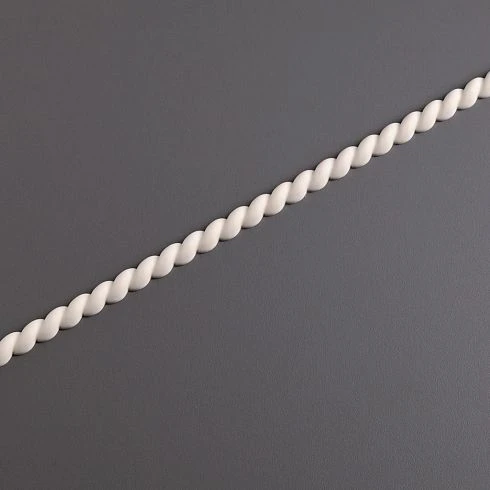
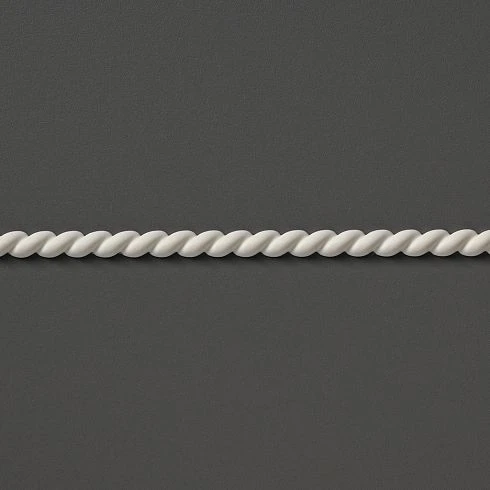
The straight component has a smooth convex, half-round face with no floral motif. Its specified size for CPU-3-1 is A = 20 mm and C = 12 mm, with a stock length of 2600 mm. The profile can produce a delicate shadow line around the framed area while keeping the surface visually uncomplicated. It is not a wood strip, primed MDF length, crown molding, or baseboard: it is a decorative polyurethane profile for this applied wall composition.
Other profiles in the catalog may look broadly similar on screen but create a different junction against the selected corner. Match the exact dimensions before ordering replacements or additional lengths. This is especially important if a room requires a modified reference frame or several repeated compositions.
Start with the manufacturer's 1073 x 2300 mm outline and the selected corner footprints. Establish the wall centerline and the intended outside limits. If the frame is moved closer to a ceiling or furniture edge, recheck the clearances and the visual balance. The displayed dimensions are a reference, not evidence that every room can be fitted without adjustments.
The corner piece replaces part of an otherwise sharp junction. Therefore the straight sections begin and end where the molded corner design dictates, not automatically at the outer corners of the reference rectangle. Do not calculate material needs by multiplying the overall width and height and treating the result as an exact cut length. Set out each curved transition, identify its meeting points, then determine the straight lengths between those points.
Each listed MLDPU-027 straight profile is 2600 mm long. The actual number of lengths needed depends on how the pieces are arranged, joined, and cut, and on whether the composition is repeated. The manufacturer's public itemized table names both components but does not provide a reliably readable purchase quantity in its text-only representation. Confirm the current package contents and cutting diagram with the seller instead of assuming that an illustrated design proves a particular number of stock sticks is included.
A dry fit on a flat work surface can reveal mismatched corners, orientation problems, or insufficient straight length while adjustments remain possible. Record each cut length and label the pieces for their intended position. For more than one frame, produce a separate takeoff for each wall section rather than copying the first list without checking dimensions.
Soft white is a versatile choice when the surrounding room contains pale oak, neutral textiles, or ceramic accessories. Painting the wall and molding in compatible shades of the same color makes the frame appear through light and shadow. The rounded turns become a gentle visual detail rather than a high-contrast graphic.
A warm greige or sand-colored background can make the frame feel integrated with a Japandi palette. Muted olive and clay tones can work when the room includes natural wood and dark accents. Matte or low-sheen finishes tend to emphasize the softness of the profile, although the appearance depends on the coating, light direction, and condition of the wall.
A darker molding against a light wall can emphasize the geometry, but high contrast also draws attention to every change in direction and every joint. For a calm result, consider using a close tonal relationship and reserving stronger contrast for art, furniture, or lighting. Metallic effects and distressed finishes are optional design treatments, not built-in characteristics of the polyurethane.
Choose primer, paint, joint compound, and other finishing materials using the manufacturer's current compatibility guidance for the specific polyurethane. Confirm that the wall coating and the molded surface can be finished together without adhesion problems. Test a small sample when unsure, especially before covering a full installation with a darker or specialty finish.
Check that the mounting surface is secure, dry, clean, and suitable for the approved attachment system. Decorative molding is not a substitute for repairing unstable plaster, major cracks, moisture damage, or structural movement. A curved corner will not automatically hide a noticeably uneven wall. Address significant surface defects and confirm the substrate before final layout.
Use a level and measuring tools to mark the reference lines. Confirm that the orientation of the shaped corner elements produces the expected curve and that the 20 x 12 mm straight profile aligns with each transition. Check the joint while the pieces are still loose. Avoid forcing a mismatched profile into a corner or compensating for poor alignment with excessive filler.
Follow the manufacturer's installation instructions for the particular polyurethane parts and the wall surface. The adhesive, cutting method, support during curing, and joint finish may vary with substrate and room conditions. Neither the existence of a molding set nor a product photograph proves that adhesive, tools, or paint are included. For overhead, unusual, or high-traffic applications, obtain project-specific guidance rather than applying generic wall-decor instructions without review.
After attachment, inspect the continuity of the raised line from several viewing angles. Small gaps and alignment shifts are especially noticeable where a smooth corner meets a straight profile. Prepare and finish the joints in accordance with the selected products, then apply the chosen compatible coating. Keep maintenance expectations realistic: a smooth molded surface may be easier to dust than deeply carved ornament, but care still depends on the applied paint and surrounding conditions.
The broader STAVROS Japandi wall decor collection includes multiple preconfigured shapes and widths. CPU-3-1 is identified by its 1073 mm reference width, rounded MLDPU-027U-1 corners and 20 x 12 mm MLDPU-027 molding. It should not be confused with another arrangement simply because both use the same family of components.
The CPU-3-2 molding decor set has a much narrower published reference width of 408 mm. It may be more suitable for a slim architectural accent when the wall does not have room for CPU-3-1's wider proportions. The CPU-3-3 arrangement uses more than one corner style and more than one linear profile size, creating a different decorative rhythm. Review each itemized specification rather than assuming that one SKU is simply a larger version of the next.
For another composition within the same design family, explore CPU-3-5. The correct choice is the design that fits the actual wall and desired contour, not the one with the highest number of decorative pieces.
No. It is a decorative wall molding composition made from molded corner elements and straight polyurethane trim. The existing wall surface remains visible inside the outlined area unless the installer separately chooses another finish.
The manufacturer gives an overall reference of 1073 x 2300 x 13 mm, approximately 42.24 x 90.55 x 0.51 inches. Those are composition dimensions, not the dimensions of an individual stock molding or corner.
No. The CPU-3-1 specification lists polyurethane MLDPU-027U-1 corners and polyurethane MLDPU-027 straight molding. The materials differ from some Neoclassic Light sets that include primed MDF.
For the published CPU-3-1 arrangement, use the MLDPU-027 half-round profile in its 20 x 12 mm version. The manufacturer's component guidance identifies this match; a similarly named 14 x 9 mm version should not be substituted without checking the junction.
The manufacturer offers several size variants, but changing the corner footprint changes the geometry and may require a redesigned cut plan. The standard CPU-3-1 reference uses the 204 x 204 mm variant.
The public product text names the components, but its extracted quantity fields do not independently establish current purchase-pack counts. Check the live order configuration and written itemized specification before ordering or cutting materials.
It can be considered for a dry interior wall behind or beside a bed when the reference footprint and finish work with the furniture and lighting. Check headboard overlap, outlet positions, and clear margins before installation.
A color-matched finish is a common design approach for restrained wall frames. Select coating and preparation products compatible with the particular polyurethane components, and test the finish where appropriate.
It should not be used instead of repairing unsound wall surfaces. Minor visual interruptions may be incorporated into a design, but installation requires a suitable and sufficiently even substrate. Follow the manufacturer's surface preparation guidance.
Do not assume so. The product's accessible component list does not verify a complete installation-supply package. Confirm the contents and approved attachment products with the seller before planning installation.
CPU-3-1 combines a 42.24 x 90.55-inch reference layout with the clean curved transition of MLDPU-027U-1 and the smooth half-round line of MLDPU-027. The two polyurethane components create a distinctive decorative wall molding system that can work with the restrained palette and natural textures of a Japandi-inspired room.
Use the manufacturer's exact 204 mm corner option and 20 x 12 mm linear profile when planning the published configuration. Measure the intended wall, review the complete component takeoff, and choose a paint system appropriate for the actual surfaces. With thoughtful placement and enough open wall area around it, the CPU-3-1 rounded-corner frame can add architectural depth without making a quiet interior feel busy.
Our manager will contact you within 5 minutes