

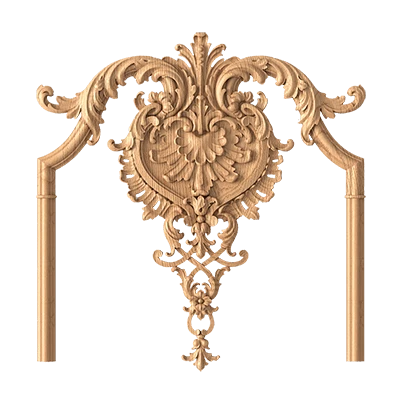
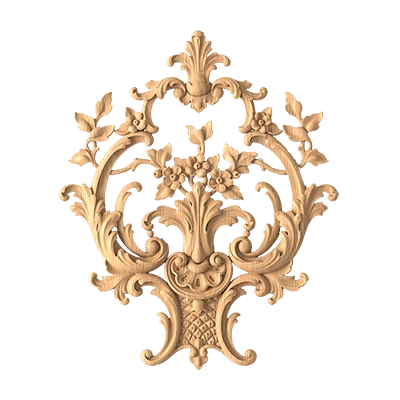
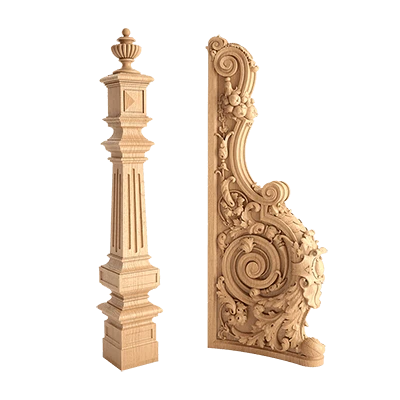
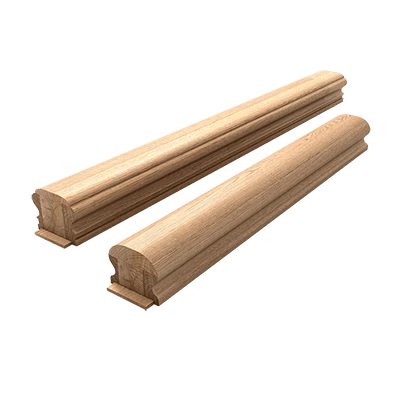
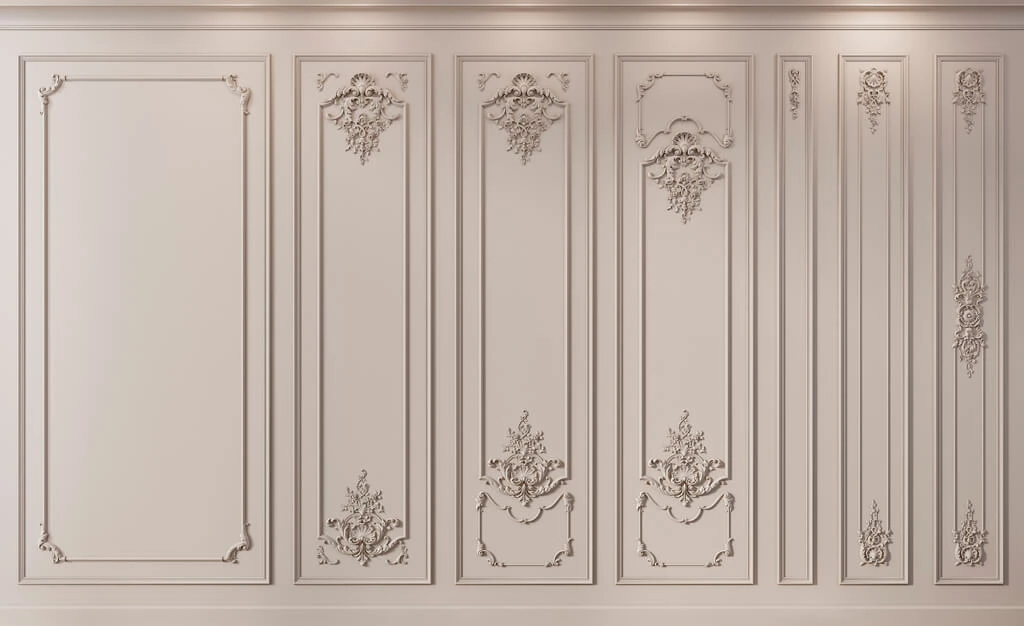
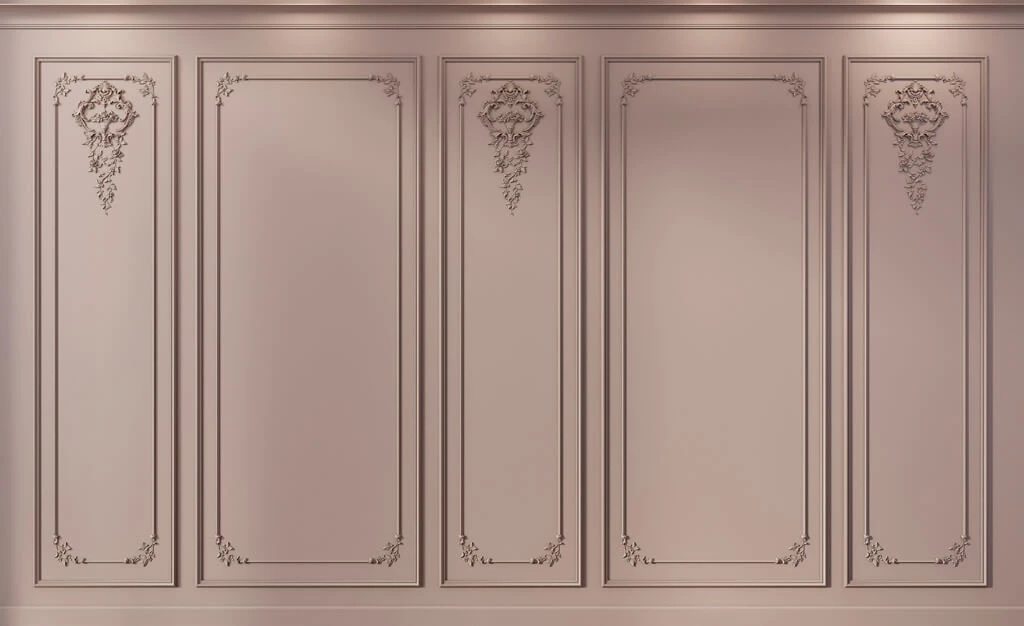
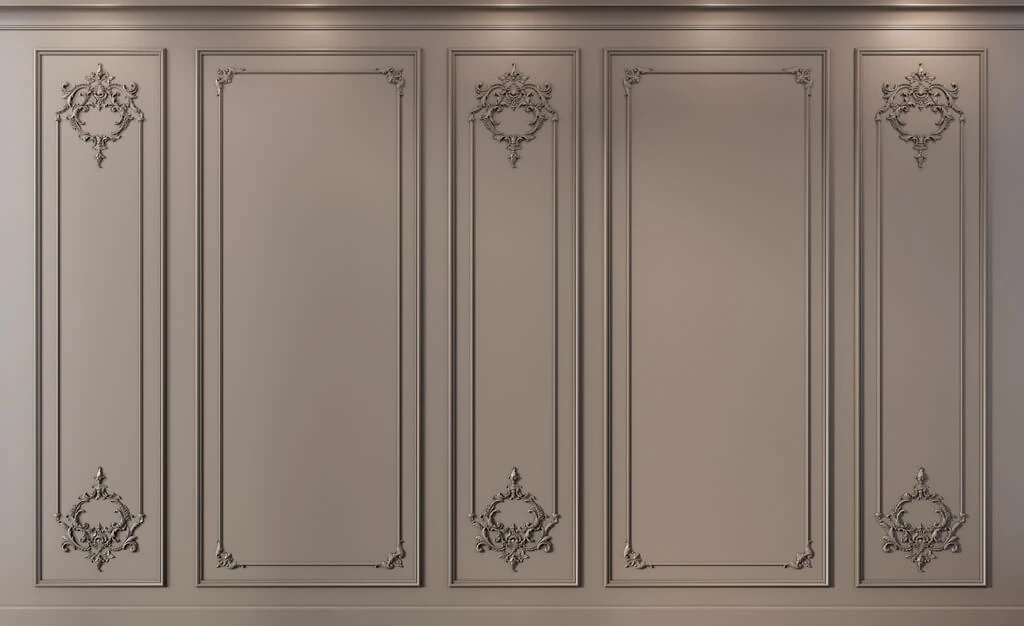
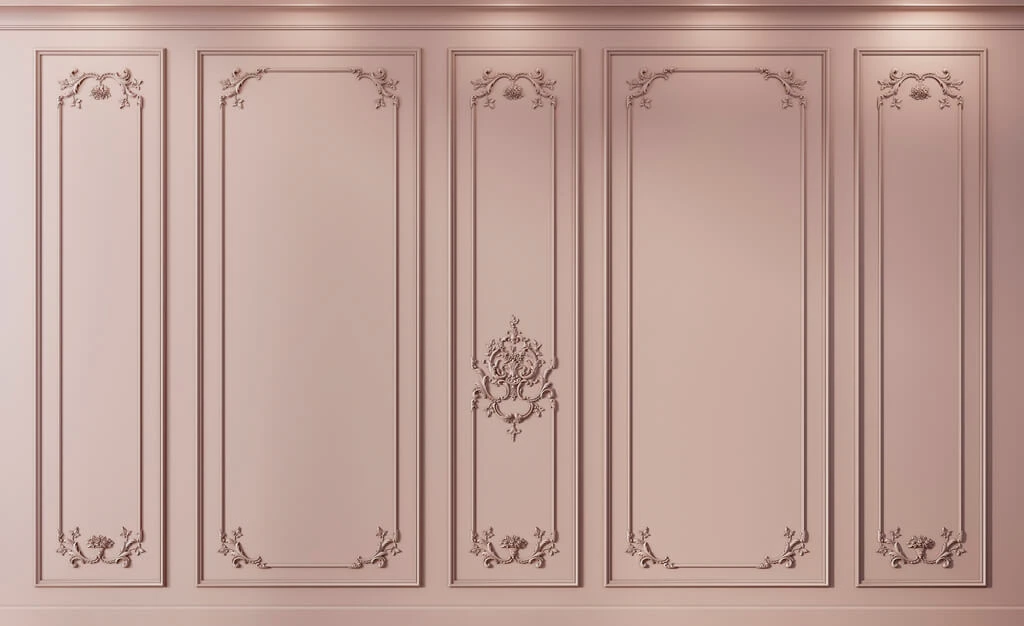

























Set Composition


Description
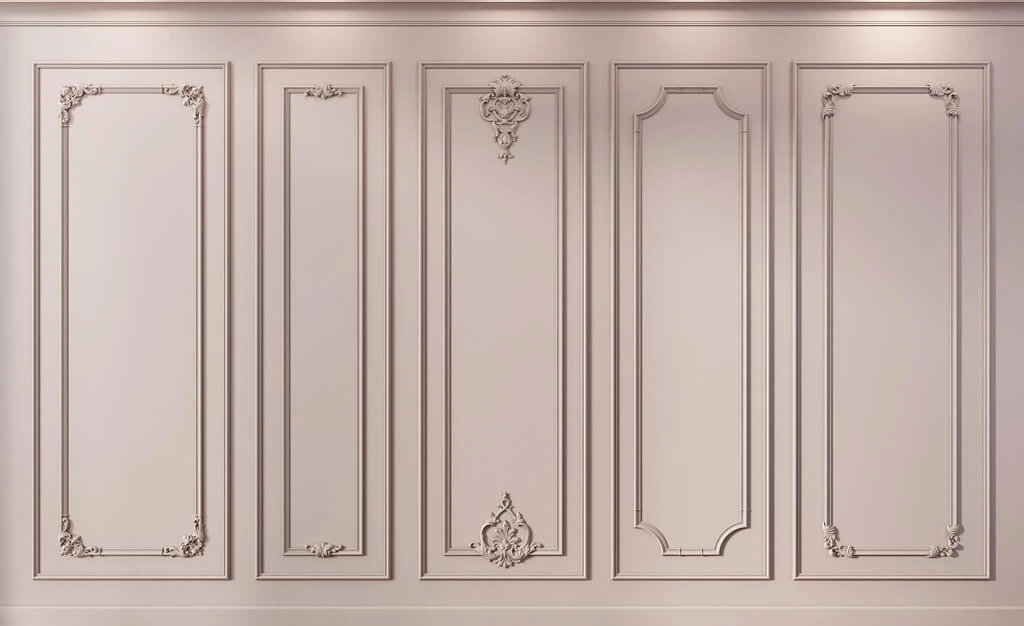
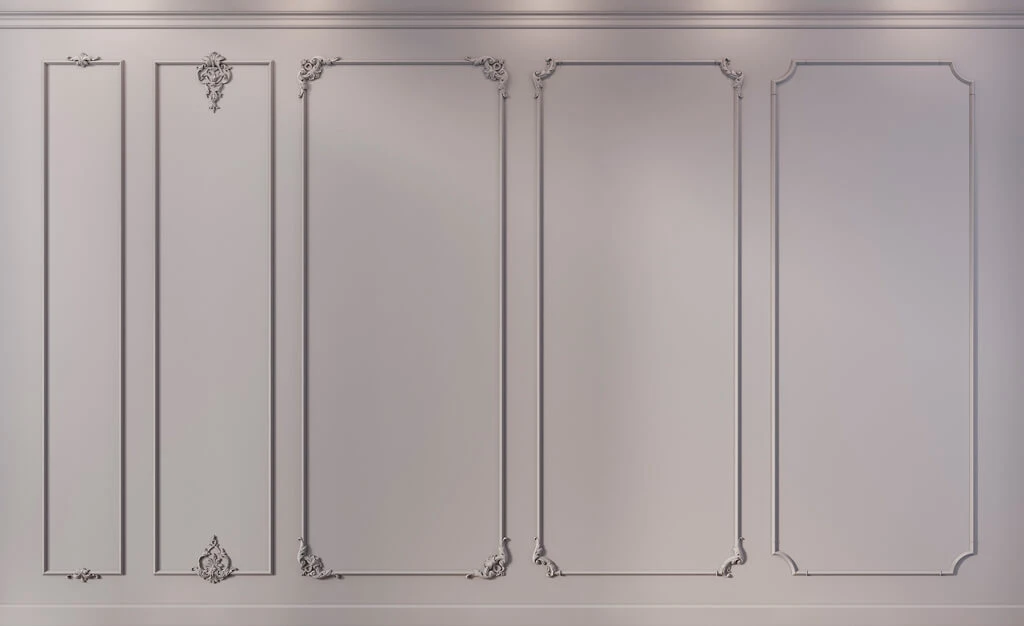
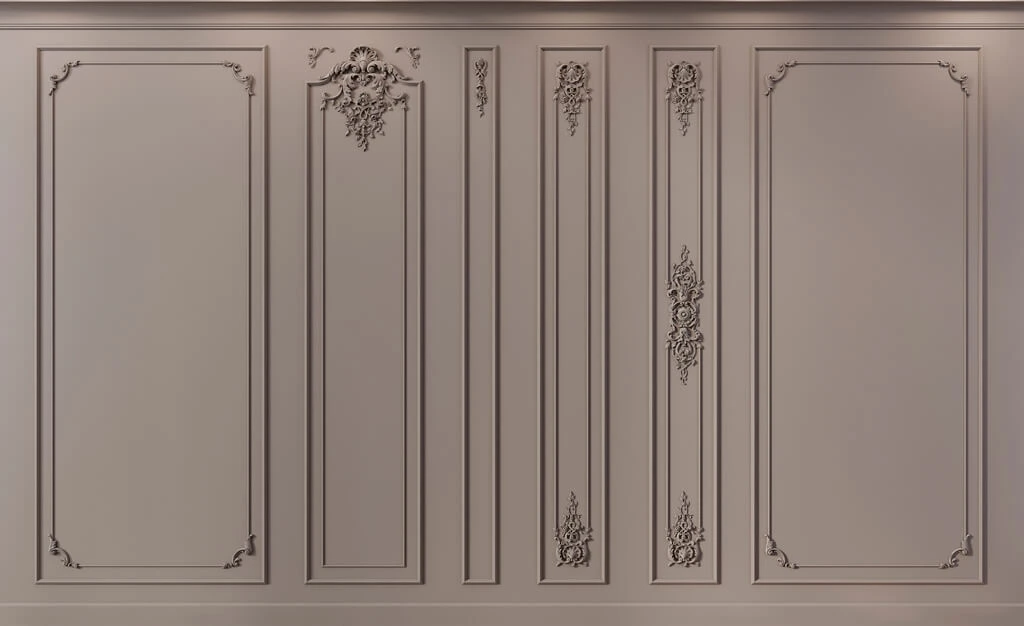
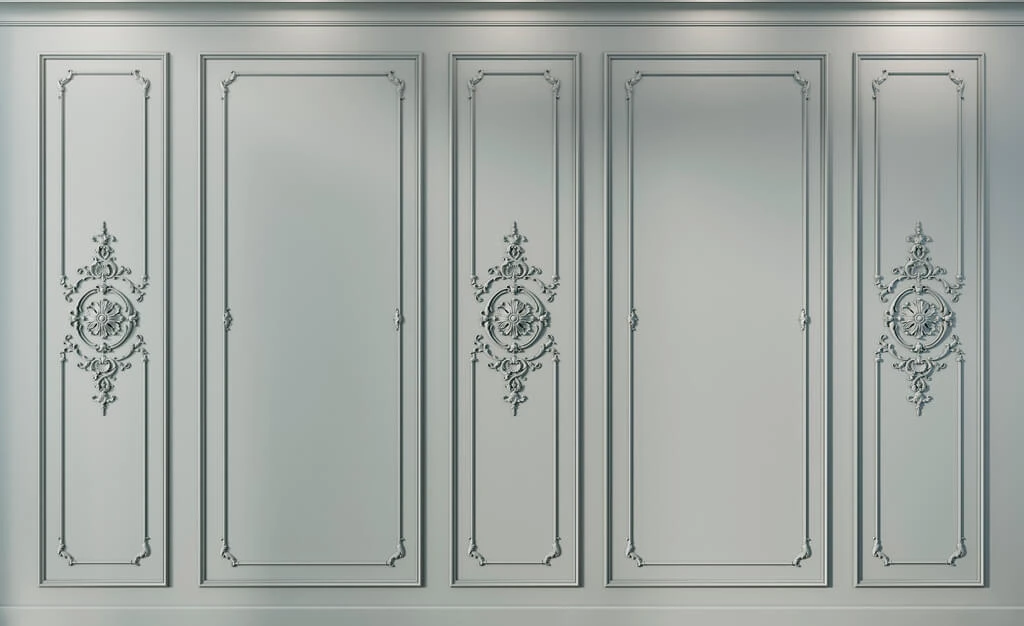
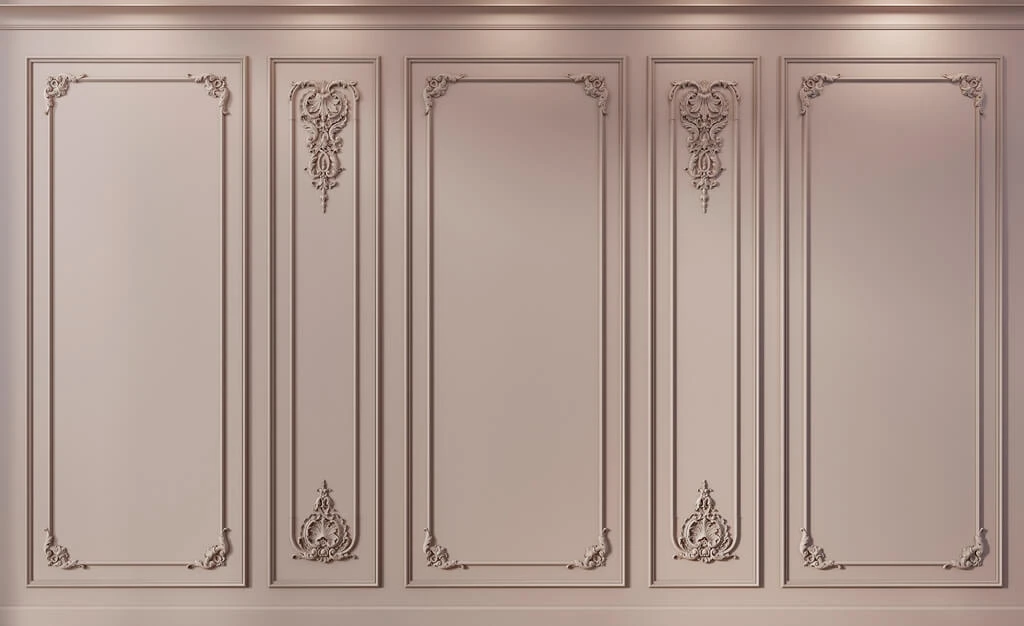
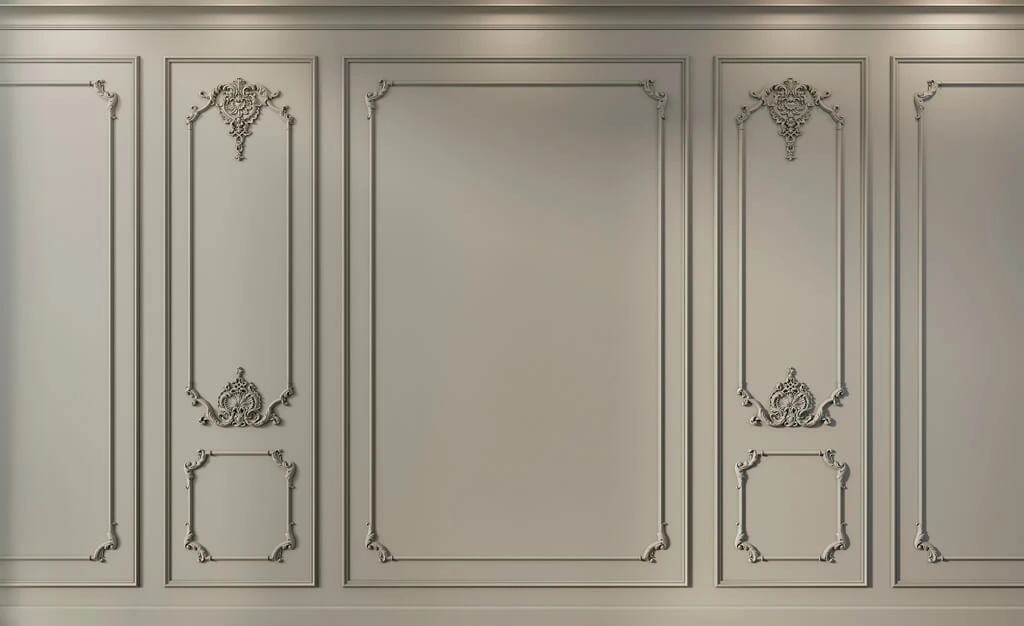
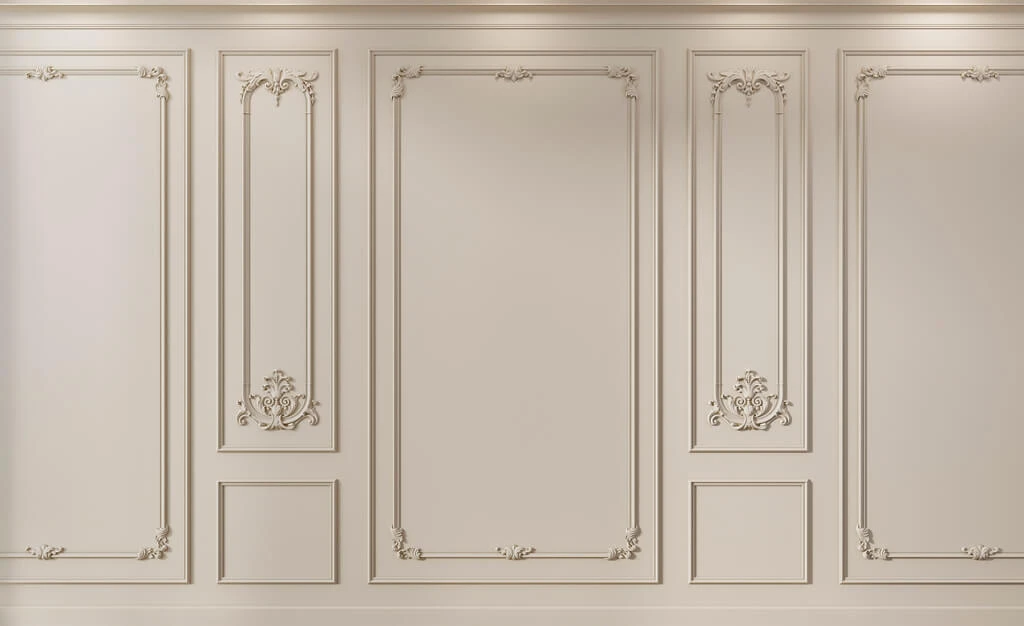
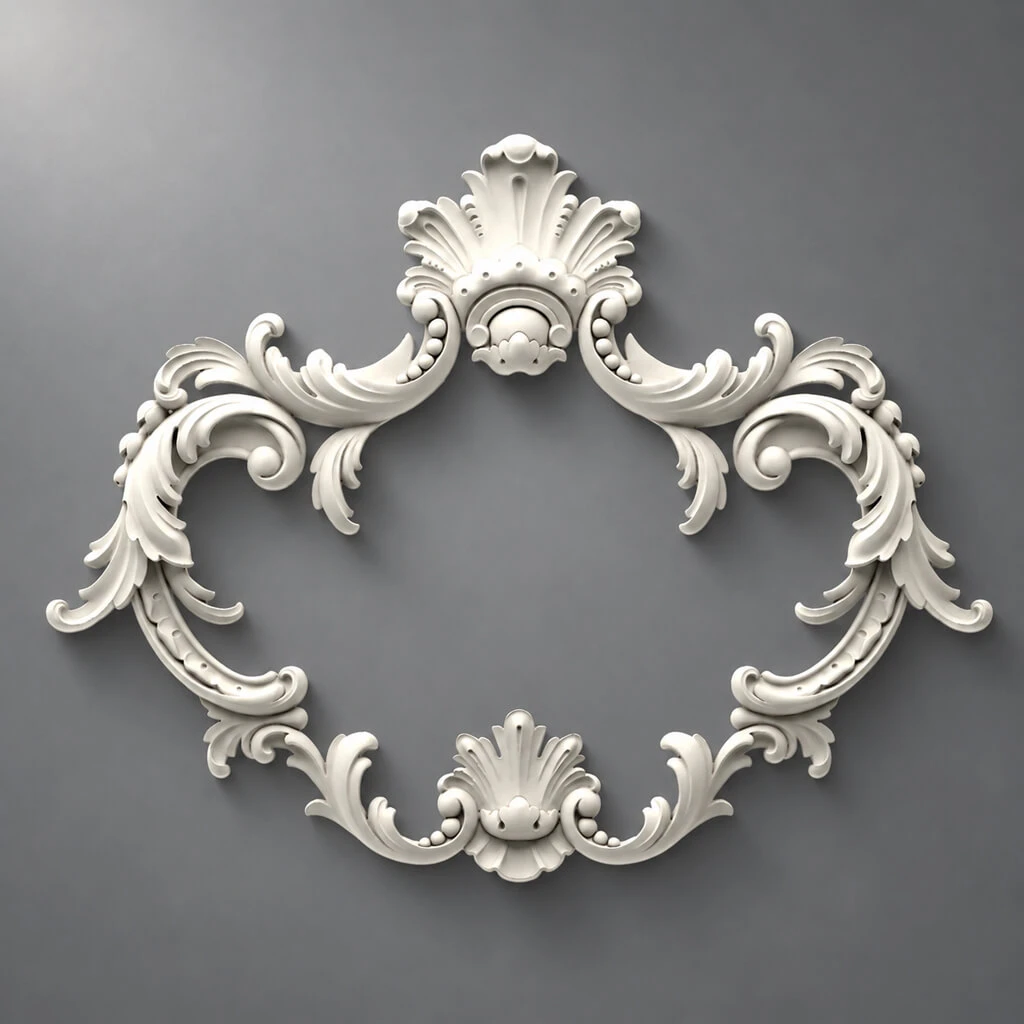
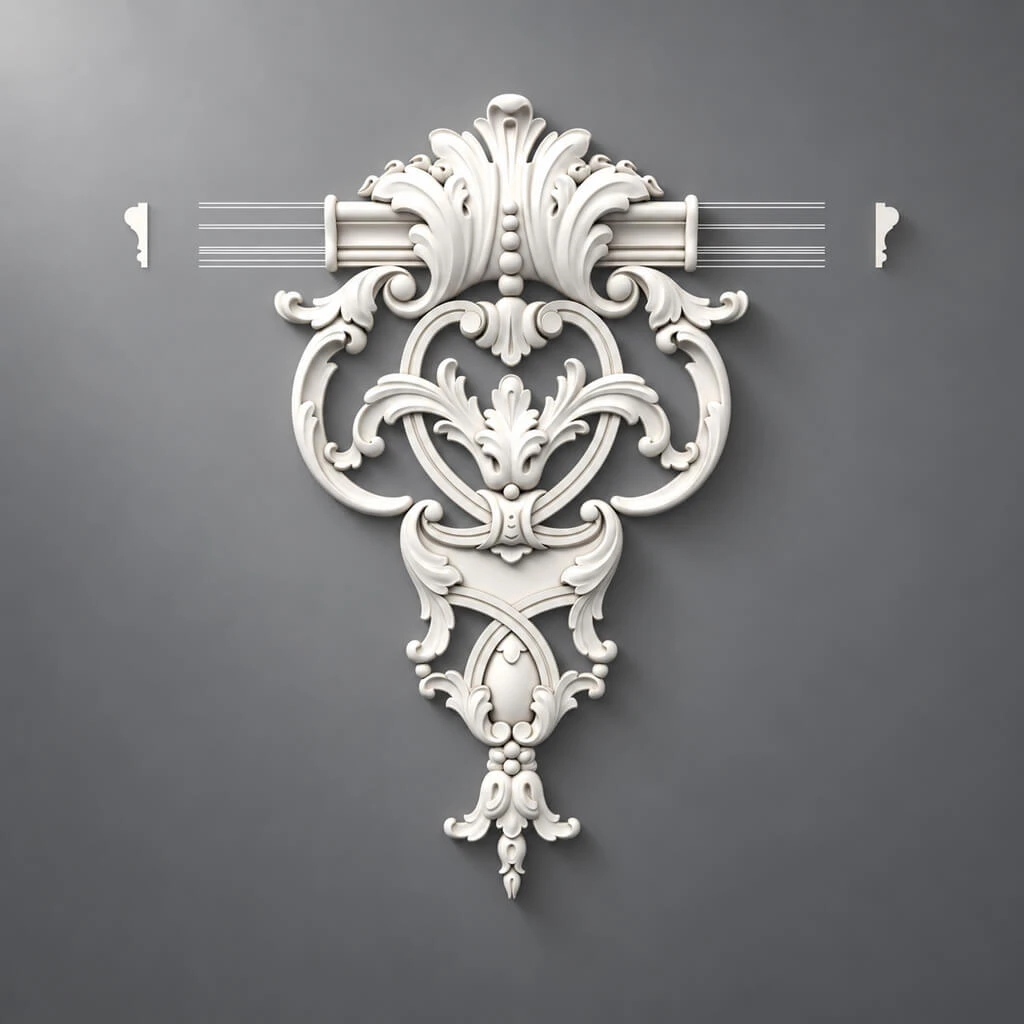
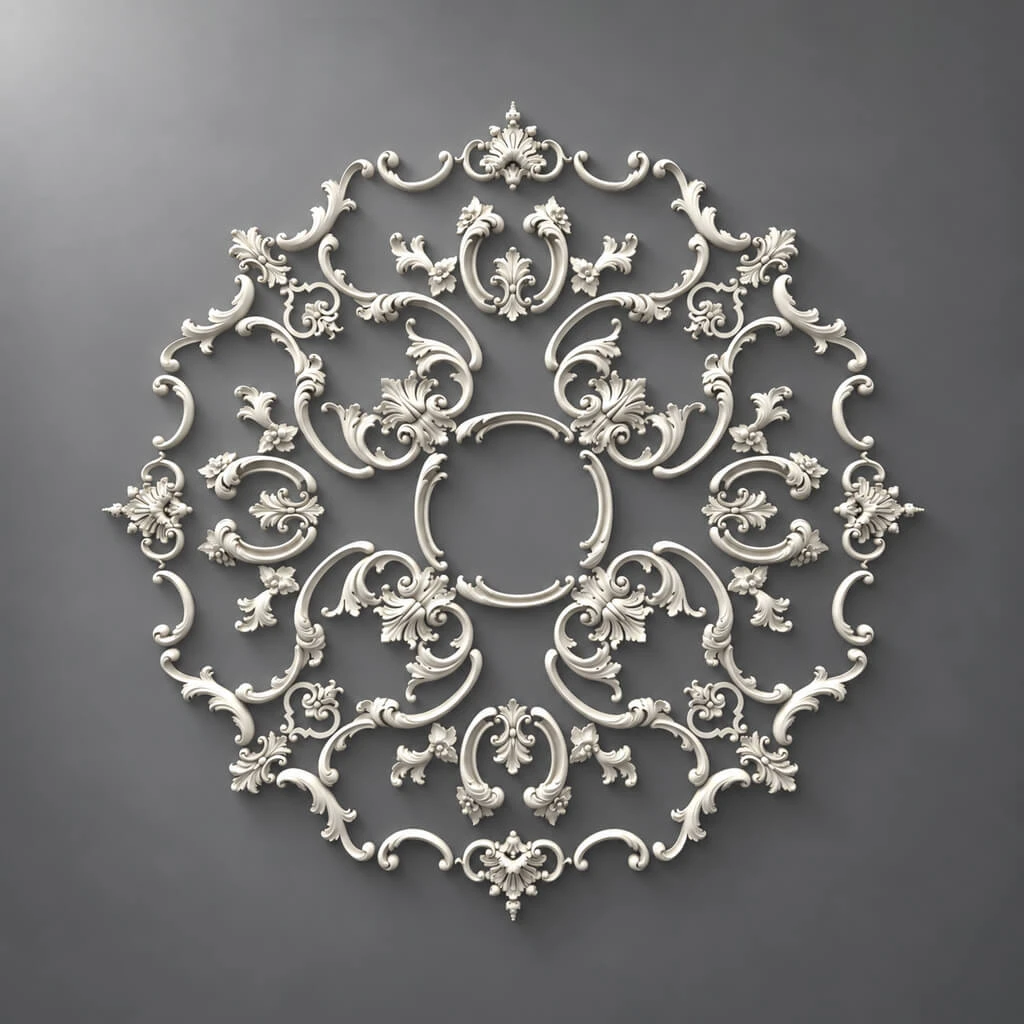
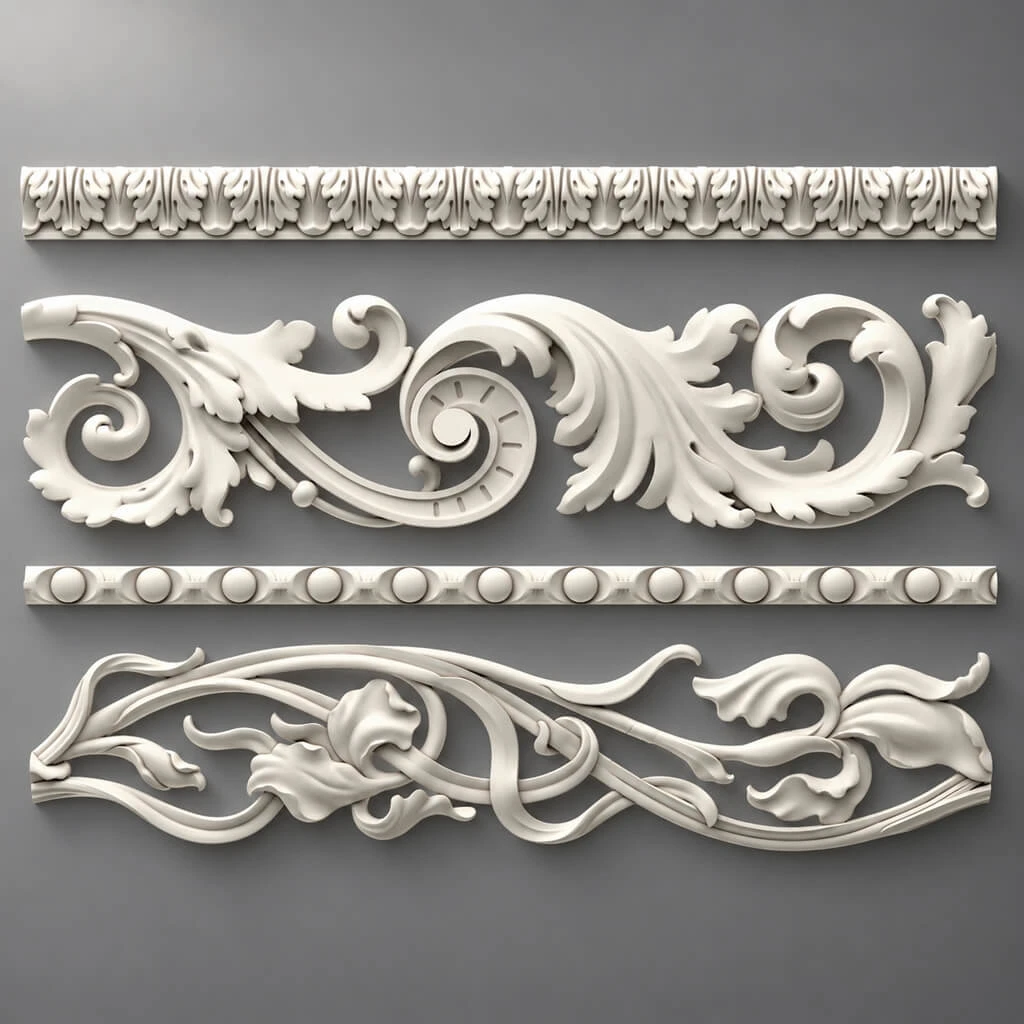
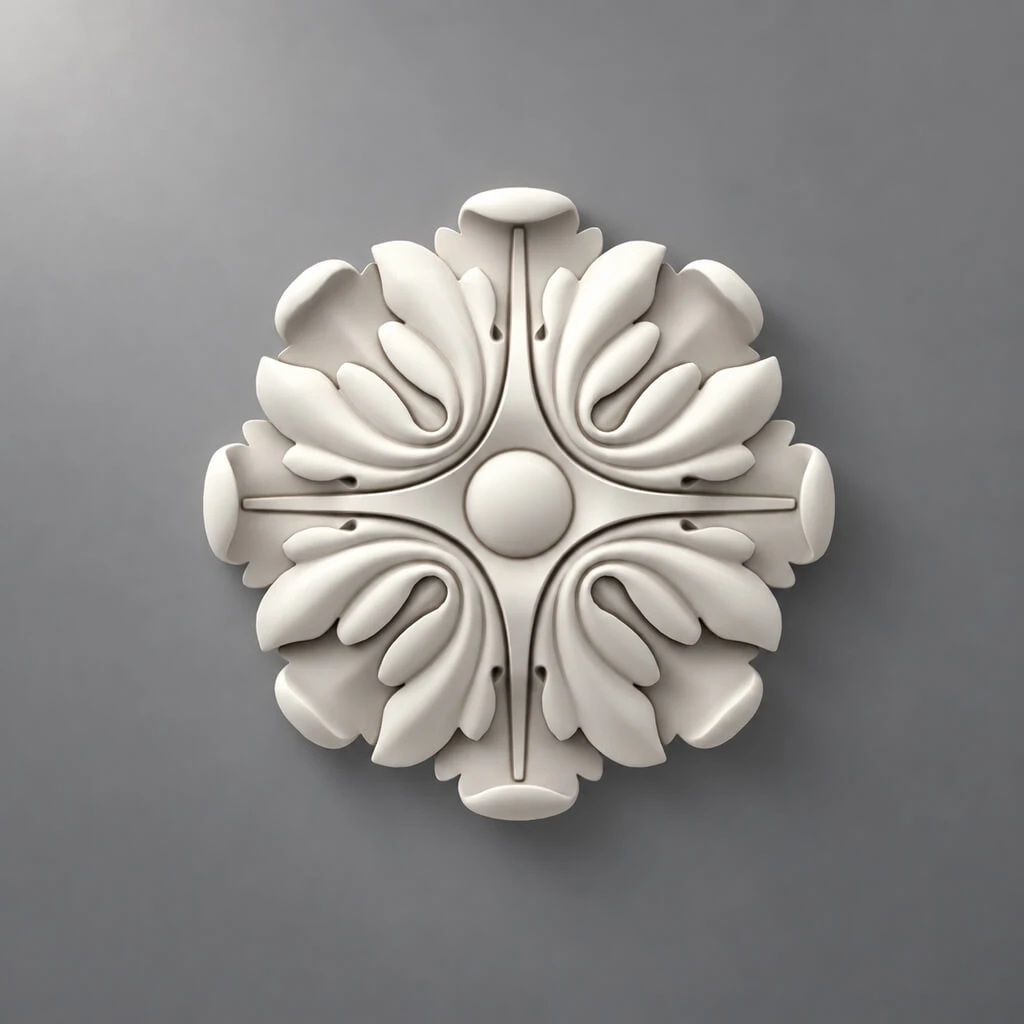
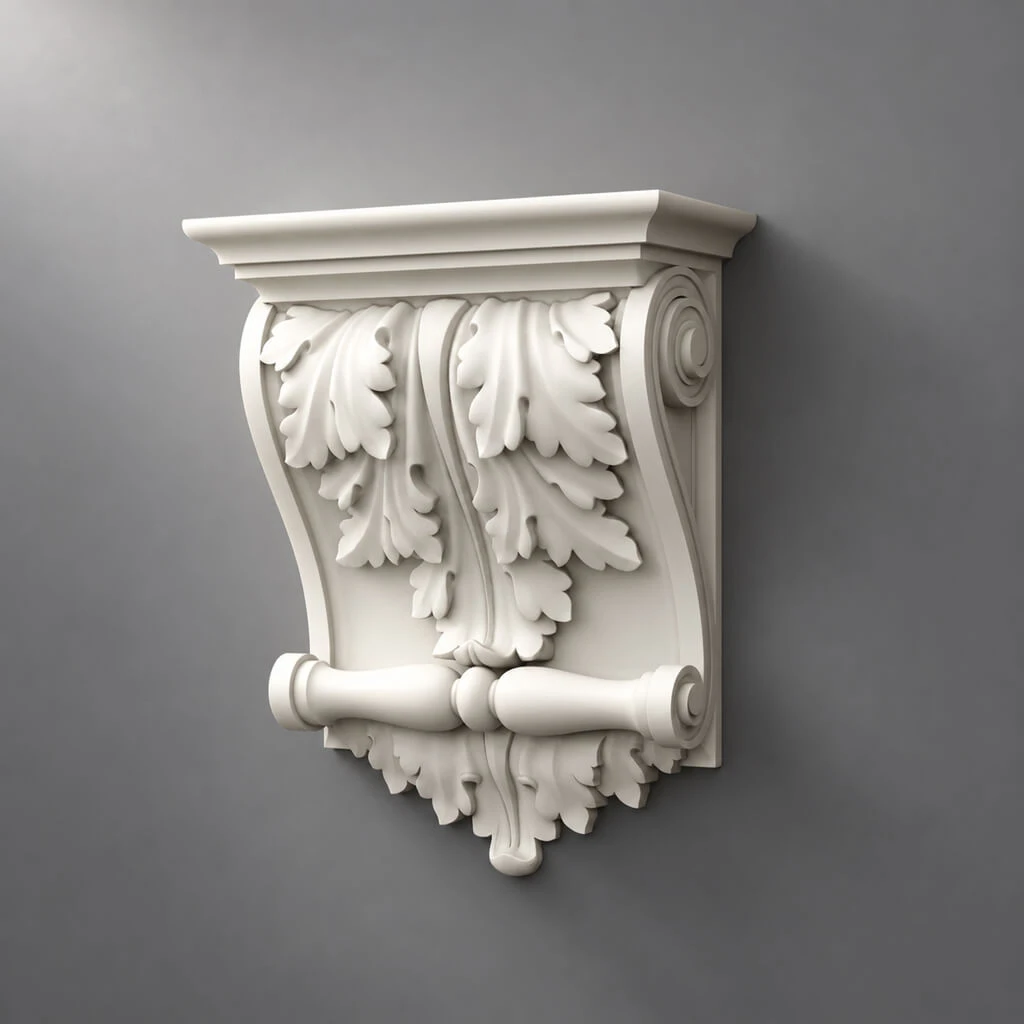
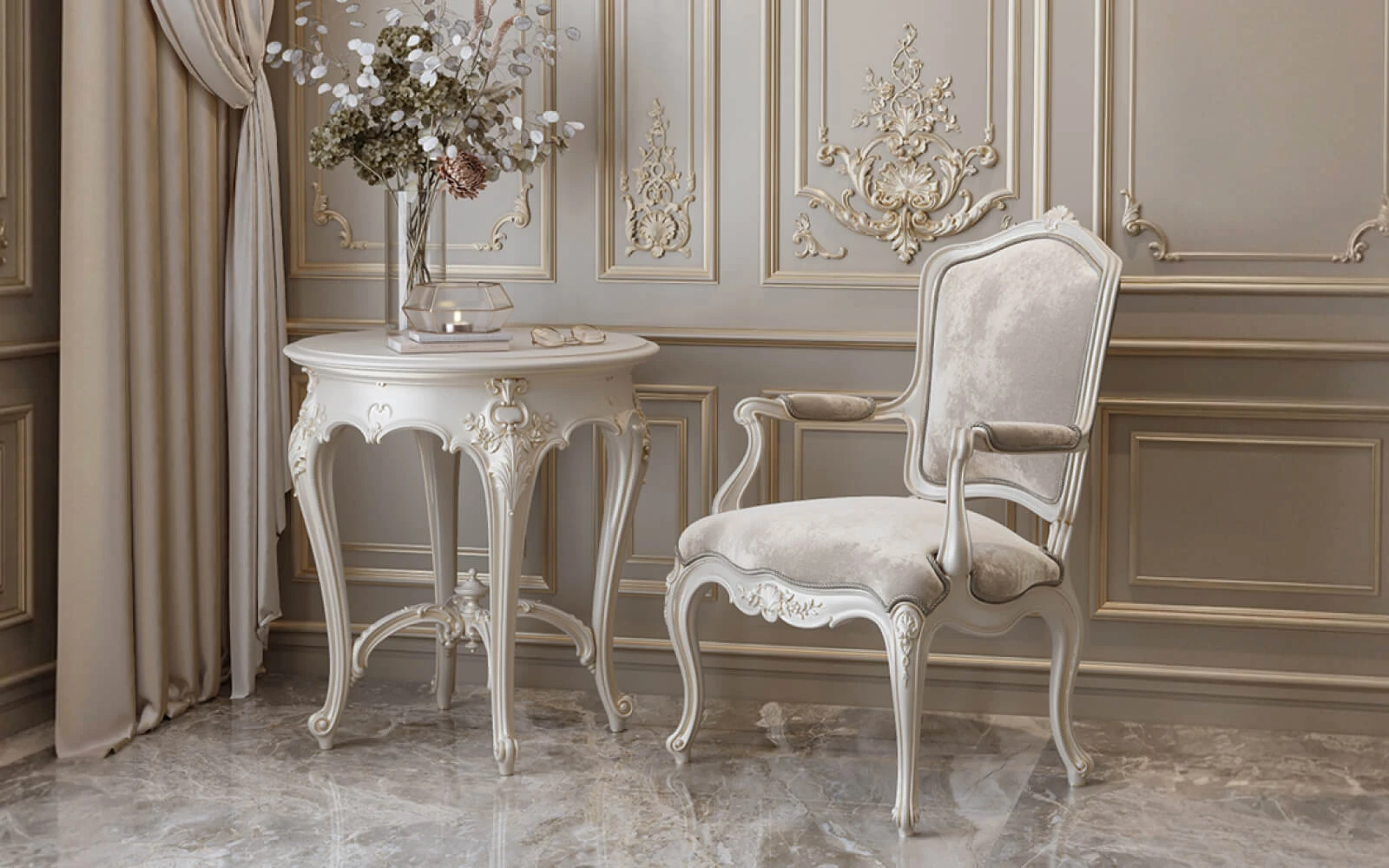
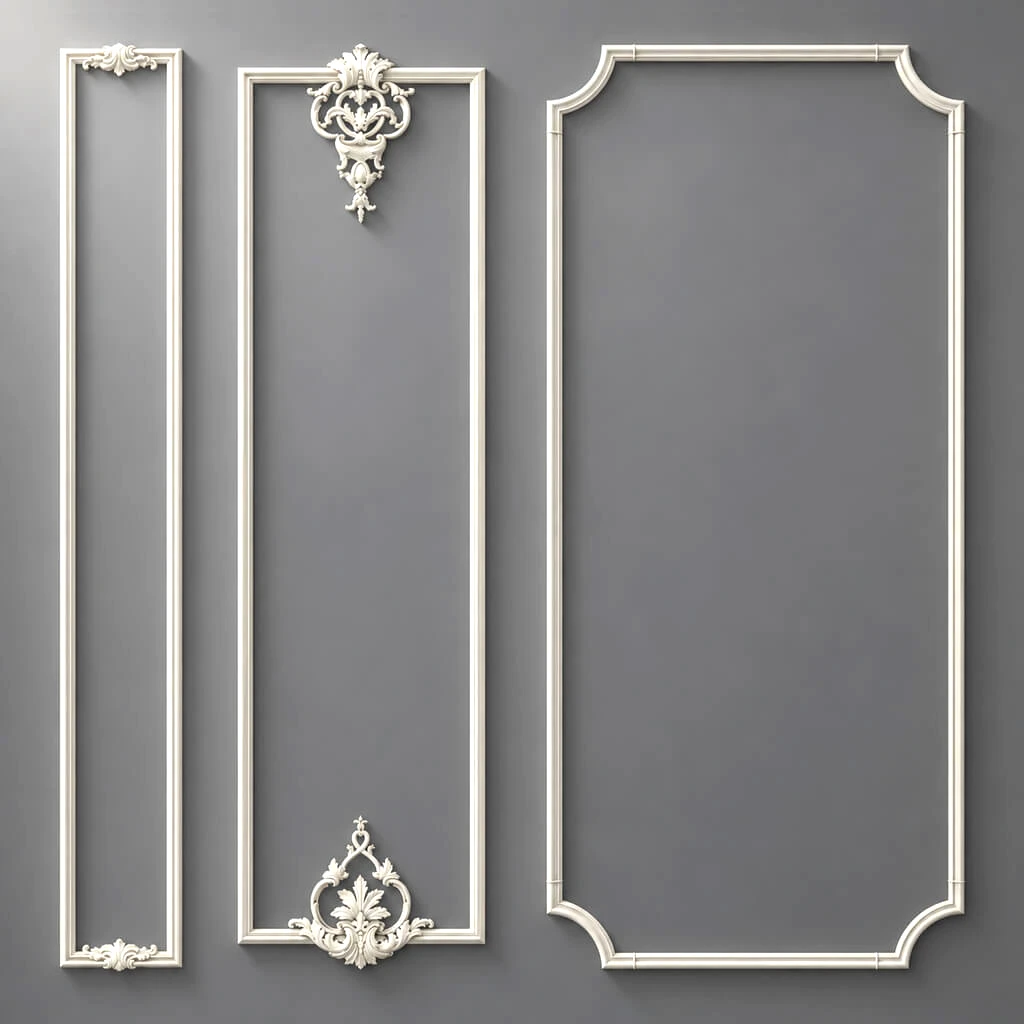
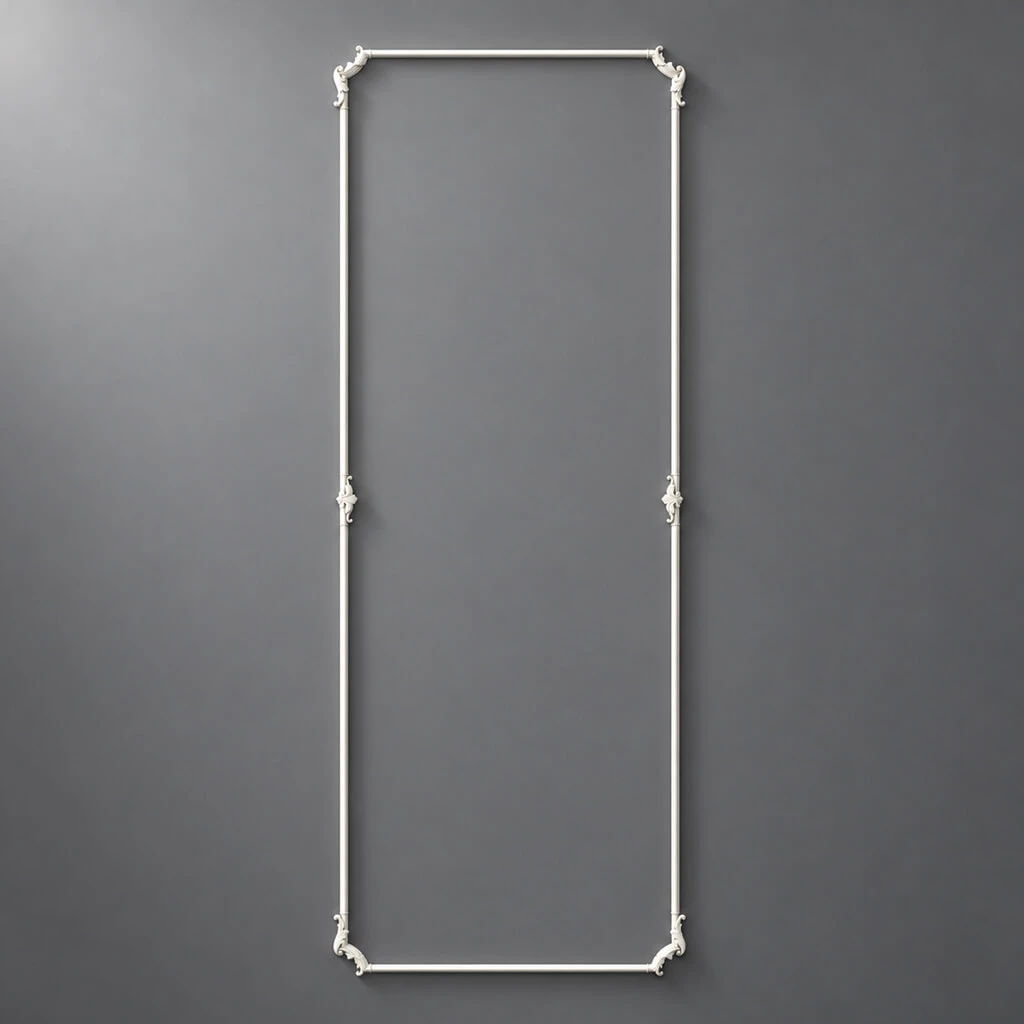
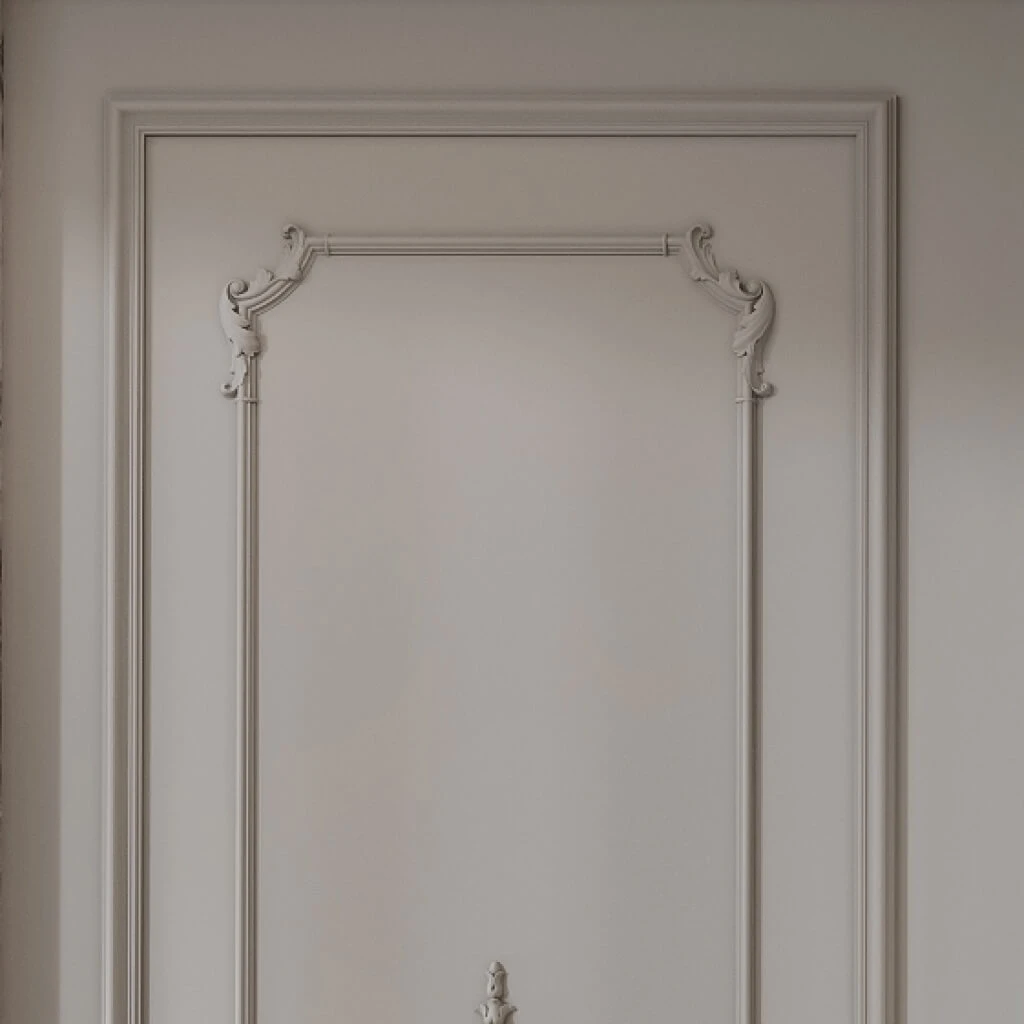
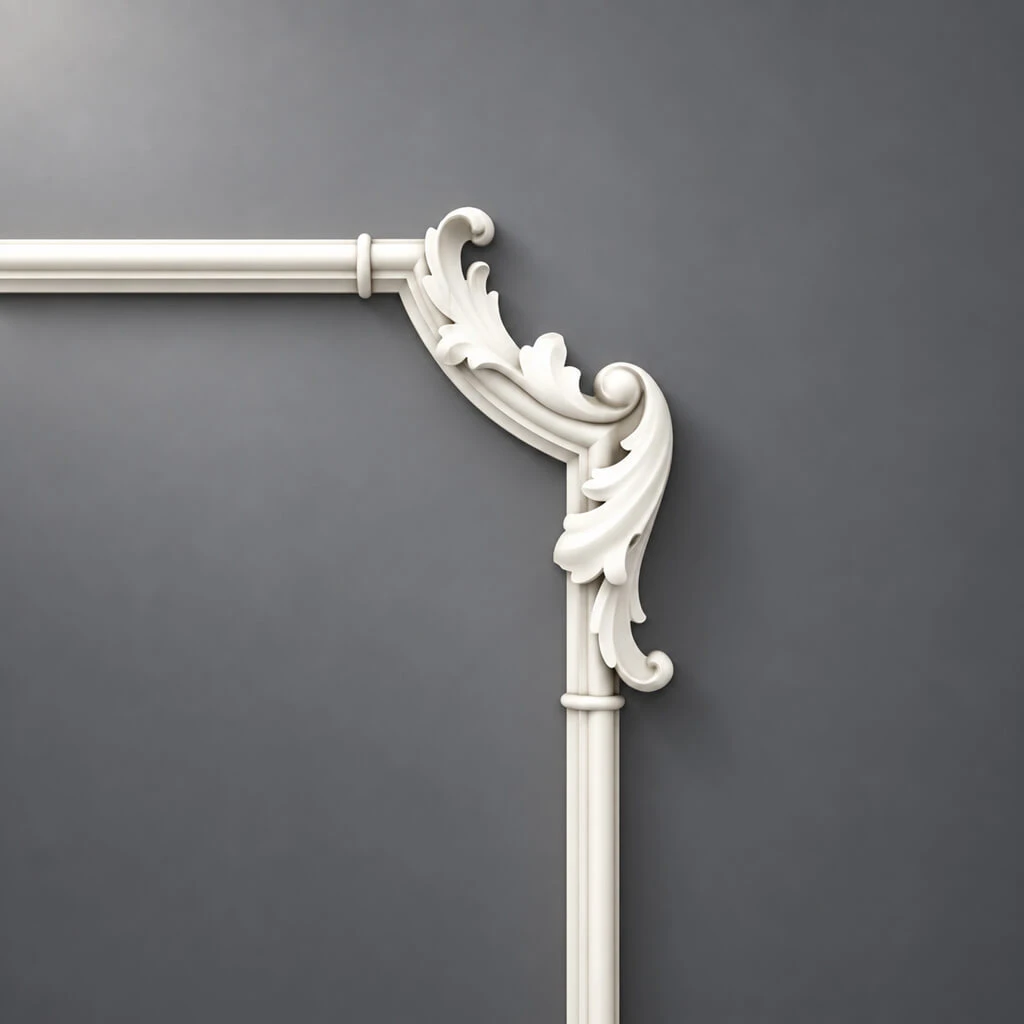
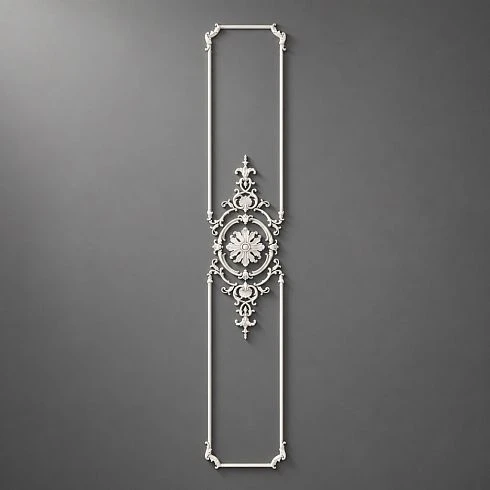
A narrow vertical frame with decorative corners and a central accent creates a neat classical composition. The moulding sets a clear geometry, while the restrained relief adds expressiveness to the wall and conveys the European character of the Brussels collection.
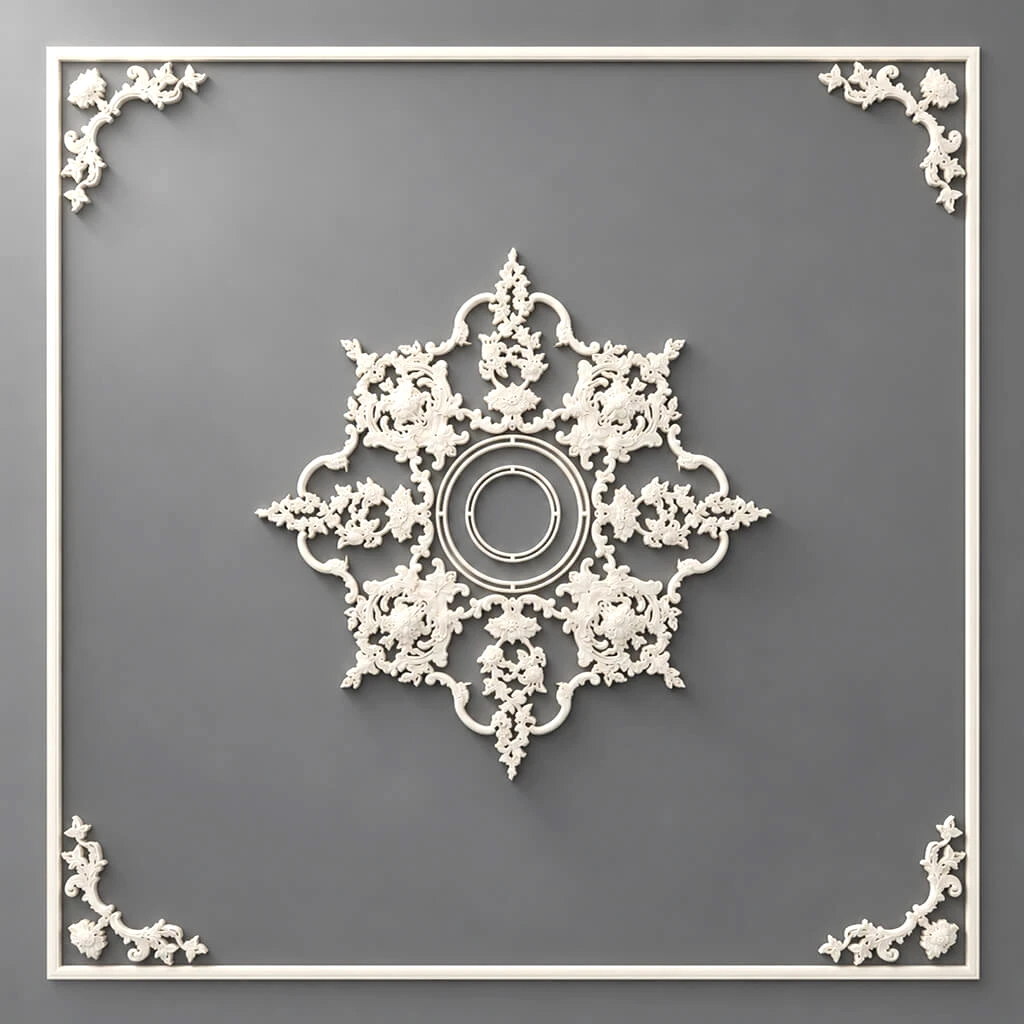
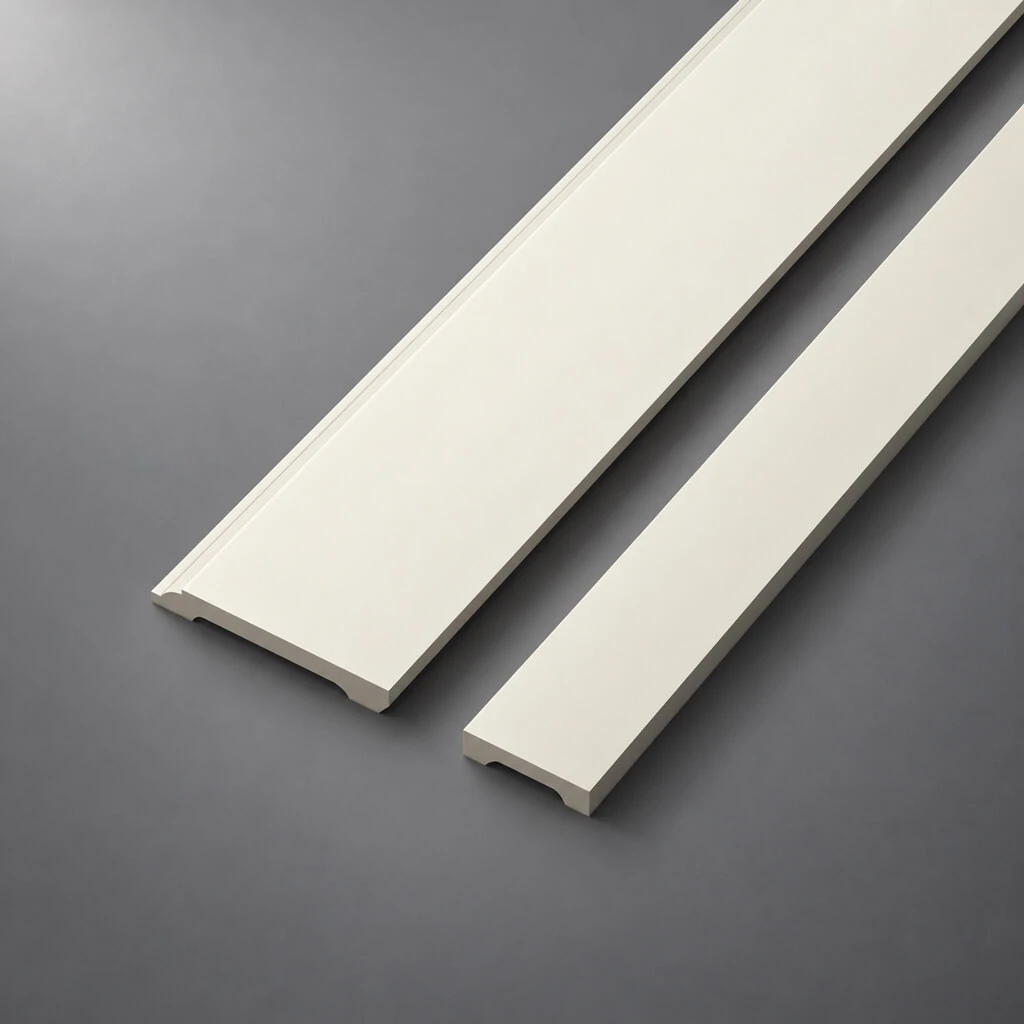
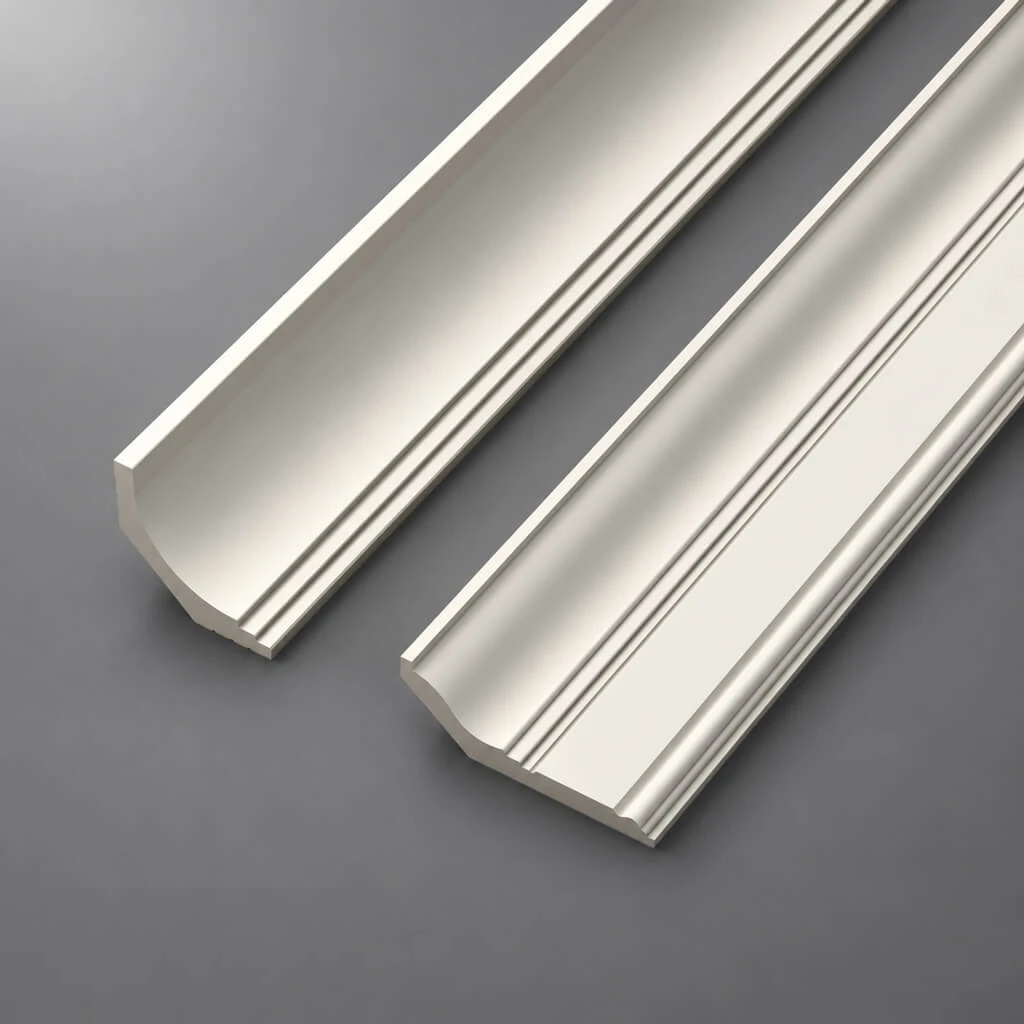
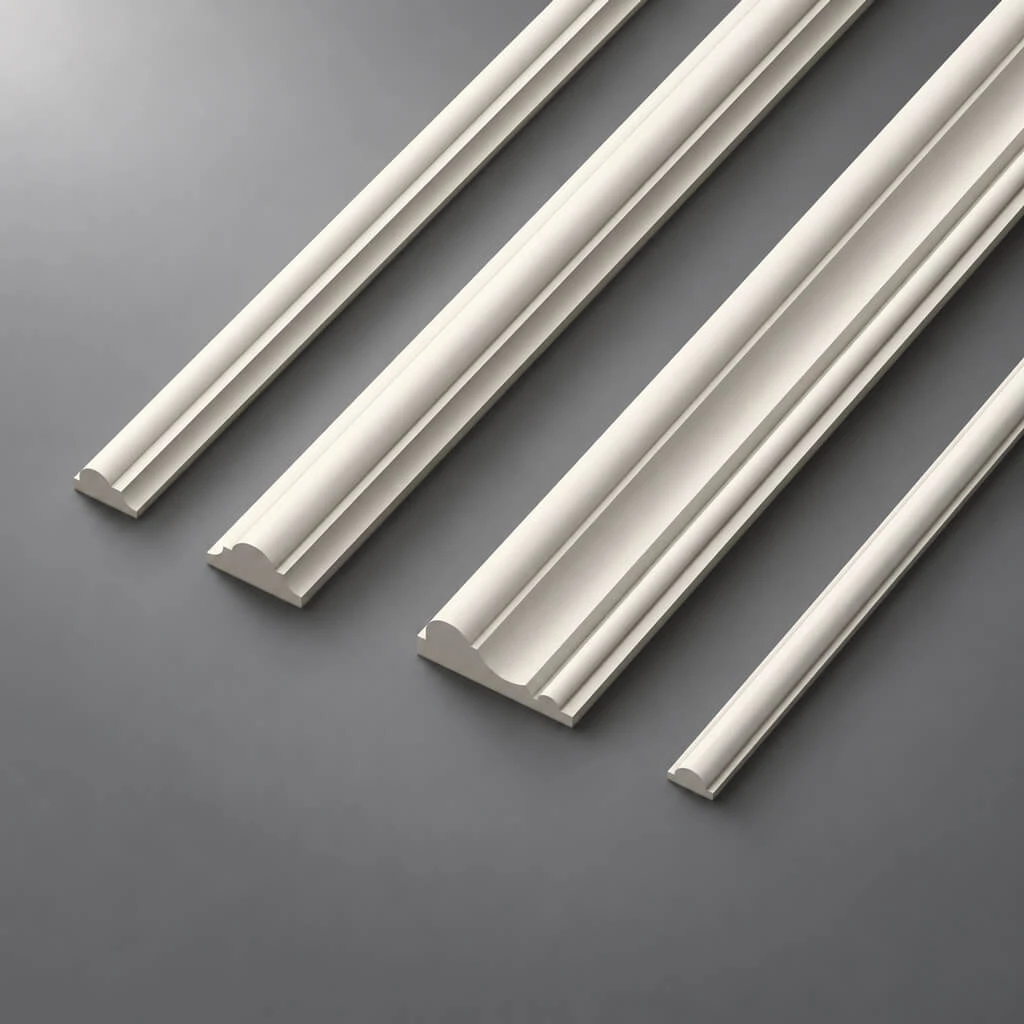
The ready-made wall decor set already combines MDF moulding and polyurethane elements into a single solution. It can be used on its own or you can create your own variant by selecting individual elements from the collection for a specific wall.
Have questions?
Customers also buy

Ekaterina Y.
October 5, 2026
An excellent team! A huge selection of products! I recommend that craftsmen, designers, decorators, and home stagers take a tour of the production facility to immerse themselves and be inspired.
Alexander U.
October 2, 2026
I have been working with Stavros since 2024, and the quality of the products is top-notch. Customers are happy!!!
Elena G.
September 29, 2026
Daria is a very competent specialist; she provided consultation and helped us select items. They were sent promptly.
Polyurethane stucco decor
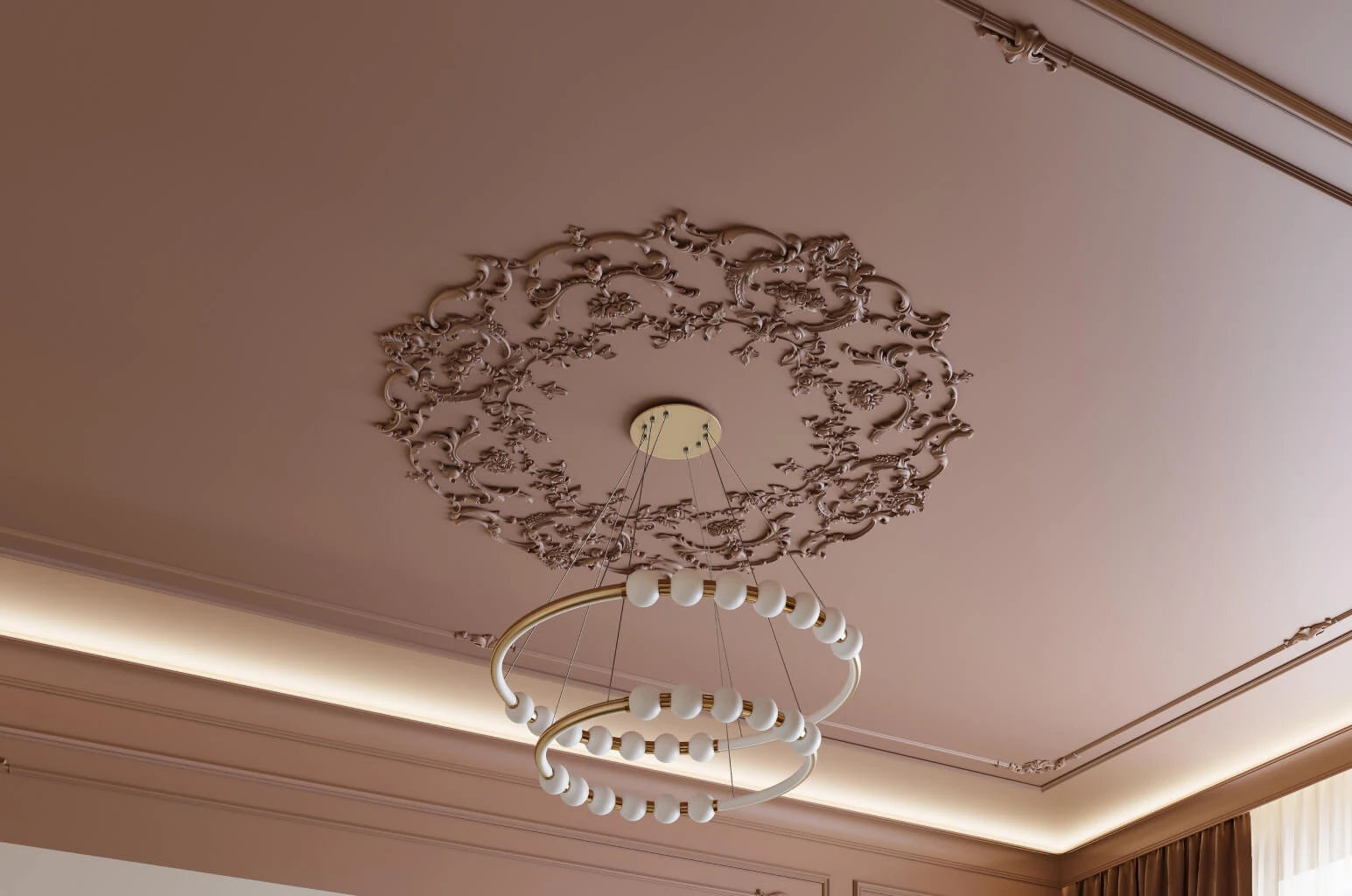
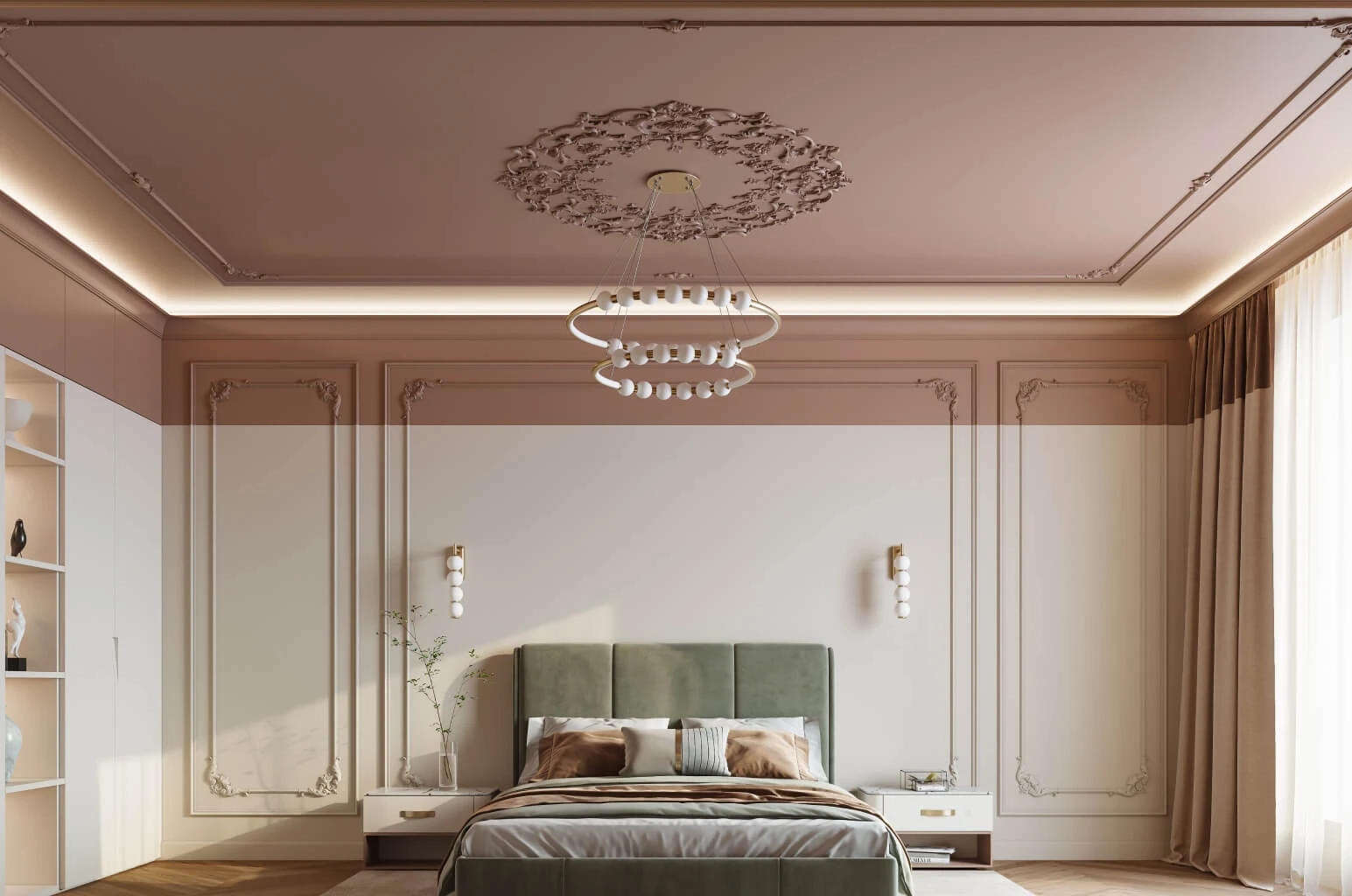
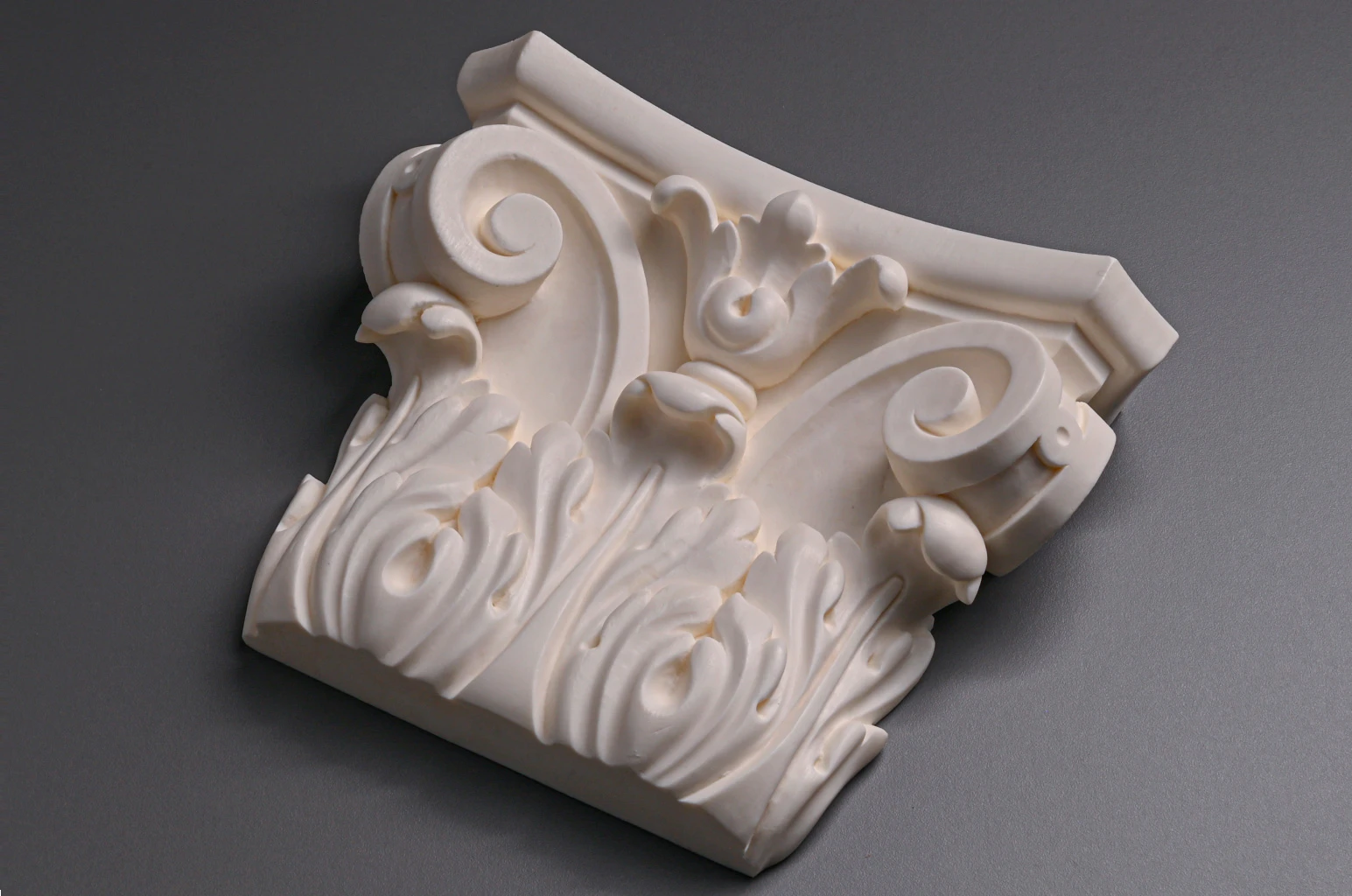
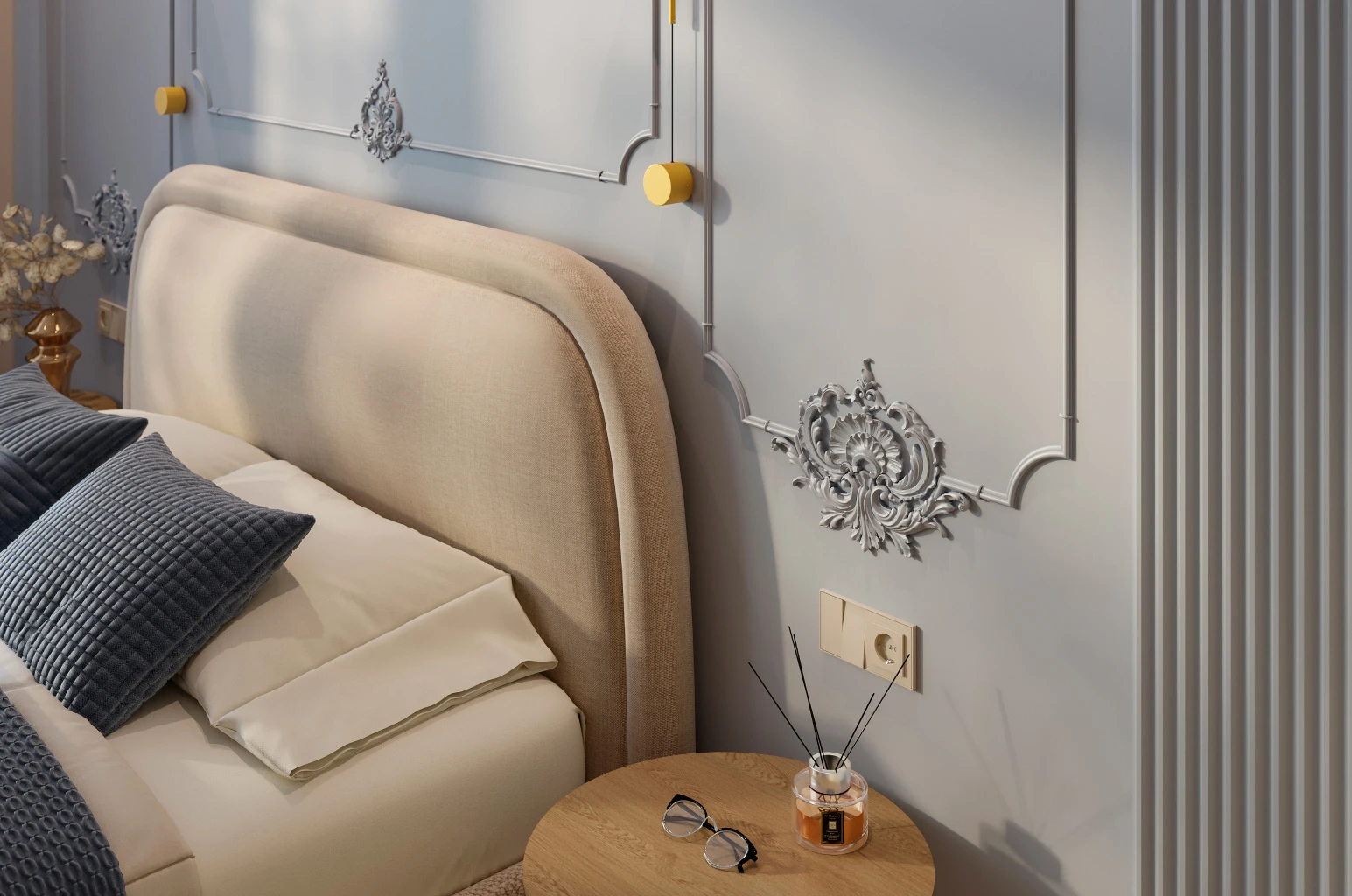
We have been on the market for over 20 years and are ready to offer you the best combination of aesthetics, quality, and practicality. Our polyurethane is not just a material, but a reliable foundation for flawless details, resistance to moisture and cracks, as well as convenient and quick installation. The company's success began in 2002, when two artists – Andrey Ragozin and Evgeny Tsapko – created a small creative workshop for making carved wooden products. The work of the craftsmen was quickly noticed, and within a year they were invited to participate in the reconstruction of the Konstantinovsky Palace in Strelna.
Every product in our range is the result of years of experience, thoughtful technology, and attention to detail. We constantly update our collections, follow and shape trends in interior design ourselves. From elegant neoclassicism to bold Art Deco, you will find the perfect accent for the interior of your dreams.
Choose durable polyurethane decor STAVROS — beauty proven by time and real projects, not just words.
STAVROS Guarantees
Quality of products without complaints
We save your time, peace of mind, and budget
Large warehouse program
We solve your tasks with maximum speed
Adherence to production deadlines
Streamlined process reduces all risks
Contact us for shipping options
Quality service regardless of order volume
Your positive business reputation
Reliable partner — the foundation of your business
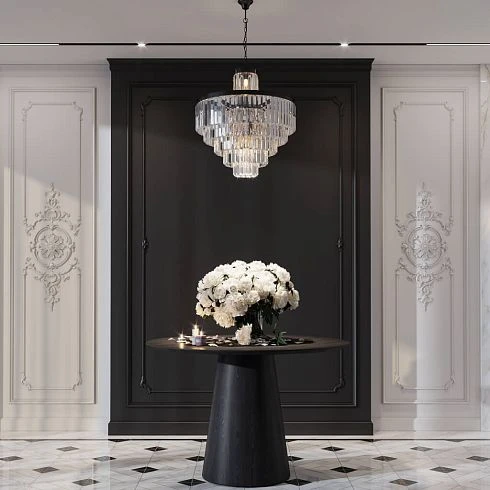
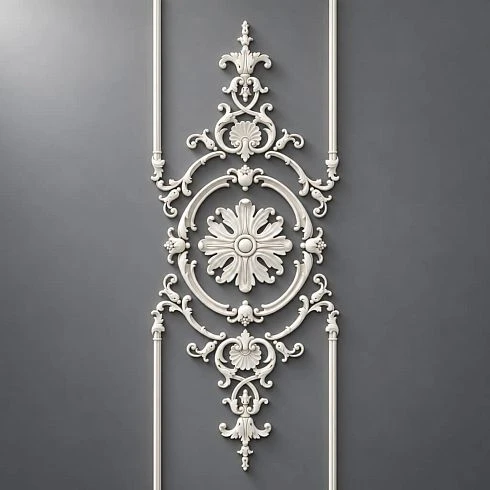
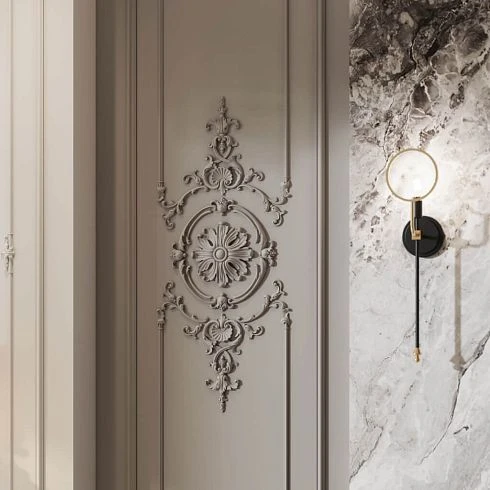
More products from the "Brussels" collection
Frequently asked questions
Our showrooms are located in Saint Petersburg and Moscow. Production is located in Saint Petersburg.
Moscow contacts: /contacts_all/
Contacts of Saint Petersburg: /contacts_all/
Send us the product codes, quantities and delivery destination. Contact our team to confirm availability and order details.
Please contact us to confirm shipping availability, costs and delivery times for your destination.
Delivery cost depends on the size, weight of the item, and delivery address.
Please ask our team to confirm shipping costs and delivery arrangements for your destination before placing an order.
Prices and availability of items on the website are always current. Data is updated daily.
Note: items in stock are stored on the warehouse in unpolished form and shipped within 3 working days.
If the item is not in stock, average production time: 5–10 working days.
This is the quality of polishing of the items.
Standard — machine polishing, at a more attractive price.
Prestige — detailed hand polishing, items do not require further work.
More details: /information/kachestvo/
This is the type of veneer of the items.
Under enamel: produced by gluing wooden laminates without color and texture matching. Contrast tonal and textural differences are noticeable. This blank should be chosen if the item is intended for opaque coating.
Under tinting: produced by gluing wooden laminates with color and texture matching. Tonal and textural differences may occur. This blank should be chosen if the item is intended for semi-transparent finish.
More details: /information/kachestvo/
Beech — dense, non-porous wood, most often used for items covered with enamel.
Oak — dense, porous wood with clearly visible natural grain. Due to its strength and decorative properties, it is often used in items with semi-transparent coating, highlighting the wood pattern.
Custom-made, if non-standard items are required, we can produce products from other types of wood, including blanks provided by the customer, manufactured according to our technical specifications.
All our furniture legs can withstand a vertical load of at least 100 kg.
Average production time for custom-made items: 5–10 working days.
Most items are stored on the warehouse in unpolished form. We need time to polish and pack orders.
Yes, we manufacture non-standard items according to individual projects, but we only accept orders with a minimum quantity.
We can manufacture items of the desired size, but we only work with bulk orders. For details, please consult the sales department manager.
Yes, some of our products can be used outdoors. For example, polyurethane items, as well as carved door casings made of pine.
Other items are produced to order using PUR glue, if minimum quantity is available. No warranty is provided for such products, as outdoor conditions are considered aggressive.
Please contact our team to confirm available finishes, minimum quantities and a quotation for your order.
- Dust removal. After sanding, the surface must be dusted.
- Priming. Apply primer in an even layer.
- Matting. After the primer has fully dried, the surface should be matted (lightly sanded for better adhesion).
- Finish coating. Apply finish coating: lacquer or enamel, in 2 layers, with interlayer drying.
More details: /information/sovety/
Apply adhesive to the decor. Place it on the surface and press briefly. Then, lift the decor from the surface and leave it open for 3–5 minutes. Press the decor firmly onto the surface and hold for 5–10 seconds.
More details: /information/sovety/
Ideally, you should prepare a design project before placing an order.
You can do this yourself by downloading drawings of our products from our website, or you can order a project from us.
If the number of decorative elements and fittings is small, our company's manager can assist you with selection.
Unfortunately, this service is not provided.
The packaging method depends on the type of items, but in each case, we ensure sufficient protection for safe transportation.
We most often use corrugated cardboard and stretch film. Fragile items are additionally secured on a rigid base to prevent damage during transport.
Please confirm the minimum order quantity for your selected products and finishes with our team.
Please contact our team to discuss measurement and installation requirements for your project and destination before ordering.
Often searched in category Wall Decor
Stucco decoration set CPU-9-2 for wall panel design
When less means more precise
In wall decor, there is a temptation many cannot resist: add more. Another ornament, another level of relief, another accent. The result is predictable — the wall turns into an overloaded surface that attracts the eye but gives it nowhere to rest.
The STAVROS stucco decoration set CPU-9-2 is built on the opposite principle. It is a solution for those who understand: restraint is not poverty, it is precision. The elongated vertical frame with elegant corner overlays and neat central inserts works as an architectural statement that does not need to raise its voice. It simply exists — and you cannot look away precisely because it does not try to overwhelm you.
Wall stucco decoration set CPU-9-2 is a ready-made solution. It already has everything: primed MDF moldings, polyurethane corner pieces with decorative relief, and central inserts. The buyer does not get a set of parts with the open question "what to do with this?" — they get a complete system for creating a vertical decorative panel.
What is CPU-9-2: architecture in one set
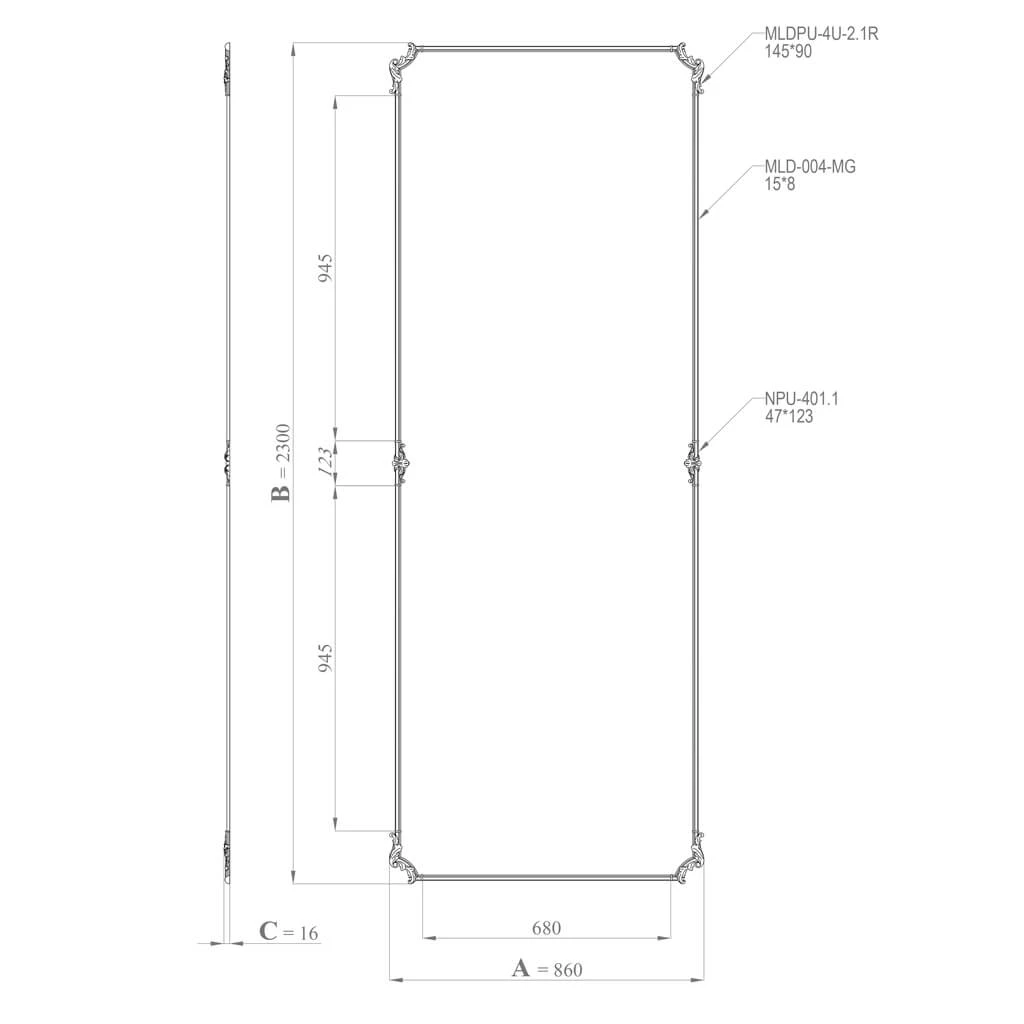
If you remove the technical shell from the article and look at the essence, CPU-9-2 is a vertical decorative frame 2300 mm high and 860 mm wide with corner ornamental overlays and two central inserts along the axis of symmetry.
This is not a kit "for an average interior." It is a tool with a very specific aesthetic logic: the vertical as the main accent, the frame proportions as the main decorative argument, the ornament as a delicate finish, not the main character. CPU-9-2 creates what professional designers call an "architectural shadow": a relief that is only visible in side light and produces the effect of refined, expensive finishing with minimal ornamental activity.
BuyStucco Decoration Set CPU-9-2means getting a system where all key design decisions have already been made. All that remains is to install and paint.
Dimensions and proportions: geometry as a language
Before talking about ornament and styles, let's talk about numbers. In this case, the numbers are the main argument.
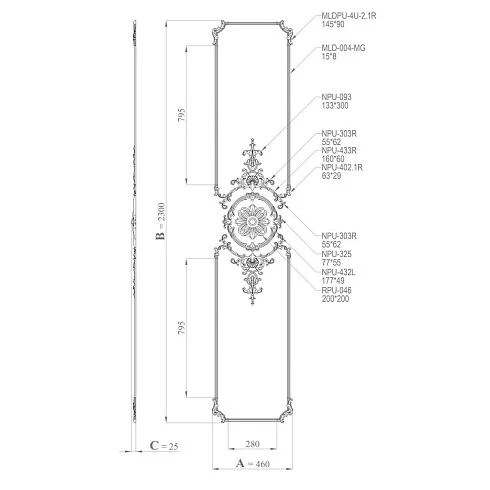
Main parameters of the CPU-9-2 composition:
| Parameter | Value |
|---|---|
| Total width of the composition (A) | 860 мм |
| Total height of the composition (B) | 2300 мм |
| Projection / thickness (C) | 16 мм |
| Internal frame width | 680 мм |
| Upper and lower vertical sections | 945 mm each |
| Central decorative section | 123 мм |
What do these numbers mean in practice?
Height 2300 mm is practically the full wall height in rooms with a standard ceiling of 2.5–2.7 m. The frame goes almost from floor to ceiling, visually 'stretching' the space and making it feel taller. This is an effect that no other decorative technique provides—except for a full vertical architectural structure.
Width 860 mm gives a height-to-width ratio of approximately 2.7:1. This is the classic 'golden vertical' of a decorative panel, where the frame looks slender rather than narrow or, conversely, squat.
Inner width 680 mm provides a sufficiently open plane within the frame. It won't feel 'empty': corner elements and central inserts keep it decoratively engaged, but without overfilling it to the point of clutter.
Projection 16 mm is moderate but creates a clearly readable relief. With side lighting, the shadow from the corner overlays will be distinct. When painted in the wall color, the 'built-in architecture' effect will be maximized.
Kit composition CPU-9-2: everything neatly organized
Transparency of composition is not a catalog formality. It allows the buyer to understand exactly what they are purchasing and to ensure that the set is indeed a complete system.
| Article | Item Name | Dimensions | Quantity |
|---|---|---|---|
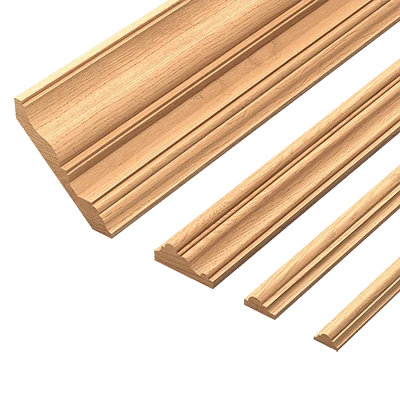
| MLD-004-MG | Primed MDF molding | A=15 mm, C=8 mm, L=2600 mm | 2 pcs. |
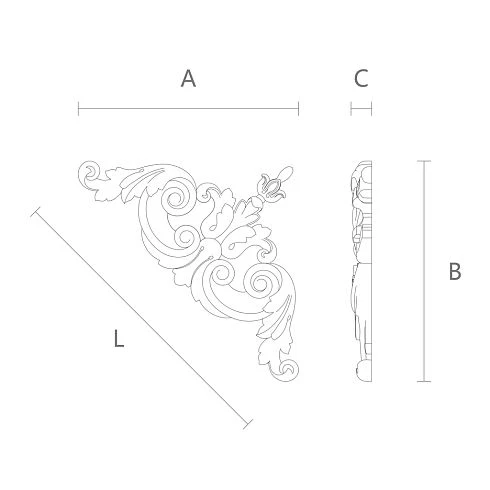
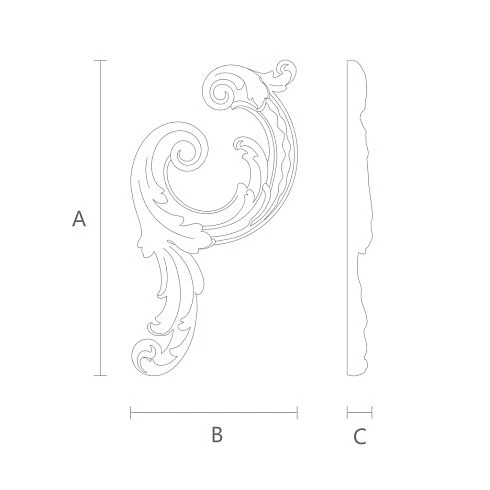
| MLDPU-4U-2.1L | Polyurethane stucco (left-hand corner) | A=145 mm, B=90 mm, C=16 mm | 2 pcs. |
| MLDPU-4U-2.1R | Polyurethane stucco (right-hand corner) | A=145 mm, B=90 mm, C=16 mm | 2 pcs. |
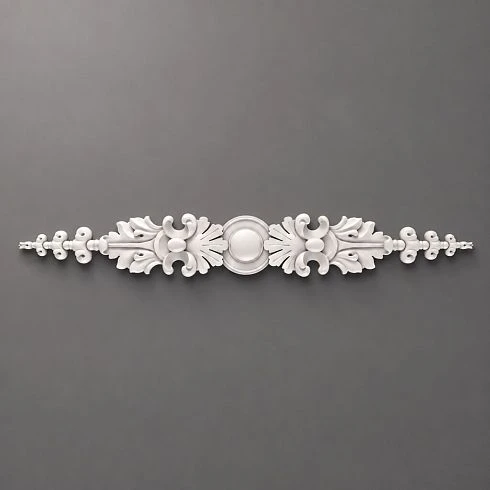
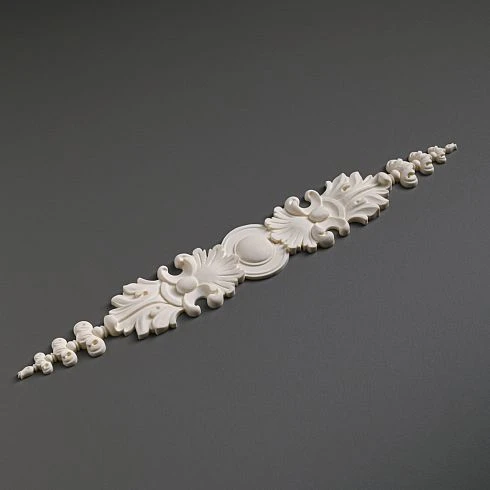
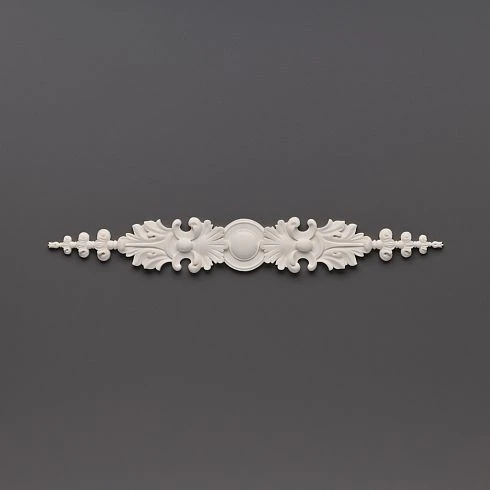
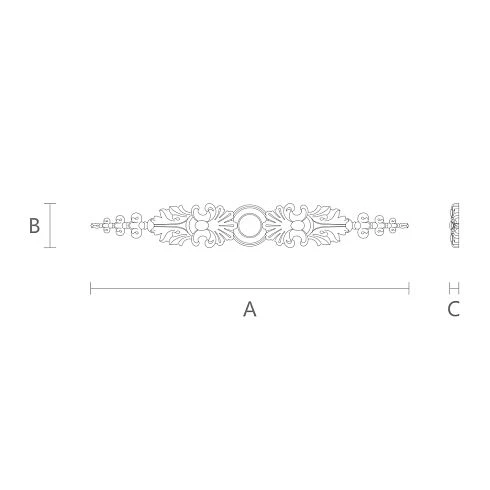
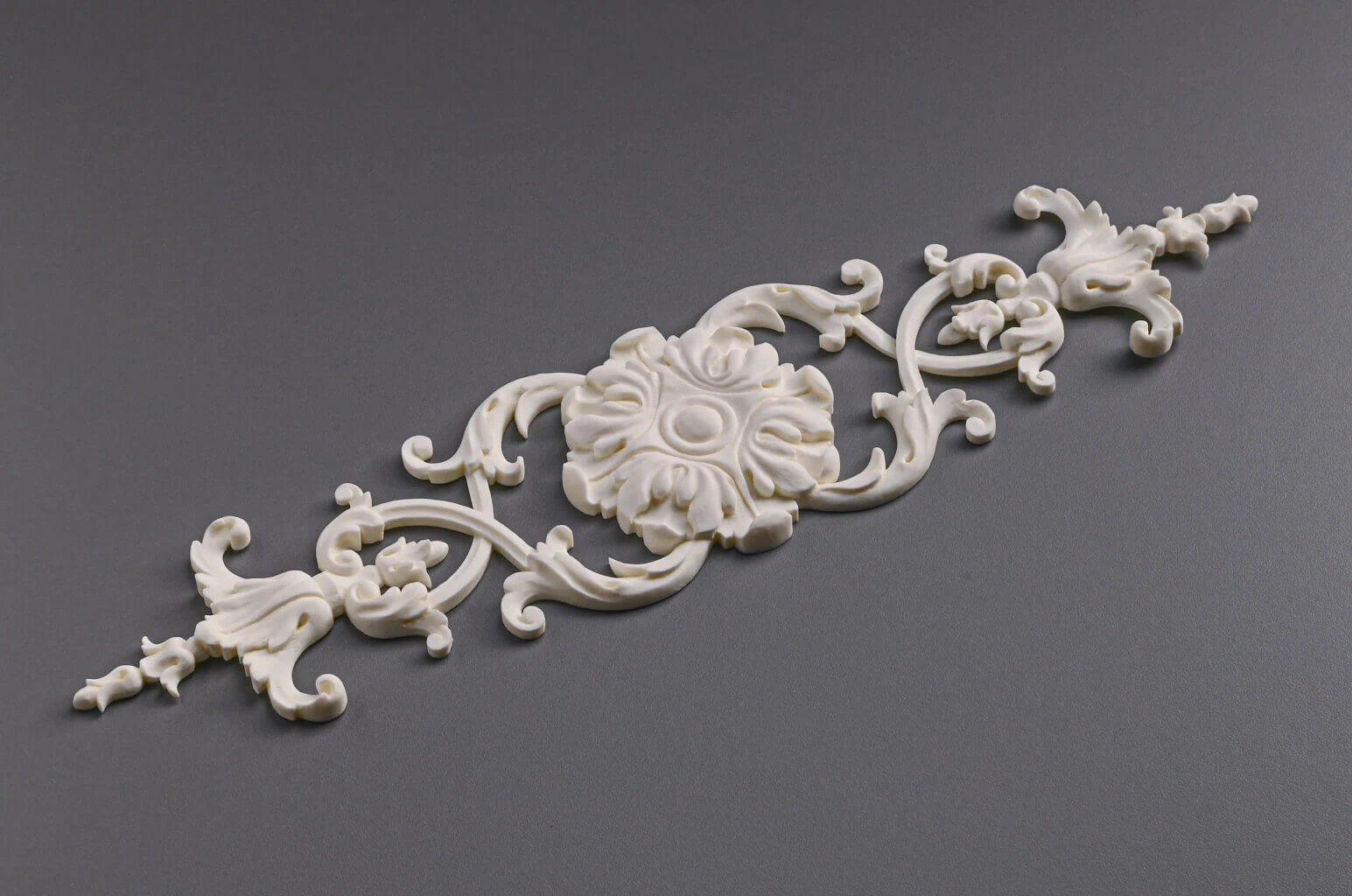
| NPU-401.1 | Polyurethane stucco (central insert) | A=47 mm, B=123 mm, C=14 mm | 2 pcs. |
Several important observations about the composition.
First, the MLD-004-MG molding, 2600 mm long, covers the composition height of 2300 mm with a margin, leaving room for trimming and adjustment. Two moldings provide the full perimeter of the frame with a margin.
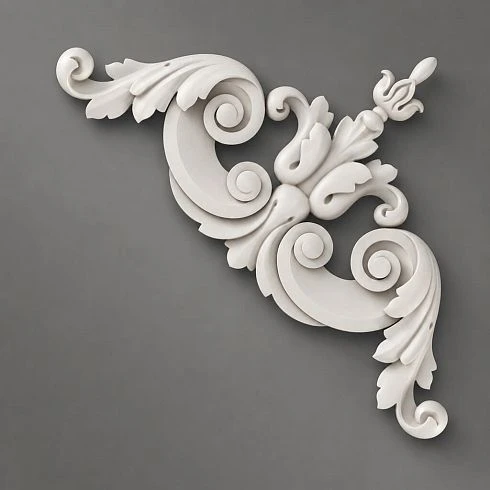
Second, the corner elements MLDPU-4U-2.1L and MLDPU-4U-2.1R are a mirror pair. Their size of 145 × 90 × 16 mm is sufficient for the frame corner to read as an architectural accent, yet compact enough not to overload the overall vertical line.
Third, the central inserts NPU-401.1 (47 × 123 × 14 mm) are vertically elongated elements installed symmetrically along the panel axis. Their vertical elongation (123 mm with a width of 47 mm) visually supports the overall vertical dynamics of the entire frame.
Fourth, the projection of the corner elements (16 mm) slightly exceeds that of the molding (8 mm): the corner overlays step out above the molding plane, creating a multi-level relief with a readable hierarchy.
Visual image of CPU-9-2: what exactly you will see on the wall
The article describes the engineering. But the buyer primarily buys an image — how it will look on their wall, in their light, next to their furniture.
CPU-9-2 creates an elegant vertical frame. Not grand, not flashy — just elegant. That is the word that most accurately describes the character of this composition.
Corner overlays MLDPU-4U-2.1L/R have a decorative relief — not overloaded, not self-absorbed, but expressive enough for each frame corner to be perceived as an independent architectural moment. This is a case where the detail holds attention exactly as long as needed — and releases it to the next point.
Central inserts NPU-401.1 — the "breath" of the panel in the middle. They are located on the horizontal section between the upper and lower parts of the vertical frame panel. Without them, the frame would be monotonous — two identical vertical sections without a pause. With them, rhythm, pause, and semantic division appear.
The molding perimeter brings everything together: a clear straight line, without bends or ornamental distractions. Molding is discipline. Corner elements are character. Central inserts are rhythm. Together, they form a complete architectural statement.
When painted white or cream (matching the wall), CPU-9-2 will be present in the space as an almost invisible architectural layer: the relief is only readable under side light, creating a soft "architectural shadow." With contrasting paint, the frame becomes a decorative dominant of the wall, a clear geometric accent in the space.
Materials of CPU-9-2: why MDF and polyurethane
MDF molding with factory primer
Molding MLD-004-MG is not just a wooden profile. MDF (medium-density fiberboard) is a material with a unique combination of properties: it is stable in length (does not warp or twist with humidity changes), cuts precisely (45° ends — without chips or delamination), and holds a straight line without deformation along its entire length.
Factory primer solves the main practical problem of MDF — porosity. Unprimed MDF absorbs paint unevenly: more porous areas produce dark spots, ends absorb much more than the face surface. Primed MDF accepts paint like a professional paintable surface — evenly, without streaks, without absorption.
Profile 15 mm (A) × 8 mm (C) — compact, delicate. Such a profile does not draw the decorative accent to itself. It creates the geometric contour of the frame and passes the main role to corner overlays and central inserts.
Polyurethane decorative elements
decorative polyurethane elements for walls — these are relief overlays cast from molds with high precision of shape reproduction. Polyurethane as a material has several key advantages for wall decor.
Light weight. The MLDPU-4U-2.1 corner pad (145 × 90 × 16 mm) with a polyurethane density of about 0.6–0.8 g/cm³ weighs approximately 80–120 g. It is held in place with mounting adhesive without dowels, anchors, or metal brackets. Installation on drywall, plastered surfaces, painted walls — without restrictions.
Reproduction accuracy. Matrix casting ensures the identity of each part: two corner elements from the same batch are mirror twins with the same relief, same projection, and same surface texture. When installed symmetrically, they form a perfect mirror pair.
Paint compatibility. The polyurethane surface is chemically neutral and accepts interior paints (acrylic, latex, water-dispersion) without special preparation. Light sanding with 180–220 grit sandpaper before the first application is sufficient.
Durability. Polyurethane is not afraid of household humidity, does not crack under standard temperature fluctuations in a living space, and does not crumble at the edges of the relief upon accidental contact. Service life under normal use is decades.
Where to install CPU-9-2: eleven application scenarios
A vertical frame 2300 mm high is not a "narrow product for a narrow task." It is a universal architectural module that works in almost any space where a wall needs to gain character.
Accent Wall in Living Room
Living room — the main space of an apartment or house that everyone sees. An accent wall in the living room should speak of the owner's taste without unnecessary words.molded decor for the living roomfrom the CPU-9-2 kit creates a vertical rhythm on this wall: one, two, or three frames at equal intervals turn the plane into a decorative system with architectural logic.
A special technique for a living room with a ceiling of 2.7–2.8 m: the CPU-9-2 frame 2300 mm high leaves a small gap to the ceiling (about 400–500 mm), which can be covered with a ceiling cornice. The result is a complete three-zone decorative system: cornice — frame — floor.
Decorative panel behind the sofa
The wall behind the sofa is the first thing a guest sees when entering the living room. This is where the vertical frame CPU-9-2 works as an anchor element: it structures the sofa area, gives it architectural completeness, and turns the furniture group into part of a well-thought-out interior concept, rather than just a set of items.
Headboard zone in the bedroom
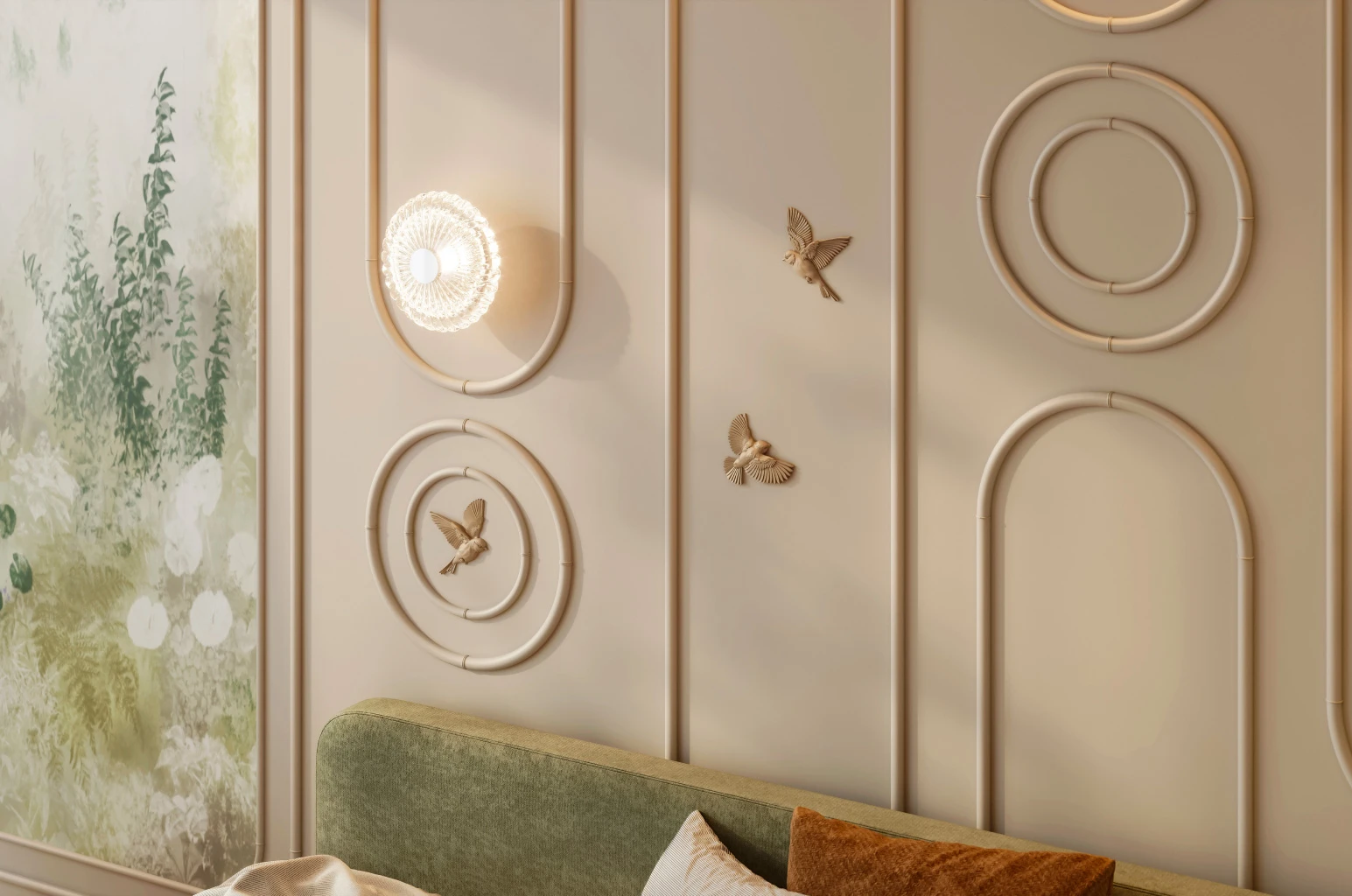
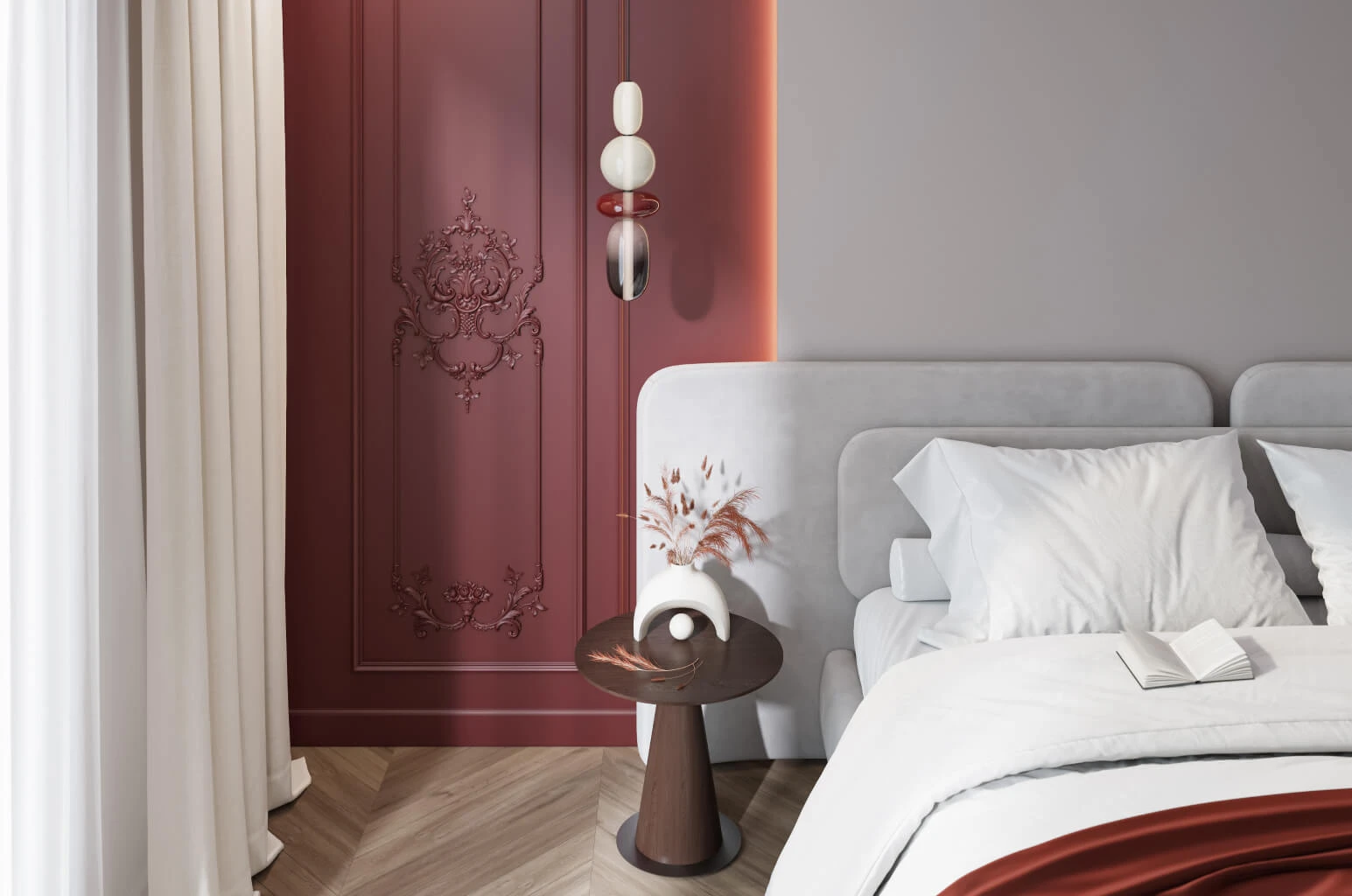
Molding for the bedroom on the wall — a delicate task. The bedroom cannot tolerate overload: overly rich decor creates anxiety where peace is needed. CPU-9-2 is the ideal choice precisely for this reason. Its frame is restrained enough not to actively "work" against the bedroom background. Painted in the wall's tone, it creates a quiet volumetric accent that enhances the sense of space and coziness without disturbing the relaxation atmosphere.
TV zone: technology within architecture
A TV on the wall without context is always a visual problem. The black screen "hangs" in the air, not fitting into any decorative logic of the space. Two vertical frames CPU-9-2 on either side of the screen create a symmetrical architectural portal: the TV integrates into the system, ceases to be a foreign element, and becomes part of the wall's decorative geometry.
Pier between doorways
A pier 700–900 mm wide is exactly the format for which CPU-9-2 is ideally designed. The frame width of 860 mm fits into a standard pier without gaps or overlaps. The frame completely occupies the pier — and turns it from a technical gap between doors into an independent architectural element.
Hallway and corridor: first impression
Decor for the hallway — the most underrated investment in an interior. The hallway is seen by everyone who enters the home. It is here that the first impression of the owner's taste and level is formed. One vertical frame CPU-9-2 on the side wall of the hallway — and it ceases to be a passageway technical space. It becomes the first hall of the interior with a decorative character.
In a long corridor, CPU-9-2 can be repeated several times: the even rhythm of frames on the wall creates the effect of a palace enfilade — the space is simultaneously structured and visually elongated.
Hall with high ceilings
A hall is a space where the ceiling height allows the frame to fully "breathe." The CPU-9-2, with its height of 2300 mm in a hall with a ceiling of 3–3.5 m, does not exhaust the wall's decorative potential. Above the frame, there remains space for a cornice, a garland of individual decorative elements, or simply a blank field. This arrangement creates a classic two-zone wall structure: a lower decorative zone and an upper "sky."
Study: seriousness without pomposity
A study is a space where decor should work to create an atmosphere, not distract from work.Stucco decor for the studyfrom the CPU-9-2 set is precisely that balance: the frame is present, adding a library-like academic weight to the walls, but does not demand constant attention. It shapes the atmosphere of a place where serious decisions are made—without declaring it.
Interior niche
A niche in the wall is an architectural gift that many do not know how to use correctly. The usual approach is to place a few decorative items in the niche and consider the task done. A more effective approach is to decorate the niche itself. The CPU-9-2, mounted along the perimeter of the niche's back wall or its opening, transforms the niche into a decorative "portal" with an architectural frame.
Restaurant, cafe, hotel
In commercial spaces,Decorative polyurethane wall stuccoperforms a task that is difficult to solve by other means: it creates the feeling of a space "with history"—a place where time, attention, and taste have been invested. The CPU-9-2 in a restaurant hall is a decorative argument in favor of a certain price segment. The guest sees walls with frames and subconsciously builds expectations corresponding to such an interior.
Repeating rhythm of panels
One CPU-9-2 frame is an accent. Three frames in an equal rhythm on one wall is architecture. Equal spacing (distance between frames), equal height, a unified ornament—and a simple flat wall turns into a decorative system with a sense of palatial scale. This technique is especially effective in long corridors, lobbies, and large living rooms.
Which interior styles suit CPU-9-2
Neoclassicism: a precise hit to the canon
Molding for neoclassicism— this is not a metaphor or a marketing gimmick. It is literal compatibility: neoclassicism is built on vertical molding frames, symmetry, and restrained ornament. CPU-9-2 is exactly such a frame. In a neoclassical interior, it looks organic, as if it was designed together with it, not added during renovation.
Modern classic: a delicate architectural layer
Modern classic is neoclassicism with the 'gold' removed. The same vocabulary of decor, the same logic of symmetry and rhythm — but without gilding, without massive cornices, without the solemnity of palace scale.Decorative stucco for a classic interiormade from CPU-9-2 in modern classic is painted to match the wall tone — and exists as an architectural layer that is felt but not declared.
Art Deco: geometry as the main argument
In Art Deco, ornament exists within strict geometry. CPU-9-2 is built on exactly this principle: the molding perimeter is rigid geometry, the corner overlays are ornament within it. When the frame is painted in a metallic color (matte gold, bronze, anthracite), the system acquires an Art Deco character — especially if the wall is painted in a rich dark tone.
Parisian style: layers and details
A Parisian interior is about layering. Molding frames are the first, basic layer that makes everything else (wallpaper, mirrors, paintings, textiles) a system, not a collection of random items. CPU-9-2 in a Parisian interior is that very first layer. It may be invisible behind other decorative layers — and that is why it is irreplaceable.
Eclecticism: an anchor in the sea of mismatched styles
Eclecticism is a bold style that easily turns into chaos. Architectural frames on the walls are one of the few ways to keep an eclectic interior feeling systematic.Set of moldings and polyurethane stuccoCPU-9-2 sets the geometric structure of the wall, which then accepts any decorative layers on top — and holds them in a single space.
CPU-9-2 in the system: how to combine with other elements of the STAVROS catalog
Cornices and Baseboards
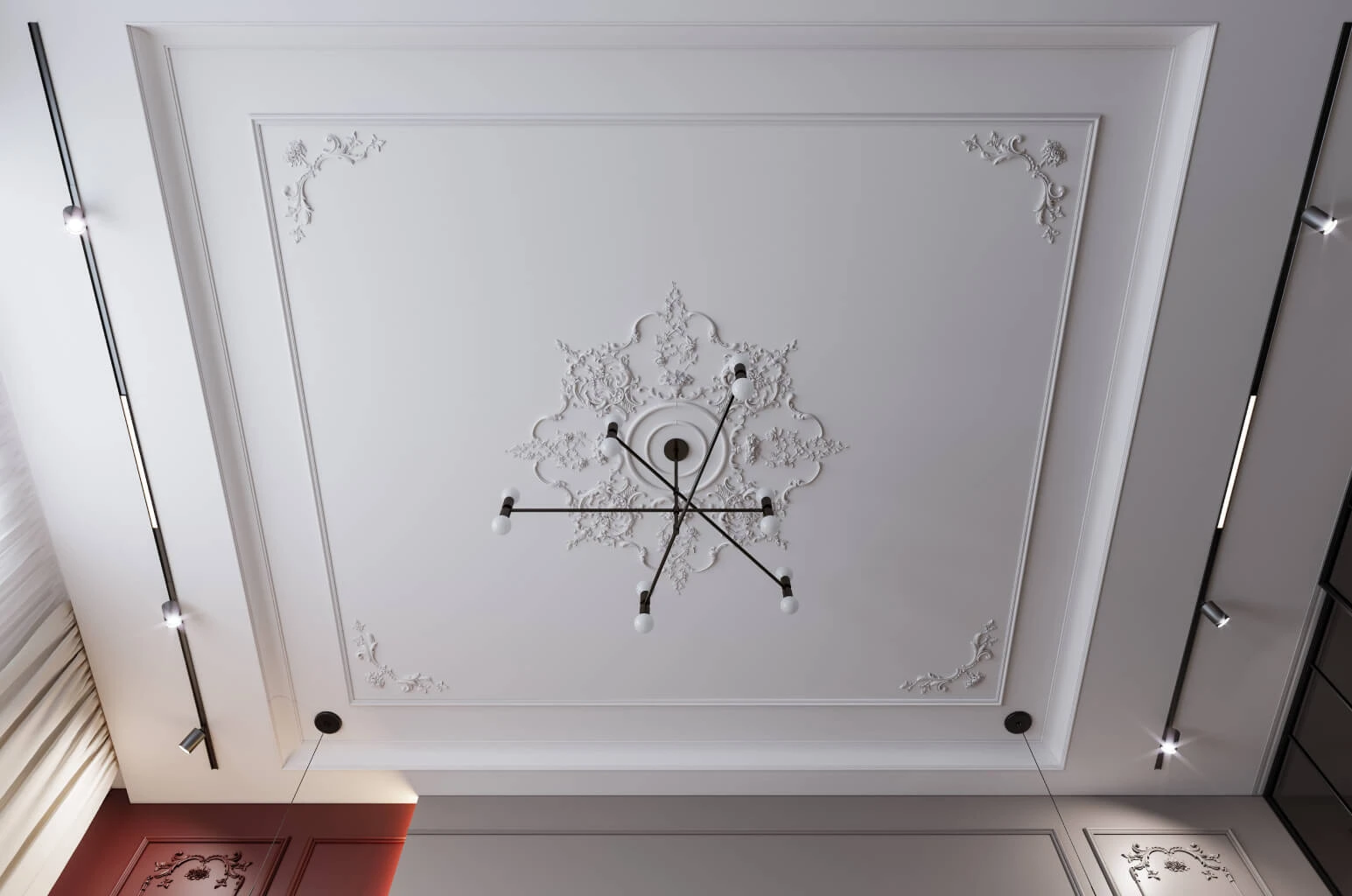
The CPU-9-2 frame, complemented by a ceiling cornice and floor plinth from the same polyurethane system, forms a three-level decorative frame for the room. This is a complete decorative finish of the room — top, middle, bottom — in a unified style and material.STAVROS Moldings, Cornices, and Baseboardsare compatible with CPU-9-2 in terms of projection and style.
Wall decor collections
If CPU-9-2 requires additional decorative elements — applying ornament inside the frame or around it — you should refer to the sectionof STAVROS polyurethane wall decor. Here are presented individual ornamental overlays from several collections.
The "Tauride Garden" collection— a strict, architectural ornament that is closest in character to the spirit of CPU-9-2. If you need to add a decorative accent inside the frame or enhance corner areas with additional details, "Tauride Garden" will be a logical choice.
The "Botanical Garden" collection— for those who need a softer, natural, floral-vegetal ornament within the frame. This choice works well in bedrooms, boudoirs, and salons with a floral concept.
Decor for moldings
A separate section —polyurethane overlays with floral ornament— these are items for reinforcing molding joints, corner connections, and central accents in more complex decorative systems. If CPU-9-2 is the base, then these elements are an opportunity to expand it.
Repeating frames
CPU-9-2 scales perfectly: several identical sets create a repeating rhythm on the wall. For calculation: one set = one frame. For two frames on the wall behind the sofa — two sets. For three frames in the hallway — three sets. Simple arithmetic without additional approvals.
DIY installation of CPU-9-2: detailed instructions
DIY installationsets of wall stucco decor— this is a real task for a person with basic construction skills. No special tools, no professional secrets — only sequence and precision.
Tools and materials
Before starting installation, prepare:
-
Laser level (or bubble level + plumb line)
-
Tape measure and pencil
-
Miter saw or jigsaw (for trimming molding)
-
Sandpaper (grit 180–220)
-
Construction adhesive (acrylic or polyurethane liquid nails)
-
Finish nails and hammer (optional, for long moldings)
-
Acrylic sealant or finishing putty
-
Putty knife and rag
Step 1: Check the wall
The wall for installation must be level — deviations no more than 2 mm on a 2-meter straightedge. Large deviations will require leveling putty: molding on an uneven wall will show visible gaps after installation. The surface is dust-free, grease stains are removed with a solvent.
Stage 2: marking — the most important part
Find and mark the vertical axis of the future frame. All symmetry is built from this axis: the left and right edges of the molding are at equal distances from the axis, corner overlays are strictly mirrored, and central inserts are exactly on the axis.
Mark the horizontal lines of the top and bottom borders of the frame. Check the horizontal level. Mark the vertical lines of the left and right edges. Check the vertical level. Use a pencil to mark the centers of the corner elements in the four corners of the frame and the positions of the two central inserts NPU-401.1 on the vertical axis.
Only after a full check of all marks — start installation. A 5 mm marking error is visible from a distance of 4–5 meters.
Stage 3: cutting the molding MLD-004-MG
The molding is cut into four segments along the frame perimeter: two vertical (length = B − 2×90 mm considering corner overlays) and two horizontal (length = A − 2×145 mm). The exact dimensions depend on whether the molding goes under the corner overlay or is butted against it.
The ends of the molding are cut at 45° for corner joints. Cut slowly, in one pass — rushing at this stage causes chips and uneven ends. After cutting, the ends are sanded with sandpaper.
Stage 4: installing the molding
Apply glue in a zigzag pattern to the back of the molding. Press the segment against the wall according to the markings and hold for 30–60 seconds. For vertical segments longer than 1500 mm, additional fixation with 2–3 finishing nails in the middle is recommended — they are fully sunk into the molding and later puttied.
Horizontal segments are installed after vertical ones. The 45° joint is coated with glue on both sides — this strengthens the corner connection.
Stage 5: installation of corner overlays
MLDPU-4U-2.1L and MLDPU-4U-2.1R are installed after the molding is mounted. Apply glue pointwise to the back surface. Press for 1–2 minutes with manual holding. Check symmetry: both left elements should be positioned identically, both right elements should be mirror images of them.
Stage 6: installation of central inserts
NPU-401.1 are installed last. Their positions along the axis of symmetry are already marked on the layout. Apply glue pointwise, press for 30–60 seconds. Check vertical alignment: both inserts must be strictly on the axis.
Stage 7: puttying and sanding
After the glue has fully dried (at least 24 hours) — all joints are sealed with acrylic sealant or finishing putty. After the putty dries — sand with sandpaper grit 180–220. This stage "removes" all seams and creates the feel of a monolithic surface.
Stage 8: painting
Two to three coats of interior paint. The first coat is thin, covering the surface. The second is the finishing coat. If necessary, a third. Brush for relief details, small foam roller for the molding. Each coat dries for 2–4 hours, after which the next can be applied.
Advantages of CPU-9-2: everything key in one place
Let's systematize what makes this kit the right choice:
-
Ready for installation — all parts are selected and coordinated, no need to waste time searching for compatible components in the catalog
-
Vertical dynamics — a frame 2300 mm high visually raises the ceiling and makes the space airier
-
Restrained ornament — elegant corner overlays and compact central inserts provide expressiveness without overload
-
Proven proportion — width 860 mm with height 2300 mm creates a classic vertical ratio
-
Two materials, one system — MDF molding (geometry) + polyurethane stucco (ornament) work together without compromises
-
Symmetry guaranteed — paired L/R corner elements eliminate assembly errors
-
Versatility of use — living room, bedroom, hallway, corridor, study, restaurant, salon, boutique
-
Painting in any color — wall-matching tone, contrasting, metallic — any task
-
Suitable for repetition — several frames in a row create a rhythmic decorative system
-
Accessibility of materials — installed by any builder with basic skills
Buy a set of stucco decor CPU-9-2 STAVROS
If you have defined your task and are sure that CPU-9-2 is the right solution for your space, the next step is simple.
Buyset of stucco wall decor STAVROScan be found in the online catalog — with Contact us to confirm shipping to your destination. In the section. Clear lines, created using modern technologies, emphasize the strict aesthetics of the room. Each decorative element harmoniously fits into the overall concept, creating a sense of order and thoughtfulness.you will find not only CPU-9-2, but also other sets for wall panels, as well as individual decorative elements for custom assembly.
When ordering a large project — several rooms, a large number of panels — wholesale purchase is possible.
FAQ: answers to questions about CPU-9-2
How is CPU-9-2 different from CPU-7-1?
CPU-7-1 is a more ornate, formal composition with a large central medallion and elaborate floral ornament. CPU-9-2 is a more restrained, architectural frame with an emphasis on proportions and delicate corner overlays. If you need a "quiet" frame — CPU-9-2. If you need a "formal" ornament — CPU-7-1.
Is the set suitable for rooms with a ceiling lower than 2.5 m?
The frame height of 2300 mm in a room with a 2.4 m ceiling leaves only a 100 mm gap — this is very small. In such rooms, it is better to consider more compact sets or trim the frame height, accordingly selecting other molding sizes.
Can the CPU-9-2 be installed on a plasterboard wall?
Yes. Polyurethane overlays are held with assembly glue without dowels. For MDF molding, if the vertical segment length exceeds 1500 mm, it is better to secure it with 2–3 finishing nails into the profile behind the cladding.
How many frames can be made from one set?
One CPU-9-2 set is designed for one frame. For two frames — two sets.
What glue to use?
Assembly glue based on acrylic or polyurethane ("liquid nails"). Neutral silicone glue is not recommended: it adheres worse to MDF and is difficult to putty at joints.
Can the corner overlays be trimmed?
Polyurethane is cut with a sharp knife or jigsaw. A slight size adjustment (5–10 mm) is possible. Significant trimming will damage the decorative shape of the element.
Can the CPU-9-2 be used without corner overlays — only the molding and central inserts?
Physically — yes. But without corner overlays, the frame will lose its decorative accent at the corners and will look unfinished. Corner elements are a key detail in the appearance of this composition.
What is the actual labor intensity of installation?
With a laser level and properly done markings, installing one CPU-9-2 frame takes 2–4 hours (excluding drying time for glue and putty). Painting takes another 1–2 hours. Total: one working day — one completed frame.
Is there an installation manual from the manufacturer?
Contact STAVROS support — they will provide an assembly diagram and answer technical questions about installing a specific kit.
Can I purchase individual elements of CPU-9-2 in case of defects or loss?
Yes. All items in the kit — MLD-004-MG, MLDPU-4U-2.1L/R, NPU-401.1 — are available in the catalog as separate products.
Your request has been sent!
Our manager will contact you within 5 minutes