




























































Article Contents:
- Why arches and curved walls require a separate approach
- Which areas can be decorated with stucco decor
- Arched doorway between rooms
- Arch between kitchen and living room
- Semicircular niche
- Radius wall
- Bay window area
- Rounded partition wall
- Hall or corridor with arches
- Which elements to choose for an arch
- Moldings for framing the opening
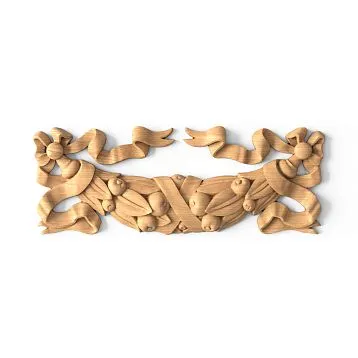
- Decorative overlays for the top of the arch
- Decor for moldings
- Vertical elements on the sides of the opening
- Ready-made kits for adjacent walls
- How to design a curved wall
- What to choose: moldings, overlays, or a ready-made set
- Which styles suit arches and curved walls
- Neoclassical
- Neoclassic Light
- Jatoba
- Versailles Light
- Botanical garden
- Mistakes when designing arches and rounded walls
- Using overly massive decor on a small arch
- Breaking the radius with straight elements without composition
- Do not account for architraves, baseboards, and cornices
- Mixing different styles in one opening
- Overloading the arch with ornamentation
- Not connecting the arch with adjacent walls
- What to buy for decorating an arch or radius wall
- Frequently asked questions
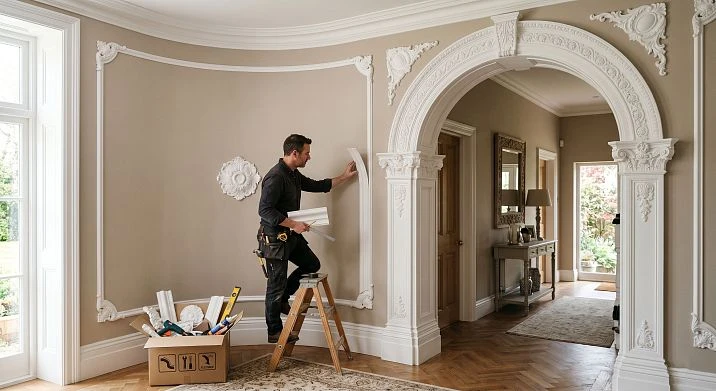
An arch is not just an opening in a wall. It is an architectural event. A semicircular vault, a rounded transition between rooms, a bay window niche, a radius partition — all these are forms that follow different rules than right angles and flat surfaces. And that is precisely whystucco decor for an archis a task that cannot be solved 'by analogy' with a straight wall. It requires a special approach, its own elements, its own assembly logic.
The good news: polyurethane is the only modern material that allows you to decorate any curved shape without plastering, without complex calculations, and without hiring professional decorators. Flexibility, lightness, and the ability to paint in any shade — all this makes polyurethane decor an ideal solution for arches, bay windows, radius walls, and semicircular niches. Let's break down each scenario in detail and honestly.
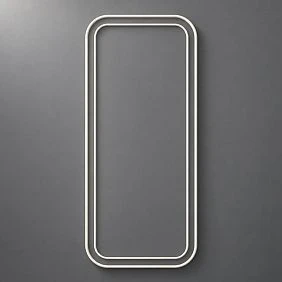
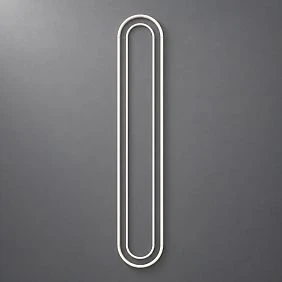
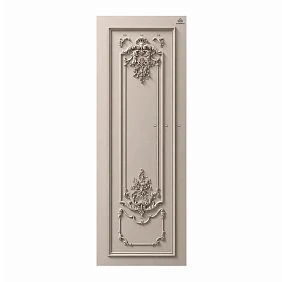
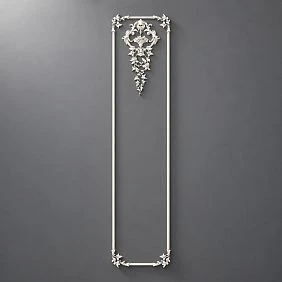
Why arches and radius walls require a separate approach
Here's the gist: on a straight wall, everything is simple. Moldings are cut at 45°, frames turn out to be precise rectangles, and joints are covered with corner inserts. Even a novice craftsman can handle such installation in a few hours.
An arch is a different matter. The upper part of the opening is not straight — it's an arc. The profile either needs to be bent along the radius, installed in fragments with adjustments, or ready-made radius elements must be used. Each of these approaches has its own technique, and none of them works "by default."
A radius wall is even more complex. The vertical profile, which is easily installed on a straight surface, either pulls away from the surface or deforms during installation on a curved wall. A bay window with multiple planes requires joining at corners that are not always standard — 135°, 120°, 150° instead of the usual 90°.
Exactly thereforedecoration of an arched openingrequires preliminary planning — not a random choice of "the first profile you come across." You need to understand what geometry you have, what the radius is, what role the decor plays — whether it emphasizes the shape or frames it — and only then choose specific elements.
Key features of working with arches and radius surfaces:
| Task | Straight wall | Arch / radius |
|---|---|---|
| Frame installation | Standard 45° cutting | Bent profile or sawing along an arc |
| Corner joints | 90° | 120°–150° or non-standard |
| Elements | Any from the collection | Flexible profiles or special elements |
| Symmetry | Same sizes | Strictly along the arch axis |
| Installation difficulty | Medium | Above average |
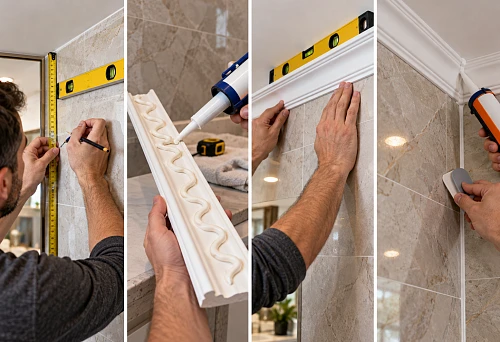
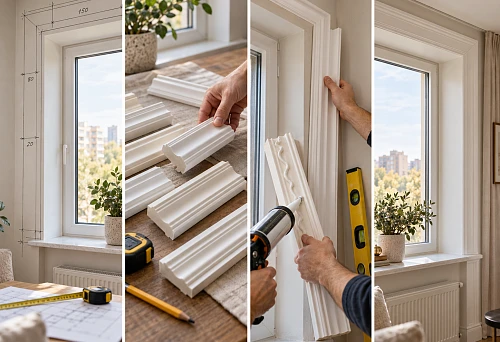
Flexible polyurethane moldings are the answer to the question of how to design an arch without sawing along an arc and without complex fitting. Polyurethane, when heated (with a heat gun), becomes plastic and takes the shape of the arch arc, securely fixed with glue. After cooling, it retains the given shape and can be painted like a regular profile. The article on the STAVROS website about flexible stucco describes in detail the technique of working with radius and curved surfaces:installation of polyurethane molding.
Which areas can be decorated with stucco molding
Our factory also produces:
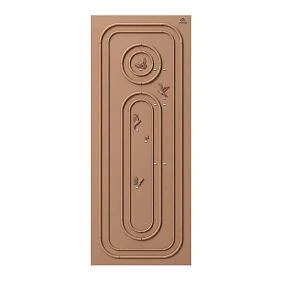
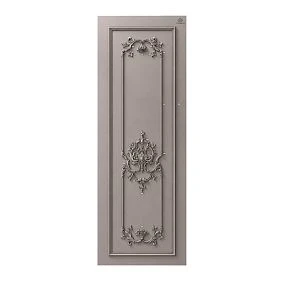
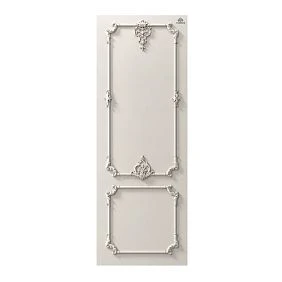
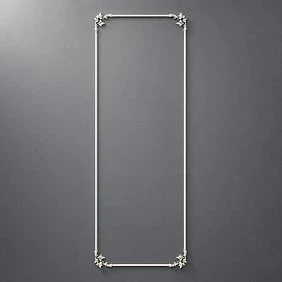
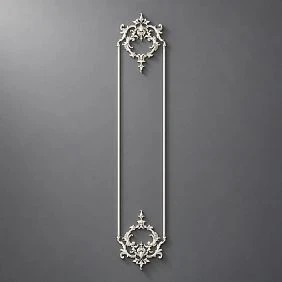
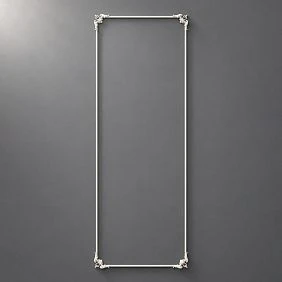
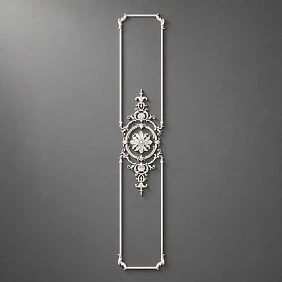
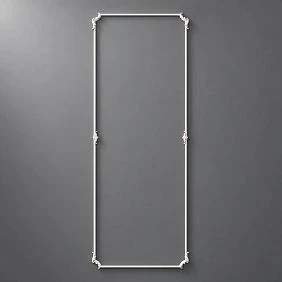
Arched opening between rooms
The most common scenario: a doorway without a door, an arched shape between the living room and hallway, between the bedroom and dressing room, between the study and library. Here, the decor serves a dual role: it frames the transition itself and connects two spaces into a single architectural statement.
Moldings for an arched openingare installed along the perimeter of the opening — along the vertical sides and along the arch of the upper part. For the verticals, a standard straight profile is used. For the arch, a flexible profile from the same series is used. The vertical and arched elements are joined at the point where the curvature begins: the joint is made on a horizontal line that corresponds to the level of the arch spring.
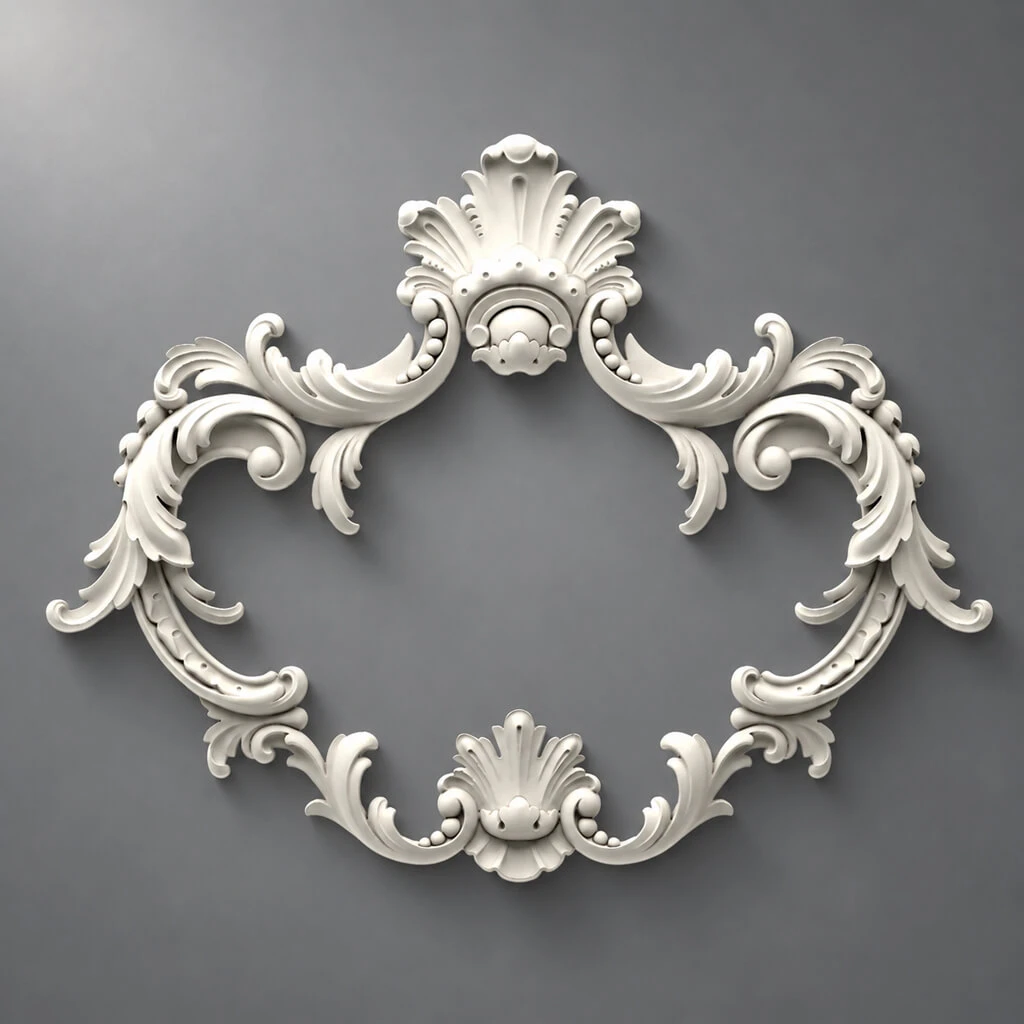
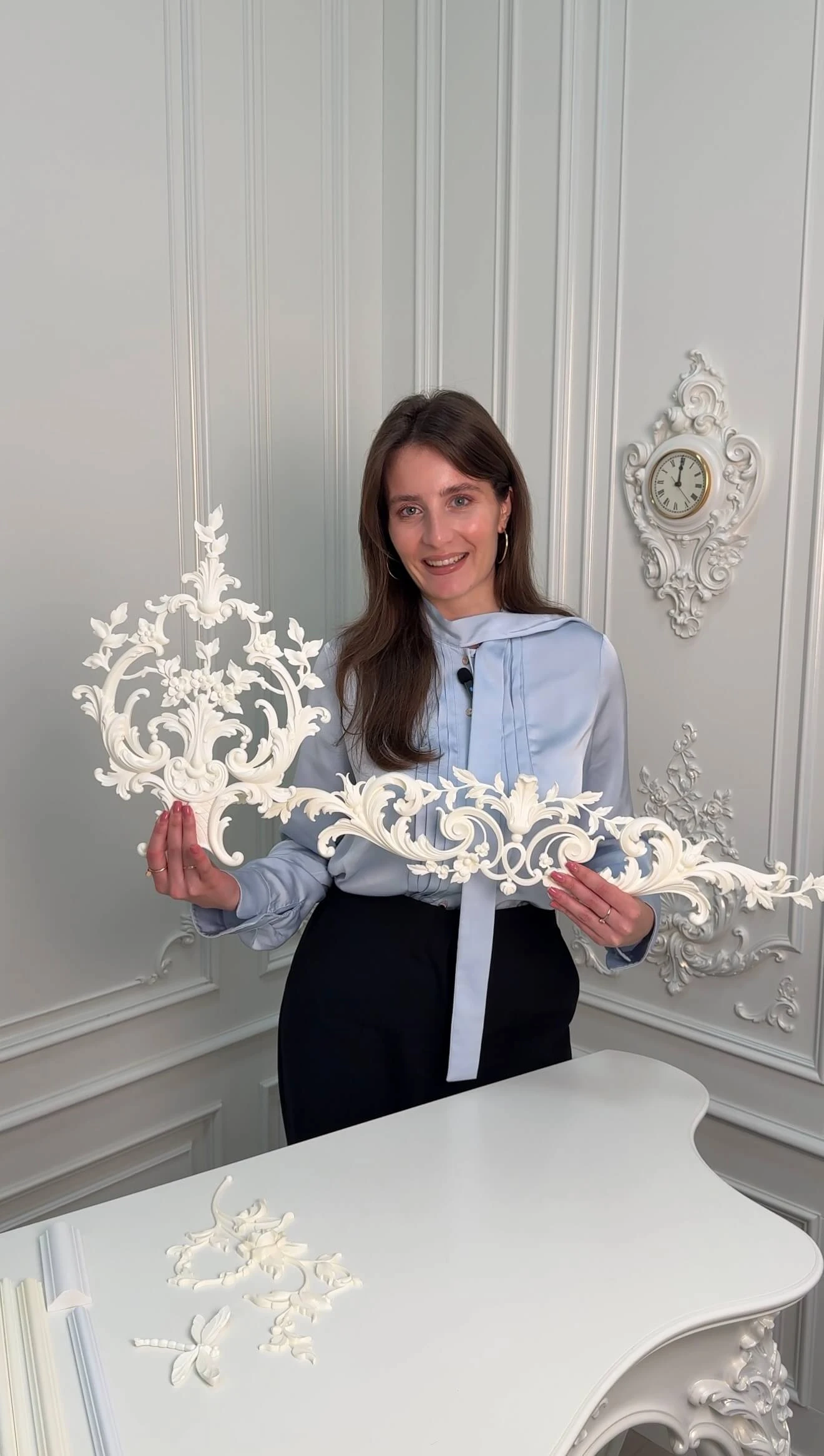
Stucco for an arched opening is not just moldings along the perimeter. In the upper part of the arch, a central decorative accent is traditionally placed: a keystone, a medallion overlay, an ornamental insert. This is an architectural technique with a centuries-old history: the arch keystone is its semantic center, the point where lateral forces meet and balance.
Get Consultation
Arch between the kitchen and living room
In modern apartments, the arch between the kitchen and living room is a zonal divider: it exists, it marks the boundary, but does not close it.Polyurethane arch decorhere solves another task: elevating a 'utilitarian' planning detail to the level of an architectural object.
Moldings in this area are painted in the color of the kitchen or living room walls (or a neutral tone that unites both zones). The central decorative accent in the arch keystone creates a 'signature' of the transition — an accent visible from both the kitchen and the living room.
Semicircular niche
Decor of a semicircular niche — a task that many do not solve at all, leaving the niche in its original form. But in vain: a semicircular niche is a ready-made architectural "frame" for a decorative object, be it a statuette, a vase, a mirror, or backlighting.
Molding along the perimeter of the niche turns it from a "hole in the wall" into an independent decorative element. Inside the niche, the decor can be continued: a decorative overlay on the back wall, vertical pilasters on the sides, an accent at the top point of the arch. If the niche is deep, internal backlighting creates a "light object," for which the molding frame serves as a border. About backlighting and decor — in the article Stucco wall decor with backlighting.
Radius wall
A radius wall — a concave or convex curved surface — is found in bay windows, in corner rooms with rounded shapes, in the halls of modern houses. This is a surface that already has character in itself — and the decor should support it, not overpower it.
Stucco decor for a radius wall is built on the principle of vertical rhythm: repeating vertical elements, placed at equal intervals along the radius of the wall, create a "drum" effect — the geometry of the wall is organized, structured, and reads as intentional. Horizontal belts — moldings at the same height — enhance this rhythm and tie the verticals into a single system.
It is fundamentally important: do not try to place a regular rectangular frame made of straight moldings on a radius wall. A straight frame on a curved surface will either deform or "pull away" from the wall at the corners — and in both cases, it looks unprofessional.
Bay window area
A bay window is a volume protruding beyond the plane of the facade with several planes and non-standard angles between them. This is the most complex of the geometric situations considered and, at the same time, one of the most expressive.
Moldings for bay windowsare mounted on each plane of the bay window separately. Corner joints between planes are closed either with a flexible profile (wraps around the corner) or with special corner inserts for non-standard angles. It is important that the horizontal line of decor on all planes of the bay window is at the same height — this unites all edges into a single volume.
On the principles of decor for complex architectural zones — in the articleVertical wall decor made of polyurethane.
Rounded pier
A rounded pier is a short curved wall between two openings or niches. This area is often ignored when decorating: it is small, awkward in shape, and "does not fit" into standard decorative schemes.
Yet, it is the rounded pier that often becomes the central visual object of a hall, corridor, or entryway. One decorative overlay at the central point, two symmetrical vertical moldings on the sides — and the space comes alive. Minimum elements, maximum effect.
Hall or corridor with arches
Systematic solution: several arches of one corridor or hall receive a unified molding framing. The same profile on each arch, the same overlays at the keystone of each vault, a single horizontal belt at the level of the arch springing — and the corridor becomes an architectural masterpiece. This approach is typical for classic country houses. On decor for large formal spaces — in the articlestucco decor for high walls and stairwell halls.
Which elements to choose for an arch
Moldings for framing an opening
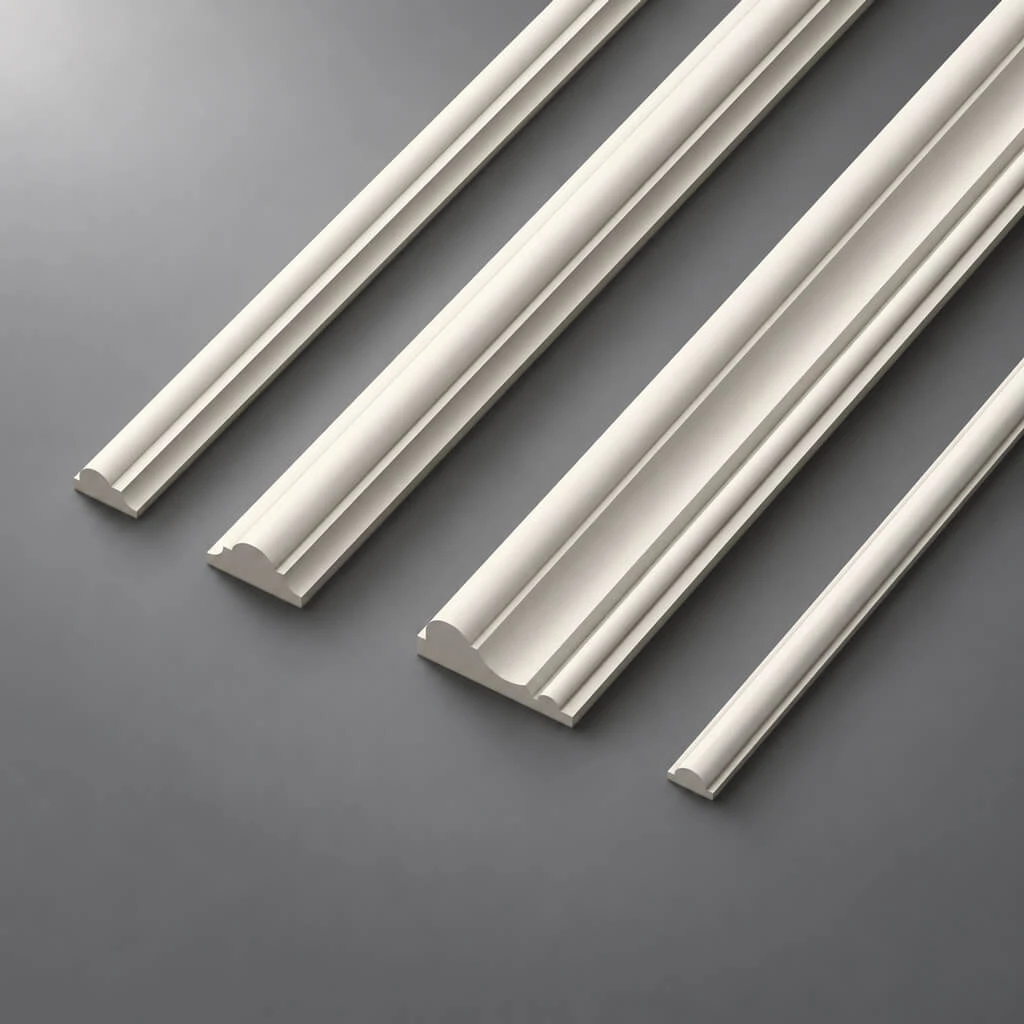
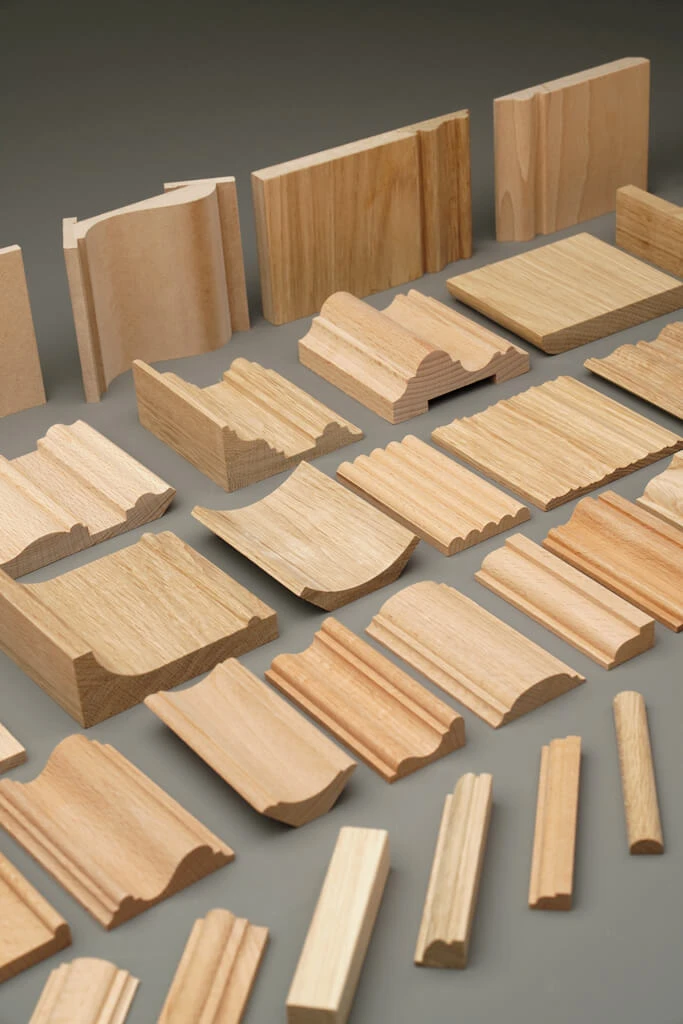
Moldings for an arch are the basis for framing an arched opening. They are used to assemble the vertical framing along the sides (pilaster-like verticals) and the arch along the top part of the opening.
Key question: what should the profile for the arch curve be? There are three ways:
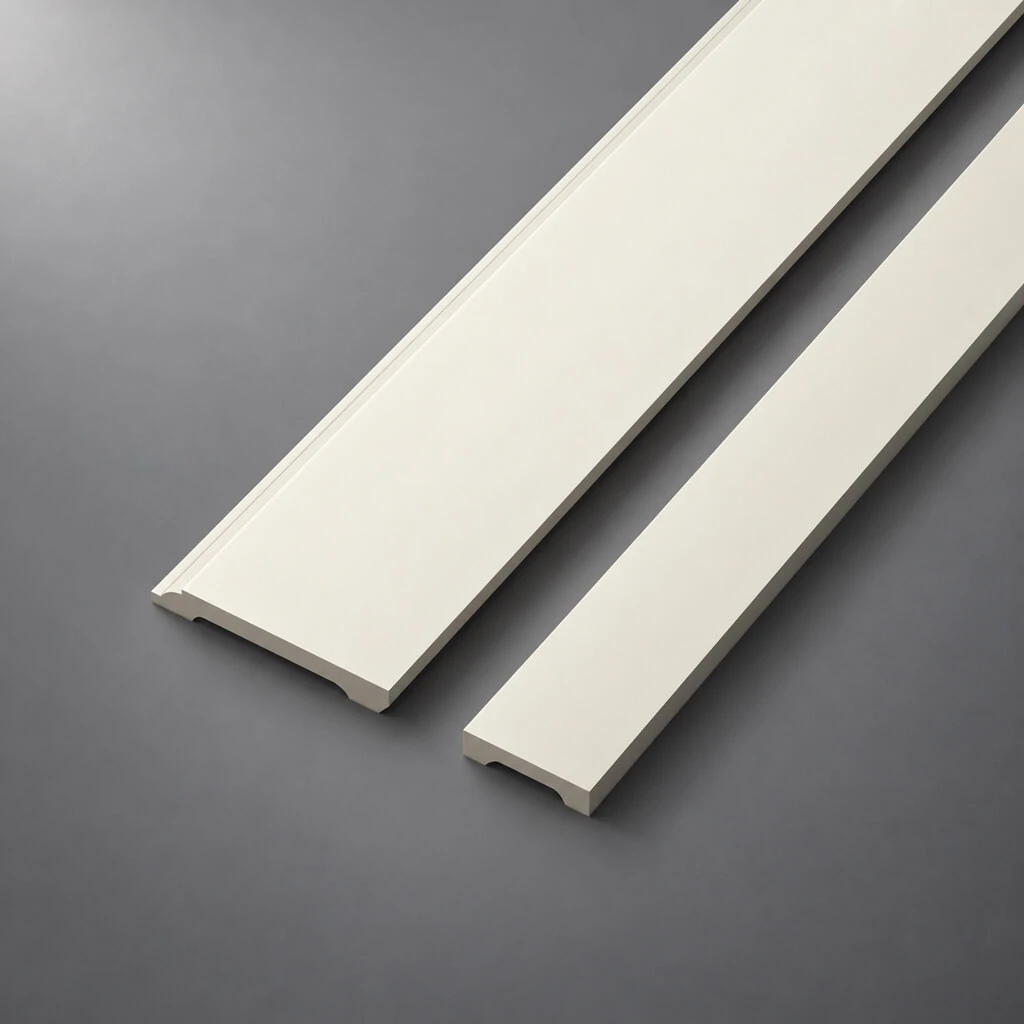
Flexible polyurethane profile. A special flexible molding that, when heated with a hairdryer, bends along the radius of the arch. Ideal for arches with a smooth radius (from 60 cm). After cooling, it holds its shape and can be painted any color. This is the most technologically advanced and aesthetically flawless solution: a profile on the arch without a single joint.
Segmental cutting of a straight profile. The profile is cut into short segments (5–8 cm), each of which is installed with a slight angle shift, following the arch curve. This method provides a "polygonal" approximation of the arch, which looks smooth enough after painting. Used for rigid profiles of large width that are difficult to bend.
Ready-made radius arch elements. A factory-made element that already has the shape of an arch of the required radius. The easiest installation option if the arch size matches the standard one.
Profile width for arch framing: 30–50 mm for standard apartment arches (opening width 80–120 cm), 50–70 mm for large formal arches (from 150 cm). Relief height: moderate, 12–18 mm — for complex radius shapes, excessive relief only complicates installation.
Decorative overlays for the top part of the arch
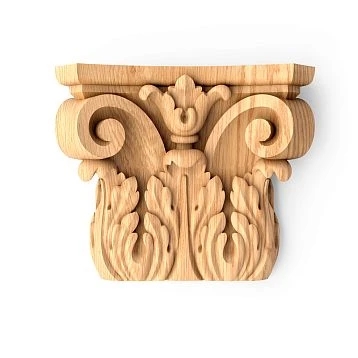
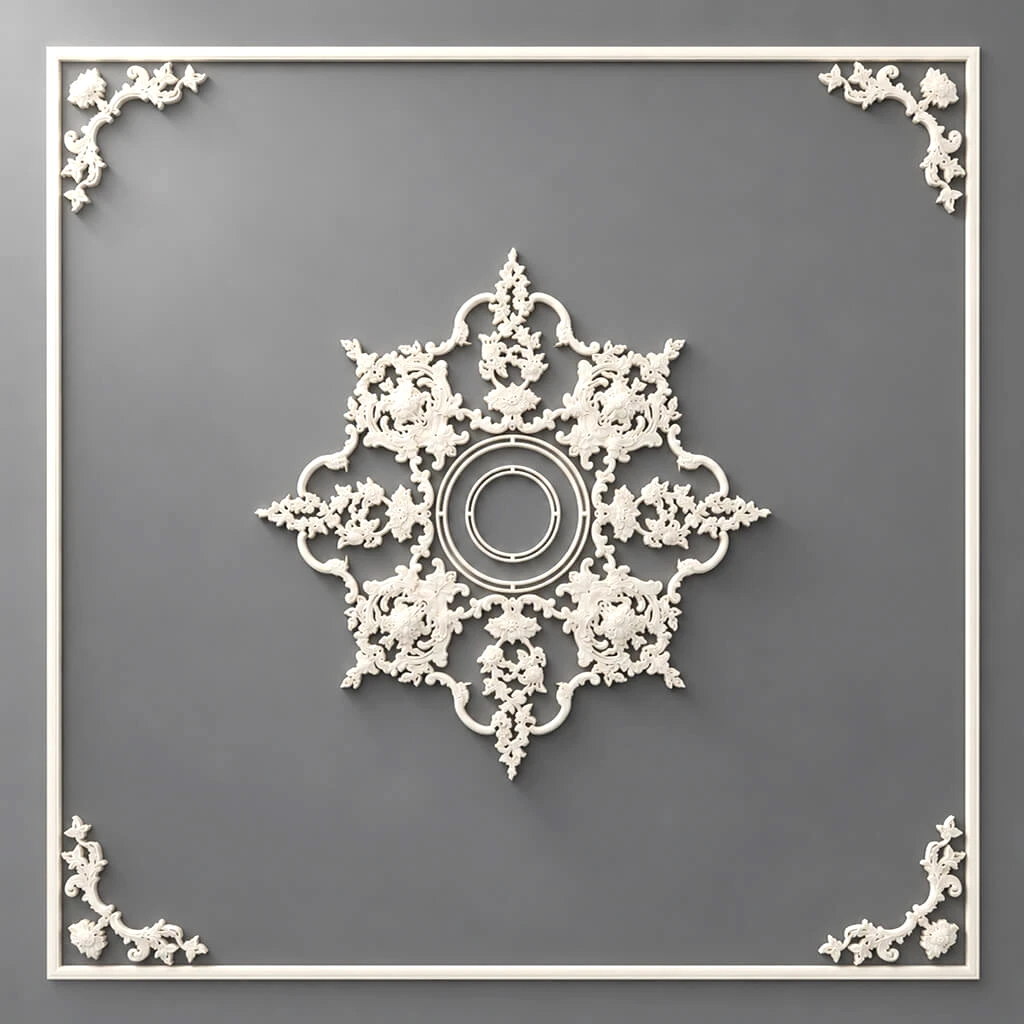
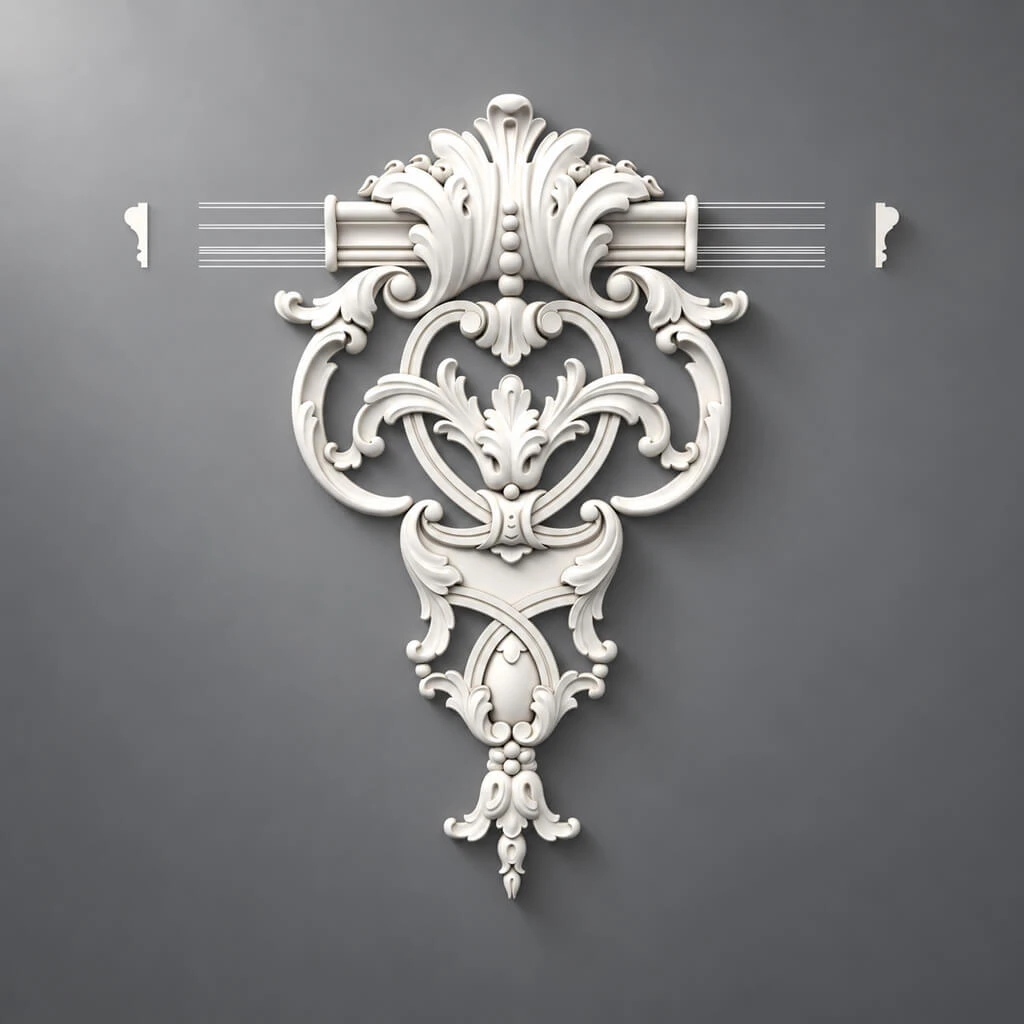
Decorative overlays for the archare placed in the arch lock (upper central point) — this is the "keystone", an architectural accent that completes the arched structure. The second placement option is at the arch springing, at the transition point from the vertical frame to the arch: symmetrical "capitals" give the arch a classic columnar character.
Size of the overlay in the lock: 15–25 cm in height for standard arches, 25–40 cm for large ones. Shape: vertically elongated (wedge, decorative lock, cartouche, leaf insert).
Polyurethane overlays for an arched openingat the springing point — "imposts", imitating the arch support. Two identical elements symmetrically on both sides of the opening at the same height. Their size: 12–20 cm.
For a country house, large cottage, hall with high ceilings — all three overlays (lock + two springings) together create a complete classical system of arch decor. About decor of country spaces — in the articleStucco decoration for a country house.
Decor for moldings
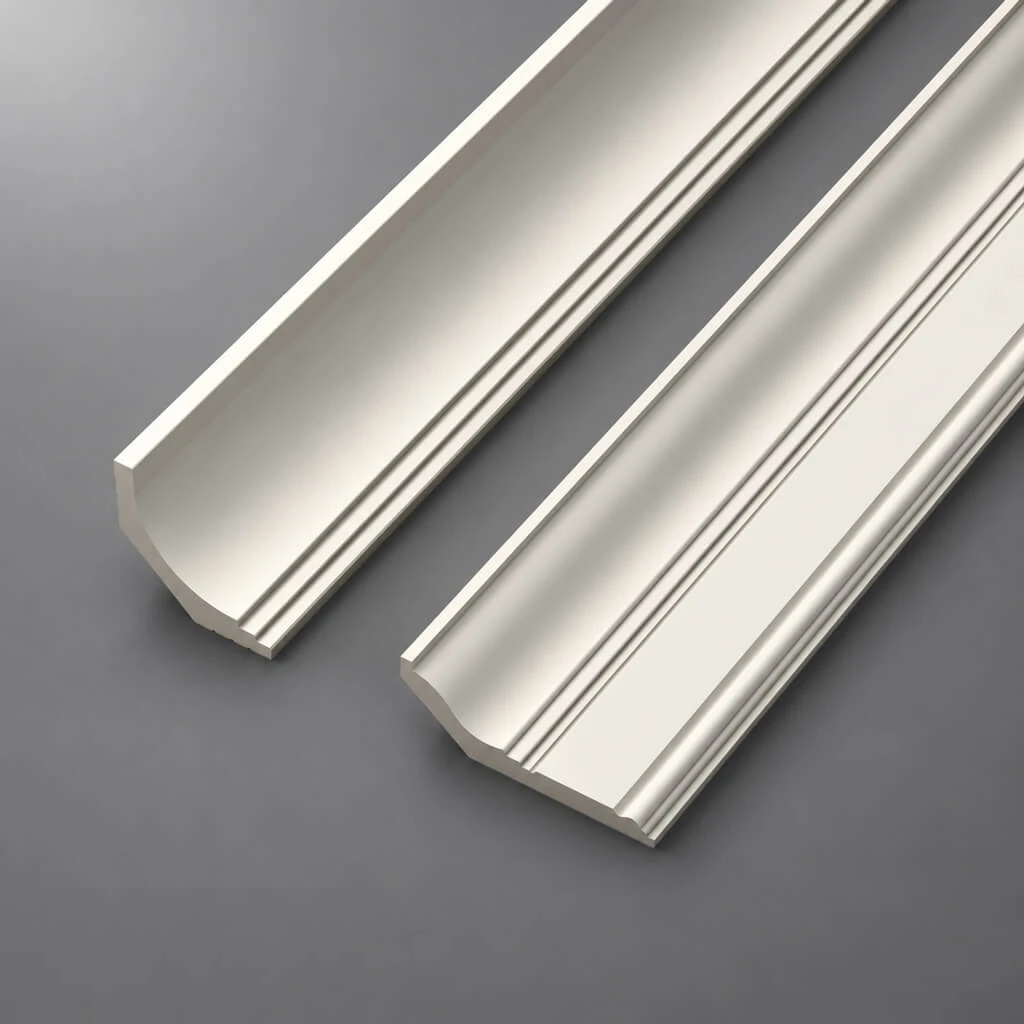
Decor for moldings in an arch— corner inserts at the arch springing point, where the vertical profile transitions into the arched one. This is a technically necessary element: the transition from a straight profile to a curved one without a corner insert always looks unfinished.
Molding corner piecesare also used where the arch frame meets the horizontal wall belt — for example, if a molding frieze runs throughout the room and the arched opening is part of this system.
Important rule: all corner and connecting elements — from the same collection as the profiles. Mismatch in relief height between the profile and the corner element creates an unpleasant "stepped" joint, which is especially noticeable after painting.
Vertical elements on the sides of the opening
Vertical pilasters, decorative columns, vertical overlays on the sides of the arched opening — a classic technique that turns a simple frame into a full-fledged architectural portal.
Pilasters are mounted symmetrically on both sides of the opening: same width, same relief, same height (from the baseboard to the spring of the arch). They create the impression of "load-bearing columns" supporting the arch — and this is not just an image, but a direct reference to a thousand-year architectural tradition.
Vertical elements made of . Clear lines, created using modern technologies, emphasize the strict aesthetics of the room. Each decorative element harmoniously fits into the overall concept, creating a sense of order and thoughtfulness.can be either flat (an applied pilaster in the form of a rectangular profile with a capital and base) or voluminous (a half-column with a round cross-section). Voluminous options are more expressive but require a larger setback from the opening.
Ready-made kits for adjacent walls
An arch is not an isolated object. It always exists in the context of adjacent walls, and those walls also require decoration.Ready-made kits for adjacent wallsfrom the same collection as the arch frame create a unified decorative system for the room.
Principle: if the arch is in the Neoclassic style — adjacent walls are decorated with Neoclassic elements. If in Japandi — adjacent walls in Japandi. No mixing of collections in one room. About the principles of a unified system — in the article ready-made sets of stucco decor for walls.
How to design a radius wall
A radius wall is a challenge for any decorator. It is not straight, not angular, not niche — it is simply curved. And it is this curvature that makes it simultaneously the most difficult and the most interesting object for decor.
Working principle: do not try to "straighten" the wall with decor. A curved surface must be accepted and worked with its character, not against it.
Three proven approaches to decorating a radius wall:
Vertical rhythm. Several identical vertical elements (thin pilaster strips, decorative inserts) placed at equal intervals along the wall's radius. They create a "drum" — the feeling of a colonnade wrapping around the space. Spacing between verticals: 40–60 cm for compact walls, 60–90 cm for large spaces.
Horizontal belt. A molding belt at one height along the entire radius. A flexible profile wraps around the curved wall without joints, creating a horizontal "encircling" line. Above and below the belt, the wall remains free or is additionally decorated.
Central accent. One decorative overlay at the visually central point of the radius — where the curve is most pronounced or where the main space is concentrated. Minimum elements, maximum architectural statement. Suitable for small radius zones — a rounded pier, niche, or small bay window.
About working with non-standard architectural forms — in the article stucco decor for niches, ledges, and piers.
Technically, for radius surfaces, choose only flexible profiles or thin rigid profiles of small width (up to 25 mm) that allow slight bending without deforming the relief. Wide rigid profiles (50+ mm) cannot be installed on a curved wall: they either pull away from the surface or become deformed.
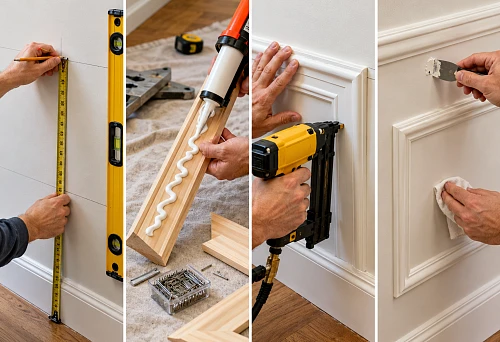
Adhesive for installation on radius surfaces — special polyurethane or construction adhesive with sufficient correction time (at least 5–8 minutes): this allows precise positioning of the element along the wall's radius before it sets.
Step-by-step technology — in the articleinstalling polyurethane molding.
What to choose: moldings, overlays, or a ready-made set
This choice depends on the task, scale, and budget. Let's break down each option honestly.
Moldings for an arched opening — is the foundation of any arch framing. Without a profile along the perimeter of the opening, no other decor will create a sense of completeness. This is a mandatory element for any arched opening, of any scale and any style.
Polyurethane overlays for an arch — an additional level of decor on top of the molding base. Keystone, impost blocks, decorative capitals — all of this enhances the architectural character of the framing. Can be used without moldings (only overlays — for a minimalist solution), but the maximum effect is achieved when combined with a profile.
Decor for Molding — technical and decorative corner elements for joints. Mandatory if moldings form complex transitions (straight to curved). Optional in the case of ready-made radius elements.
Ready-made kit — for adjacent straight walls that form the context of the arch. If the arch is part of a large wall composition, ready-made kits for flat sections save time and eliminate the error of element incompatibility.
Which styles are suitable for arches and radius walls
Neoclassical
Arch with moldings in neoclassicism — this is a classic portal with a 35–50 mm profile, a keystone overlay, "capitals" at the impost blocks, and symmetrical pilasters on the sides. Color: white moldings on a neutral wall or moldings matching the wall color for a calmer look.
Neoclassical is a style with strict symmetry. Any arched decor in this style must be perfectly symmetrical: identical margins on the left and right, identical overlays at the springings, one clear keystone at the top point. The slightest violation of symmetry in neoclassicism is a gross mistake that cannot go unnoticed.
Neoclassical is especially good for country houses, apartments with high ceilings, and pre-revolutionary layout apartments — where the architectural foundation already "sets the tone."
Neoclassic Light
Light arch decor made of polyurethane — for a modern city apartment where you want architectural character without palace grandeur. Profile 20–30 mm, moderate relief, a small keystone overlay, or just the profile without overlays.
Neoclassical Lite allows you to decorate an arch "half-heartedly": a simple frame made of a thin profile already elevates the arch to a new visual level. For standard apartments with a ceiling of 265–280 cm, this is the optimal choice that will not overload the space.
It works especially well in combination with molding decor on adjacent walls from the same collection: the arch and walls form a unified system, and the entire interior gains architectural character without large investments.
Japandi
Arch decor in Japandi style — a minimalist frame without ornamentation. Thin profile 15–20 mm, strictly matching the wall color, without keystone accents and without overlays. Only a line — calm, clear, defining the shape.
In a Japandi interior, decorating an arch is not "decoration" but an "architectural signature." The molding says: "this form is intentional." That is enough. Any ornamental additions are excessive here.
Color scheme: strictly matching the wall color. No contrast. Japandi is a style where a white contrasting molding on a warm neutral wall is a clear stylistic mistake.
Versailles Light
Archway in Versailles Light style— for a grand hall, country house, or spacious apartment. Wide profile with rich relief, large keystone overlay with cartouche, developed imposts with capitals, full-height vertical pilasters.
Versailles Light requires scale: archway width from 120 cm, room height from 280 cm. On a small arch in a standard apartment, the decor of this collection will overwhelm the opening. But in a large hall, it makes an irresistible impression.
Botanical Garden
Botanical decor for an arch— a non-standard and very modern solution. Overlay on the arch keystone with leaf or floral ornament, decorative inserts on the sides with natural relief — this is soft, organic decor, far from the strictness of classical architecture.
Botanical garden is especially appropriate in living areas: bedroom, living room, hallway with a soft character. An arch with natural ornament conveys not solemnity, but warmth — and this is another, no less valuable decorative function.
Profile for botanical decor: thin or moderate, 20–35 mm. Botanical overlays are independent objects with a distinct shape, and they do not need a massive "load-bearing" molding.
Mistakes when designing arches and rounded walls
Using too massive decor on a small arch
A wide profile of 50–60 mm on an arch 80 cm wide "eats up" the opening. Decor should frame the arch, not narrow it. Proportion rule: molding width ≤ 5% of opening width. For an 80 cm arch — profile no wider than 40 mm.
Breaking the radius with straight elements without composition
Straight molding frames mounted on the arched part of the arch in "steps" without a well-thought-out system is the main mistake. If there is no flexible profile, use segment technique with clear arc markings. Random placement of segments creates a "jagged" effect that is unpleasant to look at.
Not considering architraves, baseboards, and cornices
Molding framing of an arch does not exist in a vacuum. Baseboards, architraves of adjacent doors, cornices — all of this should be from the same collection or at least in the same style. Arch decor that conflicts in relief height with the baseboard always looks random. About a unified system — in the articlehow to combine stucco decor with baseboards and cornices.
Mixing different styles in one opening
A keystone from Versailles, imposts from Neoclassic Light, a profile from Japandi — this is not authorial eclecticism, it is chaos. One opening — one collection. One scale of relief, one ornamental language, one stylistic character.
Overloading the arch with ornament
An arch is an architectural form with its own expressiveness. Its curve already speaks for itself. Three overlays + two pilasters + a horizontal belt + corner elements — this is for a large hall in a country house, not for a standard apartment. Under normal conditions, a profile around the perimeter and one accent element are enough.
Not connecting the arch with adjacent walls
A beautifully decorated arch in the middle of bare walls is like an expensive tie with a wrinkled shirt. The arch decor must necessarily continue on adjacent walls — at least with a minimal horizontal belt or a basic baseboard from the same collection. About the principles of decorating adjacent surfaces — in the articleStucco decor around doors and openings.
What to buy for decorating an arch or radius wall
Moldings for an arch:
Flexible profile for the arched part + standard straight profile for vertical sides. Both from the same collection. Width: 30–50 mm for standard openings. For radius walls — only flexible profile or thin rigid (up to 25 mm).
Decorative overlays for the arch:
Keystone — 1 element, center of the arch. Imposts — 2 elements, symmetrical. For pilaster capitals — 2 elements. All from the same collection.
Decor for Molding:
Corner inserts for the transition point from straight to arch — 2 elements. For non-standard bay window angles — corresponding corner inserts.
Vertical elements:
Pilasters or decorative overlays along the sides of the opening — from . Clear lines, created using modern technologies, emphasize the strict aesthetics of the room. Each decorative element harmoniously fits into the overall concept, creating a sense of order and thoughtfulness.. Symmetrical, same sizes.
Ready-made sets for adjacent walls:
From the same collection as the arch decor. For quantity calculation — article how to calculate moldings and stucco decor for a wall.
Baseboards and cornices:
From the same collection — to create a unified decorative system for the room. Especially important in halls and corridors with multiple arches.
The entire range — moldings, overlays, decor for moldings, ready-made sets — in the catalogpolyurethane products.
About the principles of choosing decor for non-standard shapes — in the articleDecorative elements for the wall made of polyurethane.
About decor for painting in the context of arches — in the articleStucco decor for walls for painting.
Frequently Asked Questions
Can an arch be decorated with polyurethane moldings?
Yes — and it is one of the best materials for such a task. Polyurethane is lightweight (does not load the structure), easy to cut and bend, can be painted in any color, and is not afraid of moisture. Flexible profiles wrap around the arch curve without a single joint. Installation — with glue, without drilling.
Which moldings to choose for an arched opening?
Flexible profile for the arched part + standard straight profile for the vertical sides. Both from the same collection. Profile width — no more than 5% of the opening width: for an arch of 100 cm — profile up to 50 mm.
How to decorate the top of an arch?
Keystone — a decorative overlay at the top central point of the arch. Size: 15–30 cm depending on the arch width. Shape: vertically oriented, from the same collection as the framing profile.
Is polyurethane stucco suitable for a radius wall?
Yes — provided flexible profiles are used. A rigid wide profile cannot be installed on a curved surface: it does not adhere evenly to the wall. A flexible profile or a thin rigid one (up to 25 mm) bends perfectly around radius surfaces.
How to design a bay window with moldings?
Each plane of the bay window is designed separately. Horizontal belts — at the same height on all planes. Corner joints — flexible profile or corner inserts for non-standard angles. Result: all planes of the bay window are combined into a single decorative volume.
What is better for an arch: moldings or decorative overlays?
Moldings and overlays are not competitors, but a system. Moldings create a linear frame (contour, border), overlays create point accents (keystone, imposts, capitals). For a minimalist solution — only moldings without overlays. For a classic one — moldings plus overlays together.
Can arch decor be painted the color of the wall?
Yes — and this is a modern, professional choice. Arch decor in the color of the wall creates architectural relief without visible contrast: the framing shape is present but 'dissolves' into the surface. This works especially well in modern and Japandi interiors. About choosing between tone and contrast — in the articlestucco decor in the color of the wall or contrasting.