










































































Article Contents:
- What stucco can you buy: a complete overview of polyurethane decor groups
- Moldings and Cornices
- Stucco decor: overlays, medallions, rosettes
- Trim
- Wall Decor
- Brackets
- Facade Molding
- Why polyurethane stucco is chosen in Moscow: six practical reasons
- Reason 1. Weight that doesn't scare builders
- Reason 2. Precise geometry without manual alignment
- Reason 3. Moisture resistance and stability
- Reason 4. Any coating without restrictions
- Reason 5. Installation without special equipment
- Reason 6. Long service life without maintenance
- Stucco for walls: how to buy what really works in the interior
- Moldings for frame design
- Decorative overlays on an accent wall
- TV area with stucco framing
- Horizontal belt: a quick way to change the space
- Stucco for the ceiling: from cornice to ceiling rosette
- Ceiling cornice: the first thing to buy
- Ceiling rosette: the point that holds the ceiling
- Ceiling frame around the rosette
- Frieze under the cornice
- Facade stucco in Moscow and the Moscow region: purchase for a country project
- What is needed on the facade of a cottage
- Polyurethane on the facade: why it lasts
- How to calculate linear footage for a facade
- What is important when buying stucco in Moscow: eight questions before ordering
- 1. Dimensions: check three times
- 2. Availability: clarify before ordering
- 3. Quantity: count with a margin
- 4. Compatibility of profiles in the same series
- 5. Check the possibility of painting
- 6. Delivery and packaging
- 7. Single article for the entire volume
- 8. Specification before ordering
- How to avoid mistakes with size and style when buying stucco
- Style: correspondence table
- Scale: the main rule
- Neoclassicism for Moscow new buildings
- Stucco for commercial interiors in Moscow: a different scale, the same principles
- Restaurant with a classic interior
- Hotel lobby
- Executive class office
- Calculating quantity when buying stucco molding: error-free math
- Cornice linear footage
- Linear footage of molding for frames
- Number of decorative overlays
- Number of rosettes
- FAQ: answers to the main questions when buying stucco in Moscow
- STAVROS: buying stucco in Moscow means choosing reliability
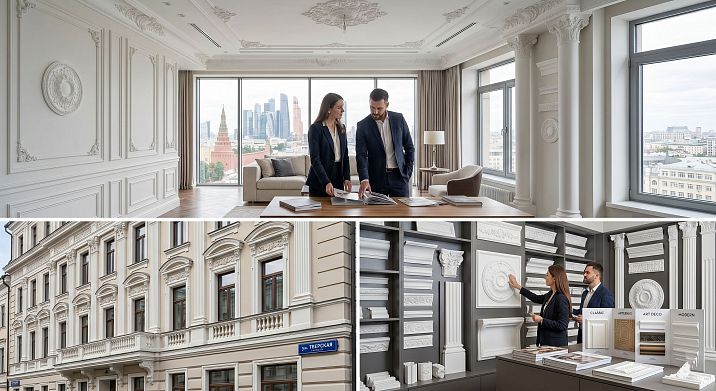
Moscow is a city where renovations are done seriously. Here, they don't buy "something similar" — they select according to the project, calculate linear meters, consult with the designer, and choose materials consciously. And when it comes to stucco, this approach works doubly: a mistake in size or style costs dearly — both in money and time.
If you want to buy stucco in Moscow — this article is for you. Not an overview of the history of decor, not a story about plaster palaces. But a specific practical guide: which one to polyurethane molding choose, for what tasks, how to calculate the quantity, what to check before ordering, and where to buy with confidence in the result.


What stucco can you buy: a complete overview of polyurethane decor groups
Before buying, you need to understand what exactly to look for. The polyurethane stucco market is divided into several fundamentally different groups, each solving its own task.




Moldings and cornices
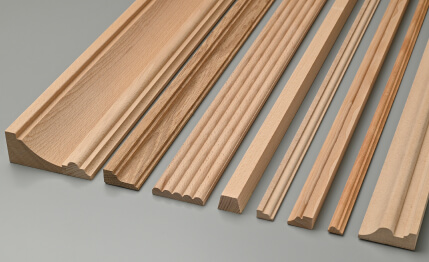
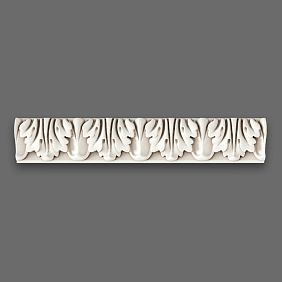
Moldings made of polyurethane — linear profiles for creating horizontal and vertical decorative elements: frames on walls, bands, ceiling cornices, door and window trims. This is the fundamental group of decor — the one with which any classic or neoclassical interior begins.
Ceiling cornice — a horizontal profile at the transition of wall and ceiling. One of the most frequently purchased elements. Depending on the room height — from a simple single-profile to a composite of 3–5 elements.
For Moscow apartments with ceilings of 2.6–2.8 m — a cornice height of 60–100 mm. For houses and apartments with ceilings of 3.0–3.5 m — 100–180 mm. For country houses with high ceilings — a composite cornice from 180 mm.
Our factory also produces:



Stucco decor: overlays, medallions, rosettes
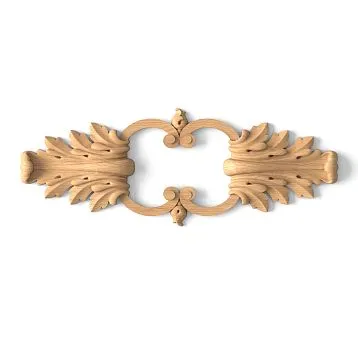
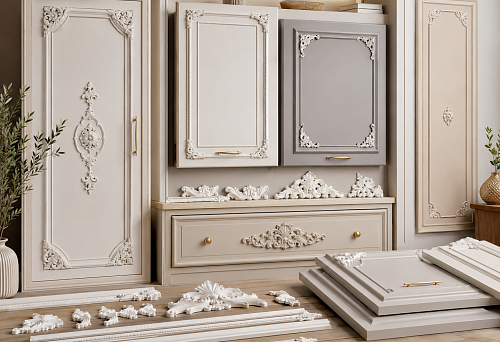
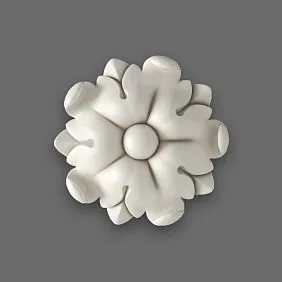
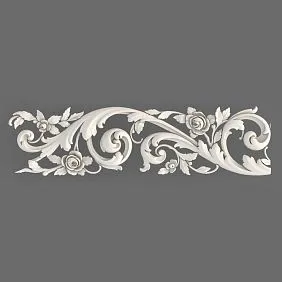
molded decoration made of polyurethane — these are individual three-dimensional decorative elements: ceiling rosettes, medallions, cartouches, corner blocks, ornamental overlays. They are used as standalone accents — on walls, ceilings, fireplace portals, door panels, furniture facades.
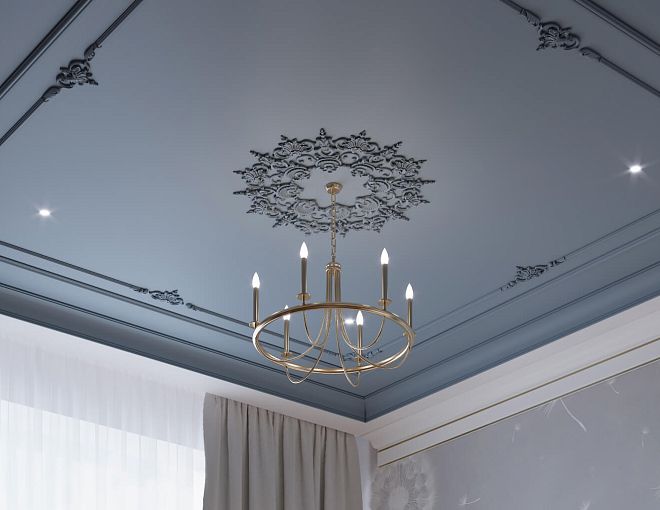
A rosette in the center of the ceiling under a chandelier is a classic technique that works in any interior, from a modest apartment to a country house with high ceilings. Diameter — from 200 to 900 mm depending on the area and style of the room.
Get Consultation
Molding
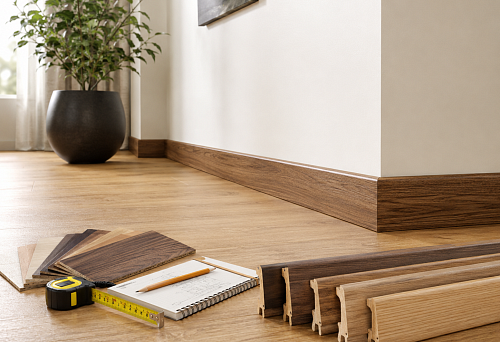
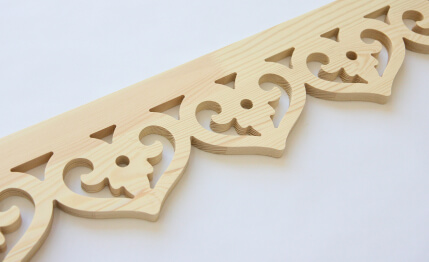
Polyurethane trim — baseboards, profiles, covings, corner trims. Calculated in linear meters. Necessary for finishing all transitions: floor-wall, wall-ceiling, corner junctions.
Wall decor
Polyurethane wall decor — pilasters, frieze inserts, decorative panels, large ornamental elements for creating relief wall compositions. This is a group for those who are building a full-fledged decorative system, not just adding individual details.
Brackets
Polyurethane brackets — decorative supports used in interiors (under a cornice, above a fireplace portal) and on facades (under a roof overhang, above an entrance group). One of the most expressive architectural elements in country construction.
Facade moldings
Separate group polyurethane products for outdoor use: moldings around windows, cornices, bands, corner overlays, keystones. Polyurethane is resistant to moisture, frost, and ultraviolet radiation — that is why facade decor made of this material lasts for decades without restoration.
Why polyurethane stucco is chosen in Moscow: six practical reasons
The Moscow market for decorative stucco has evolved. Twenty years ago, the only alternative to plaster was plaster. Today polyurethane moldings holds a dominant position in the decorative finishing segment — and for good reason.
Reason 1. Weight that doesn't scare builders
A polyurethane cornice 120 mm high and 2 m long weighs 350–500 g. A gypsum equivalent weighs 4–6 kg. The difference is 8–12 times. In an apartment building with floors that are 40–50 years old, this is crucial: no additional reinforcement, no embedded parts, no restrictions on upper floors.
Reason 2. Precise geometry without manual leveling
A polyurethane element is cast in a mold with an accuracy of up to 0.5 mm. The profile doesn't "wander" in cross-section like gypsum. Corner joints are cut at 45° in a miter box — and fit perfectly. For Moscow designers and builders working with tight tolerances, this is important.
Reason 3. Moisture resistance and stability
In Moscow apartments, anything can happen: neighbors upstairs, humidity fluctuations between seasons, kitchen steam. Polyurethane does not absorb water, does not swell, does not crack with changes in humidity. Gypsum cracks. This is a difference that becomes visible after 2–3 years of use.
Reason 4. Any coating without restrictions
Buy polyurethane molding — means getting a blank that can be painted in any color with interior paint after priming. White, cream, ivory, gold, marble imitation — no restrictions. For Moscow design projects with an author's color concept, this is fundamental freedom.
Reason 5. Installation without special equipment
Polyurethane moldings and overlays are attached with adhesive — no anchors, no complex tools. Cutting is done with a utility knife or jigsaw. Joints are filled with acrylic sealant. One installer can handle a cornice in a 20 m² room in a working day.
Reason 6. Long service life without maintenance
Properly painted polyurethane stucco retains its shape and color for 10–20 years. If renewal is needed, repainting is done without dismantling. This is especially important for commercial properties in Moscow: restaurants, hotels, offices, where dismantling and replacing decor are significant operational expenses.
Wall stucco: how to buy what really works in an interior
Wall stucco is the most extensive category in terms of variety of applications. It is here that questions most often arise when purchasing: what to choose, in what quantity, how to combine.
Moldings for frame design
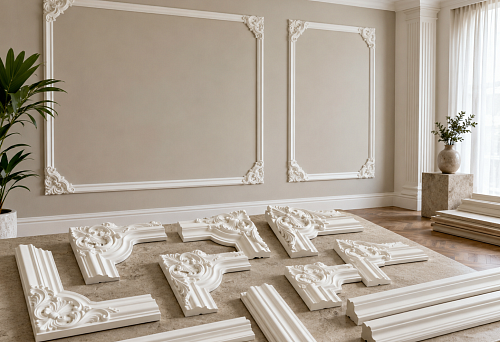
Moldings made of polyurethane — a basic tool for creating a frame system on walls. The principle is simple: moldings form rectangular "frames" on the wall surface, turning an empty plane into a structured decorative field.
What does this look like in practice? In a living room: three or four rectangular frames on the long wall behind the sofa — the wall ceases to be a background and becomes the main element of the interior. In a hallway: a frame system along the entire length — and a narrow passage turns into an enfilade. In a bedroom: one large frame above the headboard — instead of a banal bed headboard.
How to choose the width of the molding:
| Frame size | Recommended molding width |
|---|---|
| up to 500 × 700 mm | 20–35 mm |
| 600 × 900 mm | 35–50 mm |
| 800 × 1,200 mm | 50–65 mm |
| Larger than 1,200 mm | 65–90 mm |
Decorative overlays on the accent wall
molded decoration made of polyurethane in the form of medallions, cartouches, and corner blocks enhances the molding system: corner blocks at the corners of frames, a central medallion inside the frame — and the wall acquires a full classical character.
For Moscow apartments in the neoclassical style, this is the most sought-after solution: not overloaded, but expressive.
TV zone with stucco framing
A molding frame around the TV + a small decorative element above the niche — an architectural solution that designers prefer to the banal "TV on the wall." Polyurethane wall decor in this zone works as a frame for the main screen of the room.
Horizontal belt: a quick way to transform the space
One molding belt, installed horizontally at a height of 1,200–1,400 mm, does two things at once: it divides the wall into visual zones and creates a "horizon" — an internal reference point that modern minimalist interiors often lack.
For Moscow new buildings with a ceiling height of 2.7 m, this works especially well: a belt at 1,350 mm divides the wall into equal parts and creates visual balance.
Ceiling molding: from cornice to ceiling rosette
Ceiling decor is something visible every minute spent in the room. And it is the ceiling that most often remains "unfinished" in Moscow interiors: the walls are decorated, the furniture is arranged, but the ceiling is just a white slab without character.
Ceiling cornice: the first thing to buy
Buying ceiling molding in Moscow most often means buying a cornice. This is the most sought-after element. Polyurethane trim — the basis of the ceiling cornice.
How to choose a cornice based on ceiling height:
| Ceiling Height | Cornice height | Profile type |
|---|---|---|
| 2.5–2.7 m | 50–80 mm | Simple |
| 2.7–3.0 m | 80–120 mm | Medium |
| 3.0–3.5 m | 120–180 mm | Complex |
| More than 3.5 m | 180–300 mm | Composite |
For a typical Moscow apartment with ceilings of 2.7 m — a cornice of 80–100 mm from of polyurethane moldings Medium complexity. It is proportional: does not suppress height, creates completeness.
Ceiling rosette: the point that holds the ceiling
A proper ceiling rosette in the center of the ceiling is not just a decoration under a chandelier. It is a visual anchor that organizes the space around it. With a rosette, the ceiling gains a center. Without it, it remains a random plane.
Recommended rosette diameter:
| Room area | Socket diameter |
|---|---|
| Up to 12 m² | 200–300 mm |
| 12–20 m² | 300–400 mm |
| 20–35 m² | 400–600 mm |
| 35–50 m² | 600–800 mm |
| More than 50 m² | 800–1,000 mm |
Choosing molded decoration made of polyurethane in the form of a ceiling rosette, check the diameter of the central hole — it should be slightly smaller than the diameter of the chandelier's mounting plate.
Ceiling frame around the rosette
Moldings forming a rectangle or square around the central rosette are a classic ceiling "frame." This is not a complex technique: the perimeter of the frame is made from the same molding as the cornice, only smaller.
Proportion: the frame should occupy 40–60% of the ceiling area. A frame that is too small gets lost. One that is too large overwhelms.
Frieze under the cornice
An ornamental frieze strip between the cornice and the clean ceiling is a technique for tall rooms (from 3.0 m). It creates an additional horizon and enriches the wall–ceiling transition. For Moscow apartments with unusually high ceilings, it is exactly what is needed.
Facade stucco in Moscow and the Moscow region: purchase for a country project
Country construction in the Moscow region is a separate and very active market. And the query "buy stucco in Moscow" increasingly means not apartment renovation, but a facade project for a cottage in the Moscow region: Rublyovka, Novaya Riga, Dmitrovskoye, Simferopolskoye direction.
What is needed on the cottage facade
Full set moldings from polyurethane for the facade of a country house includes:
-
Moldings around windows — decorative framing of window openings. The profile is selected proportionally to the window height: for a window of 1,400 mm — molding 50–80 mm
-
Horizontal belts — divide the facade into tiers: plinth, first floor, second floor. Create a horizontal rhythm
-
The cornice under the roof overhang is the main horizontal profile of the facade. Size: 120–300 mm depending on the scale of the house
-
Polyurethane brackets — decorative supports under the cornice above the entrance group. One of the most expressive elements of a country facade
-
Keystones above windows and doorways are accent architectural details
-
Corner overlays — design of vertical corners of the building
-
Polyurethane trim — horizontal and vertical profiles for facade division
Polyurethane on the facade: why it lasts
Polyurethane facade elements withstand a temperature range from −60 to +80°C — for the Moscow climate with frosts down to −35°C in winter and heat up to +40°C in summer, this is a necessary condition. The material does not absorb water, does not deform during freezing and thawing, and does not crack from ultraviolet radiation with proper final painting.
For the Moscow region, where temperature differences between winter and summer reach 70–75°C, this is not just an advantage — it is a requirement for the material.
How to calculate linear footage for a facade
Horizontal belts and cornices are calculated along the perimeter of the building or along the length of each facade plane.
Example: house 10 × 12 m. Perimeter: (10 + 12) × 2 = 44 linear meters. Eaves under the roof — 44 linear meters. Two horizontal belts (between floors) — 44 linear meters each. Total linear footage: 132 linear meters + 10% reserve = 145 linear meters.
Moldings around windows are calculated separately: perimeter of each window × number of windows.
What is important when buying stucco in Moscow: eight questions before ordering
1. Dimensions: check three times
The size of the decor in your head and the size in reality are different things. Before ordering, check: the height of the cornice in mm, the width of the molding in mm, the profile projection from the wall, the diameter of the rosette, the length of the linear element.
A mistake in size for a large order (for example, a cornice for an entire apartment — 120 linear meters) is a direct loss.
2. Availability: check before ordering
Popular items are often in stock. Rare profiles are made to order. When planning renovations, check delivery times in advance: custom orders can take 2–4 weeks.
3. Quantity: calculate with a reserve
A 10% reserve is mandatory. Cutting at corners, non-standard joints, possible chips during installation — all this consumes material. For facade work with large perimeters, a reserve of 10–15%.
4. Profile compatibility in one series
If you are buying a cornice, molding, corner block, and belt for one room — make sure all elements are from the same ornamental series. Mixed series create a stylistic conflict.
5. Check the possibility of painting
All Polyurethane Items are painted. But some surfaces require a special primer — check the painting technology with the supplier.
6. Delivery and packaging
Linear elements 2–2.5 m long require careful transportation: bends and compression damage the profile. Clarify packaging conditions and delivery method for long-length elements.
7. Single article for the entire volume
For a large order, make sure the entire volume is from the same batch or article. Different batches of the same profile are theoretically identical, but in practice minor differences in white shade can occur.
8. Specification before ordering
Create a full specification before placing the order: article, name, quantity, length for linear elements. This protects against errors and simplifies goods acceptance.
How to avoid mistakes with size and style when buying stucco molding
The question of style is not an aesthetic whim, but a practical task. The chosen decor must correspond to three things: the height of the room, the style of furniture and finishes, and the scale of surfaces.
Style: correspondence table
| Interior style | Molding type | Ornament style |
|---|---|---|
| Classic | Composite cornice, lush overlays | Acanthus leaves, volutes, rosettes |
| Neoclassical | Medium complexity cornice, overlays | Simplified plant motif |
| Modern Classic | Simple cornice, rectangular moldings | Geometric, without ornament |
| Art Deco | Stepped profiles | Geometry: zigzags, rays |
| Country style | Brackets, rusticated moldings | Simple silhouette |
| Restaurant/hotel | Large composite cornice, big rosettes | Rich, theatrical |
Scale: the main rule
The size of the decor should match the size of the space. For a Moscow apartment of 50–70 m² with ceilings of 2.7–2.8 m:
-
Cornice: 80–100 mm
-
Frame molding: 35–55 mm
-
Rosette: 350–500 mm
-
Overlays: 80–140 mm
This is a proportional set that won't overload the space and will create an expressive classic look.
Neoclassical for Moscow new buildings
Neoclassical is the most popular style in Moscow apartments in recent years. High ceilings, white walls, light furniture — and polyurethane decor as a structural element.
Set for neoclassical in a 70 m² apartment:
-
Cornice 100–120 mm around the perimeter of all rooms
-
Moldings 45–55 mm for frame design of accent walls
-
Ceiling rosettes 400–500 mm in the living room and bedroom
-
Decorative overlays 100–160 mm at corner points of the frame system
-
Horizontal strip 30–40 mm in the hallway
Stucco for commercial interiors in Moscow: a different scale, the same principles
Moscow is not only a market for residential renovations. Restaurants, cafes, hotels, beauty salons, executive-class offices — all are regular buyers of stucco decor.
Restaurant with classic interior
Ceilings 3.5–4.5 m, large halls, high traffic. Polyurethane moldings works on a different scale: composite cornice 200–350 mm, rosettes 600–900 mm, frame systems with large moldings 70–100 mm.
An important requirement for commercial properties: durability. Polyurethane decor is painted in 2–3 layers and lasts 8–12 years without renewal with regular wet cleaning.
Hotel lobby
A guest's first impression is formed in 7 seconds. Artistic stucco decor made of polyurethane on the walls and ceiling of the hall creates an image of class and solidity — it's a direct investment in the brand.
For a hall of 80–120 m²: large ceiling rosettes, composite cornice, frame system on walls, decorative pilasters, Brackets above entrance groups.
Executive-class office
Meeting room, executive office, reception — areas where stucco works for the image. A strict set: simple cornice, horizontal band, corner overlays. Minimum decor — maximum architectural character.
Calculating the quantity when purchasing stucco: error-free math
Linear footage of cornice
Room perimeter − width of doorways (if the cornice does not go above the door).
Example: room 4 × 5 m, door 0.9 m.
(4 + 5 + 4 + 5) − 0.9 = 17.1 linear m + 10% = 18.8 linear m → order 20 linear m
Linear footage of moldings for frames
Each rectangle: (width + height) × 2.
Frame 700 × 1,000 mm: (0.7 + 1.0) × 2 = 3.4 linear meters.
6 frames: 3.4 × 6 = 20.4 linear meters + 10% = 22.5 linear meters → order 25 linear meters.
Number of decorative overlays
Counted individually: 4 corner blocks per frame, 1 central element per frame (if needed). For 6 frames: 24 corners + 6 centers = 30 pieces. Reserve: +2–3 pieces.
Number of rosettes
One rosette per ceiling. If the ceiling is very large (hall over 50 m²), two symmetrical rosettes or one large one may be placed.
FAQ: answers to the main questions when buying stucco in Moscow
Where to buy stucco in Moscow?
В Stavros catalog — full range polyurethane productsmoldings, cornices, rosettes, overlays, brackets, linear moldings. Delivery in Moscow and Russia.
Which stucco molding is best for an apartment?
For Moscow apartments with ceilings of 2.6–2.8 m — cornice 80–100 mm, moldings 35–55 mm, rosette 350–450 mm. Moldings made of polyurethane — a universal choice.
Is polyurethane stucco molding suitable for the ceiling?
Yes. Light weight polyurethane molding и decorative inserts allows them to be mounted on any ceiling without reinforcement.
Can polyurethane stucco molding be used on the facade?
Yes. Polyurethane moldings withstands frosts down to -60°C and heat up to +80°C, does not absorb water — an ideal choice for Moscow and the Moscow region.
How to calculate the number of moldings and cornices?
Linear molding = room perimeter + 10% reserve. For frames — perimeter of each frame × number of frames + 10%.
Can polyurethane molding be painted?
Yes, with any interior paint after acrylic primer. White, colored, imitation gold, marble — no restrictions.
What to choose: moldings, overlays, or cornices?
For a complete interior, all three are needed: cornice — structure around the perimeter, Moldings — frame system on walls, applique — decorative accents.
How to choose stucco for neoclassicism?
Medium complexity cornice 100–130 mm, moldings with moderate profile 45–55 mm, rosette with clear pattern 400–500 mm. Ornament — simplified floral.
Is a reserve needed when purchasing stucco?
Be sure to add +10% for interior, +10–15% for facade. Trims, joints, and unexpected breakage during transport.
Is there delivery of stucco molding to Moscow?
Yes. STAVROS carries out delivery to Moscow, Moscow region and all of Russia.
STAVROS: buying stucco molding in Moscow means choosing reliability
When the question arises in a Moscow project of where to buy stucco, it's important not just to find a catalog with pictures, but to find a supplier who has sizes, article numbers, real products, and delivery without surprises.
STAVROS is a full range moldings from polyurethane for any task: Moldings and cornices for walls and ceilings, Relief Decoration in the form of overlays and rosettes, Trim for completing transitions, Brackets for facade projects, Wall Decor for creating full-fledged interior systems.
Full the STAVROS catalog — with precise sizes, article numbers, and delivery across Moscow and Russia.
STAVROS — because stucco in a Moscow project should work exactly as intended.