

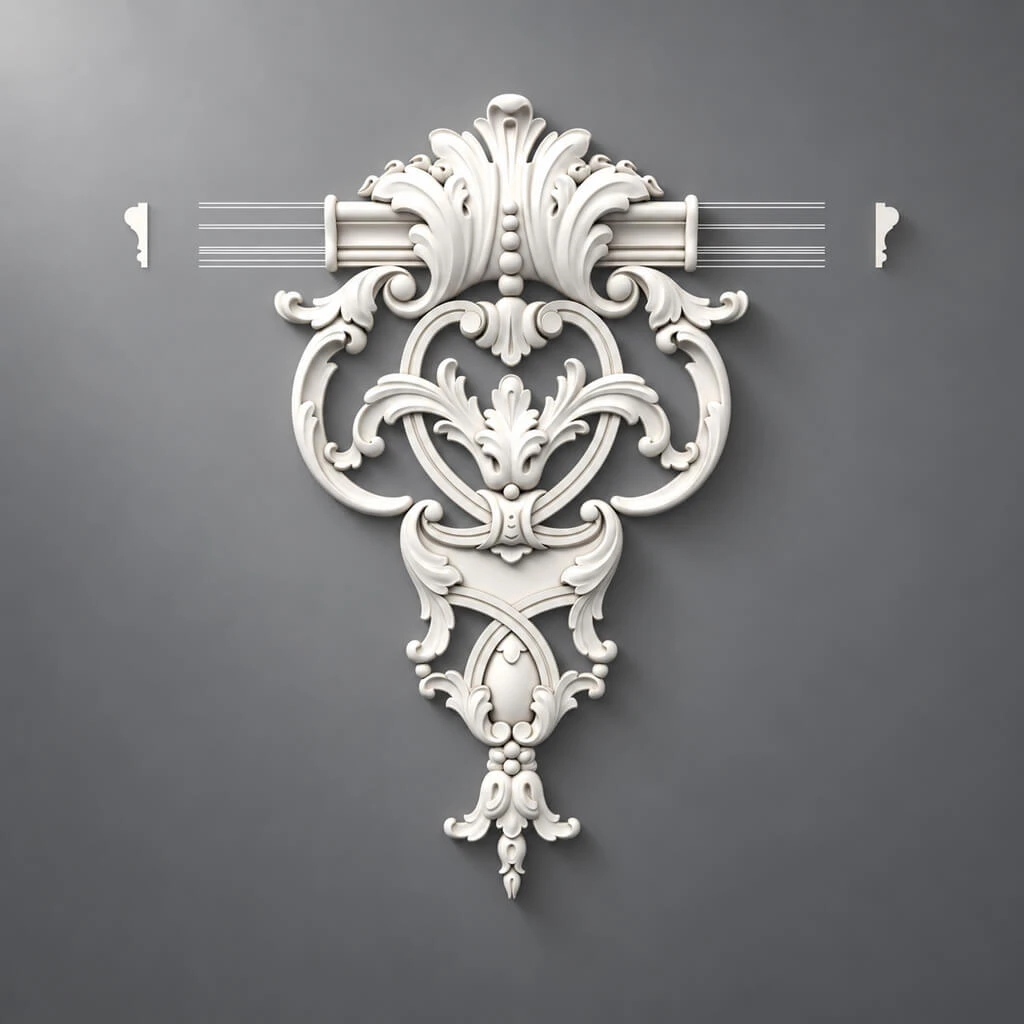
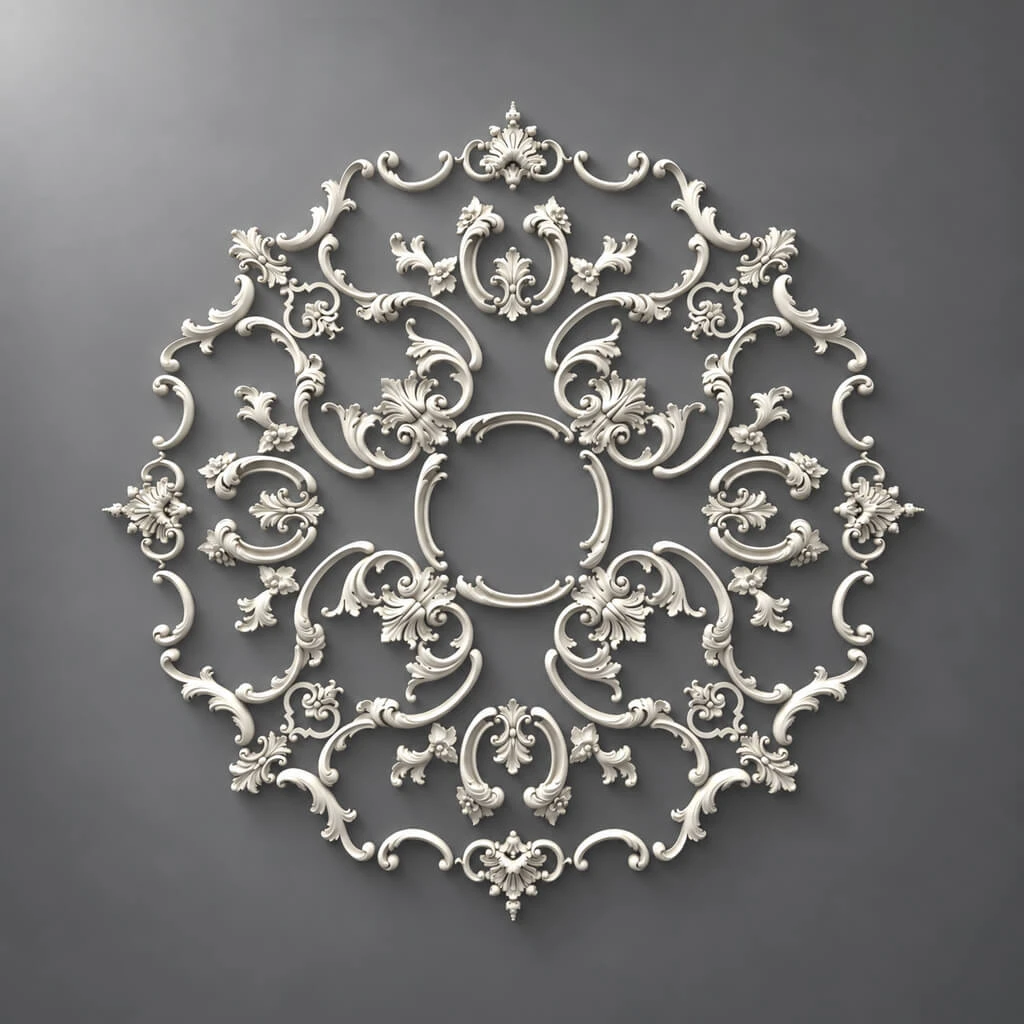
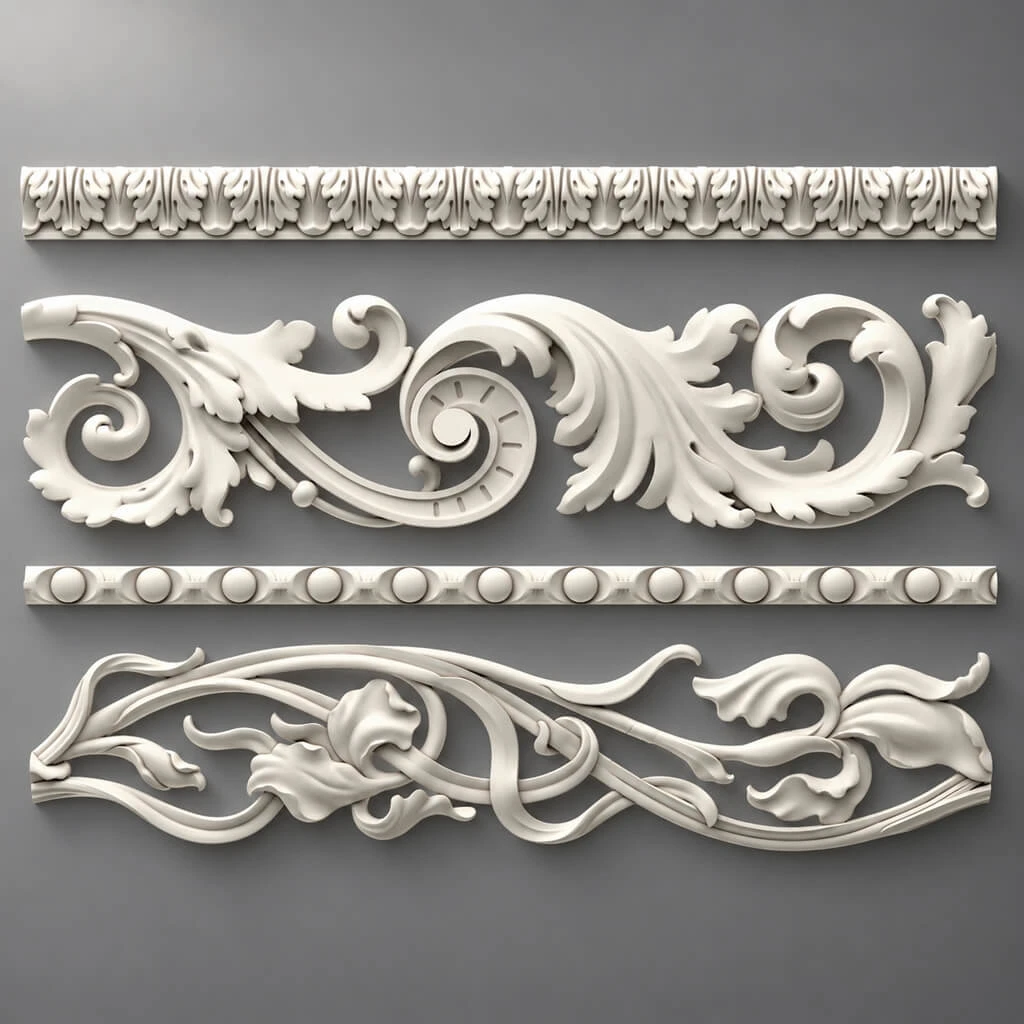
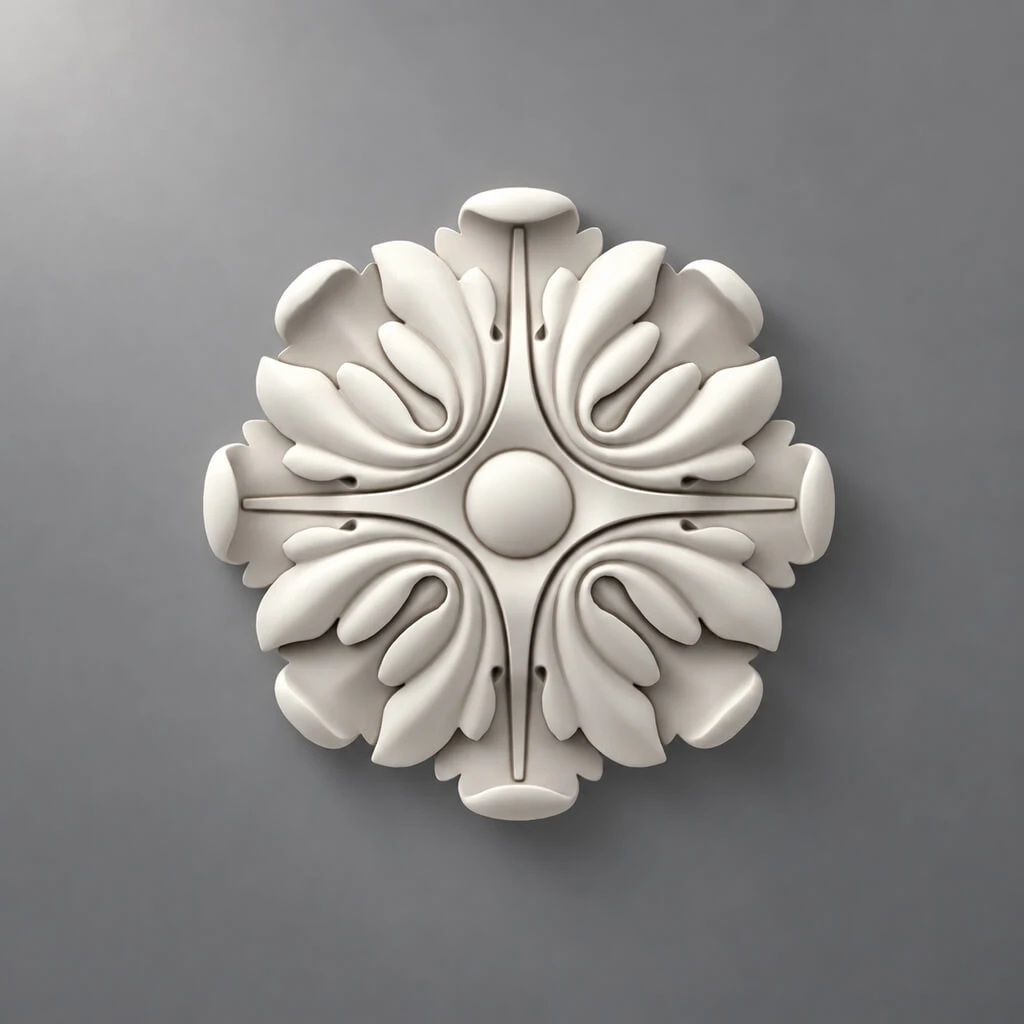
























Dimensions and Options
Description
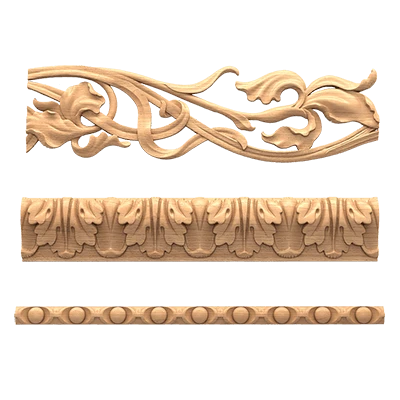
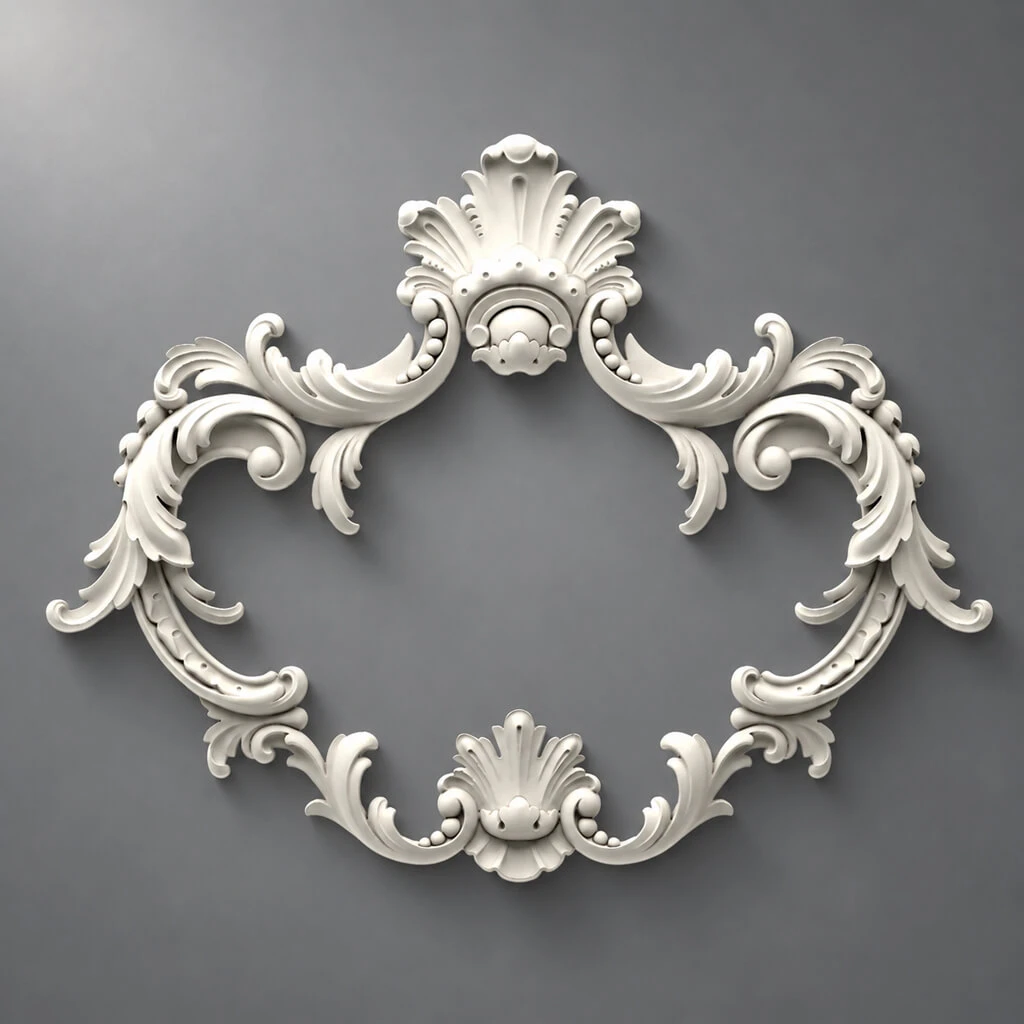
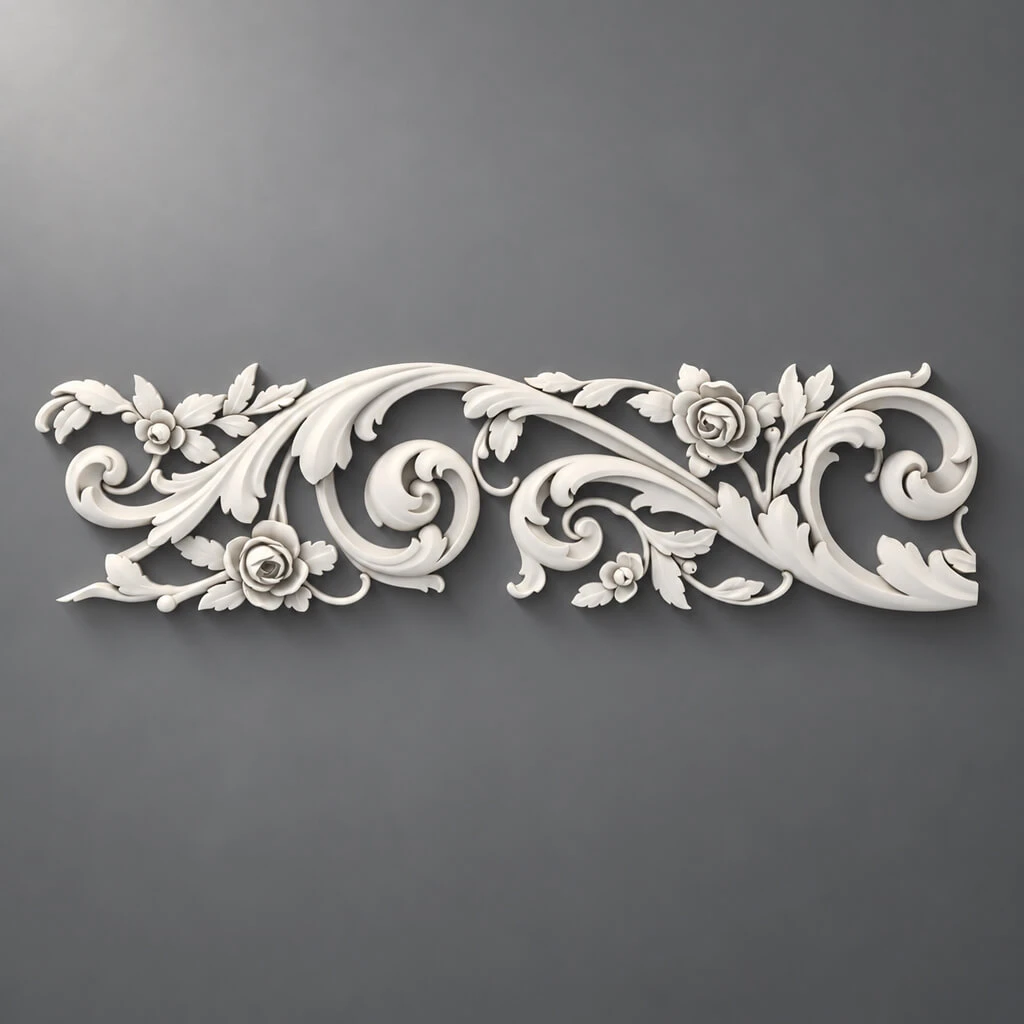
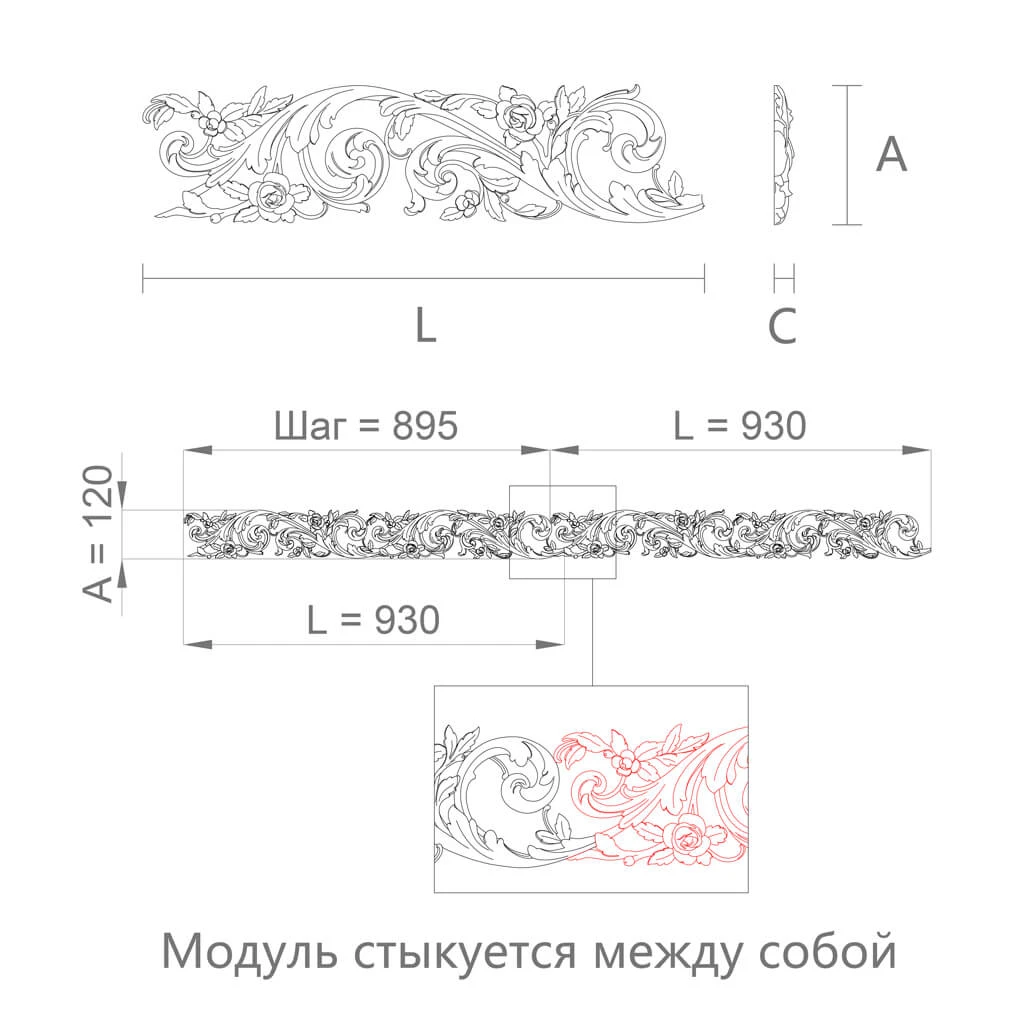
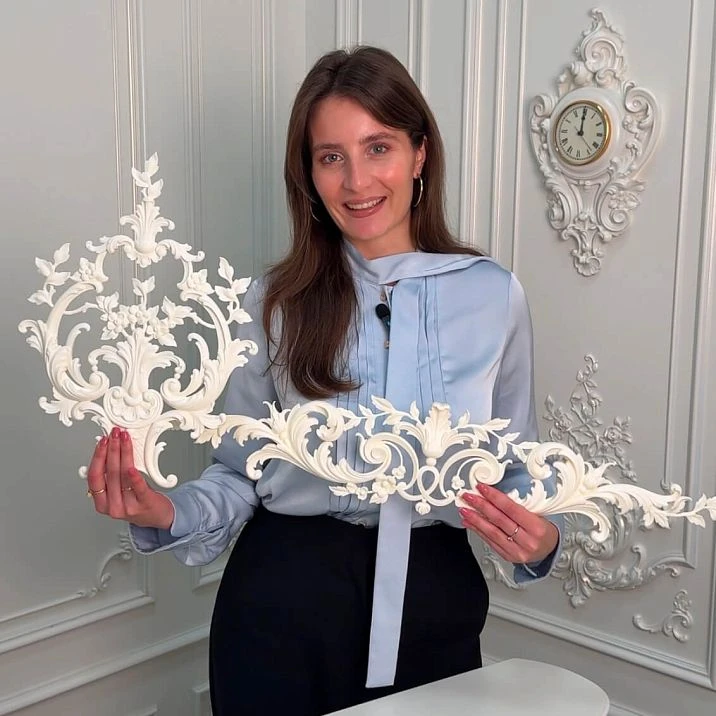
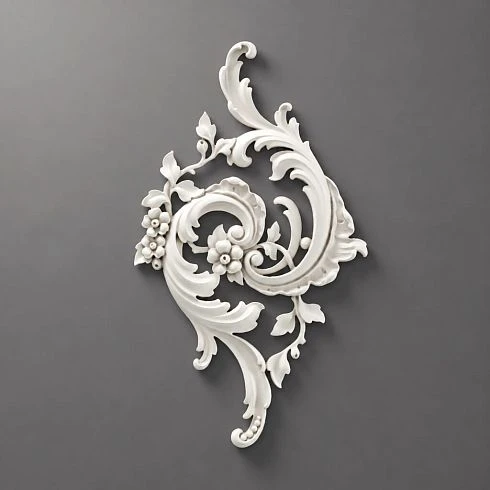
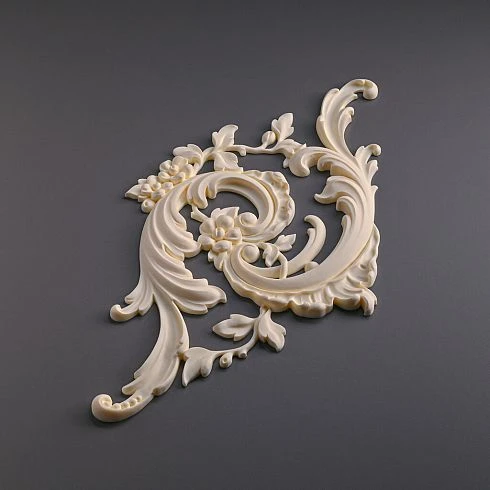
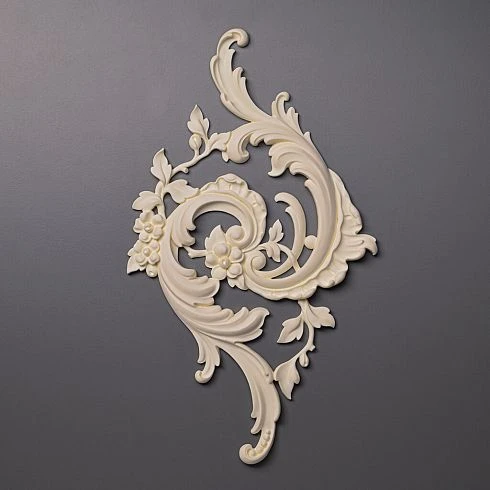
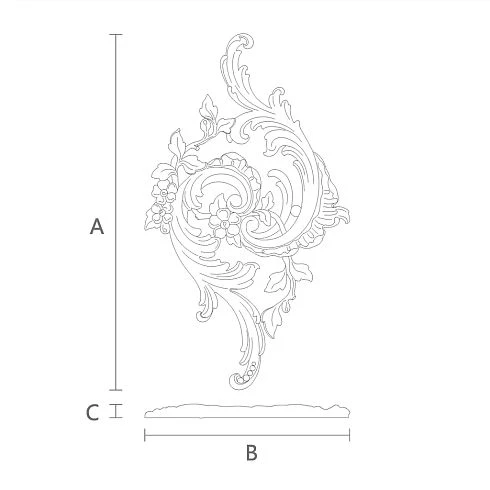
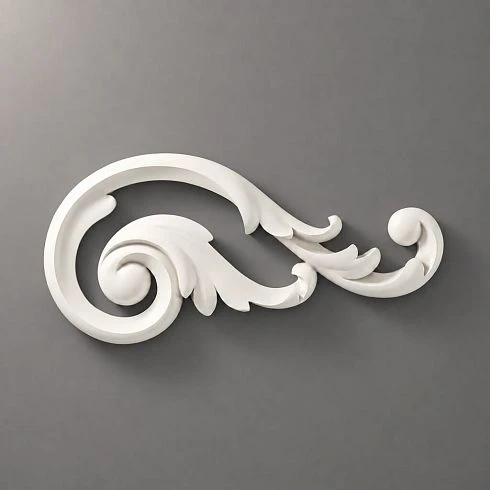
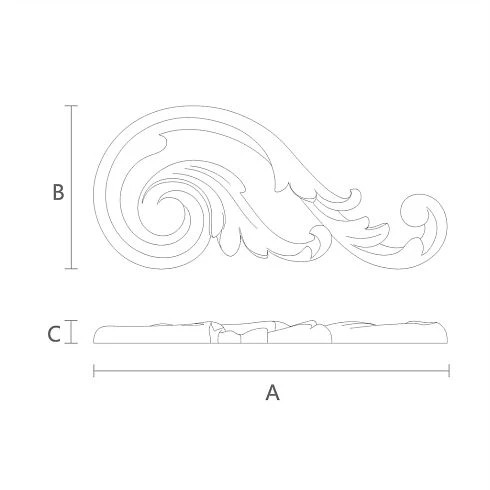
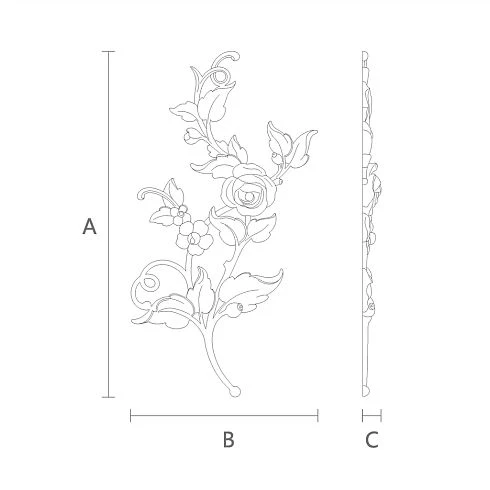
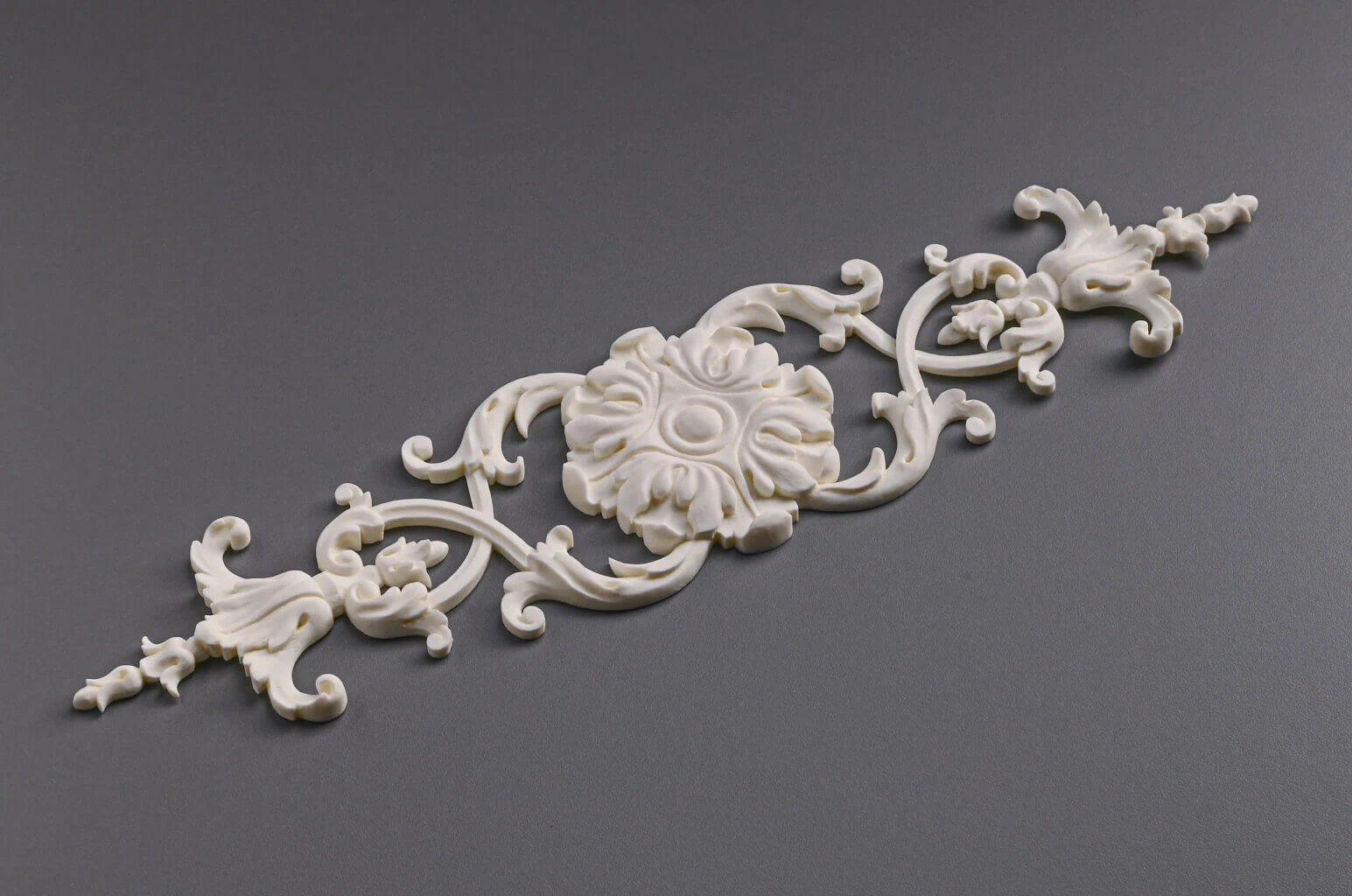
KPU-130 is a wide polyurethane decorative molding with a flowing floral relief, measuring 120 mm (4.72 in) high, 17 mm (0.67 in) deep, and 930 mm (36.61 in) long. Leaves, stems, and curved botanical elements form an elongated ornamental composition with enough relief to create clearly defined highlights and shadows.
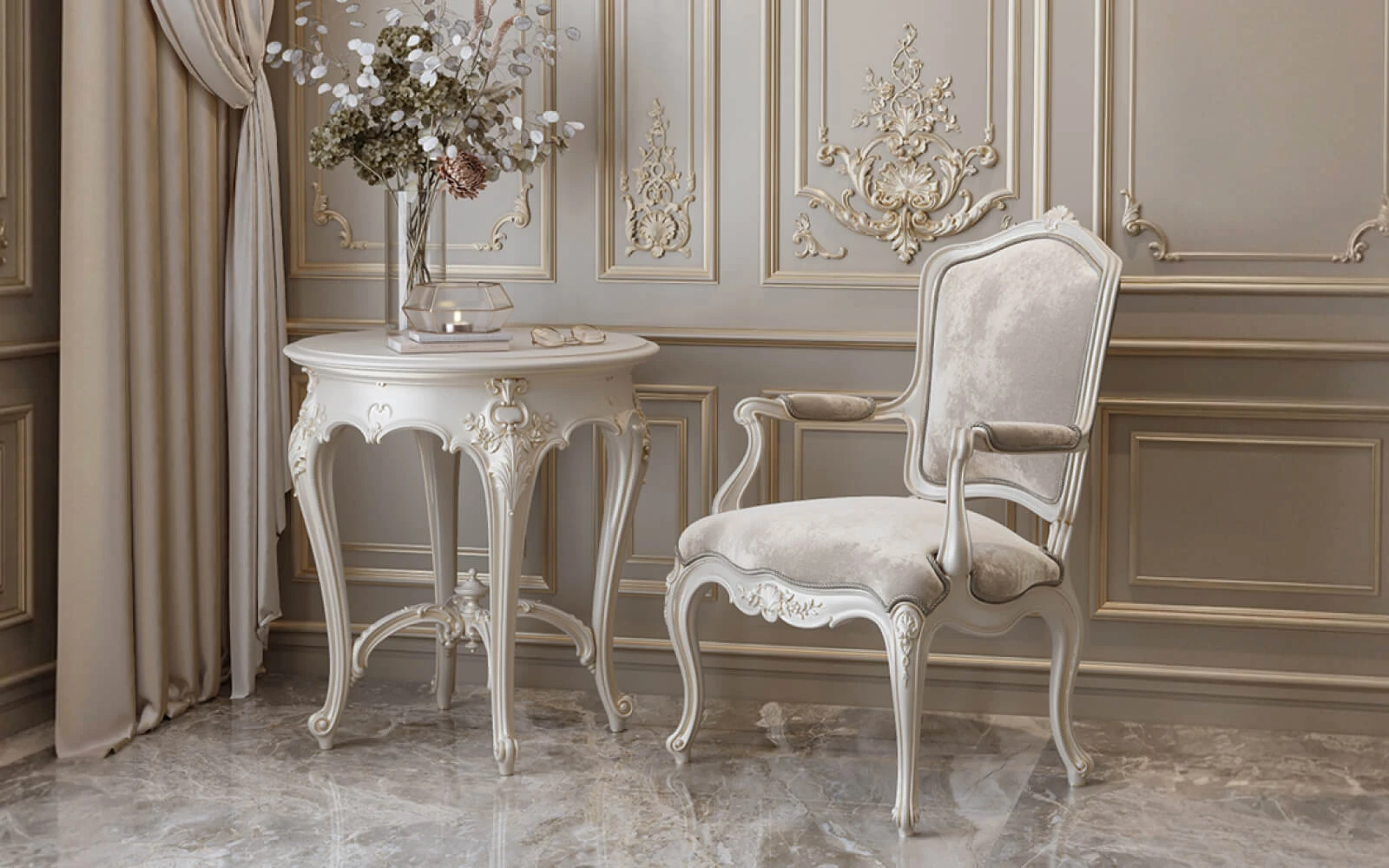
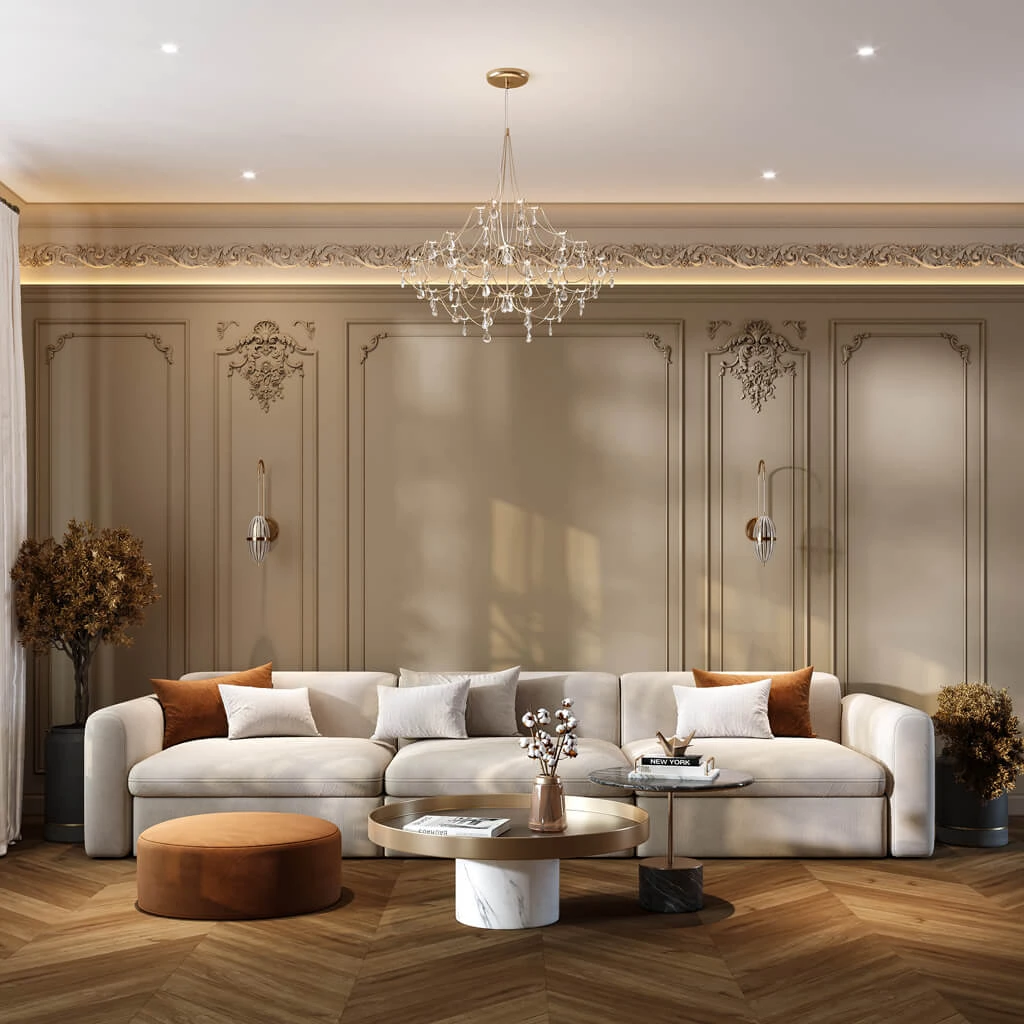
The broad format makes KPU-130 especially suitable for furniture fronts, wall panels, door inserts, mirrors, decorative niches, and horizontal frieze compositions. Unlike narrow linear trim, KPU-130 works as a visible ornamental accent that can define a surface and give it a stronger classical or neoclassical character.
Have questions?
Customers also buy
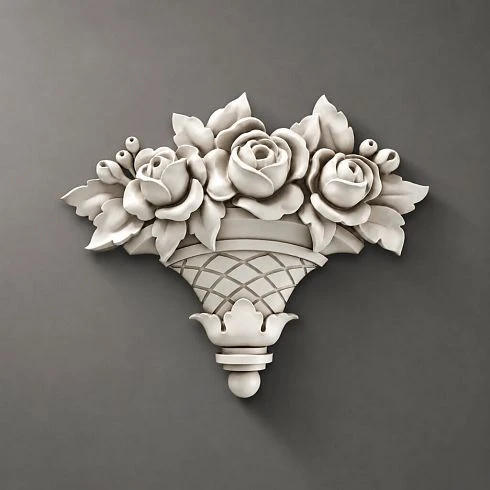
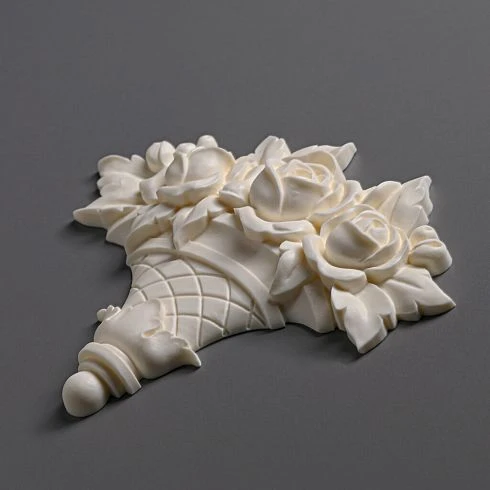
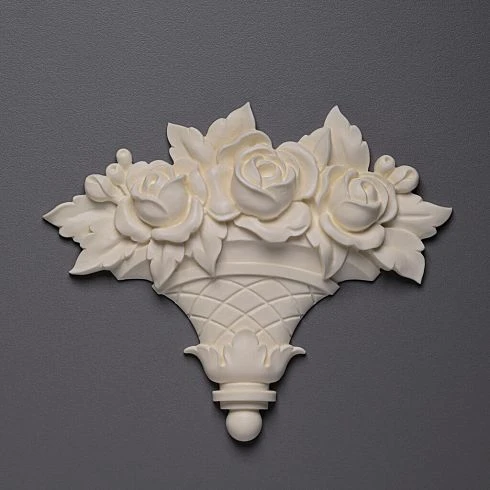
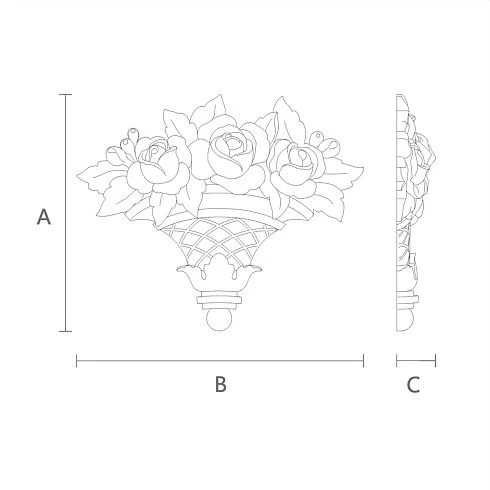

Ekaterina Y.
October 5, 2026
An excellent team! A huge selection of products! I recommend that craftsmen, designers, decorators, and home stagers take a tour of the production facility to immerse themselves and be inspired.
Alexander U.
October 2, 2026
I have been working with Stavros since 2024, and the quality of the products is top-notch. Customers are happy!!!
Elena G.
September 29, 2026
Daria is a very competent specialist; she provided consultation and helped us select items. They were sent promptly.
Polyurethane stucco decor
We have been on the market for over 20 years and are ready to offer you the best combination of aesthetics, quality, and practicality. Our polyurethane is not just a material, but a reliable foundation for flawless details, resistance to moisture and cracks, as well as convenient and quick installation. The company's success began in 2002, when two artists – Andrey Ragozin and Evgeny Tsapko – created a small creative workshop for making carved wooden products. The work of the craftsmen was quickly noticed, and within a year they were invited to participate in the reconstruction of the Konstantinovsky Palace in Strelna.
Every product in our range is the result of years of experience, thoughtful technology, and attention to detail. We constantly update our collections, follow and shape trends in interior design ourselves. From elegant neoclassicism to bold Art Deco, you will find the perfect accent for the interior of your dreams.
Choose durable polyurethane decor STAVROS — beauty proven by time and real projects, not just words.
STAVROS Guarantees
Quality of products without complaints
We save your time, peace of mind, and budget
Large warehouse program
We solve your tasks with maximum speed
Adherence to production deadlines
Streamlined process reduces all risks
Contact us for shipping options
Quality service regardless of order volume
Your positive business reputation
Reliable partner — the foundation of your business
More items in the trim category
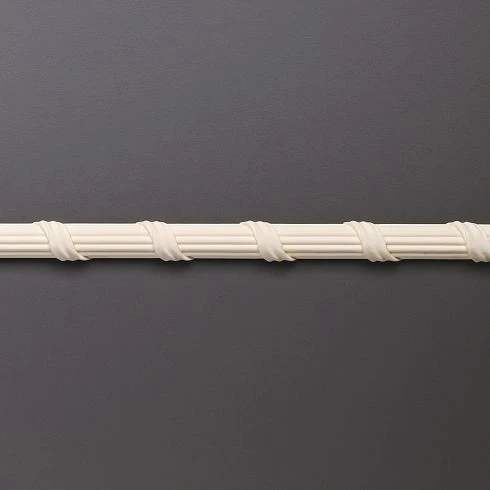
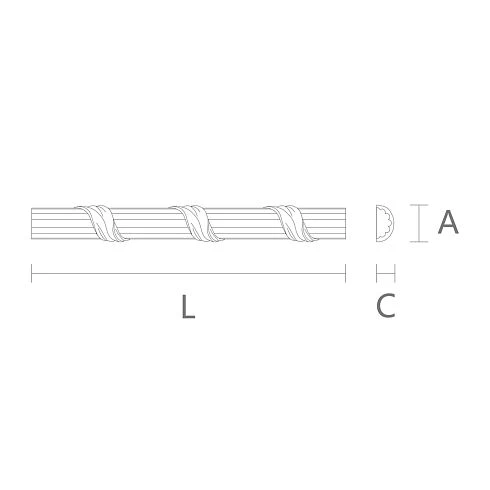
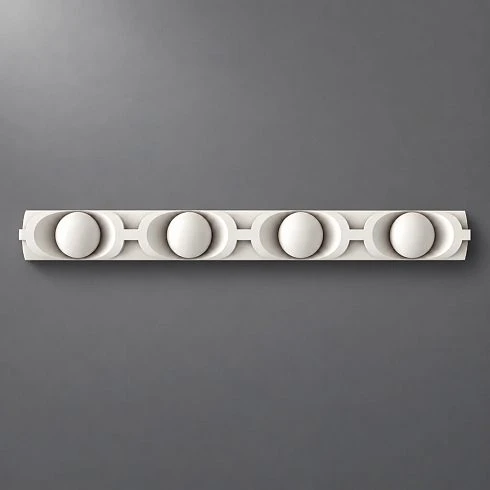
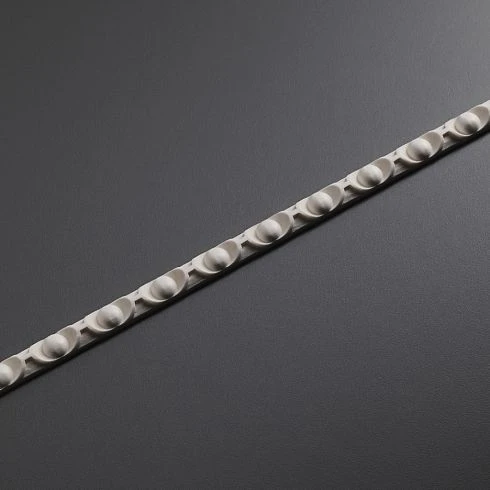
Frequently asked questions
Our showrooms are located in Saint Petersburg and Moscow. Production is located in Saint Petersburg.
Moscow contacts: /contacts_all/
Contacts of Saint Petersburg: /contacts_all/
Send us the product codes, quantities and delivery destination. Contact our team to confirm availability and order details.
Please contact us to confirm shipping availability, costs and delivery times for your destination.
Delivery cost depends on the size, weight of the item, and delivery address.
Please ask our team to confirm shipping costs and delivery arrangements for your destination before placing an order.
Prices and availability of items on the website are always current. Data is updated daily.
Note: items in stock are stored on the warehouse in unpolished form and shipped within 3 working days.
If the item is not in stock, average production time: 5–10 working days.
This is the quality of polishing of the items.
Standard — machine polishing, at a more attractive price.
Prestige — detailed hand polishing, items do not require further work.
More details: /information/kachestvo/
This is the type of veneer of the items.
Under enamel: produced by gluing wooden laminates without color and texture matching. Contrast tonal and textural differences are noticeable. This blank should be chosen if the item is intended for opaque coating.
Under tinting: produced by gluing wooden laminates with color and texture matching. Tonal and textural differences may occur. This blank should be chosen if the item is intended for semi-transparent finish.
More details: /information/kachestvo/
Beech — dense, non-porous wood, most often used for items covered with enamel.
Oak — dense, porous wood with clearly visible natural grain. Due to its strength and decorative properties, it is often used in items with semi-transparent coating, highlighting the wood pattern.
Custom-made, if non-standard items are required, we can produce products from other types of wood, including blanks provided by the customer, manufactured according to our technical specifications.
All our furniture legs can withstand a vertical load of at least 100 kg.
Average production time for custom-made items: 5–10 working days.
Most items are stored on the warehouse in unpolished form. We need time to polish and pack orders.
Yes, we manufacture non-standard items according to individual projects, but we only accept orders with a minimum quantity.
We can manufacture items of the desired size, but we only work with bulk orders. For details, please consult the sales department manager.
Yes, some of our products can be used outdoors. For example, polyurethane items, as well as carved door casings made of pine.
Other items are produced to order using PUR glue, if minimum quantity is available. No warranty is provided for such products, as outdoor conditions are considered aggressive.
Please contact our team to confirm available finishes, minimum quantities and a quotation for your order.
- Dust removal. After sanding, the surface must be dusted.
- Priming. Apply primer in an even layer.
- Matting. After the primer has fully dried, the surface should be matted (lightly sanded for better adhesion).
- Finish coating. Apply finish coating: lacquer or enamel, in 2 layers, with interlayer drying.
More details: /information/sovety/
Apply adhesive to the decor. Place it on the surface and press briefly. Then, lift the decor from the surface and leave it open for 3–5 minutes. Press the decor firmly onto the surface and hold for 5–10 seconds.
More details: /information/sovety/
Ideally, you should prepare a design project before placing an order.
You can do this yourself by downloading drawings of our products from our website, or you can order a project from us.
If the number of decorative elements and fittings is small, our company's manager can assist you with selection.
Unfortunately, this service is not provided.
The packaging method depends on the type of items, but in each case, we ensure sufficient protection for safe transportation.
We most often use corrugated cardboard and stretch film. Fragile items are additionally secured on a rigid base to prevent damage during transport.
Please confirm the minimum order quantity for your selected products and finishes with our team.
Please contact our team to discuss measurement and installation requirements for your project and destination before ordering.
Often searched in category Molded decor
4271
4266
3620
2892
347
244
Large Floral Scroll Molding for Furniture, Doors, Wall Panels, and Decorative Friezes
KPU-130 is a Floral Scroll molding designed for interiors where ornamental relief should become an important part of the composition.
Unlike narrow decorative trim, KPU-130 has a substantial 120 mm / 4.72 in face width. Its botanical pattern spreads across a broad surface and combines flowing stems, leaves, and scroll-shaped elements into one continuous ornamental band.
The profile measures:
120 × 17 × 930 mm
4.72 × 0.67 × 36.61 in
and is made from polyurethane. These are the dimensions currently shown on the STAVROS product page. Ставрос Декор
The broad face and 17 mm relief give KPU-130 enough visual weight for large-scale decorative work, including:
- wall panels;
- door panels;
- furniture fronts;
- architectural cabinetry;
- horizontal ornamental bands;
- decorative friezes;
- framed interior compositions.
For narrower patterns and longer linear profiles, browse the full STAVROS decorative polyurethane molding and trim.
What Is Floral Scroll Molding?
Floral Scroll molding combines botanical ornament with curved scrollwork.
The visual structure usually includes:
- flowing stems;
- leaves;
- floral or botanical details;
- curved scroll-shaped transitions;
- repeating ornamental movement.
KPU-130 follows this structure closely.
The current STAVROS description identifies alternating leaves, smooth stems, and scrolls as the principal elements of the pattern. Ставрос Декор
This makes Floral Scroll Molding much more precise than a generic product name such as:
Decorative Molding KPU-130
or:
Carved Molding KPU-130.
The term is also natural in the U.S. architectural-decor market. Brockwell uses Italian Renaissance Floral Scroll Design for an ornamental linear molding, while Ekena uses product families such as Scroll & Flowers Frieze and Floral Panel Moulding. Brockwell Incorporated
Why KPU-130 Should Target “Floral Scroll” Instead of Generic “Decorative Molding”
Decorative molding has much higher search volume—approximately 2,400 searches per month in the U.S.
But it is extremely broad.
If every KPU product page targets decorative molding in its H1 and title, dozens of STAVROS SKU pages begin competing with each other and with the main category.
KPU-130 has a recognizable pattern that allows a much more specific product identity:
Floral Scroll Molding
Supporting phrases can then include:
scroll molding
floral molding
floral trim
leaf molding
ornamental molding
frieze molding
polyurethane molding
This gives the product page a clear topical center while broad category terms continue strengthening the category pages.
A Broad Ornamental Profile With Strong Relief
KPU-130 is one of the broader profiles in the decorative trim collection.
Its proportions are:
width — 120 mm / 4.72 in
projection — 17 mm / 0.67 in
length — 930 mm / 36.61 in
The relationship between width and depth is important.
The molding spreads widely across the surface, allowing the botanical ornament to develop horizontally. At the same time, the 17 mm projection gives individual scrolls, leaves, and stems enough depth to create visible highlights and shadows.
The result is not a fine edge trim.
KPU-130 acts more like an ornamental architectural band.
KPU-130 as Frieze Molding
For this particular SKU, frieze molding is an especially useful secondary term.
Frieze molding currently has approximately 140 U.S. searches per month and transactional intent.
A frieze is a decorative horizontal band used as part of an architectural composition.
KPU-130's broad 120 mm face makes it naturally suited to this kind of application.
It can be used:
- above wall panels;
- above furniture;
- over a door or opening;
- between larger architectural elements;
- as a decorative band across a feature wall;
- inside a layered classical composition.
American polyurethane manufacturers also use frieze terminology for similarly broad scrolling and floral profiles. Ekena, for example, markets a Scroll & Flowers Frieze in high-density urethane. Ekena Millwork
Floral Scroll Frieze Above Wall Panels
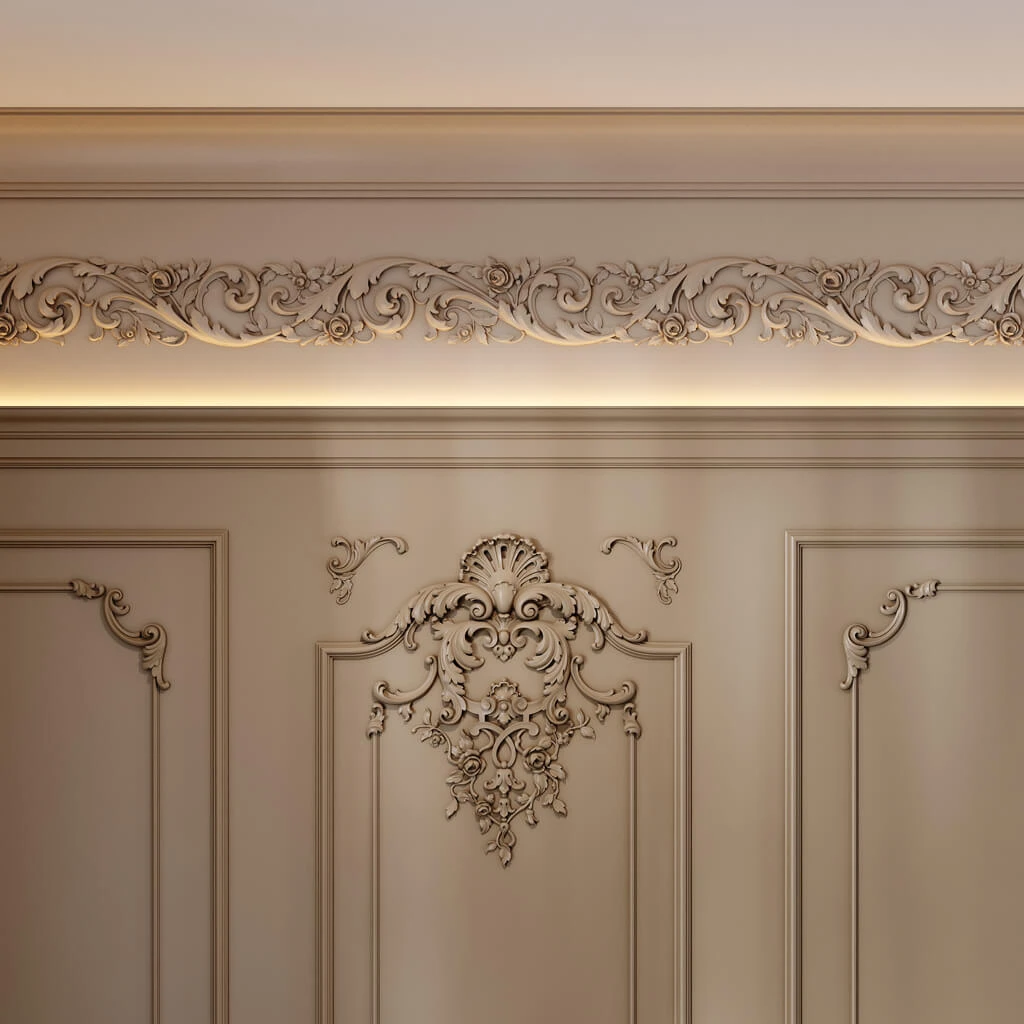
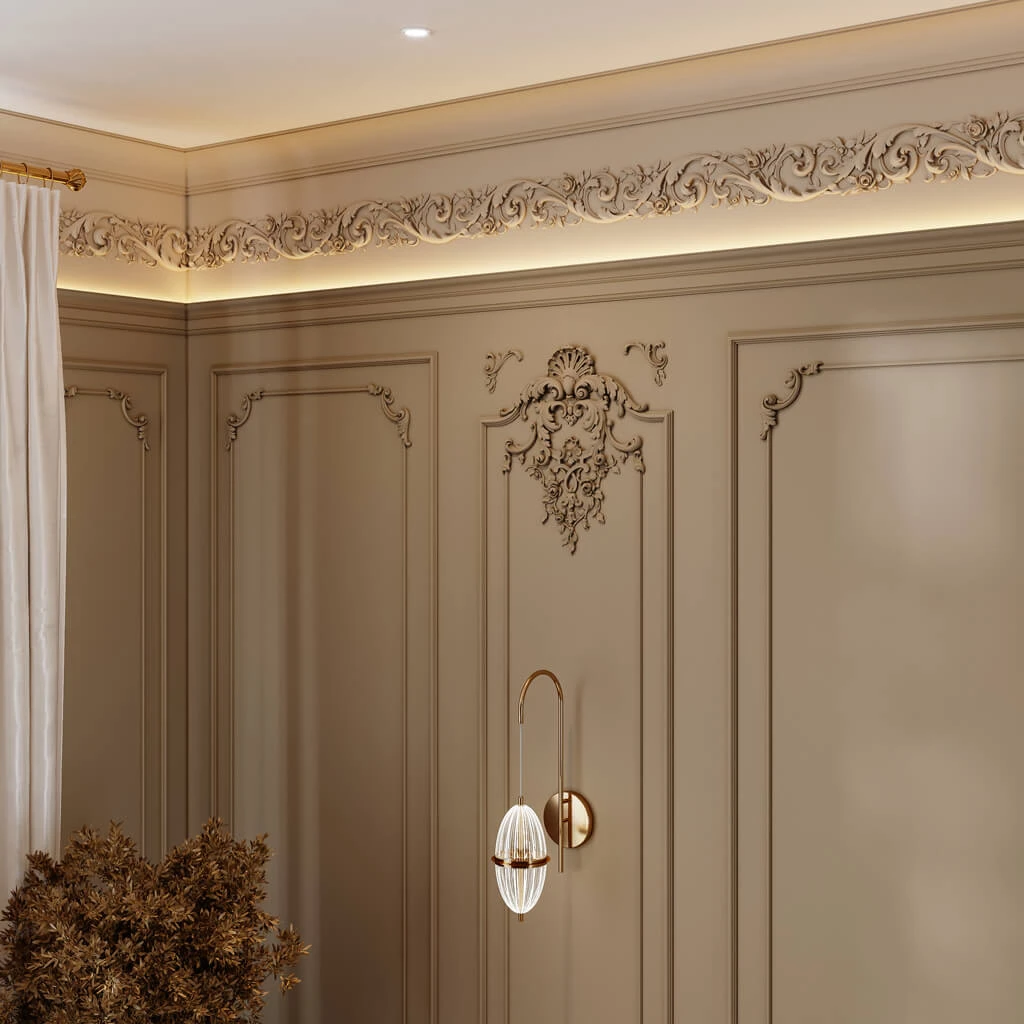
One strong application for KPU-130 is a horizontal ornamental band above wall paneling.
For example:
wall paneling → plain transition → KPU-130 Floral Scroll molding → upper wall
The molding becomes the decorative boundary between the lower and upper sections of the wall.
Because KPU-130 is 4.72 inches wide, it can remain visually significant even when viewed from across a room.
This is different from narrow trim, which may disappear visually when installed high on a wall.
The KPU-130 ornament is large enough to become part of the architectural hierarchy.
Floral Scroll Molding for Large Wall Panels
KPU-130 can also form part of a large wall-panel composition.
A possible arrangement is:
simple architectural molding → KPU-130 Floral Scroll molding → central wall field
The larger plain profile establishes geometry.
KPU-130 introduces botanical ornament.
The open central panel provides visual balance.
For broad structural framing, use the main STAVROS polyurethane molding collection and treat KPU-130 as the ornamental layer rather than forcing it to perform every framing function.
KPU-130 for Furniture Fronts
The live product page specifically identifies large furniture facades as one of the intended applications for KPU-130. Ставрос Декор
Its scale makes it particularly appropriate for:
- large wardrobes;
- display cabinets;
- built-in units;
- architectural cabinetry;
- sideboards;
- substantial furniture fronts;
- decorative furniture panels.
At 120 mm / 4.72 in wide, KPU-130 is not small furniture edging.
It is a major decorative element.
A typical composition could use:
plain furniture structure → KPU-130 Floral Scroll molding → central decorative field
The molding should have enough open surface around it for the ornament to remain readable.
Furniture Molding vs. Furniture Trim
Both furniture molding and furniture trim have approximately 210 U.S. searches per month, but they should be used carefully.
KPU-130 can certainly be used on furniture.
However, the term trim may suggest a much narrower finishing strip than this product actually is.
Therefore the better wording inside the product page is:
decorative furniture molding
ornamental molding for furniture fronts
Floral Scroll molding for cabinetry
rather than repeatedly calling a 4.72-inch-wide ornament simply furniture trim.
This improves both accuracy and user expectations.
Floral Scroll Molding for Door Panels
Door panels are another application explicitly mentioned on the current STAVROS card. Ставрос Декор
KPU-130 can be incorporated into:
- large paneled doors;
- double doors;
- decorative inserts;
- architectural door compositions;
- portal details.
The product should not be described as ordinary door casing.
Its role is ornamental.
For example:
structural door casing → wall space → KPU-130 decorative ornament
or:
KPU-130 incorporated directly into the decorative field of the door leaf.
This keeps the page relevant to door-decoration intent without incorrectly competing for broad door trim searches.
Why KPU-130 Works Better on Large Surfaces
A 120 mm molding occupies nearly 4.75 inches of visible surface.
That scale requires enough surrounding space.
KPU-130 is therefore better suited to:
- large doors;
- large furniture;
- substantial wall panels;
- wide architectural fields;
- decorative friezes.
On a very small cabinet door or narrow panel, the molding can consume too much of the available surface.
Before ordering, mark a 4.72 in / 120 mm strip at full scale on the actual wall, door, or furniture front.
This immediately shows whether the profile is proportionate.
Why the 17 mm Projection Matters
KPU-130 projects 17 mm / 0.67 in from the mounting surface.
That is sufficient to create clear three-dimensional modeling across the botanical relief.
Under directional lighting, the leaves and scrolls produce noticeable shadows.
Under diffuse lighting, the relief becomes softer but remains visible.
This gives the molding enough depth to work particularly well in monochromatic interiors.
KPU-130 and the surrounding wall or furniture can be painted in the same color, while the ornament remains visible through its physical relief.
Floral Scroll Molding in Classic Interiors
KPU-130 naturally fits classical interior compositions.
The broad botanical scroll pattern can be coordinated with:
- paneled walls;
- classical cabinetry;
- decorative doors;
- large mirrors;
- cornices;
- pilaster-style details;
- ceiling ornament;
- polyurethane onlays.
The key is hierarchy.
Because KPU-130 already contains a substantial amount of ornament, nearby profiles do not all need to be equally elaborate.
A simpler surrounding molding often allows the Floral Scroll pattern to read more clearly.
For additional relief accents, browse STAVROS polyurethane decorative elements and onlays.
KPU-130 in Neoclassical Interiors
KPU-130 can also work in neoclassical interiors when used selectively.
Possible applications include:
- one principal wall panel;
- one decorative band above furniture;
- a major door composition;
- one feature wall;
- selected architectural cabinetry.
Painting the molding in the same finish as the wall helps reduce visual contrast.
The floral scroll pattern then becomes visible primarily through depth and shadow.
This allows a large classical ornament to feel more architectural and less visually busy.
KPU-130 as an Accent Rather Than a Continuous Perimeter
An important difference between KPU-130 and many other KPU profiles is its 930 mm / 36.61 in length.
Many of the other linear STAVROS moldings we have optimized are 2000 mm long.
KPU-130 is much shorter.
That changes its likely use.
The product can work especially well as:
- a centered ornamental section;
- a furniture-front accent;
- a decorative panel insert;
- a repeating frieze module;
- a detail above a doorway;
- one part of a larger composition.
It should not automatically be treated like a 2-meter continuous strip.
The 930 mm Length Must Be Reflected in the Copy
This is important.
The live product card gives:
930 mm / 36.61 in
not 2000 mm. Ставрос Декор
Therefore all new copy, structured data, specification tables, ALT descriptions, and SEO text should use the actual 930 mm length.
Do not reuse the 2000 mm language from KPU-043, KPU-060, KPU-074, or other linear profiles.
KPU-130 requires its own geometry and quantity calculations.
KPU-130 as a Repeating Decorative Module
Because each piece is 930 mm long, KPU-130 can also be viewed as a repeating ornamental module.
Several pieces may be arranged along a longer wall or architectural composition.
Before doing so, check:
- how the ornament starts;
- how it ends;
- whether two pieces create a natural continuation;
- whether a plain gap should separate modules;
- whether the project needs a centerline.
Do not assume that two factory pieces will visually join into one seamless repeating pattern unless the actual profile repeat and endpoints have been checked.
The current public specification does not provide a separate numerical pattern-repeat measurement, so one should not be invented.
Pattern Alignment Between KPU-130 Sections
If several KPU-130 sections are installed in one line, the joint should be evaluated visually before cutting or fixing.
Potential problems include:
- two large leaves meeting awkwardly;
- scrolls ending against one another;
- an obvious interruption in the botanical movement;
- uneven spacing between repeated motifs.
A practical process is:
- place two full KPU-130 sections together;
- inspect the actual ornament at the ends;
- test the intended joint;
- decide whether trimming improves the transition;
- mark the final cuts;
- dry-fit before installation.
For prominent wall and furniture applications, judge the connection both close up and from normal room distance.
KPU-130 vs. KPU-060 Floral Vine Molding
KPU-060 and KPU-130 are both botanical, but they should remain semantically separate.
KPU-060 has a more flowing vine-based ornament and a long 2000 mm profile.
KPU-130 is broader, shorter, and visually dominated by large floral-scroll forms.
Therefore:
KPU-060 → Floral Vine Molding
KPU-130 → Floral Scroll Molding
This is a useful distinction for both SEO and product navigation.
KPU-060 fits the vine / floral trim side of the semantic cluster.
KPU-130 fits more naturally into floral / scroll / frieze molding.
KPU-130 vs. KPU-043 Leaf & Scroll Molding
KPU-043 is another related profile, but its design and scale are different.
KPU-043 is a narrower linear molding with a lighter repeated Leaf & Scroll pattern.
KPU-130 is a broad 120 mm ornament with substantially more visual mass.
Therefore:
KPU-043 → Leaf & Scroll Molding
KPU-130 → Floral Scroll Molding
KPU-043 is appropriate where a continuous ornamental line is needed.
KPU-130 is more suitable where the decorative molding should become a larger focal band or panel element.
KPU-130 vs. Acanthus Leaf Molding
KPU-130 should also remain separate from KPU-001, KPU-012, and KPU-074.
Those products have a specifically identifiable Acanthus Leaf pattern.
KPU-130 is described by STAVROS in broader floral terms: leaves, smooth stems, and scrolls. Ставрос Декор
Therefore I would not insert Acanthus into the H1 unless STAVROS's source drawing or ornament taxonomy explicitly identifies KPU-130 as acanthus.
The safer and more descriptive name is:
Floral Scroll Molding.
KPU-130 Dimensions and Specifications
Product: KPU-130
Material: Polyurethane
Width: 120 mm / 4.72 in
Projection: 17 mm / 0.67 in
Length: 930 mm / 36.61 in
Pattern: Floral Scroll
Product type: Large ornamental molding / decorative frieze
These specifications are taken directly from the current product card. Ставрос Декор
The current live price displayed on the page is $120.01 per unit, though price should remain dynamic rather than being hard-coded into the SEO body if your catalog already updates it automatically. Ставрос Декор
There Is a Template Error on KPU-130 Too
The current specification block still displays:
Dense, Hard, Non-Porous Wood
and:
Quality of Sanding
even though the selected material is Polyurethane. Ставрос Декор
This is the same template contamination we found on other polyurethane cards.
These fields should be removed from the PU product template globally.
KPU-130 should not contain wood-related specifications such as:
- wood density;
- wood porosity;
- sanding quality;
- beech vs. oak;
- veneer finish.
They are irrelevant to this SKU.
The FAQ Is Also Still Oriented Toward the Russian Wood Catalog
The same card currently contains FAQ content about:
- Saint Petersburg and Moscow showrooms;
- Contact us to confirm shipping to your destination. and CIS;
- beech vs. oak;
- wood sanding;
- veneer for tinting or enamel;
- wooden furniture-leg load capacity. Ставрос Декор
For the English U.S.-oriented site, this dilutes product relevance substantially.
The product page should instead answer questions relevant to polyurethane molding, such as:
- What are the KPU-130 dimensions?
- What material is KPU-130 made from?
- Where can KPU-130 be used?
- How many pieces are needed?
- Can KPU-130 be painted?
- How should sections be planned?
- What other Floral Scroll or ornamental moldings are available?
This is worth fixing at template level rather than SKU by SKU.
How Much KPU-130 Should You Order?
Each KPU-130 section is only:
930 mm / 36.61 in long.
Calculate the quantity from the actual layout rather than using assumptions based on the 2-meter profiles elsewhere in the catalog.
For example, for a decorative run of:
2800 mm
three KPU-130 pieces provide:
3 × 930 = 2790 mm
which is 10 mm too short even before allowing for pattern matching or cuts.
Four pieces would provide:
4 × 930 = 3720 mm
leaving significantly more material for layout planning.
This illustrates why KPU-130 quantity should be calculated from its actual 930 mm unit length.
Calculating KPU-130 for Individual Furniture Panels
Suppose one cabinet front needs a horizontal KPU-130 element approximately:
800 mm wide.
One 930 mm profile provides enough gross length.
But the actual cut should also consider:
- where the floral composition is centered;
- whether both ends should be symmetrical;
- which part of the ornament should remain visible;
- whether the offcut can be reused.
For an expressive molding such as KPU-130, centering the ornament can matter more than simply cutting the minimum required length from one end.
Centering the Floral Scroll Pattern
On furniture fronts and architectural panels, the visual center is particularly important.
Before cutting KPU-130:
- find the center of the panel;
- find the visual center of the ornamental profile;
- align the two;
- mark both ends;
- check whether the left and right cut points look balanced;
- only then make the final cuts.
This can produce a more deliberate result than starting at one end and removing all excess from the other.
The approach is especially useful for:
- cabinet fronts;
- door panels;
- centered wall ornaments;
- over-door applications.
Using KPU-130 Above a Door
The relatively short factory length can actually be advantageous for an over-door composition.
A 930 mm / 36.61 in ornamental profile can function as a centered decorative band above a door or inside a wider architectural surround.
The exact suitability depends on the opening width and intended visual margins.
A typical hierarchy might be:
door opening → plain casing → centered KPU-130 Floral Scroll accent
rather than forcing the product to extend across an entire wall.
This use takes advantage of KPU-130's broad ornament and shorter length.
Choosing KPU-130 Instead of Narrow Floral Trim
Choose KPU-130 when the project requires:
- a broad 4.72 in ornamental band;
- visible floral scrollwork;
- a statement furniture detail;
- decorative door-panel ornament;
- a frieze-like feature;
- strong botanical relief;
- a large-scale decorative profile.
Choose narrower floral trim when the project requires:
- delicate framing;
- small furniture details;
- narrow wall panels;
- long continuous runs;
- less visual weight.
KPU-130 is fundamentally a large decorative profile, and the page should communicate that immediately.
Combining KPU-130 With Other STAVROS Moldings
KPU-130 works best when paired with profiles that provide simpler architectural structure.
For example:
plain outer molding → KPU-130 Floral Scroll ornament → central panel
or:
simple wall panel → KPU-130 decorative frieze → plain upper wall
For longer and simpler structural profiles, browse STAVROS polyurethane moldings.
For Floral Vine, Leaf & Scroll, Acanthus Leaf, braid, bead, rope, and geometric profiles, browse the full decorative polyurethane molding and trim collection.
For separate centerpieces and architectural ornaments, browse polyurethane decorative elements and onlays.
Buy KPU-130 Floral Scroll Molding
KPU-130 is available from STAVROS as a polyurethane Floral Scroll molding for large furniture fronts, door panels, wall panels, decorative friezes, and architectural interior compositions.
Customers looking to buy KPU-130 Floral Scroll molding can check the current KPU-130 price, dimensions, availability, and ordering options directly on this product page.
For this SKU, I would use the semantic hierarchy:
KPU-130 Floral Scroll Molding
Floral Scroll Molding
Scroll Molding
Floral Trim
Floral Molding
Leaf Molding
Frieze Molding
Decorative Frieze
Polyurethane Decorative Molding
while decorative molding, ornamental molding, polyurethane molding, decorative trim molding, furniture molding, and furniture trim remain supporting terms.
Your request has been sent!
Our manager will contact you within 5 minutes