








































































Article Contents:
- First, they record what can no longer be changed in the project
- Three replacement options with different scopes of work
- The compatibility table shows the reason for the decision
- When replacing a leg, compare the installed height and the connection
- For a handle, the holes, base and grip space matter
- An overlay is selected based on the free field and the grain direction
- A round rosette does not become an equivalent just because of its diameter
- For a bracket, check both mating surfaces
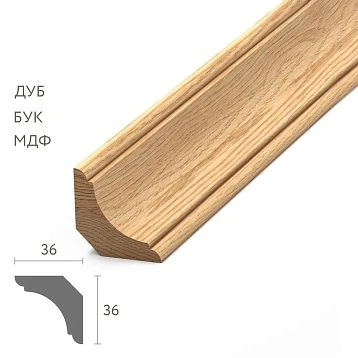
- For moulding, the cross-section profile and joints are compared
- When the profile width changes, the entire frame is recalculated
- Matching geometry does not make materials equivalent
- The previous color is confirmed on the new element
- A mockup and a single sample serve different purposes
- Which changes are shown to the customer again
- After replacement, a new version of the specification is issued
- A verified replacement is stored together with its conditions of use
- The batch and reserve are calculated after determining the replacement composition
- Where to buy elements for custom furniture after verifying a replacement

The fronts have already been drilled, the cabinet dimensions have been approved, and the selected handle cannot be obtained in time for assembly. In such a situation, custom furniture elements are selected based on the constraints of the finished project: hole locations, mounting points, clearances, and the permissible protrusion of the decorative element. An externally similar part may require reworking the front, whereas a less obvious option will preserve the construction.
It is indeed possible to replace the item code without reworking the geometry if the new element fits the existing connections and does not change the agreed furniture specifications. But the specification entry is updated even with full compatibility. Otherwise, production will assemble one variant, and the next purchase will again be made according to the previous one.
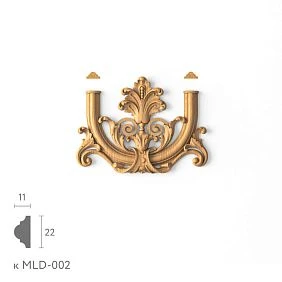
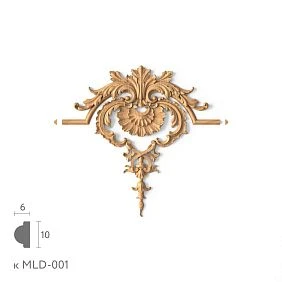
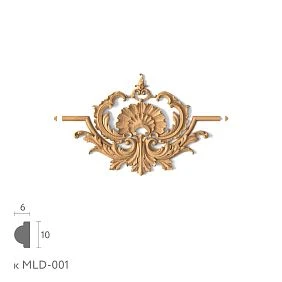
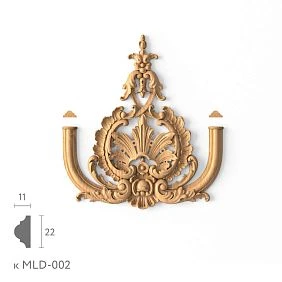
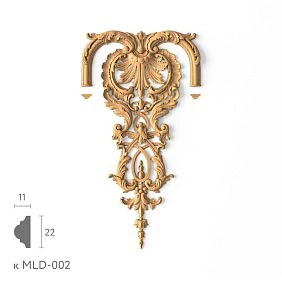
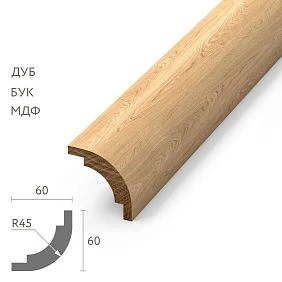
First, they record what can no longer be changed in the project
The search for an equivalent begins with the original part: its item code, the selected finish, and its role in the construction. A name like "carved leg" or "wooden handle" alone is not enough. Dimensions, material, coating, mounting pattern, and position on the furniture are needed.
Then the stage of completion is determined. While the front exists only in the drawing, relocating holes changes the documentation. After drilling, the same operation affects the part itself. After painting, refinishing restoration is added to it. Therefore, an acceptable replacement for one order may prove unprofitable for another, even if the furniture is identical.
| Element | Which parameters are recorded first |
|---|---|
| Leg | Installed height, top platform, mounting, position under the cabinet |
| Handle | Number of holes, distance between their centers, base, projection |
| Overlay or socket | Dimensions, protrusion from the front, orientation, clearance |
| bracket | Mating surfaces, projection, mounting, and function performed |
| Molding | Cross-section, frame position, lengths and joints |
The reason for the replacement is also clarified: temporary unavailability, unsuitable lead time, a change in finish or specification, or an error in the original selection. Sometimes moving a single operation costs less than reworking the whole set. These options should be compared based on confirmed delivery terms, not on the assumption that the original part can no longer be purchased.




Three replacement options with different scopes of work
Compatibility is best described through specific consequences for the furniture. The phrase "almost fits" hides very different situations: from an additional shade match to manufacturing a new front.
| Option | What's happening | What needs to be approved |
|---|---|---|
| Without modifying the furniture | Fits, dimensions, functionality and the agreed appearance are preserved | New item code and inspection result |
| With limited modification | Certain changes are required, for example new markings on a part that has not yet been machined | List of operations, cost and updated documents |
| With a design change | The cabinet, finished front, joints or arrangement of elements are changed | The revised assembly and its consequences for the project |
This replacement option cannot be assigned based on the size of the discrepancy alone. A difference of a few millimetres may block access to the fasteners or move the hole outside the mounting area. A more noticeable change in handle length is sometimes acceptable if the mounting matches, the grip is comfortable and the composition is agreed.
Until the necessary data is obtained, the candidate remains unverified. The absence of information about the mounting means neither compatibility nor a final rejection. The working table states exactly what needs to be clarified. Buying the entire batch on the assumption that it will be adjusted on site is only worthwhile after assessing the adjustment itself and its consequences.
Our factory also produces:
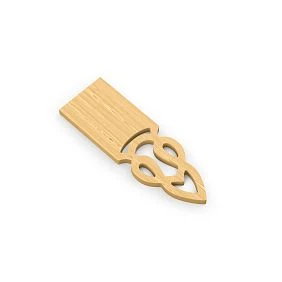
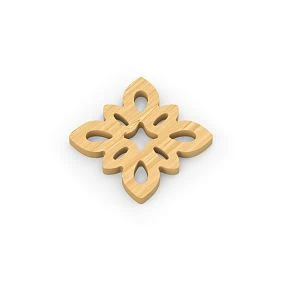
The compatibility table shows the reason for the decision
For each candidate, the original and new element are compared using the same parameters. Dimensions are taken from the specification card of the required version and from the drawing, not measured from a photograph. In catalogs, drawings, and models of STAVROS you can search for available materials; the availability of a document for the selected item is checked separately.
Below is a conditional example of replacing an overlay. The free area of the front is 240 × 140 mm, and the permissible protrusion from the mounting plane for the verified assembly is 18 mm. The figures illustrate the method and do not relate to specific catalogue item numbers.
| Parameter | Original overlay | Candidate | Verification result |
|---|---|---|---|
| Width | 220 мм | 230 мм | Fits; side margins are reduced |
| Height | 100 мм | 110 мм | Fits; the composition needs to be evaluated |
| Protrusion from the front | 14 мм | 22 мм | Exceeds the permissible 18 mm |
| Orientation | Symmetric | Symmetric | Direction matches the task |
| Material and finish | Approved sample | Same declared finish | Comparison with a finished sample is required |
Such a candidate is not suitable for replacement without modifying the assembly: matching the other rows does not eliminate the protrusion excess. Three marks can be used for the table: green — checked and acceptable, yellow — not enough data yet, red — a mismatch with a mandatory requirement has been found. The overall result is not determined by the majority of green rows.
The reason is always left next to the mark. "Needs checking" must mean a specific action, such as obtaining a drawing or test-fitting when the door is opened. A red mark implies choosing another candidate or an agreed modification of the assembly; a part for the previous design cannot be purchased based on such a note.
Get Consultation
When replacing a leg, compare the installed height and the connection
Choosing wooden furniture legs, first compare the height in the assembled unit. The nominal length of the part and the distance from the floor to the cabinet may differ because of the plate, the base glide or the mounting method. Only those parts of the fastening that actually add height are taken into account.
Then check the top plate, the position of the fasteners and the space around the support. A wider plate may hit the frame, and the same maximum profile diameter says nothing about the size of the upper section. Matching thread also does not confirm the same connection depth or the suitability of the entire fastening.
The shape below the mounting point sometimes allows a change without reworking the cabinet. One turned profile can be replaced by another if the required dimensions are maintained, the leg does not interfere with adjacent parts and the new type is accepted for the project. However, the same height does not make different supports equal in load-bearing capacity.
Separately check the hardware for the legs. Its presence in the catalogue does not mean that any plate is compatible with any model. The final stability is assessed on the assembled furniture. If only one visible leg is being replaced, compare it with the whole set: a suitable fastening does not hide a difference in silhouette or shade.
For a handle, the holes, the base and the grip area matter
When the front has already been drilled, the position of the holes becomes one of the main constraints. For a two-point handle, compare the distance between the centres of the fastenings, not the overall length. For a single-point handle, compare the position of the axis and the way the handle is prevented from unwanted rotation.
In the section wooden furniture handles The candidate may look suitable, but the check continues beyond the center-to-center distance. You need the diameter and type of fastener, compatibility with the facade thickness, sufficient connection length, and access for installation. A screw that is too long can bottom out before the base is pressed tight.
The base of the new handle is compared with the footprint of the old one. Matching holes will not help if a visible finish damage or the imprint of the old base remains around them. Repairing these areas is already part of the rework scope.
After the trial fitting, check the grip and the movement of the facade. The fingers must have enough room, and the protruding part must not collide with the adjacent door, the wall, or another handle. The check is carried out along the entire required opening path. The position with the furniture closed shows only part of the possible obstructions, especially at corner sections and next to drawers.
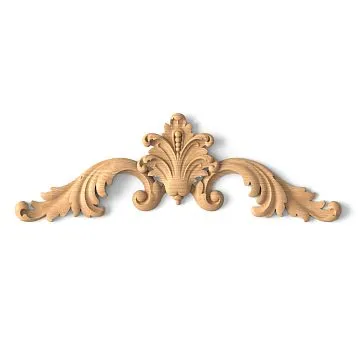
The overlay is selected according to the free field and the direction of the pattern
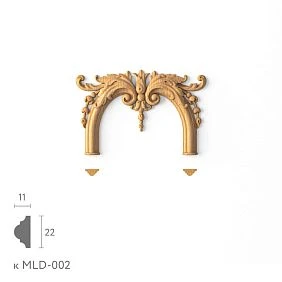
У carved inlay for furniture compare the width, height, and thickness, but the letter designations of dimensions are always read according to the diagram of the specific product. The interpretation of the dimensions of a handle or leg cannot be transferred to another product section.
The free field is measured inside the existing framing, taking into account the handle, joints, and other details. The overall dimensions of the entire facade do not replace the working area here. Even if the new overlay physically fits, the reduced clearance can make the ornament too tight relative to the molding.
For a directional pattern, check the left and right versions. Rotating a part does not always create a mirror pair: the position of the leaves and the logic of the composition change along with the direction. Paired elements are compared simultaneously, in the installed orientation.
For the central overlay, first preserve the design axis, then assess the visual balance. In different ornaments, the geometric center and the perceived center may not coincide. If the new pattern requires an offset, it is shown in the overall facade layout and the new marking is recorded. In addition to the front side, check the fit of the back surface: an identical silhouette does not guarantee an identical mounting plane or the ability to keep the previous installation method.
A round rosette does not become an equivalent just because of its diameter
Two rosettes of the same external size can create a different impression. A dense ornament with a pronounced center looks different from a light pattern with large gaps. When replacing, assess the filling of the field, the relief protrusion, and the connection with neighboring elements.
For selection wooden rosette first check the actual contour. A part that looks round overall may have protruding petals or a different base. What matters are the maximum dimensions in the installed position and the contact surface, especially if the rosette covers the joint between profiles.
In such an assembly, the new part must not only fit in the center but also cover the intended ends of the moldings. A smaller base can expose what was previously hidden by the ornament. A larger protrusion, on the other hand, can disrupt the allowable gap near an opening door.
If identical rosettes repeat on several facades, replacement is considered across the entire visible group. A single new part among the old ones may look accidental, even when its color and dimensions match. The decision to replace one element or the whole row is made after layout, and the quantity for purchase is calculated based on the agreed option.
both mating surfaces of the bracket are checked
У wooden bracket the outer contour is connected to two contact areas: to the vertical base and to the part located above. Matching height is not enough if the projection, width, or actual contact area have changed.
First determine the function of the original element. A decorative part and an assembly involved in supporting a shelf or another piece of furniture require different checks. The name “bracket” and a massive appearance do not by themselves confirm an allowable load. For load-bearing use, data on the product itself, the fastening, and the base are needed.
The new model is compared in its working position: where the fastening points are located, whether they can be reached with a tool, and whether the carved protrusion presses against the adjacent strip. Orientation is also checked if it is set by the pattern or construction. A symmetrical front view does not guarantee that all surfaces are designed the same way.
If the bracket has to be shifted because of an existing fastening, the support of the upper part and the composition are reassessed. This is already a change to the assembly that must be shown on the drawing. Fitting the decorative edge must not imperceptibly turn into reducing the working area or weakening the section near the fastener.
for the molding, the cross-section and joints are compared
When searching for an analog wooden furniture moulding the same face width is only the first condition. The projection above the base, the shape of the inner and outer edges, the back surface and the position of the characteristic profile lines are compared.
The difference shows where the new strip joins the old one. Even a small difference in depth can create a step and a continuously visible shadow. Therefore, replacing a single section of the frame is easier only when the joint truly matches. Sometimes it is more sensible to replace the entire outline than to try to hide an incompatible joint.
The lengths of the available blanks and the pattern along the strip are checked separately. With a repeating ornament, it matters which part of the pattern the corners and ends will fall on. A matching cross-section does not yet ensure continuity of the longitudinal pattern.
Changing the profile depth by itself does not change the mitre angle of a flat rectangular frame: with the appropriate geometry, it remains 45 degrees. But the mating contours change, and for a profile installed at an angle, the calculation is based on its working position. These cases must not be confused. The test angle is made from the selected version, not taken from a photograph of a similar product.
When the profile width changes, the entire frame is recalculated
The recalculation begins by answering the question of which line is preserved: the outer contour, the inner field or the axis of the strip. Without this reference, the same change in width produces different results. Simply substituting the item code in the schedule does not tell the assembler where the profile should shift.
A conditional example: the outer size of a rectangular frame is 400 × 600 mm. If the strips take up 20 mm inward on each side, the free field is 360 × 560 mm. When replacing with a profile 30 mm wide while preserving the outer contour, the field will shrink to 340 × 540 mm.
A 350 mm wide overlay fitted in the previous frame with a total remaining width of 10 mm. In the new frame it no longer fits. If the inner field is preserved instead of the outer contour, the outer dimensions will increase to 420 × 620 mm — and the clearances from the edge of the front will need to be checked.
After such a calculation, the blank lengths are checked along the adopted measurement line, the angles, the position of the overlay and the handle. The length along the outer mitre vertices and the length along the inner vertices differ. The working document specifies which dimension is passed to cutting so that correcting the width does not create a second error during assembly.
Matching geometry does not make materials equivalent
Beech and oak can be presented in the same shape, but under a clear finish their grain patterns will remain different. Changing the species alters the appearance of the finished furniture even when the dimensions and the shade by name are preserved. This is especially noticeable next to parts that have already been manufactured and finished.
Under a covering enamel, a change of species is sometimes less noticeable, yet the pore texture and the required surface preparation may differ. Therefore, the labor intensity and the result of finishing cannot be automatically transferred from the original part to the new one.
The composition of the selected version is also checked. The range of wooden products and moldings includes various materials, including MDF; the name of a general section does not replace the specification of a particular product. A switch from solid wood to another material is assessed by the purpose of the part, its fastening, and the conditions of use, not only by the similarity of the face side.
Requirements for the quality of wooden products help clarify the version for enamel or for tinting. But matching such a category does not promise an identical fiber pattern. The material, surface preparation, and finish are recorded separately. If the species or composition was part of an agreed specification, changing them does not become an unnoticeable production substitution merely because the part will be painted.
The previous color is confirmed on the new element
It is convenient to keep the finish designation in the specification, but it refers to a specific result and the method of obtaining it. A new item code may perceive the same composition differently: it has a different surface, fiber direction, carving depth, or ratio of end-grain and longitudinal sections.
Therefore, after selecting a candidate, a test is made using the intended technology. It is compared with the approved sample and with the already finished furniture parts. Color, gloss, texture visibility, and relief legibility are checked. A matching name of enamel or stain does not replace this comparison.
For supports with their own finish, one may consider from STAVROS open boundless possibilities for designers, furniture makers, and anyone striving to create unique high-quality furniture., and for facade hardware — handles without coating. The absence of a factory color leaves room to agree on the finish, but does not confirm that the surface is ready for any material system.
If a new test requires a change in technology, this is recorded together with the replacement of the article number. An option that fits in dimensions may require additional work that will affect the lead time and cost of the set. These are taken into account before purchasing the batch, so that compatibility according to the drawing does not hide a problem at the painting stage.
A layout and a single sample solve different tasks
A full-size outline of the part helps to preliminarily assess its position on the facade. It is applied to the development or temporarily placed on the furniture itself, checking the axes and offsets. When printing, the scale is checked against a known dimension: automatic reduction to the sheet area makes such a check unreliable.
A flat layout does not show the protrusion of the relief, the condition of the reverse side, and the behavior of the fastening. These questions require a physical specimen. It is trial-fitted without final installation, checking the fit and access to the joint. Then, if a custom finish is required, a trial finishing is carried out.
In the section product samples you can clarify the available options for preliminary familiarization with the material. The availability of a full-fledged sample of a specific part is checked separately: a short section of profile does not replace an assembled frame, and a wood sample does not confirm the installation of a leg.
For symmetrical decor, a pair may be required at once; for a joint, two mating sections. The number of samples is determined by the task, so the rule "one piece is always enough" is not universal. At the same time, a successful trial fitting shows the compatibility of only the tested assembly. It does not automatically confirm the performance of all joints, the stability of the furniture, or the matching of the finish of the future batch.
Which changes are shown to the customer again
Re-approval is needed when a replacement changes what the customer has already chosen: shape, ornament, material, color, proportions, or ease of use. Technical compatibility does not permit arbitrarily changing the appearance of the finished product. This is especially noticeable with central decor and repeating elements on a group of facades.
They show the original and new versions at the same scale and on the same background. For the overall view, an unfolded view of the furniture is useful; for the finish, real samples placed alongside. The change is named separately: for example, the handle became longer while the holes stayed the same, or the overlay takes up more space inside the frame.
If the replacement does not affect the agreed characteristics and does not require separate approval under the established workflow, the decision may stay within production. But this must follow from the check and the order conditions. A difference in species, size, or finish cannot be considered purely technical simply because it is more convenient for the workshop to make the replacement without discussion.
The result of the approval is tied to exact execution: item code, dimensions, material, and sample. An answer of "suitable" under a photo without this data is hard to use for repeat purchasing. If the new element affects price or lead time, these consequences are also approved before the modified set is launched.
After the replacement, a new version of the specification is issued
Even when the furniture geometry stays the same, the old parts list no longer describes the actual assembly. The new version states the old and new item codes, the reason for the replacement, the selected execution, the quantity, the date, and the person responsible for approval. If necessary, a reference to the finish sample and a record of the fitting are added.
The changes are carried over into all affected documents. If the item code appeared in a callout on a drawing, it is updated there as well. If the fastening and dimensions have not changed, the geometry does not need to be redesigned. If the layout has changed, a single new line in the bill of materials is no longer enough.
Purchasing, cutting, drilling, finishing, and assembly are checked separately. The person performing each affected operation must receive the current data before starting work. A note on a single paper copy does not help if the other participants continue to use the old file.
The old version is kept as an archive with a clear note that it is no longer intended for manufacturing this order. For items already manufactured, information about the actual configuration is retained. This matters for repairs: a new replacement may be approved for future orders, but that does not mean it can be installed on previously produced furniture without checking.
The verified replacement is stored together with the conditions for its use
A table of permitted replacements reduces repeat searching only when it records the restrictions. A pair of "original item code — new item code" without context can lead to an error: the element matched under enamel on one facade but does not fit under a clear finish or a different gap.
| What to store | Why this will be needed |
|---|---|
| Original and replacement versions | Repeat selection without losing size and material |
| Project and documentation version | Determine which construction the check relates to |
| Saved parameters | See which fits and dimensions match |
| Required modifications | Don't miss operations on the next order |
| Sample and finish | Reproduce the approved appearance |
| Date and basis for the decision | Find the fitting result and approval |
A replacement may be permissible only for a complete set. For example, a new profile is suitable for making the entire frame, but it cannot be joined with the previous one on a single damaged section. This limitation must be visible next to the item code.
Interchangeability should also not be assumed to be automatically transitive. If the first part replaced the second, and the second replaced the third in another project, the compatibility of the first and third has not yet been verified. Each new combination retains its own joints, dimensions, and appearance requirements.
The batch and reserve are calculated after determining the scope of the replacement
First, decide how many elements are actually being changed: one position, a symmetrical pair, the entire visible row, or the full frame contour. The order depends on this. Buying a single equivalent may prove insufficient if, after fitting, it is decided to replace the entire composition.
Then take sample units into account. Suppose five cabinets require three identical sockets each — 15 in total. If the approved sample is suitable for installation and is included in this batch, 14 more are purchased after it. If the sample remains in the workshop, another 15 will be needed for the furniture. This calculation does not include a separate reserve.
The reserve is determined per specific position: the likelihood of damage during processing, the importance of matching the finish, the repeatability of the order, and the ability to quickly obtain the same part. A universal percentage markup poorly describes small sets. For a handed pair, it is important to have the required version, not just an extra piece of the other direction.
Before purchasing the batch, confirm the availability of the selected option and the delivery terms. A successfully received sample does not guarantee that the required quantity will be available by the required date. Also check whether the original order still contains the old position, which may now be mistakenly delivered along with the approved replacement.
Where to buy elements for custom furniture after verifying a replacement
In the STAVROS catalog you can select ready-made wooden elements for furniture for an individual project: supports, handles, carved decor, and linear profiles. The phrase "custom furniture" describes a workshop's work on furniture and does not in itself mean the manufacture of any component in arbitrary dimensions.
To find a matching alternative, the supplier is given the original part number, critical dimensions, material, surface condition and quantity. It helps to attach a fitting diagram and specify which parameters cannot be changed. A request like "need a similar overlay" leaves the key compatibility questions unanswered.
Workshops with repeat purchases should check conditions for manufacturers, and agree on the lead time and payment method taking into account payment and delivery. They compare the total cost of the solution: the part, a sample, possible rework, finishing and changes to assembly timelines.
It is better to order custom furniture elements for the whole batch after confirming a specific replacement. The basis is matching critical parameters, a tested sample and an updated specification. Then the new part number preserves the accepted design wherever possible, and the necessary changes become known before purchasing and working with finished fronts.