





































Article Contents:
- What lies behind a general commercial query
- Three questions that determine everything
- Which panels to choose for walls and ceilings
- MDF: the perfect base for color
- Solid oak: when texture matters most
- Flexible panels: for non-standard geometry
- Ceiling: special logic
- When polyurethane stucco decor is needed
- What is polyurethane molding decor today
- Five situations where you can't do without molding
- How to combine texture, rhythm, and relief
- Texture: what is seen from two meters away
- Rhythm: what is seen from five meters away
- Relief: what is seen under side lighting
- Rule of visual balance
- What matters in a material besides price
- Geometric accuracy
- Coating quality
- Method of joining modules
- Weight and load on the wall
- Backlight compatibility
- Visual compatibility errors
- First error: too many different rhythms
- Second error: molding of the wrong scale
- Third error: color conflict between panel and molding
- Fourth error: panel without finishing element
- Fifth error: ignoring light and shadow
- Specific rooms: what works where
- Living room: accent behind sofa or TV
- Bedroom: headboard and beyond
- Hallway and corridor
- Kitchen: dining area and accent wall
- Ceiling: often overlooked
- Installation: principles that determine the outcome
- Preparation
- Tools
- Sequence
- Material acclimatization
- Styles and materials: compatibility table
- FAQ: answers to real questions
- About the Company STAVROS
When someone searches for 'slat panels buy in Kirov', they have usually already made a decision—to change something. The renovation has begun, the walls are waiting, the budget is set. One thing remains: to figure out exactly what to choose so as not to regret it a year later. This is where most people make their first mistake—choosing based on a picture from the internet rather than the logic of the specific space.
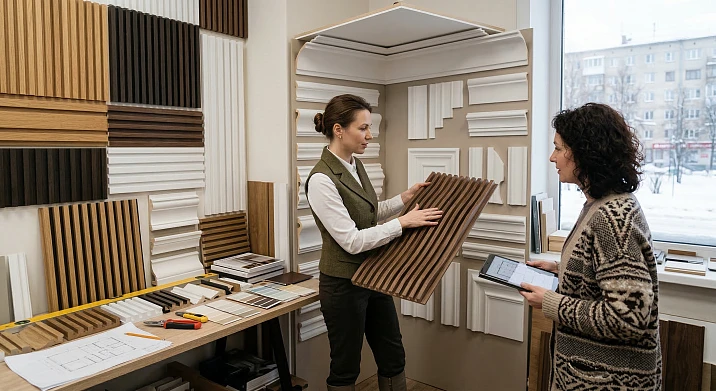
This article is written for those who want to make an informed choice. Not to blindly follow someone else's example, but to understand: whyRafter panelswork the way they do, whymolded decoration made of polyurethanein modern interiors is not an anachronism, but a precise tool, and how these two materials turn an ordinary room into a space with character.
What Lies Behind a General Commercial Query
The search phrase 'buy slatted panels' seems extremely specific. But if you look closer, completely different tasks lie behind it. One person needs to decorate the area behind the sofa in the living room. Another wants to panel the entire bedroom up to the ceiling. A third needs to hide crooked walls in the hallway without hiring a plasterer. A fourth wants a ceiling with a rhythm that will visually raise the low room.
All four people are looking for the same thing — but need fundamentally different solutions. This means: before looking at the catalog and Buy slatted panels for wall finishing, you need to honestly answer three questions for yourself.


Three Questions That Determine Everything
First. Is it an accent or a background? If you want the slatted wall to be the main visual element of the room — choose an expressive material: tinted oak, a large rhythm, play of light and shadow. If the panel is merely a structural background that organizes the space but doesn't shout about itself — MDF for painting to match the wall color, a closed rhythm.
Second. Wall or ceiling? slatted panels for wallsandBatten panels for ceilings — technically similar products, but with different application logic. On a wall, the panel serves a decorative and structuring function. On a ceiling — it primarily changes the perception of the room's height and acoustics.
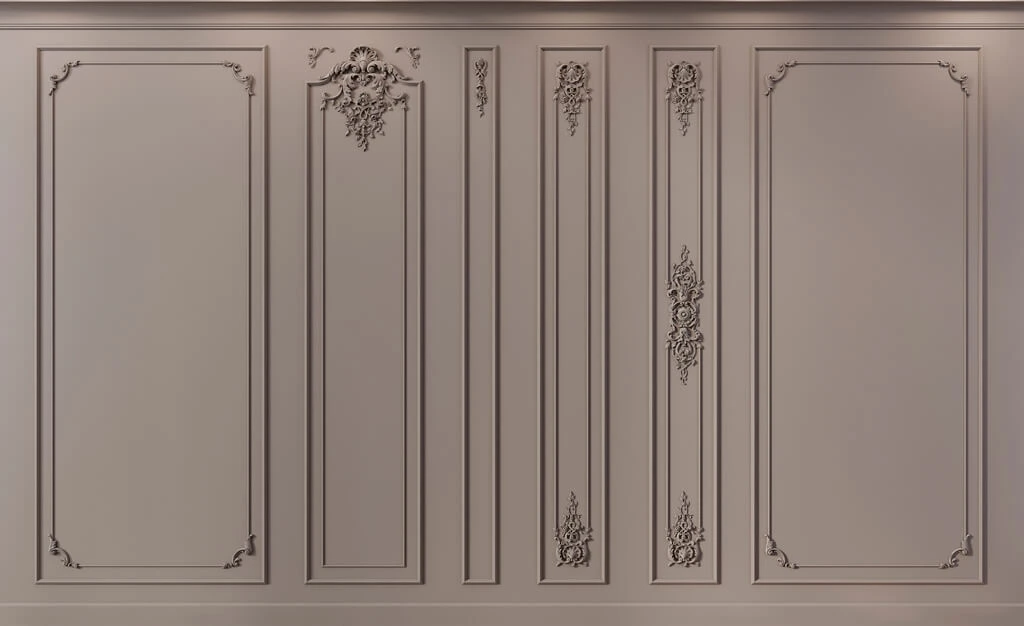
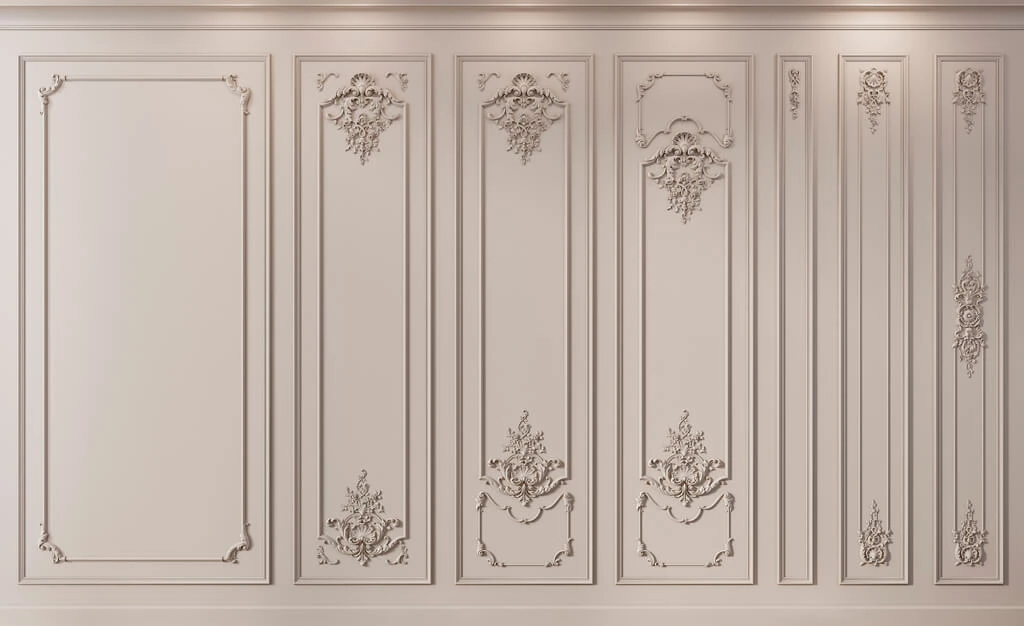
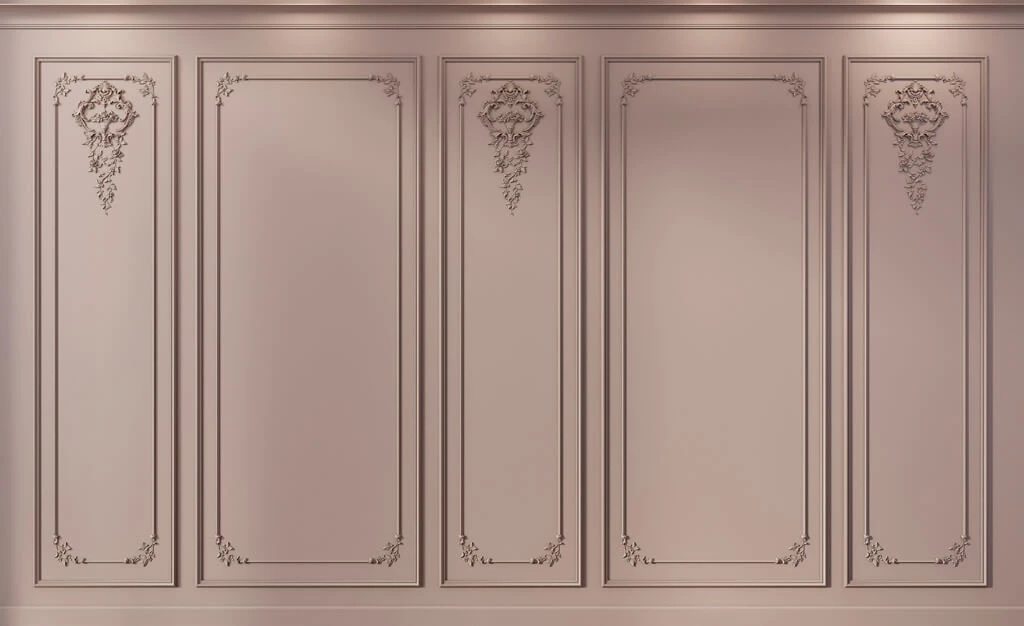
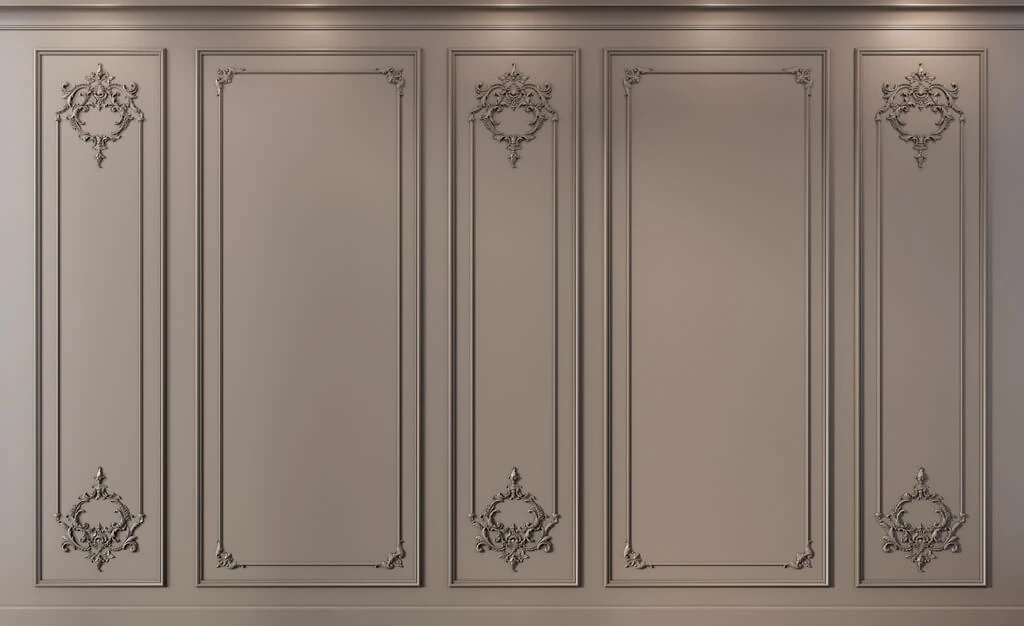
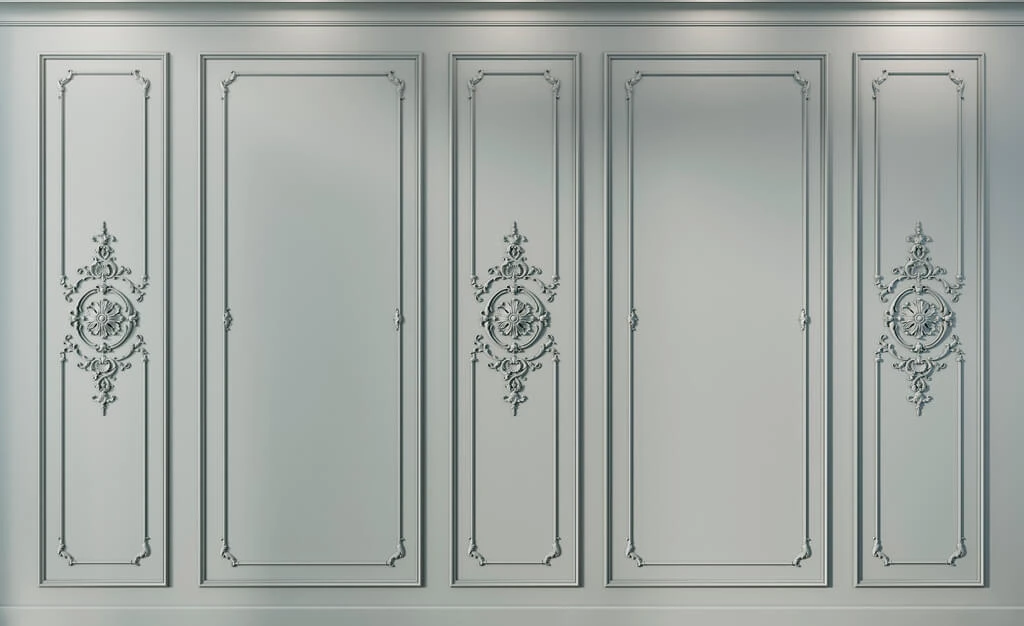
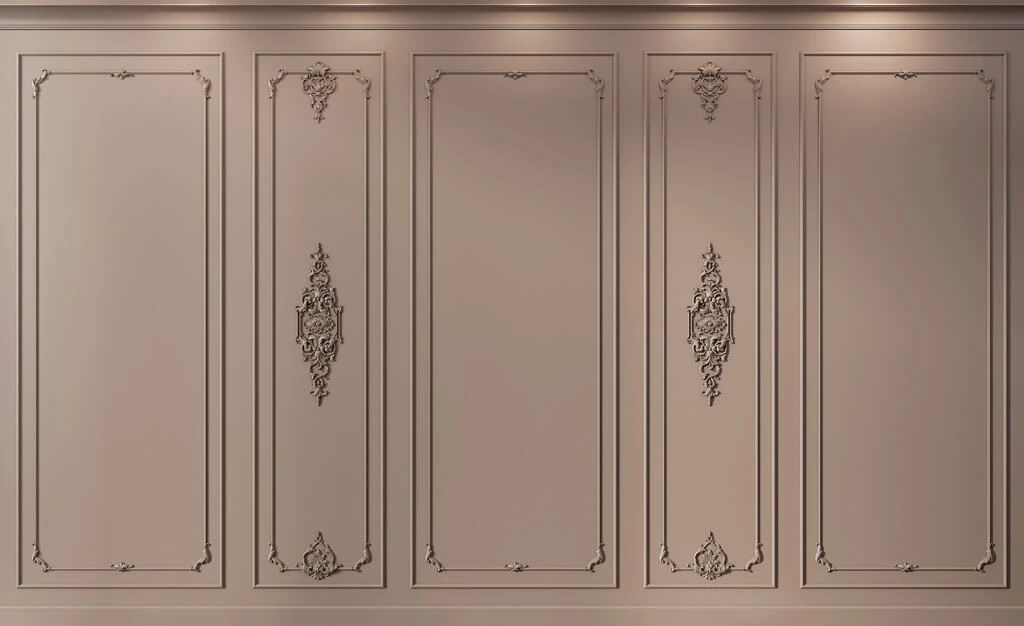
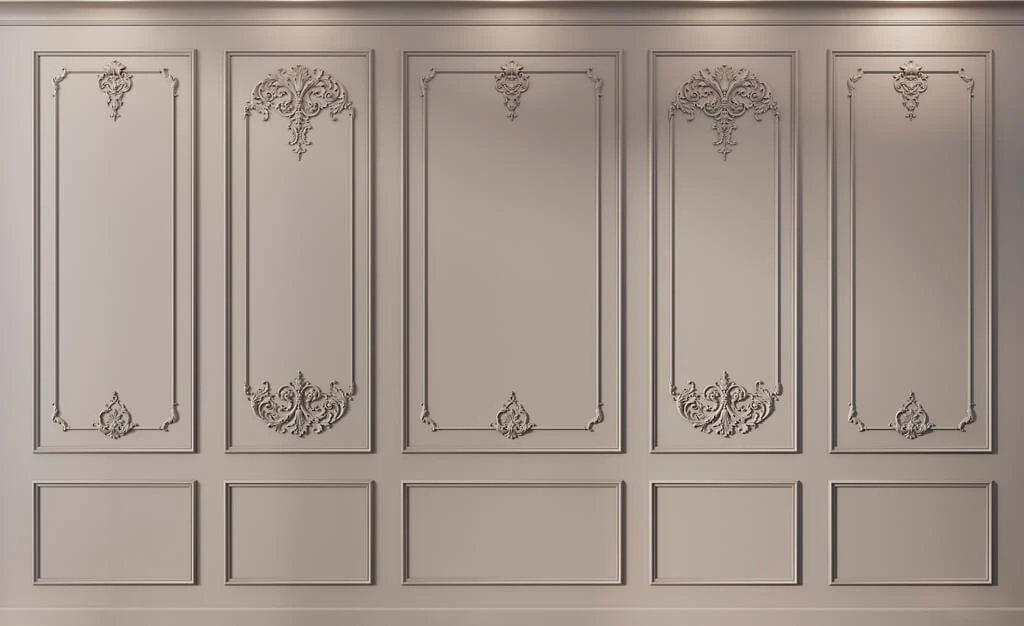
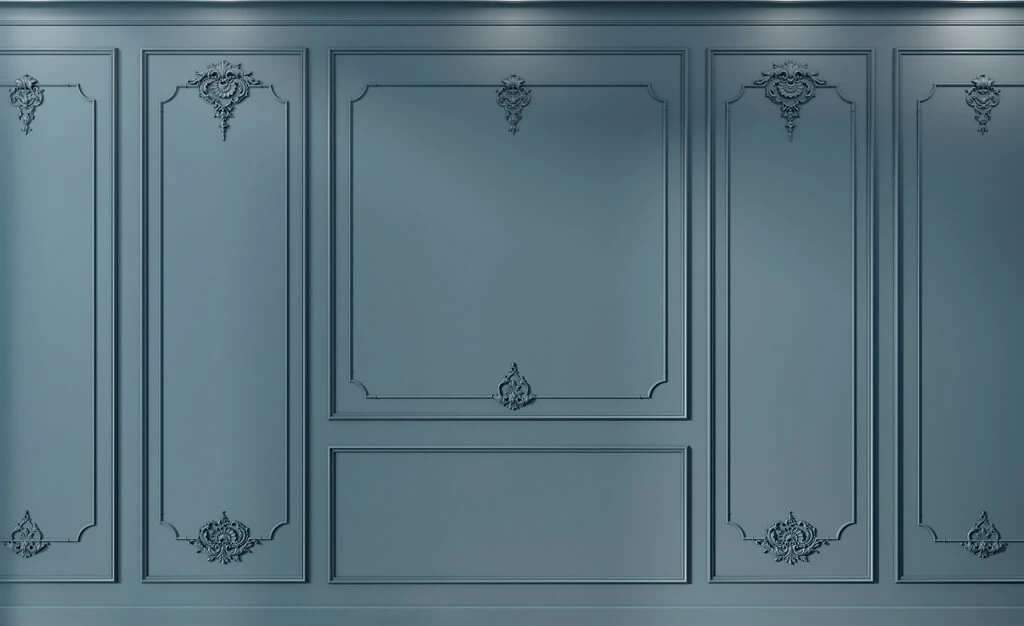
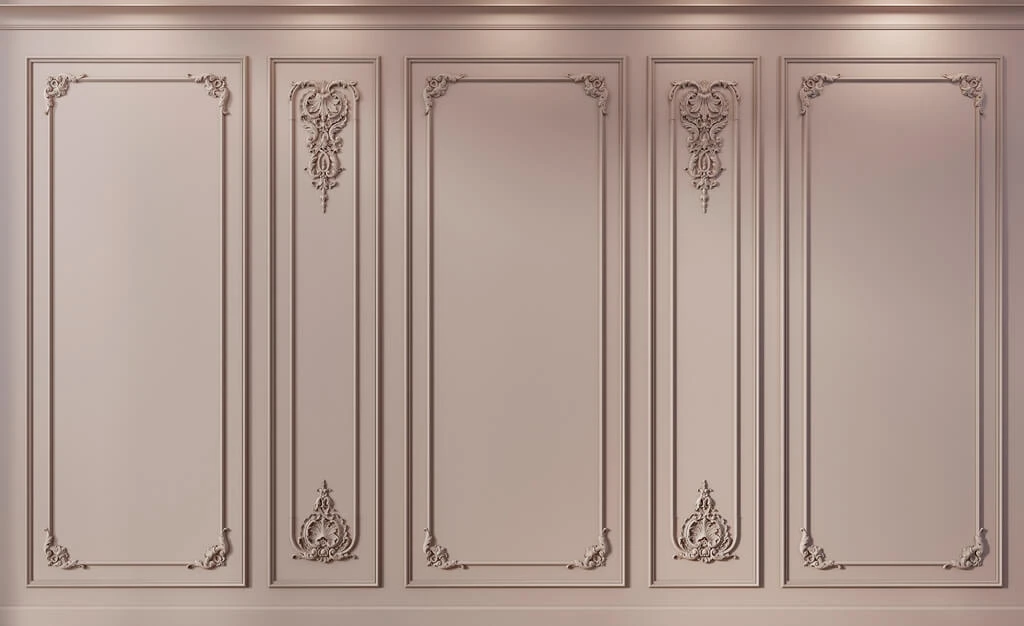
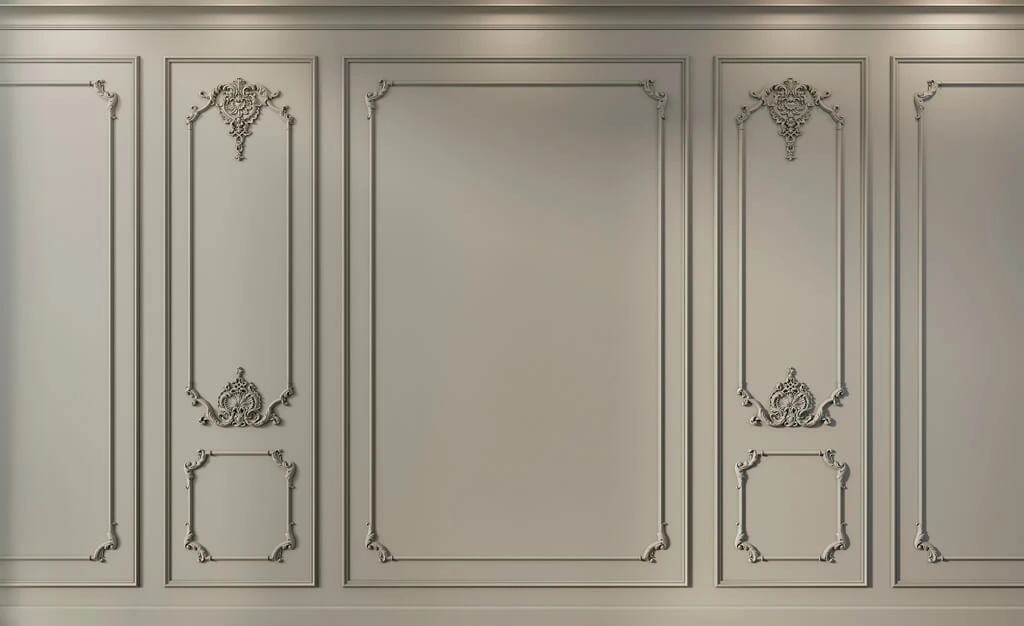
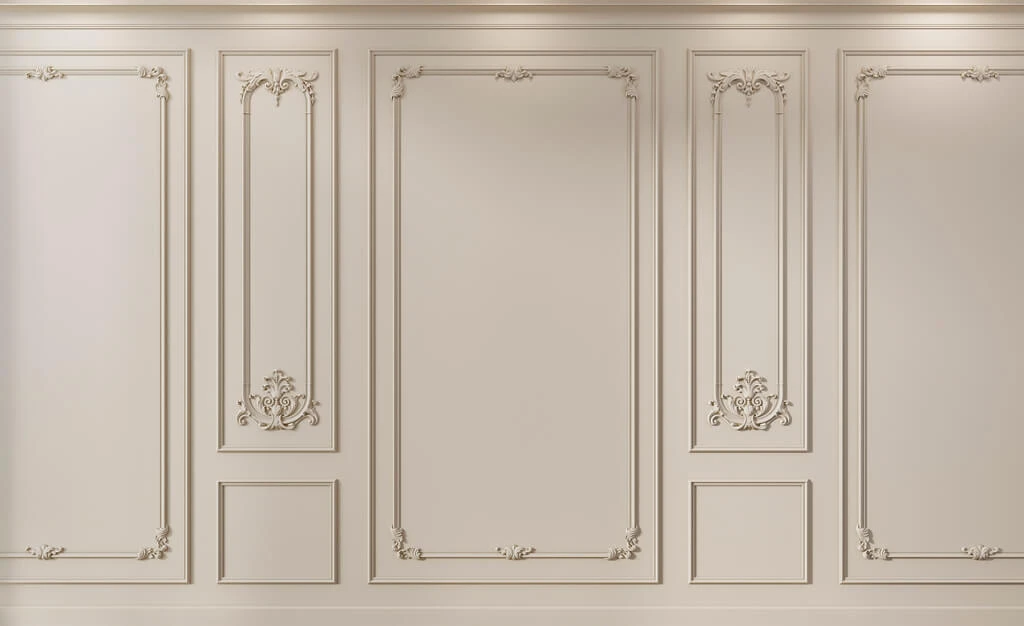
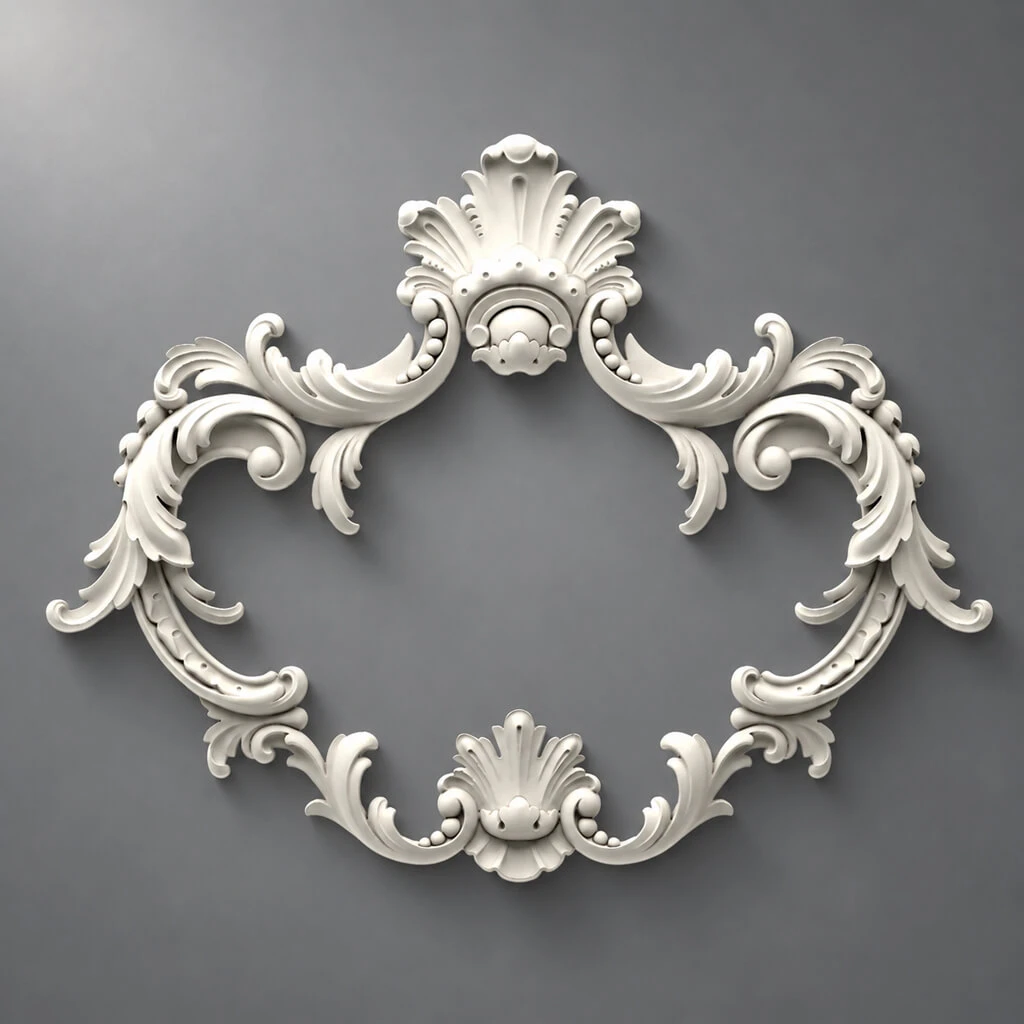
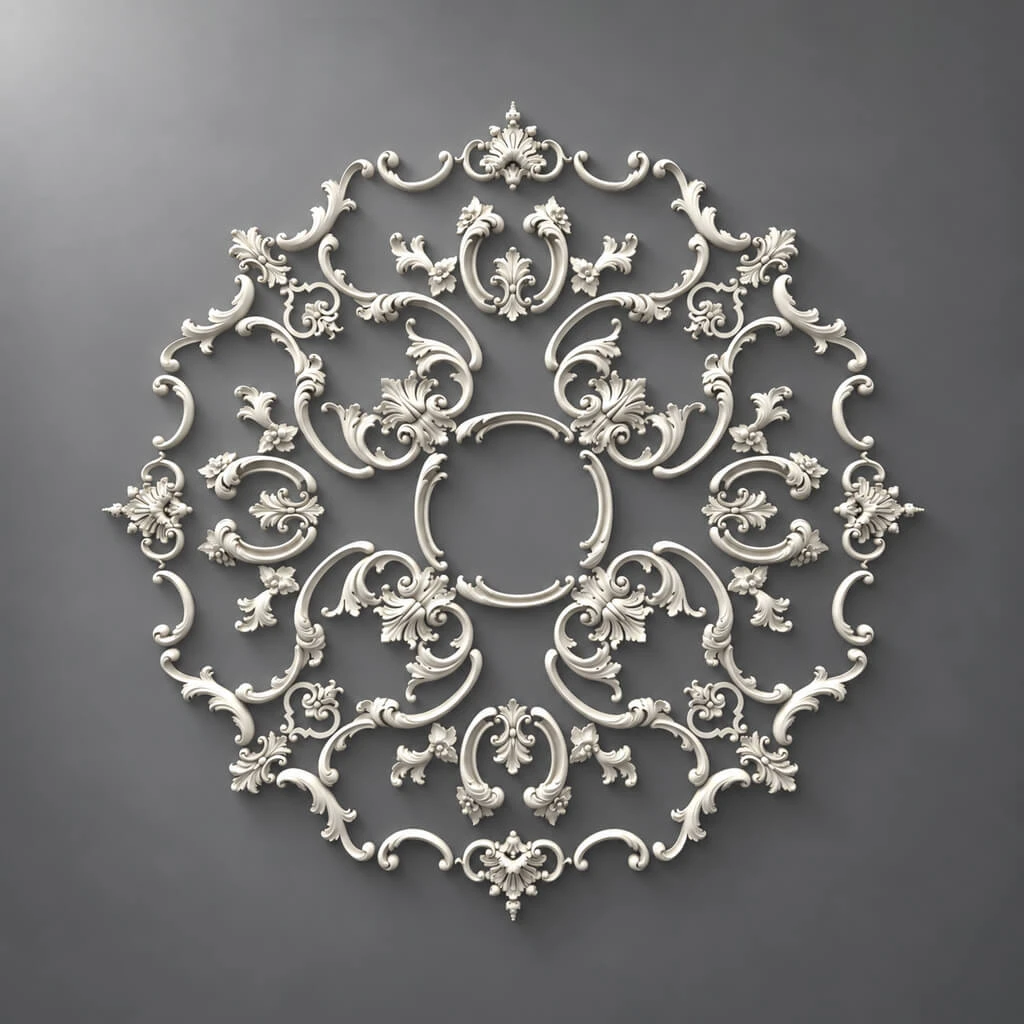
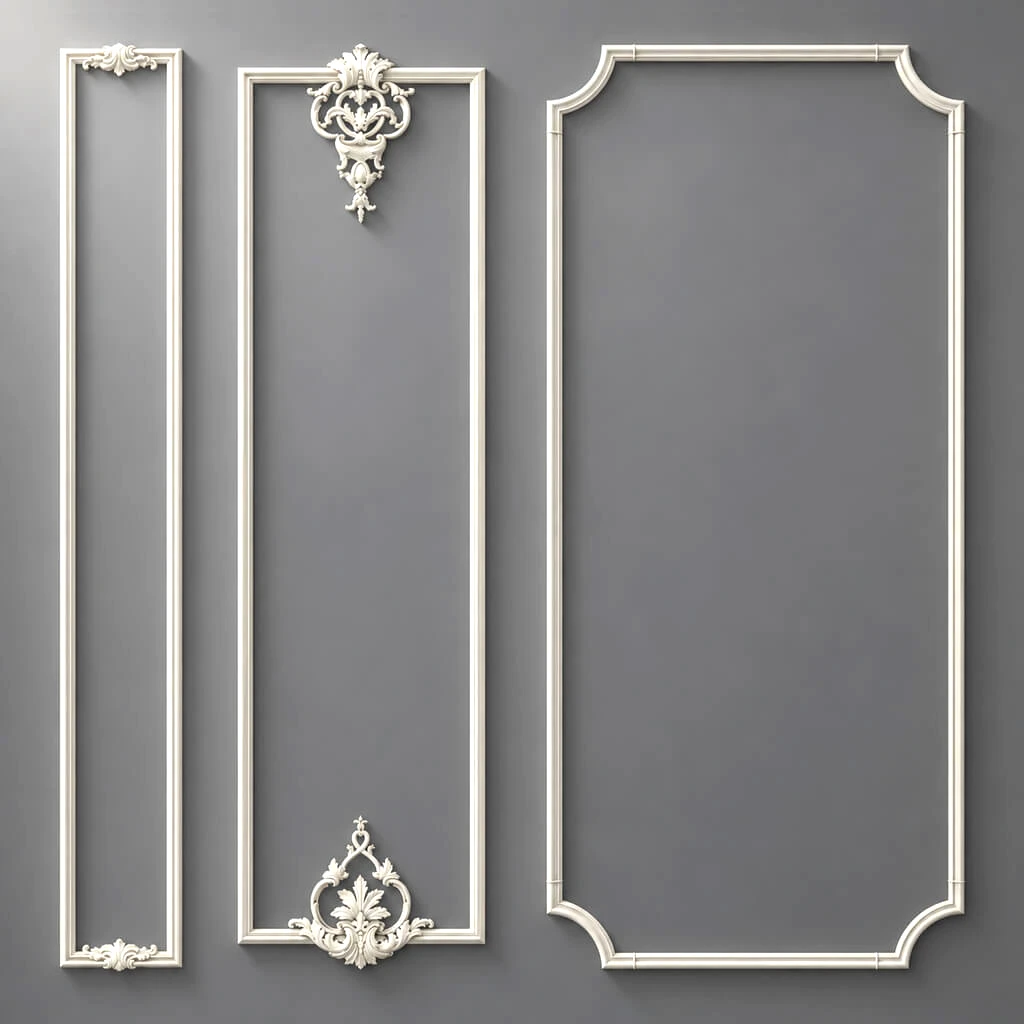
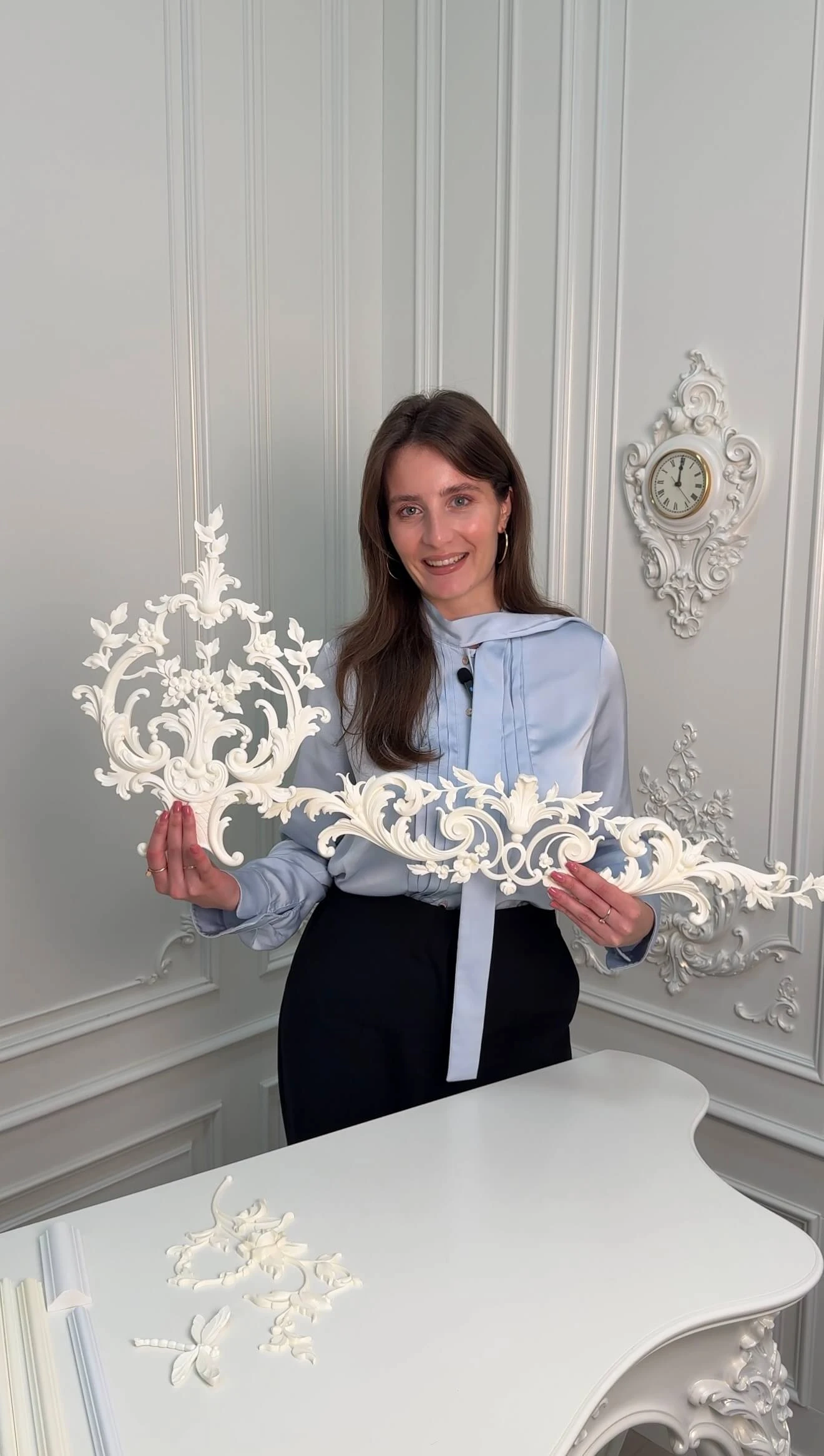
Third. Will there be stucco molding? This question seems secondary, but it determines the entire final visual solution. molded decoration made of polyurethane in combination with slatted panels — is not just 'adding details'. It's a way to move from a set of finishing materials to an architectural composition.
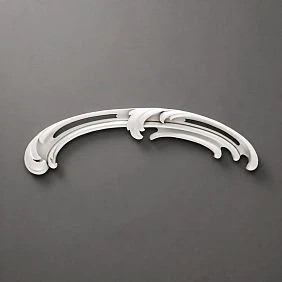
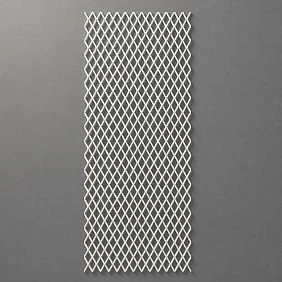
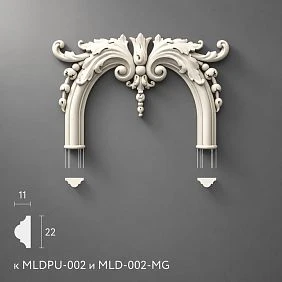
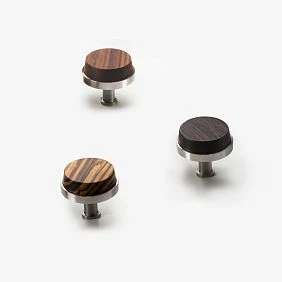
Our factory also produces:



Which panels to choose for walls and ceilings
Today's market of slatted panels offers such diversity that it's easy to get lost. PVC, MDF, solid wood, WPC, aluminum — each material has its own niche, its own advantages, and its fundamental limitations. Let's examine what really matters.
Get Consultation
MDF: the perfect base for color
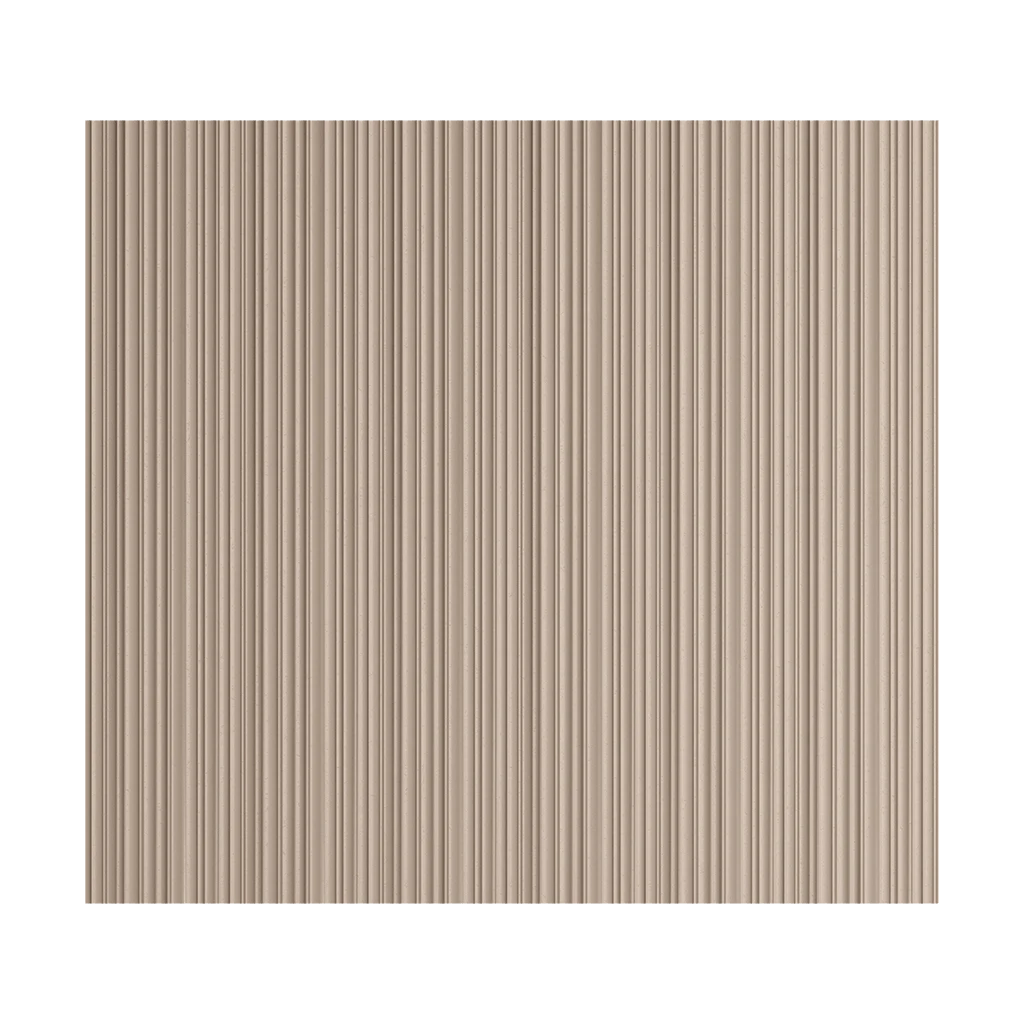
MDF Slatted Wall Panel— this is the choice for those who prioritize color and flexibility. The homogeneous, dense structure of MDF (750–850 kg/m³) provides a perfectly smooth surface without knots, cracks, or irregularities. This is exactly what's needed when the panel will be painted to an exact catalog color: silk white, smoky gray, matte anthracite, rich terracotta.
paintable slatted wall panels— are installed before final painting or painted directly on the wall — depending on convenience. The second option allows for perfect color coordination with already chosen wallpaper, furniture, or textiles. This is critically important in projects where the interior is built around a specific color palette.
The technical limitation of MDF is moisture. MDF should not be used in bathrooms or rooms with constant steam. For such conditions, other solutions exist.
Solid oak: when texture matters most
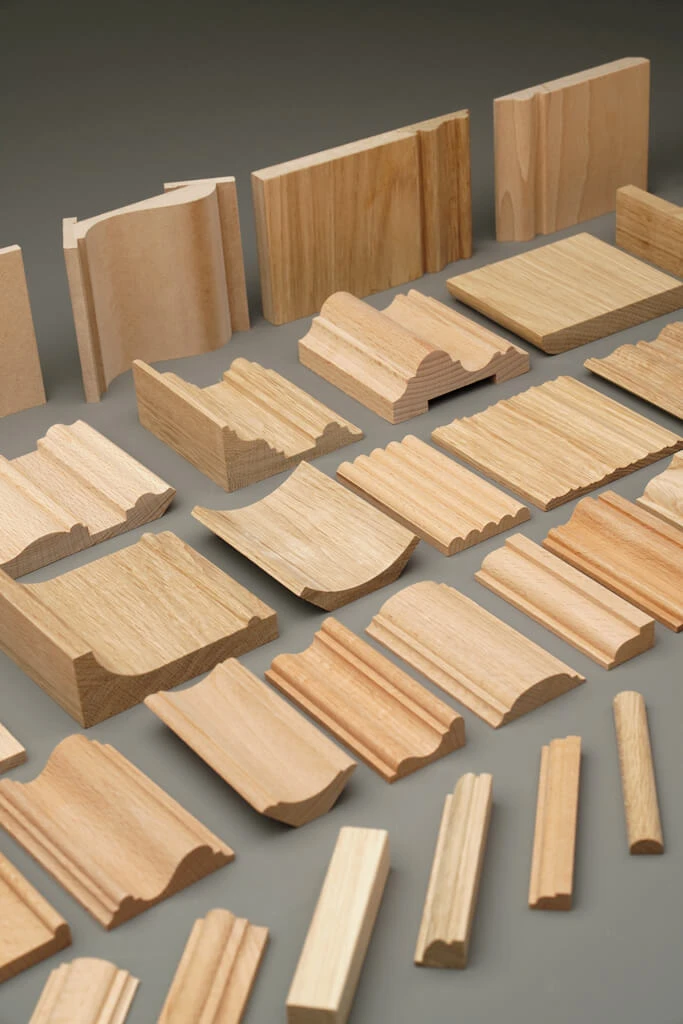
Oak is a conversation about authenticity.Oak Slat Panel— carries within it what cannot be imitated by any synthetic material: a living natural pattern that is different every time. Tangential or radial cut, fine interweaving of fibers, warm golden hue — all this creates a surface you want to interact with.
Under transparent oil, oak reveals itself in all its depth. Stains allow shifting to a cold Scandinavian gray, a rich tobacco tone, or even an almost black wenge — while the texture remains alive, not 'sealed' by varnish.Wooden slat panelsOak — a choice for bedrooms, studies, libraries: places where one spends time in quiet and values every detail around.
Flexible panels: for non-standard geometry
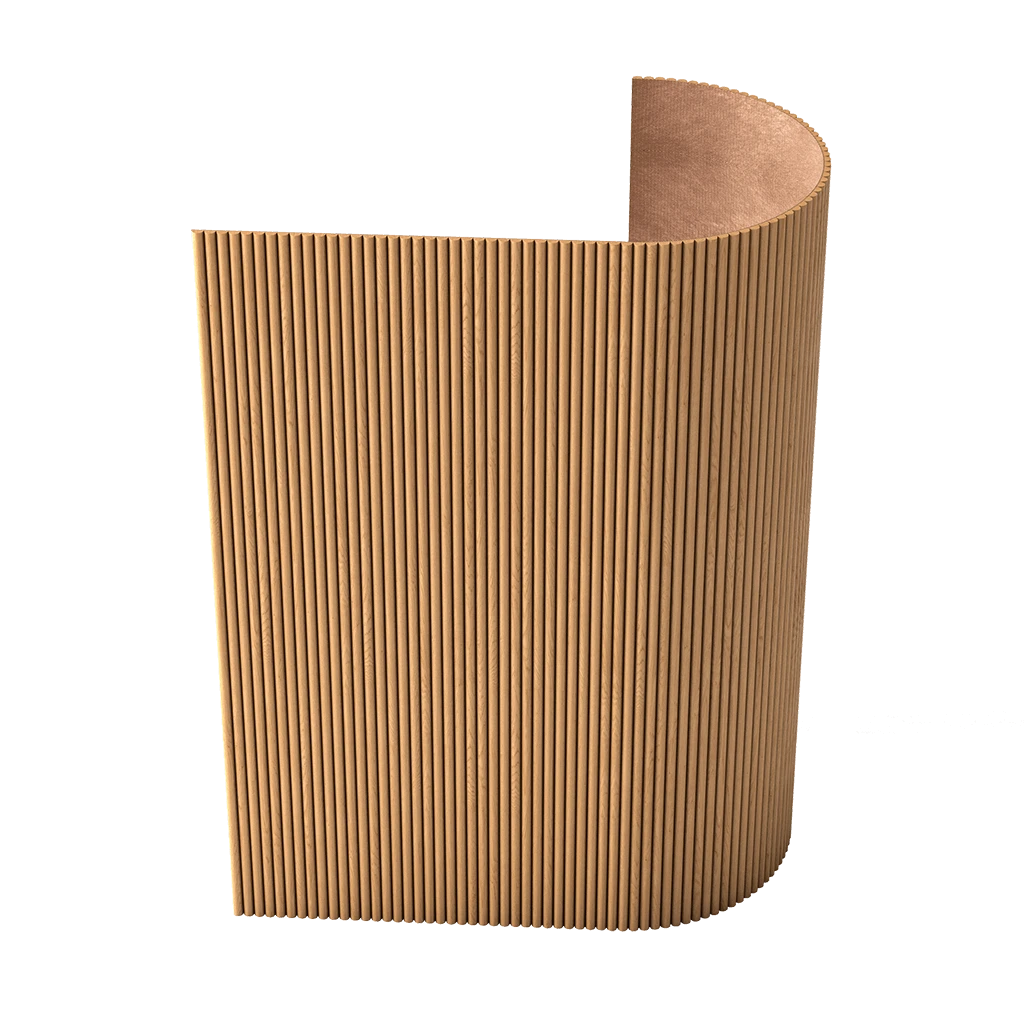
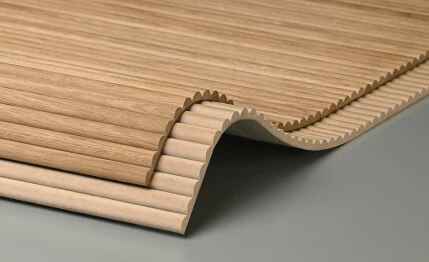
Worthy of special attention aresoft slat panelsOn a fabric backing. This is a product that expanded the very concept of slatted finishing. Where slatted panels were previously impossible — columns, arches, rounded niches, curved partitions — now they are installed without deformation, joined seamlessly, and maintain the precise rhythm of slats even on curved surfaces.
If your interior involves non-standard geometry — a flexible panel is the only correct solution in the category of slatted decor.
Ceiling: a special logic
Slatted panels for the ceiling— a topic discussed less often than walls. But it is the ceiling that often sets the emotional tone of a room. The horizontal rhythm of slats overhead creates a sense of intimacy, coziness — the space 'comes together,' becomes warmer and more intimate. In small rooms, this is exactly what is needed.
For kitchens, bathrooms, and balconies with high humidity, there areDCP slatted panels— a material that is not afraid of steam, water, or ultraviolet light. This same solution is justified for open terraces and facade structures.
When polyurethane stucco decor is needed
Here's a question that stumps many: is stucco even needed if the interior is modern? The answer is paradoxical: precisely in a modern interiormolded decoration made of polyurethaneworks most subtly. Because in a classic interior saturated with ornaments, stucco is an expected element. In a modern one, it becomes an unexpected detail that sets the tone for the entire composition.
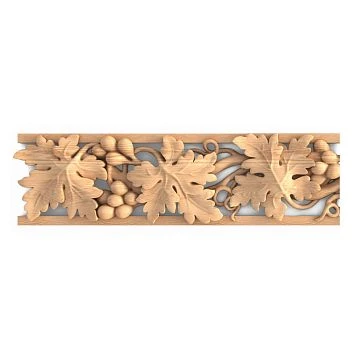
What is polyurethane stucco decor today
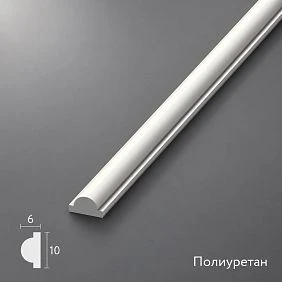
Polyurethane Moldingsis not an imitation of plaster or a cheap substitute. It is an independent material with a unique set of properties: lightweight (5–7 times lighter than plaster), moisture-resistant, elastic, with precise factory geometry. It does not crumble when cut, cuts easily with a regular fine-toothed saw, and adheres with mounting polyurethane glue without additional fasteners.
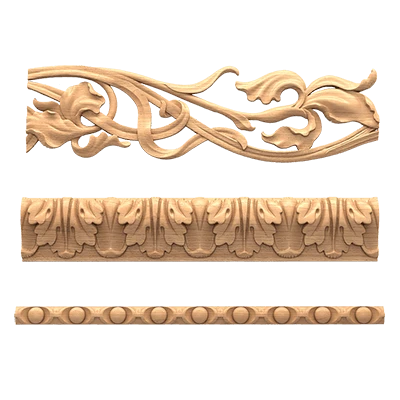
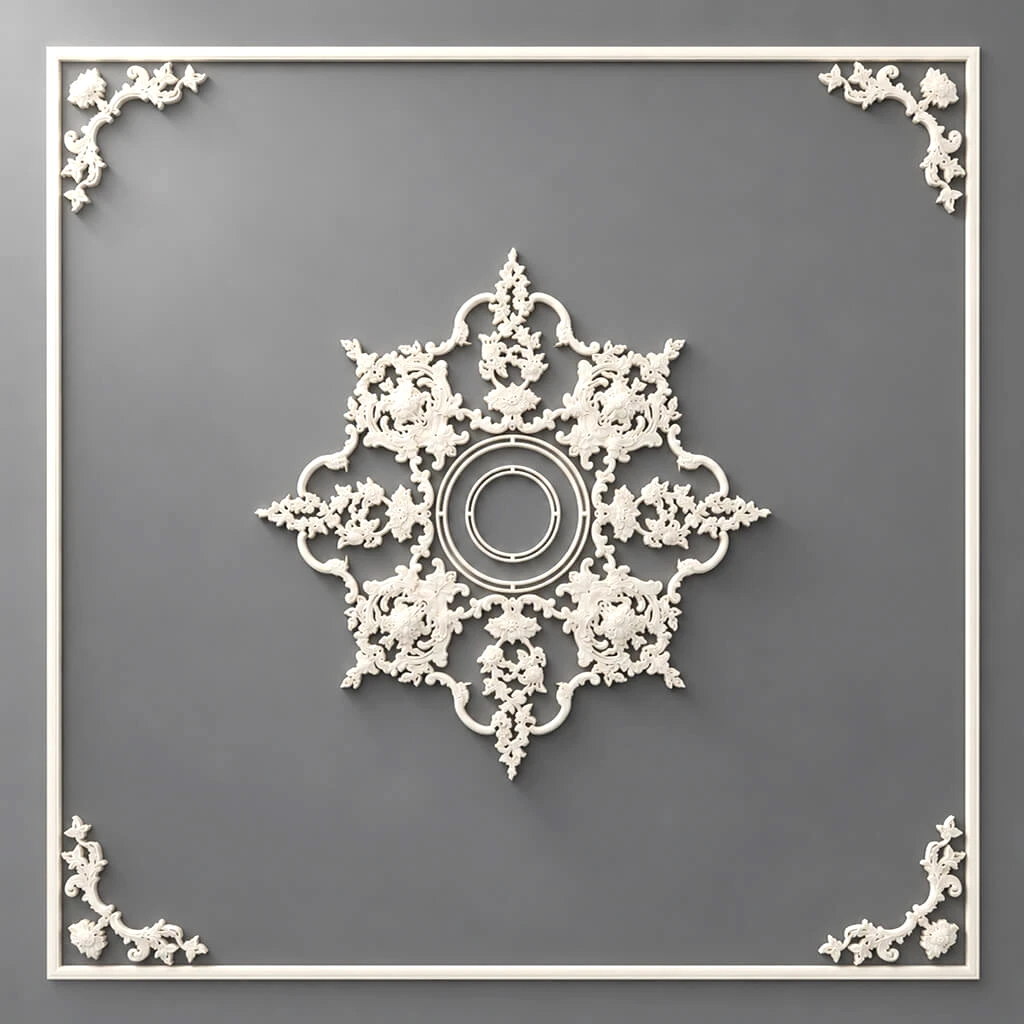
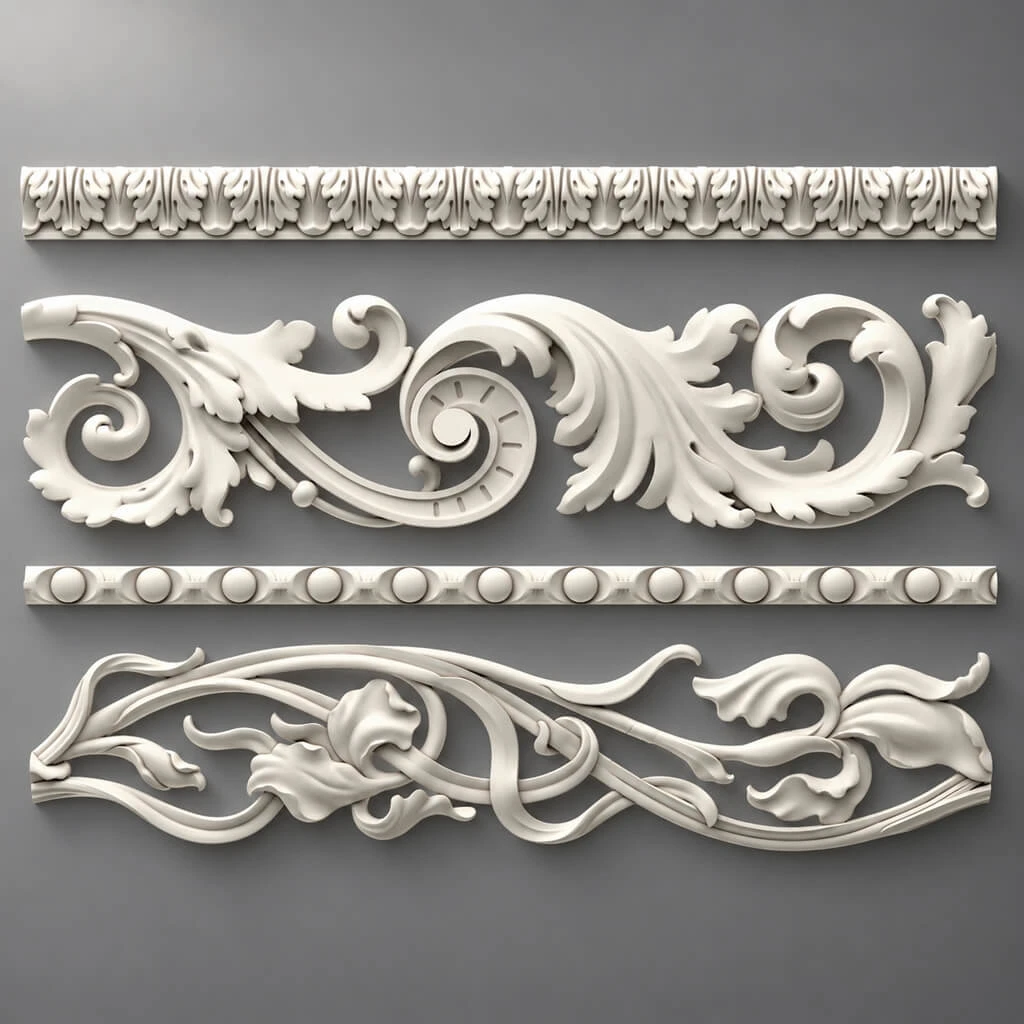
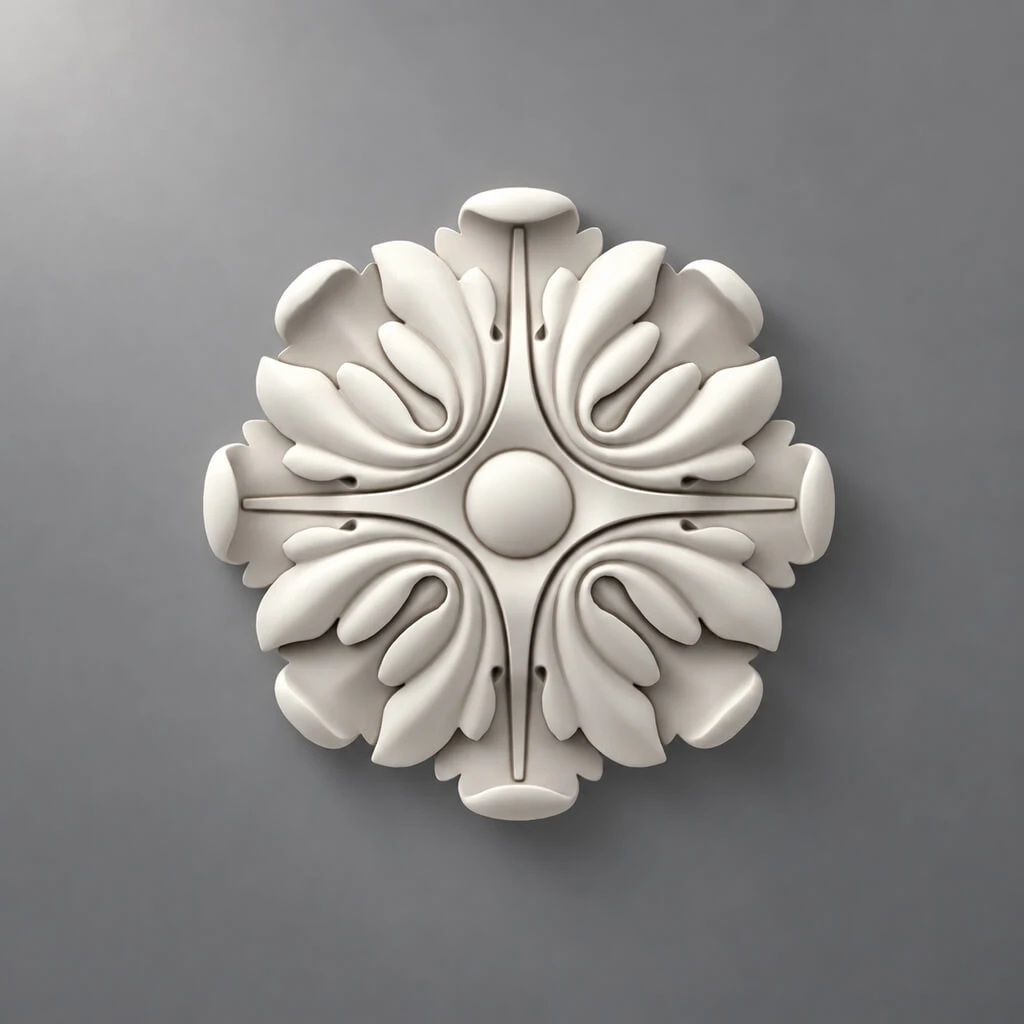
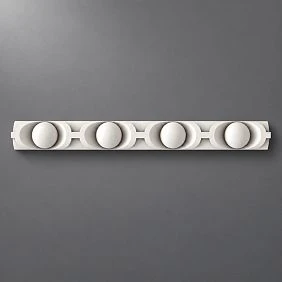
polyurethane moldings— moldings, cornices, belts, corner elements, rosettes — are produced with an exact profile that does not change from batch to batch. This is important when ordering a large volume: all elements join perfectly, without adjustment.
Five situations where you can't do without stucco
There are specific interior situations in whichmolded decoration made of polyurethaneis not an addition, but a necessity.
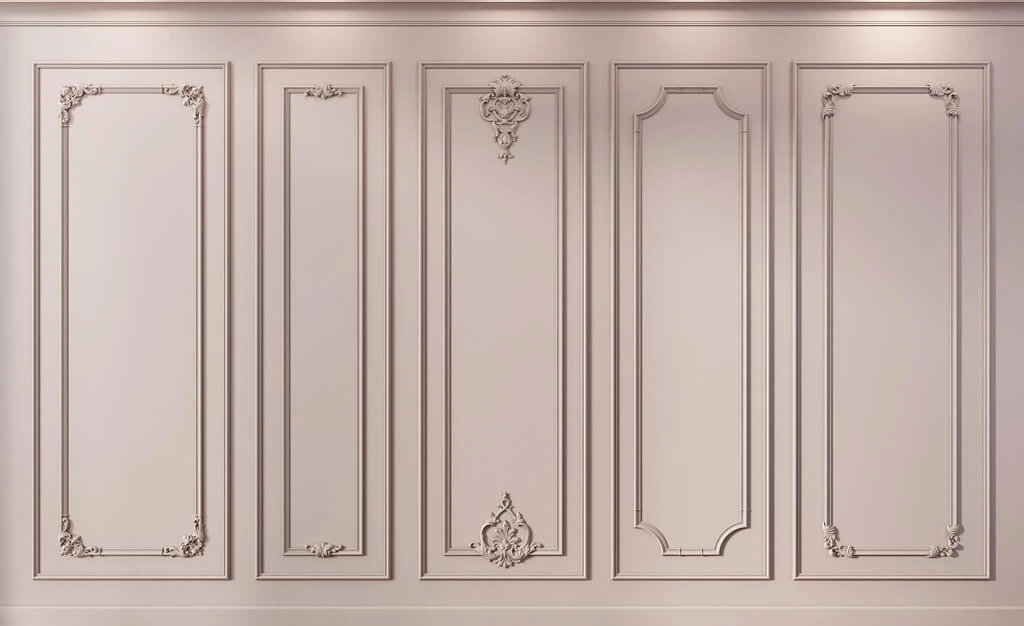
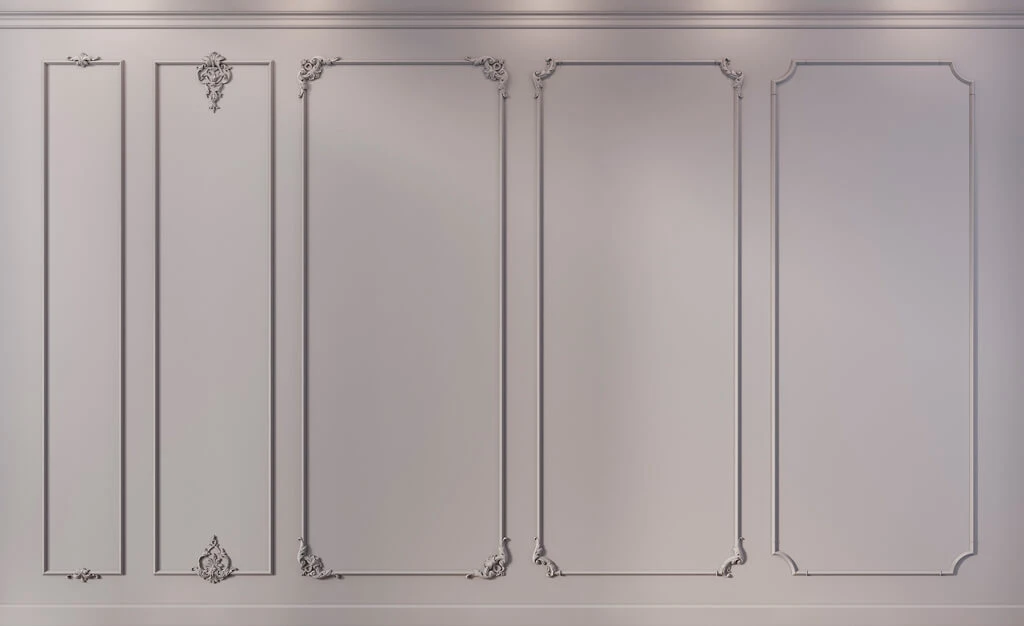
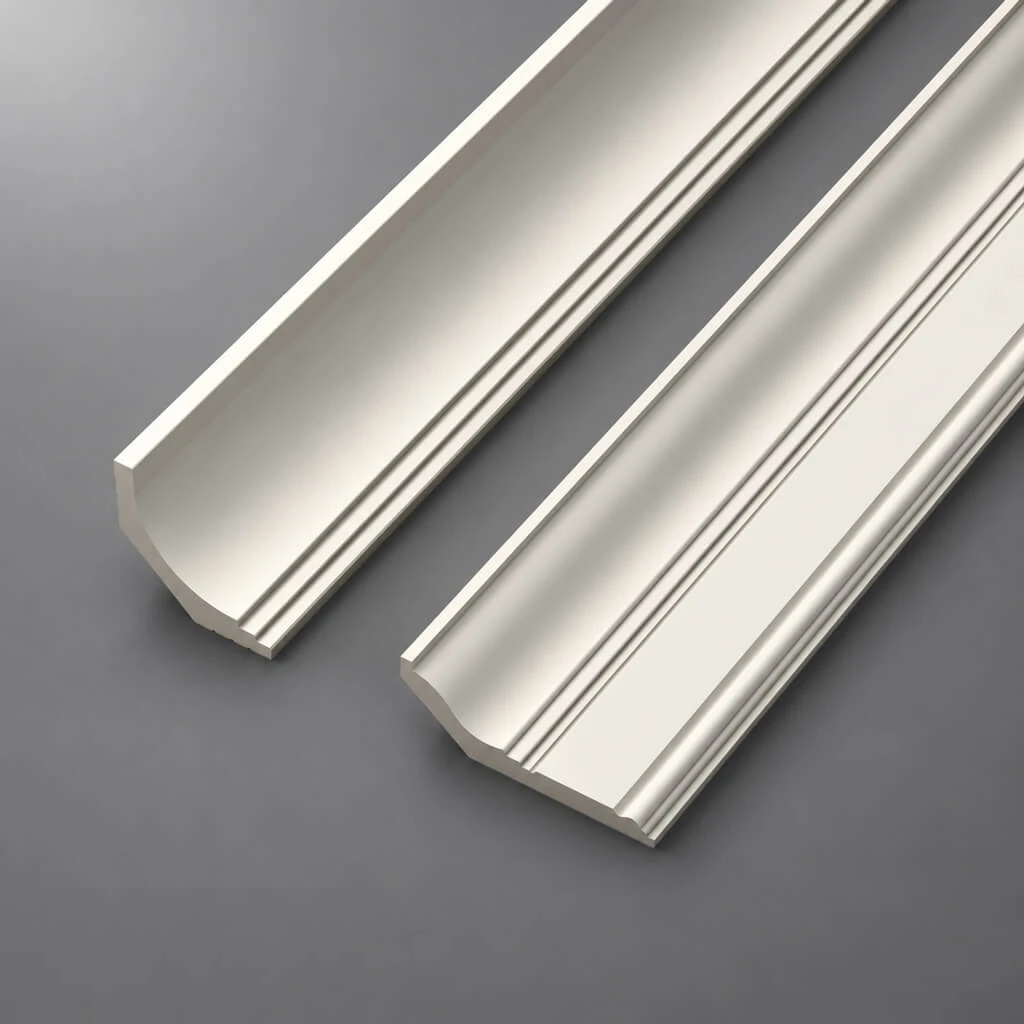
First situation: the junction of the wall and ceiling. If the ceiling is paneled and the walls are not (or vice versa), the boundary between them requires an architectural solution. A polyurethane cornice covers the joint, adds depth to the transition, and visually 'holds' the geometry of the room.
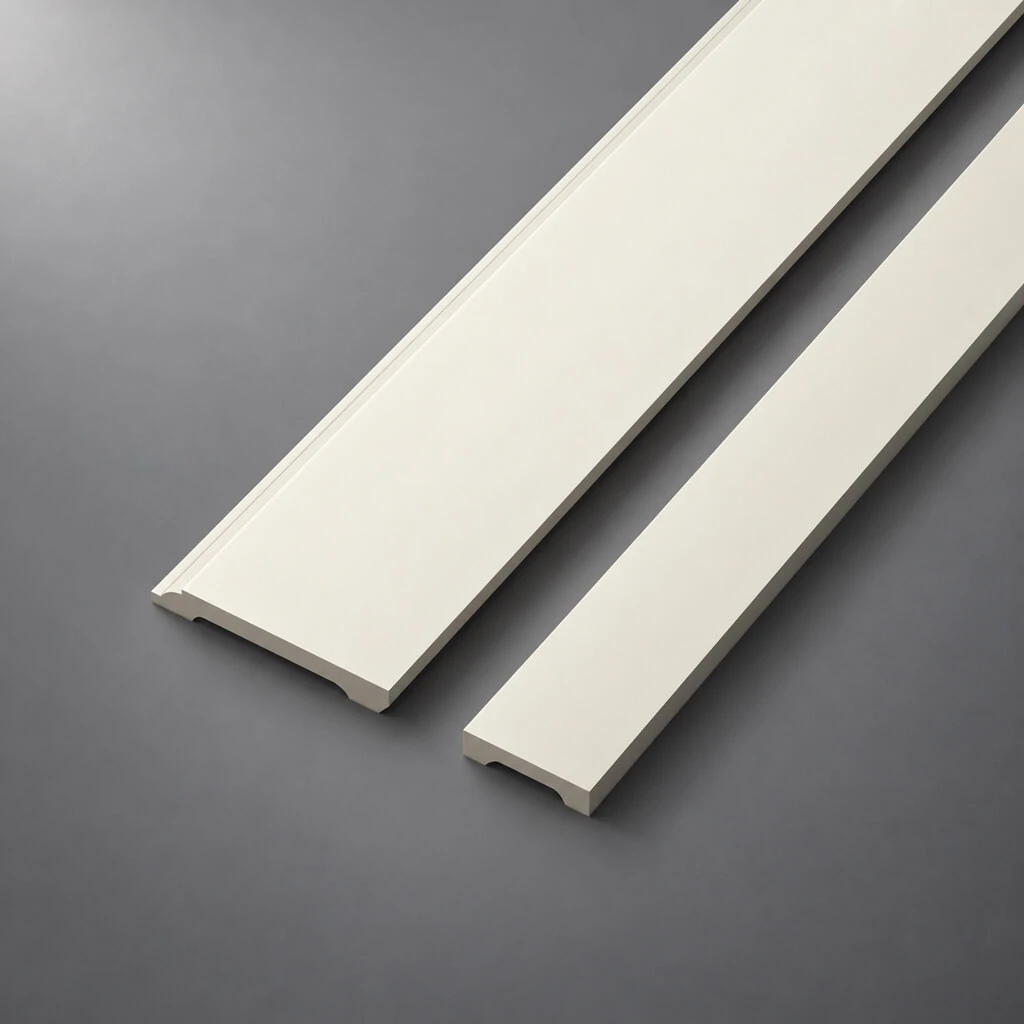
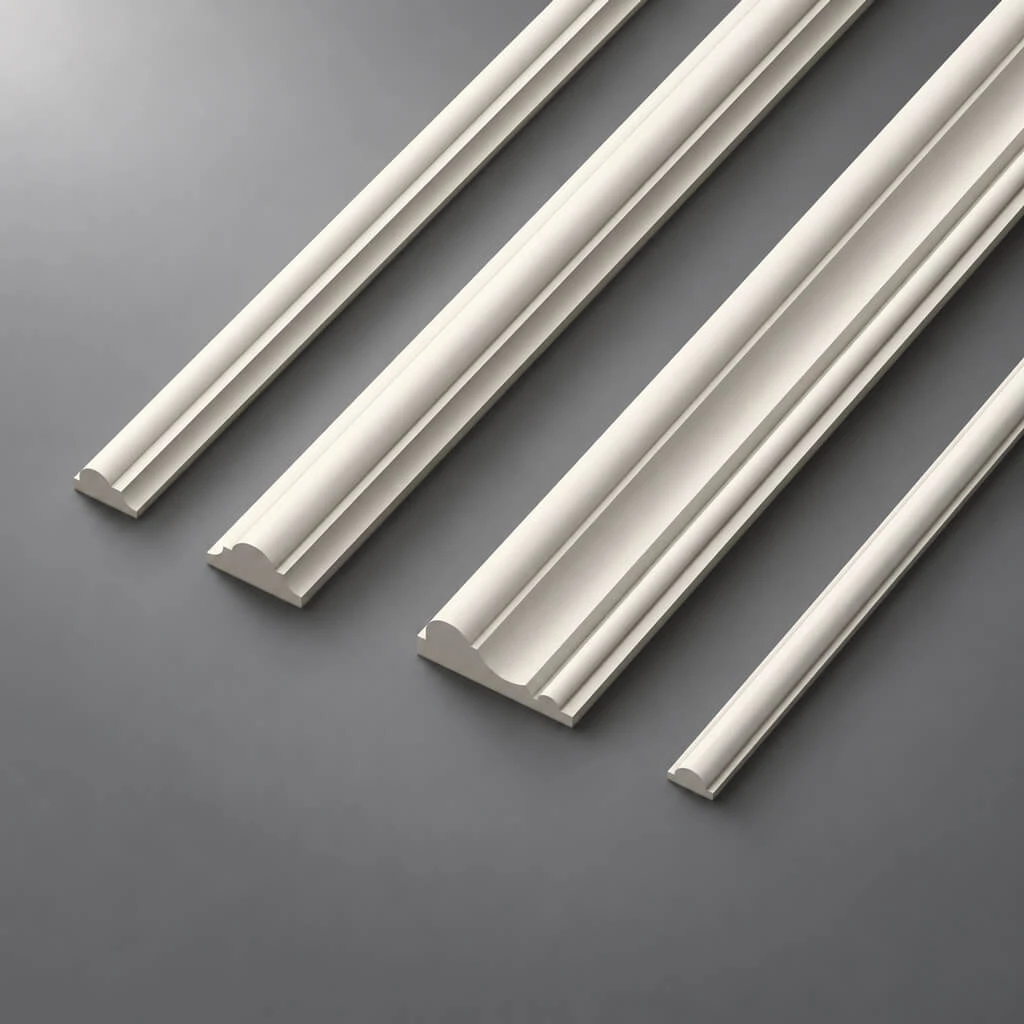
Second situation: a slatted panel as an inlay element. When a panel occupies part of a wall — from the floor to a height of 110–130 cm or as a separate field — its top edge needs to be finished. A belt molding does this elegantly: it fixes the boundary and prevents the eye from 'getting lost' in the transition between materials.
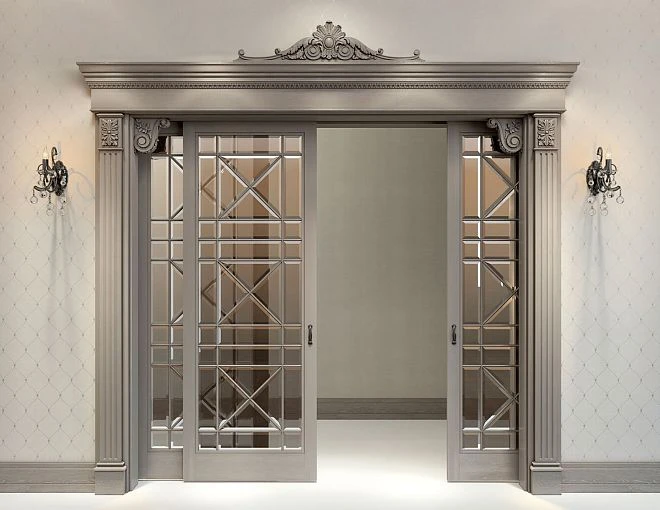
Third situation: door and window openings. Polyurethane architraves around the perimeter of a door opening are an architectural gesture that makes the opening a full-fledged design element. Paired with a slatted panel on the adjacent wall, this creates a complete composition.
Situation four: dividing a long wall. On a wall longer than 4–5 m, the monotonous rhythm of slatted panels can become tiresome. Vertical moldings that break the wall into sections create a secondary visual rhythm — on top of the rhythm of the slats. This is a technique from classical architecture that works perfectly in a modern context.
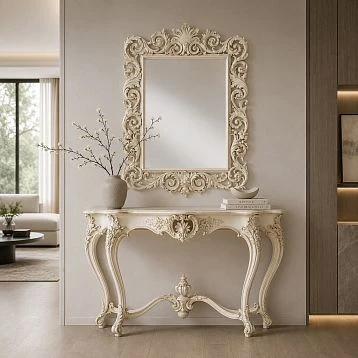
Situation five: the area above a fireplace, console, or television panel. A decorative overlay or frame molding above a functional object transforms it from a 'technical element' into the architectural focal point of the wall.
How to combine texture, rhythm, and relief
This is the most nuanced section — and the most important for those who think not only about materials but also about the result. The three concepts — texture, rhythm, relief — describe three different levels of visual perception of a surface. Understanding their interaction means understanding why some interiors look professional and others do not.
Texture: what is seen from two meters away
Texture is the surface structure of a material. Wood with a live grain, matte paint with a fine texture, smooth polyurethane — three different textures. When two materials with very similar textures meet in one space, they 'blend' — the result looks unexpressive. When textures contrast — for example, a rough wooden slat next to a smooth white molding — the surface gains depth.
slatted wall panels for interior finishingSolid wood and polyurethane molding are precisely such a contrast. The organic, living surface of the wood and the clean geometry of the polyurethane profile interact through difference, not similarity.
Rhythm: what is seen from five meters away
Rhythm is a repeating element that organizes a surface. Slats create a linear rhythm. It can be dense or sparse, wide or narrow, vertical or horizontal.Slatted panels in interior designalways carry rhythm — and this is their main function from the perspective of visual perception.
Molding adds rhythm of a different scale: moldings that break the wall into panels create a slow, large rhythm over the frequent rhythm of slats. Two rhythms coexisting on one surface create a multi-layered composition that the eye 'reads' with interest.
Relief: what is seen in side lighting
Relief is the volume of a surface that reveals itself in shadow. This is why slatted panels look fundamentally different under different light sources. A floor lamp by the wall—and the slats 'speak' in full voice. Overhead diffused light—and the same surface becomes almost flat.
molded decoration made of polyurethaneworks with relief. A profiled cornice under side lighting casts a deep shadow that enriches the surface. This is why it's important to plan lighting in parallel with choosing finishing materials—they are inseparable from each other.
Rule of visual balance
A good combination of textures, rhythms, and reliefs is built on balance. A rough practical rule: no more than two strong accents on one surface. If a wall carries an expressive slatted rhythm—the molding here should be restrained. If the molding is rich, ornamental—the slatted panel should be quiet, background.
What's important in a material besides price
Price is the first thing people look at. But it describes only one aspect of a product. There are at least five other parameters that ultimately determine how satisfied the buyer will be.
Geometric accuracy
A slatted panel must have perfect geometry: uniform slat width, even spacing, right angles of the substrate. If even one of these parameters is off—accumulated errors will begin during installation, which by the end of the wall will turn into a visible skew. This is especially critical fora slatted modular wall panelwhere several modules must join into a single continuous field.
Coating quality
The finish determines both aesthetics and lifespan. For paintable panels, surface preparation is critical: primer, end puttying, even application of the first coat. For pre-finished panels - the type of varnish or oil, its wear resistance, and behavior during cleaning.
Important note:buy MDF slatted panelswith factory-applied primer for painting is the right solution. Factory-applied primer ensures better adhesion of the topcoat than on-site priming.
Module joining method
This is a technical nuance that affects the final appearance. In professional panels, the slats of the edge modules are designed to maintain the pattern at the joint. This is called a 'seamless joint' - and that's exactly what you should look for when choosing. Without it, an asymmetrical strip will be visible at the module joints, disrupting the entire rhythm.
Weight and wall load
For ceiling mounting, this parameter is critically important. Solid oak is a heavy material; for ceilings, a reliable frame and proper fasteners are needed. MDF is lighter.soft slat panelson a fabric base is the lightest option, with minimal load.
Compatibility with lighting
If you plan toSlatted panels with lightingwith LED strip in the gap between the backing and the surface - make sure the panel design accommodates this option: sufficient clearance, cable routing capability, heat resistance of the backing. A glowing slatted wall is one of the most effective techniques in modern interiors, but it needs to be planned in advance.
Visual incompatibility errors
Now — an honest conversation about what goes wrong. Most unsuccessful interiors are not the result of poor materials. They are the result of the right materials chosen without understanding their interaction.
First mistake: too many different rhythms
Three different slatted panels with different spacing in one room is not richness, it's chaos. Rhythm works only when it is consistent. One type of panel for the entire project (or, at most, one for the walls and another for the ceiling) is a professional approach. Mixing several rhythms on adjacent walls is a beginner's mistake.
Second mistake: molding of the wrong scale
A large classical cornice in a low room visually lowers the ceiling even further. A thin flat molding in a tall, formal hall 'gets lost' and looks cheap. The scale of the molding decoration should correspond to the scale of the room. A simple rule: the height of the cornice in centimeters should not exceed 2–3% of the ceiling height in centimeters. For a 2.6 m room, that's 5–8 cm in profile height.
Third mistake: color conflict between the panel and the molding
Dark slatted panel + beige molding + white ceiling = three unrelated colors competing for attention. Either paint the molding the same tone as the panel (creating a unified dark field), or paint it the same tone as the ceiling (the molding 'belongs' to the ceiling and completes it). A third option: everything white — panel, molding, ceiling — and expressiveness through relief and shadows, not through color.
Fourth mistake: panel without a finishing element
Slatted wall panels for interiorFinishes that end abruptly in the middle of a wall without any completion look unfinished. The top edge always needs a solution: molding, a horizontal slat, a shelf, or a recess with a repainted wall. There is not a single professional interior where a slatted panel simply 'ends' in the middle of a wall without an architectural solution.
Mistake five: ignoring chiaroscuro
A slatted panel in a room without side lighting looks fundamentally different than in a room with a directional light source. Before buying, it's worth determining: where will the lighting fixtures be located that create a shadow on the wall. If the entire room is lit only by overhead light — the panel will lose most of its expressiveness.
Specific rooms: what works and where
Let's move from principles to practice. Each room is a separate task with its own limitations and possibilities.
Living room: accent behind the sofa or TV
Slatted panels in the living room interior— a classic application. A TV zone with slatted panels is probably found in every third interior design project today. But the difference between 'having panels' and 'panels working for the space' is fundamental.
TV area with slatted panelswins when the panel goes from floor to ceiling, rather than being limited to the area around the TV. Full height creates monumentality. Molding around the perimeter — turns the wall into a frame.Relief Decorationin the form of a horizontal belt at a height of 130–150 cm separates the lower and upper fields — adds a second-order rhythm.
Bedroom: headboard and beyond
The bedroom is the room where a person begins and ends each day. That is why the correct dose is especially important here: not to overload, not to impoverish.slatted panels in the bedroomBehind the headboard — it's warmth, coziness, and a visual anchor that fixes the bed as the center of the composition.
Addition: a thin molding along the top edge of the paneled field behind the bed — and a 'simply clad wall' turns into an architectural detail.Slatted panels in the bedroom interiorOak under light oil creates a special atmosphere: a natural warm material soothes, lowering the visual 'temperature' of the space.
Hallway and corridor
The hallway is the first space guests see. And the last thing the owner sees when leaving home.Slatted panels in the hallway interiorIn a narrow corridor, they work to elongate — the vertical rhythm makes the space taller and slimmer. Horizontal molding at a height of 90–100 cm serves as a waist belt: below — paneling, above — a painted wall. This is a classic architectural division of the wall, tested over centuries and still relevant today.
Kitchen: dining area and accent wall
Slatted panels in the kitchenIt's wise to place it outside the immediate cooking zone — where there's no constant heat and splashes. The dining area, the wall opposite the work surface, a peninsula with finished ends — that's where paneling looks organic and lasts long. In the kitchen, the 'paneling + open shelves' option works especially well: the slats create a background, and the shelves in front of them — a functional foreground.
Ceiling: it's often forgotten
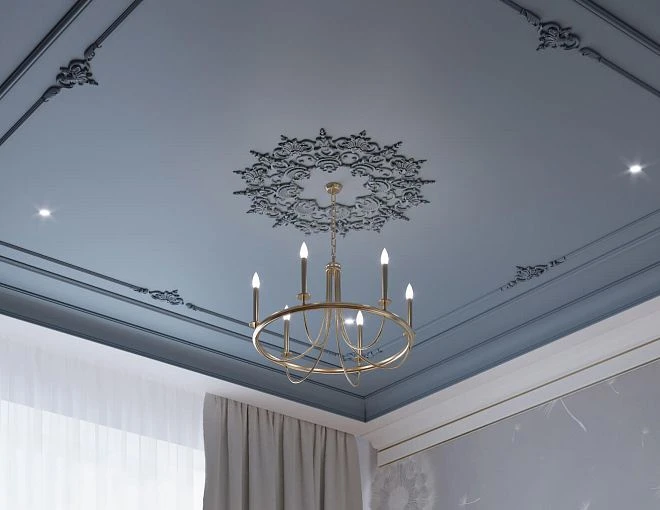
Batten panels for ceilings— one of the most effective techniques, yet remains underrated. A ceiling covered with slats visually 'lowers' — creating a cozy feeling of a low ceiling in a Japanese or Scandinavian spirit. Combined with a cornice of polyurethane molding around the perimeter, this becomes a complete architectural solution.
Installation: principles that determine the result
Good material with poor installation is a waste of money. Poor material with good installation is better than nothing, but still a compromise. The correct approach: first, technically competent installation, then good material.
Preparation
Surface for installationof slatted wall panels for interior wall finishingmust be: dry, clean, without crumbling. Serious unevenness — more than 5 mm per meter — is better addressed with a frame, not putty. A frame made of metal profile provides a perfectly flat plane, an air gap, and the ability to hide utilities.
Tools
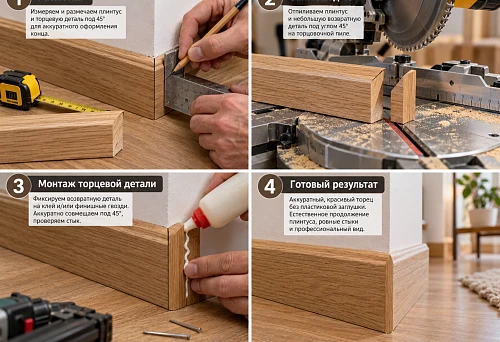
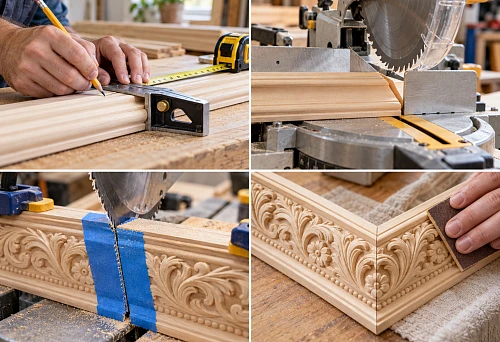
For neat cutting of slats at a 45° angle, a miter saw is needed. Without it, corner joints will be unsightly. A level is mandatory.How to install slatted panelsto the wall: adhesive plus headless finishing nails (or a pneumatic stapler) — the optimal method for MDF and oak.
Sequence
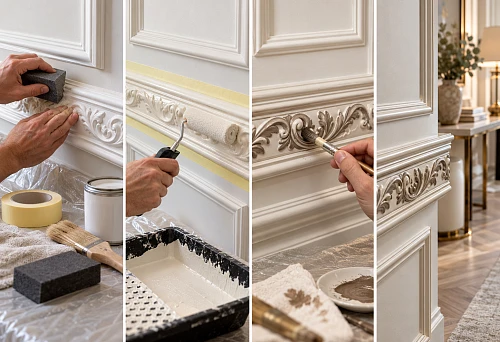
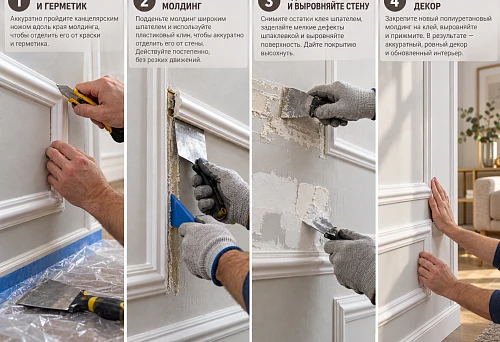
The rule is one: first panels, then molding.installation of slatted panelsis completed, then moldings are glued along their edges — they cover the ends, smooth transitions, and mask imperfections. Never the other way around.
Material acclimatization
This point is often ignored — and in vain. Wooden products must be kept in the room at working temperature and humidity for at least 48 hours before installation. This allows the material to adjust to dimensions corresponding to operating conditions and avoid deformation after installation.
Styles and Materials: Compatibility Table
To avoid keeping all this information in your head at once, here is a structured table showing which materials work best in which style.
| Interior style | Recommended Panel | Molding | Color solution |
|---|---|---|---|
| Minimalism | MDF for painting, closed rhythm | Thin flat molding | Monochrome: white, gray, beige |
| Scandinavian | Oak with light oil finish | Without stucco or wooden molding | Natural warm tones |
| Neoclassical | MDF + molding + solid oak | Profiled cornice, molding | White, ivory, gold |
| Loft | Tinted oak or dark MDF | Metal profile | Dark tones, contrast |
| Eclectic | Combination of materials | As per project | Accent color on panel |
FAQ: answers to real questions
Can I buy slatted panels in Kirov with delivery?
Yes. STAVROS company delivers orders throughout Russia, including Kirov and Kirov region. Orders can be placed on the website or by phone, and consultation on selection is free.
MDF or solid wood slatted panels: which is cheaper in the long term?
MDF is cheaper to purchase but requires careful handling. Solid oak is more expensive initially but lasts for decades and can be restored — repainted or re-oiled. In the long term, the difference in ownership cost evens out.
Is special wall preparation needed for board panels?
For adhesive installation, the wall must be dry and clean. Serious unevenness requires a frame. For frame installation, the wall generally requires no preparation except for removing loose fragments.
Is polyurethane molding reliable?
Yes.polyurethane moldingsIt does not crumble, deform, or fear moisture. With proper installation (quality adhesive, even pressure), it holds for decades.
How to calculate the number of panels?
Measure the area of the surface to be finished, add 10–15% for trimming. The coverage area of each module is indicated in the catalog — divide the total area by the module area.
Are slatted panels suitable for the bathroom?
MDF — no. For bathrooms:DCP slatted panelsWPC (wood-polymer composite) — resistant to moisture, does not rot or deform.
Can different types of slatted panels be combined in one interior?
Yes — if they have the same slat spacing and a coordinated color scheme. Different materials (for example, oak on the walls and MDF on the ceiling) with a unified rhythm and color create an interesting multi-layered result. But different rhythms in one space are almost always a mistake.
Do MDF slatted panels need to be painted after installation?
paintable slatted wall panelsare supplied without a finish coat. After installation, primer is applied (if not factory-applied) and 1–2 coats of finish paint. An alternative is ordering panels with a ready-made factory coating.
About the company STAVROS
When the decision is made and all that remains is to choose a specific product — it's important to work with a reliable supplier who understands the material as well as you understand your interior.
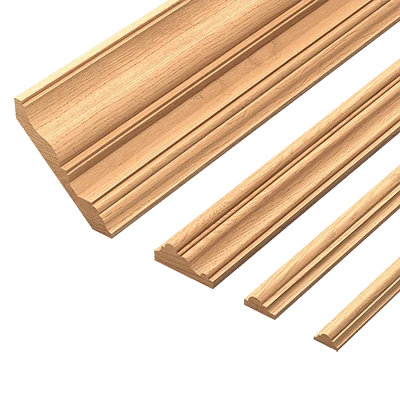
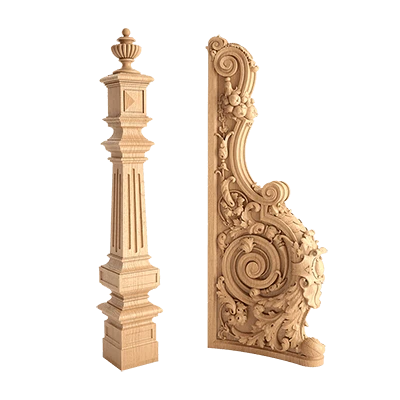
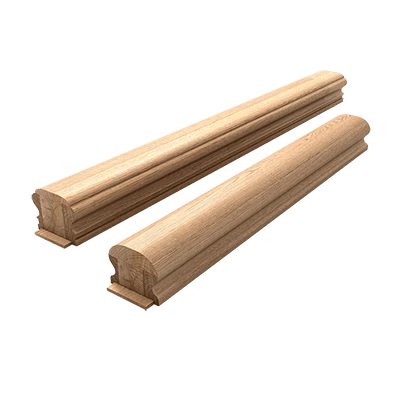
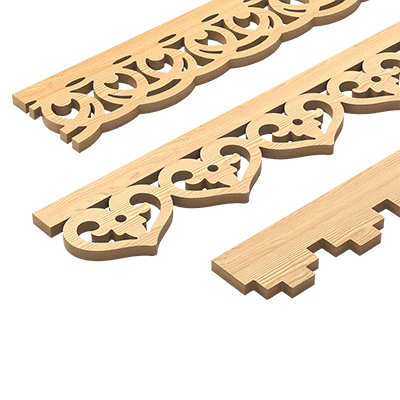
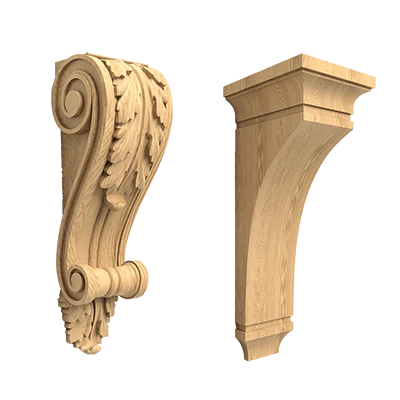
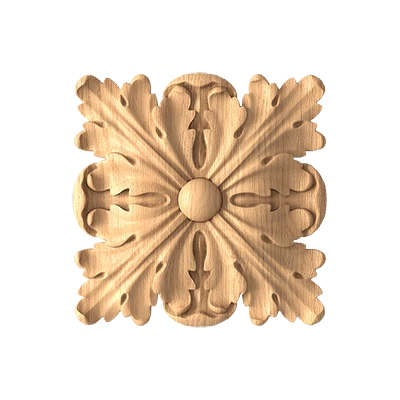
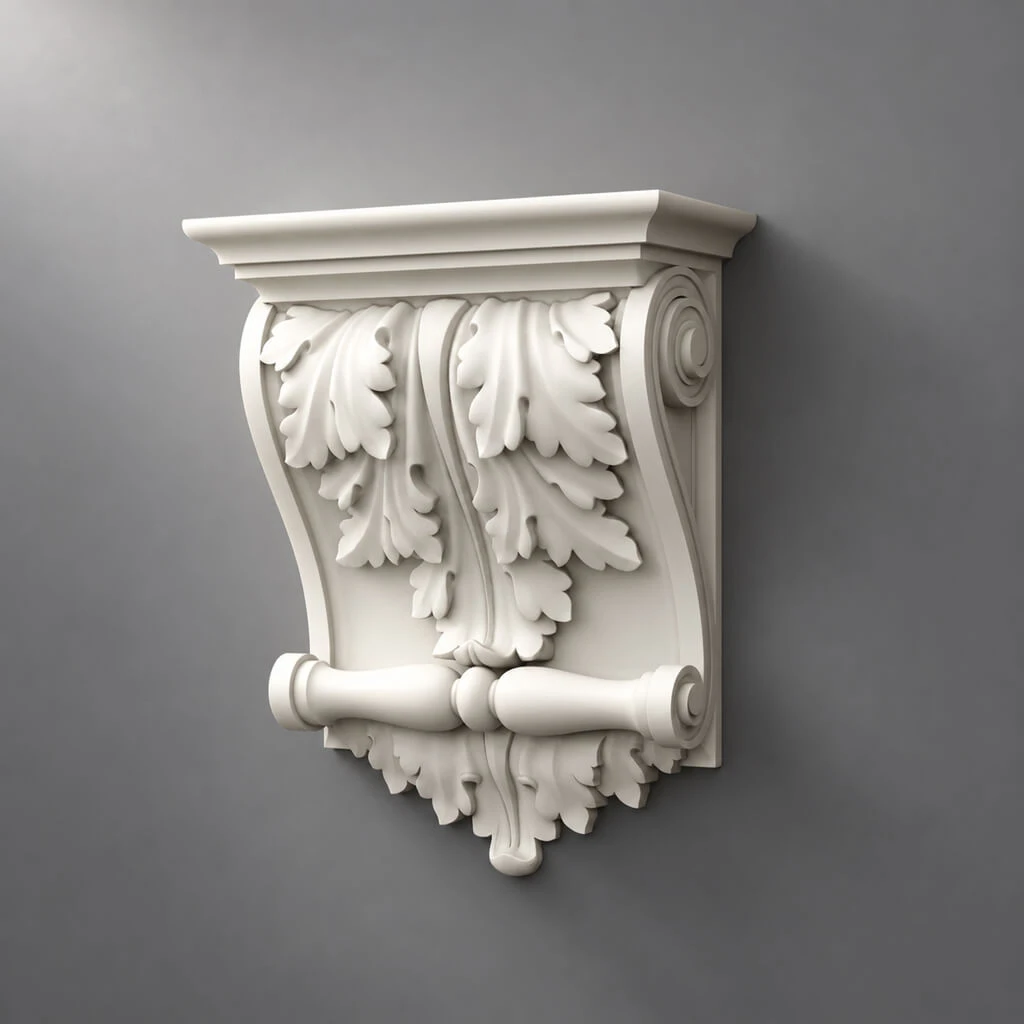
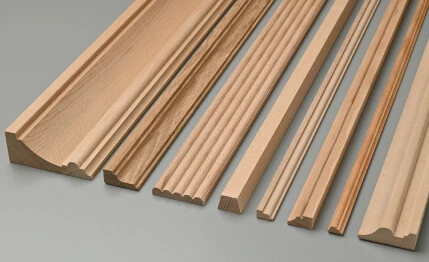
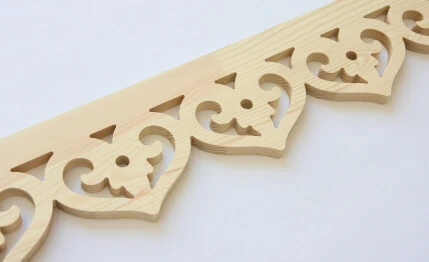
STAVROS is a manufacturing company specializing in solid wood and polyurethane products for interior finishing. The STAVROS assortment includesSlatted wall panels made of MDF and solid oak in several formats and configurations, molded decoration made of polyurethane— overlays, rosettes, consoles, —polyurethane moldingsin the form of cornices, moldings, belts, as well asSolid wood moldingfor completing slatted structures.
STAVROS works with orders throughout Russia. Delivery to Kirov, as to other cities, is carried out by transport companies with full packaging and documentary support. The website features detailed articles on installation, material selection, and product application in various interior styles — everything needed for an informed decision.
Choosing the material is choosing the result. When you understand exactly what you need and know where to get it, the interior comes together exactly as envisioned. STAVROS is about this approach.