








































Article Contents:
- What is a panel slat and why choose it separately
- When to use a separate slat and when a ready-made panel
- Separate slat — for those who want control
- Ready-made panel — for speed and consistency
- Where to use panel slats: a complete overview of scenarios
- Wall Panels
- Furniture fronts
- TV Area
- Bed headboard
- Partitions and Zoning
- Columns, arches, and curved surfaces
- Types of panel slats: formats and profiles
- By Profile Shape
- By width
- By length
- Individual slats vs. slats in modular panels
- Materials: oak array, veneer or MDF for painting
- Solid oak
- Oak veneer slat
- MDF for painting
- Where each is appropriate
- How to choose the slat size for panels
- Slat Width
- Thickness of slat
- Rail length
- Ratio to wall and panel size
- Selection for furniture fronts
- Selection for TV zone
- How to choose the gap between slats
- Dense layout (gap 5–10 mm)
- Medium rhythm (gap 15–25 mm)
- Airy layout (gap 30–50+ mm)
- How step affects panel perception
- How to choose a rail for a specific task
- For wall panels
- For the panel behind the TV
- For furniture
- For zoning
- For ceiling
- For curved surfaces
- Lighting in slatted panels: when and how
- When it is appropriate
- Hidden Lighting
- How to choose a rail for lighting
- Installation: what is important to know before starting
- Wall mounting
- Installation on the base
- Installation on furniture fronts
- Individual batten vs. panel: which is easier to install
- What to look for before buying
- Mistakes when choosing a batten for panels
- Too small a batten for a large panel
- Too tight spacing
- Wrong material
- Lack of connection with other interior elements
- Choosing a panel where an individual batten is needed
- Where to buy a batten for panels: how not to make a mistake with the choice
- When to take an individual batten
- When is a panel more profitable
- How to assemble a solution from one line
- Wooden slatted wall panel: about the live surface
- FAQ: Answers to Popular Questions
- What is better: a separate slat or a ready-made slatted panel?
- Which slat is suitable for furniture facades?
- Which slat is suitable for a TV zone?
- Can slats be used on curved surfaces?
- What is better for panels — solid oak, veneer, or MDF?
- How to calculate the number of slats for a panel?
- Which spacing between slats is best to choose?
- Where to buy slats for panels in Moscow and St. Petersburg?
- About the Company STAVROS
When an image of an accent wall with a rhythmic wooden pattern comes to mind, most people immediately type "slats for panels" into the search bar — and get hundreds of scattered offers. Some sell ready-made modules, others sell individual elements, and others sell something unclear. Yet the choice here is not random at all: a properly selectedInterior Railsets the tone for the entire space, creating rhythm, depth, and character of the finish. And it is this choice that determines whether the wall will look like an expensive designer project — or like a random set of planks.
In this article, we will break down everything in order: what a slat for wall and furniture panels is, how it differs from a ready-made slatted panel, how to choose the profile, width, spacing, and material — for each specific scenario. We will cover application formats, installation nuances, common mistakes, and typical questions that arise for those encountering slatted finishes for the first time.





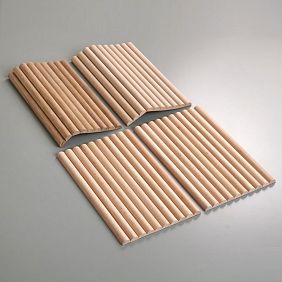
What is a slat for panels and why choose it separately
When people say "slats for panels," they often mean completely different things. Some refer to individual linear elements — narrow or wide planks made of wood or MDF, installed one by one to create a custom layout. Others want a ready-made panel module where the slats are already fixed to a backing with the required spacing.
The difference is fundamental — and not just in cost.
Interior Railas a standalone element is a plank with a clear cross-section geometry, a specific length, and material. It is installed manually, setting the spacing, rhythm, and pattern according to one's own design. This is a tool for custom interiors: here, everything — from the gap between planks to the angle of light — is determined by the installer.
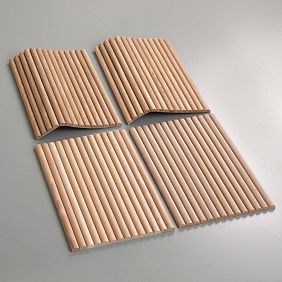
Ready-madeRack panelis an already assembled structure: the slats are fixed to a base (MDF, plywood, fabric) with a set spacing. Such a module is easier to install, faster to lay, and predictable in result. But it is less flexible in terms of non-standard formats, long runs, and complex surfaces.
What is important to understand: both versions — individual slats and ready-made panels — can be made from the same material, have a similar profile, and create a similar look. The difference lies in design freedom and installation complexity. That is why the right choice begins not with the question "which slat is better," but with the question "what exactly do I need to do."




When is it better to use individual slats and when ready-made panels
This is one of the key questions that arises for anyone who takes on slatted finishing for the first time. And the answer here is not universal — it depends on the task, area, surface shape, and work budget.
Our factory also produces:


Individual slats — for those who want control
If you are creating a custom layout — for example, alternating wide and narrow planks, creating an asymmetrical rhythm, going horizontal, or making a diagonal composition — individualslats for slatted panelsgive complete freedom. You control the spacing, build the rhythm, and can change the pattern logic without restrictions during installation.
For long walls, individual slats also win: there is no problem with module joints, no transverse seam that inevitably occurs when laying panel blocks. The result looks seamless and monolithic — especially when the slats run floor-to-ceiling across the entire room height.
For furniture facades, individual slats are also indispensable: cabinet facades often have non-standard sizes, and cutting a module for each section is inefficient. Here, selecting slats specifically for the exact facade width gives a much neater result.
Get Consultation
Ready-made panels — for speed and consistency
When you need to cover several identical sections quickly and predictably,Rack panelwins in installation speed. The pitch is already set by the manufacturer, the slats are fixed, and the entire structure is installed as a single module. This is especially relevant for hotel projects, offices, retail spaces — where installation time is critical.
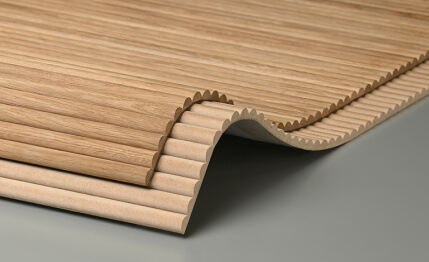
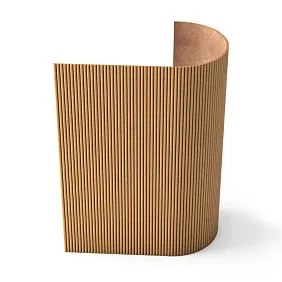
For curved surfaces — columns, arches, rounded walls — STAVROS offers flexible slat solutions on a fabric backing. This format allows wrapping around curved surfaces without manually bending each slat. This is a key advantage of a finished panel over individual slats in non-standard geometric conditions.
When it comes to a TV zone — especially in interiors where the wall behind the TV serves as an accent background — the panel module creates a perfectly even, rhythmic pattern without the risk of the pitch between slats shifting. More details on working with such zones can be found in the article aboutTV zone with slatson the STAVROS website.
Where slats for panels are used: a complete overview of scenarios
Slat finishing has long moved beyond the living room. Today, wooden slats for panels are found in a wide variety of contexts — each with its own requirements for profile, material, and pitch.
Wall panels
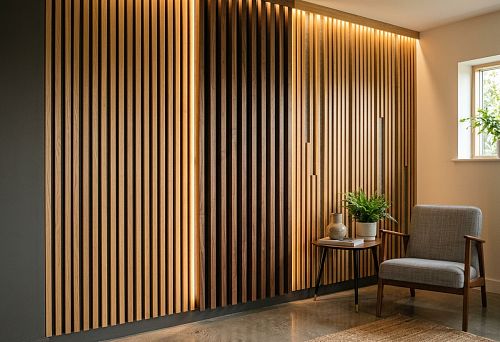
A classic of the genre. An accent wall in the living room, home office, hallway, or bedroom — this is where slat finishing truly shines.Wooden Planks for Wallscreate depth, tactility, and a lively rhythm that no other finishing material can replicate. Here, both wide slats with a smooth profile and narrow slats with a pronounced gap work — it all depends on the interior style and desired pattern density.
Furniture facades
Slatted facades of cabinets and drawers are one of the most popular application scenarios. Slats for furniture panels here serve a dual function: decorative and structural. They visually lighten the facade, add relief, and move away from the feeling of a monotonous flat surface. For furniture, precise slat dimensions are especially important — they must fit into the facade panel format without visible ends or gaps at the edges.
TV area
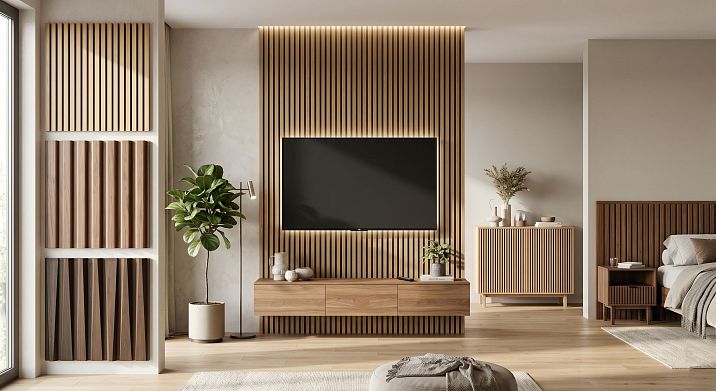
The wall behind the TV is a special case. Here, the slat works as a background: it should not steal the spotlight but must maintain volume and interest. The ideal solution is a medium or airy pitch between slats, a dark tone or natural oak, sometimes with built-in lighting at the bottom. How to design such zones without overloading is detailed in the materialInterior slats and panels.
Bed headboard
A slatted panel behind the headboard is a technique that has firmly entered modern residential design. Here, the slats usually run vertically, spanning the entire width of the bed or extending across most of the wall. The warm tone of oak, soft light, and a well-chosen spacing create an effect of a "hugging" environment — cozy, warm, and truly residential.
Partitions and zoning
In open-plan layouts, slats are often used for soft zoning: not a solid wall, but a transparent structure that visually divides the space without blocking light and air. A wide gap between the slats makes the zoning feel like a delicate accent, not a barrier.
Columns, arches, and curved surfaces
For non-standard geometries — columns, rounded walls, arched openings — standard individual slats require complex installation. Here,Flexible Slats for Wallson a fabric backing come to the rescue: they wrap around any curvature without breaking or cracking, maintaining an even pattern across the entire surface.
What types of slats for panels are available: formats and profiles
The market offers several basic slat formats — and it's important to understand them before browsing the catalog.
By profile shape
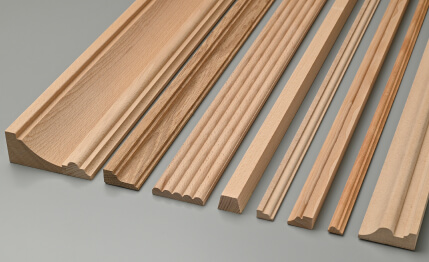
Flat slat — a rectangular cross-section without a chamfer or relief. The most neutral option, suitable for any style: from Scandinavian minimalism to modern classics. This profile creates the cleanest, geometric rhythm on the wall.
Semicircular profile — a slat with a convex front face. Adds volume and softness, creates a play of shadows with side lighting. Works well in warm, cozy interiors.
Slat with pronounced relief — milled, with grooves, rustication or beveled edges. A more decorative format that enhances the tactile and visual perception of the wall.
By width
Narrow slats (15–30 mm) create a dense, "graphic" pattern — especially with a small spacing. Wide slats (50–90 mm and more) form a calm, monumental rhythm, closer to a panel format. The choice of width is always tied to the scale of the wall and what the rhythm should be — dynamic or measured.
By length
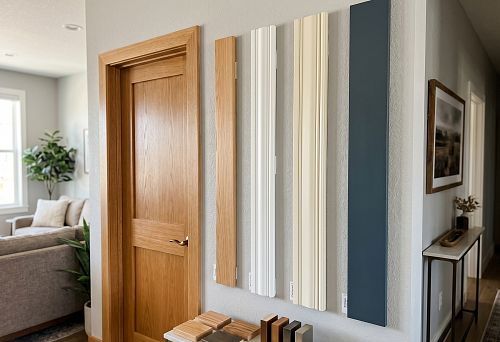
The standard working length is 2400 mm, which exactly matches the standard height of residential premises. SlatsRK-001andRK-002from STAVROS are produced in this very format — they cover the wall in height without a horizontal joint, which is fundamentally important for the visual integrity of the vertical layout.
Individual slats vs. slats in modular panels
Individual slat — maximum freedom in forming the pattern. Slat as part of a modular panel — predictability and speed. There is no "better" or "worse" here — there is a task. As already mentioned, for non-standard projects and custom layouts, piece linear products are chosen; for serial and quick ones, a ready-made panel. A detailed analysis of both formats is in the articledecorative plank panels.
Materials: solid oak, veneer or MDF for painting
The question of material is one of the most practical and yet most often solved intuitively, without systematic analysis. And in vain.
Solid oak
Oak is a material with character. Natural texture, lively grain pattern, tactile warmth of the surface. Each plank is slightly different from its neighbor — and this is what creates the feeling of a genuine natural material, not an imitation. Oak slats work in natural interiors: Scandinavian style, japandi, eco-aesthetics, modern classic with a warm palette.
When choosing, it is important to consider that solid wood reacts to humidity: with significant fluctuations, it may slightly change its geometry. Therefore, in kitchens, bathrooms and rooms with an unstable microclimate, oak requires careful finishing treatment — oil, wax or varnish close the pores and stabilize the behavior of the material.
Oak veneer slat
A compromise and, admittedly, very competent format. The base is MDF or multi-layer plywood, the front surface is natural oak veneer.Slat RK-002from STAVROS is exactly that solution: a decorative MDF slat with natural oak veneer on the surface. You get the look and feel of real wood with higher base stability and a more affordable price compared to solid wood.
Veneered slats are especially good for furniture fronts and accent wall panels in residential interiors: they fit organically into environments with other wooden surfaces — parquet, furniture, wooden frames. The veneer texture creates the desired dialogue with other elements.
MDF for painting
If the goal is a perfectly smooth, monochrome surface with precise geometry — MDF for painting is the optimal choice. No grain pattern, no random color spots. White, gray, black, olive slat — the color exactly matches the tinting. Such a slat fits perfectly into minimalist, monochrome, and geometrically strict interiors.
MDF slatted panelis one of the most sought-after formats in modern residential and office construction. Stability, geometric precision, wide possibilities for final painting — all this makes the MDF slat a workhorse in projects with a predictable visual result.
Where each is appropriate
| Material | Best scenarios | Features |
|---|---|---|
| Oak solid wood | Residential interior, natural aesthetics, ceilings | Live texture, reacts to humidity |
| Oak veneer on MDF | Accent walls, furniture facades | Stability + natural look |
| MDF for painting | Monochrome interiors, offices, TV zones | Perfect geometry, any color |
How to choose the slat size for panels
Slat size is not just a number in the specification. It is a proportional solution that determines the scale of the entire composition on the wall.
Slat width
Width directly affects the visual rhythm of the panel. Narrow slats (15–25 mm) create a dense, dynamic pattern — the wall "works," with many details. Medium slats (30–50 mm) provide a balanced rhythm, readable on both small and large surfaces. Wide slats (60–90+ mm) create a calm, panel-like character — the wall appears more spacious and monumental.
For small rooms and furniture facades, it is better to choose medium-width slats — they do not overload the surface and do not get lost on it. For large accent walls in spacious living rooms, wider slats can be more appropriate: the scale of the slat matches the scale of the room.
Slat thickness
Thickness determines the depth of the shadow between the planks — and, accordingly, the expressiveness of the relief. A slat thickness of 5–8 mm gives a delicate, almost flat relief. 10–16 mm provides a more pronounced shadow depth, making the panel look more voluminous. With side lighting, the thickness of the slat is critically important: it forms the light line along each plank.
Slat length
The standard 2400 mm is a universal solution for vertical layout in residential spaces. For horizontal layout, slats are joined — and here the quality of the end preparation is important. For long walls, slats can be ordered in custom sizes: STAVROS works with non-standard orders.
Ratio to wall and panel size
Simple rule: the slat width should not exceed 1/10 of the wall section width. If the wall is 3 m wide — a slat wider than 30 mm will start to dominate and make the pattern heavy. For narrow panels (up to 60 cm wide), a slat no wider than 20–25 mm is optimal.
Selection for furniture fronts
For cabinet and nightstand fronts, another variable is important — the layout direction. Vertical slats visually stretch the front upward, horizontal ones widen it. For narrow fronts (up to 40 cm), choose slats no wider than 20 mm, otherwise the front will look like a clutter of planks rather than a light slat play.
Selection for TV area
The TV area requires special attention to proportions. The typical width of a TV niche is 150–250 cm, height is 80–120 cm (from base to ceiling). Medium-width slats (30–50 mm) with moderate spacing work well here. They create the necessary background rhythm, do not overload the space, and do not compete with the screen in visual 'weight'.
How to choose the gap between slats
Step — something most people underestimate. And for good reason: it's the distance between the slats that determines the character of the entire slat panel.
Dense layout (gap 5–10 mm)
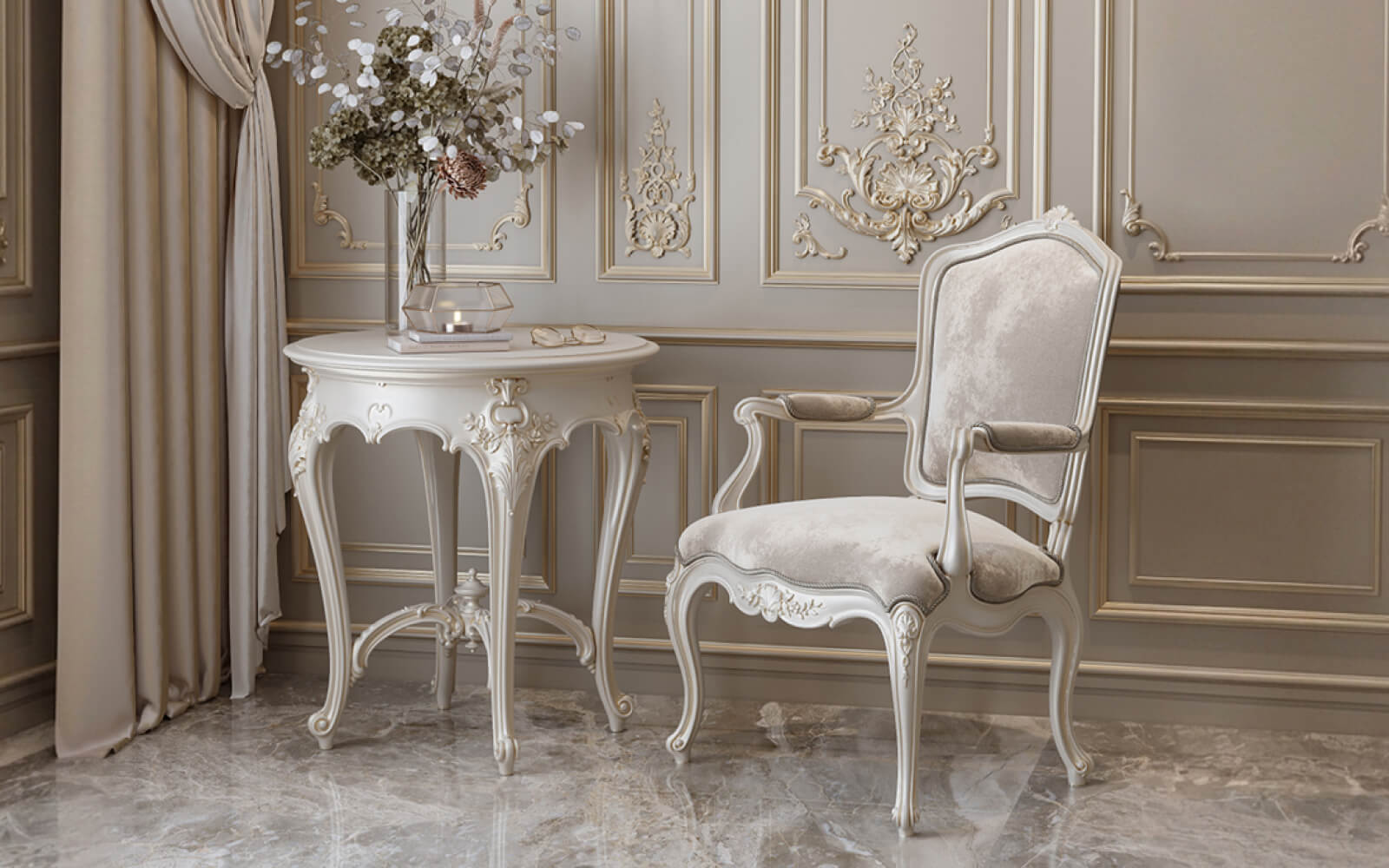
Slats are placed close to each other. The surface appears dense, almost like a wooden plane with thin dark lines. Creates an effect of massiveness and luxury. Works well in classic and neoclassical interiors, as well as where you need to hide what is behind the panel.
Medium rhythm (gap 15–25 mm)
The most common option. The gap is visible enough for the slats to read as separate elements, but not so large that the surface appears "holey." A universal solution for living rooms, TV zones, and headboards. This is the spacing used in most ready-made slat panels.
Airy layout (gap 30–50+ mm)
Slats are spaced far apart. Between them is a wide space through which the backing, wall, or background color is clearly visible. This rhythm creates lightness, graphic quality, and a sense of air in the interior. Works well in minimalist spaces, zoning partitions, and areas where visual transparency is needed.
How spacing affects panel perception
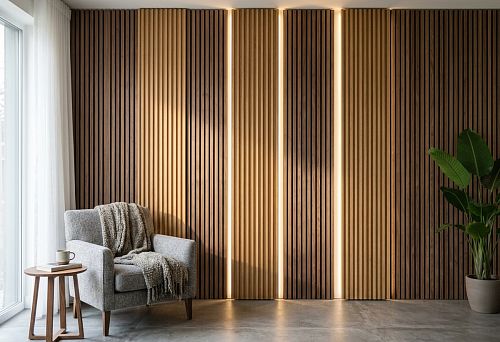
An airy step visually expands the space — the wall feels lighter. A dense step adds weight and monumentality. With backlighting, an airy step enhances the effect: light stripes appear between the slats, creating a true decorative spectacle. More on the play of light in slat structures in the articleSlatted panels with lighting.
How to choose a slat for a specific task
Let's move from theory to practice. We'll break down seven of the most common tasks — and for each, determine the optimal slat parameters.
For a wall panel
Optimal width: 30–60 mm. Spacing: medium or airy. Material: solid oak or veneer for a natural aesthetic, MDF for painting — for a monochrome style. Layout direction: most often vertical, which elongates the room's height. Such a wall works best in a living room or study where side or top light falls on it.Wooden slat panelcreates a lively rhythm impossible with either wallpaper or tiles.
For the panel behind the TV
Here, precision of geometry and neutrality of material are important: the slats should serve as a background, not draw the eye. Optimal: a dark color (graphite, wenge, dark oak) or a natural shade with a medium spacing. Slat width — 30–45 mm. To add depth if desired — subtle lighting at the bottom or between rows.
For furniture
For cabinet facades — slats 15–25 mm with minimal spacing or dense placement. For case furniture, it's better to use slats in veneer or solid wood in the same tone as the other wooden surfaces in the room. For large facades (wardrobes, libraries) — you can increase the width to 40–50 mm and add spacing.
For zoning
Here, the slat should be visible from both sides and allow light to pass through. An airy layout with a gap of 30–50 mm. It is advisable to choose slats with the same face profile on both sides — or use double-sided treatment. Material — solid wood or veneer: when zoning, it's important that the slat looks good from any viewing angle.
For the ceiling
A slatted ceiling is a separate topic, but the selection rules are similar. Slat width — from 50 to 100 mm (ceiling surfaces require a larger scale). Spacing — medium, from 20 to 40 mm. Material — lightweight, so as not to visually weigh down: MDF in light tones or light veneer.Slatted panels for walls and ceiling— a topic that has its own nuances, and STAVROS has analyzed them separately.
For curved surfaces
A standard slat made of solid wood or MDF bends with difficulty without special treatment — cuts, steaming, gluing. For columns and arches, it is much more practical to choose a flexible slat system on a fabric backing: it wraps around the surface without deforming the slat and without the risk of cracking.
Lighting in slatted panels: when and how
Lighting in a slatted panel is not mandatory, but a very impressive technique. When used correctly, it turns an ordinary wall into a real light installation.
When is it appropriate
Lighting works well in TV areas, headboards, and decorative niches — where soft accent light is needed without a direct source. It is appropriate in evening interiors where the general lighting level is low and the goal is to create an atmosphere, not provide task lighting. In the bedroom, lighting behind a slatted panel at the headboard replaces bedside sconces and creates intimate, cozy light.
Hidden lighting
The most popular option is an LED strip placed at the bottom of the panel or behind the back plane of the base. Light "leaks" through the gaps between the slats from bottom to top or top to bottom, creating a glow effect inside the structure. For this, the slats should not be placed tightly: a gap of 15 mm or more is mandatory.
How to choose a slat for lighting
Slats with a flat or slightly beveled profile create a more uniform light spot. Slats with deep relief or pronounced chamfer give a more contrasting, "ragged" play of shadows — this can be beautiful but requires precise calculation of the light incidence angle. The base material under the slats is better chosen as neutral-dark: a light background will show through the gaps and reduce the contrast of the lighting. Details about working with lighting in slatted structures are described in the articleSlatted panels with lighting.
Installation: what is important to know before starting work
Installing a slatted panel is a process that, despite its apparent simplicity, has several critical points. An error at any of them leads to visible defects that will be an eyesore for years.
Installation on the wall
The main method is attaching the slat directly to the wall using hidden fasteners or glue. For walls with pronounced unevenness, horizontal guides (wooden or metal frame) are first installed, to which the slats are then attached. This allows leveling the installation plane regardless of the wall's condition.
Installation on a base
The second option is to first assemble an MDF base (a sheet or frame), and then attach the slats to it in the workshop or on site. The finished module is then mounted as a single unit. This method is convenient for furniture facades and for creating suspended panels with lighting.
Installation on furniture fronts
Two points are important here: the precision of cutting the slat to length (facades have specific dimensions) and the fastening method, which should not damage the surface of the facade panel. Most often, liquid nails or two-component adhesive are used — without metal fasteners, which could create visible points on the front surface.
Individual slat vs. panel: which is easier to install
A finished panel is installed faster — fewer operations, no step marking, no individual fastening of each slat. But an individual slat provides more control: you can adjust the step as you go, adapt to non-standard sizes, and change the pattern logic.Decorative strips in interior designand their installation nuances are detailed in the corresponding STAVROS material.
What to look for before purchasing
Before ordering a slat, evaluate several parameters. First — the condition of the wall: if it is uneven, a frame will be required. Second — the finish of the slat: a slat for painting requires priming and painting on site. Third — compatibility with humidity: for kitchen areas and corridors with unstable microclimates, it is better to choose a slat with an oil or varnish coating. Fourth — the presence of fastening elements: check with the supplier whether they are included in the kit.
Mistakes when choosing a slat for panels
Slat finishing is an area where mistakes are made regularly. And, unfortunately, most of them become visible only after installation.
Slat that is too small for a large panel
A classic beginner's mistake. A narrow 15 mm slat on a 4-meter wide wall — you get a small, "flickering" pattern that is impossible to perceive calmly. The scale of the slat must match the scale of the surface.
Too dense spacing
When slats are laid tightly without a gap, the very essence of slat aesthetics — rhythm, shadow, depth — is lost. This is no longer a slat panel, but a plank cladding. If the goal is a solid covering, choose a different format.
Wrong material
MDF for painting in a bathroom area or on an open terrace is an obvious mistake. Veneer without a finish coating on a kitchen facade near the sink is also a mistake. The slat material must match the operating conditions, not just visual preferences.
Lack of connection with other interior elements
Dark mocha slats on white walls and light parquet — effective only if the contrast is intentionally designed and supported by other elements. Otherwise, it's dissonance. The color, tone, and texture of the slat must be part of the overall color scheme of the interior.
Choosing a panel where a separate slat is needed
A ready-made panel of a fixed size for a non-standard wall — this is fitting to a standard where individuality is needed. The result is visible seams between modules, inability to precisely cover corners, loss of layout integrity.decorative panels made of slats — a topic where format choice is critically important, and STAVROS has covered it in detail in a separate article.
Where to buy panel slats: how to avoid mistakes in selection
Buying slats is not just a transaction. It is a technical choice that will determine the outcome for years to come. A few guidelines will help you make the right decision.
When to buy individual slats
If you have a non-standard project, custom layout, long walls without breaks, or complex geometry — buy individual linear products from the manufacturer. This gives you flexibility in forming the pattern and an exact size for the task.Wooden planksin the STAVROS assortment are available in several cross-sections — from laconic narrow planks to wide profiles for accent areas.
When a panel is more advantageous
For serial projects, standard sections, and rooms with standard sizes —Rafter panelswin in installation speed and predictability of the result.Slat panel PAN-001from STAVROS is a proven solution for such tasks: clear geometry, fixed pitch, high-quality finish.
How to assemble a solution from one line
The ideal scenario is when slats for individual elements (furniture facades, accent zones) and ready-made panels (entire wall) are taken from the same line of one manufacturer. Then the tone, texture, and profile geometry match — and the entire space reads as a unified system, not as a set of randomly matched elements. STAVROS offers exactly such a line: individual slats RK-001 and RK-002, ready-made panels PAN-001, and flexible slat solutions — all in a single design system made of solid oak and MDF.
Important: purchase slats directly from the manufacturer or through official sales channels. Only this way you get a guarantee of consistent quality, precise dimensions, and uniform tone within a batch.
Wooden wall slat panel: about the living surface
If you look at a slatted wall for a long time — especially under different lighting — you start to notice that it lives. In the morning, when light falls at a tangent, the slats cast sharp shadows and the surface becomes graphic. In the evening, under warm artificial light, it softens, becoming cozy and warm. This is what distinguishes awooden wall slat panelfrom any other finishing material: it reacts to light, time of day, and season.
That is why slatted finishes never go out of style. Trends change, color schemes shift, new formats appear — but the very aesthetics of slats remain relevant because they are based on something deeper than fashion: natural rhythm, the tactility of wood, and the play of volume.
FAQ: Answers to popular questions
What is better: individual slats or a ready-made slat panel?
It depends on the task. If you need a custom layout, non-standard sizes, or a long continuous wall — go for individual slats. For quick standard projects and typical sections, a ready-made panel wins in speed and predictability. More about this choice in the articleWooden slat panel.
Which slat is suitable for furniture facades?
For furniture, narrow slats 15–25 mm wide are optimal — in veneer matching the furniture tone or MDF for painting in the desired color. Fastening — without visible metal hardware, preferably with glue. Choose the layout direction based on the facade proportions.
Which slat is suitable for the TV area?
For the TV area — slats 30–50 mm wide, dark or neutral tone, medium spacing. You can add hidden LED backlighting from below. More details on working with the TV area — in the articleTV area with slats.
Can slats be used on curved surfaces?
Standard rigid slats made of solid wood or MDF bend with difficulty and require special preparation. For columns, arches, and rounded walls, it is better to useflexible slat systemson a fabric base — they wrap around any curvature without deformation or cracks.
What is better for panels — solid oak, veneer, or MDF?
Solid oak is the best choice for natural aesthetics and high-end interiors. Oak veneer on MDF (e.g., slat RK-002) is the optimal balance of natural wood appearance and base stability. MDF for painting is ideal for monochrome and geometrically strict solutions. Each of these materials is available in the STAVROS range and is detailed in the articleDecorative strips in interior design.
How to calculate the number of slats for a panel?
Divide the width of the wall section by the sum of the slat width and the gap between slats. The resulting number is the number of slats. Add 5–10% for trimming and possible defects. For vertical layout, the length of each slat equals the room height (standard — 2400 mm).
What spacing between slats is best to choose?
For a dense background — gap of 5–10 mm. For a standard slatted pattern — 15–25 mm. For a light, airy composition — 30–50 mm. With backlighting, the minimum gap is 15 mm, otherwise the light won't "flow" between the slats.
Where to buy slats for panels in Moscow and Saint Petersburg?
STAVROS works with private clients and design studios throughout Russia. Delivery to Moscow, Saint Petersburg, and other regions. The full range — Wooden planksandRafter panels — is presented in the online catalog with dimensions, materials, and prices.
About the company STAVROS
STAVROS is a Russian manufacturer of wooden interior products: slats, moldings, cornices, baseboards, and slatted panels made from solid oak, beech, and MDF. The company specializes in products for designer interiors — residential, office, and commercial. The entire range is in-house production with quality control at every stage: from wood selection to final surface treatment.
The STAVROS line includes both individual slats in several cross-sections (RK-001, RK-002) and ready-made slatted panels (PAN-001), flexible slatted systems for non-standard surfaces — all in a unified design system with consistent proportions, colors, and materials. This means you can assemble a solution for the entire project — from an accent wall to furniture facades and a TV area — from one line, without the risk of mismatched tone or profile.
STAVROS works directly with designers, architects, developers, and private clients. Consultation on slat selection and quantity calculation is free. Delivery throughout Russia.