






































Article Contents:
- Why a wall needs more than just paint
- What is a wooden wall molding and how it differs from other profiles
- Why wood, not something else
- Where to use wooden moldings: zones and scenarios
- Accent wall in the living room
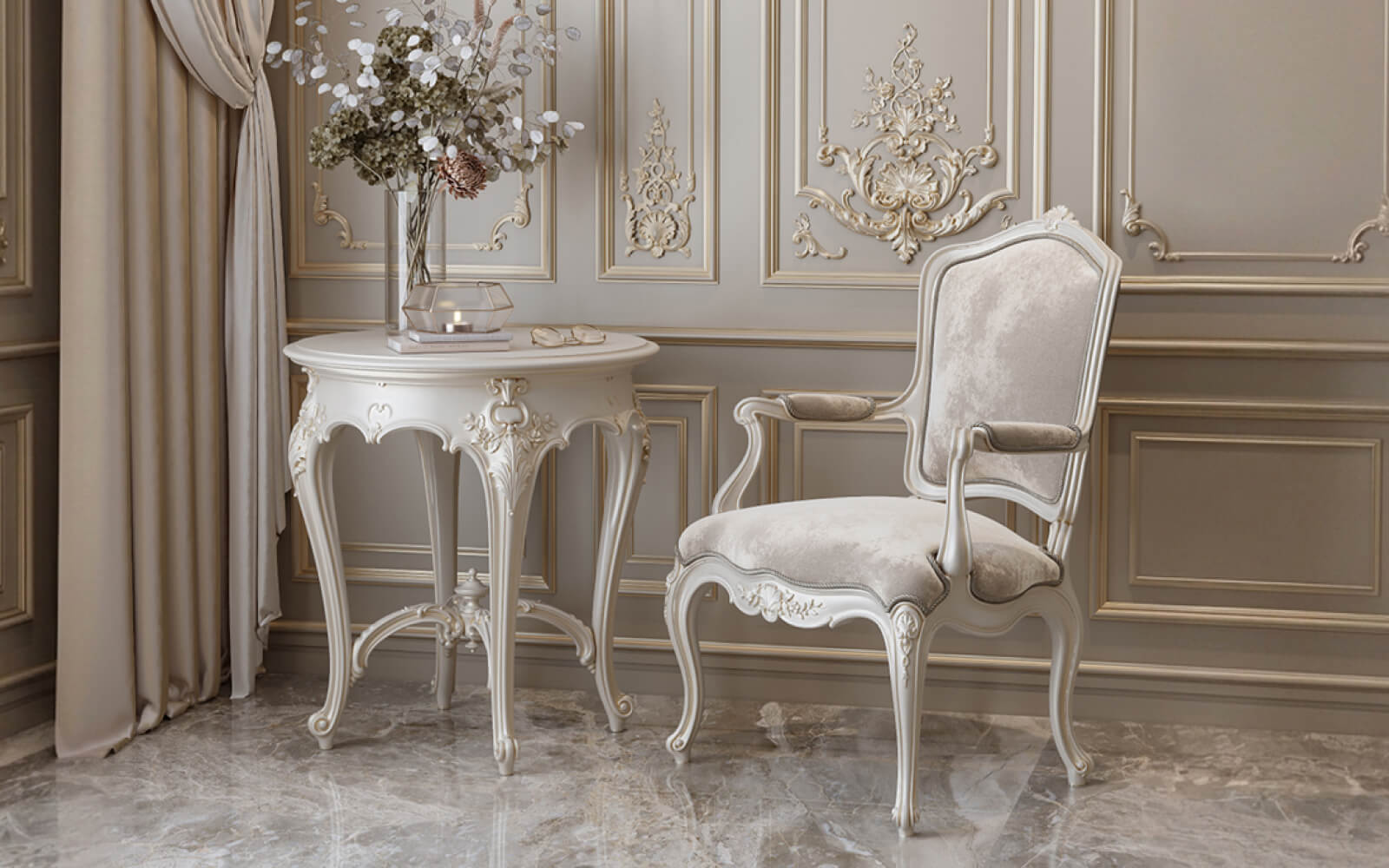
- Boiserie and classic wall panels
- Horizontal perimeter belt
- Bedroom: wall behind the headboard
- Hallway and corridor
- Office and Library
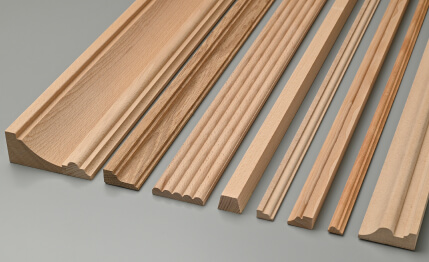
- What types of wooden wall moldings are there
- Smooth rectangular molding (fascia)
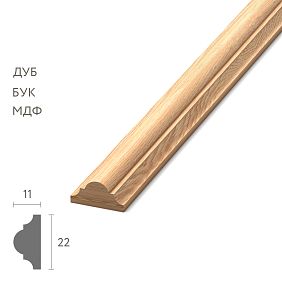
- Molding with a bead (astragal)
- Molding with heel
- Goose molding (kima-recta)
- Narrow decorative molding
- Wide molding for boiserie
- Carved wooden wall molding
- How to choose a wooden molding by interior style
- Classical and Empire
- Neoclassicism
- Modern interior and minimalism
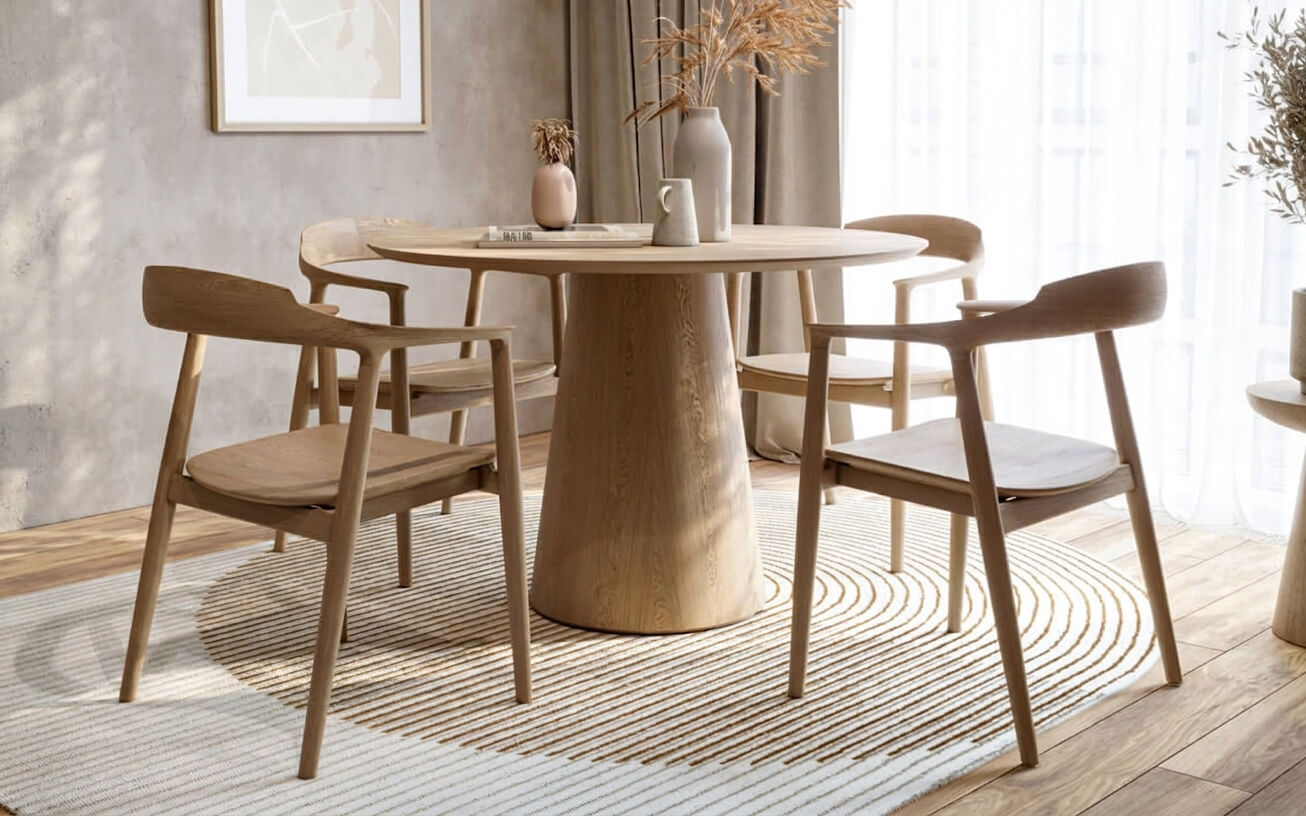
- Scandinavian Style
- Interior with wooden doors and furniture
- How to choose molding by size and profile
- Molding width and ceiling height
- Frame proportions
- For a small room
- For a high wall
- Material: why solid wood is especially appropriate
- Oak
- Oak
- High-density MDF
- How to combine wooden moldings with other interior elements
- With baseboard
- With cornice
- With doors and architraves
- With wooden decorative wall elements
- With Furniture
- Mistakes when choosing wooden moldings
- Profile too complex for this interior
- Width mismatch with room scale
- Too fine a grid of frames
- Incorrect frame rhythm
- Conflict of molding with other trim
- Ignoring lighting
- Where to buy wooden moldings for walls
- What to look for in the catalog
- When to choose a ready profile and when a system
- Calculating linear footage
- Wooden moldings in Moscow and Saint Petersburg
- Installation of wooden moldings: key points
- FAQ: wooden wall moldings — questions and honest answers
- STAVROS: wooden wall moldings — production, precision, selection



Why a wall requires more than just paint
Step into two identical rooms. Same furniture, same proportions, same palette. In the first — smooth painted walls. In the second — a system of wooden frames made from solid profile is mounted on the same background. The frames are calm, unobtrusive. They just exist. You enter both. In the first — something elusively unfinished. In the second — a feeling that someone thought, planned, lived here. And the second seems more expensive — though it costs exactly the same plus a few meters of wooden molding.
Wooden wall moldings are not decoration for decoration's sake. They are a tool that changes the perception of space quietly, precisely, without explanation. The wall gains scale, depth, rhythm. That's why they are chosen in interiors from Scandinavian minimalism to complex classic boiserie. And that's why a mistake in choosing the profile or material is so costly — redoing an installed system is incomparably harder than choosing correctly from the start.
Before moving on to specific types and selection rules, it's worth understanding one fundamental question: why use wood at all when there is MDF, polyurethane, and plaster? The answer is not obvious — and that's why it's important.




What is a wooden wall molding and how it differs from other profiles
The word "molding" comes from the English "moulding" — shaping, profiling. It is any linear product with a shaped cross-section, designed to create decorative relief on a surface or to frame transitions between planes. The key here is "shaped cross-section." It is the relief of the profile that creates the play of shadows, which is the visual value of the product.
Confusion between molding, batten, baseboard, and trim is normal for those encountering wooden linear products for the first time. Let's distinguish them immediately, briefly, and to the point.Wooden wall molding — a decorative profile whose task is to build the architecture of a plane. It does not cover a joint, does not hold an insert, does not bear structural load. It creates relief where there is none. A batten is a rectangular linear product without a profile, working through the rhythm of several planks placed side by side, not through the relief of the cross-section. A baseboard is a molding profile of special purpose, installed only in the lower zone, at the junction of wall and floor. A wooden trim is a functional profile for holding inserts (glass, mirror, panel) in frame structures. It works from inside the frame, while molding works from the outside, on the surface.
Where in the interior are they useddecorative wooden wall moldings? Everywhere architectural plane organization is needed: living room, bedroom, hallway, study, corridor, dining room. In other words — everywhere there is a wall.
Our factory also produces:


Why wood, not something else
Polyurethane, MDF, plaster — all these materials produce quite decent moldings. But a solid wood molding gives a fundamentally different feel. And literally: wood is warm to the touch, this is not a metaphor, but physics — the thermal conductivity of natural wood is several times lower than that of any mineral analogs.
Wood has a texture that is unique in each specific piece. Two oak moldings from the same tree will have slightly different grain patterns — and this is perceived as a value in an era when everything around is mass-produced. Varnish on wood creates depth, not just shine. Tinting on oak reveals the structure, rather than hiding it — and the final appearance of a painted or tinted profile carries the individuality of the specific blank.
Where solid wood is already present in the interior — parquet, furniture, doors —wooden wall moldingscreate material coherence: a unified language of space that cannot be imitated by white polyurethane, no matter how neatly it is installed. This is what turns a good set of objects into a well-thought-out environment.
And another argument that is often forgotten: a solid wood molding is repairable for decades to come. Scratch, chip, wear — sanding and renewing the varnish layer. No section replacement, no special tools needed.solid wood wall moldingswith proper care, they last 30–50 years. This is the main economic argument.
Get Consultation
Where to use wooden moldings: zones and scenarios
Before choosing a profile, you need to understand what task it is for. A wooden molding on a wall has several completely different application scenarios — and the rule here is one: first the task, then the profile, then the material.
Accent Wall in Living Room
Accent wall — the main surface of the room. Behind the sofa in the living room. Behind the bed in the bedroom. Opposite the entrance in the hallway. Wooden moldings for an accent wall can work in several ways: a single large frame occupying 60–80% of the wall area; a system of three to five frames in a horizontal row; an asymmetric system of vertical frames of different heights — for non-standard modern projects.Wooden moldings for an accent wallcreate an effect that stylists call "architectural depth without volume" — the relief works solely through the play of shadows.
Boiserie and classic wall panels
Boiserie — a French system of wooden paneling for the lower part of the wall. From the floor to a height of 90–120 centimeters — wooden panels or painted MDF, divided and framed by moldings. For boiserie, you need a horizontal top molding belt (finishing "crown"), vertical divider moldings between sections, and frame moldings inside each section. This is not just decor — it is an architectural element that "grounds" the wall and creates a sense of solidity in the interior.Buy wooden wall moldingsfor such a system, it is better to have a reserve of at least 12–15%, considering trimming at corner joints.
Horizontal belt around the perimeter
One of the most concise and yet powerful techniques: a horizontal molding runs along all walls of the room at the same height. Classic heights are 90–110 centimeters (the "dado" level, the historical chair height in European architecture) or 160–180 centimeters (with standard ceilings of 2.6–2.7 meters, it divides the wall into two almost equal zones). A horizontal belt is especially advantageous where the lower and upper zones have different colors: the molding works both as a decorative element and as a transition layer between two planes.
Bedroom: wall behind the headboard
Wooden moldings for walls in the bedroom — primarily the wall behind the bed. It is perceived as the base surface of the entire room. Classic scenario: one large frame with a width matching the bed width plus 40–60 centimeters on each side. Or a system of three frames — one above each nightstand and the main one above the headboard. Wood is especially appropriate here: the bedroom is a space of warmth, and the material of the wall molding should match that. Warm oak, softly tinted, creates a completely different feeling in the bedroom than white polyurethane.
Hallway and corridor
The hallway is the first thing a guest sees. And at the same time, it is an area with increased mechanical load: suitcases, outerwear, bags.Wooden molding made of oak or beech is unrivaled here in terms of strength. A horizontal belt at a height of 110–120 centimeters in the hallway solves two problems at once: it visually frames the coat rack area and creates a level below which the wall is protected from direct contact with objects. Below the belt — denser finishing. Above — decorative.
Office and library
A study is a space where wooden wall moldings are entirely appropriate. Shelves, cabinets, dark parquet — and walls finished with solid oak boiserie create an environment where one thinks differently. Here, a more complex system, darker tinting, and a wider profile are acceptable.
What types of wooden wall moldings are there
The profile shape is not an aesthetic whim; it is a technical parameter that determines the character of the product and its fit into a specific style.
Smooth rectangular molding (fascia)
A flat strip with clear straight edges and sharp corners. No relief — only a clear rectangular outline. The most modern, most neutral, most versatile type. Where it works: modern neoclassicism, Scandinavian style, minimalism with a wooden accent, Japanese aesthetics. Where the line matters, not the relief. Optimal width for frame systems is 20–40 millimeters, from 10 mm (almost invisible outline) to 60 mm (expressive frame).
Molding with a bead (astragal)
A semicircular convex section, one central bead. A soft profile, creating a smooth rather than harsh shadow. One of the oldest architectural profiles in history. Where it works: neoclassicism, Provence, soft classicism, interiors with rounded shapes. Width 15–50 mm; at widths from 35 mm, the bead becomes an expressive architectural detail.
Molding with a cyma
An S-shaped profile with a concave start and convex finish. A classic historical profile present in European architecture since the Renaissance. Where it works: classicism, neoclassicism, Empire style. Where the molding should read as an architectural element, not just a frame. Width from 25 mm; below 25 mm, the profile loses readability of the S-curve.
Cyma recta molding
A double curve with a concave lower and convex upper bend. Creates a complex play of shadow, most pronounced under side lighting. Historically, a profile of the highest orders of classical architecture. Requires ceilings no lower than 2.8 meters and sufficient overall scale of the interior.
Narrow decorative molding
Decorative wooden moldings10–20 mm wide — a delicate tool. They create a thin contour line, almost imperceptible in daylight, but visible in side and evening light. Narrow molding is appropriate in minimalist interiors, in small spaces where a wide profile would create a feeling of overload, and also as an "invisible" framing system: the wall looks more complex, but the source of this complexity is not obvious.
Wide molding for boiserie
Moldings for walls60–120 mm wide and above — a large-scale architectural detail. Requires high ceilings, a large wall area, and appropriate furniture. In a composite cornice made of several adjacent moldings of different sections, it forms a developed classical cornice — the same as on historical building facades, only indoors.
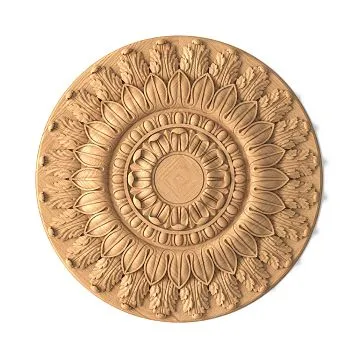
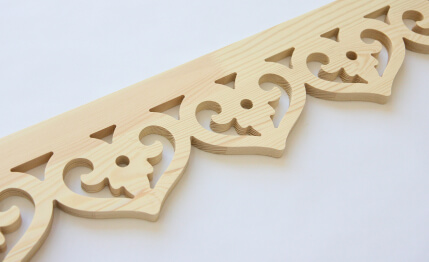
Carved wooden wall molding
Carved profile is no longer just a section, but an ornament. Acanthus leaves, plant motifs, geometric repetition. Carving depth of 3–10 mm provides a relief that cannot be achieved with simple milling. This is a choice for high classicism, baroque, art deco projects — but only where there is an appropriate stylistic context. In a minimalist interior, a carved oak molding will look like a quote from another era.
How to choose a wooden molding according to interior style
Style is the first and main filter when choosing a profile. The wrong molding in the right interior destroys integrity — even if everything else is flawless. The brain registers the inconsistency before it is realized.
Classic and Empire
A classic interior requires moldings with a rich profile: ogees, a belt with ornament, several levels of relief. Moldings for classics are wide (80–150 mm), with an expressive decorative section, made of solid oak in dark tinting or under white enamel with gilded stripe. The system necessarily includes boiserie in the lower zone, a horizontal belt, and a composite ceiling cornice.Wooden moldings for a classic interior — this is not a decoration, but an architectural element, without which the classic looks unfinished.
Neoclassicism
Neoclassicism is a lighter dialogue with tradition. The same principles, but without Baroque heaviness. The profile is cleaner, the lines are stricter, the scale is smaller.Wall moldings in neoclassicism— moderately wide (40–80 mm), with a soft relief of one or two levels, without excessive ornamentation. A frame system of 3–5 frames on an accent wall, a horizontal belt around the perimeter at a height of 100–110 centimeters. Optimal material: beech wood for white painting or light tinting.
Modern interior and minimalism
Here you need a straightforward profile without ornaments, with sharp edges, minimal width. The task of a molding in a modern interior is to create a line, a shadow, a rhythm — without decorative noise.Wooden moldings for interiorin a minimalist style: width 20–40 mm, relief depth 5–10 mm. Wood here is valuable in itself — as a warm natural material in a space with a lot of glass, metal, or concrete.
Scandinavian style
Scandinavian molding is not classical at all. Narrow (10–20 mm), smooth, light or white. Frames of strict proportions. Minimum relief — maximum pure form. Natural beige or white wood organically exists in a Scandinavian space: adds structure without disturbing the feeling of simplicity. Beech or MDF under a matte white coating is the most common choice.
Interior with wooden doors and furniture
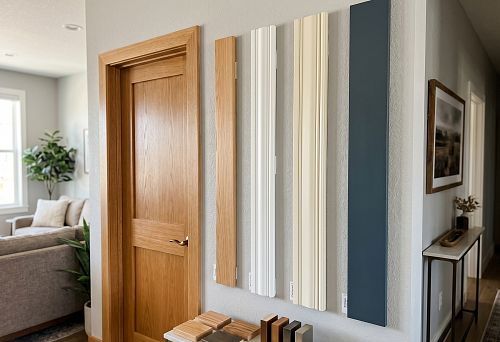
Where the interior already has parquet, wooden doors, and solid wood furniture, wall moldings create a material system.Wooden moldings for wall finishingfrom the same species — oak to oak, beech to beech — form a unified architectural language. This does not mean everything must be the same shade. Dark furniture plus light wooden moldings is also a system built on deliberate contrast.
How to choose molding by size and profile
The size of the molding is not a matter of taste. It is a matter of the architecture of a specific room. And any violation of this logic is visible to everyone — even those who cannot explain why something looks "off."
Molding width and ceiling height
Basic rule for of wooden wall moldings: the profile width in millimeters is approximately equal to the ceiling height in meters multiplied by 10. With a ceiling of 2.7 m, a width of 25–35 mm is optimal. With a ceiling of 3.5 m — 35–50 mm. With a ceiling of 4 m or more — from 60 mm and above. A molding 80 mm wide in a room with a 2.5-meter ceiling will feel oppressive. A 20 mm molding with a 4-meter ceiling will be completely lost.
Proportions of frames
Rule of proportions for decorative frames: width to height from 1:1.2 to 1:2. A square frame is visually unstable. A frame that is too elongated vertically looks unnatural. Horizontally elongated frames are a more modern option, while vertical ones are classic. Between the frame and the edge of the wall (or the adjacent frame) — a distance of no less than three times the profile width. This is the "breathing space" without which the system looks overloaded.
For a small room
A small room cannot tolerate a wide profile. A 15–25 mm molding on a thin frame creates structure without visual load. A single horizontal band is more concise than a system of frames. Frames, if present, should be large and few: one large frame is better than six small ones.
For a high wall
A high wall offers the opportunity to use a wide profile and a multi-level system. Solid wood wall moldings in large rooms can form full-fledged architectural systems: boiserie in the lower zone, a horizontal band at a height of 120–140 centimeters, large frames in the middle zone, and a ceiling cornice. This is what turns a wall into an architectural surface.
Material: why solid wood is especially appropriate
Three materials compete for a place in the wall molding segment on the market: solid wood (oak, beech), high-density MDF, and polyurethane. Each has its own niche.
Oak
European oak is status and durability. Density 650–750 kg/m³, Janka hardness 5.5 kN. Oak moldings do not deform, do not warp with proper installation, and hold their shape for decades. The main advantage is the expressive natural texture with characteristic annual rings. Under tinting or clear varnish, the oak profile reveals this texture to the fullest.Oak wall moldings are the choice for projects where naturalness, durability, and noble texture are important. Service life with proper care is 50 years or more.
Beech
Beech has a different character. Density is slightly lower (620–680 kg/m³), but the main value lies elsewhere: a homogeneous fine-porous structure without a pronounced texture. This makes beech ideal for moldings for painting — the surface is smooth, without a 'showing through' texture. Additionally, beech bends well after steaming: radius moldings, arched frames, curved wall systems — this is beech's story.Beech wall moldings are optimal for projects where all decor is planned under a single coating and complex geometry is required.
High-density MDF
MDF (750–850 kg/m³) occupies a clear niche: maximum geometric stability at a more affordable price. It does not warp, has no internal stresses or defects of natural material, and perfectly accepts paint coatings. For moldings for painting in budget and mid-range projects, it is a rational choice. For projects where the tactile feel of natural material, transparent wood tinting, or environmental component is important — no. A detailed comparison of materials is in a separate article on the STAVROS website.
| Criterion | Solid oak | Beech array | MDF |
|---|---|---|---|
| Strength | Very High | High | Good |
| For tinting / varnish | Excellent | Good | No |
| For painting | Good | Excellent | Excellent |
| Radius elements | No | Yes | No |
| Durability | More than 50 years | 30–40 years | 5–15 years |
| Repairability | Maximum | High | Low |
| Ecological | Maximum | Maximum | Class E1 |
How to combine wooden moldings with other interior elements
A molding never exists alone in an interior. It is part of a system of wooden trim, and its task is to fit organically into this system, not to conflict with other profiles.
With baseboard
Wooden wall moldingsand the wooden baseboard should be from the same wood species and the same tinting system — or deliberately contrast, which is a separate design decision. If the baseboard is made of light beech and the wall frames are made of dark oak, that is a conflict. Consistency of wooden trim throughout the entire perimeter of the room is a necessary condition for a cohesive result.
With cornice
The ceiling wooden cornice and wall moldings should work within the same system. In a classic interior, the cornice is the "crown" of the entire wall composition. Its profile and tint set the tone for the frames below.Wooden moldings under the ceiling corniceare chosen to be somewhat more modest in width and profile complexity — so that the cornice remains the architectural dominant, and the frames remain a detail.
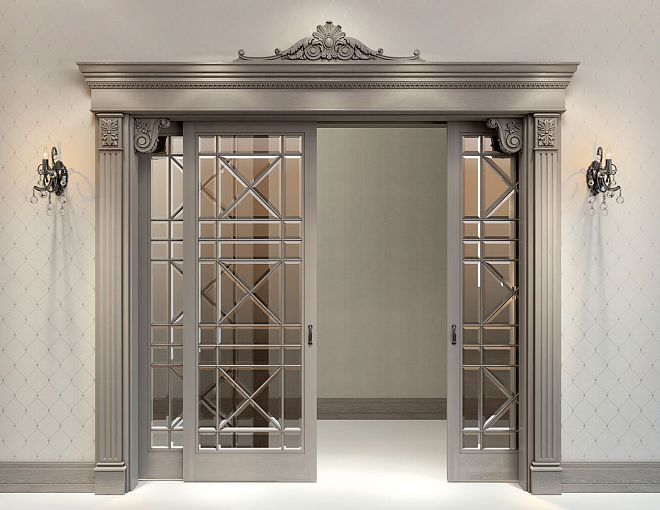
With doors and architraves
Wooden architraves are direct "relatives" of wall moldings. Ideally, their profiles are compatible: one level of complexity, one wood species, one finish. An architrave 70 mm wide and a wall molding 30 mm wide are a proportionate pair. An architrave 120 mm wide and a molding 15 mm wide is a disproportion that anyone can perceive.
With wooden decorative wall elements
In a complex classical system, the corner joints of frames are covered with decorative blocks — corner overlays, rosettes. This is not a mandatory element, but it gives the system completeness.Wooden wall decor— corner inserts, ornamental overlays, central medallions — allows you to assemble a complete architectural system from a single source.
With furniture
Wall moldings should not compete with furniture for attention. Wooden molding is the context, furniture is the accent. If the furniture is richly decorated, the molding should be laconic. If the furniture is simple, the molding can be more expressive. This is a balance that is easy to disrupt but difficult to restore.
Mistakes when choosing wooden moldings
There are several systemic mistakes that are repeated over and over again — by homeowners, designers, and builders. Knowing them in advance is cheaper than fixing them.
Profile too complex for the given interior
A carved baroque molding in a studio apartment with white walls is not a bold decision, it is a stylistic mistake. The profile must match the architectural code of the room. A modern interior accepts a simple rectangular profile. Classicism requires a profiled one. Mixing destroys integrity.
Mismatch of width to the scale of the room
Wooden wall molding80 mm wide in a 12 sq.m. room with a 2.5 meter ceiling will press on the space. The profile width should be proportional to the space — no more than 1/10 of the frame width and no more than 3–4% of the wall height for horizontal belts.
Grid of frames is too fine
Small frames densely packed across the entire wall are ornament, not architecture. Frames should be "breathing." Guideline: between the frame and the edge of the wall (or adjacent frame) — a distance of at least three times the profile width.
Incorrect rhythm of frames
An odd number of frames creates a central axis — a stable symmetrical composition. An even number divides the wall into equal parts, requiring a strong central accent (e.g., a painting or mirror). Frames without a logical rhythm create a sense of randomness.
Conflict of molding with other trim
If all wooden trim elements in the room — baseboard, casing, cornice, wall molding — are from different species and in different stains, the result will be chaotic.Wood moldings for interiorshould work in a system with the rest of the trim.
Ignoring lighting
Molding reveals itself only with proper lighting. With uniform overhead lighting, the relief is almost unreadable. With side lighting, the shadow from the profile creates depth. When planning a molding system, you need to understand what lighting will be in the room. This is not a mistake in choosing the molding — it is a design mistake.
Where to buy wooden moldings for walls
The question "how to choose wooden moldings for walls" is inseparable from the question "where to buy them." The supplier is not only the assortment but also geometric precision, controlled wood moisture, and the ability to obtain a batch from a single production cycle.
What to look for in the catalog
The right catalogof wooden moldingsallows you to see the cross-section of the profile — only by this can you assess the actual relief and play of shadows. Precise dimensions — width, height of the profile, standard length — are needed for calculating linear footage and selecting proportions. Wood species and moisture content: kiln drying to 8–12% is the standard for interior products. Availability of samples: ordering a batch without having a sample in hand is like choosing paint from a photo. You need to hold the profile in your hands, see how it behaves under side lighting.
When to take a ready-made profile, and when to use a system
A ready-made profile from the catalog is suitable for most tasks: decorative frames, horizontal bands, simple boiserie. A custom system is needed where it is necessary to recreate a historical profile, create an original ornament, or assemble a composite cornice from several sections. In this case, it is important that the manufacturer produces moldings according to a drawing.
Calculation of linear footage
The calculation is simple: the perimeter of each frame is multiplied by the number of frames, and 15% is added to the total for trimming and reserve. For a horizontal band around the room perimeter: the perimeter of the room plus 10–15% for joints and corner trimming.Moldings for wall decoration made of woodare supplied in standard lengths — typically 2.0 or 4.0 meters. When placing an order, consider the multiplicity: from a four-meter plank, you get more elements with fewer joints.
Wooden moldings in Moscow and Saint Petersburg
Buy wooden moldings for walls in Moscow and Saint Petersburgwithout long waiting — a solvable task if the manufacturer has a warehouse program. The main catalog items must be constantly in stock. Shipping from one piece — important for designers and private customers who need to add a few meters or get samples before the main order.
Installation of wooden moldings: key points
Professional installation is half the result. Even a perfectly chosendecorative wood wall profilewill spoil the impression if installed carelessly.
The wall must be dry, clean, without loose paint. Base moisture — no more than 6%. Irregularities over 5 mm are better leveled before installation: the molding will not hide them, but will emphasize them. Marking horizontal lines with a laser level is a mandatory step. All diagonals of the frames must be equal — only this guarantees correct right angles.
Wooden moldings are mounted using polyurethane mounting adhesive — for lightweight profiles, or adhesive plus mechanical fasteners (screws with countersunk heads and plugs) — for heavy and wide ones. Frame corners are joined at 45° with an accuracy of ±0.1°. A miter saw with a laser guide is the minimum tool for a quality result. After installation, all visible fastener holes are puttied, joints on straight sections are treated with acrylic sealant. Final coating — only after the sealant has completely dried.
Wooden planks must be kept in the room for 48–72 hours before installation: acclimatization allows the wood to reach equilibrium moisture with the environment and avoid warping of the already installed profile.
FAQ: Wooden Wall Moldings — Questions and Honest Answers
Which wooden moldings are best for walls?
Depends on the style and task. For classic and Empire — profiles with historical sections (ogee, cyma, astragal) made of oak or for white enamel. For modern interiors — a smooth fascia 20–40 mm. For Scandinavian — a narrow white molding made of light wood. There is no universal "best": there is the right one for a specific task.
What to choose: wood, MDF or polyurethane?
Wood — where naturalness, transparent tinting, repairability and long-term use are important. MDF — for monochrome solutions for painting with a limited budget. Polyurethane — for wet rooms and ceiling elements where solid wood is impractical.
Which moldings are suitable for a classic interior?
Wide (80–150 mm) profiles with historical sections made of solid oak, in a system with boiserie, horizontal belt and ceiling cornice.
How to choose the width of the molding?
Basic rule: ceiling height in meters × 10 = recommended molding width in millimeters. For frames: no more than 1/10 of the frame width by internal size.
Can wooden molding be painted?
Yes. Under clear varnish — the texture is preserved. Under tinting — color shift with preservation of fiber pattern. Under opaque enamel — the molding works like an MDF profile, but made of natural wood. The choice depends on the task.
How to combine moldings with baseboard and cornice?
All wooden profiles in the room — from the same species and the same tinting system. The cornice is the dominant element, its profile sets the tone. Wall frames are more modest. The baseboard is coordinated with the frames in material and color.
Do moldings need to be acclimatized before installation?
Yes, mandatory — 48–72 hours in a room with normal humidity. Otherwise, the wood will shrink or swell after installation, forming gaps or deformations.
Which moldings to choose for the living room?
For a classic living room — boiserie with wide profiles and a frame system on the accent wall behind the sofa. For a modern one — minimalist frames made of a smooth 25–40 mm profile.
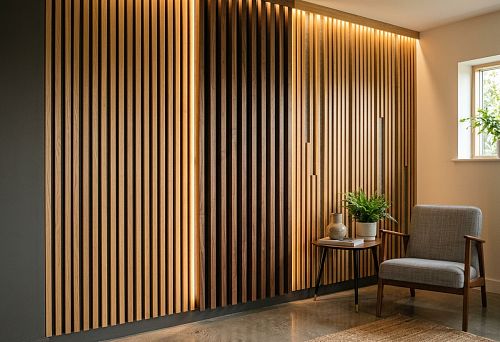
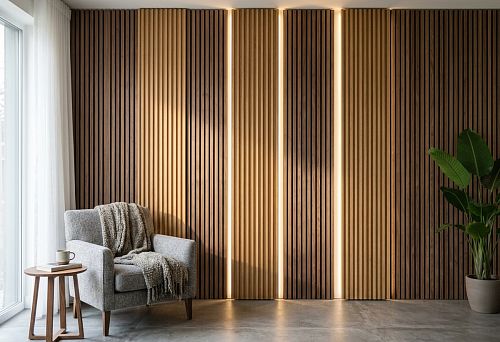
Can slatted panels and moldings be combined?
Yes. A popular solution: slatted panels in the lower zone of the wall, molding frames in the upper zone, with a dividing horizontal band. The combination works in modern and neoclassical interiors.
STAVROS: wooden wall moldings — production, precision, selection
Choosing a wooden molding for walls is a decision that will define the character of the wall for years. And this decision must be based on a precise profile, the right wood species, and guaranteed surface quality.
STAVROS is a Russian manufacturer of wooden architectural elements and millwork products from solid wood. Full production cycle without intermediaries: own sourcing, kiln drying to 8–12%, profile milling with a tolerance of ±0.1 mm/m, sanding ready for coating. Geometry control at every stage, not just at the final inspection.
In the catalogSTAVROSfeatures over 40 standard wall molding profiles in oak, beech, and MDF — from a minimalist fascia 10 mm (MLD-001, from 210 RUB) to complex ornamental profiles for classic boiserie (MLD-060, from 2,150 RUB and MLD-024, from 2,550 RUB). Also available are compatible baseboards, cornices, architraves, andwooden decorative elements for walls, allowing you to assemble a complete system of wooden millwork from a single source. Stock availability is constant for main items. Pickup from Moscow and St. Petersburg, delivery throughout Russia. Custom profiles — according to the customer's drawing, from 50 linear meters, lead time 10–14 working days.
A molding is not a detail. It is a decision. STAVROS helps you make it right.