




































































Article Contents:
- What are decorative wall slats and why are they needed
- Why slats for an apartment need to be chosen differently than for a large house
- Where decorative slats work best in an apartment
- What types of decorative slats are there
- What to choose: individual slats or slatted panels
- How to choose the size of the slat
- How to choose the spacing between slats
- How to choose slats for specific zones
- Materials
- Highlighting and combining with light
- How to combine slats with other elements
- Installation: what to know before buying
- Common mistakes when choosing
- Where to buy decorative wall slats
- FAQ block: Popular questions and answers
- Conclusion
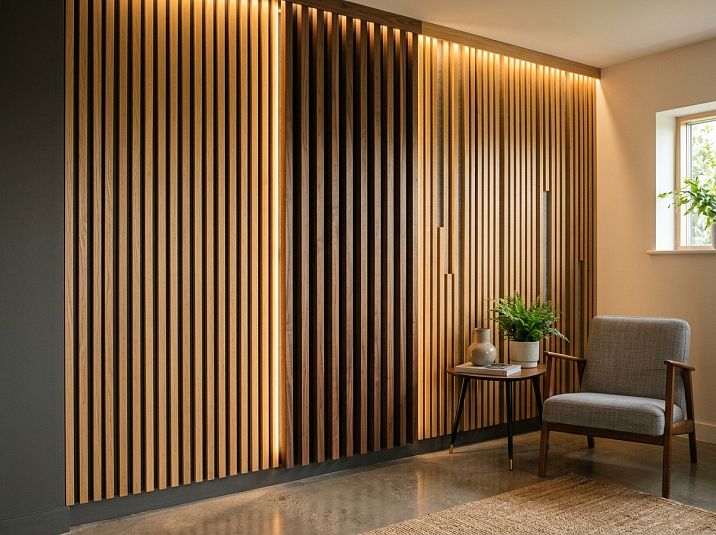
Stereotypes about finishing city apartments are crumbling before our eyes. The times when a wall surface was perceived solely as a background for wallpaper or paint are gone forever. Today, an interior is a complex, multi-layered architecture where form and relief take center stage. That is whydecorative wall battenshave become a true manifesto of modern design. But in an apartment, unlike a spacious country house, every cubic centimeter matters. You cannot simply cover all surfaces with solid wood. Urban living requires jeweler-like precision: correct proportions, a measured step, and absolute visual lightness. A mistake in scale can turn an elegant living room into a cramped box. Therefore, in this article, we will not talk about slatted decor in general. We will focus on the nuances: how to select materials, sizes, and styles for specific scenarios so that your TV area, bedroom, or hallway gains a unique character. We will analyze in detail howBuy oak wooden planks for wallsso that they become an investment in aesthetics, not a disappointment.


What are decorative wall slats and why are they needed
Let's understand the essence. Slatted decor is not just planks attached to a vertical surface. It is a powerful tool for spatial direction. First, they perform a crucial accent function. When the eye glides over a smooth surface and suddenly encounters a clear, graphic rhythm, the brain reads it as a dominant. Second, it is a brilliant way to zone. You can visually separate a workspace from a relaxation area without building solid drywall partitions. Third, slats create depth. The alternation of protruding elements and shadows between them creates an optical illusion that changes with lighting. And finally, they can radically correct the visual perception. Vertical lines make the ceiling seem higher, which is a saving effect for most apartments. If you decide toBuy decorative planksyou are not just buying wood or MDF, you are purchasing architectural volume.




Why slats for an apartment need to be chosen differently than for a large house
A country house forgives a lot. Huge windows, three-meter ceilings, spacious halls — there, massivebuy decorative wall slatswhich can be in any cross-section, looks organic. An apartment, however, is a strict limit of space. There are fewer square meters, meaning any disproportion catches the eye. In standard layouts, the risk of overloading the wall increases enormously. If you use too wide or too thick elements, they will "eat up" the air and create a oppressive feeling. In an apartment, it is critically more important to work with scale, consider the intensity of daylight, and the texture of adjacent surfaces. Agree, elegant geometry requires precise calculation, otherwise instead of a stylish modern space, you will get the effect of a wooden sauna. That is whyWooden boards in interiorslats in apartments must be filigree integrated into the overall concept, obeying strict ergonomic laws.
Our factory also produces:



Where decorative slats work best in an apartment
The potential of slatted decor is maximized where it is functionally and aesthetically justified. Let's consider key locations. The TV area is an undisputed leader. A huge black square of the screen often looks foreign on a bare wall, andTV zone with slatsunites the technology with the interior, adding depth without extra bulk. The wall behind the bed is the second most popular solution. Usingslats in the bedroom— means creating a monumental yet cozy headboard that also improves the room's acoustics by absorbing excess echo. The hallway also gratefully accepts this technique: here you can buy slats for interior finishing as a base for hooks or hidden storage systems. In the work area, strict verticality helps with concentration, and in the kitchen-living room, a slatted partition elegantly separates the dining area from the relaxation zone. Let's not forget the narrow corridor, where the right rhythm on one wall breaks the perspective and saves from the "tunnel" effect.
Get Consultation
What types of decorative slats are there
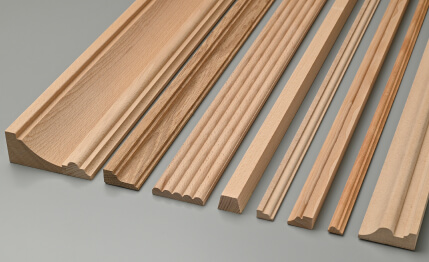
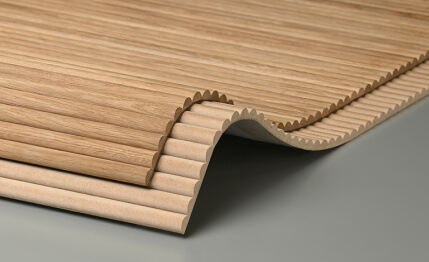
The modern market offers solutions for any task, and to make the right choice, you need to understand the classification. Basically, we can divide the assortment into two categories: individualWooden planksand integrated systems. Individual elements are mounted piece by piece, giving freedom in choosing distances.Rafter panels— these are ready-made panels with milled relief that are attached immediately to a large area. By dimensions, thin profiles (ideal for minimalism), medium (universal base), and wide (for creating brutal accents) are distinguished. The surface can be smooth (painted with enamel) or textured, preserving the natural grain pattern. For those who follow trends, manufacturers constantly releasenew wooden slats, and for fans of proven solutions,hits of wooden slats, which have proven their reliability in thousands of projects, are always available.
What to choose: individual slats or slatted panels
This is a dilemma every client faces. The answer lies in your tasks and initial data. Individual slats are indispensable when you need a complex, custom layout. For example, if you want to create an asymmetrical rhythm, bypass sockets, protrusions, or integrate sconces directly into the wall. On the other hand, if time is money, it's worth consideringslatted panels for walls. When fast installation is needed, solid panels save a huge amount of time. They also become the only choice when the wall has unevenness that needs to be hidden without messy plastering work. Additionally, when pattern repeatability is important and you fear errors in manual marking, panelSlatted panels for walls and ceiling guarantee a flawless result.
How to choose the size of the slat
Proportions are the alpha and omega of apartment design. Get the cross-section wrong, and the entire interior will be ruined. The width of the element determines visual weight: in small rooms (up to 15 sq.m.), thin lines (20-30 mm) look exquisite. The thickness, or projection from the wall, creates shadow depth. A profile that is too thick in a tight space will look rough and "eat up" usable area. The length is usually tied to the room's height, and here the rule is one: seamlessvertical wooden slats from floor to ceiling look the most expensive and prestigious. If you're considering a horizontal layout, be careful: it visually widens the wall but can make the ceiling lower. For standard layouts, an elegantWooden Rail RK-001 is often the optimal compromise, providing the desired graphic while remaining light and unobtrusive.
How to choose spacing between slats
The distance between slats (gap) is what sets the rhythm and mood. A poorly chosen gap can cause visual irritation (ripple effect) or, conversely, make the decor dull. A dense rhythm, where the gap equals the width of the slat itself, creates a monolithic, texture-rich block. This works excellently on small accent walls. A medium rhythm (gap 1.5-2 times the width) is a classic that allows the background wall color to show through, creating a volumetric 3D picture. A more airy composition, where the gap significantly exceeds the profile width, is ideal for soft zoning and eco or minimalist styles. Remember:Racks on the Wallchange the room's optics. A frequent step compresses the space, a rare one lets it breathe.
How to choose slats for specific zones
There is no universal solution for all rooms; each functional zone requires its own approach. For the TV zone, it is critical to avoid reflective surfaces and overly aggressive rhythm. A matte finish and medium step work ideally here, so the eyes don't tire while watching movies. For the bedroom, the atmosphere dictates its own conditions: tactilely pleasant surfaces are needed, possibly with soft milling. If you plan to buy slats for the wall behind the bed, pay attention to natural wood—it adds warmth. For the hallway, where there is a risk of mechanical damage from bags or shoes, it is worth choosing hard species (oak, beech) and avoiding overly protruding profiles. For an accent wall in the living room, you can afford experiments with color and complex geometry, and for zoning a kitchen-living room, through slatted partitions that let light through are excellent.
Materials
The choice of material determines not only the price but also durability, aesthetics, and the behavior of the decor in apartment microclimate conditions. Solid wood is living energy. Choosingform the architecture of walls and ceilings, creating a play of light and shadow., you get a unique fiber pattern, prestige, and natural warmth. Oak or beech products are ideal for interiors where natural texture is important: Scandinavian style, loft, chalet. But solid wood reacts to humidity and the heating season. MDF for painting is stability and geometry. MDF will not dry out or warp. This material is indispensable when a perfect, paintable surface matching the wall color is needed. When is natural texture better? When the interior lacks character and warmth. When is paintable geometry better? When the goal is to create a monolithic architectural volume in contemporary or minimalist style, where form is more important than material.
Lighting and combination with light
Lighting can turn ordinary wooden trim into a dramatic spectacle. Is LED backlighting needed in apartment slatted decor? Definitely yes. It reveals the relief and creates a stunning floating effect. Especially goodSlatted panels with lightingin the TV area or at the head of the bed, where they serve as a source of soft, ambient light. But there is a danger here. How not to make the interior too "noisy"? The main rule is to use hidden mounting profiles with matte diffusers. The light should be reflected and warm (2700-3000K). Open LED points or cold white light will instantly cheapen the interior, turning a stylish living room into a semblance of an electronics store display.
How to combine slats with other elements
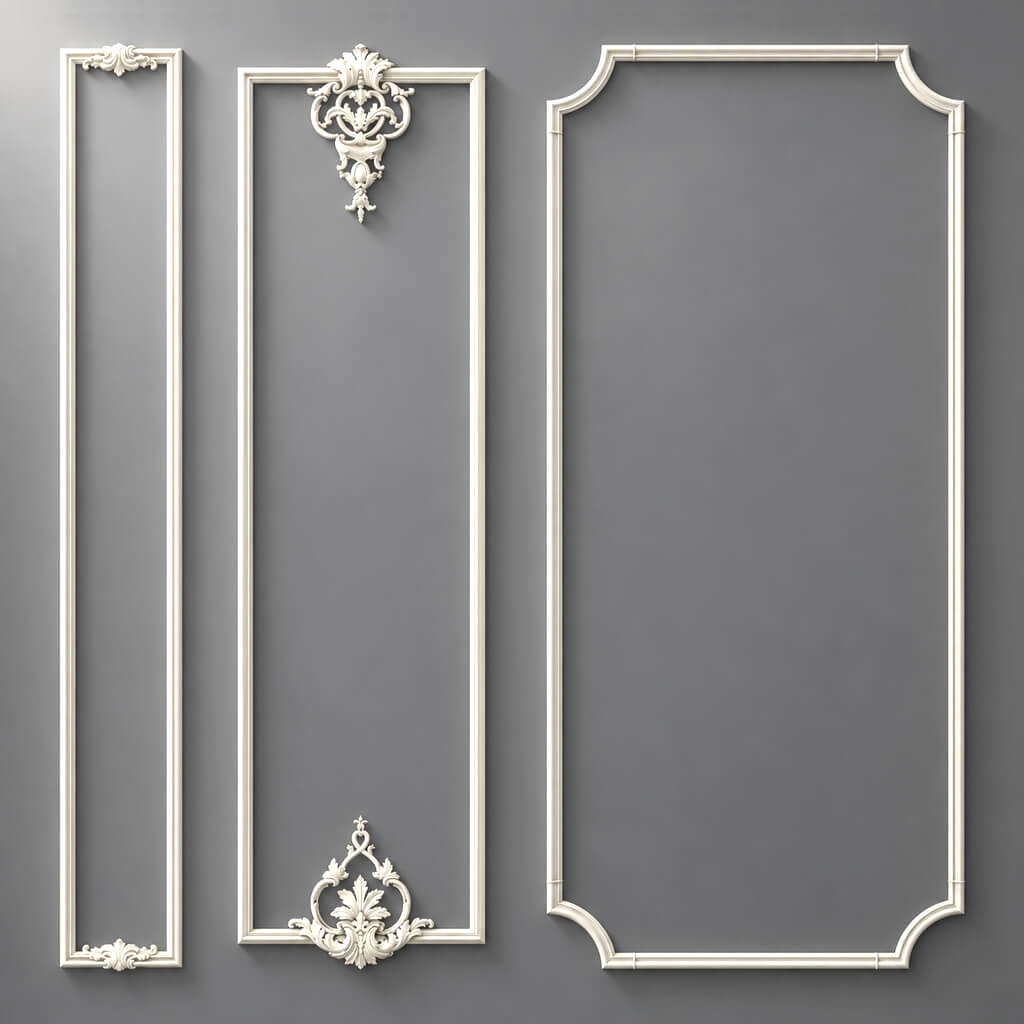
Slats do not exist in a vacuum; they must become an organic part of the overall space. The most complex junction is the baseboard. It is optimal to use a hidden baseboard or shadow profile, but if that is not possible, study how to properly joinsolid wood wall batten and baseboard. Concealed doors, clad in the same slatted profile, create a fantastic monolithic wall effect. Slatted geometry coexists with classic-style moldings and cornices with difficulty — this requires a virtuoso eclectic approach. Furniture fronts (for example, storage systems in the hallway) are best made in the same rhythm as the wall. And, of course,Laths for interior finishing combine beautifully with smooth panels, concrete-look plaster, and matte paint, working through a contrast of textures.
Installation: What's Important to Know Before Buying
Preparation for installation is 80% of success. Studying the sectionWall cladding with louvered panels, you must grasp the main point: the base for individual elements must be perfect. Any curvature in the plaster will cause the wooden vertical to highlight this defect, creating an ugly gap. Marking requires a laser level. Fixation with glue (liquid nails) is only acceptable for lightweight MDF profiles on flat walls. Heavy solid wood or uneven surfaces require a frame subsystem or mounting strips. Joining profiles lengthwise (if ceilings are higher than the standard product length) should be done at a 45-degree angle or through a decorative seam. And don't forget about quantity calculation: always take 10-15% more, as waste is inevitable during cutting (especially around sockets).
Selection Errors
In the pursuit of trends, it's easy to make fatal mistakes. The most common error is disproportion. A batten that is too thick for a small wall not only looks rough but physically eats up space. The second problem is a step that is too frequent, which on an apartment scale creates visual noise and causes eye fatigue. Style mismatch is also common: rustic oak with knots in strict minimalism looks like a misunderstanding. Wrong material choice — buying raw wood of unknown origin — will lead to your decorative wall slats in the apartment deforming and cracking after six months, in the middle of the heating season. Finally, a lack of connection with the rest of the interior makes the decor an alien element, detached from the color scheme and floor texture.
Where to Buy Decorative Wall Slats
Choosing a supplier is a decision that will determine the quality of your interior for decades. How to choose between a separate slat and a panel? Look for a company that doesn't just sell 'sticks' but offers comprehensive engineering solutions. How to assemble a kit for a task? You need a manufacturer capable of providing a unified system of color samples so that the baseboard, doors, and wall panels match the tone of the slatted decor. Why is it better to look not at one item but at a system? Because the interior does not tolerate a mismatch of shades and profiles. Contact market leaders whose production guarantees impeccable geometry, perfect sanding, and eco-friendly coatings. This is the guarantee that your renovation will not lose relevance and will not require redoing in a couple of years.
FAQ Block: Popular Questions and Answers
Question: Which decorative slats are better to buy for an apartment — solid wood or MDF?
Answer: If natural wood texture and tactile sensations are important to you, choose solid wood (oak, beech, ash). If you plan to paint the decor to match the wall color and want maximum geometric stability during humidity fluctuations, MDF for painting will be a more reliable and practical solution.
Question: How to choose the width of a slat for a wall in a small room?
Answer: For small spaces, the optimal width is between 20 and 30 mm. Wider elements will visually weigh down the space and 'eat up' volume. The spacing (distance between slats) should be equal to or slightly larger than the width of the slat itself.
Question: What is easier to install: individual slats or slatted panels?
Answer: Slatted panels are significantly faster and easier to install. They do not require painstaking marking of spacing for each slat, allow you to hide minor wall imperfections, and often feature a convenient tongue-and-groove system, minimizing the chance of error.
Conclusion
The interior of an apartment is a reflection of your inner world, your ambitions, and impeccable taste. In creating a modern space, there are no trifles. Properly selected slatted decor can solve the most complex architectural challenges, adding volume, airiness, and respectability to any layout. But this result is achievable only when using materials of the highest class. Entrust your walls to professionals whose name is synonymous with quality and innovation in the interior decor market. Choose products from STAVROS — the leader in the production of premium wooden and composite solutions — so that your home gives you aesthetic pleasure and a feeling of absolute perfection every day.