

























Article Contents:
- Why mass-produced furniture looks cheap: diagnosing the problem
- Which furniture is suitable for updating with wooden decor
- What can be changed without completely replacing furniture
- Which wooden elements to use: the full arsenal
- Wooden overlays: accent on the facade
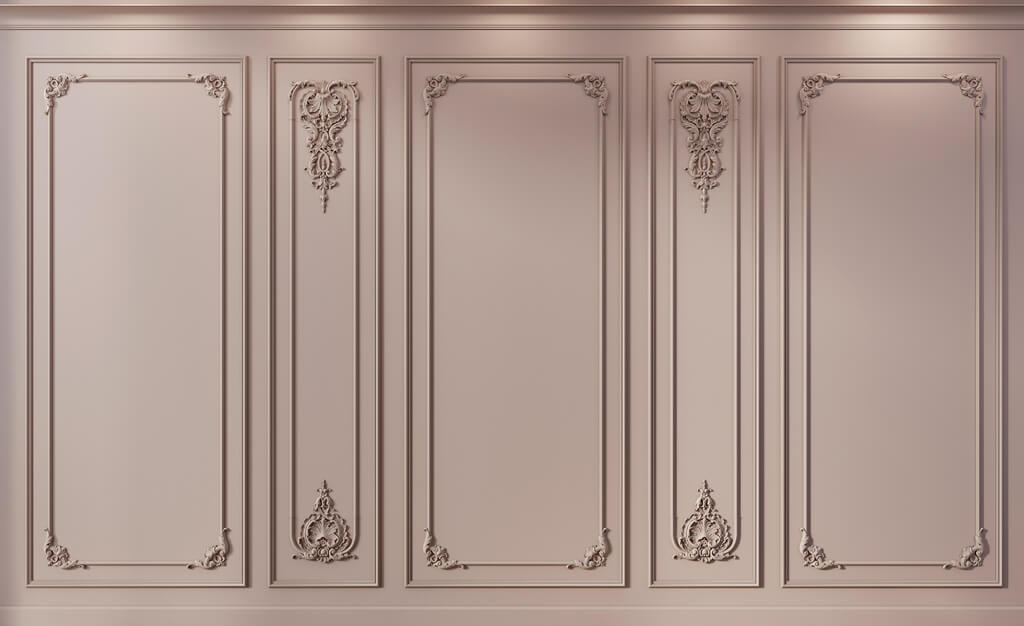
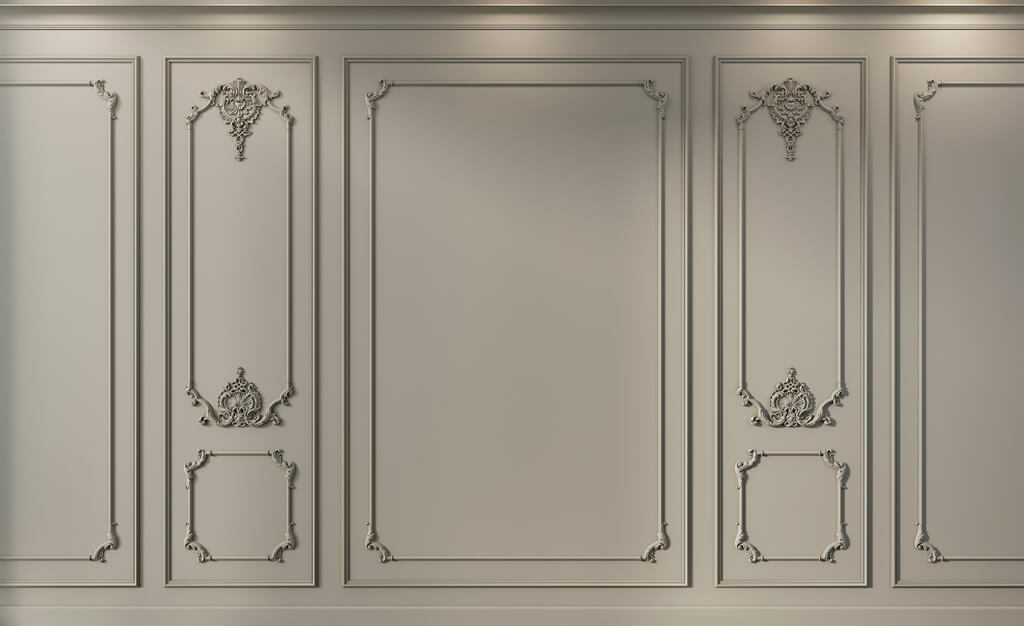
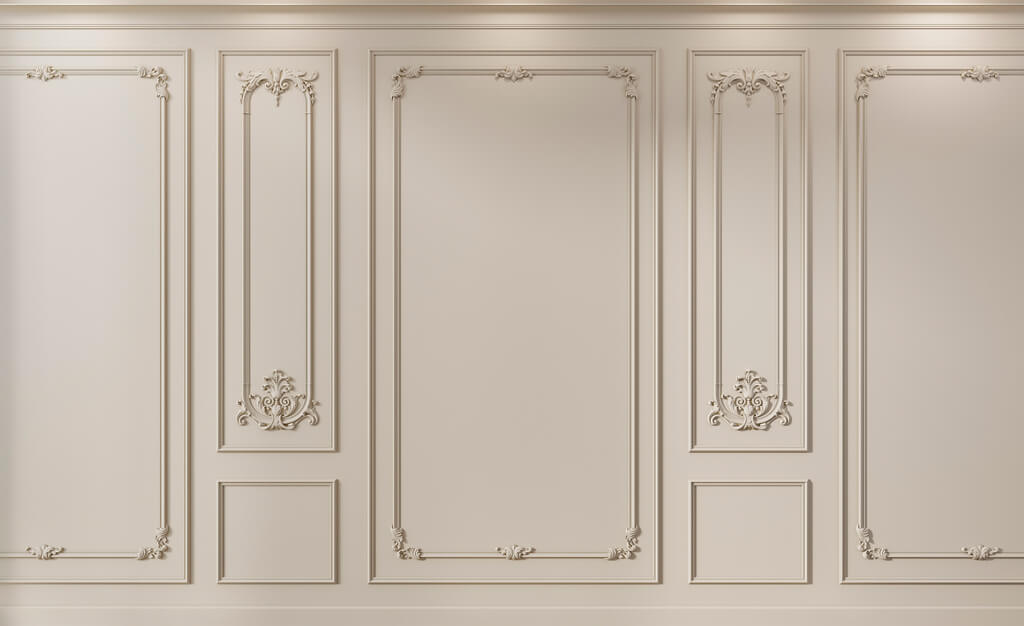
- Moldings for furniture: frames, rhythm, and relief
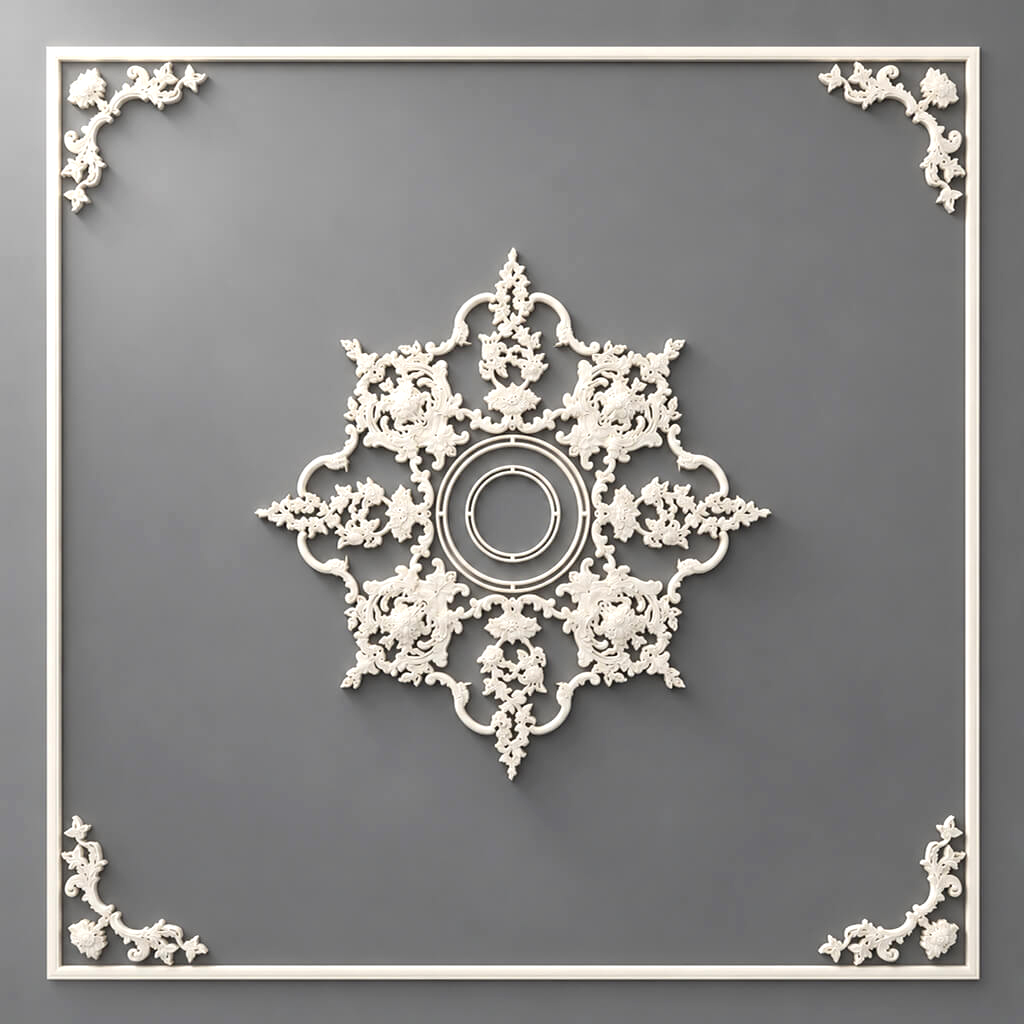
- Carved decor: when true classic is needed
- Wooden handles: the fastest upgrade
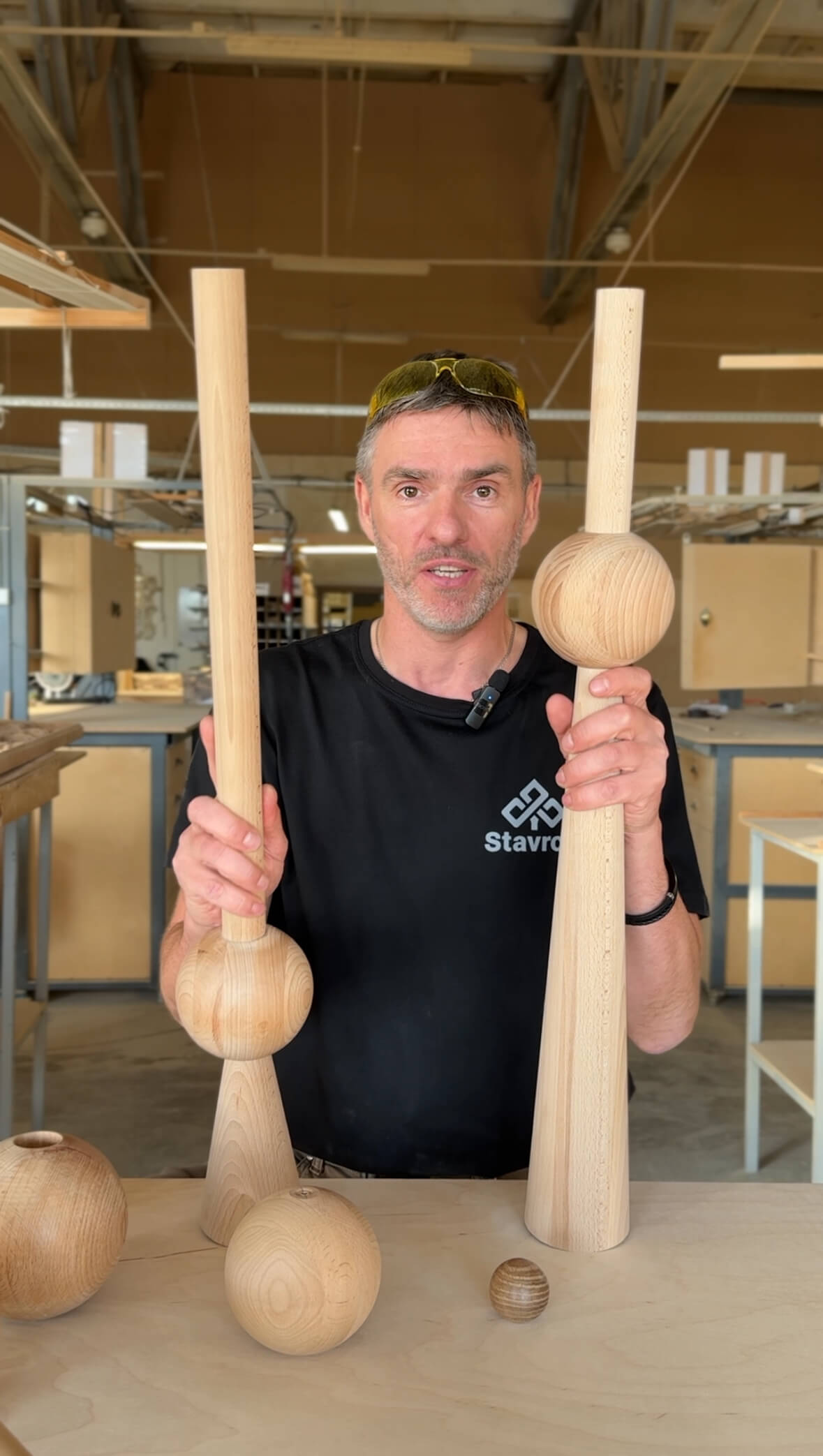
- Furniture legs and supports: changing the silhouette
- Furniture plinth and bottom profile: the base matters
- 7 transformation scenarios: specific examples
- Scenario 1: a regular hinged wardrobe
- Scenario 2: a chest of drawers with four drawers
- Scenario 3: a kitchen set
- Scenario 4: a TV stand
- Scenario 5: a built-in wardrobe in a niche
- Scenario 6: a sideboard or display cabinet
- Scenario 7: bedside tables
- How to choose a decor style: from classic to minimalism
- Classic and neoclassic
- Baroque and Empire
- Art Deco
- Modern style and minimalism
- Country, Provence, and rustic style
- Installing wooden overlays: from theory to practice
- Surface Preparation
- Marking
- Fastening
- Painting and finishing
- Mistakes when updating furniture with wooden decor
- Why wooden decor is fundamentally better than simple repainting
- How to assemble a set: examples for different items
- Set for a wardrobe
- Set for a dresser
- Set for a kitchen
- Wooden decor and design techniques: an inside look
- Wooden decor in the context of a complete interior project
- What to buy for furniture update: a practical list
- FAQ: Answers to Popular Questions
- About the Company STAVROS

You have a wardrobe from the nearest furniture store — proper, spacious, practical. Or a kitchen bought five years ago: good, functional, but completely faceless. Or a chest of drawers that stands in the bedroom and honestly performs its function, without pretending to any beauty. Sound familiar?
So here's the thing: all of this can be changed without completely replacing the furniture. Without expensive renovations. Without buying a new set. wooden furniture appliqués, moldings, carved decor, handles, supports, and profiles are tools that designers use to turn a mass-produced item into something resembling custom joinery. It's not about money. It's about knowledge — what to add, where to place it, and how to connect the details into a single decorative logic.


Why mass-produced furniture looks cheap: a diagnosis of the problem
Before looking for a solution, it's worth understanding where this feeling of a "mass product" comes from. Mass-produced furniture is made on the principle of maximum unification: right angles, flat facades, minimum details, zero relief. This is the logic of the assembly line — remove everything unnecessary to reduce cost.
The problem is not the material or the quality of assembly. The problem is the lack of architecturality. The item has no base, no top finish, no play of light and shadow on the facade, no accents that would make the eye linger. It is flat — in every sense.
This is where work with wooden decor for furniturebegins. By adding relief — a frame from molding, an overlay in the center of the facade, a lower profile at the base, a new handle — you are not changing the furniture. You are changing its architecture. And along with the architecture — the perception, the sense of price, the status of the item in the interior.
Which furniture is suitable for updating with wooden decor
Short answer: almost any cabinet furniture with flat fronts. A flat surface is the best base for overlay decor: nothing interferes with installation, and wooden elements fit cleanly and neatly.
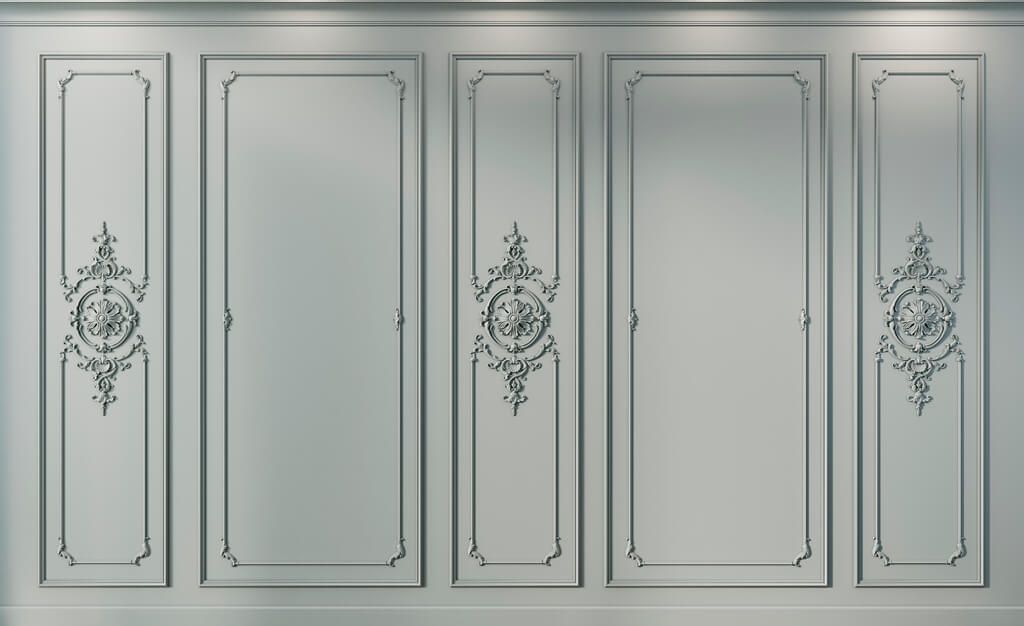
Sliding wardrobe and hinged wardrobe. Long flat door panels are an ideal field for molding frames. Several rectangular frames made of furniture moldings, arranged symmetrically, visually break up the monotonous plane and create the illusion of paneled doors — like in classic handmade furniture.
Chest of drawers. Here the possibilities are especially rich: each drawer is a separate frame, each frame is a separate facade detail. Add a central overlay and change the handles — the chest of drawers will become unrecognizable.
Kitchen set. Facades of upper and lower cabinets, refrigerator facade, decorative plinth — a few hours of work, and the set takes on a completely different character.
TV stand. Wide and low, it often looks faceless. Side overlays, bottom profile, and a pair of wooden handles — and the piece starts to look like a designer console.
Built-in wardrobe in a niche. The most striking case: adding a top cornice, bottom baseboard, vertical moldings, and decorative overlays turns built-in furniture into an architectural element of the room.
Walk-in closet. Internal section doors, drawer fronts, bottom trim — here to buy, which will allow you to transform your furniture using carved wooden elements. You can use the C-003-3 decor set to decorate furniture, walls, doors, or any other surface. The C-003-3 decor set is made of oak or beech, known for their strength, durability, and beauty. You can buy the C-003-3 decor set at the Stavros decor store, which specializes in producing and selling decorative elements and hardware for furniture and interiors. At the Stavros decor store, you will find a wide selection of decor sets of various shapes, sizes, and styles. You can choose it works as a system upgrade, setting a unified style for the entire space.
Buffet and display case. Furniture with a claim to grandeur is especially grateful for decor: a carved overlay on the central panel, moldings around the perimeter of the glass doors, new handles and a lower plinth — this is no longer a mass-produced buffet, but an accent piece of interior design.
Desk and bedside tables. Small pieces of furniture also lend themselves to transformation: wooden handles, a molding frame on the side, a decorative overlay on the tabletop of the nightstand.
Our factory also produces:


What can be changed without completely replacing the furniture
This is a very specific question — and there are specific answers to it. There are zones of a furniture piece that are available for upgrade without disassembling the body and without new facades.
Facades. The surface of doors and drawers is the main point of application for wooden decor. Moldings, overlays, and carved elements are attached here. New handles also go here.
Lower zone. Wooden baseboard or a decorative profile at the base of the furniture covers the gap, masks the technical plinth, and creates a visual base.
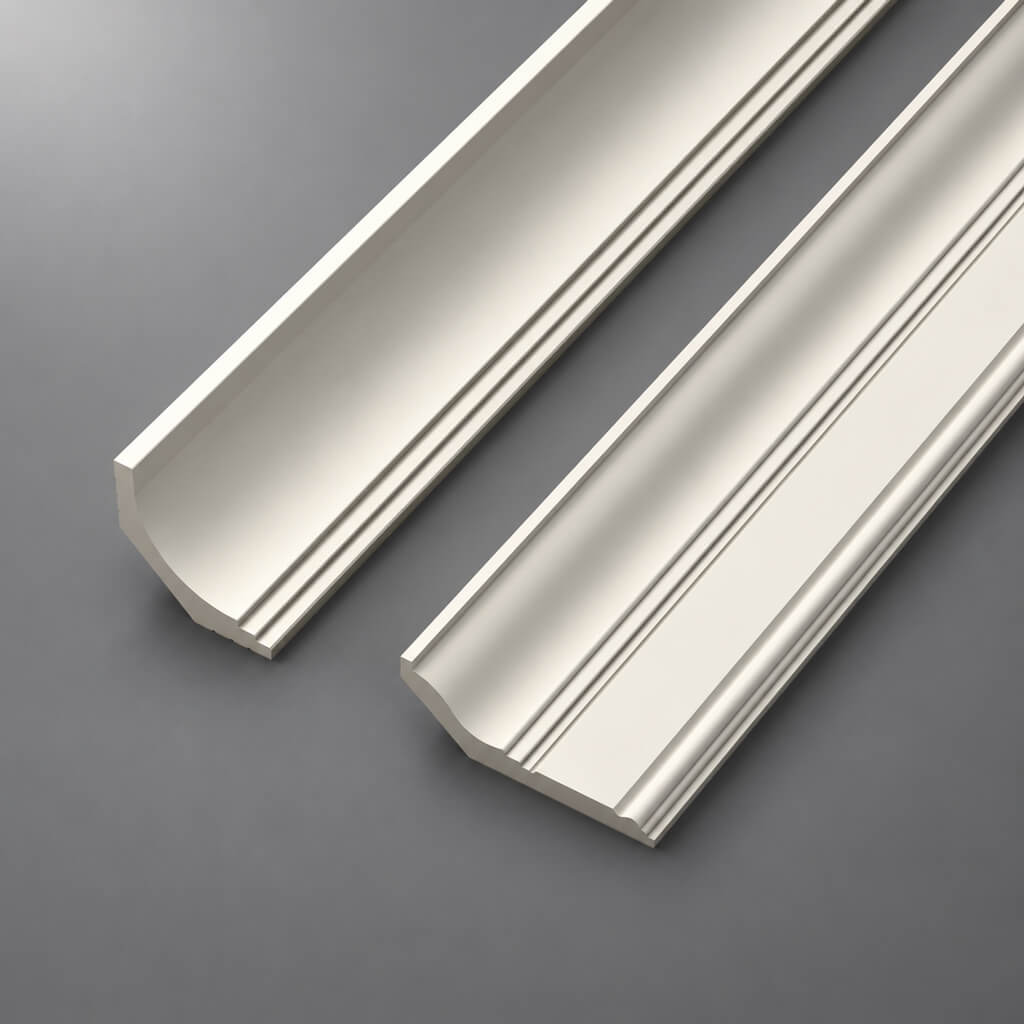
Upper zone. A cornice or upper profile is the "crown" of the furniture piece. It is what gives a sense of completeness from above. wooden items STAVROS also has cornices and profiles for painting that are easily mounted on the top end of the cabinet.
Side panels. If the cabinet stands in a visible area, the side wall also comes into view. A decorative vertical line from a molding or an overlay in the center of the side panel is a detail that gets noticed.
Handles. The fastest and most visual transformation. New wooden furniture handles change the accent of the entire piece — especially in the kitchen, where handles are repeated on every facade.
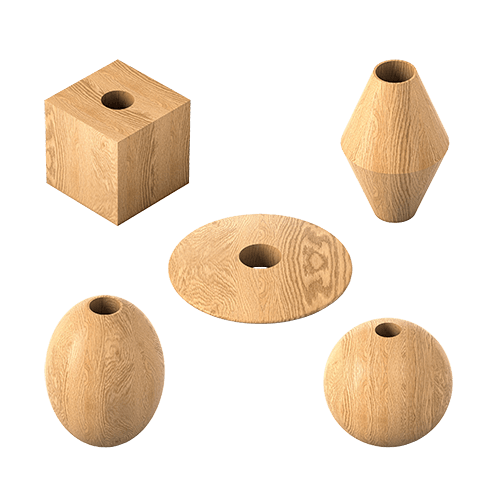
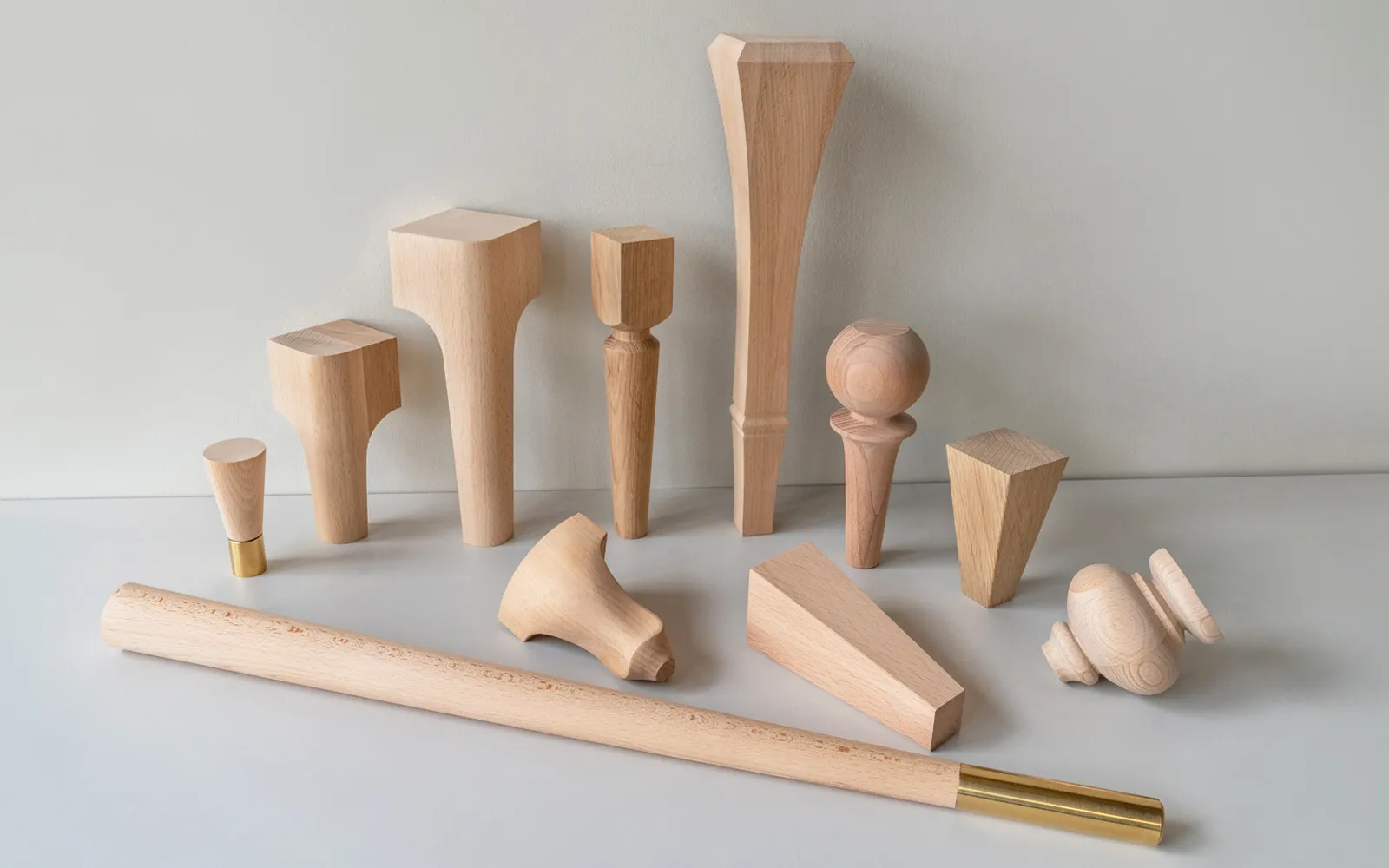
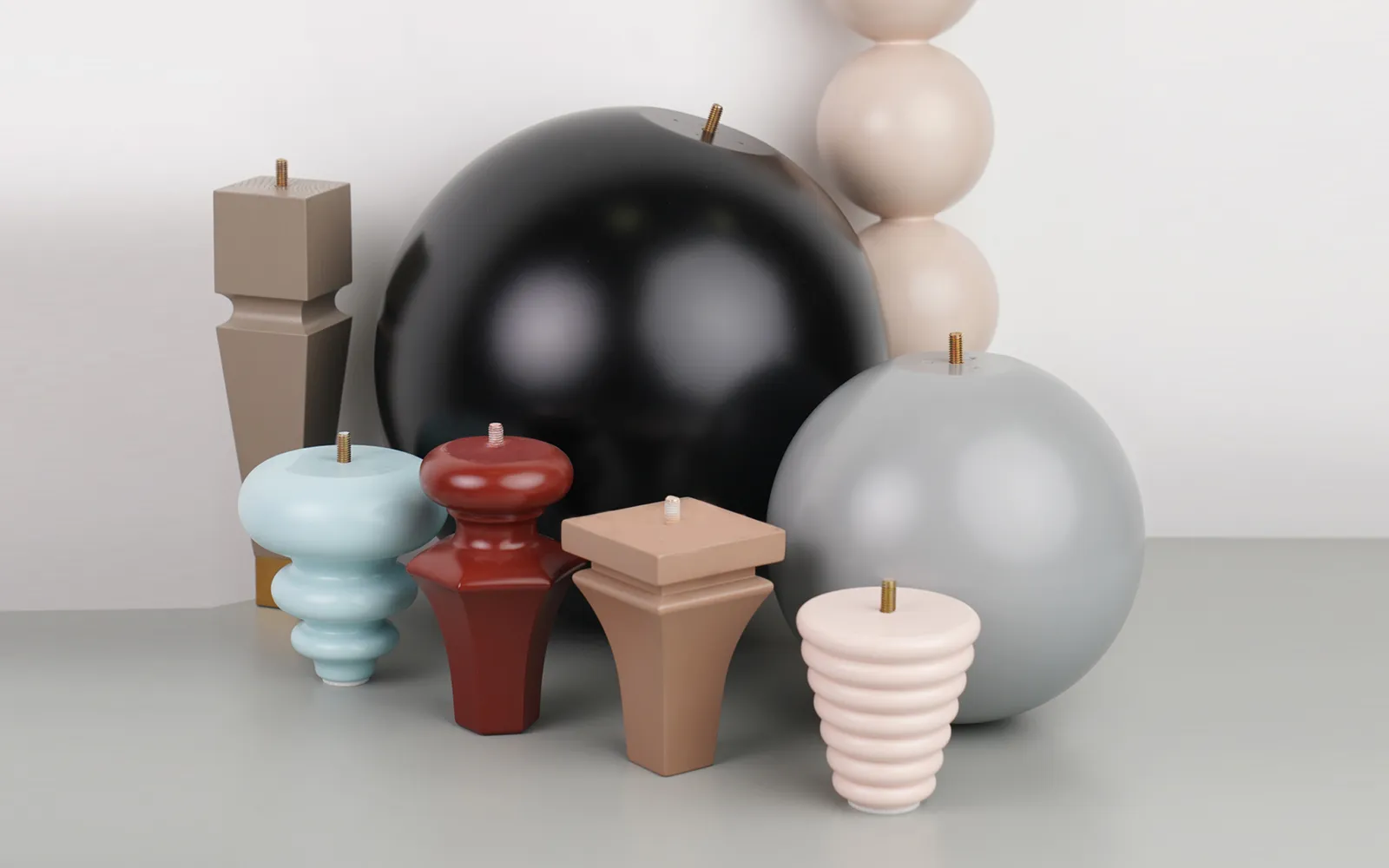
Supports and legs. Replacing standard plastic supports with wooden or turned ones Furniture legs is a technique that completely changes the silhouette of the furniture.
Vertical posts and corners. Decorative strips and corner moldings set a vertical rhythm for facades and mask technical gaps between sections.
Get Consultation
Which wooden elements to use: the full arsenal
Wooden overlays: accent on the facade
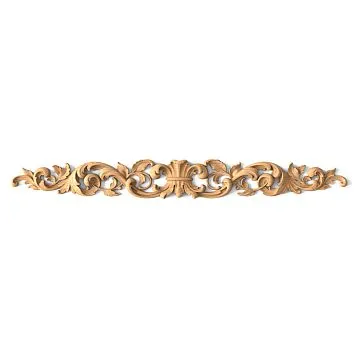
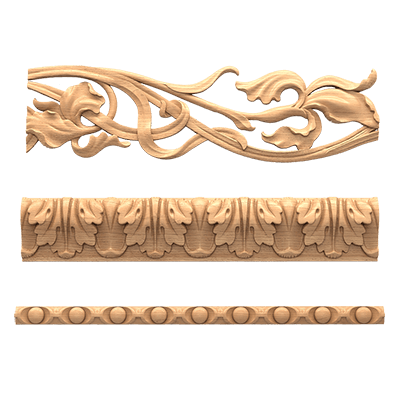
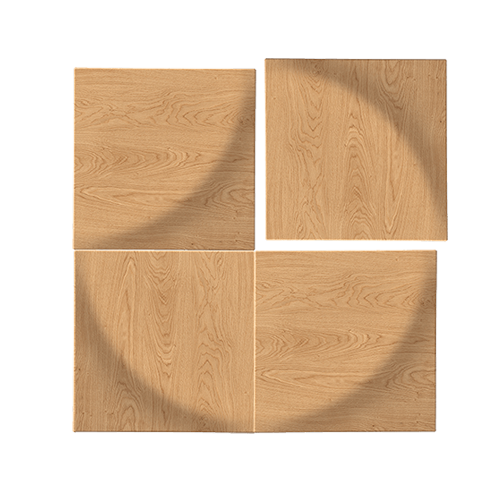
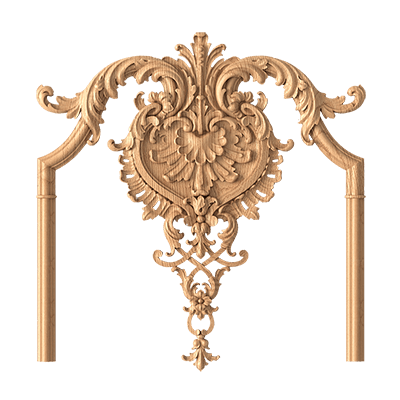
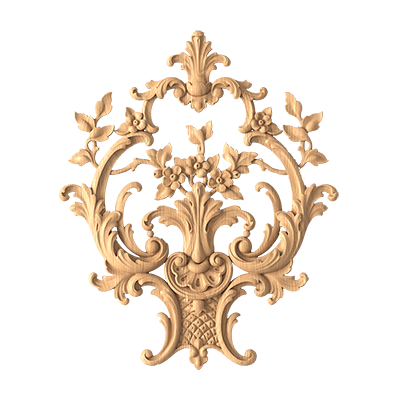
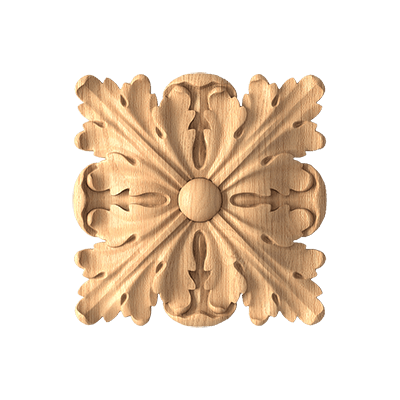
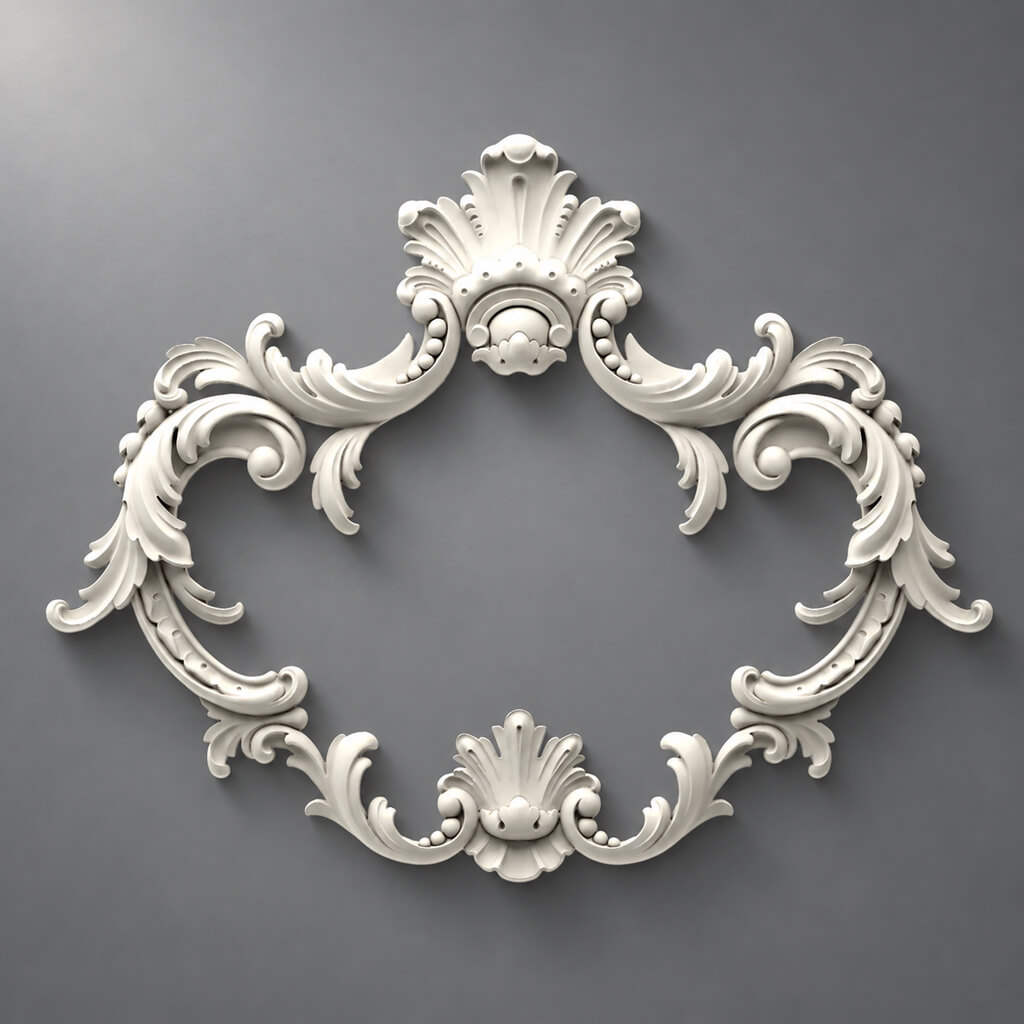
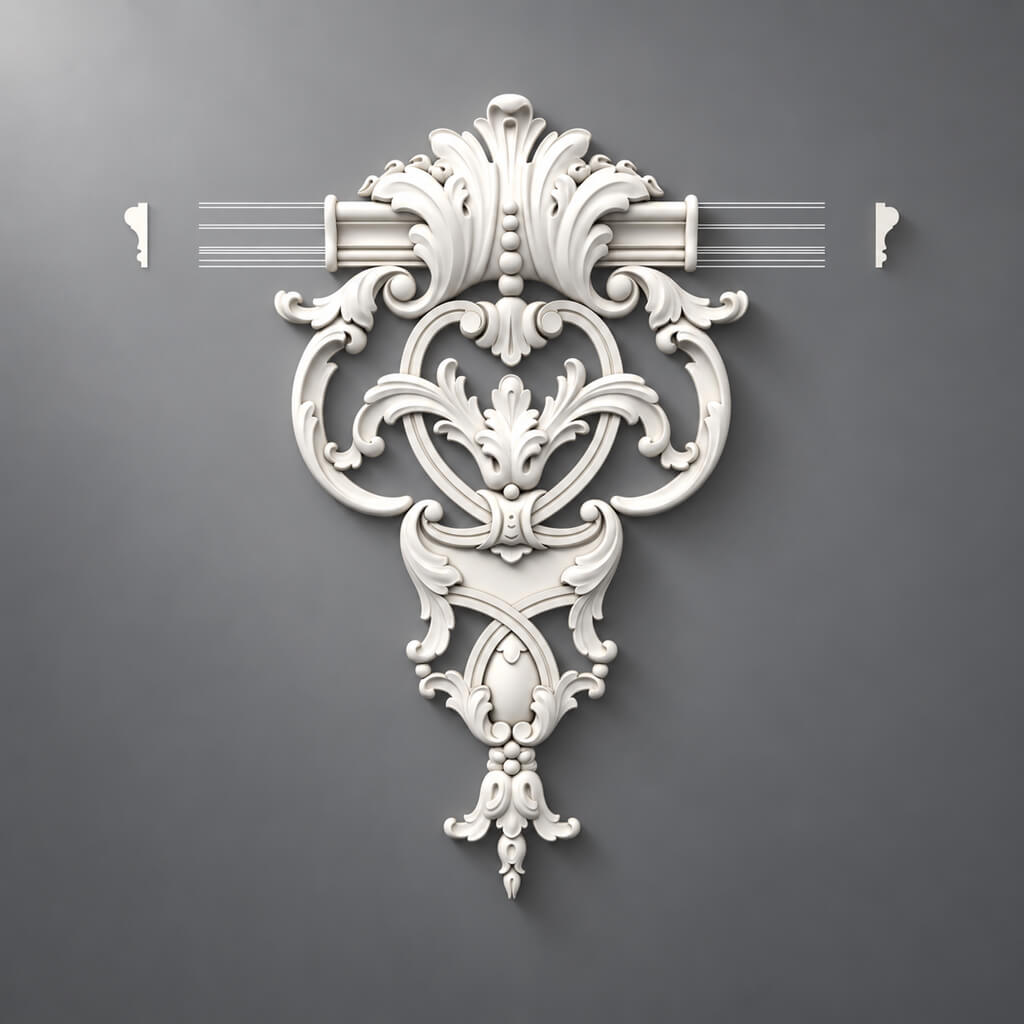
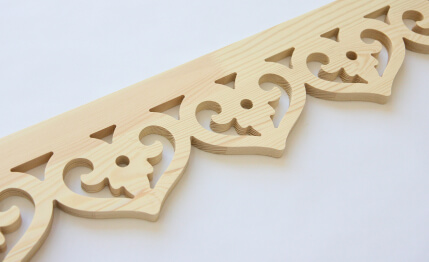
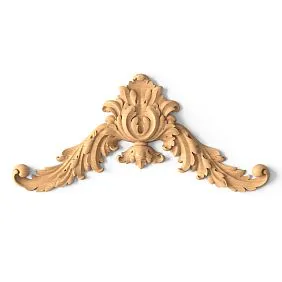
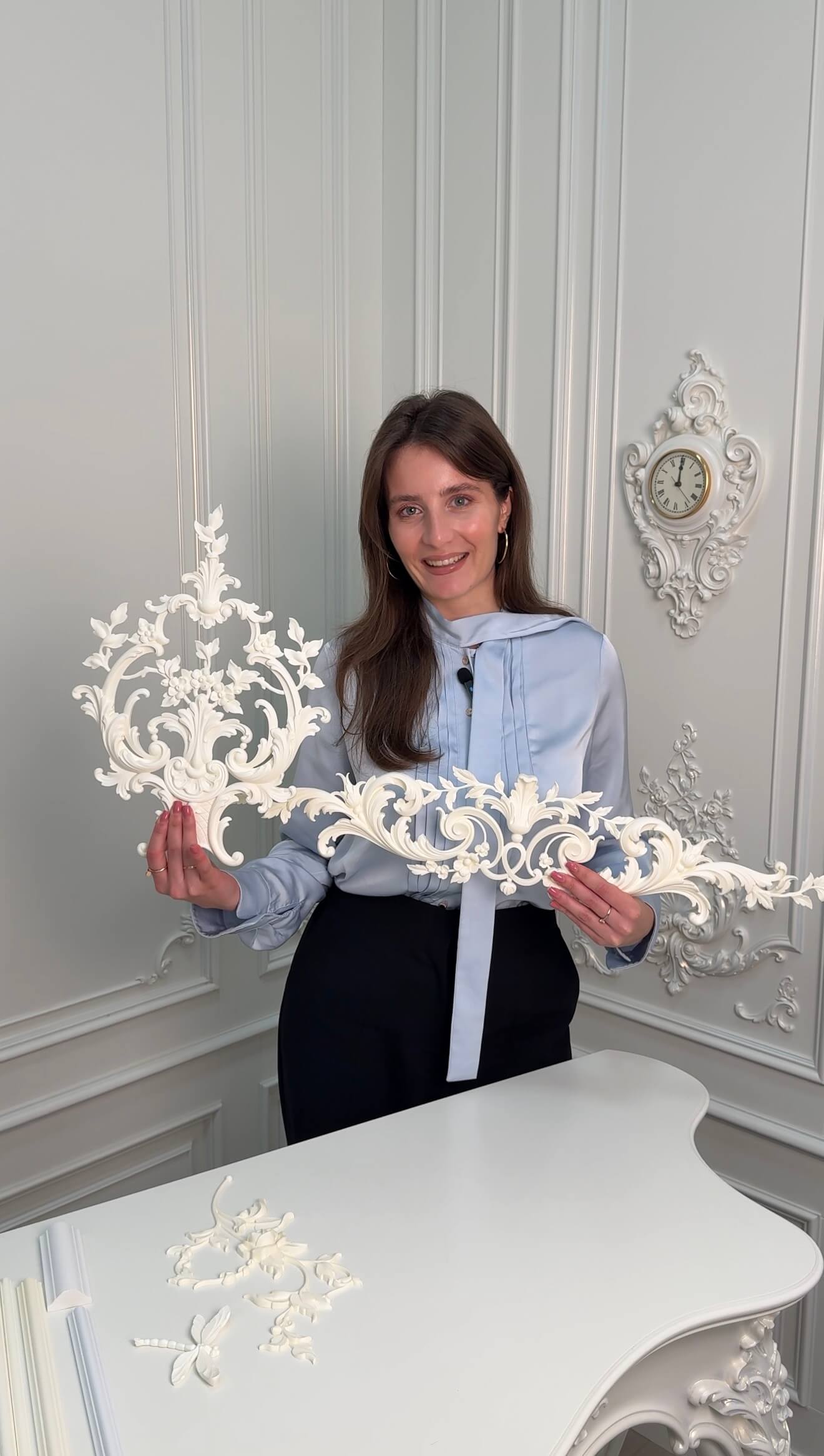
applied decoration for furniture are decorative elements that are attached to the facade surface without replacing it. They can be symmetrical and asymmetrical, central and corner, geometric and floral, minimalist and richly carved.
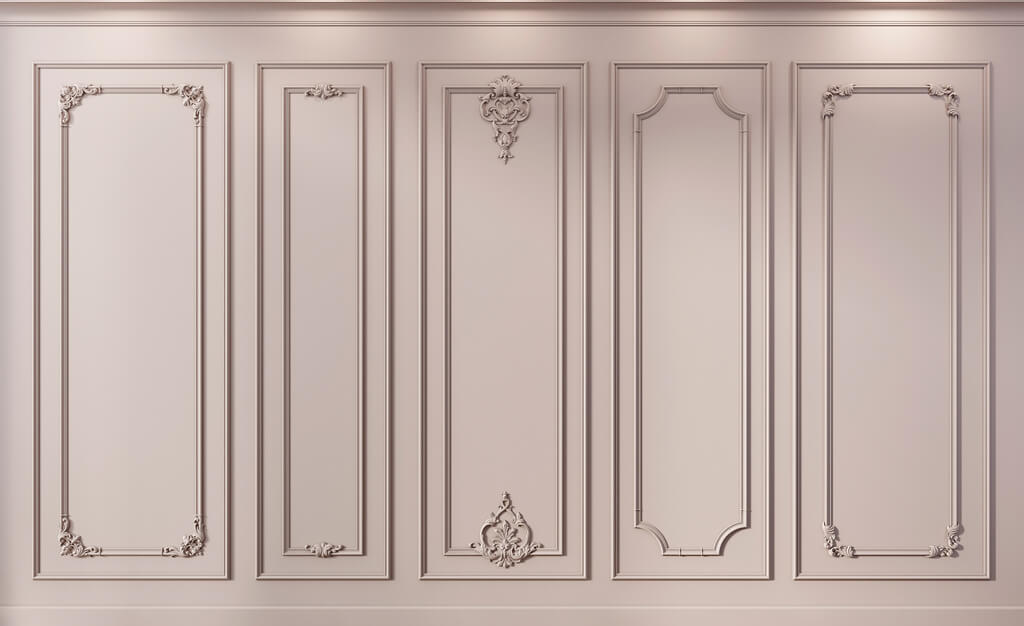
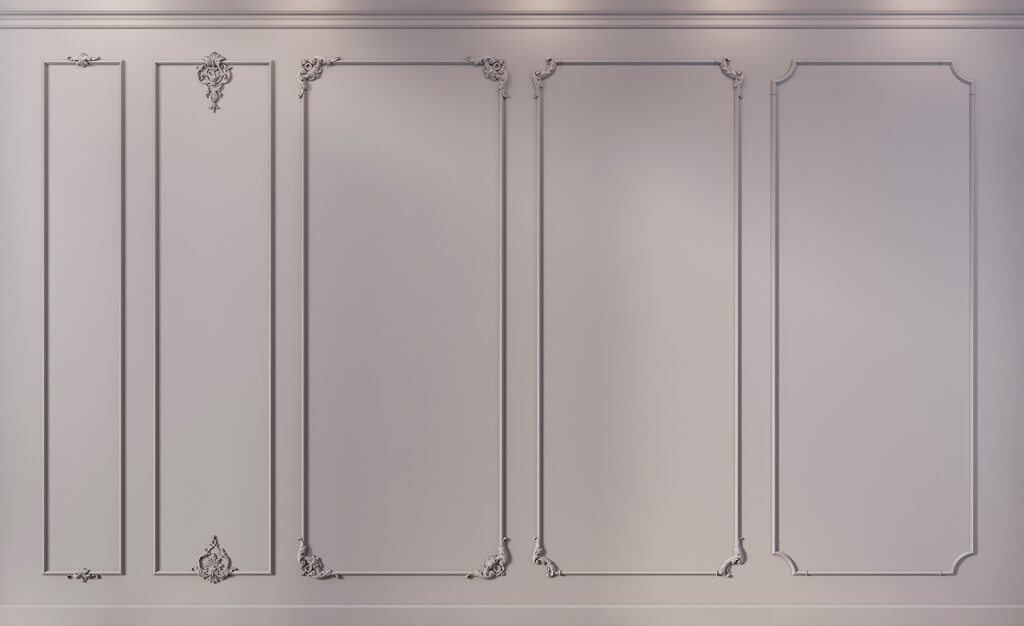
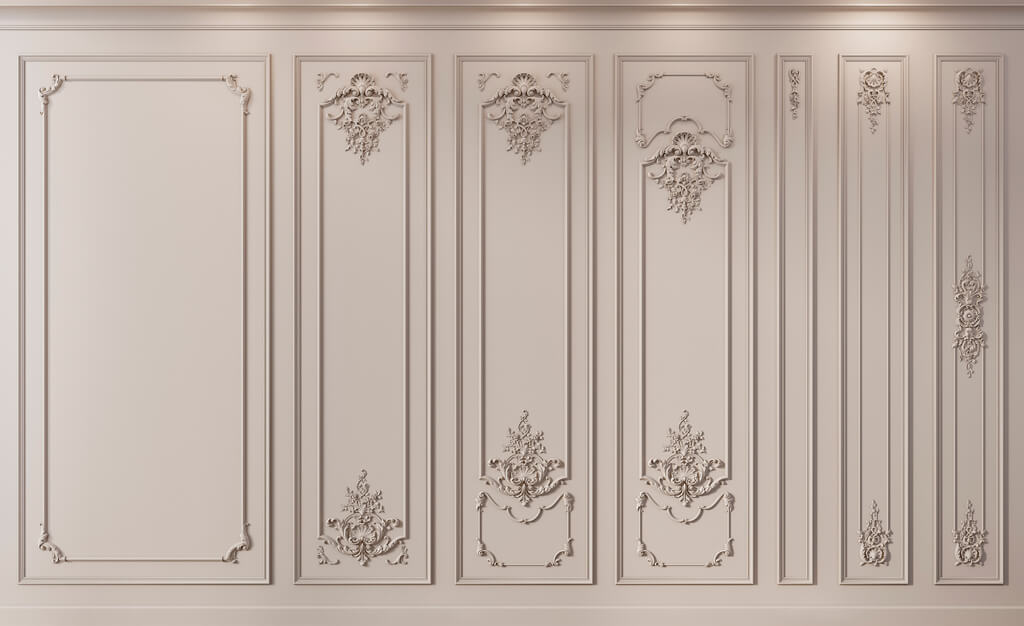
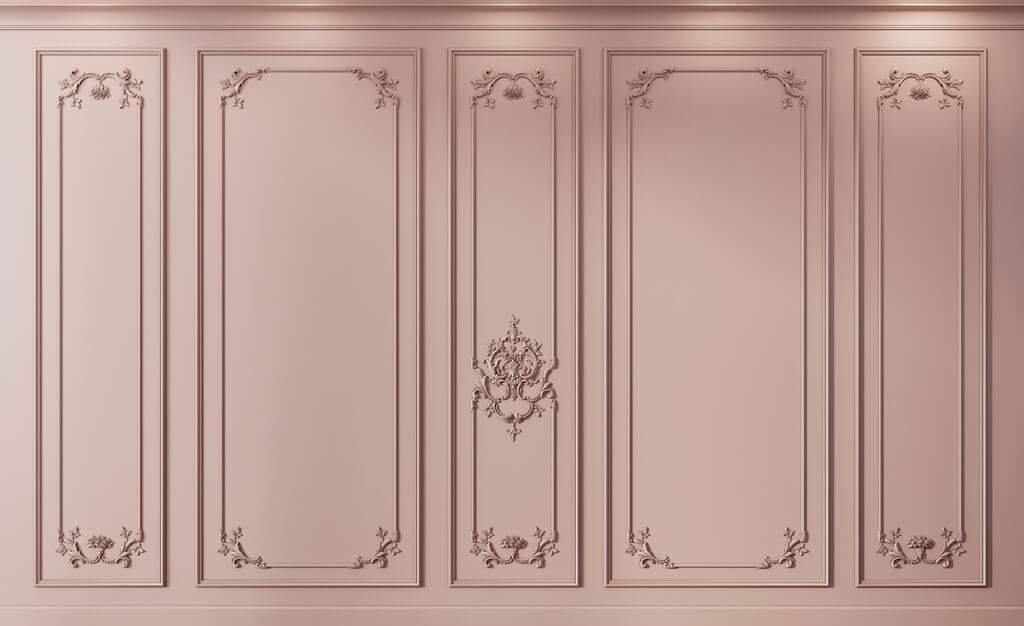
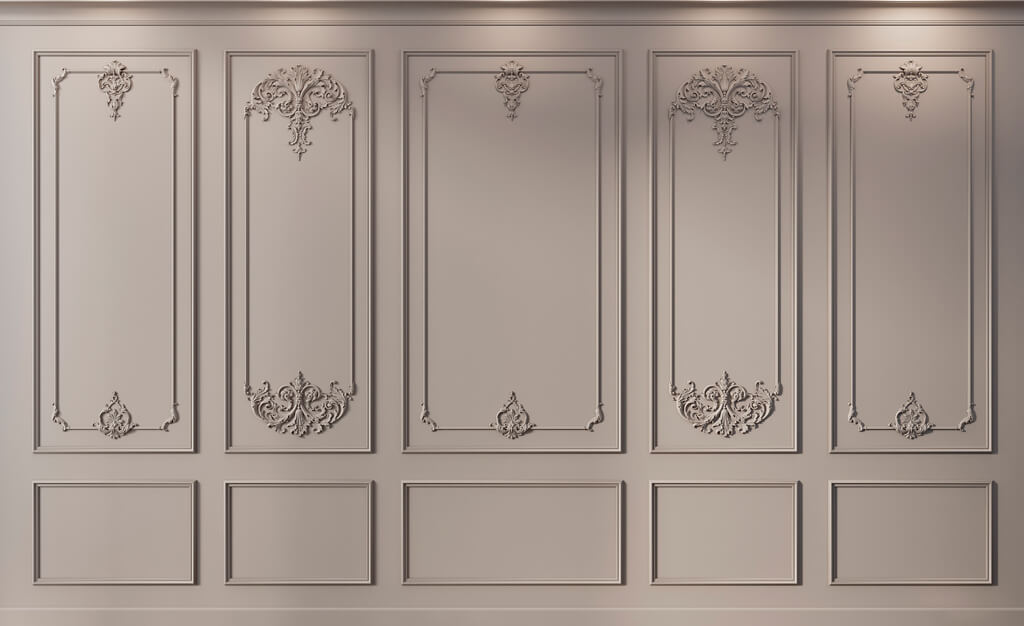
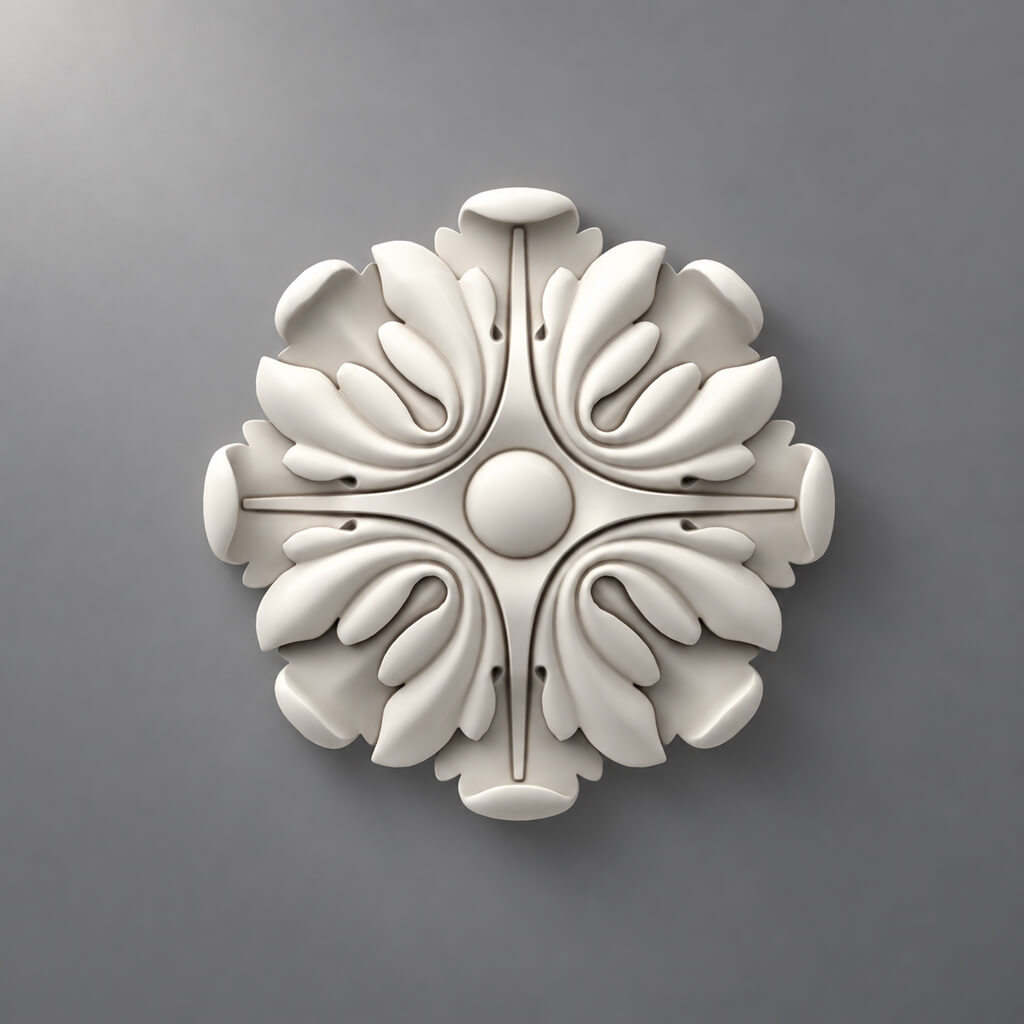
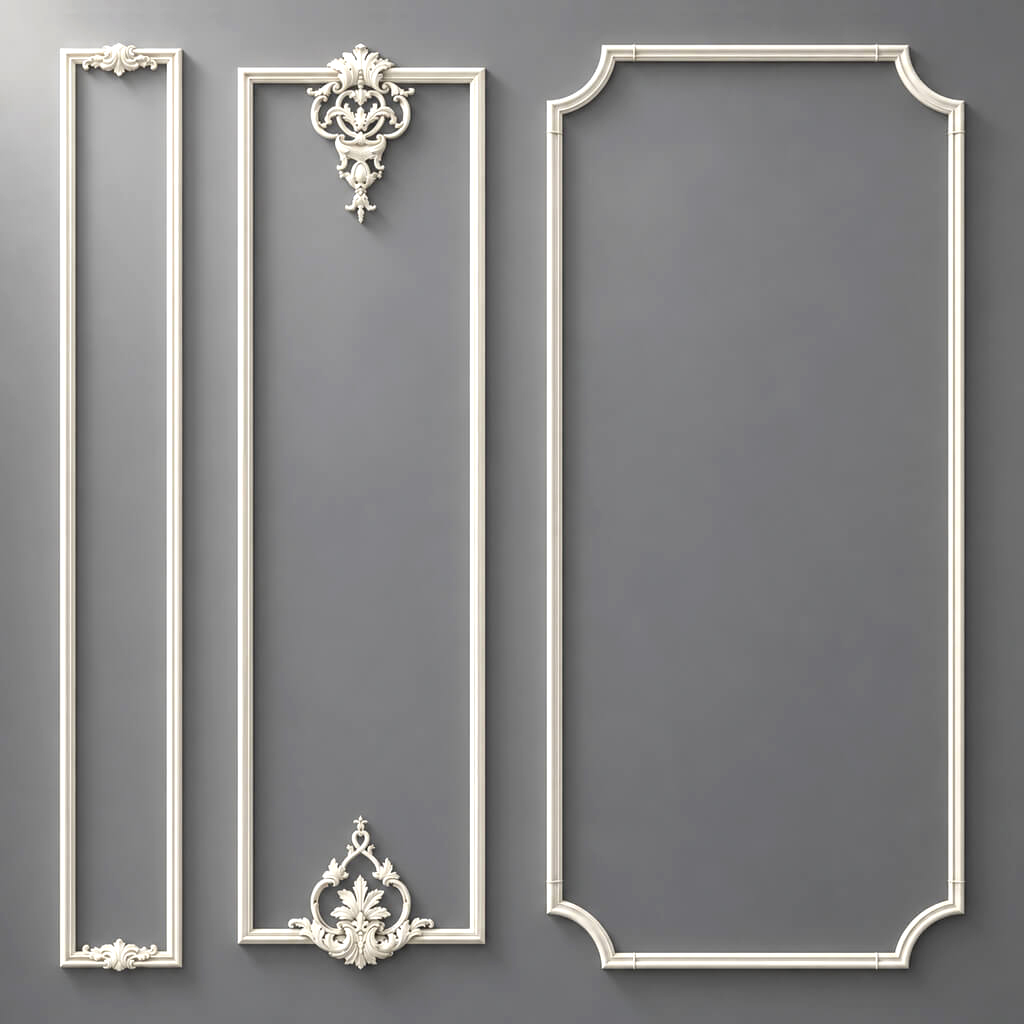
Corner overlays work in the four corners of the facade frame: they create the feeling that the frame is not just drawn with molding, but assembled from decorative details — like in real classic furniture. Central overlays are placed in the geometric center of the facade — on a cabinet door, on a dresser lid, on a central drawer. They create a focal point, a point of visual attraction.
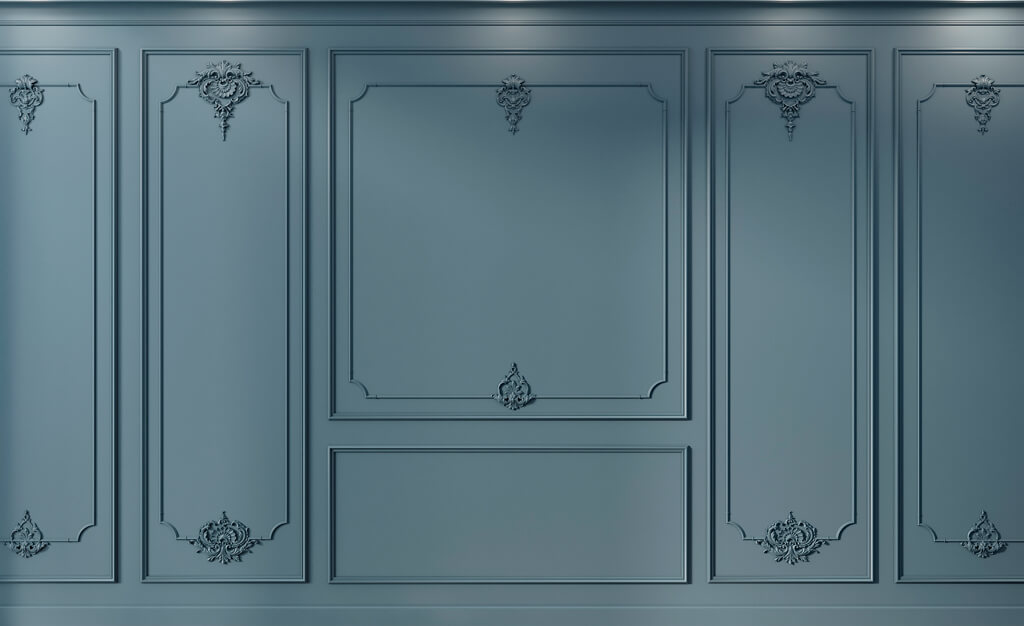
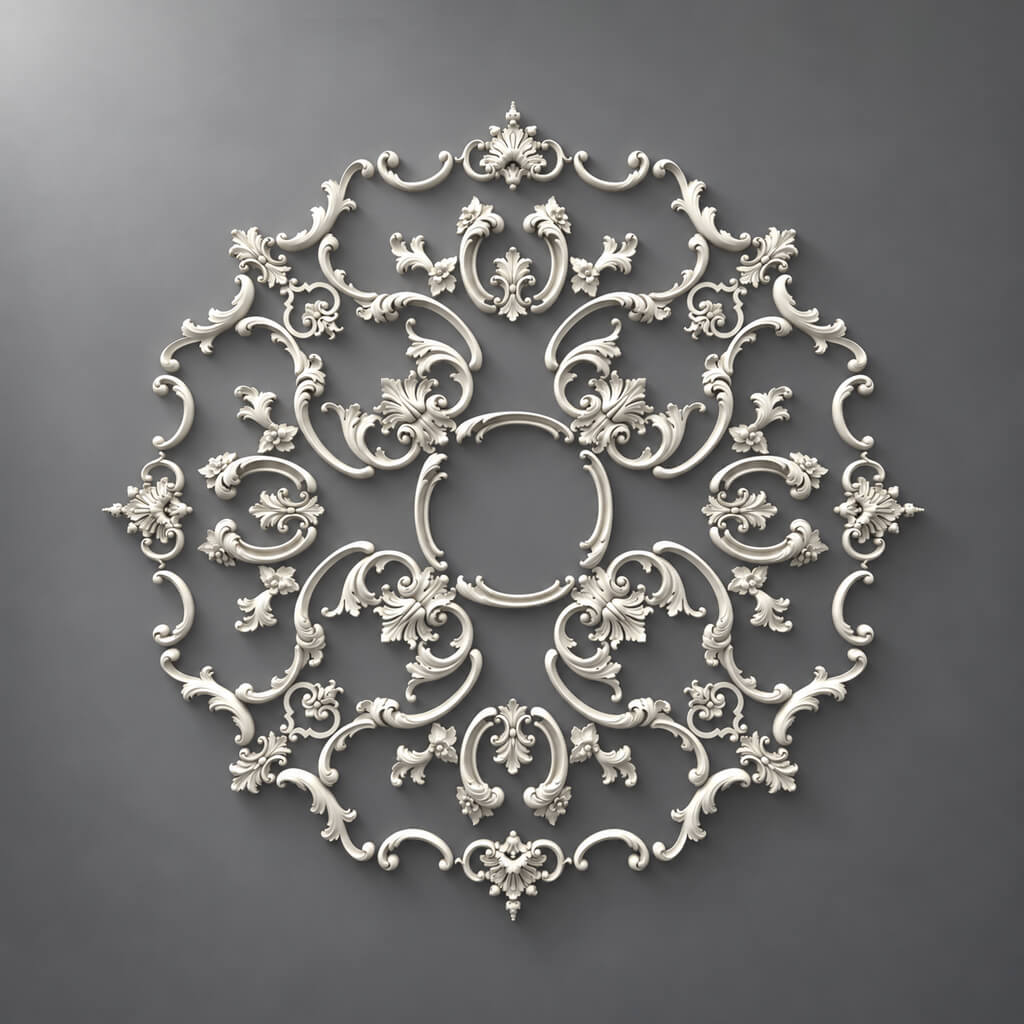
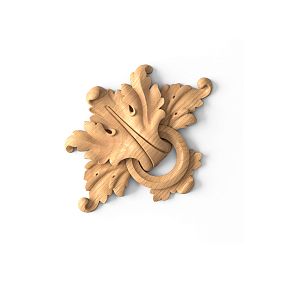
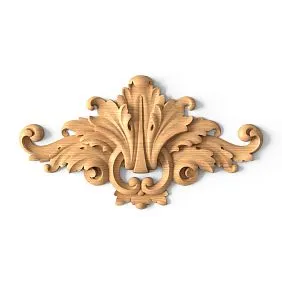
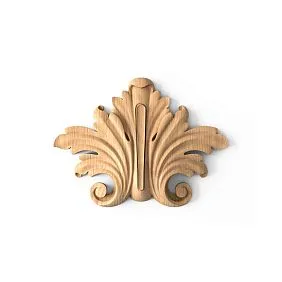
Large ornamental overlays with acanthus leaves, cartouches, floral motifs, rocaille — these are for classic and baroque scenarios. For modern furniture and neoclassicism, geometric overlays with clear lines and minimal relief work better.
An important feature: many overlays are produced in a mirrored version — left and right. This allows creating symmetrical compositions on wide facades, where a single overlay in the center would look too lonely.
Moldings for furniture: frames, rhythm, and relief
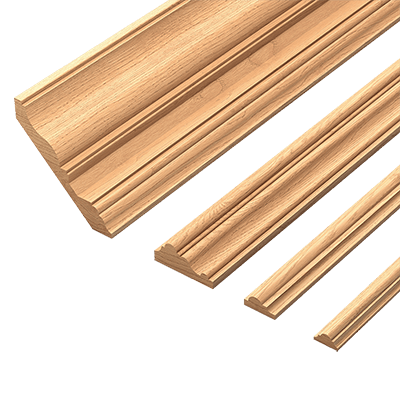
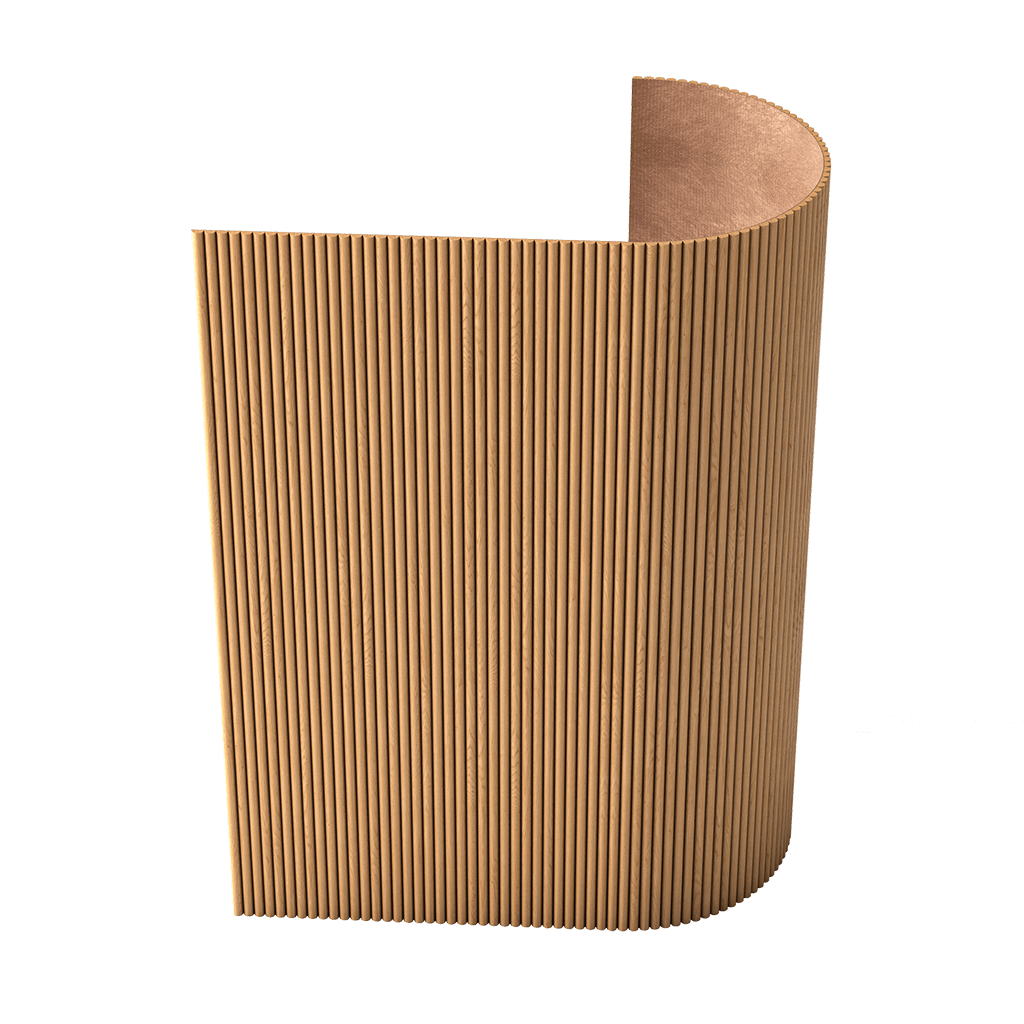
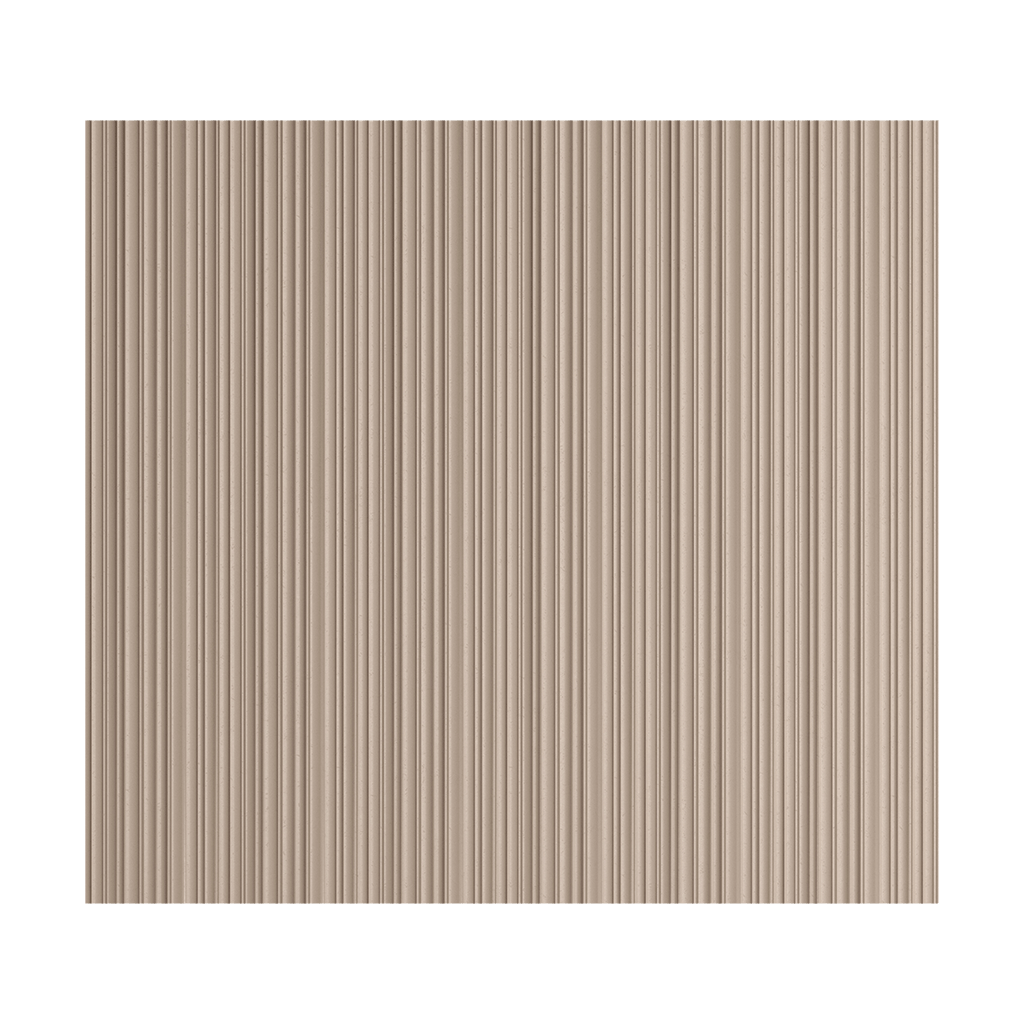
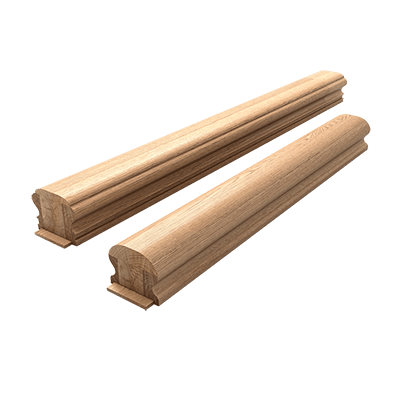
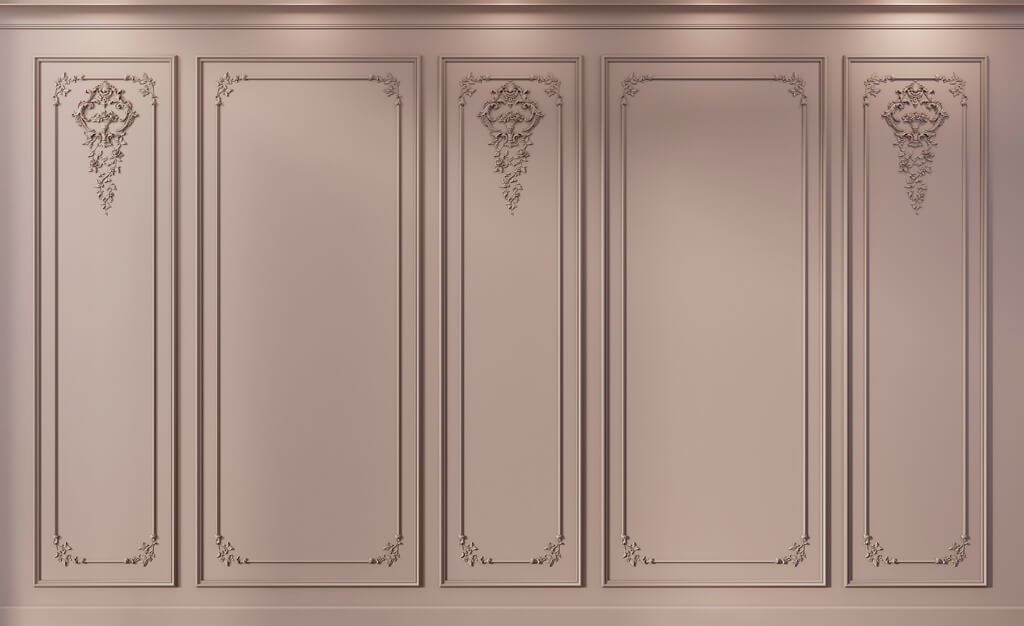
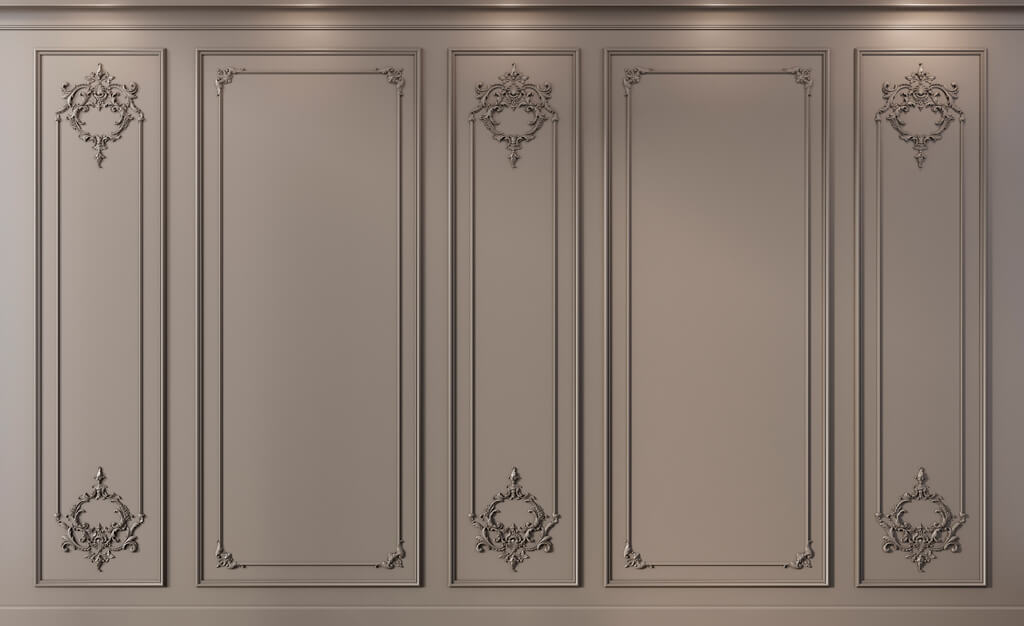
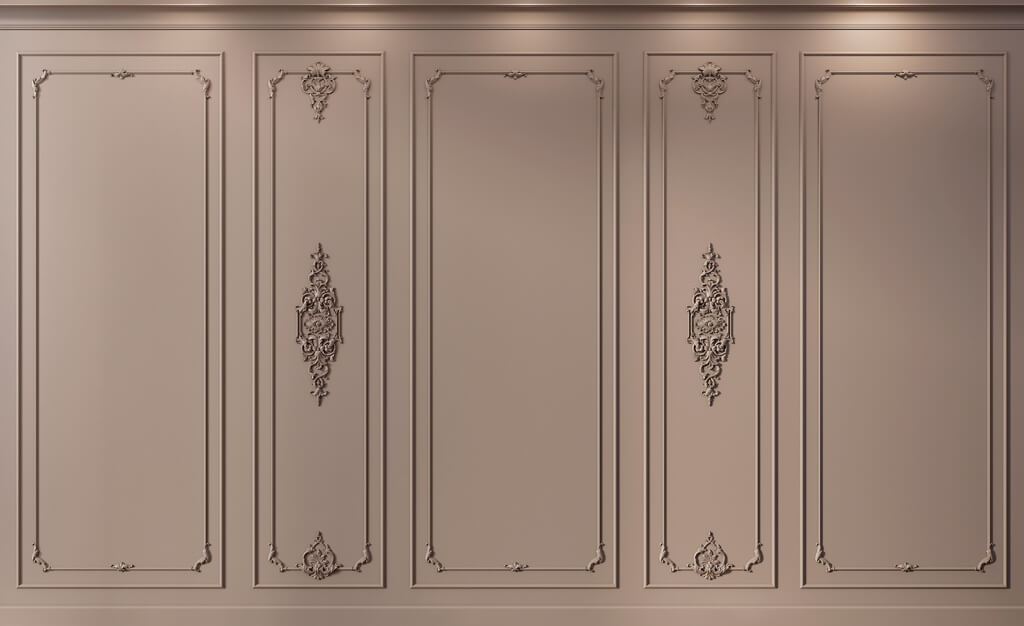
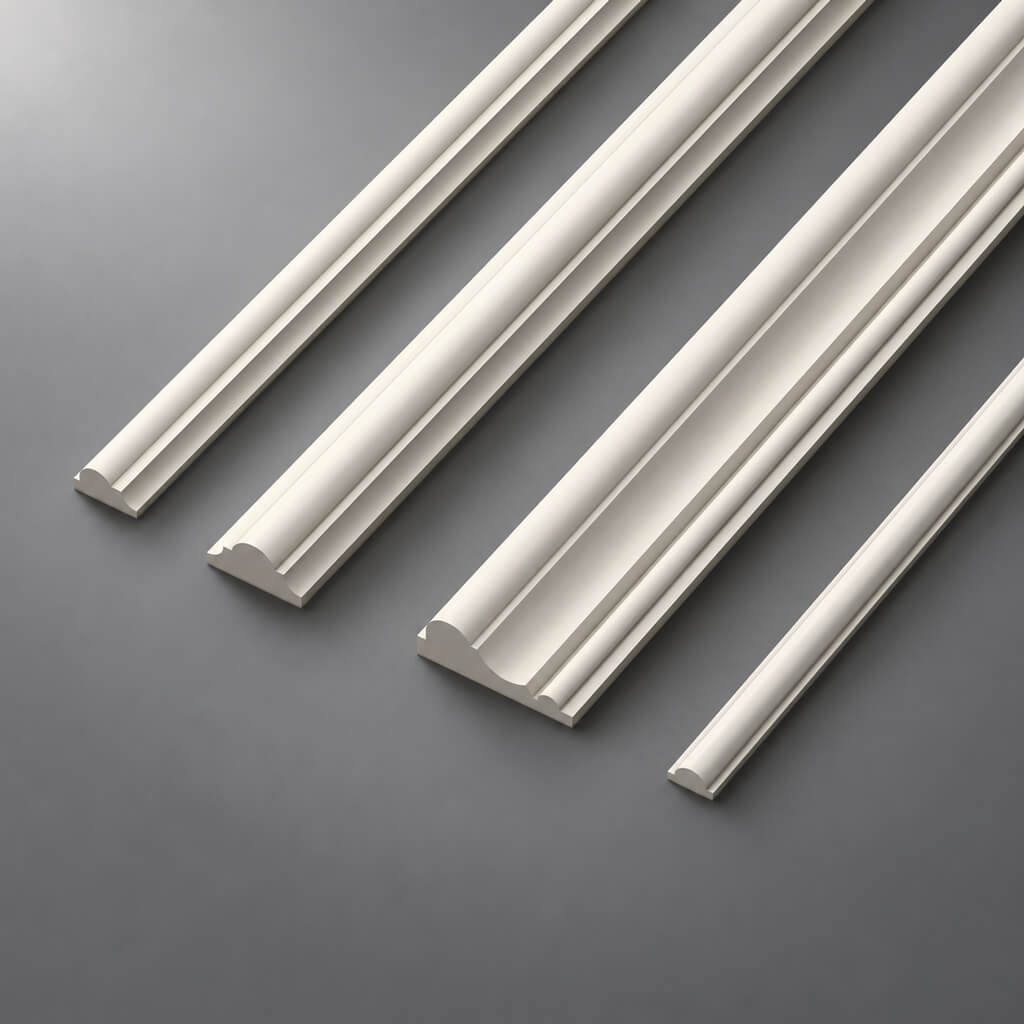
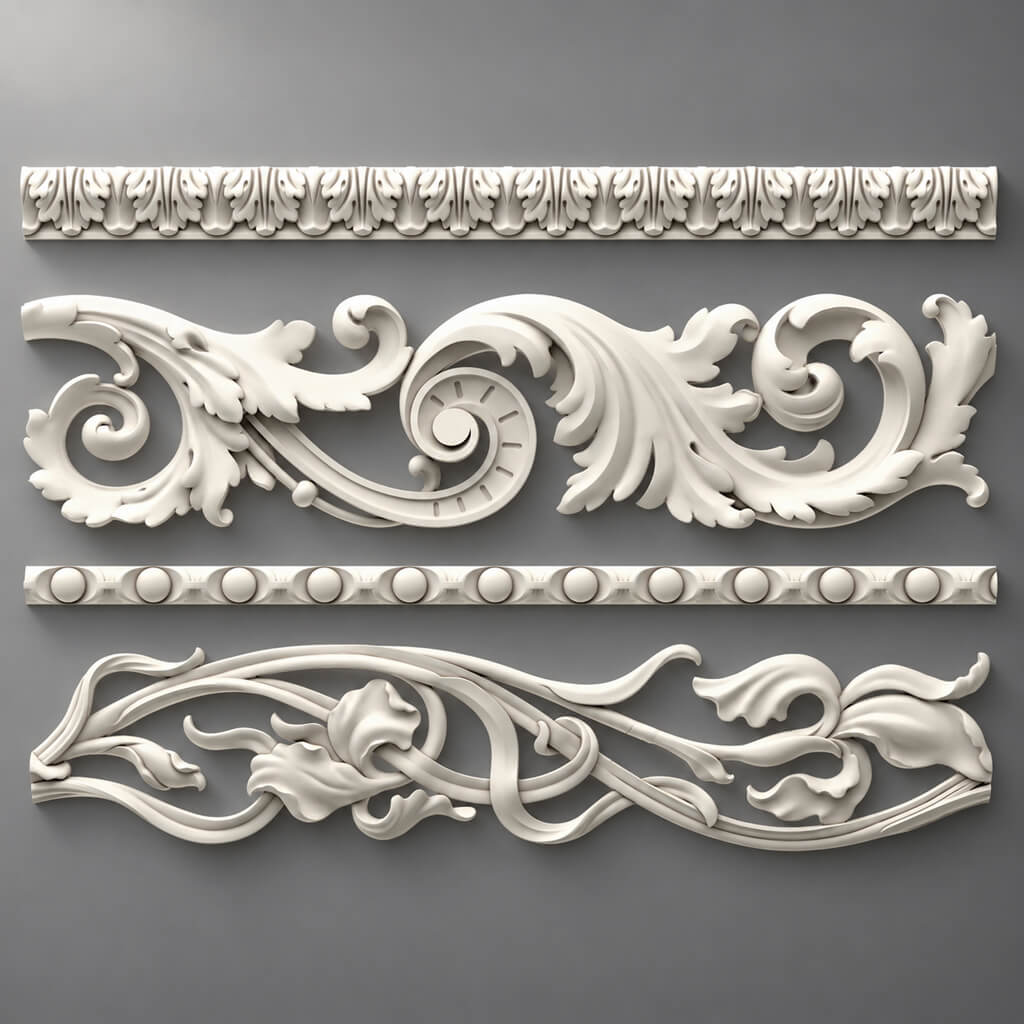
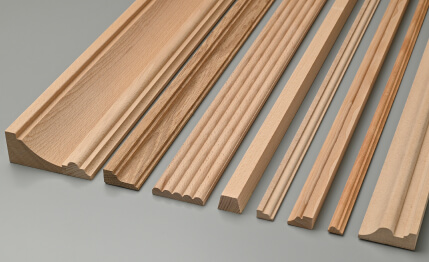
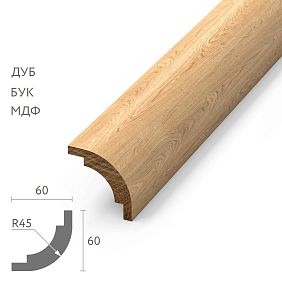
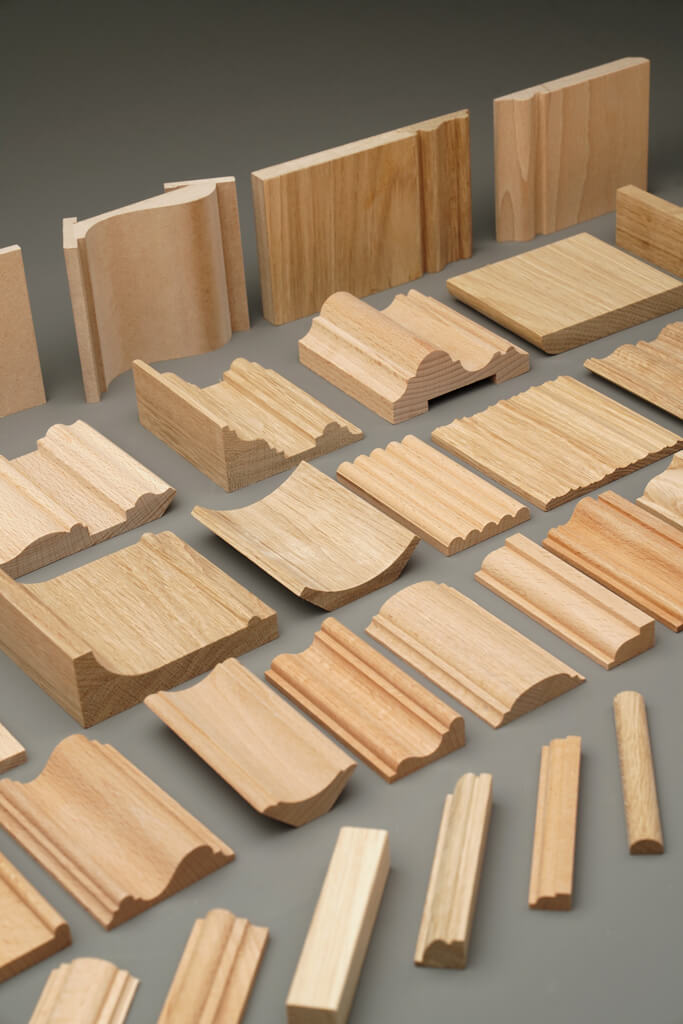
Moldings for furniture — these are profiled wooden strips used to create frames on facades. It is the frames that create the main visual effect when upgrading mass-produced furniture: a flat facade gains division, depth, and play of shadow.
The principle is simple: four pieces of molding, cut at 45-degree angles at the corners, are glued onto each facade. The result is a rectangular frame—an imitation of a classic paneled door. This technique is as old as the hills but works flawlessly: it is used in both budget DIY projects and luxury designer interiors.
The choice of molding profile determines the style of the result:
-
Thin flat molding—minimalism and neoclassicism;
-
Molding with a soft rounded profile—classic and Provence;
-
Wide figured molding with several transitions—Empire, Baroque, rich classic;
-
Strict stepped molding—Art Deco, modern interpretation of classics.
The key point when choosing is matching the scale of the molding to the size of the facade. A thin molding of 10–12 mm on a large cabinet door will be barely visible. For a door 700–900 mm high, a profile width of at least 20–35 mm is needed.
Carved decor: when true classic is needed
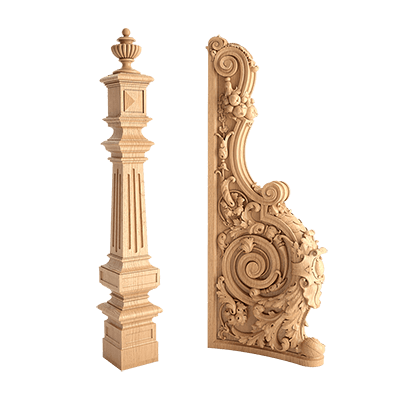
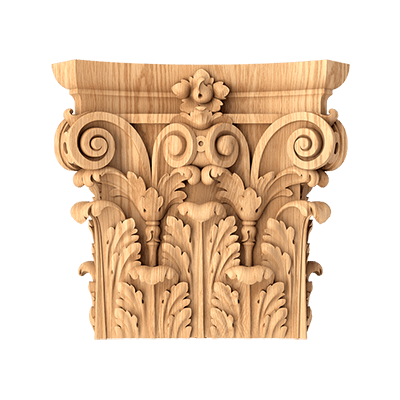
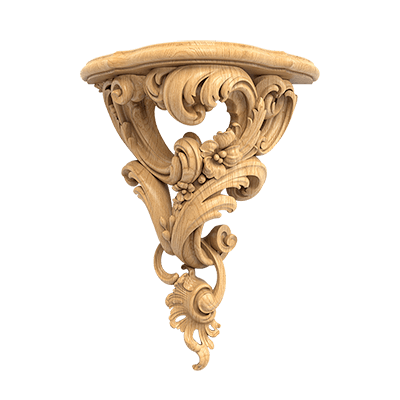
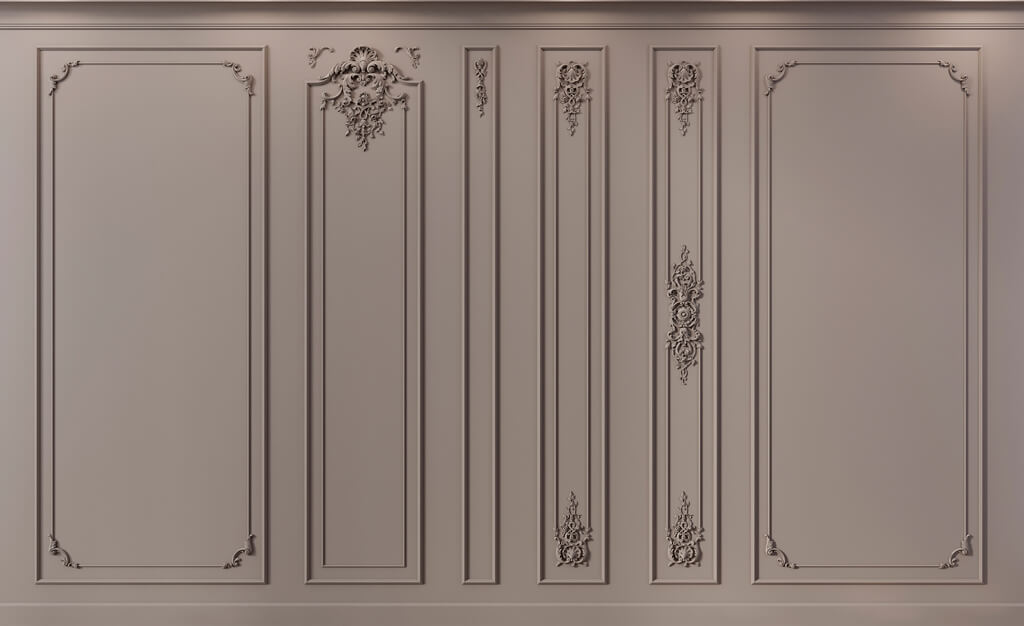
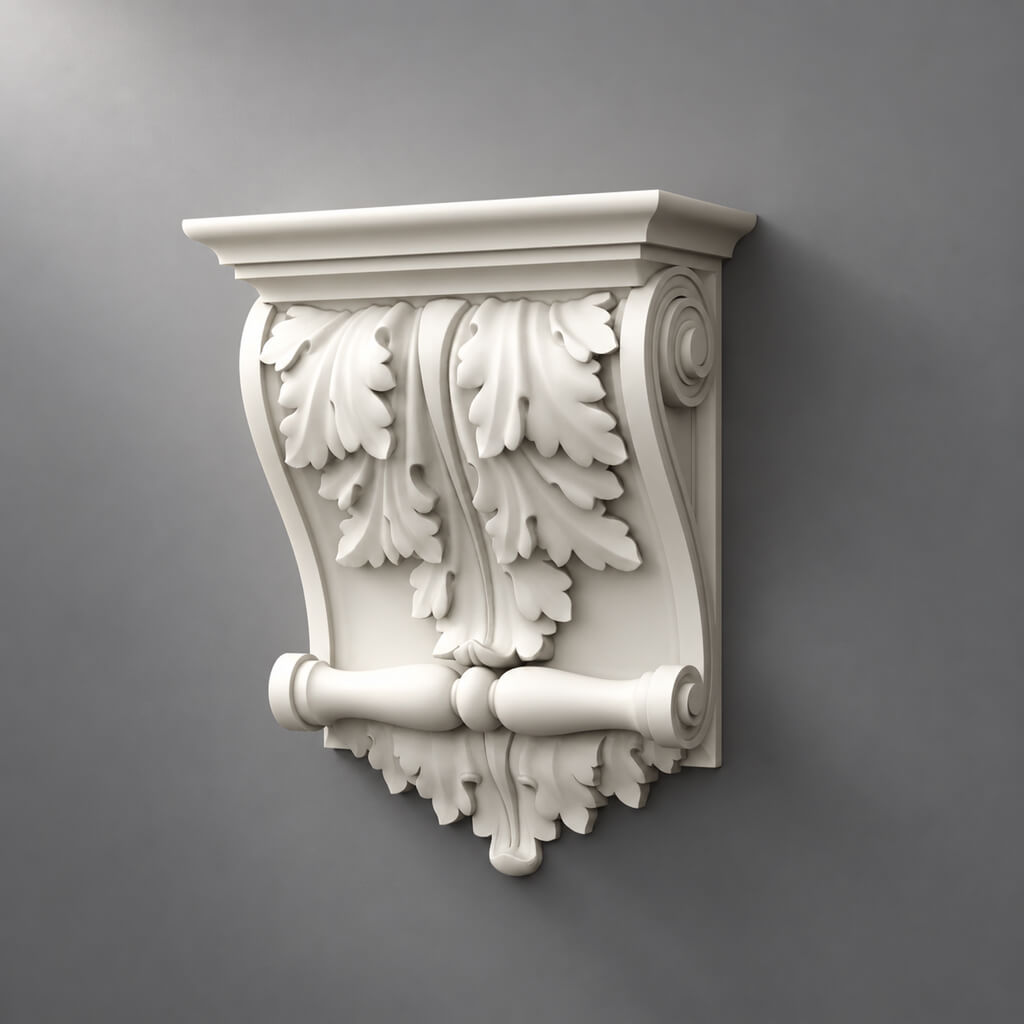
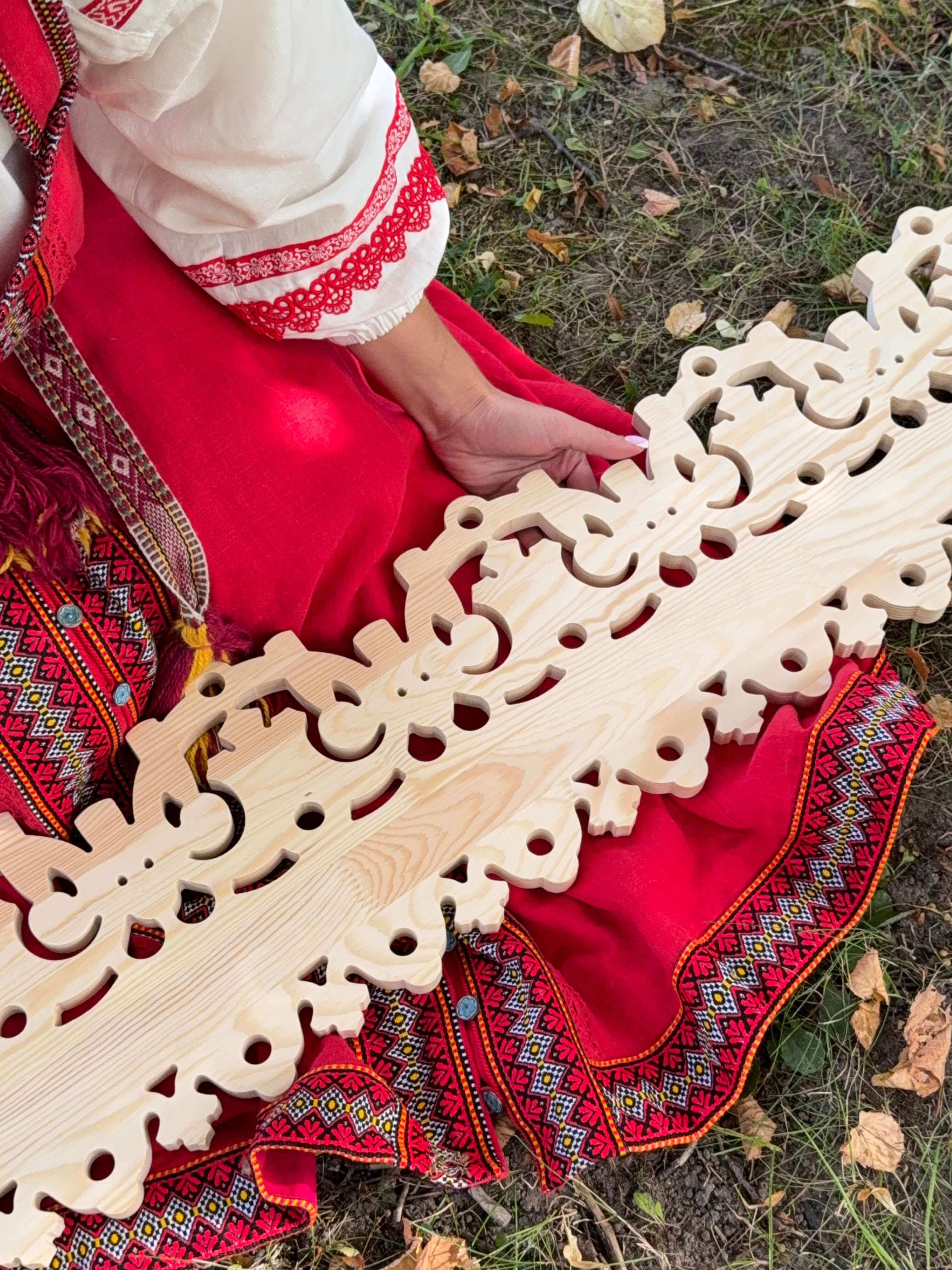
Carved furniture decor — these are no longer just frames and profiles. This is a full-fledged artistic language of classical joinery: acanthus leaves, rosettes, cartouches, ornamental panels, brackets, capitals.
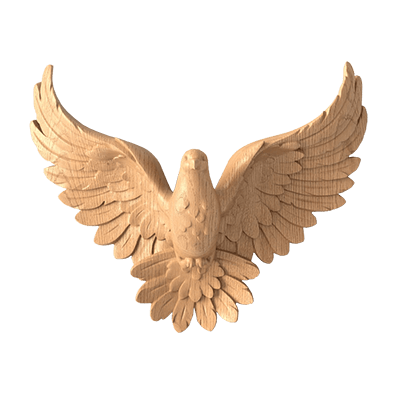
Carved wooden overlays are used where not just an upgrade is needed, but a full transformation: an ordinary cabinet should look like a classic library, a kitchen like a custom Italian-made set, a chest of drawers like an antique piece.
Carved decor is installed using the same principles as regular overlays: liquid nails, finishing nails, epoxy glue in complex cases. For painting or patina, carved elements are prepared in advance — primed, coated with enamel or varnish in several layers, then installed.
Special value carved decor elements — the ability to combine with moldings from the same manufacturer. Corner rosettes fit into the corners of molding frames; central overlays occupy the focus of the facade; capitals decorate the tops of pilasters — everything comes together into a unified decorative system that looks like the work of a single craftsman.
Wooden handles: the fastest upgrade
To be honest: if you are ready to change only one thing — change the handles. This is the fastest, cheapest, and most visual way to transform furniture.
wooden furniture handles made from solid beech or oak instantly elevate the perception of the item. Standard chrome or plastic handles are replaced with wooden ones — and the furniture starts to look like part of a thoughtful design. This works especially effectively in the kitchen, where handles are repeated on every facade: the effect accumulates, and the result becomes very pronounced.
An important nuance: wooden handles come in several shapes. Knob handles — for compact facades and drawers. Long rail handles — for modern horizontal facades. U-shaped brackets — a classic that works in any style. For a classic kitchen, shaped handles with a turned profile are suitable; for minimalism — straight rails with a chamfer.
Handles can be left in their natural wood color, coated with oil to emphasize the texture, painted to match the facade color, or given a contrasting finish — white on dark facades, black on light ones.
Furniture legs and supports: changing the silhouette
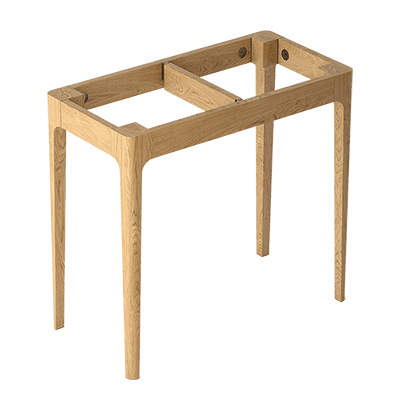
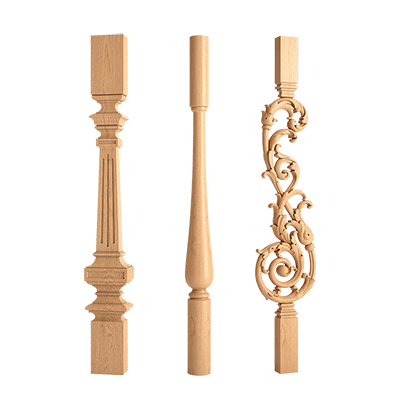
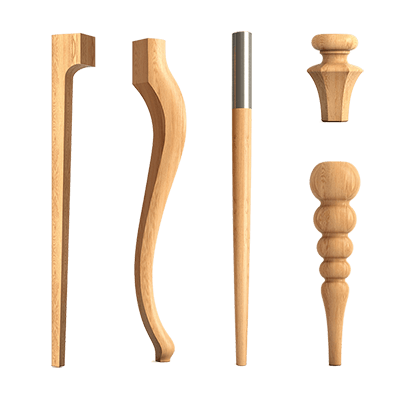
Replacing supports is not decoration in the usual sense; it is changing the architecture of the object. Standard plastic legs are replaced with turned wooden ones Furniture Legs and Supports — and the silhouette of the furniture changes dramatically.
Round turned legs with relief create the feel of a classic chest of drawers or console. Straight tapered legs without decoration — Scandinavian or minimalist style. Carved legs with acanthus leaves or rocaille — Baroque and Empire style.
The height of the legs affects the visual weight of the object. Low legs 60–80 mm create a "grounded" stable silhouette. Legs 120–150 mm lift the object, adding lightness and air.
Furniture plinth and bottom profile: the base matters
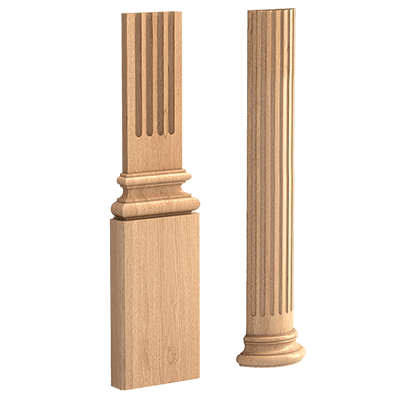
This was already mentioned in the article about wooden furniture plinth — and this is also true in the context of updating mass-produced furniture. The bottom wooden profile covers the gap near the floor, hides the technical base, and creates a foundation — the visual support of the object.
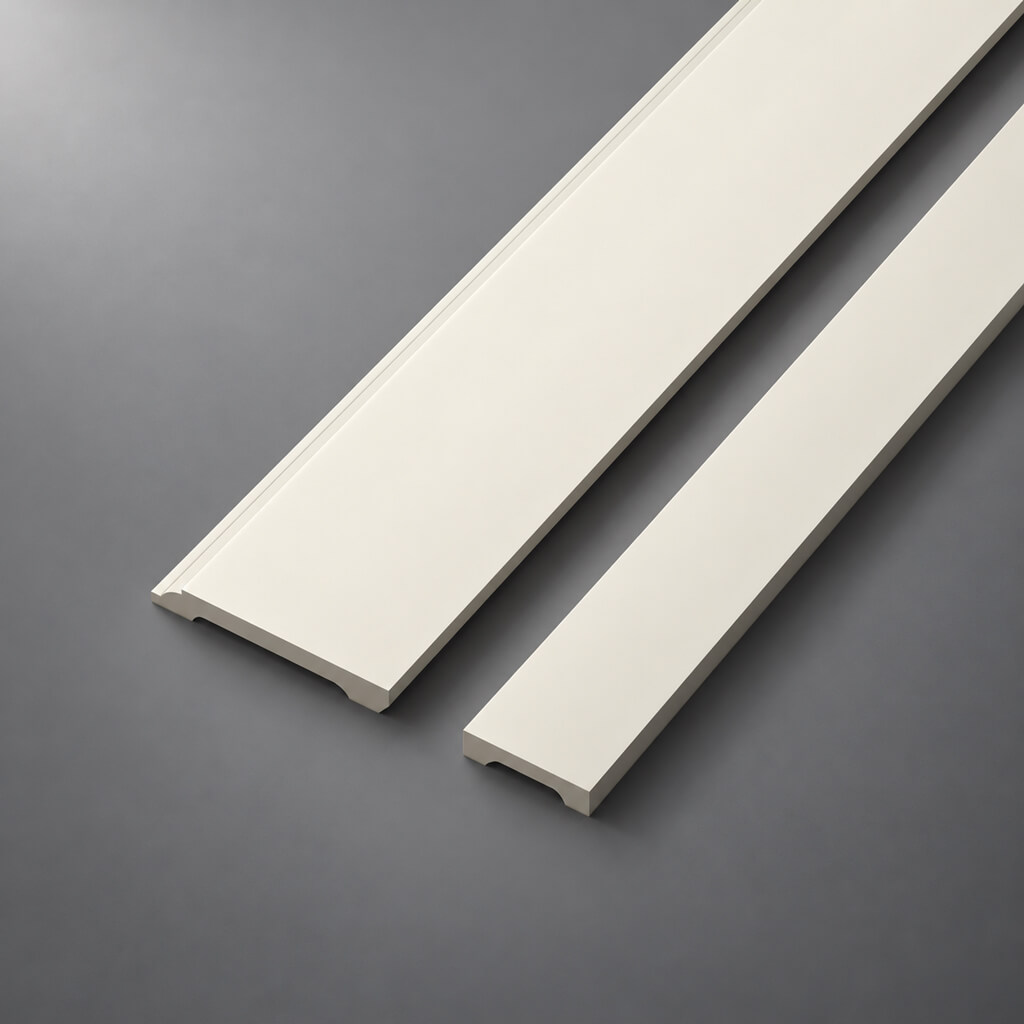
Wooden trim the bottom profile is chosen according to a specific style: straight — for modern furniture, shaped — for classic and neoclassical.
7 transformation scenarios: specific examples
Scenario 1: a regular hinged wardrobe
Before us: a wardrobe made of laminated chipboard, three doors, chrome handles, without a cornice, without a baseboard. A typical mass-produced story.
What we do:
-
On each door we glue a molding frame made of of wooden moldings 25 mm wide, cut at 45 degrees;
-
In the corners of the frames we insert corner rosettes made of decorative inserts;
-
On the top end of the wardrobe we mount a wooden cornice from millwork;
-
At the base we install a wooden baseboard 80–100 mm;
-
We replace the chrome handles with wooden ones.
Result: the wardrobe looks like built-in furniture with paneled doors. The cost of materials is incomparably less than new facades.
Scenario 2: chest of drawers with four drawers
Before us: a standard chest of drawers with four identical drawers and round metal handles.
What we do:
-
On each drawer — a molding frame of a thin classic profile;
-
On the top drawer (or on the central front) — a decorative rosette overlay;
-
Handles — wooden buttons or small slats;
-
Along the bottom edge of the body — a decorative wooden profile 60 mm.
Result: the chest of drawers acquires a classic character and looks like an item from a luxury hotel bedroom.
Scenario 3: kitchen set
Before us: a kitchen with light facades, standard plastic base, metal handles.
What we do:
-
On the upper cabinets — molding frames;
-
For the lower facades — frames from a wider profile (30–40 mm);
-
For several accent facades (e.g., wall cabinets near the hood) — Carved Decor in the form of small overlays;
-
We cover the plastic base with a wooden profile or replace it with a wooden baseboard for painting;
-
We replace metal handles with wooden slats.
Result: the kitchen acquires a neoclassical or classical character — depending on the chosen profile and overlays.
Scenario 4: TV cabinet
Before us: a wide low cabinet with two doors and straight chrome handles.
What we do:
-
Frames from thin moldings on each door;
-
Side vertical overlays (architraves);
-
Wooden bottom profile 50–60 mm;
-
Wooden horizontal slat handles.
Result: the cabinet looks like a designer living room set piece, not a standard catalog item.
Scenario 5: built-in wardrobe in a niche
This is the most architectural case. Built-in furniture occupies the niche from floor to ceiling, from wall to wall — but the facades remain flat and featureless.
What we do:
-
Vertical moldings along the post axes — create rhythm and division;
-
Horizontal profiles along the lines of horizontal sections — set the tiering;
-
Top cornice, echoing the ceiling molding;
-
Bottom furniture baseboard matching the floor;
-
Corner overlays at intersections of vertical and horizontal profiles;
-
Wooden handles of a single type on all doors and drawers.
Result: built-in furniture becomes an architectural element of the room — as if it was designed by a designer and assembled by a carpenter.
Scenario 6: sideboard or display cabinet
A sideboard with two sections — a lower solid body and an upper one with glass — is an excellent candidate for a classic upgrade.
What we do:
-
Moldings around the perimeter of the glass doors on top — for framing the glass;
-
Central decorative overlay between sections — on the horizontal divider shelf;
-
Carved corners on the top part — for a baroque or classic accent;
-
New wooden handles for both sections;
-
Bottom profile at the base.
Result: the sideboard acquires the character of an antique piece or Italian classic.
Scenario 7: bedside tables
Small items require restrained decor. A molding frame on the side or front, a wooden knob handle, a small corner overlay — minimal details, maximum effect.
How to choose a decor style: from classic to minimalism
The main rule: wooden decor for furniture updates should belong to the same style register as the rest of the interior. Mismatch between decor style and room context is the most common mistake in DIY upgrades.
Classicism and neoclassicism
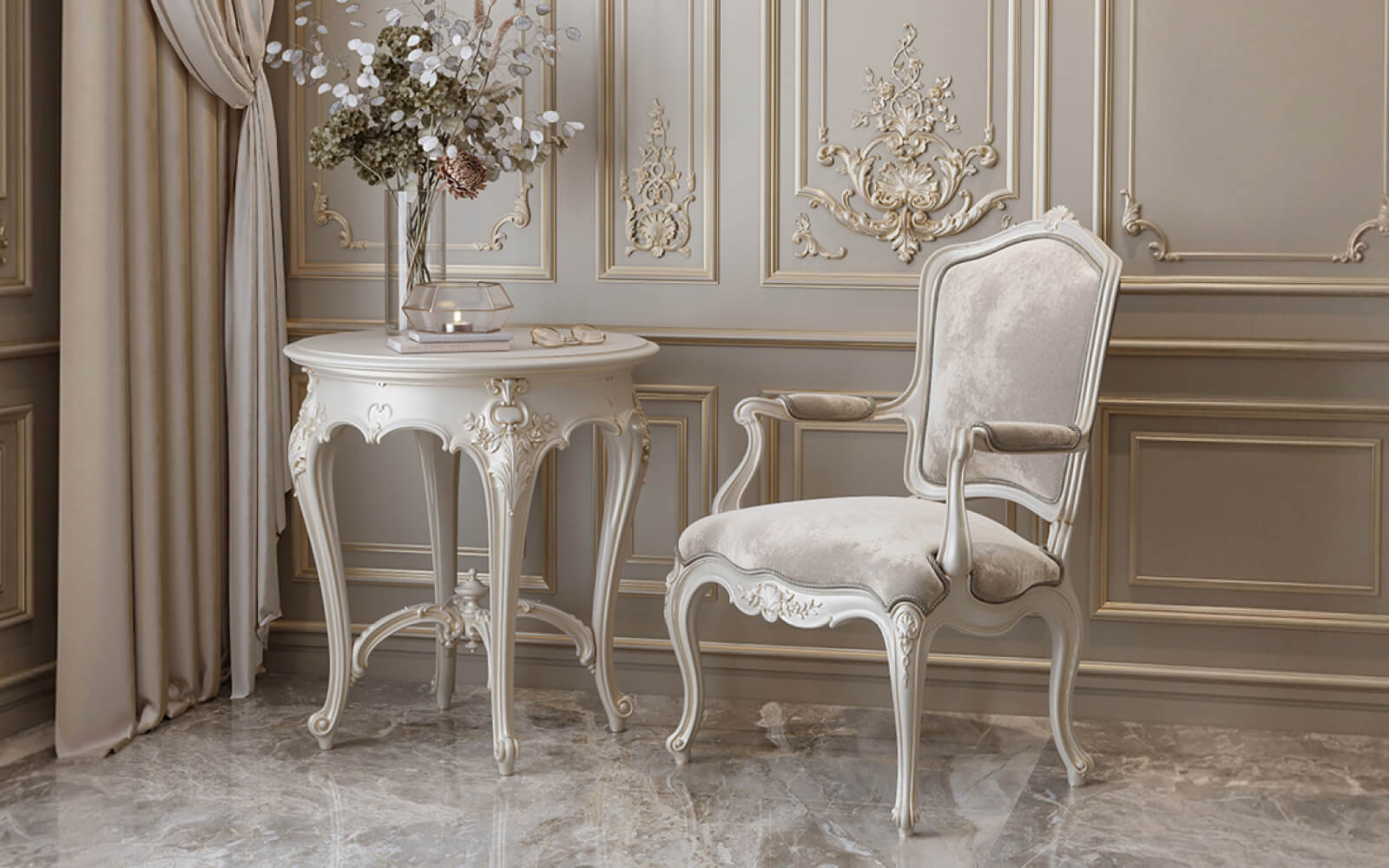
Molding frames with a soft figured profile, corner rosette overlays, central decorative elements with floral motifs. Finish — white enamel, milky or cream color, patina possible. Classical furniture made of wood that's exactly what it looks like: frames, overlays, symmetry, restrained relief.
For neoclassicism, it's thinner and stricter: the molding profile is neat, overlays are small, symmetry is flawless. No baroque excess — only clear architectural lines.
Baroque and Empire
Here you need Carved Decor in full force: acanthus leaves, cartouches, rocaille, ornamental panels. Gold patina or white enamel with gilding. Molding is wide, with a rich profile. Overlays are large, symmetrical, richly detailed.
This is an interior theater — and you need to play it with full commitment. Half-hearted baroque looks more ridiculous than strict minimalism.
Art Deco
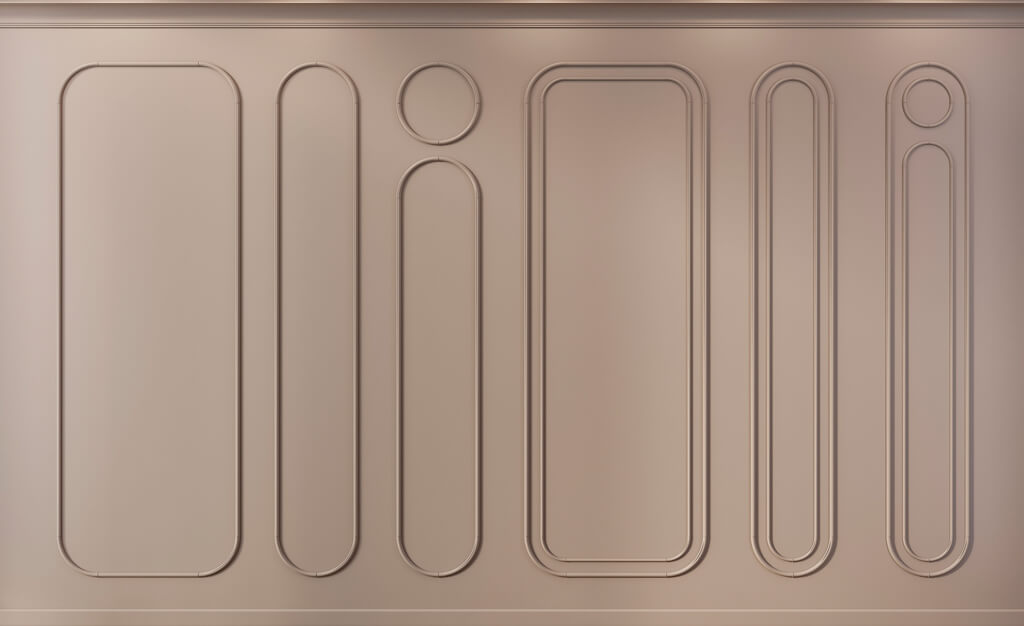
Geometry is the main principle. Mouldings are straight, with a stepped profile, clear right angles. No rounding. Overlays are geometric: diamonds, rectangles, fan shapes. Contrasting colors — dark wood on light facades or vice versa. Handles are strict, elongated, without decoration.
Modern style and minimalism
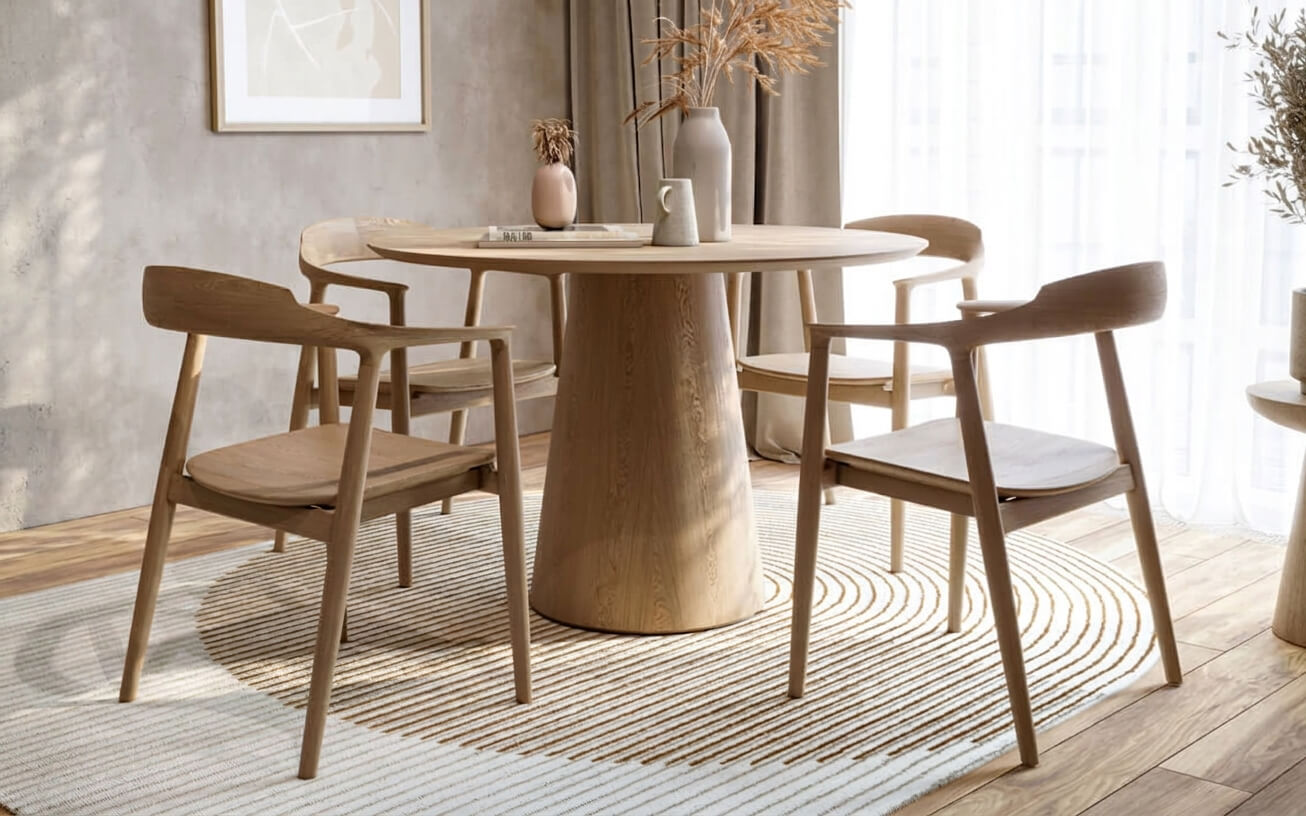
There is minimal decor here. A thin straight moulding creates a frame without relief — just a geometric division of the plane. Overlays are absent or as simplified as possible. Handles are long wooden slats with a chamfer. The finish is natural wood with oil or a matte solid-color enamel.
Country, Provence, and rustic style
Brushed wood texture, open pores, deliberate unevenness. Mouldings with a simple rounded profile for painting in pastel shades. Overlays with plant motifs — leaves, flowers, branches. Handles are wooden, slightly aged. Finish is milky or lavender enamel, wax or oil coating.
Installation of wooden overlays: from theory to practice
Surface preparation
This is a critical stage that is often ignored — and then people wonder why the overlays fall off or the paint cracks at the joint. The surface of laminated chipboard or MDF needs to be degreased. If the facades are covered with film, lightly sand the contact areas for better adhesion.
Wooden elements need to be primed before installation if painting is planned. Primer closes the pores of the wood, evens out absorbency — without it, the final paint lays unevenly.
Marking
Symmetry is the foundation of a good result. Marking of moulding frames is done using a level and ruler: first, the outline of the future frame is marked with a pencil, then the cut pieces of moulding are fitted without glue, the placement is checked, and only then are they fixed.
Corner overlays are centered on the corners of the frames — so that the overlay symmetrically covers both adjacent segments of the moulding.
Central overlays are positioned strictly in the center of the facade — both horizontally and vertically.
Fastening
For smooth surfaces (LDSP, MDF, enamel) — liquid nails or mounting adhesive with a short setting time. Apply the adhesive in dots or a wavy line, press the overlay for 30–60 seconds, then secure with painter's tape until fully dry.
For massive or large elements — additionally use finishing nails 20–25 mm in inconspicuous spots. Sink the heads and fill with putty.
Glue moldings along the entire length, without gaps — especially carefully at 45-degree corners. The corner joint must fit perfectly; the slightest gap will become a noticeable crack after painting.
Painting and finishing coating
There are several options. If the facades are white and the overlays need to be painted the same color — it's better to paint the moldings and overlays before installation (main layers), and apply the final coat to the mounted elements for a unified result.
If the furniture is dark shades — the overlays can be left in their natural wood color or coated with tinting oil for contrast. This is not a mistake, it's a design technique.
For kitchen facades, all coating must be moisture-resistant: varnish or enamel on a polyurethane or alkyd base.
Mistakes when updating furniture with wooden decor
Practice shows: mistakes repeat from project to project. A short but important list of warnings.
Too much decor on small furniture. A bedside table with five frames, two overlays, and carved corners is a proportion disaster. Small items require a minimum of details. One molding, one overlay, one handle — that's enough.
Mixing different styles of overlays and moldings. A baroque carved rosette and straight geometric art deco moldings are incompatible. Either classic or geometric — there is no third option.
Ignoring symmetry. A frame shifted 5 mm from center irritates the eye even of those who don't understand the cause of discomfort. Symmetry is a basic rule of any decorative system.
Incorrect molding height. A too thin molding on a large facade gets lost. A too wide molding on a small drawer eats up all the facade space. Guideline: the molding should be no more than 10–15% of the facade width.
Painting without primer and preparation. A wooden molding without primer absorbs paint unevenly. The boundary between wood and particleboard after painting will give different textures — if not leveled with putty and primer.
Installing decor without considering door opening. Overlays protruding beyond the facade plane are normal. But only if they do not interfere with the opening of adjacent doors or drawers. This is checked before final installation.
Saving on symmetrical pairs. If a cabinet has three doors — the outer ones should receive mirror decoration. Ordering three identical overlays and hanging them in a row means losing architectural logic.
Why wooden decor is fundamentally better than simple repainting
Repainting furniture is a tempting idea. Cheap, relatively simple, color changes dramatically. But repainting solves only one problem — the color problem. It does not change the shape of the furniture. It does not create relief. It does not add architectural quality.
A flat white cabinet after repainting gray becomes a flat gray cabinet. Its silhouette, its proportions, its character — remain exactly the same. That is why repainted mass-produced furniture looks better, but not more expensive.
wooden furniture appliqués, moldings, profiles, and supports — they change the structure of the object. Add depth, shadow, relief. Create the feeling that the furniture was originally designed with these details — rather than bought at a shopping center and upgraded with overlays.
It is this feeling — "as if made on purpose" — that answers the question "how to make furniture look expensive." Not the color. Not the material. The architecture of the detail.
The best result is when repainting and wooden decor work together: first the color changes, then moldings and overlays are installed, then everything is covered with a final layer of a single color. The furniture gets both a new shade and a new shape — and becomes unrecognizable.
How to assemble a set: examples for different items
Set for a cabinet
| Element | Purpose | Size/type |
|---|---|---|
| Molding for frames on the facade | Main facade decor | 20–35 mm, classic or straight |
| Corner overlays | Accent in frame corners | 40–60 mm, symmetrical |
| Central overlay | Facade focus | 80–120 mm, by style |
| Wooden handles | Metal replacement | Type by style |
| Bottom plinth | Decorative base | 70–100 mm |
| Top cornice | Top finish | Profile by style |
Dresser set
| Element | Purpose | Size/type |
|---|---|---|
| Drawer moldings | Frame for each drawer | 15–25 mm |
| Central overlay | For one or three boxes | By style |
| Wooden handles | Replacement of metal | Buttons or rails |
| Legs or supports | Silhouette change | 80–150 mm, turned |
Kitchen set
| Element | Purpose | Size/type |
|---|---|---|
| Moldings on facades | Frames on top and bottom | 20–40 mm |
| Carved overlays on accent facades | Style accent | According to the concept |
| Wooden handles | Unified accent across the entire kitchen | Rails or brackets |
| Wooden baseboard plinth | Replacement of plastic plinth | 70–120 mm |
Wooden decor and design techniques: an inside look
Professional designers use several consistent techniques when working with furniture decor. Here are a few of them — as insider observations.
Repeating the same profile in different places. The molding on the cabinet rhymes with the molding on the door, with wooden decor for furniture on the console and with the trim profile. Repetition creates an interior rhythm — a sense that everything was designed as a cohesive whole. More details can be found in the article about wooden door decor.
The rule of 'one type of decor — one level of detail'. Do not mix rich carved decor with simple straight moldings on the same item. Choose one level: either everything is ornate, or everything is ascetic.
Color unifies everything. If overlays and moldings are painted in the same color as the facade, the furniture looks solid. Contrasting decor is a riskier technique: it attracts attention but requires flawless symmetry and precise installation.
The lower and upper profiles are a mandatory frame. Furniture without a "top" and "bottom" looks unfinished. Cornice and baseboard are not additions, they are structure. Without them, moldings on facades get lost. Why the lower profile is so important is detailed in the article about wooden furniture baseboard.
Scale of decor = scale of furniture. A small cabinet — thin molding and a small overlay. A large wardrobe — wide profile and a large decorative overlay. Mismatch in scale is the most common aesthetic mistake.
Wooden decor in the context of a complete interior project
Upgrading furniture with wooden overlays and moldings works best when it is integrated into the overall decorative logic of the space. This doesn't mean you need to do renovations first and then update the furniture. It means that when choosing the profile, overlay style, and coating color, you need to think about the room as a whole.
Wooden decor on furniture should echo wooden elements in other parts of the space: door trims, floor baseboards, wooden wall panels, wooden mirror frames. When all of this belongs to the same species or tone, the interior gains that "expensive" integrity that cannot be bought with individual items but can be built through thoughtful selection of details.
More about the logic classic furniture in the interior can be read in a separate article. There, too, about how to choose styles, materials, and decorative accents.
What to buy for furniture updating: a practical list
Let's list specific categories to start with:
-
decorative inlays for furniture — corner, central, symmetrical, carved;
-
Moldings for furniture — available in various profiles and widths;
-
Carved furniture decor — rosettes, cartouches, overlays with acanthus;
-
wooden furniture handles — overlays, brackets, buttons;
-
Furniture Legs and Supports — turned, classic, carved;
-
Wooden trim — for cornices and bottom profiles;
-
Wooden baseboard — for furniture bases;
-
All wood products — a full range for comprehensive selection.
FAQ: Answers to popular questions
Can you update an ordinary cabinet with wooden overlays?
Yes, if the fronts are flat and allow secure attachment of the decor. For laminated chipboard and MDF, liquid nails or construction adhesive work well. Use molding frames, corner and central overlays. Simultaneously change the handles and add a bottom wooden plinth — and the cabinet takes on the look of built-in furniture.
What is better for updating a dresser — moldings or carved overlays?
It depends on the style. For a calm modern interior — moldings with a simple profile: laconic frames without excessive decor. For classic, neoclassical, or baroque interiors — carved overlays with floral ornamentation. Ideally, a combination: molding frames plus small corner rosettes.
Can wooden decor be used on kitchen facades?
Yes. Important: the coating must be moisture-resistant. Wooden moldings and overlays in the kitchen are coated with polyurethane or alkyd varnish, enamel. With proper coating, wooden decor in the kitchen lasts no worse than factory facades — and looks significantly more interesting.
How to make simple furniture look expensive?
Add symmetry (molding frames), relief (overlays and corner rosettes), an architectural base (bottom profile), and a top finish (cornice). Replace handles with wooden ones. Paint everything in a single color. This is enough to make mass-produced furniture start looking like custom joinery work.
Can wooden overlays be painted in the color of the furniture?
Yes, and this is the most correct approach. Overlays painted in the color of the facade create a sense of unity: it seems that the furniture was made with these details, not upgraded. The only condition is good surface preparation and a single batch of paint.
What glue to use for installing wooden overlays?
Liquid nails (fast-setting brands) for lightweight overlays and moldings. Epoxy glue for heavy or large elements. Additional fixation with 20 mm finishing nails — for moldings along the perimeter of the facade.
Do I need to remove the facades for installing decor?
Not necessarily. In most cases, moldings and overlays are mounted directly on the facades of the furniture. Removing the facades is more convenient if full painting is needed — it's easier to paint a removed facade than to do it in place.
Is wooden decor suitable for LDSP furniture?
Yes. LDSP has a smooth film surface that liquid nails adhere to well. The only nuance: if the film is glossy, the contact area should be lightly sanded with fine sandpaper for better adhesion.
About the company STAVROS
If you've read this far, it means the task of upgrading your furniture has already formed into a concrete action plan in your mind. All that's left is to find the right supplier of wooden decor.
STAVROS is a Russian manufacturer of wooden decor, molding products, carved elements, and furniture fittings from solid oak and beech. The company produces a full line for updating furniture and interiors: Decorative Inserts in more than 400 models, Wooden moldings different profiles, Carved Decor — from small rosettes to large ornamental panels, wooden handles, Furniture legs, Wooden trim и Furniture plinth.
All of this — from one source, in a unified style, from natural solid wood, with the ability to order from a single piece and Contact us to confirm shipping to your destination. STAVROS works with both private customers and professionals: designers, furniture manufacturers, and carpentry workshops.
If you have a simple cabinet and an ambitious idea — the STAVROS catalog has everything to bring that idea to life.