

























Article Contents:
- What door decor consists of: the full picture
- Wooden architraves: the main element of doorway design
- Why architraves are needed
- Smooth or carved architrave: when each is appropriate
- Why the architrave should match the baseboard
- Moldings on doors: turning a simple panel into a paneled one
- How moldings work on the door leaf
- Moldings around the doorway
- Carved door overlays: decor that speaks for itself
- Corner Elements
- Central overlays
- Vertical decorative elements
- Wooden handles: a small detail that transforms the door
- What types of wooden handles are there
- How to match the handle with the rest of the decor
- Door decor in different interior styles
- Classic style
- Neoclassicism
- Russian style
- Modern Interior
- Country house
- How to combine door decor with baseboards, flooring, and furniture
- Decorative design of the doorway: from trim to cornice
- Mistakes in door decorating: what people do wrong
- Decorating an old door: how to improve what you have
- Solid wood products for door decor: what to choose from the catalog
- How to choose door decor before buying: a step-by-step algorithm
- About the Company STAVROS
- FAQ: Answers to Popular Questions
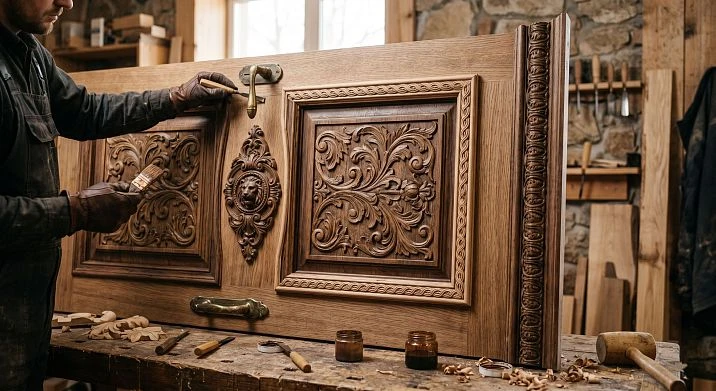
A door to a room is not just a passage. It is an architectural element visible from several rooms at once, which catches the eye upon entry and sets the tone for the entire interior. And the most surprising thing is this: the quality of door decor determines the feel of a room more strongly than most other details. A beautifully designed door with wooden architraves, moldings, and carved overlays is not an expensive renovation, but precise work with details.
Wooden door decor is a whole system. It includes architraves, extensions, moldings on the door leaf and around the opening, carved overlays, corner elements, wooden handles, and linear trim. Each of these elements is important in its own way, and only together do they create that completeness which is called an "expensive interior."
What door decor consists of: the full picture
Let's start with the main thing — understanding the system. Most people think of door decor as "something beautiful on the door leaf." In fact, a door has several layers, and each of them participates in creating the image.
Door leaf. The base material. It can be smooth, paneled, with glazing — and this affects the choice of decor.
Frame and extensions. The technical structure that holds the door leaf. The width of the extension must cover the wall thickness — and this is where the visible part of the doorway begins.
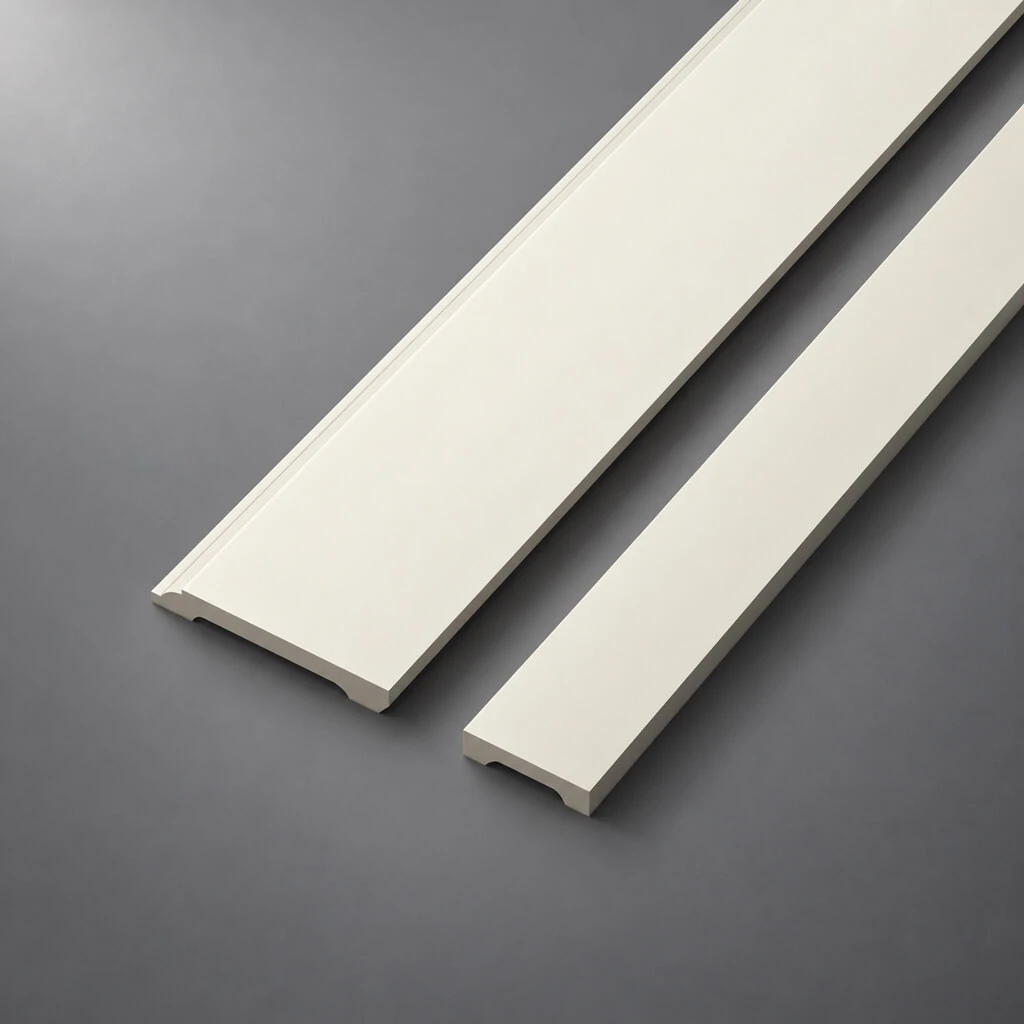
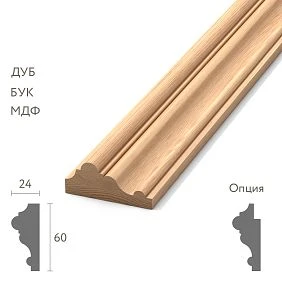
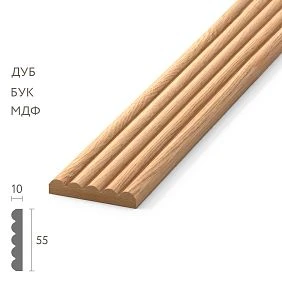
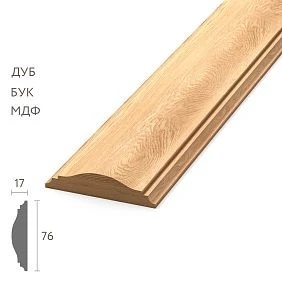
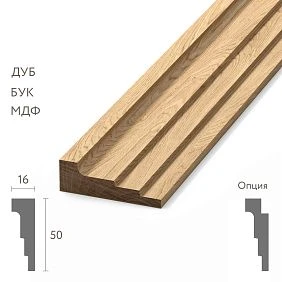
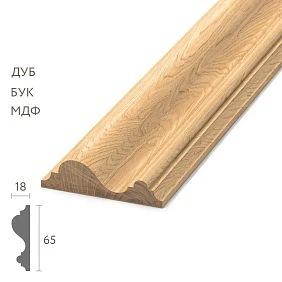
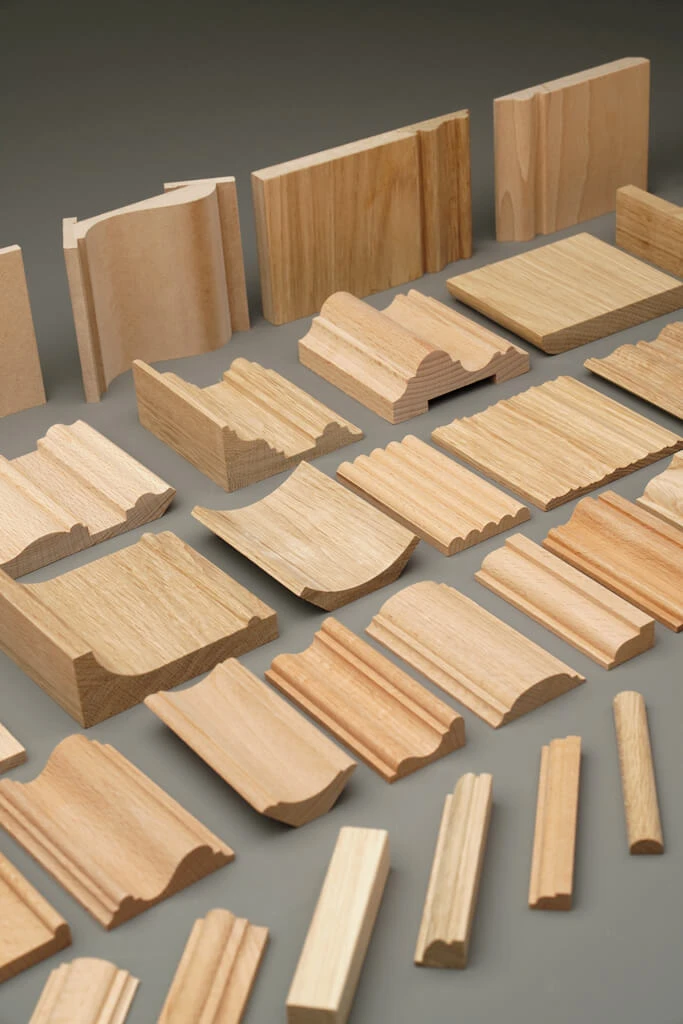
Wooden casingsProfiled planks that cover the joint between the frame and the wall. The main element of decorative design for the doorway.
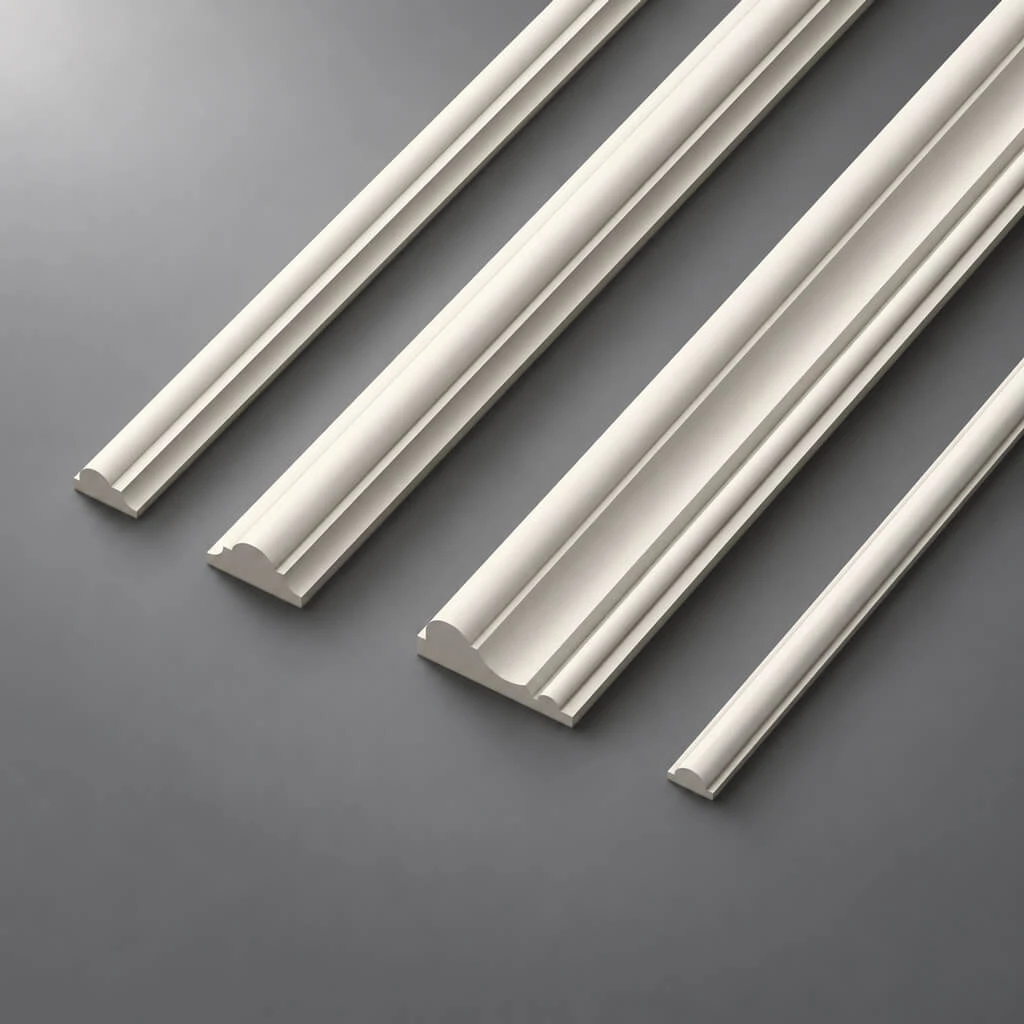
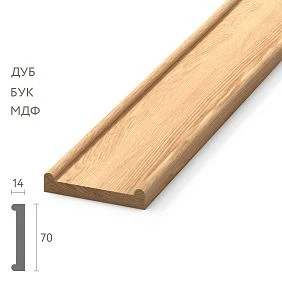
Moldings. Profiled strips that can be applied on the door leaf (to imitate a paneled door) or around the opening (to create an architectural frame).
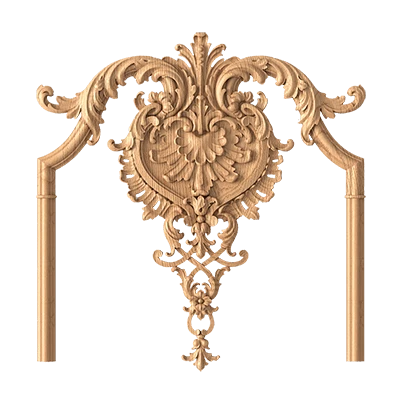
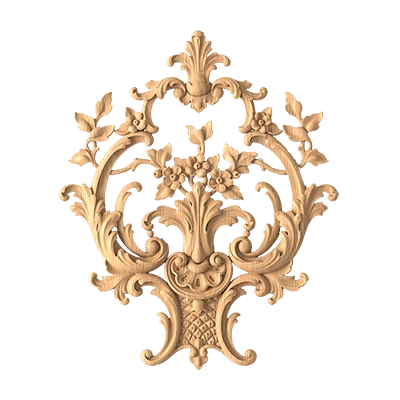
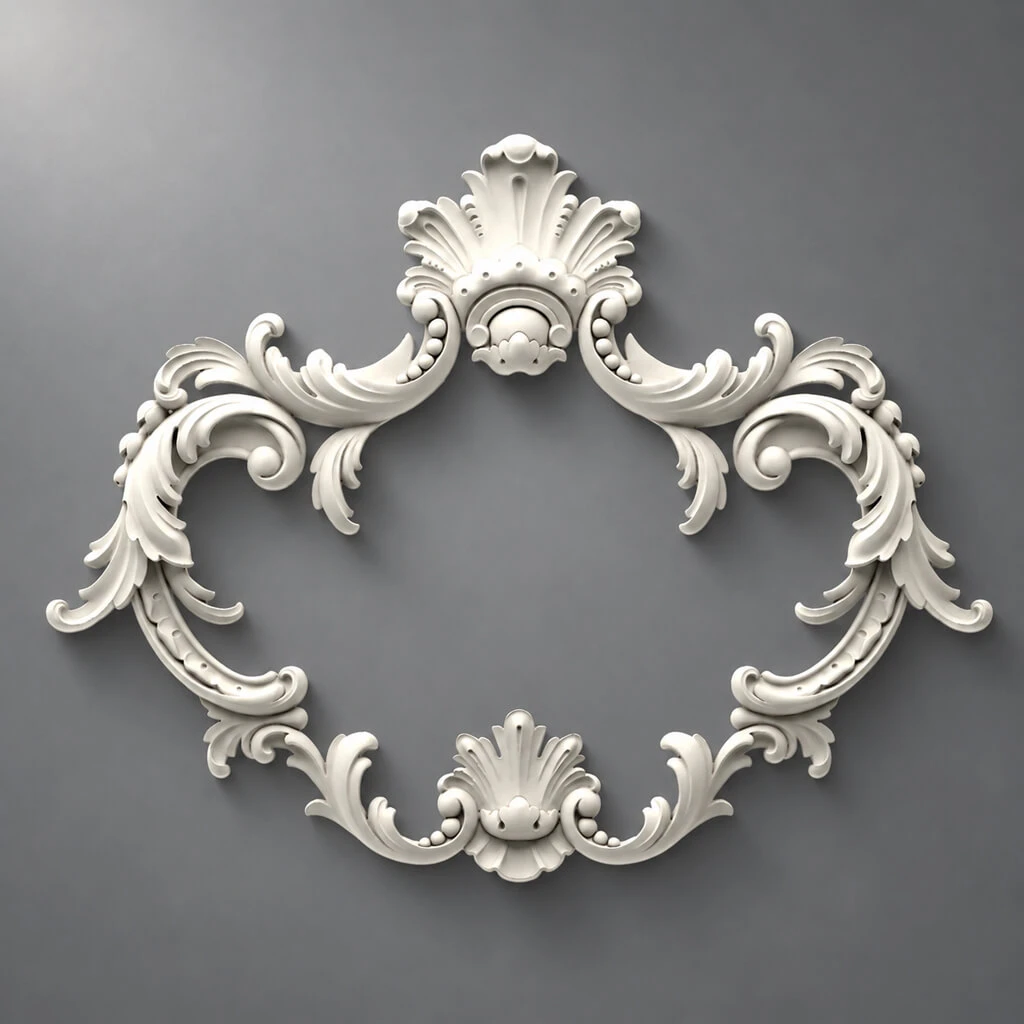
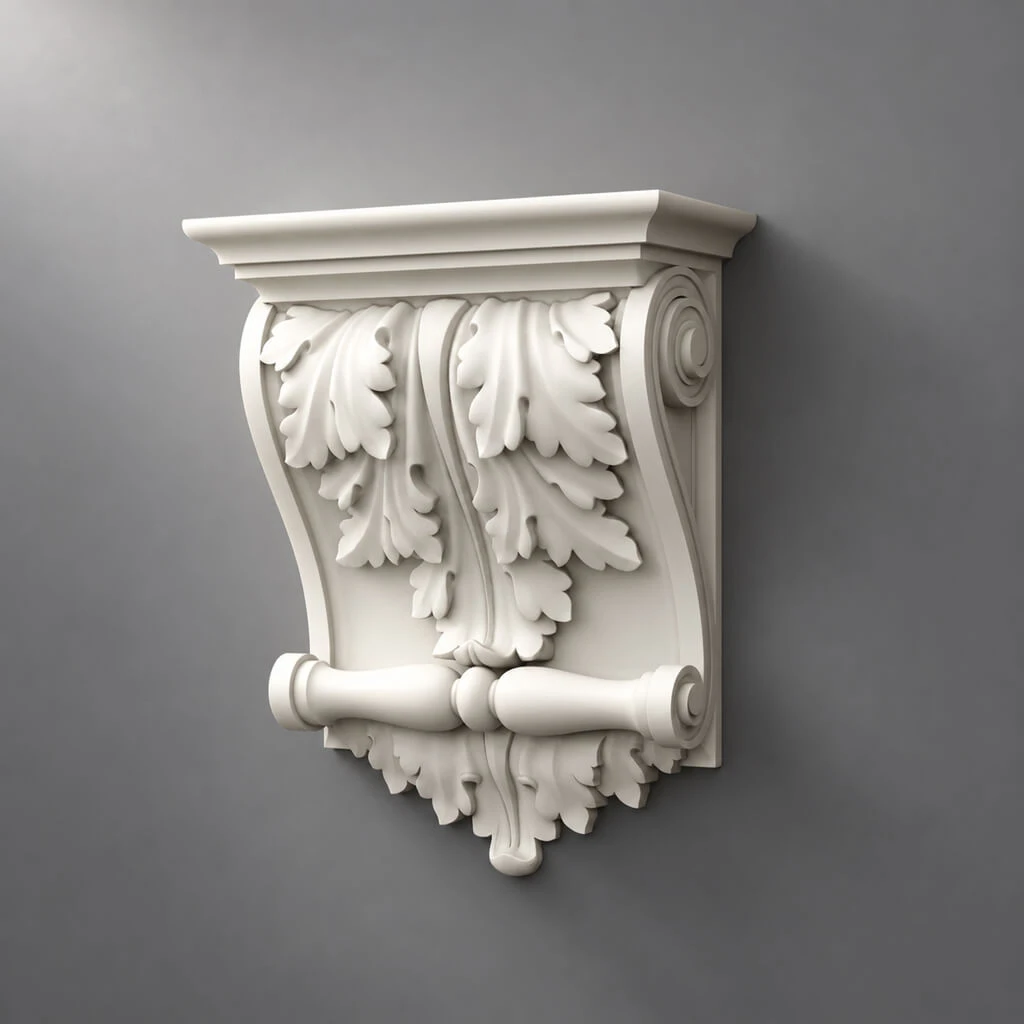
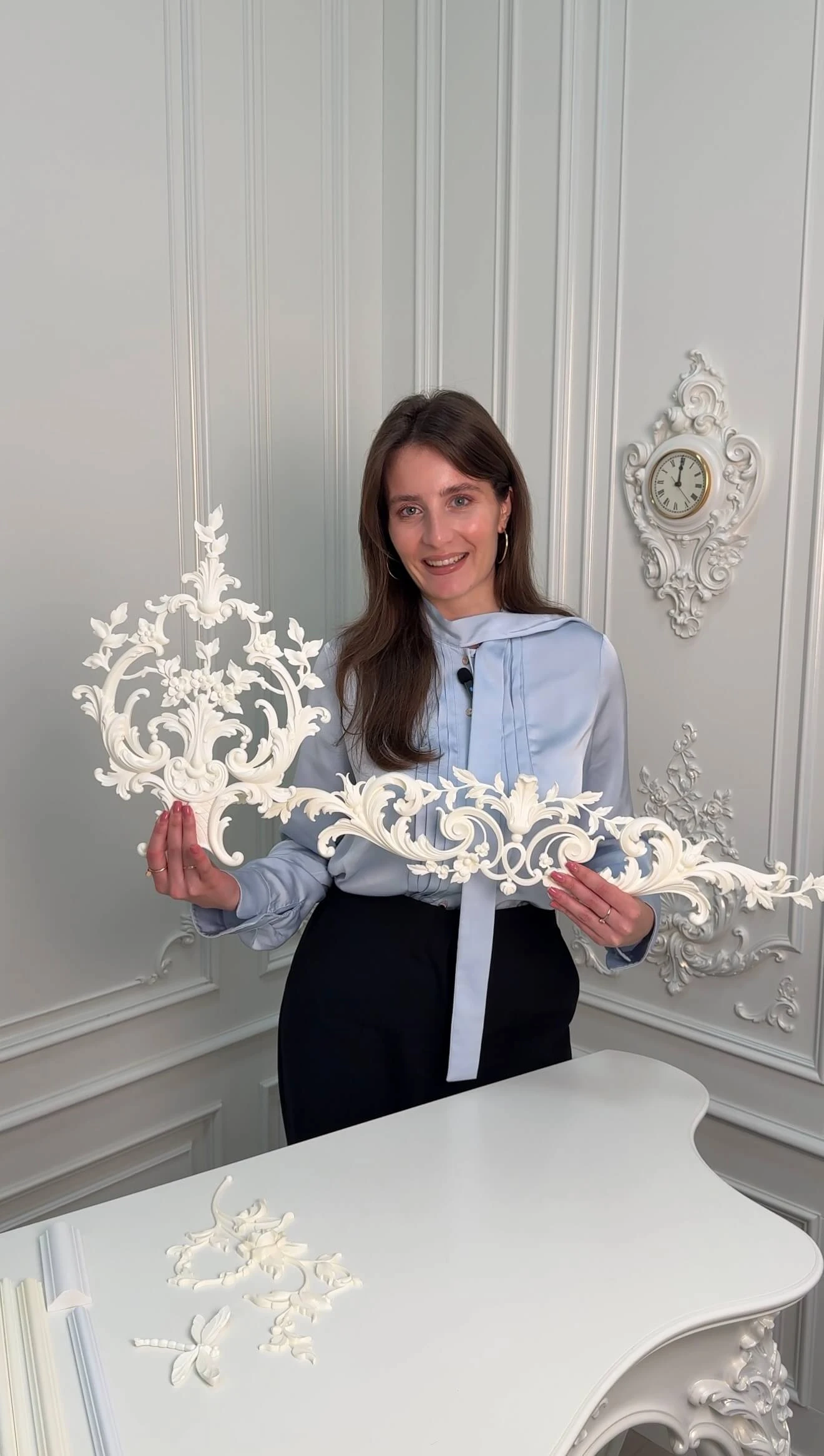
carved appliquésDecorative three-dimensional elements: corner rosettes, central ornaments, vertical accents. They turn a simple door into an object with history.
Wooden handlesThe final touch. The part that is touched by hands every day — and which most strongly defines the tactile sensation of the door.
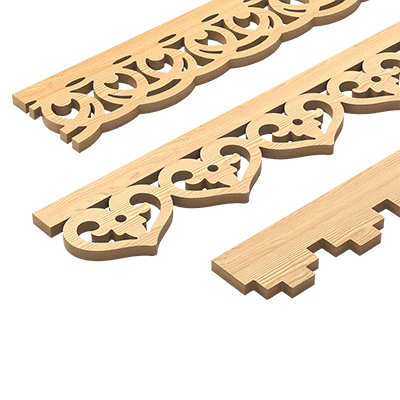
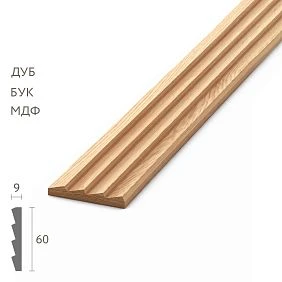
Pogonazh iz massivaDecorative slats and glazing beads for filling the door leaf, creating visual inserts, and designing horizontal bands.
Wooden baseboardThe completion of the doorway at the bottom. The joint between the casing and the baseboard is a detail by which the quality of finishing is unmistakably judged.
Understanding this system as a whole means being able to make the right decision for each of its elements. That is why good door decor begins not at the store, but with a clear understanding of how all the elements work together.
Wooden casings: the main element of doorway design
If you remove everything from the door — moldings, overlays, handle — and leave only the casings, the door will still look different depending on the quality and profile of these strips. It is this that wooden casing determines whether the door will look like an expensive interior detail or a standard solution from a hardware store.
Our factory also produces:
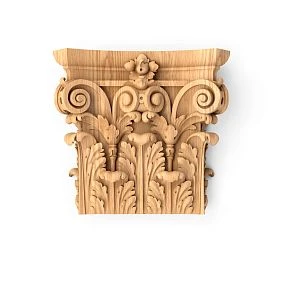
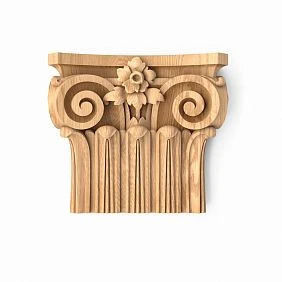
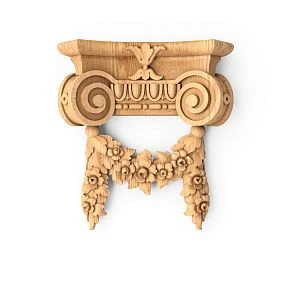
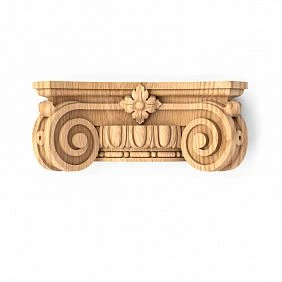
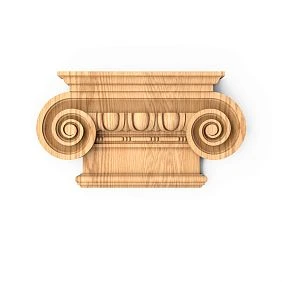
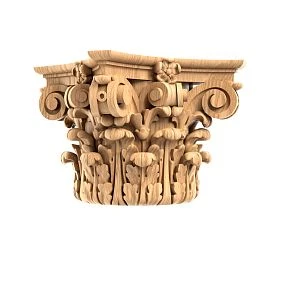
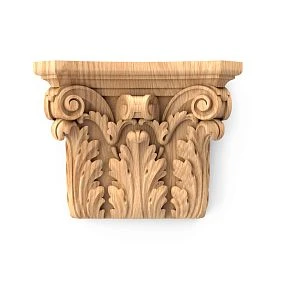
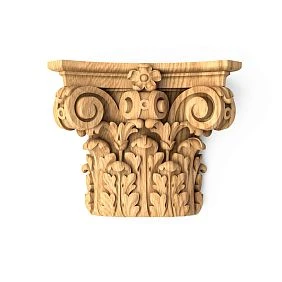
Why casings are needed
The function of the casing is technical: to close the gap between the door frame and the wall, to hide mounting foam and plaster irregularities. But the decorative function is more important in practice. The casing frames the opening, creates a 'frame' for the door, sets the visual height and architectural character.
A door 2000 mm high with a wide profiled casing appears taller than a door of the same height with a narrow flat casing. This is the optical effect of the profile — and its effectiveness is comparable to replacing the entire door leaf.
Get Consultation
Smooth or carved casing: when each is appropriate
A smooth, straight-line casing profile is the choice for modern interiors, minimalism, Scandinavian style, and neoclassicism with clean geometry. Such a casing does not attract attention — it serves the door, remaining in the background. A width of 50 to 70 mm is sufficient for reliable gap coverage and visual neatness.
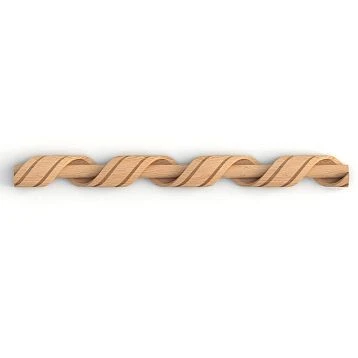
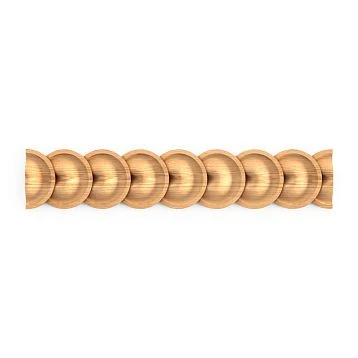
A profiled casing with a milled pattern — steps, bevels, semicircular transitions — is already a declaration of style. It suits interiors where details matter: neoclassicism, modern classic, art deco.
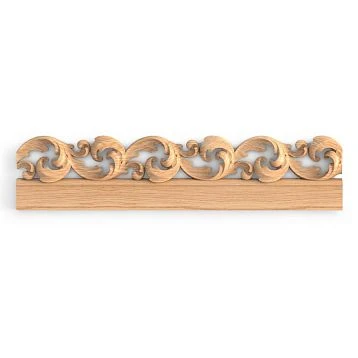
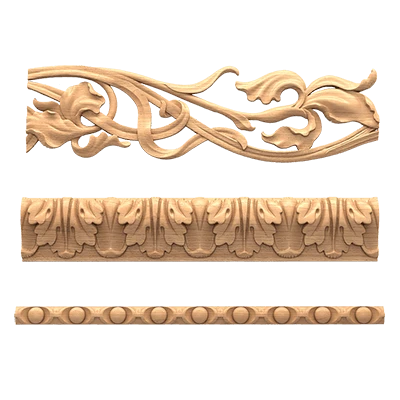
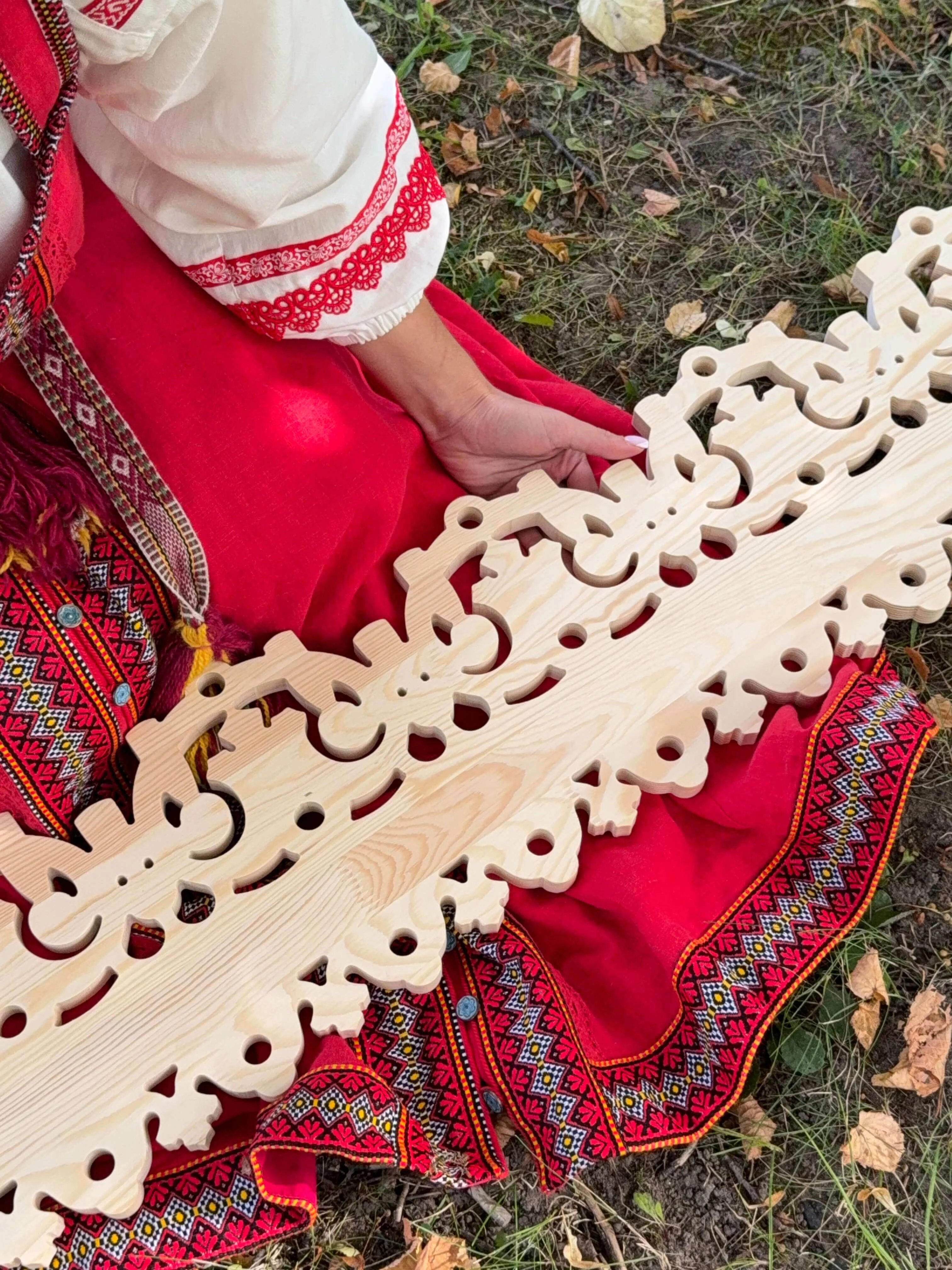
A carved casing with an ornament is a step above. Floral patterns, weaves, geometry in Russian style, classic acanthus — all this turns the casing from a finishing element into a piece of decorative art. Such a casing is appropriate in a classic interior, a country house with wooden details, or a study with representative decor.
Why the casing should match the baseboard
This is a rule that is most often broken — and the price is a visible mismatch. The casing and Wooden baseboard meet at the bottom point of the doorway. If they are made of different materials, different tones, or different profiles — this joint becomes a "problem area" that is immediately noticeable.
Professional solution: casing and baseboard from the same collection, same wood species, same coating tone. Or, if that is not possible, use a connecting decorative element (a rosette at the base of the casing) that visually shifts attention away from the joint.
Moldings on doors: turning a simple panel into a paneled one
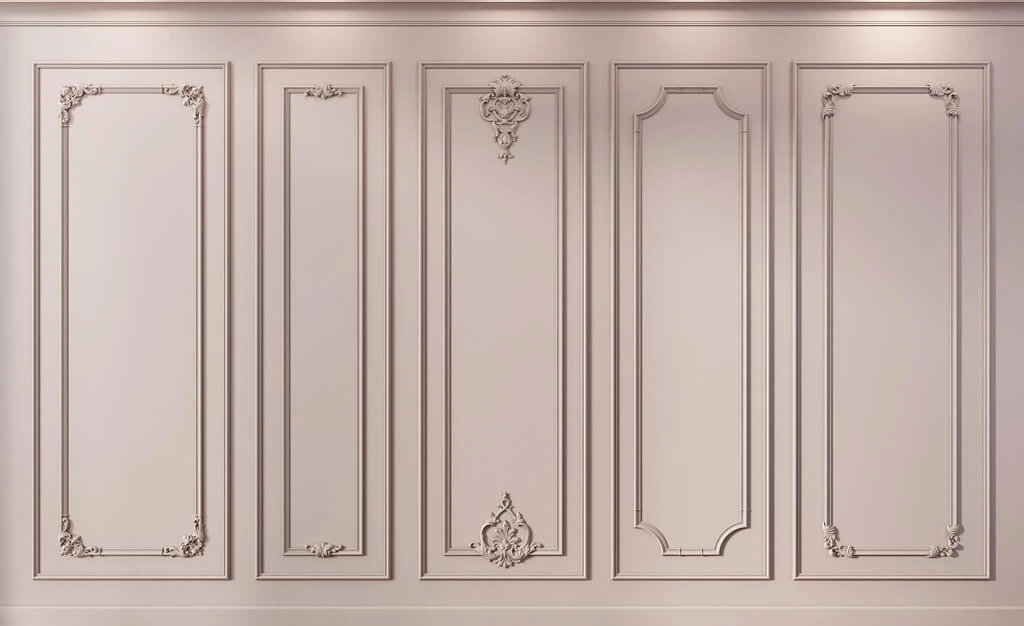
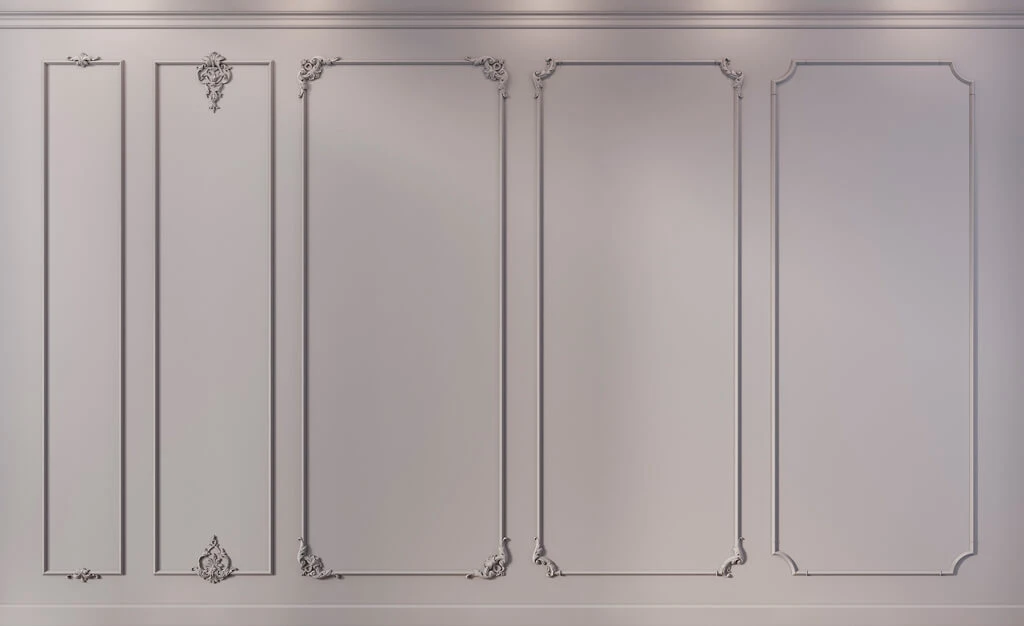
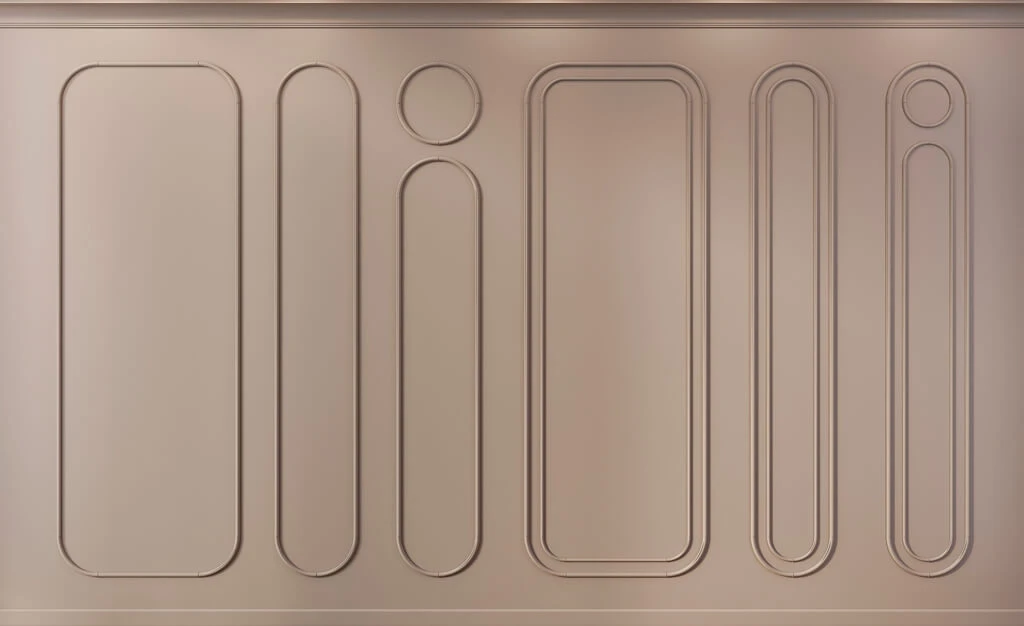
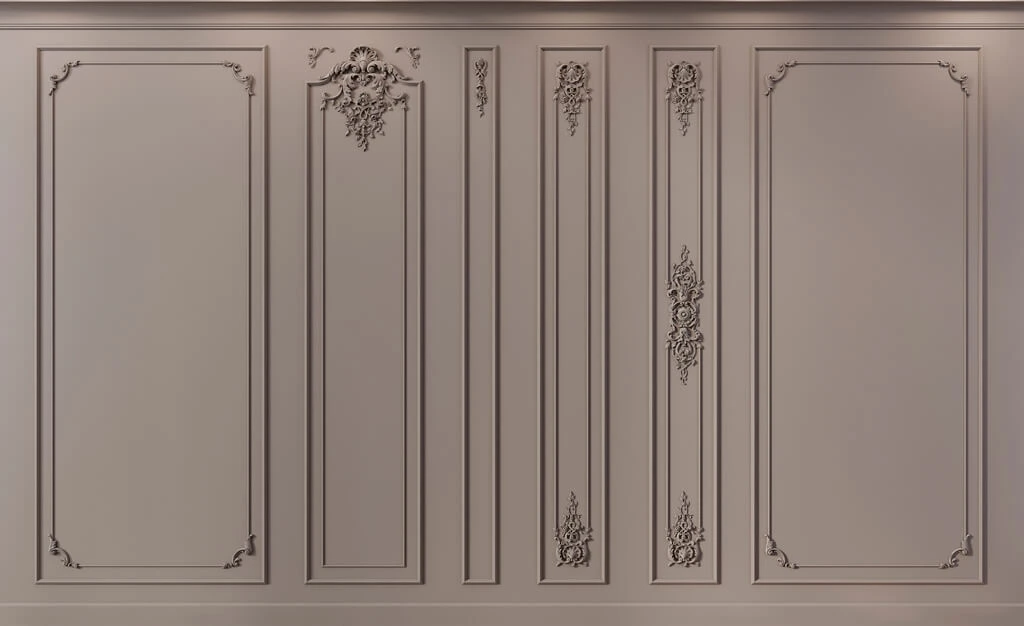
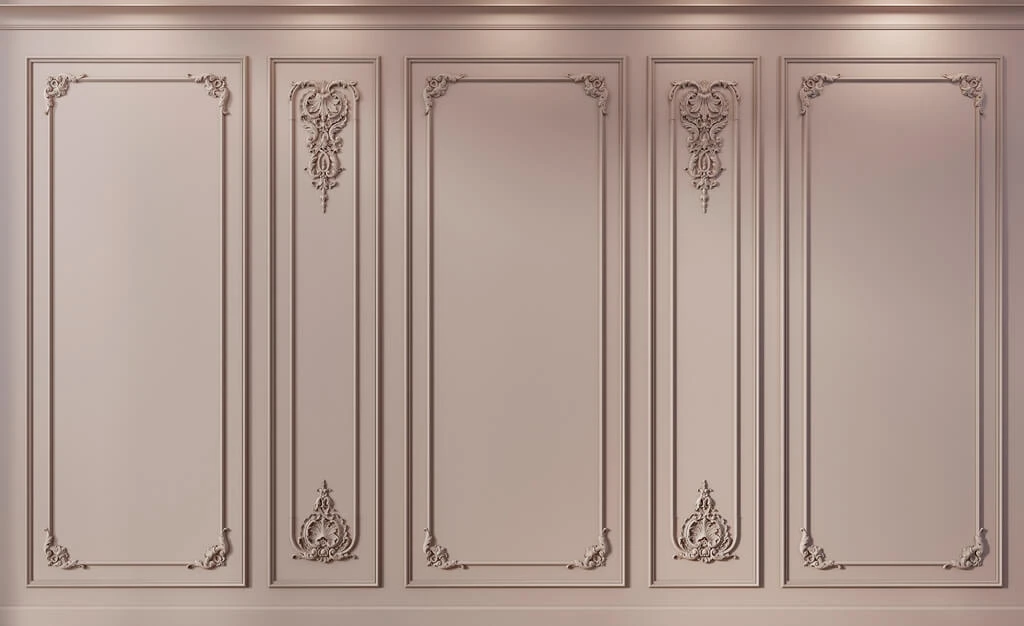
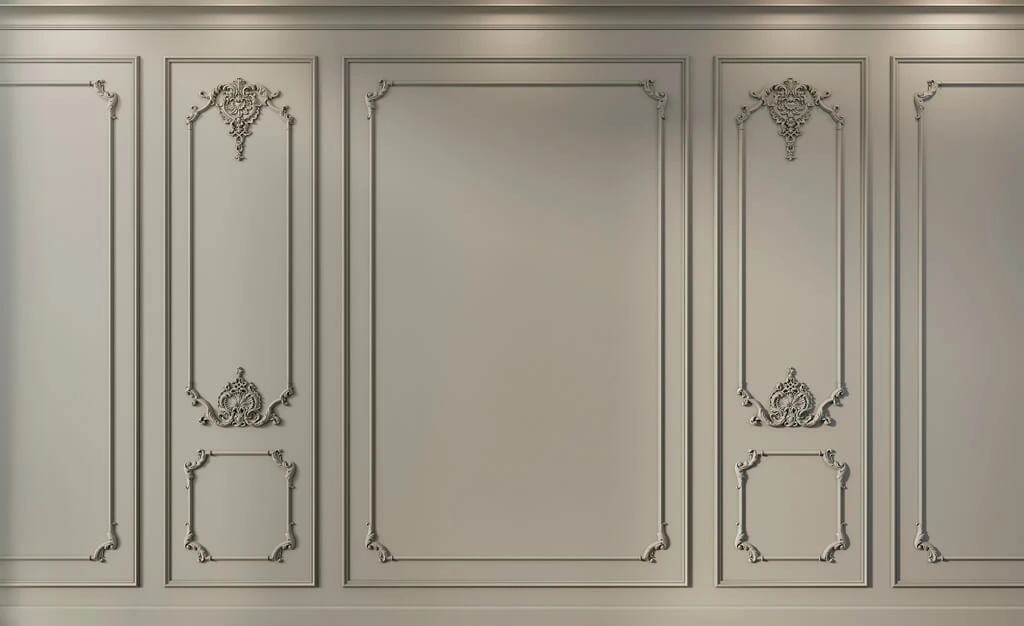
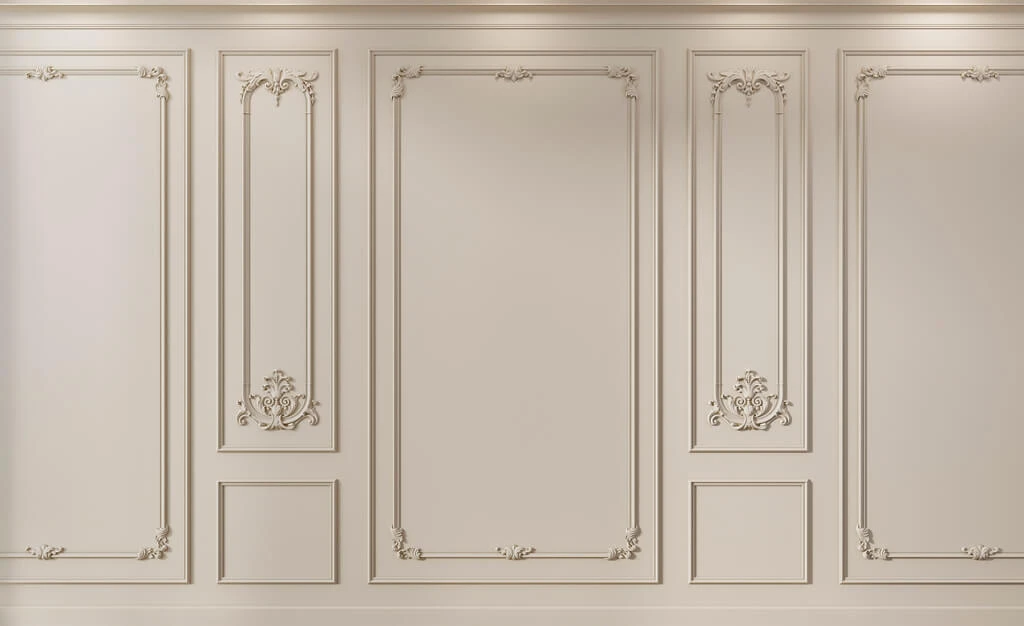
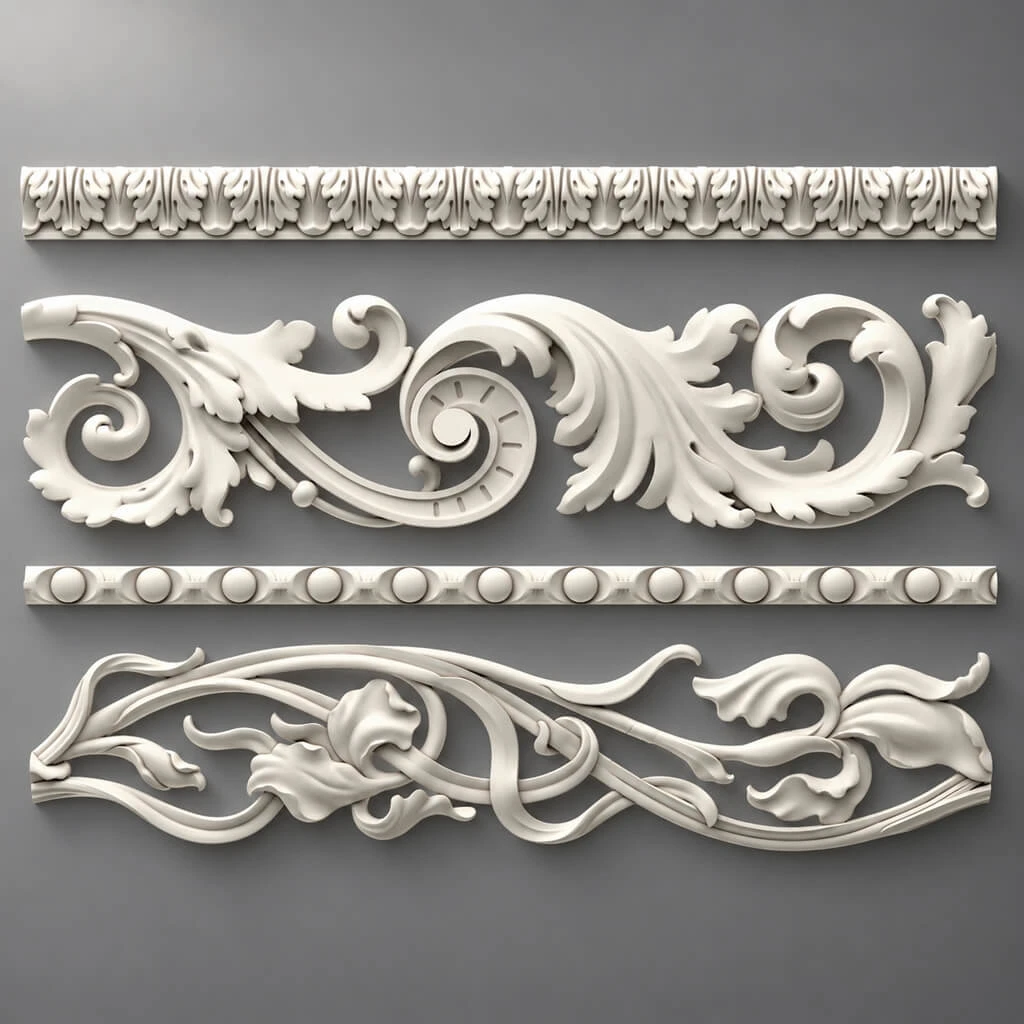
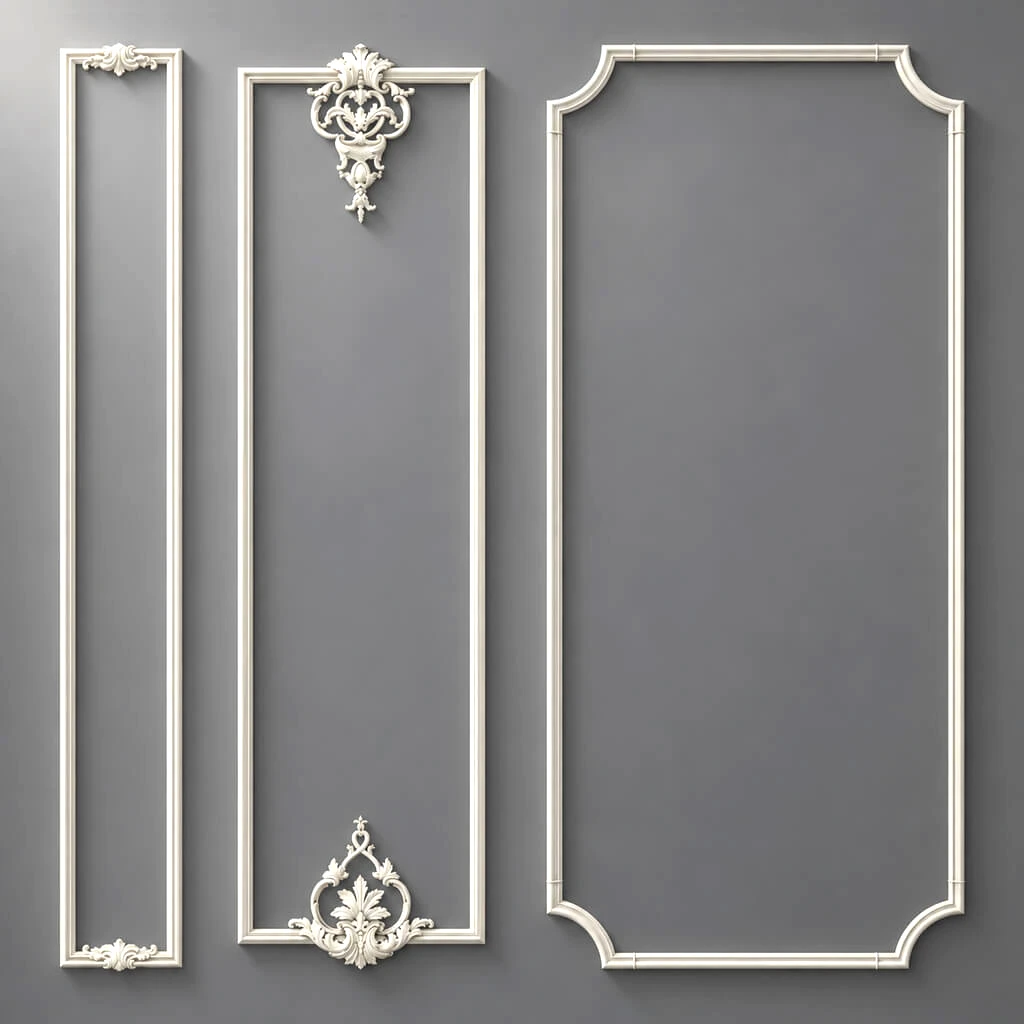
A smooth door leaf is a blank slate. Good for minimalism, but boring for interiors with character. Wooden moldings solve this problem elegantly: a few horizontal or vertical slats on the leaf — and the door visually acquires a structure indistinguishable from a classic paneled construction.
How moldings work on a door leaf
The principle is simple: a molding is a profiled strip that is glued to the surface of the leaf and creates a relief division. Three horizontal moldings divide the leaf into four parts — and the door instantly gains architectural depth. Two vertical ones — additionally structure it. The molding system can be strictly geometric or classic multi-level — depending on the style.
Two things are important for door moldings: symmetry and proportion. Moldings that break the leaf into unequal parts look sloppy. An incorrectly chosen molding width — too thin or too heavy — disrupts the scale.
Moldings around the doorway
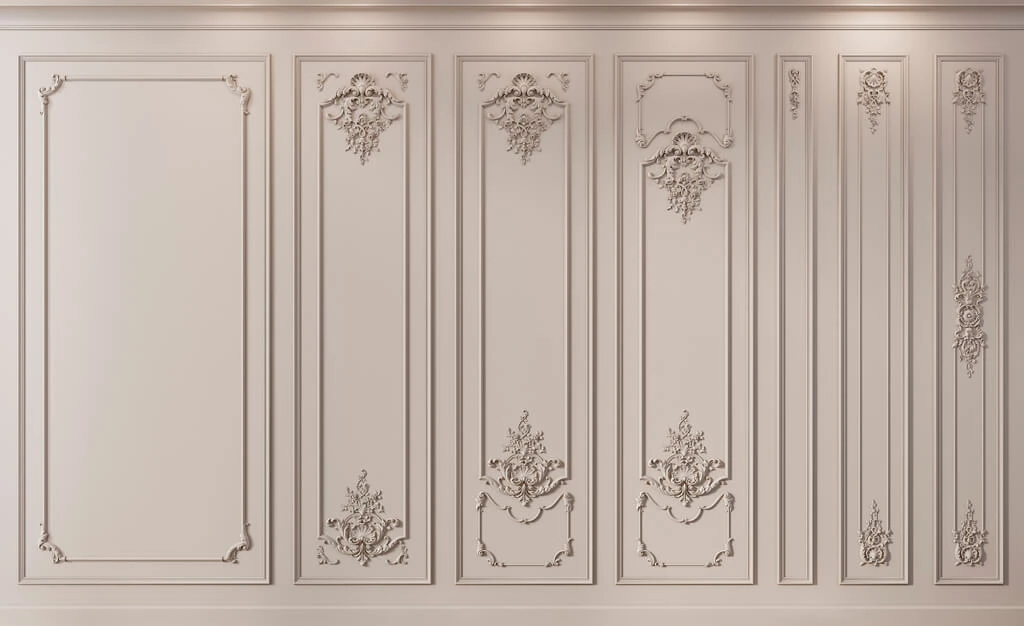
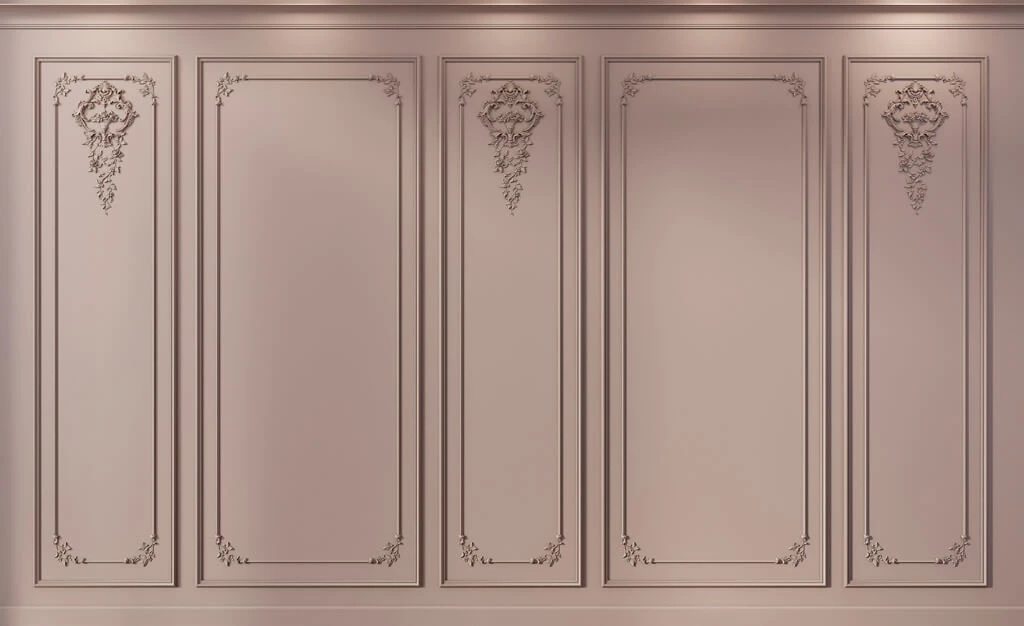
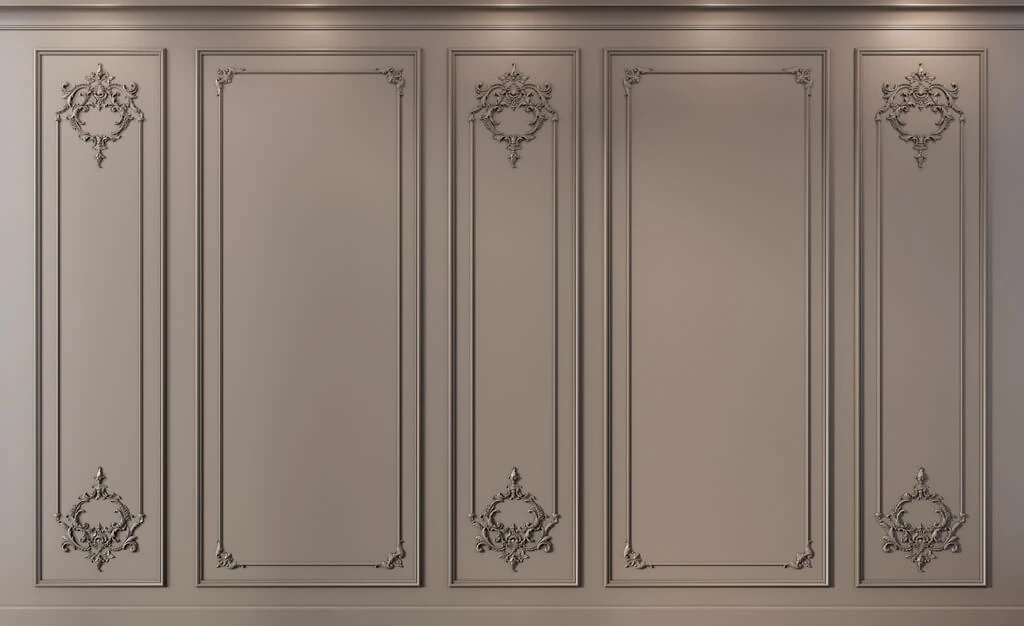
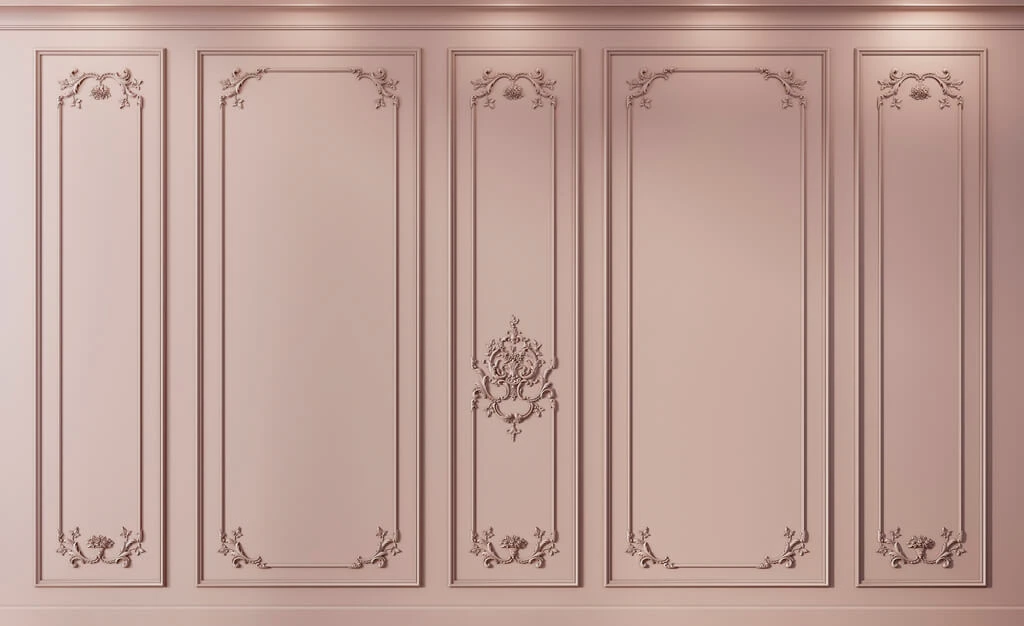
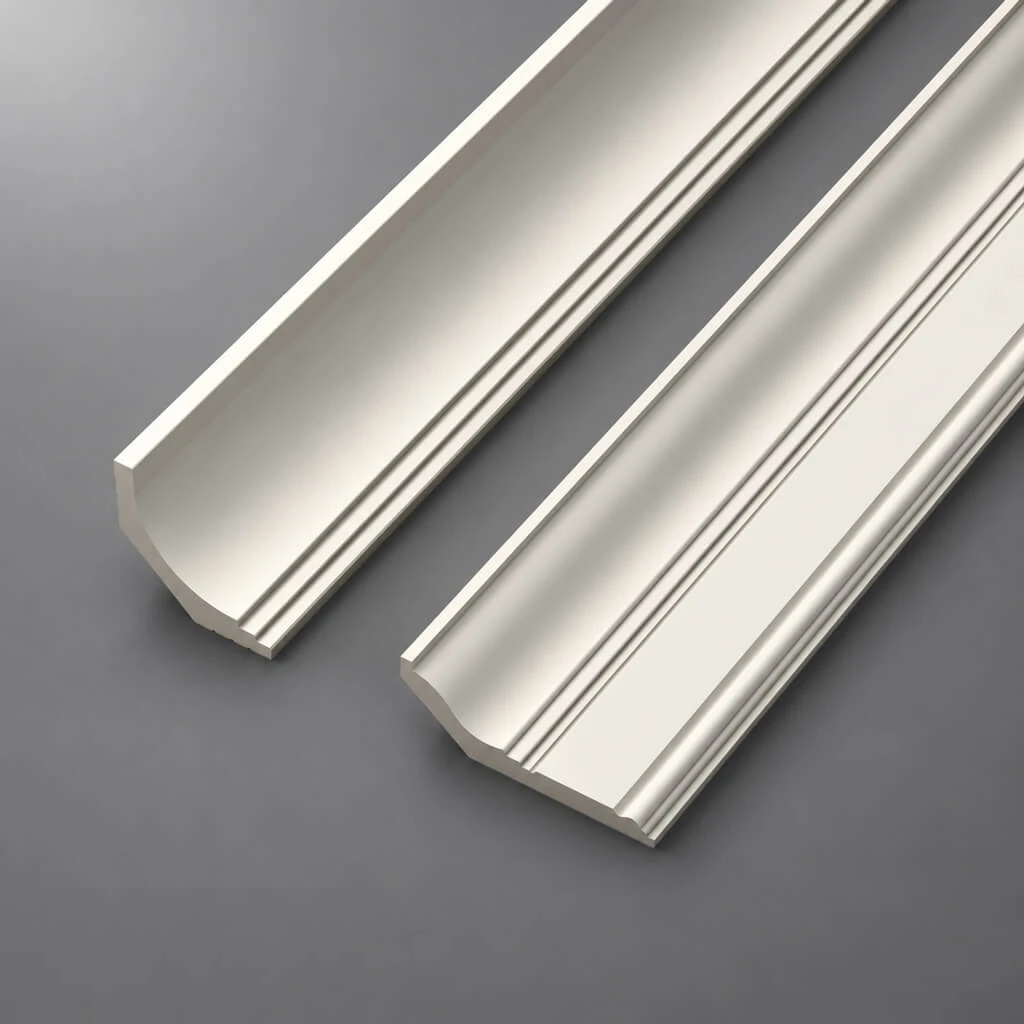
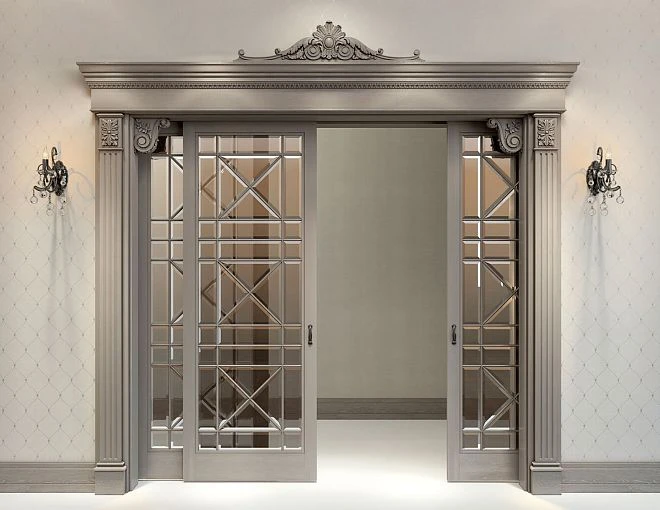
This is an architectural technique of the highest level. Moldings around the opening create a "portal" — a three-dimensional frame that turns a simple rectangular opening into a classic architectural detail. In combination with architraves, extensions, and corner elements, this solution is used in the most expensive interiors.
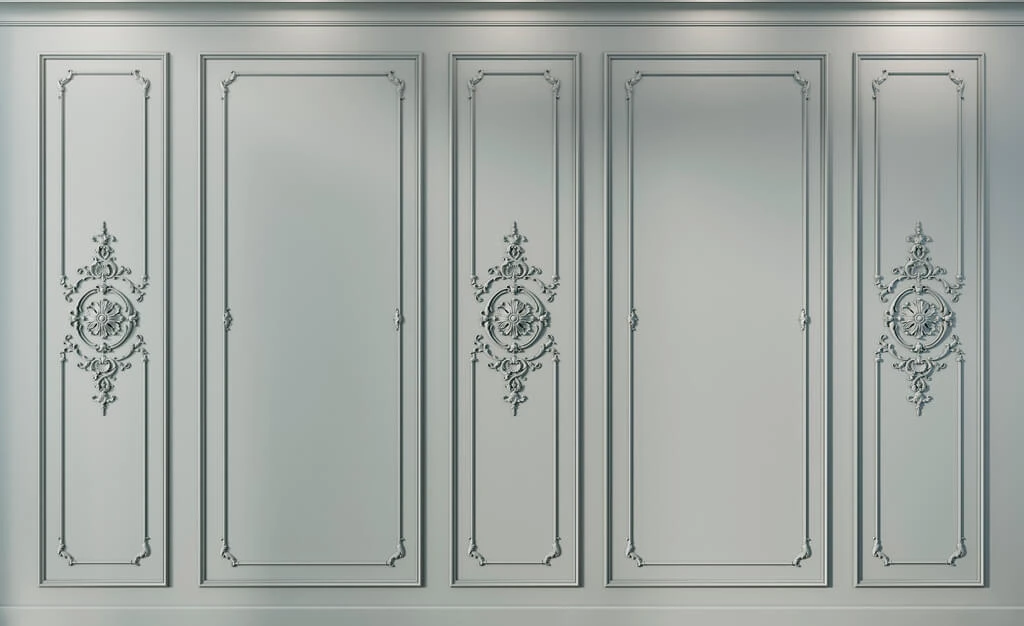
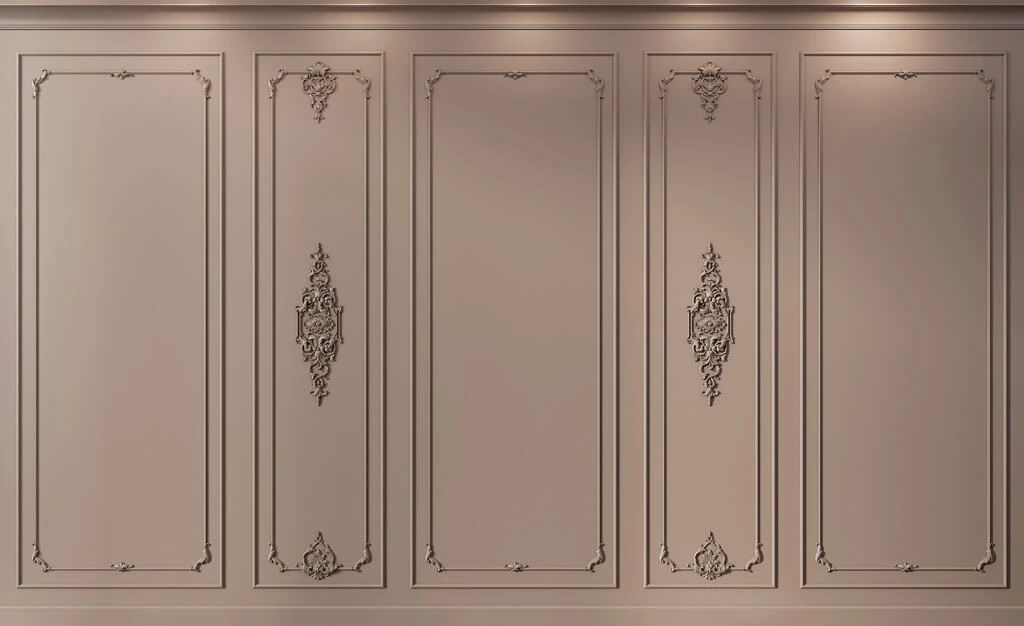
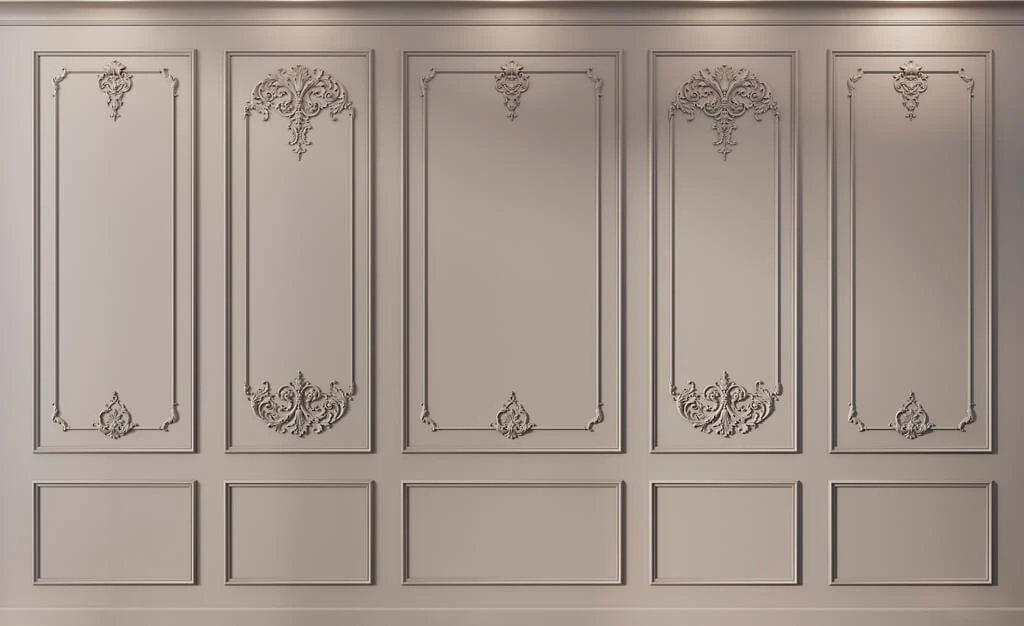
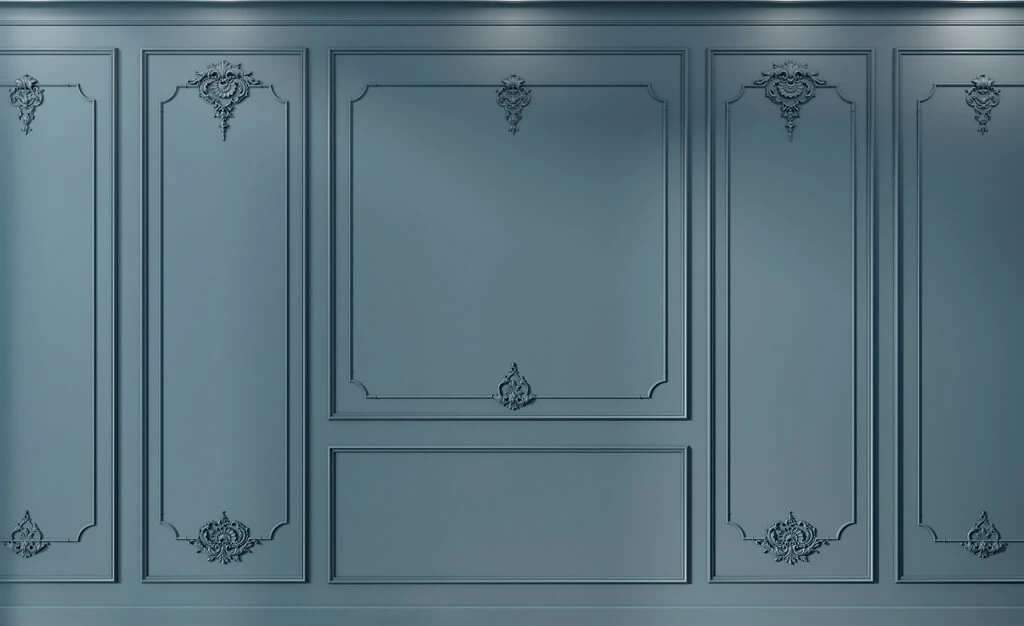
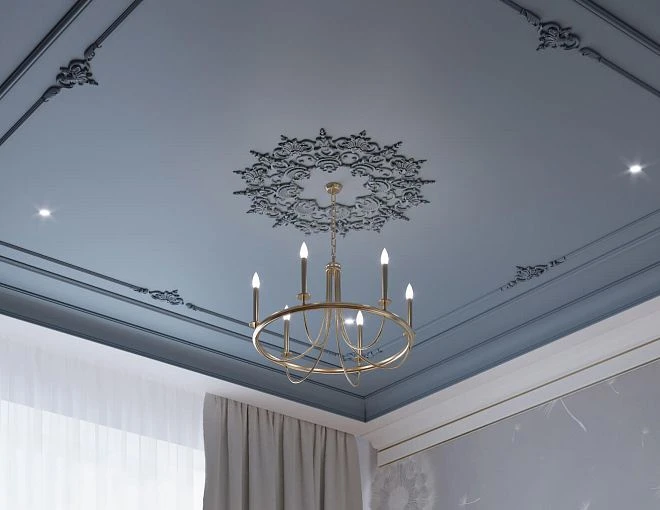
For a country house or a large apartment with high ceilings — moldings around the openings in combination with a cornice at the ceiling and wooden skirting board create a unified architectural rhythm that connects all spaces into one interior system.
Carved overlays for doors: decor that speaks for itself
There is a category of door decor elements that is underestimated when planning a renovation — and discovered only after it is completed. Decorative wooden inlays — this is exactly that category.
Corner elements
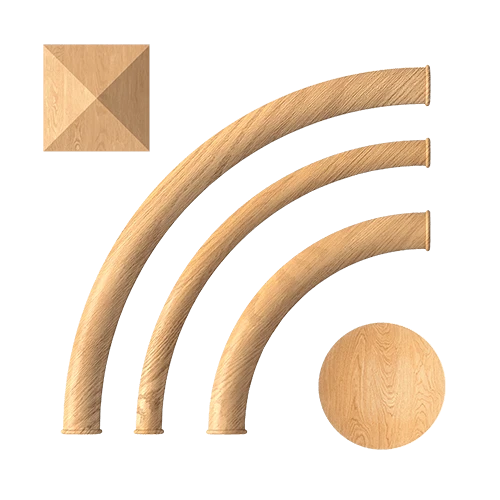
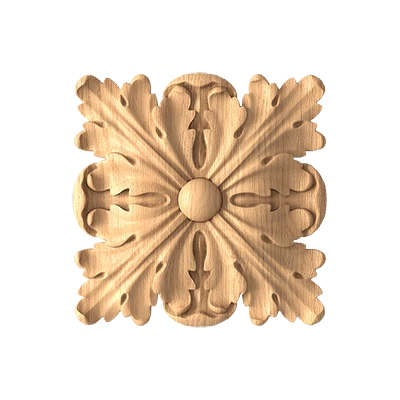
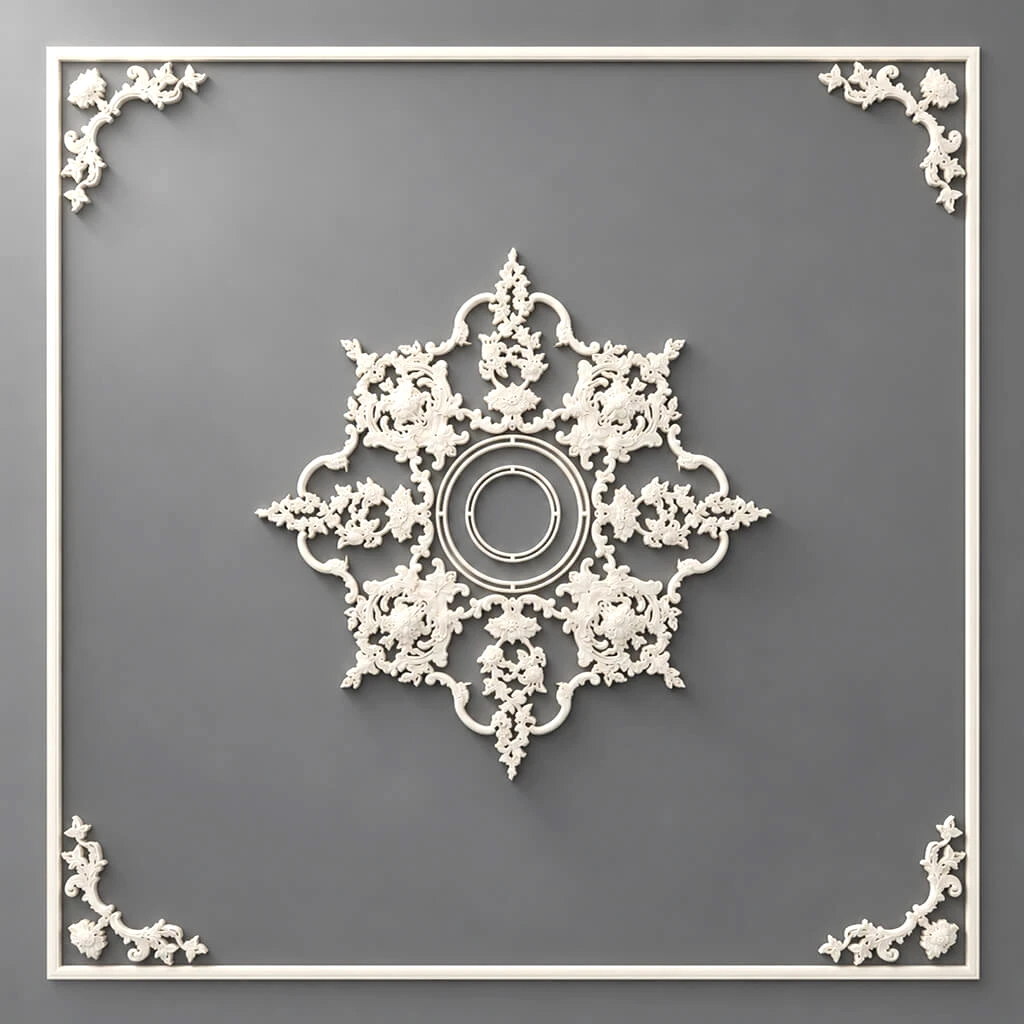
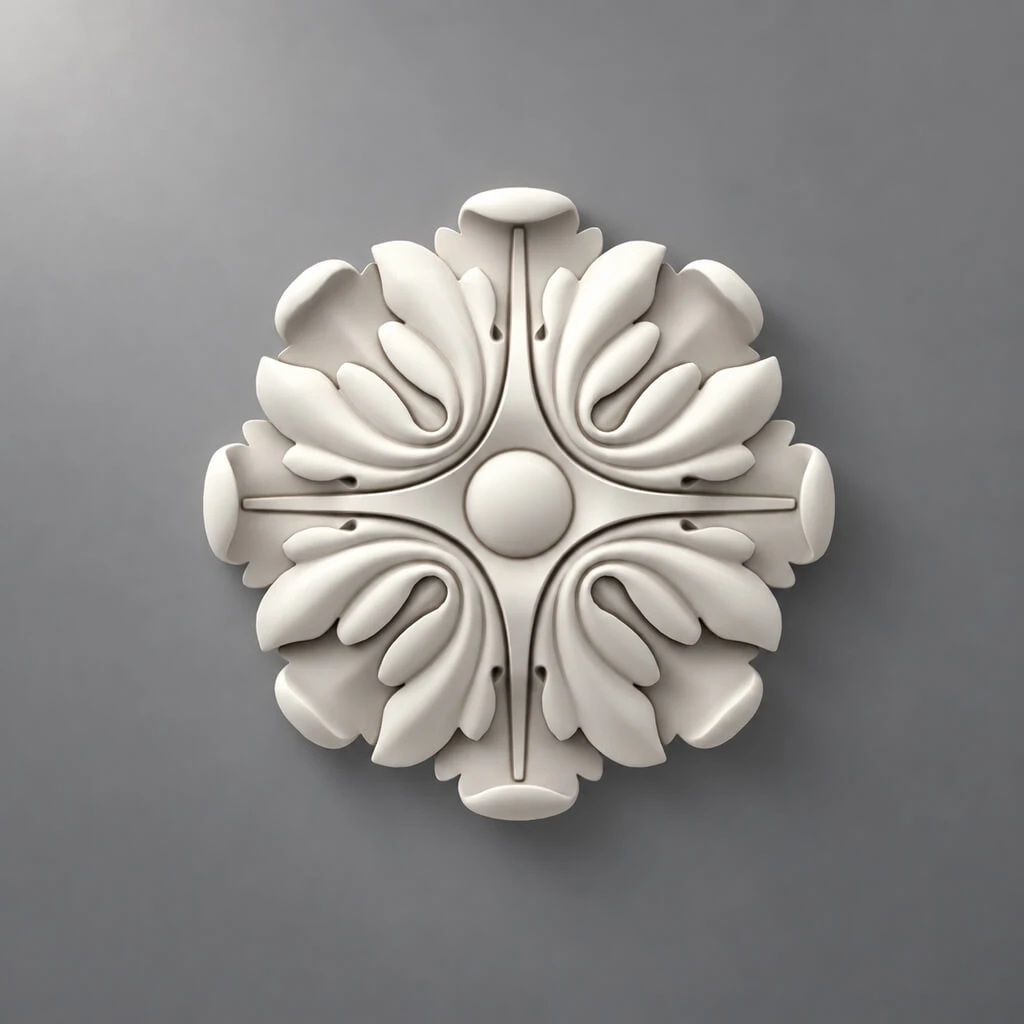
Corner overlays are installed where moldings or architraves intersect at a right angle. These can be square "pads" with relief ornamentation, rosettes with floral decor, or geometric elements. Their function is to make the intersection a decorative accent, not a technical joint.
In a classic interior, corner rosettes with acanthus leaves or diamond patterns are a mandatory element of door frame design. In neoclassicism, it is a more restrained geometric element. In the Russian style, it is a carved "pad" with a traditional pattern.
Central overlays
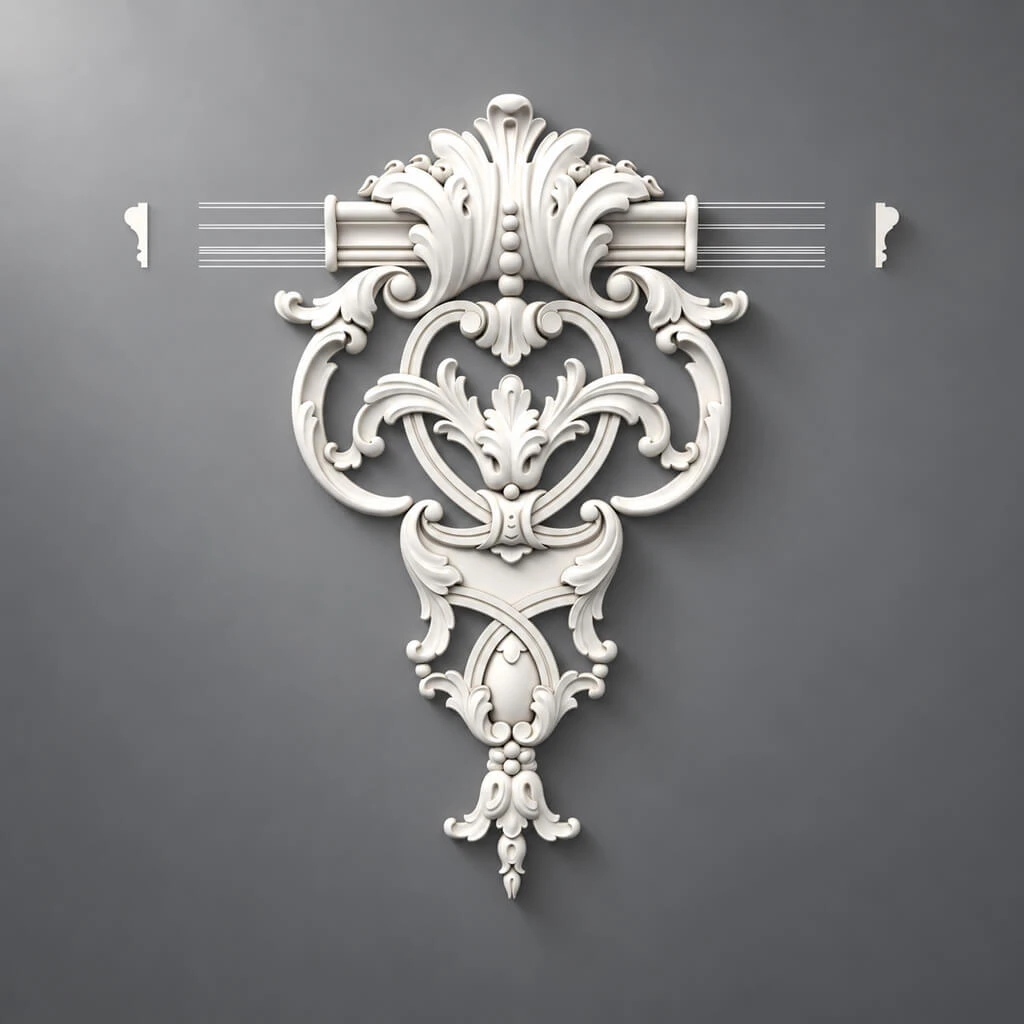
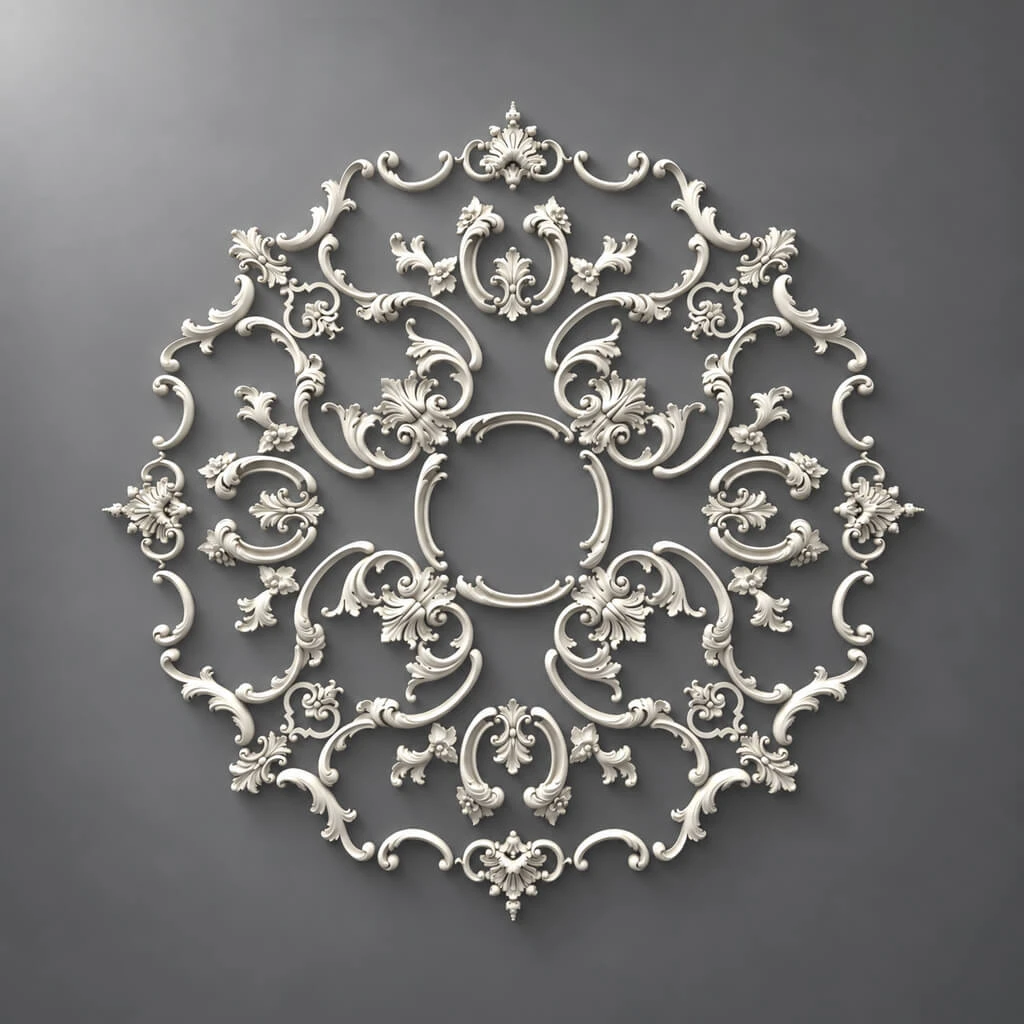
A decorative element in the center of the door leaf or at a key point of the architrave. It can be a shield with an ornament, a "sun," a vertical floral motif, or a geometric overlay. The central overlay captures the gaze, creating a semantic center of the decorative composition.
Vertical decorative elements
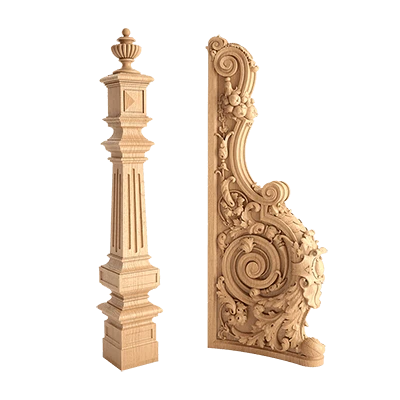
Long vertical overlays along the axis of the leaf or along the edges of the opening — a technique that visually stretches the door upward. It is especially effective in rooms with ceilings of 2.5–2.8 meters: the vertical accent creates a sense of height.
Carved wooden decoration in STAVROS — this is over 1,200 items of handmade decorative products. Overlays made of solid oak and beech, executed using 3D carving and CNC milling with manual finishing. Each element is available in "Standard" and "Prestige" finish classes.
Wooden handles: a small detail that changes the door
The handle is the point of contact between a person and the door. Every day, several times — the hand takes the handle, and this touch shapes the feeling of the interior at a level that is difficult to explain in words but easy to feel.
A chrome metal handle bracket on a door with carved wooden architraves and overlays is not a "neutral choice." It is a conflict of materials that is immediately noticeable. A wooden handle in this context is the only logical solution.
What types of wooden handles are there
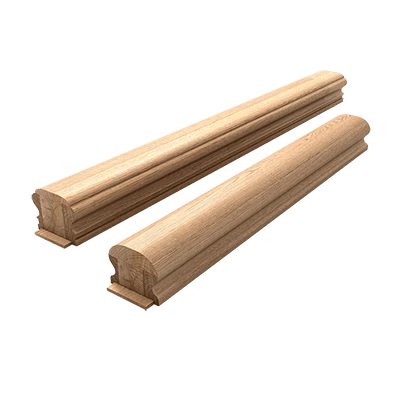
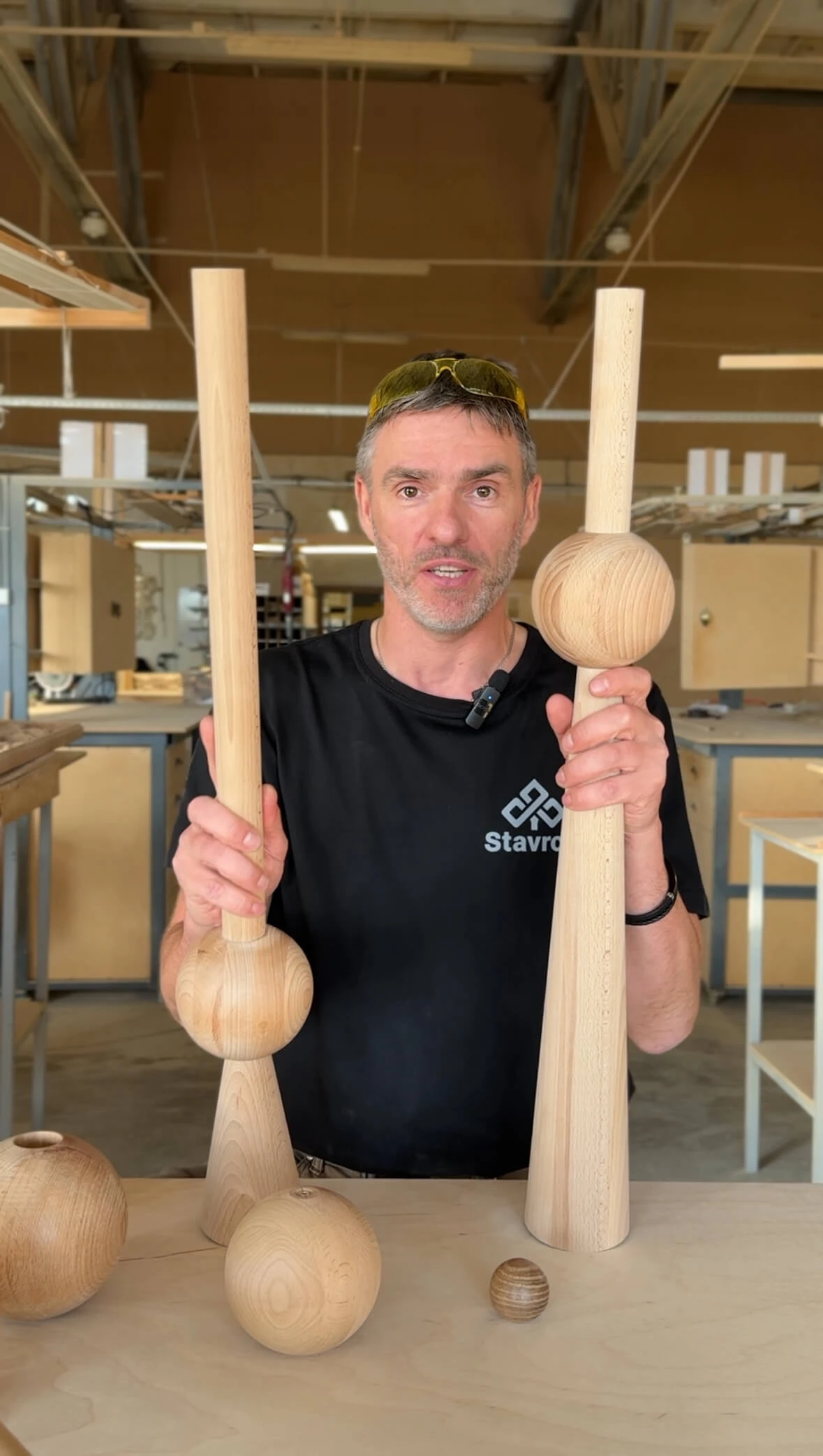
wooden furniture handles in the STAVROS catalog, this is not only furniture fittings, but also door solutions: from laconic oak "bar" brackets to turned handles with profiled ends and figured bases.
For a classic interior — a handle with an expressive base profile, with a carved or figured element. For neoclassicism — a stricter turned silhouette, pure geometry. For a modern interior — a minimalist wooden bracket without excess.
How to match the handle with the rest of the decor
The rule is simple: the handle belongs to the same tonal group of wood as the architraves, baseboard, and furniture. Warm oak everywhere — warm oak in the handle. If the interior uses wood tinted to resemble walnut, the handle should be close in tone.
An additional technique: handles on doors and handles on furniture from the same series create an internal unity that silently speaks to the design thoughtfulness of the space.
Door decor in different interior styles
Style is the main filter when choosing any decor. For doors, this is especially critical because the door is visible from several zones simultaneously and must read correctly in each context.
Classic style
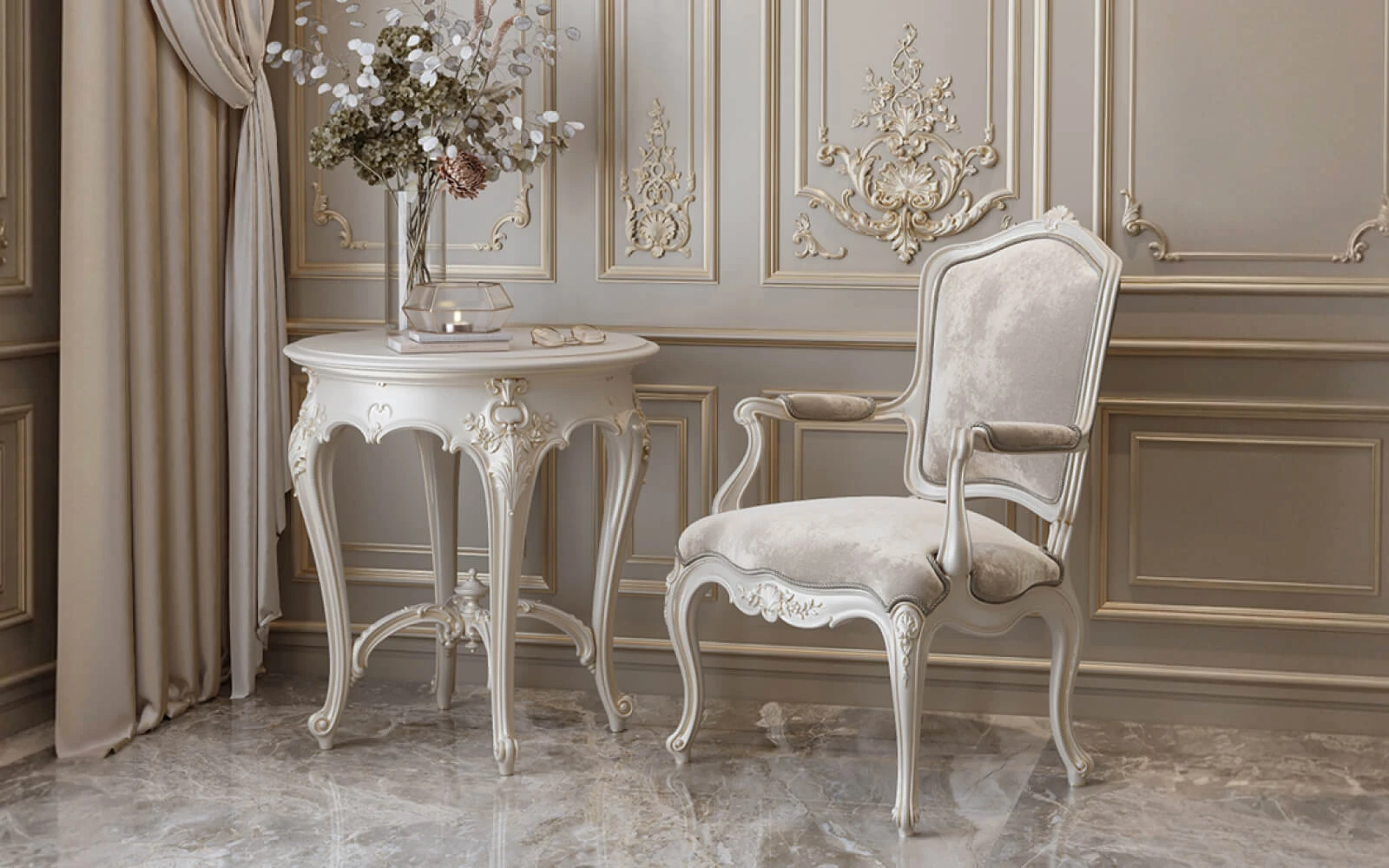
Classic does not require minimalism — it requires proportionality. A wide profiled oak architrave with a milled pattern, corner decorative rosettes, moldings on the panel dividing it into three parts, a wooden handle with a figured base. All this creates the image of a front door associated with a classic interior.
Important: in the classic style, door decor must be coordinated with wall decor — moldings on the walls, with the cornice at the ceiling, the baseboard at the floor. The door is not a separate item, but part of an architectural ensemble.
Neoclassicism
Here the same logic applies, but in a more restrained execution. A thin molding with a smooth profile instead of a wide classic one. Corner elements are geometric, without excessive ornament. An architrave of moderate width — 60–80 mm — with neat milling. Light oak or painted white MDF. Less decor, but more precise.
Russian Style
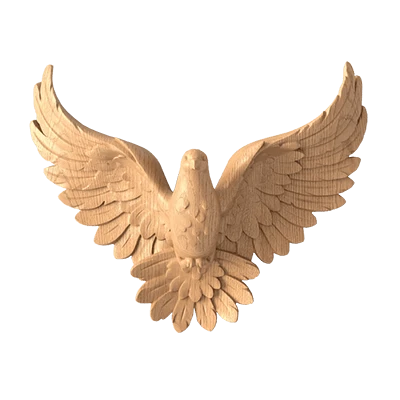
This is the direction in which wooden door decor it unfolds in full force. Carved architraves with traditional ornaments — wickerwork, grapevine, birds and animals in a floral frame — turn the door into an artistic statement. carved doors STAVROS in this style are products where the door itself is the object of decor.
The Russian style involves a combination of several levels of wooden decor: carved architraves, carved overlays on the panel, a wooden handle with ornament, decorative rosettes in the corners. The scale of decor depends on the size of the room: in a large house it can be very rich, in a small apartment — more neat.
Modern interior
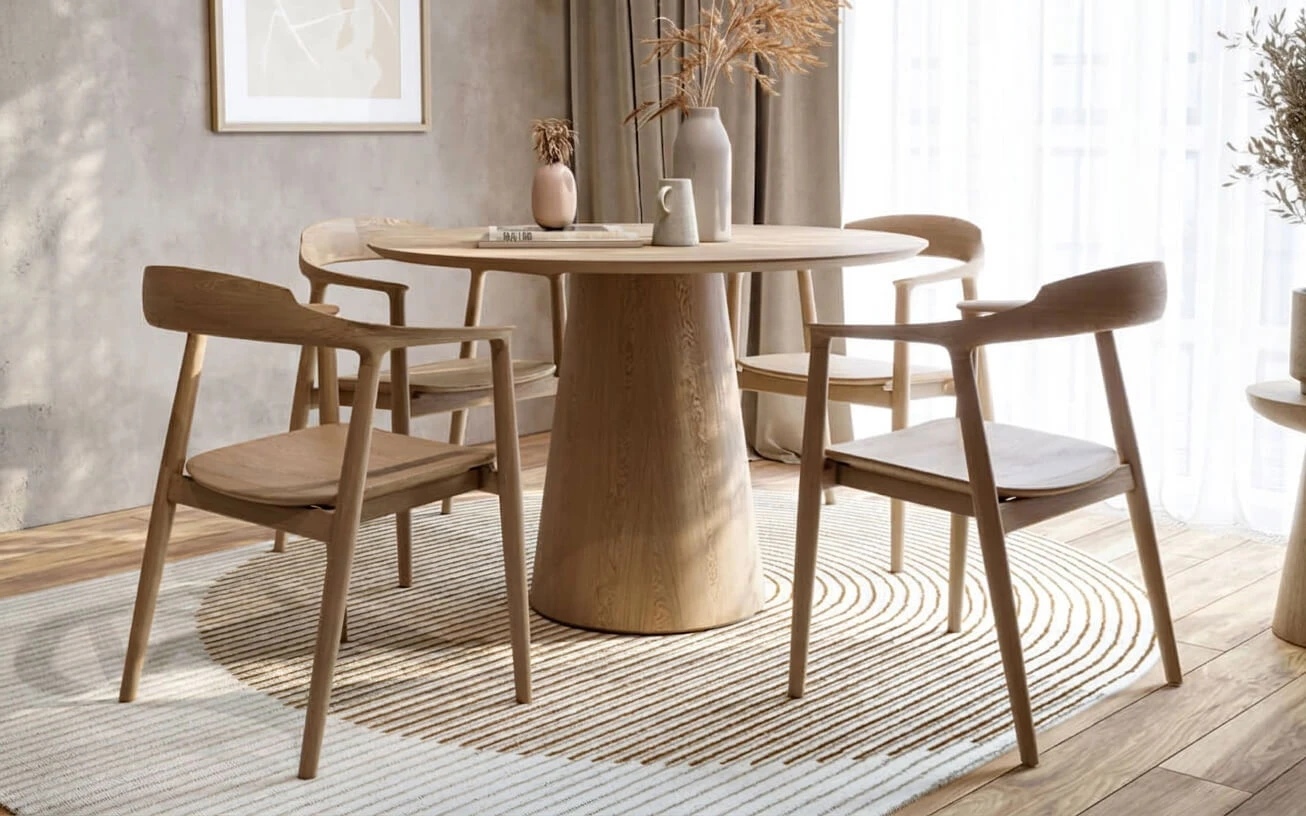
Here minimalism works. Pogonazh iz massiva with a smooth profile instead of a milled one. The casing is narrow — 40–50 mm, without carving. Mouldings on the door leaf — only if a clear geometric accent is needed. The handle is a minimalist wooden block or a D-shaped bracket.
In a modern interior, wooden door decor works as a textural contrast to smooth surfaces: metal, concrete, white walls. Wood here is warmth, nature, tactility — but in a strict form.
Country house
A country house offers maximum freedom for working with wood. High ceilings, wooden beams, open interiors — all this is a context in which interior door decor can be very rich. Wide casings with a voluminous profile, carved overlays, heavy wooden handles, mouldings on the walls between doors — all of this is appropriate and organic.
How to combine door decor with baseboard, floor, and furniture
This is perhaps the most practically important section. You can choose a beautiful casing and a nice handle — and end up with a door that 'doesn't fit.' Because fitting in means being consistent with the surroundings.
Casing and baseboard. The junction of the casing with the baseboard at the base of the doorway is a critical point. If the casing is wider than the baseboard, it looks awkward. If narrower — it's better, but still requires a well-thought-out transition. The ideal option: casing and baseboard from the same series with a consistent profile.
Wood color and floor. The tone of the casing should be in the same register as the floor color. It doesn't have to match exactly — but be 'related': warm to warm, cool to cool. A warm honey oak casing against a cool gray-beige parquet is a tension that doesn't add interest.
Handles and furniture. Wooden handles on the doors, coordinated in tone with the furniture handles in the same room, create a sense of a unified interior solution. This is not a 'mandatory rule,' but it is a technique that works flawlessly.
Mouldings on the door and mouldings on the walls. If the room already has Wooden moldings on the walls — moldings on the doors should be from the same series. Mismatch in profile or tone is especially noticeable here.
The door as part of the architecture. In a classic and neoclassical interior, the door is not furniture, but an architectural element. Therefore, its decor should be part of the overall scheme: the cornice at the ceiling sets the upper horizontal, the baseboard sets the lower one, moldings set the intermediate rhythm, and architraves set the vertical accents. The door exists within this system, not on top of it.
Decorative design of the doorway: from architrave to cornice
There is a technique that designers know and rarely use in ordinary renovations: designing the doorway as an architectural "portal." This is not just architraves around the perimeter — it is a full three-dimensional framing.
How it works: wooden casing installed on the sides and top of the opening. A wider horizontal element — a "cornice" above the door — is added on top of the horizontal architrave. Corner rosettes are installed at the corners where the vertical architrave meets the horizontal one. The result is a classic "portico" — an architectural form that was used in European palaces and remains relevant in interior design today.
This solution is especially effective when the opening height is 2100–2200 mm or higher, when there is space between the top of the door and the ceiling for a decorative frieze. wooden cornice and overlays turn this space into a decorative zone.
Mistakes in door decoration: what is done wrong
Knowing typical mistakes is insurance. Here are those most often encountered when decorating interior doors with wood.
-
Too narrow architrave for a tall door. A door 2100 mm high requires an architrave at least 60–70 mm wide. A narrow architrave of 35–40 mm looks like a thread around a large opening.
-
Carved decor without connection to the interior. A baroque ornament overlay on a door in a loft is not an "interesting contrast," it's a mismatch. Decor should be stylistically linked to the overall language of the space.
-
Mixing different wood shades. Warm oak on the trim, gray ash walnut on the baseboard, and dark wenge on the furniture — in a small room, this is chaos, not richness.
-
Ignored joint between trim and baseboard. This is the most noticeable finishing mistake. Beautiful trim and baseboard from different series at the joint point create a feeling of unfinished renovation.
-
Modern handle with classic decor. A chrome U-shaped handle on a door with carved trim is a contradiction that ruins the image.
-
Overload in a small room. In a small space, wide carved trim, decorative overlays, and moldings on the door leaf are too much. It's better to choose one accent element.
-
Floor and furniture color not considered. Door decor should be coordinated with the floor and furniture. Choosing a "beautiful trim" without considering the room's context is a lottery.
-
Door designed separately from the wall. A door without coordination with the wall finish is an "island" in the space. Moldings or panels on the walls next to the door make it part of the architecture.
Decor of an old door: how to improve what you have
Sometimes there is no opportunity or desire to replace the door leaf. This is not a problem — decorating old doors with wooden elements works just as well as styling new ones.
What can be done with an already installed smooth door?
Replace the trim. The old trim is removed, and a new one is installed — made from the right wood, with the right profile. It's fast, inexpensive, and radically changes the look of the opening.
Add moldings to the door leaf. MS adhesive or liquid nails + finishing nails — and a smooth door leaf becomes "paneled" in a few hours. The moldings need to be cut with a 45° miter and laid symmetrically.
Install carved overlays. A central overlay on the upper part of the door leaf and corner rosettes — and the door is transformed without replacement.
Replace the handle. The fastest and most noticeable change. A wooden handle instead of a metal one — it's literally a different door.
Repaint in a new shade. If the trim and moldings are already installed — coordinated repainting of the entire set (door leaf + trim) in a single shade turns a collection of elements into a cohesive solution.
Solid Wood Items for door decor: what to choose from the catalog
Let's look at specific categories for door decor available in the STAVROS catalog.
Wooden casings. A wide range of profiles — from minimalist smooth to complex classic with multi-level routing. Material — oak and MDF. Coating — primer for painting or finish enamel according to RAL.
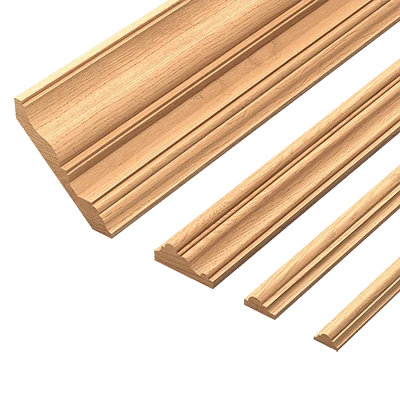
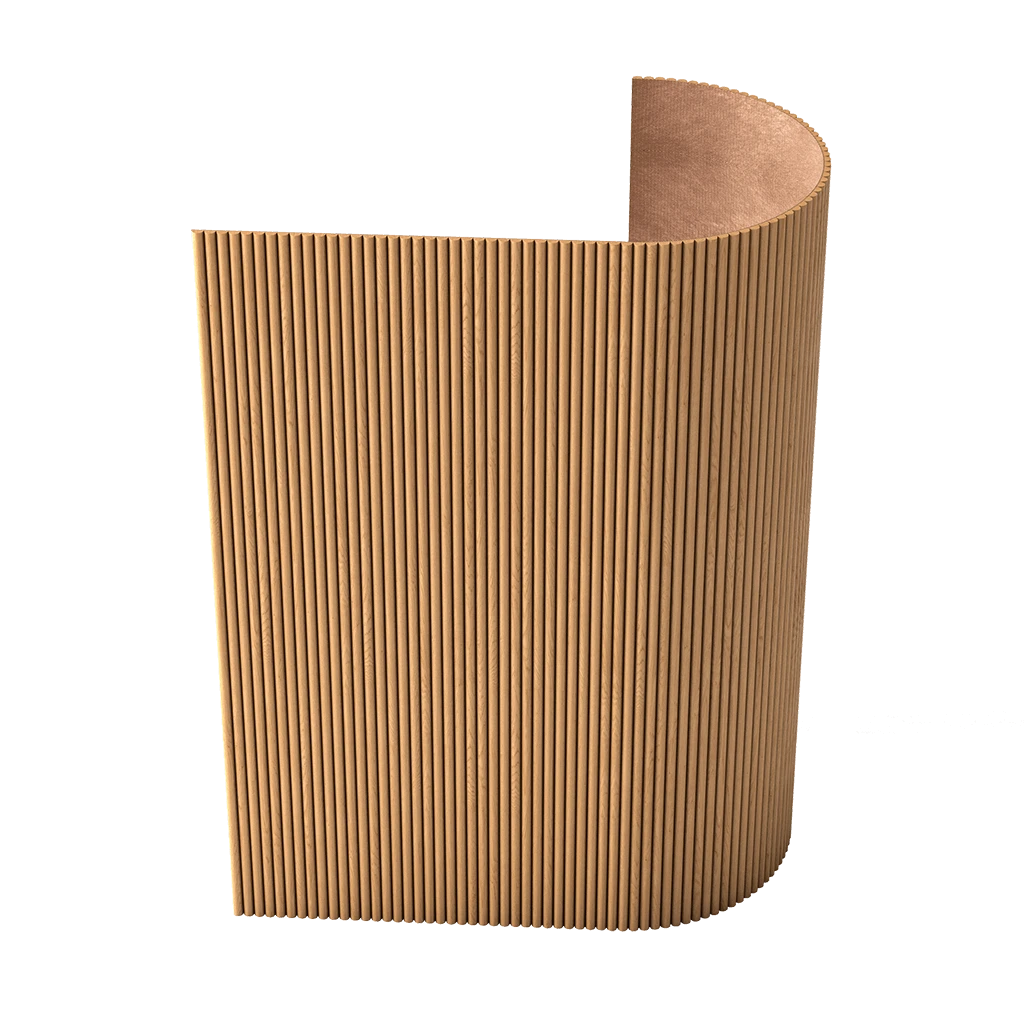
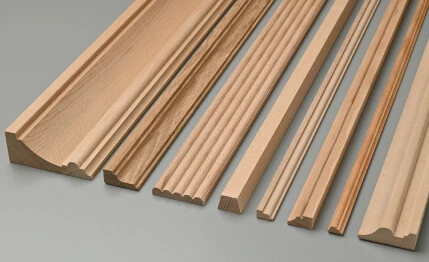
Wooden moldings. For work on the door leaf and around the opening. Profiles — from a simple "quarter round" to a complex classic cornice.
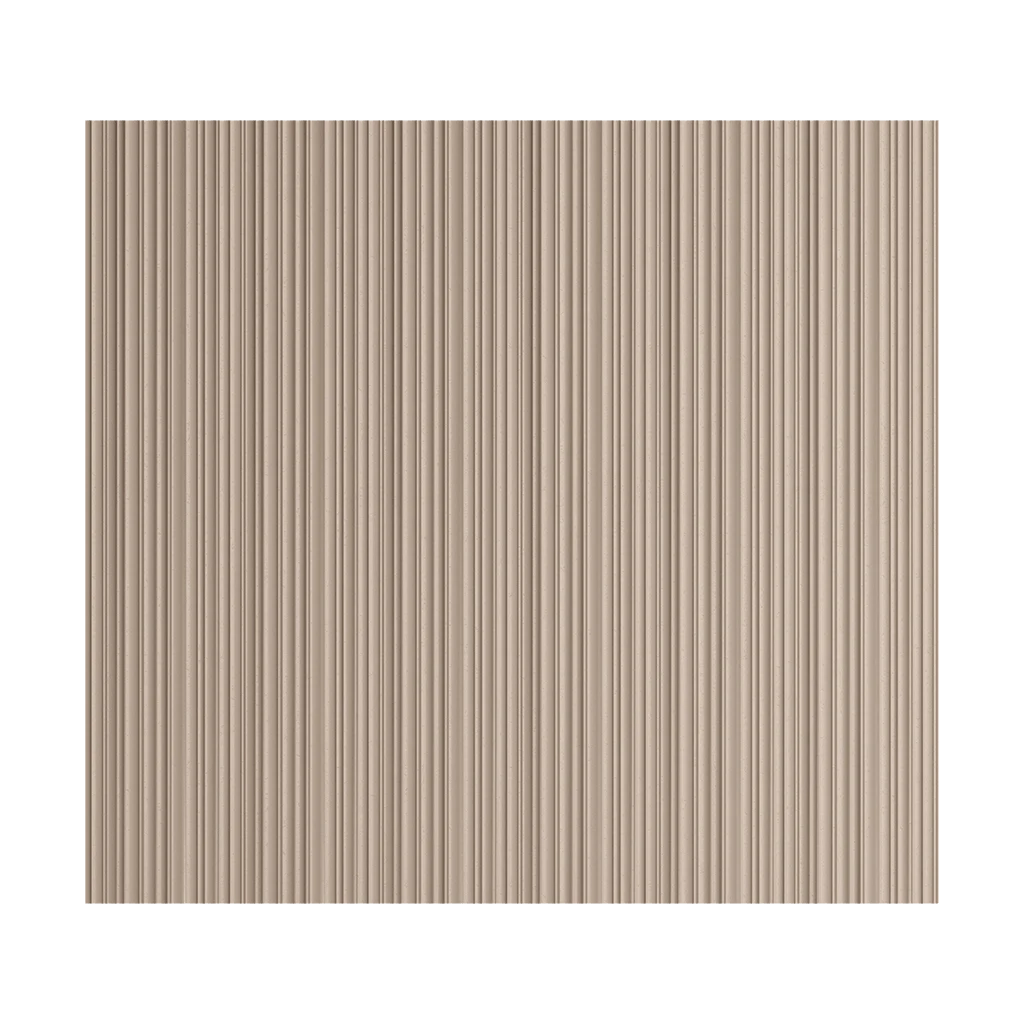
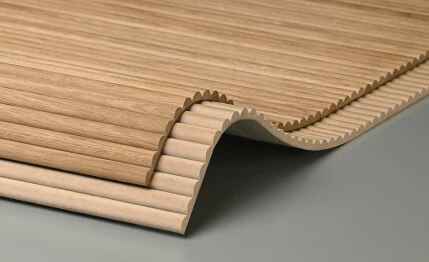
Pogonazh iz massiva. Strips, glazing beads, layouts — for creating decorative inserts and frames on the door leaf.
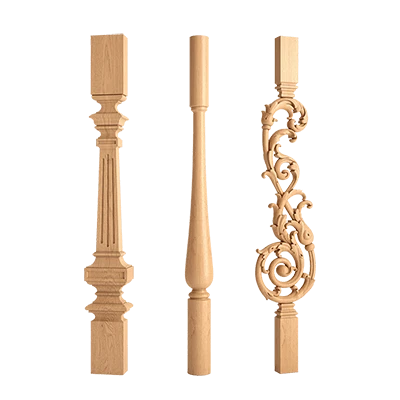
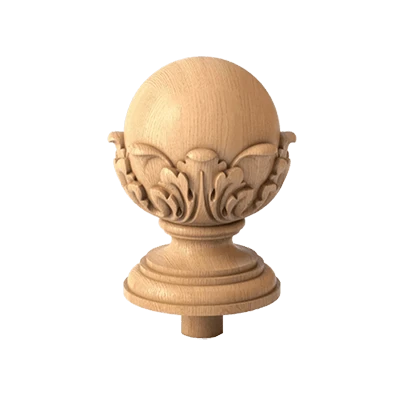
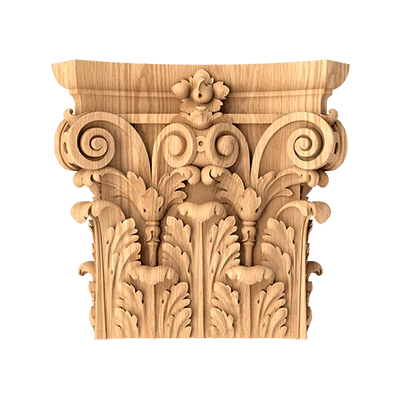
Decorative Inserts. Carved elements: corner rosettes, central ornaments, vertical friezes, capitals. Over 1200 items.
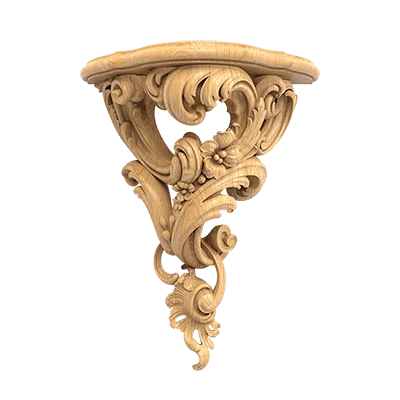
Carved Decor. Volumetric decorative products made of oak and beech: from small accent elements to large architectural details for designing door portals.
Furniture Handles. Solid wood handles for doors and furniture — in a wide range of shapes and tints.
Wooden baseboard. To complete the decoration at the base of the opening.
How to choose door decor before purchasing: a step-by-step algorithm
Final practical block — for those ready for specific solutions.
Step 1. Determine the interior style. Classic, neoclassical, modern, Russian style, country house — each direction has its own logic of decor.
Step 2. Measure the doorway. Height and width, wall thickness, distance from the top of the door to the ceiling — all this affects the choice of casing width and decor.
Step 3. Choose the type of casing. Smooth, profiled, or carved — depending on style and budget.
Step 4. Decide on moldings. Are they needed on the door leaf? In the opening? Or both options?
Step 5. Choose carved overlays. Corner rosettes, central accents, vertical elements — determine what exactly your opening needs.
Step 6. Coordinate the color. The wood tone — with the floor, furniture, doors in other rooms. If there is already installed baseboard in the interior — start with it.
Step 7. Choose the handle. Style, shape, wood tone — everything must match the architraves and furniture.
Step 8. Check the joints. Architrave — baseboard. Architrave — extension. Architrave — wall. All joints must be thought out before purchase, not resolved on site during installation.
Step 9. Go to the catalog. Wooden decor for doors, Casings, Moldings, Trim — everything is available in the STAVROS catalog with photos, sizes, and prices.
About the company STAVROS
When it comes to wooden door decor — the execution of the material decides everything. STAVROS produces Solid Wood Items oak and beech since 2002. Own production in Saint Petersburg, 3D milling, manual surface treatment, raw material moisture control. The catalog features over 4000 models and 20,000 modifications: architraves, moldings, cornices, baseboards, overlays, carved decor, handles, legs, frames. Two quality classes — Standard and Prestige.
STAVROS works with private clients, designers, architects, and construction companies. Shipment from 1 piece. Custom production — from 5 working days. Contact us to confirm shipping to your destination. via CDEK and DPD. For residents of Saint Petersburg and Moscow — showrooms where you can evaluate the material and quality in person before ordering.
If you want every door in your home to look like an architectural detail, rather than just an opening with a panel, STAVROS provides all the necessary tools for that.
FAQ: Answers to popular questions
What can be used to decorate an interior door?
An interior door can be decorated with wooden architraves, moldings on the panel and around the opening, carved overlays, corner decorative rosettes, and wooden handles. All elements must be coordinated in style, wood tone, and profile.
What is more important for door decor — the panel or the architraves?
Both elements are important, but it is the architraves that create the first impression of the doorway. A simple door with a high-quality carved architrave and a wooden handle looks significantly more expensive than a beautiful panel with cheap plastic architraves.
Can moldings be used on an already installed door?
Yes. Moldings are glued to the smooth panel with adhesive and secured with finishing nails. This is an affordable way to turn a smooth door into a "paneled" one without replacing it.
How to choose a wooden handle for a door?
Focus on the door style, wood tone, and furniture in the room. The wooden handle should be from the same tonal group as the architraves, baseboard, and furniture handles in the room. In a classic interior, choose a more expressive shape; in a modern one, a minimalist bracket.
Is carved decor suitable for modern doors?
Yes, provided it is minimal. In a modern interior, use one accent element — corner rosettes or a small central overlay — without excessive filling of the panel with carving. A moderate wooden accent in a modern interior works as a natural warm element.
Do I need to match the architraves with the skirting board?
Absolutely. The joint between the architrave and the skirting board at the base of the opening is one of the most noticeable finishing details. Architraves and skirting boards from the same series or collection are a requirement, not a suggestion.
How to decorate a doorway with wood?
Install a wooden architrave around the perimeter, add corner rosettes at the intersections of vertical and horizontal elements, and if necessary, a horizontal cornice above the door. For a grand effect, complement the opening with wall moldings and a wooden cornice near the ceiling.