Article Contents:
- Wooden finial for L-series column: how to choose a decorative finish for stairs, bed, portal, and fireplace
- Wooden finial — the final element that completes the column and composition
- How a wooden finial differs from a cap, capital, and decorative overlay
- Cap
- Capital
- Decorative overlay
- Top piece
- Where to use L-series finials: a complete overview of scenarios
- Staircase posts
- Bed and furniture posts
- Decorative portal
- Fireplace area
- Decorative interior panels and built-in systems
- How to choose a shape: round, square, carved, turned
- Round shape: soft classic and stair rhythm
- Square shape: architectural rigor and portal accents
- Turned finial: rhythm, symmetry, classic geometry
- Carved finial: accent, ornament, character
- Finial for a stair post: what to know
- Size: proportion to the post
- Height: scale of the space
- Functionality: hand on the finial
- Compatibility with stair style
- Bed and furniture post finial: when a detail completes the furniture
- Bed headboard finish
- Cabinets with pilasters
- Decorative posts, frames, and interior systems
- Portal and fireplace finial: symmetry and grandeur
- Side posts of the fireplace portal
- Shelves and corner accents
- Symmetry is the law of the fireplace zone
- Oak or beech: which solid wood to choose for the finial
- Oak: texture, nobility, tinting
- Beech: smooth surface, neat coloring
- Practical rule
- How to choose the size of the finial for the post
- Width / base diameter
- Finial height
- Room scale
- Pairing
- Overview of key models of the L-series STAVROS
- L-011 — square finial for strict posts
- L-081 and L-082 — for stairs and furniture systems
- L-088 — turned dome for soft classic style
- L-104 — for fireplace portals and ceremonial interiors
- L-064-2 and L-105 — square, for architectural accents
- Mistakes when buying a wooden finial
- Where to buy wooden finials STAVROS
- FAQ: Answers to Popular Questions
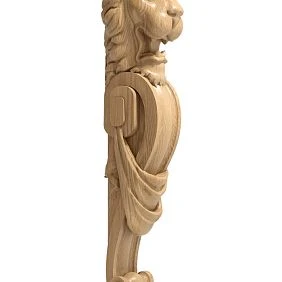
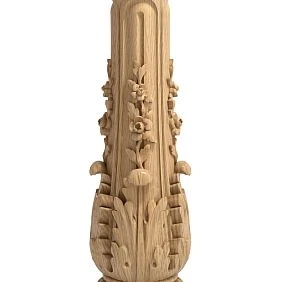
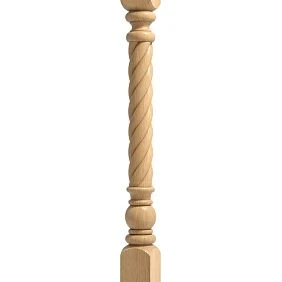
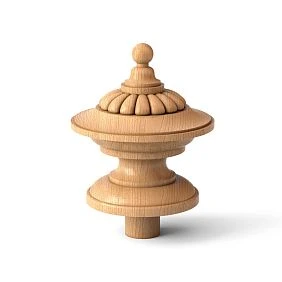
Wooden finial for L-series post: how to choose a decorative top for stairs, bed, portal, and fireplace
There are details you only notice when they are missing. The top end of a stair post without a finial is a truncated sentence. The side posts of a fireplace portal without a finishing element are an unfinished architectural thought. The headboard of a bed with bare verticals is furniture that is clearly missing something. A finial is precisely the element that puts a period where otherwise an ellipsis remains.
If you are now looking to buy wooden finials for stairs, bed, portal, or fireplace area — the conversation will be about a specific product line: L-series STAVROS. This is not an abstract category of "decor," but a targeted answer to an architectural problem: how to properly close the top end of a post, upright, or furniture vertical — functionally, proportionally, beautifully.




A wooden finial is the final element that completes the post and the composition
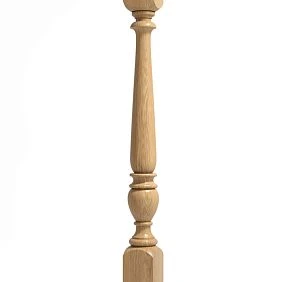
Consider: a stair post is the structural and visual anchor of the entire staircase system. It holds the handrail, sets the rhythm of the ascent, and reads as an architectural dominant of the space. And it has a beginning — the base — and an end — the top. It is this "end" that requires completion.
Buy a wooden post finial — means choosing the final accent that turns a structural detail into a complete architectural statement. A finial does not bear a load. It bears meaning. It says: here the post is intentionally finished, here the vertical is completed with attention to detail.
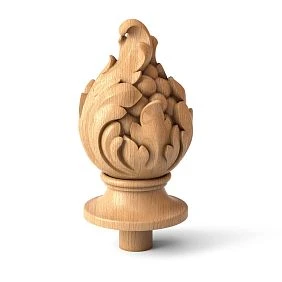
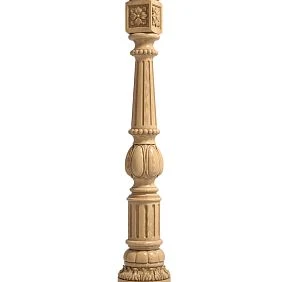
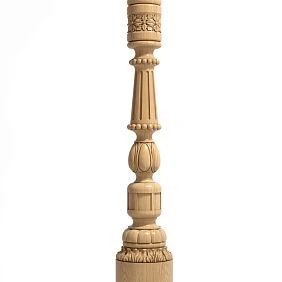
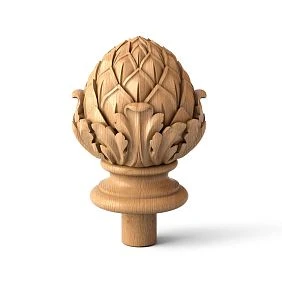
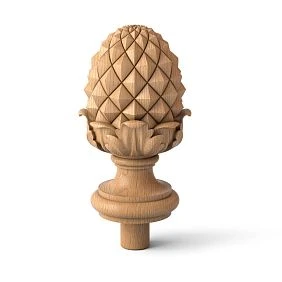
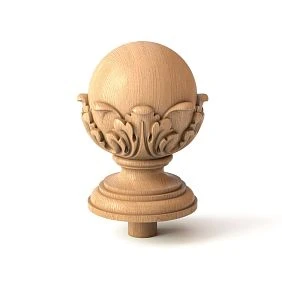
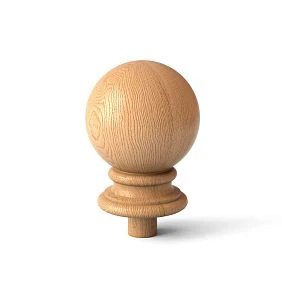
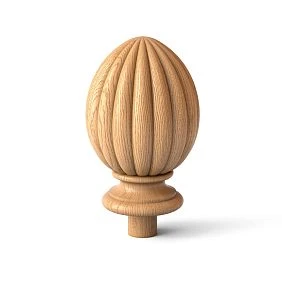
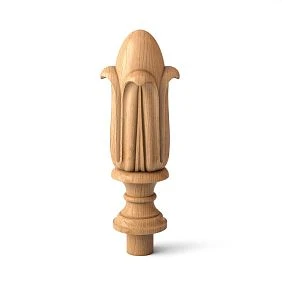
The L-Series STAVROS is a wide range wooden finials for posts, available in various shapes, sizes, and types of finishing: turned and carved, round and square, made of oak and beech. This includes: L-022, L-116, L-115, L-114, L-007, L-023, L-104, L-083, L-081, L-090, L-091, L-086, L-057, L-088, L-087, L-082, L-085, L-084, L-089, L-011, L-110, L-066, L-064-2, L-105. Each item is a specific product with specific dimensions and shape, not an abstract position in a price list.
Our factory also produces:
How a wooden finial differs from a plug, capital, and decorative overlay
This is a question that arises upon first acquaintance with the topic. The market for wooden decor is rich in terms that are used as synonyms but are not. Let's break down each one — precisely and without confusion.
Get Consultation
Plug
A plug is a technical element. Its task is to close an opening: a mounting groove, a drilled hole, an installation channel. A plug is not a decorative accent. It "hides" rather than "decorates." It looks like a flat or semi-flat insert that is installed flush or slightly protruding above the surface. If you need a part that covers a screw — that's a plug, not a finial.
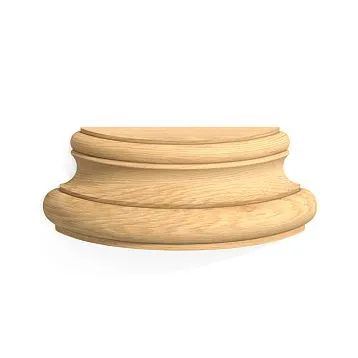
Capital
wooden capital — an architectural transitional element. In the classical order system, the capital completes the column and serves as a supporting base for the entablature above. In interior applications, the capital is a transition between a vertical post and a horizontal ceiling. It distributes the load (or imitates this) and creates a "flare" of width at the top end of the post.
A capital is not the same as a finial: the capital works as a transition, the finial as a conclusion. The capital has "where to go" — it carries a ceiling or beam above it. The finial has nothing — it itself is the final point.
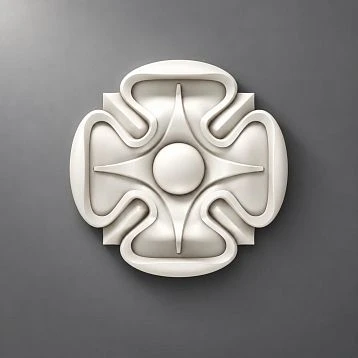
Decorative overlay
An overlay is a flat element that is attached to a surface: a facade, panel, wall, door. It works in a horizontal or vertical plane but does not finish the end. If you want to decorate the side surface of a post — that's an overlay. If you want to close and design its top — that's a finial.
Finial
Wooden post finial buy — means taking an element that crowns the vertical. The finial is attached on top: to the end of a post, a stand, a vertical furniture part. It is three-dimensional, readable from all sides, creates a silhouette accent. A sphere, dome, pyramid, cone, carved shape — all these are finials.
Where to use L-series finials: a complete overview of scenarios
Buy wooden finials can be for a variety of tasks. The STAVROS category describes the application directly: stair posts, beds, portals, fireplace areas, furniture stands. Let's break down each scenario.
Staircase posts
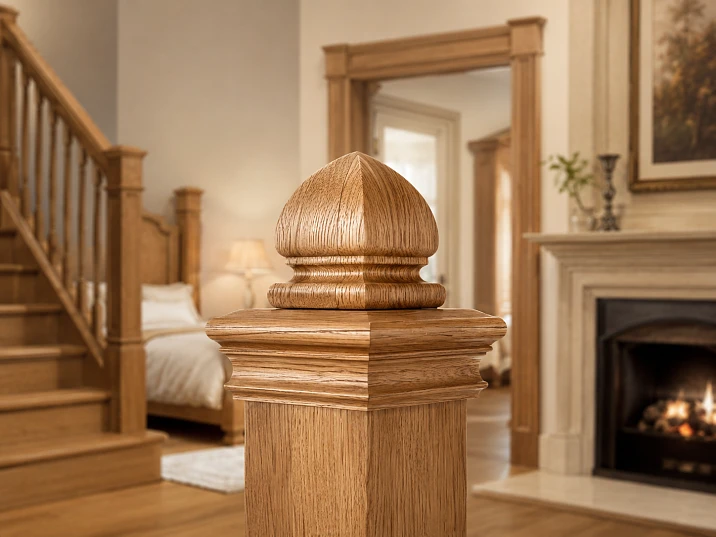
This is the main application of the L-series. Wooden Stair Posts without a finial — structurally correct, but visually unfinished. A finial on a stair post is both a practical detail (the hand does not hit a sharp end) and an aesthetic accent (the post turns into an architectural element with a complete silhouette).
On the lower stringer of the stairs, there are so-called "support posts" — they are larger than intermediate ones, bear the entire load, and require a corresponding finial: substantial, proportional, noticeable. For intermediate baluster posts, the finial can be smaller — or absent altogether if the system is covered by a handrail.
stair railings and finials work in pairs: the handrail rests on the posts, the finial completes the starting and ending post, protruding above the handrail level. The proportion "finial height / post diameter" is a key parameter for the correct choice.
Bed and furniture stands
A bed headboard with vertical posts is a classic scenario for using finials. A post that is simply cut off at the top looks like an unfinished sketch. A finial turns it into a complete architectural element: a ball, dome, or carved head on top of the post signals that the furniture is made with attention to every detail.
Cabinets with vertical pilasters, furniture posts, solid wood decorative frames — everywhere there is a vertical line that needs completion, the L-series STAVROS finial provides the right answer.
Decorative portal
A portal is an architectural frame around an opening: a door, fireplace, or window. The side posts of the portal are finished either with capitals (if the upper architrave rests on them) or with finials (if the posts extend beyond the architrave level or stand as decorative elements without load). Buy wooden finials for a portal means choosing a symmetrical pair that creates a majestic completion of the vertical accents.
Fireplace zone
A fireplace with a wooden portal is a space where details matter doubly. The fireplace zone is the center of the interior composition, a focal point in any room. The side posts of the fireplace portal, decorative half-columns on the sides of the hearth, corner accents of the mantel — all of these can be finished with L-series finials. The type for such tasks is turned or carved, depending on the character of the fireplace: from strict symmetry to lush classical ornament.
Decorative interior panels and built-in systems
Wall units, built-in libraries, decorative niches with pilasters — all these elements can have vertical accents that are logically finished with finials. STAVROS architectural details, including L-series finials, are designed specifically for integration into systemic interior solutions.
How to choose the shape: round, square, carved, turned
The shape of the finial is not just aesthetics. It is an architectural decision that affects the perception of the entire structure. Let's consider four main options.
Round shape: soft classic and stair rhythm
A round top — a sphere or dome — is the most versatile shape. It works on any post: round, square, or polygonal. It does not impose a strict axis — it looks equally good from any side.
Round tops dominate in stair systems: they are softer in silhouette, safer for hand contact (no sharp corners), and pair better with curved handrails. For soft classic, English style, Russian Empire style — the round shape is organic.
In the STAVROS L-series, round and dome-shaped tops are available in several scales and carving options — from strict turned spheres to decorative domes with ornamentation.
Square shape: architectural rigor and portal accents
Wooden square-shaped tops — L-011, L-110, L-066, L-064-2, L-105 — this is a different register. They set a clear axis, require precise level installation, and create a more geometric, architectural silhouette.
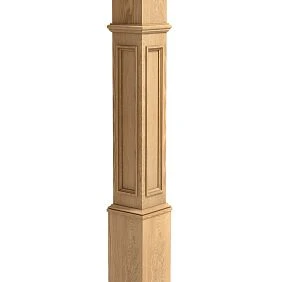
A square top is appropriate where the post or baluster itself is square in cross-section. For a fireplace portal with strict straight-line posts — the square shape is logical. For a cabinet with pilasters — also. For furniture corner posts — absolutely.
If the stair post is square in cross-section — the top should be square. This is not a rule for artists, it is a rule for architects.
Turned top: rhythm, symmetry, classic geometry
STAVROS turned wooden finials are products made by turning. Their character is symmetry, clean geometric transitions, and repeatable profiles. A turned finial is a discipline of form: no randomness, only intentional radii, bands, thickenings, and narrowings.
Turned finials work perfectly in systems where several identical elements repeat in a row: stair posts, balustrades, rows of cabinet pilasters. The rhythm of such products creates a sense of order and craftsmanship.
Carved finial: accent, ornament, character
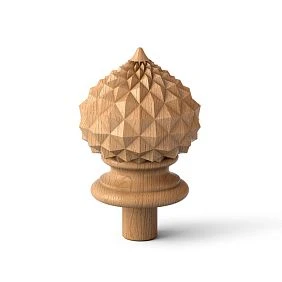
A carved finial is no longer geometry, but a narrative. Acanthus leaves, grape clusters, heraldic elements, floral rosettes — carving transforms the finial from a structural point into a semantic accent.
Buy wooden finials for posts in carved execution means choosing for interiors where decor takes an active role: classic living rooms, studies with bookshelves, portals with stucco, fireplace areas with wood trim. A carved finial is an object with character that makes a statement.
Finial for a stair post: what's important to know
A staircase is a complex system. In it, each element works in conjunction: post, baluster, handrail, step. The finial is part of this system. And you need to choose it understanding the context.
Size: proportion to the post
The diameter or width of the finial base must match the width of the post end. If the post is square with a cross-section of 100×100 mm, the finial is taken with a 100 mm base. If the post is smaller, the finial is smaller. A finial that "spreads" beyond the post or, conversely, sinks into it is a violation of proportion that immediately catches the eye.
Height: scale of the space
The height of the finial determines its visual "weight." In a room with high ceilings, you can take a taller, more massive finial. In a standard apartment with a 2.7 m ceiling, a laconic ball or dome of the correct scale. An overloaded finial in a low space turns the staircase into a bulky structure.
Functionality: hand on the finial
The lower stair post is the point people grab with their hand when taking the first step onto the staircase. The finial here is not only decorative but also tactile. It should fit comfortably in the palm, have no sharp edges or protrusions, not be too small (so the hand doesn't feel support) and not too large (so it's awkward to grip).
Compatibility with the staircase style
Wooden Stair Posts STAVROS are made in a specific stylistic key. The finial must match this key. A turned, laconic post — a turned or restrained finial. A post with carved elements — a carved or more ornate finial. Unity of style is a rule that always works.
Finial for bed and furniture posts: when a detail completes the furniture
Solid wood furniture is a special case. In it, every element must be finished. An unfinished end of a bed post is not "minimalism." It is carelessness.
Completing the bed headboard
A bed back with vertical posts is one of the most popular scenarios for using finials. The posts can be round or square in cross-section. A finial of the corresponding shape is selected for them.
A classic bed with a high back — here, turned balls or domes that complete each vertical are appropriate. A bed with a stricter architecture, with rectangular posts — square finials. L-011 or L-104.
Cabinets with pilasters
A built-in or freestanding cabinet with vertical pilasters and an applied cornice is a typical element of a classic interior. The pilasters are finished either with a capital under the cornice, or with a finial if there is no cornice. Buy a wooden post finial for a cabinet pilaster — means choosing a detail that "closes" the furniture vertically and creates a sense of completeness.
Decorative posts, frames, and interior systems
Built-in libraries, decorative niches, mirror frames, furniture frames — all of these have vertical elements that logically need to be finished. The finial here works as a "cap" for the vertical: small, neat, and properly selected.
Finial for a portal and fireplace: symmetry and grandeur
A fireplace with a wooden portal is the architectural dominant of the room. There are no small details here. Every detail — from the base of the post to the upper corner of the shelf — contributes to the overall impression.
Side posts of the fireplace portal
The side posts of a classic fireplace portal stand on either side of the firebox. If they are made in the form of decorative columns or pilasters, their upper ends require finishing. The top piece here is always paired: two identical elements, strictly symmetrical relative to the fireplace axis.
Buy wooden top pieces for posts for a fireplace means choosing a pair with identical L-series article numbers. Mixing different models in a portal pair is a mistake that is immediately visible.
Shelves and corner accents
A fireplace shelf may have vertical supports or corner brackets. These elements can also be finished with top pieces — especially in a scenario where the shelf is designed as a separate architectural structure, rather than just a horizontal board.
Symmetry is the law of the fireplace zone
Everything in a fireplace portal works according to the law of symmetry: two candlesticks, two armchairs, two posts, two top pieces. Breaking symmetry in the fireplace zone is not an author's technique, it is a mistake. Therefore, when purchasing top pieces for a fireplace, always order an even number: at least two.
Oak or beech: which solid wood to choose for a top piece
The material of the top piece must match the material of the structure it finishes. This is a basic rule. But the choice between oak and beech is not always obvious — let's break it down.
Oak: texture, nobility, tinting
Oak is a hard, dense wood with pronounced vessels and beautiful "mirrors" in the cross-section. A solid oak top is an item with character. Under oil or clear varnish, the texture of oak fully reveals itself: a warm, rich grain pattern that is readable even on a small detail.
An oak top for tinting is ideal for oak staircases, fireplace surrounds with rich texture, and furniture with an open wood structure.
Beech: smooth surface, neat coloring
Beech is a dense wood with a fine, almost imperceptible texture. Its surface accepts enamel perfectly evenly — without the "drawing" of vessels through the paint layer. A beech top for white or pastel enamel is a classic choice for a Provencal, romantic, or light classic interior.
A beech top under varnish is "light natural wood" in a neutral interpretation: neat, unpretentious, professional.
Practical rule
| Task | Oak | Beech |
|---|---|---|
| Open texture, oil | ✓ | — |
| Tinting in walnut/wenge | ✓ | — |
| White or pastel enamel | — | ✓ |
| Transparent varnish | ✓ | ✓ |
| Matching with an oak staircase | ✓ | — |
| White interior, Provence | — | ✓ |
How to choose the size of a finial for a post
The correct size is not "approximately fits." It is an exact match. Here are the parameters you need to measure and consider.
Width / base diameter
The base of the finial must match the width of the post end. If the post is 100×100 mm — the finial base is 100 mm. If the post is round with a diameter of 80 mm — a finial with a base diameter of 80 mm. Check the sizes in the L-series cards and compare them with the actual dimensions of your post.
Finial height
The height of the finial visually "adds" to the post. In standard stair systems, the finial height is usually 1–2 diameters of its base. A taller finial is more majestic. A shorter one is restrained and concise.
Room scale
In a large hall with high ceilings, a large finial is the right choice. In a small apartment, it will "scream." A moderate scale of the detail relative to the scale of the space is a rule that works in all decor.
Pairing
For stairs with two support posts, for fireplace portals with two columns, for beds with multiple verticals — finials are purchased in pairs or sets. One article number, identical sizes, identical finish. No "approximately similar" — only identical.
Overview of key models of the STAVROS L-series
Among the two dozen articles of the L-series, we highlight several that are most often in demand for specific tasks.
L-011 — square finial for strict posts
Finial L-011 — is a square shape with clear geometry. Suitable for square pillars, fireplace portals, cabinet pilasters. Its laconic profile allows it to be used in modern classic and neoclassical styles without overload.
L-081 and L-082 — for stairs and furniture systems
Finial L-081 и L-082 — are turned elements with a developed profile. They are appropriate on stair support posts where a "readable" finish with several transitions and belts is needed. The character is classic, but without excessive pomp.
L-088 — turned dome for soft classic
Finial L-088 — is a dome-shaped form. A soft silhouette, comfortable for the hand, suitable for stairs and beds in romantic or English style.
L-104 — for fireplace portals and ceremonial interiors
L-104 finial — larger, with a developed profile. Designed for spaces where the size of the part matches the scale of the structure: fireplace portals, ceremonial halls, large staircase posts in country houses.
L-064-2 and L-105 — square, for architectural accents
L-064-2 finial — square shape with a laconic profile. For built-in furniture systems, cabinets with pilasters, portal structures with rectangular post sections. Modern classic.
Mistakes when buying a wooden finial
The list of errors is concentrated experience. By studying them, you can avoid reordering.
Mistake 1: Buying a finial without measuring the post.
The most common one. The article was chosen "approximately", brought in — and it turned out to be smaller or larger than the end. Always take precise measurements: the width or diameter of the end, the height of the structure, the distance to the handrail or architrave.
Mistake 2: Mixing different styles in one structure.
A strict turned finial next to a lush carved one is a dissonance. Within one staircase, one portal, one furniture system — a single style.
Error 3: Taking one finial where a pair is needed.
A fireplace portal, bed, staircase with two support posts are always paired solutions. Ordering one finial means a repeat order and repeat delivery.
Error 4: Using an outdoor cap instead of an interior finial.
Caps for fence posts are designed for outdoor use: moisture, temperature changes, direct contact with precipitation. Indoors, they look rough and do not match the level of wooden decor.
Error 5: Not considering the finish.
An oak finial with walnut tint next to a cabinet coated with white enamel does not work. The finish of the finial and the structure must be coordinated before purchase.
Error 6: Confusing a finial with a capital.
A capital is a transition. A finial is the end. If your portal has a horizontal architrave, you need a capital as a transition. If the post simply ends without an upper crosspiece, you need a finial.
Error 7: Choosing too small an element for a large portal.
A small finial on a large fireplace portal looks like a 'forgotten detail'. The scale of the finial must match the scale of the structure.
Where to buy STAVROS wooden finials
buy wooden finials You can order through the stavros.ru website — in the «Wooden Finials» section of the carved decor catalog. The category is divided into filters by shape (round, square), processing type (turned, carved), and individual L-series articles.
Buy wooden finials in St. Petersburg Available with pickup — the STAVROS showroom operates in St. Petersburg, where you can personally assess the quality of products, the scale of details, and coordinate the configuration with a consultant.
If you are assembling a turnkey staircase — in the section staircase components STAVROS has both balusters and handrails — together with L-series finials, they form a system solution in a unified style.
Buy wooden finials for posts means taking not just a «detail», but an architectural point that completes the structure with dignity. The entire STAVROS carved decor is built on this principle: each element is part of a well-thought-out system, not a random decoration.
FAQ: Answers to popular questions
What is a wooden finial for a post?
This is a decorative top element that attaches to the end of a post, pillar, or furniture vertical. Its purpose is to cover the end and create a complete, architecturally correct silhouette. L-series STAVROS finials are made from solid oak or beech, available in turned and carved versions, in round and square shapes.
What is the difference between a finial and a capital?
A capital is an architectural transition element between a post and the upper covering. A finial is the final top piece without load from above. If an architrave rests on the post, a capital is needed. If the post ends in the air, a finial is used.
What size finial do I need for my post?
The base of the finial should match the width or diameter of the post end. Measure your post before ordering. The height of the finial is chosen based on the scale of the room and structure.
How many finials are needed for a fireplace portal?
At least two — symmetrically for two side posts. If the portal has additional vertical elements, as many as needed to complete the verticals. Always an even number.
Which is better: turned or carved finial?
Turned — for rhythmic systems, symmetrical compositions, concise classics. Carved — for accent areas: fireplace portal, bed, grand staircase, where a more expressive solution is appropriate.
Which wood is better for a finial: oak or beech?
Oak — for tinting, oil, open texture. Beech — for enamel and dense painting. The material should match the material of the main structure.
Can I buy a finial in St. Petersburg with pickup?
Yes. The STAVROS showroom in St. Petersburg offers pickup. Contact us to confirm shipping to your destination. is also available.
Where can I view L-series finials by shape and type?
On the stavros.ru website, in the wooden finials category, filters are available by shape (square, round) and type (turned). Square finials — L-011, L-110, L-066, L-064-2, L-105. Turned — a separate filtered section.
A finial is a detail that isn't noticed immediately. But it is what distinguishes an interior where every centimeter was considered from a space where they stopped "almost at the goal." Wooden finials of the STAVROS L-series — that very last detail that puts the finishing touch.