Article Contents:
- What to buy for a decorative top: complete set
- What is a top and how is it different from a cornice: detailed answer
- Where decorative tops are used: from sideboard to portal
- Classic style cabinet
- Buffet and display case
- Built-in library
- Walk-in closet
- Fireplace and furniture portal
- Tall chest of drawers and cabinet with superstructure
- Decorative niche and headboard
- Wood in finials: what should be wooden
- Strength and rigidity of the form
- Expressive carved relief
- Tactile zones
- What specifically to make wooden
- Polyurethane in finials: where it is indispensable
- Light relief decor for painting
- Repeatable profile
- Corner and center inserts
- What specifically to make polyurethane
- Types of Decorative Pediments: Classification for Practice
- Triangular Pediment
- Semicircular (Arched) Pediment
- Broken Pediment
- Straight Pediment with Central Overlay
- Pediment with Side Consoles and Brackets
- Ready-made kits for specific projects
- Set: Classic Style Cabinet for Painting
- Set: Sideboard with Display Case and Pediment
- Set: Display Case with Arched Pediment
- Set: Built-in Library with Developed Cornice
- Set: wardrobe with an elegant crown molding
- Crown molding proportions: how to avoid mistakes with size
- Height of the crown molding relative to the body
- Width of the central pediment
- Ratio of wood to polyurethane
- Installation of crown molding: technical aspects
- Installation Sequence
- Fasteners for wooden decor
- Adhesive for Polyurethane
- Acclimatization of wooden elements
- Mistakes when choosing and installing decorative crown molding
- Mistake 1: crown molding does not match ceiling height
- Error 2: too large a pediment on a narrow cabinet
- Error 3: active relief both on top and on all facades
- Error 4: forgetting side finishes
- Error 5: not proportionally connecting the top with the cornice
- Error 6: not considering the mounting method at the design stage
- Error 7: different wood and polyurethane colors without a concept
- Error 8: not ordering extra profile
- Carved decor: a special topic
- Crown molding in interiors of different styles
- Empire and Neoclassical
- Baroque and Rococo
- English classic
- French Classics
- Modern classic and neoclassic
- STAVROS: when classic furniture requires true decor
- Frequently Asked Questions
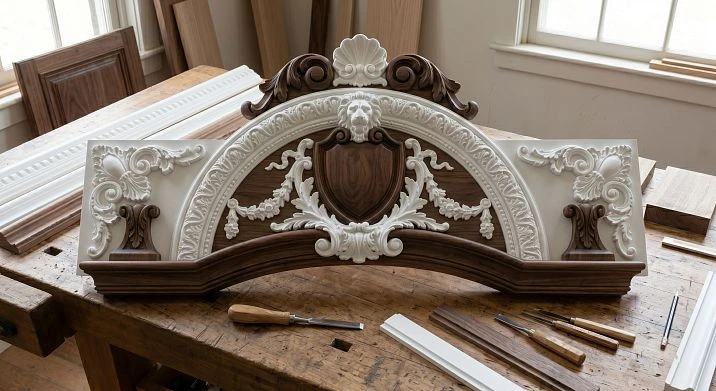
Look at an old sideboard in grandma's living room or a cabinet from an antique shop. What makes their silhouette memorable? Not the size, not the color, and not the handles. It's the top part — the one where the horizontal cornice suddenly rises in the center into an elegant pediment, where the craftsman once placed a scroll, a rosette, or a carved cartouche.
This is the decorative top piece. And it solves a fundamentally different task than the cornice.
The cornice covers the upper joint of the furniture with the wall or ceiling — it's a horizontal band, an architectural detail. The decorative top piece, pediment, central overlay — it's a vertical accent that lifts the gaze, creates a culmination of the silhouette, and turns a cabinet from a household storage into an interior piece.
That's why the topic of this article is not about 'how to cover the top of a cabinet.' It's about how to make the upper part of furniture truly ceremonial — with the help of wooden decor, wooden carved decoration, of polyurethane moldings и polyurethane overlays.
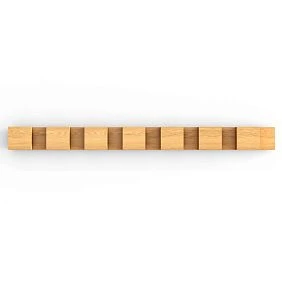
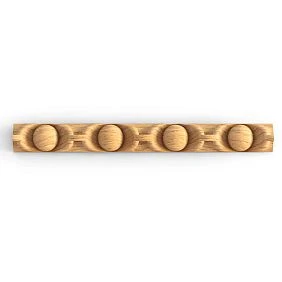
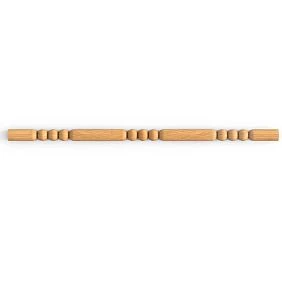
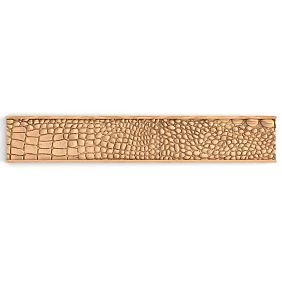
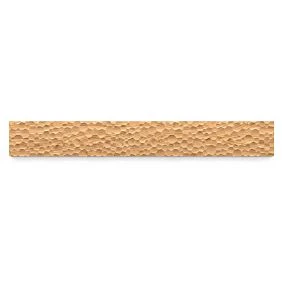
What to buy for a decorative top piece: a complete set at once
Before moving on to theory and details — a specific list. It is needed for those who already know what makes a cabinet, sideboard, or display case in a classic style, and want to understand what to order.
Wooden items:
-
Wooden decor and overlays — central pediment, carved cartouche, or decorative overlay for the top part;
-
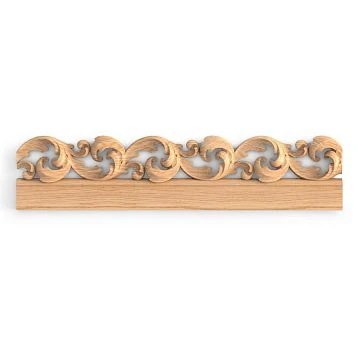
Carved wooden decoration — expressive carved elements: scrolls, acanthus leaves, rosettes, brackets;
-
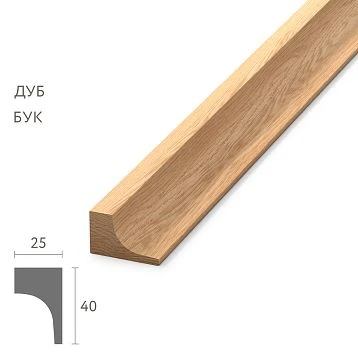
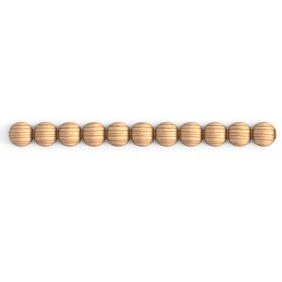
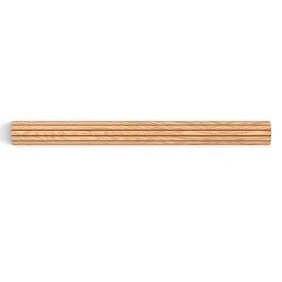
Pogonazh iz massiva — horizontal cornice, profiled top molding;
-
Furniture Handles — for facades under the top piece.
Polyurethane items:
-
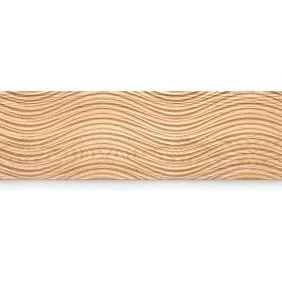
Moldings made of polyurethane — profiled frames around the central top piece, horizontal belts;
-
Polyurethane appliqués — side decorative elements, relief inserts;
-
Polyurethane moldings — cornice profile, rosettes, relief details of the upper belt;
-
Decor for Molding — corner inserts and keystones;
-
Polyurethane trim — lower belt of the top piece, transition profile to the main body.
Installation and finishing materials:
-
Fasteners for wooden elements (finishing nails, self-tapping screws, liquid nails);
-
Mounting adhesive for polyurethane — correct choice of glue;
-
Acrylic sealant — for all joints;
-
Primer — for painting polyurethane elements;
-
Paint — for polyurethane elements and wooden parts to be painted;
-
Varnish or oil — for natural wood decor;
-
Spare profile and trims — 10–15%.
Main idea: the decorative top piece should look like an organic part of the furniture, growing out of its structure, not like a "cap" placed on top. For this, a unified scheme is needed: wood — in the main accent, polyurethane — in the framing and stucco relief.




What is a top piece and how it differs from a cornice: a detailed answer
Confusion between "top piece" and "cornice" often arises — and that's understandable. Both elements are located in the upper zone of the furniture. But their function is different.
Cornice — a horizontal profile that forms the top line of the furniture. It runs across the entire width of the cabinet, sideboard, or display case, creating a horizontal finish. The cornice is important — but it does not create a central accent.
Decorative top piece (or pediment) — a vertical or three-dimensional element that rises above the horizontal line of the cornice in the center or according to a given pattern. This can be a triangular or semicircular pediment, an arched overlay, a carved cartouche, a decorative console. The top piece creates the center of the furniture, attracts the eye, and makes the silhouette memorable.
Interaction scheme:
-
Cornice — a horizontal band across the entire width;
-
Finial — a vertical accent in the center above the cornice;
-
Side elements — end pieces that "hold" the cornice from the sides.
All three components work together. A cornice without a finial is just a top rail. A finial without a cornice is a decorative detail without a base, "floating" in the air. Side elements without a cornice and finial are just corners.
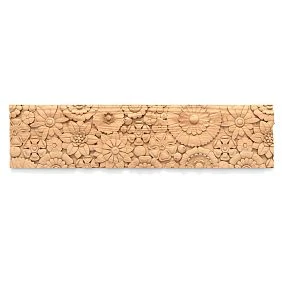
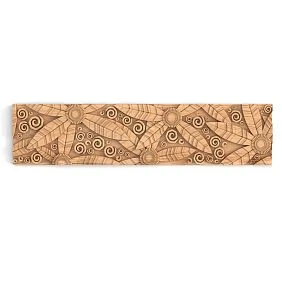
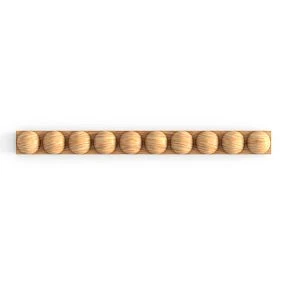
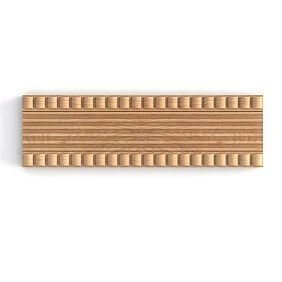
Our factory also produces:
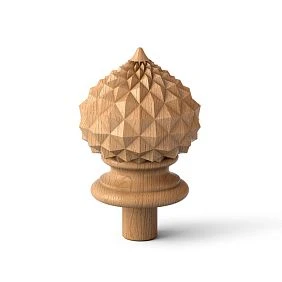
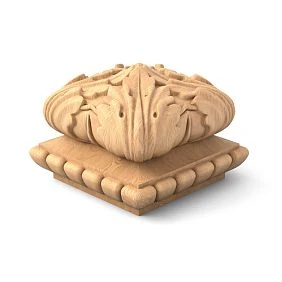
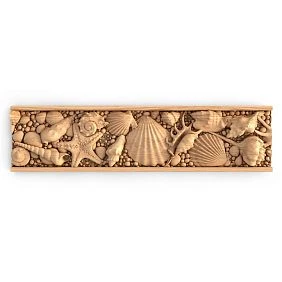
Where decorative finials are used: from a sideboard to a portal
Get Consultation
Classic style cabinet
Classic Furniture always had a pronounced upper part. A classic style cabinet without a finial is an incomplete object: it lacks a "head." The finial for such a cabinet can be modest (a small triangular pediment with a carved overlay) or lavish (a developed cornice with brackets, a semicircular pediment, and relief decor).
Option for a built-in cabinet in a classic interior: wooden cornice from molding across the entire width + central a wooden decorative element + Moldings made of polyurethane in the side zones.
Sideboard and display cabinet
A sideboard is perhaps the main "customer" for a pediment in the Russian furniture tradition. The upper part of the sideboard is its face, its formal zone. Glass doors of the display section, shelves, lighting — all of this is good. But it is the pediment above the display that transforms the sideboard from a "large cabinet" into an architectural piece.
For a sideboard and display cabinet, the following works especially well:
-
Central carved pediment made of wooden carved decoration — rosette, cartouche, acanthus leaves;
-
Side wooden brackets or Decorative Inserts;
-
Polyurethane appliqués in the zones between wooden elements — as a light stucco relief for painting.
Built-in library
A floor-to-ceiling library is a furniture architectural element. The upper zone here should be finished with a cornice, and if height allows, a pediment. Decor for Molding at the corner points creates a professional look without complex joinery fabrication.
Walk-in closet
A dressing room in a classic interior is not just a "place for clothes." It is a separate architectural zone. The top piece above the entrance to the dressing room or above the facades — a wooden horizontal cornice with a small central accent — gives the entire system an aristocratic look.
Fireplace and furniture portal
A decorative portal is one of the most demanding projects for a top piece. Here, the upper zone — the entablature of the portal — is not just decor, but a load-bearing architectural element that holds the horizontal line. Carved wooden decoration in the lock of the entablature, Wooden decoration in the side zones and polyurethane panels in the relief fields — a standard scheme.
Tall chest of drawers and cabinet with superstructure
A tall chest of drawers or a chest of drawers with a superstructure — a cabinet or shelf section on top — also needs a decorative top finish. A small top piece made of wooden decor or even just a well-chosen cornice profile moves a chest of drawers from the "household furniture" category to the "interior object" category.
Decorative niche and headboard
A niche in the wall with a decorative frame is also a place for a pediment. A triangular pediment or a semicircular arch above the niche with carved decoration in the keystone gives the niche a portal-like character.
The bed headboard is a separate story. A wooden horizontal plank with a decorative center above the headboard creates a visual focus for the bedroom.
Wood in pediments: what should be wooden
The question of choosing a material for the pediment is not aesthetic, but structural. Wood is used in pediments where needed:
Strength and rigidity of form
The central pediment, horizontal cornice, side brackets — these elements carry a decorative load and must maintain their shape for decades. Solid wood overlays do not deform, do not sag, do not change geometry under normal operating conditions.
Expressive carved relief
Carved wooden decoration This is hand or machine carving with a three-dimensional relief. Rosettes, acanthus leaves, scrolls, cartouches, mascaron — in wood they look substantial and authentic. Wood differs from polyurethane tactilely: it is dense, slightly warm, and has a grain pattern under the varnish.
Tactile zones
The finial that will be accessible for touch — the horizontal cornice at hand level, side brackets — is better made of wood. Wood withstands everyday contact more durably.
What specifically to make from wood
| Finial element | Material | Reason |
|---|---|---|
| Central pediment | Wood (Wooden decoration) | Main accent, needs weight and durability |
| Horizontal cornice | Wood (Pogonazh iz massiva) | Load-bearing profile, durability |
| Carved cartouche or rosette | Wood (Carved Decor) | Expressive three-dimensional relief |
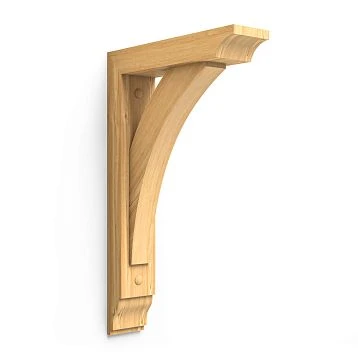
| Side brackets | Wood (Wooden decoration) | Strength, tactile contact |
| Frame for lower facades | Wood (Pogonazh iz massiva) | Rigid contour |
Polyurethane in finials: where it is indispensable
Polyurethane moldings и polyurethane decor take on those areas of the finial where needed:
Light relief decor for painting
Polyurethane takes paint perfectly — after proper priming, the surface becomes smooth and even, and the paint applies without pores or voids. This is especially important for a pediment to be painted white or cream: wooden elements in such cases are also painted, but polyurethane reliefs are more uniform when painted.
Repeatable profile
Moldings made of polyurethane — this is a linear product: the profile is identical along the entire length. This ensures precise alignment during installation: horizontal belts of the pediment, side trims, transition profile to the main body — everything is perfectly level.
Corner and center inserts
Decor for Molding — these are special shaped inserts for corner joints of molding. They replace 45° miter cuts and provide an accurate decorative corner solution. In pediments where molding runs along the perimeter of the gable or along the cornice with turns, these inserts are an indispensable tool.
Polyurethane appliqués in the central zones of the pediment — between wooden elements — add stucco relief without weighing down the structure.
What exactly to do with polyurethane
| Finial element | Material | Reason |
|---|---|---|
| Molding around the gable | Polyurethane (Moldings) | Precise profile along the entire length |
| Side relief inserts | Polyurethane (applique) | Lightweight, without load |
| Corner inserts | Polyurethane (Decor for Molding) | Precise angular solution |
| Lower belt of the finial | Polyurethane (Trim) | Transition profile to the body |
| Decorative overlays on facades | Polyurethane (Decorative stucco) | Relief for painting |
Types of decorative finials: classification for practice
Triangular pediment
The most archetypal type of finial is the triangular pediment, a direct reference to the ancient temple pediment. The triangular shape above the horizontal cornice creates a static, solemn rhythm.
Application: Empire or neoclassical sideboard, built-in library, furniture portal.
Execution: wooden Pogonazh iz massiva forms triangular faces; in the tympanum (triangle field) — Carved wooden decoration: rosette, cartouche or leaf ornament.
Semicircular (arched) pediment
Semicircular or elliptical shape — a softer option. Creates a romantic, less strict image. Popular in Baroque and Rococo furniture.
Application: display case, sideboard, chest of drawers with superstructure.
Execution: bent wooden cornice (joinery) or wall semicircular overlay made of wooden decor; along the perimeter — Polyurethane molding.
Broken pediment
Triangular or semicircular pediment with a break in the center, where the central decorative element is placed — an urn, vase, cartouche, or figured overlay.
Application: a cabinet in Baroque or late Classicism style, a ceremonial sideboard.
Execution: wooden side parts of the pediment + carved central element made of wood in the break; Moldings made of polyurethane frame the side parts.
Straight top with central overlay
Horizontal cornice without rise, but with a central decorative overlay — carved, figured, or relief.
Application: modern classic, neoclassical, a cabinet in a restrained classical style.
Execution: wooden Pogonazh iz massiva as a cornice; central Wooden decoration or Carved Insert in the center.
Top piece with side consoles and brackets
The horizontal cornice is supported on the sides by decorative consoles or brackets. This creates the impression of an architectural cornice with supports.
Application: furniture portal, fireplace area, built-in wall with niches.
Execution: wooden consoles or brackets made of wooden decor; Polyurethane appliqués in the intermediate zones between the consoles.
Ready-made kits for specific projects
Set: classic style cabinet for painting
Task: built-in wardrobe 240 cm wide, height 220 cm, style — modern classic, painted white.
Top piece diagram:
-
Pogonazh iz massiva — horizontal wooden cornice across the entire width;
-
Wooden decoration — central pediment, height 15–20 cm;
-
Moldings made of polyurethane — horizontal belt under the cornice;
-
Decor for Molding — corner inserts;
-
Polyurethane appliqués — central accents on the facades.
Mounting materials:
-
Fasteners for wood, PU glue, sealant, primer, white paint, 10% spare.
Set: sideboard with display case and pediment
Task: sideboard 160 cm wide, style — Empire or Neoclassical, wooden top and polyurethane decor on the lower part.
Top piece diagram:
-
Carved wooden decoration — central cartouche or rosette in the tympanum of the pediment;
-
Pogonazh iz massiva — cornice profile and triangular faces of the pediment;
-
Wooden Inlays — side brackets;
-
Moldings made of polyurethane — framing of display facades;
-
Decorative stucco — small overlays in the upper corners of the lower section.
Set: display case with arched top
Task: display case 100 cm wide, style — French classic, arched semicircular pediment.
Top piece diagram:
-
Wooden overlays and carved decor — arched top with central leaf motif;
-
Pogonazh iz massiva — glazing bead for display case glass;
-
Moldings made of polyurethane — along the perimeter of the arch;
-
Furniture handles made of solid beech — for doors.
Set: built-in library with elaborate cornice
Task: floor-to-ceiling library 360 cm wide, style — English classic, stained oak.
Top piece diagram:
-
Pogonazh iz massiva — multi-profile cornice across the entire width, 3 levels of molding;
-
Wooden decoration — central heraldic motif or cartouche;
-
Polyurethane appliqués — decorative rosettes along the width of the cornice;
-
Polyurethane moldings — thin band at the transition from the cornice to the ceiling.
Set: walk-in closet with an elegant top piece
Task: walk-in closet 280 cm wide, ceiling height 270 cm, modern classic, painted finish.
Top piece diagram:
-
Polyurethane moldings — cornice profile across the entire width (area adjoining the ceiling);
-
Wooden decoration — small straight pediment in the center;
-
Moldings made of polyurethane — band under the cornice;
-
Furniture Handles — wooden, 32 models in 4 finishes.
Crown proportions: how to avoid mistakes with size
A crown is a detail that has a "correct" and "incorrect" proportion relative to the main body of furniture. A mistake in proportions is the most common and most noticeable problem when working with top decor.
Height of the crown relative to the body
General rule: the height of the crown should not exceed 1/5 of the total height of the furniture. For a cabinet 200 cm high — no more than 40 cm. For a sideboard 180 cm high — no more than 36 cm. This is the maximum for a lush classic version. A modest modern crown — 10–15% of the height: 20–30 cm.
Width of the central pediment
The central pediment — not across the entire width of the furniture, but across the central third. For a cabinet 240 cm wide — a pediment of 80 cm. For a sideboard 160 cm wide — a pediment of 50–55 cm. The side thirds "hold" the horizontal cornice and create space for side elements.
Ratio of wood to polyurethane
If the crown is designed correctly, Carved Wooden Decor it occupies no more than 30–40% of the area of the upper zone. Polyurethane moldings and overlays — another 20–30%. The rest is pure space (painted surface, wood veneer surface).
This "breathing space" is no less important than the decor itself. It allows details to "sound" rather than merge into a single overloaded array.
Installation of the finial: technical aspects
Installation order
Correct sequence for a finial made of wood and polyurethane:
-
Installation of a wooden cornice (molding) — using fasteners and glue;
-
Installation of the central wooden pediment or overlay — using fasteners and wood glue;
-
Installation of polyurethane moldings around the perimeter — using PU construction adhesive;
-
Installation of corner inserts and decorative overlays — using PU glue;
-
Sealing all joints — acrylic sealant;
-
Priming;
-
Painting.
Fasteners for wooden decor
Wooden finials and overlays are mounted:
-
On finishing nails (driven in and puttied over for painting);
-
On countersunk screws (covered with plugs or puttied);
-
On PVA wood glue with pressure for 30–60 minutes;
-
On liquid nails (for overlays without the possibility of nail fastening).
for carved decor elements With thin relief — adhesive fastening is preferred to avoid splitting the part.
Polyurethane adhesive
Polyurethane moldings, overlays, and cornices — only special glue. For details, what to glue polyurethane molding with, — in a separate article. The main rule: no organic solvents, no "Moment", nitro glue, or glue 88.
Acclimatization of wooden elements
Wooden decoration и Pogonazh iz massiva must be kept indoors for 24–48 hours before installation. If installed immediately after delivery, shrinkage or slight warping may occur.
Mistakes when choosing and installing a decorative finial
Mistake 1: finial does not match ceiling height
A tall, lush finial in a room with low ceilings (240 cm) is a visual disaster. The finial "compresses" the space and makes the room feel oppressive. For ceilings up to 250 cm, the finial should be no more than 25 cm high and minimalist.
Mistake 2: too large a pediment on a narrow cabinet
A pediment 80 cm wide on a cabinet 100 cm wide means the pediment spans the entire width. It "eats up" all side areas, leaving no space for a cornice on the sides. Rule: the pediment should be no more than half the width of the furniture.
Mistake 3: active relief both on top and on all facades
If the finial is rich and detailed, the facades should be calmer: a simple outline, minimal molding, or no overlays at all. A rich finial + rich facades + active baseboard = visual chaos.
Mistake 4: forgetting side finishes
The cornice ends on the sides of the cabinet — this end must be covered. If the side ends of the cornice remain open, it is immediately noticeable. Wooden Inlays or polyurethane elements on the side ends of the cornice — mandatory.
Error 5: not connecting the finial to the cornice proportionally
The finial 'grows' from the cornice. If there is no connecting element between them — a transition profile, a lower belt of the finial — they are perceived as two independent decorations. Polyurethane trim or a wooden horizontal strip as a transition belt — a solution to this problem.
Error 6: not considering the mounting method at the design stage
The decorative finial must be attached to a load-bearing surface — the top panel of the cabinet or the wall. If the top panel has no designated attachment points or the thickness is insufficient for self-tapping screws — this needs to be resolved before installation, not during the process.
Error 7: different wood and polyurethane colors without a concept
If the wooden cornice is in natural beech — warm, golden — and the polyurethane moldings are painted in cold gray, the contrast will be inorganic. Either a single color for the entire finial, or a deliberate contrast: a warm wood shade + a warm paint option for the polyurethane.
Error 8: not taking a profile reserve
Wooden Pogonazh iz massiva for the cornice is cut at an angle — this results in losses. With a complex profile, there may be deformed sections that need to be rejected. A 15% reserve is the minimum.
Carved decor: a special conversation
Carved wooden decoration — is a separate category that deserves special attention. These are three-dimensional decorative elements with hand or router relief: acanthus leaves, volute scrolls, cartouches, mascaron, heraldic motifs.
For a decorative top, carved decor plays the role of a "diamond in the setting." The setting is the cornice, moldings, clean planes. The diamond is the carved detail in the center of the pediment or in the keystone of the entablature.
Important: there should be one carved detail — or in strict symmetry (one in the center + two on the sides). Several carved details in different places without a single axis is disorder.
Combination wooden carved decoration с polyurethane overlays in peripheral zones — this is a classic pyramid: the most complex and expensive element in the center, simpler ones at the edges.
Top in interiors of different styles
Empire and Neoclassicism
Strict horizontal cornices, triangular pediments, heraldic decor. Minimum scrolls, maximum clear geometry. Wooden decoration — laconic overlays with simple relief. Moldings made of polyurethane — rectangular profile without complex curves.
Baroque and Rococo
Dynamic, lush forms. Broken pediments, scrolls, acanthus leaves. Carved Decor — rich and detailed. Polyurethane appliqués — with a curved relief.
English Classic
Massive multi-level cornices, heraldic motifs, dark wood. Pogonazh iz massiva in 2–3 profiles, one above the other. Polyurethane moldings — for painting in the wall color, as a background for wooden decor.
French Classicism
Soft arched shapes, pastel tones, gilding on accents. Semicircular pediment with carved decoration in the center. Moldings made of polyurethane — elegant, with a small profile, for gilding or pastel painting.
Modern Classicism and Neoclassicism
Simplified forms with a clear reference to classics. Straight horizontal top with a small central accent. Wooden decoration — geometrically strict, without curls. Polyurethane moldings — thin, with a minimal profile.
STAVROS: when classic furniture requires true decor
A decorative top assembled from elements of different manufacturers is a lottery. Different profile proportions, different relief density, mismatched overlay scales. The result: many details, but no unity.
STAVROS is a Russian manufacturer of decorative products made from solid wood and polyurethane since 2002. Production in Saint Petersburg. The entire range is created in a unified proportional system, where Wooden decoration и Polyurethane molding they are coordinated in scale, rhythm, and style.
The STAVROS catalog includes a complete set for a decorative top:
-
Wooden decor and overlays — central pediment elements, side brackets;
-
Carved wooden decoration — cartouches, rosettes, acanthus leaves, scrolls;
-
Pogonazh iz massiva — horizontal cornice and transition profiles;
-
Furniture handles made of solid beech — 32 models, 4 finishes;
-
Classic Furniture — products in a finished classical execution;
-
Moldings made of polyurethane — framing of the top and facades;
-
Polyurethane appliqués — side relief inserts;
-
Polyurethane moldings — cornices and relief belts;
-
Decor for Molding — corner and lock inserts;
-
Polyurethane trim — transition profiles and bottom belts.
Order — from one piece. Contact us to confirm shipping to your destination. Showrooms in St. Petersburg and Moscow. Warehouse stock dispatch — from 3 business days.
STAVROS is not just a decor supplier. It is a manufacturer that understands how carved cartouche in the center of the pediment relates to the molding around the perimeter, how the wooden cornice molding connects with polyurethane lower belt, how the entire upper decor makes furniture an object, not just a piece. It is this systemic thinking that distinguishes STAVROS from a store of "just profiles."
Frequently asked questions
What is a decorative top for furniture?
This is the upper decorative element of a cabinet, sideboard, display case, or portal — the central accent that rises above the horizontal cornice and creates a classic furniture silhouette. It is made of wooden decor or of carved elements in combination with polyurethane moldings.
How is the top different from the cornice?
The cornice is a horizontal line across the entire width of the furniture. The top or pediment is a vertical central accent above the cornice. The cornice completes the top line; the top creates an architectural center and the main decorative accent.
Can a wooden top and polyurethane molding be combined?
Yes — this is the optimal solution. Wooden decoration и Carved Elements are used for the main pediment and cornice. Polyurethane moldings и applique — for framing, side zones, and relief decor for painting.
What to buy for a cabinet with a decorative top?
Central a wooden decorative element, Pogonazh iz massiva for the cornice, Moldings made of polyurethane, Decor for Molding, fasteners, PU glue, sealant, primer, paint, and a 10–15% reserve.
How not to overload the top of the cabinet with decor?
One main accent — a pediment or carved overlay in the center. The facades below are calmer. Side elements are like a "frame", not as independent decor. Free spaces between elements are as important as the details themselves.
What height to choose for the top?
The height of the top is 10–20% of the total height of the furniture. For a 200 cm cabinet — 20–40 cm. With low ceilings (up to 250 cm) — closer to the lower limit, 15–20 cm. With high ceilings (280 cm and above) — you can afford a more developed top.
Is sealant needed when installing polyurethane top elements?
Absolutely. Acrylic sealant fills the joints between polyurethane elements and wooden ones, between wood and the furniture body. Without sealant, after the first seasonal temperature change, cracks appear along the joint line, which spoil the appearance after painting.