Article Contents:
- What to buy for a buffet and display case: working set
- Buffet and display case are not cabinets: what is the fundamental difference
- Glass facades change everything
- Upper cornice as an architectural dominant
- Lower belt as a support line
- Wooden glazing bead for glass facades: technical requirements and aesthetics
- How to choose a glazing bead based on glass thickness
- Glazing bead profile shape
- Glazing bead installation
- Furniture handles for classic display cabinet and sideboard
- Types of handles for display cabinet and sideboard
- Where to place the handle
- Finish compatibility
- Polyurethane stucco for sideboard and display cabinet: facade relief without extra weight
- Cornice for sideboard made of polyurethane moldings
- Frame moldings on lower tier facades
- Central overlays on blind facades
- Decor for cornice moldings
- How to assemble a classic display case: a level-by-level breakdown
- Top cornice of the display case
- Frames of glass facades
- Display case handles
- Side panels and back wall
- Ready-made kits for specific tasks
- Classic display case for the living room
- Sideboard for the dining room for painting
- Built-in display case up to the ceiling
- Sideboard for a small dining room: neoclassical
- How not to overload the display case with decor
- Visual hierarchy principle
- Glass and decor: separation zones
- Table: what is made of wood, what is made of polyurethane on the buffet and display case
- Mistakes when choosing decor for the buffet and display case
- Choosing a glazing bead without considering the glass thickness
- Buying handles after marking the moldings
- Placing a polyurethane overlay in the grip area
- Making too active relief near the glass
- Forgetting the top cornice
- Not connecting the buffet with the dining area
- Do not consider internal lighting
- FAQ: questions and answers about buffet and display cabinet decor
- About the Company STAVROS
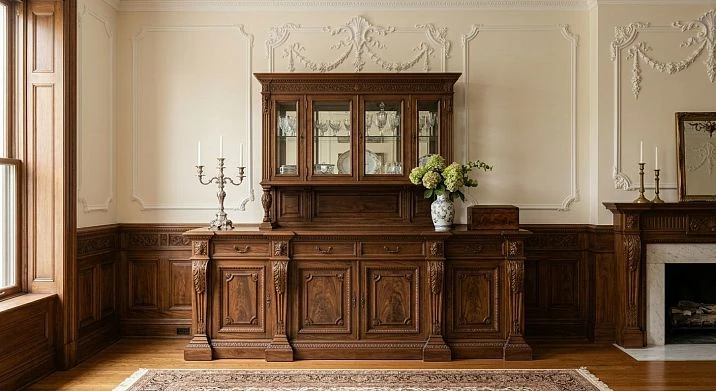
A buffet in the dining room is not just a place for storing dishes. It is a furniture manifesto: what exactly the owner considers beautiful, how they understand classics, how detailed they work out each interior element. A display cabinet in the living room is the same conversation, only even more frank: everything is visible through the glass. The shelves, objects, lighting are visible — and, of course, the glazing bead profile, the shape of the handle, the molding relief of the facade.
That is why buffet in classic style and a classic display cabinet require competent detailing. Not just one handle and not just one molding — but a well-thought-out set: Wooden trim for glass facades, Furniture Handles made of solid wood, Moldings made of polyurethane for facades and cornice, Polyurethane appliqués as decorative accents. And — glue, primer, paint, spare.
This article is commercial in the best sense of the word: it helps to collect everything in one order and not return to the topic three times.
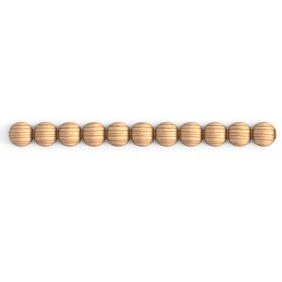
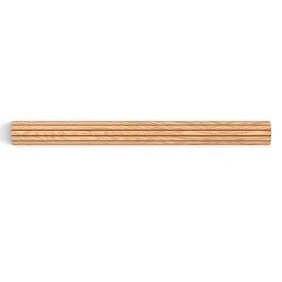
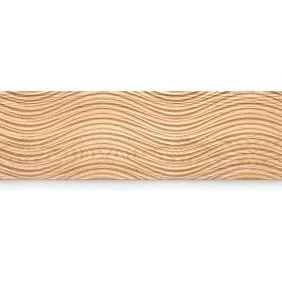
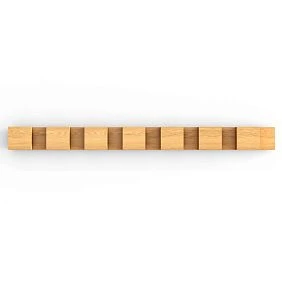
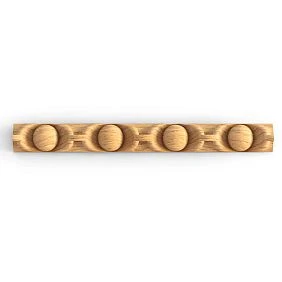
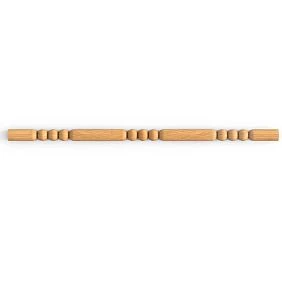
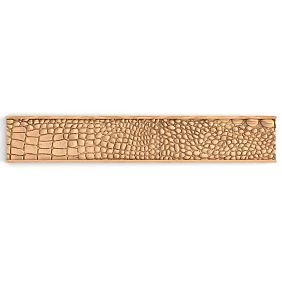
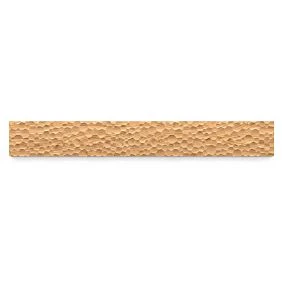
What to buy for a buffet and display cabinet: a working set
Before diving into the details — a list. This is where a proper purchase begins.
Wooden elements:
-
wooden trim — a profile rail for fixing glass in frame facades; size depends on glass thickness;
-
Furniture Handles — brackets, buttons, pulls made of beech, oak, or ash wood;
-
furniture legs — wooden legs for the lower part of the sideboard, if the body is raised above the floor;
-
decor for furniture — decorative wooden overlays for the lower part of the sideboard, side panels, and facades;
-
Wooden decoration — carved and relief inserts for the upper doors and cornice belt.
Polyurethane elements:
-
Moldings made of polyurethane — frame profiles on facades, side panels, and lower belt;
-
Polyurethane appliqués — decorative accents on blind facades of the lower tier;
-
Polyurethane moldings — relief elements of the upper belt and cornice of the sideboard;
-
polyurethane decor — central and corner decorative elements;
-
Decor for Molding — dot inserts along the cornice molding.
Installation and finishing:
-
Polyurethane mounting adhesive — what to glue polyurethane molding with;
-
fasteners for wooden glazing bead (brad nails, spacing 15–20 cm);
-
fasteners for handles (M4 bolts, length according to facade thickness);
-
acrylic sealant for molding joints;
-
adhesive primer;
-
enamel or paint;
-
varnish or oil for wooden elements;
-
15% spare glazing bead and profile.




Buffet and display cabinet are not a wardrobe: what is the fundamental difference
It would seem — the same body, the same hinges, the same back panel. But in fact, a buffet and a display cabinet are fundamentally different furniture objects in terms of detailing.
Our factory also produces:
Glass facades change everything
A cabinet with solid doors forgives imperfections: uneven molding, an ugly joint, a careless handle — all of this is less noticeable on an opaque surface. A display case with glass doors does not. Every glazing bead profile, every gap between the frame and the glass, every scratch on the handle — everything is in plain sight. Literally: you look through the glass inside, and your eye catches the details around the perimeter.
That is why Wooden trim For a display case, this is not just a "strip under the glass." It is a profile part that is visible from the room side when you look at the furniture. The glazing bead profile should be neat, correctly chosen in width, and coordinated with the frame of the facade.
Get Consultation
The top cornice as an architectural dominant
In an ordinary cabinet, the top horizontal line can be just a straight edge. In a sideboard and display case, it is a cornice. An architectural element that "closes" the entire vertical composition of the furniture. A cornice for furniture with of polyurethane moldings a developed profile is not a decoration, but a completion.
Without a cornice, a sideboard looks unfinished — like a book without the last page.
The lower belt as a support line
The lower horizontal line of a sideboard is no less important a detail than the cornice. This is the transition from the body to the legs or to the base. The lower molding, decorative belt, correctly chosen furniture legs — all together creates the "base" of the furniture structure.
Wooden glazing bead for glass facades: technical requirements and aesthetics
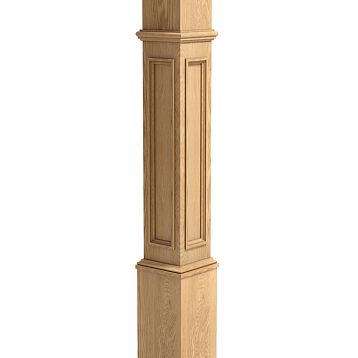
Wooden trim — This is a narrow profile strip that fixes the glass in the groove of a frame facade. Essentially, the glazing bead is the last element installed after the glass is inserted into the frame. It presses the glass from the inside and holds it in place.
How to choose a glazing bead based on glass thickness
Standard glass thickness for furniture display cases is 4 mm. For heavier doors — 5–6 mm. The groove in the frame facade for glass is made considering the glass thickness + a gap for thermal expansion (0.5–1 mm) + the glazing bead thickness.
The glazing bead is selected based on groove depth: if the groove for glass is 6 mm and the glass is 4 mm — the bead should fill the remaining 2 mm + 0.5 mm gap = effective bead depth of 1.5–2 mm.
In terms of visible width, the glazing bead for a furniture facade is 8–15 mm. A narrow bead (8–10 mm) looks delicate and does not overlap the glass. A wide one (12–15 mm) with a shaped profile adds decorativeness but reduces the visible glass area.
Glazing bead profile shape
Straight (rectangular). Minimal profile without relief. For neoclassical and modern classic styles.
With a fillet. A small chamfer along the outer edge of the bead. A light decorative accent that creates a shadow around the glass perimeter.
Shaped. Profile with a cove, shelf, or ogee. Fully classic motif, coordinated with the facade molding profiles.
Installation of the glazing bead
The glazing bead is fastened with finishing nails-pins 15–20 mm long, 1.2–1.4 mm in diameter. Spacing: 12–15 cm along the length of the bead. At the corners, the bead is joined at a 45° angle with precise end trimming.
Before installation: the glass is inserted into the groove on silicone or rubber gaskets (do not install glass dry — risk of chipping during temperature changes). Then — the glazing bead. The nail heads are countersunk and puttied over.
Furniture handles for a classic display case and sideboard
Furniture Handles — this is the first item you pick up. It is tactile contact with the furniture. Therefore, the handle should not only be beautiful, but also comfortable, durable, and correctly positioned.
Types of handles for a display case and sideboard
Bracket. A horizontal or vertical arc, fastened with two bolts. Center-to-center distance: 32, 64, 96, 128, 160 mm — depending on the facade size. For a sideboard with facades 400–500 mm wide — a bracket with a 96–128 mm center distance.
Knob. One attachment point, centered. For small doors — glass facades of a display case. Knob diameter 30–50 mm.
Pull. A rectangular or cylindrical bar with a center bolt. Pull length 80–150 mm. For lower sideboard drawers — a horizontal pull is more convenient than a bracket.
Where to place the handle
On a glass display case facade: a knob handle or bracket is mounted in the lower third of the door with an indent from the bottom horizontal edge of 80–100 mm. Reason: when opening the door, the hand moves from bottom to top, and the lower handle position is more convenient.
On the blind facade of the lower tier of the sideboard: a handle centered vertically on the facade or in the upper third — depending on proportions. Important: the handle must not fall into the area of the relief molding. A molding frame on the facade — the handle inside the frame, centered in the free field.
Compatibility with finish
A wooden handle for white painting — with a sideboard for white enamel. A wooden handle for varnish — with a sideboard in natural wood. A wooden handle for dark stain — with a sideboard in walnut or wenge.
With a uniform color of furniture: the glazing bead, handles, moldings, and overlays are painted in one color — the sideboard looks like a monolithic architectural object.
Polyurethane stucco for sideboard and display case: facade relief without extra weight
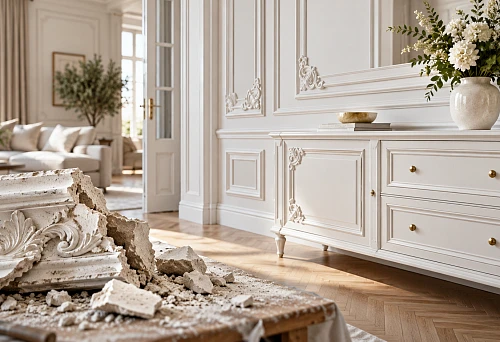
Polyurethane moldings works differently on furniture than on walls. In the interior, polyurethane decor is distributed over a large area. On furniture, it is concentrated in specific zones: cornice, lower molding, frame profile of facades.
Cornice for sideboard from polyurethane moldings
The cornice is the upper horizontal belt of furniture. For a classic sideboard, the cornice is composite: several profiles that create a multi-layered horizontal relief.
Classic three-element cornice scheme:
-
Lower auxiliary profile — base (shelf, straight profile);
-
Central bracket or heel — an expressive profile curve;
-
Top finishing profile — a crowning shelf or scotia.
Moldings made of polyurethane for a buffet cornice — width 40–70 mm depending on furniture height. For a buffet 2100 mm high — cornice width 60–70 mm. For a buffet 1600 mm — 40–50 mm.
Length: front side + 2 × visible end sides + 15% allowance.
Frame moldings on lower tier facades
Lower tier of the buffet — blind facades. Frame profile made of of polyurethane moldings around the perimeter of each facade — this is a classic furniture technique. Inside the frame — a flat field of the facade, which can be painted in the same color or with a slight tonal contrast.
Frame molding width: 15–25 mm. For a facade 400 mm wide — molding 18–20 mm. Indent from the edge of the facade to the molding: 20–30 mm.
Central overlays on blind facades
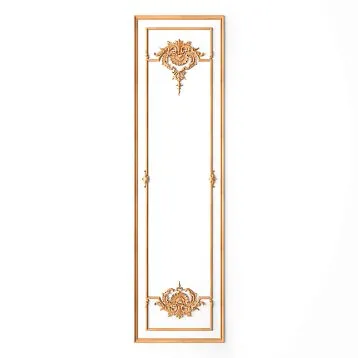
Polyurethane appliqués — a decorative accent inside the frame field. A small relief overlay in the center of the facade — a medallion, geometric rosette, cartouche — creates a focal point that invites examination.
Overlay size: no more than 25–30% of the free field area of the facade (inside the frame). For a 400 × 600 mm facade with a frame, the free field is approximately 340 × 540 mm. Overlay: 100–120 mm in the largest dimension.
Decor for cornice moldings
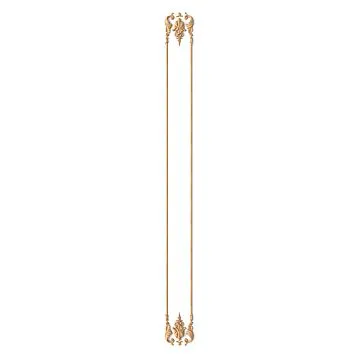
Decor for Molding — small relief inserts spaced at equal intervals along the horizontal cornice molding. For a sideboard 1200 mm wide: 4–5 inserts with a pitch of 240–300 mm — a uniform rhythm across the entire width.
How to assemble a classic display case: a level-by-level breakdown
Upper cornice of the display case
A display case is a lighter furniture piece than a sideboard. The cornice for a display case is more modest: 30–50 mm, two-element (bracket + finish). polyurethane decor along the upper cornice — with medium-depth relief. Large relief next to glass is overload.
Glass facade frames
A framed display case facade consists of four wooden planks joined into a rectangle with a groove for glass. Outer profile of the frame: 40–60 mm wide (including the groove). Visible width of the frame from the outside: 20–30 mm.
On the outer surface of the frame — Wooden trim not used (it's inside). However, on the frame, you can provide a milled profile edge — a chamfer or a small ogee along the outer edge of the frame, which creates a shadow and adds volume.
Showcase handles
For a glass showcase with small doors — Furniture Handles push-button type, diameter 30–35 mm, or a bracket 64–96 mm. Placement: lower third of each door, along the vertical axis.
Side panels and back wall
The side panels of the showcase are a visible area. Polyurethane appliqués on the side panels — a vertical molding or frame around the perimeter. The back wall — if the showcase is open (without a back panel), then the wall behind it is decorated according to the overall decorative context.
Ready-made kits for specific tasks
Classic showcase for the living room
Task: showcase 1000 × 1900 mm, upper part — 2 glass fronts, lower part — 2 solid fronts.
Set:
-
Wooden trim — 8–10 mm visible part, profile with ogee. Calculation: perimeter of one front (500 + 900) × 2 = 2800 mm × 2 fronts = 5600 mm = 5.6 linear m + 15% = 6.5 linear m;
-
Furniture Handles — 4 pcs: 2 buttons for glass fronts + 2 brackets 96 mm for lower ones;
-
Moldings made of polyurethane — cornice 45 mm: 1000 + 2 × 400 = 1800 mm = 1.8 linear m + 15% = 2.1 linear m; frame molding on 2 lower fronts 20 mm: 2 × (500 + 700) × 2 = 4800 mm = 4.8 linear m + 15% = 5.5 linear m;
-
Polyurethane appliqués — 2 pcs for the center of lower fronts, 80–100 mm;
-
furniture legs — 4 beech legs, height 100 mm;
-
Fasteners for glazing bead, handles and legs; glue, sealant, primer, white enamel; 10% spare.
Sideboard for dining room, to be painted
Task: sideboard 1400 × 2100 mm, lower part — 4 solid fronts, upper — 4 glass fronts.
Set:
-
Wooden trim — profile 10–12 mm with a bead. Calculation: perimeter of one glass front (350 + 900) × 2 = 2500 mm × 4 = 10,000 mm = 10 linear m + 15% = 11.5 linear m;
-
Furniture Handles — 8 pcs: 4 buttons for glass fronts + 4 brackets 96 mm for lower ones;
-
Moldings made of polyurethane — composite cornice 60 mm (2 profiles): 1400 + 2 × 500 = 2400 mm × 2 profiles = 4800 mm + 15% = 5.5 linear m; frame molding of lower fronts 22 mm: 4 × (350 + 700) × 2 = 8400 mm = 8.4 linear m + 15% = 9.7 linear m;
-
Decor for Molding along the cornice — 6 inserts;
-
Polyurethane appliqués — 4 central accents of the lower facades;
-
decorative elements for furniture — 2 wooden elements on the sides;
-
furniture legs — 6 supports, height 80 mm;
-
Bottom molding 40 mm along the base; glue, primer, white enamel in 2 coats; 10% allowance.
Built-in display case up to the ceiling
Task: built-in display case in a niche 1200 × 2700 mm, glass facades from floor to ceiling, cornice transitions into ceiling molding.
Set:
-
Wooden trim — narrow straight, 8 mm, without active relief (the glass surface is already expressive enough);
-
Furniture Handles — 2–4 rods or brackets, center distance 128 mm, along the height of the facade center;
-
Moldings made of polyurethane — ceiling transition molding, matching the room's ceiling cornice; 50–70 mm across the entire niche width;
-
Calm Polyurethane appliqués — only on the lower base panel;
-
Glue, primer, paint in the color of the walls or the color of the furniture.
Sideboard for a small dining room: neoclassical
Task: sideboard 900 × 1800 mm in a neoclassical interior, 2 solid lower doors, 2 glass upper doors.
Set:
-
Wooden trim — 8 mm straight profile with chamfer;
-
Furniture Handles — 4 buttons with a diameter of 30 mm for both tiers;
-
Moldings made of polyurethane — thin frame molding 15 mm on the lower doors; small cornice 35 mm;
-
furniture legs — 4 conical beech legs 100 mm;
-
Minimal Polyurethane appliqués — one in the center of each lower door, 60–70 mm;
-
Glue, primer, paint; 10% reserve.
How not to overload the display case with decor
Glass itself is a visually active material. It reflects light, creates glare, and shows what's inside. Add to this a complex cornice, an active molding relief on the facades, large overlays — and the display case turns into an overloaded object that is difficult to "read."
The principle of visual hierarchy
The display case should have one main decorative tier — usually the cornice. It is the first to catch the eye when looking at the furniture. Facade moldings and overlays are secondary. Glazing bead and handles are minimal.
Scheme in descending order of expressiveness:
-
Cornice — maximum relief;
-
Lower belt — medium relief;
-
Frame moldings on facades — calm;
-
Central overlays — accent but small;
-
Glazing bead and handles are delicate, coordinated in profile.
Glass and decor: separation zones
Do not place active relief close to the glass facade. Moldings on the lower tier facades are good. Moldings directly on the glass facade frame from the outside — only if it is a specially designed profile edge, not a volumetric overlay.
Table: what is made of wood, what is made of polyurethane on the sideboard and display case
| Element | Material | Reason |
|---|---|---|
| Glazing bead for glass | Wood | Strength, installation precision |
| Handles | Wood (or metal) | Tactile load |
| Furniture legs/supports | Wood | Load-bearing function |
| Furniture cornice | Polyurethane | Lightness, profile precision |
| Frame moldings of facades | Polyurethane | Lightness, paintable |
| Central overlays | Polyurethane | Decorative area without load |
| Cornice decor | Polyurethane | Repeatability, precision |
| Wooden ornaments | Wood | Tactile accent, carving |
Mistakes when choosing decor for a buffet and display case
Select glazing bead without considering glass thickness
Most technical mistake. The groove for glass is milled for a specific thickness. If the glass is 4 mm and the glazing bead is designed for a 6 mm groove, it will be loose. Measure the groove, calculate the bead thickness, and only then order.
Buy handles after marking moldings
The handle is mounted with a through bolt through the facade. The molding frame on the facade must not overlap the mounting hole location. Order: first determine the handle position, then mark the molding around it — not the other way around.
Install a polyurethane pad in the grip area
The area around the handle is a stressed zone. Hands touch, bump, pull. A polyurethane pad near the handle — at least 30–40 mm away, otherwise chipping is inevitable.
Make overly prominent relief near glass
Large pads with a projection of 15–20 mm on the frame next to a glass facade — risk of accidental impact on the decor when opening. Maximum decor projection near a glass facade — 8–10 mm.
Forget the top cornice
Without a cornice, the sideboard looks unfinished. This is a rule without exceptions. Even a simple straight profile 30 mm along the top horizontal is better than a bare edge.
Do not connect the sideboard with the dining area
The sideboard is in the dining room. Next to it are a dining table, chairs, a wooden baseboard, and wall moldings. If the sideboard's cornice profile does not echo the room's baseboard, the furniture falls out of context. Coordinate the profiles.
Do not account for internal lighting
If there is LED lighting inside the display case, it illuminates everything from within, including the edges of the glazing bead, unevenness, and joints. The glass and glazing bead must be installed flawlessly if lighting is planned.
FAQ: questions and answers about sideboard and display case decor
What to buy for a classic display case with glass fronts?
Wooden trim for fixing glass, Furniture Handles made of solid wood, Moldings made of polyurethane for the cornice and frame profiles, Polyurethane appliqués for the lower fronts, furniture legs, glue, primer, paint, and a 10–15% reserve.
Can polyurethane decor be used on a sideboard?
Yes, this is a justified and correct technique. polyurethane decor — for cornices, frame moldings on facades, overlays in the center of lower doors, and decor along the lower belt. Unloaded decorative zones — that's where.
Where to use wooden glazing bead?
On glass facades of display cabinets, sideboards, cabinets with glazing, door inserts with glass. Everywhere where you need to neatly and securely fix the glass in the groove of the frame profile.
How not to overload the display cabinet with decor?
The main guideline: cornice — active, moldings — calm, overlays — accent, glazing bead and handles — delicate. One level of decor dominates, the others support it. Glass itself is already a decorative element.
Can wood and polyurethane be painted the same color?
Yes, and this is the best solution for a sideboard intended for painting. Wooden trim, handles, moldings, overlays — all in a single enamel. The furniture reads as a monolith.
About the company STAVROS
The entire range for a classic sideboard and display cabinet — Wooden trim, Furniture Handles, furniture legs, decor for furniture, Moldings made of polyurethane, Polyurethane moldings, Polyurethane appliqués и Decor for Molding — is produced and supplied by STAVROS.
STAVROS is a St. Petersburg manufacturer of architectural and furniture decor made from solid wood and polyurethane with over twenty years of history. Full production cycle in St. Petersburg. Completed projects include the State Hermitage Museum, Konstantinovsky Palace, Alexander Palace, and Trinity-Izmailovsky Cathedral. Catalog with exact dimensions, technical specifications, and photographs. Orders from one unit. Delivery across all of Russia.