Article Contents:
- KR.VRS-013 or KRPU.VRS-013: short answer
- What unites the two versions of VRS-013
- Height 250 mm
- Width 100 mm
- Depth 61 mm
- Classic pattern
- Paired and repeated placement
- Need for a drawing
- The array connects the bracket to the body
- Oak for tinting
- Beech for enamel
- "Standard" or "Prestige"
- Furniture restoration
- One bracket as an accent
- Paired composition
- Commercial choice
- Polyurethane does not imitate natural oak
- High placement
- Repetition of several parts
- Painting to match the wall
- Ceiling composition
- Furniture application
- Commercial choice
- Back plane
- Depth of Relief
- Edges and joints
- Finishing layer
- Mounting load
- Check the side panel width
- Consider the 61 mm depth
- Coordinate with the cornice
- Select one breed
- Polyurethane on furniture — a separate solution
- Connection with the overlay
- Single center bracket
- Paired brackets at edges
- Wall-to-wall bookcase
- Oak stain
- White classic bookcase
- Wooden portal
- Wall portal for painting
- Pair on the sides of the opening
- Combining materials
- Wooden boiserie
- Painted wall frame
- Paired elements near the mirror
- Decor above the console
- Niche
- Step of repeating elements
- Corner composition
- Painting together with the ceiling
- Contrasting Finishing
- Wooden version under the ceiling
- KRPU.VRS-013 — decorative element
- The wooden KR.VRS-013 also requires calculation
- Decorative cover for hidden support
- Light decorative shelf
- What to ask before ordering
- Oak for visible texture
- Beech for covering enamel
- Polyurethane for a unified painted composition
- Can wood and polyurethane be combined in one room
- When the same color is useful
- When it's better to emphasize the difference
- Separate primers
- Gloss level control
- Same number of finish coats
- Check in the actual location
- Saving the process card
- Incoming inspection
- Dust removal
- Priming
- Matting between coats
- Oak tinting
- Primer selection
- Paint before installation
- Painting after installation
- Patina and gilding
- On furniture
- On a wooden panel
- On the wall
- Under the ceiling
- Installation seam
- The base must be prepared
- Adhesive is selected for the material and base
- Marking before applying adhesive
- Temporary fixation
- Seam closure
- Mechanical safety lock
- One element
- Symmetrical pair
- Four elements
- Row under the cornice
- Different materials in one row
- Decorative and structural bracket
- Wooden bracket and polyurethane copy
- Bracket and overlay
- Bracket and a capital
- VRS-013 and other styles
- Main and collector card KRPU
- Need to design an oak library
- Need to decorate a white built-in wardrobe
- Need to repeat ten elements under the ceiling
- Need two brackets on the sides of the mirror
- Need to design a door portal
- Need a decorative bookshelf
- Need to restore old furniture
- Need to furnish a hotel lobby
- Need a contrasting black decor
- Need a maintainable commercial interior
- Consider models absolutely identical
- Choose polyurethane for the load-bearing shelf
- Buy oak for dense enamel without necessity
- Tint beech to look like oak
- Paint wood and polyurethane without separate tests
- Do not account for 61 mm depth
- Mark a pair from different edges
- Start a row without calculating the step
- Glue onto weak paint
- Fill the relief with thick primer
- Buy only the bracket without related decor
- Mixing wood and polyurethane in one row
- For furniture, open the KR.VRS-013 card
- For walls and ceilings, open the KRPU.VRS-013 card
- Assemble a single line kit
- Check the drawings
- Coordinate the finish
- Clarify the installation
- How is KR.VRS-013 different from KRPU.VRS-013?
- Are the dimensions of the two models the same?
- Is the pattern completely identical?
- What wood is KR.VRS-013 made from?
- Can I order an oak version?
- Is beech suitable under enamel?
- Does KRPU.VRS-013 need to be painted?
- What to choose for furniture?
- What is better for a painted wall?
- Which option should I choose for the ceiling?
- Can I put a shelf on KR.VRS-013?
- Is KRPU.VRS-013 load-bearing?
- How to secure a wooden bracket?
- What glue is needed for a polyurethane bracket?
- Can both materials be painted the same color?
- What is easier to repair?
- Do I need one element or a pair?
- Which overlays go with VRS-013?
- Can I use KRPU.VRS-013 on furniture?
- Can I use a wooden bracket on the wall?
- How to check the size before purchasing?
- Can I mix wood and polyurethane in the same room?
- How to get the same shade?
- Where to buy KR.VRS-013?
- Where to order KRPU.VRS-013?
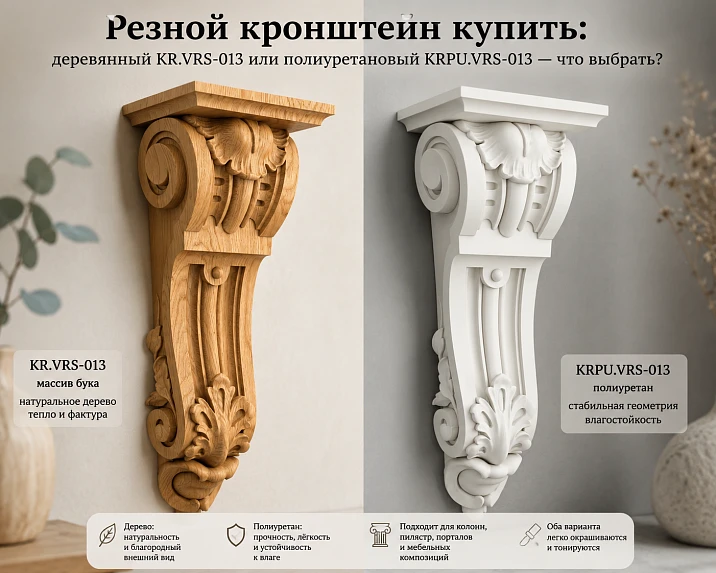
One motif VRS-013 in two materials: for furniture, wall composition, portal and ceiling decor
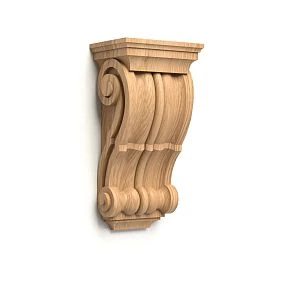
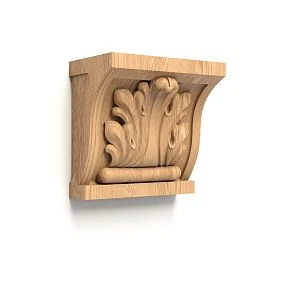
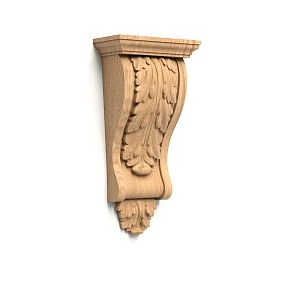
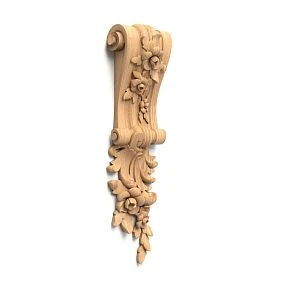
KR.VRS-013 or KRPU.VRS-013: short answer
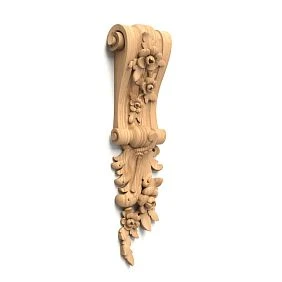
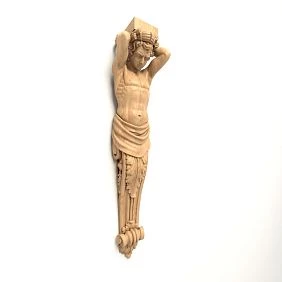
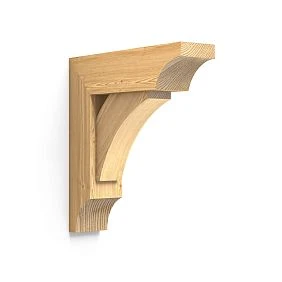
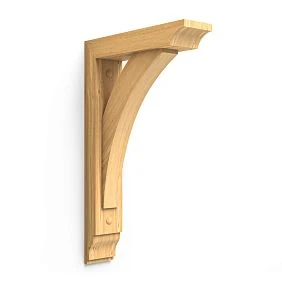
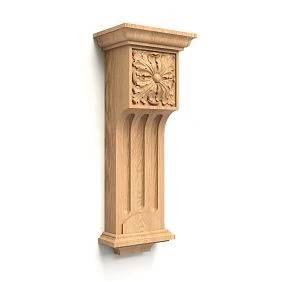
Wooden KR.VRS-013 is worth buying when the bracket becomes part of a cabinet, library, sideboard, furniture portal or other composition made of oak and beech. Model size — 250 × 100 × 61 mm; available in beech and oak, with "Standard" or "Prestige" sanding, and preparation for enamel or tinting. Polyurethane KRPU.VRS-013 is best chosen for a lightweight wall or ceiling composition for painting. Its size is also 250 × 100 × 61 mm, material — polyurethane. The coincidence of nominal dimensions simplifies design, but does not automatically mean the same weight, relief depth, back surface, mounting method, and load-bearing capacity.
Buy wooden bracket KR.VRS-013 Buy polyurethane bracket KRPU.VRS-013 View carved wooden models Buy decorative polyurethane bracket Order VRS-013 decor selection
Both models have a nominal size of 250 × 100 × 61 mm. Before joint use, you still need to compare drawings, actual profile, back plane, and fit.
KR.VRS-013 — array of beech or oak. Beech is suitable for covering enamel, oak for semi-transparent tinting; grinding options "Standard" and "Prestige" are available.
KRPU.VRS-013 — polyurethane stucco decor. It is chosen for walls and ceilings when natural wood texture is not required and the element will be painted together with the overall composition.
The polyurethane version cannot be considered a support for a shelf without separate confirmation. For real load, a calculated structural fastening is required.
The same color does not make materials the same. Wood and polyurethane reflect light differently, accept primer, react to seams, and require their own installation technology.
A buyer who wants to buy a carved bracket for a classic interior often first chooses a pattern, leaving the material "for later." For the VRS-013 line, this approach is risky. The wooden KR.VRS-013 and polyurethane KRPU.VRS-013 have the same nominal size but solve different tasks. One naturally fits into furniture architecture and can preserve wood texture, the second is more convenient in repeating stucco decor of a wall or ceiling.
The main fork is not between "expensive" and "simple" options, but between two finishing and installation systems. The wooden bracket needs to be coordinated with the furniture species, grinding, tone, and fiber direction. The polyurethane one — with primer, paint, wall base, installation seam, and adjacent moldings. If you simply paint both products with one can of paint, the result may differ in gloss and relief.
It is equally important to separate the decorative function from the structural one. A bracket is traditionally associated with supporting a shelf or cornice, but appearance does not prove the permissible load. The polyurethane KRPU.VRS-013 should be perceived as stucco decor. The wooden KR.VRS-013 also cannot be assigned as a load-bearing support based solely on the material: the shelf, wall, fasteners, and element spacing require calculation.
For furniture and natural finishes, you can view carved decor made of oak or beech. For walls or ceilings intended for painting — stucco decor for painting. Other sizes and patterns are collected in categories where you can Buy a wooden bracket or Buy decorative polyurethane bracket.




What unites the two versions of VRS-013
Both models belong to the same decorative motif and have the same A × B × C dimensions: 250 × 100 × 61 mm. This allows comparing them without jumping between completely different scales. The buyer can first determine the location and outer contour, then choose the material. However, the matching dimensions do not eliminate the need to check the actual relief and technical aspects.
Our factory also produces:
Height 250 mm
Such a bracket is noticeable on a furniture portal, wall panel, and under a cornice. It is not a small overlay, so free space should be left around it. In a tight frame, VRS-013 may visually blend in with moldings.
Get Consultation
Width 100 mm
The parameter is important for a narrow pilaster, cabinet side panel, and the distance between elements. Two symmetrical parts require identical offsets from the central axis and adjacent decorative parts.
Depth 61 mm
The bracket creates a noticeable projection from the surface. On furniture, check door opening and cornice protrusion. On the wall, check proximity to passage, light fixture, and frame. Under the ceiling, check visibility from the lower point and joint with the cornice.
Classic pattern
The VRS-013 motif suits the Versailles collection, boiserie, portals, cabinets, and door decor. To avoid mixing similar but different ornaments, it is useful to select other elements from the Versailles line.
Paired and repetitive placement
Both versions can be used singly, in pairs, or in a rhythm. The more elements, the more important the same shade, precise marking, and relief control. For a large wall, polyurethane is often more convenient; for a furniture set, wood is more natural.
Need for a drawing
Even with the same table, you need to compare the back surface, edge of the relief, direction of the pattern, and available mounting area. You cannot automatically replace a wooden model with a polyurethane one after making the seat in the furniture.
Confirmed characteristics of two brackets
| Parameter | KR.VRS-013 | KRPU.VRS-013 | What to check before ordering |
|---|---|---|---|
| Material | Solid beech or oak | Polyurethane | Compatibility with furniture, wall, trim, and adjacent elements. |
| Size A × B × C | 250 × 100 × 61 mm | 250 × 100 × 61 mm | Check DWG, back plane, and actual relief. |
| Wood preparation | Beech under enamel, oak under tinting | Not applicable as a species characteristic | Do not transfer wood technology to polyurethane. |
| Sanding | "Standard" or "Prestige" | Surface preparation of the card is being clarified | For wood, choose the finishing level; for polyurethane, choose the primer and painting scheme. |
| Main Scenario | Furniture, cabinet, library, portal, wooden architecture | Wall, ceiling, stucco composition for painting | Assign material based on base, not just pattern. |
| Natural texture | Possible in oak for tinting | Absent | If wood texture is needed, polyurethane cannot replace oak. |
| Opaque painting | Beech under enamel | Main decorative scenario after preparation | Make separate swatches for two materials. |
| Load-bearing function | Not guaranteed without calculation | Do not consider as load-bearing element | Provide a calculated structural support for the shelf. |
| Mounting | Depends on the wooden base, weight, and task | Depends on the wall, ceiling, glue, and project | Do not assign a single universal glue or fastener. |
| Completeness | Separate decorative element | Separate decorative element | Trims, moldings, glue, and structural supports are purchased separately unless the card indicates otherwise. |
The table shows that size does not determine the choice. Two models occupy the same space but integrate into the project differently. Wood becomes part of the furniture piece and can retain its natural pattern. Polyurethane extends the wall or ceiling and is often hidden under a uniform paint finish.
Wood or polyurethane: a direct comparison by task
| Task | KR.VRS-013 made of wood | KRPU.VRS-013 made of polyurethane | Commercial conclusion |
|---|---|---|---|
| Wooden cabinet decor | Main Scenario | Only possible after checking the base and finish | For furniture, it is more natural to choose KR.VRS-013 of the same wood species or under a common enamel. |
| Oak library | Suitable for tinting | Does not provide natural texture | The oak version better supports visible wood. |
| White furniture under enamel | Beech under enamel | Decorative installation possible after inspection | The choice depends on whether the bracket should be part of the furniture or an applied stucco decor. |
| Wall frame | Contrasting wooden accent | Convenient for painting in wall color | For a unified stucco surface, polyurethane is more often chosen. |
| Boiserie | Suitable for wooden panel | Suitable for painted wall composition | The material is selected based on the boiserie system itself. |
| Ceiling decor | Possible after calculating the fastening | One of the main scenarios | For repetition under the ceiling cornice, KRPU.VRS-013 is more practical. |
| Natural tinting | Oak | Does not reproduce the real texture | Choose wood if the texture is part of the project. |
| Painting in wall color | Possible, but the material remains wood | Natural scenario | Polyurethane is easier to dissolve in the overall wall composition. |
| Large number of repetitions | May require control of wood and tone | Convenient for rhythmic stucco decoration | For a long cornice or row under the ceiling, polyurethane is often more rational. |
| Real shelf | Only after structural calculation | Do not consider as support | Use a hidden load-bearing system, and VRS-013 as decorative trim. |
Wooden KR.VRS-013: when the material should be part of the furniture
KR.VRS-013 is made from solid beech or oak and has dimensions of 250 × 100 × 61 mm. For beech, options for enamel coating are available; for oak, options for tinting. The quality of sanding is chosen between "Standard" and "Prestige". These parameters turn the model into a full-fledged element of a furniture project, rather than just an overlay that needs to be painted along with the wall.
The solid wood connects the bracket to the body
On a cabinet, bookcase, or sideboard, the wooden bracket looks like a natural extension of the cornice, side panel, and pilaster. Even with opaque enamel, the material and fastening remain part of the joinery system. This is important for restoration, repair, and refinishing.
Oak for tinting
Oak is chosen when the customer wants to preserve the visible porous texture. On the VRS-013 relief, the tone can accumulate in the recesses and create darker transitions. Therefore, a test is done not only on a flat sample but also on a carved part or a comparable fragment.
Beech for enamel
Beech is suitable for white, black, colored, or complex neutral enamel. The covering system unifies the lamellas by color but does not hide poor preparation of the relief. For semi-gloss, high-quality sanding is especially important.
"Standard" or "Prestige"
"Standard" means machine sanding and may require additional finishing before a complex finish. "Prestige" involves more detailed manual preparation. For dark tinting, gilding, or semi-gloss enamel, the second option reduces the amount of work in the painting workshop.
Furniture restoration
A wooden part is easier to include in traditional joinery restoration. In case of local damage, the coating can be restored, the tone matched, and the wood treated with compatible materials. However, the specific technology depends on the original finish.
One bracket as an accent
KR.VRS-013 can be installed on the central pilaster, under the cabinet cornice, or in the upper part of the portal. A single part must have a clear axis and enough free space. If there is already a lot of carving around, the bracket will lose its own pattern.
Paired composition
Two wooden parts on the sides of a cabinet or door create symmetry. Before ordering, check whether the pattern is neutral when oriented the same way and whether mirrored versions are needed. In the standard scheme, separate L/R articles are not declared.
Commercial choice
For a cabinet, bookcase, sideboard, or portal you can Buy wooden bracket KR.VRS-013, choosing beech or oak and the appropriate sanding quality. If a different scale of pattern is needed, open carved models for furniture and walls.
Polyurethane KRPU.VRS-013: when the decor continues the wall or ceiling
KRPU.VRS-013 has the same nominal size 250 × 100 × 61 mm, but is made of polyurethane and belongs to stucco decor. Its natural scenario is a wall or ceiling composition for painting, where the bracket becomes part of a frame, cornice, niche, or rhythm of repeating elements.
Polyurethane does not imitate natural oak
Even if the surface is painted brown, real wood texture will not appear. The material is chosen not as a cheaper oak, but as an independent stucco decor. It is especially appropriate where the entire composition should become white, colored, or match the wall.
High placement
Under a ceiling cornice or in the upper part of the wall, the polyurethane version is convenient as a decorative rhythm. Before installation, still check the base, glue, possibility of temporary fixation, and access for painting after installation.
Repetition of several parts
A series of identical KRPU.VRS-013 can support a cornice, divide a long wall, or frame the transition between pilasters. The spacing is calculated based on the total length and central axes, rather than being chosen "by eye" from the first piece.
Painting in wall color
After proper preparation, the bracket can be visually integrated with moldings and the plane. The relief will remain noticeable due to light and shadow, and the seams must be carefully concealed. The type of primer and paint is checked for the specific material.
Ceiling composition
KRPU.VRS-013 can be placed under a cornice, in panel corners, or as repeating consoles. This is a decorative solution, not support for an actual beam. For a heavy cornice or structure, a separate load-bearing system is required.
Furniture application
A polyurethane part is sometimes considered for painted furniture, but such installation requires checking the surface, adhesive, impact load, and repairability. On a door, edge, or area of constant contact, wood may be more reliable as a furniture architecture material.
Commercial choice
For wall or ceiling, it is possible Buy polyurethane bracket KRPU.VRS-013. Other forms are collected in the category where you can Buy decorative polyurethane bracket for the selected wall or ceiling composition.
Same size does not mean full interchangeability
Both cards indicate 250 × 100 × 61 mm. This is a strong advantage for comparison, but not a reason to change material at a late stage without verification. Products may differ in actual weight, back surface, thickness of individual sections, rigidity, behavior during drilling, and fixing method.
Back plane
For adhesive mounting, contact area is important. A wooden part may have one base geometry, a polyurethane one another. The drawing and the actual product are checked before manufacturing the niche or seat.
Relief depth
The nominal parameter C 61 mm shows the overall projection, but does not reveal the volume distribution. Light may read wooden carving and cast polyurethane relief differently. For a paired composition of different materials, a physical sample is needed.
Edges and joints
A wooden part is connected to a joinery cornice, a polyurethane one to wall molding. The same outer contour does not guarantee the same seam treatment.
Finish layer
Wood may slightly change shade depending on the grain. Polyurethane under a covering paint gives a more uniform base but requires compatible primer. One color from the catalog does not guarantee the same visual result.
Mounting load
Wood and polyurethane react differently to point pressure from fasteners. The hole pattern and tightening torque cannot be transferred from one material to another.
How to choose a bracket for a furniture facade
On furniture, a decorative bracket works alongside the facade, cornice, side wall, and pilaster. Here, the material is perceived particularly closely: a person sees the joint, touches the surface, opens the door, and notices the difference in gloss. Therefore, for a cabinet, library, sideboard, or console, the wooden KR.VRS-013 is usually a more natural choice.
Check the side panel width
The bracket has a width of 100 mm. If the pilaster or side panel is narrower, part of the relief will extend beyond the edge. Even if such a solution is visually acceptable, the base must provide sufficient attachment area. A paper template helps verify the proportion before ordering.
Consider the depth of 61 mm
The protrusion should not interfere with opening the door, pulling out the drawer, or passing near the furniture. On a corner cabinet, the bracket may fall into the path of the adjacent facade. Check not only the closed position.
Coordinate with the cornice
VRS-013 works well under the top furniture cornice when its relief supports the overall classic style. The bracket size should match the cornice height: an element that is too small will get lost, while one that is too large will visually lower the top of the furniture.
Choose one wood species
An oak facade or cornice can naturally be complemented with oak KR.VRS-013. A beech bracket can be painted together with the furniture under enamel. If the furniture is made of MDF, wood still remains a good option for a carved accent, but the shade and primer are matched by sample.
Polyurethane on furniture is a separate solution
KRPU.VRS-013 can be considered for a decorative area that does not experience impacts or constant contact. However, the adhesive, base, primer, and repairability must be tested. On the working edge of a cabinet or on the lower part of furniture, wood is usually more practical.
Pairing with an overlay
For a wooden composition, you can buy wooden overlay N.VRS-013. It helps to repeat the motif on the facade, while the bracket decorates the upper or side part of the furniture. The parts need to be matched in size and density of decor so that the facade does not become overloaded.
KR.VRS-013 for cabinet and library
A cabinet and library is one of the strongest scenarios for the wooden version. The bracket can finish side pilasters, support a decorative cornice, mark the central portal, or frame the upper section. Here, the material is perceived not as an imitation of architecture, but as part of a joinery product.
Single central bracket
Suitable for a cabinet with a pronounced central axis. The piece can be installed above the doors, in the center of the upper cornice, or under a decorative pediment. This technique requires free space around the relief.
Paired brackets on the edges
Two parts support the side posts and make the furniture visually more stable. Marking is done from the central axis of the cabinet, not from the room walls: the body may stand with a slight offset.
Wall-to-wall library
In a large composition, VRS-013 can be repeated on several sections. However, the same step is not always equal to the width of each cabinet. First, the main verticals are determined — extreme, central, and transitional — then the decor is distributed.
Oak tint
On the library, the oak pattern is especially appropriate. The tone of the bracket must match the cornice and pilasters not only in color but also in gloss level. Excessively dark patina in the recesses can make a small relief visually heavy.
White classic library
Beech KR.VRS-013 under enamel allows achieving a uniform color with the facades. The painting workshop must preserve the carving with thin layers, and the joint with the body must be closed without a rough strip of sealant.
To find ready-made furniture combinations, you can select wooden decor for the cabinet and library.
Choice for door portal
The door portal connects the wall and the joinery part of the opening. Therefore, both materials are possible here. Wood is suitable for a portal assembled from pilasters, platbands, and cornice of the same species. Polyurethane is convenient when the entire composition is formed on the wall and painted together with the moldings.
Wooden portal
KR.VRS-013 is installed under the top cornice or next to the capital. The bracket must match the tone of the platbands and not interfere with door opening. The 61 mm protrusion is checked considering the handle and nearby wall.
Wall portal for painting
KRPU.VRS-013 can be included in the frame around the opening. After installation, the joints are prepared, and the decor is painted together with the wall. Such a portal is perceived as architectural stucco, not as a wooden structure.
A pair on the sides of the opening
Symmetrical placement requires precise axes. If the walls have different widths, you cannot simply step back the same distance from the corners. The layout is tied to the center of the door leaf and the cornice.
Combination of materials
A wooden door can be surrounded by a polyurethane wall portal, but the transition must be deliberate. Wood retains its own tone, the stucco is painted in the wall color. An attempt to make both materials "like one oak" rarely looks convincing without professional decorative finishing.
Examples of compositions can be studied in the sections decorate the door with carved brackets and overlays и view decorative portals.
Selection for wall composition and boiserie
On the wall, VRS-013 can complete a frame, support a visual shelf, decorate a niche, be placed on the sides of a mirror, or separate panels. The material is chosen based on how the surface itself is structured.
Wooden boiserie
If the panels, moldings, and cornices are made of wood or veneered, KR.VRS-013 supports the materiality of the system. Oak can be tinted together with the panel, beech can be painted in a common color. The fastening is connected to the base of the panel, not just to the decorative layer.
Painted wall frame
KRPU.VRS-013 is more convenient when the moldings, wall, and bracket should have the same color. It does not require imitation of wood texture and is perceived as part of the stucco relief.
Paired elements near the mirror
Brackets can be placed on the sides of the frame or under the bottom line. The 250 mm size requires a sufficiently large mirror and wall. A small frame between two VRS-013 may look cramped.
Decor above the console
A pair of brackets helps connect the wall panel to the furniture below. If the console is wooden and the texture is visible, choose KR.VRS-013. If the furniture is painted and the wall is decorated with stucco, KRPU.VRS-013 is possible.
Niche
Depth is important in a niche. A 61 mm protrusion reduces free space and can create a sharp shadow. The mockup is installed in the actual niche and checked under the main lighting.
For wall solutions, you can view solutions for wall panels. If a frame around the decor is required, it is useful to buy molding MLD-002, having previously agreed on the material and finish.
KRPU.VRS-013 for ceiling and cornice
The ceiling area is a natural advantage of the polyurethane version. The bracket can be repeated under the cornice, placed in the corners of decorative panels, or used as a transition between a wall pilaster and a ceiling rod. At the same time, it remains a decorative element and should not bear the load of a real beam.
Step of repeating elements
First, measure the net length of the section, then determine the central axis and edge offsets. The number of brackets is chosen so that the gaps are even. You cannot start installation from one corner and expect the last element to randomly fall into place.
Corner composition
Two brackets on adjacent walls must have a consistent offset from the corner and cornice. The actual angle of the room may differ from 90 degrees, so the layout is checked with a laser and template.
Painting together with the ceiling
If the bracket should blend into the overall white surface, it is installed, joints are prepared, and painted according to a compatible system. Deep relief requires careful application to avoid drips.
Contrast finish
Gilding, patina, or other contrast is possible as a decorative technique, but the article does not assume a ready-made factory coating. First, make a test piece and check if it overloads a long cornice.
Wooden version under the ceiling
KR.VRS-013 can also be used in wooden ceiling architecture, for example next to a beam or solid wood cornice. The fastening is calculated considering the weight and base. For painted stucco composition, polyurethane is usually easier to coordinate.
Can VRS-013 be used under a real shelf
The name "bracket" and its traditional form often create an expectation that the product will support a shelf. A single item is not enough for a safe answer. The permissible load depends on the wall material, the depth and weight of the shelf, the number of attachment points, the distance between supports, and the connection method.
KRPU.VRS-013 — decorative element
A polyurethane model cannot be considered load-bearing. If the shelf must hold books, dishes, or appliances, the load is taken by a hidden metal frame, a wooden console with a confirmed calculation, or another structural system. The polyurethane bracket covers it or creates a visual impression of support.
The wooden KR.VRS-013 also requires calculation
Solid oak or beech is stronger than polyurethane as a material, but this does not automatically mean a permitted load. The specific fastening zones and the product's calculation as a support are unknown. For a real shelf, technical documentation or a separate structure is needed.
Decorative overlay on a hidden support
A practical scenario is to install a load-bearing angle or frame, and use the VRS-013 in front as decor. Then the appearance is preserved, and the load is transferred through the calculated system.
Light decorative shelf
Even if only one small item is planned on it, the fastening is still checked. The user may accidentally lean on the edge or place more items than intended.
What to ask before ordering
It is necessary to clarify whether a specific model has a confirmed load-bearing function, where the fastening zones are located, and which system is recommended. Until an answer is received, the bracket is considered decorative.
Oak, beech or polyurethane: material as part of the result
The bracket material affects everything: from the preparation method to the nature of the glare on the finished surface. Wood retains its natural structure, has a grain direction, and can be part of a joinery connection. Polyurethane has no wood texture and works as a molded relief, which is usually unified in color with the wall or ceiling.
Oak for visible texture
Oak KR.VRS-013 is chosen for translucent finishes. The pores and wood pattern remain visible, so the bracket naturally pairs with an oak cornice, frame, pilaster, or facade. The shade cannot be determined solely from the catalog: the relief accumulates the compound in recesses and appears darker than a flat panel.
Beech for opaque enamel
Beech is suitable for projects where the surface needs to be white, black, colored, or match a furniture facade. Its calm structure facilitates opaque finishing, but the carving still requires thin layers. Excessive primer can smooth out fine transitions.
Polyurethane for a unified painted composition
KRPU.VRS-013 does not need to be matched to a wood species. Its purpose is to repeat the motif and become part of the molding. In the wall color, it looks calmer; in a contrasting shade, more graphic. Before painting, check the compatibility of the primer and finish with polyurethane.
Can wood and polyurethane be combined in one room
Yes, if the materials serve different roles. For example, wooden KR.VRS-013 is installed on a bookcase, while polyurethane KRPU.VRS-013 is repeated under the ceiling cornice. They are linked by the VRS-013 ornament, but the finish may differ: the wood retains its tone, the molding matches the wall.
When the same color is useful
If the furniture and wall are painted in the same shade, the two versions can be visually merged. However, first make separate test swatches: one on prepared wood, the second on polyurethane. After complete drying, compare the color and gloss in daylight and artificial light.
When it's better to emphasize the difference
The oak bracket can be left stained, and the polyurethane one painted in the ceiling color. This contrast honestly shows the materials and avoids a failed wood imitation. The overall pattern maintains a connection between the zones.
How to get the same color on wood and polyurethane
The same paint does not guarantee the same result. The substrates absorb and reflect the material differently. Wood has pores and fibers, polyurethane has a different density and surface structure. For visual matching, not only the shade formula but also the full coating "layer stack" is important.
Separate primers
The primer is chosen for the substrate. You cannot use a wood primer on polyurethane just for convenience, unless the system manufacturer confirms compatibility. The goal is to achieve the same finish surface through different preparatory paths.
Control of gloss level
Matte enamel hides small differences. Semi-gloss and gloss show the substrate structure, seams, and preparation quality more strongly. For complex relief, moderate gloss is often safer, but the final decision is made by the designer based on samples.
Same number of finish layers
The number of layers affects color saturation and depth. However, you should not build up thickness just for the sake of matching if the relief starts to disappear. It is better to adjust the primer or shade on a separate sample.
Check in the actual location
Swatches are placed next to furniture, walls, and lighting. A color that matches in the workshop may differ under the warm light of a cornice. This is especially noticeable on a vertical wooden part and a horizontal ceiling element.
Saving the technical card
Record the name of the primer, enamel, shade, gloss level, and date. This helps when repairing a chip or ordering additional elements. For a commercial interior, such a card is especially important.
Painting wooden KR.VRS-013
Incoming inspection
Before priming, check the relief, ends, back surface, and future joints. The "Standard" sanding is refined if necessary; the "Prestige" is also inspected to exclude damage during transportation.
Dust removal
Dust remains in the recesses and turns into roughness after priming. The relief is cleaned carefully, without breaking thin areas.
Priming
Apply the composition evenly. There should be no sagging on the lower edges and in deep areas. A thick layer erases the difference between sharp and soft transitions.
Matting between layers
Flat areas and threads are processed with different movements. You cannot sand the relief like a furniture board: protrusions will quickly lose their shape.
Oak tinting
The test shows how dark it gets
Primer selection
The primer must have adhesion to polyurethane and be compatible with the topcoat. The specific system is chosen based on material recommendations and room conditions.
Painting before installation
It provides access to all sides, but after installation, touch-up of the seam will be required. This option is convenient if the bracket is contrasting and the wall is already finished.
Painting after installation
Suitable for a composition in the color of the wall or ceiling. First, seal the seams and prepare the transition, then paint the entire assembly. It is necessary to protect adjacent surfaces and not flood the relief.
Patina and gilding
Decorative effects are possible as a separate finishing work. They are not considered standard equipment. A test sample shows how much the patina highlights the recesses and whether the pattern becomes excessively contrasting.
How to secure wooden KR.VRS-013
The installation method depends on the base, weight, position, and purpose. A bracket on furniture, a wall, or under the ceiling should not be attached using a universal scheme. Adhesive can supplement the connection, but for a heavy part or an area subject to accidental contact, mechanical fixation may be required.
On furniture
The base must be level and sufficiently strong. The layout is tied to the cornice and pilaster. If fasteners are used, their placement should not split the carved element or extend into a thin area.
On a wooden panel
Check the panel thickness and the presence of a structural base. Decorative veneer or a thin overlay may not always be able to hold the part without an embedded element.
On the wall
Concrete, brick, block, and drywall require different systems. The fastening is chosen based on the total weight and contact points. On drywall, it is advisable to provide an embedded element in advance.
Under the ceiling
High-altitude installation requires temporary support and safe organization of work. The wooden bracket should not be held only by hands until the random glue dries. The project defines mechanical insurance.
Installation joint
On tinted oak, the joint cannot be hidden with ordinary white putty. For furniture and natural finish, the connection is designed in advance. Under enamel, the transition can be brought to a common painting system.
Installation of polyurethane KRPU.VRS-013
The base must be prepared
A dusty, peeling, or weak surface will not hold the decor. The painted wall is checked for adhesion. If the paint is easily removed, the bracket will hold together with the weak layer.
The glue is selected for the material and base
You cannot consider any installation compound suitable. It must be compatible with polyurethane, the wall or ceiling, and future painting. For a specific project, you can select glue, primer, and finish.
Marking before applying glue
The position is marked along axes and using a template. The pair must have the same height and rotation. Under the ceiling, the entire row is calculated in advance to avoid moving the glued part.
Temporary fixation
While the compound gains strength, the element may shift. The holding method should not damage the relief or leave marks on the finished wall. The specific time depends on the adhesive system.
Seam closure
After fixing, the transition is prepared for painting with a compatible material. A thick roller around the bracket looks rough and disrupts the shadow. The seam should be thin and neat.
Mechanical safety
The necessity depends on the position and the project. Under the ceiling or on a complex base, a specialist may provide additional fixation. Drilling polyurethane without understanding the structure should not be done independently.
General recommendations are collected in the section installation and painting recommendations.
One bracket, a pair, or a repeating row
One element
Suitable for the central axis of a cabinet, a single wall panel, or an accent above a console. A single VRS-013 must be connected to other parts by motif or color, otherwise it looks random.
Symmetrical pair
Works on the sides of a door, mirror, cabinet, or portal. The center is determined by the main object, then equal distances are set. The pair requires particularly precise matching of color and texture.
Four Elements
You can decorate the corners of a large panel, the top of a cabinet, or two adjacent portals. The composition becomes rich, so overlays and moldings are chosen more subdued.
Row under the cornice
This is a strong scenario for KRPU.VRS-013. The quantity is determined by the wall length and desired spacing. The outermost elements should not accidentally press against the corners.
Different materials in one row
Alternating wood and polyurethane on the same line is not recommended without a special idea: differences in sheen and seams will be noticeable. It is better to separate materials by zones — furniture and ceiling.
What to buy together with VRS-013
The bracket rarely works alone. For furniture, it needs overlays and moldings; for a wall, a frame, panel, or portal; for a ceiling, related stucco decor. Buying as a set helps preserve the pattern, scale, and finish. At the same time, wooden and polyurethane parts are best kept within their own material system, rather than mixed randomly.
| What to add | Why | For which scenario | What to Check |
|---|---|---|---|
| Wooden overlay N.VRS-013 | Repeat the motif on the facade or panel | Cabinet, library, sideboard, wooden portal | Wood species, scale, overall tone and density of decor |
| Polyurethane overlay NPU.VRS-013 | Assemble a stucco composition of one motif | Wall frame, niche, ceiling panel | Primer, painting, seams and position relative to the bracket |
| Molding MLD-002 | Frame the frame and connect VRS-013 to the panel | Wooden furniture, portal, boiserie | Material, profile, joint and overall finish |
| «Versailles» collection | Select adjacent elements of the same style | Room where VRS-013 motif repeats in multiple zones | Don't overload the interior with identical carvings |
| Solutions for boiserie | Understand the scale of the bracket in the wall panel | Living room, study, hallway | Panel size, axes, moldings, and color |
| Solutions for cabinets | Coordinate the bracket with the cornice and pilasters | Library, dressing room, built-in wardrobe | Door opening, depth 61 mm, and wood species |
| Solutions for doors | Build a portal around the opening | Classic door, arch, passage between rooms | Central axis, trim, cornice, and wall material |
| Mounting and finishing materials | Prepare the base and finish | Both versions VRS-013 | Compatibility with wood or polyurethane |
| Selection of decor VRS-013 | Check quantity, material, and composition | Complex wall, portal, library, or ceiling | Provide dimensions, photos, and desired finish |
How not to confuse VRS-013 with similar products
Decorative and structural bracket
VRS-013 is chosen by pattern and material, but the load-bearing function cannot be assumed. A structural support must have a confirmed load and fastening scheme. If the shelf is real, the decorative bracket can be placed in front of a hidden load-bearing angle bracket.
Wooden bracket and polyurethane copy
Same size does not mean same technology. KR.VRS-013 is part of a joinery project, KRPU.VRS-013 is part of a stucco composition. The choice is made based on the base and finish.
Bracket and overlay
The overlay usually works on the plane of the facade or wall. The bracket has a pronounced projection of 61 mm and creates a three-dimensional cantilever shape. N.VRS-013 or NPU.VRS-013 complement but do not replace it.
Bracket and capital
A capital completes a pilaster or column, while a bracket supports a visual projection or creates a side accent. In one composition, these elements can coexist, but their functions and proportions differ.
VRS-013 and other styles
The model belongs to the "Versailles" line. If the interior is modern and minimalist, the complex relief may be excessive. Then it is worth opening the categories and choosing a more subdued pattern, rather than painting VRS-013 in a neutral color hoping to completely hide the style.
Main and collection card KRPU
The polyurethane model has a page inside the collection and a main card in the bracket category. The main product URL is used for purchase and cross-linking in the article. The collection section is needed for selecting adjacent items.
Practical choice for specific situations
Need to design an oak library
Choose KR.VRS-013 in oak for tinting. Order a sample together with the cornice and overlay N.VRS-013. Do not try to make polyurethane "look like oak" if the real texture is visible on adjacent parts.
Need to decorate a white built-in wardrobe
Beech KR.VRS-013 for enamel naturally fits into furniture. KRPU.VRS-013 is only possible as an applied decor after checking the glue and contact area. For lower and working areas, wood is more reliable as a furniture material.
Need to repeat ten elements under the ceiling
Consider KRPU.VRS-013. Make a wall layout, determine the center pitch and edge offsets. First try one element, then approve the entire row.
Need two brackets on the sides of the mirror
For a painted wall panel, polyurethane is suitable. For a mirror above a wooden console, an oak or beech option is possible. The 250 mm size is checked against the frame height.
Need to design a door portal
If the portal is a carpentry one, choose wood. If it is created with moldings on the wall, choose polyurethane. A mixed option is possible when the door remains wooden and the wall architecture is painted separately.
Need a decorative shelf for books
No option can be assigned as load-bearing without calculation. First, select hidden supports, then add KR.VRS-013 or KRPU.VRS-013 as a visual console.
Need to restore old furniture
The wooden version integrates better into carpentry restoration. Check the size 250 × 100 × 61 mm, the pattern, and the seating area. If an exact historical reproduction is required, the standard product may need design adaptation.
Need to design a hotel lobby
Use wood on furniture, polyurethane on the long wall and ceiling. This choice separates materials by load and maintenance zone, preserving the overall motif.
Need a contrasting black decor
Both versions can be considered for covering finish, but paints are done separately. Black semi-gloss highlights all imperfections, so preparation must be especially careful.
Need a maintainable commercial interior
Keep the technical data sheets and a spare element. Polyurethane decor on the wall is easier to repaint along with the surface, wooden decor on furniture can be locally restored using carpentry technology.
Errors when selecting and ordering
Consider models absolutely identical
Dimensions match, but material changes installation, finishing, and operation. Before replacing one version with another, check the drawing and the actual product.
Choose polyurethane for the load-bearing shelf
KRPU.VRS-013 is a decorative element. The actual load must be supported by a separate system.
Buying oak for dense enamel without necessity
If the texture is completely covered, beech may be more rational. Oak is chosen for visible grain and tinting.
Tint beech like oak
Beech has a different wood character. If a pronounced porous texture is needed, choose oak rather than trying to create it with color alone.
Paint wood and polyurethane without separate tests
The same paint can give different gloss and shade. Tests are done on prepared substrates.
Do not account for 61 mm depth
The bracket may interfere with the door, passage, or adjacent decor. The template should show not only the front contour but also the side projection.
Mark a pair from different edges
Walls and furniture are rarely perfectly symmetrical. Marking is done from one central axis.
Starting a row without calculating the step
The last element may end up too close to the corner. First, build a full layout.
Glue onto weak paint
The bracket will hold together with the peeling layer and then fall off. The base is checked and prepared.
Pour thick primer over the relief
Small transitions will disappear, and the ornament will lose expressiveness. Apply thin, even layers.
Buy only the bracket without related decor
A single detail may look random. Before ordering, check the overlays, moldings, portal, or panel that create the overall context.
Mixing wood and polyurethane in the same row
The difference in materials and seams will be noticeable. It's better to distribute the versions across different zones.
Who would suit the wooden KR.VRS-013
- cabinet, bookcase, sideboard, and furniture portal;
- oak composition for tinting;
- beech furniture for enamel;
- wooden boiserie;
- restoration carpentry project;
- single or paired accent on furniture;
- an interior where wood texture is important;
- a project with N.VRS-013 overlay and wooden molding;
- a detail located in a close-up viewing area;
- a buyer ready to choose sanding and finishing.
When it's better not to choose the wooden version
- a long row of lightweight decor under the ceiling is needed;
- the entire composition is made of polyurethane stucco;
- natural texture is not needed, and the base is a painted wall;
- the bracket is intended to be used as a confirmed support without calculation;
- there is no way to match the wood species and tone with the furniture;
- The mounting surface is not designed for the selected node.
Who is KRPU.VRS-013 suitable for?
- wall frame for painting;
- ceiling cornice and repeating rhythm;
- painted boiserie;
- decorative niche and portal on the wall;
- compositions with NPU.VRS-013 overlay;
- project without the need for natural texture;
- large number of identical elements;
- decor that should match the wall color;
- hotel, restaurant, salon or showroom;
- a buyer who perceives the bracket as a stucco decoration.
When it's better not to choose the polyurethane version
- a real load-bearing support for the shelf is needed;
- the bracket must match the oak texture;
- the part is in an area of constant impacts and touches;
- the project requires a joinery connection with the furniture;
- the base or glue has not been tested;
- restoration as a natural wooden element is expected.
What to Check Before Ordering
- article KR.VRS-013 or KRPU.VRS-013;
- size 250 × 100 × 61 mm;
- drawing and back plane;
- actual relief and edges;
- installation location: furniture, wall, portal or ceiling;
- decorative or structural function;
- beech, oak or polyurethane;
- sanding "Standard" or "Prestige" for wood;
- preparation for enamel or tinting;
- primer and paint for polyurethane;
- individual test swatches;
- compatibility with N.VRS-013 or NPU.VRS-013;
- distance to doors and passages;
- offset 61 mm;
- single, paired or repeated placement;
- full row marking;
- base type and presence of embedded part;
- glue and need for mechanical fixation;
- current configuration and ordering conditions;
- delivery method and storage before installation.
How to store brackets before installation
Wooden and polyurethane parts are best stored separately, in packaging and on a flat support. KR.VRS-013 are protected from sudden humidity changes, impacts on the relief and pressure from heavy boxes. KRPU.VRS-013 should not be left under point load or near a heat source. Before finishing and installation, both versions are inspected, the quantity is checked, they are marked according to the installation location, and paired elements are compared under the same lighting. If the brackets are already painted, a soft material compatible with the finish is placed between them. Such control helps to detect damage before installation and avoid disassembling the finished wall or furniture composition.
How to buy KR.VRS-013 or KRPU.VRS-013 on STAVROS
It's better to start the purchase not with the material, but with the installation location. Make a template 250 × 100 mm, mark the offset 61 mm and attach it to furniture, a wall, or a ceiling unit. Then decide whether the part should retain the natural wood texture, fit into a joinery structure, or be painted together with the stucco.
For furniture, open the product card KR.VRS-013
In the card, you can Buy wooden bracket KR.VRS-013, choose beech or oak and check the sanding options. For enamel, consider beech; for semi-transparent finish, consider oak.
For walls and ceilings, open the product card KRPU.VRS-013
In the main product card, you can buy the polyurethane bracket KRPU.VRS-013 and check the nominal size 250 × 100 × 61 mm. Before ordering, clarify the surface preparation and installation diagram.
Assemble a set from one line
For wood, add N.VRS-013 and a suitable wooden molding. For a polyurethane composition, add NPU.VRS-013 and other elements from the collection. There is no need to mechanically repeat the entire ornament: sometimes one bracket and one overlay are enough for an expressive area.
Check the drawings
Identical dimensions simplify replacement at the layout level, but only drawings and samples confirm actual interchangeability. This is especially important if the furniture is already manufactured or a niche is prepared in the wall.
Coordinate the finish
Wood and polyurethane receive separate technical sheets. If the shade must match, make two swatches and compare after complete drying. Do not approve color based on wet paint or screen.
Clarify the installation
For a simple decorative composition, STAVROS materials and recommendations will help. For a ceiling, complex wall, actual shelf, or furniture portal, it is better to order a project selection in advance and check the base.
General differences between the two groups can be further studied in the material wood or polyurethane for a decorative bracket. The conditions for receiving the order are collected on the page payment and delivery terms.
FAQ: questions about KR.VRS-013 and KRPU.VRS-013
How is KR.VRS-013 different from KRPU.VRS-013?
The main difference is the material and the scenario. KR.VRS-013 is made of beech or oak and is suitable for furniture and wooden architecture. KRPU.VRS-013 is made of polyurethane and is used as stucco decoration for walls and ceilings.
Are the dimensions the same for both models?
Yes, both cards indicate 250 × 100 × 61 mm. However, the back surface, relief, weight, and mounting need to be checked separately.
Does the pattern match completely?
Both models belong to the VRS-013 line, but full matching of details should be checked against drawings and physical samples, especially if the materials are to be placed next to each other.
What type of wood is KR.VRS-013 made from?
Beech and oak are confirmed.
Can I order the oak version?
Yes. Oak is especially suitable for tinting and transparent finishing while preserving the texture.
Is beech suitable for enamel?
Yes. The card confirms preparation of beech for enamel. The quality of sanding is chosen between "Standard" and "Prestige".
Do I need to paint KRPU.VRS-013?
A polyurethane model is usually considered for painting as part of a wall or ceiling composition. Specific preparation and coating system are checked before ordering.
What to choose for furniture?
More often the wooden KR.VRS-013. It naturally fits into a cabinet, library, sideboard, or portal and can match adjacent parts in wood species and finish.
What is better for a painted wall?
KRPU.VRS-013 is more convenient as stucco decor that is painted together with the frames and wall surface.
Which option to choose for the ceiling?
For a repeating decorative composition, polyurethane is often chosen. The wooden version is suitable for a wooden cornice or beam architecture after calculating the fastening.
Can I put a shelf on KR.VRS-013?
Only with a confirmed structural calculation. The solid wood material itself does not prove the permissible load.
Is KRPU.VRS-013 load-bearing?
There is no reason to consider it a load-bearing support. A separate structural system is needed for the shelf.
How to attach a wooden bracket?
The method depends on the furniture or wall, weight, and attachment area. Glue and mechanical fixation are possible, but the specific joint is developed based on the base and drawing.
What glue is needed for a polyurethane bracket?
One compatible with polyurethane and the specific wall or ceiling. A universal composition cannot be prescribed without checking the base and the glue manufacturer's instructions.
Can both materials be painted the same color?
Yes, but separate primers and two test coats are needed. The final gloss and shade may differ.
Which is easier to repair?
Wood is repaired using joinery technology, polyurethane decor like painted stucco. Convenience depends on the damage and finish.
Need one element or a pair?
One suits a central accent, a pair for a portal, cabinet, or mirror. A row is used under the cornice. The quantity is determined by the layout, not just taste.
Which overlays go with VRS-013?
For wood — N.VRS-013, for polyurethane — NPU.VRS-013. They support the same motif in the plane of the facade or wall.
Can KRPU.VRS-013 be used on furniture?
It can only be considered after checking the base, adhesive, impact load, and repair. For traditional furniture architecture, the wooden version is usually more reliable and natural.
Can a wooden bracket be used on a wall?
Yes. It can become a contrasting accent or part of a wooden boiserie. The fastening and finish are coordinated with the base.
How to check the size before purchase?
Make a template 250 × 100 mm and a side profile 61 mm deep. Apply it to the installation site and check doors, passages, cornice, and adjacent decor.
Can wood and polyurethane be mixed in one room?
Yes, if they are separated by zones: wood on furniture, polyurethane on the wall or ceiling. In one row, differences in materials will be more noticeable.
How to get the same shade?
Prepare separate samples, use compatible primers, and compare the finish after drying under real lighting.
Where to buy KR.VRS-013?
In the card, you can buy carved decor from oak or beech with the selected surface preparation.
Where to order KRPU.VRS-013?
In the card, you can buy a stucco bracket from the "Versailles" collection made of polyurethane.
Result: natural wood for furniture or polyurethane for stucco composition
KR.VRS-013 and KRPU.VRS-013 have the same nominal size of 250 × 100 × 61 mm and develop the same VRS-013 motif, but work in different material systems. The wooden version is suitable for cabinets, libraries, portals, and boiserie, especially when oak texture or beech enamel is needed. The polyurethane version is convenient for walls, ceilings, and repeating decor for painting.
Before ordering, you need to check not only the pattern, but also the base, back plane, installation, finish, and function. No model can be automatically considered a load-bearing support for a shelf. A separate system is designed for the load, while the bracket remains a decorative element.
STAVROS allows you to choose both versions, select overlays N.VRS-013 and NPU.VRS-013, moldings, solutions for cabinets, doors, portals, and boiserie. This approach helps not to substitute wood with polyurethane or vice versa, but to use each material where it best solves the task and is easier to integrate into the finish, installation, and further maintenance.