

























Article Contents:
- Capital in modern interior: a return that was never a departure
- What is a capital architecturally
- Why polyurethane decor changed the accessibility of capitals
- Architectural logic of combination: slat and capital in one space
- Pilaster as an intermediary
- Where to combine slat panels and capitals: architectural scenarios
- Portal opening: entrance as an architectural event
- Fireplace wall: the center of gravity of the interior
- Hall and main staircase: the first statement
- Study: interior as an argument
- Niche: a shot from three sides
- Wall stucco: elements and their architectural logic
- Full pilaster ensemble
- Ceiling cornice in a system with a capital
- Moldings as an additional layer
- Capital in detail: how to choose for a specific interior
- Geometric (modern) capital
- Doric Capital
- Ionic capital
- Corinthian capital
- How to design openings, portals, and niches: step-by-step logic
- Step one: determine the scale of the pilasters
- Step two: choose the capital type
- Step three: horizontal architrave above the opening
- Step four: slatted panel in the wall field
- Step five: finishing profiles
- When a capital enhances the interior, and when it creates a problem
- When a capital enhances
- When a capital interferes
- Scenarios: classic, neoclassical and eclectic
- Classic: strictness and completeness of the system
- Neoclassical: a modern view of the classical system
- Eclecticism: dialogue, not compromise
- Proportion mistakes: analysis of the most common cases
- First mistake: capital smaller than pilaster width
- Second mistake: too small capital with high battens
- Third mistake: style mismatch in one space
- Fourth mistake: pilaster without base
- Fifth mistake: single pilaster without a pair
- Sixth mistake: batten panels and capitals of different scale
- Practical table: capital + batten by scenarios
- Installation logic: how this assembles in the correct sequence
- Color and Tonality: How to Choose Without Making Mistakes
- STAVROS: A System for Those Who Think in Space
- FAQ
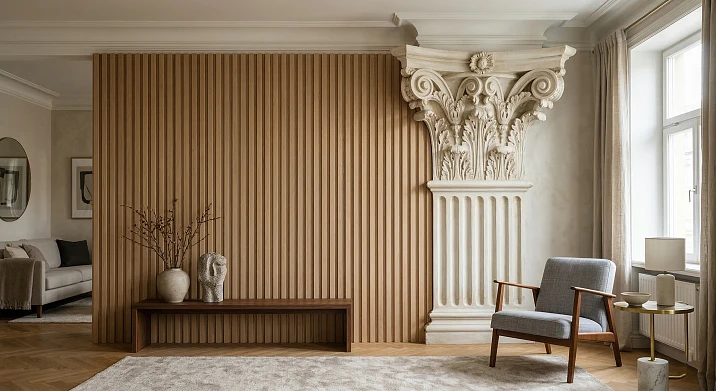
Imagine an interior where strict vertical oak battens meet a lush capital atop a pilaster—and it doesn't seem contradictory. It doesn't look like a design mistake. It doesn't appear as a historical masquerade. On the contrary: the space breathes complexity, it feels like a dialogue of eras where there is no winner—because both participants speak convincingly.
Is this possible? Not just possible—this very combination is at the forefront of the most interesting interior solutions today.Slatted wall panelandpolyurethane capital—two elements separated by two thousand years of architectural history. And it is precisely this distance, with correctly established proportion and stylistic logic, that creates in the space that very tension which designers call 'depth'.
But there are subtleties here. Subtleties of scale, style, context. And this article is precisely about them.
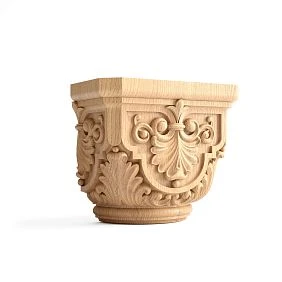
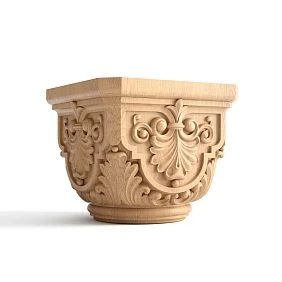
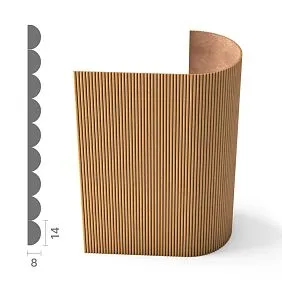
The Capital in Modern Interior: A Return That Wasn't a Departure
To speak of the 'return' of the capital is to assume it went somewhere. This isn't entirely accurate.
Yes, the functionalism of the 1960s–80s squeezed outRelief Decorationfrom mass construction. Flat ceilings, straight joints, no profiles—the aesthetics of 'honest construction.' But in historical buildings, renovations, and luxury construction, the capital never disappeared. It simply ceased to be mandatory—and became a choice.
And choice is always more significant than obligation.
What is a capital architecturally
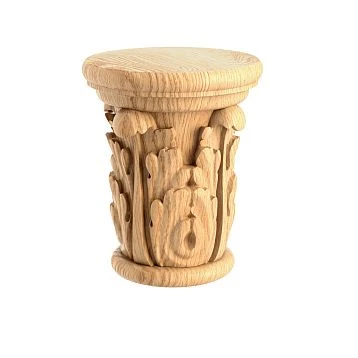
A capital is the crowning part of a vertical support element: a column or pilaster. Architecturally, its function is to visually mark the transition from the vertical body to the horizontal entablature. It is a nodal point of the structure—the place where the load is 'distributed' onto the entablature.
In an interior, where there is no actual structural load, the capital performs the same function, but on the level of perception: it indicates where the vertical ends and the horizontal begins. It turns a simple post into an architectural element with logic.
Historically, there are three main order types:
-
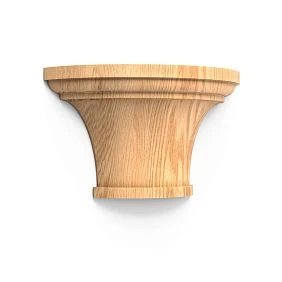
Doric—minimalist. A small echinus (rounded part) and an abacus (flat slab). Strict, without ornament.
-
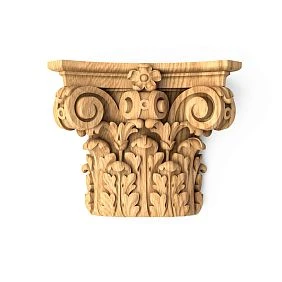
Ionic—with volutes (spiral scrolls). More elegant, delicate.
-
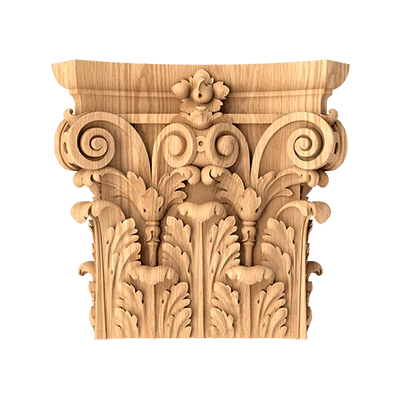
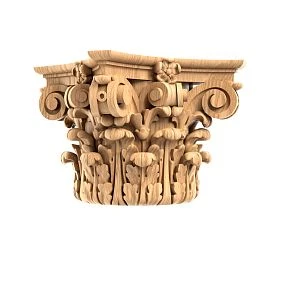
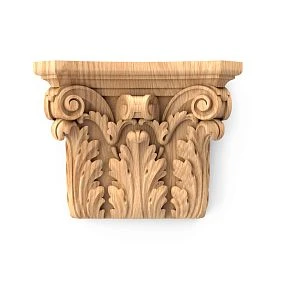
Corinthian— lush, with acanthus leaves. Maximally decorative.
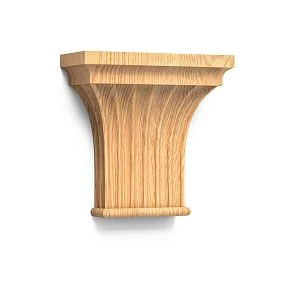
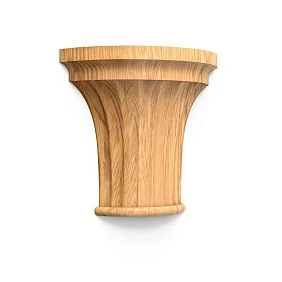
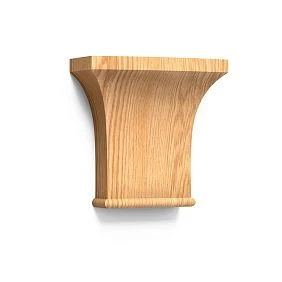
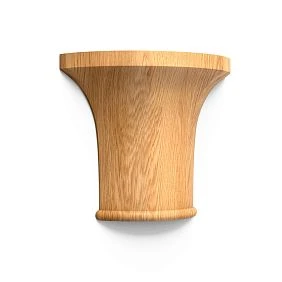
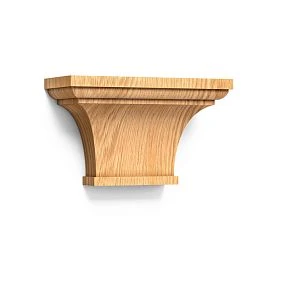
In modern interior decor, they have been joined bygeometric capitals— simplified, without historical ornamentation, with the character of modern architecture.
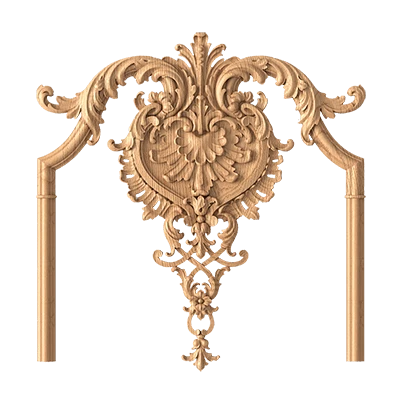
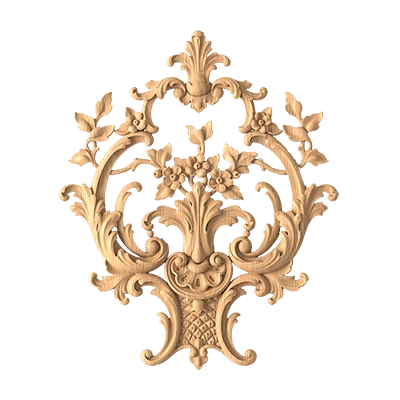
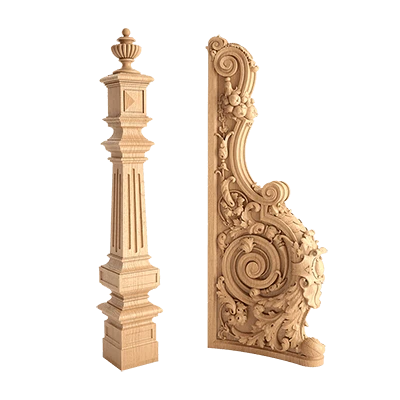
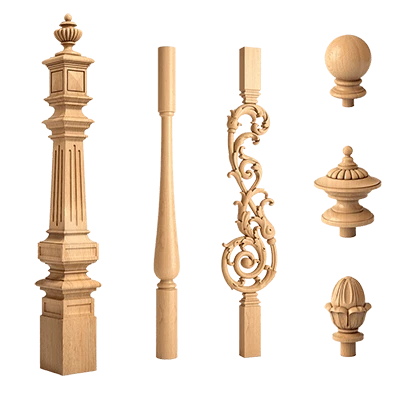
Our factory also produces:
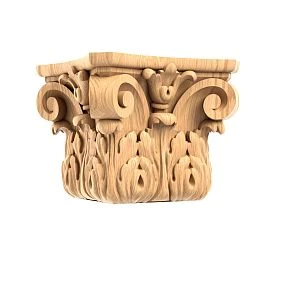
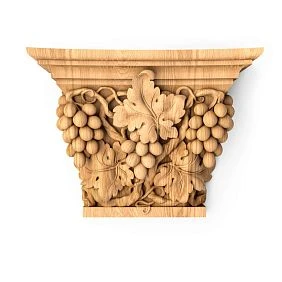
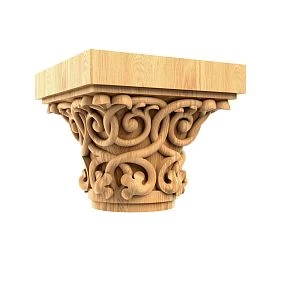
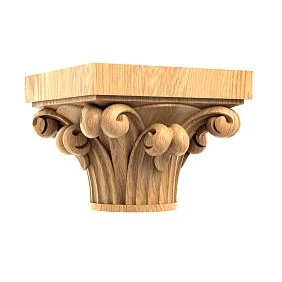
WhyPolyurethane Decorchanged the accessibility of the capital
Plaster capitals in historical execution are an expensive, heavy, fragile product. Installation requires specialists. The mass of one element can exceed 15–20 kg. Cracks appear when the building settles.
The polyurethane analogue radically changes the equation. The mass of the capital is 0.8–3.5 kg depending on size. Installation — adhesive + mechanical fastening, one person. The flexibility of polyurethane eliminates cracking during minor settlements. Painting with acrylic paint — in any shade, including imitation of stone, marble, dark plaster.
This is precisely what made the capital an accessible element for a wide range of interiors — from a Stalin-era apartment to a modern country house.
Get Consultation
Architectural logic of combination: molding and capital in the same space
Before moving on to practice — let's establish the principle. Why can a slatted panel and a capital coexist at all?
Because they operate in different architectural registers.
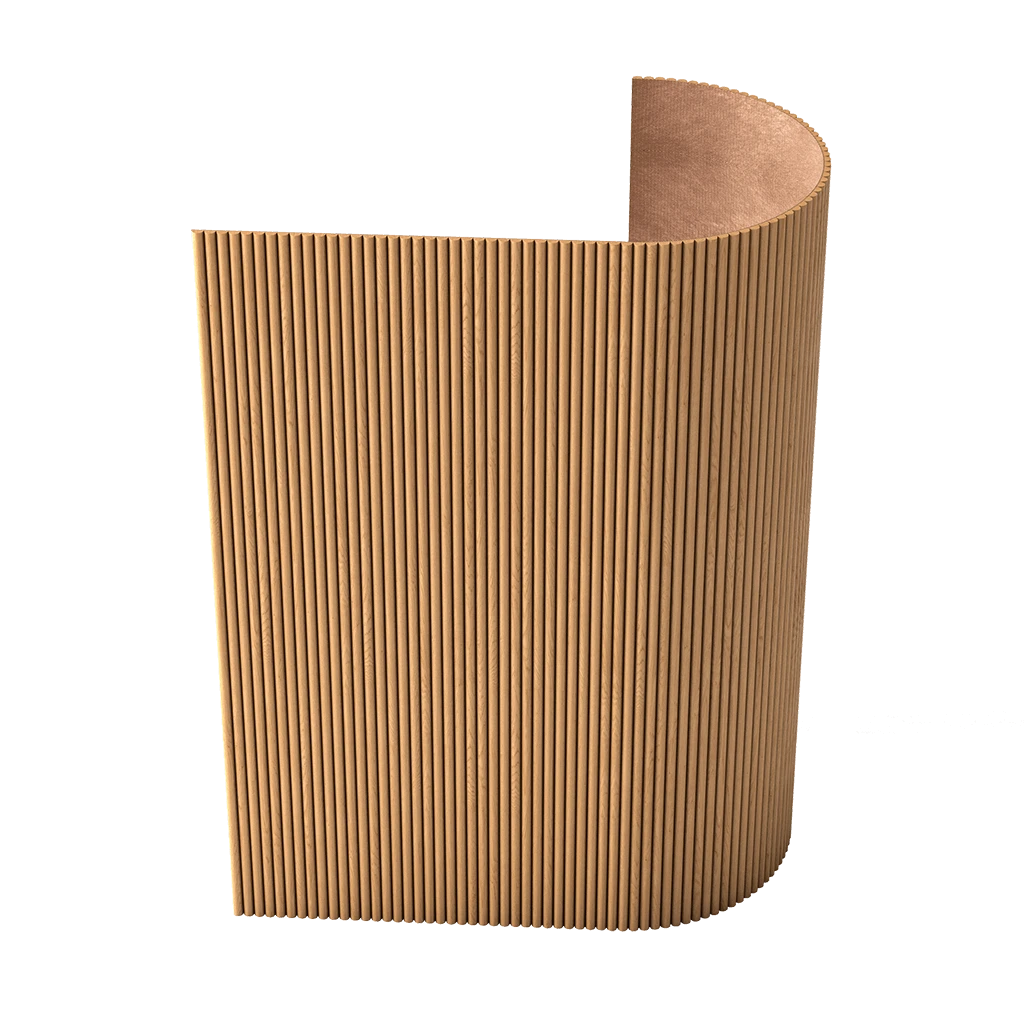
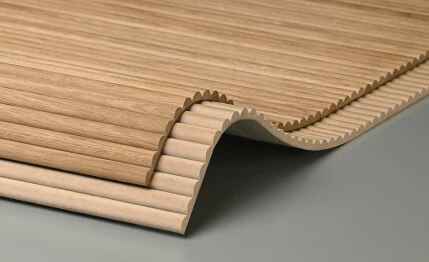
Slatted wall panel— an element of surface cladding. It occupies the plane of the wall, creates rhythm, texture, materiality. It does not claim an architectural role — it plays the role of a background or an accent surface.
A capital — an element of three-dimensional architectural decoration. It occupies a point in space — the top of a pilaster or column. It marks a structural node — real or imitated.
The two elements do not compete for the same place. The slat — on the plane. The capital — on the vertical projection. They exist in different dimensions of the same space. And it is precisely in this — the potential of their combined application.
Pilaster as an intermediary
An intermediary is needed between the slatted wall and the capital — a vertical architectural element that logically culminates in a capital. This intermediary is —Pilaster.
A pilaster — a flat vertical projection on a wall, imitating a column. It does not bear a structural load — only architectural and decorative. The pilaster divides the wall into fields, creates a vertical rhythm, marks boundaries.
In an interior with slatted panels, a pilaster can work in two ways:
-
Framing the slatted field— pilasters on the sides of the slatted panel transform it into a portal, a niche, an independent architectural statement.
-
Vertical articulation of the wall— pilasters divide a long neutral wall into panels, within which the slats reside.
In both cases, the pilaster is crowned with a capital, which marks the transition to the ceiling or to a horizontal cornice.
Where to combine slatted panels and capitals: architectural scenarios
Not every space is equally ready for this dialogue. There are zones where the combination works with maximum impact.
Portal opening: the entrance as an architectural event
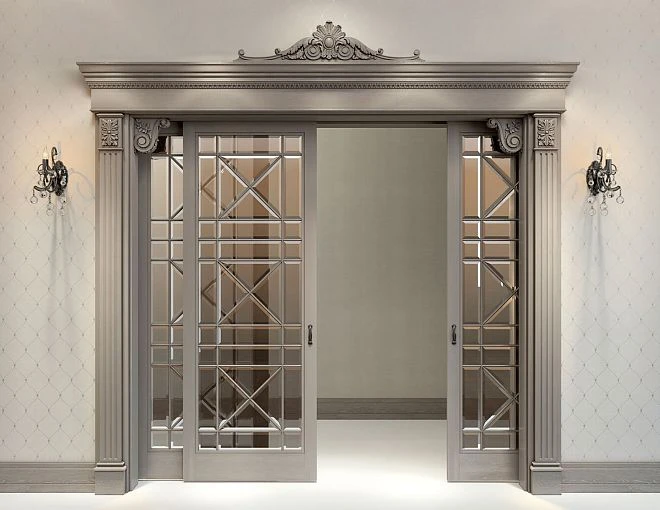
A doorway is not just a 'hole in the wall'. In architecture, a doorway has always been an occasion for an architectural statement. A portal—a framed opening—is a declaration of intent.
The simplest version: pilasters on the sides of the opening, topped with capitals, with a horizontal cornice above them. This is a classic door portal, suitable for an apartment, a mansion, a restaurant, a lobby.
Now add slatted panelon the wall around this portal — in the inter-portal fields, on the corridor walls, in the niche nearby. The slats create a texture that advantageously contrasts with the smooth surface of the pilasters and the relief of the capital. Wood versus polyurethane, texture versus smooth relief — a tension that makes the space come alive.
Fireplace wall: the center of gravity of the interior
The fireplace zone is traditionally the most 'decoratively loaded' wall in a classic interior. The fireplace portal, shelf, mirror or painting above it, flanking elements — all this creates a vertical axis around which the space is organized.
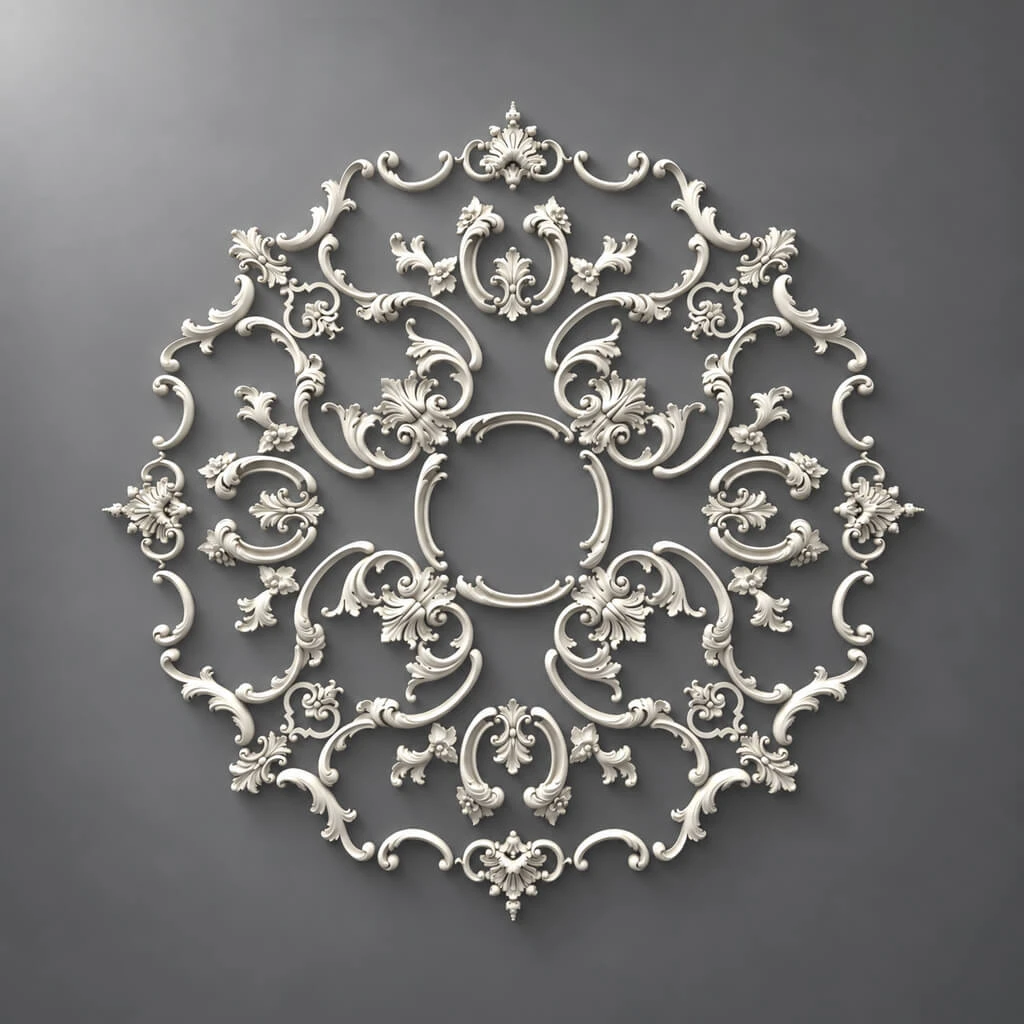
Pilasters with capitals on the sides of the fireplace portal — a historically organic solution.Relief Decorationon the fireplace wall: pilasters, capitals, cornice above the portal, ceiling rosette above the zone — a complete classical system.
Slatted panels — as a contrasting element on the side walls or on the opposite wall. Dark slat versus light molding: the space acquires an internal dialogue between materials.
Hall and main staircase: the first statement
In the hall, the importance of architectural decor is maximal. It is here that the first impression of the house — or apartment — is formed. Pilasters with capitals dividing the hall walls, slatted fields between them — this is a system that immediately communicates: everything here is thought out. There is architectural will here.
slatted wall panels for interior finishingin the hall with a high ceiling (from 2.9 m) — the lower register up to a height of 120–140 cm. Pilasters with capitals — from floor to ceiling or from base to ceiling. WoodenPogonazh iz massiva— cornice, baseboard, trim. This is a system that works at full capacity precisely in a spacious, formal space.
Study: Interior as an Argument
A home office is a space where architectural weightiness has direct psychological meaning. Dark oak or walnut slats, pilasters with a moderate capital (Doric or geometric), wooden shelves between pilasters—this is an interior that speaks of competence and seriousness.
Wooden slat panelsin the office—on the work wall or behind bookshelves—create that very 'study character' unattainable by paint or wallpaper. Wood in the office is an archetype that has always worked and continues to work.
Niche: a frame on three sides
A niche in the wall is a natural architectural frame. Three surfaces (the back wall, the side reveals) form a closed field. A slatted panel on the back wall of the niche is the most precise applicationdecorative slatted panelsfor creating depth. Pilasters on the sides of the niche entrance with capitals and a horizontal cornice on top—turn the niche into a true architectural portal.
Backlighting of the niche's slatted back wall (Slatted panels with lighting)—warm diffused light through the slats—adds an atmospheric layer unattainable by any other technique.
Wall molding: elements and their architectural logic
Speaking of the capital, one cannot ignore the systemic context. The capital is not a solitary element. It is part of a vertical system: base → shaft → capital. And part of a horizontal system: cornice → frieze → architrave.
Full pilaster ensemble
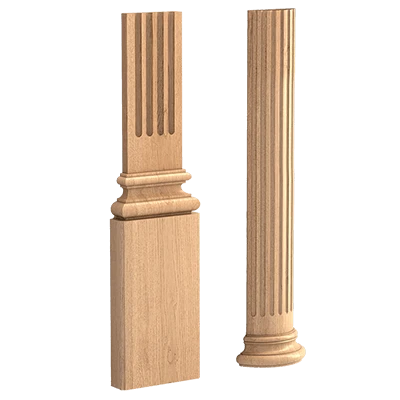
Pilaster base— the foundation, transitioning from the floor to the shaft. The base width should equal or slightly exceed the shaft width. The base profile echoes the skirting board profile.
Pilaster shaft— the vertical body. Can be smooth (most compatible with slatted panels) or fluted (with vertical grooves — analogous to slats, but on a protruding element).
Capital— the crowning part. Should be wider than the shaft — creating a 'blossom', a visual transition to the horizontal.
Architrave above the capital— a horizontal profile resting on the pilaster capitals. This is what connects the vertical elements into a unified horizontal system.
All thesedecorative polyurethane elementsare produced in coordinated lines — enabling the assembly of a full architectural ensemble from compatible elements.
Ceiling cornice in a system with a capital
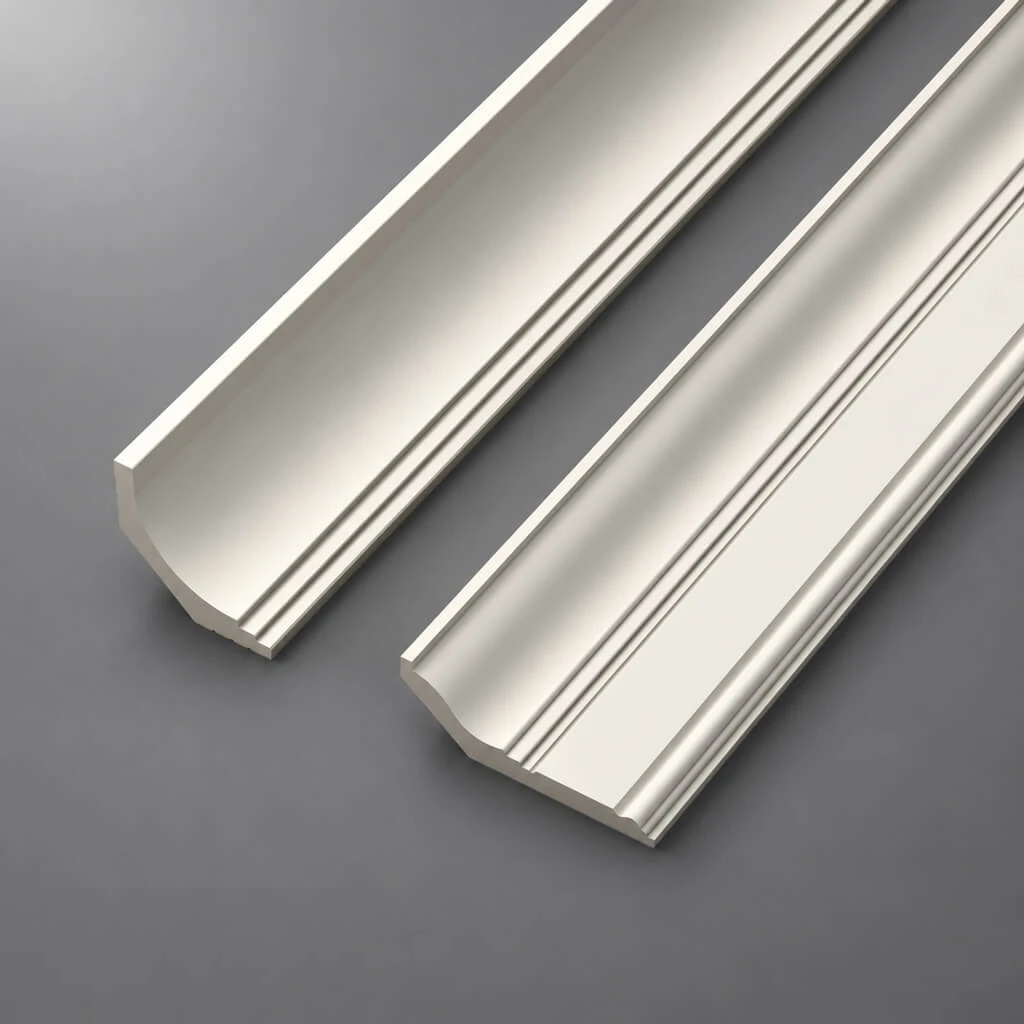
Wall moldingsand the ceiling cornice are an inseparable pair. The cornice performs the same function as the capital, but in the horizontal plane: it separates the wall from the ceiling, marking the transition between the two planes.
If pilasters with capitals are present, the ceiling cornice should 'converse' with them: either be of the same stylistic order (a Doric cornice with a Doric capital), or be neutrally geometric to avoid creating a stylistic conflict.
The size of the cornice is coordinated with the size of the capital. If the capital is powerful, wide—the cornice must have a commensurate scale. A delicate, thin capital with a bulky 140 mm cornice is a visual imbalance that immediately catches the eye.
Moldings as an additional layer
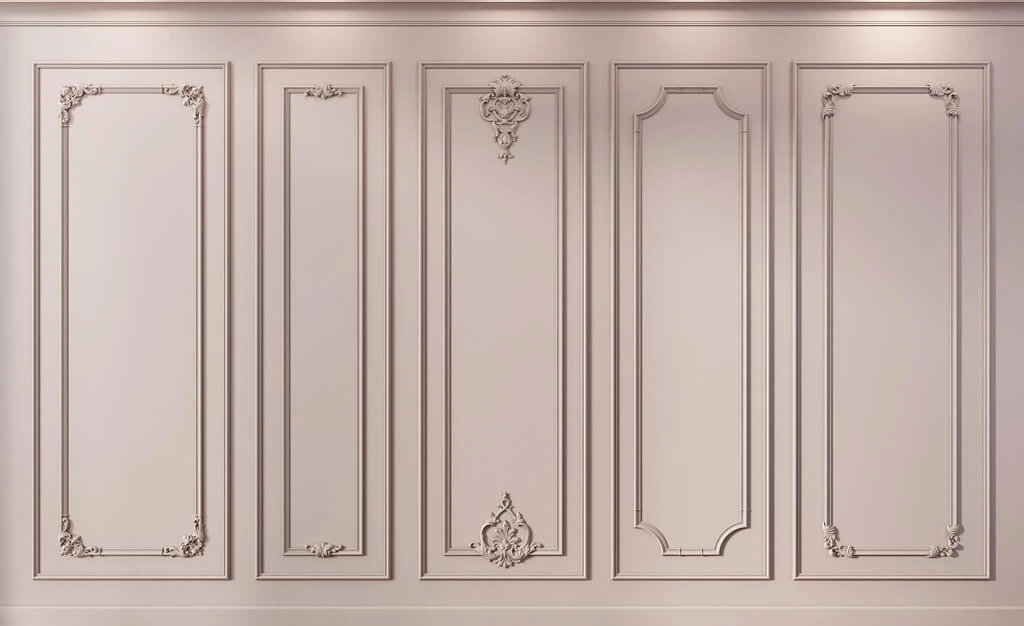
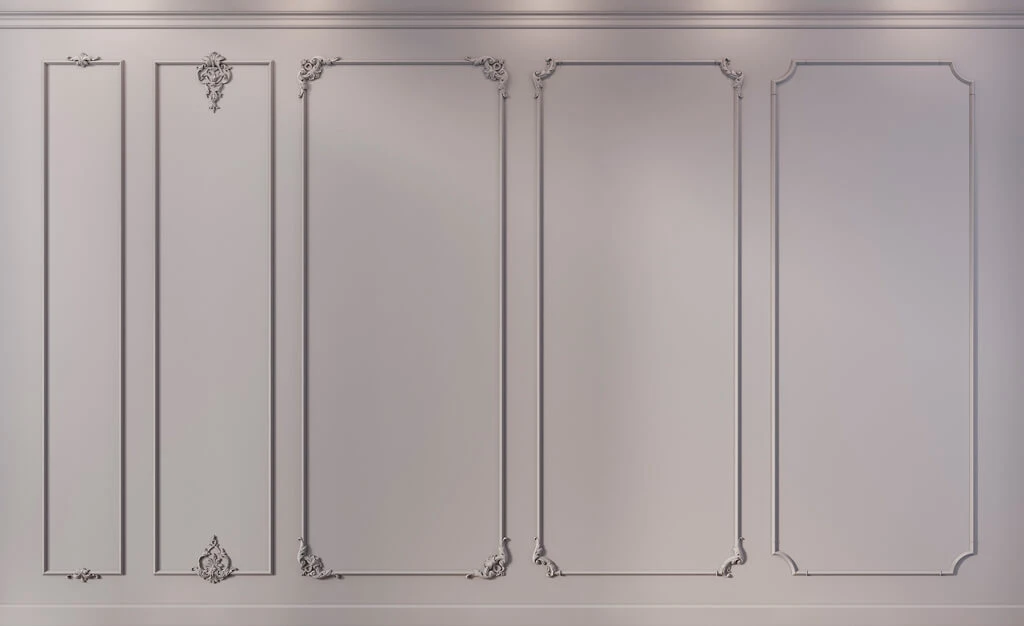
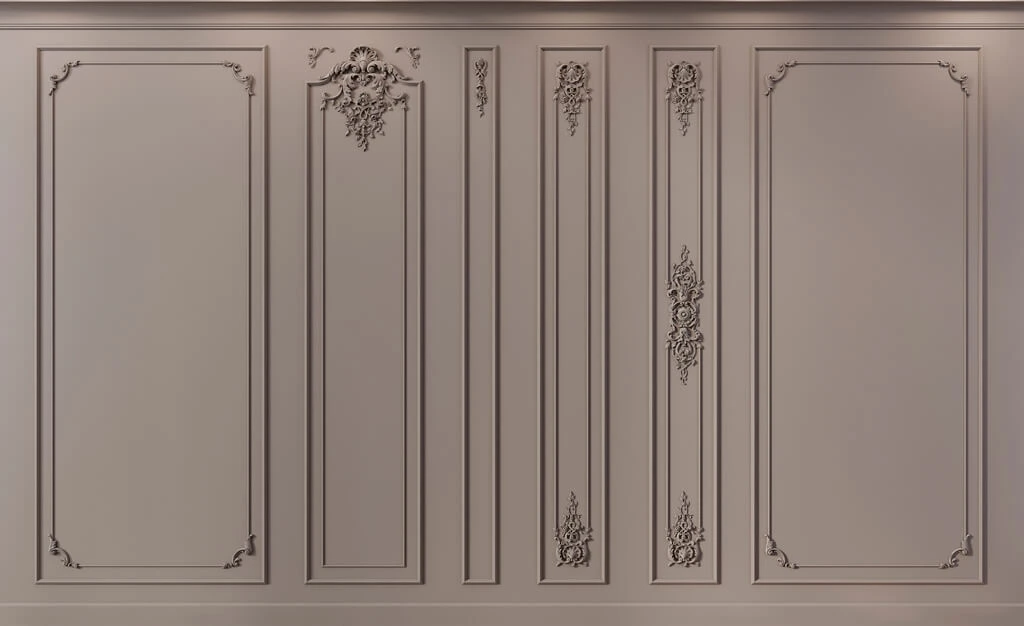
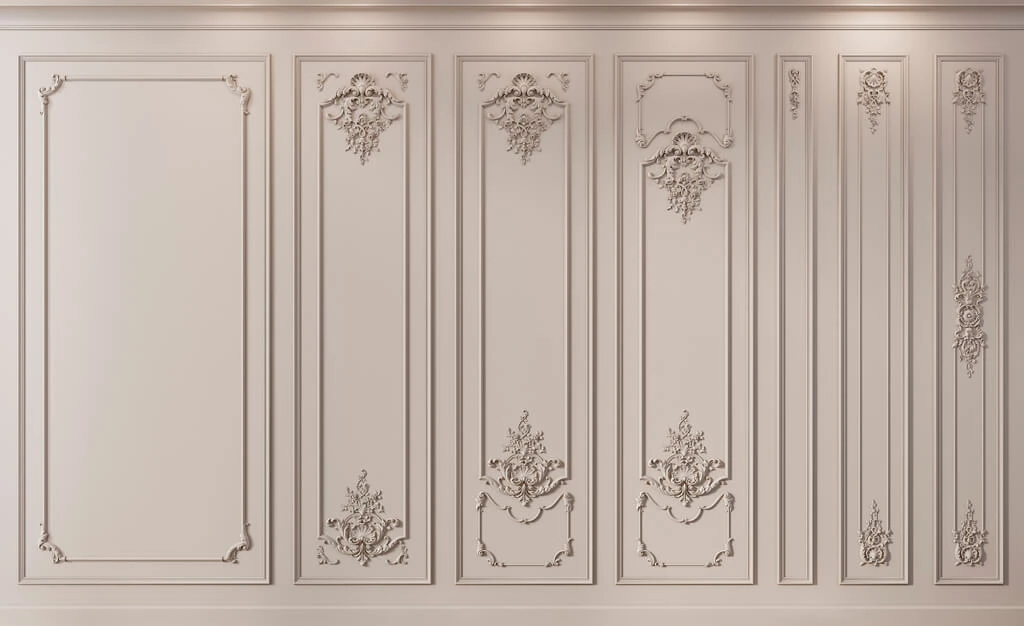
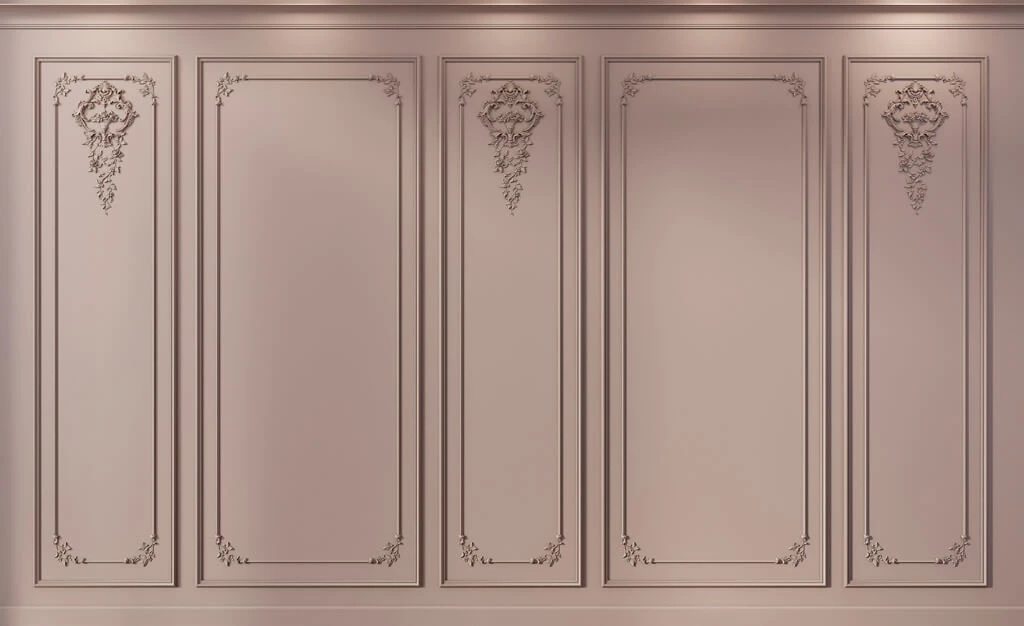
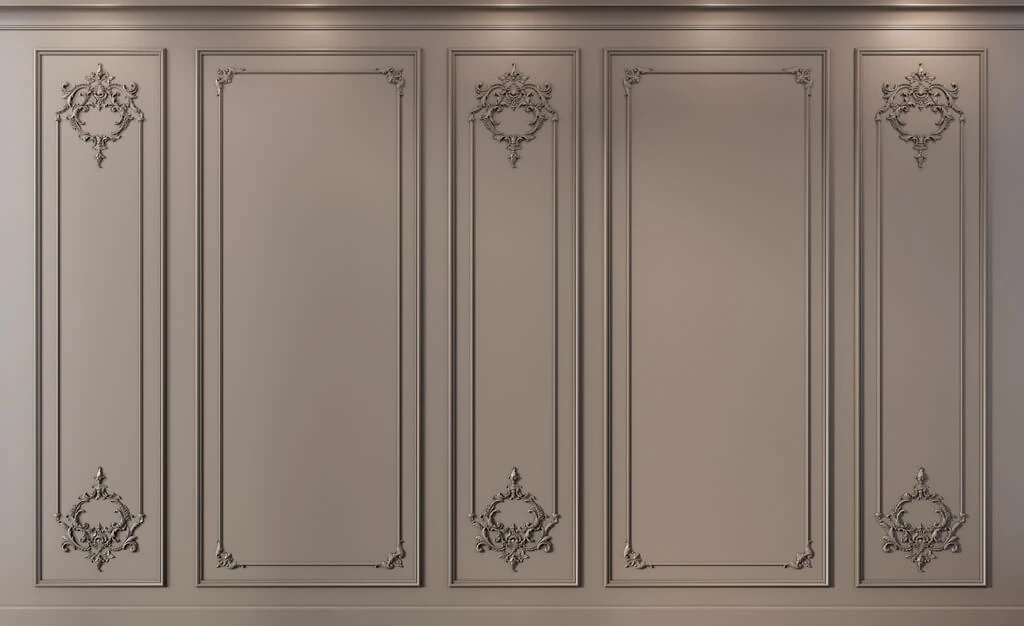
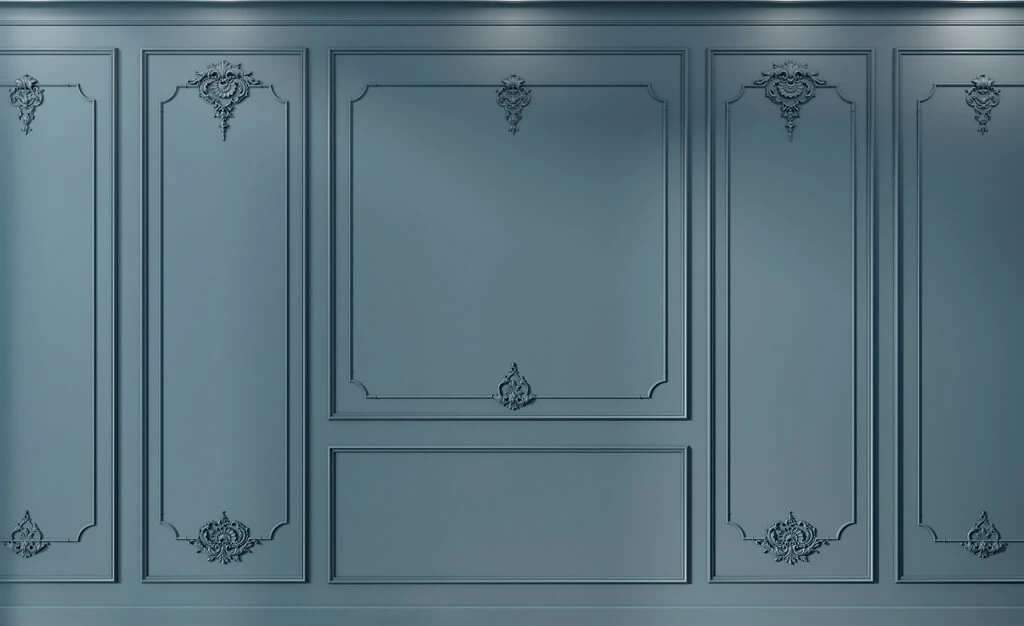
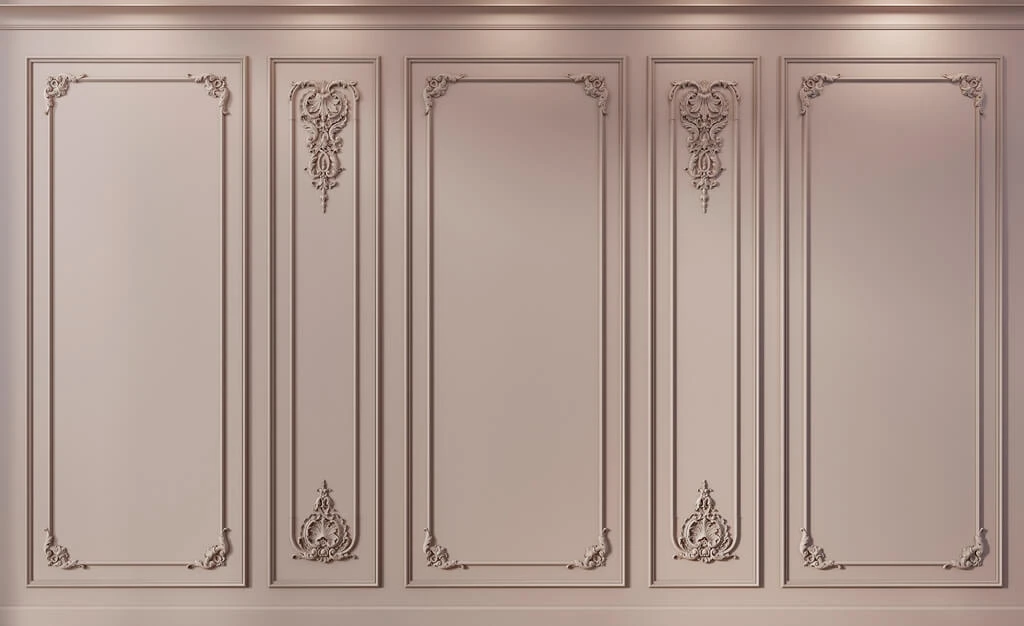
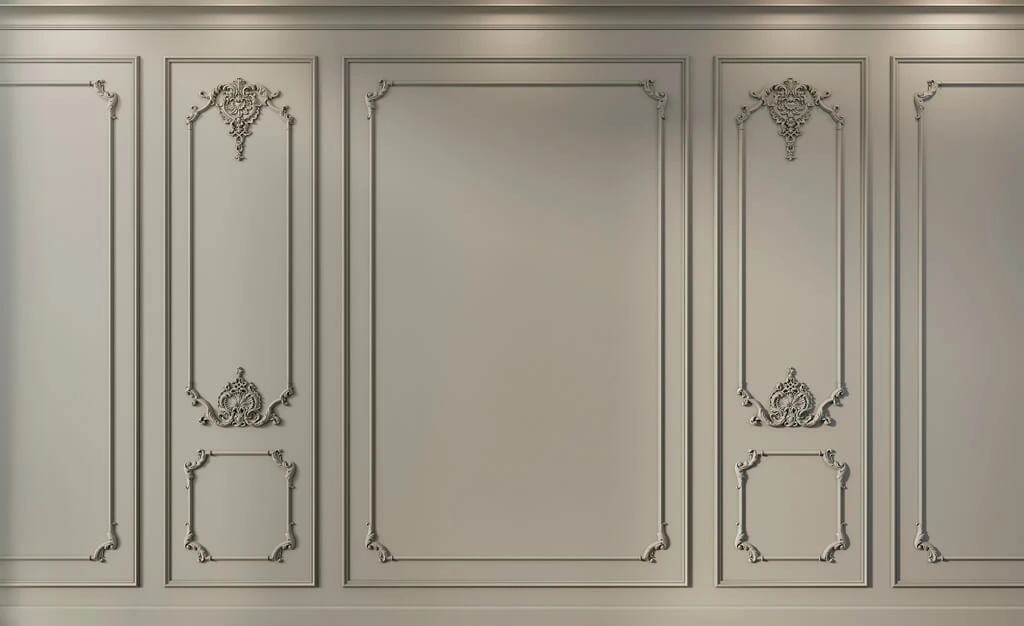
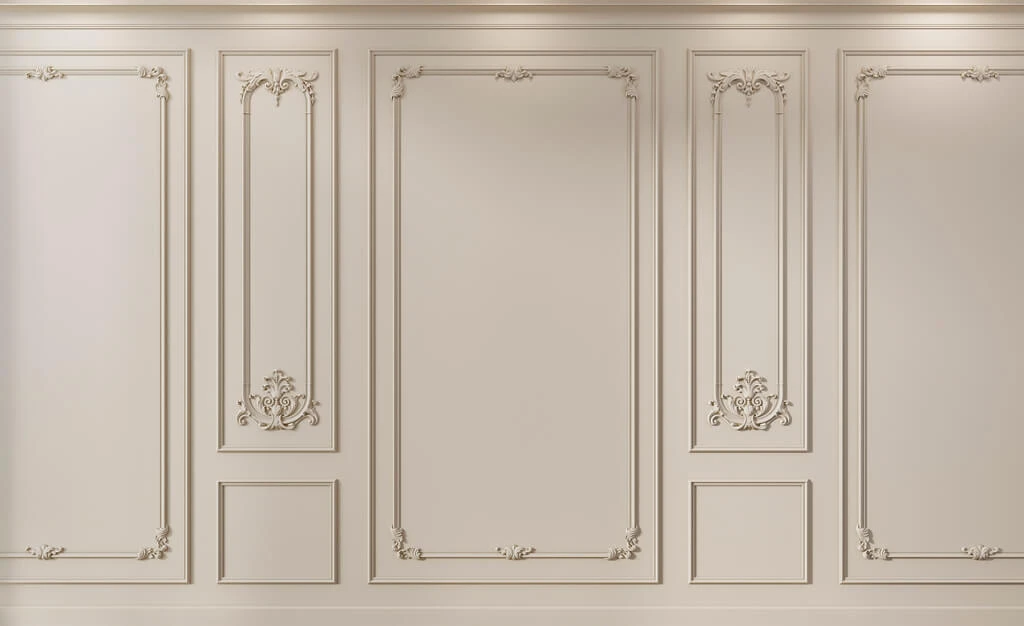
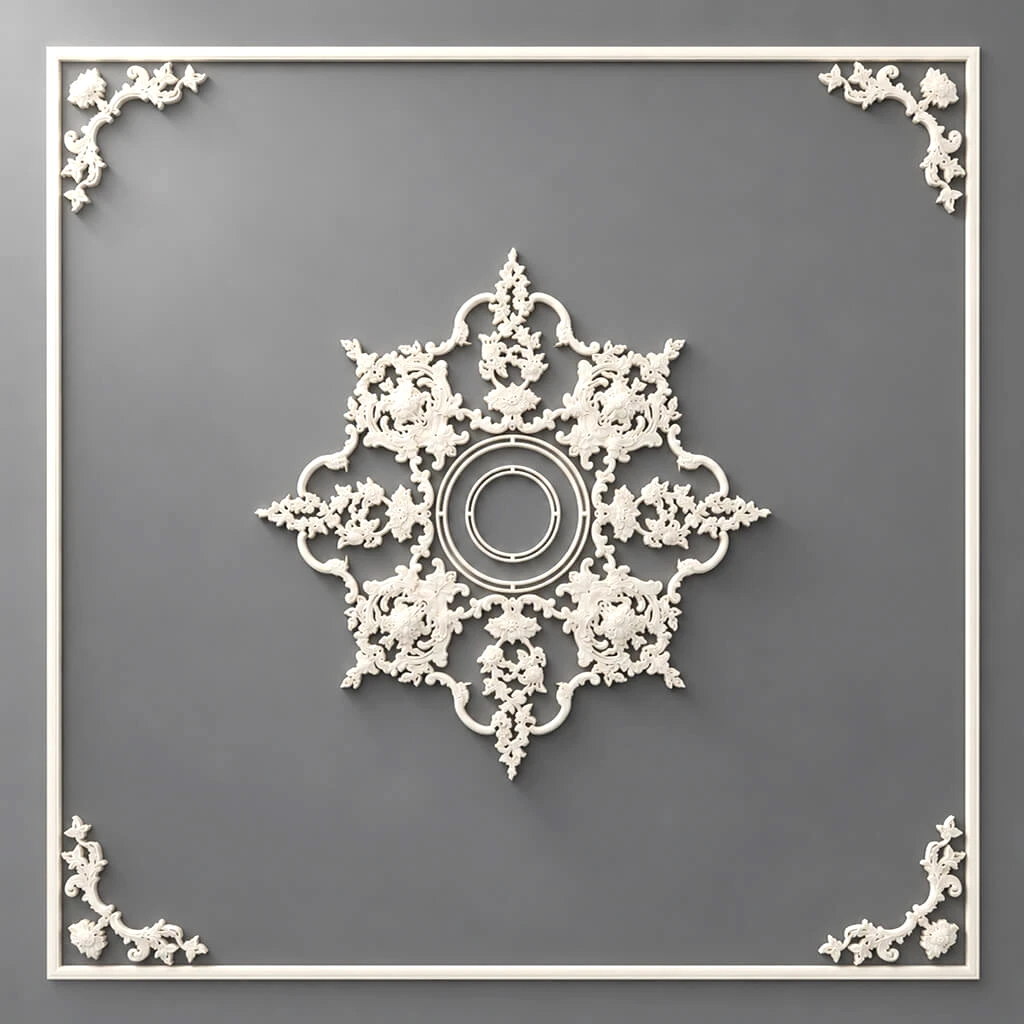
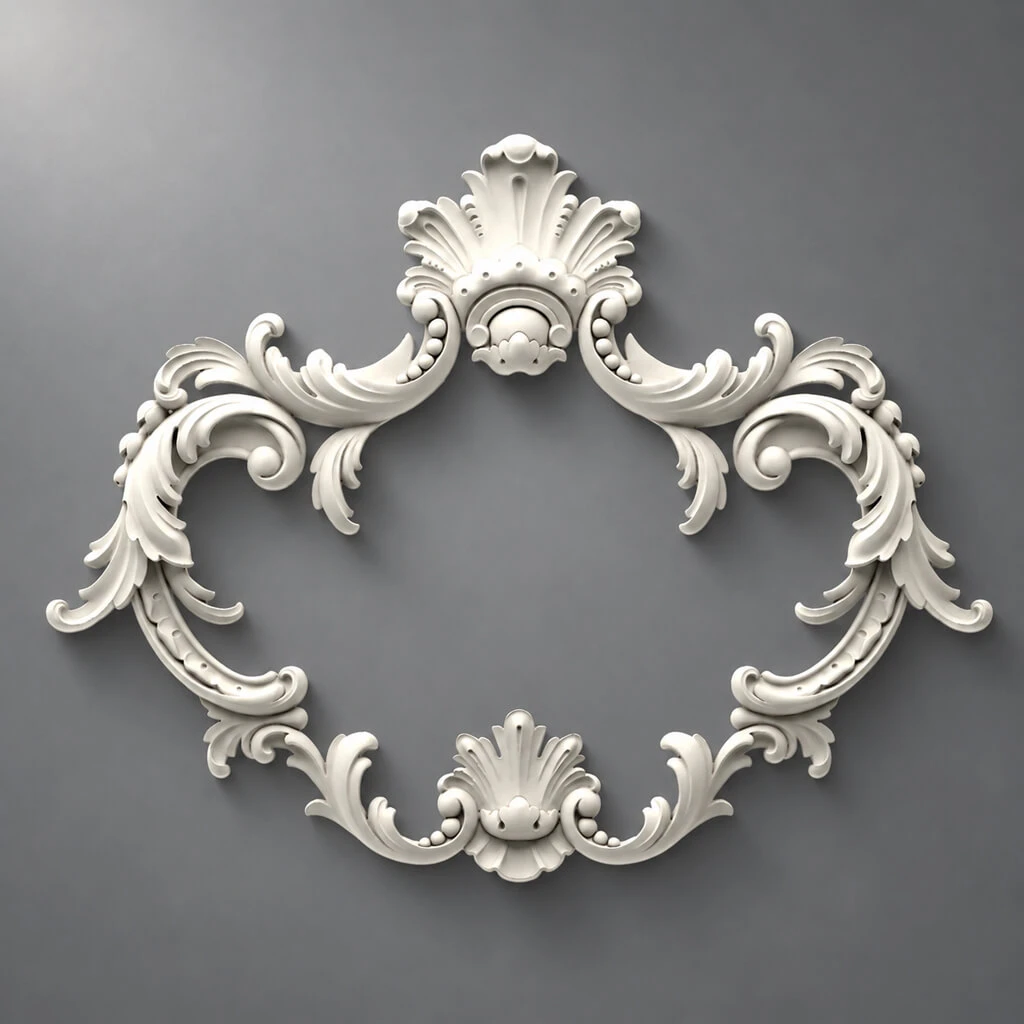
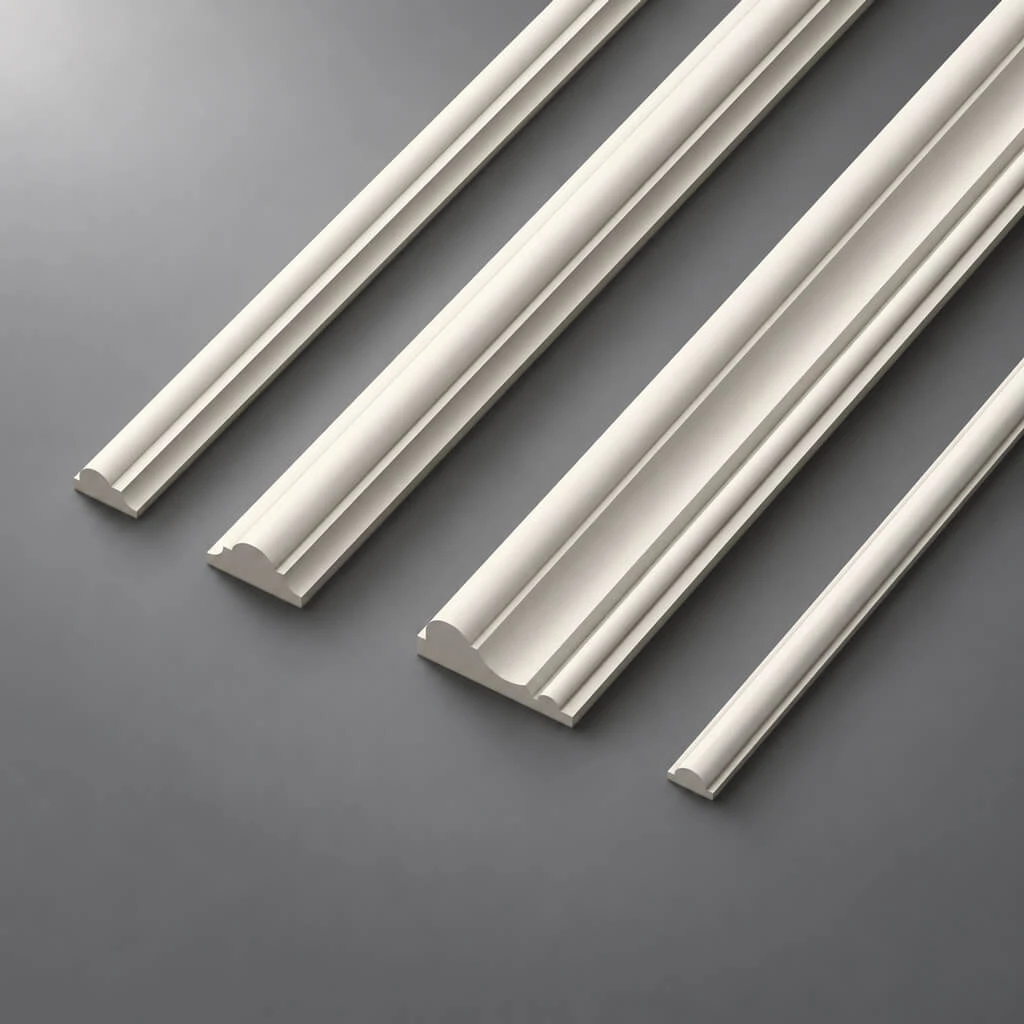
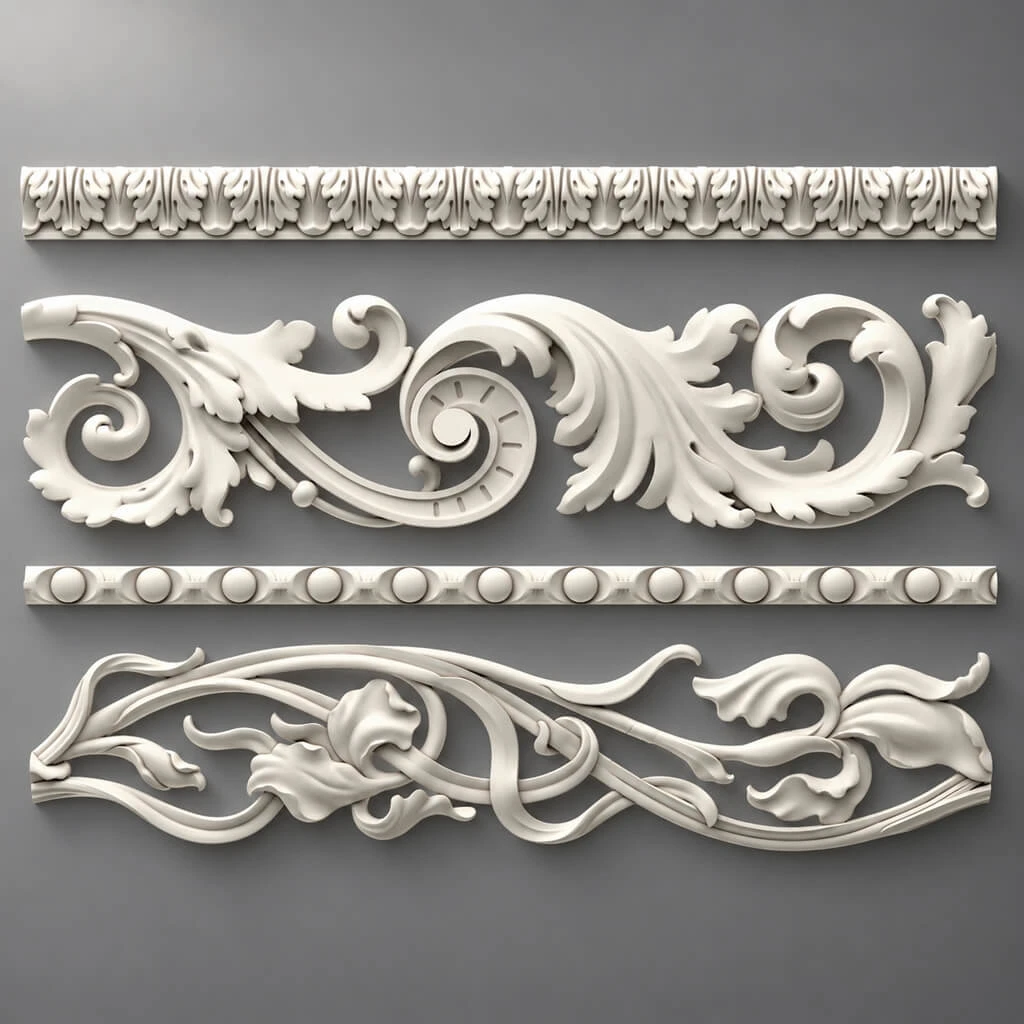
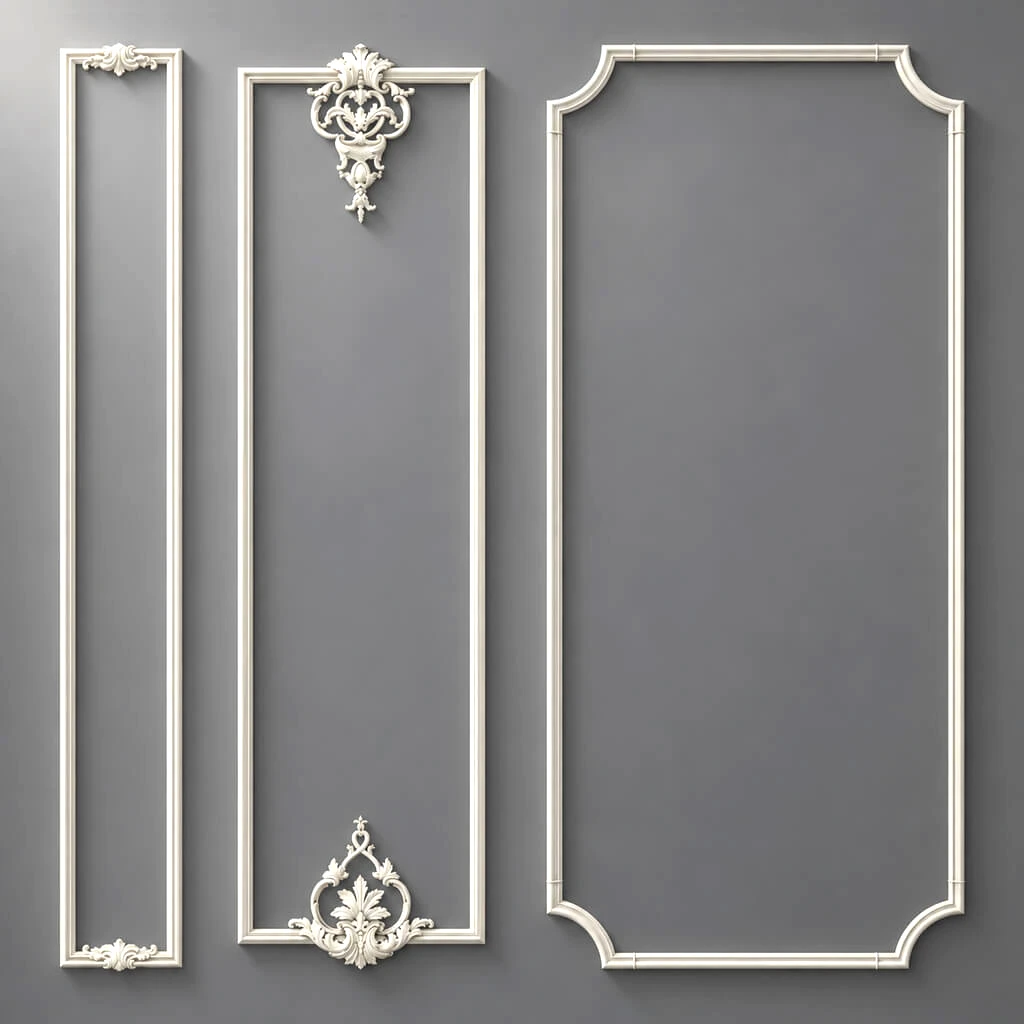
Polyurethane Decorin the form of molding frames on the walls—the third layer of the system after pilasters-with-capitals and the cornice. Molding frames fill the space between pilasters, creating a panel breakdown that is organically perceived in a classical context.
In a slatted interior, molding frames appear on neutral walls—not on slatted surfaces. This rule, which we discussed above, is applied here with double strictness: an ornamental frame on a slatted surface is a stylistic catastrophe.
Capital in detail: how to choose for a specific interior
Not every capital suits every interior. This is not a matter of taste—it is a matter of stylistic compatibility.
Geometric (modern) capital
Description:Simplified rectangular or trapezoidal profile without ornamentation. May include one or two horizontal rails.
Compatible with:Modern classic, laconic neoclassicism, transitional styles.
Adjacent slats:Any — from light MDF to dark oak.
Dimensions:Width 80–160 mm, height 60–120 mm. Scale is determined by the pilaster height.
Tone:White, taupe, soft gray, wall-matching tone.
Doric capital
Description:Echinus (rounded cushion) + abacus (flat slab). Minimalist in historical context, yet convincing at the proper scale.
Compatible with:strict classicism, neoclassicism with a restrained character.
Adjacent slats:dark woods — oak, walnut. Does not combine with light slats of wide spacing.
Dimensions:width 100–180 mm, height 70–130 mm.
Ionic capital
Description:characteristic volutes (spiral scrolls) on the sides. Delicate, elegant. Less monumental than Corinthian, but more distinctive than Doric.
Compatible with:soft classicism, historical interiors, elegant eclecticism.
Adjacent slats:light oak, ash — creates an interesting contrast of delicate ornament and natural wood texture.
Dimensions:width 110–200 mm, height 80–160 mm.
Corinthian capital
Description:acanthus leaves, scrolls, maximum plastic richness. The most decorative and the most 'demanding' of context.
Compatible with:Baroque, Rococo, rich eclecticism, formal rooms.
Adjacent slats:only in a historically stylized context. In a modern interior — almost never.
Restriction:Ceiling height not less than 3.0 m. At 2.7 m, a Corinthian capital visually 'crushes' the space.
How to design openings, portals, and niches: step-by-step logic
Let's consider a specific task — designing a door opening with a slatted panel on the adjacent wall.
Step one: determine the scale of the pilasters
Pilaster width = 1/10 – 1/8 of the opening width. For a standard 80 cm door block — pilaster 80–100 mm. For a wide 110 cm opening — pilaster 110–135 mm.
Height: from the base (floor level) to the bottom of the ceiling cornice. Or to the level of the horizontal architrave above the opening.
Step two: choose the type of capital
For modern finishes and natural wood slatted panels — geometric or moderately Doric capital. For soft classic — Ionic. For neoclassical with a pronounced character — Ionic or Corinthian, depending on the room height.
Step three: horizontal architrave above the opening
A horizontal element resting on the pilaster capitals. Its height is 1/4 – 1/3 of the capital height. The architrave creates the 'roof' of the portal and visually completes the vertical composition.
Step four: slatted panel in the wall field
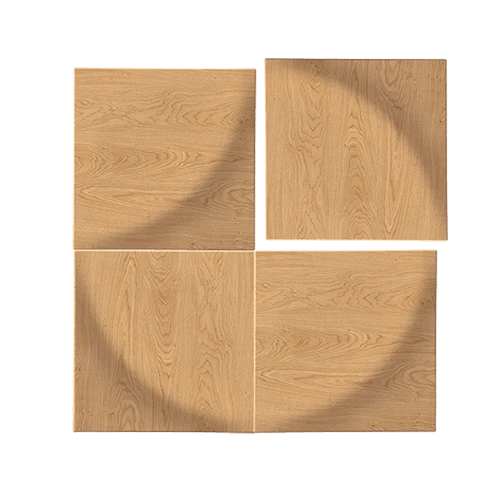
Slatted wall panelIt is mounted in the field between pilasters—or in the field adjacent to the portal if the wall is wide. The battens are oriented vertically. The tone of the batten should contrast with the tone of the pilasters and capital—dark wood with white plasterwork or light wood with tinted decor.
Step five: finishing profiles
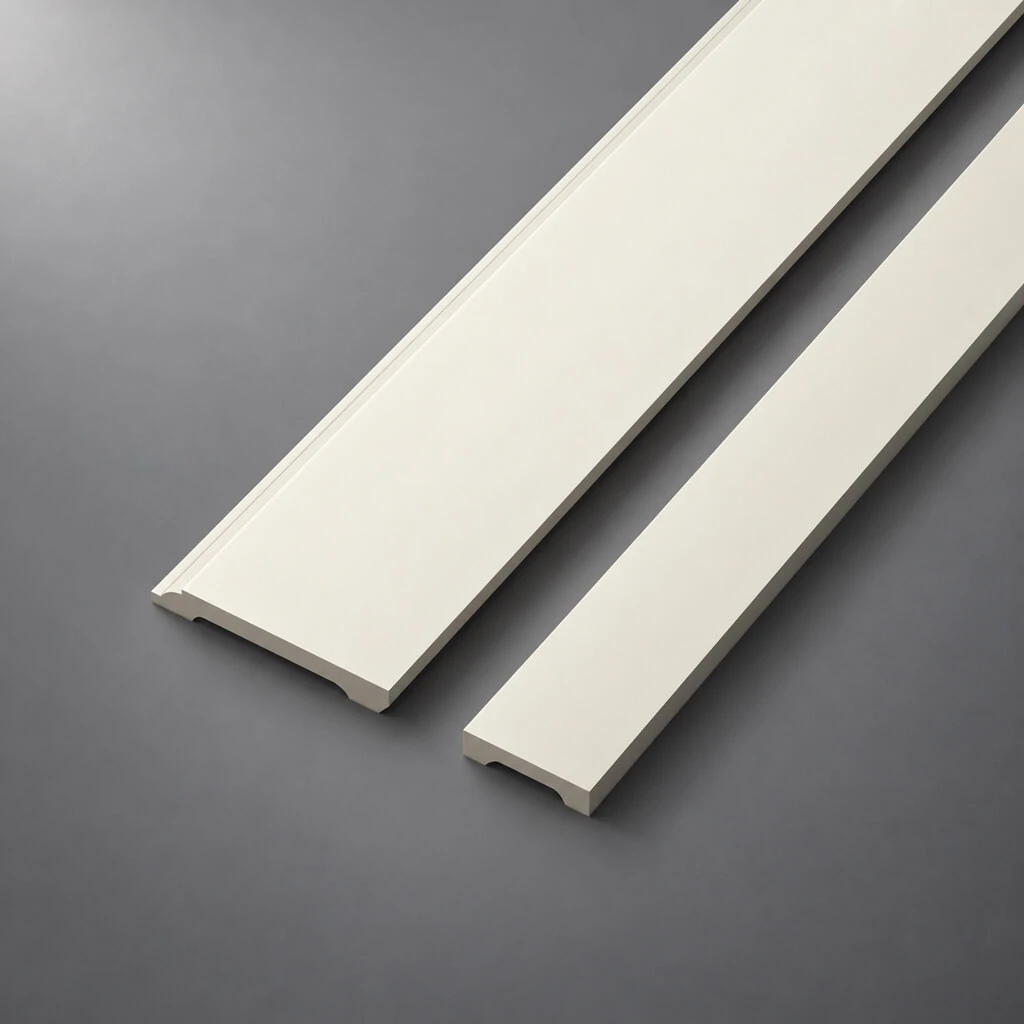
installation of slatted panelsIt is finished with finishing profiles—corner elements, transition moldings. The joint between the batten panel and the pilaster is covered with a vertical corner profile or molding. This is critically important: an open joint at the wood-plasterwork boundary ruins the entire effect.
When a capital enhances the interior, and when it creates a problem
An honest conversation requires acknowledgment: a capital is not a universal tool. It enhances a space under certain conditions. And creates problems when those conditions are violated.
When a capital enhances
Ceiling height from 2.8 m.With a ceiling of 2.8 m and above, a pilaster with a capital 'stretches' the space vertically, emphasizing the height. With a ceiling of 2.5 m, the same detail creates a feeling of pressure.
Presence of a horizontal cornice.A capital without a cornice is an unfinished vertical. The cornice 'receives' the load from the capital and creates a horizontal system. Both elements work only as a pair.
Correct scale.The capital is proportionate to the pilaster, the pilaster is proportionate to the room. Breaking this chain is immediately noticeable.
Stylistic consistency.The capital speaks the language of classicism. If the rest of the interior speaks the same language or the language of soft modern classicism — a dialogue will occur.
Presence of a system.A single capital without a base, without a cornice, without moldings — is a random object. A capital as part of a complete system — is an architectural statement.
When a capital gets in the way
Aggressive minimalism.In a space built on a complete rejection of ornament, a capital is a foreign body. This does not mean that wood and a geometric projection cannot be used — but it is precisely an ornamental capital that disrupts the logic of minimalism.
Low ceiling.With a ceiling height of 2.4–2.5 m, a pilaster with a capital visually reduces the height. The decorative element becomes an obstacle.
Bright, colorful interior.When walls are painted in saturated tones, a white capital creates a harsh contrast that competes with the color rather than complements it. Solution: a tinted capital matching the wall color or a close shade.
Furniture without architectural character.If the furniture is purely functional, without profiles, legs, or wooden elements, the capital hangs in the air without context.Classic Furniturewith wooden frames, with profiled details — an ally of architectural decor.
Scenarios: classic, neoclassical, and eclectic
Classic: strictness and completeness of the system
A classic interior is the case where combining slatted panels and capitals requires the greatest precision. Here, every element must adhere to order principles: scale, proportion, stylistic unity.
Slats:Dark oak, radial cut, oil finish. Width 85–110 mm. Closed rhythm.
Pilasters:Smooth shaft, Ionic or Doric capital. Pilaster width 100–150 mm.
Cornice:Developed profile 100–135 mm, coordinated with the capital type.
Baseboard:Tall, 108–135 mm, with a projecting shelf.
Tone:White pilasters and cornice + dark wood slats. Or a unified warm tone for the entire system.
Where it is used:Formal living room, study, hall of a country house, vestibule.
Neoclassical: A Contemporary View of the Classical System
Neoclassical is classic reimagined through contemporary scale and restrained decorativeness. Greater freedom is allowed here: a geometric capital instead of an order one, a simplified cornice, slatted panels with a wider pitch.
Slats:Natural oak or thermowood. Width 65–90 mm. Open or semi-open rhythm.
Pilasters:Geometric or moderately Doric capital. The pilaster shaft may include vertical pulls (simulated fluting) — an echo of the slatted rhythm of the wall.
Cornice:Geometric with a goose, 82–108 mm.
Moldings:Framing on neutral walls, flat profile 24–36 mm.
Tone:Taupe, soft beige, warm white. Slats — wood in a natural tone, without staining.
Where it is used:Modern urban apartment, apartments, country house without pretensions to historicity.
Eclecticism: Dialogue, Not Compromise
Eclecticism is a style that many confuse with 'anything goes.' In fact, eclecticism is an intentional dialogue between elements from different eras, guided by a single logic. A capital and a modern slatted panel are perfect participants in such a dialogue.
Slats:contrasting in tone and texture. For example,brushed oak— a rough, pronounced texture — against the delicate Ionic capital.
Pilasters:can be tinted (in wood color or a neutral dark) — breaking the 'white' rule is acceptable here as an artistic technique.
Cornice:neutral geometric — 'reconciles' classical and modern elements.
Tone:intentional contrasts. Dark wood + light stucco decor. Or light wood + tinted decor.
Where it is used:author's interior with a non-standard concept, creative space, loft with historical context.
Proportion errors: analysis of the most common cases
Proportion is not mathematics, it's a sense of commensurability. But errors in proportion are subject to precise analysis.
First mistake: capital smaller than the width of the pilaster
Classical principle: the capital should be wider than the shaft. This creates a 'blossoming' effect—a sense that the vertical element opens up toward the ceiling. A capital narrower than the pilaster produces the opposite effect: the vertical appears to 'collapse' at the top. This is not just visually incorrect—it violates basic tectonic logic.
Second mistake: too small a capital with high battens
A vertical batten 2.7 m high is a pronounced vertical element with strong visual weight. The capital on the adjacent pilaster is 45 mm high. It gets lost, is not 'audible' against the powerful battened surface. The capital must have a scale sufficient to be visible in the context of neighboring elements.
Third mistake: style mismatch in a single space
A Corinthian capital with pronounced acanthus leaves next toan MDF wall panel with battenspainted matte white—a dialogue of two languages that have nothing in common. One shouts opulence, the other restraint. They do not create tension—they create chaos.
Rule: the more ornamental the capital, the more 'classical' the entire surroundings should be.
Fourth mistake: pilaster without a base
A pilaster without a base is a column that has grown into the floor. This is either a technical flaw or a lack of knowledge of order principles. Both options are immediately visible. The base creates a floor-to-vertical transition, aligning the pilaster with the baseboard. The base is an essential part of the system.
Mistake five: a single pilaster without a pair
A pilaster is a paired element. A single pilaster without a symmetrical partner is like one quotation mark without a closing one. It is logically incomplete and visually unstable. The exception is a corner pilaster that closes an interior wall corner.
Mistake six: slatted panels and capitals of different scales
Decorative slatted wall panelswith a narrow 40 mm slat and a massive 180 mm Corinthian capital are two elements of different scale 'weight'. They do not balance each other. The scale of the capital and the scale of the slat must be coordinated through a common denominator—the size of the room.
Practical table: capital + slat by scenarios
| Scenario | Capital type | Batten width | Crown Molding | Tone |
|---|---|---|---|---|
| Formal living room, 3.2 m | Ionic, 155 mm | 88–108 mm, dark oak | 115–135 mm, with gooseneck | White molding + dark wood |
| Cabinet, 2.9 m | Doric, 110 mm | 80–95 mm, walnut | 95–115 mm | White/taupе molding + dark wood |
| Hall, 2.75 m | Geometric, 88 mm | 62–80 mm, natural oak | 82–100 mm | Warm white + natural wood |
| Neoclassical, 2.85 m | Geometric, 95 mm | 65–85 mm, ash | 88–108 mm | Soft beige uniform tone |
| Eclectic, 3.0 m | Ionic, 130 mm | 75–95 mm, brushed oak | 95–115 mm, neutral | Tinted decor + dark rail |
| Classic, 3.5 m | Corinthian, 185 mm | 95–120 mm | 130–160 mm | White stucco + dark solid wood |
Installation logic: how it is assembled in the correct sequence
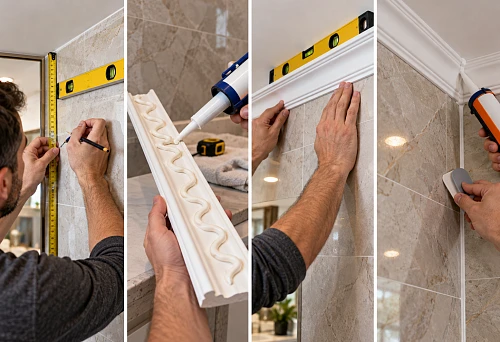
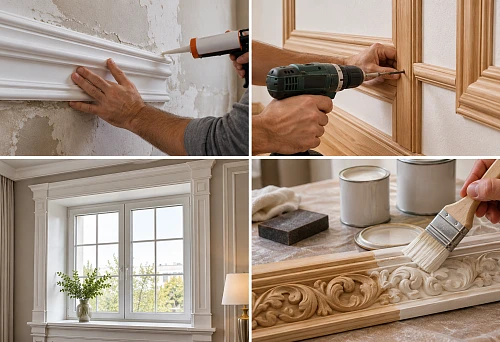
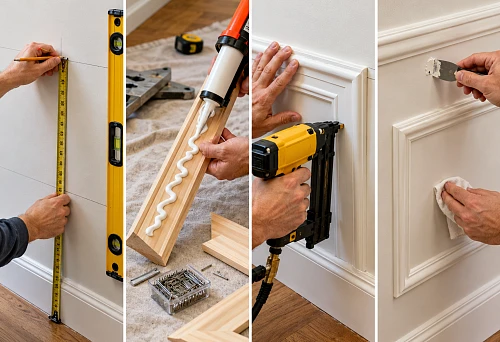
installation of slatted panels on the walland installation of polyurethane decor — two processes with a clear sequence.
Stage 1:layout. Placement of pilasters, slatted fields, zone boundaries. Everything on paper before any work begins.
Stage 2:installation of lathing for slatted panels. Wooden slats are mounted with a ventilation gap — the lathing creates the base.
Stage 3:installation of slatted panels. Finishing profiles on the ends of the slatted fields.
Stage 4:Installation of pilaster bases. Adhesive + dowels. Strictly level.
Stage 5:Installation of pilaster shafts. Adhesive + finishing nails. Vertical check.
Stage 6:Installation of capitals. Adhesive + bottom fastening. Joint with ceiling cornice.
Stage 7:Installation of ceiling cornice. The final element covering the system from above.
Stage 8:Sealing all joints with acrylic sealant. Puttying fastener heads. Priming.
Stage 9:Painting polyurethane decor. Two coats of acrylic paint over primer.
Stage 10:final finishing of slatted panels — oil, varnish, wax.
This order is not accidental: slats are installed first, molding completes the system. Attempting to do it in reverse order leads to fitting problems.
Color and tonality: how to choose correctly
Color is the last decision. Not the first. First scale, then style, then form, then — tone.
White molding + dark wood— the most stable combination. Works in any style from neoclassicism to eclecticism. Contrast reads as quality.
Uniform tone of moldings and walls— a delicate, refined solution. The decor 'dissolves' into the surface, creating relief without color contrast. Especially effective with side lighting.
Tinted moldings (taupe, sand, smoky gray) + light wood — a soft, elegant combination. Works in modern classic and neoclassical styles.
Tinted molding matching the wood tone— a risky but potentially powerful solution. With professional tone selection — creates a unified 'warm' space without color breaks.
Monochromatic system— everything in one tone, including slats (paintable MDF) — this is no longer historical classic, but a modern authorial technique. Relief works through shadows, not through color.
STAVROS: a system for those who think in terms of space
Connectslatted panel on the wallandpolyurethane capitalinto a unified architectural system — a task that requires compatible products and professional logic.
STAVROS produces both components of this system. Solid oak, ash, and thermally modified wood slatted panels — in a full range of widths, lengths, and finishes for any stylistic task. Polyurethane decor: Doric, Ionic, geometric, Corinthian capitals; pilasters, bases, architraves, cornices, moldings, baseboards — a coordinated system of elements, tested for compatibility.
Solid wood products— wooden millwork, casings, baseboards — complement the system with natural material that echoes the slatted panels and creates a unified material character for the space.
This is not a store of individual products. This is the production of architectural systems — for those who understand the difference between 'finishing' and 'space'.
Samples. Calculation. Compatibility consultation. Contact us to confirm shipping to your destination.
FAQ
Can a capital be placed without a pilaster, simply on <