Article Contents:
- What “furniture decor by the piece” means for a workshop
- Don’t confuse “from 1 piece” with a fixed set
- Why this is especially convenient with mixed configurations
- Quantity should follow the design
- Buying by the piece reduces not only purchasing but also dead stock
- When stock is still useful
- Minimum order and minimum stock are different things
- Wooden Panels
- Furniture legs
- Wooden Handles
- Recessed Outlets
- Brackets
- Other Decorative Elements
- Individual overlays: central, corner, and paired elements
- Furniture legs individually: when you need one first, then a set
- Wooden handles individually: a trial piece and an exact repeat
- Carved rosettes and wooden brackets: naturally small quantities
- For the leg
- For the overlay
- For the handle
- For the bracket
- Why one photo is not enough
- Why SKU matters more than a photo
- But a SKU alone is not enough either
- A simple workshop card
- Material: identical geometry does not mean an identical product
- Natural wood: the same SKU can have natural variation
- How to work with a set
- Reordering after a long time
- L/R and paired elements: per-unit does not mean interchangeable
- Test Card for a single trial piece
- What cannot be tested destructively on a single sample
- When a trial piece saves the most
- When you can buy the full set right away without a test piece
- The main condition
- The trial finish should be done as a separate check
- Finish Sample
- Why the finish affects repeat orders
- When you can replace a single element
- When it is better to replace the full set
- Restoration does not always mean a historical replica
- The transition from 1 pc. to 20 pcs. must be manageable
- What to lock down for a small series
- When a small series already requires a batch
- The set must be checked as a single item
- Completeness before ordering
- An order from several categories is better checked against the Assembly BOM
- Completeness check before payment
- Why this is especially important when buying by the piece
- Spare part: when buying one extra makes sense
- Spare Qty is better stored separately
- What to use the spare part for
- The ready-made size does not fit
- A unique part is needed
- A large ongoing series is needed
- Repeatability of future supply cannot be guaranteed
- Critical design function
- Reorder Card
- Last Order is not equal to Current Availability
- A replacement must receive a new revision
- A reorder is best assembled from approved nomenclature, not from browser history
- What to double-check before every reorder
- Replacement Chain
- Order verification by another person
- How to use the option to order from a single piece rationally
- When to buy 4–8 at once
- When ordering a single unit is especially advantageous for cash flow
- When small wholesale is still more rational
- 1. Determine the exact quantity
- 2. Find the real SKU
- 3. Check the size
- 4. Check the material
- 5. If the item is new — buy 1 pc.
- 6. Test on a real product
- 7. Order the exact set
- 8. For L/R, count sides separately
- 9. Save the SKU
- 10. For a repeat project, reorder the same SKU
- 11. If the SKU has been replaced — double-check the size
- 12. For a small batch, keep a reference sample

A craftsman needs four legs, two overlays, and six handles for a single dresser. He doesn't need a box of fifty identical parts, doesn't need an industrial batch, and doesn't need a separate contract for series production. He needs a specific serial decor — in the quantity that matches one piece.
That is why buying wooden elements by the piece solves a different problem than the usual purchase of ready-made components. Here the key scenario is not "what's more profitable — making it yourself or buying it," but:
need 1–20 parts → find the serial SKU → check the size and material → if necessary, order 1 sample piece → assemble the exact set → save the item code → reorder the same element later.
For a small woodworking shop, a restorer, or a private furniture maker, this is especially important. One project may require one rosette, the second — four legs, the third — a pair of brackets, the fourth — six identical handles. Piece-by-piece sourcing allows you to work with serial decor without artificially inflating the order.
At the same time, "from one piece" does not mean "always take one at a time." One piece is a convenient unit for ordering and checking. After that, the craftsman can order 2, 4, 6, 8, or 20 identical SKUs — exactly for the item or a small series.
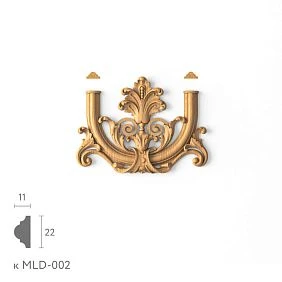
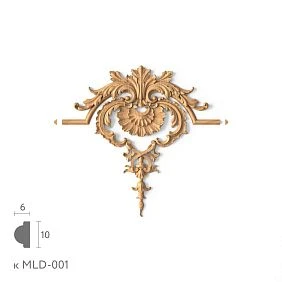
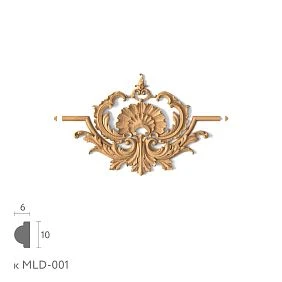
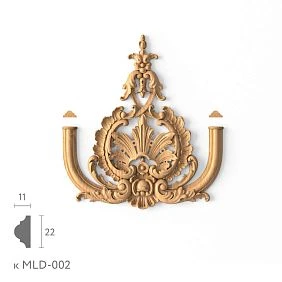
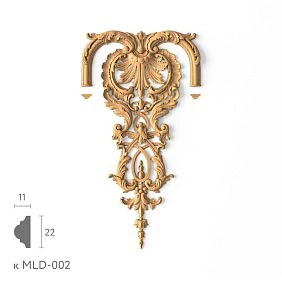
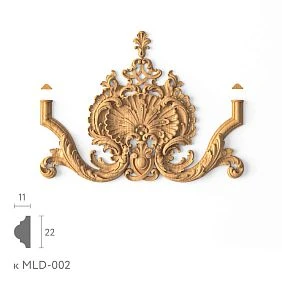
What "furniture decor by the piece" means for a workshop
Piece-by-piece ordering is the ability to buy a specific product item not by the box or in a large batch, but in individual units.
For furniture this is especially convenient, because the quantity is often dictated by the design itself:
- table — 4 legs;
- console — 2 supports;
- dresser — 4 legs and 6 handles;
- wardrobe — 2 central overlays;
- shelf — 2 brackets;
- facade — 1 socket;
- frame composition — 2 left and 2 right corner elements.
The buyer counts not “packs,” but physical parts.
One piece is a unit of order, not necessarily the entire set.
If a craftsman buys one leg, it could be:
- a trial sample;
- a replacement for a damaged one;
- an element for a prototype;
- a sample before a production run.
If the geometry fits, the next order could already be:
4 pcs.
Or:
8 pcs.
Or:
20 pcs.
The same applies to handles, overlays, sockets, and brackets.
Why this is a separate commercial scenario.
The workshop should not adapt the design to the supplier's minimum packaging.
On the contrary, the supply should adapt to the quantity required by the furniture.
If one chest of drawers requires four supports, the rational order unit is four.
If restoration requires one decorative overlay, buying twenty identical ones just because of MOQ is pointless.




Do not confuse "from 1 piece" with a fixed set
In the workshop card, it is useful to store two different values:
Minimum Order
и
Project Qty.
If the minimum order is one piece, but a piece of furniture requires four legs, the specification still shows:
Qty = 4.
Selling by the piece only allows you to assemble the required set without mandatory excess quantity.
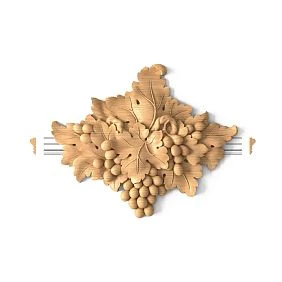
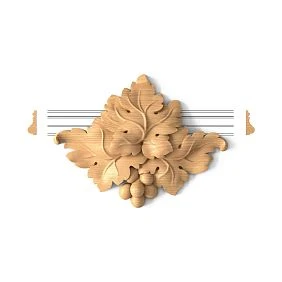
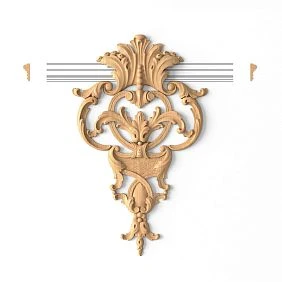
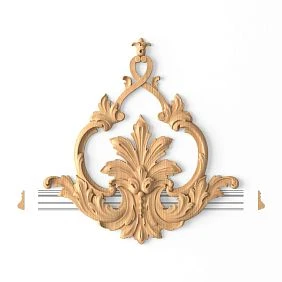
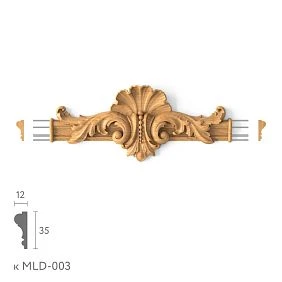
Our factory also produces:
Why this is especially convenient with mixed configurations
A single piece of furniture rarely consists of just one category of decor.
A dresser may simultaneously require:
- 4 legs;
- 6 handles;
- 1 central overlay;
- 4 corner elements.
If each category is available only in large packs, the craftsman buys dozens of unnecessary parts.
The by-the-piece model lets you assemble the product, not a warehouse.
Get Consultation
Quantity should follow the design
A good purchase starts not with the question "what is the minimum they sell," but with a drawing.
For example:
4 doors × 1 handle = 4 handles.
2 identical facades × 2 overlays = 4 overlays.
1 console × 2 brackets = 2 brackets.
First, the furniture is calculated.
Then, the order.
Single pieces, a small set, and a small batch — three different modes
In a real workshop, quantities change quickly. So it helps to separate three scenarios.
Single-piece order.
Usually:
1–4 items.
Typical tasks:
- a trial part;
- Restoration;
- a replacement;
- a single piece of custom furniture.
Small set.
Conventionally:
4–20 elements.
For example:
- 4 legs;
- 6 handles;
- 4 corner pads;
- 2 center pads;
- 2 brackets.
This is already a complete set for one item or a small group of furniture.
Small series.
Next step:
- several identical chests of drawers;
- series of nightstands;
- 5–10 cabinets;
- a small batch of designer furniture.
The quantity grows, but the logic remains: one proven SKU is repeated.
Why these scenarios should not be mixed.
For a single trial piece, the ability to buy 1 pc matters more.
For a run of 20 — repeatability, the same material, and reordering.
For restoration — an exact size match.
That is why “furniture decor by the piece” is not just retail. It is a flexible purchasing scheme for different stages of small-scale production.
Selling by the piece reduces not only purchasing but also dead stock
Let’s imagine that one chest of drawers needs four legs.
If the supplier requires a box of 20, after assembly there remain:
20 − 4 = 16 pcs.
This is not free stock.
It takes up:
- money;
- space;
- accounting;
- risk of damage;
- the risk that this particular SKU will no longer be needed.
For a workshop where every order differs from the previous one, a stock of random decor quickly turns into an archive of unpredictable leftovers.
Buying by the piece reduces this problem: stock is created only where it is consciously needed.
When a warehouse is actually useful
If a workshop regularly produces one furniture model, a small internal stock can be reasonable.
For example:
LEG-01 — minimum stock 4 pcs.
Then the next order can be launched faster.
But this is already a decision about repeatable items, not a consequence of someone else's large packaging.
Minimum order and minimum stock are different things
The ability to buy a single piece does not mean the workshop is obligated to operate without stock.
It simply gives the freedom to decide for yourself:
- keep 0;
- keep 1 spare;
- keep a set;
- buy for each order.
This is much more convenient for small-batch furniture.
Which wooden elements are especially convenient to buy individually
Not all categories benefit equally from this model. The most obvious are those where the furniture itself dictates a small whole quantity.
Wooden Panels
wooden furniture appliqués are often needed in quantities:
- 1 central;
- 2 paired;
- 4 corner;
- 6–8 repeating elements.
This is one of the most natural scenarios for piece-by-piece assembly.
Furniture legs
Wooden furniture legs are usually ordered as a set for a specific structure:
- 2;
- 4;
- 6;
-
Here, the option to first take one for testing is especially useful.
Wooden handles
Wooden furniture handles you may need:
- one for replacement;
- two for a small cabinet;
- four for a dresser;
- six or eight for a wardrobe;
- one as a test sample.
Outlets
Wooden sockets are often used as a single compositional center or a small repeating group.
Brackets
Wooden Brackets are naturally counted in pairs or small sets: two for a shelf, four for a console, a separate piece for replacement.
Other decorative elements
For a broader selection, you can use wooden decorative elements и Carved furniture decor.
The main principle is the same:
a project should have as many physically identical SKUs as the furniture actually requires.
Which categories are less suitable for random piece-by-piece replacement.
There are items where a single individual part is visually or structurally connected to a group.
For example:
- four legs of one chest of drawers;
- six handles of one facade unit;
- four corner overlays of one frame.
If one part is lost, you can buy one.
But first you need to prove a match.
If the old SKU is unknown, it is sometimes safer to replace the entire linked group.
Piece-by-piece availability is a tool. Not an automatic rule of "one breaks — always replace one."
Overlays piece by piece: central, corner, and paired elements
Overlays are especially good at showing why quantity cannot be determined "approximately."
Central overlay.
One front panel may have one item.
For example:
DEC-01 — 1 pc.
If there are two such front panels:
1 × 2 = 2 pcs.
If only the central cabinet door is decorated, there is no need to buy a set for all front panels.
Corner overlays.
A framed composition may require four corner elements.
But here an additional question arises:
are they identical or L/R?
If the manufacturer produces separate left and right SKUs, the scheme:
4 identical
is incorrect.
You need to:
2 L + 2 R.
Replacing one damaged overlay.
This is a strong scenario for buying individual pieces.
But before ordering, check:
- SKU;
- size;
- the material;
- orientation;
- finish.
If the old element is unknown, buying a similar part may not provide a visual match.
Sometimes it is more rational to replace the symmetrical pair or all four corners.
Overlay for a test door.
Before launching a cabinet with ten fronts, the craftsman can first assemble one test door.
Then the order:
1 overlay
allows checking:
- the real scale;
- the depth;
- position;
- interaction with the handle;
- its own finish.
After approval, the rest of the series is ordered.
Furniture legs individually: when you need one first, then a set
Legs are one of the largest and most structurally prominent categories.
A chest of drawers may need four.
A console needs two.
For a long cabinet — six.
For restoration, sometimes you really need one.
Why buy one leg first.
A sample piece provides physical information that is hard to assess from a photo alone:
- actual height;
- maximum overall dimensions;
- mounting plate size;
- shape in three dimensions;
- the material;
- surface quality;
- how the piece looks next to the cabinet.
If the furniture is non-standard, this is a cheap check before buying the full set.
After testing, the cabinet can be designed more precisely.
Correct sequence:
select SKU → check one part → set the actual size → order the set.
Especially if the leg determines:
- overall height;
- clearance;
- position of the apron;
- the visual mass of the furniture.
Why one new leg does not always match three old ones.
When repairing existing furniture, you need to compare:
- shape;
- height;
- width;
- the material;
- shade;
- the fit.
If the identity of the old SKU is not confirmed, it is safer to replace the entire set.
Sold individually, so you can buy a single piece.
But it does not guarantee that the new piece will visually match the old one.
Unpainted legs for custom furniture.
If the craftsman plans their own finish, these are useful: from STAVROS open boundless possibilities for designers, furniture makers, and anyone striving to create unique high-quality furniture..
Scenario:
ready-made geometry → custom enamel / stain / tinting / lacquer → installation.
The craftsman buys the shape but keeps control over the visual result.
Wooden handles sold individually: a test piece and an exact repeat
A handle has small dimensions, but it is constantly in the user's hands. Therefore, a mistake in size or fit quickly becomes noticeable.
One handle for testing.
Before ordering six or ten, you can take one and check:
- grip shape;
- the actual size;
- distance to the frame;
- position on the facade;
- mounting;
- future finish.
For custom furniture, this is especially useful.
On the screen, the handle may look proportional.
On the actual door — too small or too bulky.
One handle for repair.
If one element is damaged, ordering individually seems ideal.
But an exact SKU is needed.
If a match is not proven, one new handle next to the old ones may differ:
- geometry;
- shade;
- finish;
- proportions.
Then it is wiser to replace the entire visually related set.
Handle series.
After checking one item, you need to save:
Manufacturer
SKU
Material
Size
Finish.
Then in a month you can order the same SKU without a new search.
Carved rosettes and wooden brackets: naturally small quantities
These elements are rarely needed in hundreds in a single small project.
rosette.
Typical quantities:
- 1 central;
- 2 paired;
- 4 at the corners of the composition.
Piece-by-piece ordering lets you buy exactly to match the decorative scheme.
Bracket.
Usually:
- 2 for a shelf;
- 2 for a console;
- 4 for a complex decorative block;
- 1 as a spare.
What to check on a bracket.
Not only the appearance.
Need to know:
- height;
- the depth;
- width;
- an installation surface;
- actual purpose.
If a part will bear load, you cannot automatically treat any decorative bracket as a structural support just because it has the corresponding shape. Follow the actual purpose of the specific product.
Trial bracket.
A single part allows you to check:
- actual extension;
- scale;
- joint with the shelf;
- finish.
After that, a matching or full set is purchased.
Size and fit: the trial part should be tested on real furniture
Ordering by the piece is especially valuable because it allows you to check not abstract millimeters, but the actual fit.
Each category has its own critical dimension.
For the leg
Check:
- overall height;
- maximum width;
- the upper mounting platform;
- mounting position;
- change in the overall height of the furniture.
If the cabinet is already designed for 120 mm, a 150 mm leg changes the entire silhouette and ergonomics.
For overlay
Critical:
- width;
- height;
- depth;
- mounting plane;
- free field of the front.
Conditional example.
Facade:
W = 420 mm.
Overlay:
A = 180 mm.
When centering, the free field:
(420 − 180) / 2 = 120 mm
on each side.
If the actual overlay is 240 mm:
(420 − 240) / 2 = 90 mm.
A 30 mm difference per side already changes the composition.
For the handle
Check:
- overall dimensions;
- fastening scheme;
- axis;
- position relative to the edge;
- grip zone for the hand.
For the bracket
Check:
- height;
- the depth;
- top and rear surfaces;
- mounting point;
- actual purpose.
Why one photograph is not enough
A catalog image does not show scale relative to your facade.
A sample piece shows at once:
- actual weight;
- relief;
- surface;
- proportion;
- behavior under light.
This turns “order one” into a full-fledged design stage.
SKU — the basis for unit purchasing and reordering
A photograph is a weak memory.
A name like:
"beautiful carved overlay"
almost useless.
Working note:
Manufacturer + SKU + Material + Size + URL.
Why SKU matters more than a photo
A month later, the supplier may have dozens of similar parts.
The SKU lets you find a specific item.
But SKU alone is not enough either
If the same geometry exists in several materials, save the material.
If there are different sizes — save the size.
If there is L/R — save the orientation.
Simple workshop card
| Field | Example |
|---|---|
| Code | DEC-01 |
| Manufacturer | STAVROS |
| SKU | specific |
| Type | Overlay |
| Material | Oak |
| Size | actual |
| Qty | 2 |
| Finish | own finish |
| URL | Product |
This is already enough for a normal reorder.
The SKU should be saved immediately after the first successful test.
After the trial part is approved, write down:
Supplier
SKU
Material
Size
Project Code
Finish Code.
Do not put this off until the next order.
A month later, memory replaces the item code with the phrase:
"the same leg we ordered last time."
This is a weak process.
Revision when replacing an item.
If the original SKU is no longer available and a different one is selected:
LEG-01 REV01 = SKU-A
LEG-01 REV02 = SKU-B.
The new item must pass:
- size;
- the landing;
- the material;
- a trial installation;
- finish.
A replacement cannot be considered equivalent just because the item is called a "similar leg."
A photo is useful, but secondary.
Keep the preview next to the SKU.
This speeds up the search.
But purchasing must be based on product identification, not visual similarity.
Material: identical geometry does not mean an identical item
A furniture workshop often works with oak and beech.
If one element type is available in different versions, the material must be recorded separately.
Why this matters for reordering.
First batch:
SKU / beech.
A month later, the craftsman accidentally orders:
same design / oak.
The geometry looks similar.
The finish and visual behavior are already different.
Under enamel.
If the part will be fully painted, the following come to the fore:
- geometry;
- surface preparation;
- material stability;
- Quality of sanding.
For a transparent coating.
Additionally important:
- texture;
- grain direction;
- tone;
- matching with the main furniture.
An unpainted element is not an “unfinished product.”
For a workshop, this may actually be the most convenient semi-finished product:
serial form + individual finish.
Natural wood: the same SKU may have natural variation
A serial item code ensures the same geometry, but natural material does not turn into plastic.
Different parts may differ in:
- grain pattern;
- shade;
- local texture.
For one leg in a separate piece of furniture, this may be insignificant.
For four legs of a single dresser or six handles of a single cabinet, it is better to evaluate them as a set.
How to work with a set
After receiving, lay out the parts next to each other.
If the original finish is transparent:
- group the ones closest in tone;
- determine which sides will be visible;
- only then begin tinting.
If the parts are intended for opaque enamel, the visual variability of the wood is usually less critical, but the geometry and surface are still checked.
Reordering after a long time
Even with the same SKU, a new batch of natural wood may differ visually.
Therefore, for furniture where one new part will stand next to old ones, you need to consider not only the item code but also the future finish.
Sometimes it is easier to repaint one new part together with the whole group.
L/R and paired elements: sold individually does not mean interchangeable
Some decorative elements have a left and right version.
If they exist:
SKU-L
и
SKU-R,
that:
L ≠ R.
Even if in 3D one model mirrors easily.
How to order.
For a four-sided composition:
2 L + 2 R
if that is exactly how the product system is structured.
Why you cannot write “4 pcs.”
Because the supplier doesn't know which four.
Inside the workshop, this also creates a risk:
- 3 left;
- 1 right;
- assembly is stopped.
The reserve is also counted separately.
If reserve is needed:
L reserve
и
R reserve
are not combined.
The left part will not replace the right one.
Trial 1 piece: the most useful stage before a small batch
Buying by the piece is especially strong as a verification tool.
A craftsman doesn't have to buy 12 elements at once.
You can start with one.
When this is especially useful.
- a new leg;
- a large overlay;
- an unusual handle;
- complex bracket;
- a new material / finish;
- a product that the workshop hasn't used before.
What to check on a test piece.
- actual size;
- the proportion on the furniture;
- an installation surface;
- the material;
- surface quality;
- proprietary coloring method;
- matching with adjacent parts;
- Fastening.
After verification.
There are two outcomes.
Suitable.
The SKU is saved and the full set is ordered.
Not suitable.
The craftsman loses the cost of one part, not the entire series.
This is one of the main practical reasons for ordering a single piece.
Test Card for one trial part
For a workshop, a short entry is sufficient:
| Check | Result |
|---|---|
| SKU | Confirmed |
| Size | Suitable / not |
| Material | Confirmed |
| Mount | suitable / needs refinement |
| Finish Test | approved / reject |
| Visual Scale | approved / reject |
| Reorder | yes / no |
Such a card is especially useful if the workshop uses dozens of different ready-made elements across different projects.
What should not be tested in a destructive way on a single sample
If one part must remain a reference, do not start with an irreversible alteration.
It is better to first:
- measure;
- test-fit;
- take a photo;
- mark the fastening;
- do a local test finish on a hidden area, if appropriate.
If the sample is irreversibly changed after the very first operation, there will be nothing left to compare the future batch against.
When a trial piece saves the most
Not on cheap small items, but where an error in one position triggers a change to the furniture.
For example:
- tall leg;
- large carved overlay;
- handle with unusual ergonomics;
- deep bracket.
One verified part can prevent rework of several fronts or the carcass.
When you can buy the set right away without a test piece
A trial order is not always necessary.
You can immediately purchase the required quantity if:
- the SKU has already been used by the workshop;
- the size has been verified;
- the design is repeated;
- the material is known;
- the installation method has already been perfected;
- the finish is clear.
For example, the workshop is producing the same chest of drawers model for the second time.
The internal product card already stores:
LEG-01
HND-01
DEC-01.
Then the new order is assembled according to the saved specification.
Main condition
Check that the item has not changed.
If the SKU is discontinued or replaced, the new equivalent must be checked again.
A trial finish should be done as a separate check
If the item is supplied without a finish, the fit test and finish test are different stages.
First, the physical part is checked:
- size;
- fit;
- Fastening.
Then the surface:
- soil;
- stain;
- oil;
- varnish;
- enamel.
Do not finish the full set before one part has shown the desired result.
Finish Sample
Simplest record:
SKU
Material
Finish Code
Date
Result = APPROVED.
If the finish is complex, you can keep one finished part as a reference.
Why the finish affects repeat orders
Six months later, the craftsman may buy the same SKU but forget the finishing technique.
As a result, the geometry will match, but the color will not.
Therefore, for repeatable custom furniture, you need to preserve not only the product but also the recipe for your own finish.
Restoration: one of the strongest scenarios for single-piece purchases
In restoration, the need often arises for literally a single part.
- one leg;
- one overlay;
- one handle;
- one rosette;
- one bracket.
Buying a batch here is especially pointless.
When one element can be replaced
If confirmed:
- SKU;
- size;
- the material;
- geometry;
- finish.
When it is better to replace the set
If the old part is unknown and the new one is only similar.
For example, one new leg may differ from three old ones even at the same height.
Then it is visually safer to replace all four.
Restoration does not always mean a historical replica
If the goal is a functional update of furniture, serial ready-made decor can be rational.
If the goal is an exact restoration of the original, individual reproduction will be required.
These are different types of work.
Three levels of match when replacing.
Level 1 — exact SKU.
Best-case scenario. You can replace a single part after checking the batch and finish.
Level 2 — same geometry, different material / finish.
Replacement is possible, but the group will need to be brought to a uniform appearance.
Level 3 — only a visually similar part.
A single replacement is risky. It is often better to replace the set.
One leg or four.
The decision depends not on the desire to save money, but on a match.
if:
- shape;
- height;
- the material;
- fit;
- Finish
they match, one part is rational.
If not, a new set can give a more predictable result than trying to artificially age one new leg to match three old ones.
A restoration set needs to be documented.
If all four supports have been replaced, keep the new SKU.
The next repair will already be based on a specific modern series, rather than on unknown old parts.
Furniture decor piece by piece and small batch: how to scale an order
Today the craftsman makes one chest of drawers:
4 legs
6 handles
1 central overlay.
A month later, the client wants a second one.
If the SKUs are saved, the set is repeated.
Growth scenario.
Project 1:
4 pcs.
Project 2:
12 pcs.
Next:
20 pcs.
The quantity grows, but the craftsman does not start the search over.
Why a serial SKU is convenient for small-scale production.
It creates repeatability without the need to launch your own mass production of the part.
What to check before the next batch.
- same SKU;
- the same material;
- availability;
- same version;
- whether the finish has changed;
- whether a new batch needs testing.
A small batch is no longer just a retail purchase.
At this stage, the following become more important:
- consistency;
- packaging;
- the deadline;
- the ability to reorder;
- material batch.
But the main identifier remains the same.
The transition from 1 pc. to 20 pcs. must be manageable
Increasing the quantity changes control.
1 pc.
Checking the fit.
4–8 pcs.
Checking completeness and uniformity.
10–20 pcs.
Added:
- single batch;
- material sorting;
- stable finish;
- packaging;
- the ability to reorder.
What to lock down for a small batch
| Field | Value |
|---|---|
| Code | LEG-01 |
| SKU | specific |
| Material | beech |
| Finish | own finish F-03 |
| Test | approved |
| Batch Qty | 12 |
| Spare | 1 |
| Reorder | allowed |
| Last Order Date | Date |
This is how a single serial element becomes a proper component of the workshop's own product.
When a small batch already requires a production run
With natural wood, visual variability is more noticeable.
If 20 handles or legs need to look like one group, it's best to check:
- tone;
- wood grain;
- overall level of finish.
It's not advisable to mix elements from significantly different batches in one set without checking.
Piece-by-piece purchase or custom: a short decision tree
Not every project needs to be assembled from a catalog.
| Task | Ready SKU per piece | Custom |
|---|---|---|
| 1–4 parts needed | Strong scenario | often unnecessary development |
| ready size fits | Yes | usually not needed |
| unique shape needed | No | Yes |
| test before series needed | buy 1 pc. | prototype needed |
| Repeat order | simple by SKU | depends on documentation |
| deep SKU rework required | weak scenario | more often better custom |
Decision tree.
1. Is there a suitable standard geometry?
No → custom.
Yes → continue.
2. Does the size fit without major rework?
No → another SKU or custom.
Yes → continue.
3. Do you need 1–20 parts?
Yes → a piece-by-piece / small-batch order is especially logical.
4. Is the product new for the workshop?
Yes → start with 1 pc.
No → you can assemble the set right away.
Do not treat quantity as the only criterion.
Even with 20 parts, custom may be justified if the element is a signature part of the furniture.
And vice versa: with 50 parts, a ready-made SKU may remain more advantageous if:
- you do not have your own equipment;
- the geometry is complex;
- the series is one-off;
- the deadlines are short.
The decision is determined by a combination of:
quantity × uniqueness × in-house capability × repeatability.
Three options instead of two.
The choice is not always binary.
Available:
READY SKU;READY BLANK + OWN FINISH / FITTING;FULL CUSTOM.
The middle option is often the most convenient for a small woodworking shop.
Ready-made geometry saves production.
A custom finish preserves the author's character.
How to assemble the piece-by-piece configuration of a single product
Let's imagine a conventional chest of drawers.
You need to:
- 4 legs;
- 6 handles;
- 1 central overlay;
- 4 corner elements.
This is already a small BOM.
Working table.
| Code | SKU | Product | Material | Qty |
|---|---|---|---|---|
| LEG-01 | real | Leg | Beech | 4 |
| HND-01 | real | Handle | Beech | 6 |
| DEC-01 | real | Overlay | Oak | 1 |
| DEC-02-L | real | corner cover L | Oak | 2 |
| DEC-02-R | real | corner cover R | Oak | 2 |
What this table provides.
The master sees:
- how much to buy;
- which elements are paired;
- where the material differs;
- what to order later.
Do not mix Qty and packaging.
If the item is sold per piece, Qty = 4 means four physical elements.
If a specific item is supplied differently, the specification must reflect the actual order unit.
The set must be checked as a single product
The four categories may be correct individually and conflict together.
For example:
- handle too close to the overlay;
- leg visually heavier than the entire body;
- frame corner does not align with the central decor;
- the oak overlay is noticeably different from the beech handles.
Therefore, after the shortlist, it is useful to assemble one real or digital prototype assembly.
Completeness before ordering
For a standard chest of drawers:
LEG-01 × 4
HND-01 × 6
DEC-01 × 1
DEC-02-L × 2
DEC-02-R × 2
Before payment, the line total must match the drawing.
This is a simple check, but it eliminates the typical mistake of "forgetting two right corners."
An order from multiple categories is best checked using the Assembly BOM
A single piece of furniture can include different product groups.
For example, a wardrobe:
- 4 legs;
- 8 handles;
- 2 center pads;
- 4 corner elements;
- 6 m of wooden molding.
For the first four categories, the quantity is in pieces.
For moulding — linear footage and cutting.
Therefore, one column Qty Without Unit may be ambiguous.
Better:
| Code | Type | Qty | Unit |
|---|---|---|---|
| LEG-01 | Leg | 4 | pcs |
| HND-01 | Handle | 8 | pcs |
| DEC-01 | Overlay | 2 | pcs |
| DEC-02 | Angle | 4 | pcs |
| MLD-01 | Molding | By cutting | lengths |
Completeness check before payment
Answer five questions:
- all items from the drawing are in the BOM;
- the quantity of each SKU matches;
- L/R are separated;
- material variant is specified;
- test status is closed.
If even one answer is "no", it is better not to place the order.
Why this is especially important when buying by the piece
When an order consists of many small lines, it is easy to forget one item.
The absence of one handle or one right corner can halt the assembly of the entire product.
A small quantity does not mean the line is unimportant.
Receiving: piece-by-piece purchasing also requires incoming inspection
A small order does not cancel inspection.
Especially if the elements go into one piece of furniture and must look the same.
What to check upon receipt.
- SKU;
- quantity;
- the material;
- size;
- L/R orientation;
- geometry;
- damage;
- surface.
For the set of legs.
Place four side by side.
Compare:
- height;
- the overall silhouette;
- mounting surfaces.
For handles.
Check:
- shape match;
- mounting;
- same batch.
- 4 legs + 1 spare;
- 12 handles + 1;
- 4 complex overlays + 1.
- the part is critical for delivery;
- it is difficult to reorder quickly;
- there is a risk of damage during finishing;
- the project is far away;
- the batch is small, and stopping assembly is expensive.
- the item is consistently available;
- the lead time allows reordering;
- the part is expensive;
- the risk of damage is low;
- storing an extra element is pointless.
- damage during finishing;
- damage during installation;
- warranty replacement;
- reference;
- quick repair.
- shorten it significantly;
- cut off the relief;
- redo the fastening;
- change the shape,
- cuts;
- re-mills;
- changes the fit;
- removes the relief;
- rebuilds the shape,
- regularly;
- in dozens;
- for years;
- LEG-01 × 4;
- HND-01 × 6;
- DEC-01 × 1.
- SKU is available;
- material is the same;
- the card size has not changed;
- the variant has not been replaced;
- the URL leads to the correct product.
- which SKU to order;
- which material;
- how many pieces;
- which positions are L/R;
- which part is a sample and which is already approved;
- where there is a spare.
- Carved furniture decor;
- wooden furniture appliqués;
- Furniture legs;
- from STAVROS open boundless possibilities for designers, furniture makers, and anyone striving to create unique high-quality furniture.;
- Wooden furniture handles;
- Wooden sockets;
- Wooden Brackets;
- wooden decorative elements;
- Wooden trim.
- new models;
- non-standard sizes;
- custom-made furniture;
- restoration;
- first batches.
- the furniture range is wide;
- each project is individual;
- identical parts are rarely repeated;
- the customer pays for a specific configuration.
- price of a small batch;
- storage cost;
- probability of use;
- risk of model change.
- legs;
- handles;
- large overlay;
- bracket.
- the landing;
- scale;
- mounting;
- finish.
Spare part: when buying one extra makes sense
Selling by the piece allows fine stock management.
Sometimes instead of a universal one +10% it is wiser to buy:
+1 physical part.
For example:
When it is justified.
When no reserve is needed.
if:
Reserve should be a decision, not an automatic percentage.
L/R reserve.
Calculated separately.
One extra L does not cover shortages R.
Spare Qty is better stored separately
Do not hide the spare within the main quantity.
Bad:
Qty = 5
when a piece of furniture needs four legs.
Better:
Calculated Qty = 4
Spare Qty = 1
Order Qty = 5.
This makes it clear why the order exceeds the structure.
What to use a spare part for
But if the item is expensive and easy to reorder, stock may be economically pointless.
When buying by the piece is unprofitable
The mere fact that you can buy 1 pc. does not always make the decision rational.
The ready-made size does not fit
If the craftsman will:
the ready-made SKU loses its advantage.
A unique detail is needed
Signature bespoke geometry can be part of the product's value.
Then custom is justified.
A large ongoing series is needed
With large stable volumes, proprietary tooling and technology can start to pay off.
Repeatability of future supply cannot be guaranteed
For serial furniture, the risk of discontinuation must be taken into account.
Critical structural function
If the part bears a load, the choice should be based on the product's actual purpose, not on appearance.
Buying by the piece is convenient.
It does not replace the engineering check.
A signal that it's time to switch to custom.
If the craftsman performs five serious operations on a purchased part before installation:
he is almost producing a new part.
In that case, it is wiser to recalculate the custom option.
A signal that it's time to count your own series.
If the same SKU is purchased:
and the geometry is critical for your own brand, it makes sense to compare your own technology.
Piece-by-piece purchasing works best where flexibility is needed.
Not where the workshop has effectively turned into a mass producer of a single part.
How a workshop can keep a simple list of repeat orders
You don't need a complex ERP to avoid losing SKUs.
A table is sufficient.
| Code | Manufacturer | SKU | Material | Size | Test | Last Qty | URL |
|---|---|---|---|---|---|---|---|
| LEG-01 | STAVROS | … | beech | … | approved | 4 | URL |
| HND-01 | STAVROS | … | oak | … | approved | 6 | URL |
| DEC-01 | STAVROS | … | oak | … | approved | 2 | URL |
Test.
You can use:
NOT TESTED
TESTED
APPROVED.
Last Qty.
Helps quickly repeat the previous set.
Why a URL does not replace a SKU.
The link may change.
The SKU remains the primary product identifier.
When an item is replaced.
Do not silently overwrite the old SKU.
Write down:
LEG-01 REV02 → new SKU.
If the size has changed, recheck the furniture design.
Reorder Card
For reordering, you can store:
| Field | Value |
|---|---|
| Internal Code | LEG-01 |
| Supplier | STAVROS |
| SKU | real |
| Material | beech |
| Size | actual |
| Finish Code | F-01 |
| Test Status | APPROVED |
| Golden Sample | GS-LEG-01 |
| Last Qty | 4 |
| Spare Qty | 1 |
| URL | clean URL |
Last Order is not equal to Current Availability
The previous order date helps the history.
But before a new order, current availability is still checked.
If the item is no longer produced, the card is moved:
REPLACEMENT REQUIRED.
The replacement must receive a new revision
LEG-01 REV01 = old SKU
LEG-01 REV02 = new SKU.
This way the workshop knows which version of the furniture used which part.
A repeat order is better assembled from approved nomenclature, not from browser history
If the same dresser is produced from time to time, it is useful to save a ready-made set:
BOM-COMMODE-01 REV03.
Inside:
A new order starts with the BOM.
Not with searching for products again.
What to double-check before each reorder
Even an approved nomenclature requires a quick check:
If everything matches, reordering really takes minutes.
Replacement Chain
If the old SKU is discontinued:
HND-01 REV01 = SKU-A
HND-01 REV02 = SKU-B.
Do not delete the old entry.
Otherwise, a year later it will be impossible to understand why one batch of furniture differs from another.
Order review by another person
Before payment, it is useful to give the BOM to a colleague who was not involved in the selection.
They should understand without additional questions:
If a colleague has to ask:
"are these four corners the same or two left and two right?"
that means the specification still keeps part of the information only in the author's head.
This is especially noticeable for a small workshop: the order is small, so it seems it can be assembled "from memory." But it is precisely small mixed orders that most often consist of many different lines of 1–6 pieces each. One forgotten item can halt the assembly of an entire piece of furniture.
A good piece-by-piece order should be understandable without verbal explanations.
Where to buy furniture decor piece by piece
Several product groups can be used to select ready-made STAVROS wooden elements:
On current STAVROS pages, for a number of wooden furniture handles, legs, and carved decorative elements, the option to order or have delivery from a single piece is directly indicated. For a small workshop, this allows a simple workflow: take a trial unit, test it on a real product, and then order the exact set.
Commercial queries such as "buy furniture decor," "buy wooden elements for furniture," "buy decorative overlays for furniture fronts," "buy furniture legs," "buy wooden furniture handles," and "buy wooden rosettes" are already tied here to a specific quantity and a real SKU, rather than to general catalog browsing.
How to use the option to order from a single piece rationally
It is not necessary to buy the full set right away.
Professional scenario:
1 pc. → fit test → finish test → approval → exact set → reorder.
This is especially useful for:
When to buy 4–8 at once
If the SKU has already been approved and used before, there is no need to split the order into a trial piece and the main set.
Piece-by-piece availability remains useful because a craftsman can order exactly 4, rather than a pack multiple.
When an order from a single piece is especially advantageous for cash flow
A small workshop usually does not want to finance inventory for future hypothetical orders.
The piece-by-piece model allows purchasing:
for a specific customer order.
Money isn't frozen in dozens of unnecessary hinges or handles.
This is especially useful if:
When small wholesale is still more rational
If consumption is predictable.
For example, a workshop constantly uses one handle model.
Then you can compare:
Piece-by-piece ordering does not cancel procurement planning.
It provides the lowest entry point, from which the craftsman chooses the optimal quantity.
Final piece-by-piece assembly algorithm
Before ordering, go through one cycle.
1. Determine the exact quantity
Not "a bit of decor."
But:
4 legs
6 handles
2 overlays.
2. Find the real SKU
Without a conditional "similar" one.
3. Check the size
Before manufacturing or final assembly of the furniture.
4. Check the material
Beech, oak, or another actual finish.
5. If the item is new — buy 1 pc.
Especially for:
6. Check on the actual product
7. Order the exact set
after the test.
8. For L/R, count the sides separately
Do not combine.
9. Save the SKU
In the workshop specification.
10. For a repeat project, reorder the same SKU
But check availability and material variant again.
11. If the SKU has been replaced — recheck the size
Do not treat an equivalent as an automatic replacement.
12. For a small batch, keep a reference sample
Golden Sample or a documented sample.
The main formula of the article:
SMALL WORKSHOP → NEED 1–20 PCS → READY SKU → TEST 1 PC → CHECK SIZE / MATERIAL / FINISH → BUY EXACT QTY → SAVE SKU → REORDER.
Furniture decor by the piece is useful not because a workshop buys "a little." Its value lies elsewhere: the quantity ordered begins to match the actual furniture precisely. You can check a single part, assemble a set without an extra batch, keep the serial SKU, and a month later repeat the same item without a new search.