



























Article Contents:
- What “Classic Interior Trim” Really Means
- Decorative Wall Molding: The Core of the System
- Decorative Molding for Walls: Start With Proportion
- Symmetry: Important, but Not Mechanical
- Panel Molding vs. Full Wall Panels
- Classical Wall Panels
- Do Wall Panels Improve Sound or Thermal Performance?
- Wood Wall Panels
- Paint-Grade MDF Panels
- Polyurethane Panel Molding
- Wood Molding vs. Polyurethane Molding
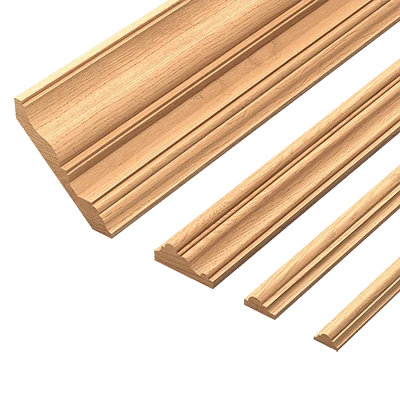
- Decorative Wood Molding
- Polyurethane Decorative Molding
- Egg and Dart Molding: One of the Most Recognizable Classical Ornaments
- Egg and Dart vs. Ionic Ornament
- Where Egg and Dart Molding Works Best
- Where Egg and Dart Molding Usually Does Not Work
- Egg and Dart Molding as a Frieze Detail
- Egg and Dart Crown Molding
- Wood Egg and Dart Molding
- Polyurethane Egg and Dart Molding
- Choosing the Scale of a Repeating Ornament
- Pattern Repeat at Corners
- Do Not Judge Ornament From a 12-Inch Sample Alone
- Classical Ornament Is a Vocabulary, Not a Pattern Library
- How to Combine Egg and Dart With Other Classical Details
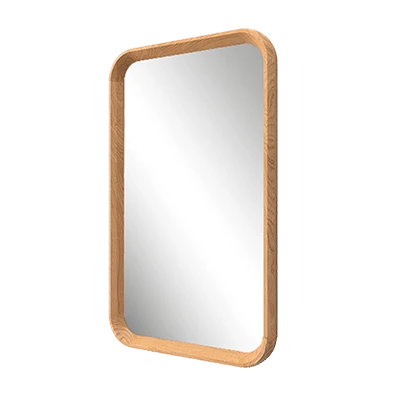
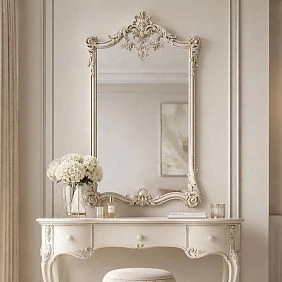
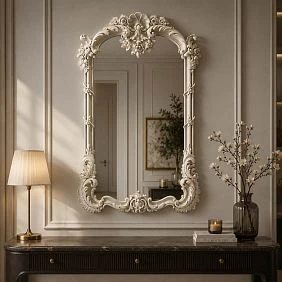
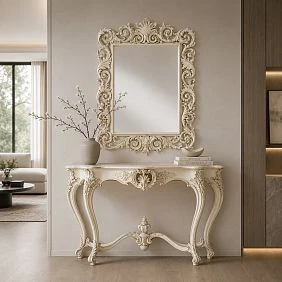
- Decorative Trim Molding Around Mirrors
- Decorative Trim Around Doors
- Decorative Trim Around Windows
- Baseboards: The Lower Boundary of Classical Architecture
- Wood Baseboards
- Wide Baseboards in Classical Interiors
- Baseboard and Door Casing Relationship
- Baseboard and Wall Panel Relationship
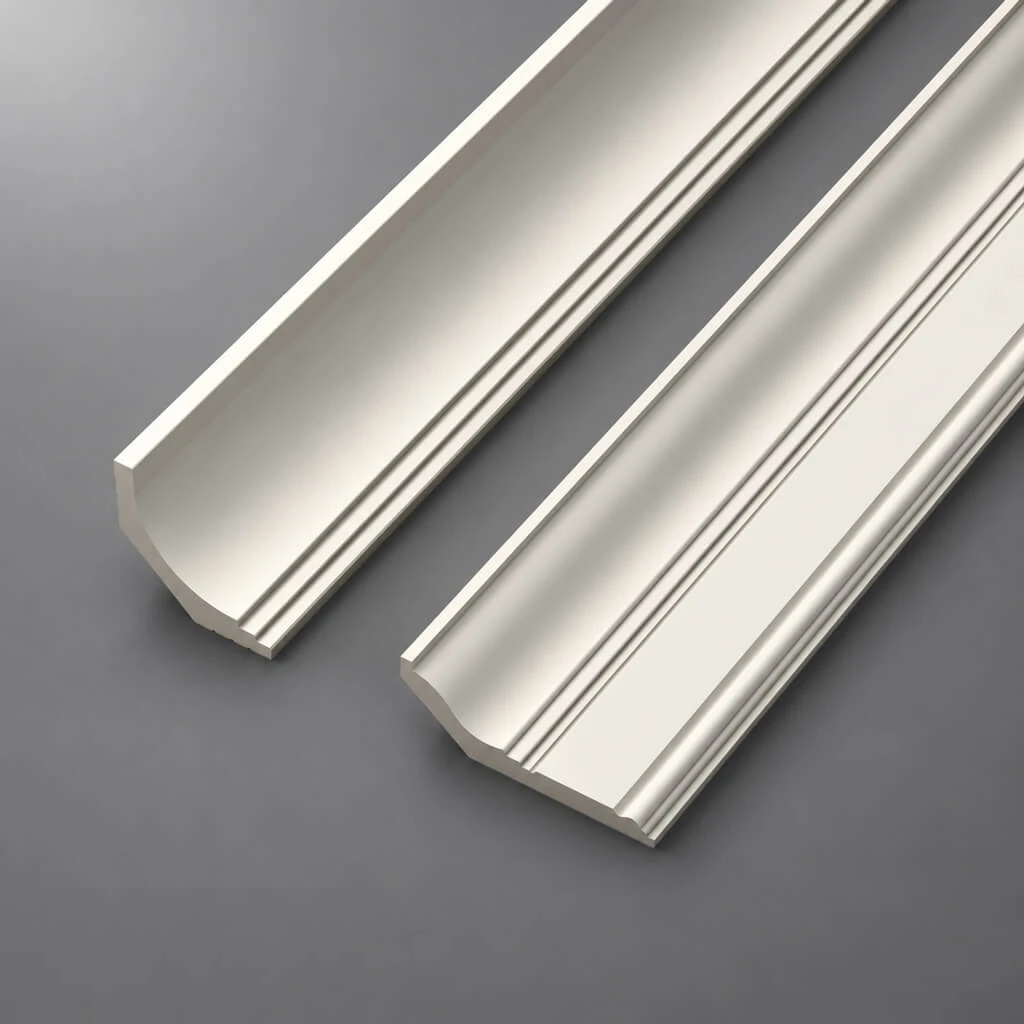
- Cornices and Crown Molding
- Wood Cornices
- Paint-Grade Ceiling Trim
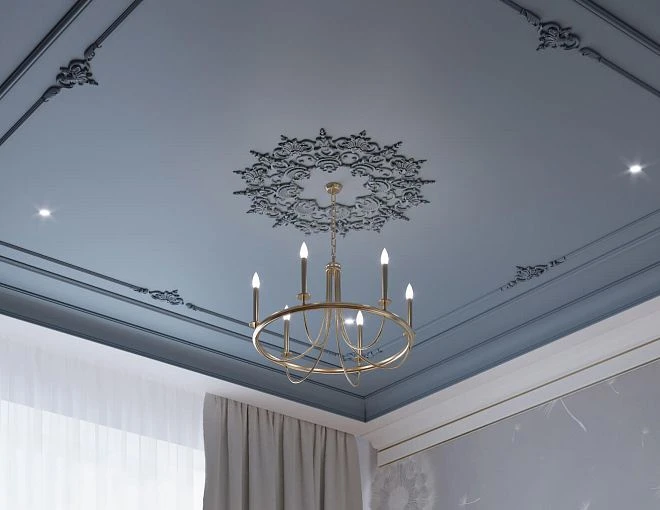
- Decorative Ceiling Molding
- Ceiling Frames
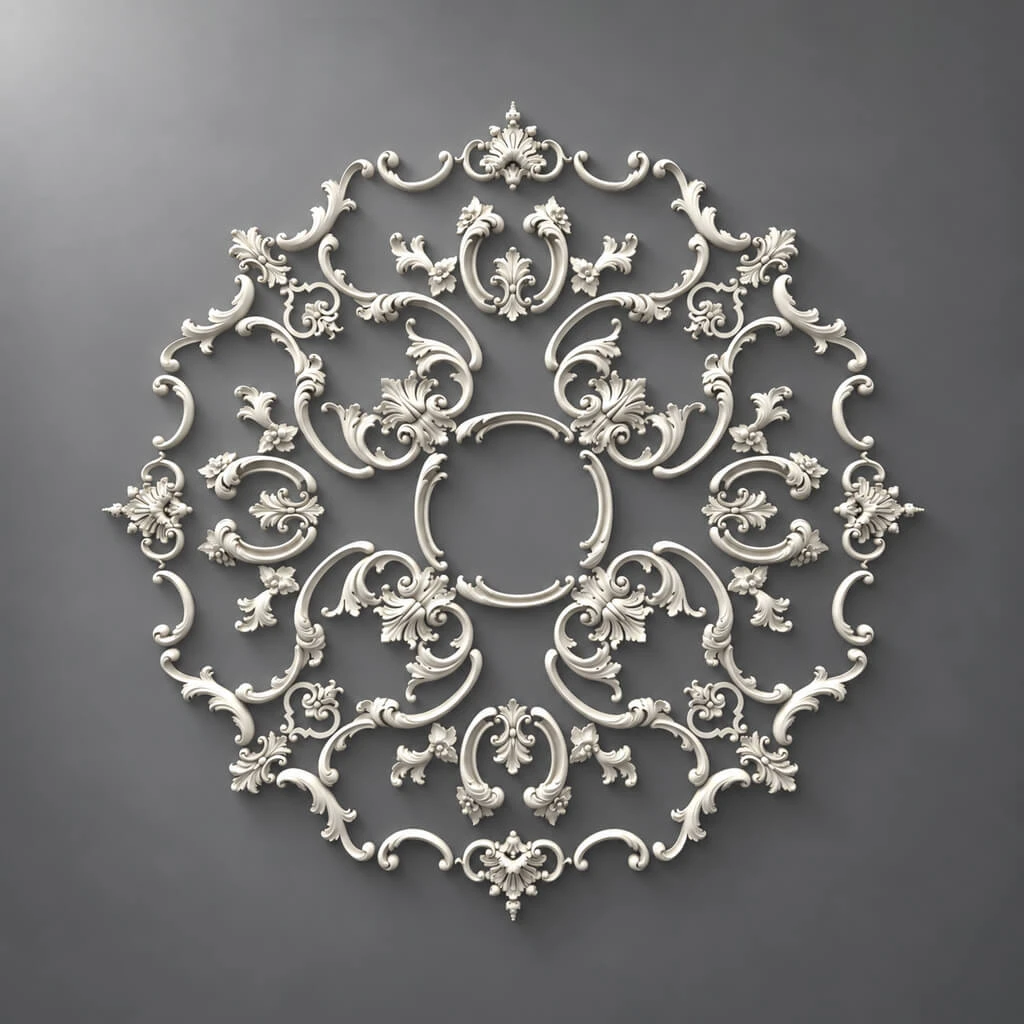
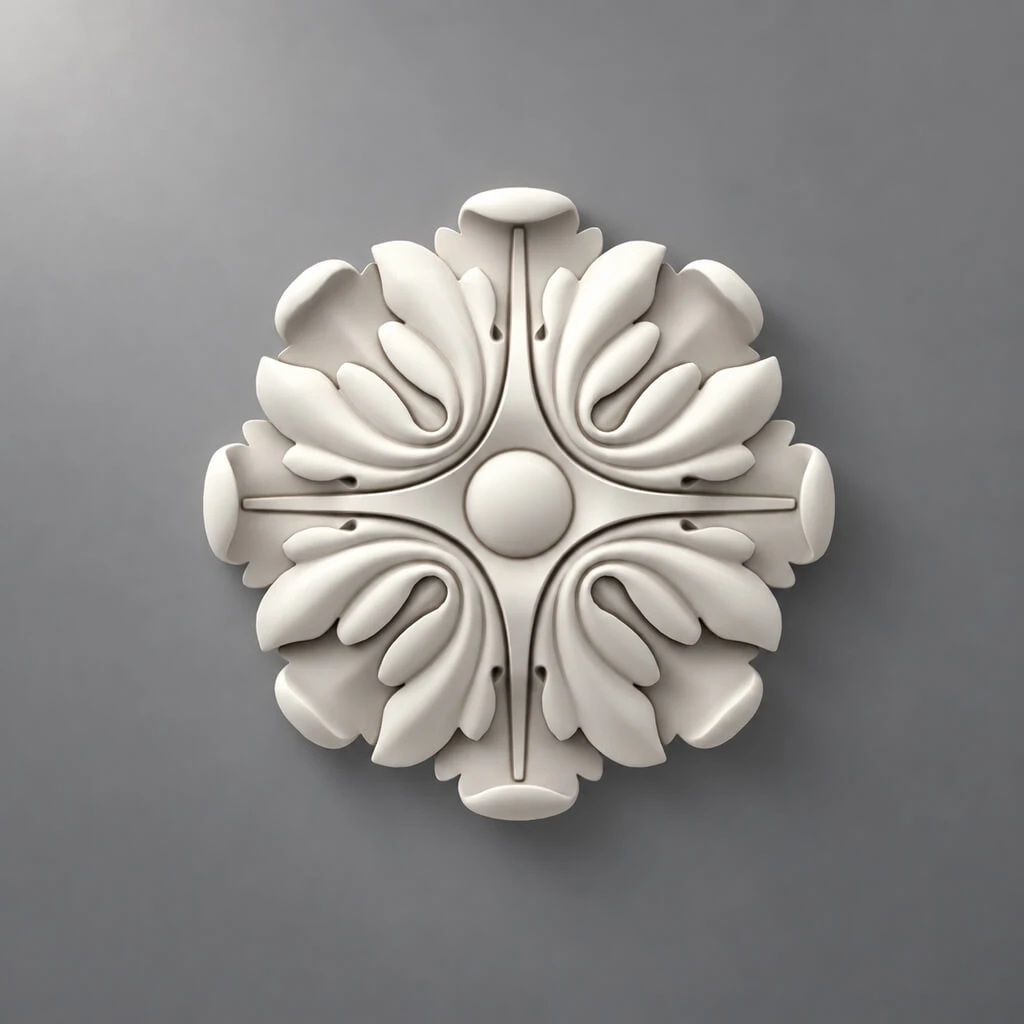
- Ceiling Medallions and Rosettes
- Hidden Lighting Behind Cornice
- Classic Interior Trim in Living Rooms
- Classic Interior Trim in Dining Rooms
- Classic Interior Trim in Bedrooms
- Classic Interior Trim in Home Offices and Libraries
- Classic Interior Trim in Entry Halls
- Classic Interior Trim Around Staircases
- Classic Interior Trim in Kitchens
- Classic Interior Trim in Bathrooms
- Classic Interior Trim in Commercial Spaces
- Neoclassical vs. Traditional Classical Trim
- Georgian and Federal-Inspired Interiors
- Greek Revival-Inspired Interiors
- French Classical and Parisian-Inspired Interiors
- English Traditional Interiors
- Modern Classic and Transitional Interiors
- Do Not Turn Every Classical Room White
- Monochromatic Classical Walls
- Contrasting Molding
- Natural Wood + Painted Wall
- Gold and Metallic Accents
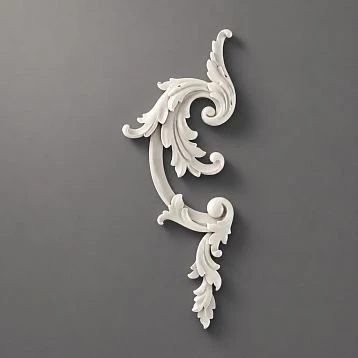
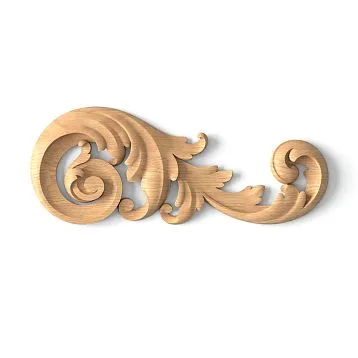
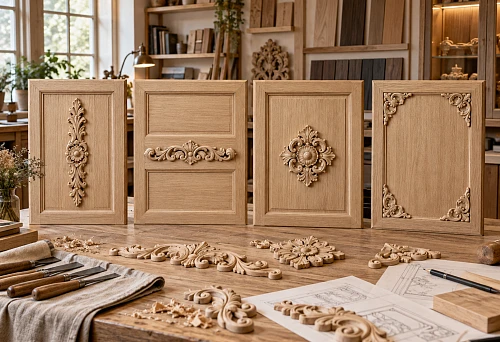
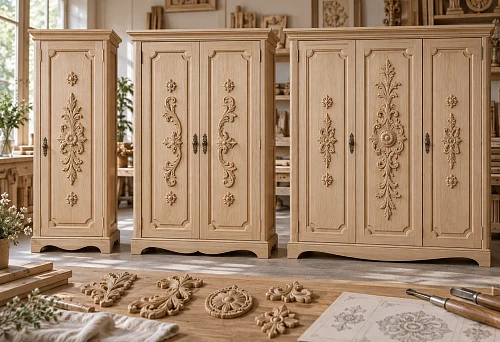
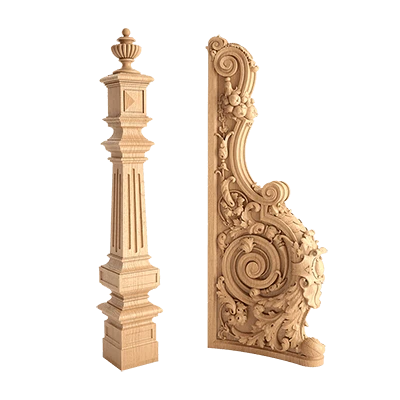
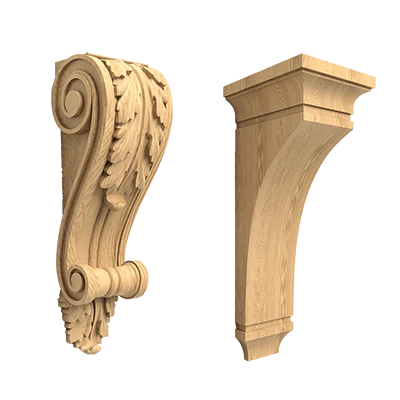
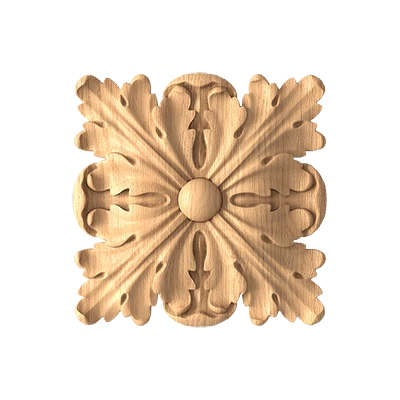
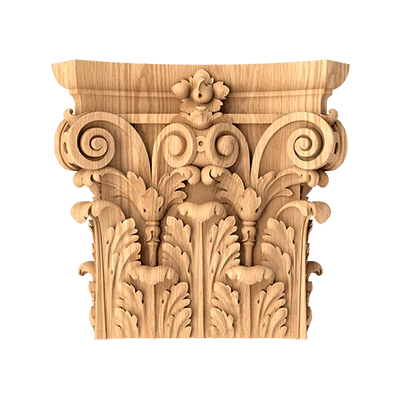
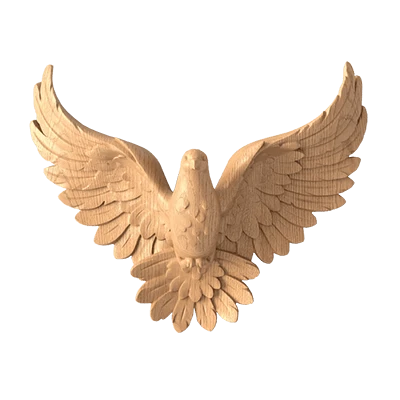
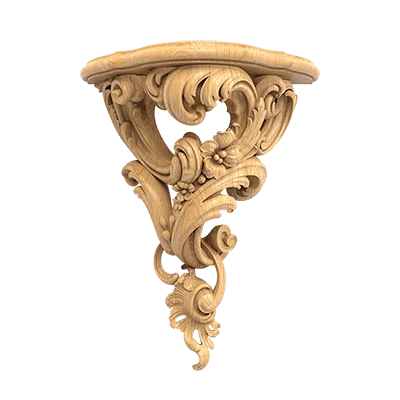
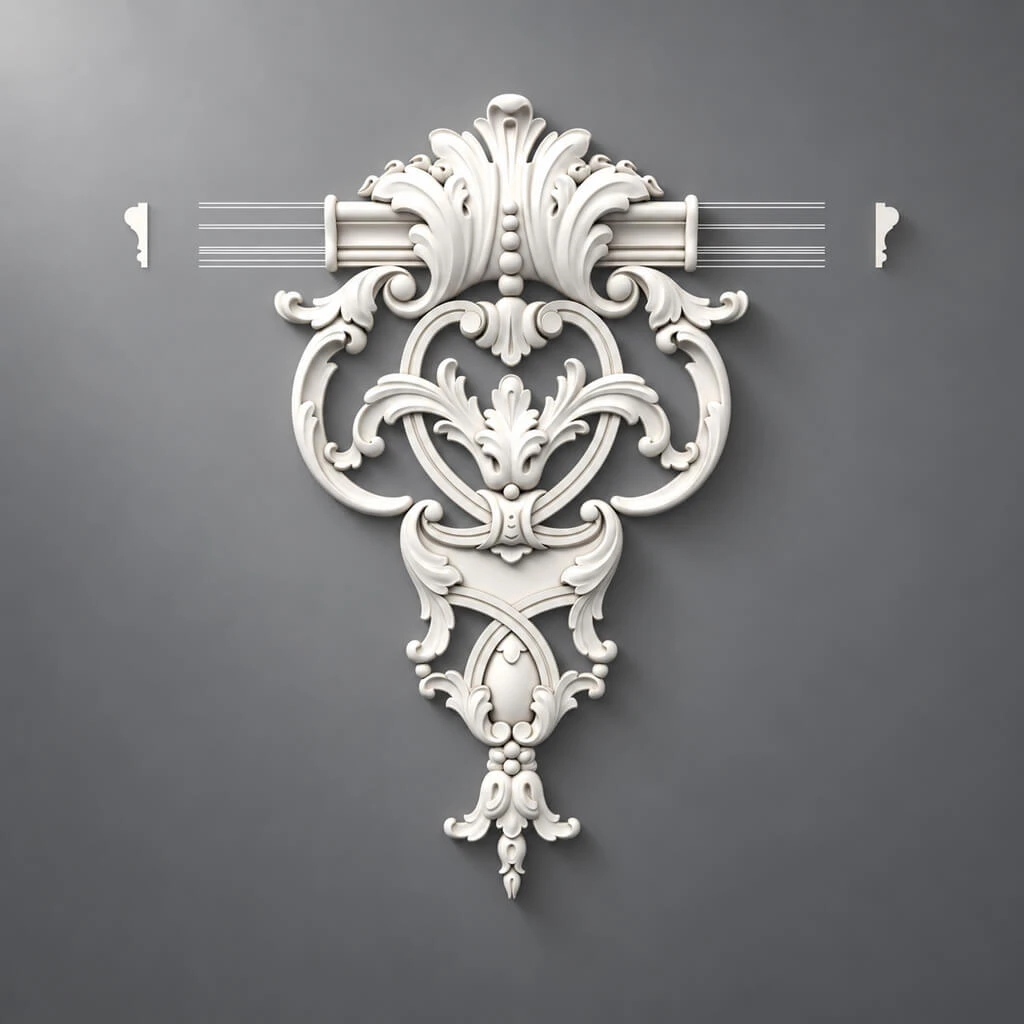
- Carved Wood Appliques
- Polyurethane Appliques and Onlays
- Where to Place Decorative Appliques
- How to Design a Classical Wall Elevation
- Start With the Largest Architectural Lines
- Use Repetition, Not Duplication
- Panel Width and Furniture
- Negative Space Is Part of Classical Design
- How to Choose Molding Width
- Profile Depth Matters as Much as Width
- Choosing Between Plain and Ornamental Molding
- How to Use Egg and Dart Without Making the Room Look Themed
- Egg and Dart With Plain Panel Molding
- Egg and Dart With Carved Wood
- Egg and Dart With Polyurethane Onlays
- Measuring Decorative Wall Molding
- Why a Cut List Is Better Than a Flat Waste Percentage
- Patterned Molding Needs a Pattern-Aware Cut List
- Full-Scale Mockups
- Installing Wood Molding
- Installing Polyurethane Molding
- Do Not Use Filler to Fix Bad Geometry
- Mitered Corners
- Decorative Corner Elements
- Paint Sequence
- Paint Sheen
- Staining Wood Trim
- Matching Wood Species
- Common Mistake #1: Treating Classical Style as “More Ornament”
- Common Mistake #2: Using the Same Profile Everywhere
- Common Mistake #3: Making Every Wall Symmetrical at Any Cost
- Common Mistake #4: Using Ornamental Molding on Tiny Panels
- Common Mistake #5: Repeating Egg and Dart on Every Surface
- Common Mistake #6: Calling Every Ceiling Profile Polyurethane
- Common Mistake #7: Assuming Wall Panels Provide Acoustic Insulation
- Common Mistake #8: Ignoring Furniture
- Common Mistake #9: Ignoring Switches and Outlets
- Common Mistake #10: Using a Large Applique in Every Panel
- Common Mistake #11: Mixing Unrelated Historical Motifs
- Common Mistake #12: Choosing Molding From Close-Up Product Photos
- Common Mistake #13: Using a Flat Waste Percentage Without a Cut Plan
- Common Mistake #14: Trying to Make PU Look Like Stained Wood Everywhere
- Common Mistake #15: Forgetting Door and Window Trim
- Common Mistake #16: Overloading the Ceiling
- Common Mistake #17: Making Baseboards Too Weak
- Common Mistake #18: Making Crown Too Dominant
- Common Mistake #19: Using Contrast to Rescue Weak Layout
- Common Mistake #20: Skipping the Full Elevation
- Specification Checklist for Designers
- Specification Checklist for Installers
- SEO Intent: Decorative Wall Molding and Classical Trim
- Internal Linking Strategy
- Frequently Asked Questions
- What is decorative wall molding?
- What is the best molding for a classical interior?
- What is egg and dart molding?
- Where should egg and dart molding be used?
- Is egg and dart molding always crown molding?
- Can egg and dart molding be wood?
- Can egg and dart molding be polyurethane?
- Should wall molding match baseboards?
- Should window and door trim match wall molding?
- Can wood and polyurethane molding be used in one room?
- Can MDF be used in a classical interior?
- How wide should decorative wall molding be?
- How do I keep classical molding from looking old-fashioned?
- Should molding be painted white?
- Can decorative wall molding be used in small rooms?
- Can classical molding work in modern interiors?
- Do decorative wall panels improve soundproofing?
- Can moldings be combined with wallpaper?
- Can moldings be used on ceilings?
- How do I calculate molding quantities?
- Primary profiles
- Secondary profiles
- Accent profiles
- Visible wood + painted architecture
- All paint-grade
- Wood-dominant millwork
- Painted polyurethane molding
- Painted wood or MDF
- Stained or clear-finished wood
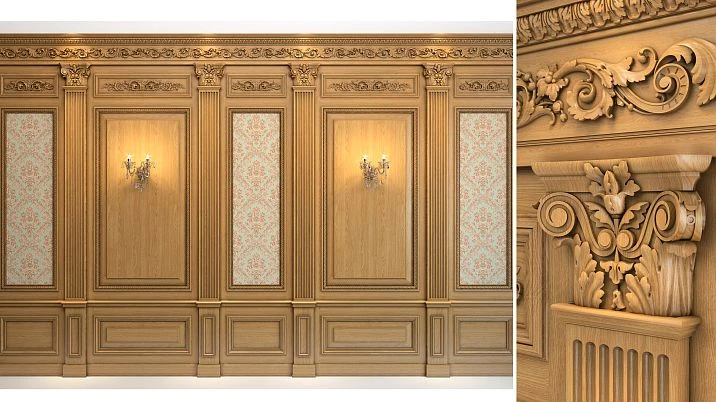
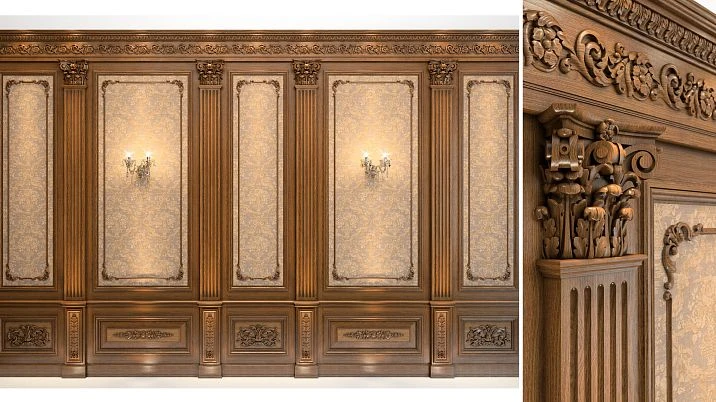
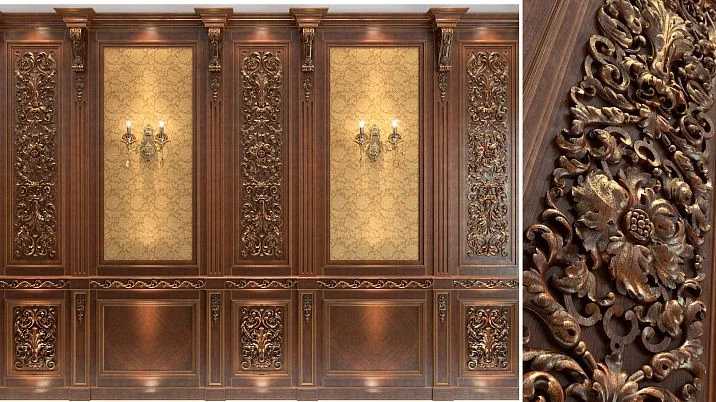
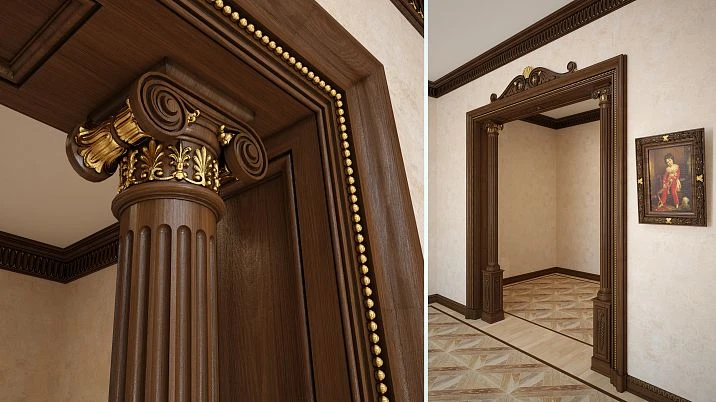
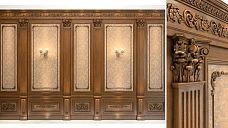
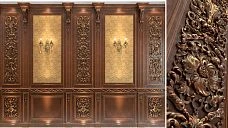
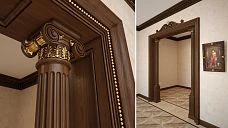
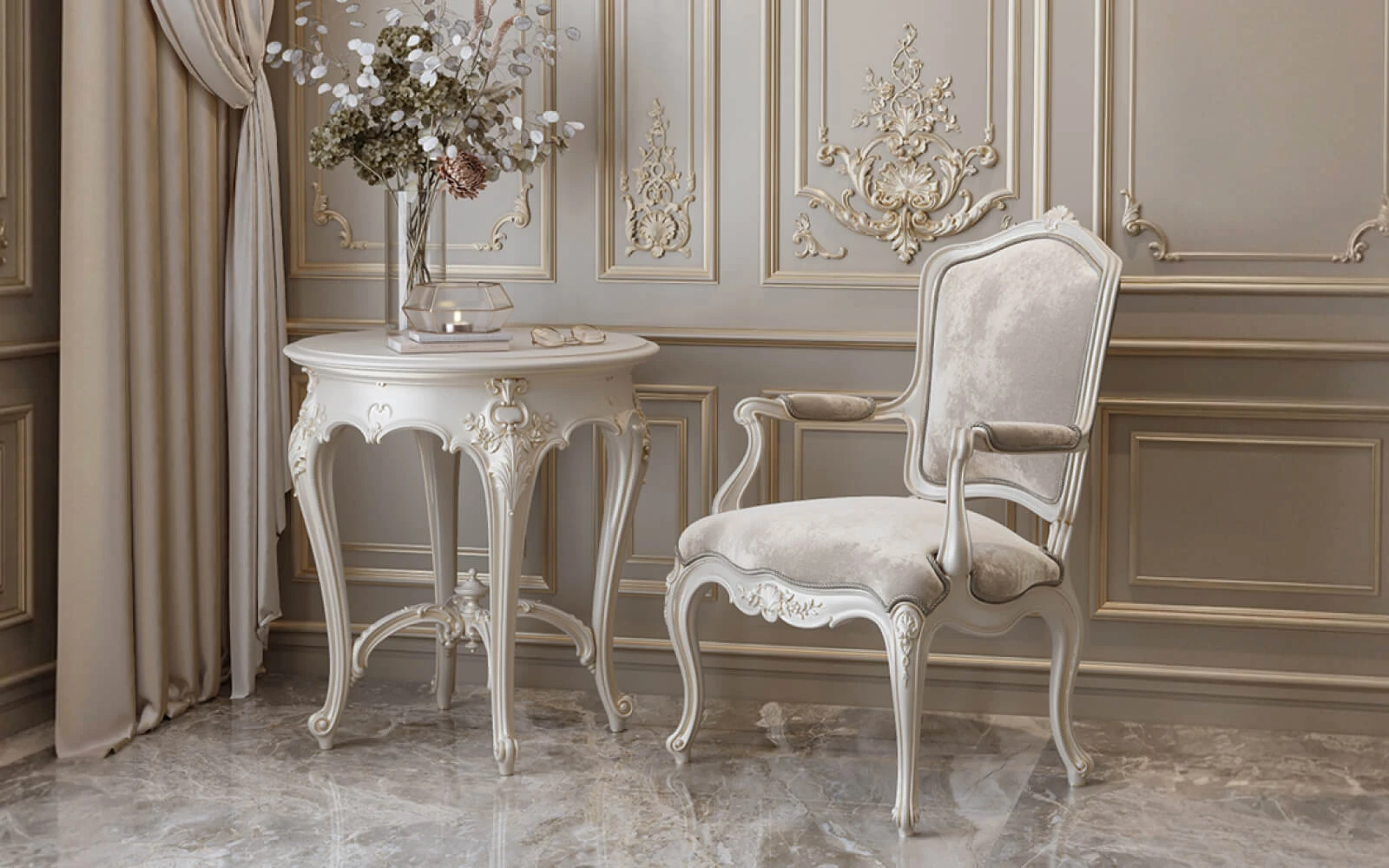
Classic interior design is often reduced to a list of decorative objects: crown molding, baseboards, paneled walls, carved details, framed mirrors, and ornamental trim. That approach misses the point. A convincing classical interior is not defined by how many traditional details it contains, but by how those details establish proportion, hierarchy, rhythm, and visual order.
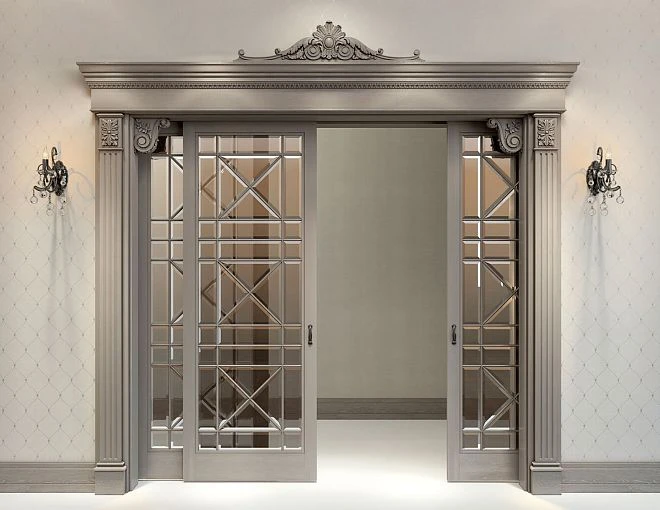
The room should read as architecture before it reads as decoration. The baseboard establishes the lower boundary. Wall panels organize the vertical surface. Door and window trim define openings. Moldings divide large planes into controlled fields. Cornices or crown profiles complete the upper edge. Ornament—including egg and dart molding, carved appliques, rosettes, and relief trim—appears where emphasis is needed rather than everywhere at once.
For the U.S. market, this subject connects naturally with search terms such as decorative wall molding, decorative molding for walls, decorative molding, decorative wood molding, decorative trim molding, egg and dart molding, wood wall molding, panel molding, and classic wall molding. These phrases overlap, but they describe several different materials and uses. A stained oak molding, a paint-grade MDF rail, and a polyurethane ornamental profile can all belong to a classical room, yet they should not be treated as interchangeable products.
This guide explains how to build a classical interior as a complete trim system, how to choose between wood, MDF, and polyurethane, how to use wall panels and moldings without overloading the room, and how historic ornaments such as egg-and-dart can be introduced in a way that feels architectural rather than theatrical.
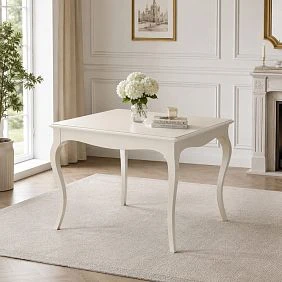
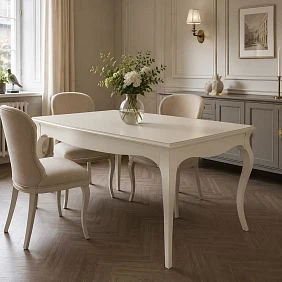
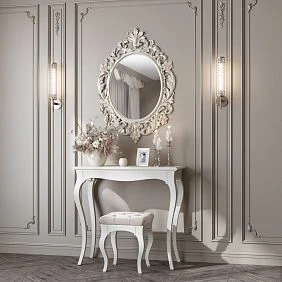
What “Classic Interior Trim” Really Means
Classic trim is not one profile. It is a hierarchy of profiles.
A complete system may include:
- baseboards at the floor;
- chair rail or dado molding;
- picture-frame or panel molding;
- wood wall panels or paint-grade panel fields;
- door and window casing;
- cornices or crown molding at the ceiling;
- decorative friezes;
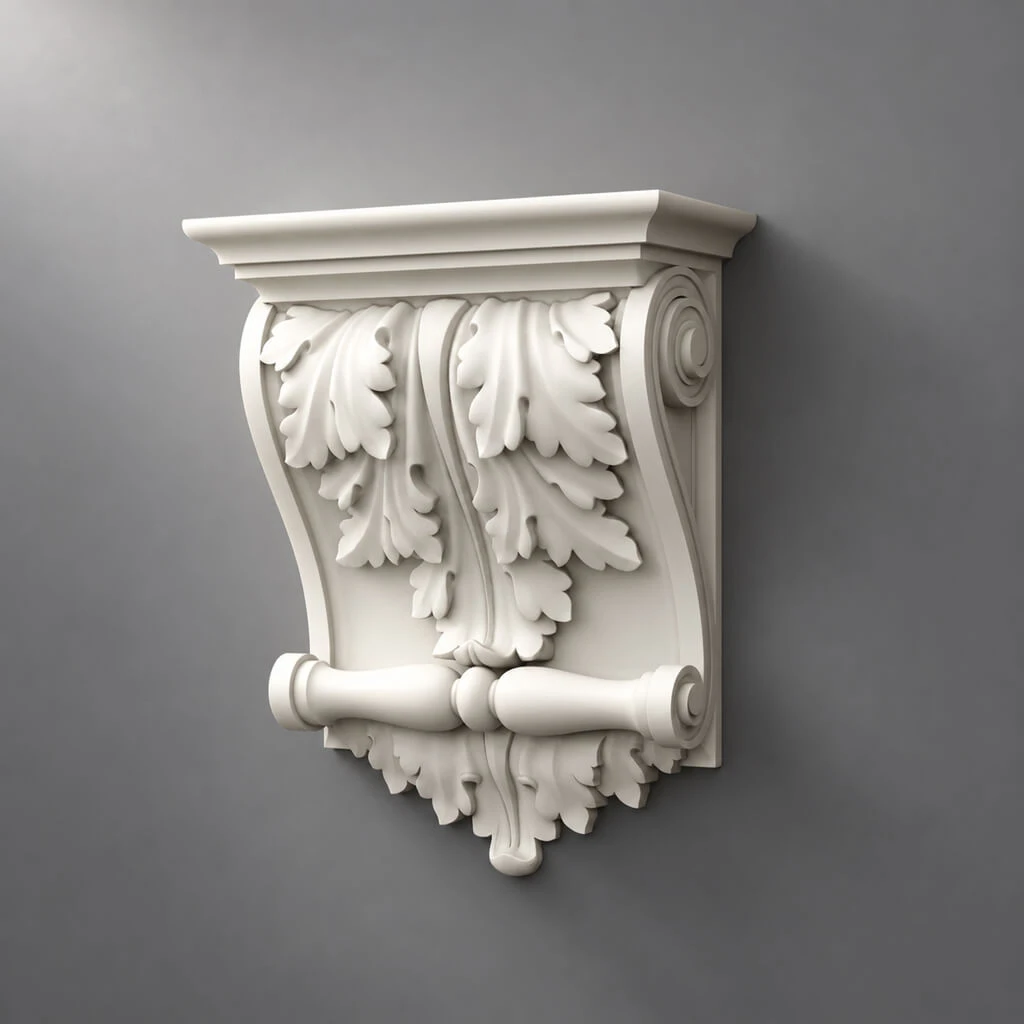
- carved or molded appliques;
- corner ornaments;
- ceiling medallions or rosettes;
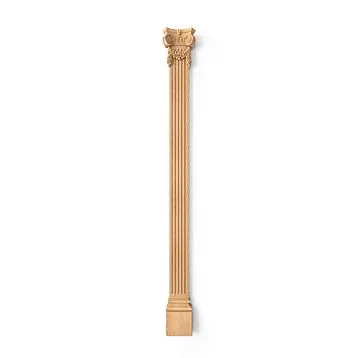
- pilaster-like vertical elements.
The strongest rooms do not necessarily use all of these. They use only the pieces required to make the architecture legible.

Decorative Wall Molding: The Core of the System
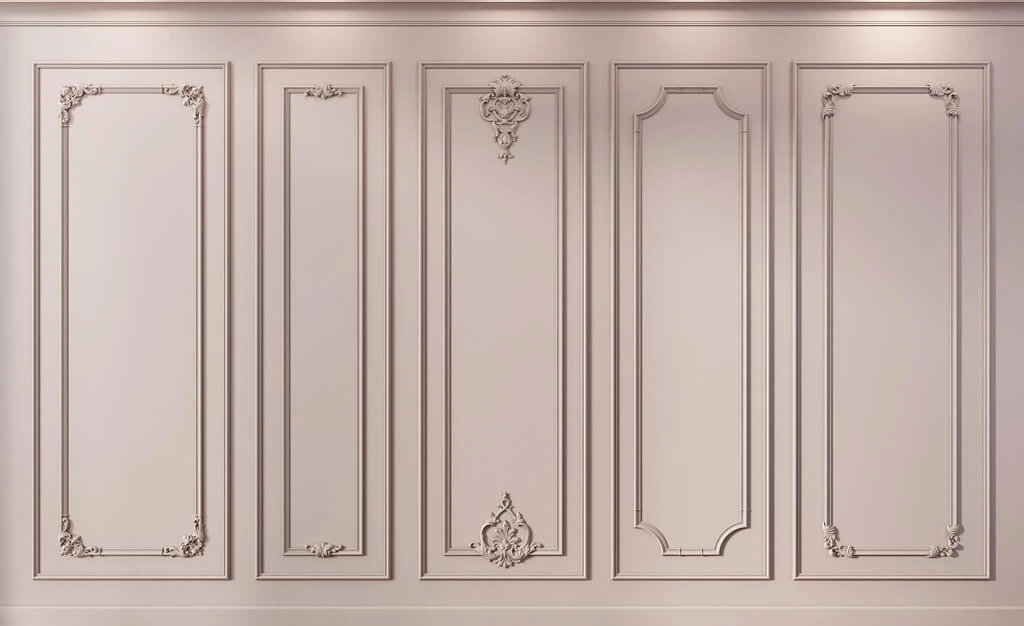
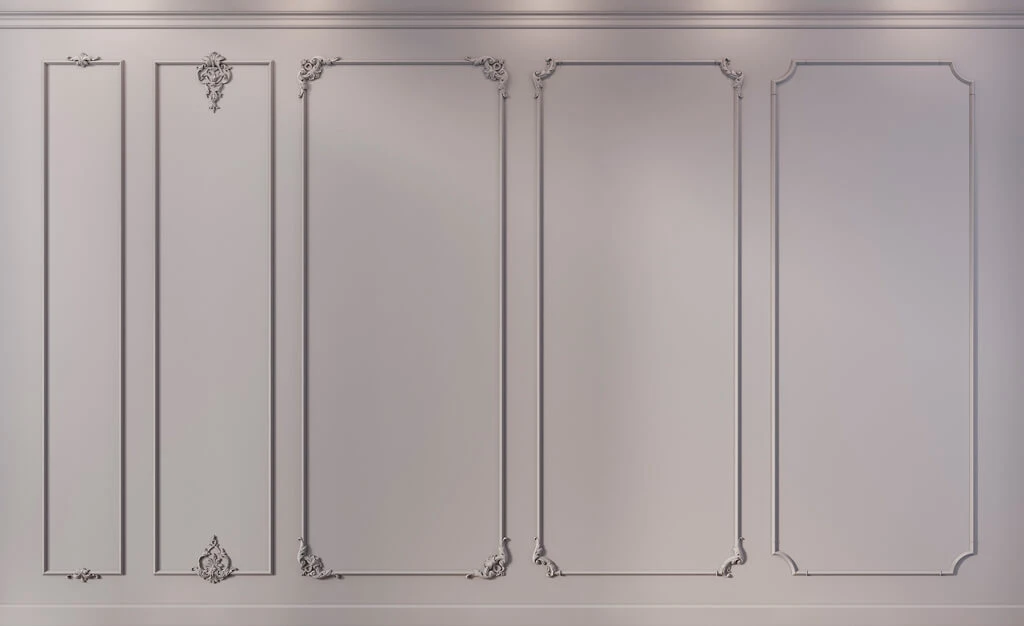
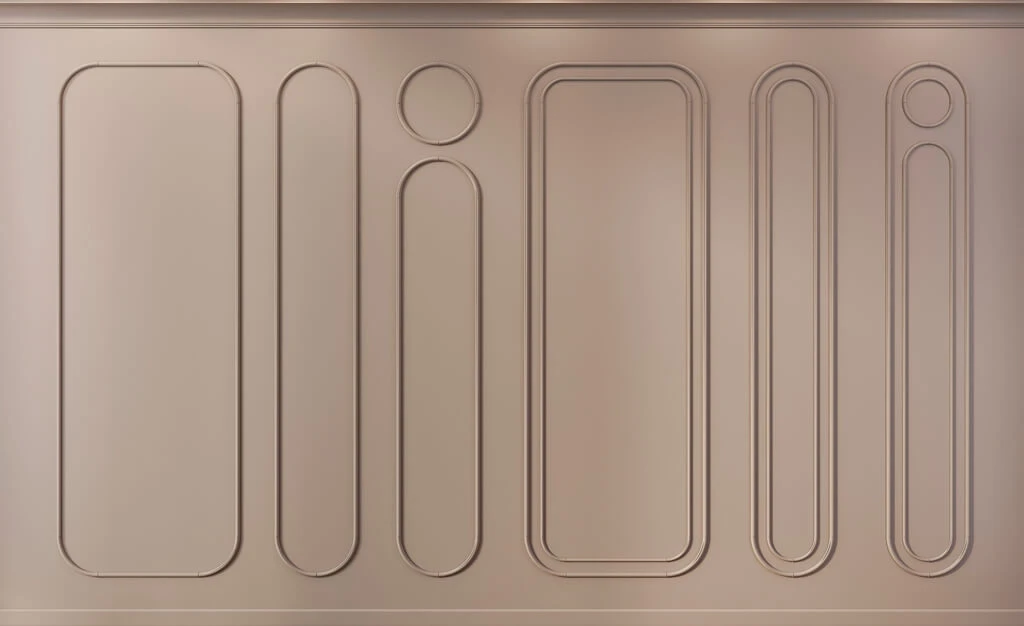
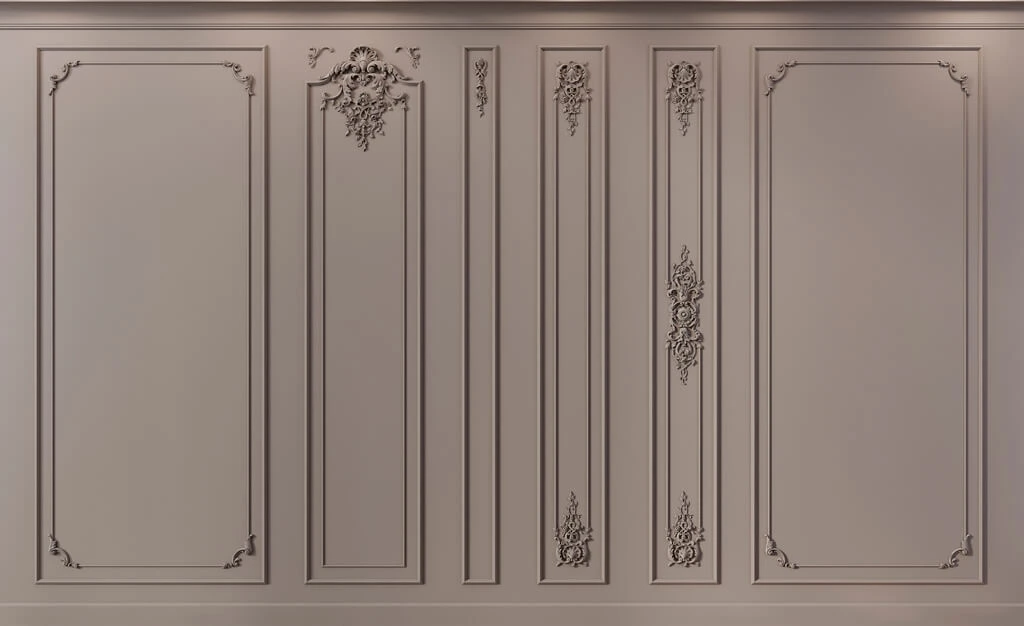
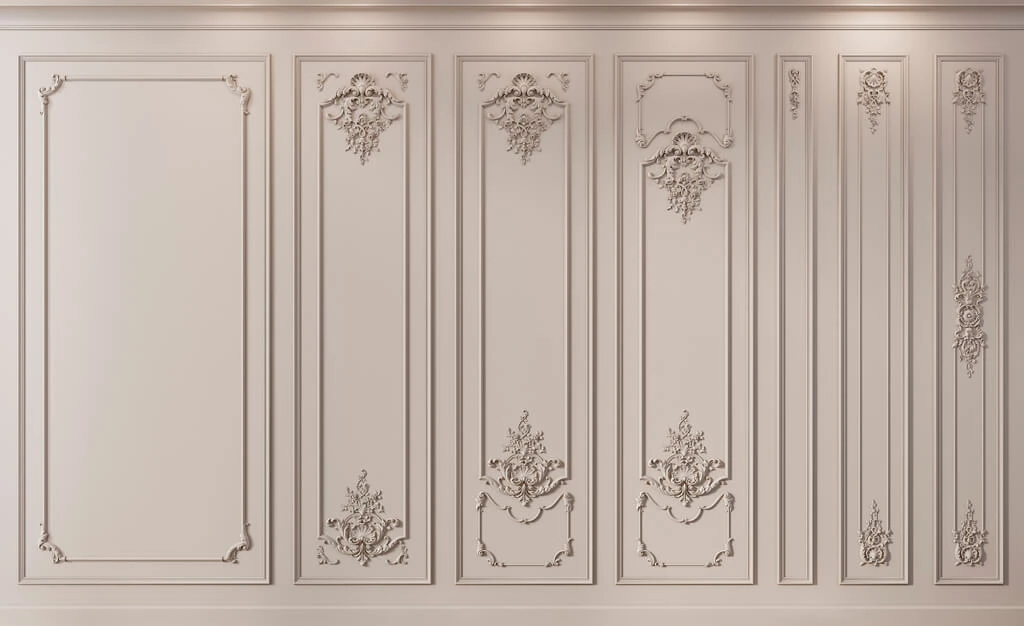
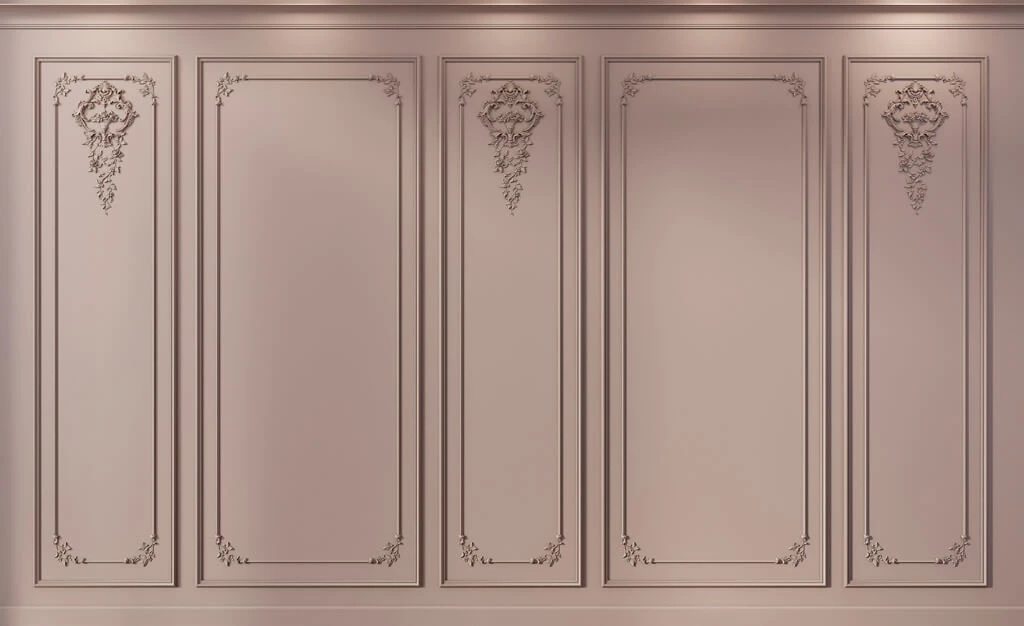
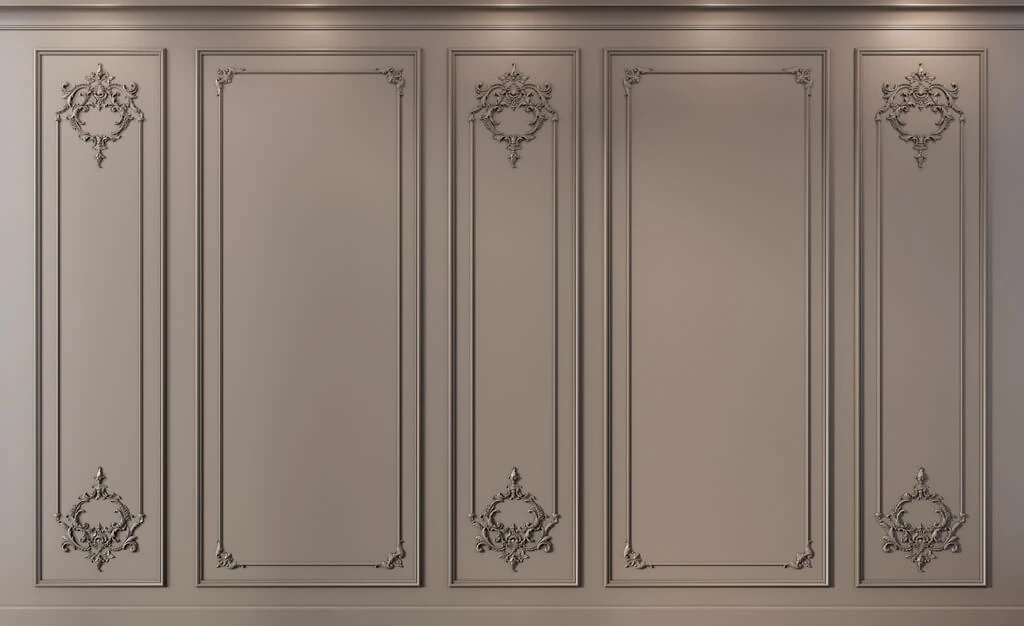
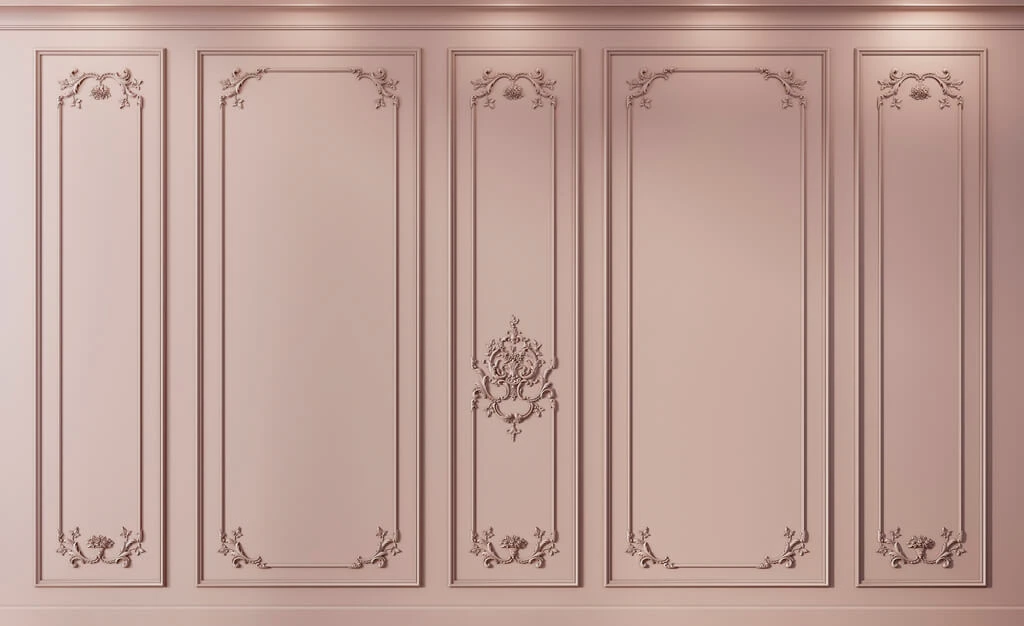
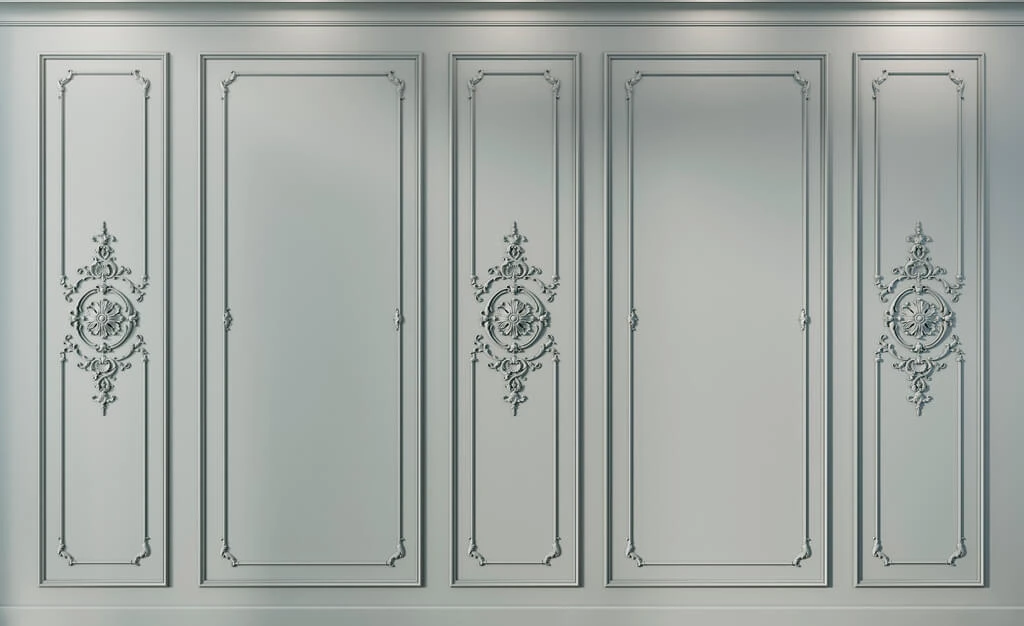
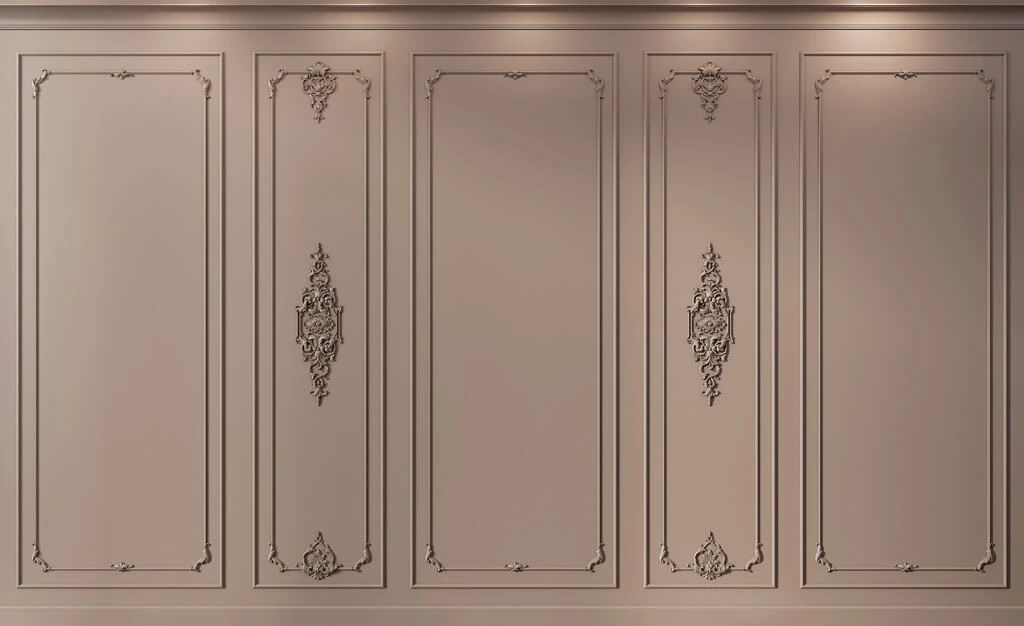
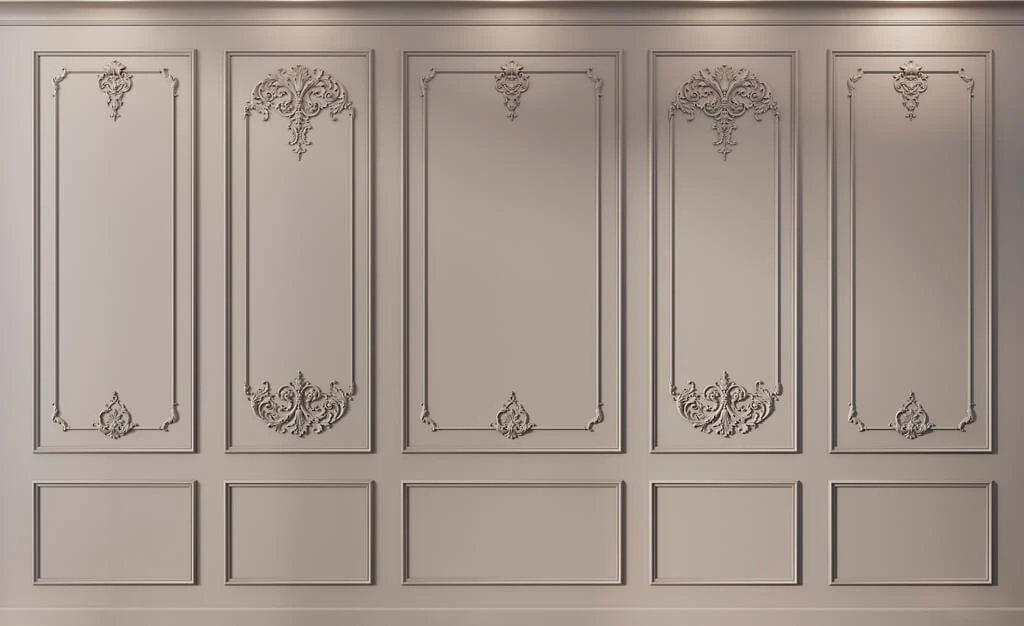
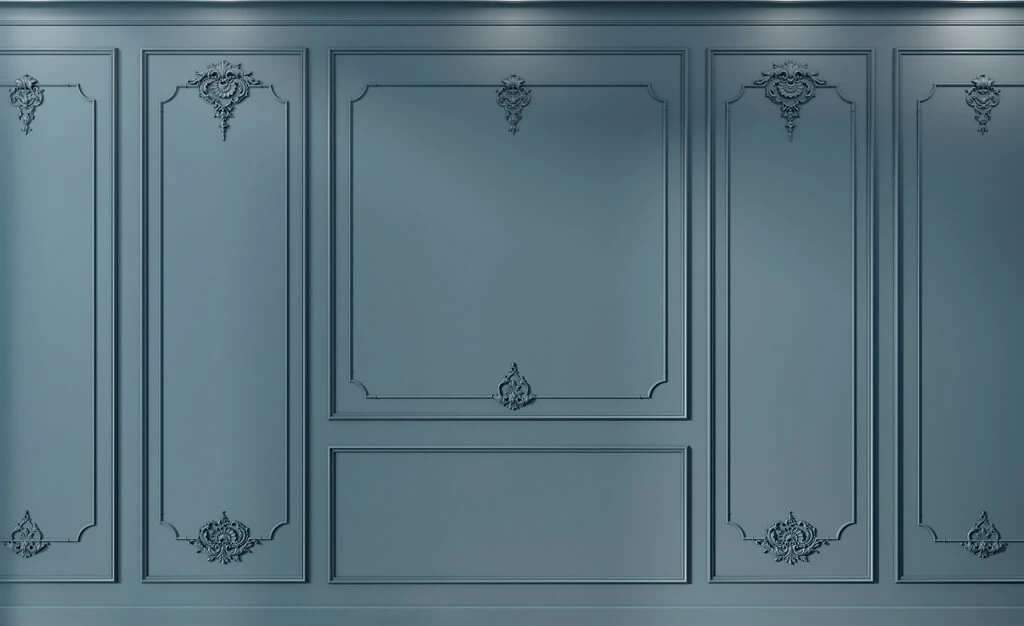
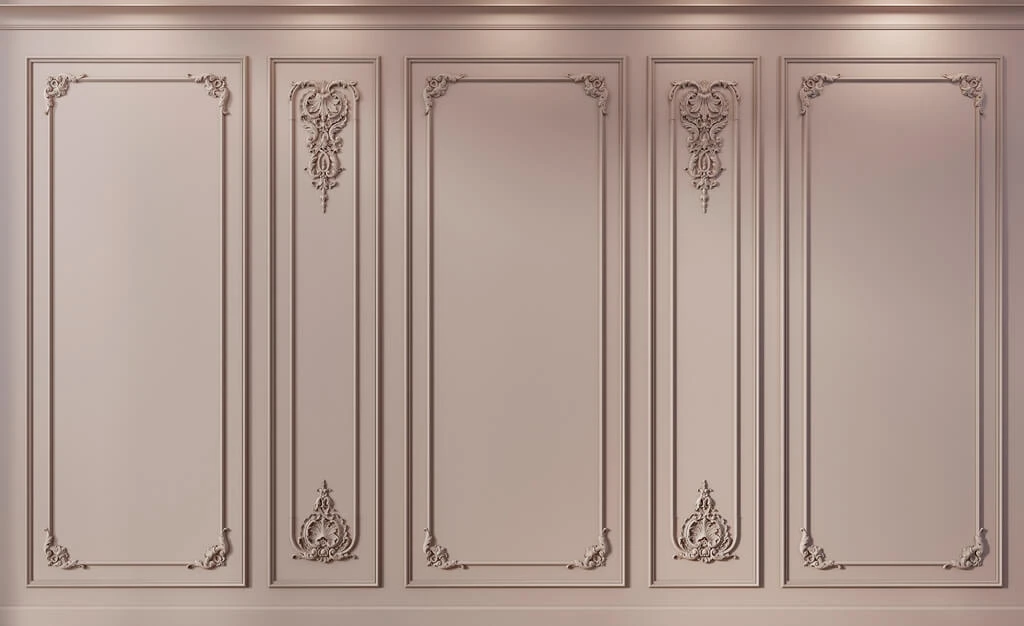
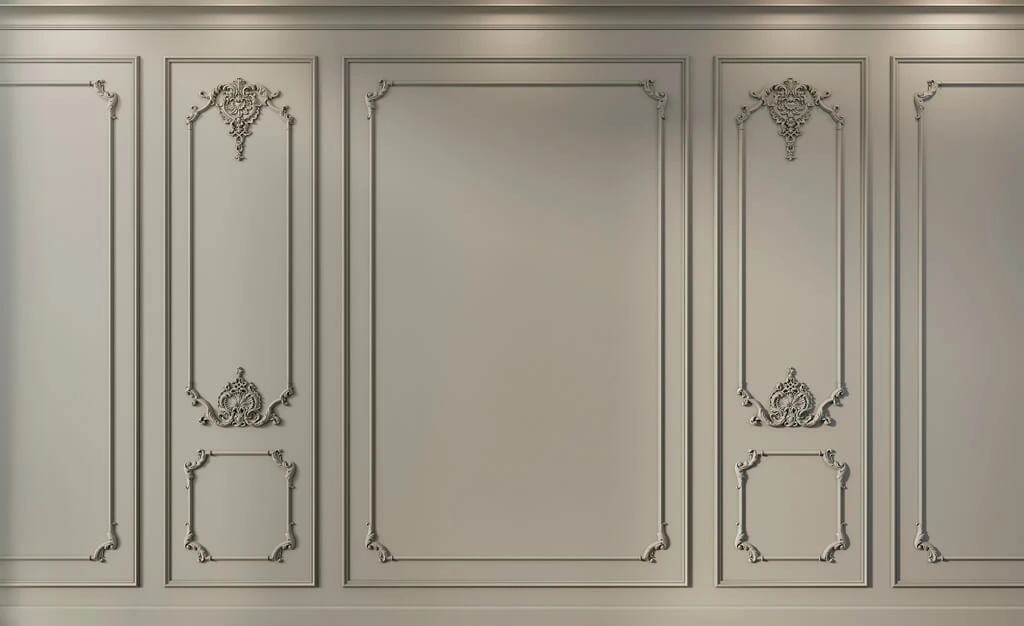
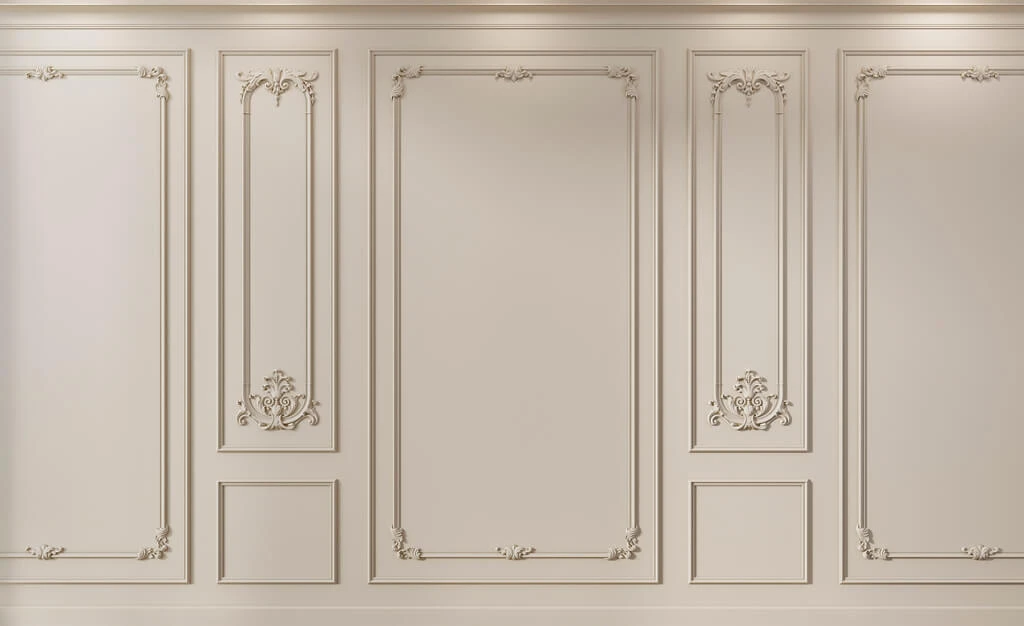
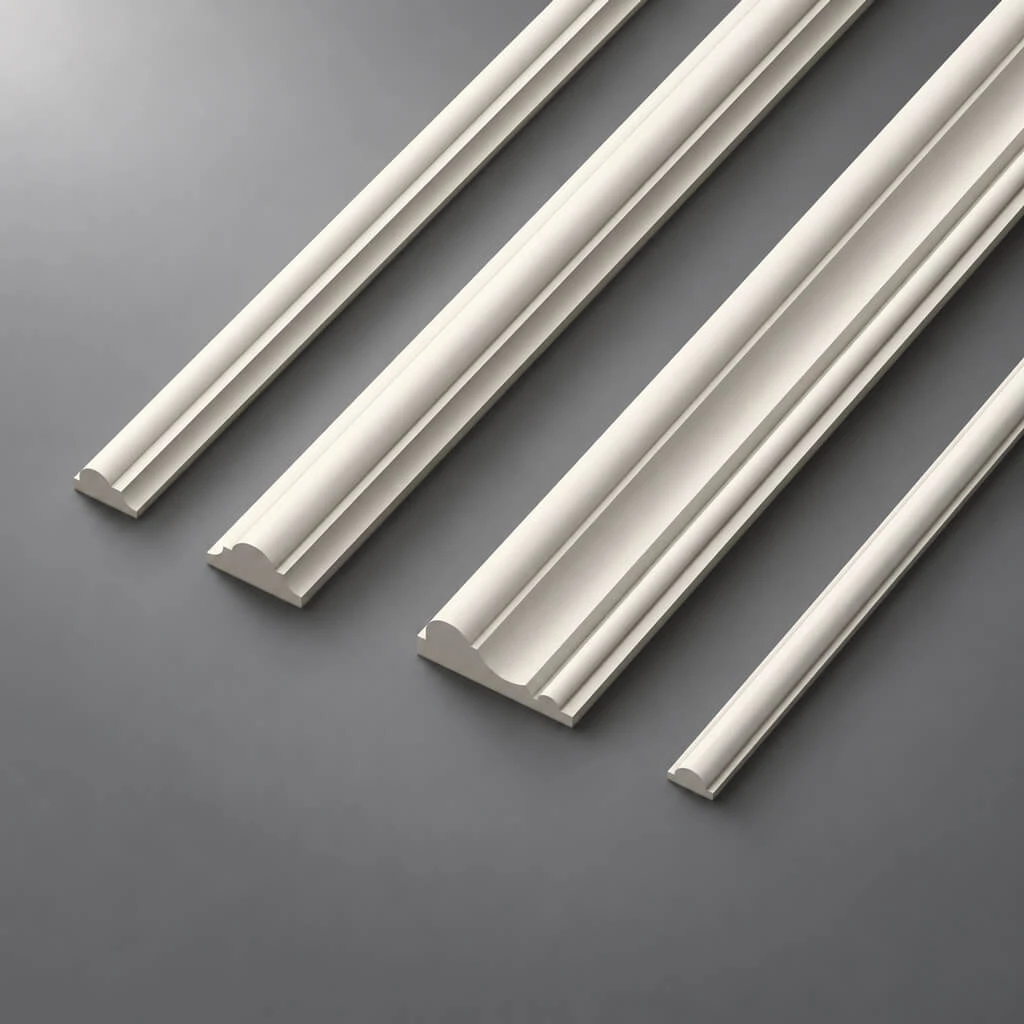
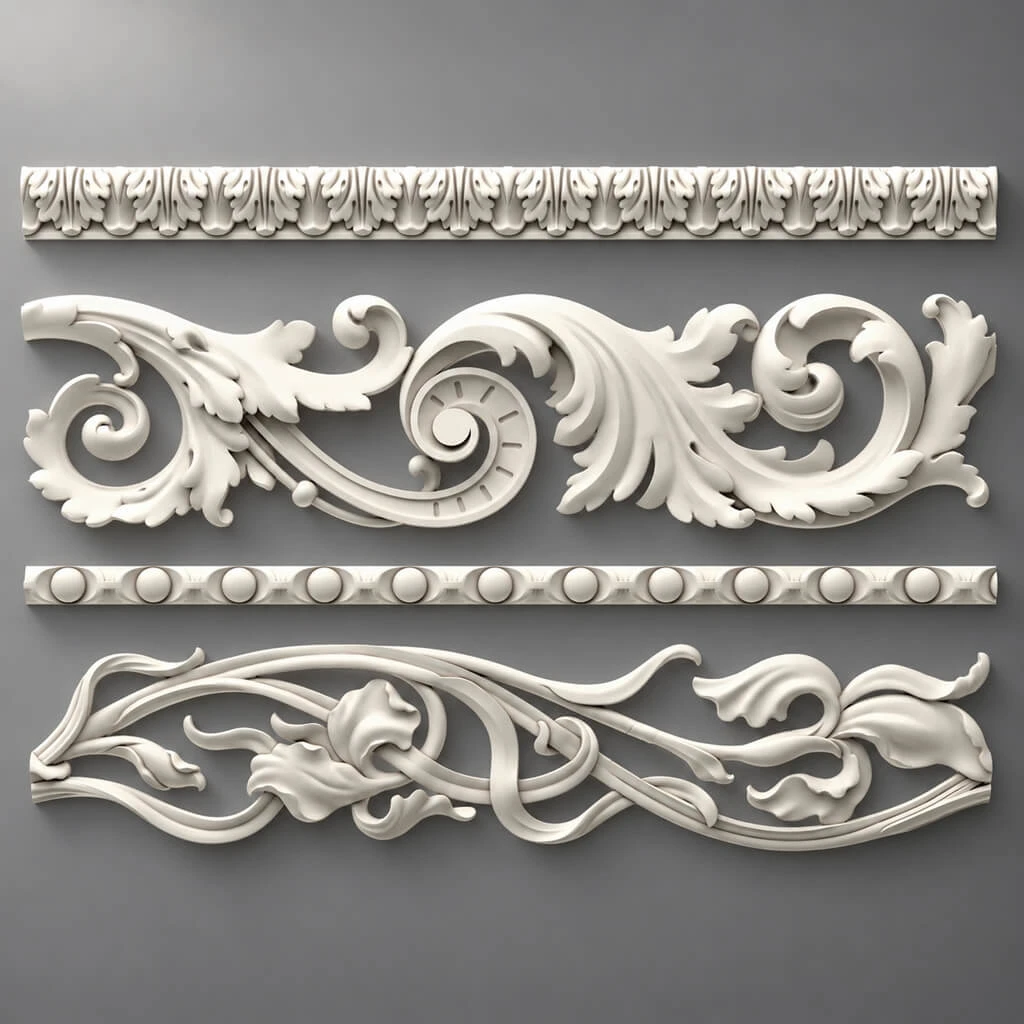
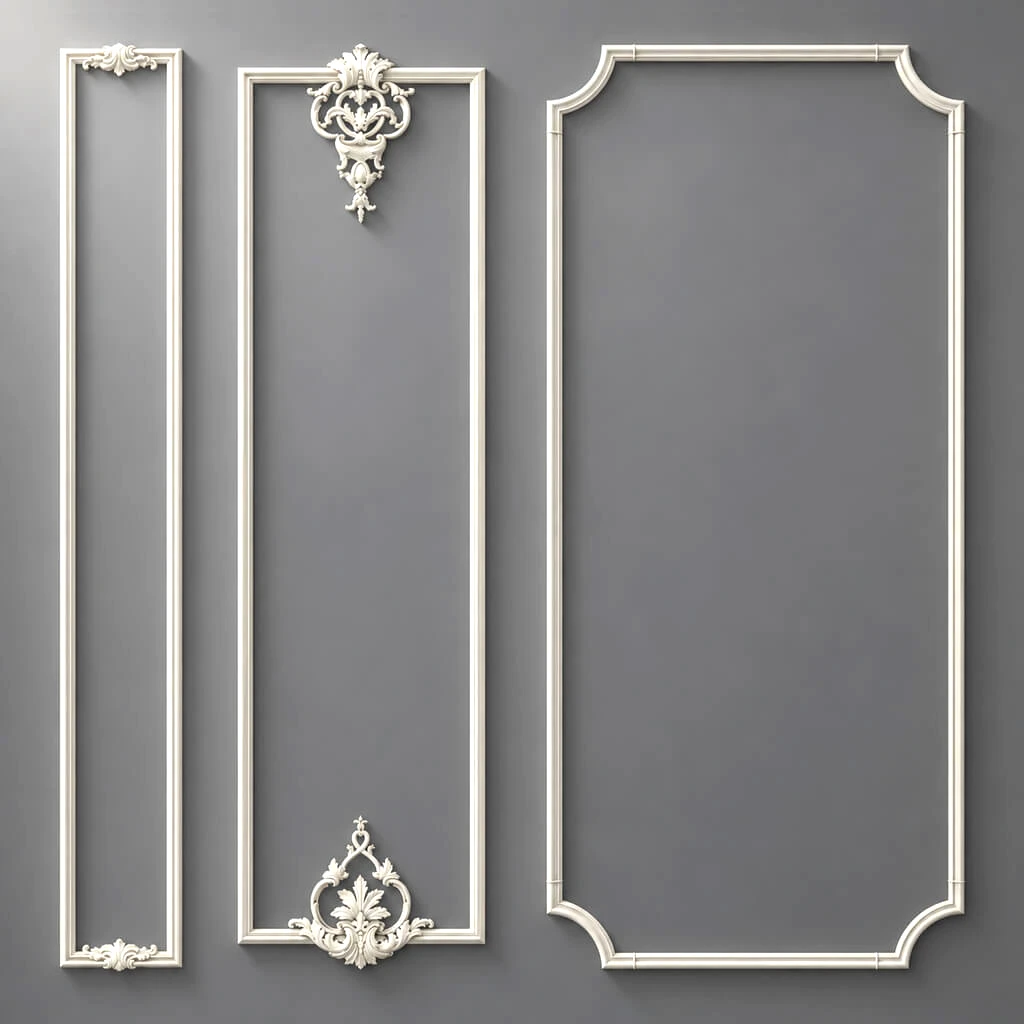
Decorative wall molding is one of the most flexible ways to introduce classical architecture because it can organize a plain wall without covering the entire surface in paneling.
Applied molding can create:
- large rectangular wall panels;
- narrow vertical bays;
- double-frame panels;
- wainscoting below a chair rail;
- frames around mirrors or artwork;
- decorative fields around fireplaces;
- architectural transitions around doors and windows.
STAVROS offers both wood and MDF moldings and polyurethane wall molding, which allows the material to be selected according to finish, profile, scale, and construction rather than forcing one material into every application.
Наша фабрика также производит:
Смотреть весь Каталог продукции
Decorative Molding for Walls: Start With Proportion
The wall should be divided before the molding is selected.
Identify:
- ceiling height;
- door and window positions;
- baseboard height;
- furniture locations;
- fireplaces and built-ins;
- switches and outlets;
- artwork or mirrors;
- sconces;
- the main viewing axis.
Only after that should profile width and relief be chosen.
A small ornate molding cannot rescue badly proportioned panels. A simple molding can make a wall look refined when the spacing is correct.
Получить консультацию
Symmetry: Important, but Not Mechanical
Classical interiors rely heavily on symmetry, but symmetry should respond to architecture.
A room with a centered fireplace may use mirrored panel layouts on both sides. A wall with an off-center door may require adjusted panel widths rather than mathematically equal rectangles.
The goal is visual balance, not arithmetic stubbornness.
Panel Molding vs. Full Wall Panels
These two systems are often confused.
Panel molding is a linear profile applied to a finished wall or panel substrate to create framed fields.
Full wall panels use actual panel material—wood, MDF, plywood, or another substrate—to cover part or all of the wall.
A room can combine both. For example, painted MDF panels can create the lower wall while smaller polyurethane molding creates an inner frame.
Classical Wall Panels
The source article correctly identifies wall panels as one of the central components of a classical interior. In contemporary U.S. projects, the term can refer to several systems:
- raised panels;
- recessed panels;
- flat-panel millwork;
- applied molding over drywall;
- wainscoting;
- full-height paneled walls;
- painted MDF wall systems;
- stained wood paneling.
The visual effect may be similar, but construction, cost, durability, and finish behavior differ.
Do Wall Panels Improve Sound or Thermal Performance?
Not automatically.
The Russian source broadly attributes acoustic and thermal benefits to wall panels. That can be true for certain assemblies, but decorative paneling by itself should not be sold as an acoustic or insulation system without tested construction data.
A thin applied molding frame changes appearance, not wall performance. A thick panel assembly with insulation, resilient layers, or acoustic backing is a different construction entirely.
Wood Wall Panels
Wood panels are most appropriate when natural material is meant to remain visible.
Use wood when:
- grain is part of the design;
- the room contains stained doors, cabinetry, or furniture;
- the wall should feel like permanent millwork;
- carved ornament is integrated into the panel system;
- repair and refinishing of solid material are valuable.
The surrounding decorative wood molding should belong to the same material family, especially when everything will be stained or clear-finished.
Paint-Grade MDF Panels
MDF is useful for broad rails, stiles, recessed-panel frames, and painted classical walls.
It works particularly well when:
- the finish is opaque paint;
- large flat components are needed;
- the room requires substantial panel architecture;
- natural wood grain is not part of the concept.
MDF and polyurethane can be combined effectively: MDF provides broad architectural mass, while PU provides smaller relief profiles and ornament.
Polyurethane Panel Molding
Polyurethane is most useful as applied decorative molding rather than as the entire panel substrate.
Use polyurethane panel molding when the existing wall can remain the panel field and the design requires lightweight paint-grade relief.
Wood Molding vs. Polyurethane Molding
| Design factor | Wood molding | Polyurethane molding |
|---|---|---|
| Natural grain | Yes | No |
| Best finish | Stain, clear finish, or paint | Paint-grade |
| Traditional millwork | Excellent | Decorative rather than structural |
| Fine molded relief | Excellent when carved/milled | Excellent |
| Applied wall frames | Excellent | Excellent |
| Furniture-like character | Strong | Usually lower |
| Monochromatic wall integration | Good | Excellent |
Decorative Wood Molding
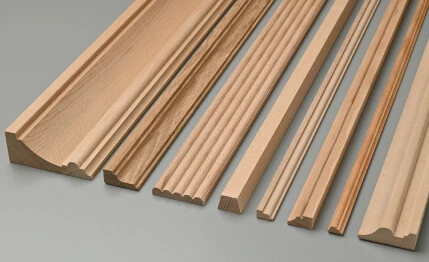
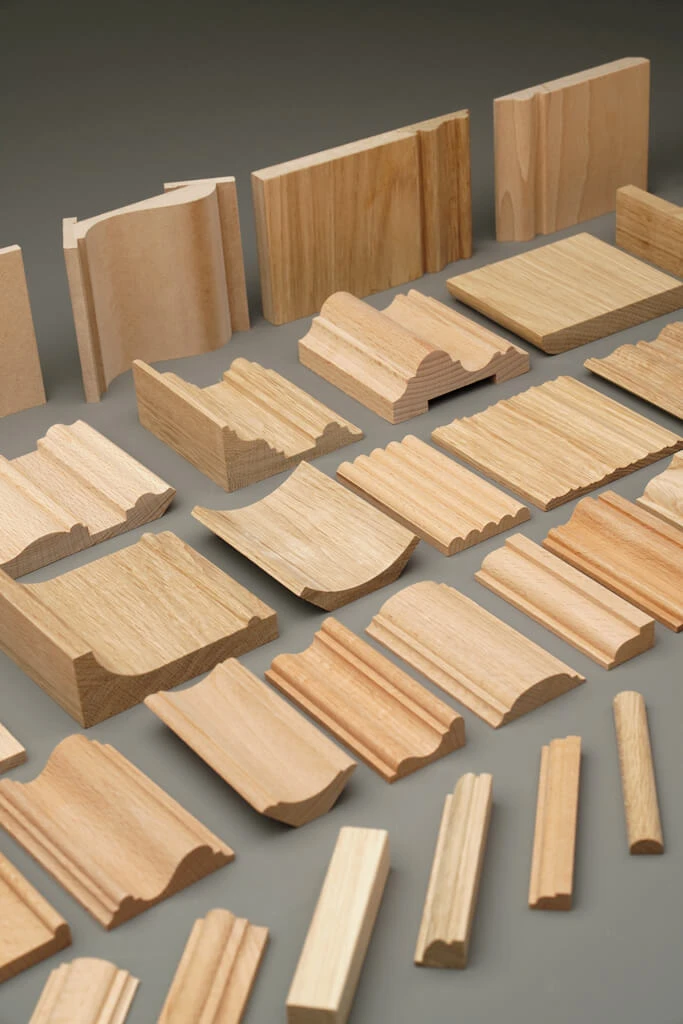
Decorative wood molding is one of the strongest choices for classical interiors because material and ornament can be combined in the same profile.
STAVROS offers oak, beech, and MDF profiles within its wood and MDF trim collection.
Wood molding is especially effective for:
- stained wall panels;
- libraries and home offices;
- dining rooms with wood millwork;
- door and window surrounds;
- fireplace mantels;
- furniture and cabinetry;
- classical frames and decorative bands.
Polyurethane Decorative Molding
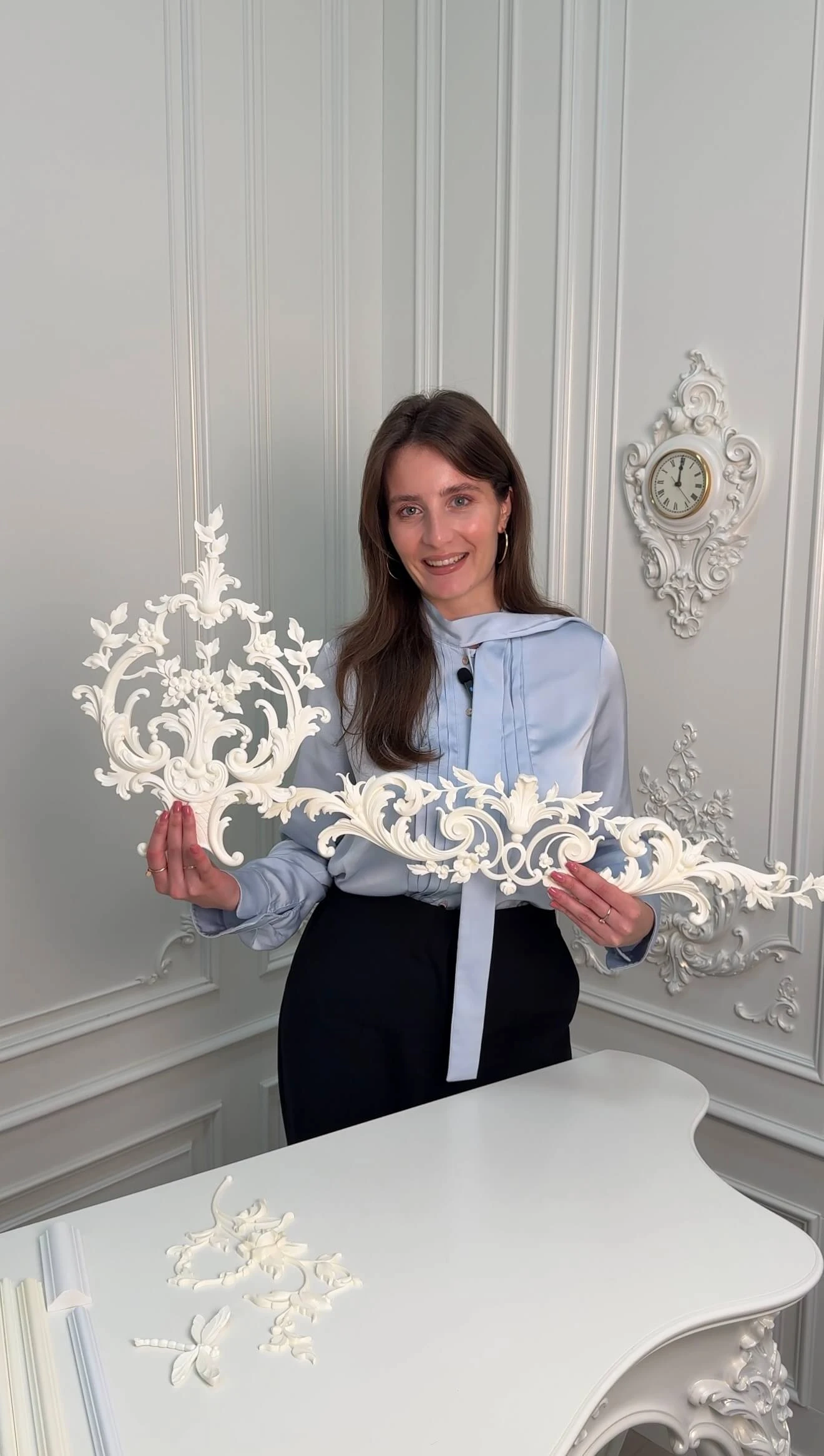
For paint-grade interiors, decorative polyurethane trim can introduce repeated ornament without requiring carved wood on every linear run.
This is particularly useful when the goal is a painted plaster-like visual language across:
- walls;
- pilaster fields;
- friezes;
- mirror surrounds;
- fireplace walls;
- door panels;
- selected ceiling details.
Egg and Dart Molding: One of the Most Recognizable Classical Ornaments
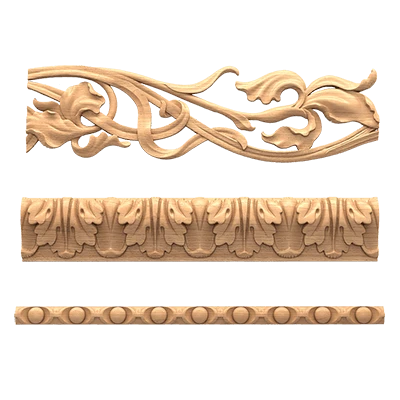
Egg and dart molding is a repeating classical ornament made of alternating oval “egg” forms and pointed “dart” or arrow-like shapes.
In architectural history it appears in classical orders and later revival styles, especially as a band separating larger architectural elements.
In contemporary interiors, egg-and-dart is most effective when used as a controlled border rather than as a universal decorative pattern.
Egg and Dart vs. Ionic Ornament
In product catalogs, egg-and-dart is often associated with Ionic ornament. The terms are closely related in decorative practice, although “Ionic” can refer more broadly to a family of classical motifs rather than one single pattern.
STAVROS currently has a dedicated polyurethane molding with Ionic ornament selection and a corresponding wood molding with Ionic ornament selection.
Where Egg and Dart Molding Works Best
Good applications include:
- decorative wall borders;
- fireplace friezes;
- door and window head trim;
- classical mirror frames;
- cabinet cornices;
- built-in bookcases;
- selected ceiling borders;
- picture-frame compositions where the ornament is large enough to read.
Where Egg and Dart Molding Usually Does Not Work
Avoid using a strong repeating ornament on every line in the room.
If egg-and-dart appears on the crown, every wall panel, every door casing, every cabinet, and the fireplace, the repetition becomes visual noise.
Choose one or two architectural levels where the ornament has meaning.
Egg and Dart Molding as a Frieze Detail
A narrow egg-and-dart band can separate a larger plain field from a cornice or mantel shelf.
This is one of the most historically convincing uses because the ornament acts as a transition rather than as a large independent object.
Egg and Dart Crown Molding
The keyword egg and dart crown molding has its own U.S. search demand, but product material must be handled carefully.
STAVROS currently carries ceiling cornice products in materials that include HIWOOD polystyrene and wood/MDF. Do not describe a crown as polyurethane unless the exact product confirms that material.
The ornament and the material are separate specification questions.
Wood Egg and Dart Molding
Wood egg and dart molding is ideal when:
- the ornament will remain stained or clear-finished;
- the room uses oak or beech millwork;
- the molding is part of cabinetry or furniture;
- the design needs tactile carved detail;
- the profile must coordinate with other wood trim.
The wooden Ionic molding collection is the most relevant STAVROS internal destination for this intent.
Polyurethane Egg and Dart Molding
Polyurethane egg and dart molding is best treated as paint-grade decorative trim.
The polyurethane Ionic ornament molding category is a natural internal destination for this material-specific intent.
Choosing the Scale of a Repeating Ornament
With egg-and-dart, profile width is only half the issue. The repeat itself must be scaled to the room.
Consider:
- size of each egg motif;
- distance from which the molding will be viewed;
- height of the room;
- width of the surrounding frieze;
- number of other ornamental bands nearby.
A tiny repeat disappears on a high wall. An oversized repeat can overwhelm a narrow door casing.
Pattern Repeat at Corners
Repeating ornaments create a technical design issue that plain molding does not: the pattern should look intentional when it reaches a corner.
Before cutting, dry-fit enough length to see where the motif will land. On a focal wall, it may be worth shifting the start point so the pattern terminates more cleanly at both ends.
Do Not Judge Ornament From a 12-Inch Sample Alone
Repeating trim can look refined in a sample and busy across a 16-foot wall.
Whenever possible, view several repeats together or create a full-scale mockup.
Classical Ornament Is a Vocabulary, Not a Pattern Library
Egg-and-dart is only one part of a larger classical decorative language. Other motifs may include:
- bead-and-reel;
- dentils;
- acanthus leaves;
- fluting;
- rosettes;
- scrolls and volutes;
- laurel and floral bands;
- anthemion-inspired ornament;
- geometric Greek-key-like borders.
The goal is not to combine as many motifs as possible. It is to select a small family that supports the architecture of the room.
How to Combine Egg and Dart With Other Classical Details
One effective hierarchy is:
- plain baseboard;
- simple panel molding;
- egg-and-dart as a frieze or upper-wall accent;
- one carved applique at a focal point;
- restrained ceiling trim.
This keeps the repeated ornament special.
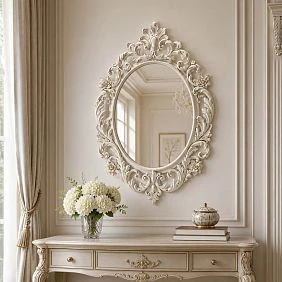
Decorative Trim Molding Around Mirrors
Mirrors are natural focal points in classical rooms because they create symmetry and reflect architectural detail.
A mirror can be:
- framed with real wood molding;
- mounted independently inside a wall panel;
- surrounded by applied polyurethane trim;
- placed over a mantel within a larger panel system.
For a dedicated treatment of these distinctions, see the STAVROS guide to mirror frame molding.
Decorative Trim Around Doors
Door openings are one of the strongest repeated architectural elements in a house.
Classical door trim can include:
- wide casing;
- head casing;
- corner blocks;
- overdoor molding;
- panel molding on the door slab;
- decorative appliques.
For applied molding on interior doors rather than casing, see decorative door molding.
Decorative Trim Around Windows
Window casing should be part of the same design language as doors and wall panels.
A classical room often fails when the walls are richly paneled but the windows remain surrounded by generic construction trim.
Use the principles in the STAVROS guide to interior window trim molding to coordinate casing, stool, apron, wall panels, and decorative profiles.
Baseboards: The Lower Boundary of Classical Architecture
Baseboards are not background trim. In a classical interior, they visually support the entire wall.
Their design should respond to:
- wall height;
- door casing width;
- panel molding scale;
- floor material;
- furniture style;
- amount of ornament above.
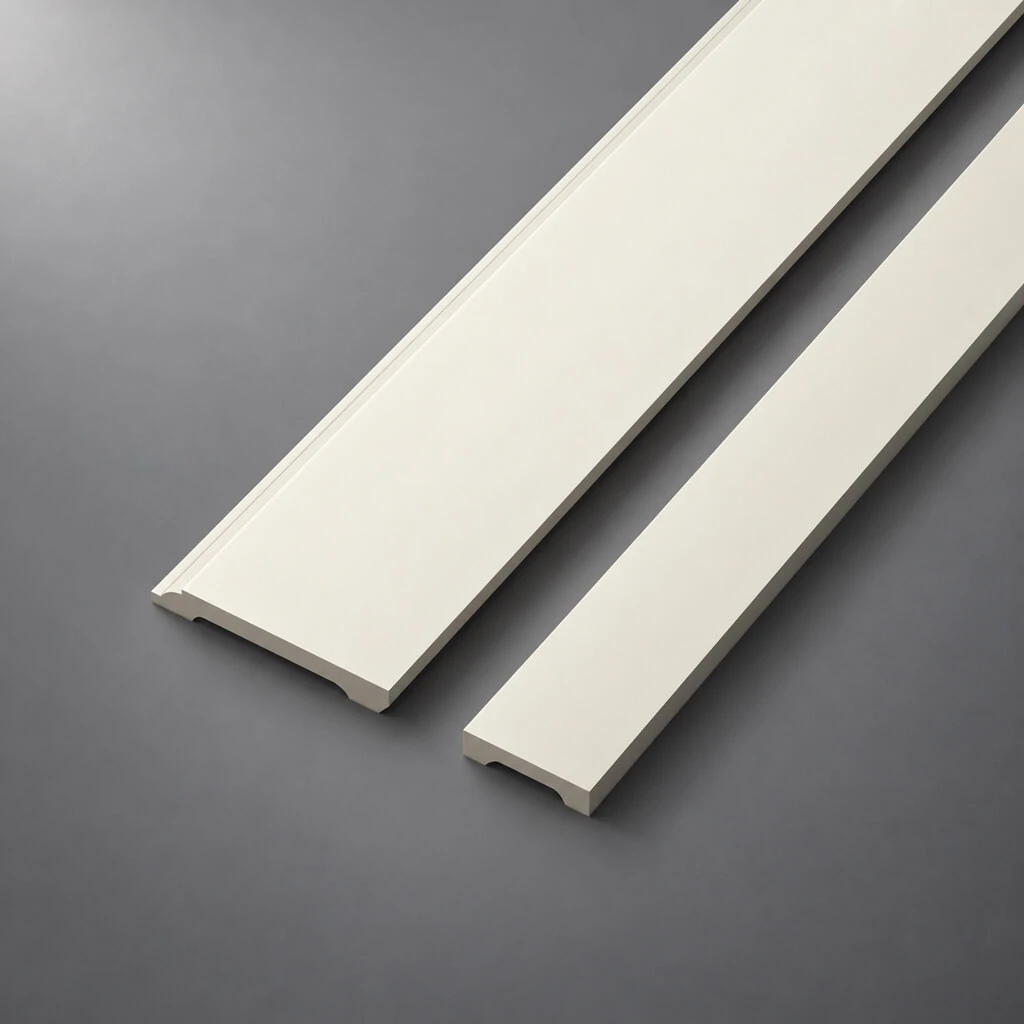
Wood Baseboards
Wood baseboards are especially effective when the floor, door casing, wall panels, or furniture already contain visible wood.
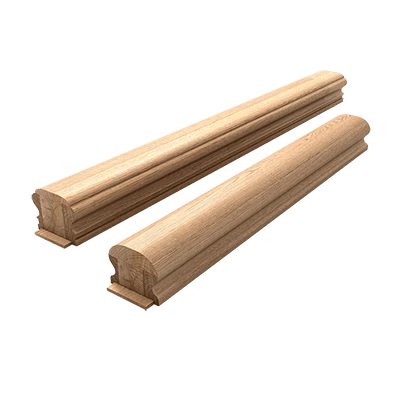
STAVROS offers wood, beech, oak, and MDF linear trim within the wood trim collection, including products that can serve as baseboard, molding, cornice, and other architectural trim depending on the profile.
Wide Baseboards in Classical Interiors
Wide baseboards can give a room more visual stability, but width alone does not make them classical.
A 6-inch flat baseboard can feel more elegant than an ornate 8-inch profile if the rest of the room is restrained.
Hierarchy matters more than size.
Baseboard and Door Casing Relationship
The junction between baseboard and casing should look intentional.
Common strategies include:
- baseboard terminating into wider casing;
- plinth blocks at the base of the door casing;
- same-profile family in different widths;
- painted baseboard with stained door casing as deliberate contrast.
Baseboard and Wall Panel Relationship
In wainscoting or full wall paneling, the baseboard is the bottom rail of the composition.
For lower-wall systems, see wainscoting and chair rail molding.
Cornices and Crown Molding
The upper edge of a classical room matters as much as the lower edge.
Cornice or crown molding can:
- complete the transition from wall to ceiling;
- hide minor irregularities at the joint;
- create a shadow line;
- support ceiling ornament;
- reinforce the room's architectural scale.
Wood Cornices
Wood cornices are appropriate when the upper trim should remain part of a visible woodwork system.
STAVROS offers multiple wooden cornice profiles within the wood and MDF trim range.
These are useful for libraries, studies, paneled dining rooms, and interiors where the crown is intended to match doors, wall panels, or cabinetry.
Paint-Grade Ceiling Trim
Paint-grade cornice can use wood, MDF, polystyrene, or another compatible profile material.
Material should be named accurately. Do not call a crown polyurethane simply because other decorative elements in the room are polyurethane.
Decorative Ceiling Molding
Decorative ceiling molding can refer to perimeter crown, ceiling-frame molding, coffering, or ornamental bands applied to the ceiling surface.
STAVROS has separate ceiling medallions and other ceiling decor, but the article should not collapse all ceiling products into one material category.
Ceiling Frames
A classical ceiling does not always need a heavy crown.
Thin molding can create:
- a perimeter rectangle;
- concentric frames;
- centered fields around a chandelier;
- geometry aligned with wall panels below.
This can be more effective in rooms where the wall architecture is already strong.
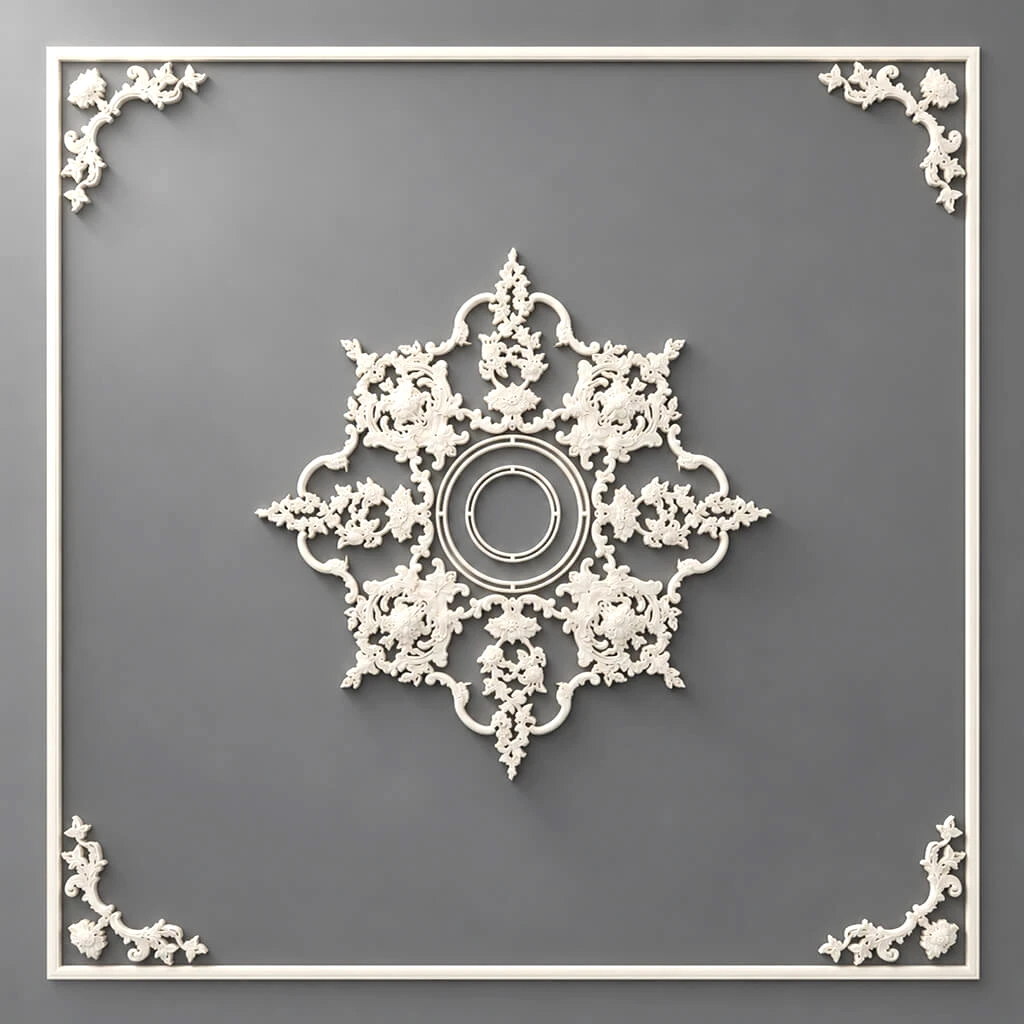
Ceiling Medallions and Rosettes
A ceiling medallion can establish a center point and connect the chandelier to the ceiling architecture.
It should be scaled to the fixture and room, not chosen simply because a larger medallion looks more decorative in a catalog.
Hidden Lighting Behind Cornice
The source suggests integrated lighting behind cornices. This can work, but the trim must be designed for the lighting strategy rather than modified casually.
Consider:
- LED channel placement;
- heat management;
- service access;
- distance from the ceiling;
- light source visibility;
- how the grazing light exposes joints.
A purpose-built lighting cove is usually better than cutting an arbitrary groove into decorative molding.
Classic Interior Trim in Living Rooms
The living room can support the broadest hierarchy because it is usually viewed from multiple distances.
A balanced system may include:
- wide baseboards;
- large decorative wall panels;
- strong door and window trim;
- a fireplace surround;
- a central mirror or artwork;
- restrained crown or cornice;
- one ornamental accent such as egg-and-dart or a carved applique.
For fireplace-specific detailing, see the STAVROS guide to fireplace surround molding and decorative trim.
Classic Interior Trim in Dining Rooms
Dining rooms are ideal for formal wall organization because furniture positions are relatively stable.
Useful combinations include:
- wainscoting below chair rail;
- wallpaper above;
- decorative wall molding around a sideboard;
- paired sconces;
- egg-and-dart as a restrained upper-wall band;
- wood cornice in a stained-millwork scheme.
Classic Interior Trim in Bedrooms
Bedrooms benefit from lower decorative density.
Use larger wall panels, fewer ornamented profiles, and more negative space. The headboard wall can become the focal elevation, while the other walls use simpler trim.
Classic Interior Trim in Home Offices and Libraries
These rooms are excellent candidates for decorative wood molding.
Stained wood panels, bookcases, crown, and door casing can create one millwork system. Egg-and-dart or carved trim can appear on the bookcase cornice or a selected frieze rather than on every wall panel.
Classic Interior Trim in Entry Halls
Entry halls often contain several doors and relatively little furniture. That makes the trim system especially visible.
Coordinate:
- door casing;
- baseboards;
- stair trim if present;
- mirror framing;
- wall panels;
- ceiling trim.
Classic Interior Trim Around Staircases
A staircase introduces strong diagonal geometry, so classical trim must adapt.
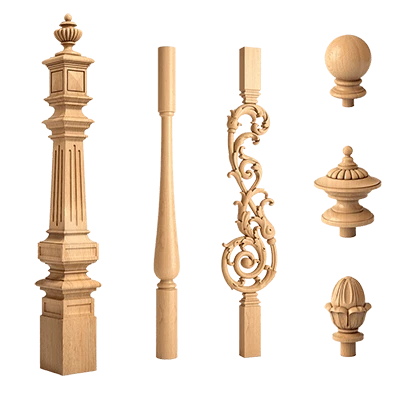
For the combined treatment of balusters, wood moldings, and stair-wall molding, see stair balusters and moldings.
Classic Interior Trim in Kitchens
Kitchen trim should respect cabinets rather than compete with them.
Good applications include:
- crown or top molding on cabinetry;
- decorative island panels;
- wall molding in adjacent dining zones;
- simple baseboards;
- selected carved or molded details on furniture-like cabinetry.
Avoid dense relief in high-grease or difficult-to-clean zones.
Classic Interior Trim in Bathrooms
Bathrooms require material and coating discipline.
Decorative molding can be used in appropriate areas, but no single trim material makes the complete wall waterproof. Consider:
- substrate;
- ventilation;
- paint system;
- adhesive;
- direct-water exposure;
- condensation;
- cleaning.
Classic Interior Trim in Commercial Spaces
Hotels, restaurants, offices, and event spaces may use classical trim to create a formal atmosphere.
But commercial specification should also consider:
- impact exposure;
- cleanability;
- fire-code requirements;
- maintenance;
- replacement parts;
- large viewing distances.
Neoclassical vs. Traditional Classical Trim
Traditional classical interiors can support more ornament and heavier millwork.
Neoclassical interiors typically use:
- larger plain wall fields;
- fewer profiles;
- more monochromatic paint;
- limited carving;
- strong symmetry;
- simpler cornices;
- one or two classical motifs used selectively.
Georgian and Federal-Inspired Interiors
These American traditions rely on ordered trim, balanced openings, paneled walls, substantial mantels, and refined rather than excessive ornament.
Egg-and-dart can appear, but so can dentils, bead-and-reel, fluting, and restrained carved details.
Greek Revival-Inspired Interiors
Greek Revival language favors strong proportions, pilaster-like verticals, broad entablatures, and relatively disciplined ornament.
In this setting, a heavy egg-and-dart band can be appropriate at a major architectural transition, but the room should not become a collage of classical patterns.
French Classical and Parisian-Inspired Interiors
These interiors often emphasize wall-panel geometry, mirrors, elegant cornices, and a lighter ornamental touch.
Thin decorative wall molding and carefully placed onlays can be more appropriate than heavy carved wood everywhere.
English Traditional Interiors
English-inspired rooms often rely on darker wood, paneling, dado rails, bookcases, and a stronger material presence.
Here, real wood trim can carry more of the design than polyurethane ornament.
Modern Classic and Transitional Interiors
Modern-classic design keeps the logic of classical architecture while reducing the decoration.
Use:
- large panel frames;
- simple baseboards;
- clean window and door trim;
- one classical ornament family;
- monochromatic paint;
- natural wood as a controlled contrast.
Do Not Turn Every Classical Room White
White trim is common, but classical interiors can also use:
- soft gray;
- mushroom;
- warm taupe;
- deep green;
- blue-gray;
- burgundy;
- charcoal;
- natural wood;
- two-tone wall and trim combinations.
Monochromatic Classical Walls
Painting molding and wall the same color is one of the most effective ways to modernize classical trim.
The architecture remains visible through shadow, while the room avoids the sharp white-outline effect sometimes associated with older decorative treatments.
Contrasting Molding
Contrast makes every line more visible.
Use it only when the layout is strong enough to deserve attention. A poor panel grid becomes more obvious when every frame is painted a different color from the wall.
Natural Wood + Painted Wall
This is one of the most sophisticated mixed-material combinations.
For example:
- painted PU wall panels;
- natural oak doors;
- wood baseboards;
- stained fireplace mantel;
- painted cornice.
The materials are different, but the proportions create unity.
Gold and Metallic Accents
Metallic accents should be used at focal points rather than across every molding edge.
Good locations include:
- small carved details;
- mirror frames;
- selected egg-and-dart highlights;
- capital details;
- sconce hardware;
- furniture pulls.
Full gilding changes the character of the room dramatically and should be a deliberate stylistic decision.
Carved Wood Appliques
Carved appliques are best used where natural material and deep relief matter.
STAVROS has a large carved wood decor collection that can support focal classical compositions on furniture, doors, wall panels, and architectural millwork.
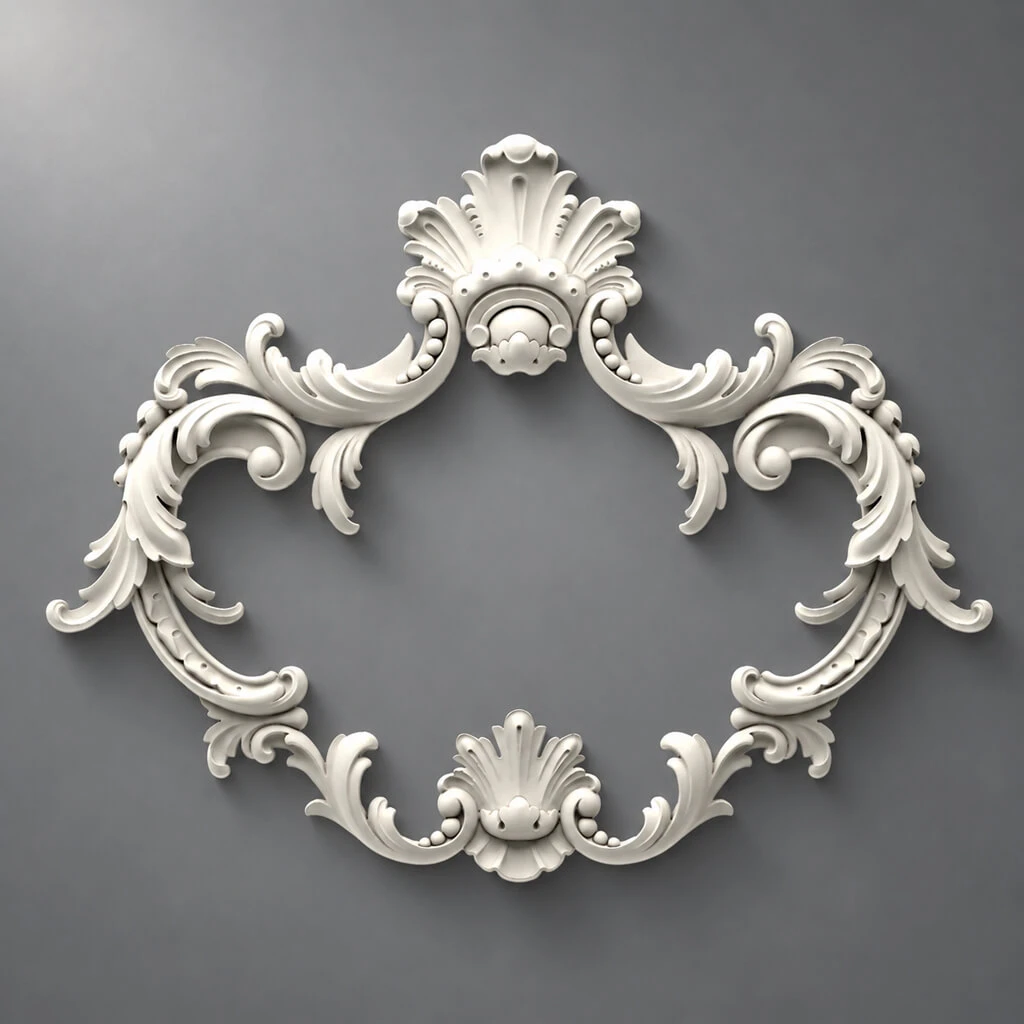
Polyurethane Appliques and Onlays
For painted interiors, polyurethane appliques and onlays can create focal relief without requiring every surrounding profile to be carved wood.
Where to Place Decorative Appliques
Good locations include:
- center of a fireplace frieze;
- top of a tall wall panel;
- over a door;
- inside one focal dining-room panel;
- above a mirror;
- on selected cabinet or furniture fronts.
Do not place a focal applique in every panel. Repetition reduces hierarchy.
How to Design a Classical Wall Elevation
Before choosing molding, draw the wall.
Include:
- full wall width and height;
- doors and windows;
- baseboard;
- chair rail or dado line;
- wall-panel frames;
- fireplaces;
- built-ins;
- mirrors and artwork;
- sconces;
- switches and outlets;
- furniture silhouettes.
The molding should organize these fixed elements rather than ignore them.
Start With the Largest Architectural Lines
The first lines are not the small panel frames. They are:
- floor;
- baseboard;
- chair rail;
- door and window heads;
- mantel height;
- ceiling line;
- cornice or crown.
Once these are coordinated, smaller decorative molding can be placed inside the larger structure.
Use Repetition, Not Duplication
A classical room should repeat relationships rather than duplicate every measurement.
For example, panel gaps can remain consistent while panel widths change to accommodate doors and furniture.
This creates order without forcing the architecture into an artificial grid.
Panel Width and Furniture
Place major furniture before finalizing wall panels.
A sideboard, console, bed, sofa, or desk should relate to the panel behind it.
One wide center panel behind a sideboard may be more elegant than three equal panels divided directly behind the furniture.
Negative Space Is Part of Classical Design
Every molding needs space around it.
If panel frames nearly touch the chair rail, baseboard, casing, or neighboring frame, the wall starts to feel compressed.
Leave enough painted or paneled field for each layer to remain legible.
How to Choose Molding Width
Do not use one universal width table.
Profile scale should respond to:
- room size;
- ceiling height;
- panel dimensions;
- viewing distance;
- profile depth;
- ornament density;
- color contrast;
- adjacent casing and baseboards.
A 1-inch profile may be enough in a bedroom. A large two-story hall may require a significantly stronger line.
Profile Depth Matters as Much as Width
Two moldings of equal width can look completely different if one projects much farther from the wall.
Deep projection creates stronger shadow and a more architectural effect. Shallow profiles feel lighter and more contemporary.
Choosing Between Plain and Ornamental Molding
Use plain molding when:
- panel geometry is already complex;
- the room contains patterned wallpaper;
- furniture is highly carved;
- the ceiling is already ornate;
- the style is Neoclassical or Transitional.
Use ornamental molding when:
- the wall field is otherwise simple;
- the profile itself is intended as a focal element;
- the room has enough scale for the pattern to read;
- the ornament is repeated selectively elsewhere.
How to Use Egg and Dart Without Making the Room Look Themed
Treat egg and dart molding as punctuation.
Good strategies include:
- one band under a cornice;
- one fireplace frieze;
- one bookcase cornice;
- one mirror surround;
- one major doorway;
- a furniture or cabinetry detail that repeats the room's ornament.
The motif should tell the eye where the important architectural transition occurs.
Egg and Dart With Plain Panel Molding
This is often the safest combination.
Use simple rectangular wall panels and reserve the egg-and-dart for the upper trim, fireplace, or another focal horizontal.
The contrast between plain geometry and repeated ornament makes the classical detail easier to read.
Egg and Dart With Carved Wood
If the room uses carved wood furniture or millwork, match character rather than copying exact motifs.
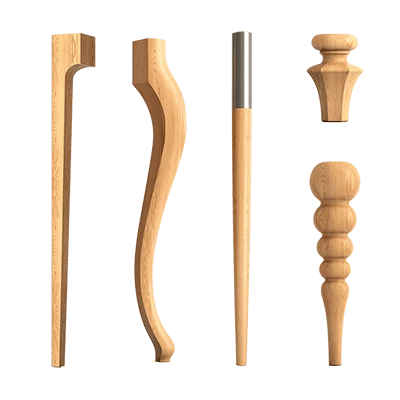
A carved wood egg-and-dart band can relate beautifully to turned legs, carved brackets, or a traditional mantel without requiring the same ornament to appear everywhere.
Egg and Dart With Polyurethane Onlays
A paint-grade egg-and-dart molding can be combined with polyurethane appliques, but keep one element dominant.
If the linear band is already highly ornamental, use a simpler central applique. If the applique is elaborate, keep the surrounding linear molding quieter.
Measuring Decorative Wall Molding
For rectangular frames, calculate each perimeter:
2 × width + 2 × height = molding length per frame.
Then add:
- all additional frames;
- chair-rail runs;
- frieze bands;
- door or window surrounds;
- corner returns;
- cutting allowance based on actual stock lengths.
Why a Cut List Is Better Than a Flat Waste Percentage
Different layouts create different waste.
A room with many short horizontal pieces may reuse offcuts efficiently. A room with long vertical panels may consume full lengths more quickly.
Create the cut list first, then determine the practical ordering allowance.
Patterned Molding Needs a Pattern-Aware Cut List
Egg-and-dart, floral, and other repeating decorative profiles require extra planning because the ornament repeat matters.
You may need to sacrifice a small amount of material to make the pattern land cleanly at a focal corner or centerline.
Full-Scale Mockups
Painter's tape is one of the most useful tools in classical interior design.
Mock up:
- panel boundaries;
- chair-rail height;
- mirror size;
- fireplace surround width;
- door-head extension;
- cornice depth;
- large decorative appliques.
Then view the room from its normal entrances and seating positions.
Installing Wood Molding
Wood molding installation depends on whether it will be painted or stained.
For stain-grade work:
- select clean pieces;
- consider grain direction;
- dry-fit joints;
- use careful mechanical fastening;
- minimize visible filler;
- test stain and finish on offcuts.
For paint-grade wood, small fastener holes and minor joints can be filled before priming and painting.
Installing Polyurethane Molding
Applied polyurethane molding should be installed over a sound, clean, dry substrate using a compatible adhesive system.
A practical workflow is:
- complete the entire layout;
- mark reference lines;
- cut test corners;
- dry-fit one complete frame;
- install with compatible adhesive;
- temporarily support as needed;
- finish small joints;
- prime repaired areas if required;
- paint.
Do Not Use Filler to Fix Bad Geometry
Small paint-grade gaps are normal finishing work. Large gaps usually mean the cut or layout is wrong.
Correct the joint rather than building it out with filler.
Mitered Corners
Most continuous profiled frame molding uses mitered corners.
But decorative corner blocks, rosettes, or series-specific corner elements can replace a plain miter where the design calls for a visible ornament.
Decorative Corner Elements
STAVROS offers decorative molding corners for compatible polyurethane series.
Use them when they are part of the design, not simply to avoid learning how to cut a miter.
Paint Sequence
Paint-grade classical trim often looks best when the wall and applied molding are finished as one architectural surface.
The exact sequence depends on material and coating system, but typically includes:
- surface preparation;
- molding installation;
- joint finishing;
- spot priming or full priming where needed;
- finish coats.
Paint Sheen
Sheen changes how relief reads.
Higher sheen emphasizes profile edges and imperfections. Matte and eggshell-like finishes create softer shadows.
There is no universal “classical” sheen.
Staining Wood Trim
If molding, baseboards, cornices, or panels remain natural wood, sample the finish on the actual species.
Oak, beech, pine, and MDF do not react identically to stain or clear finish.
Matching Wood Species
When several components remain visibly wood, exact species matching becomes more important.
For example:
- oak wall molding + oak door casing;
- beech cornice + beech cabinetry;
- wood fireplace mantel + related wood baseboard.
If everything will be painted, species matching becomes much less important than dimensional stability and finish compatibility.
Common Mistake #1: Treating Classical Style as “More Ornament”
Classical design is primarily about proportion and hierarchy.
Common Mistake #2: Using the Same Profile Everywhere
Baseboards, panel molding, casing, cornice, and furniture trim do different jobs.
Common Mistake #3: Making Every Wall Symmetrical at Any Cost
Architecture and furniture may require controlled asymmetry.
Common Mistake #4: Using Ornamental Molding on Tiny Panels
The pattern becomes crowded and difficult to read.
Common Mistake #5: Repeating Egg and Dart on Every Surface
A strong classical ornament needs restraint.
Common Mistake #6: Calling Every Ceiling Profile Polyurethane
Verify the exact product material. Current STAVROS ceiling products include wood/MDF and HIWOOD polystyrene in addition to other decorative materials.
Common Mistake #7: Assuming Wall Panels Provide Acoustic Insulation
Decorative paneling should not be assigned tested acoustic performance without evidence.
Common Mistake #8: Ignoring Furniture
Wall panels should frame the furniture composition rather than cut through it.
Common Mistake #9: Ignoring Switches and Outlets
Electrical devices should not accidentally land on molding lines.
Common Mistake #10: Using a Large Applique in Every Panel
Focal ornament only works when some panels remain quiet.
Common Mistake #11: Mixing Unrelated Historical Motifs
Baroque scrolls, Art Deco geometry, Greek key, egg-and-dart, and floral Rococo relief do not automatically form one coherent classical room.
Common Mistake #12: Choosing Molding From Close-Up Product Photos
Always judge scale from normal viewing distance.
Common Mistake #13: Using a Flat Waste Percentage Without a Cut Plan
Actual stock lengths and pattern repeats matter.
Common Mistake #14: Trying to Make PU Look Like Stained Wood Everywhere
If visible grain is important, use real wood where it matters.
Common Mistake #15: Forgetting Door and Window Trim
Decorated walls beside generic openings make the room look unfinished.
Common Mistake #16: Overloading the Ceiling
A strong wall system may need only a simple upper trim line.
Common Mistake #17: Making Baseboards Too Weak
The wall needs a visual foundation.
Common Mistake #18: Making Crown Too Dominant
The room should not feel top-heavy.
Common Mistake #19: Using Contrast to Rescue Weak Layout
Color cannot correct bad proportions.
Common Mistake #20: Skipping the Full Elevation
Design the wall, not isolated products.
Specification Checklist for Designers
A professional classical trim schedule should identify:
- room and wall elevations;
- baseboard profile and height;
- chair rail or dado profile;
- panel molding profile;
- door and window casing;
- cornice or crown material;
- wood species where exposed;
- PU molding SKUs where used;
- egg-and-dart or other ornament locations;
- applique and corner-element SKUs;
- panel dimensions and gaps;
- paint, stain, and sheen;
- electrical-device coordination;
- mockup requirements.
Specification Checklist for Installers
Before installation, confirm:
- wall surfaces are stable and ready;
- door and window casing dimensions are final;
- baseboards and crown are coordinated;
- panel layout is fully marked;
- molding material matches the schedule;
- patterned trim orientation is correct;
- corner details have been tested;
- adhesives and fasteners are compatible;
- finish sequence is known.
SEO Intent: Decorative Wall Molding and Classical Trim
This page should not compete only for one ornamental phrase.
Its broad commercial/informational cluster includes:
- decorative wall molding;
- decorative molding for walls;
- decorative molding;
- decorative trim;
- decorative wood molding;
- decorative molding trim;
- wood wall molding;
- egg and dart molding;
- egg and dart moulding;
- egg and dart crown molding.
The broad phrases should describe the complete classical trim system. Egg-and-dart should serve the strong ornament-specific sub-intent.
Internal Linking Strategy
Use decorative wood molding and trim when discussing stained wood, MDF, baseboards, cornices, or architectural millwork.
Use decorative wall molding when discussing applied paint-grade linear PU profiles.
Use decorative polyurethane molding when discussing ornamental linear trim.
Use egg and dart molding with Ionic ornament for the polyurethane ornament-specific intent.
Use wood egg and dart molding when the room requires natural carved wood.
Use polyurethane appliques and onlays for focal painted relief elements.
Frequently Asked Questions
What is decorative wall molding?
It is applied linear trim used to organize walls into panels, frames, bands, and architectural zones. It can be wood, MDF, polyurethane, plaster, or another material depending on the project.
What is the best molding for a classical interior?
There is no single best material. Wood is ideal for visible grain and millwork; MDF is useful for broad paint-grade components; polyurethane works well for applied decorative relief.
What is egg and dart molding?
Egg-and-dart is a repeating classical ornament made of alternating oval and pointed forms. It is commonly associated with classical and Ionic decorative vocabulary.
Where should egg and dart molding be used?
It works well as a frieze, cornice detail, fireplace accent, door or window head trim, mirror frame, bookcase cornice, or selected decorative border.
Is egg and dart molding always crown molding?
No. Egg-and-dart is an ornament that can appear on many different types of trim, including wall molding, friezes, furniture, fireplace trim, and crown.
Can egg and dart molding be wood?
Yes. Carved or milled wood egg-and-dart is appropriate for stain-grade and traditional millwork.
Can egg and dart molding be polyurethane?
Yes. Molded polyurethane is useful for paint-grade decorative applications.
Should wall molding match baseboards?
It should coordinate in scale and style, but it does not need to be the same profile.
Should window and door trim match wall molding?
They should belong to the same architectural language, especially in formal classical rooms.
Can wood and polyurethane molding be used in one room?
Yes. Natural wood can provide tactile millwork while painted PU molding creates wall relief.
Can MDF be used in a classical interior?
Yes. MDF is useful for paint-grade panels, rails, stiles, casing, and broad built-up trim where visible wood grain is not required.
How wide should decorative wall molding be?
Choose width according to panel size, ceiling height, viewing distance, profile depth, and surrounding trim. There is no universal dimension.
How do I keep classical molding from looking old-fashioned?
Use larger panels, fewer profiles, monochromatic paint, restrained ornament, and more negative space.
Should molding be painted white?
Not necessarily. Wall-colored molding, dark trim, and natural wood can all work in classical and modern-classic interiors.
Can decorative wall molding be used in small rooms?
Yes. Use fewer panels, smaller profiles, and restrained ornament.
Can classical molding work in modern interiors?
Yes. Use geometric layouts, simple profiles, same-color paint, and limited historical ornament.
Do decorative wall panels improve soundproofing?
Not automatically. Acoustic performance depends on the full wall assembly, not decorative trim alone.
Can moldings be combined with wallpaper?
Yes. Wallpaper can sit above wainscoting, inside selected wall panels, or on a focal wall framed by molding.
Can moldings be used on ceilings?
Yes. They can create perimeter frames and decorative ceiling fields, but the exact material and profile should be verified for the intended use.
How do I calculate molding quantities?
Draw the complete layout, calculate every linear run, then optimize the cut list against actual product lengths and pattern repeats.
Final Design Principle: Classical Interiors Are Built From Relationships
Classic interior trim is not a shopping list of ornate products. It is a system of relationships.
The baseboard gives the wall weight. The panel molding gives it rhythm. Door and window casing organize openings. Cornices complete the upper boundary. Wood introduces material depth. Polyurethane introduces paint-grade relief. MDF provides broad architectural mass. Egg-and-dart, carved appliques, rosettes, and other ornaments create emphasis where emphasis is actually needed.
That is the central idea worth preserving from the original article: moldings, panels, baseboards, cornices, and decorative details work best when they form one coherent architectural language rather than a collection of individual accents.
For STAVROS projects, use wood and MDF trim where true millwork and visible material matter, polyurethane wall molding for applied paint-grade panel geometry, decorative polyurethane trim for ornamental linear relief, and dedicated Ionic and egg-and-dart-style molding only where a classical ornament genuinely strengthens the room.
The result should feel ordered before it feels luxurious. That is what makes classical trim look enduring rather than merely decorative.
How to Build a Complete Classic Trim Package
The easiest way to lose control of a classical interior is to choose each trim element independently. The baseboard is selected in one store, the crown in another, wall molding from a third catalog, and decorative appliques at the end. Every individual piece may be attractive, but the room has no shared profile language.
A better sequence is to define the room's trim package before ordering:
- choose the architectural character—Traditional, Neoclassical, Georgian-inspired, French classical, Modern Classic, or another clear direction;
- establish the major scale using baseboard, door casing, and ceiling line;
- design the wall-panel geometry;
- select the main panel molding;
- choose one ornamental family, if any;
- select focal appliques, corners, or carved details;
- coordinate paint, stain, and sheen;
- build a room-by-room quantity schedule.
This sequence prevents a common problem: buying an ornate molding first and then redesigning the entire room around it.
Primary, Secondary, and Accent Profiles
A useful professional approach is to classify trim into three levels.
Primary profiles
These establish the architecture: baseboards, main casing, chair rail, and crown or cornice. They are the strongest boundaries in the room.
Secondary profiles
These organize surfaces: panel molding, inner frames, narrow borders, cabinet trim, and smaller horizontal bands.
Accent profiles
These carry ornament: egg-and-dart bands, carved appliques, decorative corners, rosettes, and other relief details.
When all three levels are equally ornate, the room loses hierarchy. When each level has a different visual job, the composition reads clearly.
How Many Different Moldings Should One Room Use?
There is no strict number, but most successful rooms rely on a small family rather than a catalog of unrelated profiles.
A typical classical room might use:
- one baseboard;
- one door/window casing family;
- one panel molding;
- one crown or cornice;
- one accent ornament.
Variations in width and scale can create richness without introducing a new decorative language every few feet.
How to Mix Wood and Polyurethane Without Looking Inconsistent
Mixed materials work best when the difference is intentional.
Three reliable strategies are:
Visible wood + painted architecture
Keep doors, cabinetry, fireplace shelf, or selected moldings visibly wood. Paint the wall molding and polyurethane ornament. The contrast between natural material and painted architecture looks deliberate.
All paint-grade
Use wood, MDF, and polyurethane according to function, then finish them in one coordinated paint system. Here, geometry matters more than substrate.
Wood-dominant millwork
Use wood for all primary visible trim and reserve polyurethane for secondary ornament that will be painted or gilded. This works well in formal rooms where the millwork must remain tactile and material-rich.
How to Avoid a “Showroom Catalog” Look
A room starts to look like a product display when every possible trim location is filled.
Signs of overdesign include:
- multiple unrelated ornamental bands;
- appliques inside every panel;
- different molding profiles on every wall;
- heavy crown plus heavy wall panels plus heavy baseboards;
- too many contrasting paint colors;
- no uninterrupted wall field.
Classical interiors need pauses. Plain painted areas make the ornament more valuable.
How to Coordinate Several Rooms
A house does not need identical trim in every room, but adjacent spaces should feel related.
One useful strategy is to keep the primary profiles consistent:
- same or related baseboard;
- same door casing family;
- same paint color for common trim;
- similar cornice logic.
Then vary the secondary and accent layers. The dining room can have egg-and-dart; the bedroom can use plain panel molding; the office can use stained wood; the entry hall can use a larger applique. The house remains coherent without becoming repetitive.
Classic Trim in Open-Plan Interiors
Open plans create a special challenge because one wall may pass through living, dining, and circulation zones.
Do not stop molding arbitrarily at an invisible room boundary.
Instead, use architectural events:
- columns;
- wall returns;
- changes in ceiling height;
- built-ins;
- fireplace projections;
- door openings;
- changes in flooring or furniture layout.
These give the trim system a believable place to change.
Classic Trim and Built-In Cabinetry
Built-ins can either compete with wall molding or become part of it.
Coordinate:
- cabinet top molding with room cornice;
- cabinet stiles with wall-panel spacing;
- baseboard with cabinet toe or plinth;
- door proportions with wall panels;
- decorative wood molding on cabinetry with wall ornament.
For cabinetry-specific applications, use the STAVROS guide to cabinet molding and trim.
Classic Trim Around Fireplaces, Doors, Windows, and Mirrors
These four elements often occupy the most important wall positions. They should not each be designed as a separate decorative project.
A good room establishes one family of relationships:
- fireplace side elements relate to door casing width;
- mirror frame relates to panel molding;
- window trim relates to door trim;
- wall-panel gaps remain consistent around all openings;
- ornament appears at comparable levels.
This is how a room begins to feel designed rather than decorated.
Ordering Samples Before a Full Project
Digital product images do not communicate actual scale, projection, shadow, surface texture, or how a repeating ornament behaves across several feet.
Before a major classical interior project, compare physical samples whenever possible.
Check them:
- against the actual wall color;
- next to door casing;
- above the baseboard;
- under daytime and evening light;
- from normal viewing distance;
- next to the furniture finish.
Maintenance of Classical Trim
Maintenance depends more on finish and exposure than on style.
Painted polyurethane molding
Dust with a soft cloth or brush and clean according to the paint manufacturer's recommendations. Avoid aggressive solvents unless the product and coating system explicitly allow them.
Painted wood or MDF
Maintain the paint film, especially at corners and impact-prone edges. Repair chips before moisture or repeated cleaning reaches the substrate.
Stained or clear-finished wood
Use cleaning products appropriate for the finish. Scratches and wear may be repairable, but the method depends on whether the surface is lacquered, oiled, waxed, or otherwise coated.
Future Renovation: Design Trim That Can Evolve
A well-proportioned trim system can survive several decorating cycles.
Wallpaper can change. Paint can change. Furniture can change. A good panel grid, baseboard, casing, and cornice can remain.
This is another reason to keep the permanent architecture calmer than the decorative accents. A restrained trim package is easier to reinterpret later than a room built around one highly specific trend.
What to Buy First
For a large project, order in this logical sequence:
- primary millwork and large trim profiles;
- panel molding;
- special ornamental trim such as egg-and-dart;
- corner elements and appliques;
- samples or spare pieces for finishing tests;
- installation materials compatible with each substrate.
Do not order decorative onlays before the panel dimensions are fixed. An applique that looks perfect online may be too wide for the final frame.
One Last Rule for Egg and Dart
If the room still looks classical after you mentally remove the egg-and-dart molding, the architecture is working.
If the room depends entirely on that ornament to communicate “classic style,” the underlying proportions probably need more work.