Article Contents:
- Where to start choosing molding for an apartment
- A blank wall that looks boring
- A ceiling with a lonely chandelier
- Want to add one beautiful accent without overdoing it
- An entryway that greets you indifferently
- A bedroom lacking depth
- Polyurethane moldings — if you need to decorate walls
- How moldings work on the wall
- Where exactly to install moldings
- Moldings and modern style
- Ceiling stucco — if the ceiling looks empty
- What is included in ceiling molding
- When ceiling stucco is especially important
- Combining with wall moldings
- Ceiling rosette — if you need to beautifully frame a chandelier
- How to choose a ceiling rosette
- A rosette without a chandelier — also works
- Decorative stucco — if you need a beautiful accent
- Where to place decorative stucco
- How to buy decorative stucco correctly
- Stucco decor — when you want not just a line, but an expressive detail
- Principles of working with stucco decor
- Stucco decor for furniture
- How not to overload an apartment with stucco
- Rule of one accent
- The rule of proportionality
- Rule of Color Unity
- The rule of gradualness
- Stucco for different rooms: what and where to use
- Moldings for the Living Room
- Stucco for the Bedroom
- Stucco for the hallway
- Stucco without overload in a modern apartment
- Ready-made purchase scenarios: what exactly to take for a specific task
- Scenario 1: I just want to make the wall more beautiful
- Scenario 2: I want to design a chandelier
- Scenario 3: I want one beautiful accent
- Scenario 4: I want to design the room as a whole
- Technical installation questions: what you need to know before buying
- Which adhesive to use
- How to cut polyurethane
- How to paint stucco molding
- Stucco molding for modern renovation: debunking myths
- Myth one: stucco molding is only for classics
- Myth two: stucco molding is expensive
- Myth three: stucco molding is difficult to install
- Myth four: stucco molding will turn yellow and break
- Choosing stucco molding to match the interior style
- Classic and neoclassic
- Modern style and minimalism
- Provence and Country Style
- Art Deco
- How much stucco molding is needed for an apartment: calculation
- Stucco molding color: white, matching the wall, or contrast
- White stucco molding
- Matching molding to the wall color
- Contrasting stucco
- Gold and patina
- FAQ: popular questions about choosing stucco molding for an apartment
- About the Company STAVROS
Everyone who encounters choosing stucco molding for the first time faces the same question: where to even start? The catalog is extensive, there are many names, and it's unclear — should you take moldings or a rosette, decorative overlays or ceiling decor, or maybe everything at once? This question is natural, and the answer is much simpler than it seems. To buy stucco molding for an apartment without errors and without overload, you need to start not from a beautiful picture on the internet, but from the specific task you want to solve in your space. Everything else is a matter of proper selection.
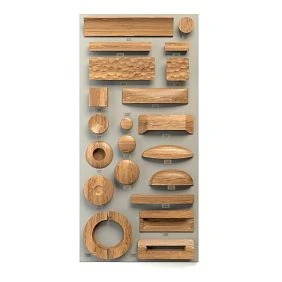
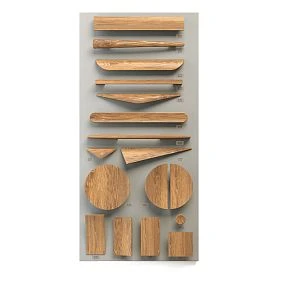
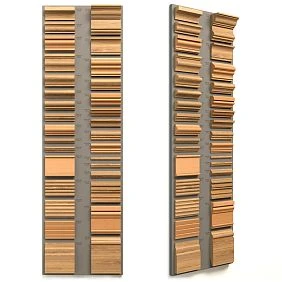
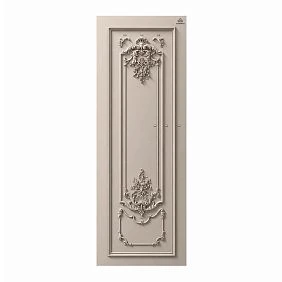
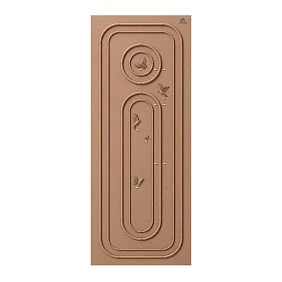
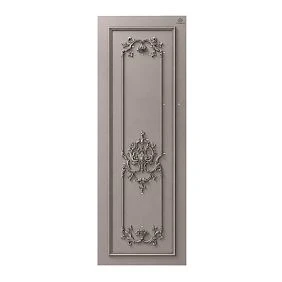
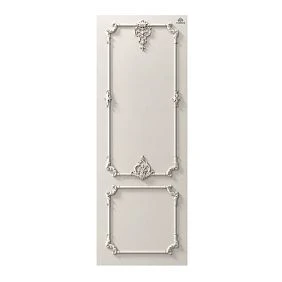
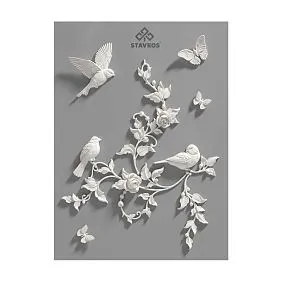
Where to start choosing stucco for an apartment
Most people come to stucco the same way: they see a beautiful interior where the walls look expensive and finished, and they want the same for themselves. This is a completely normal starting point. But then doubts begin: what exactly was used there? Is it moldings? Is it panels? Is it stucco at all or something else? And how much do you need to buy to avoid turning the apartment into an overloaded museum?
The right answer begins not with searching through a catalog, but with formulating the task. It is the task that determines what exactly you need buy stucco for an apartment and in what quantity. Let's break down the tasks that buyers most often come with.




An empty wall that looks boring
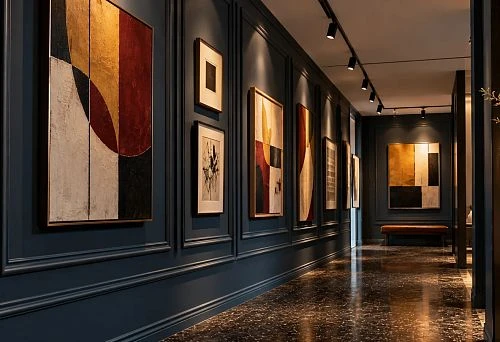
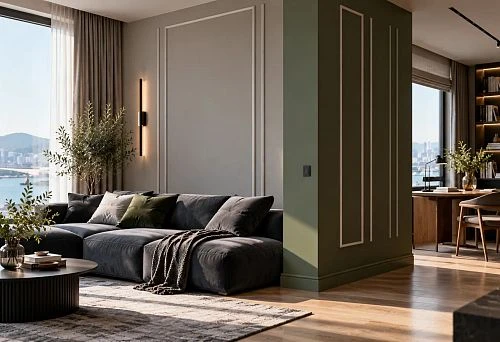
This is the most common situation. The renovation is done, the furniture is arranged, but the wall behind the sofa or bed looks empty. It's not bad, it's just nothing. In such a situation, stucco for walls in an apartment is an ideal solution. A few of polyurethane moldings will create a geometric frame on this wall, and the wall will instantly gain character. This is not an overload — it's an accent.
Our factory also produces:


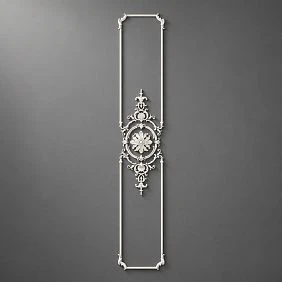
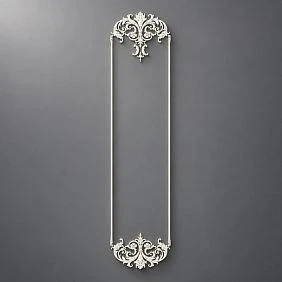
A ceiling with a lonely chandelier hanging on it
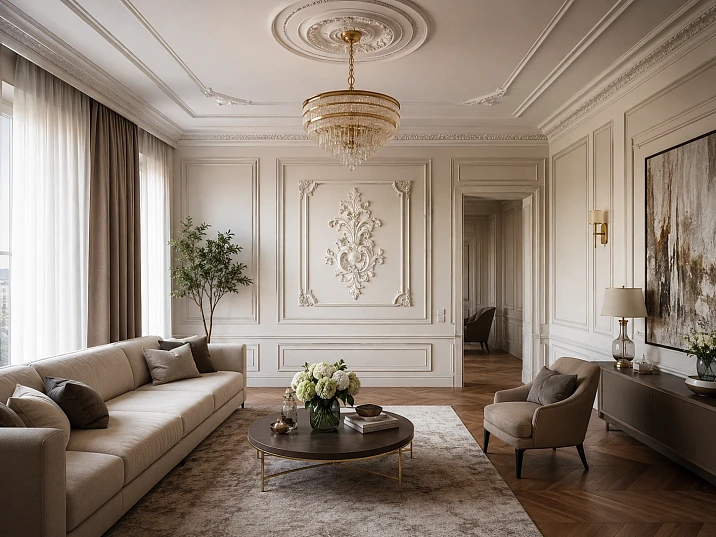
Imagine: the ceiling is painted, the chandelier is hung, but it looks as if it was just screwed into emptiness. No decoration, no transition — just a wire and a lampshade. This is where Ceiling molding and the ceiling rosette turn a random lighting fixture into a true centerpiece of the room. The ceiling ceases to be just a ceiling.
Get Consultation
You want to add one beautiful accent, but not overdo it
Sometimes the interior is already good, and you want to add one expressive detail — above the mirror, above the console, by the sconce, in a niche. For this, there is Decorative stucco — a point element with character that works exactly where it is placed.
An entrance hall that greets you indifferently
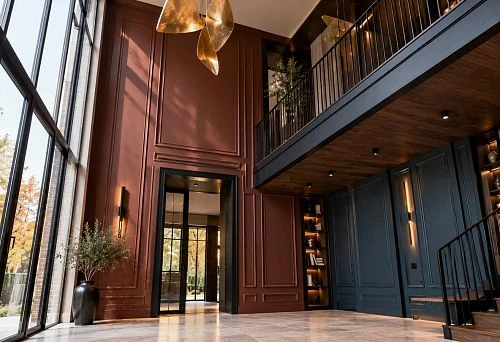
The entrance hall is the first thing both the owner and the guest see. If it is gray and faceless, it sets the tone for the entire apartment. A few moldings on the walls, a small Relief Decoration above the mirror — and the entrance hall starts to work for the image of the whole home.
A bedroom that lacks depth
The headboard is the area where the eye stops first. Frame it with moldings, add a decorative element on top, finish with a rosette on the ceiling above the bed — and the bedroom will acquire that very "expensive" atmosphere that many chase for years, changing fabrics and furniture.
Once you have defined the task, you already understand what exactly to look for. Now let's go through each type of molding in detail — what it is, what it is suitable for, and how to use it correctly.
Polyurethane moldings — if you need to decorate walls
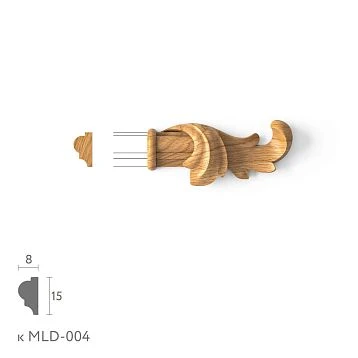
A molding is a decorative profile, an elongated element with a relief cross-section, which is attached to the surface of a wall or ceiling. It is moldings that are most often seen in beautiful interiors when the wall is divided into geometric panels or frames. This is not just decoration — it is a way to structure the space, make it organized and visually rich without a single extra item.
Moldings made of polyurethane are currently the most popular choice for residential spaces. There are several reasons. Polyurethane is lightweight — it does not load the walls and ceiling. Polyurethane is resistant to humidity — it can be used in the kitchen, bathroom, hallway. Polyurethane cuts well with a regular knife and glues without complex tools. At the same time, visually it is almost indistinguishable from plaster or wood if properly painted.
How moldings work on the wall
The principle is simple: you take a rectangular or square contour, assemble it from moldings, attach it to the wall — and the wall acquires relief, depth, character. This is called "frame decor" or "panel layout." In classic interiors, this technique has been used for centuries — it distinguished palace halls and rich living rooms. Today, the same effect is available in any apartment in just a few hours of work.
buy polyurethane moldings can be in different profiles: narrow (10–15 mm) for modern interiors with laconic geometry, medium (20–40 mm) for classic frames, wide (50–70 mm) for richer, more saturated decoration. The choice of profile depends on the ceiling height, wall area, and overall style of the room.
Where exactly to place moldings
Moldings on the wall are not just "frames everywhere." Here are specific areas where they work best:
-
Wall behind the sofa in the living room: one or three frames along the entire length of the wall create the effect of paneling
-
Wall behind the bed in the bedroom: a frame around the headboard visually highlights the relaxation area
-
Hallway: narrow vertical frames make the space appear taller and slimmer
-
Wall with a mirror: molding around the mirror replaces an expensive frame
-
Desk area: a neat frame above the countertop structures the space
Important rule: moldings should be proportionate to the wall. On a wall 2.5 meters high and 4 meters long, 2–3 medium-width frames look good. Do not make frames too small — they will get lost. Do not make them too large — they will "eat up" the wall.
Moldings and modern style
Common fear: "stucco is only for classic style." This is not true. A narrow straight polyurethane molding combined with plain walls and minimalist furniture looks modern and restrained. No pretentiousness — only clear geometry and play of shadows. For modern renovations, polyurethane moldings are one of the most organic decorative tools.
Buy polyurethane moldings buy with a small margin for cutting corners — approximately 10–15% of the calculated length. Corners are joined at 45 degrees, and with initial experience, small errors are inevitable. The margin will prevent you from running for an extra strip at the most inconvenient moment.
Ceiling molding — if the ceiling looks empty
The ceiling is the most underestimated surface in an apartment. Walls are decorated, floors are covered with parquet or tiles, furniture is carefully selected — but the ceiling is simply painted and forgotten. As a result, even a very beautiful room can seem unfinished because the top literally "hangs" over everything else.
Ceiling molding — это способ заставить потолок участвовать в интерьере. Она связывает верхнюю плоскость комнаты со стенами, с освещением, с общей атмосферой. При правильном использовании потолочный декор делает помещение визуально выше, богаче и гармоничнее.
What is included in ceiling molding
Потолочный декор — это не один тип изделий, а целая группа. Сюда входят:
Карнизы и плинтусы потолочные — элементы, которые закрывают стык стены и потолка. Они создают плавный переход, убирают резкую границу и добавляют объём. Чем шире карниз, тем более классический и насыщенный эффект.
Потолочный бордюр — более плоский декоративный элемент, который крепится непосредственно на потолок по периметру комнаты или вокруг центральной зоны освещения. Он формирует рамку, которая «собирает» потолок в единую композицию.
Розетки — центральные элементы вокруг люстры. О них подробнее — в отдельном разделе.
Buy ceiling molding сегодня можно в широком ассортименте профилей — от узких и строгих до широких с богатым растительным орнаментом. Выбор зависит от высоты потолков и желаемого стиля.
Когда потолочная лепнина особенно важна
Есть ситуации, когда Buy ceiling stucco molding — не прихоть, а необходимость:
Высокие потолки (от 2,8 м) — без декора они давят своей пустотой. Потолочный карниз и центральный декор вокруг люстры сразу делают помещение соразмерным человеку.
Ceilings with stretch fabric or paint — ceiling decor around the perimeter visually "frames" the finish and gives it a framed completeness.
Rooms with rich wall decor — if the walls are decorated with moldings and decorative stucco, the ceiling cannot remain completely empty. It will look unfinished.
Living room and bedroom — it is in these rooms that ceiling decor works most expressively, because people look at it when sitting or lying down.
Combining with wall moldings
One of the most striking techniques is to use a ceiling cornice as a continuation of wall moldings. When the profiles are consistent in style and width, the walls and ceiling visually "stitch" into a single space. This creates the feeling of an architecturally thought-out interior, not just "glued-on decorations."
For this effect, choose moldings and ceiling stucco from the same collection or profiles with a similar pattern. It is better to make the color uniform — white, cream, or the color of the walls with a slightly lighter tone.
Ceiling rosette — if you need to beautifully design a chandelier
A ceiling rosette is perhaps the most underestimated element of stucco decor. A small round or oval element that is attached to the ceiling around the chandelier's suspension point. It seems like a trifle. But it is this trifle that turns a chandelier from a random object into the center of the room.
When a chandelier hangs without a rosette, the gaze involuntarily fixes on the suspension point — on the wire, on the dowel, on a small spot or trace from a previous mount. It looks ugly and unfinished. When there is a rosette under the chandelier, the gaze perceives it as a single composition: a round ornamental element — the base of the lamp — the lampshade. This works like a mounting frame for a painting.
How to choose a ceiling rosette
ceiling rosettes selected by several parameters.
Diameter — the rosette should be proportionate to the chandelier. A small rosette under a large chandelier gets lost. A huge rosette under a small light fixture looks heavy. Aim for the rosette diameter to be comparable to the top part of the chandelier or slightly larger.
Ornament — for modern interiors, laconic geometric rosettes without complex plant relief are better suited. For classic and neoclassical styles — rich ornamentation with leaves, curls, petals.
Relief depth — the higher the ceiling, the more pronounced the relief you can use. On low ceilings (2.4–2.5 m), it's better to choose flat, small rosettes.
A rosette without a chandelier also works
An interesting technique: a ceiling rosette as an independent decorative element, without a chandelier underneath. Just a central relief accent on the ceiling — above the dining table, above the sofa, above the bed. This creates a sense of a designed center without additional lighting. It works especially well in combination with hidden perimeter lighting on the ceiling.
Decorative stucco — if you need a beautiful accent
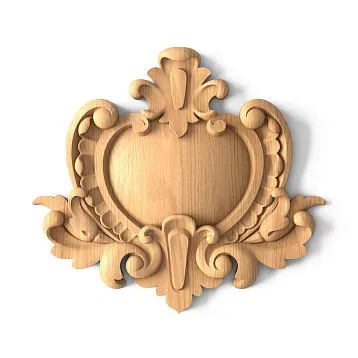
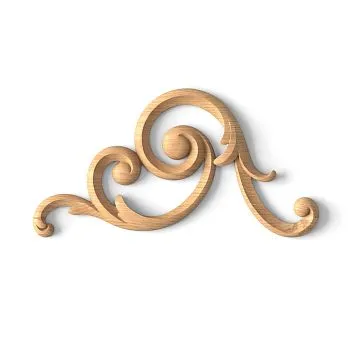
Decorative stucco consists of point overlay elements with a relief pattern: medallions, cartouches, corner rosettes, ornamental overlays, relief inserts. Unlike moldings, which create lines and frames, decorative stucco creates accents — those details that catch the eye.
The main rule for working with decorative molding: it works pointwise. It doesn't need to be placed on every wall, in every corner, and above every piece of furniture. One or two accents — and the interior looks rich and meaningful. Three or more on one wall — that's already an excess that scatters the gaze and creates visual noise.
Where to place decorative stucco molding
Above the mirror — this is a classic. A relief element above the mirror in the hallway or bathroom makes it the center of the wall. The mirror ceases to be just a functional item and becomes part of the decorative composition.
Above a console or dresser — a decorative element on the wall above the furniture unites the item and the wall into a single ensemble. This is especially relevant if the console is not by a window or mirror, but simply against a free wall.
Inside a frame of moldings — when moldings create a panel on the wall, a decorative overlay can be placed inside this panel. An empty frame is already beautiful. A frame with a central element inside is luxurious.
Next to a sconce — a wall lamp surrounded by relief decor transforms from utilitarian to artistic. A pair of symmetrical sconces with decor between them works especially effectively.
Above the headboard — one large medallion or a pair of symmetrical overlays can be placed above the bed. In combination with a molding frame, the headboard will acquire the status of the central element of the bedroom.
How to buy decorative stucco molding correctly
buy decorative moldings you need to understand the scale. If the wall is tall and long, a small element will get lost on it. Aim for the decor to be visible from a distance of 2–3 meters and not require close-up inspection of details.
buy decorative moldings it's better to use an odd number for one zone: one central element or three balanced ones. An even number creates symmetry, which can look formal, while an odd number creates liveliness and movement.
Stucco decor — if you want not just lines, but an expressive detail
Relief Decoration — a broader concept than decorative stucco. It includes not only wall overlays, but also decorative elements for furniture, corner overlays, relief inserts for niches and doorways. It is what turns an ordinary surface into a detail with history.
Stucco decor works differently than moldings: moldings set the structure, while decor gives character. If molding is the architecture of the wall, then stucco decor is its decoration.
Principles of working with stucco decor
Dosage is the main principle. One strong element is better than five mediocre ones. Choose one zone that deserves an accent and make it truly beautiful.
Style consistency — stucco decor with rich baroque ornamentation is inappropriate in a minimalist interior. Modern style requires restrained geometric or stylized elements.
Color unity — as a rule, Buy Moldings it comes in a basic white color, and then can be painted to match the wall tone or made a contrasting accent. White stucco decor on a white wall creates an embossing effect — subtle and exquisite. Decor in the wall color plus gold patina is a luxurious classic technique.
Stucco decor for furniture
A separate area of application is overlays on furniture facades. If you have a wardrobe or kitchen set with simple flat facades, a few small overlay elements can radically change its appearance. Buy Molded Decoration for furniture comes in a small format — these are corner overlays, small medallions, thin frame elements. They are glued to the facades and varnished or painted together with the surface.
This is one of the most cost-effective ways to give old furniture a new life without replacing the facades.
How not to overload an apartment with stucco molding
This is perhaps the main fear of everyone who works with stucco molding for the first time. The fear of overdoing it is an absolutely healthy feeling. A poorly designed interior with stucco molding can indeed look like a provincial hairdresser from the 90s. But this only happens when the basic rules are violated.
Rule of one accent
Each room should have one main accent. In the living room — the wall behind the sofa or the ceiling with central decor. In the bedroom — the headboard. In the hallway — the mirror. In the dining room — the ceiling above the dining table. Everything else is the background. If there are several equally important accents in one room, they start to compete, and the eye doesn't know where to look.
The rule of proportionality
The size of moldings, rosettes, and decorative overlays should correspond to the surface area and ceiling height. For small apartments with ceilings of 2.5 meters, narrow moldings of 15–25 mm, small rosettes with a diameter of 30–40 cm, and restrained decorative elements are suitable. Massive classical stucco molding does not fit into such a space — it will literally overwhelm the room.
Rule of color unity
Stucco molding should be the same color as the ceiling or wall, unless you are intentionally creating contrast. A mismatch in shades of white is the most common mistake. Buy all elements at the same time, choose one finish paint, and paint everything at once.
The rule of gradualness
Start with one zone. Decorate the wall behind the sofa — and see how it works. Add a rosette to the ceiling — and evaluate the result again. It is much easier to add than to remove what has already been glued.
Stucco molding for different rooms: what and where to use
Stucco for the living room
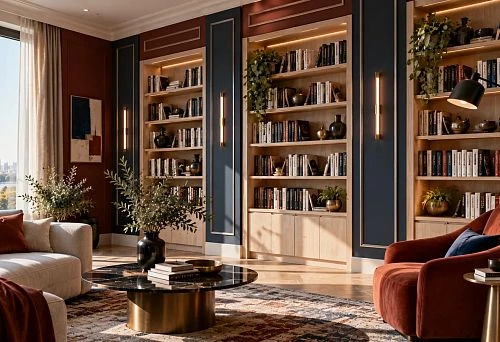
The living room is the main space of the apartment. Here, stucco molding works most expressively. The optimal set: Moldings made of polyurethane for framing the wall behind the sofa, Ceiling molding along the ceiling perimeter and ceiling rosettes under the chandelier. If the ceilings are high, you can add decorative overlays inside the frames on the walls.
In an open-plan living room, moldings help visually zone the space: one dining area, another lounge area. Frames on different walls set zone boundaries even without physical partitions.
Molding for the bedroom
In the bedroom, the key area is the headboard. Here you can create a full decorative panel: moldings form a frame, inside a neutral background or contrasting color, on top a small decorative element. This works better than any fabric or wood headboard and is significantly cheaper.
A ceiling rosette above the bed closes the vertical axis of the sleeping area — bed, wall, ceiling — into a single architectural axis. An elegant effect is guaranteed.
Molding for the hallway
The hallway is a small space, so molding should be used sparingly here. Vertical molding frames on the side walls visually elongate the room upward. A small Relief Decoration above the mirror creates a focal point. The ceiling cornice hides the wall-ceiling transition and adds completeness.
For the hallway, it's better to avoid large elements with rich relief — in a small space they look overwhelming. Laconic profiles and neat overlays are the right choice.
Stucco without overload in a modern apartment
A modern apartment is most often a bright space with minimalist furniture and no historical style references. Here stucco for the apartment works through the principle of geometric rigor. Thin straight moldings create a clear grid on the wall — no ornament, no curls, only the line and its shadow. This is modern, this is appropriate, this is beautiful.
Decorative overlays in a modern interior are best used in a stylized, geometric execution. Complex floral ornament — for classic interiors. Geometry and abstraction — for modern ones.
Ready-made purchase scenarios: what exactly to take for a specific task
Now — specifics. Four scenarios, each with a clear shopping list.
Scenario 1: I just want to make the wall prettier
This is the easiest and fastest option. One wall is taken — most often behind the sofa or bed — and one or more frames of moldings are assembled on it.
What to buy:
-
Moldings made of polyurethane of the required profile with a 15% margin
-
adhesive for mounting decor (acrylic or polyurethane)
-
finishing putty for sealing joints
-
white paint or paint matching the wall color
-
optionally — Decorative stucco for the center of the frame
Installation time: 1 day for a wall of 3–4 frames.
Scenario 2: I want to design a chandelier
A quick and impressive result — one of the most visually noticeable steps in an apartment.
What to buy:
-
ceiling outlet of suitable diameter
-
optionally — ceiling molding along the perimeter of the ceiling
-
glue for ceiling decor
-
white paint
Installation time: a few hours for a rosette, 1 day for the perimeter.
Scenario 3: I want one beautiful accent
Perfect for those who want to add a detail without changing the overall atmosphere.
What to buy:
-
Decorative stucco — one or a pair of elements
-
Relief Decoration as an accent element
-
Adhesive
-
if desired — small Moldings for a frame around the decor
Installation time: 2–4 hours.
Scenario 4: I want to design a room as a whole
Complete set for a finished interior with wall and ceiling decor.
What to buy:
-
Moldings made of polyurethane For walls
-
Ceiling molding for the perimeter
-
ceiling rosettes for the chandelier
-
Decorative stucco for accent zones
-
glue, putty, paint
-
15% extra molding for trimming
Installation time: 2–3 days depending on room size.
Technical installation questions: what you need to know before purchasing
Which adhesive to use
For polyurethane moldings, acrylic mounting adhesives like 'liquid nails' are suitable — they securely hold the product and do not react with polyurethane. You can also use special adhesives for polyurethane-based decor. The main thing is not to use solvents or organic-based adhesives: they can dissolve polyurethane.
Before gluing, the surface must be degreased, cleaned of dust, and primed if necessary. Gluing can be done on fresh plaster and putty only after complete drying (at least 28 days).
How to cut polyurethane
Polyurethane moldings are cut with a regular sharp knife or a fine-toothed hacksaw for metal. For corner joints, a miter box is used — a tool for precise cutting at 45 or 90 degrees. When working with wide profiles, it is better to use a miter saw for a perfectly straight cut.
The cutting angle is always 45 degrees — for internal and external corners differently. Internal corner: both strips are cut at 45° towards each other. External corner: the same, but the strips "open" outward.
How to paint stucco
Polyurethane accepts acrylic paint well. Priming before painting is not necessary, but it is advisable — a thin layer of acrylic primer improves adhesion and evens out the surface. It is better to paint in thin layers: 2–3 layers give a better result than one thick one.
To create the effect of aged stucco, the patination technique is used: after the main white layer, a dark pigment (brown, gold, gray) is applied, which is lightly rubbed into the relief and immediately removed from smooth surfaces. The relief darkens, smooth parts remain light — an effect of three-dimensionality and age.
Stucco for modern renovation: debunking myths
Myth one: stucco is only for classics
Not true. Geometric moldings in Scandinavian interiors have been a classic for the last 10 years. Thin straight frames on walls in minimalist style, laconic rosettes without ornamentation, strict ceiling cornices — all this looks organic in a modern space. It is enough to choose the right profile.
Myth two: stucco is expensive
Polyurethane moldings are one of the most affordable types of decor. Decorating a wall behind a sofa with moldings is often cheaper than buying a ready-made headboard or panel. Yet the effect is comparable to expensive finishes.
Myth three: stucco is difficult to install
Installing polyurethane stucco does not require special tools or professional skills. A knife, miter box, glue — and in one day you can transform a wall or ceiling. The main challenge is precise corner cutting, but after 2–3 attempts it becomes intuitive.
Myth four: stucco will yellow and break
High-quality polyurethane does not yellow when properly painted with acrylic paint. It is not afraid of moisture, does not dry out, and does not crack from temperature changes. With careful use, polyurethane products last for decades without losing their shape.
Choosing stucco for interior style
Classicism and neoclassicism
For classic interiors, rich ornamentation is suitable: ceiling cornices with acanthus leaves, rosettes with multi-tiered petal patterns, decorative overlays with mascaron and garlands. Moldings are wide, with profiled cross-sections. Colors: white, ivory, gold.
Polyurethane moldings here fully reproduces traditional plaster forms, but without fragility, without cracks, and without complex installation.
Modern style and minimalism
For modern interiors — thin straight moldings without ornamentation, geometric frames, laconic rosettes with a simple rim. No curls, no baroque. The simpler the shape, the more modern the result looks.
Provence and country
For styles with a "rustic" base, moldings with a soft, smooth profile and small overlays with floral or plant patterns are suitable. Color palette: white, cream, gray-beige. The surface can be slightly "aged" using patina.
Art Deco
This style is characterized by geometric patterns with sharp angles and rhythmic repetition, a combination of matte white with gold or silver. Moldings are strict, angular. Rosettes are radiant, with a rhythmic pattern.
How much stucco molding is needed for an apartment: calculation
One of the most practical questions. How to calculate exactly how much to buy?
Moldings for the wall. Measure the perimeter of each frame you want to create. Multiply by the number of frames. Add 15% reserve for cutting corners. This is your footage of moldings.
Ceiling cornice. Measure the perimeter of the room along the ceiling. Add 10% for joints and cutting.
Rosette. One element per lighting point. Diameter — from 40 to 80 cm depending on the size of the chandelier and ceiling height.
Decorative overlays. Piece goods. The quantity is determined by the number of accent zones.
When when buying stucco molding for an apartment it is always better to take a little more than calculated. Buying the exact same molding a month later may be difficult — the item may go out of stock.
Stucco color: white, matching the wall, or contrasting
White stucco
White stucco on a white ceiling is a classic that never goes out of style. It creates relief through the play of shadows without standing out from the overall palette. This is a neutral, versatile choice for any interior.
Molding in the color of the wall
When moldings are painted the same color as the wall, they create the effect of a three-dimensional surface — like embossing on paper. The eye perceives form, not color. This is a refined modern technique for monochrome interiors.
Contrasting moldings
Dark moldings on a light wall or white moldings on a deep-colored wall are a bold design move. It requires confidence and a clear vision of the result, but it works very expressively.
Gold and patina
Gilded stucco is for those who want maximum luxury. Just apply gold patina to the relief of a rosette or cornice, and the interior will acquire a palatial feel. The main thing is not to overdo it: gold works best in doses.
FAQ: popular questions about choosing stucco for an apartment
Which stucco to choose for an apartment?
For walls, the following are suitable Moldings made of polyurethanefor the chandelier — Ceiling rosettefor the ceiling — Ceiling moldingfor an accent — Decorative stucco or Relief DecorationStart with the task, not the catalog.
What to buy first: moldings or decorative stucco?
If the task is to decorate a wall, start with moldings: they create the base. Decorative elements are the next step when the structure is ready. If you need a single point accent, immediately take decorative molding.
Is stucco suitable for a modern apartment?
Yes, with the right choice of profile and size. For modern interiors, choose thin straight moldings, laconic rosettes, and geometric decorative elements. Do not use rich classical ornamentation — it conflicts with minimalist furniture.
What to buy together with stucco?
Mandatory: acrylic mounting adhesive, acrylic paint, putty for sealing joints, primer. Recommended: 15% extra moldings for trimming, a miter box for precise angle cutting.
Can I start with one zone?
Yes, and this is the best approach. Choose one wall, one chandelier, or one mirror — and decorate just that zone. Evaluate the result after a few days. If you like it, expand to other zones. This saves your budget and eliminates the risk of mistakes on the scale of the entire apartment.
How to calculate molding quantity?
Measure the perimeter of each frame, multiply by the number of frames, add 15%. This is the footage for ordering. If there are no frames, measure the perimeter of the room for the ceiling cornice.
What diameter of rosette should I choose for a chandelier?
Focus on the diameter of the upper part of the chandelier or its mounting base. The rosette should be slightly larger or comparable to it. For small rooms — 30–50 cm, for large rooms with high ceilings — 60–80 cm or more.
Can stucco be used in the bathroom or kitchen?
Yes. Polyurethane is moisture-resistant. In the bathroom and kitchen, you can use ceiling stucco, moldings, and rosettes, provided there is good ventilation and no direct prolonged contact with water.
What is the difference between decorative stucco and stucco decor?
These are similar concepts. Decorative stucco is a broader term that includes all types of applied relief elements. Stucco decor more often refers to point accent items: medallions, cartouches, overlays. In practice, both terms are used interchangeably.
How long does polyurethane molding last?
With proper installation and painting — for decades. Polyurethane does not absorb moisture, does not crack, and does not yellow under acrylic coating. It is physically stronger than plaster — it does not chip from accidental impacts.
About the company STAVROS
When it comes to where exactly You can buy ready-made stucco matching the Baroque style. Calculate the quantity: linear meters of cornices and moldings, number of rosettes, pilasters, consoles, corner elements. Add a ten to fifteen percent allowance for trimming. with guaranteed quality, the answer for professional designers and private buyers has long been obvious. STAVROS is a Russian company with a wide range of decorative polyurethane products for interiors and facades. The STAVROS catalog features Moldings made of polyurethane various profiles, Ceiling molding for any type of room, ceiling rosettes in a wide range of diameters and styles, Decorative stucco и Relief Decoration for accent interior design.
STAVROS works with European-made materials; the products feature clear relief detailing, precise dimensions, and consistent quality from batch to batch. STAVROS products are used in both private apartments and commercial properties — hotels, restaurants, and executive-class offices.
All STAVROS products are available for online ordering with Contact us to confirm shipping to your destination. The company's team is ready to help select products for a specific project, calculate the required amount of materials, and answer any technical questions about installation.
If you want molding for an apartment — not overloaded, not random, but precise and appropriate — start by choosing the task, and place your order at STAVROS. This is a direct path from idea to a beautiful result.