Article Contents:
- The production time of furniture consists not only of the time required to manufacture the carcass
- How to find the bottleneck in a joinery workshop
- Signs of an overloaded work area
- Why the bottleneck should be identified by orders, not by individual machines
- Why reducing machine time does not always speed up an order
- In-house manufacturing route
- Route when purchasing a pre-assembled part
- Comparison of routes
- Ready-made wooden legs and furniture supports
- When unfinished legs are especially convenient
- When ready-made legs won't speed up the work
- Ready-made wooden handles
- Why it's better to order handles at the same time as preparing the fronts
- Ready-made carved solid wood elements
- Why pattern repeatability is especially useful
- Decorative overlays for furniture fronts
- When an overlay is especially useful
- Wooden rosettes
- Wooden brackets
- Ready-made wooden moulding
- Why length needs to be considered in advance
- Three options for working with a furniture part
- When the calculation will give a different result
- Why you cannot promise the same lead time reduction to every workshop
- Load calculation example
- Why it is sometimes beneficial to keep machine idle time
- Correct Sequence
- When to place a purchase order
- What to check on the trial sample
- Order verification
- Dimensional inspection
- Surface inspection
- Checking completeness
- When additional surface preparation is needed
- Why to track readiness status
- Which products should be kept in the working list
- When a physical reserve is needed
- What to compare
- Which metrics are useful for a small workshop
- How finished components help furniture repeatability
- Buy parts after completing the carcass
- Focus only on the price of the product
- Choose the wrong level of readiness
- Do not check structural compatibility
- Order a large batch of an unknown product
- Skip incoming inspection
- Buy too many different SKUs
- Do not measure production results
- Which ready-made furniture parts are best to buy for a small joinery workshop?
- How do ready-made furniture components shorten the production cycle?
- How does a ready-made furniture part differ from a blank?
- Can you buy unfinished ready-made legs and paint them yourself?
- Are purchased legs always more cost-effective than making your own?
- Does it make sense to buy ready-made carved elements for a one-off order?
- What is best to use to speed up the production of decorative fronts?
- When should you order wooden furniture handles?
- Do you need to check every purchased component?
- Is it worth ordering a single sample before a batch?
- How do you account for ready-made parts in a production specification?
- Can a ready-made component delay production more than making it in-house?
- Which metrics confirm a real reduction in the production cycle?
- Do you need to build a large stock of purchased furniture parts?
- Where can you find ready-made wooden elements for furniture making?
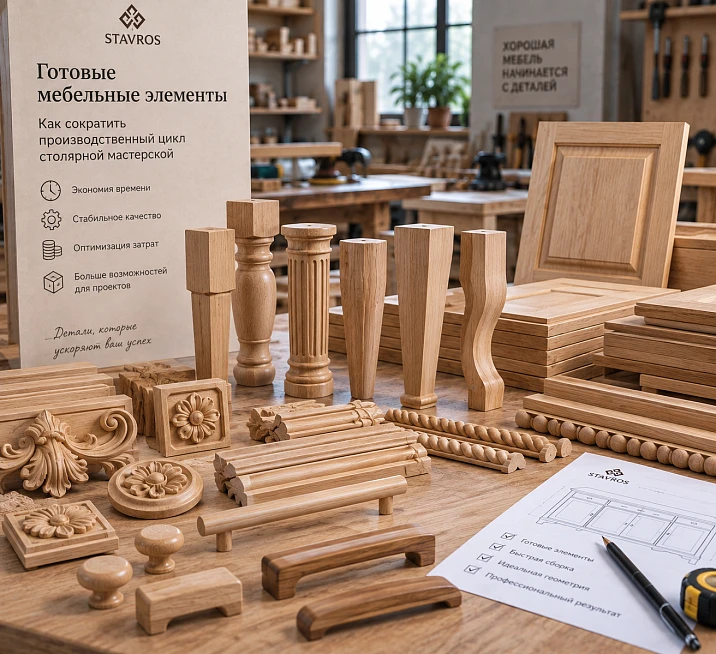
Five chest-of-drawers orders have already been cut. The carcasses are assembled, the fronts are prepared for finishing, but not a single piece can be sent to final assembly: each one needs four shaped wooden legs. The workshop has one lathe, which is currently turning parts for another project. Until the equipment frees up, the twenty legs remain just a line in the production sheet.
Making the legs themselves may take relatively little machine time. But the order is delayed not by the duration of turning. First you have to wait for the lathe, prepare the tooling, make a test piece, run the set, send it for sanding, and only then for finishing.
If suitable legs are already produced in series, this route can be shortened. The workshop receives the formed parts, inspects them, performs the remaining operations, and sends them to assembly.
Ready-made furniture elements shorten furniture production time when they replace the operations that are holding up the entire order. Buying a part by itself does not yet guarantee faster turnaround. What matters is product availability, delivery time, the degree of readiness, and the moment when the workshop places the order.
This applies not only to legs. Ready-made wooden handles, carved overlays, rosettes, brackets, and profiled moulding make it possible to remove complex turning, milling, carving, and some sanding operations from the production route.
For a small joinery workshop, the result can be more significant than it seems when comparing the cost of a single part. Equipment is freed up, the number of changeovers is reduced, queues between work areas are shortened, and it becomes possible to handle several furniture orders at the same time.
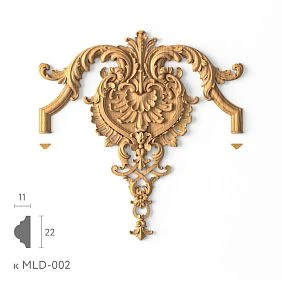
The production lead time for furniture consists not only of the time required to manufacture the carcass
For the customer, the timeline looks simple: the furniture was ordered on a certain date and must be delivered by the agreed date.
Inside the workshop, this period consists of individual operations, between which waiting occurs.
Let us consider the usual production route for a solid wood chest of drawers:
-
Preparation of design documentation and approval of materials.
-
Purchase of wood and components.
-
Cutting and processing of carcass parts.
-
Manufacture of fronts.
-
Production of legs, handles, and decorative elements.
-
Sanding and surface preparation.
-
Coating application and technological curing.
-
final assembly.
-
Quality inspection, packaging, and shipping.
In real production, some processes are performed simultaneously. For example, while the cabinet parts are being processed, the legs can be made or the decorative overlays prepared.
However, some operations have a mandatory sequence. Furniture cannot be finally assembled if the elements on which its structure depends are not yet ready.
That is why the production time is not equal to the sum of hours the craftsman spends working on the item.
Suppose that processing four legs takes two hours. If the lathe is free, the parts can be passed to the next section on the same working day.
If there are three other orders ahead of them, the wait can stretch over several days. The machine is in working order, the craftsman is working, but the specific chest of drawers is not getting any closer to completion.
The difference between the time it takes to perform an operation and the time spent waiting for it to begin determines the real duration of many furniture orders.
For a small production facility, this is especially noticeable. A single machine or a single specialist often handles several areas at once: furniture legs, turned posts, decorative elements, and custom blanks.
Therefore, planning the deadline based only on the standard processing time for a part is not enough.




How to find the bottleneck in a joinery workshop
A bottleneck is a section whose throughput limits the flow of orders through the entire production process.
Let us imagine a workshop with two panel saws, one lathe, milling equipment, and a separate sanding area.
Cutting cabinet parts is faster than turning custom legs. The cabinets gradually accumulate, while the legs for them are not ready.
In such a situation, additional cutting acceleration will hardly help meet the deadline for finished chests of drawers.
There will be more cabinets. The queue at the turning section will remain.
A bottleneck is not necessarily caused by insufficient machine capacity. It can arise from changeovers, lack of a specialist, a large number of different profiles, complex quality control, or the sequence in which orders are completed.
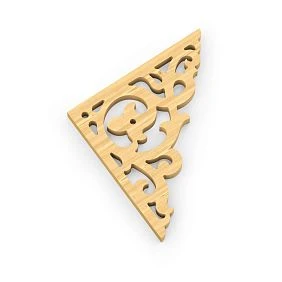
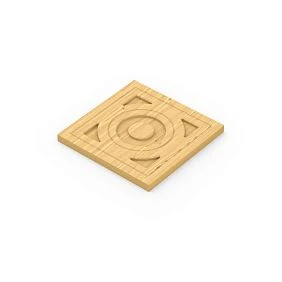
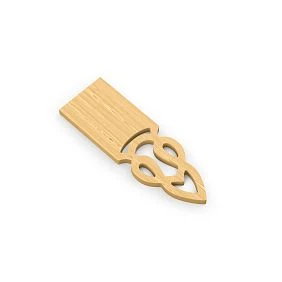
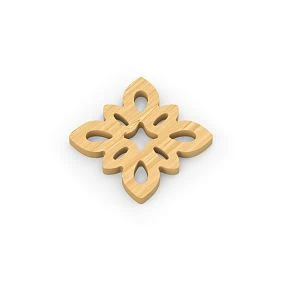
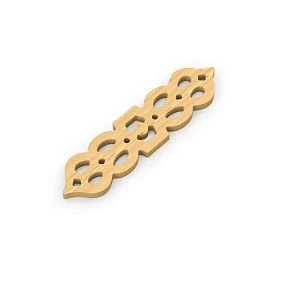
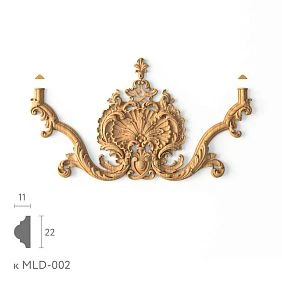
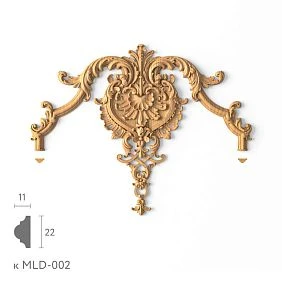
Our factory also produces:
Signs of an overloaded section
A recurring pattern usually indicates the problem.
Before a certain operation, unfinished parts accumulate. Furniture cabinets take up space in the workshop, even though the main machining is already complete. The foreman regularly postpones assembly deadlines because of a small group of components.
At the same time, other areas may operate without being fully loaded.
For example, an assembler is free, but has nothing to assemble. The sander has finished processing the fronts, but is waiting for carved overlays that are still being milled.
The manager's task is to determine which operation most often prevents the order from being completed on time.
This does not require complex production management software.
It is enough to record for a few weeks where each order is and why it is not being passed to the next stage.
| Operation | What is ready | Why the order is waiting |
|---|---|---|
| Layout | Cabinet parts | No waiting |
| Milling | Facades | Machine queue |
| Turning | Legs not yet manufactured | No free equipment time |
| Sanding | Main parts | Legs pending |
| Finishing | Part of a set | Not all elements are available |
| Assembly | Workstation is free | Set not complete |
Such a table helps to reveal a production problem that a standard cost calculation does not show.
Get Consultation
Why the bottleneck should be sought by orders, not by individual machines
The busiest machine does not always determine the deadline of a specific project.
Suppose the milling area runs without stopping, but the required facades have already been processed. For this order, its further workload does not matter.
However, a single missing bracket or set of legs can delay assembly.
Therefore, it is useful to ask two different questions:
-
Which work center limits the overall output of the workshop?
-
Which operation currently determines the nearest completion date of a specific order?
Answers may vary.
Purchasing ready-made parts is most effective when it relieves the bottleneck area or eliminates an operation that is actually holding up the order.
Working time and waiting: where several days of loss are hidden
Evaluating the production cycle solely by the labor intensity of parts is a common mistake.
The time spent working on a part includes direct technological actions: machining, sanding, drilling, and inspection.
Waiting time occurs when the part is between these operations.
For example, a turned leg may follow this route:
-
one day waiting for an available machine;
-
equipment preparation;
-
turning;
-
waiting for the grinder;
-
polishing;
-
waiting for finishing;
-
priming and coating application;
-
technological holding;
-
transfer to assembly.
Even if the actual machining takes several hours, the calendar period from blank to finished leg can be much longer.
This does not mean that all the waiting is useless. Some of the holding times are mandatory by the technology, and queues arise from shared use of equipment.
But if one group of operations can be removed without worsening the result, the production route becomes shorter.
Why reducing machine time does not always speed up an order
Suppose milling a decorative overlay took 40 minutes. After optimizing the program, it takes 25 minutes.
The savings amounted to 15 minutes per item.
For a batch of twenty overlays, that is already five hours of pure machine time.
However, if after milling the parts still wait four days for finishing, the order completion date may remain the same.
Another option: the workshop buys ready-made overlays and completely eliminates their milling. But the delivery arrives after the date when in-house production could have already finished.
In this case, purchasing also will not speed up the order.
Therefore, it is not only the saved hours that need to be counted.
The main indicator is how much earlier a specific furniture set will be fully ready for assembly.
How to build a production route for a single furniture part
To understand which ready-made parts are worth purchasing, you first need to describe their manufacturing process.
It is convenient to start with the elements that regularly delay the order.
As an example, let's take a wooden furniture leg.
In-house manufacturing route
The workshop receives or prepares a blank of the required cross-section.
Then it performs calibration, marking, turning or milling, grinding, and preparation of the mounting unit.
After checking the geometry, the part is sent for finishing.
In short, the route looks like this:
Blank → calibration → shape processing → sanding → mounting preparation → inspection → finishing → assembly.
For a complex leg, intermediate operations, special tooling, and additional checks are added.
If the leg is carved, part of the work may be performed on a CNC milling machine, and part — by hand.
Route when purchasing a pre-formed part
If a suitable leg is already produced by a manufacturer, the workshop begins work at a later stage.
Obtaining the finished geometry → incoming inspection → mounting check → own finishing if necessary → assembly.
Shape-creation operations disappear from the internal route.
But this does not mean that the workshop is no longer responsible for the quality of the support.
It is necessary to check the dimensions, material conformity, surface quality, fastening structure, and suitability of the part for a specific piece of furniture.
Route comparison
| Stage | In-house manufacturing | Purchased unfinished leg |
|---|---|---|
| Preparation of the wooden blank | performed by the workshop | Usually excluded from the in-house route |
| Creating the shape | performed by the workshop | Geometry already manufactured |
| Complex turning or milling | May be required | Not required if the model is compatible |
| Sanding | Full custom route | Check and rework if necessary |
| Preparation of the mount | According to the drawing | According to the design of the selected model |
| Control | After own manufacturing | Upon receipt of the item |
| Finishing | Own | Own, if an unpainted part was purchased |
| Assembly | After the kit is ready | After the kit is ready |
It is precisely in this comparison that it becomes clear which production operations the workshop actually stops performing.
A finished part does not always mean a fully completed product
The word "finished" can describe different degrees of processing.
For a joinery workshop, it is essential to distinguish four states.
| Condition of the part | What has already been done | What work may remain |
|---|---|---|
| Workpiece | Source material prepared | Shaping, sanding, fastening, finishing |
| Formed semi-finished product | Part of the processing completed | Size adjustment, refinement, sanding |
| Finished geometry without coating | Product shape manufactured | Inspection, possible surface preparation, finishing, installation |
| Product with finished coating | Shaping and finishing completed | Compatibility check, fastening, installation |
This classification helps avoid incorrect planning.
Suppose the workshop ordered unfinished legs and expects to receive a fully completed set.
After delivery, it turns out that priming, painting, and technological curing of the coating are required before assembly.
If no time is allocated for these operations, the planned acceleration may disappear.
On the other hand, an unfinished element is often exactly what is needed.
The workshop avoids complex machining but retains control over the color and character of the furniture finish.
For custom production, such a compromise is often more useful than purchasing a fully painted part in an unsuitable shade.
Which ready-made furniture elements can relieve the workshop
First of all, it makes sense to consider products that require specialized processing but can be used in several projects without changing the basic geometry.
These include furniture legs and supports, handles, carved decor, overlays, rosettes, brackets, and profile moldings.
Each group has its own production effect.
Ready-made wooden legs and furniture supports
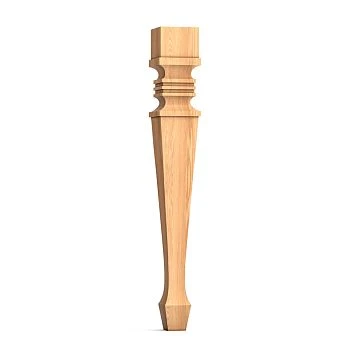
Turned furniture legs are especially illustrative.
To produce a small batch, it may be necessary to select blanks of the same cross-section, prepare a lathe, perform machining according to a template, verify repeatability, and organize sanding.
If the workshop makes twenty identical legs for five chests of drawers, the entire batch goes through the same area.
If a suitable serial model is available, this stage can be delegated to the supplier.
In the section wooden furniture legs and supports STAVROS products of various shapes and sizes are presented.
When choosing, it is important to check not only the height and appearance, but also the structural compatibility.
The leg participates in transferring the load from the furniture to the floor. Therefore, it is necessary to evaluate the mounting unit, the dimensions of the top plate, the type of attachment, and compliance with the expected load.
For furniture with angled supports, additionally check the installation angle and the actual vertical offset of the part.
Buying a ready-made leg reduces machining, but does not replace structural verification.
When unfinished legs are especially convenient
Suppose a workshop produces dressers with identical supports, but in several colors.
One order requires opaque enamel, another requires tinting, and a third requires a clear finish.
If the geometry of the legs is the same, it is rational to use one proven model without a finish and apply your own finishing for a specific project.
Category unpainted furniture legs allows selecting parts specifically for such a production scenario.
The workshop retains control over the final appearance of the product, but no longer has to recreate its shape every time.
Before ordering, you need to check the material, geometry, size, and surface condition of the specific variant.
When ready-made legs will not speed up the work
If the project requires a unique height, a complex installation angle, or a non-standard mounting assembly, a ready-made model may require significant modification.
As a result, the time saved on turning will go into modifying the part and the mounting.
Sometimes it is better to manufacture a custom leg directly from the design drawing.
This is especially true for projects in which the shape of the support determines the design of the entire piece of furniture.
Ready-made wooden handles
Furniture handles are small, but making them is not necessarily simple.
A complex shaped handle may require milling on several sides, drilling, hand sanding, preparing the mounting, and a separate finish.
For a batch of four chests of drawers with six handles each, twenty-four identical parts will be required.
Their production may take up equipment time that is needed for larger furniture components.
Purchase ready-made wooden furniture handles allows removing shaping from the internal routing.
The workshop then only needs to select the required size, check the fasteners, drill the cabinet fronts, and install the products.
If the handles are supplied without a coating, a custom finish may be required.
It is especially useful to approve the center-to-center distance in advance for models with multiple mounting points.
You must not first drill all the fronts and then look for a suitable handle.
Changing the model after drilling turns a small operation into repairing finished parts.
Why it is better to order handles at the same time as preparing the facades
While the workshop processes the cabinet and fronts, the supplier can assemble the handle order.
If their dimensions and mounting scheme are known in advance, the marking of the facades can be prepared before the entire batch is physically received, provided the technical data is verified.
And it is sensible to test the first handle on a sample.
This way, the production of the carcass and the receipt of the hardware proceed in parallel.
If handles are selected after the facades are painted, even a small delivery delay can halt final assembly.
Ready-made carved elements made of solid wood
Carved decor is one of the most interesting categories for reducing complex processing.
The production of a decorative part may include creating a model, preparing a control program, milling, removing machining marks, manual finishing, and sanding.
For a single item, these steps are justified if the shape is unique and required by the customer.
But if the workshop uses a repeating floral ornament on several dressers, doors, or furniture panels, the development and processing of each part within production can overload the equipment.
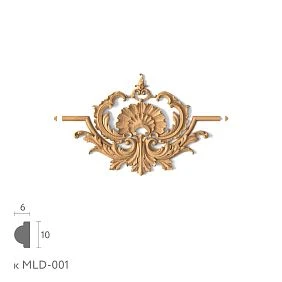
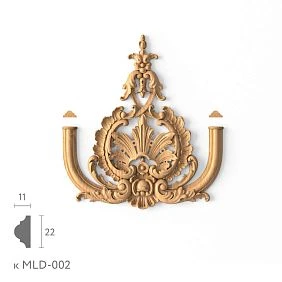
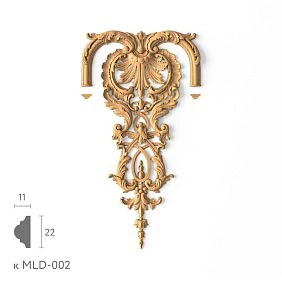
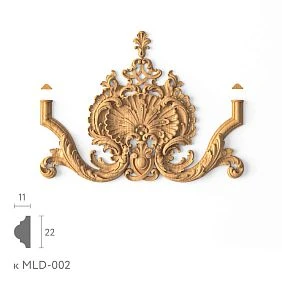
If a suitable serial model is available, it can to buy carved wooden decor and be included in your own project.
This allows the production of furniture and the production of complex decorative relief to be separated.
The workshop manufactures the carcass and fronts. Carved elements arrive as separate components.
After inspection, they can be prepared for finishing and installed according to the project.
Why ornament repeatability is especially useful
For furniture made as a set, not only the shape of a single overlay matters.
On adjacent fronts, identical elements should be perceived consistently.
Differences in the scale of the relief, symmetry, and placement of the ornament can be noticeable even after painting.
When using serial parts, the workshop does not have to reproduce complex geometry for each item on its own.
However, the dimensions and quality of the batch still require verification.
Decorative overlays for furniture fronts
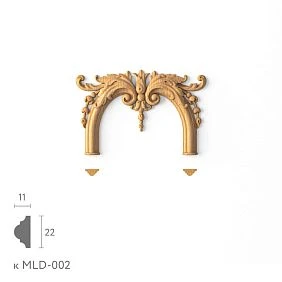
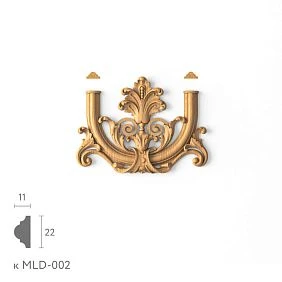
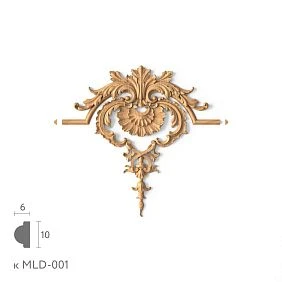
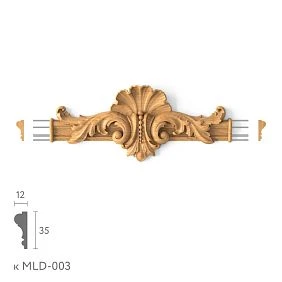
Decorative wooden inlays allow creating a relief composition on a relatively simple base.
For example, a workshop manufactures a smooth chest of drawers front. Instead of complex milling directly on its surface, separate ready-made overlays are installed.
This changes the technological route.
When making relief directly on the front, a large part occupies the working space of the milling equipment. Fixation, a machining program, and control of the pattern position are required.
When using a separate overlay, the main front can be processed in the usual way, while the decorative element is manufactured in advance.
But other operations are added: marking the position, checking the fit, and installation.
Therefore, the gain depends on the complexity of the relief and the installation method.
If the overlay requires lengthy fitting to a curved surface, the savings may be less than expected.
When the overlay is especially useful
A ready-made part is well suited for a small furniture series if several fronts have the same decorative pattern.
For example, a workshop makes four cabinets with identical central overlays.
Instead of programming a separate relief on each front, you can prepare identical mounting areas and use repeatable decorative elements.
This makes it easier to control the composition.
At the same time, you should take into account the dimensions of the overlay, the direction of the pattern, the thickness of the relief, and the mounting features.
Wooden rosettes
Rosettes are often used as standalone decorative accents on furniture fronts, frames, and other wooden elements.
A complex symmetrical pattern may require precise milling and subsequent surface finishing.
If a workshop uses identical rosettes on several pieces of furniture, buying ready-made parts eliminates the need to reproduce the ornament yourself.
in the STAVROS catalog Carved Wooden Rosettes.
For use, you need to check the size, thickness, and position relative to neighboring elements.
Particularly careful consideration should be given when choosing a rosette for a framed facade. A large element can occupy much of the free space and conflict with the furniture handle.
If the shape and size are agreed upon at the design stage, rosettes can be ordered in parallel with the manufacture of the carcass.
Wooden brackets
Manufacturing a shaped wooden bracket may require machining several surfaces and carefully forming internal transitions.
For a small joinery workshop, such a part sometimes turns out to be disproportionately complex compared with the other furniture elements.
Ready STAVROS wooden brackets allow the finished geometry to be examined instead of your own carving.
But here there is a fundamental limitation.
A decorative bracket cannot automatically be considered a load-bearing support.
If the part is intended to be used for bearing load, the product's purpose, permissible load and method of attachment must be checked separately.
Decorative use and structural function are different tasks.
Ready-made wooden moulding
Moulding is especially interesting because the workshop purchases an already formed cross-section.
To manufacture a complex wooden profile independently, you need to prepare a cutter or a set of tools, set up the equipment, run a test machining pass, and verify the resulting geometry.
If only a small quantity of the profile is needed, the preparatory operations can take up a noticeable portion of the total production time.
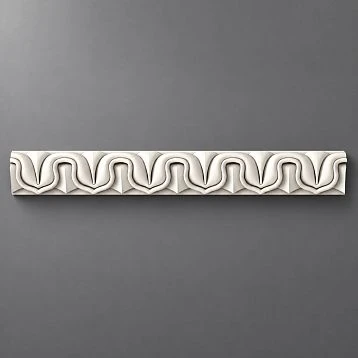
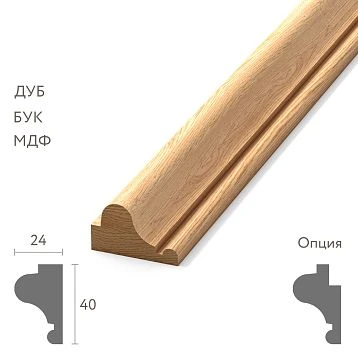
When using finished wooden moulding the workshop receives a product with a specified cross-sectional shape.
It is left with cutting to length, trimming, forming corners, joining, finishing, and installation.
This is especially useful for decorative frames on facades, edging of furniture parts, and repeating profile elements.
In the section wooden moldings, cornices, and skirting boards you can select suitable cross-sections for various tasks.
Why length must be taken into account in advance
Buying a ready-made profile does not eliminate the need to calculate cutting.
Suppose a chest of drawers requires four pieces of 700 mm each.
Mathematically, the total length is 2800 mm.
But if the profile is supplied in pieces of a different length, simple division may not account for the saw kerf, angled trimming, defects, or the need to match the pattern.
Therefore, the set is calculated based on the actual supply lengths and the cutting plan.
For a textured profile, the direction of the ornament may matter, especially if the pattern must match on adjacent sections.
If the workshop does not check this before ordering, saving on in-house milling may be accompanied by excess leftovers or re-purchasing material.
Not all furniture parts are worth switching to purchased ones
A standard component is convenient as long as it matches the product's design.
If a workshop develops custom furniture with individual shapes, it makes sense to continue manufacturing some parts in-house.
For example, a chest of drawers may have legs with a non-standard angle that also form the side frame. A purchased vertical support cannot replace such a structural element without changing the design.
Another situation is unique carving, which is a recognizable feature of the workshop. Outsourcing its production to an external supplier can change the character of the product.
There are also production reasons to keep our own processing.
If the required machine is available, the material is already prepared, and the production of the part fits into the production schedule, purchasing may not provide a time advantage.
Especially if delivery takes several days.
Three options for working with a furniture part
In practice, it is useful to divide decisions into three categories.
Full in-house manufacturing. The workshop creates the geometry, performs processing, finishing, and installation.
Purchasing a formed part with in-house finishing. The supplier creates the shape, and the workshop completes the product for a specific project.
Purchasing a product with a finished coating. The main production operations are performed before the part arrives, while inspection and installation remain in-house.
The choice depends on the task.
| Detail | Geometry | Finish | Possible solution |
|---|---|---|---|
| Standard leg for a chest of drawers | Mass-produced | individual | Buy unfinished |
| Unique shaped support | individual | individual | Make it yourself |
| Repeating carved overlay | Mass-produced | To match the facade color | Buy and paint |
| Wooden handle in a matching shade | Mass-produced | Ready-made | Buy ready-made |
| Non-standard shape facade | individual | individual | Manufacture in-house |
| Molding with a standard profile | Mass-produced | As per project | Buy the profile and cut it to size |
This is not a table of mandatory decisions. It shows how to separate form-making from finishing.
For one workshop, making legs may be the main specialization. For another, it may be a secondary operation that constantly delays furniture production.
Therefore, the same part may require different solutions.
How to calculate the impact of ready-made components on order lead time
The most useful comparison is between two complete production routes.
Let's consider a hypothetical order for manufacturing a chest of drawers.
The carcass is ready for final assembly on the fourth working day. The fronts will be ready after finishing on the sixth.
The workshop plans to make the legs in-house. Due to the queue at the turning area, surface treatment, and finishing, they will be able to arrive at assembly only on the tenth working day.
Assembly is performed after all necessary components are ready.
If you buy unfinished legs and receive them on the fifth working day, then inspect and complete the finishing by the seventh, the set will become available earlier.
| Component or stage | In-house legs | Purchased legs |
|---|---|---|
| Cabinet readiness | Day 4 | Day 4 |
| Facade readiness | Day 6 | Day 6 |
| Leg readiness | Day 10 | Day 7 |
| First possible assembly day | Day 11 | Day 8 |
In this conditional example, the start of assembly is moved from the eleventh to the eighth working day.
The gain is three working days.
But the reason for the acceleration is not that purchased legs are manufactured faster inside the workshop. Their production is generally moved outside the internal route.
At the moment when the body and fronts are ready, the legs are already in the shop.
When the calculation gives a different result
Suppose the supplier can deliver the same legs only on the ninth working day.
If inspection and finishing require additional time, the set will arrive at assembly at approximately the same time as the in-house manufactured legs.
There may be no acceleration.
Or another example: the in-house legs are ready as early as the fifth day, while the fronts are ready only on the eighth.
Even the complete elimination of turning will not change the start of assembly, since the order is still waiting for the fronts.
Therefore, the main question when calculating:
On what date will the last mandatory component of the order be ready?
It is this moment that determines when final assembly can begin.
Why it is impossible to promise the same reduction in lead time to all workshops
Each workshop has its own equipment load, number of specialists, and work organization.
One manufacturer turns legs daily and has ready-made fixtures.
Another makes such parts several times a month and spends significant time preparing the equipment.
For the first, purchasing ready-made items may barely change the production schedule. For the second, it can eliminate a delay of several days.
Without comparing specific routes, it is impossible to reasonably promise a reduction in lead time by a certain percentage.
How purchased parts free up production capacity
Speeding up an individual order is only part of the effect.
The second task is to free up equipment for work that truly must be done inside the workshop.
Suppose that in a week the workshop produces twenty identical furniture legs.
They require machine setup, processing, and inspection.
If suitable ready-made legs are purchased from a manufacturer, the freed-up time can be used for a custom order, making a sample, or processing non-standard parts.
This is especially important when equipment is overloaded and expanding production space is not yet advisable.
Example of workload calculation
Suppose that manufacturing a batch of twenty identical legs takes, conditionally:
-
2 hours for equipment setup and trial processing;
-
5 hours for shaping the entire batch;
-
3 hours for intermediate processing and inspection.
Total — 10 hours of internal work.
If the workshop replaces this operation by purchasing ready-made geometry, those hours do not disappear from the economics of production without a trace.
Some time will be required to select a supplier, place an order, receive, inspect, and assemble the parts.
But the main machining operation can be eliminated.
If, after switching to purchased components, for example, eight hours of truly bottleneck equipment are freed up, the workshop gains additional production capacity.
It can be directed to an order that was previously waiting its turn.
It is important not to automatically consider this time as additional profit.
An economic result appears if the freed hours are used productively, allow costs to be reduced, or prevent delays.
Why it is sometimes beneficial to keep machine idle time
Full utilization of all machines does not always mean efficient production.
If equipment runs without idle gaps, a rush order or the need for rework creates a new queue.
A small capacity reserve allows responding to deviations.
Purchased serial parts can help preserve such a reserve for truly complex work.
How to organize parallel work with ready-made components
One of the main opportunities for reducing the cycle arises when different parts of an order are completed simultaneously.
While the workshop produces the carcass, the supplier assembles the legs, handles, and decorative elements.
But for this, procurement must begin early enough.
If the selection of hardware is postponed until furniture manufacturing is complete, parallel work does not happen.
Correct sequence
At the beginning of the project, the furniture design is approved and the necessary components are determined.
Then specific items are selected, and their dimensions and compatibility with the project are checked.
After that, an order is placed with the supplier.
In parallel, the cutting and processing of the main wooden parts begins.
When the components arrive, they are checked immediately. If necessary, in-house finishing is started.
By the time work on the carcass is completed, the purchased elements must be ready for assembly.
This approach helps shorten the calendar timeline without increasing the number of workers.
When to place the purchase order
There is no universal rule to “order five days before assembly.”
Several real timelines need to be determined:
-
time to confirm availability or production of the component;
-
lead time for assembly and delivery;
-
time for incoming inspection;
-
duration of in-house finishing and refinement;
-
necessary reserve for possible deviations.
For example, if delivery takes four working days, inspection takes one day, and in-house finishing and coating curing take another two days, the purchase cannot be placed three days before assembly.
At the same time, all lead times should not be automatically added together if some operations can run in parallel. For planning, actual dependencies must be taken into account.
Why the article number of the finished part must be approved before starting the carcass
The phrase "wooden leg of classic shape" is too vague for a production order.
Dozens of models with different heights and upper sections may fit it
Why order a single trial part before the full batch
A new component model creates several unknowns.
A drawing shows the geometry, but it does not always allow you to assess the visual scale of the product on the furniture, the character of the surface, and the ease of installation.
Therefore, when using a part in a project for the first time, it is useful to check a sample.
Suppose a workshop has chosen a shaped leg for a new series of nightstands.
Before ordering forty identical items, it is reasonable to obtain one unit and test it on a prepared assembly joint.
You need to make sure that the dimensions match the project, that mounting is possible without modifying the cabinet body, and that the chosen shape looks proportional to the furniture.
If your own finishing is planned, also check the finishing result on the corresponding wood.
What to check on a test sample
For a furniture leg, the main thing will be the combination of dimensions, structural position, and mounting.
For a handle — the grip area, projection, mounting holes, and convenience.
For a carved overlay — the scale of the ornament, the thickness of the relief, the fit to the base, and the quality of the surface.
For moulding — the cross-section, corner treatment, and the ability to make the required joint.
It is not necessary to carry out the same tests for all items.
The inspection must correspond to the purpose of the component.
After the sample is approved, record the item code and execution parameters.
If the workshop repeats the same project, this information will help avoid re-selecting.
A section is provided for a preliminary assortment check of STAVROS product samples.
Incoming inspection: what to check after receiving the parts
Switching to purchased components does not mean abandoning quality control.
On the contrary, when the in-house production route is shortened, the importance of inspecting incoming components increases.
The problem must be detected before the part is painted, glued, or installed on the finished furniture.
Order verification
First, the item codes and quantities are checked.
If a batch is supposed to contain twenty identical legs, it is not enough to count the boxes.
You need to make sure that the exact versions specified in the specification have been received.
This is especially relevant for models with several height and material options.
The documentation may list one product type, but different sizes are not necessarily interchangeable.
Dimensional inspection
Next, critical dimensions are checked.
For legs, these are height, mounting plate, cross-section, and other dimensions that determine the position of the furniture.
For handles — overall dimensions and mounting pattern.
For overlays — width, height, thickness, and symmetry, if provided by the shape.
For moldings — cross-section and length.
At the same time, inspection should not be based on an arbitrary requirement for absolute matching of all parts down to fractions of a millimeter.
Acceptable deviations depend on the product, project requirements, and agreed-upon specifications.
If a dimension is critical for assembly, this must be established in advance.
Surface inspection
Wooden products are inspected for damage, chips, cracks, and other defects that may affect installation or finishing.
For carved parts, the detailing of the relief is additionally assessed.
On complex ornamentation, areas that are almost invisible before painting may become apparent after the coating is applied.
For products with a finished finish, its integrity and compliance with the ordered variant are checked.
With a transparent finish, the consistency of the wood grain and shade between parts of the same furniture set is also assessed.
To understand the manufacturer's approach, please refer to the section quality of STAVROS products.
Checking completeness
It is especially important not to mix visually similar elements from different orders.
If the workshop is producing several chests of drawers at the same time, handles and legs may end up next to each other in the same area.
Without marking, it is easy to confuse the length, material, or finish variant.
Therefore, after incoming inspection, it is best to distribute the components by specific furniture projects.
Why finished parts need to be checked before finishing
Let's imagine that the workshop received twenty unpainted legs.
They were immediately sent to the painting area, and the fastening check was left until assembly.
After painting, it turned out that the upper mounting plate on some of the items did not match the body structure.
Now the problem affects parts that have already been processed. Possible rework may damage the coating and require repeated painting operations.
Such a situation is easier to prevent.
First, the item code and dimensions are verified. Then a trial installation is performed, if necessary. Only after that are the parts sent for finishing.
For carved overlays, a similar procedure makes it possible to detect a mismatch between the dimensions and the decorative field of the facade.
For moldings — check the jointing and position of the profile before painting.
For handles — make sure the mounting points match before drilling the entire batch of fronts.
When additional surface preparation is needed
An unpainted formed part is not necessarily fully prepared for any coating system.
Depending on its design and finishing requirements, additional sanding, removal of contaminants, and other preparatory operations may be needed.
Processing specifics depend on the wood, surface quality, and the chosen coating.
Therefore, when planning the timeline, you cannot automatically assume that after receiving the part, only one coat of paint remains.
The finishing process route must be determined in advance.
How to avoid losing time due to mixing batches
When producing a furniture series, it is important to keep parts assigned to a specific order.
For example, ten dressers should receive identical wooden handles. The first part of the items arrived earlier, the second — later.
If batches have visual differences in natural wood or finish, random mixing can lead to noticeable unevenness.
This does not mean that different deliveries are necessarily incompatible.
But for a project with increased requirements for visual consistency, it is better to accept components as a complete set and check their compatibility before installation.
For a clear finish, the wood grain and shade matter.
For opaque paint, visual differences in the material may be less noticeable, but the dimensions, shape, and surface quality must still meet the specification.
Grouping by projects also helps to detect missing parts faster.
If four legs are needed for one chest of drawers, it is convenient to store them as one verified set rather than gathering them piece by piece from a common box right before assembly.
How to correctly record purchased parts in the production specification
The line “wooden decor — set” is almost useless for planning.
It does not allow you to determine which parts are needed, how many are required, or what operations the workshop must perform after receipt.
It is much more reliable to use separate lines for each product type.
For example:
| Detail | Material | Delivery condition | Quantity | Remaining operation |
|---|---|---|---|---|
| Furniture leg, project item code | Beech | Unfinished | 8 | Inspection, painting, installation |
| Wooden handle, project item code | Oak | Ready-made coating | 12 | Inspection, installation |
| Carved overlay, project item code | Wood | Unfinished | 4 | Fitting, finishing, installation |
| Molding, project profile | For the selected finish | Unfinished | By cutting | Trimming, joining, finishing |
Item codes must be taken from the actual product cards of the selected items. Fictional designations must not be used instead.
Why record the readiness status
Two legs identical in shape may have different production routes.
The first one arrives without a finish and must go through the painting area.
The second already has a suitable finish and, after inspection, can be sent to installation.
If the specification lists only the model name, the foreman may not see this difference.
Therefore, it is useful to apply clear statuses:
-
additional processing required;
-
ready for finishing;
-
finishing completed;
-
inspected and ready for installation.
These designations can be used in the production table.
They allow you to quickly determine which components are actually ready for assembly and which are merely physically present in the warehouse.
How to plan purchasing without a large stock of finished parts
Buying serial components does not mean that the workshop needs to create a stock of hundreds of various legs, handles, and decorative elements.
For a small production, this approach can freeze funds and take up useful warehouse space.
Moreover, the furniture assortment changes. Parts purchased for one project will not necessarily suit the next.
It is more reasonable to build a small library of proven models.
Which items should be kept in the working list
First of all, these are the parts that are regularly used in production.
For example, two or three proven furniture leg models, several handle options, standard carved overlays, and frequently used profiles.
For each item, it is useful to save:
-
manufacturer and item number;
-
sizes;
-
available materials;
-
lead time and availability;
-
mounting method;
-
projects in which the element has already been used;
-
information about reordering.
Such a list saves time for the designer and the procurement specialist.
For a new project, there is no need to review the entire market again — you can start with already proven products.
When a physical reserve is needed
It makes sense to keep additional parts if they are used regularly, are in steady demand within the workshop, and a repeat supply could delay production.
For example, if one handle model is installed on most of the chests of drawers produced, a small stock may be justified.
But if an individual decorative bracket is rarely used, buying a large batch without a specific project is irrational.
The size of the stock should be based on actual consumption and the lead time for reordering, not on an arbitrary rule.
How to evaluate savings on a pilot furniture order
Before a mass transition to purchased parts, it is useful to run a test on one real project.
For this, choose furniture that the workshop has already produced and for which the usual route is known.
For example, a chest of drawers with four turned legs and several carved overlays.
First, determine how much time in-house production of these parts used to take.
Machine waiting, changeover, processing, and transfer to finishing are accounted for separately.
Then they record the route with purchased components.
What to compare
| Indicator | In-house manufacturing | Purchased elements |
|---|---|---|
| Number of internal operations | By routing sheet | After excluding completed operations |
| Machine setup time | actual | Remaining changeovers |
| Equipment waiting | actual | Remaining |
| Part receipt time | Not applicable to these components | Delivery time |
| Incoming inspection | In-house production control | Incoming batch inspection |
| Custom finishing | As per project | As delivered |
| Complete set readiness date | actual | actual |
| Final assembly start date | actual | actual |
The main result is the comparison of the full set readiness date.
If purchased legs freed up the lathe, but assembly still started on the same day, there is no effect on the lead time of the specific dresser.
At the same time, the freed-up capacity may prove useful for other orders.
Therefore, the change in order duration and the change in equipment utilization should be assessed separately.
Which metrics are useful for a small workshop
A few values are enough for ongoing monitoring.
Time from launch to assembly. Shows how quickly an order passes through the main production operations.
Waiting time at the most loaded area. Helps assess whether the production queue is actually shrinking.
Number of changeovers. Especially important for small batches of various shaped parts.
Number of reworks. Shows whether the acceleration is accompanied by compatibility errors.
Share of parts arriving in the agreed state of readiness. Allows assessing the quality of kitting.
Utilization of critical equipment. Shows whether resources have been freed up for more important operations.
There is no need to collect dozens of metrics. The system should help make decisions, not create additional administrative work.
When ready-made elements are especially useful for small-batch production
A small batch has its own economics.
Suppose a workshop makes four identical chests of drawers.
Each one needs four turned legs, three handles, and two carved overlays.
The entire order requires:
-
16 legs;
-
12 handles;
-
8 overlays.
If each group is made in-house, the workshop needs to prepare the corresponding operations, equipment, and inspection.
For a serial production enterprise, these operations can be distributed across hundreds of items.
For a small batch, preparation is carried out for just a few dozen parts.
Therefore, purchasing ready-made elements can significantly simplify the route.
At the same time, one should not conclude that any purchased component is automatically cheaper than making your own.
The decision depends on the cost of the parts, equipment availability, batch size, shape complexity, and delivery time.
Products that are reused across several projects are especially promising.
If the workshop has already approved the leg model and verified its attachment, reordering becomes easier.
The designer does not have to develop the shape from scratch, and the process engineer does not have to prepare separate processing.
How ready-made components help furniture repeatability
For a series, it is important that products do not differ randomly.
A purchased model with approved specifications allows the same element to be fixed in several projects.
But even here, incoming inspection is necessary.
Repeatability cannot be considered guaranteed just because the items have the same product code.
For furniture production, it is necessary to confirm that the critical dimensions and workmanship of each received batch match.
Common mistakes when shortening the production cycle with ready-made parts
Parts are purchased after the carcass is completed
The workshop first makes the furniture and only then starts looking for suitable handles and legs.
Instead of parallel work, you get sequential waiting.
Solution: select components at the design stage and place the order taking delivery time into account.
They focus only on the price of the item
They compare the cost of the blank with the price of a finished leg, without taking into account changeover, machine time, sanding, inspection, and queue.
Solution: compare full production routes and the impact of each on the assembly date.
Choosing an unsuitable level of readiness
They buy unfinished parts but plan them as already completed.
Solution: specify the remaining operations in the specification and production calendar.
They do not check structural compatibility
They purchase a leg of suitable height without assessing its top plate and mounting.
Solution: verify dimensions and the installation diagram before approving the project.
They order a large batch of an unknown product
After receipt, a mismatch in scale, surface, or mounting dimensions is discovered.
Solution: for a new or critical component, first check a sample.
Skip incoming inspection
The received parts are immediately sent for painting or assembly.
Solution: verify the SKU, quantity, dimensions, material, and surface before irreversible operations.
They buy too many different SKUs
The workshop creates a stock of parts that are rarely used and may not fit future projects.
Solution: build a working library of proven models, and tie the purchase of rare components to orders.
They do not measure production output
After switching to purchased parts, the workshop does not know which operations and waiting times have actually been reduced.
Solution: compare at least one control project by completion dates, equipment load, and the number of reworks.
Where to buy ready-made furniture elements for a carpentry workshop
For furnishing furniture orders, you can use the STAVROS catalog of wood and MDF products.
The assortment includes wooden furniture supports, handles, decorative elements, carved products, and mouldings.
When choosing, it is better to start not from the general product name, but from the production operation that needs to be eliminated.
If the workshop is overloaded with the production of turned legs, first select ready-made supports of the required shape and size.
If milling repeating ornaments is causing a delay, consider ready-made carved overlays and rosettes.
If the production of a complex profiled section takes considerable time, you can select a ready-made moulding and leave only cutting, finishing, and installation inside the workshop.
For certain furniture structures, it is also useful to study ready-made wooden modules, if their geometry matches the project.
When ordering for production, it is advisable to immediately clarify the material, dimensions, coating, quantity, and current lead time for specific items.
If a part affects the furniture's construction, it is necessary to check the available technical materials and, if needed, obtain a sample.
For the remaining operations, you can separately select Mounting and finishing materials.
The terms of working with furniture manufacturers are presented in the corresponding STAVROS section, and the procedure for receiving the order is on the page payment and delivery.
The main advantage for a workshop arises when components are included in the project in advance. In that case, ready-made wooden elements become part of a planned production route rather than an urgent purchase to complete a delayed order.
Frequently asked questions about ready-made furniture elements
Which ready-made furniture parts are best to buy for a small joinery workshop?
First of all, consider items whose production overloads the equipment or requires complex setup for a small batch. These are often turned legs, shaped handles, carved overlays, and profiled moulding. The specific decision depends on the workshop's workload and the compatibility of the parts with the project.
How do ready-made furniture components shorten the production cycle?
They make it possible to eliminate some internal technological operations. If these operations were on the path to final assembly and are replaced by an earlier delivery of suitable parts, the total order time is reduced. If the delivery arrives later than in-house manufacturing, there may be no acceleration.
How does a finished furniture part differ from a blank?
A blank usually requires further shaping of the main geometry. A ready-made part already has its shape created. However, the product may be supplied without a finish and may need preparation for mounting or its own finishing.
Can you buy finished legs without a finish and paint them yourself?
Yes, if the selected version is intended for subsequent finishing and the technology used is compatible with the product material. This approach allows you to eliminate your own turning or milling and preserve the individual color of the furniture.
Are purchased legs always more advantageous than in-house manufacturing?
No. If the equipment is available, the drawing has already been approved, and in-house manufacturing is completed quickly, purchasing may not provide a time advantage. For non-standard designs, it may also require additional rework.
Does it make sense to buy ready-made carved elements for a one-off order?
Yes, if a suitable ornament exists and producing it in the workshop requires significant preparation. But with a unique custom design, a ready-made part may not match the concept. Both routes need to be compared.
What is best to use to speed up the production of decorative facades?
If the front must have a repeating relief, ready-made overlays, rosettes, or moldings can be considered. This allows the production of the main surface and the decorative element to be separated. But dimensions, fastening, and finishing must be agreed in advance.
When should wooden furniture handles be ordered?
Optimally, after the model and fastening scheme are approved, but before the final production of the fronts. Then the marking is done for the specific item, and delivery can proceed in parallel with the production of the carcass.
Should every purchased component be checked?
The required scope of inspection depends on the purpose and requirements of the project. Usually, the article number, quantity, critical dimensions, finish, and surface condition are checked. For parts that affect the load-bearing structure or assembly accuracy, inspection should be especially careful.
Is it worth ordering a single sample before a batch?
For an unknown model or a new structural unit, this is reasonable. A sample allows checking the geometry, fastening, finish, and overall scale of the part before purchasing the full set.
How should ready-made parts be accounted for in the production specification?
For each item, specify the manufacturer, article number, size, material, coating option, quantity, and remaining operations. If necessary, add installation dimensions and information on permissible deviations.
Can a ready-made component delay production more than making it in-house?
Yes. If the delivery time exceeds the time in which the workshop could make the part itself, purchasing can delay assembly. Therefore, it is necessary to consider the entire period of receiving and preparing the item, not just the reduction in internal processing.
Which indicators confirm a real reduction in the production cycle?
First of all, the change in the date the set is ready for assembly. Additionally, it is useful to measure waiting for critical equipment, the number of changeovers, the duration of internal operations, and the number of reworks.
Is it necessary to create a large warehouse of purchased furniture parts?
For a small workshop, a list of proven products and project purchases is usually sufficient. A reserve makes sense for frequently used components if a repeat delivery could delay production. The stock size should be determined by actual consumption.
Where can ready-made wooden elements for furniture making be found?
In the STAVROS catalog you can find furniture legs, handles, carved decor, decorative overlays, rosettes, and moldings. To order, you need to select a specific design, check the dimensions and compatibility with the project, and then calculate the quantity of components.
Ready-made furniture elements are most useful when the workshop knows in advance which operations it keeps in-house and which it transfers to the component manufacturer. With this division, complex shaping does not delay cutting, finishing, and assembly, and its own equipment is used for parts that truly require custom manufacturing.