Article Contents:
- What is a stucco decor set for walls
- Why a ready-made set is better than selecting elements individually
- No need to understand element compatibility
- The composition looks like a single whole
- Easier to calculate cost and quantity
- Reduced risk of buying incompatible elements
- Convenient for multiple walls and multiple rooms
- Neoclassical collection: ready-made sets for a calm architectural interior
- Neoclassic Light Collection: light decor for modern interiors
- Japandi Collection: minimalist wall decor sets
- Versailles Light Collection: classic decor for expressive walls
- How to choose a set for a room
- living room
- for the bedroom
- For hallway and corridor
- For TV zone
- How to calculate the number of kits for a wall
- One kit — a single accent
- Two sets — a symmetrical pair
- Three to five sets — a rhythmic series
- Mistakes when choosing a ready-made set
- Where to buy ready-made sets of stucco wall decor
- FAQ: Answers to Popular Questions
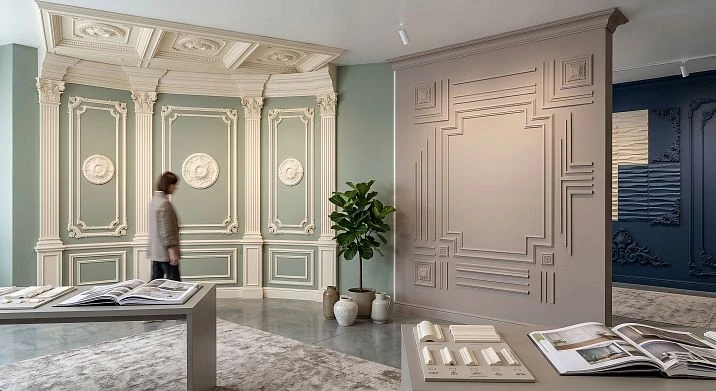
There are two ways to a beautiful wall. The first is to study the entire catalog of moldings, overlays, corner elements and rosettes, spending hours figuring out profile compatibility, proportions, scales, and styles. The second is to choose a ready-made set where all of this is already done for you.
sets of wall molding decor — this is the second path. Not simplified, not compromised. Professional. The designer has already solved the problem: selected the elements, coordinated the scale, built the composition. You get a ready-made decorative system that works precisely because all its parts are created for each other.
Polyurethane wall decor in the format of collection sets solves one of the main customer questions: "How can I avoid making a mistake?" The answer is simple — choose a collection, determine the format, calculate the quantity. Everything else is already thought out.
This article provides a detailed discussion of what ready-made stucco decor sets are, how the key STAVROS collections differ, how to choose a set for a living room, bedroom, hallway, and TV area — and what mistakes to avoid.

What is a wall molding decor kit
The question is not as simple as it seems. The word "kit" is used broadly and not always precisely in the interior context. So let's start with a definition.
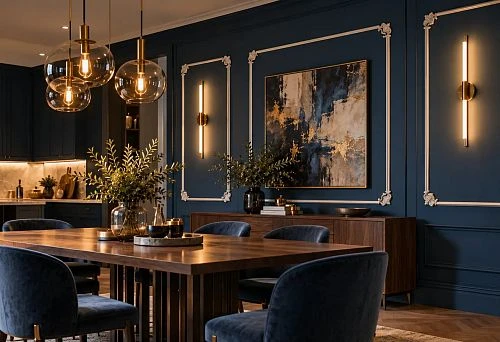
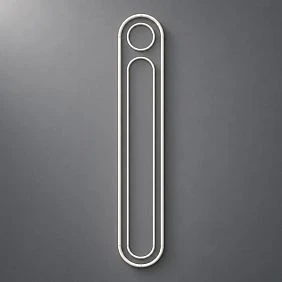
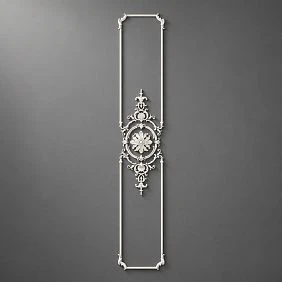
set of stucco decoris not an arbitrary set of elements in one package. It is a designed system for a wall, where each element performs a specific function within the overall wall composition. Molding profiles create the frame outline. Corner inserts decorate intersection points. Ornamental overlays provide accents. The central element — a rosette or medallion — holds the visual focus.
All elementswall decor kitbelong to the same collection. This means a unified ornament style, consistent profile depth, and balanced size ratios. The corner insert fits precisely into the molding corner without gaps. The central overlay is proportional to the frame field. Horizontal and vertical planks join without trimming.
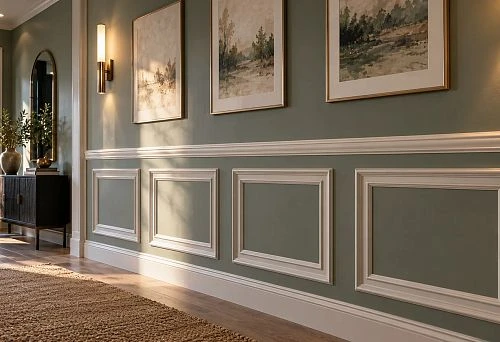
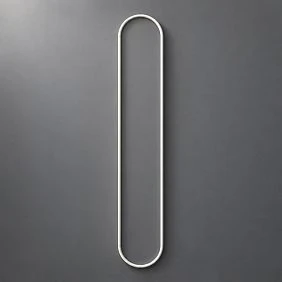
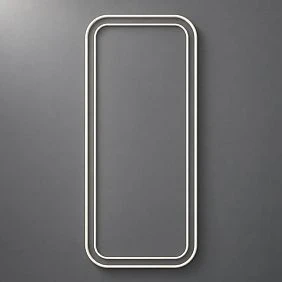
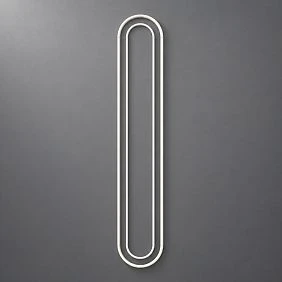
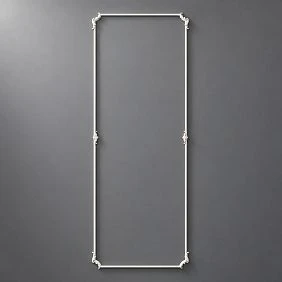
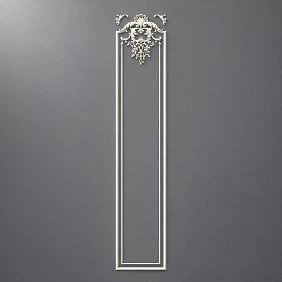
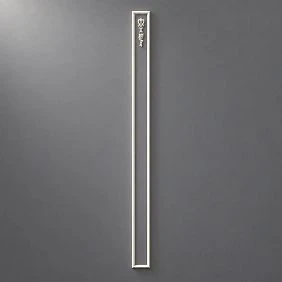
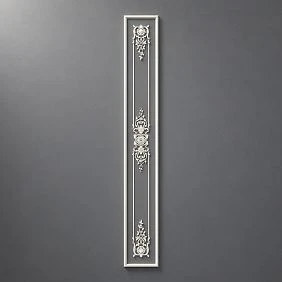
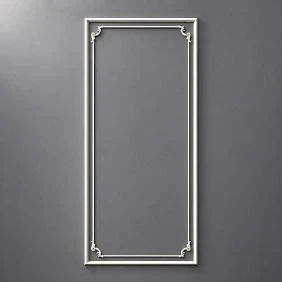
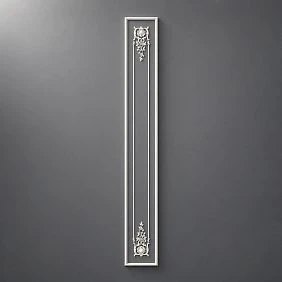
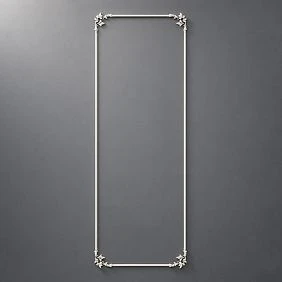
The composition of the kit depends on its format. In a frame kit — molding planks for four sides, four corner elements, a central accent. In a vertical panel kit — a molding profile along the wall height, one or two ornamental elements along the length. In an accent wall kit — a horizontal belt, a frame system, corner and intermediate inserts, a central medallion.
ready-made wall decor setis convenient for any interior work scenario:
-
a private buyer gets a ready-made solution without needing to understand systemspolyurethane wall moldings— just choose the collection and format;
-
a designer saves time on specifications: one kit — one panel, three kits — three panels, calculation takes a minute;
-
The construction team receives clear instructions on the composition and sequence of installation.
molded decoration made of polyurethaneIn the format of ready-made kits — this is the case when the buyer pays not just for the material, but for an already made design decision. And this is a fair price.




Why a ready-made kit is better than selecting elements individually
Independent selection is not an impossible task. An experienced designer with full knowledge of the catalog will assemble a system from individual elements as professionally as a ready-made kit. But for most buyers, independent selection is a source of errors. Expensive errors.
Our factory also produces:
No need to understand element compatibility
A molding profile has width, height, and depth. The corner insert must exactly cover the joint according to these parameters. The central overlay must be proportional to the frame field. The ornament style must match across all elements. These are four compatibility parameters that need to be manually controlled during independent selection.
Ready-made stucco kitsRemove all four parameters simultaneously. Compatibility is guaranteed by the collection's design.
Get Consultation
The composition looks like a single whole
This is perhaps the main point. A wall with decor assembled from different collections or based on the principle 'I like this molding, and this corner is also beautiful' is a wall with a set of elements. Not with a system. The difference between them is the difference between a 'decorated' wall and a wall with architectural logic.
Ready-made wall decor— always a system. Elements speak the same visual language because they are created together.
It's easier to calculate cost and quantity
When selecting independently, calculation is a separate task: linear meters of molding, individual corner inserts, central elements, allowance for trimming. This is several rows in an Excel table — and several opportunities for error.
When working with kits, it's different. One kit covers one panel. Counting the number of panels on a wall is a task of three measurements and simple arithmetic.
The risk of buying incompatible elements is reduced
This happens more often than it seems. The molding is bought from one collection, the corner inserts from another. During installation, it turns out: the corner does not cover the joint — you need 3 mm of "extra" material that isn't there. Or: the molding's ornament and the insert's ornament clash stylistically, and this becomes noticeable only when everything is already fixed.
buying a set of stucco decor— means eliminating this risk by definition.
Convenient for multiple walls and multiple rooms
Rhythm is a key principle of wall decor. A repeating system on several walls creates architectural connectivity of the space. If you use one type of kit in the living room and the same type in the adjacent hallway — the spaces are perceived as a single whole.
Ready-made solutions for wall decorin the format of collections allow creating such connectivity easily: a collection is selected, the number of kits for each zone is determined, and the entire space gets a unified decorative "language".
Neoclassic Collection: Ready-made sets for a calm architectural interior
Collection "Neo-classic" — this is neoclassicism in the full sense of the word: strict geometry, clear lines, a symmetrical architectural system without Baroque overload and without avant-garde minimalism. Exactly what is commonly called "classics with a modern perspective."
The collection includes a line of ready-made setsCPU-1-1, CPU-1-2, CPU-1-3, CPU-1-4, CPU-1-5 — five levels of decorative richness within a single style. This is fundamentally important: the buyer can choose the level that matches their task without changing the style of the collection.
CPU-1-1 — the most concise version of the collection. Clean profiles, simple corner elements, minimal ornamental accent. Suitable for modern interiors with a neoclassical slant, for small rooms, for bedrooms where decor should be present but not dominate.
CPU-1-5 — the most saturated version within the "Neoclassic" framework. Wider profiles, more expressive corner elements, a rich central accent. Suitable for spacious living rooms with high ceilings, for studies and formal hallways, for dining rooms.
Vertical decorative posts from the Neoclassic sets are used in the spaces between windows, on the sides of doorways, along the long walls of a corridor. Frame panels — on the wall behind the sofa, behind the bed, in the TV area.
Set of stucco decor "Neoclassic" — this is a choice for those who want to get an architectural wall without delving into historical stylization. Neoclassical wall decor is not a "rich apartment of the 2000s." It is a modern space with architectural memory.
An important characteristic of the collection: all elements in it are developed as a ready-made system. Proportions are coordinated: the width of molding profiles, the size of corner inserts, the diameter of central accents — everything is calculated relative to each other. The buyer does not need to search for compatible parts in the catalog for a long time — the system is already designed.
Neoclassic Light Collection: Light decor for modern interiors
Neoclassic Light collection— a calmer, more delicate version of neoclassicism. Here the profiles are thinner, the corner elements softer, the relief depth smaller. This is decor for those who appreciate the architectural structure of the wall but do not want a rich ornamental "statement."
The collection includes sets CPU-2-1, CPU-2-2, CPU-2-3, CPU-2-4, CPU-2-5. Each is a ready-made set of moldings and decorative elements for wall compositions of a specific format.CPU-2-1 molding decor set— the starting level of the collection: minimum details, maximum purity. The other positions increase richness while staying within the concise aesthetics of "Light."
Where "Neoclassic Light" works best:
-
Bedroom. Wall decor at the head of the bed — one frame panel from the "Neoclassic Light" set. Thin profile, neat corner elements, simple central accent. No overload. Just what is needed for a relaxation area.
-
Small living room. In a room of 18–22 sq. m, full "Neoclassic" may look heavy. "Neoclassic Light" is just right.
-
Study. A workspace requires order and concentration. The decor here should structure the wall without distracting attention.
-
Children's room. Light frame panels on the walls of a children's room — unobtrusive, safe, and long-lasting decor that will be appropriate at both three and fifteen years old.
Ready-made wall decor in neoclassical style"Light" is the answer to the request "I want an architectural wall, but unobtrusively." In this collection, the formula "decor exists but does not interfere" is implemented most accurately.
Color solution for "Neoclassic Light": decor in the tone of the wall or 1–2 shades lighter — creating a relief effect without color contrast. This is delicate. Or — white decor on a muted tone wall (gray, warm beige, dusty pink): soft contrast that adds depth without heaviness.
Collection "Japandi": minimalist wall decor sets
Japandi is one of the most enduring style trends of recent years, and judging by user interest, it's here to stay. Natural materials, neutral tones, calm geometry, principled restraint in details. A style where "excess" is not luxury, but a mistake.
Does this mean wall decor in Japandi is impossible? No. It means decor works differently here. Not as an ornamental "statement," but as a quiet presence — a relief you notice not immediately, but without which the wall would be simply flat.
"Japandi" decor set — this is pure geometry, minimal profile, absence of historical ornament. Elements in this collection create structure — and nothing extra on top of it.
The collection includes setsCPU-3-1, CPU-3-2, CPU-3-3, CPU-3-4, CPU-3-5, CPU-3-6. Six items — different formats: vertical stands, frame panels, accent sets. Wall decor in the "Japandi" style in these sets is always about form, not ornament.
Where are "Japandi" sets used:
-
Modern living room in neutral tones. Vertical stands on an accent wall or one frame panel behind the sofa — that's it.
-
Japandi-style bedroom. A frame panel behind the headboard from the CPU-3-1 set — the only decorative wall element. That's enough.
-
A room with a minimalist interior. Vertical slats on the partition create rhythm without overload.
-
A hallway. A series of three to four vertical sets at equal intervals along the long wall — a delicate, almost "Japanese" rhythm.
Minimalist polyurethane wall decor from the "Japandi" collection is not "little decor." It is precisely chosen decor. The principle of Japanese aesthetics: each element exists because without it the space would be worse. Not because it's "beautiful," but because it's "right."
"Japandi" style wall decor is painted to match the wall. Contrast is minimal or zero. Relief matters more than color.
"Versailles Light" collection: classic decor for expressive walls
Versailles Light Collection — this is a different register. Here it is no longer conciseness or minimalism. Here it is classic in a lighter version: floral ornament, double frames, expressive vertical panels. Everything that distinguishes a rich interior from a neutral one — without the heaviness of full "Versailles."
The collection includes setsCPU-4-1, CPU-4-2, CPU-4-3, CPU-4-4, CPU-4-5. Each is designed for a specific wall zone format: a wide panel for a spacious living room wall, a narrow partition, a vertical insert on the sides of a fireplace or arch, a formal system for a hall or dining room.
Classic-style decorative wall panels from "Versailles Light" — this is a different visual weight. Wider profiles, richer ornament of corner inserts, more expressive central accent. On the wall, it reads immediately: not just structure, but richness.
Where "Versailles Light" works convincingly:
-
A formal living room. The wall behind the sofa with a double frame panel from CPU-4-3 — this is an "expensive interior" without the word "expensive" in conversation.
-
Dining room. The wall above the dining table or behind the console — "Versailles Light" creates a representative atmosphere here, suitable for entertaining guests.
-
Hall and entryway with high ceilings. Vertical panels of "Versailles Light" on either side of the front door — a classic formal scheme.
-
The wall behind the bed in the master bedroom. For those who want not a "delicate" headboard but an "expressive" one — "Versailles Light" delivers exactly that.
Classic wall decor from "Versailles Light" is painted white or cream on a neutral wall. Or — with patination (gold, silver, bronze) for a full classic effect.
Buy ready-made wall decor in a classic stylefrom the "Versailles Light" collection — means getting a proven classic system with modern manufacturing precision.
How to choose a set for a room
The logic of selection — from task to collection, from collection to set format.
For the living room
Living room — the main room, the main task.Set of stucco decor for the living roomis selected for the key wall — usually this is the wall behind the sofa or the wall with the TV.
For the wall behind the sofa: a frame kit. Frame width — the length of the sofa plus 20–30 cm on each side. Height — 50–65 cm. Corner inserts in all four corners. Central element — a rosette or overlay in the center of the top horizontal line. Collection — "Neoclassic" for most modern interiors, "Versailles Light" for formal living rooms.
Decorating the wall behind the sofa with polyurethane is one of the most popular tasks. And this is exactly where a ready-made kit gives the maximum advantage: the entire system for a specific wall is already there — take it, measure it, order it.
For the TV wall: a frame kit around the perimeter of the TV zone + a horizontal molding belt under the screen. Without central overlays — the TV itself is the focal point. Collection "Neoclassic" or "Neoclassic Light".
For the bedroom
In the bedroom, the task is different — not to show wealth, but to create peace.Stucco molding set for the bedroomis selected from more minimalist collections: "Neoclassic Light" or "Japandi".
Decorating the wall at the head of the bed — one kit, frame format. Width — the width of the bed plus 15–25 cm on each side. Bottom horizontal line — flush with the top edge of the headboard or 8–10 cm higher. Frame height — 45–60 cm.
One kit. One frame. Four corner elements. Central accent — or without it, if the collection is "Japandi". This is enough to turn the wall behind the bed from empty to well-thought-out.
Stucco decor for the bedroomis painted to match the wall or white. No dark accents, no patination in the bedroom — only a calm relief.
For the hallway and corridor
Decor kit for the hallway— this is primarily a vertical format. The hallway is a narrow space, and here frame panels are only appropriate when the wall width is at least 80 cm. For narrow walls — vertical posts.
Scheme for the hallway:
-
horizontal molding belt along the entire length of the walls at a height of 90–100 cm;
-
molding frame for the mirror (one frame set);
-
vertical posts in the piers — if space allows.
Vertical wall decor for the corridor from "Neoclassic" — a series of posts at equal intervals. The interval is calculated as corridor width ÷ (number of posts + 1). Three posts in a 4-meter-long corridor — interval 100 cm.
For the TV zone
Decor for the TV area made of polyurethane — a task with specific constraints. The TV is already a visual focal point. The decor should create a frame without competing with the screen.
Ready-made wall composition for the TV from the "Neoclassic" or "Neoclassic Light" sets: two vertical sets on the sides of the TV + a horizontal molding belt under the screen. No central accents. Profile — thin, 35–50 mm.
Frames made of moldings under the TV in the "zone framing" format — the cleanest solution: one rectangular frame covering the entire TV area along with the media console. No corner overlays — only pure geometry of the contour.
Wall Decorin the TV area — this is the case when "less" means "better".
How to calculate the number of sets for a wall
A fundamental question that is rarely examined in detail for some reason. Let's fill that gap.
One set — a single accent
Oneready-made wall decor set is mounted as an independent visual element at a specific point on the wall. Examples: one frame set behind the headboard of a bed in the bedroom. One set in the center of the main wall in the living room. One vertical set in a pier.
This is not 'too little.' It's a principle: one correctly placed element is stronger than several elements at random points.
Two sets — a symmetrical pair
Two identical sets on either side of the wall's central axis is the most classic decorative technique. Two frame sets on either side of the TV. Two vertical stands on either side of the mirror. Two symmetrical frames to the left and right of the fireplace.
Symmetry is not boring. It is a fundamental principle of architectural perception. A space organized symmetrically is perceived as 'correct.'
Three to five sets — a rhythmic series
A series of identical sets at equal intervals along a long wall creates architectural rhythm.Set of stucco decor for a long wall in a series of three to five repetitions transforms a wall from an empty plane into a system with logic.
Step calculation: wall width ÷ (number of sets + 1) = distance between centers of sets.
Example: a 5-meter wall, four vertical sets. Step = 5000 ÷ 5 = 1000 mm. First set — center at 1000 mm from the edge. Second — at 2000 mm. Third — at 3000 mm. Fourth — at 4000 mm. Equal rhythm, symmetry relative to the middle of the wall. Architectural logic.
Mistakes when choosing a ready-made kit
A ready-made kit reduces the risk of mistakes but does not eliminate them. Here are seven mistakes that occur most often.
Choosing based on photos without checking dimensions. One of the most common mistakes. The kit looks large and expressive in the photo, but in reality it is a 60×40 cm frame panel. On a 3-meter high wall, it will get lost. Always check the dimensions of the elements in the product card.
Taking too small decor for a large wall. Rule: the scale of the kit matches the scale of the wall. A 4×2.8 m wall requires frame panels with a molding width of at least 45–55 mm. A 25 mm profile will get lost there.
Placing rich decor in a small room. The "Versailles Light" collection in a 14 sq. m room with a 2.6 m ceiling is an overload. Rich decor requires space. In small rooms — "Neoclassic Light" or "Japandi".
Mixing elements from different collections. "This corner looks nicer, I'll take it from 'Versailles Light', and the moldings from 'Neoclassic'." Result: two different style "languages" on one wall. One wall — one collection. No exceptions.
Not accounting for furniture, sockets, and switches. A molding frame that ends up over an electrical socket in the wall is an unfixable problem. Before ordering — a wall diagram with the location of all utility elements.
Not making a layout diagram before purchase. Without a diagram on paper or in a program, it is impossible to accurately calculate the quantity and placement of kits. A diagram is a mandatory step before ordering.
Not checking the kit composition. Different kits in the same collection have different compositions. Before purchasing: what exactly is included, what are the dimensions of each element, whether the length of the molding strips is sufficient for your frame.
More details about the installation technology — in articles about installation of polyurethane moldingandinstalling polyurethane molding.
Where to buy ready-made wall molding kits
STAVROS offers a complete rangewall decor kitsin four collections:
Set of stucco decor "Neoclassic"— five levels of saturation, vertical and frame formats, for living room, hallway, dining room, study.
Neoclassic Light stucco decor set— light neoclassical for bedroom, small rooms, modern interiors.
"Japandi" decor set— six formats of minimalist decor for modern spaces and neutral interiors.
"Versailles Light" stucco decor set— classic decor for formal living rooms, dining rooms, halls, wall behind the sofa in a representative interior.
Additional Decor for Molding— corner and intermediate inserts to complement ready-made kits.
Buy polyurethane wall decor— the entire catalog with filters by collection, format, and product type.
Buy ready-made wall decorwith Contact us to confirm shipping to your destination. — in the «Wall Decor» section on the STAVROS website.
FAQ: Answers to popular questions
How is a ready-made set different from a set of individual elements?
In a set, all elements are designed as a single system: proportions, ornament style, and profile depth are coordinated. A set of individual elements from different catalog items is not yet a system. Whether you assemble it correctly depends on your experience.
Can I use sets from different collections in one apartment?
In different rooms — yes. «Neoclassic» in the living room, «Japandi» in the bedroom, «Neoclassic Light» in the children's room — this is a conscious choice. In one room — no. One room — one collection.
Does the kit need to be painted after installation?
Yes. All products are supplied white and require final painting. Technology: adhesion primer → acrylic or alkyd paint in the chosen color.
How many sets are needed for a 4-meter-long wall?
Depends on the format. For frame panels 60–70 cm wide — three to four sets with a step of 90–100 cm. For vertical posts — three to five with a step of 80–100 cm. Specific calculation — after measuring the wall and choosing the collection.
Can I install the set myself?
Yes. Assembly adhesive for plastic, level, tape measure, pencil, painter's tape for fixing. Installation instructions are in the article about installing moldings and stucco.
Are the kits suitable for walls with wallpaper?
Yes, provided the wallpaper has good adhesion. The wallpaper under the installation area must lie flat, without bubbles or peeling.
How do I know which collection suits my interior?
Guideline: "Japandi" — for minimalist modern interiors; "Neoclassic Light" — for neutral modern and small spaces; "Neoclassic" — for neoclassical and modern classic; "Versailles Light" — for formal classic interiors. If in doubt, start with "Neoclassic Light".
What are CPU-1-1, CPU-2-1 and other kit SKUs?
These are SKUs for specific kits within collections. The first digit after the hyphen is the collection number (1 — "Neoclassic", 2 — "Neoclassic Light", 3 — "Japandi", 4 — "Versailles Light"). The second digit is the saturation level or format within the collection. The full composition and dimensions of each kit are in the product card on the website.