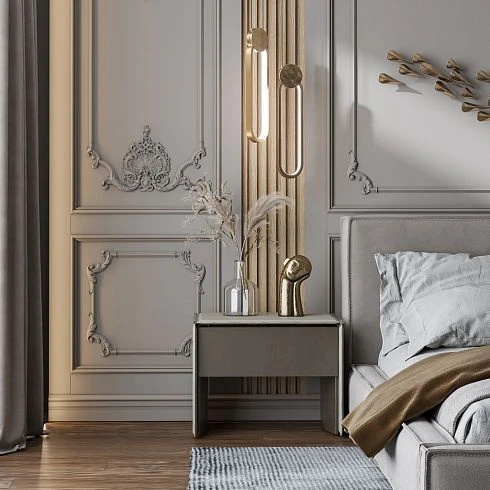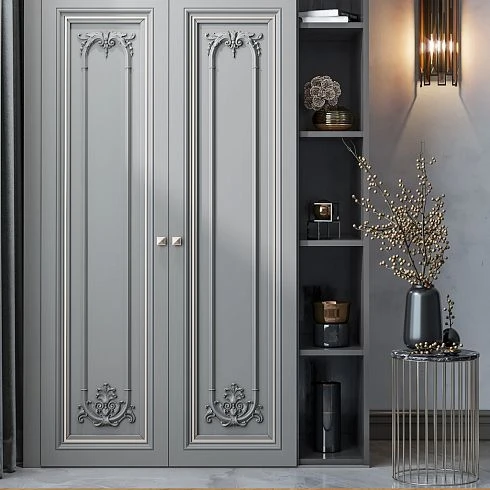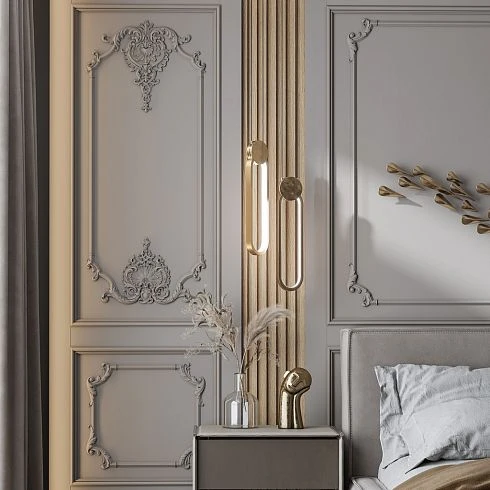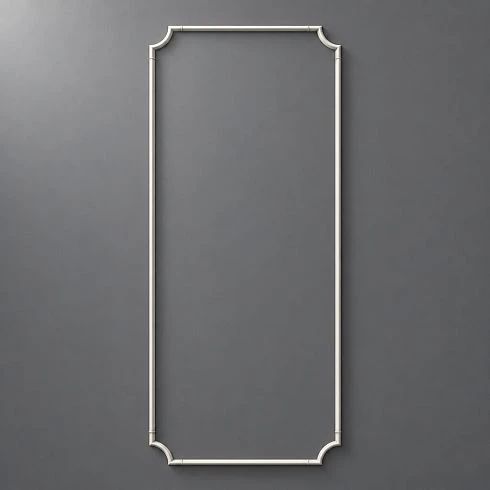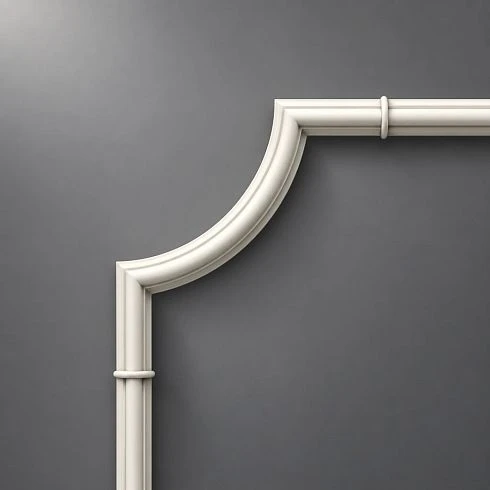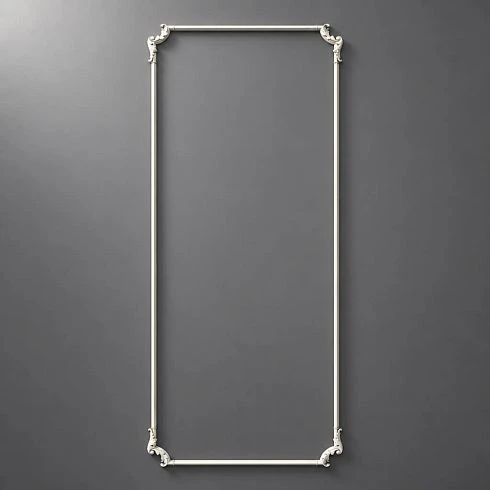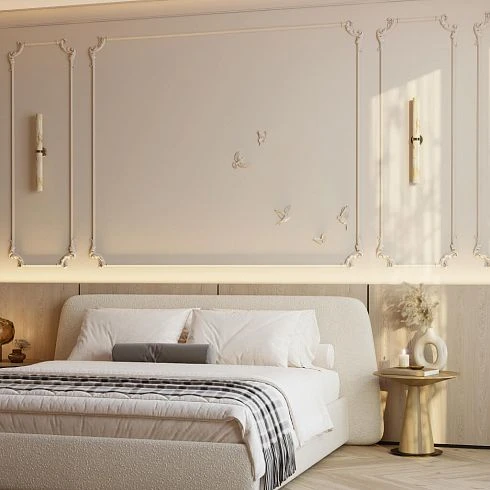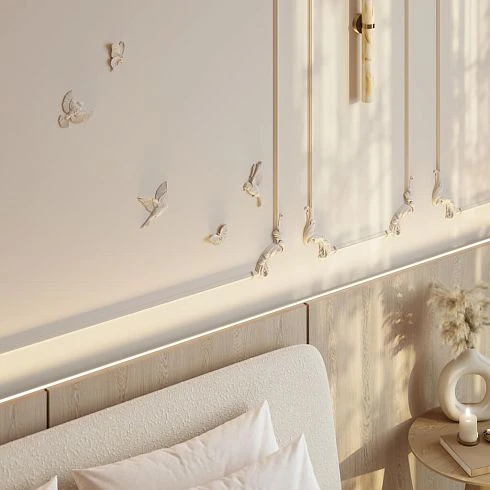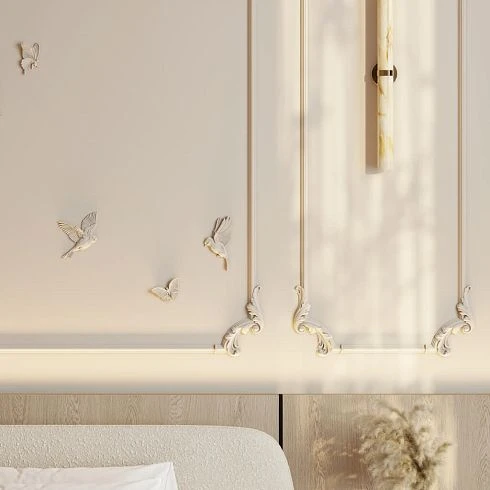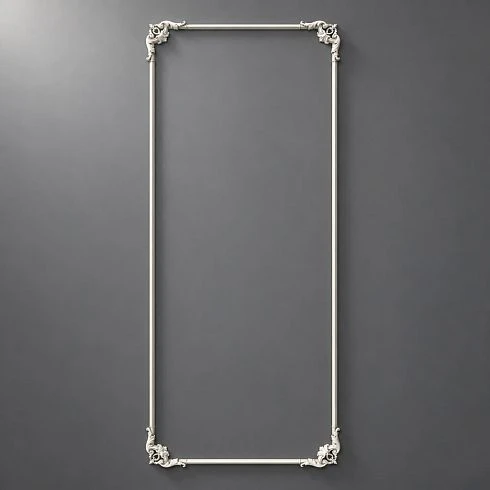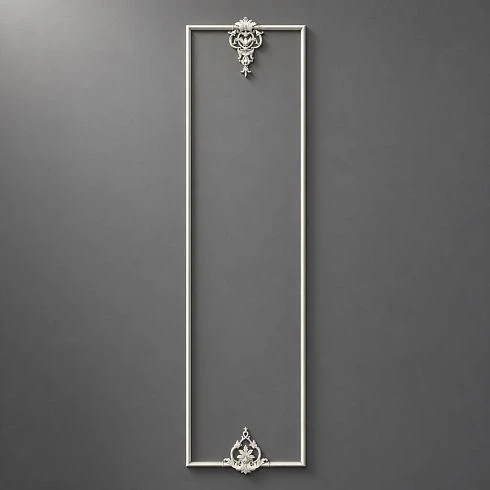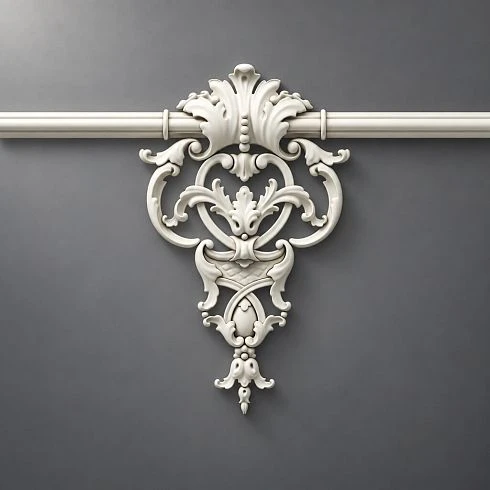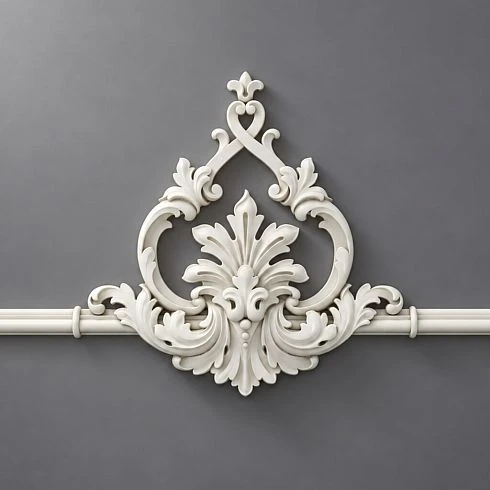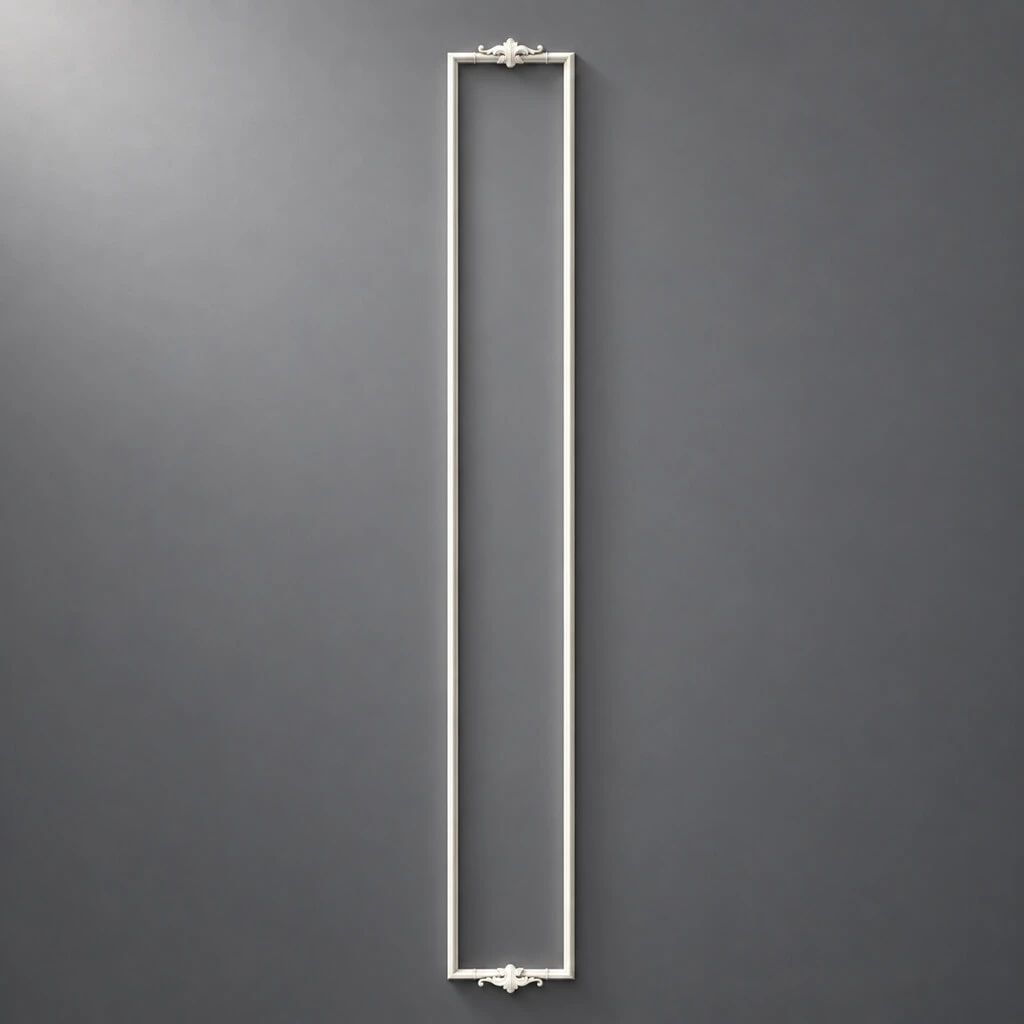



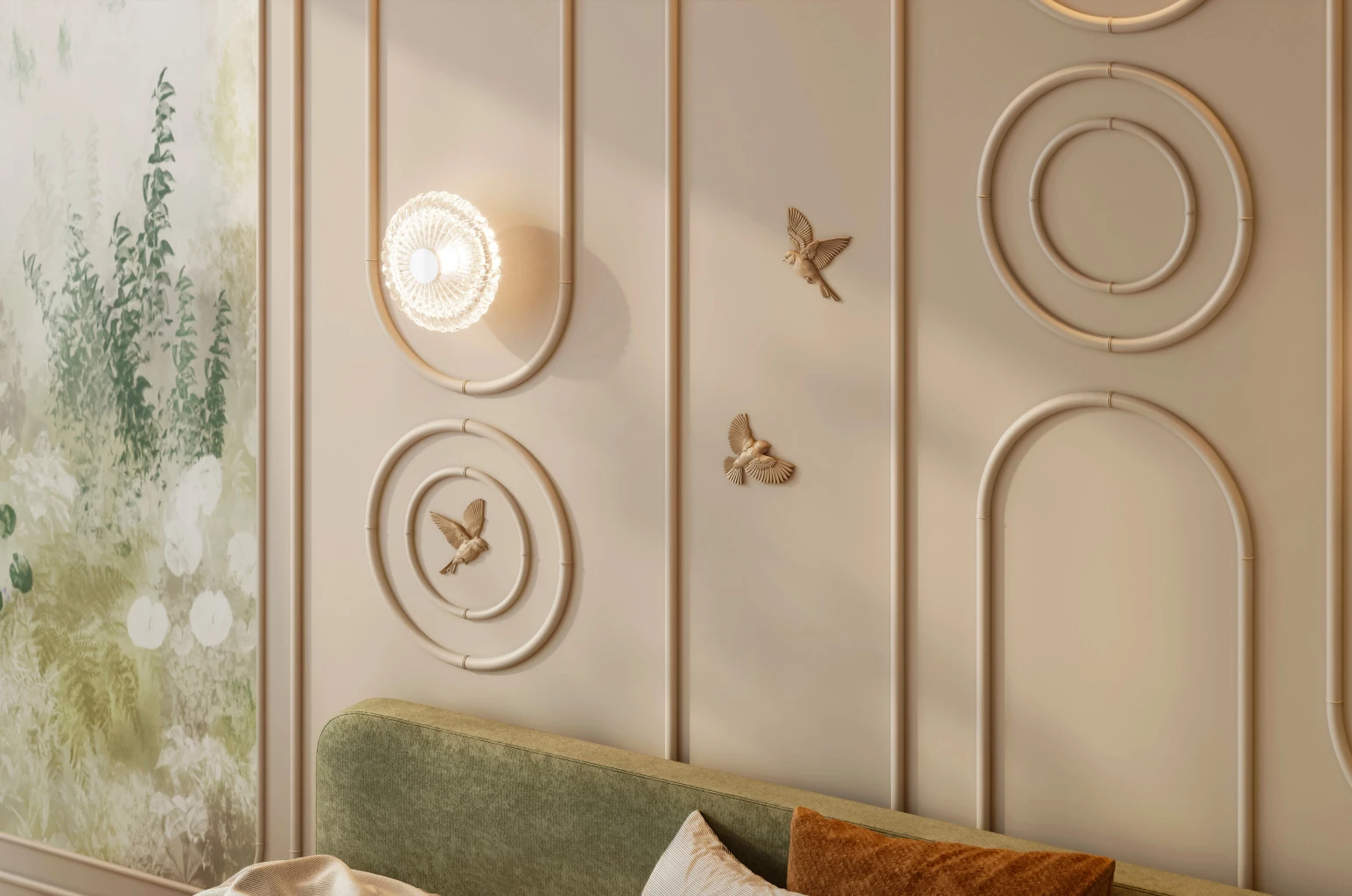
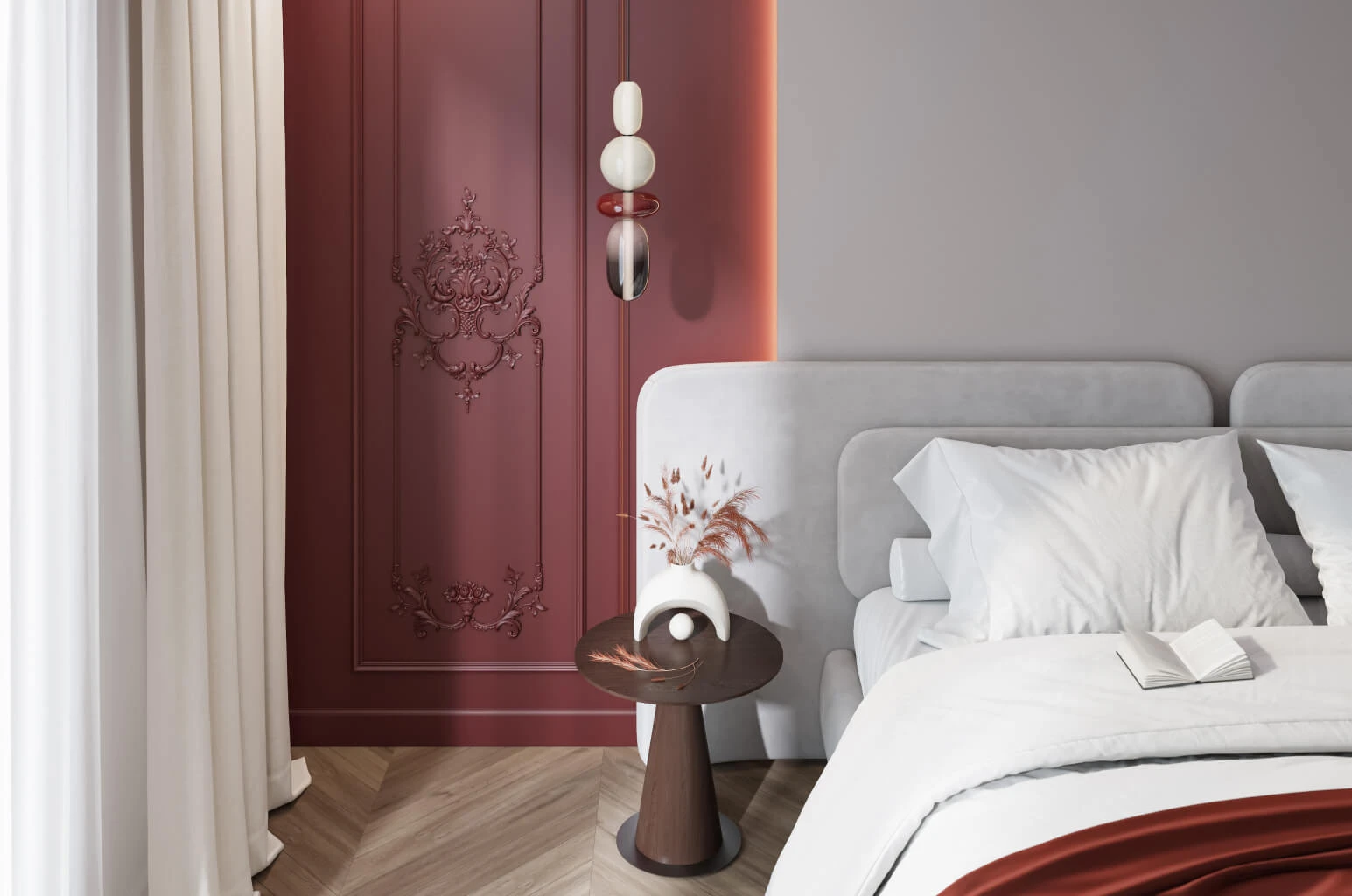
The narrow vertical composition sets a clear rhythm on the wall and conveys the light character of neoclassicism without excessive decoration. The delicate molding contour elongates the proportions, while paired relief accents add expressiveness to the frame, maintaining the restraint of the "Neoclassic Light" collection.
The ready-made wall decor set is already assembled by style and proportions. It can be used as a standalone module, repeated in rhythm, or combined with other CPU pieces from the collection. For a custom scheme, the molding and decorative elements can be selected separately and assembled into a composition for a specific wall.
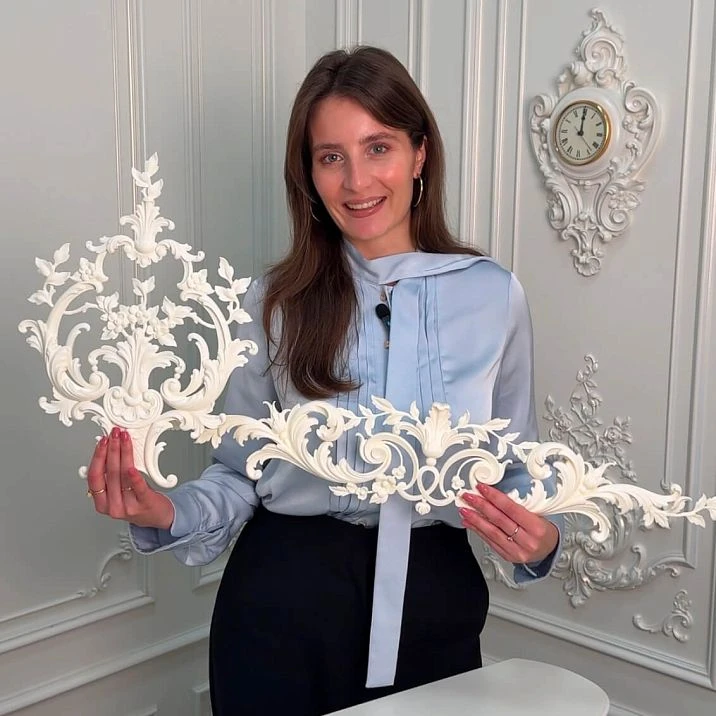
We have been on the market for over 20 years and are ready to offer you the best combination of aesthetics, quality, and practicality. Our polyurethane is not just a material, but a reliable foundation for flawless details, resistance to moisture and cracks, as well as convenient and quick installation. The company's success began in 2002, when two artists – Andrey Ragozin and Evgeny Tsapko – created a small creative workshop for making carved wooden products. The work of the craftsmen was quickly noticed, and within a year they were invited to participate in the reconstruction of the Konstantinovsky Palace in Strelna.
Every product in our range is the result of years of experience, thoughtful technology, and attention to detail. We constantly update our collections, follow and shape trends in interior design ourselves. From elegant neoclassicism to bold Art Deco, you will find the perfect accent for the interior of your dreams.
Choose durable polyurethane decor STAVROS — beauty proven by time and real projects, not just words.
We save your time, peace of mind, and budget
We solve your tasks with maximum speed
Streamlined process reduces all risks
Quality service regardless of order volume
Reliable partner — the foundation of your business
Our showrooms are located in Saint Petersburg and Moscow. Production is located in Saint Petersburg.
Moscow contacts: /contacts_all/
Contacts of Saint Petersburg: /contacts_all/
Send us the product codes, quantities and delivery destination. Contact our team to confirm availability and order details.
Please contact us to confirm shipping availability, costs and delivery times for your destination.
Delivery cost depends on the size, weight of the item, and delivery address.
Please ask our team to confirm shipping costs and delivery arrangements for your destination before placing an order.
Prices and availability of items on the website are always current. Data is updated daily.
Note: items in stock are stored on the warehouse in unpolished form and shipped within 3 working days.
If the item is not in stock, average production time: 5–10 working days.
This is the quality of polishing of the items.
Standard — machine polishing, at a more attractive price.
Prestige — detailed hand polishing, items do not require further work.
More details: /information/kachestvo/
This is the type of veneer of the items.
Under enamel: produced by gluing wooden laminates without color and texture matching. Contrast tonal and textural differences are noticeable. This blank should be chosen if the item is intended for opaque coating.
Under tinting: produced by gluing wooden laminates with color and texture matching. Tonal and textural differences may occur. This blank should be chosen if the item is intended for semi-transparent finish.
More details: /information/kachestvo/
Beech — dense, non-porous wood, most often used for items covered with enamel.
Oak — dense, porous wood with clearly visible natural grain. Due to its strength and decorative properties, it is often used in items with semi-transparent coating, highlighting the wood pattern.
Custom-made, if non-standard items are required, we can produce products from other types of wood, including blanks provided by the customer, manufactured according to our technical specifications.
All our furniture legs can withstand a vertical load of at least 100 kg.
Average production time for custom-made items: 5–10 working days.
Most items are stored on the warehouse in unpolished form. We need time to polish and pack orders.
Yes, we manufacture non-standard items according to individual projects, but we only accept orders with a minimum quantity.
We can manufacture items of the desired size, but we only work with bulk orders. For details, please consult the sales department manager.
Yes, some of our products can be used outdoors. For example, polyurethane items, as well as carved door casings made of pine.
Other items are produced to order using PUR glue, if minimum quantity is available. No warranty is provided for such products, as outdoor conditions are considered aggressive.
Please contact our team to confirm available finishes, minimum quantities and a quotation for your order.
More details: /information/sovety/
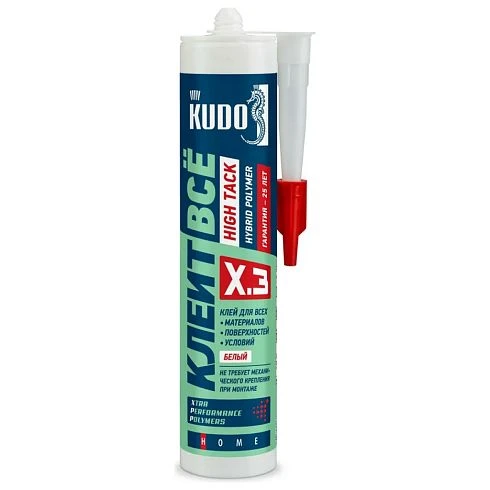
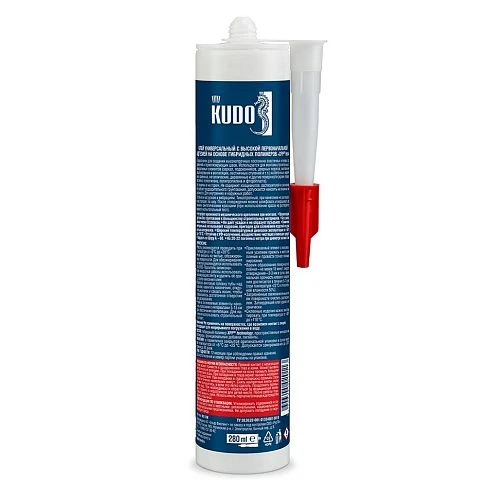
Apply adhesive to the decor. Place it on the surface and press briefly. Then, lift the decor from the surface and leave it open for 3–5 minutes. Press the decor firmly onto the surface and hold for 5–10 seconds.
More details: /information/sovety/
Ideally, you should prepare a design project before placing an order.
You can do this yourself by downloading drawings of our products from our website, or you can order a project from us.
If the number of decorative elements and fittings is small, our company's manager can assist you with selection.
Unfortunately, this service is not provided.
The packaging method depends on the type of items, but in each case, we ensure sufficient protection for safe transportation.
We most often use corrugated cardboard and stretch film. Fragile items are additionally secured on a rigid base to prevent damage during transport.
Please confirm the minimum order quantity for your selected products and finishes with our team.
Please contact our team to discuss measurement and installation requirements for your project and destination before ordering.
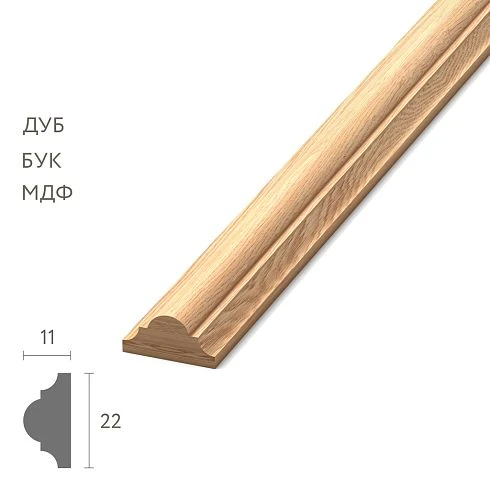
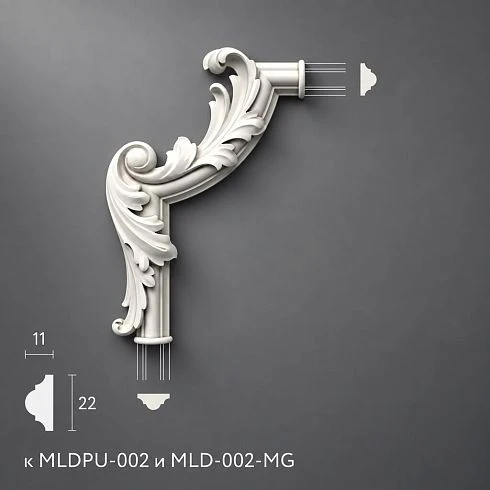
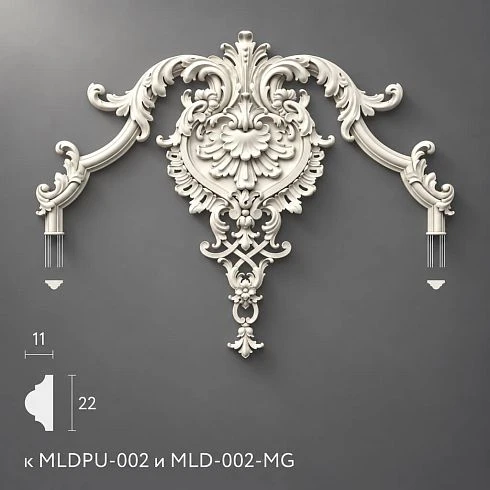
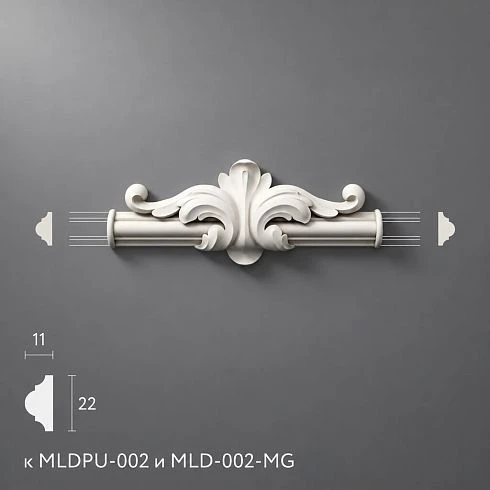
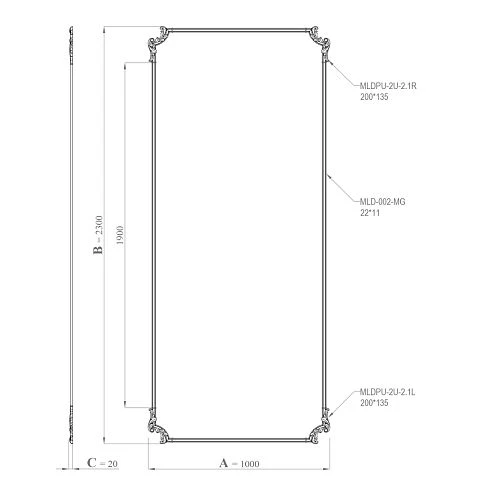
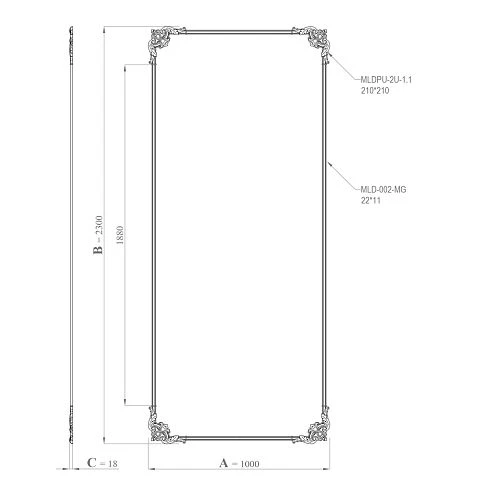
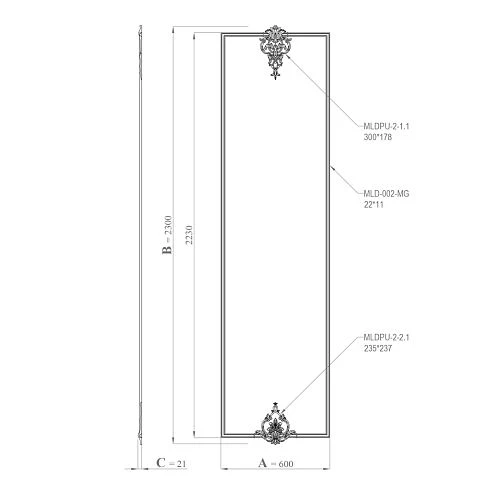
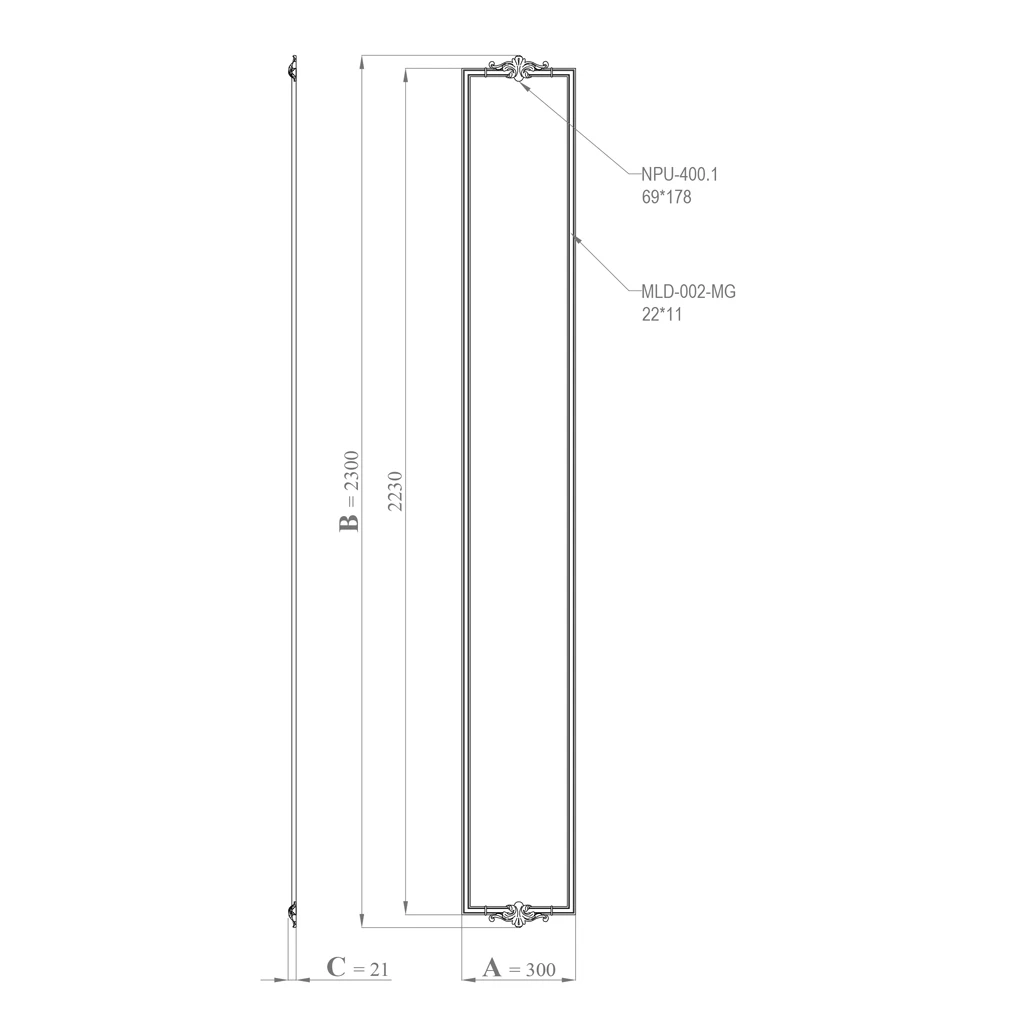
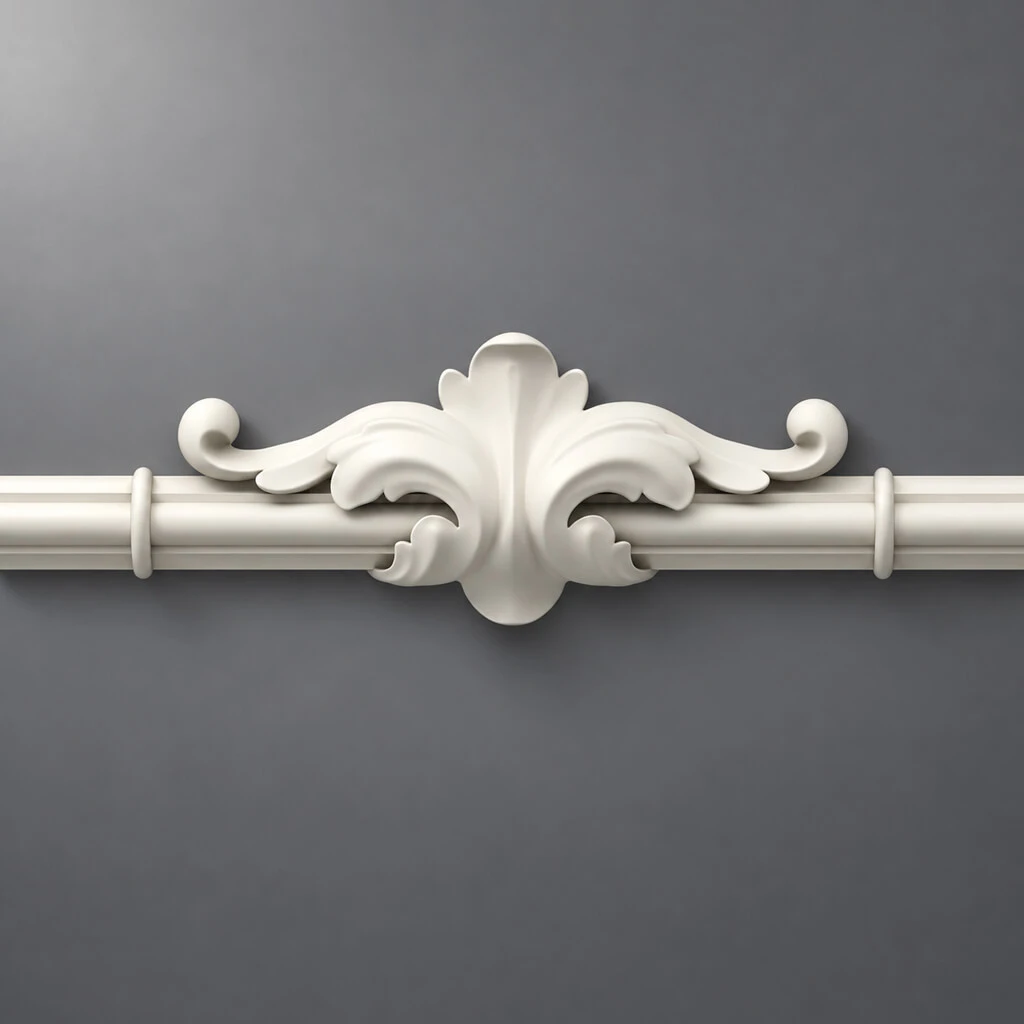
The manufacturer's reference arrangement measures 300 x 2300 x 21 mm, approximately 11.81 x 90.55 x 0.83 inches. The ornamental detail is NPU-400.1, a symmetrical polyurethane relief featuring a central leaf form and paired scrolls. The straight lines are formed with MLD-002-MG, a 22 x 11 mm primed MDF molding supplied in 2600 mm stock lengths. These are two different materials with distinct roles, not an all-polyurethane or peel-and-stick wall panel. The exact quantities of individual pieces supplied should be confirmed in the current order specification.
CPU-2-1 is a practical choice for anyone comparing decorative wall molding, slender architectural accents, and modern neoclassical trim. It offers a coordinated design starting point while leaving the wall finish, final color, spacing, and installation details to be planned for the actual room.
A feature wall does not need to cover a broad area. Sometimes the most effective architectural intervention is a slim vertical composition in a location that would otherwise feel unfinished. A strip between two window openings, the wall beside a doorway, or a narrow return near built-in cabinetry can be too small for a large framed panel and too visible to ignore. CPU-2-1 addresses that type of space with a reference width of just 300 mm, or about 11.81 inches.
The 2300 mm reference height creates a distinctly vertical visual direction. On a sufficiently tall wall, the line can lead the eye upward and establish a relationship between existing trim near the floor and ceiling. This is a design effect, not a guarantee that a room will actually look taller. Good results depend on alignment, lighting, surrounding furniture, and the clear margins left at the ends of the composition.
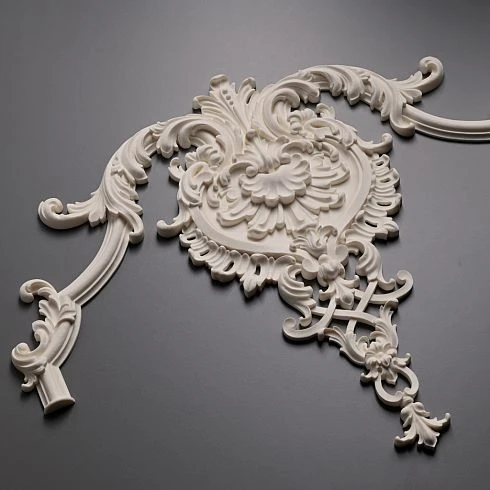
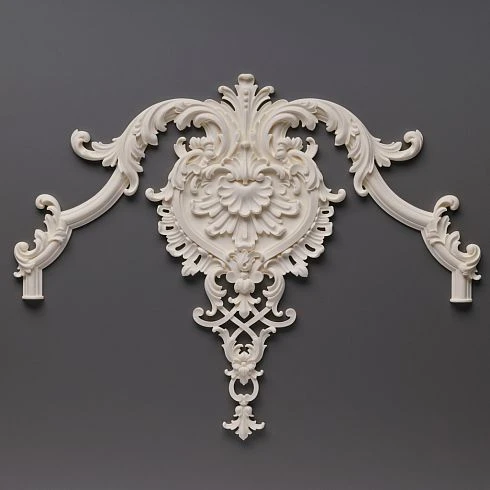
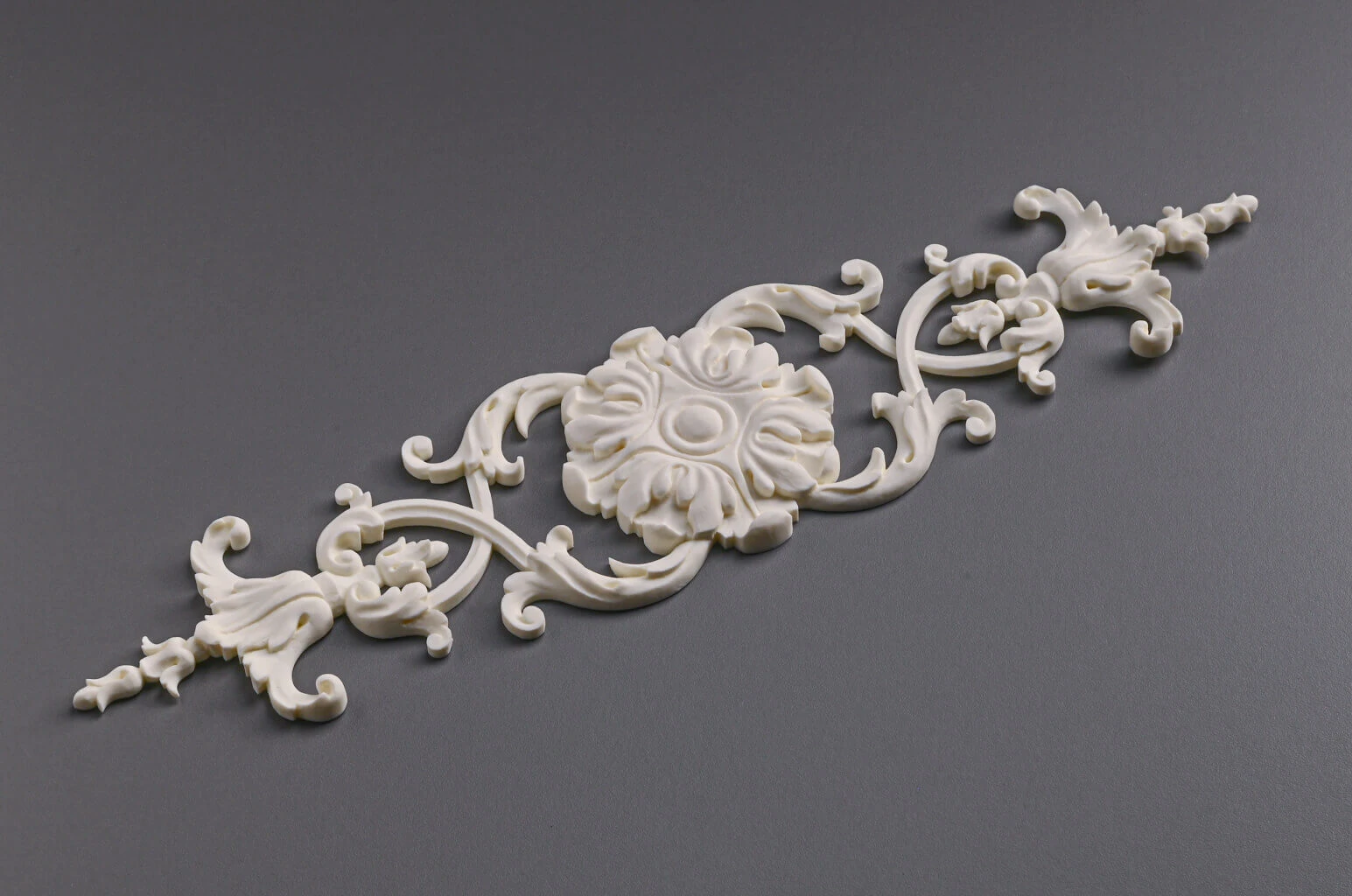
The NPU-400.1 ornament adds a classical detail without replacing the straight linear rhythm. Its symmetrical leaf-and-scroll relief gives the eye a point of interest, while the simpler molding profile prevents the composition from becoming a collection of unrelated flourishes. This balance makes the design appropriate for contemporary classic and transitional American interiors as well as more traditional rooms.
| Specification | Manufacturer-listed value |
|---|---|
| Product code | CPU-2-1 |
| Collection | STAVROS Neoclassic Light |
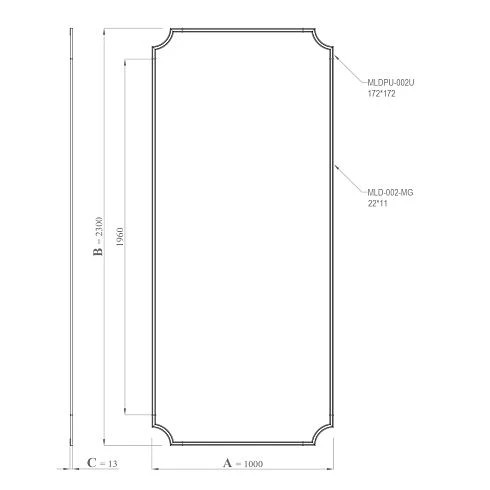
| Reference composition (W x H x relief depth) | 300 x 2300 x 21 mm / 11.81 x 90.55 x 0.83 in |
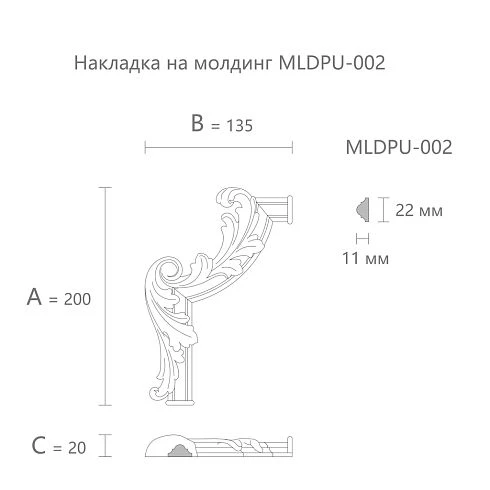
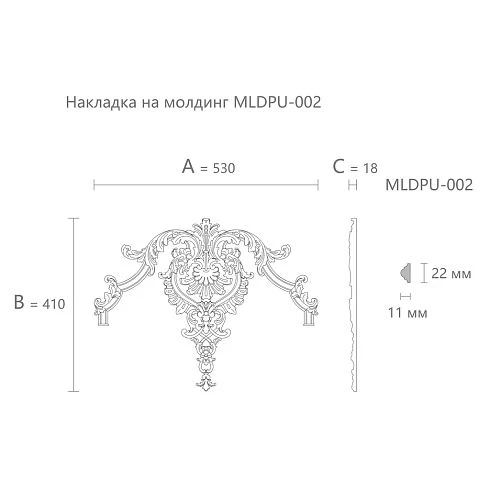
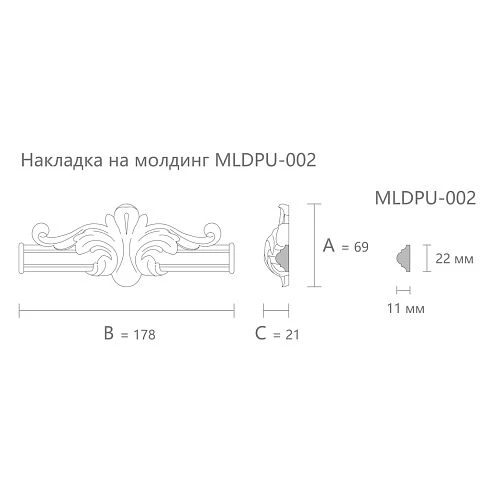
| Decorative ornament | NPU-400.1, polyurethane, 69 x 178 x 21 mm / 2.72 x 7.01 x 0.83 in |
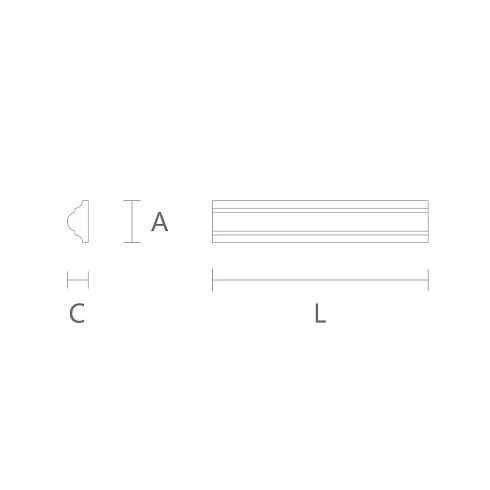
| Straight molding profile | MLD-002-MG, primed MDF, 22 x 11 x 2600 mm / 0.87 x 0.43 x 102.36 in |
| Material combination | Polyurethane ornament + primed MDF linear molding |
| Intended role | Decorative interior wall molding composition |
The 300 x 2300 mm figures describe the manufacturer's reference layout. They do not mean that a flat, solid panel of those dimensions is included. The existing wall remains the visible surface around and within the decorative lines. Individual ornaments and molding runs are positioned to create the intended architectural effect.
The 2600 mm figure belongs to a single length of MLD-002-MG molding. It should not be interpreted as the finished height of the CPU-2-1 composition, and it does not establish the number of MDF sticks included in the commercial package. Verify the itemized order quantities and the current drawing before estimating material for one or several walls.
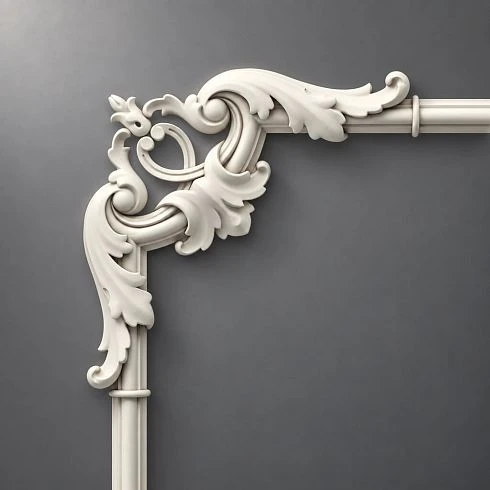
The decorative identity of CPU-2-1 comes from its NPU-400.1 ornamental component. It measures 69 x 178 x 21 mm and is made from polyurethane. Its form is symmetrical: a larger central leaf and smaller scrolling details extend around the central axis. Instead of turning a simple wall frame into a dense ornamental surface, this detail introduces a carefully controlled focus within a narrow architectural outline.
Its 21 mm relief depth is greater than the 11 mm depth of the MDF profile. That difference is important during planning. The molding establishes the background architectural line, while the polyurethane ornament projects farther from the surface and creates a stronger light-and-shadow effect. If the composition is placed beside a door swing, cabinet front, closely positioned furniture, or a narrow passage, check clearance for the deepest individual component.
The manufacturer identifies NPU-400.1 as an accent for straight molding compositions using the 002 profile family. For this set it is paired with MLD-002-MG, so the product relationship is documented rather than inferred from similar photographs. See the exact NPU-400.1 polyurethane molding ornament for its shape and individual dimensions.
The second component, MLD-002-MG, creates the straight architectural lines. The published cross-section is 22 mm wide and 11 mm deep, with each stock length measuring 2600 mm. In American dimensions, that is approximately 0.87 x 0.43 inches and 102.36 inches long. The profile is made from MDF and supplied with a factory-applied Prestige Primed finish.
A 22 mm face is narrow enough to support a restrained composition but visible enough to create an intentional trim line on a painted wall. Because the profile projects 11 mm, side lighting can reveal the molding even when the wall and trim are finished in the same color. That is the central design advantage of applied molding: a modest physical change can create architectural depth without introducing a separate solid wall covering.
Primed MDF and polyurethane should be treated as separate substrates when selecting adhesives, finishing products, and joint treatment. The factory primer on MDF is a prepared base, not a promise that an installer can skip all surface preparation. Cut ends, joints, and fastening points may still require attention before the final paint system is applied. Full profile information is available on the MLD-002-MG primed MDF molding page.
In an entryway, a slim decorative accent can give a small area a more considered architectural character. The reference width helps CPU-2-1 fit into wall sections where a one-meter-wide panel would be impractical. Consider a vertical accent near a console table, a mirror, or an otherwise empty wall return. The arrangement should be positioned so that the ornament is visible and not obscured by hooks, lighting fixtures, or door trim.
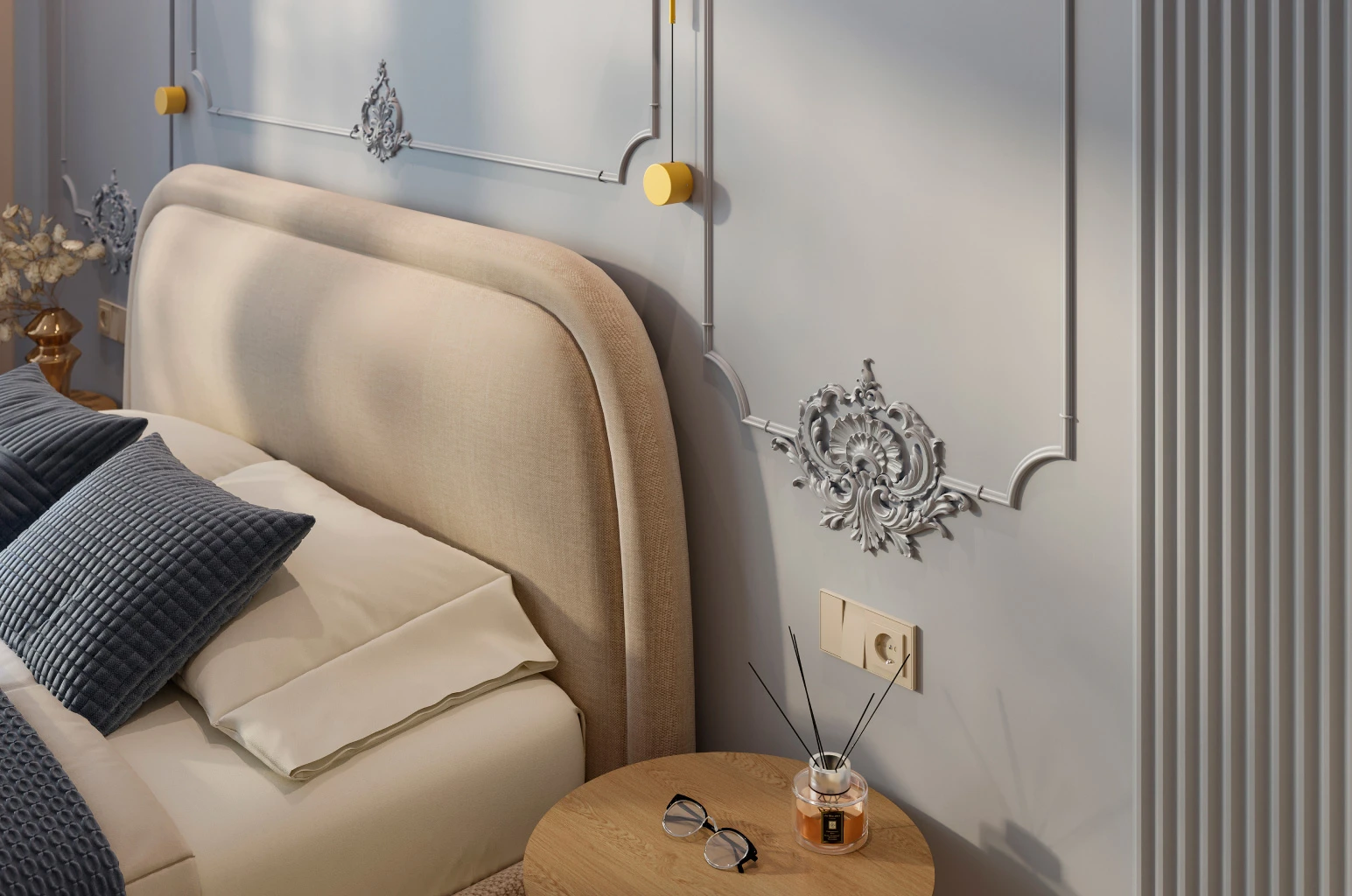
A narrow molding composition can frame the visual area around a bed without requiring a large central panel. Two matching vertical accents may be considered on either side of the headboard when enough wall area is available. In a smaller bedroom, one carefully placed composition can provide a decorative feature beside a dressing table or at the edge of an accent wall. Test placement against the bed, bedside sconces, and any tall furniture before deciding where the vertical run begins and ends.
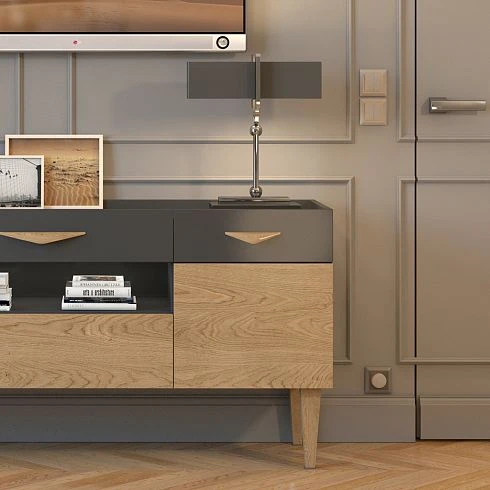
On a living room wall, CPU-2-1 can supply a quiet architectural punctuation beside a bookcase, an artwork grouping, or the end of a wider molding arrangement. It works particularly well when the rest of the room already contains expressive furniture or natural textures. The aim is not to cover every surface with trim. A single decorative line can establish the transition between two zones or reinforce the vertical axis of the furniture arrangement.
Hallways frequently have narrow sections that do not accommodate traditional rectangular wall panels. The CPU-2-1 reference footprint gives designers another option. Repeated vertical accents can help establish rhythm along an uninterrupted run, but the correct spacing is determined by the actual door casings and wall sections. The treatment should not interfere with opening doors, accessible circulation, wall fixtures, or normal cleaning.
For a home office, a slim molding feature adds texture to the area behind a desk without making the background visually busy. The ornament can provide a small traditional reference in an otherwise contemporary room. Consider how the composition will appear within the camera frame as well as from the doorway. Avoid placing the relief directly behind a bright lamp or where strong side lighting would cast an awkward shadow across the wall.
In reception rooms, corridors, and carefully specified hospitality settings, repeating a restrained accent can create a consistent design language across adjacent spaces. This is an aesthetic application, not a statement of fire rating, impact resistance, or commercial-code compliance. Where the project has special durability, cleaning, or regulatory requirements, the materials and installed system should be reviewed by the project team before specification.
Measure the full wall and mark the elements that cannot move: doors, windows, electrical devices, baseboards, ceiling trim, built-ins, and major furnishings. Then identify the uninterrupted area that can hold a 300 mm reference composition with appropriate margins. If the wall is only slightly wider than the intended accent, the result can feel cramped. Leaving empty space at the sides helps the molding read as a deliberate architectural feature rather than an afterthought.
Decide whether the composition should align with a doorway, furniture edge, window mullion, or architectural centerline. Use that reference consistently. A vertical ornament can look crooked even when it is technically plumb if it is positioned beside an existing feature that is visibly out of alignment. Check actual conditions before marking the final installation lines.
The NPU-400.1 relief should not be placed randomly along a molding run. Review the manufacturer's composition drawing, establish the intended ornament axis, and confirm the relationship to the top and bottom of the reference layout. If a customized arrangement is required, mock up the ornament and profile at actual scale before cutting material. A change of only a few inches can affect how a narrow composition relates to nearby furniture or trim.
One accent can be enough for a small wall section. Where the room calls for symmetry, two matching CPU-2-1 reference compositions might frame a doorway, mirror, or wider panel. Along a larger wall, several units may create a consistent rhythm. Lay out all repeats together so the outside margins and gaps are deliberately calculated. Do not assume the 300 mm reference width also specifies the correct distance between adjacent compositions.
When several decorative areas are planned, distinguish the reference dimensions from the material takeoff. MLD-002-MG is supplied in 2600 mm stock lengths, but an installed arrangement may require multiple straight runs, cuts, or junctions. The total perimeter of a rectangular feature can be a useful initial estimate, yet it is not a substitute for a piece-by-piece cut list.
For example, a plain rectangle measuring 300 mm wide by 2300 mm tall has a mathematical perimeter of 5200 mm. Dividing 5200 by a 2600 mm stock length suggests two pieces on paper. In practice, a single 2600 mm length does not provide both a 2300 mm vertical side and a 300 mm horizontal side after saw kerf, miter allowances, and fitting adjustments. The shape and location of the NPU-400.1 ornament may also change the termination of straight runs. A cut list can therefore require more individual stock lengths than a simple total-footage calculation suggests.
Record each planned straight section separately, starting with the longest cuts. Determine which shorter lengths can be taken from the remaining stock. Allow for test cuts, joints, corners, and realistic waste. When ordering CPU-2-1 as a commercial set, confirm how many pieces of each component the current product configuration actually includes. Do not invent quantities from a page where item-count input fields are not readable.
The wall must be sound enough to support the chosen attachment method and finish. Inspect for loose paint, damp areas, dust, unstable plaster, and uneven surfaces. Existing drywall, masonry, and painted walls can behave differently with adhesives and fasteners. Choose products approved for the actual substrate and for the two materials in this composition. Because primed MDF is part of the set, do not assume the complete assembly is suitable for continuously wet environments.
Mark the intended width, height, and axis using a level. Check the whole arrangement from normal viewing distance, not only with a tape measure held against the wall. Dry-fit the NPU-400.1 ornament and MLD-002-MG profile before permanent attachment. Confirm the orientation of the floral relief, the way any molding ends approach it, and the planned junctions. Where the manufacturer's drawing shows a particular decorative relationship, use that drawing instead of assuming all joins are simple 45-degree miters.
Use an installation system suitable for polyurethane, primed MDF, and the wall surface. An adhesive that works for one component may not be the preferred choice for the other. Follow the product-specific instructions for open time, setting time, support, and cure. Some projects may require temporary tape or other supports while the approved adhesive develops strength. Do not rely on generalized installation times or assume the set includes adhesive, nails, or fasteners.
After attachment, inspect joints under the actual lighting conditions of the room. A narrow molding line can draw attention to small differences in alignment. Address gaps, cut ends, and fixing points with compatible products according to the selected finishing system. Avoid heavy sanding on the polyurethane ornament because excessive abrasion can erase the fine leaf-and-scroll detail. Work toward a visually continuous painted result without disguising the intended relief.
A uniform color may look different on polyurethane and MDF if the surfaces are prepared differently. Test the chosen coating on representative pieces, particularly if a low-sheen white or pale neutral is planned. The primer on the MDF profile does not remove the need to follow the finish paint supplier's instructions. Allow compatible coatings to dry as directed, and inspect the completed assembly in natural and artificial light.
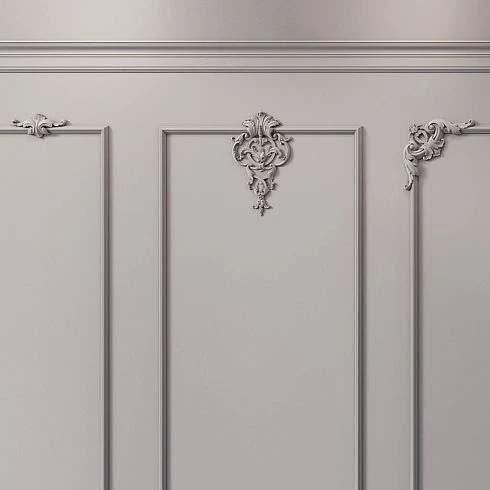
Painting the molding, ornament, and wall the same warm white creates a subtle relief that becomes visible through shadow instead of contrast. This is a useful treatment when a room includes textured upholstery, wood furniture, or an expressive light fixture. A white-on-white wall molding feature can provide a formal reference without making the room feel like a period reproduction.
Greige, taupe, light gray, and soft beige support a modern-classic palette. Paint the decorative components to match the wall for a continuous surface, or use a nearby neutral shade for slightly greater definition. Before choosing, check the color in both daylight and evening illumination. Shadow lines around the relief can become more pronounced as the direction of light changes.
White or cream molding on a muted blue, sage, or charcoal wall gives the narrow composition a more graphic presence. Because CPU-2-1 has a slender footprint, a contrasting treatment can make it appear stronger than its physical size suggests. Keep the surrounding trim and furnishings in mind so that one narrow detail does not become an isolated bright stripe.
The NPU-400.1 ornament can also be considered as a subtly differentiated feature, subject to an appropriate finishing system. A slightly different sheen may emphasize the leaf and scroll forms without introducing a new color. More pronounced decorative finishes may suit traditional interiors, but should be tested on a sample. Avoid assuming that any paint or metallic treatment will adhere equally well to primed MDF and untreated polyurethane.
The defining quality of CPU-2-1 is its narrow 300 mm reference width and central NPU-400.1 relief. It is not simply a smaller version of every other design in the collection. The arrangement is specifically suited to a slender vertical wall zone or a measured repeated accent.
The CPU-2-2 decorative wall molding set has a wider 600 mm reference composition with two different polyurethane ornamental elements. This can create a stronger sense of top-to-bottom decorative progression. If the available wall width is about twice that of CPU-2-1, it may be worth comparing the designs rather than enlarging a narrow accent without checking proportions.
The CPU-2-5 decorative molding set uses a 1000 mm reference width and a different polyurethane ornament, MLDPU-002U. Its larger footprint makes it more suitable for a broad framed feature. The two products should not be described with the same ornament code or dimensions.
For a complete comparison of all five coordinated designs, visit the Neoclassic Light collection. For other architectural approaches, the wider STAVROS wall decor catalog includes additional decorative systems. Compare actual individual product dimensions and materials rather than relying solely on category illustrations.
Buying straight wall trim on its own gives you freedom to design every element of the composition. That is appropriate for a custom grid of picture frames or a large repeated panel treatment. CPU-2-1 addresses a different need: a coordinated slender reference design in which the decorative polyurethane accent has already been selected to pair with the MDF profile.
For homeowners, this reduces uncertainty about which ornamental detail belongs with the line. For interior designers, the reference dimensions provide a starting point for elevation drawings and room-specific revisions. For installers, a product-specific composition can make it easier to discuss the intended ornamental location and the necessary material takeoff before the first cut.
The set does not remove the need for professional judgment. Some walls require different proportions, another ornament position, extra stock molding, or an installation system designed for the substrate. Think of CPU-2-1 as a coordinated decorative assembly, not as a guarantee that one unopened package will finish any wall of similar height.
The manufacturer gives a reference composition of 300 x 2300 x 21 mm, approximately 11.81 x 90.55 x 0.83 inches. This is the intended decorative arrangement, not a solid sheet or full wall panel. Confirm the detailed drawing before adapting the arrangement to a different wall size.
No. The decorative relief NPU-400.1 is made from polyurethane, while the straight MLD-002-MG molding is primed MDF. The materials have different preparation and attachment considerations.
The NPU-400.1 component measures 69 x 178 x 21 mm, or about 2.72 x 7.01 x 0.83 inches. Its symmetrical leaf-and-scroll ornament is designed to accent a straight molding composition in the 002 profile family.
No self-adhesive backing is confirmed by the product specification. Plan attachment using suitable installation materials selected for the wall substrate, primed MDF, and polyurethane, and confirm what the current commercial package includes.
The MDF profile is supplied primed and the polyurethane component can be finished using an appropriate coating system. Prepare joints and cut edges as required, and confirm paint compatibility rather than assuming a single surface treatment is suitable for every material.
These are reasonable design applications because the reference composition is only 300 mm wide. Actual suitability depends on the available wall section, clearance for the relief, surrounding doors and furniture, and safe attachment to the substrate.
The publicly readable composition identifies MLD-002-MG and NPU-400.1, but the number of pieces in the current purchase configuration should be verified in the live itemized order. The 2600 mm profile stock length should not be mistaken for the quantity of sticks supplied.
The composition includes MDF, so it should not automatically be specified for wet or exterior conditions. Review the environmental requirements and choose a system explicitly approved for the location. Polyurethane in one part of the design does not make the entire mixed-material assembly moisture resistant.
A series of matching vertical accents can create an attractive architectural rhythm. Measure the entire wall, use consistent spacing and outside margins, and calculate each composition from the actual drawing. Confirm the quantity of components required for repeated installations before ordering.
CPU-2-1 is most compelling when the wall needs a little structure rather than a complete decorative transformation. Its 300 mm width makes it suitable for narrow spaces. The NPU-400.1 leaf-and-scroll relief supplies a precise focal point, and the 22 mm-wide primed MDF molding gives the design clean, readable lines. Together they create an interpretation of neoclassical wall decoration that can sit comfortably beside contemporary furniture and quieter interior finishes.
Review the dimensional drawing, compare the component specifications, and plan the surrounding margins before selecting a mounting and finishing system. If the goal is a slender wall accent with sculpted detail rather than a large panel or plain trim strip, the STAVROS CPU-2-1 vertical decorative wall molding set offers a distinct starting point within the Neoclassic Light collection.
Our manager will contact you within 5 minutes