




























Article Contents:
- Make it yourself or buy it ready-made: the economics of a small workshop
- The main decision formula
- Where in-house production is still stronger
- Decision tree: ready-made SKU, blank, or in-house production
- The break-even point exists, but it is different for every workshop
- Equipment utilization can shift the threshold more than price
- Unfinished leg as a professional semi-finished product
- Why it is not always rational to produce a handle yourself
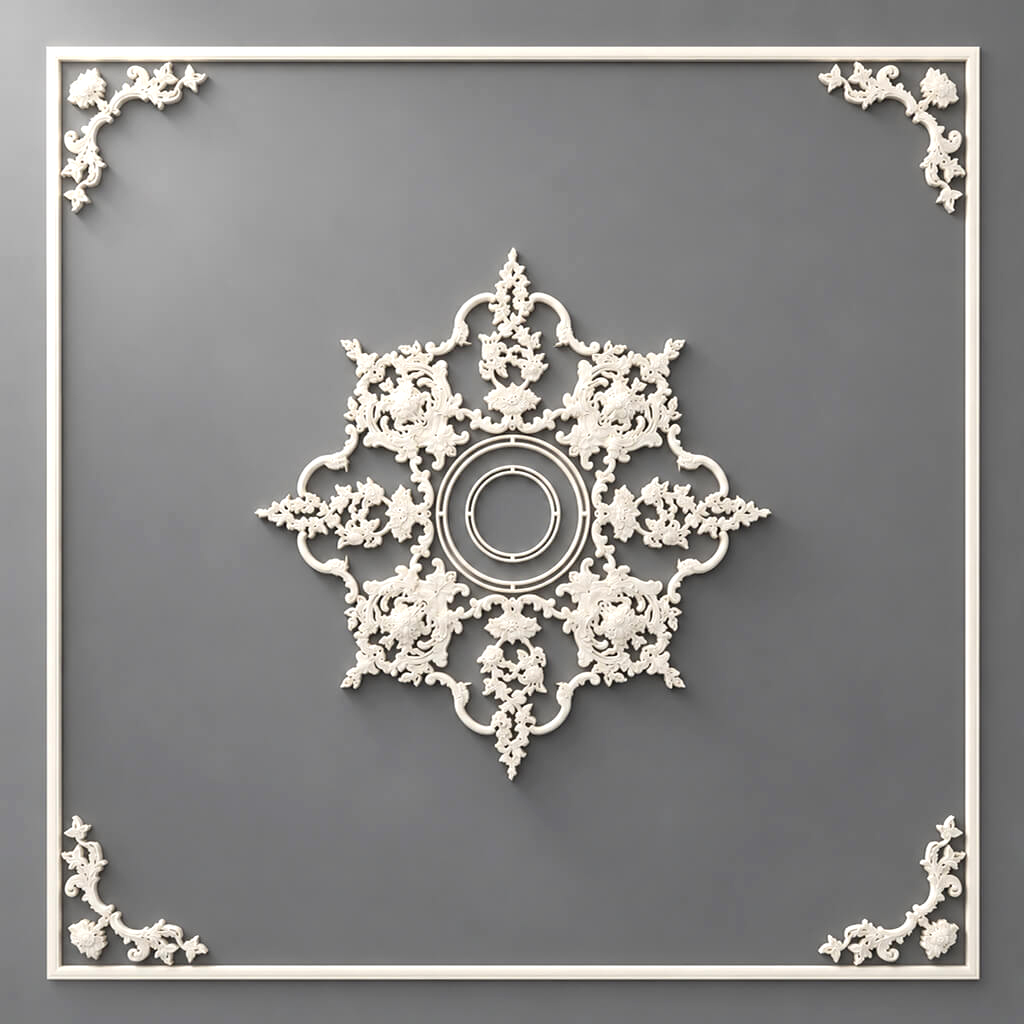
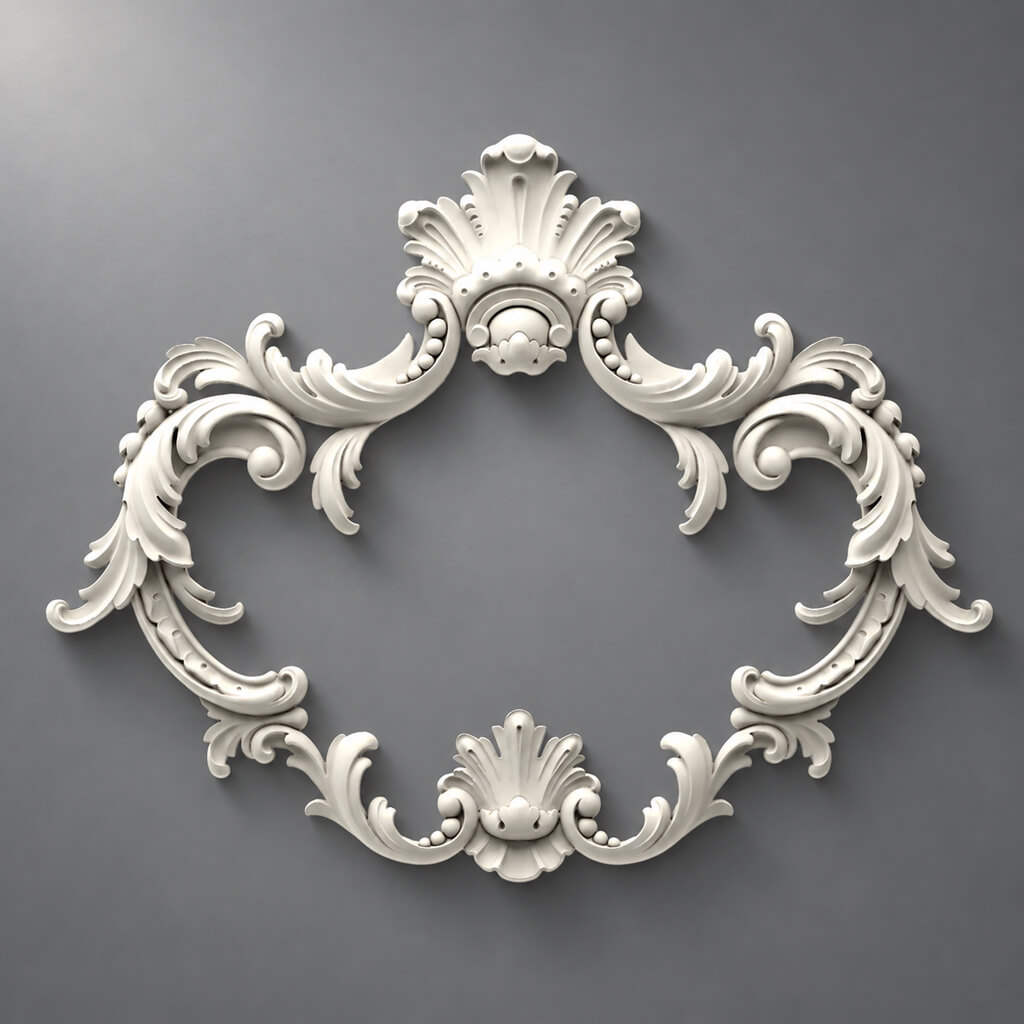
- Central overlay
- Corner Overlays
- Golden Sample for a small batch
- Tolerances and fit
- Turned parts: buy repeatability instead of starting a turning process
- Blanks: when finished geometry is not needed in full
- What a craftsman can safely modify independently
- For opaque enamel
- For a transparent finish
- Pilot finishing before processing the entire batch
- Finish Recipe
- When a serial part fits
- When it doesn't fit
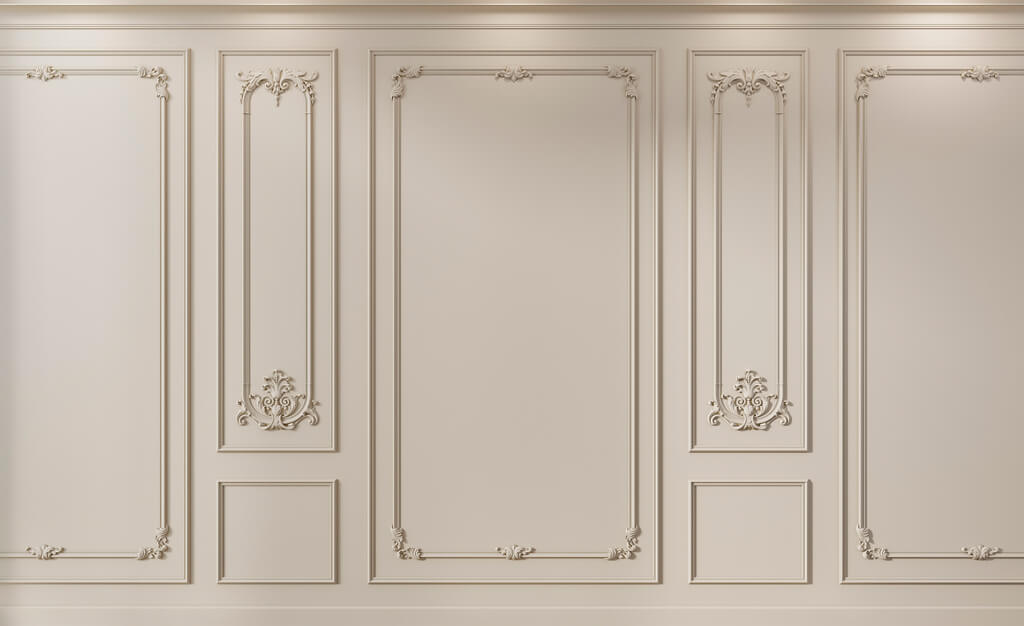
- Not just furniture: doors, mirrors and interior joinery
- Why "from a single piece" reduces risk
- When a trial piece is especially needed
- Small batches and reorders: 4 pieces today, 8 in a month
- Version control for reorders
- Leg
- Overlay
- Bracket
- Handle
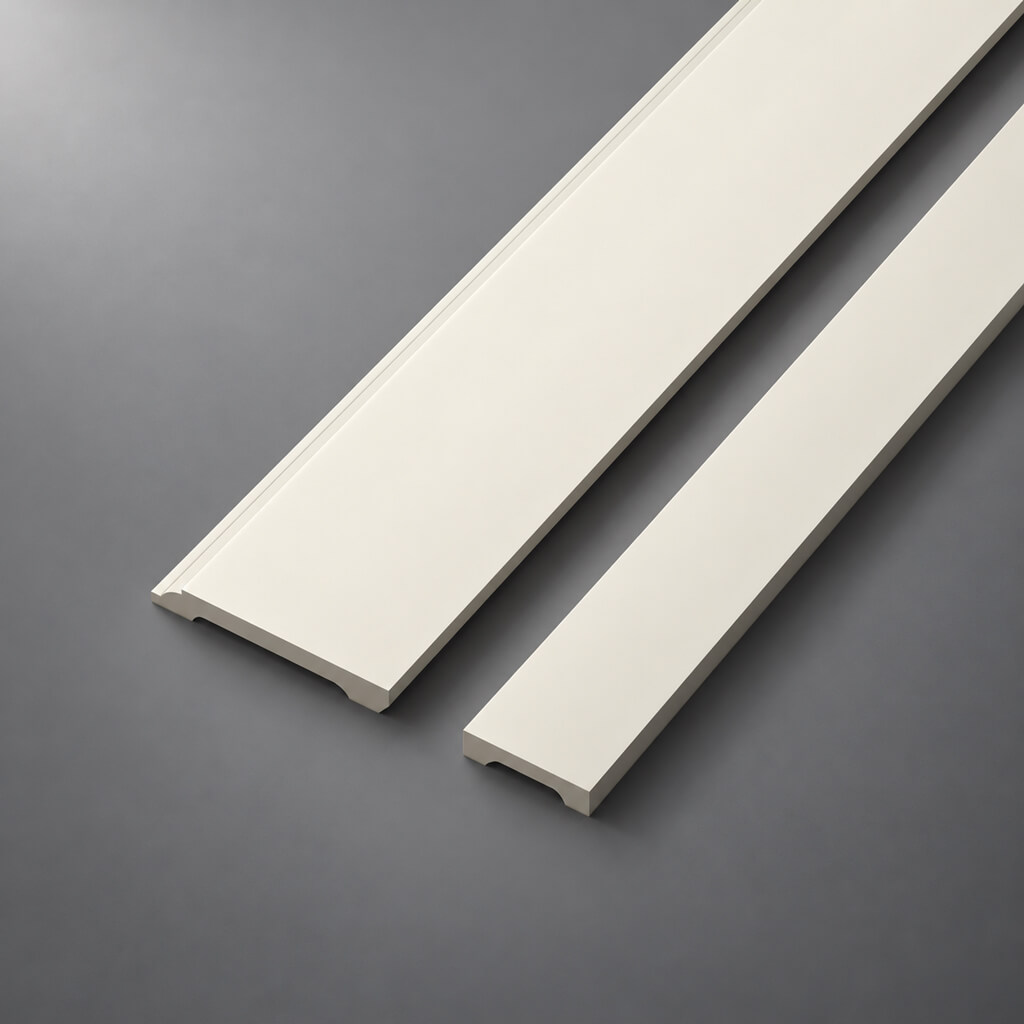
- Trim
- Reference overall dimension
- What to compare
- Add production risk
- Production matrix: workshop equipment changes the decision
- It is better to outsource the operation, not the workshop's expertise
- Mixed project: a chest of drawers with three ready-made groups of parts
- What the workshop saves in a mixed project
- When a mixed project becomes too dependent on the supplier
- Unique signature geometry
- Large recurring volume
- Non-standard size
- Own production is already set up
- Simple production card
- Internal furniture specification: how to store finished elements
- Small wholesale: when a workshop is no longer enough for piece-by-piece purchasing
- Mini decision map for ordering
- What to check before payment
- Purchase readiness test

Four identical carved legs for a chest of drawers look like a small part of an order. For a workshop, this can turn out to be a separate production project: find or build a 3D model, prepare the program, secure the workpiece, make a test pass, check the geometry, repeat the operation four times, then finish the surface by sanding. If another such leg is needed a month later, the cycle has to be partially repeated.
Therefore, the question of whether to make it yourself or buy it ready-made is rarely decided by the price of wood for a small joinery workshop. The entire operation needs to be compared.
Working logic:
furniture task → part type → ready-made SKU → actual size → material → own modification / finish → installation → quantity → repeat order.
Ready-made wooden elements for furniture are especially interesting where the craftsman is buying not just a piece of solid wood, but an already completed complex production operation: turning, carving, repeatable 3D milling, a profiled cross-section, or geometry that is unprofitable to set up as a separate process for two, four, or ten parts.


Do it yourself or buy it ready-made: the economics of a small workshop
In-house production seems cheap if you count only the material.
For example:
blank + machine time = part.
In practice, the chain is longer:
form search → CAD / CAM → blank preparation → tooling → setup → test pass → machining → possible defects → sanding → consistency check → finishing.
The smaller the batch, the more the preparatory operations are distributed across each piece.
If the model and program are created for 500 identical parts, that is one set of economics.
If it is for four carved legs, it is another.
The main decision formula
It is useful to compare not the price of a finished element with the price of a blank, but two complete values:
Make Cost = material + preparation + programming + setup + machine time + manual time + sanding + defect risk + equipment occupancy cost.
Buy Cost = price of the finished part + delivery + incoming inspection + in-house rework / finishing, if needed.
Even without ruble figures, it is clear where the difference appears.
Complex serial geometry already has development and process setup that someone has "paid for." A small workshop buys the result of that process only in the required quantity.
You also need to account for the machine's opportunity cost.
If the CNC is occupied with four decorative parts, during that time it is not making:
- facades;
- cabinet parts;
- countertops;
- serial elements of the current order.
So the question is:
is it worth occupying your own equipment with an operation that already exists as a ready-made serial product?
For a workshop with limited production capacity, this is sometimes more important than the cost of the part itself.
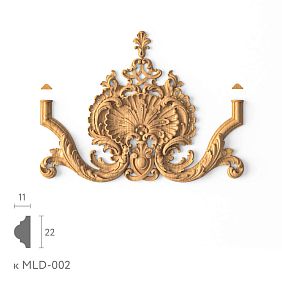
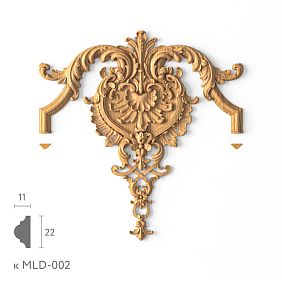
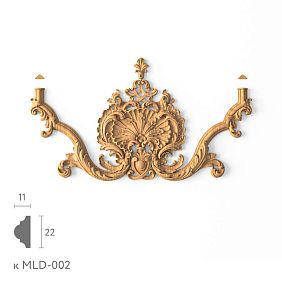
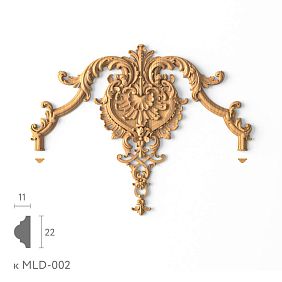
Our factory also produces:


Where in-house production is still stronger
Buying ready-made is not always rational. An in-house cycle wins when:
- the geometry is a signature feature of the workshop;
- the part is repeated in a large, stable series;
- the required size is not available on the market;
- a design is required that cannot be safely achieved by modifying a serial part;
- the workshop already has a set-up process and tooling;
- a repeat run requires almost no preparation.
That is, the decision depends not on “I love doing it myself / I prefer to buy,” but on the structure of the specific operation.
What counts as a finished wooden element and what counts as a blank.
These concepts are best kept separate.
Finished element.
The main decorative or structural geometry has already been formed.
The craftsman may still need to:
- cut to length;
- drill;
- adapt the fastening;
- paint;
- tint;
- to varnish;
- to build into furniture.
Examples:
- furniture leg;
- wooden handle;
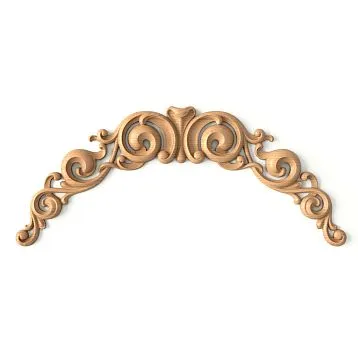
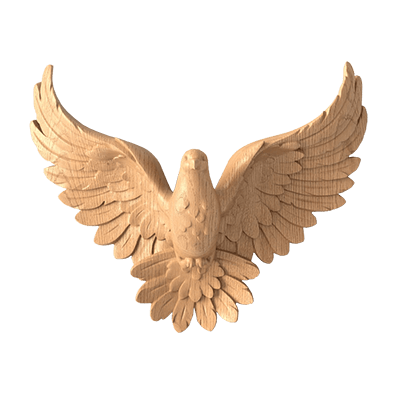
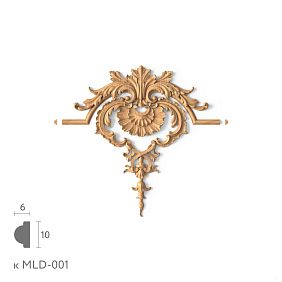
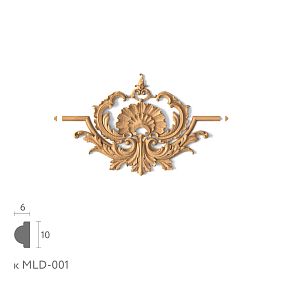
- carved overlay;
- rosette;
- bracket;
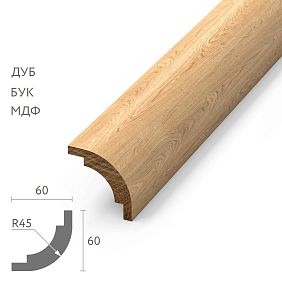
- molding;
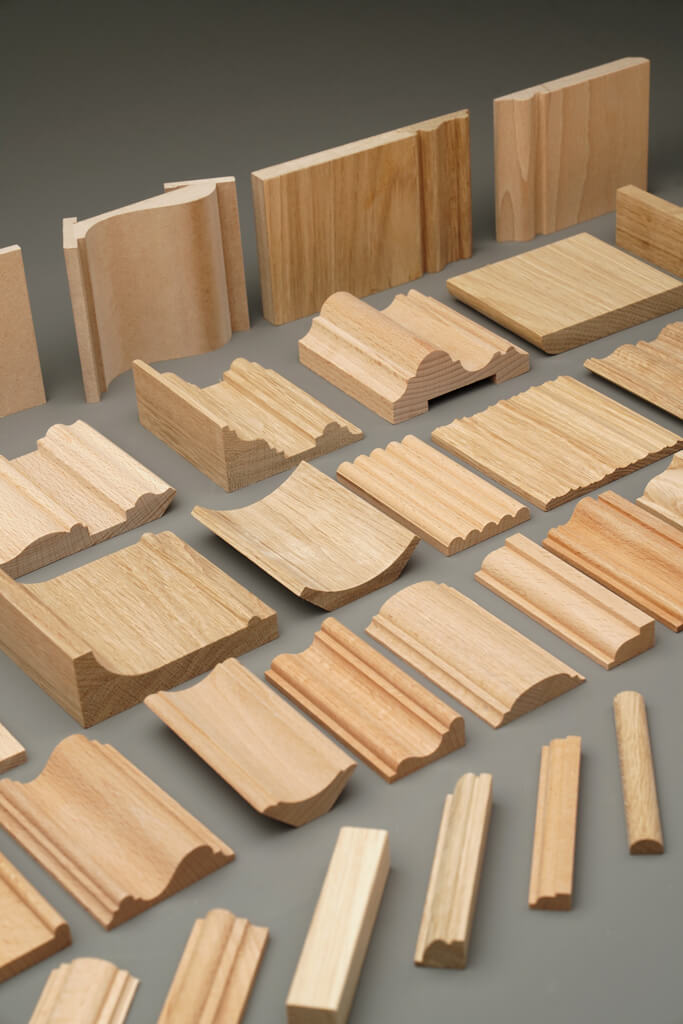
- profiled moulding;
- turned part.
Blank.
This is a material that still requires substantial shaping.
For example:
- block for a leg;
- blank for a turned part;
- unprocessed element for future carving;
- a profile that still needs to be formed.
Why the difference matters for the economy.
If a craftsman buys a ready-made carved overlay, he eliminates the most difficult part of the process — producing the relief.
If he buys a regular blank, the savings are much smaller: the critical operation remains inside the workshop.
Therefore, when comparing options, one should ask:
which part of the technological chain has already been completed by the supplier?
Get Consultation
How to compare “doing it yourself” and “buying it ready-made”
It is convenient to go through one table before the craftsman automatically sends the part into his own production.
| Factor | Make it in the workshop | Buy a ready-made element |
|---|---|---|
| CAD / CAM | required for complex part | geometry already exists |
| program preparation | Required | Not required |
| equipment setup | Required | Not required |
| test part | often needed | usually not needed |
| machine time | takes up its own capacity | does not take up |
| Repeatability | provided by the workshop | Mass-produced |
| primary grinding | own | depends on product availability |
| risk of defects during manufacturing | inside the workshop | is transferred to the manufacturer |
| 1–10 parts | preparation is especially noticeable | often the most interesting scenario |
| custom geometry | a strength of in-house production | a ready-made SKU may not fit |
Question #1 — does the part have a serial analog.
If not, there is nothing to compare: a custom solution is needed.
If there is, move on to the size.
Question #2 — whether the physical geometry fits.
A ready-made part saves time only if it does not have to be practically redone from scratch.
Check:
- A;
- B;
- C;
- length;
- width;
- the depth;
- the mounting plane;
- mounting points.
Question #3 — how many pieces are needed.
For 2–20 parts, the preparatory costs of in-house production are especially noticeable.
For a large, stable series, the situation may change: an in-house process can become rational once the tooling, program, and inspection have already been worked out.
Question #4 — whether this element will recur in future orders.
If the workshop regularly makes one furniture model, an in-house technology may pay off better.
If every order is unique, ready-made SKUs offer more flexibility.
Decision tree: ready-made SKU, blank, or in-house production
Before calculating the price, it's useful to go through four decision points.
1. Does the geometry exist as a ready-made SKU?
If not — either custom or in-house production.
If yes, the next question.
2. Does the size fit without major rework?
If a ready-made part has to be almost completely reshaped, the savings disappear. Then a blank or in-house production is better.
3. Is the batch small?
For 2–20 complex elements, serial ready-made geometry often removes a disproportionately large part of the preparation. For hundreds of parts, you need to recalculate.
4. Is the geometry part of the workshop's signature product?
If so, in-house production can be more valuable even for a small batch: uniqueness is part of the offering.
This gives three working modes:
| Situation | Solution |
|---|---|
| the standard form works, the batch is small | buy a ready-made SKU |
| the base form works, but significant modification is needed | buy a blank |
| unique geometry or a large stable run is needed | make it yourself / custom |
A break-even point exists, but it is different for every workshop
It is impossible to honestly write a universal rule: “always buy up to 20 parts, make them yourself after 20.” Workshops have different hourly costs, machine parks, and workloads.
Instead, one can consider a conditional threshold:
Setup Cost / Saving per Part = Approximate Break-even Quantity.
where Setup Cost includes program preparation, tooling, and a trial run, and Saving per Part — the difference between its own variable cost and the price of the finished element.
If preparation is extensive and the savings per unit are small, the break-even point shifts far to the right. That is why a complex carved part can remain profitable to buy even in a batch that already seems "not exactly small."
Equipment utilization can shift the threshold more than price
The same element can be profitable to make in winter and unprofitable during peak season.
If the CNC is free, its opportunity cost is low.
If the queue is booked for two weeks, serial ready-made decor frees up capacity for core orders.
Therefore, the decision MAKE / BUY is worth revisiting not only based on the part model, but also based on the current production load.
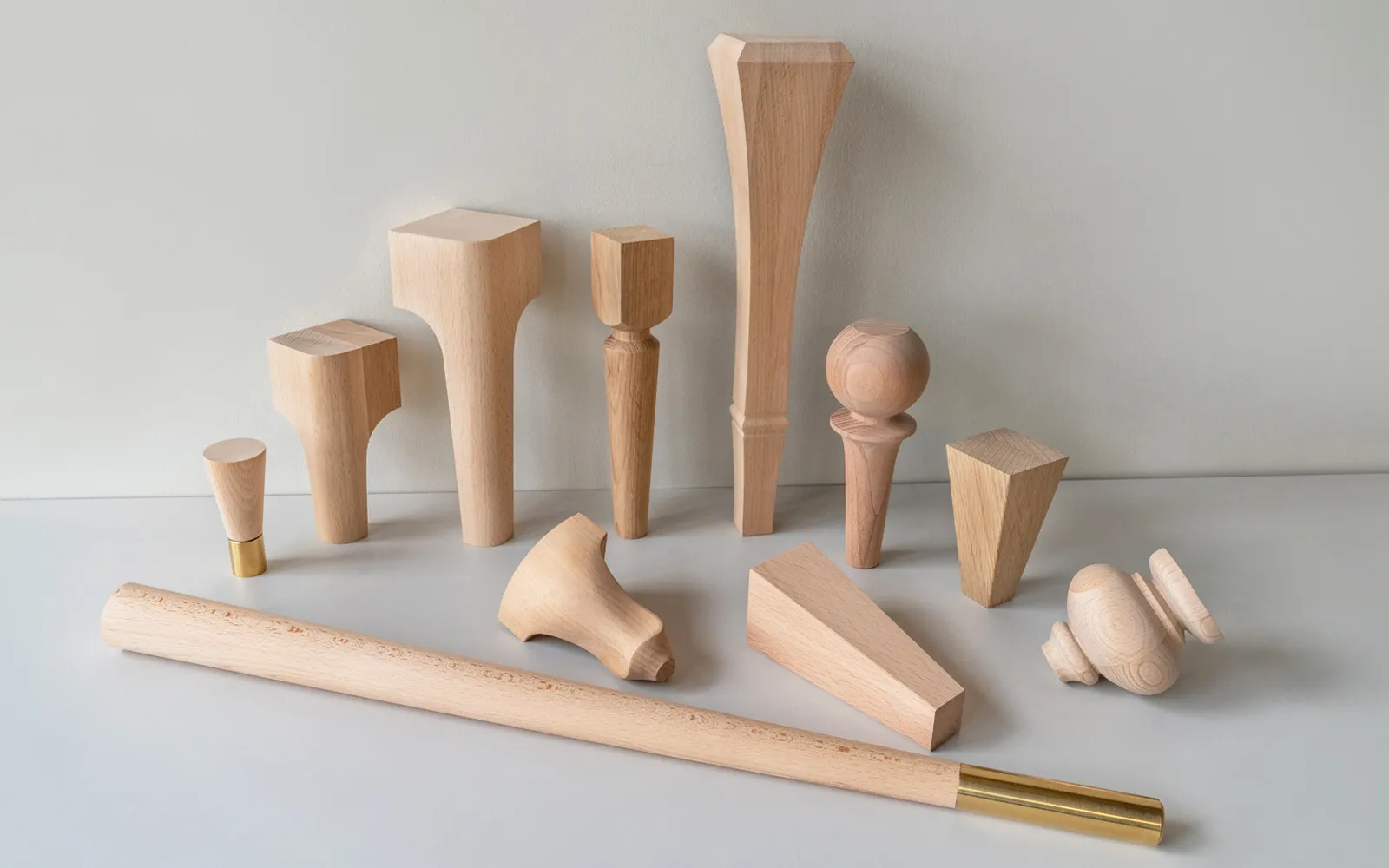
Ready-made furniture legs and supports: a classic example of a small series
Four legs for a chest of drawers — an almost perfect example of the "buy or make" decision.
A workshop needs more than just four pieces of wood.
Four identical parts are needed:
- the same height;
- the same profile;
- with matching transitions;
- the same relief;
- with predictable installation geometry.
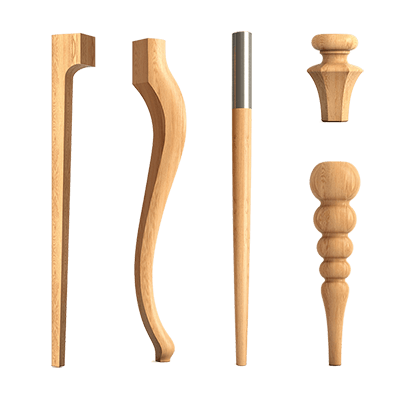
For selection, you can use Wooden furniture legs STAVROS.
Where a ready-made leg is especially advantageous.
- dresser;
- pedestal;
- a console;
- coffee table;
- wardrobe;
- bed;
- custom-made table.
The point is not that the craftsman is unable to make a leg. The point is that one's own time can be reserved for furniture parts that are truly unique.
Four identical carved legs.
If the leg is complex, an independent cycle includes:
- geometry;
- CAM;
- preparing blanks;
- processing;
- identical positioning;
- sanding;
- inspection of four parts.
A purchased item shortens this chain to:
SKU selection → incoming inspection → fitting → finishing → installation.
An unfinished leg as a professional semi-finished product
For a workshop, this model is especially interesting:
ready-made geometry + custom finishing.
Using from STAVROS open boundless possibilities for designers, furniture makers, and anyone striving to create unique high-quality furniture., the craftsman retains control over:
- enamel;
- tinting;
- stain;
- varnish;
- matching with the main furniture.
They buy a complex shape but do not hand over the entire product design to the supplier.
When a ready-made leg does not fit.
There is no need to adapt furniture to an unsuitable SKU after the carcass has already been manufactured.
More correctly:
choose a leg → check the dimensions → incorporate it into the furniture drawing.
If a ready-made support violates the height, load pattern, stretcher, or proportions, a different element or custom fabrication is needed.
Wooden furniture handles: a small detail, a high cost of mismatch
The handle seems too simple to outsource.
But it is precisely the small size that makes errors noticeable.
Six handles on a single dresser must match in:
- geometry;
- length;
- the axes;
- center-to-center distance, if applicable;
- fit;
- finish.
For selection, you can use STAVROS wooden furniture handles.
Why it is not always rational to produce a handle yourself
For a single handle, the operation seems short.
With six or twelve, the challenge of repeatability arises.
Especially if the shape is:
- curved;
- asymmetrical;
- has a complex grip;
- requires stable drilling;
- must look consistent across a series of fronts.
A ready-made shape, your own finish.
For custom furniture, the same approach as with legs is interesting:
standard geometry → your own finish.
This way, a craftsman can get handles in the color of the front or matching the overall tone of the wood, without setting up a separate production of the shape itself.
Before ordering handles, check not only the external size.
It is necessary to understand:
- type of mounting;
- axis;
- position on the facade;
- grip comfort;
- distance to the decorative frame;
- façade thickness.
A ready-made element saves production, but does not eliminate design work.
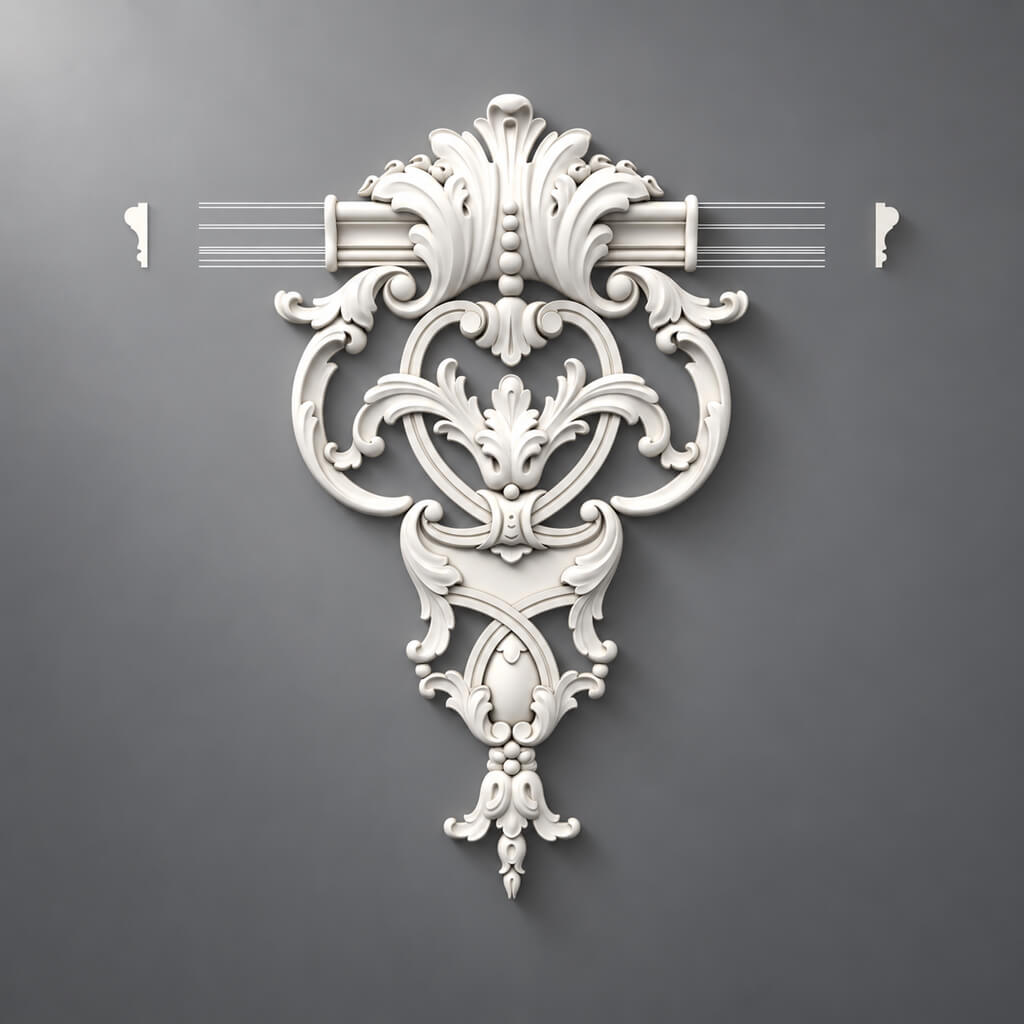
Carved overlays: one of the most costly parts for an independent small batch
This is exactly where a ready-made SKU often provides maximum savings in production time.
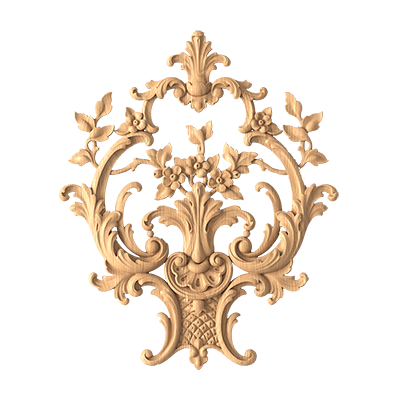
Carved furniture decor includes the geometry for which a workshop would have had to create a separate 3D model, programming, and machining.
Central overlay
Typical scenarios:
- wardrobe;
- dresser;
- kitchen façade;
- pedestal;
- bed;
- headboard;
- decorative panel.
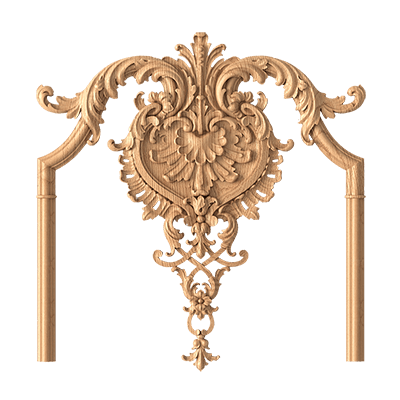
Instead of modeling the relief, the craftsman chooses a wooden overlay for furniture, checks the size and integrates it into its own front.
Corner overlays
They are especially inconvenient in small batches.
Causes:
- the four corners must align;
- the ornament must rotate correctly;
- L/R variants are possible;
- an error in a single part ruins the entire frame.
If the manufacturer produces separate left and right elements, they cannot be considered a single SKU.
A finished overlay must not be scaled to fit the front.
If the actual part is 300 mm and the craftsman stretched the 3D to 360 mm, it is no longer the same product.
You need to:
- choose another SKU;
- change the composition;
- make it custom.
Do not keep the original SKU in the specification.
Sockets, brackets, and capitals: complex decor as a ready-made operation.
Small workshops often use these elements not as a separate product range, but as part of their own furniture.
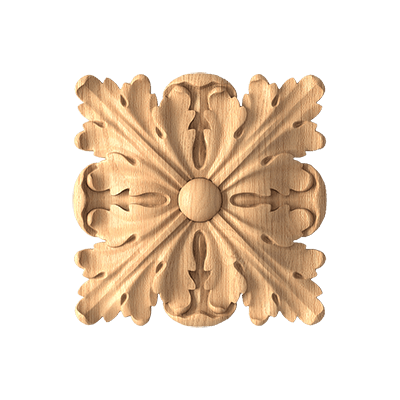
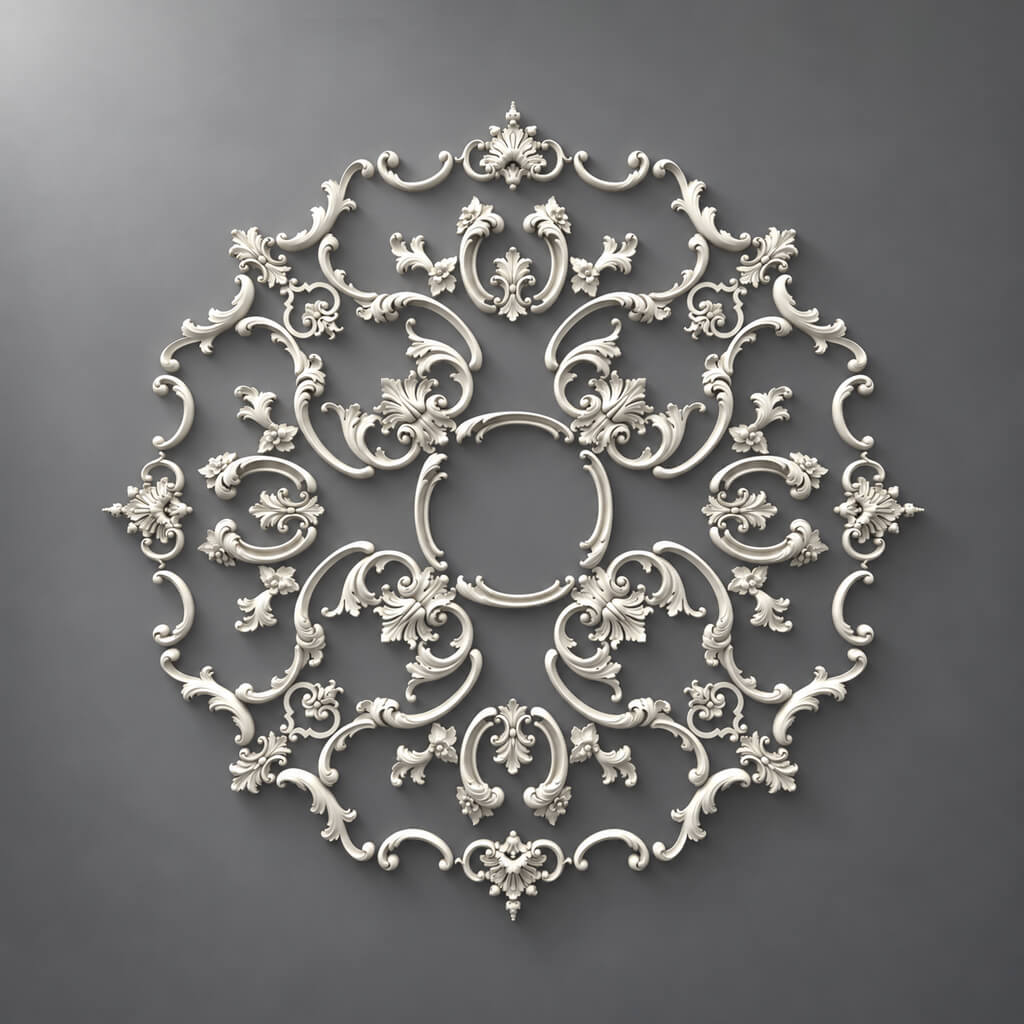
Wooden rosettes.
Wooden sockets can work:
- in the center of the facade;
- in a framed composition;
- on the post;
- as a repeating accent.
Their value as a finished product lies in the complete carved geometry.
Brackets.
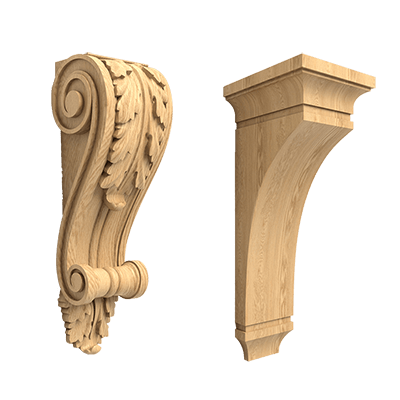
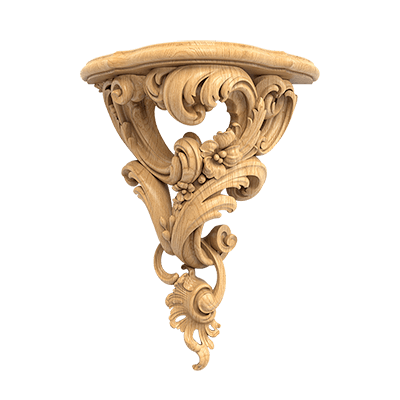
Wooden Brackets used for:
- under the shelf;
- in the console;
- in the decorative stand;
- in a library;
- in classic furniture.
For several identical brackets, serial repeatability is often more important than the ability to make them yourself.
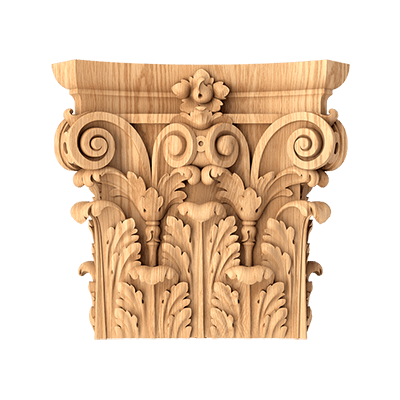
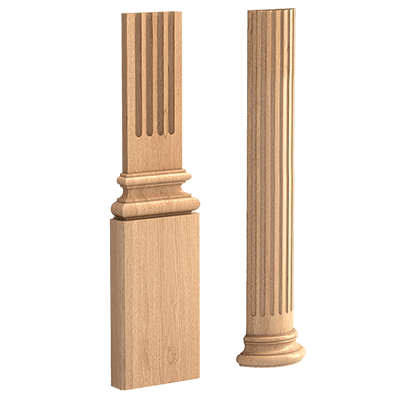
Capitals and furniture verticals.
A capital becomes a logical ready-made part if the workshop builds:
- a library;
- a kitchen;
- a display case;
- wardrobe;
- portal.
But here it is especially important to check the fit with the vertical element.
A capital cannot be selected based on a photograph alone.
Checked:
- width;
- fit;
- proportion;
- the material;
- upper joint.
Incoming inspection: a finished part saves production time, but it still needs to be checked
A purchased element cannot be sent straight into furniture right out of the box.
A small workshop should perform a short incoming inspection, especially if the part is repeated on a visible group of fronts.
What to check on the legs.
- quantity;
- SKU;
- height;
- mounting part;
- visual uniformity of the group;
- absence of damage on visible areas.
What to check on handles.
- SKU;
- quantity;
- mounting;
- uniformity of shape;
- the surface condition;
- compliance with the selected material.
What to check on carved decor.
- integrity of thin elements;
- L/R orientation;
- dimensions;
- the mounting plane;
- uniformity of repeating parts.
Golden Sample for a small batch
If a workshop plans to use one SKU in a furniture series, it is useful to keep one approved part as a reference.
Conventionally:
LEG-01 / GOLDEN SAMPLE.
Subsequent batches are compared with it by:
- size;
- shape;
- material;
- surface preparation;
- visible texture.
This is especially useful when months pass between orders.
Tolerances and fit
A furniture drawing should not be constructed as if every wooden part were a mathematically perfect CAD object.
If the fit is critical, leave a machining allowance or provide for a fitting operation.
A finished part should reduce work, not create an assembly where tenths of a millimeter become a condition for assembly with no possibility of adjustment.
Defects and allowance.
The allowance should not be an automatic "+10%" for everything.
For four legs, the solution could be:
- order exactly four;
- order one extra if the project timeline and the risk of reordering justify it.
For 30 overlays, the reserve is calculated differently.
It is important that the reason be clear: possible damage, a future reorder, the risk of the model being discontinued, or installation specifics.
Molding, turned parts, and blanks: which operations are worth outsourcing
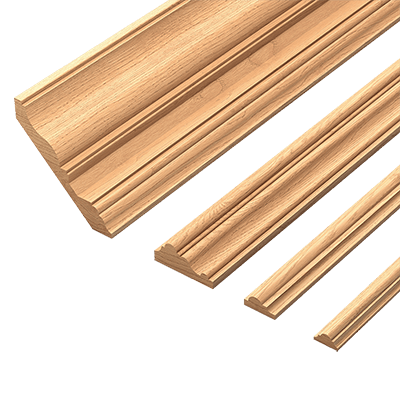
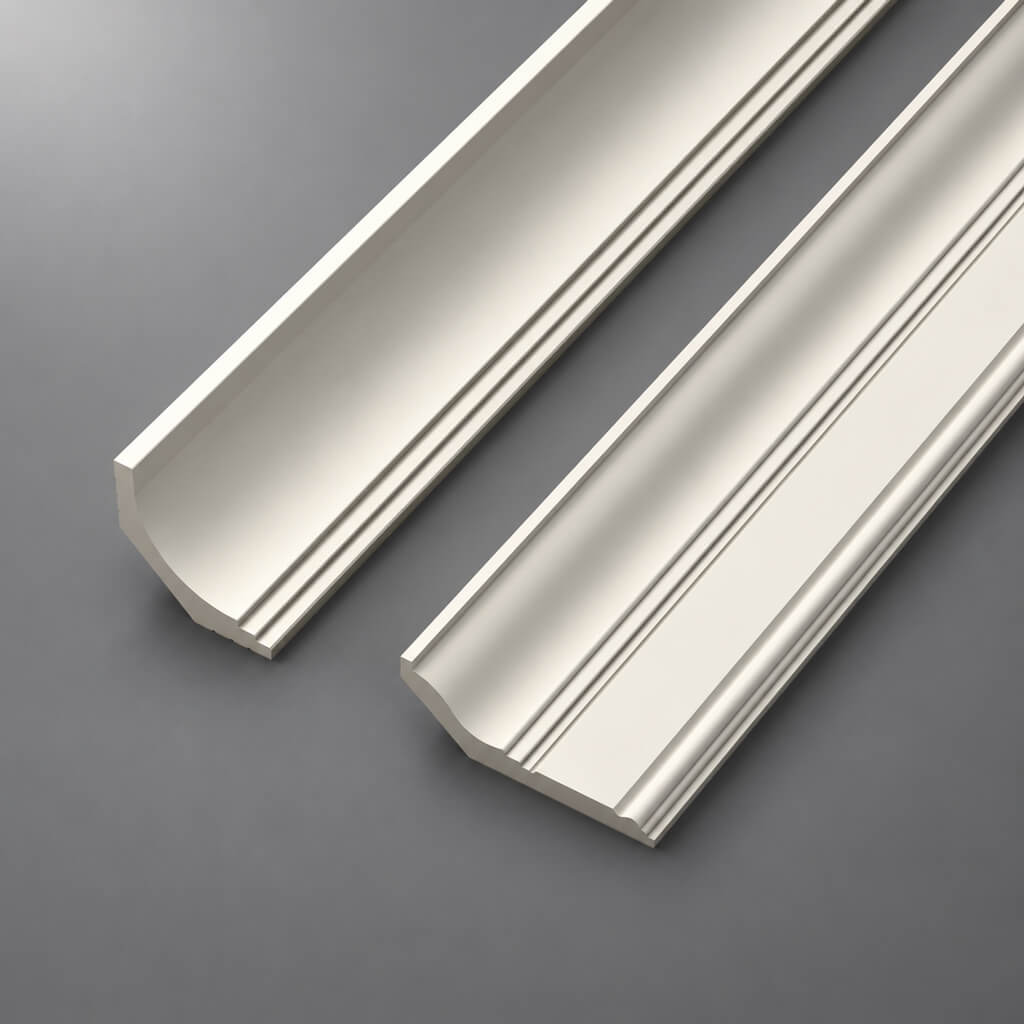
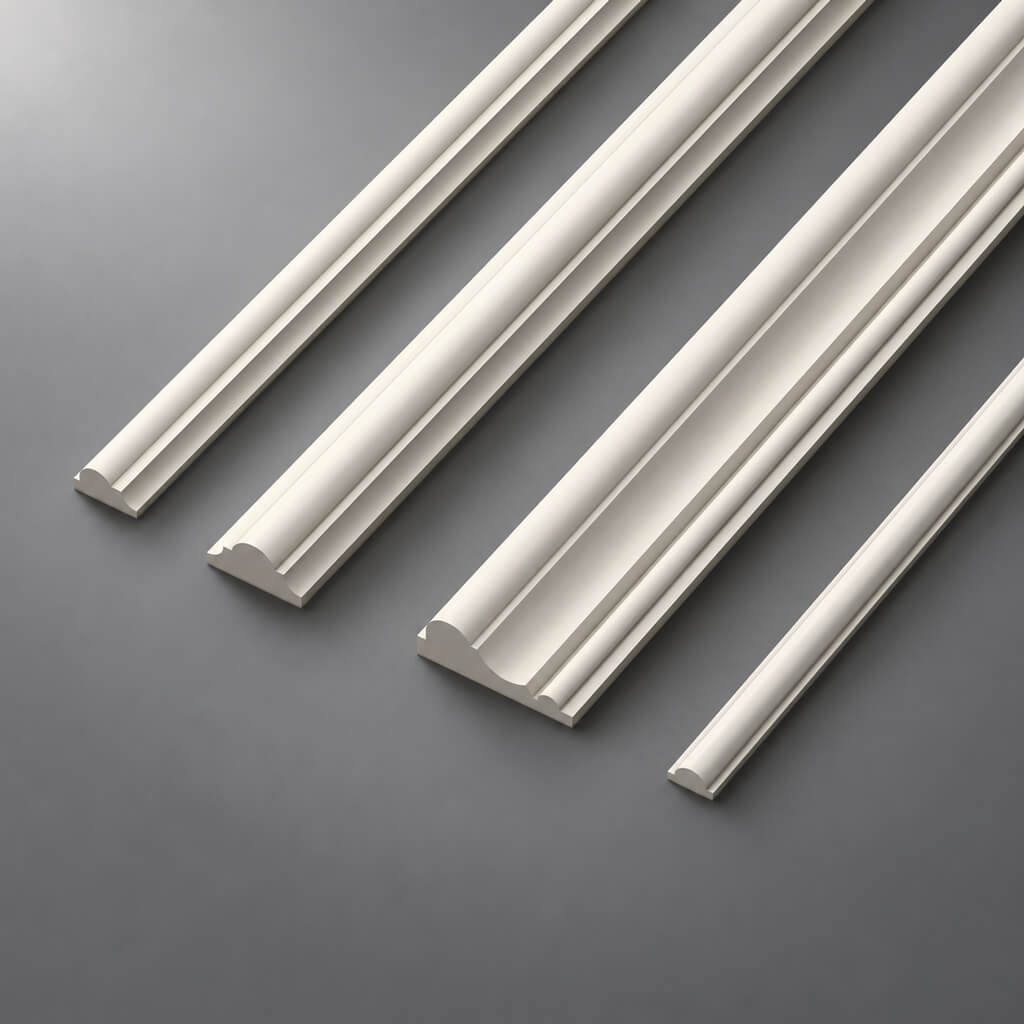
Molding is one of the most convenient types of purchased semi-finished product.
The craftsman buys a ready-made complex profile but decides for himself:
- length;
- crosscut;
- joint;
- Cutting;
- painting;
- tinting.
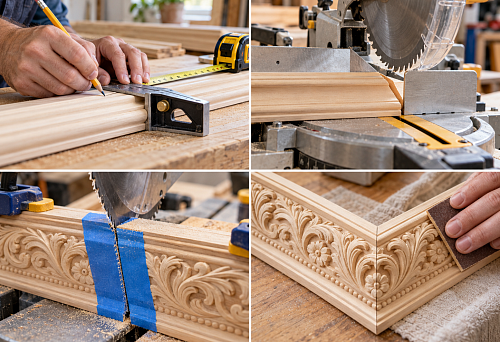
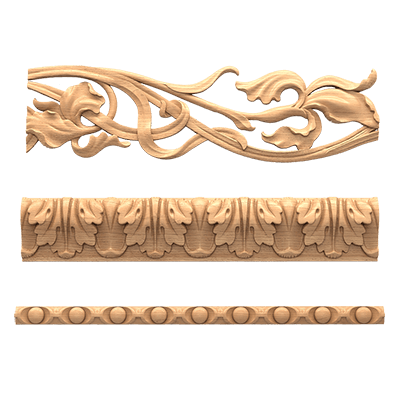
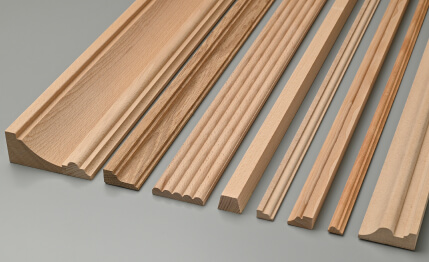
For the work, you can use Wooden trim и Wooden moldings.
Why this is more profitable than making the profile from scratch.
For several meters of complex molding, in-house production requires:
- profiling;
- cutters / tooling;
- the settings;
- stable feed;
- sanding;
- consistent cross-section control.
Finished moulding shifts the main complexity to the manufacturer.
The craftsman keeps the part where he has maximum flexibility:
cutting and integration into specific furniture.
Where to use.
- facade frames;
- furniture cornices;
- decorative bands;
- panel framing;
- Doors;
- mirrors;
- custom joinery items.
Moulding and offcuts.
This is where calculation comes in.
Need to consider:
- commercial length;
- list of segments;
- cutting map;
- usable offcuts.
Simply ordering “linear meters + 10%” can be worse than properly laying out the parts across the boards once.
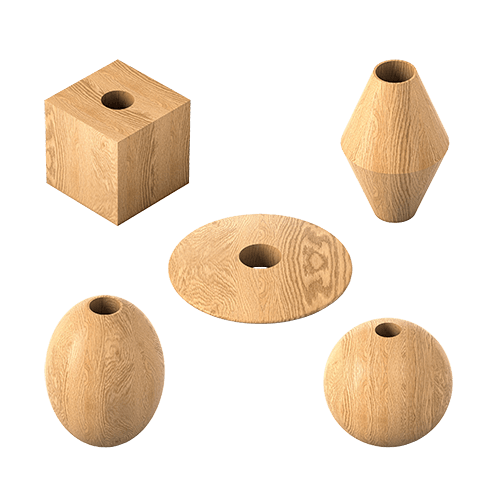
Turned parts: buy repeatability instead of starting up a turning process
A turned part is another typical case where small batches do not get along well with setup costs.
If you need:
- 2;
- 4;
- 8;
- 12;
- 20
identical elements, and you do not have your own turning area, buying ready-made geometry is often more logical.
What the master receives ready-made.
- profile;
- axial symmetry;
- repeatability;
- base surface;
- real SKU for reorder.
What remains with the workshop.
- trimming;
- drilling;
- tenon / fastening, if required by the project;
- sanding after local rework;
- finish.
When in-house production becomes more interesting.
If the part:
- is constantly repeated;
- needed in large batches;
- has a unique signature geometry;
- is the core of its own product.
Then the investment in tooling and programming may be justified.
Do not confuse turning repeatability with decorative versatility.
Two turned legs of the same height can perform differently in furniture due to:
- diameter;
- profile transitions;
- upper mounting part;
- lower support;
- overall visual weight.
Therefore, the craftsman must still design the furniture around a specific SKU.
Blanks: when fully finished geometry is not needed
Sometimes an intermediate option is advantageous for the workshop.
Not a finished part.
Not a raw block.
But a blank in which part of the labor-intensive work has already been completed.
For example:
- leg blank;
- semi-finished product for a decorative element;
- profile that needs to be refined;
- a massive part with allowance for its own operation.
Why this is needed.
The master retains more freedom than with a ready-made SKU, but saves part of the preparation.
This scenario is rational if:
- a custom final contour is needed;
- a unique fastening is required;
- the finish is entirely your own;
- the base shape is repeated.
A finished part and a blank solve different tasks.
A finished part saves on shaping.
A blank saves on material preparation.
They should not be compared as identical products.
When a blank is better than a finished element.
If a workshop wants to preserve its signature geometry but not spend time on the initial preparation of the solid wood, a blank can be a more precise compromise.
For example, a finished leg is already too complete for a specific design, while a raw block leaves too much work.
Then the semi-finished product allows only part of the operation to be outsourced.
What a craftsman can safely refine on their own
A purchased element does not have to arrive in the furniture “as is.”
A normal professional workflow allows for refinement.
Most often, the following can be considered:
- cutting to length;
- local fitting;
- drilling;
- preparation of fastening;
- painting;
- tinting;
- lacquer coating.
But there is a principle:
it is better not to destroy critical decorative geometry.
If a finished part has to be heavily reworked.
The question must be asked again:
was this SKU really the right choice?
If the craftsman:
- reduces the part by a third;
- removes a significant portion of the relief;
- changes the profile;
- alters the mounting plane;
the economics of the purchase quickly disappear.
A serial SKU must remain a recognizable product.
If the modification has turned it into a different geometry, reordering no longer solves the problem.
This becomes custom.
What is best not to change after purchase.
Unless absolutely necessary, avoid:
- stretch proportions;
- cut off the key relief;
- swap the left part for the right one;
- radically reduce the mounting part;
- pass off deep reworking as the original SKU.
For the workshop's internal documentation, this is especially important: a repeat order should result in the same part, not in "raw material for lengthy reworking."
Oak, beech, and finish: the material is chosen for a specific task
There is no need for a general conclusion that "oak is better than beech" or vice versa.
For the workshop, what matters more is how the part will perform in the product.
For opaque enamel
What comes to the forefront:
- geometry;
- surface quality;
- preparation for finishing;
- consistency of the result.
After an opaque finish, wood texture ceases to be the main visual argument.
For a transparent finish
The following become more important:
- pattern;
- grain direction;
- tone;
- matching with the main furniture;
- batch matching.
One SKU in different materials.
If a manufacturer offers the same type of decor in different wood species, the craftsman must store not only the model name but also the material in the order.
Otherwise, a repeat order can easily end up in a different variant.
Do not mix material and color in one field.
Bad:
dark oak leg.
Better:
Material = oak
Finish = dark tone.
Thus, when changing the tint, the craftsman does not lose the identity of the product itself.
Pilot finishing before processing the entire batch
If the finished elements arrive without a finish, you should not immediately paint or tint the entire set.
First, choose one test piece or a separate sample.
Check:
- sanding;
- soil;
- color;
- coating uniformity;
- behavior of the relief;
- matching with the main furniture.
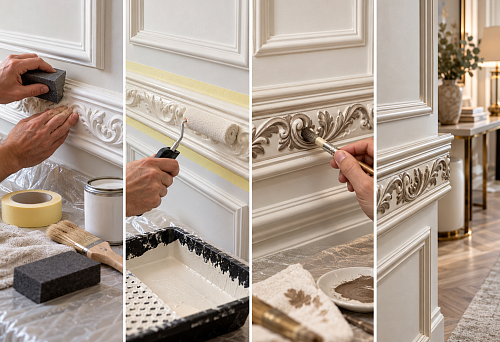
On deep carving, the coating may visually behave differently than on a flat facade: shadows remain stronger in the recesses, and an excessively thick layer can partially soften fine details.
Finish Recipe
For a repeat small batch, it is useful to keep not only a photograph but also a short process note:
LEG-01 / Material = ... / Finish = FIN-03.
А FIN-03 already describes the approved finish of the workshop.
So, on a repeat order, the geometry comes by SKU, while the appearance is reproduced according to its own finish recipe.
Restoration and interior joinery: where serial elements also work
A restorer does not always aim for a museum-grade, exact one-to-one restoration.
Sometimes you need to:
- replace a missing leg;
- return the furniture to a working condition;
- refresh the front;
- add an overlay;
- replace damaged supports.
This is where ready-made serial parts are especially useful.
When a serial part fits
If the task allows:
- a stylistically close solution;
- replacing the entire set of legs;
- replacing a pair of elements;
- adapting to the existing color.
When it does not fit
If an exact historical copy of a specific lost element is required.
Then a serial SKU can only be a reference, not a replacement.
A reasonable strategy for legs.
If one old leg is damaged, it is sometimes better to replace not just one, but the entire set with a matching modern series.
This is how the craftsman gets:
- identical geometry;
- same height;
- a uniform material;
- a predictable finish.
Carved decor in a restoration project.
If the original ornament is completely lost, a ready-made appliqué can help restore the compositional function without imitating historical authenticity.
But this solution must be honestly identified as a new part, and not as a "recreated original."
Not only furniture: doors, mirrors, and interior joinery
A small joinery workshop rarely makes only cabinets.
The same ready-made elements can be used in:
- wooden doors;
- mirror frames;
- decorative panels;
- staircase elements;
- library systems;
- wall compositions.
The principle is the same here:
buy complex serial geometry → make your own construction yourself.
Mirror frame.
The craftsman creates:
- base;
- joints;
- size;
- finish.
Purchased items can be:
- carved center;
- angle;
- molding;
- overlay.
Door.
A custom door can receive:
- wooden molding;
- central overlay;
- carved element.
But first you need to check the thickness and installation area.
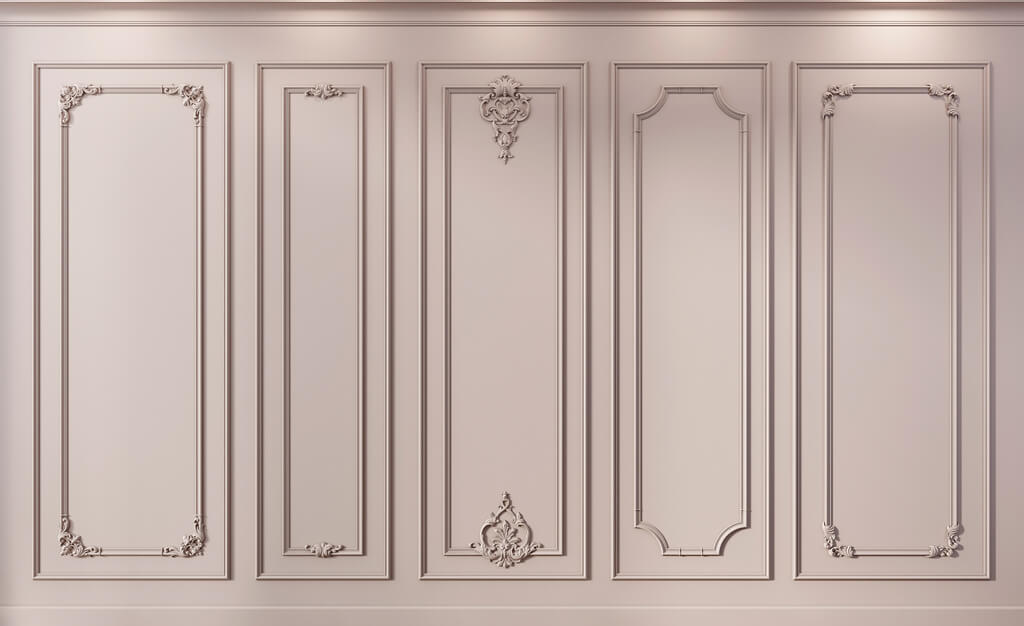
Interior panel.
A ready-made bracket, rosette, or molding can be used in a wall composition if the workshop produces comprehensive joinery.
Thus, the range of ready-made elements is expanded not by the furniture catalog, but by the production capabilities of the workshop.
Purchase from one piece and small batches: a commercial model for the workshop
For a small manufacturer, the minimum order quantity is often more important than the discount.
A craftsman can make:
- one chest of drawers;
- two nightstands;
- one console;
- restoration of one cabinet.
He doesn't need a box of 100 identical elements.
Required:
- 2 overlays;
- 4 legs;
- 6 handles;
- 2 brackets.
On the current STAVROS pages, for a number of furniture categories and decorative elements, the possibility of ordering from one piece is stated. This makes ready-made SKUs practically applicable specifically for small workshops.
Why "from one piece" reduces risk
A craftsman can first take:
1 test piece.
Check:
- size;
- surface;
- the material;
- finish;
- the fit.
And only then buy the set.
Piece-by-piece ordering is especially useful for restoration.
If you need a single replacement or one sample piece, a minimum wholesale batch devalues the ready-made solution.
Piece-by-piece sales remain worthwhile.
When a sample piece is especially needed
- new supplier;
- unfamiliar species;
- complex relief;
- critical finish;
- non-standard fastening;
- a series that will need to be repeated.
One test part sometimes prevents the purchase of an entire unsuitable batch.
Small batches and repeat orders: 4 parts today, 8 in a month
The next typical B2B scenario:
a workshop produces a small series of furniture.
Today — two dressers.
In a month — four more.
In the first order:
4 legs × 2 = 8.
In the second:
4 × 4 = 16.
The main value of a serial SKU here is repeatability.
What needs to be preserved after the first order.
- SKU;
- the material;
- size;
- URL;
- supplier;
- finish reference;
- order date.
Why a photograph is not enough.
A month later, the request:
"give me the same legs as in the photo"
much weaker:
SKU + material.
Repeat ordering is part of the production system.
If a craftsman plans to produce a series of their own furniture, ready-made elements must be entered into the internal specification as disciplined as other purchased components.
But semantically, they should not be mixed with general metal hardware: a wooden decorative element has a different production meaning.
A small series and the risk of the model being discontinued.
If a ready-made element becomes part of the workshop's signature product, the risk of future unavailability must be taken into account.
Options:
- keep a small safety stock;
- check in advance whether repeat orders are possible;
- have a second compatible SKU;
- save the furniture drawing so that replacement is controlled.
Version control for repeat orders
If a finished component has been used in the workshop's serial furniture, it cannot be replaced with a "similar" one without a revision.
For example:
COMMODE-07 REV01 → LEG-01 / SKU A.
If a replacement appears six months later:
COMMODE-07 REV02 → LEG-02 / SKU B.
Before that, you need to check:
- height;
- the upper mounting plane;
- overall dimensions;
- the material;
- finish;
- the impact on the carcass.
This discipline seems excessive only until the first reorder, when the old model is no longer available.
Batch and visible groups.
For natural wood, it is better to order the four legs of one chest of drawers as a single group if the appearance of the material is critical.
The same applies to handles or overlays that stand next to each other and are compared by eye.
If the repeat order already relates to other furniture, slight natural variation may be less noticeable. But within a single set, it is better to avoid random mixing if this affects the appearance.
How to choose a ready-made part by size before starting furniture production
A purchased element must fit into the structure on the drawing, not after assembly.
Leg
Check:
- height;
- width of the upper mounting part;
- maximum overall dimensions;
- mounting method;
- effect on the overall height of the furniture.
Overlay
Check:
- width;
- height;
- thickness;
- free area of the facade;
- the handle;
- frame.
Bracket
Check:
- width;
- the depth;
- height;
- support plane;
- position of the shelf.
Handle
Check:
- total length;
- axis;
- mounting;
- ergonomics;
- conflict with the frame.
Linear trim
Check:
- width;
- the depth;
- length;
- cross-section;
- cutting map.
Principle.
first the finished element → then the furniture drawing.
Not:
first the finished furniture → then an attempt to integrate the decor.
Reference dimension
For each SKU, it is useful to choose one size that cannot be confused.
For example:
LEG-01 height = ... mm.
It is verified:
- in the catalog;
- in CAD;
- during incoming inspection.
This reduces the risk that a similar but different model was used in the project.
Shortlist for the workshop: how to compare 3–5 ready-made SKUs
You don't have to choose the first suitable part.
It is useful to put together a short shortlist.
| Code | Type | SKU | Material | Size | Qty | Status |
|---|---|---|---|---|---|---|
| LEG-01 | Leg | SKU | Beech | actual | 4 | candidate |
| LEG-02 | Leg | SKU | Oak | actual | 4 | candidate |
| DEC-01 | Overlay | SKU | Oak | actual | 2 | candidate |
| HND-01 | Handle | SKU | Beech | actual | 6 | candidate |
What to compare
Not just the price.
Compare:
- size;
- the material;
- the depth;
- surface readiness;
- amount of own finishing work;
- compatibility with furniture;
- quantity;
- possibility of reordering.
Add a production risk
It is useful to add a simple field:
Make Difficulty.
For example:
- LOW;
- MEDIUM;
- HIGH.
If the finished part has Make Difficulty = HIGH, but four pieces are needed, the argument for buying becomes stronger.
Final status.
CANDIDATE
→ SELECTED
→ TESTED
→ ORDERED.
For a workshop, this is already enough not to lose the decision between drawing and purchasing.
Three practical scenarios: legs, handles, and carved overlays
Without invented prices, you can compare the process in hours and operations.
Do it yourself.
Suppose the workshop has to:
- find / build the geometry;
- prepare CAM;
- make a test blank;
- set up the machine;
- machine four parts;
- sand;
- check for uniformity;
- fix any possible defects.
Buy ready-made.
- select SKU;
- check the dimension;
- order 4 pieces;
- perform incoming inspection;
- apply the finish;
- install.
If the in-house geometry is not part of the workshop's unique product, the second chain often leaves more time for the carcass, front, and assembly.
When the output changes.
If the workshop makes 100 identical chests of drawers every month, its own program and tooling begin to be spread across hundreds of parts.
Then the decision needs to be recalculated.
Production capacity.
Even if
Production matrix: workshop equipment changes the decision
The same finished element can be profitable for one workshop and unprofitable for another. The reason is not a "right" or "wrong" approach, but the set of in-house operations.
| Workshop equipment | What is more often worth keeping in-house | What is more often reasonable to buy ready-made |
|---|---|---|
| no CNC or lathe | carcass, assembly, finishing | carving, turning, complex overlays |
| has 3-axis CNC | flat facade parts, repeatable contours | complex turning, deep serial threading, if rarely needed |
| there is a turning area | simple and branded turned parts | complex carved decor, if there is no CAM process |
| strong painting area | own finishing | unpainted finished geometry |
| overloaded machines | unique main product parts | serial secondary components |
| available capacity | more in-house operations | only what requires a separate competency |
The matrix helps avoid the universal advice of "buy everything complex." For example, a workshop with a well-established turning process can quickly produce signature legs, but spends disproportionately much time on carved overlays. Another is the opposite: it has CNC, but cannot maintain a turning section.
It is better to outsource an operation, not a workshop's competency
If a workshop earns from complex carving and sells it as its advantage, buying ready-made overlays just to save time can destroy its positioning.
If, however, the workshop is strong in:
- furniture design;
- proportions;
- assembly;
- finish;
- complex cases;
while a decorative leg is a secondary part of the product, a serial SKU can strengthen the business without reducing the author's value.
A useful question:
which operation is the client paying our workshop specifically for?
Everything that is not the core of this value can be considered a candidate for a purchased component.
Mixed project: a chest of drawers with three ready-made groups of parts
Let's imagine a custom chest of drawers.
The workshop makes on its own:
- building;
- facades;
- drawers;
- tabletop;
- the finish;
- assembly.
Purchases:
LEG-01 × 4
HND-01 × 6
DEC-01 × 2.
Then the in-house production is focused on 90% of the visual and structural result, but three repeatable complex operations are outsourced.
Before launch, the craftsman performs one general check:
- the leg provides the correct final height;
- the handle does not conflict with the facade frame;
- the overlay fits within the free field;
- all three groups are available in the required material;
- a unified finish workflow has been selected.
After that, the finished elements cease to be "foreign parts." They become part of the product's own production map.
What the workshop saves on a mixed project
Not just machine hours.
Are reduced:
- number of unique CAM tasks;
- number of trial runs;
- number of special fixtures;
- risk of defects on small decorative parts;
- number of operations that must be repeated for a reorder.
But one new task grows — SKU management.
If the craftsman does not save the item codes, the next production run of the chest of drawers again turns into a search. Therefore, purchased geometry requires documentation discipline.
When a mixed project becomes too dependent on the supplier
If the following are ready:
- legs;
- handles;
- all decor;
- moulding;
- capitals;
- brackets,
and a furniture model cannot be assembled without each of these items, the supply risk becomes significant.
For a branded series, it is useful to define:
- critical SKUs;
- possible replacements;
- what stock to keep;
- which parts the workshop can produce itself if necessary.
In other words, make-or-buy is also about managing production resilience.
When a finished element does not need to be purchased
A ready-made part is not always rational.
Unique signature geometry
If it is precisely the shape of the leg or the carving that distinguishes the workshop's furniture, outsourcing this part to a serial SKU may be wrong.
Large consistent volume
If a single part is repeated in thousands, in-house production may have better economics.
Non-standard size
If a ready-made SKU requires too much rework, it loses its point.
Historical replica.
Accurate restoration may require reproducing the original part.
Structural load.
If a component is part of a critical load-bearing structure, it cannot be considered suitable based on appearance alone. You need to verify the actual purpose and construction of the specific product.
No reorder.
If a maker is building a product line and supply is unstable or a SKU disappears, the risk must be accounted for in advance.
In-house production is already set up
If the program, tooling, and inspection have existed for a long time, a new launch can be inexpensive.
In this case, an off-the-shelf purchased part must win not through preparation, but through something else: lead time, quality, material availability, or freeing up a machine.
Production workflow: from test part to reorder
The working scheme can be very simple.
1. Selecting the operation.
Determine which operations make sense to outsource.
2. Shortlist.
Select several real SKUs.
3. Size check.
Before manufacturing the carcass.
4. Sample part.
If the project is critical, order one piece.
5. Drawing.
Include the actual overall dimensions and installation point.
6. Own finish.
If the element is unpainted, agree on:
- enamel;
- tinting;
- varnish;
- color.
7. Ordering the set.
After approval.
8. Saving the SKU.
In the workshop's product card.
9. Reordering.
Without a new search.
This is how a finished part becomes a regular component of its own product, rather than a random purchase.
Simple production card
For each piece of furniture, you can store:
Product = COMMODE-07
LEG = LEG-01 / SKU
HANDLE = HND-01 / SKU
DECOR = DEC-03 / SKU.
When remaking it, the list is already ready.
Internal furniture specification: how to store finished elements
Minimum table:
| Code | Supplier | SKU | Type | Material | Qty | Finish | URL |
|---|---|---|---|---|---|---|---|
| LEG-01 | STAVROS | specific | Leg | Beech | 4 | own finish | URL |
| HND-01 | STAVROS | specific | Handle | Oak | 6 | clear | URL |
| DEC-01 | STAVROS | specific | Overlay | Oak | 2 | own finish | URL |
Why Code and SKU are different fields.
LEG-01
— internal furniture code.
SKU — the actual product.
If the supplier has been replaced, the internal code can be retained only after the new product has been verified.
URL — an additional identifier.
The link helps you open the product quickly.
But the main identifier is the SKU.
Revision.
If the craftsman changes the leg after the body has been approved, it is worth recording a new version of the specification.
Because a different support can change:
- height;
- installation;
- proportions;
- finish.
Used In.
It is useful to keep track of which products a component has already been used in.
For example:
LEG-01 → COMMODE-07, CONSOLE-03.
This speeds up a new project: the craftsman already knows where the part performed well.
Small wholesale: when a workshop no longer wants to buy piece by piece
After one-off orders, an intermediate mode appears:
- 8 legs;
- 20 handles;
- 30 overlays;
- a small batch of moulding.
This is no longer a retail purchase of a single part, but not yet an industrial contract.
What becomes important.
- SKU repeatability;
- single batch;
- the deadline;
- the ability to reorder;
- same material;
- identical finish / preparation;
- packaging.
Don't buy a reserve blindly.
If the series continues, a small reserve is sometimes justified.
But you need to understand:
- risk of damage;
- the likelihood of reordering;
- the availability period of the SKU;
- storage cost.
For simple trim, the reserve is calculated by cutting layout.
For legs — in whole pieces.
For L/R decor — separately by orientation.
Small wholesale shouldn't break the workshop's flexibility.
A discount on 50 parts is pointless if you need 12 and the rest sit in the warehouse for years.
A small production wins precisely through its ability to change its model range quickly.
Therefore, the optimal purchase volume is not the maximum available, but the one that matches the actual production plan.
Mini decision map for ordering
Before purchasing, it's convenient to summarize the project into one line per part type:
| Code | SKU | Qty | Test piece | Own finish | Repeat order |
|---|---|---|---|---|---|
| LEG-01 | real SKU | 4 | checked | FIN-03 | likely |
| HND-01 | real SKU | 6 | checked | clear | likely |
| DEC-01 | real SKU | 2 | checked | FIN-04 | no |
The table answers several questions at once:
- what to order now;
- what has already been tested;
- where custom finishing is required;
- which element will become part of a repeatable production map.
Do not purchase before the carcass is finalized.
If the carcass dimensions, apron height, or free facade field are still changing, the final order of decorative elements may be premature.
The exception is a test piece for design purposes.
Work sequence:
TEST PIECE → CHECK → FREEZE DESIGN → ORDER SET.
Where to buy ready-made wooden elements for furniture
The commercial stage should begin after the size has been verified.
Different STAVROS categories are useful for a workshop:
- Wood and MDF Products;
- carved decor for furniture;
- wooden overlays;
- wooden furniture legs;
- unfinished furniture legs;
- wooden furniture handles;
- wooden rosettes;
- wooden brackets;
- wooden trim;
- wooden decorative elements.
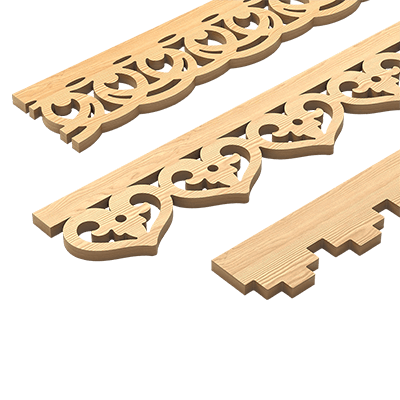
Queries like "buy wooden decor for furniture", "buy decorative wooden elements for furniture", "buy solid wood furniture elements", "ready-made carved elements for furniture", "buy wooden legs for furniture" correspond here to the real task of a small workshop: choose a specific ready-made geometry, verify it, and incorporate it into your own product.
What to check before payment
- SKU;
- the material;
- size;
- quantity;
- surface readiness;
- mounting method;
- need for own finishing;
- possibility of reordering.
A commercial offer should not replace technical verification.
If a supplier offers an "equivalent" element, you need to compare the actual dimensions and geometry.
A similar leg can change the height of the furniture.
A similar overlay — the free field of the facade.
A similar molding — the frame grid.
Purchase readiness test
Before payment, hand the internal part card to someone who was not involved in the selection. They should be able to determine, without additional questions:
- which SKU to order;
- which material;
- how many pieces;
- where the part is used;
- what custom modification to perform;
- which finish to apply;
- whether a test piece is needed;
- whether the order can be repeated later.
If answering requires searching old correspondence, opening the render, and guessing the model from a photo, the solution is not yet built into the production process.
A ready-made element truly saves time only when it can be reordered as unambiguously as standard hardware. The difference is that for wooden decor, the material, visible geometry, and the workshop's own finish workflow are additionally preserved.
Final checklist: buy a ready-made part or make it yourself
geometry.
- a serial equivalent exists;
- size fits;
- no major rework is required;
- the mounting surface is suitable.
Production.
- how much time CAD/CAM will take;
- whether separate tooling is needed;
- how much machine time;
- how much manual sanding;
- what the price of a trial run is;
- whether there is a risk of defects.
Quantity.
- 1–2;
- 4–8;
- 10–20;
- permanent collection.
The smaller the batch and the more complex the geometry, the more interesting the finished SKU.
Material.
- the wood species is suitable;
- the finish can be applied;
- the texture matches the product.
Commerce.
- whether the required quantity can be ordered;
- whether reordering is available;
- is there a stable SKU;
- the lead time is clear;
- whether one part can be ordered first.
Documentation.
- SKU saved;
- size recorded;
- URL preserved;
- internal code assigned.
If these points are covered, the finished wooden element becomes part of the workshop's production system, rather than a random purchase.
Main formula:
NEED 2–20 PARTS → CHECK READY SKU → BUY READY GEOMETRY → OWN FITTING / FINISH → INSTALL → SAVE SKU → REPEAT ORDER.
For a small joinery workshop, the value of a finished part is not that it is "simpler." It is that the craftsman buys an already completed complex operation and leaves his own machines, time, and attention for the part of the furniture where his work truly creates uniqueness.