Article Contents:
- What to buy for an external corner: answer without lyricism
- Wooden corner: where it is indispensable and why
- External wall corners
- Corners of wooden wall panels
- Ends of decorative slats and panels
- Edges of furniture and built-in wardrobes
- Openings, niches and protrusions
- Where polyurethane decor works better than wood
- Decorative framing of niches and arches
- Wall compositions with moldings
- False panels and decorative boxes
- Furniture facades for painting
- Classic portals and accent zones
- Wood or polyurethane: selection table by task
- Ready-made kits for specific tasks
- Design of an external wall corner
- Niche design
- Design of a built-in wardrobe
- Design of a doorway
- Design of a wall panel
- Design of a furniture facade
- What to buy together: complete shopping list
- How to properly combine a wooden corner and polyurethane moldings
- Installation technology: key principles
- Installation of a wooden corner
- Installation of polyurethane moldings and overlays
- Joint installation of wood and polyurethane
- Procurement mistakes: what slows down work and increases the budget
- Decorating external corners in different interior styles
- FAQ: answers to the most frequently asked questions
- About the Company STAVROS
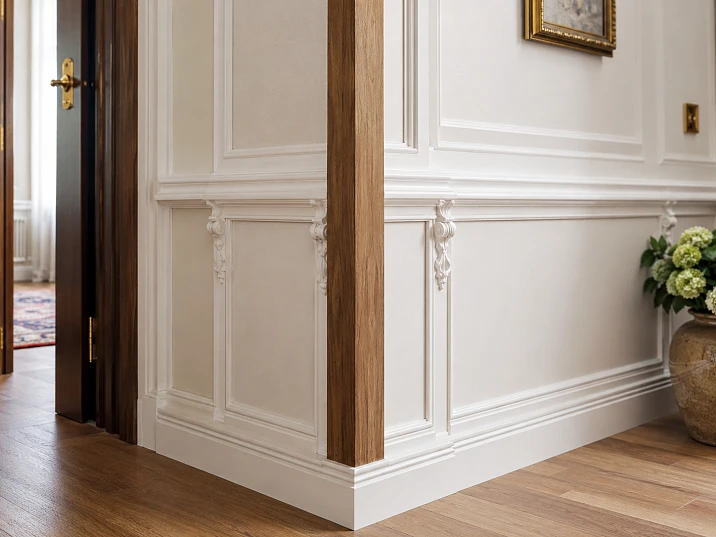
An external corner is always a risk point. It takes the first hits, wears down, chips, and if not properly finished, turns into a constant headache. But it is also a style point. A properly covered and beautifully finished corner of a wall, niche, opening, or furniture facade becomes part of a well-thought-out interior, not a random detail. The only question is what to choose: Wooden corner bracket, wooden corner trim or polyurethane decor — and how to combine these two materials so that the result looks cohesive, professional, and lasts a long time.
This material is for those who make procurement decisions: craftsmen, foremen, designers, furniture manufacturers, and everyone who wants to finish external corners not just any way, but the right way.
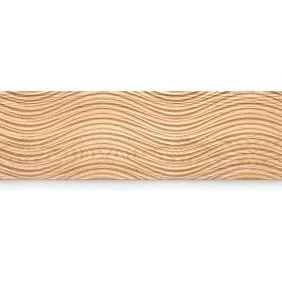
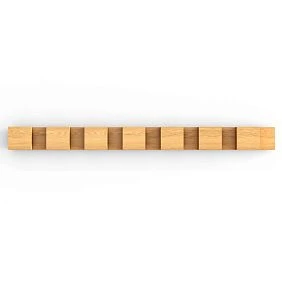
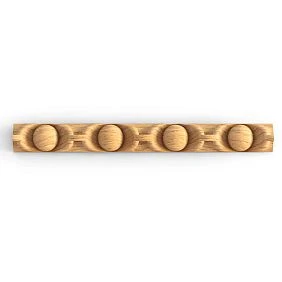
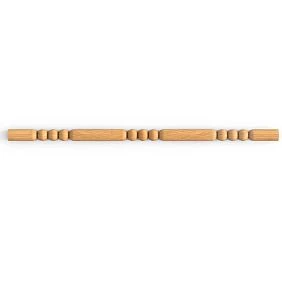
What to buy for an external corner: an answer without lyricism
Before choosing SKUs and calculating footage, you need to answer one question: is the corner functional or decorative? This is the key distinction that determines everything else.
A functional corner is a wall that gets bumped when moving furniture. The end of a built-in wardrobe that your hip hits every day. A protruding pilaster in the hallway where a door handle regularly strikes. Here, protection from mechanical impact is needed, and this is where Wooden angle or an angled wooden trim works: durable, impact-resistant, and easy to repair.
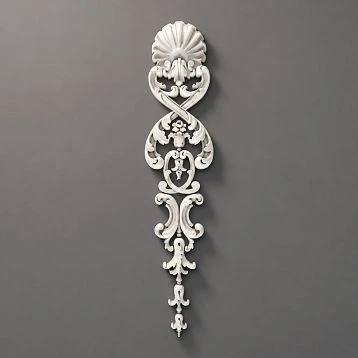
A decorative corner is framing a niche in the living room, decorating an arched or door opening, finishing the side of a false panel, or frame decor on a furniture facade for painting. Here, there is no mechanical load, and the task is to create an expressive relief. And this is where Moldings made of polyurethane, Polyurethane appliqués и decorative polyurethane elements.
But in reality, these two types often appear on the same project. Then a combination works: wood for the edge and protection, polyurethane for the stucco relief nearby. It is this combination that we will examine in detail.




Wooden corner trim: where it is indispensable and why
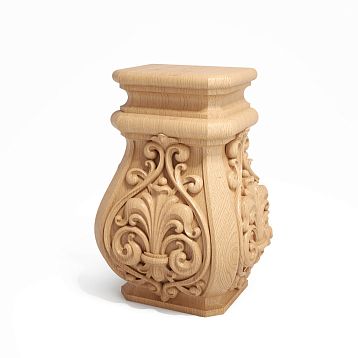
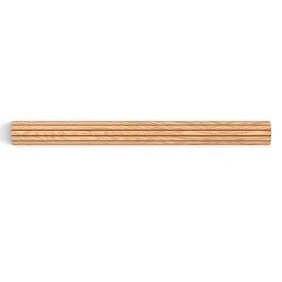
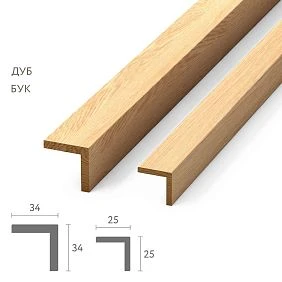
Wooden corner bracket is a linear product with an L-shaped or triangular corner profile that simultaneously covers the end of a panel and protects the corner itself from impacts. It is not decoration—it is primarily an engineering solution. It is made from natural solid wood—beech, oak, pine—and withstands real operational loads.
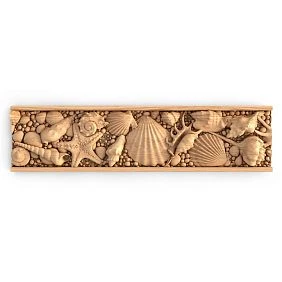
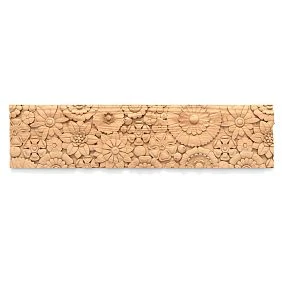
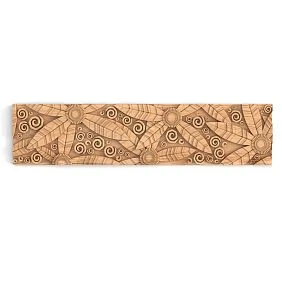
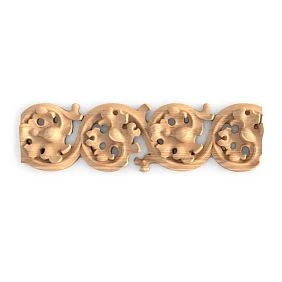
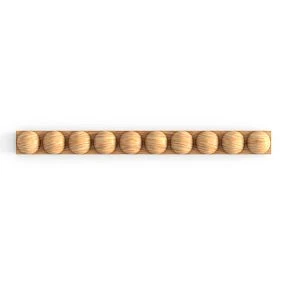
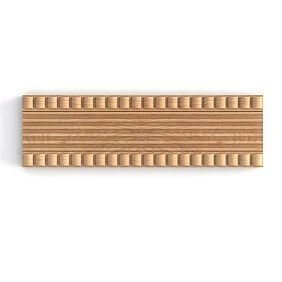
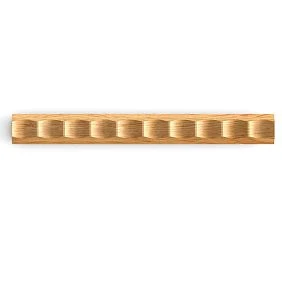
Our factory also produces:
External corners of walls
An external wall corner is perhaps the most common place for using wooden corner trim in an interior. We are talking about corners that protrude into the room: the corner between the living room and hallway, a protruding partition, the side of a fireplace, the corner of a brick projection. These areas regularly receive accidental impacts: from feet, furniture, bag handles. Without protection, the plaster or finish in these places crumbles within the first year.
A wooden corner trim made of beech or oak, fixed along the entire height of the corner, creates a rigid protective edge. It absorbs the impact, preserving the wall finish. If severely damaged, the corner trim can be replaced without affecting the entire wall.
Get Consultation
Corners of wooden wall panels
Where walls are paneled with clapboard, imitation timber, or decorative slats, the external corner is both a structural joint and a visible interior element. Wooden corner veneer Here it serves a dual purpose: it hides the panel ends and creates a clear vertical corner line. In wooden interiors — bathhouses, country houses, Scandinavian living rooms — this element is essential.
Standard sizes are selected based on panel thickness: 14×14, 15×15, 20×20 mm — for standard clapboard and imitation timber. The wooden corner trim should match the main finish in wood species and tone, or be intentionally contrasting — a design technique to create a graphic structure in the interior.
Ends of decorative slats and panels
Slatted ceilings, slatted wall panels, accent decorative slats — all these solutions have visible ends that need to be covered. The wooden corner here acts as a finishing element, providing completeness. The protruding edge of the corner creates a clear shadow and boundary, perceived as a professional detail.
Furniture edges and built-in cabinets
decor for furniture — this is a broad topic, but the corner holds a special place here. The vertical edges of case furniture — cabinets, shelving units, libraries, wardrobes — constantly come into contact with people, objects, and other items. A wooden corner made of beech on the cabinet ends is not just decor: it protects MDF or particleboard from chipping. Fixed with glue and finishing nails, it lasts for years and is easily replaced if necessary.
For built-in cabinets with open sides, the wooden corner trims the visible end and sets the style: when painted to match the furniture, it becomes unnoticeable; when contrasting, it becomes an accent element.
Openings, niches, and projections
Door and arch openings, decorative niches, protruding walls — wherever there is an exposed end of finishing material, a wooden corner or corner trim solves the problem of neat finishing. This is especially relevant for openings without architraves: here the corner itself becomes a frame, defining the transition boundary between two rooms.
Where polyurethane decor works better than wood
Polyurethane starts to win where the corner does not require strength, but requires beauty. Polyurethane moldings opens up possibilities that cannot be realized with wood in mass production: complex stucco relief, reproducible in identical copies, light weight, perfect compatibility with any paint.
Decorative framing of niches and arches
A niche in the wall is an interior architecture that wants to be emphasized. Molding around the perimeter of the niche turns a simple recess in the wall into a decorative portal. Polyurethane corner moldings solve the problem of joining profiles on external corners of the framing — they do not require cutting at 45°, as they are made with a ready-made corner element.
An arched opening with polyurethane molding along the contour of the arch and decorative overlays at the arch's keystone is a classic solution for interiors in neoclassical, Provence, and Mediterranean styles. Polyurethane follows the curvature of the arch without losing shape, is easily mounted with glue, and is painted together with the wall.
Wall compositions with moldings
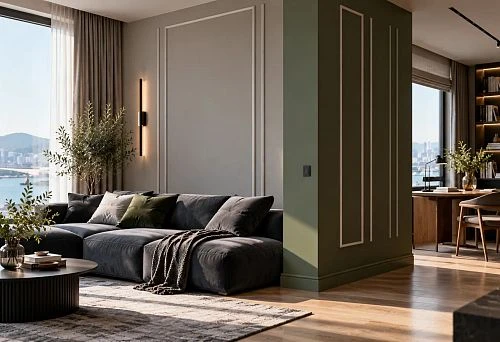
Panel division of walls with moldings is one of the main techniques of classical and neoclassical interiors. Rectangular and square frames made of moldings create geometry that makes a simple wall architectural. On the external corners of these frame compositions — where the molding meets another plane or ends — corner decorative elements and Decor for polyurethane moldings.
False panels and decorative boxes
Where you need to hide communications, create the illusion of a column, or design a ventilation duct box as a beautiful architectural detail — polyurethane decor on external corners is indispensable. Polyurethane trim allows you to form a complex profiled corner without milling or carpentry work: glue it, putty the joint, paint it — and the box looks like an architectural column.
Furniture facades for painting
decor for furniture made of polyurethane on the external corners of facade panels allows you to create complex frame and relief solutions without manual carving. Corner overlays, decorative inserts, frame moldings — all of this is mounted on the MDF base of the facade, primed, painted, and creates the feel of custom expensive furniture in serial production.
It is important to understand here: polyurethane decor on furniture facades works specifically for painting. With a uniform color scheme of the entire product, the boundary between the polyurethane overlay and the wooden body completely disappears. This is a key principle.
Classic portals and accent zones
A fireplace portal, a portal around a mirror, a decorative frame above the entrance group — in these cases decorative polyurethane elements on external corners work as architectural statements. A complex cornice profile that wraps around the corner and continues on the side wall of the portal — this is a task for polyurethane, because a wooden carved counterpart would cost many times more.
Wood or polyurethane: selection table by task
To eliminate confusion, let's summarize the main criteria in one table. This is a practical tool for making decisions when purchasing.
| Task | Wooden corner / layout | Polyurethane molding / overlay |
|---|---|---|
| Impact and abrasion protection | ✔ Yes | ✗ No |
| Close the end of the panel or joint | ✔ Yes | Partially |
| Decorative relief for painting | Simple profile | ✔ Complex relief |
| Seriality and repeatability | Moderately | ✔ Perfect |
| Visible wood texture | ✔ Yes | ✗ No |
| Application for staining/varnishing | ✔ Yes | ✗ No |
| Uniform color with wall paint | Yes | ✔ Yes |
| Tactile contact zones | ✔ Preferred | Undesirable |
| Installation without milling | Yes | ✔ Yes |
| Lightness with large relief | — | ✔ Yes |
The table shows: this is not competition, but a division of roles. Often, both materials are used on the same object, each in its place.
Ready-made kits for specific tasks
Design of the external wall corner
Task: protect the corner from impacts and make it visually neat.
Set:
-
Wooden corner bracket along the entire height of the corner;
-
wood adhesive + finishing nails;
-
filler for fastener holes;
-
primer;
-
paint or varnish depending on the finish.
If there is a decorative wall panel nearby — add to the wooden corner Moldings made of polyurethane flush with the panel surface. This creates a combination: the corner holds and protects, the moldings form a stucco pattern.
Niche design
Task: turn the niche into a decorative architectural element.
Set:
-
Wooden corner veneer for covering ends on external corners of the niche;
-
polyurethane molding around the perimeter of the niche entrance;
-
Polyurethane corner moldings for joining profiles on external corners;
-
decorative overlay at the top point of the arch or at the keystone;
-
polyurethane adhesive, sealant, primer, paint.
Built-in wardrobe design
Task: the ends of the wardrobe visible from the room must be neat, and the fronts must have stucco decor.
Set:
-
wooden corner on all visible vertical ends of the body;
-
decor for furniture polyurethane moldings on the front doors;
-
corner decorative elements on the front panels;
-
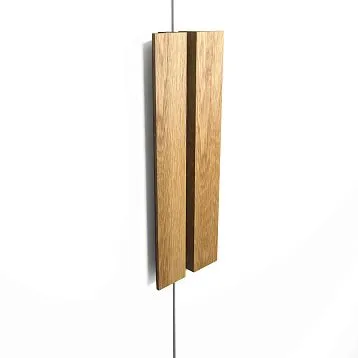
wooden handles for doors and drawers;
-
primer, paint in a single color.
The wooden corner protects the end — the area of mechanical contact. Polyurethane moldings shape the face of the facade. Everything is painted in one color, and the product looks monolithic.
Doorway framing
Task: frame an opening without traditional architraves or with decorative trim in a classic style.
Set:
-
wooden corner trim to cover the end of wall finishing;
-
Moldings made of polyurethane around the perimeter of the opening as decorative trim;
-
Decor for polyurethane moldings — corner rosettes and a keystone above the opening;
-
assembly adhesive, acrylic sealant, primer, paint.
Wall panel framing
Task: a wooden decorative panel with a stucco frame trim.
Set:
-
wooden corner piece to cover visible panel edges;
-
polyurethane moldings around the panel perimeter — frame profile;
-
Wooden decoration — overlay sockets or central elements if the panel has an open wood texture;
-
when painting in a single color — replacing wooden overlays with polyurethane ones.
Furniture front design
Task: a front with corner molding framing and central stucco decor for painting.
Set:
-
corner wooden trim for the body ends;
-
polyurethane moldings for the frame geometry of the front;
-
decorative polyurethane elements — central overlays and corner inserts;
-
wooden handles — a tactile contact point;
-
glue, acrylic sealant, adhesion primer, paint.
What to buy together: complete shopping list
The rule of good purchasing is not 'buy only what is obviously needed,' but buy everything needed to complete the work without additional trips.
Wooden elements:
-
Wooden corner bracket — with a 10–15% margin for trimming;
-
Wooden corner veneer — for a specific panel thickness;
-
Wooden decoration — overlays, sockets, if the project involves an open wood texture.
Polyurethane elements:
-
Moldings made of polyurethane — linear profile for frames and trims;
-
Polyurethane corner moldings — ready-made corner joints for molding frames;
-
Polyurethane appliqués — central and accent elements;
-
Decor for polyurethane moldings — corner rosettes, central inserts, arch keystones;
-
Polyurethane trim — for profiled boxes and columns.
Consumables:
-
— mounting adhesive for polyurethane — more on selection: what to glue polyurethane molding with;
-
— finishing fasteners for wood (headless nails, staples);
-
acrylic sealant for sealing joints between polyurethane and wall;
-
wood putty for filling fasteners on wooden elements;
-
adhesion primer — mandatory for polyurethane before painting;
-
paint: water-based, acrylic or alkyd — depending on the finish;
-
varnish or oil for wooden elements with open texture;
-
spare of all elements 10–15% of the calculated quantity.
Let's highlight the spare separately. When working with moldings at corners, each corner joint is either a 45° cut or a ready-made corner element. When cutting, even a precise cut has a tolerance. Add to this rejects during transportation, on-site trimming and marking errors — 15% spare is a minimum, not a luxury.
How to properly combine a wooden corner and polyurethane moldings
The question most often asked at the design stage: will the transition between wood and polyurethane be visible?
Under paint — the transition completely disappears. A wooden corner, filled nail holes, a polyurethane molding with a filled joint — all this after priming and painting forms a single surface. There is no boundary that could be seen.
Under staining or clear varnish — the situation is different. Polyurethane has no pores and texture: the stain lays evenly, without depth and play. A wooden corner with stain looks lively. If both materials are in the same visible area and staining is planned — use only wooden elements. In this case, leave polyurethane for areas that will be painted opaquely.
The most practical scenario is a single color: ivory, white, light gray, powder. In this case, within one interior or on one product, there can be both a wooden corner and polyurethane molding, and Wooden decoration — everything works together.
Installation technology: key principles
Without installation technology, any purchase loses its meaning. Let's break down the main principles — briefly and to the point.
Installation of a wooden corner
The surface must be leveled. A wooden corner does not fix wall unevenness — it adheres to it. Before installation, check the vertical with a level.
Fastening: construction adhesive on both flanges + finishing nails with a spacing of 300–400 mm. Nails are countersunk with a nail set, holes are puttied. After drying — sanding, primer, final coating.
Cutting — strictly perpendicular cut. If joining at height is necessary — cut at a 45° angle for an invisible connection.
Installation of polyurethane moldings and overlays
Detailed installation technology is described in the material installing polyurethane molding — all nuances from base preparation to painting are covered there.
Key principles: the base must be clean, free of dust and grease. Glue is applied to the back of the molding. Joints at corners are filled with acrylic sealant and sanded until smooth. Priming is mandatory: without primer, paint adhesion to polyurethane is insufficient. Paint is applied in two coats with intermediate drying.
Special attention — to corner joints of moldings. There are two options: a ready-made corner piece or a 45° cut. A ready-made polyurethane corner molding is simpler, faster, and more reliable. A 45° cut requires precise tools and careful work, resulting in a thinner seam.
Joint installation of wood and polyurethane
Order: first the wooden corner (it defines the plane), then the polyurethane moldings on adjacent planes. Ensure both elements are in the same alignment system — by level, by vertical, by one baseline.
Before painting — fill all joints between wood and polyurethane with acrylic sealant. This is the only area where a crack may appear after painting due to seasonal movement of the wood. Acrylic sealant compensates for this movement.
Procurement mistakes: what slows down work and increases the budget
Mistakes in choosing decor for corners are costly. Not because the materials are exorbitantly priced, but because rework takes time, and time on the production site costs more than any molding.
Polyurethane where protection is needed. A polyurethane overlay on a wall corner in a hallway where furniture is regularly carried — it will be rejected after six months. A wooden corner is needed here.
Wooden corner without considering panel thickness. The corner shelves must overlap the panel edge with minimal overhang. A corner that is too narrow will not cover the edge — a gap will remain. Too wide — it will protrude beyond the plane and look rough.
Not checking how the corner joins with the baseboard and ceiling molding. A full-height wooden corner on the wall should logically end at the baseboard below and at the ceiling cornice above. If these elements are not planned in advance — unsightly gaps appear.
Too large relief on a small protrusion. A 30 mm high molding on an 80 mm wide false panel is heavy and visually incorrect. The scale of the relief should match the scale of the surface.
Forgetting sealant for joints. The joint between the polyurethane molding and the wall, between the wooden corner piece and the panel — these are gaps that become visible after painting without sealant. Acrylic sealant costs pennies and completely solves this problem.
Not taking a reserve for trimming. Every corner joint is a cut. Every cut can potentially go wrong. 15% reserve for linear products is a production standard.
Mixing wood and polyurethane without a unified paint finish. A wooden corner piece with varnish and a polyurethane molding with white paint next to each other — this is a visual dissonance. Either everything under a single coating, or clear zoning.
Not thinking through: functional corner or decorative. The most basic mistake that leads to all others. This question needs to be answered before choosing the material, not after purchasing it.
Decorating external corners in different interior styles
The choice of material depends not only on function but also on style. Here's how it works in practice.
Classic and neoclassical. Here, the combination of a wooden corner piece and polyurethane stucco is most appropriate. The wooden corner piece holds the ends of wall panels, and Moldings made of polyurethane they form the entire system of panel divisions, frames, and cornices. A single color of enamel unifies everything. Decorative corner rosettes at the intersection points of moldings add completeness.
Scandinavian style and minimalism. Here, the wooden corner piece is the star. Natural wood, open texture, simple profile without carving. Polyurethane is almost never used — the style implies clean planes. Maximum — a simple linear polyurethane molding in a single white color.
Country and Provence. A wooden corner made of pine with staining or whitewashing, an angled layout with visible texture. On furniture and niche frames — lightweight polyurethane moldings with a low profile. Everything in soft pastel tones.
Art Deco and modern classic. Here, corner elements with a geometrically clear profile work. A wooden corner with a chamfer, polyurethane moldings with a sharp angular profile. Color — dark: anthracite, bronze, gold on white.
Loft and industrial. The wooden corner here is deliberately rough, made of untreated solid wood or with minimal processing. Polyurethane is only appropriate in areas where there is no exposed wood — on smooth plastered walls with molding frames.
FAQ: answers to the most frequently asked questions
What is better for an external corner: wood or polyurethane?
It depends on the function. If the corner is in an area of mechanical contact — choose Wooden corner bracket: it is durable, impact-resistant, and easy to restore. If the task is decorative — the corner is painted together with the wall or furniture — you can use Moldings made of polyurethane or polyurethane molding with the desired profile.
Can you combine a wooden corner and polyurethane stucco on the same object?
Yes, and this is one of the most professional approaches. A wooden corner covers and protects the ends of panels and wall corners, while polyurethane moldings and overlays form a decorative relief on adjacent planes. With a single finish coating, all materials are perceived as one whole.
What to buy for decorating a niche corner?
wooden corner trim for ends, Moldings made of polyurethane for framing the entrance to a niche, Polyurethane corner moldings for corner joints of the profile, decorative polyurethane elements as accents, mounting adhesive, acrylic sealant, primer, paint.
Will polyurethane decor work for a furniture corner?
For decorative areas — yes. Frame moldings on facades, central overlays, corner accents for painting — all these are areas of application for polyurethane. For working ends of the body, areas of constant contact — it is better to use a wooden corner or furniture profile made of solid wood.
How to make a wall corner both beautiful and practical?
Install Wooden angle on the corner itself — it will perform a protective function. On the planes next to the corner, place polyurethane moldings or panel decor. With a uniform paint job, everything will look like a well-thought-out architectural detail, not a technical solution.
Is primer needed before painting polyurethane?
Absolutely. Without priming, the paint does not have sufficient adhesion to polyurethane and will begin to peel off over time — especially in areas with temperature and humidity fluctuations. Use an adhesion primer compatible with your topcoat.
How to choose the right molding profile for a corner?
Focus on the scale of the surface: the profile height should be proportional to the dimensions of the panel, niche, or facade. For small surfaces — flat moldings with a height of 5–10 mm. For large architectural forms — profiles of 15–25 mm and higher. The profile style should match the overall interior style: geometry for minimalism, wave and heel for classic, straight ledge for loft.
Where can I learn about the correct installation technology for polyurethane moldings?
Detailed step-by-step technology is in the material installing polyurethane molding, which covers all stages from base preparation to final painting.
About the company STAVROS
All wooden and polyurethane decorative elements for finishing external corners mentioned in this material are presented in the STAVROS company catalog. This is one of the leading Russian manufacturers and suppliers of natural wood and polyurethane products for interiors, furniture production, and architectural decor.
STAVROS produces a full range of products: wooden corners, corner trims, solid wood moldings, carved overlays and decorative elements from beech and oak, polyurethane moldings, corner moldings, PU overlays, molding decor, stucco, and polyurethane moldings. A separate area is consumables and consultations on selecting glue, primer, and paints for correct installation and finishing.
The company's history began in 2002 when two artists created a workshop for carved wood products. Within a year, their work was noticed during the reconstruction of the Konstantinovsky Palace in Strelna. Today, STAVROS's portfolio includes work with such sites as the Hermitage, the Alexander Palace, and the Trinity-Izmailovsky Cathedral. This experience with historical interiors determines the quality and precision of all manufactured products.
Delivery — throughout Russia and CIS countries. Pickup — from warehouses in St. Petersburg and Moscow. Shipment from one piece. If you are selecting a set for finishing corners — start with the catalog moldings from polyurethane и wooden decor on the STAVROS website. It has everything you need — from one corner to a complete set for a series.