Article Contents:
- First screen: a short answer for those who already know what they are looking for
- How a wooden bracket differs from a polyurethane one
- Wooden bracket: strength, weight, texture
- Polyurethane bracket: relief, lightness, painting
- Where a wooden bracket works: eleven tasks
- Load-bearing shelves with real weight capacity
- Kitchen shelves
- Solid wood furniture: sideboard, display cabinet, library
- Console in the hallway or living room with wooden legs
- Interiors in country, rustic, Scandinavian loft style
- Workshop, garage, workspace
- Restoration of historical furniture
- Natural interior: stone, linen, wood, metal
- Outdoor and terrace areas (under a canopy)
- Wooden fireplace mantel
- Children's room
- Where the polyurethane bracket works: ten tasks
- Decorative cornice above the built-in wardrobe
- Fireplace portal in neoclassical style
- Niche with decorative shelves without load
- False console under a window or against a wall
- Wall with moldings: bracket and frame assembly
- Portal above a door or arch
- Decorative supports under an MDF fireplace shelf
- Bathroom: wet room
- Upper zone of built-in furniture in the bedroom
- Classic living room with stucco on walls
- How to choose a bracket for a specific task
- For a shelf with load: selection algorithm
- Under console: combination of wood and polyurethane
- Under cornice: when there is no load, only decor
- Under portal: polyurethane system
- Comparison table: wood vs polyurethane
- Ready-made kits for different tasks
- Classic bookshelf in the study
- Decorative console in a neoclassical living room
- Fireplace area in classic style
- Built-in wardrobe in the bedroom with stucco cornice
- Niche with decorative shelves in the living room
- Bathroom shelf
- Installation of wooden brackets: technique
- Marking
- Fasteners
- Painting a wooden bracket
- Installation of polyurethane brackets: technique
- Eight mistakes when buying and installing brackets
- Load table: which bracket will hold
- Additional scenarios: what else a bracket solves
- Cornice above the kitchen work area
- Window sill shelf in a classic interior
- Decorative belt in the hallway
- Support under the beam
- Frequently Asked Questions
- About the Company STAVROS
A bracket is a part that is rarely noticed on its own. But it is the one that holds the shelf everyone uses. It is the one that supports the console that takes your breath away when you enter the room. It is the decorative bracket under the mantelpiece or at the base of the cornice that creates that very feeling of architectural completeness, without which the interior seems like a set of objects rather than a whole space.
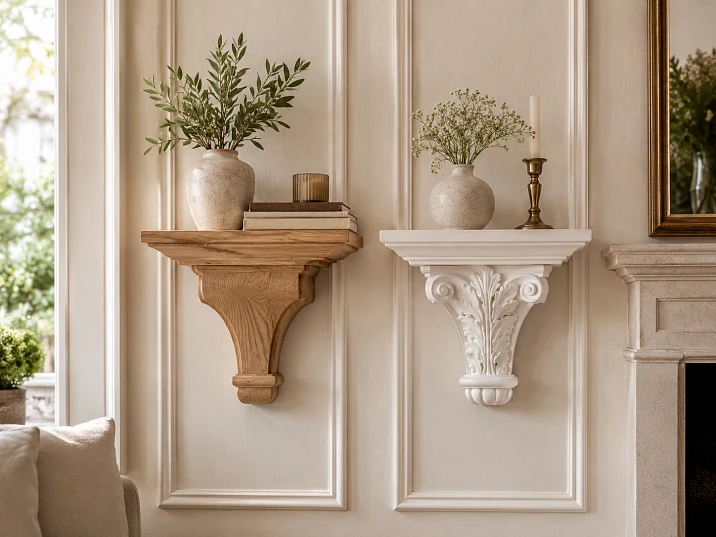
Today on the market there are two fundamentally different materials: wooden bracket и Polyurethane bracket. They do not compete — they solve different tasks. And understanding this difference means making the right choice the first time, without redoing or paying extra.
Let's break it down honestly: what bears the load, what works as decor, where these functions intersect, and what to buy for each specific task.
First screen: a short answer for those who already know what they are looking for
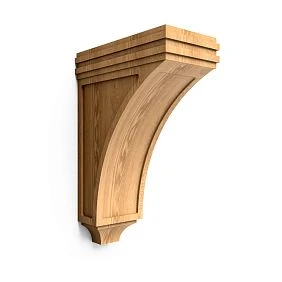
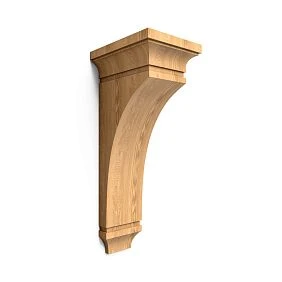
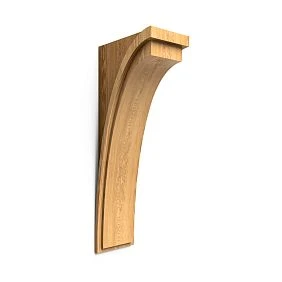
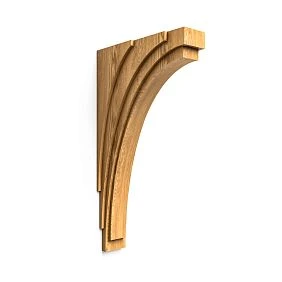
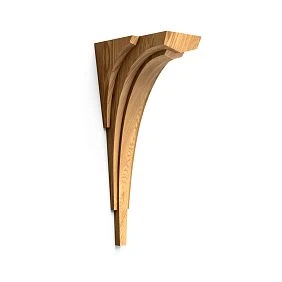
Wooden bracket — when you need structural strength, natural texture, solid wood furniture, or a classic shelf with real load.
Polyurethane bracket — when the task is decorative: to design a cornice, portal, niche, fireplace area, or create a stucco accent under a shelf, console, or facade.
What to buy as a set:
For the wooden option:
-
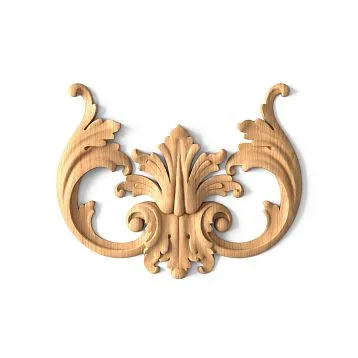
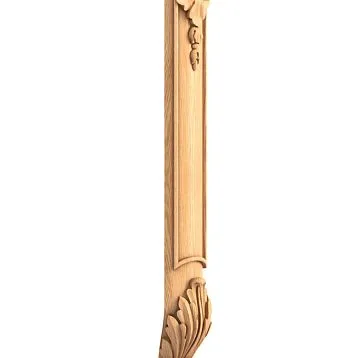
Wooden Brackets — of the required size and shape.
-
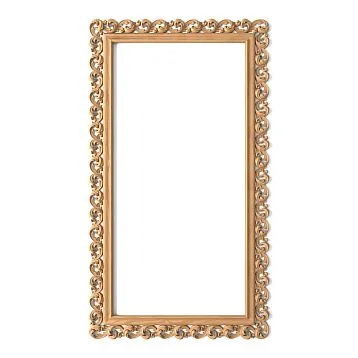
decorative elements for furniture — additional overlays and parts.
-
wooden cornice — for the included shelf or console.
-
Fasteners (screws, anchors, furniture brackets).
-
Wood primer, stain, varnish or paint.
-
Sandpaper 120–180 grit.
For the polyurethane option:
-
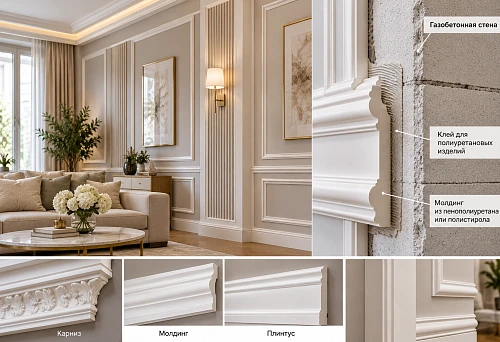
Moldings made of polyurethane — for framing and horizontal lines.
-
decorative polyurethane elements — wall, cornice or facade overlays.
-
Specialized adhesive. More details — what to glue polyurethane molding with.
-
Acrylic sealant.
-
Acrylic primer + paint.
-
Painter's tape.




How does a wooden bracket differ from a polyurethane one?
Two materials, one function in the name — but completely different logic of application. This is not just "wood vs. plastic". These are different structural and decorative concepts.
Our factory also produces:
Wooden bracket: strength, weight, texture
Furniture Bracket made of wood is a load-bearing element. It is made from solid beech, birch, or oak, has real structural strength, and is designed for physical load.
The wooden bracket is attached to the wall and shelf mechanically: with screws, anchors, furniture bolts. It holds — and holds for a long time. With proper installation, a wooden bracket can bear a load of 15–25 kg or more, depending on size and wood species.
An additional advantage is the texture. Wood is alive: it has a fiber pattern, is warm to the touch, and has visual depth. This cannot be replicated in polyurethane. A wooden bracket in a natural tone under varnish or oil is itself a decorative element.
Get Consultation
Polyurethane bracket: relief, lightness, painting
Polyurethane bracket is a decorative element. It is glued to the wall with specialized adhesive and is not designed to bear real load without additional load-bearing fasteners. Its task is to create visual volume, stucco relief, architectural accent.
Polyurethane reproduces fine ornamentation: volutes, acanthus leaves, geometric profiles — everything that in wood would require hand carving. In polyurethane — serially, precisely, affordably.
The main advantage of a polyurethane bracket is that it can be painted with acrylic paint in any color. White, cream, dark gray, terracotta — Polyurethane moldings it easily integrates into any interior color concept.
Where a wooden bracket works: eleven tasks
Load-bearing shelves with real weight
Books, dishes, decorative items — all of this creates load. If the shelf will be used as intended, and not just "for decoration," Buy a wooden bracket — the right choice. Wood will hold up. Polyurethane without additional load-bearing structure — no.
Rule: a wooden bracket is chosen first when there is a question about load.
Kitchen shelves
The kitchen is a load zone by default. Spices, jars, dishes, pots — heavy items. Decorative Bracket made of wood for a kitchen shelf is a justified choice both in terms of strength and aesthetics: in a wooden kitchen, wood is organic in every detail.
Additionally used in the kitchen decorative elements for furniture — overlays on shelf ends, wooden slats, moldings. All in one material.
Solid wood furniture: sideboard, display cabinet, bookcase
A sideboard with open shelves is a classic example where wooden brackets function as part of the furniture system. They are coordinated with the body material, tinting, and wooden cornice. Unity of material here is the rule.
To the wooden bracket in this scenario is added wooden cornice along the top line and Wooden decoration — overlays on posts, frames, corner elements.
Console in the hallway or living room with wooden legs
A console resting on wooden legs is logically complemented by wooden brackets — under the tabletop or as decorative supports. They support the lower plane of the console and give a sense of structural integrity.
Interiors in country, rustic, Scandinavian loft style
In these styles, wood is the main material. Polyurethane stucco in rustic style is a foreign body. Wooden Brackets with noticeable grain, light brushing, or intentional aging — an organic detail.
Workshop, garage, workspace
Where function is more important than aesthetics and the load is maximum — wood. A wooden bracket is fastened through, with bolts, without glue — it can be disassembled and reassembled.
Restoration of historical furniture
During restoration — only wood. Restoring the historical appearance of an item requires material consistency.
Natural interior: stone, linen, wood, metal
Interiors with an emphasis on natural materials — full wood from floor to cornice. A wooden bracket under a shelf made of a slab, wooden board, or solid wood is the only organic option.
Exterior and terrace areas (under a canopy)
In open or semi-open spaces (terrace, gazebo), a wooden bracket with proper treatment lasts a long time. Polyurethane is also resistant to moisture in principle, but visually — wood is more convincing here.
Wooden fireplace shelf
A wooden fireplace shelf with wooden brackets on the sides is a classic. It is both structural and decorative. The brackets here bear the load of the shelf and simultaneously create a supporting "frame" for the entire fireplace area.
Children's room
Children's shelves — the load is unpredictable. A child may hang on the shelf. Here only wooden load-bearing brackets, only mechanical fasteners, only reliability.
Where a polyurethane bracket works: ten tasks
Decorative cornice above a built-in wardrobe
Polyurethane brackets under the cornice line of a built-in wardrobe — one of the most common scenarios. They add relief and create the feeling of a voluminous architectural profile. In a painted interior — white cornice + white brackets = a stucco architectural line.
Neoclassical style fireplace portal
A fireplace area with a portal — a space where polyurethane decor works at full strength. Brackets on the sides of the fireplace shelf, moldings on the side pilasters, decorative overlays — all in a single polyurethane language, painted white or patinated.
Niche with decorative shelves without load
In the living room or bedroom — a niche with thin shelves for decor, candles, books. The load is minimal. The brackets here are purely decorative. buy a polyurethane bracket for such a task — correct and practical.
False console under the window or against the wall
A false console is a narrow decorative shelf that is not used as a work surface. Its task is to create a horizontal line and a decorative accent. Polyurethane brackets are organic here: they provide relief, do not load the wall, and are easily painted to match.
Wall with moldings: pairing brackets and frames
If the wall is decorated polyurethane moldings — shelves, shelves, and cornices in the same space are logically supported by brackets made of the same material. A unified system.
Portal above the door or arch
A decorative cornice above the doorway with brackets at the corners is an element of classical architecture. In modern interiors, it is reproduced using moldings from polyurethane.
Decorative supports under the MDF fireplace shelf
If the MDF shelf is for painting, the brackets should also be for painting. Polyurethane brackets are painted together with the shelf in a single tone.
Bathroom: a damp room
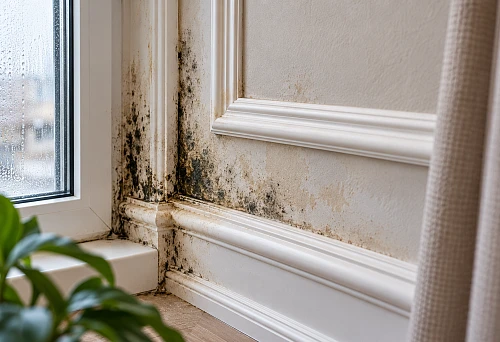
In the bathroom, wooden brackets require careful coating. Polyurethane is neutral to moisture, does not deform, and does not swell. For a small decorative shelf in the bathroom, polyurethane brackets are more practical.
Upper zone of built-in furniture in the bedroom
Above the sliding wardrobe — a profile cornice supported by brackets. Everything is painted in the wall color. The wardrobe blends into the interior, the brackets create a subtle architectural accent.
Classic living room with stucco on the walls
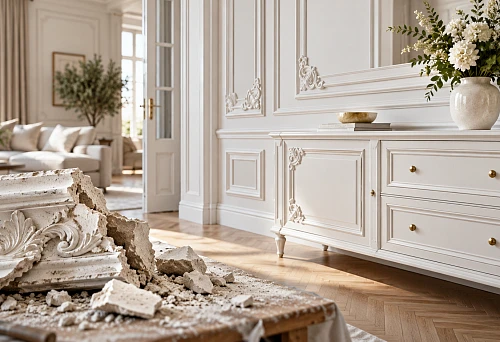
When the walls are already decorated with polyurethane moldings — shelves, consoles, and cornices are complemented with brackets from the same catalog. This is not only beautiful — it is logical.
How to choose a bracket for a specific task
For a shelf with load: selection algorithm
The first question is not "what style", but "how much does the shelf with contents weigh".
Load calculation:
-
Light shelf (decor, books in a row): 5–10 kg.
-
Medium shelf (dishes, several rows of books): 10–20 kg.
-
Heavy shelf (many books, dishes, appliances): 20–40 kg and more.
For loads up to 10 kg — wooden brackets are sufficient, polyurethane ones with concealed load-bearing fasteners are also fine.
For loads of 10–25 kg — only Wooden Brackets with mechanical fastening.
For loads over 25 kg — wooden brackets plus additional concealed metal brackets.
Bracket size:
-
The bracket must occupy at least 2/3 of the shelf depth.
-
Example: a shelf 250 mm deep — bracket at least 160 mm on the horizontal support.
For a console: a combination of wood and polyurethane
The console is an interesting task. Structurally, it is supported by hidden load-bearing brackets or visible wooden supports. Decoratively, polyurethane elements can be added.
Optimal scheme for a classic console:
-
Hidden load-bearing fasteners (metal hidden brackets).
-
Visible wooden brackets — for a structural feel.
-
Polyurethane decor around: Moldings made of polyurethane along the edge of the shelf, decorative elements under the countertop.
Under the cornice: when there is no load, there is only decor
A decorative cornice above a cabinet, above a window, above a door — it carries nothing. It is held only by the wall or cabinet, and the brackets are visual support. buy a polyurethane bracket for such a task — logical and economical.
Under the portal: polyurethane system
A portal is always a system: cornice + side pilasters + brackets at the transition from vertical to horizontal. All from one material, all in one color. polyurethane decor allows you to assemble such a system from serial elements.
To the brackets in the portal are added:
-
Decor for polyurethane moldings — corner inserts at intersections.
-
Polyurethane trim — for horizontal profiles.
-
Moldings — for frame framing.
Comparison table: wood vs polyurethane
| Parameter | Wooden bracket | Polyurethane bracket |
|---|---|---|
| Load Capacity | High (15–25+ kg) | Decorative only |
| Mounting | Screws, anchors | Specialized glue |
| Texture | Natural wood | Smooth or ornamental |
| Ornament | Limited without hand carving | Varied serial relief |
| Painting | Good, texture may show | Even tone without texture |
| Varnish / oil | Yes | No |
| Moisture resistance | Requires coating | High |
| Element weight | Significant | Lightweight |
| Self-installation | Requires experience with the tool | Available without experience |
| Style | Classic, country, rustic, solid wood | Neoclassical, classic, stucco decor |
Ready-made kits for different tasks
Classic bookshelf in the study
Task: A shelf 120 cm long with books. Load — 15–20 kg. Study with wooden furniture.
What to buy:
-
Wooden Brackets — 2–3 pieces with a depth of at least 200 mm.
-
Anchor fasteners — for load-bearing walls.
-
Wooden shelf made of panel or solid wood.
-
Wood primer + tinting oil or varnish.
Effect: A monolithic, warm, classic shelf. Brackets as an architectural detail made from the same wood as the furniture.
Decorative console in a neoclassical living room
Task: Console against the wall in the living room. Load — decorative items, vases.
What to buy:
-
Polyurethane brackets — a pair under the tabletop.
-
Hidden metal load-bearing fasteners for the tabletop.
-
Moldings made of polyurethane — along the edge of the shelf and on the wall around it.
-
decorative polyurethane elements — accents at the corners.
-
Glue + sealant + acrylic primer + white paint.
Effect: The console with stucco brackets looks like an architectural element of the wall, not like an attached shelf.
Classic style fireplace area
Task: MDF fireplace mantel for painting. Decorative brackets on the sides.
What to buy:
-
Polyurethane brackets — large size, with ornament.
-
Moldings made of polyurethane — horizontal and vertical lines of the portal.
-
Decor for Molding — corner inserts.
-
Polyurethane trim — horizontal belts.
-
Glue + sealant + acrylic primer + white paint.
Effect: Fireplace portal with decorative brackets — a completed architectural interior zone.
Built-in wardrobe in the bedroom with stucco cornice
Task: Sliding wardrobe up to the ceiling. Decorative top profile with brackets.
What to buy:
-
Moldings made of polyurethane — cornice profile along the top line.
-
Polyurethane brackets — under the cornice, every 60–80 cm.
-
decorative polyurethane elements — accents on the corners.
-
Glue + sealant + acrylic primer + paint to match the cabinet.
Effect: The cabinet with a molded cornice and brackets becomes part of the room's architecture.
Niche with decorative shelves in the living room
Task: A niche in the wall. Several thin shelves with books and decor.
What to buy:
-
Polyurethane brackets — small size, for a niche.
-
Hidden load-bearing fasteners for real weight.
-
Moldings made of polyurethane — along the perimeter of the niche.
-
Glue + sealant + primer + paint in wall color.
Effect: The niche with decorative brackets looks like an architectural detail, not a "hole in the wall with shelves."
Bathroom shelf
Task: A small shelf for cosmetics and accessories. Load capacity — up to 5 kg.
What to buy:
-
Polyurethane brackets — moisture-resistant, suitable for painting.
-
Specialized adhesive + moisture-resistant sealant.
-
Acrylic primer + moisture-resistant acrylic paint.
Effect: A decorative shelf that does not deform from moisture and looks like an architectural element of the bathroom.
Installation of wooden brackets: technique
Marking
Mark the horizontal line for bracket attachment — strictly horizontal, using a level. Even a 2–3 mm error will be visually noticeable.
Bracket placement: for shelves up to 80 cm — 2 brackets at the edges. For shelves 80–150 cm — 3 brackets: two at the edges + one in the center. For shelves over 150 cm — one bracket every 50–60 cm.
Fasteners
Into a load-bearing wall: anchors with nylon dowels 6×40 mm and screws 4.5×50 mm. Into drywall: special drywall anchors (umbrella or Molly) — they expand on the back side of the sheet.
Important: in drywall, the bracket itself does not hold a large load. For heavy shelves — only fastening into the frame profile or special drywall anchors.
Painting a wooden bracket
Sequence: sanding with 120 grit sandpaper → wood primer → paint in 2 coats or stain → varnish/oil.
Cutting at an angle is not needed — the wooden bracket is mounted as a single piece.
Installation of polyurethane brackets: technique
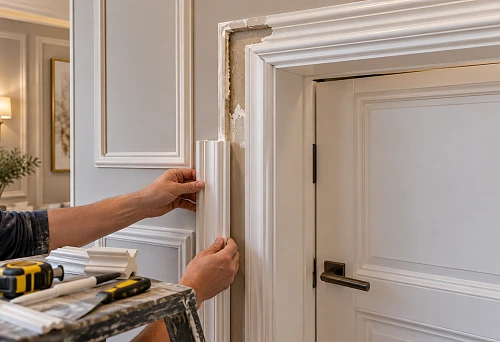
Full instructions — installing polyurethane molding.
Brief sequence:
-
Mark the position of each bracket — with a pencil.
-
Degrease the surface at the attachment point.
-
Apply glue to the back side of the bracket — in dots or a zigzag pattern.
-
Press along the markings, secure with painter's tape until the glue sets.
-
Bracket-to-wall joint — acrylic sealant.
-
After drying: acrylic primer + paint.
If there is load: Add a hidden metal bracket mounted into the wall. The polyurethane bracket is glued decoratively over it.
Eight mistakes when buying and installing brackets
Mistake one: buying a polyurethane bracket for a load-bearing shelf.
Decorative only. Load — only if hidden load-bearing fasteners are present.
Mistake two: choosing a bracket less than 2/3 of the shelf depth.
A shelf with a short bracket will tip forward. Always check the proportion.
Mistake three: not checking the horizontal alignment of the markings.
One uneven line — and the entire installation is crooked. Level — always, without exceptions.
Mistake four: mixing a wooden bracket and polyurethane moldings without a unified paint job.
Natural wood + white polyurethane — a style conflict. Either paint everything in one tone, or build the system from a single material.
Mistake five: forgetting the adhesive for polyurethane.
The polyurethane bracket is glued with specialized adhesive — not PVA, not general-purpose liquid nails.
Mistake six: not getting spare brackets.
Chips, cutting errors, defects — all of this happens. Buy 1–2 extra pieces.
Mistake seven: not accounting for the thickness of the cornice when calculating the bracket position.
If the bracket supports the cornice from below, its height from the floor must account for the thickness of the cornice profile.
Mistake eight: not coordinating the bracket style with the rest of the room's decor.
decorative bracket with a baroque ornament in a minimalist white room — not an accent. A mismatch. The bracket style should rhyme with the style of moldings, legs, cornices in the same space.
Load table: which bracket will withstand
| Shelf load | Recommended bracket | Fasteners |
|---|---|---|
| Up to 5 kg | Polyurethane (decorative) | Glue |
| 5–10 kg | Polyurethane + hidden metal | Glue + anchor |
| 10–20 kg | Wooden | Screws + anchors |
| 20–30 kg | Wooden + metal brackets | Anchors into the load-bearing wall |
| More than 30 kg | Metal load-bearing + wooden decorative | Construction anchors |
Additional scenarios: what else the bracket decides
Cornice above the kitchen work area
A horizontal rail above the kitchen work area with brackets is a popular and functional solution. Hooks, baskets, and utensils are hung on the rail. Here you need Wooden Brackets with real load.
The rail can be supplemented with wooden cornices along the top line — resulting in a complete kitchen installation.
Window sill shelf in a classic interior
A wide window sill with wooden brackets underneath — and it turns into an extended shelf. The brackets here bear the load (pots, books) and create a decorative frame around the window.
Decorative belt in the hallway
A long hallway with a shelf at a height of 180–200 mm from the ceiling — a decorative horizontal accent. Polyurethane brackets every 50–60 cm + Moldings made of polyurethane along the shelf. Everything white. The effect — an architectural belt that wasn't there before.
Support under a beam
In houses with exposed wooden beams — wooden brackets as decorative supports under the beams against the wall. This is not structural — it's aesthetic: the bracket imitates a support node, enhancing the feel of historical architecture.
Frequently asked questions
Which is better: a wooden bracket or a polyurethane one?
If you need load-bearing — wooden bracket. If you need decorative relief, a cornice, a portal, or a stucco accent — Polyurethane bracket.
Can a polyurethane bracket be used for a real shelf?
Yes, but only if a hidden metal load-bearing bracket is additionally installed. Polyurethane itself is just decoration.
Where to use decorative brackets?
Under shelves with light decor, under consoles, in fireplace areas, under cabinet cornices, in niches and portals, at the base of the cornice above doors.
Can wooden and polyurethane brackets be painted the same color?
Yes. Wood — sanding + wood primer + paint. Polyurethane — acrylic primer + paint. With a uniform color, the difference in materials disappears visually.
What to buy together with brackets?
Fasteners or glue, moldings, decorative elements for furniture, primer, paint, spare and Decor for Molding for corner joints.
How many brackets are needed for a 100 cm long shelf?
Two: at the edges. For a 100–150 cm shelf with load — three: two at the edges, one in the center.
How to choose the bracket size?
The horizontal part of the bracket must be at least 2/3 of the shelf depth. The vertical part is for the gap height or decorative purpose.
About the company STAVROS
STAVROS produces and supplies a full range of decorative and load-bearing brackets for furniture and interiors. The company's catalog includes wooden furniture brackets made of solid hardwood, Polyurethane brackets with ornamental relief, Moldings and cornices, Polyurethane moldings и decorative elements for furniture made of wood.
STAVROS helps select not a single element, but a complete set for a specific task: load, decor, style, installation, and finishing. Consultations on selection, quantity calculation, and installation techniques are the company's standard for every order.