






























Article Contents:
- Wooden baluster L-097: what people buy instead of a ready-made railing system
- What is under the wooden step: determining the base of the lower mounting
- Upper assembly L-097: handrail, support posts, and turns
- Why the new batch of balusters is not counted by the number of old metal posts
- Steel and wood in one composition: confirming the type before ordering the batch
- Beech or oak for L-097: coordinating the finish and work order
- Price of twelve L-097 and the full railing estimate
- One scheme and two tasks: for the baluster seller and the staircase contractor
- When L-097 for this staircase is not yet worth ordering
- Ordering wooden balusters L-097: final specification
- Questions before purchasing L-097 for a steel staircase
- Can I first order balusters only for the landing?
- What to do if the actual staircase differs from the old drawing?
- Can I keep the metal posts but make the handrail wooden?
- Will the same fastening be needed on the flight and the landing?
- Can I buy oak balusters for a beech handrail?
- Who to contact if there is play after installation?
- What to keep after completing the installation?
- Can the lower fastenings be covered later with decorative elements?

For a steel staircase, it is not enough to buy wooden balusters and select a beautiful handrail for them. First, you need to determine what the elements will be attached to from below, how they will connect at the top, and which elements will link the railing at turns. After agreeing on these solutions, a purchase list is compiled. Otherwise, the cost of the wooden batch is known, but it is not yet possible to assemble a finished structure from it.
Let's consider a conditional project of an internal staircase in a private house. The metal frame is not planned to be changed, the steps are to be kept, and the railing is to be made with wooden balusters L-097 and a handrail. This is a purchasing scenario, not a description of an inspected object: the suitability of the existing base and the selected connections must be confirmed by the staircase contractor.
Along with the balusters, a handrail, its connecting and turning parts, support posts, transition elements to steel, and fasteners may be needed. The mandatory set is determined by the project, not by neighboring products in the catalog. Fitting, finishing, installation, and safe replacement of the old railing are planned separately.

Wooden baluster L-097: what is bought instead of a ready-made railing system
L-097 is a separate wooden baluster with small horizontal flutes. Its laconic pattern can be considered for combination with visible metal, but the appearance does not confirm compatibility with a specific staircase. For the product, wood and surface preparation are selected; the design of the entire railing is not determined by this choice.
| Parameter | L-097 execution |
|---|---|
| Size A × B | 1000 × 40 mm |
| Wood | Beech or oak |
| Sanding | "Standard" or "Prestige" |
| Decor | Small horizontal flutes |
| Shown basic execution | Beech, "Standard", "For enamel" |
Before buy wooden balusters L-097, divide the future structure into independent parts:
Lower node: connection of the wooden part with the provided base.
Filling: balusters between support elements.
Upper node: joining of balusters and handrail.
Start, end, and turns: posts or other support solutions provided by the project.
This is a composition diagram, not an installation drawing. It helps to see missing items before payment: for example, a handrail is selected, but it is not yet determined how its connection to the preserved metal post will end.
The size 1000 × 40 mm is given in the manufacturer's notation A × B. The value B cannot be independently considered as the installation diameter or turned into a section of 40 × 40 mm. For connections, detailed drawings are needed. The length of the workpiece is also not equal to the height of the finished railing: the latter depends on the position of the base, handrail, and adopted connections.
What is under the wooden step: determining the base of the lower attachment
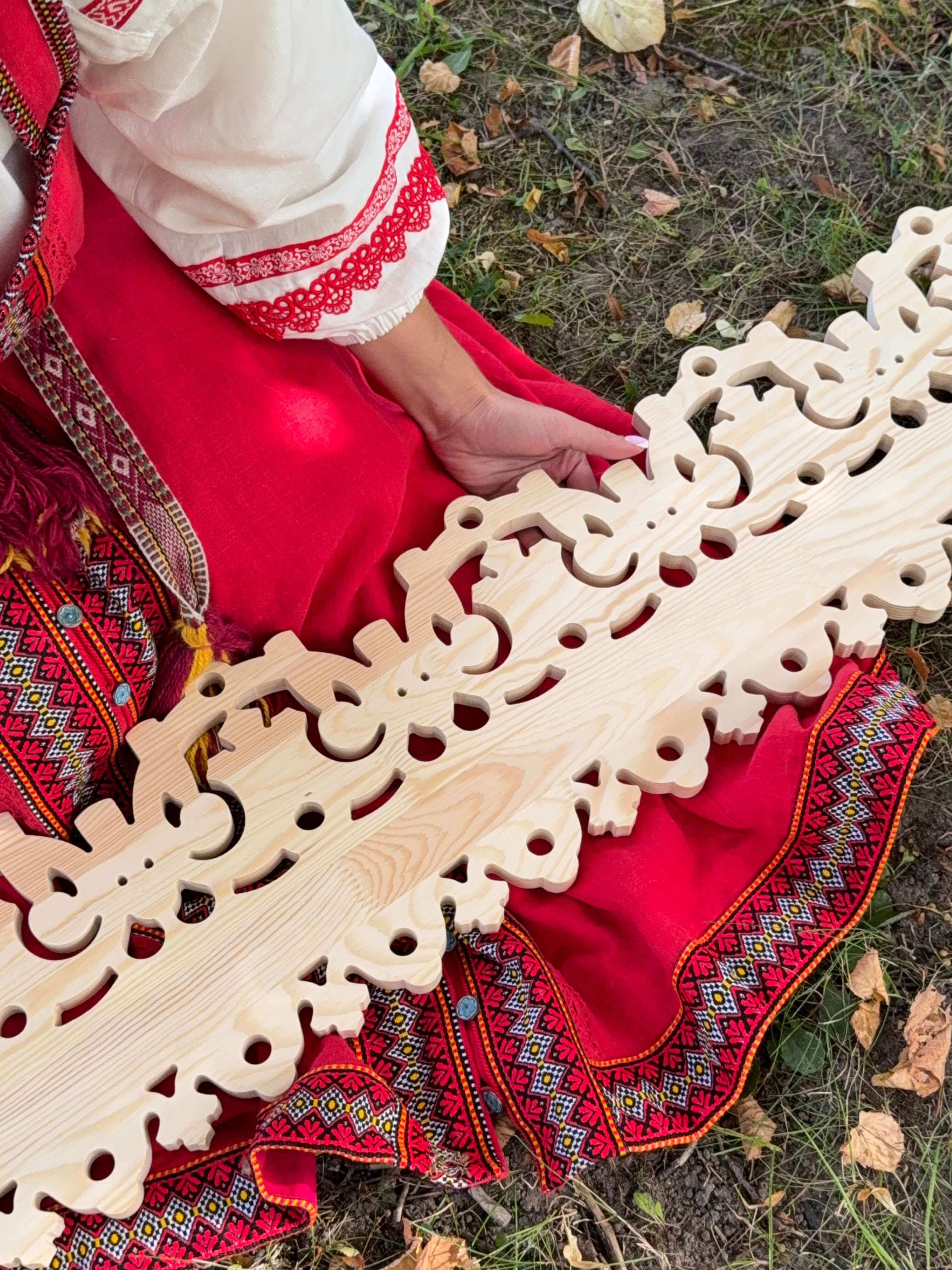
You should start with the staircase structure, not with choosing a screw. The photo shows the tread — the horizontal surface of the step. But the top-down shot does not show where the steel runs, how the wooden overlay is attached, and whether there is access to the connection point from below.
An open steel platform allows you to see the base, but its presence does not yet answer the question of fastening. The contractor checks the actual structure, the location of the new node, and the admissibility of the required work. The buyer provides existing drawings, photographs, and information about the previous railing, without assigning holes themselves.
Metal under a wooden tread requires a section showing both materials and their connection. It is not enough to write "wooden step": it is necessary to determine whether load transfer through it is intended, directly onto steel, or according to another agreed scheme. These are different tasks, although the finished appearance may be similar.
Fastening near the edge or on the side is checked separately from installation on top. The position of the baluster relative to the step and handrail changes, and other junctions and access requirements appear. Moving the part a few centimeters for the sake of a beautiful row cannot be considered merely a decorative adjustment.
| What is visible during inspection | What this does not prove | What needs to be obtained |
|---|---|---|
| Wooden step | That it alone is sufficient for fastening the railing | Section of the base and the adopted connection |
| Old hole in steel | That it fits the new wooden part | Checking the hole against the joint drawing |
| Decorative cover | That hidden fasteners can be left in place | Inspection result of the connection |
| Closed underside | That installation is possible without additional access | Agreed installation sequence |
For each distinct section, information about the base, wooden trim, fastener location, and rear access is needed. It is convenient to label photos with codes like "flight M-1, lower fastener" or "landing P-1, edge." This way, the discussion will not be reduced to vague references like "where it was before."
On the lower joint sheet, it is useful to compile four groups of information: base section, baluster position, connection composition, and access sequence. Dimensions are noted according to field measurements and the working drawing. If any part is not yet known, it is marked as requiring verification rather than being drawn by analogy with the adjacent step. This allows distinguishing a finalized solution from a sketch showing only the desired location of the part.
Let's imagine that the intended connection needs access from below, but the space is already closed off by finishing. Then, before ordering the batch, it is necessary to agree on how the installer will gain access and who will restore the closing section. You cannot independently choose a different fastener to bypass this task. Possible additional work must be included in the estimate in advance. Otherwise, the buyer only compares the prices of balusters, although the installation organization is not yet determined.
The thickness of the visible board by itself does not allow selecting the fastener length. It does not describe all layers, the depth of the connection, or the elements by which the assembly must be held. Likewise, a ready-made hole is not a reason to reduce the number of fasteners or change their placement.
If the necessary information is hidden, the inspection method is determined by a specialist. There is no need to independently remove critical elements or loosen an existing railing for measurements. The result of this stage should be a clear basis for design, not just a pencil mark on the step.
Our factory also produces:




Upper assembly L-097: handrail, support posts, and turns
After the lower connections, check the entire upper line: from the start of the flight to the end of the railing on the landing. Balusters may match in appearance, but the order will remain incomplete if the transition of the inclined handrail to horizontal or the abutment to the wall is not resolved.
First, note what is preserved. For example, metal posts may remain part of the accepted structure, then their connection with the new handrail becomes a separate task. In another solution, wooden posts and corresponding lower fasteners are provided. These options cannot be mixed in one vague entry "wooden railing".
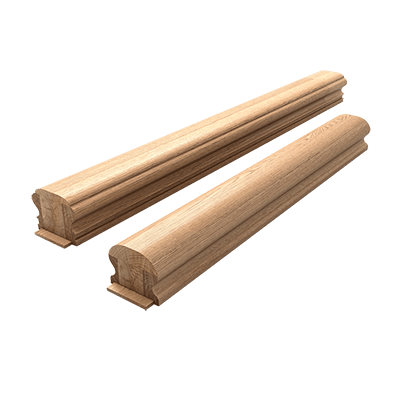
To Buy a wooden handrail for stairs, prepare its route. For each straight section, specify the start, end, direction, and associated parts. Separately indicate the turn, the transition to the landing, and the end at the wall. Not only the total length is needed, but also a list of parts from which an agreed line will result.
The selected profile is checked for appearance, grip comfort, and the design of the lower connection. The similarity of the wood to L-097 does not mean that the baluster will automatically fit into the existing groove or connect to the handrail without an additional part. Unknown dimensions are first obtained and then included in the working scheme.
Posts are also counted according to the structure: buy wooden stair posts makes sense where they are provided by the project; adding them to every batch of balusters automatically is not required. If one post belongs simultaneously to the flight and the landing, it receives one code in the general list so that it is not included in the order twice.
For the handrail, distinguish between the lengths of finished sections and purchased blanks. The joint location, cut direction, and end fitting pertain to the working scheme. You cannot first divide the total footage by the length of a randomly chosen plank and then consider any joint acceptable. If the handrail is delivered separately from the balusters, its list must be checked against the same version of the project: matching wood names does not link two orders into one set.
Transition pieces must have a specific manufacturer. The note "the installer will make the adapter" is insufficient until its design, appearance, and inclusion in the work cost are agreed upon. Such an issue is best resolved before manufacturing the handrail, especially when its ends depend on the chosen connection.
Get Consultation
Why a new batch of balusters is not counted by the number of old metal posts
The existing row is convenient for taking measurements, but not as a ready-made purchase list. When changing the material and connections, the placement of infill, support elements, and open gaps must be rechecked. The rule "there were twelve metal pieces standing—we'll buy twelve wooden ones" does not replace this work.
Create a list of sections. It records the length according to agreed measurement points, retained supports, locations of new balusters, and designations of the top and bottom nodes. The lengths of the inclined section and its horizontal projection are not mixed: the table must make it clear what exactly was measured.
For cost calculation, we will further assume a conditional scheme with twelve already agreed installation locations. For example, seven relate to the flight, five to the landing. This is the initial condition of the example, not a recommendation for the number of balusters for a specific staircase length.
| Section of the training example | Baluster designations | Quantity |
|---|---|---|
| Flight M-1 | M-01–M-07 | 7 |
| Platform P-1 | P-01–P-05 | 5 |
| Total working parts | Without support posts and reserve | 12 |
Geometric counting answers the question of how many positions are drawn. Checking the finished fence answers other questions: whether its height, gaps, connections, and the operation of the entire structure are acceptable. It cannot be replaced by a universal step, the rule of "one baluster per step," or by multiplying an unknown load by the number of parts.
After the scheme is approved, you can Buy wooden balusters in the required quantity. The reserve is recorded as a separate line with an explanation of its purpose: for an agreed sample, possible fitting, or subsequent repair. It should not be disguised as an additional working position in the fence.
Steel and wood in one composition: confirm the type before ordering the batch
It is better to evaluate L-097 next to what will remain in the house: the metal frame, steps, wall, and the chosen handrail. A single photograph of a baluster on a light background does not show how its flutes will be perceived in a long row.
On the layout, mark the installation direction of the parts and the position of decorative sections after the intended fitting. Look at the composition from the room side and when moving along the stairs. If the lower mounting is covered by an additional part, its appearance should also be present in the image, not appear unexpectedly after installation.
Three types of checks solve different tasks. A coating sample shows the color, gloss, and surface character. A mock-up helps assess scale and geometry. The suitability of the structure is confirmed separately; a full-scale trial of one baluster is not a test of the finished fence.
For the artistic solution, you can order a selection of wooden elements. This service helps coordinate the decor and specification, but does not replace the engineering inspection of the retained steel and connections.
If necessary, purchase one unit of L-097 for preliminary approval. Immediately determine its further fate. If it is suitable and is part of the working set of twelve, then only eleven need to be ordered. If the unit is used for an irreversible test and will not be included in the railing, it is accounted for additionally. A free sample and storage of the remaining batch in the warehouse are not provided in advance.
Beech or oak for L-097: we coordinate the finish and the order of work
The wood species is chosen together with the finish of the handrail and other retained wooden surfaces. For transparent or semi-transparent finishes, samples on the selected wood are compared. For an opaque color, the preparation for the specific coating is coordinated. The name of the shade or a photo of the step does not guarantee that the final result will match.
In the order, it is necessary to distinguish between the wood, the quality of the blank, sanding, and the finish. At STAVROS, "under enamel" refers to the selection of blank lamellas, not the presence of ready enamel. "Standard" includes machine processing and sanding; "Prestige" includes additional detailed manual sanding. None of these designations specify a color or varnish.
Compare the quality of wooden blanks before submitting the request to the finisher. Their estimate must take into account the chosen execution and the final result. The surcharge for sanding cannot automatically be considered a saving of the same amount on finishing: the scope of remaining work is determined by the contractor.
For a small batch, it is useful to approve one sample with a signature: wood, preparation, coating system, color, gloss. Attach it to the specification for balusters and handrail. If different workshops finish the products, each must receive the same specification, not their own interpretation of the words "like the steps."
The order of work is agreed in advance: base preparation, necessary fitting of wooden parts, planned trial assembly, finishing, and final installation. The sequence may be refined based on joint construction and coating technology. Metal preparation cannot be left as an undefined stage after receiving fully finished wood.
STAVROS does not provide a filing or cutting-to-size service. Therefore, purchasing a blank does not include turning it into a ready-to-install component. In the agreement with the joinery workshop, specify who performs the fitting, according to what scheme, and who treats the areas exposed after cutting. Unauthorized modifications to mounting zones without project coordination are not provided for.
Price of twelve L-097 and full railing estimate
Prices for one item as of the check date of September 6, 2026, are:
| Wood | "Standard", per piece | "Prestige", per piece |
|---|---|---|
| Beech | 3 420 ₽ | 4 420 ₽ |
| Oak | 4 930 ₽ | 5 760 ₽ |
For a training batch of twelve balusters, let us compare the same sanding — "Prestige." Thus, the cost difference will not simultaneously include a change in material and surface preparation.
| Execution | Calculation | Cost of balusters |
|---|---|---|
| Beech, "Prestige" | 12 × 4 420 ₽ | 53 040 ₽ |
| Oak, "Prestige" | 12 × 5 760 ₽ | 69 120 ₽ |
| Difference | 69 120 − 53 040 ₽ | 16 080 ₽ |
These amounts do not include the handrail, posts, adapters, finishing, or installation work. They also do not confirm the availability of a batch or the consistency of its mounting. The comparison is of the cost of twelve product items, not of two "turnkey" railings.
It is more convenient to assemble the full budget using the formula:
Balusters + handrail and its connections + necessary posts + transition pieces to the base + fasteners + samples and finishing + work with the preserved structure + installation + packaging and delivery.
In each line, specify the quantity, contractor, and scope of work. For example, manufacturing an adapter and its installation may be done by different subcontractors. If fasteners are already included in the cost of the agreed assembly, they should not be added again as a separate set.
The reserve changes the total only after a decision is made on its quantity. For instance, if one spare piece in the same finish is separately agreed upon in addition to the twelve working beech parts, then the product portion will be 13 × 4,420 = 57,460 ₽. This is an example of accounting, not a universal reserve standard.
Quotes for fitting, coating, and installation should be requested from contractors. Without these proposals, it cannot be honestly claimed that a cheaper batch will result in a lower total project cost. A convenient, agreed assembly for installation may be more important than a slight difference in the price of individual parts, but savings must be confirmed with comparable estimates.
One scheme and two assignments: for the baluster seller and the staircase contractor
All participants must work from a single version of the project. The buyer only needs to organize a common set of information, but cannot expect each contractor to independently reconstruct missing solutions from the correspondence of others.
| Participant | What is fixed in their assignment |
|---|---|
| Supplier L-097 | SKU, size, wood, quality, quantity, completeness, and shipment |
| Designer or staircase contractor | Base, lower and upper nodes, layout and railing parameters |
| Joinery workshop, finisher | Fitting to project, sample, coating, and treatment of cut areas |
| Installation organization | Installation procedure, protection of work site, and acceptance of result |
One company can perform multiple tasks. Then they must still be named in its proposal. The wording "installation of wooden elements" does not explain whether steel inspection, fabrication of adapters, and base preparation are included.
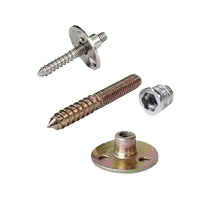
For a non-standard connection, record the part designation, manufacturer, and approved drawing. A furniture leg mounting kit cannot be assigned as a replacement for a stair node just because the thread matches. Matching one parameter does not confirm the purpose and suitability of the connection.
Any change after approval is communicated to all participants. If the workshop changed the handrail joint, it may affect the tops of balusters; if the position of the lower node changed, the entire geometry must be checked. It is useful to put the date and version number on the general diagram, list, and fitting task so that different solutions do not go into production.
When L-097 for this staircase is not yet worth ordering
Postpone the batch if the base remains unknown, the upper connection is not developed, or the plan is based on the assumption that "old holes will fit." This is not a rejection of the wooden railing, but a need to finish preparation before purchase.
A different model or design is considered when the selected L-097 does not allow for coordinated connections, or its appearance after necessary fitting does not satisfy the customer. Coating cannot fix unsuitable geometry. Purchasing additional balusters cannot compensate for the lack of a solution for the handrail and support elements.
A buyer who requires a fully finished installed system without coordinating multiple contractors first needs a contractor for the entire result. L-097 can be discussed within their project. Ordering parts separately makes sense when it is clear who will bring them to a completed railing and how much that work will cost.
Order wooden balusters L-097: final specification
For the selected training option, the product line looks like this:
L-097 / A × B — 1000 × 40 mm / beech / "Prestige" sanding / blank quality — to be confirmed / 12 working parts according to the approved scheme.
In a real order, the quantity is replaced with the project quantity, and the unfilled blank quality is confirmed before payment. Reserve, mating products, coating, packaging, and delivery are recorded as separate items. A product list is sent to the seller; the staircase contractor receives the general scheme, base information, and agreed connections.
Before placing an order, study the payment and delivery terms for balusters. The 5–10 days shown in the product card should not be turned into a promise to receive an installed railing within that period. Readiness of parts, shipment, transportation, workshop time, and installation date are confirmed separately.
When scheduling delivery, determine the first recipient: the site or the workshop where fitting and finishing will be performed. Transfer of products between contractors is a separate part of the schedule. The recipient must have current documents, not just an order number. For phased delivery, it is useful to determine in advance which set of parts is needed for the next operation: the arrival of some balusters does not mean assembly can be scheduled without mating elements.
Upon receipt, check the number of products, identical execution, compliance with the order, and surface condition before fitting. Comments are first recorded and discussed with the supplier, not resolved by arbitrary processing. After accepting the batch, assign codes from the list to the parts so that the blank for the landing is not confused with a prepared part for the flight.
The replacement of the existing railing will be organized so that the staircase does not remain accessible for use without protection. Temporary passage restrictions and necessary protective solutions are agreed with the contractor before dismantling. Receiving boxes with balusters does not yet mean readiness for this stage.
After installation, the entire result is accepted: the position of parts, the handrail and turns, completed connections, finishing, and compliance with the approved scheme. The method of technical inspection is determined by the responsible specialist; a homemade rocking test does not replace acceptance.
When the composition of goods and works is agreed upon, you can order balusters L-097 in the selected finish. Before payment, re-check the current price and completeness: it is the agreed specification, not just one photo of the staircase, that determines the purchase.
Questions before purchasing L-097 for a steel staircase
Can I first order balusters only for the landing?
Such a stage is possible if the landing is highlighted in the project and its connections with the preserved fence are clear. The further flight should not remain an undefined continuation. Clarify which common parts are installed immediately and which belong to the next stage. A divided purchase may also require repeated delivery and separate coordination of the finish of the next batch.
What to do if the actual staircase differs from the old drawing?
The working scheme is refined based on the verified condition of the object. The old drawing is kept as the original document, but discrepancies are not hidden behind approximate dimensions. This is especially important for support points and connections. Until the corrected version is confirmed, do not start fitting the entire batch according to outdated data.
Is it possible to keep the metal posts but make the handrail wooden?
This is one option for consideration, not a pre-confirmed configuration for L-097. The connections of the handrail to the posts and balusters, including transitions between sections, need to be coordinated. In that case, the bill of materials may not include new wooden posts, but may include special connecting parts. Their composition is determined by the adopted design.
Will the same fastening be needed on the flight and the landing?
Not necessarily. Different handrail positions, base structures, or terminations may require different fittings even with identical balusters. They are listed separately in the bill of materials. This helps order the necessary components and avoid counting all hardware based on one randomly chosen location on the staircase.
Can I buy oak balusters for a beech handrail?
The issue is resolved based on the project and the agreed appearance, not by a ban on combining wood species. For noticeable wood grain, compare samples side by side: the same name of stain does not guarantee the same result. With opaque finishes, surface preparation and compatibility of the intended connections are still checked separately.
Who should I contact if there is play after installation?
Contact the contractor responsible for the installed railing and document the problem area. Before inspection, do not rely on the faulty section as protection; safe access to the staircase must be arranged separately. Arbitrary replacement of fasteners or tightening all connections indiscriminately does not establish the cause. For the inquiry, a diagram of the joint and installation documents will be useful.
What should be kept after installation is completed?
Keep the bill of materials, the final diagram, connection designations, documents for the completed work, and coating information. For future repairs, photos of accessible joints and contractor contacts are useful. A single baluster article number is not enough to restore the entire structure and replicate its finish several years later.
Is it possible to close the lower fasteners later with decorative elements?
First, coordinate this possibility with the contractor. The overlay should not interfere with the intended access or alter the operation of the connection. Its size and installation method depend on the actual joint. Therefore, it is better to show the future decor in the project in advance, even if its purchase is planned as a separate stage.