








































































Article Contents:
- What to buy for a work niche: complete set
- How a work niche differs from a regular desk
- Where to create a work niche: placement options in an apartment
- In the living room
- In the bedroom
- In the Hallway
- In a closet: mini-office in a closet
- Near the window
- In or near the library
- In a former pantry or niche after renovation
- Where to use wood: contact zones and work load areas
- Where to use polyurethane: decorative framing and architectural frame
- Moldings around the niche perimeter
- Decorative frame on the wall behind the workspace
- Upper decorative belt
- Non-load-bearing overlays
- Decor for moldings: corners and inserts
- Connection with the room's baseboard and cornice
- Ready-made kits for different scenarios
- Mini-office in a closet
- Work niche in the living room
- Workspace in the bedroom
- Classic-style cabinet wall
- Work area by the window
- What to buy together: full list for ordering
- Mistakes when buying and designing a work niche
- Only design the desk but forget the wall around it
- Not connecting the niche with the room's baseboard and cornice
- Choosing too large molding for a small area
- Using polyurethane in areas of constant grip
- Forgetting about shelf brackets
- Not accounting for the depth of the tabletop
- Install uncomfortable handles
- Leave no space for sockets and cables
- Don't buy extra trim and molding for cutting
- How to design a work niche to make it look expensive
- FAQ: Answers to Popular Questions
- How to design a work niche in an apartment?
- Can polyurethane molding be used in a work area?
- What to buy for a mini-office in a closet?
- How to make a workspace part of the interior?
- How is a work niche different from a regular desk?
- How to properly glue molding in a work area?
- How to avoid mistakes when installing moldings?
- Which wooden handles to choose for a work niche?
- About STAVROS
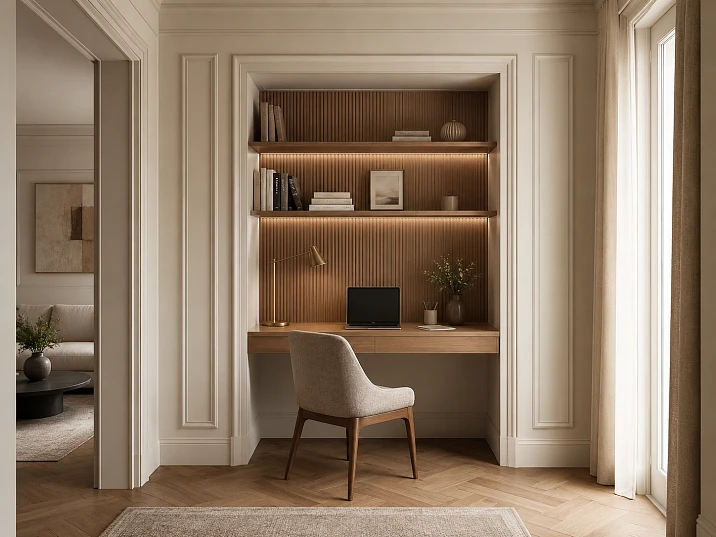
A work niche in an apartment is not just a desk against the wall; it is a thoughtfully designed built-in area that lives in the interior as its integral part. When a mini-office is assembled from the right elements — solid wood trim, furniture handles, moldings and stucco — the workspace stops looking like a temporary compromise and starts looking like an architectural solution.
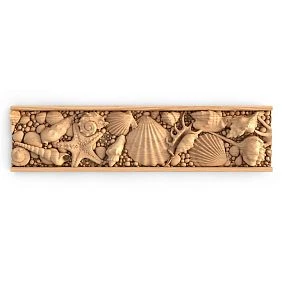
What to buy for a work niche: a complete set
Before you start calculations and searching for craftsmen, it's worth understanding one thing: a work niche is a complete story. The principle of "I'll buy a table, put a shelf, then figure it out" doesn't work here. Everything works together — decor, fasteners, and finishing coating. That's why a savvy buyer comes with a ready-made list, not for individual items.
Here's what you need to buy for a full-fledged work niche in an apartment:
-
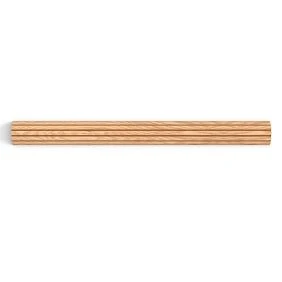
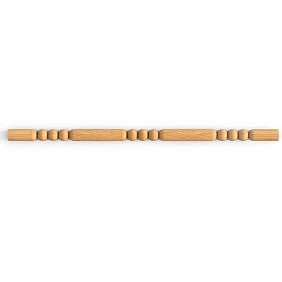
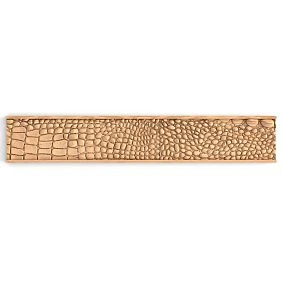
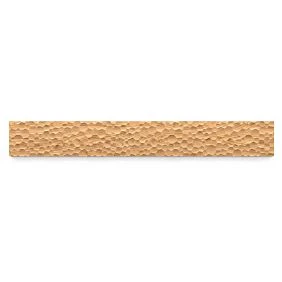
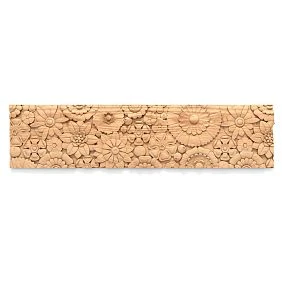
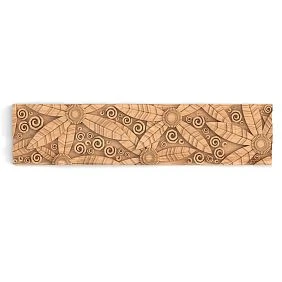
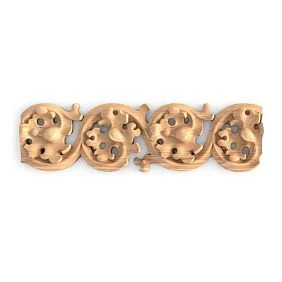
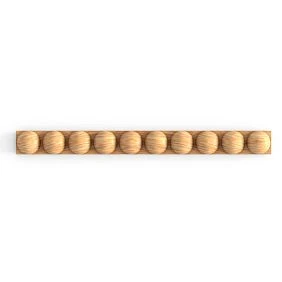
Pogonazh iz massiva — for framing the tabletop, shelves, side panels, and decorative horizontal belts
-
Wooden Furniture Handles — for facades, pull-out drawers, cabinets, and doors in the niche
-
Wooden Brackets — for attaching shelves visually integrated into the overall concept
-
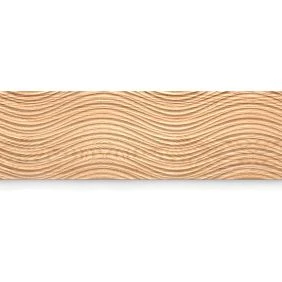
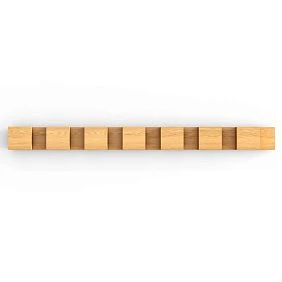
Furniture decor and decorative overlays from solid wood — for facade details, corners, and accent areas
-
Moldings made of polyurethane — for framing a niche along the perimeter, top belt, and decorative wall frames
-
Polyurethane trim — lightweight, precise to install, paintable to match wall or facade color
-
Polyurethane appliqués — for decorative accents without load
-
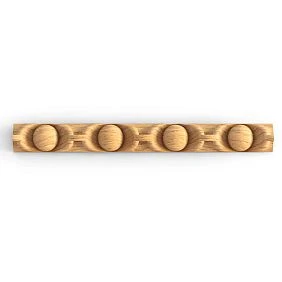
Decor for Molding — corner elements, rosettes, inserts at molding intersections
-
Polyurethane wall decor — panels, frames, and flat elements for the wall behind the workspace
-
Mounting adhesive moldings from polyurethane — choosing the right glue determines the durability of the entire structure
-
Fasteners for shelves and wooden parts — screws, anchors, brackets
-
Sealant — for sealing joints between wood, polyurethane, and the wall
-
Primer — mandatory before painting both polyurethane and wooden parts
-
Paint or varnish — depending on the final decision: for painting or preserving the wood texture
-
A 5–10% reserve for all trim items — for cutting corners, fitting, and possible replacement
This list is not just a checklist. It is the logic of an interior set, where each element plays its role. Wood works where strength and tactile contact are needed. Polyurethane takes on decorative framing and forms the visual frame of the entire composition.




How a work niche differs from a regular desk
This is a fundamental question that determines the entire approach to purchasing and design. A desk is a separate piece of furniture. It can be placed, moved, sold. It has no connection to the room, no relation to the walls or ceiling. It exists on its own.
A work niche is a different story. It is built-in. It has:
-
Countertop — fixed, most often on brackets or in a wall niche
-
Side panels — they form the boundaries of the work area and set the scale
-
Upper shelves — above head, within reach or decorative
-
Facades — if the niche has cabinets or drawers
-
Furniture Handles — wooden or painted, they are part of the overall style
-
Decorative frame — this is what makes a niche a niche, not just a protrusion in the wall
-
Moldings around the wall — they connect the work area with the rest of the interior
-
Baseboard and upper belt — without them, the niche looks unfinished, like a painting without a frame
-
Lighting — built-in or surface-mounted, it is part of the zone's architecture
That's why the article is not about buying a desk. It's about designing a finished work area as part of the interior. Here, the buyer thinks in sets, not units. And this changes everything: the budget, the logic of material selection, the installation order.
You can buy a desk in one evening. A work niche needs to be designed, decor selected, linear footage calculated, handles chosen, and how the moldings will lay on the wall figured out. This is a project, not a purchase.
Our factory also produces:

Where to set up a workspace: placement options in an apartment
One of the most common questions is where to actually put it? Especially if the apartment is small and there is no separate study and none is planned. The answer is simple: a workspace can be organized almost anywhere if you approach it wisely.
Get Consultation
In the living room
This is the most popular option. A workspace in the living room can be part of a wall unit, built-in between two sections, or designed as a separate zone by the wall. The key rule is to connect it with the rest of the space through decor. Moldings made of polyurethane along the perimeter and Pogonazh iz massiva on shelves and countertops create a unified visual language with the living room interior.
In the bedroom
Here, silence is important — not just acoustic, but also visual. A workspace in the bedroom should be delicate: subtle Polyurethane trim in wall color, calm Wooden handles without accents, a light frame of moldings around the area. Nothing extra. Only precise work with proportions.
In the corridor
A narrow hallway with a niche or protrusion is a ready-made workspace. A narrow countertop, a shelf above, side panels made of wooden decor and a laconic frame of . Clear lines, created using modern technologies, emphasize the strict aesthetics of the room. Each decorative element harmoniously fits into the overall concept, creating a sense of order and thoughtfulness. transform a technical corridor into a functional and stylish zone.
In the closet: a mini-office in the closet
This is a separate genre. A swing wardrobe or built-in closet with a depth of 60 cm or more can be converted into a full-fledged mini-office. Inside — a countertop on brackets, shelves, an outlet, and lighting. Outside — a facade with wooden furniture handles, framed moldings around the perimeter of the doors. When the closet is closed — no hint of a workspace. When open — a full-fledged office.
Near the window
A workspace by the window is a dream for anyone who works from home. A wooden countertop along the windowsill, side panels made of solid wood trim, moldings around the window reveals — and the area gets a finished look. The window becomes not just a source of light, but a visual accent of the entire work zone.
In the library or next to it
Bookshelves plus a desk — this is a classic office interior. If shelves already exist, it's enough to integrate a countertop into them, add Wooden Brackets and design the area decor for moldings, to connect the shelves, table, and wall into a single architectural composition.
In a former pantry or niche after renovation
If a niche was created during renovation or redevelopment, it is a ready-made spot for a workspace. The walls of the niche become side panels, the upper opening can be designed with polyurethane moldings, add shelves and Wooden decoration on the facade elements.
Where to use wood: contact and load zones
Wood is a material with character. It is warm, pleasant to the touch, and with proper care lasts for decades. But wood has its own logic of use: it should be placed where there will be hands, load, and regular contact.
In a workspace niche, wood is appropriate in the following areas:
Shelves. Wooden shelves bear real load — books, folders, equipment. Strength is important here. Beech or oak solid wood molding used as shelf trim — decorative end strips and horizontal slats set the direction for the entire area.
Countertop. If it's wooden, it's not just beautiful, it's practical. Wood forgives scratches, which over time become patina. The surface is treated with oil or varnish depending on the desired result.
Molding along the side panels. Wooden trim on the side walls of the niche — it's not just decor. It's a visual structure that holds the entire area together.
Handles. This is the part that is touched most often. Plastic feels cheap here, metal feels cold. Wooden furniture handles made of beech or oak — it's tactile pleasure and visual integrity. They are available in 32 models: from laconic rectangular to elegant shell-shaped. For any style — from classic to Scandinavian minimalism.
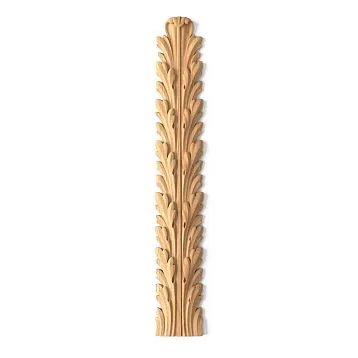
Decorative overlays and elements. Decorative Elements for Solid Wood Furniture — overlays, facade parts, corner and horizontal elements — are used where volume and texture are needed. These are details that are visible, that are touched by hands, that people approach closely.
Wooden brackets. Solid wood brackets — not only a structural element, but also part of the decor. They are visible under the shelves and must match the overall style.
Areas near the chair. Side surfaces, armrests, small cabinets — everything in the zone of constant tactile contact should be wooden. This is a matter of not only aesthetics but also comfort.
Where to use polyurethane: decorative framing and architectural border
If wood is the body of the work niche, then polyurethane is its architectural framing. Polyurethane moldings works in areas where visual structure is needed, but load-bearing strength is not required.
Moldings along the perimeter of the niche
This is the main task of polyurethane moldings in the work area: outline the niche along its contour, define its boundaries, separate the work area from the rest of the wall. The molding is installed along the perimeter of the vertical and horizontal sides, creating the effect of an architectural opening — like a real study alcove.
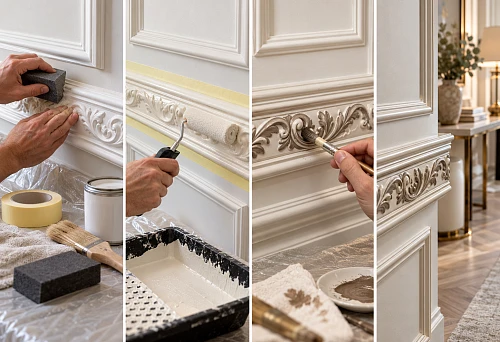
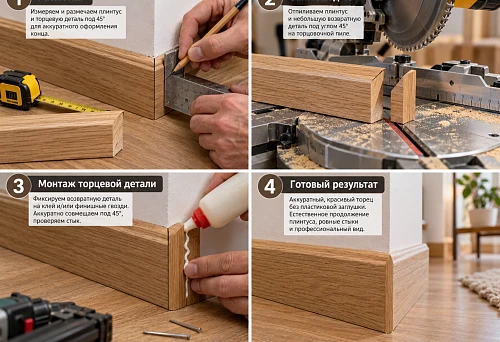
Correct installing polyurethane molding with clean corners and hidden joints — this is half the success. An uneven joint or an open seam immediately reveals cost-cutting and carelessness.
Decorative frame on the wall behind the workspace
The wall behind the monitor is the visual background of the work area. Polyurethane wall decor allows you to create a frame, panel, or geometric pattern on it. This works in classic, neoclassical, French style, and even in a restrained modern interior — if you choose a thin molding and paint it the color of the wall.
Upper decorative belt
Polyurethane trim at the top of the work niche — this is a cornice that completes the area from above. It connects the niche with the room's ceiling plinth and gives a sense of completeness, which built-in workstations often lack.
Overlays without load
Polyurethane appliqués are glued to surfaces that do not experience physical impact: the front wall, the top edge of shelves, decorative inserts in the partition. Their lightness is an advantage: no complex fasteners are needed, they do not load the structure.
Decor for moldings: corners and inserts
Where moldings intersect or change direction, they are placed molding decorative elements — corner rosettes, inserts, corner blocks. Without them, corners either look rough or require precise cutting. With them, it's elegant and quick.
Connection with the room's plinth and cornice
This is often forgotten. The work niche should 'communicate' with the rest of the interior through common horizontal lines: the plinth at the bottom, the cornice at the top. polyurethane decor allows you to continue these lines around the work area or add an intermediate belt that visually connects the niche with the room.
Ready-made kits for different scenarios
Let's look at a few real scenarios — each one is solved with a specific set of materials.
Mini office in a closet
Task: a closet with a depth of 65 cm, need to set up a workspace inside and design the facade outside.
Inside: countertop on wooden brackets, shelves with wooden end strips from solid wood trim, lighting.
Outside: Wooden handles on the facades, Moldings made of polyurethane around the doors — they turn an ordinary closet facade into an office one. Added Decor for Molding to the corner points.
Result: the cabinet looks like a built-in secretary in the style of a French living room. No one would guess that behind the doors is a workspace with a laptop and folders.
Work niche in the living room
Task: to allocate a work area by the wall in the living room without disrupting the overall interior concept.
Countertop with ends made of wooden trim, shelves on wooden brackets, Decorative solid wood overlays on the side panels.
The wall behind the workspace is decorated polyurethane wall decor — a geometric frame for painting in the tone of the main living room color. Moldings made of polyurethane outline the niche around the perimeter and connect it to the room's cornice.
Result: the workspace looks like an architectural element, not like a "temporary spot for a laptop by the wall."
Workplace in the bedroom
Task: a compact workspace in the bedroom that does not disturb the atmosphere of peace.
Here, the principle of minimalism. Thin Polyurethane trim in the color of the wall as a horizontal accent above the countertop. Calm wooden knob handles small diameter on the drawers. Decorative frame made of moldings from polyurethane on the wall behind the monitor — in the same color, without contrast.
Result: the workplace almost dissolves into the bedroom interior. It exists — but does not overwhelm.
Cabinet wall in classic style
Task: design a large furniture wall with a workspace in a classic or neoclassical style.
Pogonazh iz massiva — on the horizontal and vertical divisions of the wall. decorative elements for furniture — on facades and vertical pilasters. Classic wooden handles — U-shaped brackets or elongated rectangles. The upper belt of the wall — Polyurethane cornice with a profile for classic furniture.
Result: the wall unit transforms from a set of boxes into a cohesive architectural structure. The workspace niche inside becomes an alcove study.
Workspace by the window
Task: a countertop along the window, shelves on the sides, moldings around the window reveals.
Wooden countertop with ends made of wooden trim. Side shelves on wooden brackets. Moldings made of polyurethane around the window opening — they connect the countertop with the window reveals and frame the entire area. Decor for Molding in the upper corners of the opening.
Result: the window becomes the center of the workspace, not just glass in the wall. The entire structure looks like a built-in window sill cabinet.
What to buy together: full list for ordering
When the work niche is designed as an integrated solution, it is convenient to have a complete list of what needs to be ordered at once. This saves time on delivery and ensures everything is on hand by the time of installation.
Wooden elements:
-
Pogonazh iz massiva — for shelves, ends, side panels, and horizontal belts
-
Wooden decor and overlays — facade accents, corner elements, volumetric details
-
decorative elements for furniture — for facade panels and vertical posts
-
Furniture Handles — for facades, drawers, and doors
-
Wooden Brackets — for shelf mounting
Polyurethane elements:
-
Moldings made of polyurethane — niche perimeter, top belt, horizontal dividers
-
Polyurethane trim — thin molding for painting, connection with cornice and baseboard
-
Polyurethane appliqués — decorative accents on the wall and facade
-
Decor for Molding — corner blocks, rosettes, inserts at intersections
-
Wall Decor — frames and panels on the wall behind the workspace
-
Polyurethane moldings — for additional decorative accents
Consumables:
-
Adhesive for installation — choice depends on the surface, more details on how what to glue polyurethane molding with
-
Fasteners — screws, anchors, furniture brackets
-
Sealant — for sealing joints and gaps
-
Primer — for wooden and polyurethane parts before painting
-
Paint or varnish, wood oil
-
Stock 5–10% for all molding items
Mistakes when buying and designing a workspace
Practice shows that most mistakes are made not during installation, but during planning and purchasing. Let's break down each one — so you don't repeat them.
Only design the desk, but forget the wall around it
This is the most common mistake. A beautiful desk, a comfortable countertop — and a bare wall around it, without moldings or a frame. Such a workspace looks like an unfinished renovation. The wall behind the workspace is a visual background that either enhances the area or destroys it. Polyurethane wall decor и moldings around the perimeter solve this problem.
Not connecting the niche with the room's baseboard and cornice
A workspace niche is part of the interior, not a separate island. If there is a baseboard in the room but not around the niche, it breaks the visual connection. The same goes for the cornice and upper band. Polyurethane trim in the color of the wall solves this subtly but effectively.
Choosing too large molding for a small area
Scale matters. A heavy cornice with a wide profile, which looks good in a tall hall, will overwhelm a compact workspace niche in the bedroom. For small areas, you need a thin, elegant polyurethane decor with a delicate profile.
Using polyurethane in areas of constant handling
Polyurethane is great as a decorative material, but it is not intended for areas with constant physical impact. Handles are always wood. Edge strips of countertops are wood. Everything that is touched by hands every day should be made of durable material. Furniture wooden handles made of beech and oak withstand thousands of openings without signs of wear.
Forgetting about shelf fasteners
Shelves are a load. Wooden Brackets look beautiful, but they need to be properly secured to the wall. If the wall is hollow or made of drywall, special anchors are needed. This issue is resolved at the planning stage, not at the time of installation.
Not accounting for countertop depth
The standard desk depth is 60–80 cm. If the niche is shallower, the space for the monitor and keyboard will be uncomfortable. If deeper, the interior proportion will be disrupted. This parameter must be specified before ordering linear materials and moldings.
Install uncomfortable handles
Wooden handles — these are details used daily. Too small — uncomfortable to grip. Too massive — visually overload the facade. Each model in the collection has an ergonomic grip and can be installed horizontally, vertically, or at an angle — this provides freedom without compromises.
Not leave space for sockets and cables
The work area requires electricity: computer, monitor, lamp, chargers. If a socket is not planned at the niche design stage, you will either have to make unsightly cutouts in finished parts or run extension cords along the entire wall. Space for a socket is the first item in the technical specification for the niche.
Not take a reserve of linear materials and moldings for trimming
This is a rule that almost everyone who does this for the first time breaks. Any linear material requires trimming at corners, fitting to length, and often replacing a damaged element. A reserve of 5–10% of the calculated length is not wastefulness, it is a professional standard.
How to design a work niche so it looks expensive
There are several techniques that work regardless of budget. They concern not the material, but the approach.
Unified color connection. If Moldings, Polyurethane trim and the wall is painted in one color — the area looks monolithic and expensive. The contrast between wood and painted polyurethane is a deliberate design technique. Random is visual noise.
Clean corners of moldings. The corner of a molding is where the neatness of the work is visible. Proper installation of polyurethane molding with clean cuts or with corner decorative blocks is a sign of a professional approach.
Proportions. A niche where the decor is proportional to its size always looks better than one where the molding takes up a third of the height. Rule: decor should not compete with function. It should emphasize it.
Completeness of details. Every visible edge, every end, every intersection — must be processed. Wooden trim on the ends of shelves, Polyurethane appliqués on the vertical sides of the niche, Decor for Molding The corners are details that don't catch the eye, but it's them that create a sense of quality.
FAQ: Answers to popular questions
How to design a workspace niche in an apartment?
It's better to assemble a workspace niche as a furniture-decorative composition. Pogonazh iz massiva, Wooden handles и Brackets take on the functional and tactile part. Moldings made of polyurethane frame the niche around the perimeter, forming an architectural frame. Wall Decor decorates the background wall. Together, it's a single cohesive zone.
Can polyurethane molding be used in a workspace?
Yes, and it's one of the best ways to give a home workspace an office-like character. Polyurethane moldings is used on the wall around the niche, in the upper belt, and in decorative frames on the background wall. In areas with physical load — handles, edges of the tabletop, shelves — wood is used.
What to buy for a mini-office in a closet?
For the exterior design — Furniture wooden handles, Moldings made of polyurethane around the facade, Decor for Molding in the corners. For the interior filling — Pogonazh iz massiva for shelves, Wooden Brackets. Plus fasteners, glue, sealant, primer, and finish coating.
How to make a workspace part of the interior?
Connect the tabletop, shelves, facades, handles, baseboard, moldings, and wall color into a single system. The work niche should not look like a "thing from another interior" — it should grow out of the room's space. A unified style classic furniture with coordinated wood and polyurethane framing achieves exactly that.
How is a work niche different from a regular desk?
A desk is a separate item that can be removed. A work niche is built into the wall or furniture: it has side panels, shelves, facades, a decorative frame of moldings, and a connection to the room's baseboard and cornice. This is not furniture — it is interior architecture.
How to properly glue stucco molding in the work area?
Installation technology depends on the surface. A detailed answer with glue selection and step-by-step instructions is in the article what to glue polyurethane molding with.
How to avoid mistakes when installing moldings?
The main mistakes are rough corners, visible joints, and uneven trimming. All of them are solved with proper technology. The full guide is in the article about installing polyurethane molding.
Which wooden handles to choose for a work niche?
It depends on the style. For classic style — U-shaped brackets and elongated rectangular ones. For Scandinavian and modern style — minimalist buttons and oval shapes. All Wooden furniture handles in the STAVROS collection are available in four finishes: black, white, brown, and clear coating.
About STAVROS
STAVROS is a Russian manufacturer of decorative products made from solid wood and polyurethane for interiors and furniture. Wooden Pogonazh iz massiva, Furniture Handles, Brackets, Decorative Inserts and a full range moldings from polyurethane — from molding to wall decor — are produced using 3D milling on our own premises. The company operates both retail and wholesale, and produces custom items according to non-standard sizes and profiles. Contact us to confirm shipping to your destination. and CIS countries. Warehouses in Moscow and St. Petersburg. A loyalty program is available for designers and manufacturers.