










































































Article Contents:
- Why a ventilation grille is a design challenge, not a technical issue
- Complete set: what to buy for a decorative ventilation grille
- The main rule: ventilation must not be blocked
- Where a decorative ventilation grille is needed: ten scenarios
- Kitchen
- Bathroom
- Walk-in closet
- Entry Hall
- Classic Office
- Laundry room and utility niche
- Country house with wooden interiors
- Pantry
- Apartment after renovation
- Multi-level apartment and stair hall
- Wood in decorative ventilation grille: design and aesthetics
- Wooden slats: the basis of the grille
- Wooden layout: geometry inside the frame
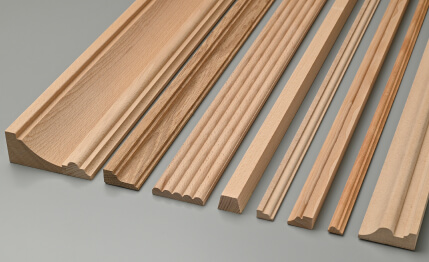
- Solid wood molding: frame trim
- Wooden decor on the frame
- Polyurethane in ventilation unit design: wall decor and connection to the interior
- Polyurethane moldings: wall frame around ventilation
- Polyurethane trim: connecting horizontals
- Decor for moldings at corner points
- Wall decor: overall wall system
- Five ready-made solutions: from white classics to Scandinavian minimalism
- Solution 1: Classic ventilation grille in a white interior
- Solution 2: Decorative grille with classic-style layout
- Solution 3: Hidden ventilation in a neutral interior
- Solution 4: Ventilation in a kitchen with wooden trim
- Solution 5: Ventilation in a dressing room with elegant decor
- Technical parameters: how to calculate the dimensions of the frame and slats
- Ventilation opening size
- Wooden frame size
- Molding frame size on the wall
- Length of slats
- Material stock
- Summary table of materials for decorative ventilation unit
- Nine mistakes when designing a ventilation opening
- Blind panel instead of a grille
- Not leaving removable access
- Too small slots
- Not accounting for room humidity
- Using polyurethane as a load-bearing grille
- Not tying the frame to the overall wall decor
- Too large molding for a small grille
- Poorly sealed frame joints with the wall
- Not buying spare slats and trim
- FAQ: Answers to Popular Questions
- Can you cover a ventilation opening with a decorative wooden frame?
- What to buy for a decorative ventilation grille in a classic style?
- Where to use wood, and where polyurethane?
- How is this task different from an access hatch?
- How to choose the spacing between slats?
- Is sealant needed when installing a wooden frame?
- How to properly glue polyurethane moldings around a ventilation frame?
- About STAVROS
There are details that are thought about last. And it is precisely these that ruin the impression of an expensive renovation. You spent months choosing moldings, trims, facades, and decor — and in the middle of all this, a gray plastic ventilation grille hangs on the wall. The kind sold in any hardware hypermarket for a hundred rubles. It is exactly what it looks like: an industrial element that ended up in the wrong story.
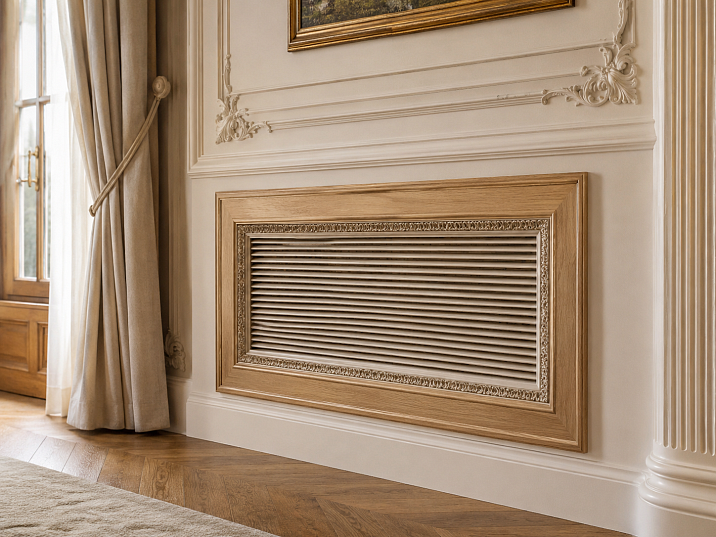
A decorative ventilation grille in a classic interior is not a luxury. It is logic. If you are designing a kitchen, dressing room, hallway, study, or bathroom with wooden details and with polyurethane moldings, then the ventilation unit should be part of this system. Not a foreign body, but an organic element — with a wooden frame, wooden planks, polyurethane moldings around it and a neat connecting contour that integrates the ventilation opening into the wall as if it had always been part of it.


Why a ventilation grille is a design task, not a technical issue
A ventilation opening is a permanent element. It will always be on the wall. Unlike furniture that can be rearranged or decor that can be replaced, the ventilation unit stays in place. So, the question is not whether to pay attention to it — the question is how exactly to design it.
A plastic ventilation grille with a propeller or louvered slats is a technically correct but aesthetically neutral solution. It is not suitable for an interior that has decorative details: Wooden trim, Wooden decoration, Polyurethane moldings on the walls. In such an interior, every detail speaks the same language — and only the ventilation grille is silent or speaks a different one.
A properly designed ventilation unit is:
-
a wooden frame around the opening that creates a furniture-like character
-
Wooden planks or Wooden molding inside the frame, providing a decorative grille while maintaining airflow
-
Moldings made of polyurethane around the frame on the wall — a decorative wall frame that integrates the ventilation unit into the wall decor
-
connection with the overall decorative system of the room: baseboard, cornice, wall moldings




Complete set: what to buy for a decorative ventilation grille
Before moving on to details and scenarios — a list. Specific, without unnecessary words. This is exactly what you need to purchase to create a neat decorative ventilation unit.
Wooden elements:
-
Wooden planks — horizontal slats inside a wooden frame, forming a decorative grille with gaps for airflow
-
wooden floor — flat or shaped strips for structuring the frame surface and creating a lattice geometry
-
Pogonazh iz massiva — binding perimeter of the wooden frame, lower and upper horizontal profiles
-
Wooden decor and solid wood overlays — additional accent details on the frame in rich classical solutions
Polyurethane elements:
-
Moldings made of polyurethane — decorative wall frame around the ventilation unit
-
Polyurethane trim — horizontal connecting lines above and below the frame, connection with the overall wall decor
-
Polyurethane appliqués — additional decor within the wall frame field (in rich solutions)
-
Decor for Molding — corner blocks at the intersection points of moldings along the frame perimeter
-
Polyurethane wall decor — wall panels on adjacent wall sections for a unified decor system
Consumables:
-
Fasteners — small screws and dowels for the wooden frame
-
Construction adhesive — for polyurethane moldings and overlays
-
Sealant — for all frame-to-wall joints
-
Primer — mandatory before painting
-
Paint, varnish, or oil — depending on the finishing concept
-
10% allowance for trimming
Our factory also produces:





Main rule: ventilation must not be blocked
Before moving to aesthetics — a technical imperative. It is absolute, and it cannot be violated under any design solution.
A ventilation opening is the path for air. It provides exhaust in the kitchen, bathroom, dressing room, and laundry room. Without proper ventilation, condensation, mold, and odors appear. This applies not only to utility rooms: in the study, hallway, and bedroom, ventilation also ensures normal air exchange.
A decorative frame is not a solid panel. It must ensure a constant flow of air through:
-
Gaps between wooden planks — standard step between slats 8–15 mm, the proportion of covered and open space should provide at least 40–50% open area
-
Open geometric wooden trim — intersecting slats with open diamonds or rectangles
-
Removable frame design — so that it can be removed for cleaning or maintenance of the ventilation duct if necessary
Three principles that must not be violated:
-
The airflow must be fully maintained
-
Access to the ventilation shaft must remain possible
-
The frame design must allow disassembly without damaging the wall
Get Consultation
Where a decorative ventilation grille is needed: ten scenarios
Kitchen
In the kitchen, ventilation operates at maximum load. Here, a frame made of solid wood trim with slats that are easily removable for regular cleaning of grease deposits. Moldings made of polyurethane around the frame are painted in the color of the wall or the kitchen set — and the ventilation unit becomes part of the kitchen decor.
Bathroom
A wet room requires a special approach to choosing the finish. Wooden planks in the bathroom are treated with moisture-resistant varnish or water-repellent oil. The frame design is only removable, without adhesive joints. polyurethane decor — is resistant to moisture and requires no special treatment.
Walk-in closet
In the dressing room, ventilation ensures fresh air and protects clothes from mustiness. The decorative frame here can be more ornate: wooden floor with a geometric pattern, Polyurethane appliqués in the corners of the wall frame. Since the dressing room is not a damp space, there are significantly fewer restrictions on finishing.
Entryway
The ventilation opening in the hallway is most often located on the wall in the lower or middle zone. The decorative frame here should be connected to the overall decor system: baseboard, wall moldings, wooden panels of the lower wall cladding. Polyurethane trim и Wall Decor on the walls nearby create a unified system in which the ventilation unit looks like a deliberate element.
Classic study
The study is an interior with a high decorative status. Here, the ventilation grille in the wall should be finished with the same care as bookshelves, mirror frames, and door trims. Pogonazh iz massiva with a pronounced shaped profile, Wooden decoration in the corners of the frame, Moldings made of polyurethane with a wide profile around. Dignified.
Laundry room and utility niche
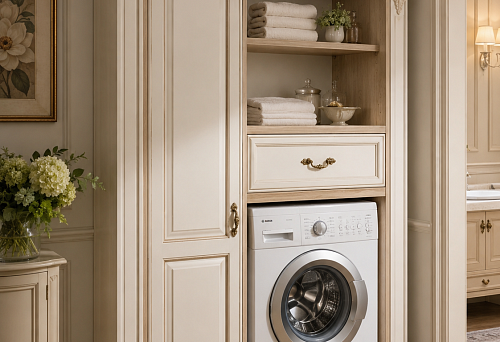
A purely practical scenario. The ventilation in the laundry room works intensively due to steam from the washing machine and dryer. The frame needs to be removable, with a moisture-resistant finish. Wooden planks or layout — with gaps of at least 10 mm. Moldings made of polyurethane — matching the wall color, without extra decoration.
Country house with wooden interiors
In a wooden or frame country house with exposed wooden structure Wooden planks for a ventilation grille — it is an organic, 'native' element. They are made from the same wood species as the main wooden structures of the house and coated with the same oil or varnish. Polyurethane molding may not be used around at all — a wooden frame in a wooden wall is appropriate on its own.
Pantry
The pantry requires constant ventilation, but the decorative level here is minimal. A simple removable frame made of solid wood trim with slats — a practical and neat solution without excessive decoration.
Apartment after renovation
After a major renovation with full decorative wall finishing, the ventilation unit often remains the last unfinished element. Here it is important not just to install a frame, but to integrate it into the system: Moldings made of polyurethane the area around the frame should have the same profile as the moldings in other parts of the room.
Multi-level apartment and stair hall
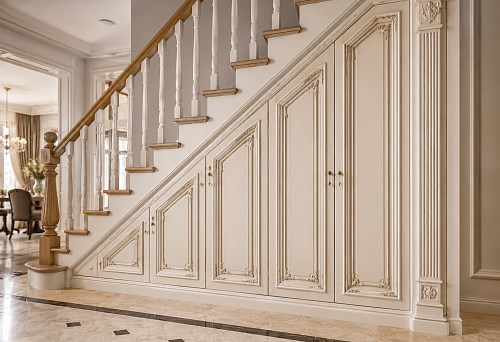
In the open space of the stair hall, the ventilation unit on the wall is visible from different angles. Polyurethane wall decor around the ventilation frame, Decor for Molding at the corner points — and the ventilation unit becomes an architectural detail of the stair space.
Wood in a decorative ventilation grille: structure and aesthetics
Wooden slats: the basis of the grille
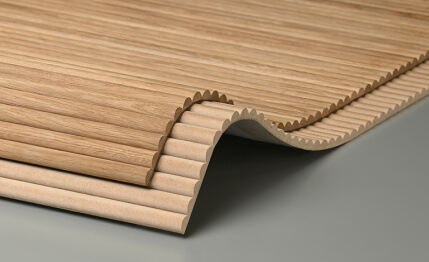
Wooden planks — this is a key functional and decorative element. They form the lattice structure inside the frame.
Ventilation grille slat parameters:
Slat cross-section: 10×15 mm, 12×20 mm, or 15×25 mm — depending on the ventilation opening size and chosen decorative scale.
Spacing between slats: 8–15 mm — this optimal range ensures airflow preservation while maintaining sufficient visual density for a decorative effect.
Slat orientation: horizontal — most traditional and functionally convenient (condensation does not accumulate on the smooth side surface), vertical — creates a different visual rhythm, diagonal — for non-standard design solutions.
The wood species for slats is selected according to the final finish:
-
For painting — pine, alder, birch
-
For varnishing or oiling with texture preservation — oak, ash, beech
-
For interiors with dark wooden elements — oak with stain
Wooden layout: geometry within the frame
wooden floor is used when not just a set of horizontal slats is needed, but a geometric pattern. A cross-layout forms square or rectangular cells — this is a classic grille with clear geometry.
Straight layout — vertical and horizontal elements intersect at 90 degrees. Square or rectangular cells. Cell size: from 20×20 mm to 40×40 mm.
Diagonal layout — slats run at 45 degrees, forming diamond-shaped cells. Visually more elegant, characteristic of rich classical solutions.
The layout should be thin — slats no thicker than 8–10 mm. A thick layout covers too much area and reduces airflow.
Solid wood molding: frame binding
Pogonazh iz massiva forms the perimeter of the wooden frame — side posts and horizontal crossbars. This is the load-bearing contour to which the slats or layout are attached.
The molding profile for the frame is selected according to the interior style:
-
Rectangular with chamfer — laconic, for modern classic
-
Shaped with ogee — more traditional, for classic and neoclassic
-
With quarter — a profile with a cutout that allows you to neatly close the joint between the frame and the wall
Molding width for the frame: from 25 to 50 mm — depending on the size of the ventilation opening. For an opening of 150×150 mm — frame 25–30 mm. For an opening of 250×250 mm and larger — frame 35–50 mm.
Wooden decor on the frame
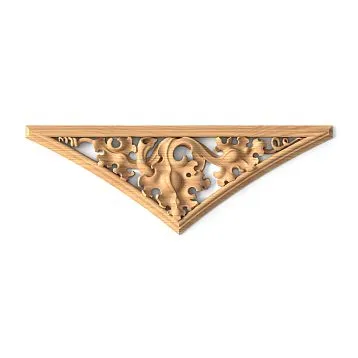
Wooden decor and overlays On a wooden frame, they are used in rich classical solutions. Small corner overlays made of solid wood at the corners of the frame add a jewelry detail and cover the joints of the molding at the corners.
Polyurethane in the design of the ventilation unit: wall decor and connection with the interior
The wooden frame with slats is the ventilation object itself. The task of polyurethane is to fit it into the wall.
Polyurethane moldings: wall frame around ventilation
Moldings made of polyurethane On the wall around the wooden frame, they create a decorative contour. They run along the four sides of the frame with an indentation from its edge of 20–40 mm and form a wall molding frame that 'encloses' the ventilation unit in a decorative field.
The width of the molding is selected in proportion to the size of the frame. For a small grille 150×150 mm — molding 20–25 mm. For a grille 250×300 mm — molding 30–40 mm.
Important principle: the profile of polyurethane moldings Around the ventilation frame should match the profile of moldings in other places of this room. If a certain profile is used for wall frames in the room, the ventilation unit should be framed with the same profile. This creates visual unity.
The technology of installing moldings on the wall — with correct angles and clean joints — is described in detail in the guide on installing polyurethane molding.
Polyurethane linear elements: connecting horizontals
Polyurethane trim used as a connecting element. Horizontal line polyurethane trim above the molding frame of the ventilation unit connects this unit to the overall horizontal wall decor system — the cornice belt, horizontal moldings, transition line.
The horizontal line below the frame connects it to the baseboard and the lower wall zone.
Decor for moldings at corner points
In the four corners of the molding frame around the ventilation unit, the following is used Decor for Molding — corner blocks. They cover the molding joints and create decorative accents at key points of the frame. The size of the corner block is twice the width of the molding.
Wall decor: overall wall system
If the ventilation unit is located on a wall where Polyurethane wall decor — wall frames and panels — the molding frame around the ventilation grille should be part of this system. It is either integrated into the overall grid of wall frames as one of the elements, or created as an independent frame in the same style.
Five ready-made solutions: from white classic to Scandinavian minimalism
Solution 1: Classic ventilation grille in a white interior
White interior, wall moldings, wooden cornices and baseboards in white. All in the same tone.
Wooden frame made of solid wood trim with a soft shaped profile. Wooden planks — horizontal, spacing 10 mm, cross-section 10×15 mm. All wooden elements are painted white RAL 9010.
Moldings made of polyurethane around the frame — in the same white. Decor for Molding at the corners. The entire system blends with the wall in color, readable only by the shadows of the profiles. Exquisite and unobtrusive.
Solution 2: Decorative grille with classic-style layout
Classic study or living room with pronounced decor: wall frames, cornices, wooden lower wall paneling.
Wooden frame made of solid wood trim with a wider profile — 40–50 mm, with a clear shaped pattern. Inside — wooden floor diagonal with diamond-shaped cells 30×30 mm. Corner overlays made of wooden decor in the corners of the frame.
Moldings made of polyurethane — wide, 40 mm, around. Polyurethane appliqués in the field of a molding frame on the sides of a wooden structure. Decor for Molding — large corner blocks with relief.
Finish: cream or ivory. Frame — slightly darker than the wall for expressive contrast.
Solution 3: Hidden ventilation in a neutral interior
The task is to make the ventilation unit as inconspicuous as possible. The interior is in neutral tones, without a pronounced style, minimalist.
wooden floor — horizontal, slats 20 mm wide, gap 8 mm. Frame made of solid wood trim — rectangular, without shaped profile, with a rebate for neat abutment to the wall.
Polyurethane trim around — thin, 20 mm, matching the wall color. No corner blocks, no overlays. Everything in a single wall tone. The grille is only readable due to the horizontal lines of the slats inside.
Solution 4: Ventilation in the kitchen with wooden trim
Classic kitchen with wooden cornice and solid wood moldings on the facades. The ventilation opening is located above the kitchen unit or on the side wall.
Wooden frame made of solid wood trim — in the same wood species and finish as the kitchen trim. Wooden planks — horizontal, section 12×18 mm, spacing 12 mm. Removable structure.
Moldings made of polyurethane in the same profile as the moldings around the kitchen. Polyurethane trim below the frame — connection with the upper cornice of the kitchen unit.
Solution 5: Ventilation in the dressing room with elegant decor
Dressing room with wall panels, fabric inserts, and rich decor. Ventilation — not technical, but a decorative point of interest.
Wooden frame with wooden trim inside — straight, square cells 25×25 mm. Corner overlays made of wooden decor in the corners of the frame.
Moldings made of polyurethane — in the same style as the wall frames of the dressing room. Polyurethane appliqués in the field of the molding frame — for a symmetrical decorative accent. Decor for Molding in the corners — with a rosette relief.
Technical parameters: how to calculate the dimensions of the frame and slats
Correct calculation is the foundation of a successful project. Several key parameters that need to be determined before ordering materials.
Size of the ventilation opening
Standard sizes of ventilation openings in residential buildings: 100×100 mm, 150×150 mm, 150×200 mm, 200×200 mm, 250×300 mm. You need to measure exactly the opening in the wall — not the standard grille that is installed there.
Size of the wooden frame
The wooden frame is made with an overlap of 20–30 mm on each side of the opening. For an opening of 150×200 mm — the frame is 190×240 mm (with a 20 mm overlap) or 210×260 mm (with a 30 mm overlap).
Size of the molding frame on the wall
Polyurethane moldings go around the wooden frame with a gap of 20–40 mm from its edge. For a wooden frame of 210×260 mm and a gap of 25 mm — the molding frame on the wall will have an internal size of 260×310 mm and an external size considering the width of the molding.
Length of slats
For an opening height of 200 mm with horizontal slats of 15 mm cross-section and a gap of 12 mm:
-
Number of slats: 200 / (15 + 12) ≈ 7 slats
-
Length of each slat: equal to the internal width of the frame
Material allowance
for solid wood trim и It begins with understanding the basic principles of visual perception of space. The golden ratio, the rule of thirds, symmetry and asymmetry — all these classical principles are applied in wooden wall decoration. — 10% allowance for cutting corners and possible defects. For of polyurethane moldings — 15% allowance.
Summary table of materials for decorative ventilation unit
| Element | Function | Page |
|---|---|---|
| Wooden slats | Slats inside the frame, decorative grille | link |
| Wooden layout | Geometric pattern inside the frame | link |
| Solid wood molding | Perimeter of the wooden frame | link |
| Wooden decor / overlays | Corner accents on the frame | link |
| Polyurethane moldings | Wall-mounted frame around the ventilation unit | link |
| Polyurethane molding | Horizontal connecting belts on the wall | link |
| Polyurethane overlays | Decorative details in the field of the wall frame | link |
| Decor for moldings | Corner blocks at intersection points | link |
| Wall decor from polyurethane | Overall wall system around | link |
| Polyurethane stucco (general resource) | Rich classical decor | link |
Nine mistakes when designing a ventilation opening
Solid panel instead of a grille
This is the most fundamental mistake — and the only one that cannot be fixed without a complete redo. Ventilation must not be blocked. Not even with a beautiful wooden panel. Not even if it seems that 'air will somehow pass through.' It won't. The result is mold, mustiness, and accelerated wall deterioration.
Not leaving removable access
The ventilation duct needs periodic cleaning. A frame glued permanently or nailed through eliminates this possibility. The correct fastening is with screws that can be unscrewed without damaging the decor.
Too small slots
Aesthetically, small gaps between slats look elegant, but if the total open area of the grille is less than 40% of the opening area, airflow decreases critically. Calculating the open area is mandatory.
Not accounting for room humidity
In the bathroom and laundry room Wooden planks without a moisture-resistant coating — a path to warping and cracking within one season. Moisture-resistant varnish or water-repellent oil is mandatory treatment for wet rooms.
Use polyurethane as a load-bearing grid
Polyurethane moldings — decorative material. Thin polyurethane slats as decorative grid slats do not hold their shape when heated (near heating appliances) and do not provide sufficient rigidity. The load-bearing part is only wood. Polyurethane — only on the wall, as a framing molding.
Not linking the frame to the overall wall decor
A wooden frame hanging on a bare wall without molding framing looks like a separate object, not part of the interior. Moldings made of polyurethane around — a mandatory element for any classic design.
Too large molding for a small grid
For a 100×100 mm grid, a 50 mm wide molding is a disproportionate detail. The framing will look heavier than the grid itself. Proportion rule: the width of the molding should be no more than 20–25% of the smaller side of the wooden frame.
Poorly sealed joints of the frame with the wall
The gap between the wooden frame and the wall, filled with a lump of sealant, is immediately visible. The correct option is a clean joint of construction sealant applied over masking tape, with final painting. Detailed technology for adhesive and joint connections is in the article. what to glue polyurethane molding with.
Not taking a reserve of slats and moldings
For a small project, it seems a reserve is not needed. But when cutting slats to the exact size of the inner frame width, losses are inevitable. Even one unsuccessful cut means material waste. A 10% reserve for slats and moldings is a mandatory minimum.
FAQ: Answers to popular questions
Can a ventilation opening be covered with a decorative wooden frame?
Yes — provided that the frame has an open lattice structure made of wooden strips or layouts with gaps for airflow. The total open area is at least 40–50% of the opening area.
What to buy for a decorative ventilation grille in a classic style?
Wooden planks, wooden molding, Pogonazh iz massiva for the trim, Moldings made of polyurethane for wall framing, Decor for Molding at corner points, fasteners, glue, sealant, primer, and finish coating.
Where to use wood and where to use polyurethane?
Wood — in the frame, slats, and layout: everything that is a load-bearing structure and must hold its shape. Polyurethane trim и Moldings made of polyurethane — exclusively on the wall around it, as a decorative framing.
How is this task different from an access hatch?
Fundamentally. An access hatch is needed for periodic access to utilities — it closes with a blind cover. A decorative ventilation grille is needed for constant air exchange — it must always be open. No blind panels.
How to choose the spacing between slats?
The optimal spacing is 8–15 mm. With a spacing of less than 8 mm, airflow decreases critically. With a spacing of more than 20 mm, the ventilation duct is visible through the grille — unsightly and non-functional. The sweet spot: 10–12 mm.
Is sealant needed when installing a wooden frame?
Absolutely. Sealant is applied along the perimeter of the wooden frame where it meets the wall. This closes gaps, prevents drafts, and makes the joint neat. In bathrooms and kitchens — only moisture-resistant sealant.
How to properly glue polyurethane moldings around a ventilation frame?
Selection of adhesive, application technology, and installation procedure — in the guide what to glue polyurethane molding with. It is fundamentally important: installation of moldings is carried out after final fixation of the wooden frame and before final painting.
About STAVROS
STAVROS is a Russian manufacturer of decorative products made from solid wood and polyurethane. Full range for designing a decorative ventilation grille in a classic interior: Wooden planks, wooden floor, Pogonazh iz massiva, Wooden decor and overlays, Moldings made of polyurethane, Polyurethane trim, Polyurethane appliqués, Decor for Molding и Wall Decor. Production using 3D milling, custom sizes available, retail and wholesale operations. Delivery across Russia and CIS. Loyalty program for interior designers and construction companies.