
























Article Contents:
- Laundry area as an architectural challenge: why style matters here
- Complete set: what to buy for a washing machine cabinet
- Three different tasks under one word "cabinet"
- Type 1: Washing machine in a niche with a front door
- Type 2: Laundry column — washing and drying machine in a vertical block
- Type 3: Full-fledged laundry zone cabinet
- How this cabinet fundamentally differs from a pipe box
- Where to place a laundry cabinet: eleven scenarios
- Bathroom
- Separate laundry room
- Walk-in closet
- Corridor or hallway
- Niche in the apartment
- Kitchen
- Utility closet next to the pantry
- Bathroom in a country house
- Technical area next to the dressing room
- Wood in the laundry cabinet: what, where, and why
- Solid wood molding on facade frames
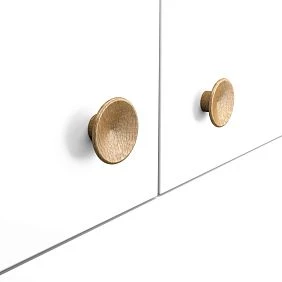
- Wooden handles: the main point of contact
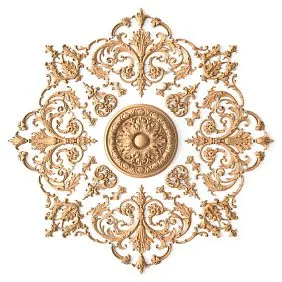
- Decorative overlays on facades
- Lower base
- Side panels
- Polyurethane in the laundry area: decor on walls, not on appliances
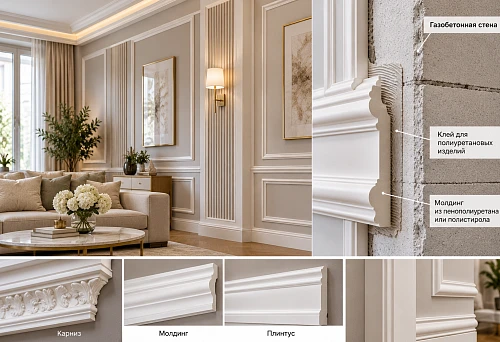
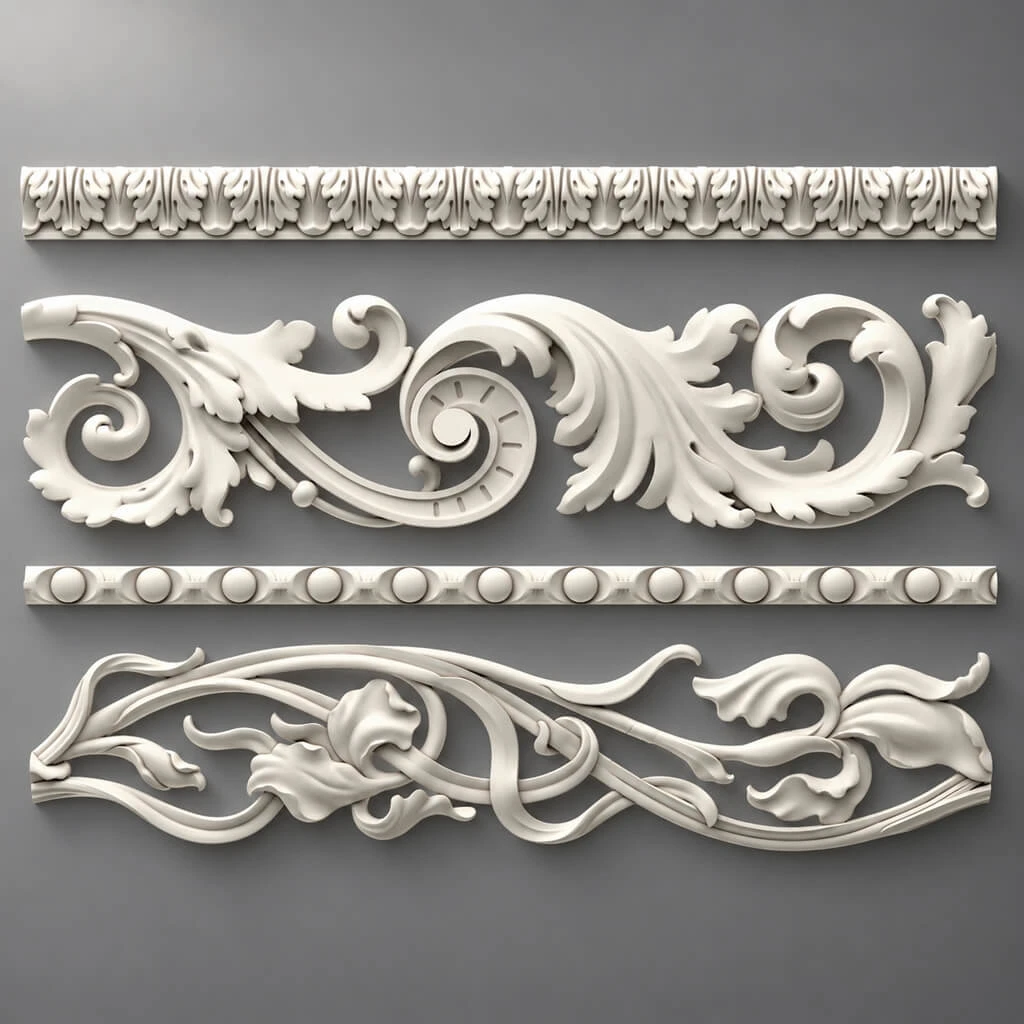
- Moldings around the perimeter of the laundry area
- Polyurethane trim: connecting horizontals
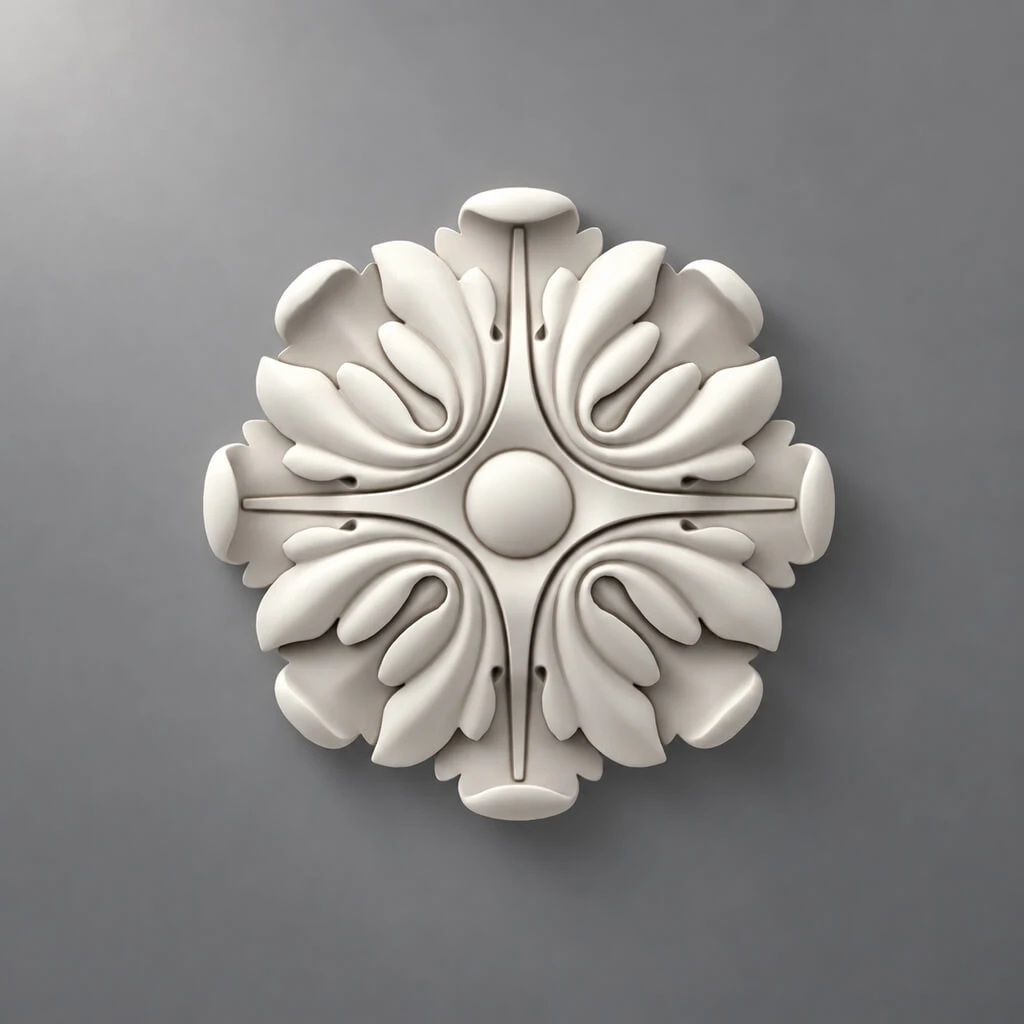
- Corner blocks at intersection points
- Wall decor on adjacent walls
- Five ready-made solutions for the laundry area
- Solution 1: Washing machine in a niche — minimalist classic
- Solution 2: Laundry column — washing and drying in classic style
- Solution 3: Full-fledged laundry cabinet in a country house
- Solution 4: Laundry area in the hallway of a city apartment
- Solution 5: Dressing room with laundry area in a unified system
- Complete procurement table
- Technical requirements: what to check before starting the design
- Ventilation gaps
- Access to utilities
- Machine vibration during spin cycle
- Moisture resistance of the finish
- Nine mistakes when designing a cabinet for a washing machine
- Enclosing the appliance without ventilation gaps
- Not leaving access to hoses, filter, and outlet
- Using polyurethane in areas where the door hits
- Placing handles too close to the appliance
- Not accounting for vibration
- Not connecting the cabinet to the baseboard
- Choosing too large molding
- Not buying extra linear footage and moldings
- Forgetting moisture-resistant wood finish
- FAQ: Answers to Popular Questions
- Can you hide a washing machine in a classic cabinet?
- What to buy for a classic-style washing machine cabinet?
- Where to use polyurethane molding in a laundry room?
- Can you arrange the washer and dryer in a single vertical column?
- How to properly glue polyurethane moldings in the laundry room?
- How to make clean corners of moldings in the laundry room?
- About STAVROS
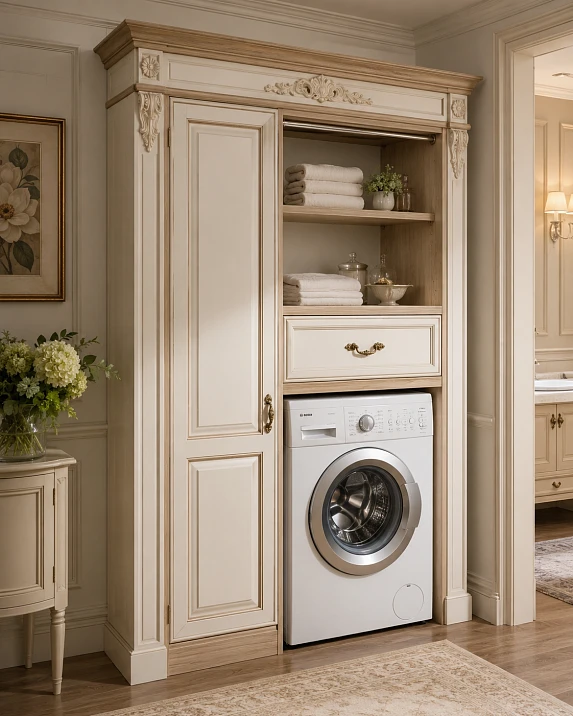
The washing machine is one of the most honest items in the house. It doesn't pretend to be beautiful. It just stands where it was placed: with a white drum, chrome handles, and hoses in the back. And if the apartment is decorated in a classic style — with moldings, wooden decor, stucco details, and carefully selected furniture — the machine in the corner of the bathroom or laundry room looks like a quote from another text.
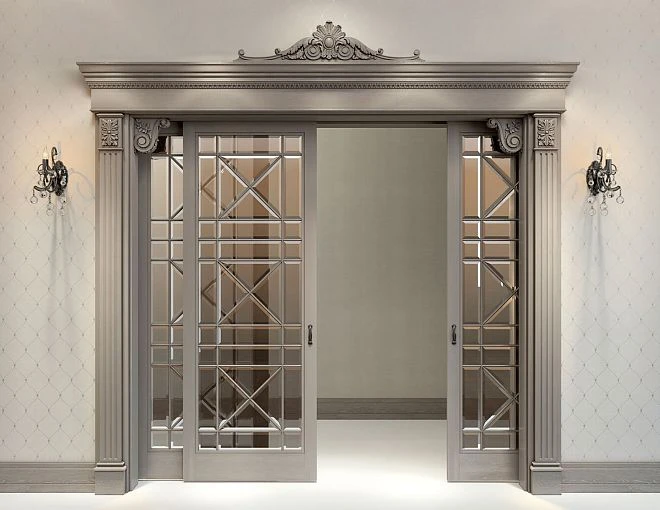
A cabinet for a washing machine in a classic style is not a whim or an excess. It is a logical continuation of the work you have already done in other rooms. Pogonazh iz massiva on the facade panels, Wooden furniture handles on the doors, Moldings made of polyurethane around the perimeter of the laundry zone — and the utility room ceases to be a "closed door" behind which it is still untidy. It becomes a full-fledged part of the house.
The laundry zone as an architectural task: why style matters here
Let's be honest. Most people think about the laundry zone at the very last moment — when the renovation is already finished, the machine is in place, and the question sounds something like: "Well, what do we do with this now?" Meanwhile, it is in the laundry zone that the gap between "there is decor" and "there is no decor" is most visible.
In a classic house or classically decorated apartment, functional zones — kitchen, dressing room, bathroom, laundry room — are solved in the same style as the formal rooms. This does not mean that expensive materials and complex profiles are needed. It means that the decor system must be consistent: one principle, one language, one character.
A classic-style cabinet for a washing machine solves three tasks at once:
-
hides the appliance behind facades that visually belong to the interior
-
creates a furniture zone with handles, moldings, and decor that speak the same language as the rest of the home's furniture
-
connects the laundry unit to the room's walls through Moldings made of polyurethane и polyurethane decor
Complete set: what to buy for a washing machine cabinet
If you've already decided to do it — here's what you need. One list, no omissions.
Wooden elements:
-
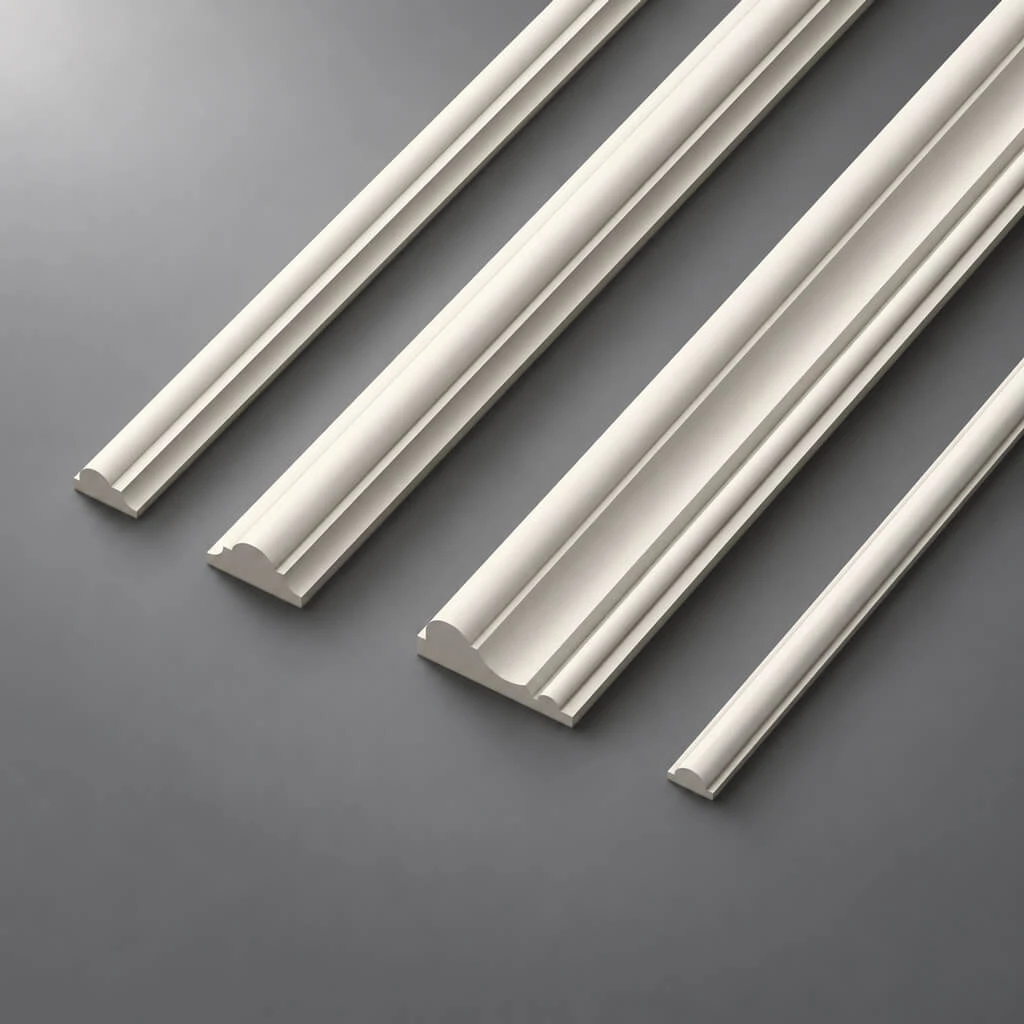
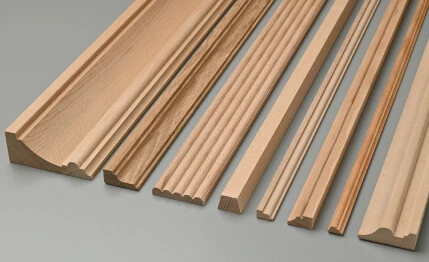
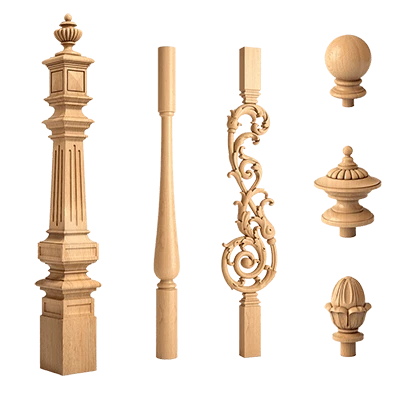
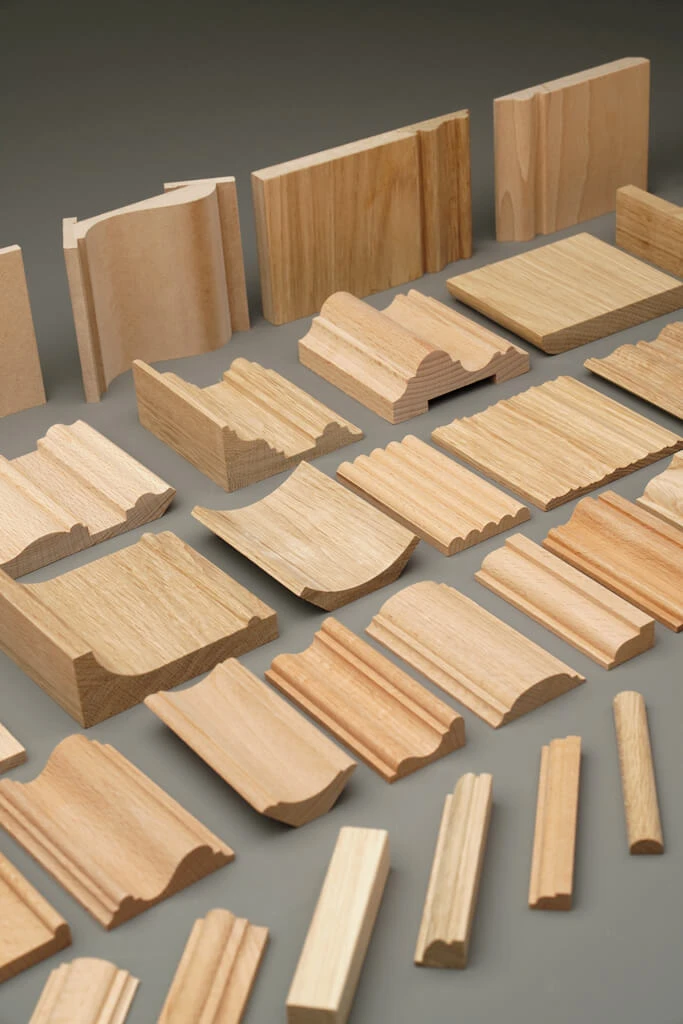
Pogonazh iz massiva — facade frames, horizontal belts, lower base, side panels
-
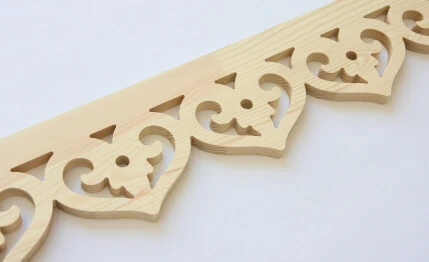
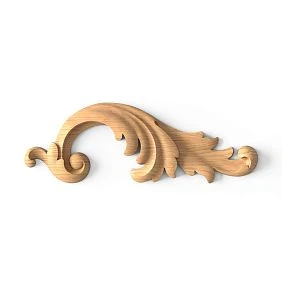
Wooden decor and overlays — decorative accents on doors, inserts on side planes
-
decorative elements for furniture — rosettes, cartouches, shaped panels in the center of facade panels
-
Wooden furniture handles — for all doors and drawers of the laundry cabinet
Polyurethane elements:
-
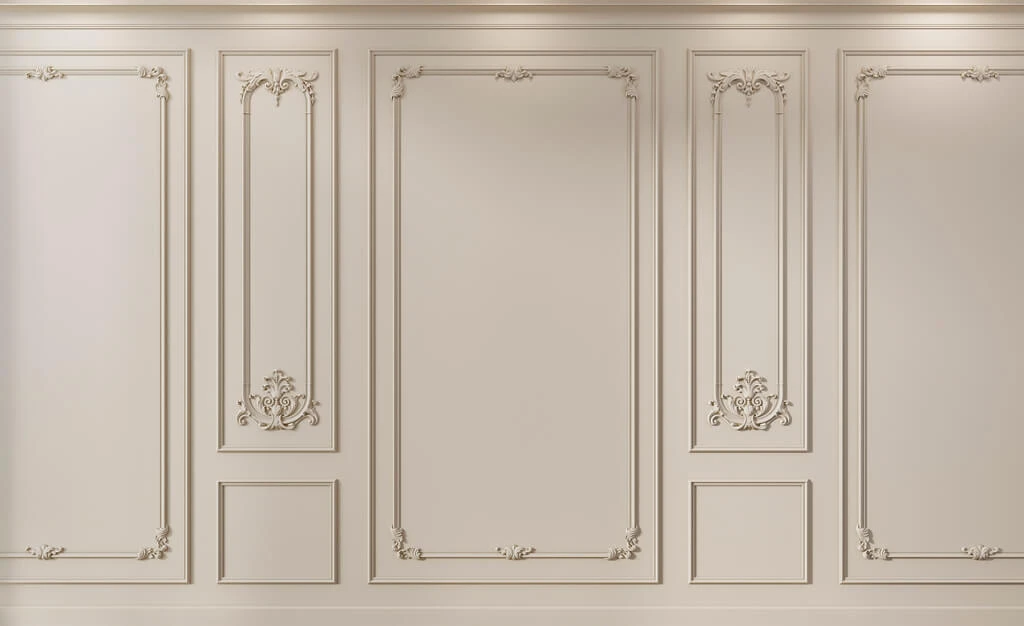
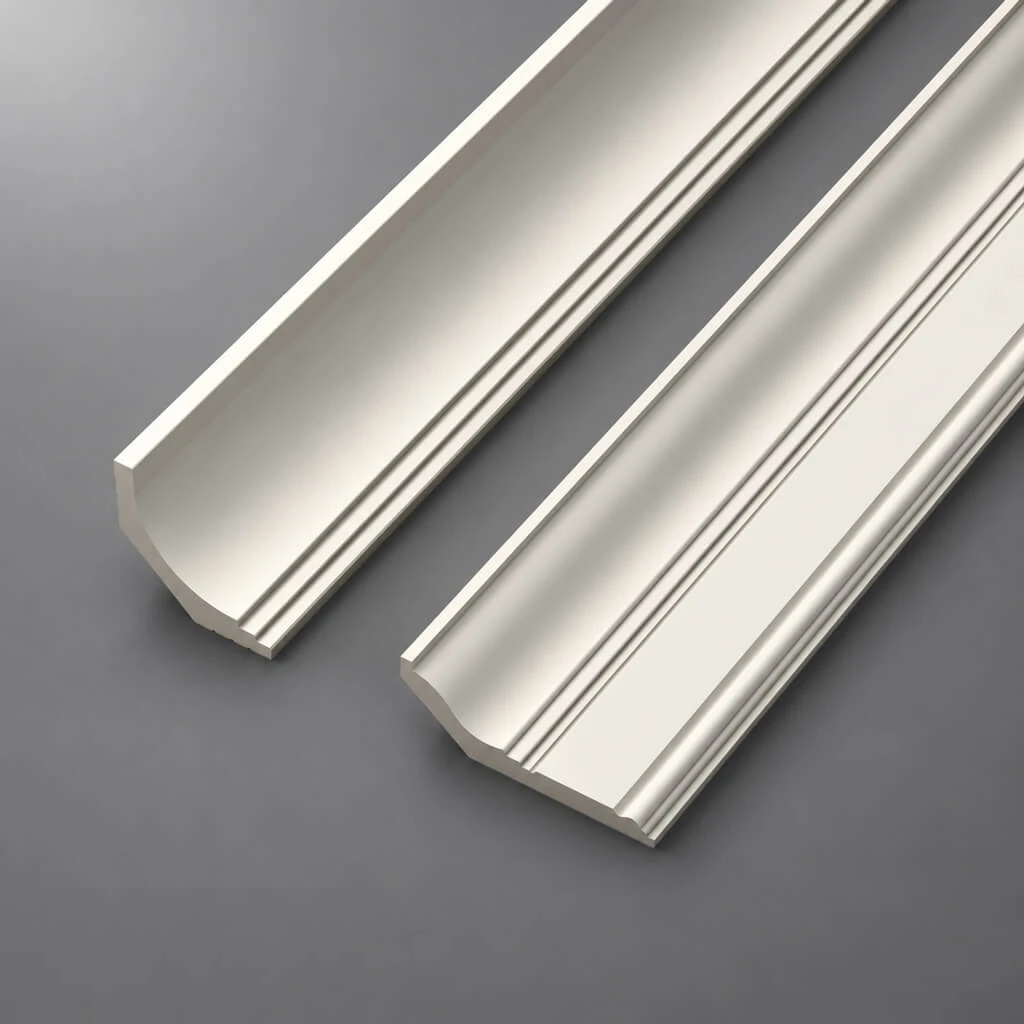
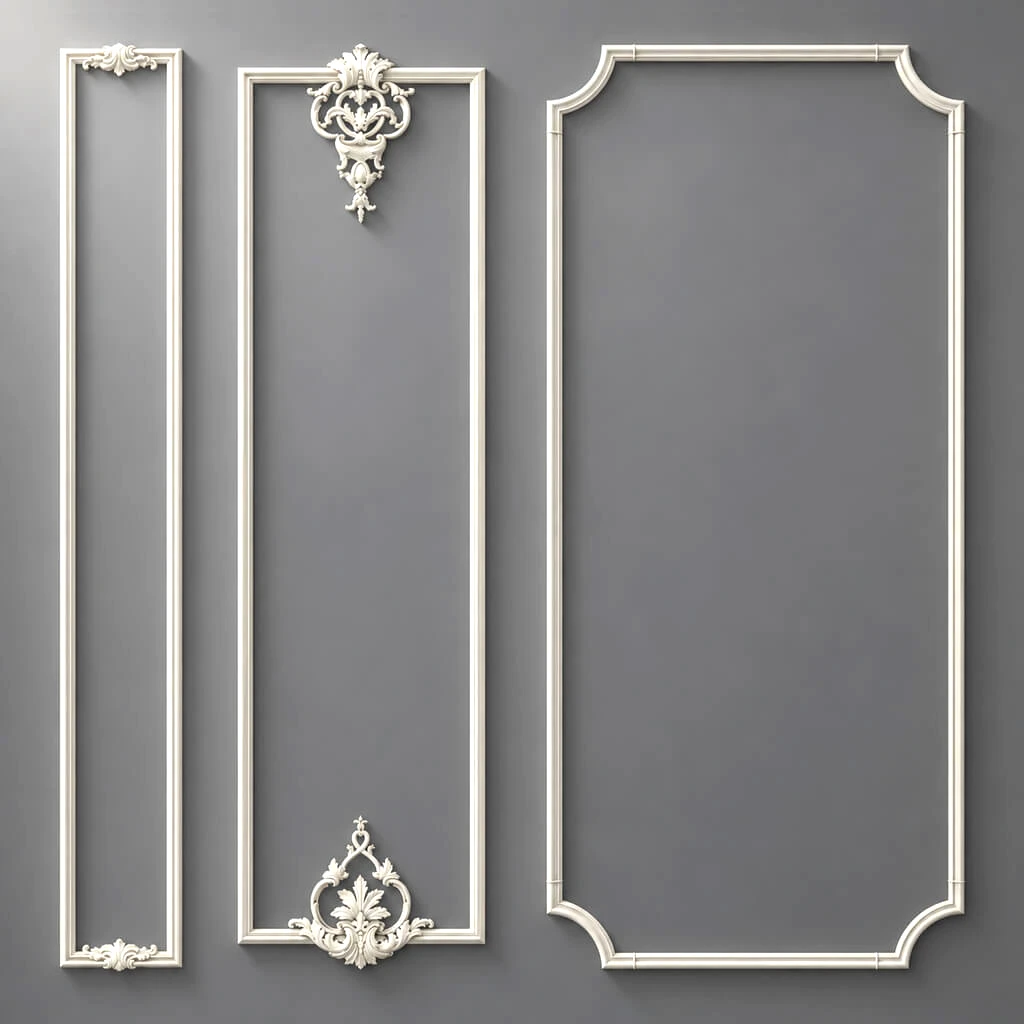
Moldings made of polyurethane — decorative wall frame around the perimeter of the laundry area
-
Polyurethane trim — horizontal top belt, connection with the baseboard
-
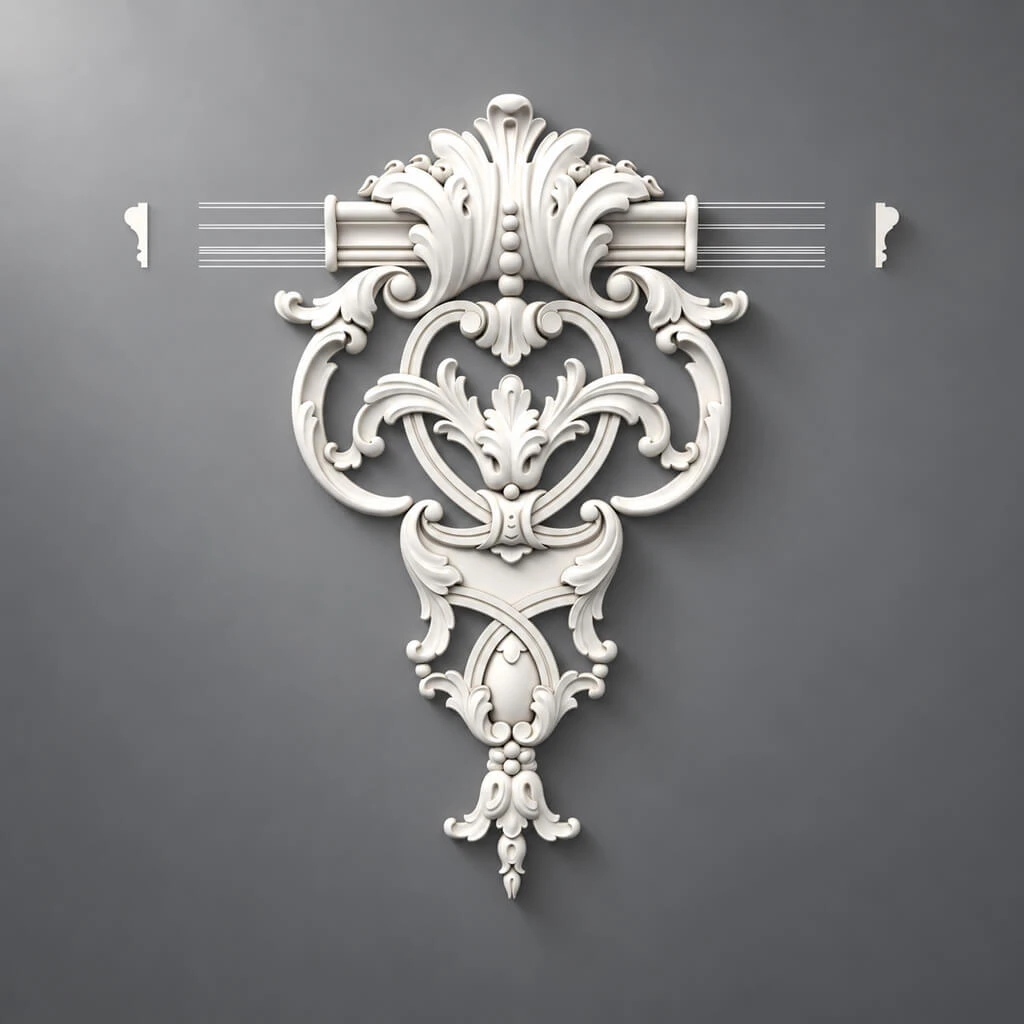
Polyurethane appliqués — decorative details on the walls next to the cabinet
-
Decor for Molding — corner blocks at molding intersection points
-
Polyurethane wall decor — wall frames on adjacent walls
-
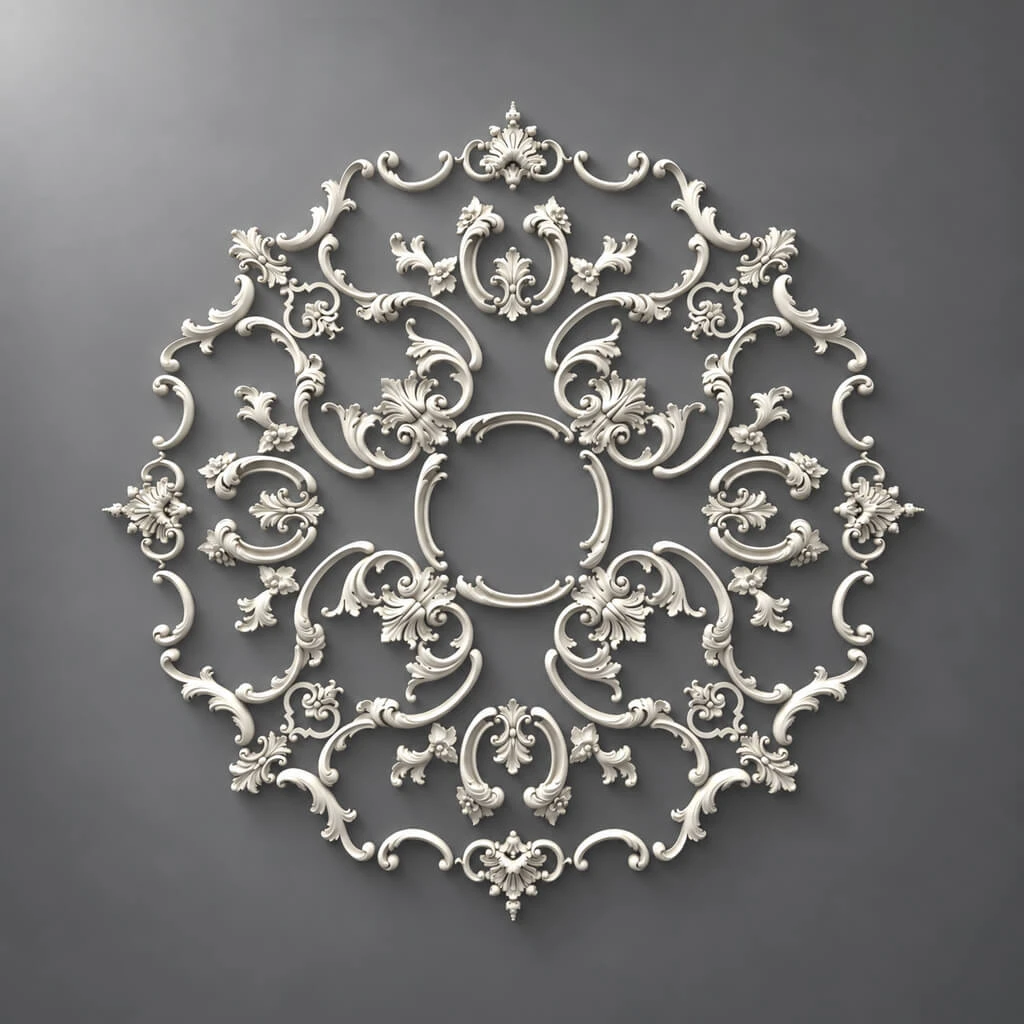
Polyurethane moldings — general decorative resource for rich styling
Consumables:
-
Fasteners — screws, dowels, furniture brackets
-
Assembly adhesive — for polyurethane elements
-
Sealant — moisture-resistant, for all junctions in the laundry area
-
Primer — before painting wooden and polyurethane parts
-
Paint, varnish or oil — moisture-resistant compounds
-
Allowance of 10–15%
Our factory also produces:
Three different tasks under the same word «cabinet»
Before talking about decor, you need to understand what kind of structure we are dealing with. There are three types of cabinets for a washing machine, each with its own logic.
Get Consultation
Type 1: Washing machine in a niche with a front door
The machine stands in a niche — between walls, in a specially designated opening. The door covers the niche from the front. This is the most compact scenario. Pogonazh iz massiva creates a furniture frame around the perimeter of the opening. Wooden handles on the door. Moldings made of polyurethane along the outer contour of the niche. The goal is to integrate the opening into the wall as an architectural element.
Type 2: Laundry column — washing machine and dryer in a vertical block
The dryer is placed on top of the washing machine in a vertical stack. This creates a tall appliance block — up to 170–180 cm. It is very similar in nature to a tall kitchen cabinet. The design task is the same: Pogonazh iz massiva along the side verticals, a wooden cornice on top, Moldings made of polyurethane on the wall around. The technical block turns into a column.
Type 3: Full-fledged laundry area cabinet
A cabinet over 200 cm high with several sections: the lower one for the washing machine, the upper one for storing household chemicals, towels, and linens. The fronts cover everything. This is the most furniture-like scenario, requiring the most complete decorative treatment: several doors, handles on each, Wooden decoration on the front planes, a top cornice, decorative elements for furniture along the entire height.
How is this cabinet fundamentally different from a pipe box?
This question is asked often — and it is valid. A pipe box, an access hatch, and a washing machine cabinet look like similar tasks. But they have a different nature.
A pipe box is for covering engineering communications. Its purpose is to hide pipes. Decoration is secondary.
A washing machine cabinet is a furniture zone. Its purpose is to create a comfortable, beautiful, functional space for household appliances. This is a different scale of task: fronts with handles, moldings, decorative overlays, molding framing, connection with the rest of the interior.
The main components of a laundry cabinet as a furniture object:
-
Fronts with decorative strips and frame profile
-
Handles on each door — a visible tactile element
-
Side panels with decorative overlays made of solid wood
-
Upper cabinet with cornice for storage
-
Lower base with trim profile matching the baseboard
-
Moldings around the wall area
-
Ventilation gaps for appliances
-
Access to utilities: hoses, filter, outlet
Where to place a laundry cabinet: eleven scenarios
The laundry area in a modern home is not just the bathroom. Here's where designers most often place it.
Bathroom
Classic scenario: washing machine in the bathroom, concealed by a cabinet facade under the sink or in a separate niche. A humid environment requires moisture-resistant finishes for wooden elements.
Separate laundry room
A separate room for washing and drying — in country houses and spacious apartments. Here, a full cabinet block with furniture design, upper storage cabinets, and a complete wall decor system is possible.
Walk-in closet
In the dressing room, the washing machine is hidden behind facades that match the style of the wardrobe cabinets. Pogonazh iz massiva on the facades of the laundry block — in the same profile as on the other cabinets in the dressing room. A unified ensemble.
Corridor or hallway
A machine in the corridor is a compromise often found in city apartments. Moldings made of polyurethane around the laundry block and Wall Decor nearby turn the technical niche into a deliberate architectural element of the corridor.
Niche in the apartment
A specially allocated opening in the wall is the optimal scenario. The machine in the niche takes up minimal space. Moldings made of polyurethane along the contour of the opening from the outside and Pogonazh iz massiva along the internal verticals of the niche — and the opening looks like a built-in wardrobe.
Kitchen
In small apartments, the washing machine is often located in the kitchen — under the countertop or in a separate tall cabinet. In this case, the laundry unit should be styled in the same way as the kitchen set: identical Pogonazh iz massiva on the front frames, identical Wooden handles.
Utility cabinet next to the pantry
A machine in a utility cabinet — an option for homes with sufficient space. Here the decorative status is lower, but a unified style of doors and handles remains important.
Bathroom in a country house
In a country house, the laundry area is often combined with a larger bathroom. A full cabinet block with wooden fronts, wooden furniture handles и polyurethane molding on the walls — here it is appropriate and natural.
Technical area next to the dressing room
In some projects, the laundry area is arranged in a transitional zone between the dressing room and the bathroom. The design style is dictated by the dressing room — Wooden trim и decorative elements for furniture in the same character.
Wood in the laundry cabinet: what, where, and why
Solid wood molding on facade frames
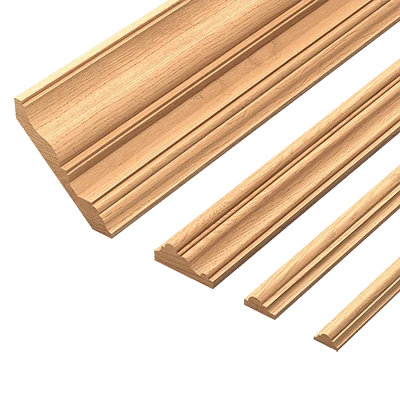
Pogonazh iz massiva — this is the basis of the furniture character of any cabinet. Without it, the facade is flat, faceless, lacking depth. With it, each door has a clear furniture geometry: side posts, top and bottom crossbars, and a central panel.
For the laundry cabinet, the molding profile is selected depending on the style:
-
Rectangular with a chamfer — laconic, suitable for modern classic and neoclassic
-
Shaped with a molding — traditional, for full classic
-
With a quarter — a profile with a cutout that allows neatly closing the joint of the facade frame with the door plane
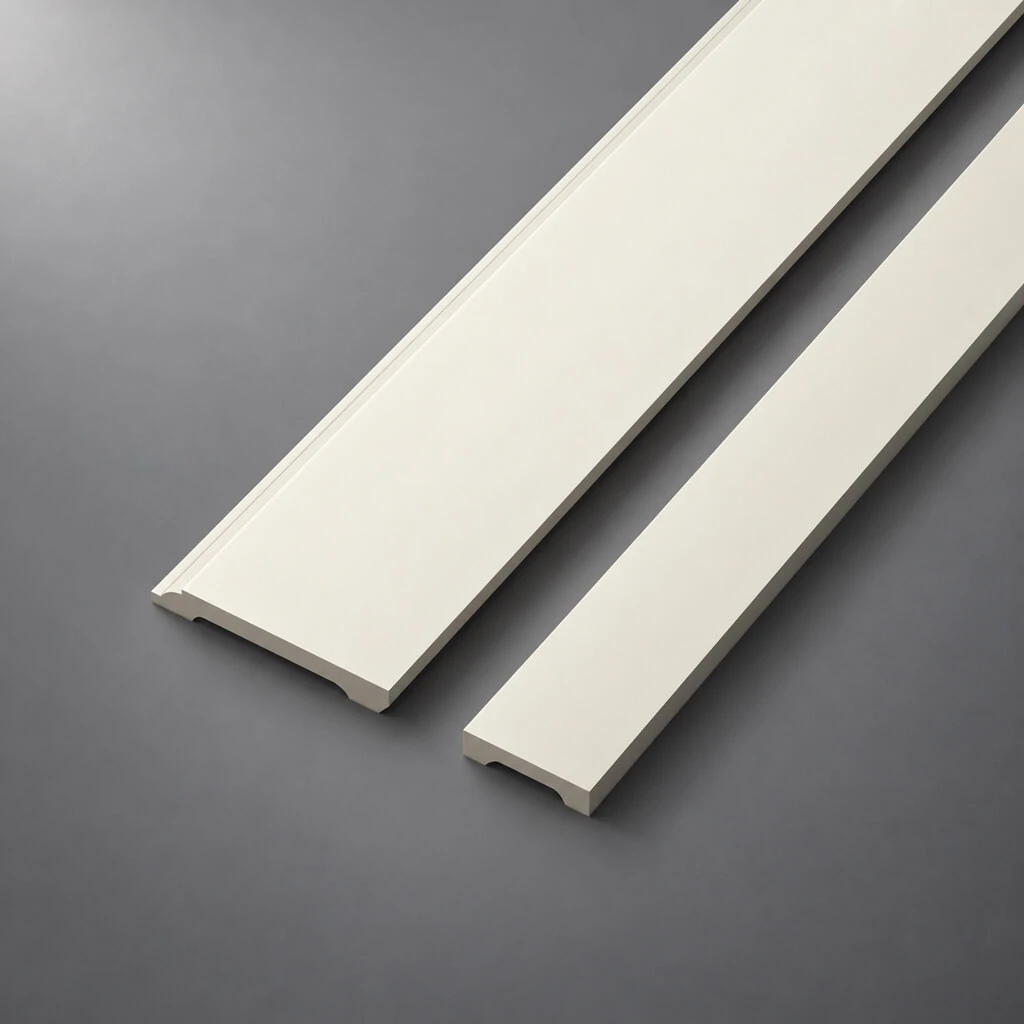
Molding width for the frame: 30–50 mm — depending on the height and width of the door. For a door 60 cm wide — a frame of 35–40 mm. For a door 45 cm wide — a frame of 25–30 mm.
Wood finish in the laundry room: must be moisture-resistant. Alkyd or polyurethane-based paint, moisture-resistant parquet varnish, or protective oil with water-repellent additives.
Wooden handles: the main point of contact
Wooden furniture handles in the laundry cabinet — this is a detail touched every day. At least five or six times: load, retrieve laundry, grab detergent, open the upper cabinet. This means the handle should be not only beautiful but also comfortable.
For a classic-style laundry cabinet, the following are optimal:
-
Vertical bracket 120–160 mm — for tall doors (door height 80–120 cm)
-
Horizontal rail 80–120 mm — for medium doors (door 50–80 cm)
-
Button with decorative base — for small doors or drawers up to 40 cm
All handles in the laundry cabinet — from the same series. This is essential. Different handles on different doors — a sign of unfinished furniture with no stylistic solution.
The wood species for handles must match the species of the trim on the frames. If the frames are oak under varnish — the handles should also be oak. If the frames are painted — the handles can be made of alder or pine with the same paint.
Decorative overlays on facades
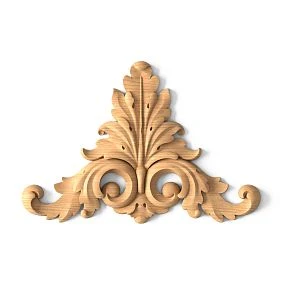
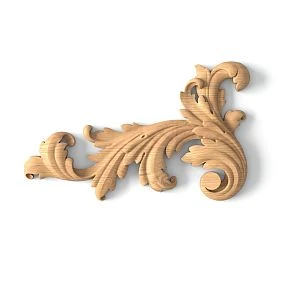
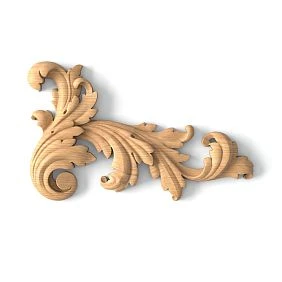
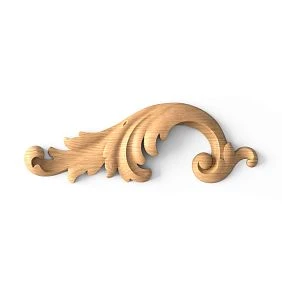
Wooden decor and solid wood overlays on the doors of the laundry cabinet — this is what gives them a furniture-like character. A simple applied rectangular strip in the center of the door or a small rosette in the center is enough.
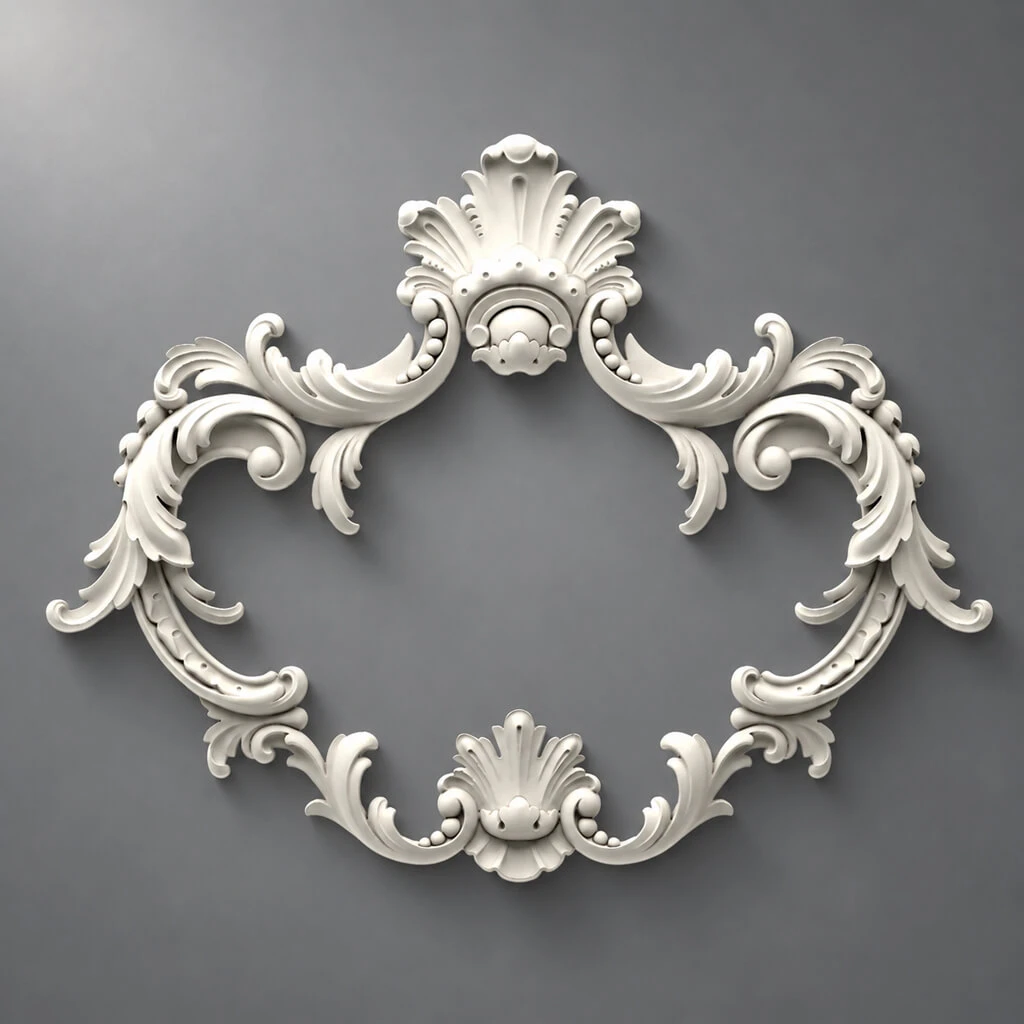
decorative elements for furniture in this context — these are small details. In the laundry room, large carved medallions are not needed. The task of the overlay is to add a visual point of interest on the facade plane, making it not empty and not boring.
Lower base
The lower base — a horizontal wooden belt at the base of the cabinet — should match the height of the room's baseboard. Pogonazh iz massiva on the lower base creates the feeling that the cabinet «stands» on the same foundation as the rest of the room's furniture. Without the base, the cabinet visually «hovers».
Side planks
The side planes of the laundry cabinet — what is visible when viewed from an angle. Pogonazh iz massiva on the side verticals creates side «pilasters» — vertical elements that architecturally frame the side plane and visually lift the cabinet.
Polyurethane in the laundry area: decor on the walls, not on the appliances
If wood is the body of the cabinet, then Polyurethane moldings — this is what integrates this cabinet into the room's space. Without decor on the walls around it, the cabinet will be beautiful but isolated. With it, the laundry area becomes part of the interior.
Moldings around the perimeter of the laundry area
Moldings made of polyurethane They run along the walls around the cabinet: along the left and right verticals and along the upper horizontal contour. This is a wall frame that fixes the laundry unit in the wall space and "officially" highlights it as an architectural zone.
The width of the molding for the laundry area is 25–40 mm. The profile is the same as used in other rooms of the house. The rule of a single profile: you cannot use a molding with a different profile for the laundry cabinet than in the living room, hallway, or bedroom. The interior system must be consistent.
Correct installing polyurethane molding In the laundry area — with special attention to sealing the joints. A humid environment requires additional treatment of all connections with a moisture-resistant sealant.
Polyurethane linear elements: connecting horizontals
Polyurethane trim Used on horizontal belts: above the molding frame at the ceiling and below at the baseboard. These are thin horizontal lines that continue the decor system on the adjacent walls.
Corner blocks at intersection points
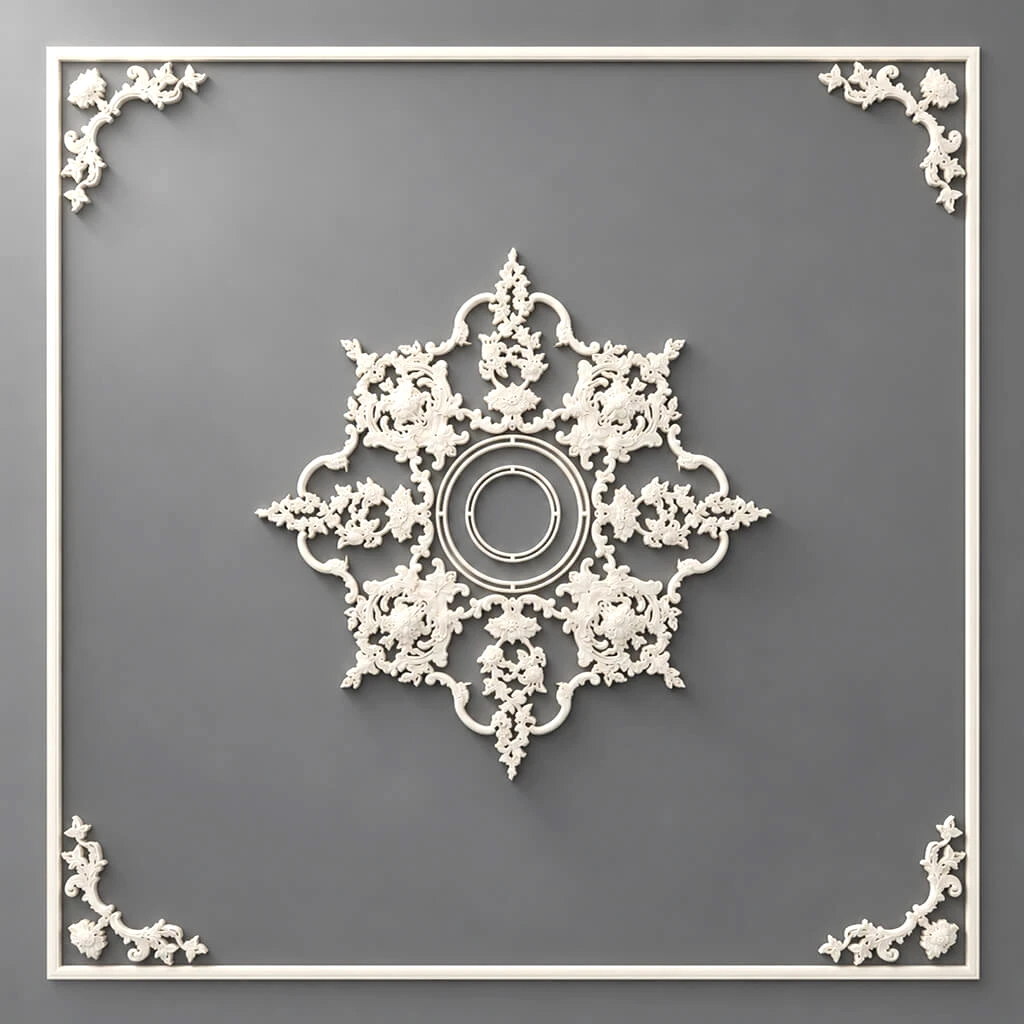
Decor for Molding — corner blocks — are installed at points where vertical moldings meet horizontal ones. For the wall frame around the laundry cabinet, these are the two upper corners. Corner blocks cover the joints and create decorative accents.
Wall decor on adjacent walls
Polyurethane wall decor — wall frames and panels on the walls next to the laundry area — create a decorative context. One or two rectangular wall fields next to the laundry unit turn the wall from a "background" into an active decorative element.
Five ready-made solutions for a laundry area
Solution 1: Washing machine in a niche — minimalist classic
White laundry area, stone-look tiles, neutral walls.
Niche for washing machine with a full-height door. Pogonazh iz massiva around the door perimeter — rectangular profile with a chamfer, width 30 mm. Wooden handles — vertical bracket 120 mm. Everything in white RAL 9010.
Moldings made of polyurethane along the outer contour of the opening — thin, 25 mm, matching the wall color. Decor for Molding in the two upper corners. Restrained. Functional. Beautiful.
Solution 2: Laundry column — washing and drying in classic style
Washing machine at the bottom, dryer on top — vertical stack 170 cm high. Doors for each machine.
Pogonazh iz massiva on the side verticals of the column — wide, 45 mm, shaped profile. Decorative solid wood overlays on the side planes. Wooden handles — vertical bracket 160 mm on each door.
Moldings made of polyurethane around the perimeter of the zone on the wall, Polyurethane appliqués in the space above the top door. Polyurethane trim under the ceiling. The column acquires an architectural character.
Solution 3: Full-fledged laundry closet in a country house
Separate laundry room in a country house. Cabinet 210 cm high with three sections: bottom — washing machine, middle — shelves, top — storage.
Pogonazh iz massiva on all facade frames — oak, with a profiled molding. Horizontal trim strip between sections. Wooden cornice on top made of multi-profile set. decorative elements for furniture on the doors. Wooden handles — oak brackets 140 mm.
Moldings made of polyurethane — wide, 40 mm — along the entire perimeter of the laundry block on the walls. Wall Decor on adjacent walls — wall-mounted frames. Decor for Molding with large corner blocks.
Solution 4: Laundry room in the hallway of a city apartment
Machine in the hallway behind a door. Space is limited. The task is to integrate a cabinet into the hallway discreetly.
Pogonazh iz massiva — thin, rectangular cross-section, matching the walls. The facade frame is minimalist. Wooden handles — buttons or short brackets 80 mm.
Moldings made of polyurethane — thin, 20 mm, in wall color. Polyurethane trim at the baseboard and under the ceiling. The entire system in a single color — the laundry door reads as part of the wall.
Solution 5: Walk-in closet with laundry area in a unified system
Walk-in closet with built-in laundry area — washing machine behind one of the wardrobe block doors.
All facade frames are made from solid wood trim the same profile. All handles are from the same series wooden furniture handles. The laundry block door is no different from the wardrobe doors — it is simply one of them.
Moldings made of polyurethane around the entire wardrobe block — a unified wall system that integrates the laundry area into the overall ensemble.
Complete purchasing table
| Element | Purpose | Page |
|---|---|---|
| Solid wood molding | Facade frames, horizontal belts, lower base | link |
| Wooden decor / overlays | Accent details on doors | link |
| Decorative elements for furniture | Sockets and inserts on facades | link |
| Wooden furniture handles | Handles on doors and drawers | link |
| Polyurethane moldings | Wall frame around the laundry area perimeter | link |
| Polyurethane molding | Horizontal connecting belts | link |
| Polyurethane overlays | Decorative details on adjacent walls | link |
| Decor for moldings | Corner blocks at intersection points | link |
| Wall decor from polyurethane | Wall frames near the area | link |
| Polyurethane stucco molding | General decorative resource | link |
Technical requirements: what to check before starting the design
A cabinet for a washing machine is furniture next to the appliance. And the appliance dictates a number of requirements that cannot be violated.
Ventilation gaps
The washing machine needs ventilation — especially if a dryer is nearby. The minimum gap on the sides is 5 mm, on top — 10–15 mm. Neither Pogonazh iz massiva, nor polyurethane elements should block these gaps.
Access to utilities
The drain hose, fill hose, filter, and outlet must be accessible without removing the decor. The front door should open wide enough. The bottom panel must be removable if the filter is behind it.
Machine vibration during spin cycle
The washing machine vibrates during operation. Glued joints of wooden elements near the machine are a risk zone. Wooden parts that directly adjoin the appliance must be fastened with screws, not glue. Moldings made of polyurethane on the wall do not perceive vibration — they are located at a distance from the machine.
Moisture resistance of the finish
The laundry room is a damp area. All wooden elements: Pogonazh iz massiva, trims, handles — must be treated with a moisture-resistant compound. Paint on a polyurethane base, parquet varnish with moisture protection, or special oil for damp rooms. polyurethane decor Resistant to moisture on its own.
Nine mistakes when designing a cabinet for a washing machine
Enclosing the appliance without ventilation gaps
Washing and drying machines generate heat. Without ventilation, electronics overheat, reducing service life. Decor must not block airflow.
Not leaving access to hoses, filter, and outlet
If you need to replace the drain hose in a year — and the decor cannot be disassembled without destruction — that's a serious oversight. Plan access in advance: a removable bottom panel, a wide-opening door.
Using polyurethane in areas where the door hits
The bottom corner of the frame, the edge of the door, the lower area near the baseboard — places that are regularly bumped when working with the machine. Polyurethane is not suitable here. Only wood, only durable materials.
Placing handles too close to the appliance
The handle on the washing machine cabinet door should open freely and not hit the machine's drum door. Check this at the design stage.
Not accounting for vibration
Decorative elements on the side panels of the cabinet, which are flush against the machine, must be securely fastened. At 1200 rpm spin cycle, vibration is noticeable. Glue without mechanical fastening is not an option.
Not connecting the cabinet to the baseboard
The lower base of the laundry cabinet without connection to the baseboard creates the feeling that the cabinet was "placed" rather than "built-in." Pogonazh iz massiva The lower base should match the height of the baseboard and neatly join with it.
Choosing too large molding
Polyurethane moldings In a small laundry room or bathroom, it should be thin and delicate. Wide moldings and large corner blocks in a small space create a feeling of overload. The scale of decor is a derivative of the room area.
Not ordering extra linear feet and moldings
A 10–15% reserve is standard. Cuts at corners, possible measurement errors, rework during installation—all of this consumes material. Reordering from a different batch may result in a slight color mismatch.
Forgetting moisture-resistant wood finish
Improper wood finish in the laundry room is not just an aesthetic issue. It leads to swelling, warping, cracks, and delamination of the decor within one or two seasons. A moisture-resistant finish is mandatory.
FAQ: Answers to popular questions
Can you hide a washing machine in a classic cabinet?
Yes. For this, you need facade doors with solid wood moldings on frames, Wooden handles и Moldings made of polyurethane around the perimeter of the area on the walls. Be sure to maintain ventilation gaps and access to utilities.
What to buy for a cabinet under a washing machine in a classic style?
Pogonazh iz massiva for the front frames, Decorative Inserts и decorative elements for furniture on the doors, Wooden furniture handles, Moldings made of polyurethane around the perimeter of the area, Decor for Molding in the corners, glue, fasteners, moisture-resistant sealant, primer, and finish coating.
Where to use polyurethane molding in the laundry room?
Polyurethane moldings — exclusively on the walls around the laundry unit: Moldings around the perimeter of the area, Polyurethane trim in horizontal belts, Polyurethane appliqués on walls without load. In places of constant contact and vibration — only wood.
Can I arrange the washing machine and dryer into a single vertical column?
Yes. A vertical stack with two machines is a full-fledged object for portal framing. Pogonazh iz massiva along the side verticals, a wooden cornice on top, Moldings made of polyurethane on the wall around. You need to account for increased vibration when both machines operate simultaneously.
How to properly glue polyurethane moldings in the laundry room?
Choice of glue and application technology — in the guide what to glue polyurethane molding with. In the laundry room — only moisture-resistant glue and moisture-resistant sealant for sealing joints.
How to make clean corners of moldings in the laundry room?
With decoration for moldings — corner blocks. This is more reliable than manual 45-degree cutting, especially for beginners. Detailed technology — in the article installing polyurethane molding.
About STAVROS
STAVROS is a Russian manufacturer of decorative products made from solid wood and polyurethane for furniture and interiors. Full range for designing a cabinet for a washing machine in a classic style: Pogonazh iz massiva, Decorative wooden inlays, decorative elements for furniture, Wooden furniture handles, Moldings made of polyurethane, Polyurethane trim, Polyurethane appliqués, Wall Decor и Decor for Molding. Production using 3D milling, custom sizes, retail and wholesale work. Contact us to confirm shipping to your destination. and CIS. Loyalty program for interior designers and furniture manufacturers.