Article Contents:
- Confirmed specifications of NPU-116 and NPU-093
- Direct comparison: vertical line or central accent
- Why proportion is more important than overall height
- How to measure the free field of the facade
- Full-size paper template
- NPU-116 size 45 × 302 × 10 mm
- NPU-116 size 55 × 369 × 12 mm
- How to choose between two sizes of NPU-116
- NPU-093 size 80 × 185 × 9 mm
- NPU-093 size 105 × 242 × 12 mm
- NPU-093 size 133 × 300 × 15 mm
- How to choose between three sizes of NPU-093
- Tall cabinet door and NPU-116
- Tall cabinet door and NPU-093
- Furniture pilaster
- Pair installation of NPU-116
- One NPU-116 in the center of a wide facade
- NPU-093 on a dresser
- NPU-093 on a sideboard and cabinet
- NPU-093 on an interior door
- NPU-116 on the door leaf
- Wall panel with NPU-116
- Wall panel with NPU-093
- Overlay above the console
- Decor on the sides of the mirror
- NPU-093 in the center and NPU-116 on the sides
- Can different sizes of NPU-093 be used together
- Two-tier decor for a tall door
- How to account for the furniture handle
- Distance from the overlay to the handle
- Distance to molding frame
- Distance to door edge
- Relief depth 9 mm
- Relief depth 10 and 12 mm
- Relief depth 15 mm
- How to check the opening of an adjacent door
- How to check drawer extension
- How to calculate NPU-116 quantity
- How to calculate NPU-093 quantity
- Single element or symmetrical pair
- Asymmetrical composition
- Classic Furniture
- Modern furniture with classic accent
- Commercial interior
- Why polyurethane is convenient for furniture decor
- Polyurethane or wood
- Preparing the overlay for painting
- Painting together with the facade
- Contrast painting
- How not to lose the relief under paint
- Test swatch
- Painting before installation
- Painting after installation
- How to prepare the base
- Why not any glue is suitable
- KUDO HIGH TACK as an accompanying product
- How to apply glue without excess
- How to hold the overlay during installation
- Marking the central NPU-093
- Marking paired NPU-116
- Installation inside a molding frame
- Installation on the door leaf
- Mounting on wall panel
- How to remove excess glue
- Dismantling and repair
- Care for painted decor
- What to buy and study together with NPU-116 and NPU-093
- Practical matrix for choosing NPU-116 or NPU-093
- Error: choosing only by maximum height
- Error: considering models interchangeable
- Error: installing NPU-093 on a narrow pilaster
- Error: using one NPU-116 on a very wide facade
- Mistake: not considering the handle
- Error: placing decor flush against the molding
- Error: not checking the adjacent door
- Error: random asymmetry
- Error: mixing NPU-093 sizes without a system
- Error: installing two NPU-116 without sufficient width
- Error: refusing a full-size layout
- Error: painting the overlay separately without a sample
- Error: applying too thick a layer of glue
- Error: considering any glue suitable
- Error: mounting on a weak surface
- Error: ignoring the depth of the relief
- Error: counting overlay as facade reinforcement
- Error: ordering in batches without a specification sheet
- Error: buying only one element without spare for the series
- Error: assigning general frequency to article numbers
- Who NPU-116 is suitable for
- Who NPU-093 is suitable for
- When NPU-116 may not be suitable
- When NPU-093 may not be suitable
- How to buy NPU-116
- How to buy NPU-093
- What to check before paying NPU-116
- What to check before paying NPU-093
- How to estimate the total budget
- How to calculate an order for a cabinet
- How to calculate an order for a chest of drawers
- How to calculate an order for a wall panel
- Do you need a spare copy
- How to accept an order
- How to store overlays before installation
- Why it's profitable to choose a ready-made overlay
- When you need a consultation with a designer or furniture maker
- How not to confuse an overlay with protective fittings
- How not to confuse interior decor with exterior facade
- How to choose an overlay for a double-door wardrobe
- How to design the central door of a three-section wardrobe
- Overlays for the kitchen
- Overlays for the bedroom
- Overlays for the hallway
- Overlays for the living room
- How to choose the height position
- How to check the direction of the ornament
- How to create an installation list
- How to accept completed work
- FAQ: questions about choosing NPU-116 and NPU-093
- How is NPU-116 different from NPU-093?
- What sizes are available for NPU-116?
- What sizes are available for NPU-093?
- What material are the pads made of?
- What should I choose for a tall cabinet door?
- What to choose for a furniture pilaster?
- What to choose for a dresser front?
- What size NPU-093 is suitable for a small front?
- What size NPU-093 should I choose for a large door?
- When to choose NPU-116 45 × 302 mm?
- When to choose NPU-116 55 × 369 mm?
- Can I install two NPU-116 on one door?
- Can I install two NPU-093?
- Can NPU-116 and NPU-093 be combined?
- How to check the size before purchasing?
- Why is a depth spacer needed?
- How to account for a furniture handle?
- Can the overlay be placed flush against the molding?
- Which model is better for a wall panel?
- What to choose for decor on the sides of the mirror?
- What to choose above a console?
- Can the overlays be painted together with the facade?
- Is it necessary to prime a polyurethane overlay?
- What Adhesive to Use?
- Is KUDO HIGH TACK suitable?
- Can it be glued onto old paint?
- Does the overlay reinforce the facade?
- How to calculate the number of NPU-116?
- How to calculate the number of NPU-093?
- Is a spare needed?
- Can different sizes of NPU-093 be used in one set?
- Why can't you choose only by photo?
- Is NPU-093 suitable for a narrow pilaster?
- Is one NPU-116 suitable for a wide facade?
- What is the average production time for custom orders?
- Where to buy NPU-116 and NPU-093?
- What should I check before ordering?
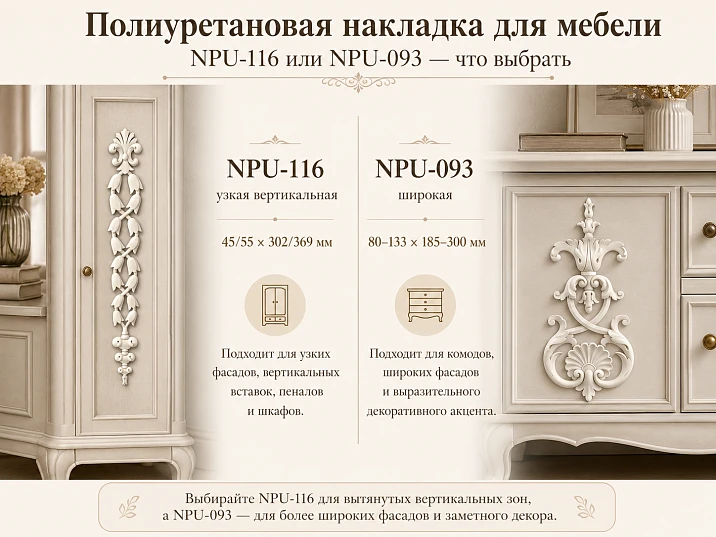
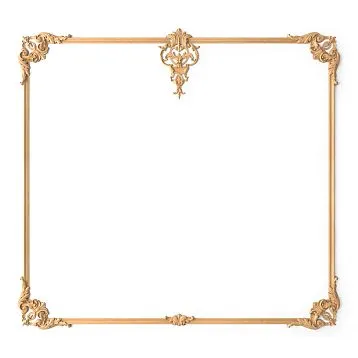
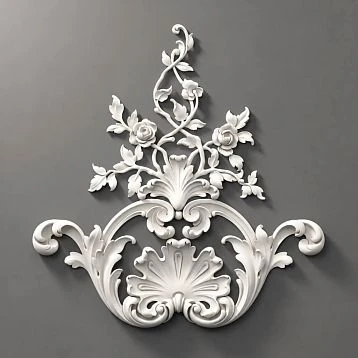
It is easier to buy a polyurethane furniture overlay when the buyer compares not only the height of the ornament but also its proportion. NPU-116 is a narrow elongated model with a width of 45 or 55 mm and a height of 302 or 369 mm. It is perceived as a vertical decorative strip. NPU-093 is wider: from 80 to 133 mm with a height of 185–300 mm. It fills a noticeable part of the facade and works as an independent central composition.
Both overlays are made of polyurethane and are suitable for furniture, doors, and interior surfaces. However, they cannot be considered interchangeable. NPU-116 is convenient on a tall cabinet door, furniture pilaster, narrow wall section, and on the sides of a mirror. NPU-093 is better revealed on a dresser facade, wide door, in the center of a molding frame, or wall panel.
The main fork sounds practical: do you need a thin vertical line that fits between the handle and the frame, or a wide overlay capable of filling the central field? For the first scenario, you can buy narrow vertical overlay NPU-116. For the second — buy wide decorative overlay NPU-093. The size is chosen after a full-size paper mockup on the specific facade.
NPU-116 has a proportion of about 6.7:1: height is approximately 6.7 times greater than width. NPU-093 has a ratio of about 2.3:1. Therefore, one model emphasizes verticality and supports rhythm, while the other creates central mass and fills the frame field. This difference is more important than a simple comparison of maximum heights of 369 and 300 mm.
Short answer. Tall narrow door, pilaster, limited space between handle and molding — NPU-116. Wide facade, chest of drawers, central door or wall frame field — NPU-093.
Need a paired vertical composition — more often NPU-116. Need one prominent central element — more often NPU-093. For a mixed composition, NPU-093 can be placed in the center, and NPU-116 on the sides, if the field dimensions confirm symmetry.
Select NPU-116 Select NPU-093 Buy decorative furniture overlays Mounting and finishing materials
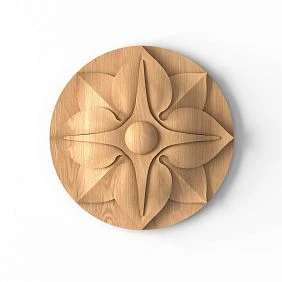
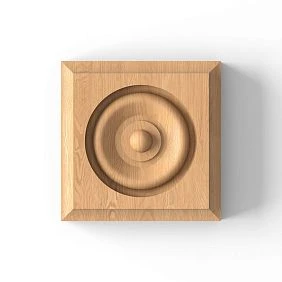
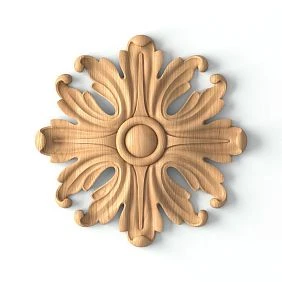
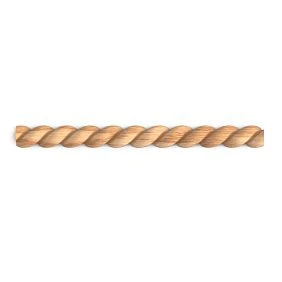
Confirmed specifications of NPU-116 and NPU-093
| Parameter | NPU-116 | NPU-093 |
|---|---|---|
| Type | Narrow elongated polyurethane overlay | Wide compact polyurethane pad |
| Dimensions | 45 × 302 × 10 and 55 × 369 × 12 mm | 80 × 185 × 9, 105 × 242 × 12 and 133 × 300 × 15 mm |
| Number of sizes | 2 | 3 |
| Material | Polyurethane | Polyurethane |
| Height to width ratio | About 6.7:1 | About 2.3:1 |
| Relief depth | 10 or 12 mm | 9, 12 or 15 mm |
| Main role | Vertical line and rhythm | Central composition and field filling |
| Application | Furniture, doors, walls, mirror frames, architectural elements | Furniture fronts, doors, walls, panels and interior compositions |
| Finishing | For painting; the coating system is checked according to the project | For painting; the coating system is checked according to the project |
| Average production time for made-to-order items | 3–7 days; the current timeframe is specified in the product card | 3–7 days; the current timeframe is specified in the product card |
| Structural function | Decorative only; does not reinforce the facade | Decorative only; does not reinforce the facade |
| Installation | Depends on the substrate, contact area, coating and adhesive instructions | Depends on the substrate, contact area, coating and adhesive instructions |




Direct comparison: vertical line or central accent
| Criterion | NPU-116 | NPU-093 | Practical conclusion |
|---|---|---|---|
| Maximum height | 369 мм | 300 мм | Height does not determine the role without width |
| Maximum width | 55 мм | 133 мм | NPU-093 requires much more free space |
| Character of composition | Linear and vertical | Central and filled | First determine the role, then the size |
| Tall cabinet door | Suitable for vertical axis or pair | Suitable for wide frame and central field | Door width determines the choice |
| Furniture pilaster | More often suitable | May be too wide | Check the clear width of the pilaster |
| Dresser front | Possible as a thin vertical | More suitable as a central decor | Consider the handle and drawer line |
| Paired composition | Convenient on two sides of the facade | Requires a large field | NPU-116 is easier to place symmetrically |
| Relief depth | 10–12 mm | 9–15 mm | Check collision with handle and door |
| Size range | Two close vertical scales | Three scales for different facades | NPU-093 is easier to distribute across different furniture widths |
Our factory also produces:
Why proportion is more important than overall height
The buyer often compares 369 and 300 mm and concludes that NPU-116 is just slightly taller than NPU-093. On the facade, the difference is much stronger. The width of NPU-116 does not exceed 55 mm, so the ornament reads as a vertical strip. For NPU-093, the width reaches 133 mm, and the element is perceived as an independent relief motif.
Due to different proportions, the same height does not give the same visual weight. Paper rectangles of 55 × 369 and 133 × 300 mm immediately show that one model stretches the field, while the other fills it. Such a test is more useful than choosing from a card on the screen.
Get Consultation
How to measure the free field of the facade
From the total width of the door, subtract the frame, moldings, handle, technological gaps, and margins to the edges. The resulting value is the real area for the overlay. On a framed facade, measure the inner field, not the outer size of the door.
In height, also consider the top and bottom frame, the drawer line, the panel, and possible decor. The overlay should not extend onto moving joints, fasteners, or an area where the facade changes plane.
Full-size paper template
Each size is cut from paper or thin cardboard and applied to the furniture. For NPU-116, templates of 45 × 302 and 55 × 369 mm are needed; for NPU-093, templates of 80 × 185, 105 × 242, and 133 × 300 mm.
The template shows the overall mass but not the depth. Therefore, additionally make a small spacer of 9, 10, 12, or 15 mm and check the handle, adjacent door, and passage. Only after that, select the article and quantity.
NPU-116 size 45 × 302 × 10 mm
The compact version suits a narrow facade, furniture pilaster, side panel of a door, and a small section of a wall panel. The 45 mm width helps maintain distance to the molding frame and long handle.
The 302 mm height is quite noticeable but does not require a large field. On a tall door, such an element can be placed in the upper third, used in pairs, or repeated across several sections.
NPU-116 size 55 × 369 × 12 mm
The enlarged version maintains a ratio of about 6.7:1 but becomes more noticeable from a distance. It suits a taller door, wide pilaster, and elongated wall section.
The difference in width of just 10 mm seems small, but when installed in pairs, the composition takes up 20 mm more plus the gaps between elements. The layout must be made for the entire pair, not for a single overlay.
How to choose between two sizes of NPU-116
The 45 × 302 mm size is chosen when space is limited by a frame, handle, or narrow partition. The 55 × 369 mm option is more suitable for a tall door and where the smaller element gets lost at a distance.
You cannot rely solely on the facade height. The width of the clear field, distance to the handle, and whether one overlay or two symmetrical ones are used are important.
NPU-093 size 80 × 185 × 9 mm
The small version suits a compact dresser facade, nightstand, small door, and wall frame of limited size. The 9 mm depth creates a calmer relief and reduces the risk of conflict with a protruding handle.
Even the small NPU-093 is almost twice as wide as the compact NPU-116. Therefore, it remains a central overlay rather than a thin vertical strip.
NPU-093 size 105 × 242 × 12 mm
The medium format suits most standard furniture fronts, buffet doors, and central cabinet panels. It is more noticeable than the small option but does not require the width of the 133 × 300 mm model.
The size is convenient for a unified ornament on furniture of different scales: the small element can be placed on drawers, the medium one on doors, preserving the overall shape.
NPU-093 size 133 × 300 × 15 mm
The large version is intended for a wide front, large door, central cabinet section, or prominent wall panel. The 15 mm relief creates pronounced chiaroscuro.
Before purchasing, check the handle and the opening of the adjacent door. The large relief should not interfere with the trajectory of another door or hinder cleaning and operation.
How to choose between the three sizes of NPU-093
The small size suits compact furniture, the medium suits most standard fronts, and the large suits wide central doors and wall compositions. However, there is no universal width boundary for the front.
The best method is three paper templates on one door. From a distance of two to three meters, you can see which option maintains free space and does not look lost.
High cabinet door and NPU-116
On a door 2000–2400 mm high, NPU-116 can work in the upper third, inside an elongated frame, or in pairs on the sides of the central axis. It supports the vertical without taking up much width.
The position is coordinated with the handle. A long furniture handle and NPU-116 can form two parallel lines, but a calm field should be left between them.
High cabinet door and NPU-093
NPU-093 suits a high door if the facade is wide enough and has a large central field. It does not elongate the door as much, but creates a noticeable relief center.
On a narrow, tall door, a wide overlay can look heavy. In that case, NPU-116 or a smaller NPU-093 after a mock-up is better.
Furniture pilaster
A pilaster usually has limited width and a pronounced vertical function. Therefore, NPU-116 more often matches its geometry and can be repeated on several cabinet sections.
NPU-093 is only suitable for a wide pilaster or a central extension. If the edges of the overlay almost touch the side lines, the composition looks cramped.
Paired installation of NPU-116
Two narrow overlays can be placed on the sides of a door, mirror, or central field. Pairing enhances symmetry and helps design a wide surface without a single heavy central piece.
The distance between elements, to the edges, and to the handles must be equal. If the field is not wide enough, the pair becomes a cramped composition, and it is better to choose a single element.
One NPU-116 in the center of a wide facade
A single narrow overlay on a very wide facade may look random and lost. It works better if supported by a vertical frame, long handle, or architectural division.
Without such structure, it is wiser to choose NPU-093 or install two NPU-116 symmetrically. The solution is tested on a full-size facade mockup.
NPU-093 on a dresser
A wide compact overlay suits the central part of a dresser facade, a door, or a large drawer. Three sizes allow repeating the same motif on different sections.
On a drawer, the handle and the line of the adjacent facade must be checked. The overlay should not cross the gap or fall under the fingers when opening.
NPU-093 on a buffet and cabinet
A medium or large format helps highlight the central door of a buffet, while a small one supports the side sections. In a cabinet, 80 × 185 mm is often suitable if the facade is small.
The relief should match the scale of the legs, moldings, and handles. Too many active details compete for attention.
NPU-093 on an interior door
On a wide panel, NPU-093 can become an independent central element. The size is chosen based on the clear field inside the frame, not the overall dimensions of the door leaf.
The overlay should not fall into the area of the handle, lock, or where the door touches the wall. Opening is checked in the full range.
NPU-116 on a door leaf
The narrow model suits the side section of the door, an elongated panel, or a paired composition. It emphasizes height and leaves more free surface.
If the door has multiple frames, NPU-116 is placed inside one of them without crossing the molding. Otherwise, the relief loses architectural logic.
Wall panel with NPU-116
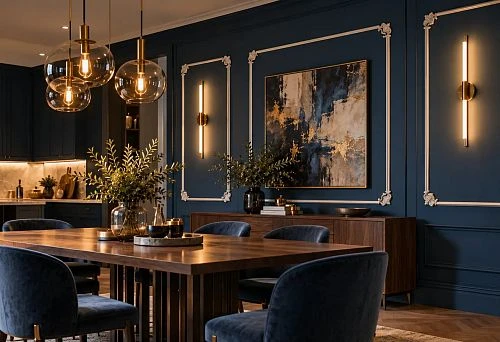
In narrow boiserie sections, NPU-116 helps maintain vertical rhythm. It can be repeated between molding frames or on the sides of a mirror.
The repetition should be aligned with the axes of furniture, doors, and lights. Random distribution of narrow overlays creates fragmentation.
Wall panel with NPU-093
NPU-093 fits the center of the frame above the console, between sconces, above a dresser, or as a standalone panel. Its wide form reads from a distance and fills empty space.
The large size of 133 × 300 mm requires sufficient air around it. If the frame is small, a medium or small option is better.
Overlay above the console
On the wall above the console, NPU-093 can become the center of the composition within a molding frame. It ties together furniture, a mirror, or sconces without requiring multiple small elements.
NPU-116 on the sides suits a more vertical layout. The combination is built along the central axis of the console, not based on free space after installation.
Decor on the sides of the mirror
Two NPU-116s support the vertical shape of the mirror and fit into narrow side fields. Their tops and bottoms are aligned relative to the frame or moldings.
NPU-093 on the sides requires significantly more width. It suits a large wall if each element has its own free field.
NPU-093 in the center and NPU-116 on the sides
Mixed composition is possible on a wide door, wall panel, or large facade. NPU-093 becomes the main center, while two NPU-116 support the vertical rhythm.
All elements must have a common ornamental character and the same finish. Distances are checked on the layout of the entire composition, otherwise three overlays will overload the field.
Can different sizes of NPU-093 be used together
Three sizes allow you to decorate furniture of different scales with one pattern. For example, 80 × 185 mm on a cabinet, 105 × 242 mm on a cabinet door, 133 × 300 mm on the central facade.
The difference should follow the hierarchy of furniture. Random alternation of sizes on identical adjacent doors looks like a configuration error.
Two-tier decor of a high door
On a very high door, two NPU-116 can be placed one above the other if the frame is divided into upper and lower fields. A deliberate interval is left between the elements.
Two NPU-093 vertically create a heavier composition and require a wide panel. This option is checked on the entire wall layout.
How to account for the furniture handle
The handle has its own length, protrusion, and grip trajectory. The overlay should not interfere with fingers, touch the handle, or create a tight assembly.
For a long vertical handle NPU-116, it is often placed parallel on the opposite side of the facade. NPU-093 is better placed in a separate central field.
Distance from the overlay to the handle
There is no universal number: it depends on the relief of 9–15 mm, hand size, handle shape, and facade proportions. A paper mockup is supplemented with an actual handle or its template.
You need to check not only the appearance but also the grip. Fingers should not press against protruding ornamentation during daily opening.
Distance to the molding frame
The overlay must have a free field and not touch the molding without a specially designed joint. Too close placement creates an accidental gap and complicates painting.
NPU-116 is convenient in a narrow frame because its width is 45–55 mm. NPU-093 requires a larger internal field.
Distance to the edge of the door
The edge of the facade is related to hinges, edge banding, and the grip zone. The overlay is not placed flush with the edge solely for maximum size.
Indentations should be symmetrical and account for opening. On paired doors, check the central joint and two adjacent compositions simultaneously.
Relief depth 9 mm
The minimum depth among the compared options belongs to NPU-093 80 × 185 mm. It provides a calmer light-and-shadow effect and competes less with the handle.
Even 9 mm must be considered when opening an adjacent door and cleaning. The overlay remains a three-dimensional element, not a printed pattern.
Relief depth 10 and 12 mm
NPU-116 has a depth of 10 or 12 mm, the average NPU-093 has 12 mm. These values create a noticeable relief while maintaining a moderate protrusion.
With a solid enamel finish, the light-and-shadow effect will depend on the color and lighting. Before serial finishing, it is useful to paint one sample.
Relief depth 15 mm
The large NPU-093 protrudes 15 mm and creates the most pronounced three-dimensional shape among the five options. It requires sufficient distance to the handle and adjacent parts.
On a narrow door, such a relief may appear heavy. The large size is chosen not only by the width of the field but also by the overall mass of the furniture.
How to check the opening of an adjacent door
The overlay is temporarily simulated with a template and spacer according to the actual depth. The doors are opened simultaneously, checking handles, hinges, and the opening angle.
It is especially important to check the corner cabinet and double door. After gluing, it is more difficult to correct the position without leaving marks.
How to check drawer extension
On the dresser and kitchen, the relief should not cross the line of the adjacent drawer or interfere with grip. The drawer is opened fully and the hand position is checked.
If the overlay is located on the front panel, its center is aligned with the handle axis or a separate compositional line is chosen.
How to calculate the quantity of NPU-116
The quantity depends on the scheme: one overlay per facade, a pair per door, two tiers, or repetition on several pilasters. First, a layout of the entire piece of furniture is made.
After approval, each element is counted and a justified repair reserve is added for a large serial project. The article number and size are recorded separately.
How to calculate the quantity of NPU-093
For a dresser, each facade is counted; for a cabinet, each door or only the central panels if the decor is used selectively. Different sizes are recorded in separate lines.
You should not automatically place an overlay on every drawer. Sometimes one central element on the door creates a more cohesive composition.
One element or a symmetrical pair
One NPU-093 works as a center. Two NPU-116 create a frame rhythm on the sides. A paired NPU-093 is only possible on a wide surface with sufficient distance.
The choice depends on the facade axes. If the handle already occupies the center, the decorative pair can be placed symmetrically on the sides.
Asymmetrical composition
Asymmetry is acceptable if it is related to the furniture construction, handle, or several different sections. Random offset looks like a marking error.
Before installation, an asymmetrical solution is shown in a full sketch and mockup. A single element should not appear randomly glued on.
Classical furniture
Both models suit classic and neoclassical facades. NPU-116 supports pilasters and elongated frames, NPU-093 creates a central relief.
The amount of decor is coordinated with moldings, legs, and handles. The more active the other elements, the calmer the overlay should be.
Modern furniture with a classic accent
Polyurethane relief can be used on a smooth modern facade as a single contrasting motif. NPU-093 is suitable for one central field, NPU-116 for a thin vertical line.
It is better to make the color uniform with the facade so that the pattern is read through light and shadow, rather than looking like a separate appliqué.
Commercial interior
In a hotel, restaurant, salon, or showroom, overlays help replicate the signature rhythm on counters, doors, and wall panels. Serial production requires precise templates and a specification sheet.
Before a large order, a control sample is assembled. The cleaning, durability of the selected coating, and the possibility of local repair are checked.
Why polyurethane is convenient for furniture decor
The material allows for a relief shape with low weight and is suitable for painting. This is convenient for facades, doors, and wall panels where a heavy decorative element is undesirable.
Lightness does not make the overlay a structural part. It does not reinforce the door, does not fix a weak facade, and does not replace a frame or fastener.
Polyurethane or wood
A polyurethane overlay is suitable for a project with enamel and serial repetition of one relief. Wooden decor is chosen when a natural texture and corresponding finish are needed.
A detailed comparison reveals the material polyurethane or wood for furniture decor. For NPU-116 and NPU-093, the paintable interior relief remains key.
Preparing the overlay for painting
Before finishing, the surface is inspected, cleaned of dust, and degreased only with a compatible product. The specific primer and enamel are chosen according to the material manufacturer's recommendations.
A test sample shows adhesion, layer thickness, and preservation of fine relief. Do not start the entire batch without checking one part.
Painting together with the facade
A single color helps integrate the overlay into the furniture architecture. The relief becomes noticeable due to light and shadow, not material contrast.
It is better to paint the facade and overlay with the same system and in the same batch. Even the same color code may differ in gloss or shade with different technologies.
Contrast painting
Contrast is acceptable as a deliberate technique: a dark overlay on a light facade or vice versa. NPU-093 creates a stronger color center, NPU-116 creates a thin graphic line.
Contrast is checked on a mock-up of the entire furniture. If handles and moldings are already highlighted in a different color, an additional accent may overload the composition.
How not to lose relief under paint
A layer that is too thick can fill fine recesses and soften the pattern. The paint is applied evenly, controlling internal edges and the absence of drips.
After each layer, the overlay is inspected under side lighting. Fixing drips after complete drying is more difficult than stopping the process in time.
Test swatch
The control overlay is painted with the same primer, enamel, and application method as the facade. The sample is evaluated under daylight and evening lighting.
After approval, the materials, color number, gloss level, and number of layers are recorded. This helps to repeat the finish for additional orders.
Painting before installation
A separate overlay is easier to process along the edges and in the depth of the pattern. However, the adhesive surface must remain compatible with the mounting compound.
After painting, the coating must be allowed to dry completely and checked whether the adhesive allows working on that surface. There is no universal order for any composition.
Painting after installation
Installation before finishing helps achieve a uniform layer on the facade and overlay but complicates access to edges and protection of adjacent areas. The substrate must be ready for finishing.
The order is coordinated with the finisher and the adhesive instructions. Compatibility of primer, enamel, polyurethane, and substrate is important.
How to prepare the base
The surface must be strong, clean, dry, and sufficiently level for full contact of the overlay. Dust, grease, and weak old coating reduce adhesion.
Before serial installation, a test is done on an inconspicuous area or sample. If the substrate is peeling, the decor cannot be attached over it.
Why any glue is not suitable
Polyurethane, MDF, wood, enamel, and wall paint create different pairs of materials. The composition must be compatible with both surfaces and operating conditions.
You cannot choose glue only by its high stated strength. You need to check the instructions, fixing time, color, possibility of painting and dismantling.
KUDO HIGH TACK as a related product
In the cards for NPU-116 and NPU-093, among the related products, it is presented KUDO HIGH TACK for mounting decor — a white composition based on hybrid polymers with a volume of 280 ml.
Being listed as a related product does not automatically mean suitability for any facade. The base, coating, contact area, and glue instructions are checked before work.
How to apply glue without excess
The composition is distributed over the contact area so that after pressing it does not come out onto the front part and does not fill the relief. The exact method of application is determined by the instructions of the selected glue.
A layer that is too thick does not replace a level base. It can increase the gap and make it difficult to align the overlay.
How to hold the overlay during installation
Before initial fixation is achieved, the element must not shift. Use a safe temporary support method compatible with the facade coating.
On a vertical surface, it is especially important to mark in advance. Attempting to move a glued overlay leaves marks and disrupts the adhesive layer.
Marking the central NPU-093
On the facade, mark the vertical and horizontal axes, then align the overlay template with them. The center of the element should correspond to the center of the decorative field, not necessarily the entire door.
If the handle is offset, evaluate the composition as a whole. Mechanical alignment of all centers does not always yield the correct result.
Marking paired NPU-116
First, build the overall axis of the facade, then two parallel lines with equal distances to the edges and center. Align the top and bottom of the elements with a single mark.
Check pairing on closed adjacent doors. An error on one door becomes noticeable across the entire cabinet row.
Installation inside a molding frame
The frame must be already assembled or precisely marked. The overlay is placed in a clean field, leaving equal margins to the moldings.
It is useful to study in advance how to combine overlays and moldings, and then check the specific composition with a full-size template.
Installation on the door leaf
The overlay should not interfere with the lock, handle, hinges, or opening. On an interior door, check for possible contact with the wall or stopper.
If the door has movable panels or a complex profile, the gluing location is coordinated with the door leaf manufacturer.
Mounting on a wall panel
The base is checked for coating strength and evenness. On a large wall, the layout is built from the axes of furniture, mirrors, and lights.
A single overlay does not hide significant wall defects. It is decorative and will follow the unevenness of the base if the contact surface is not prepared.
How to remove excess glue
The method depends on the chemistry of the composition and coating. Do not use a random solvent that will soften polyurethane or enamel.
It is better to prevent glue from escaping with precise dosing and surface protection. Study the instructions before application, not after a stain appears.
Dismantling and repair
The glued overlay may be removed with damage to the coating or base. Therefore, the position and size are approved before installation.
For a commercial facility, it is useful to keep a spare element, template, and paint recipe. Local repair can then be done without new selection.
Care for painted decor
The surface is cleaned with a soft cloth and products compatible with the chosen enamel. Abrasives may wear down protrusions and change the gloss.
In furniture near handles, the decor gets dirty more often. The distance to the grip zone should allow for regular cleaning.
What to buy and study together with NPU-116 and NPU-093
The overlay works in a system: the facade, molding frame, handle, glue, and finish must be coordinated. The table helps to assemble a set without random links and unconfirmed materials.
| What to add | Why | For which scenario | What to Check | Link |
|---|---|---|---|---|
| NPU-116 | Create a narrow vertical line | Tall door, pilaster, narrow facade | 45 × 302 or 55 × 369 mm | View sizes of NPU-116 |
| NPU-093 | Fill the central field | Chest of drawers, wide door, wall frame | 80 × 185, 105 × 242 or 133 × 300 mm | View all sizes of NPU-093 |
| Overlay category | Compare other shapes and scales | Both models do not fit the proportion | Shape, relief and size | Buy decorative furniture overlays |
| Vertical models | Find an elongated alternative | Pilasters and tall doors | Width of the clear field | Select vertical polyurethane overlays |
| KUDO HIGH TACK | Consider the accompanying mounting compound | Compatible substrate and coating | Instructions, color, and test adhesion | Buy glue for polyurethane overlays |
| Mounting materials | Compare compounds and finishing materials | Project with painting and preparation | Compatibility of the entire system | Materials for installing stucco molding |
| Facade guide | Understand the scale and connection with the handle | Kitchen, cabinet, chest of drawers | Do not replace the layout with it | How to choose an overlay for a furniture facade |
| General guide | Compare application locations | Furniture, door, and wall panel | Keep the narrow intent of the current selection | Where to use polyurethane overlays |
| Polyurethane or wood | Choose decor material | Enamel or natural texture | Do not mix materials without intent | Which overlay material to choose |
Practical selection matrix for NPU-116 or NPU-093
| Situation | Preliminary selection | Why | What to Check |
|---|---|---|---|
| Narrow tall door | NPU-116 | Proportion about 6.7:1 | Handle, frame, and clear width |
| Wide central door | NPU-093 | Proportion about 2.3:1 | Free space around the relief |
| Furniture pilaster | NPU-116 45 × 302 mm | Minimum width | Margins to edges |
| High large pilaster | NPU-116 55 × 369 mm | Larger scale with same proportion | Pairing and viewing distance |
| Small dresser facade | NPU-093 80 × 185 mm | Compact central format | Drawer line and handle |
| Middle door | NPU-093 105 × 242 mm | Balanced scale | Frame and relief 12 mm |
| Large central field | NPU-093 133 × 300 mm | Maximum width and depth | Handle collision |
| Two vertical accents | Pair of NPU-116 | Narrow elements are easier to place symmetrically | Total width of the pair |
| One central accent | NPU-093 | Independent composition | Field axis and free margins |
| Overlay next to a long handle | More often NPU-116 | Less width | Hand grip and relief |
| Composition above the console | NPU-093 in the center | Fills the frame field | Axes of the console, sconce, and mirror |
| Decor on the sides of the mirror | Pair of NPU-116 | Supports the vertical | Same direction of the ornament |
Error: select only by maximum height
The buyer sees 369 mm for NPU-116 and 300 mm for NPU-093 and considers the first model simply larger. But the width differs by more than two times, so the visual role of the products is different.
First, compare the proportion and free field, then the height. The layout of two rectangles immediately shows the difference.
Error: consider models interchangeable
NPU-116 creates a vertical line, NPU-093 creates a central composition. Replacing one with the other changes not only the size but also the facade architecture.
If the selected model does not fit, it is better to reassemble the composition rather than mechanically reduce the margins.
Error: place NPU-093 on a narrow pilaster
A width of 80–133 mm can occupy almost the entire field and leave random thin edges. The relief looks cramped and complicates painting.
For a pilaster, NPU-116 or another vertical model from the confirmed category is more suitable.
Error: use one NPU-116 on a very wide facade
A narrow element can get lost in the center of a large plane. A height of 369 mm does not compensate for a width of only 55 mm.
The problem is solved by paired installation, a supporting frame, or choosing NPU-093.
Error: do not consider the handle
The handle takes up space and requires room for fingers. An overlay placed too close interferes with daily grip and gets dirty faster.
The layout must include the actual shape and protrusion of the handle, not just a decorative rectangle.
Error: placing decor flush against the molding
Too small a gap creates an uneven slit and visually merges two different reliefs. During painting, drips form between them.
The overlay must have a free field or be part of a pre-designed connected assembly.
Error: not checking the adjacent door
A relief up to 15 mm deep may fall into the trajectory of another door, especially in a corner cabinet. The issue is invisible on a closed facade.
Before installation, the doors are fully opened with templates of actual depth.
Error: accidental asymmetry
A shifted overlay can be expressive only if it has a deliberate connection to the handle, sections, and overall furniture design. Without this, it looks like a layout error.
Asymmetry is established across the entire composition layout, not on a single open door.
Error: mixing NPU-093 sizes without a system
Three sizes are created to scale one motif, but they must be distributed according to the facade hierarchy. Adjacent identical doors should receive the same size.
The specification records the selection rule for small, medium, and large sections.
Error: placing two NPU-116 without sufficient width
A paired composition occupies not only two overlay widths but also the central interval plus side margins. On a narrow door, the elements end up too close together.
First, mock up the entire pair. If space is limited, use one NPU-116.
Error: refusing a full-size mockup
A photograph does not convey the real scale of 45, 55, 80, 105, and 133 mm. On screen, all options may look the same.
A paper template costs less than reworking a painted facade and shows the proportion in a few minutes.
Error: painting the overlay separately without a sample
Even the same color code can differ in gloss, texture, and layer thickness. The difference is more visible on relief due to shadows.
First, a test paint is done next to the facade, then the entire batch is started.
Error: applying too thick a layer of glue
Excess does not fix an uneven base and may seep out at the edges, contaminate the enamel, or create a gap. The overlay must fit along the contact surface.
The application method and layer thickness are taken from the instructions of the selected compound.
Error: considering any glue suitable
The glue interacts immediately with the polyurethane, base, and coating. A strong compound for one material may work poorly with another.
Compatibility is checked according to the instructions and on a test sample. KUDO is considered an auxiliary item, not an unconditional solution.
Error: mounting on a weak surface
If the old paint is peeling, the overlay will stick to a layer that itself does not adhere to the facade. As a result, the entire system will come off.
The base is cleaned and reinforced before installation. The strength of the decorative part does not compensate for weak preparation.
Mistake: ignoring the depth of the relief
Dimensions A and B show width and height, but C determines the protrusion of 9–15 mm. It is this that affects the handle, the adjacent door, and cleaning.
The layout requires a spacer of the appropriate thickness. Flat paper does not show the full risk.
Mistake: considering the overlay as reinforcement of the facade
The polyurethane part is decorative. It does not correct a bend, crack, weak edge, or incorrect door geometry.
Structural defects are corrected before decoration. The overlay is installed only on a stable base.
Mistake: ordering in batches without a specification
When reordering, you can confuse the size or get visual differences after painting. It is especially easy to mix up NPU-116 45 and 55 mm.
The specification must include the article number, full size, installation location, quantity, and coating recipe.
Error: purchase only one item without a spare for the series
For a single home facade, a spare may not be needed. For a hotel, restaurant, or large furniture, a repair copy helps avoid repeated selection.
The spare is stored together with the template and paint sample, protected from damage.
Error: assigning general frequency to article numbers
The frequency of the clusters 'decorative furniture overlays' refers to the category, not to specific NPU-116 and NPU-093. In the purchasing article, numbers are not assigned to article numbers.
The text uses product formulations naturally, preserving commercial meaning without artificial enhancement.
Who is NPU-116 suitable for
The model is suitable for owners of tall cabinets, designers of furniture pilasters, creators of narrow wall frames, and those who need a vertical paired rhythm.
It is especially useful when there is little free width between the handle, frame, and facade edge.
Who is NPU-093 suitable for
The model is suitable for dressers, sideboards, wide doors, central furniture panels, and wall panels above a console.
Three sizes allow repeating the same ornament on furniture of different scales, maintaining a clear hierarchy.
When NPU-116 may not be suitable
It can get lost on a very wide facade without a frame or paired element. The model is also not suitable if a large central relief is needed.
In such cases, choose NPU-093 or another form from the polyurethane decor catalog.
When NPU-093 may not be suitable
The wide model is not suitable for a narrow pilaster, a tight field next to a handle, or a small door where there are no free margins left.
If even the 80 × 185 mm option looks heavy, it is better to switch to NPU-116 or another compact overlay.
How to buy NPU-116
In the card, select a size of 45 × 302 × 10 or 55 × 369 × 12 mm. Before adding to cart, record the installation location, the number of single or paired elements, and the distance to the handle.
After selection, check the current availability, delivery time, and price. Changing commercial data is not recorded in the article, so the decision is made based on the current card.
How to buy NPU-093
The buyer selects one of three sizes: 80 × 185 × 9, 105 × 242 × 12, or 133 × 300 × 15 mm. The template for each option is applied to the central field.
The order is placed after confirming the quantity, painting scheme, and mounting composition. For the series, sizes are distributed according to the specification sheet.
What to check before paying for NPU-116
The full size, quantity, orientation, single or paired installation, and the net width of the field are needed. Also check whether the element overlaps the molding or interferes with the handle.
If an enlarged option is selected, separately evaluate the height of 369 mm from a normal viewing point, not just up close.
What to check before paying for NPU-093
Check the width of the central field, the depth of the relief, the distance to the handle, and the opening of the adjacent door. For the large option, 133 mm width and 15 mm protrusion are especially important.
The overlay on the dresser should not cross the gaps between drawers. On the door, it should not fall into the lock area or the edge of the panel.
How to estimate the total budget
The budget includes overlays, mounting compound, base preparation, primer, enamel, template making, and labor. The number of elements and depth of relief affect the consumption of finishing materials.
Comparing only the price of one overlay is not enough. A paired NPU-116 may require two pieces per facade, while a single NPU-093 requires only one.
How to calculate an order for a cabinet
A layout of all doors and pilasters is made, each field is assigned an article and size, then repeats are counted. Paired elements are recorded as two pieces per door.
If the cabinet consists of identical modules, first decorate the control facade. After checking, scale the scheme to the entire set.
How to calculate an order for a dresser
For each drawer and door, decide whether decoration is needed. NPU-093 can only be placed on central facades, not mechanically on all sections.
The number of handles and overlays is checked together. The list should show where the relief is located and where the grip area remains.
How to calculate an order for a wall panel
First, count the number of frames and determine which ones receive the central NPU-093 and which receive the vertical NPU-116. The repetition does not have to be the same in all fields.
The axes of the overlays are linked to the furniture, sconces, and mirror. After marking, the exact quantity and a justified reserve are obtained.
Is a spare copy needed
For a single home overlay, a spare is not always justified. For a large wardrobe, hotel, restaurant, and serial furniture, an additional part facilitates future repairs.
The spare must match in article and size. It is stored together with a sample of the coating and the installation specification.
How to accept an order
Check the article, full size A × B × C, quantity, and condition of the relief. The products are inspected before painting and gluing.
Packaging damage is recorded upon receipt. Parts of different sizes are sorted and labeled by facades.
How to store overlays before installation
The elements are kept in a dry room on a flat surface, protecting the relief from pressure and construction dust. Heavy tools are not placed on them.
After sorting, the overlays are not mixed. Labeling helps maintain the approved composition and quantity.
Why it's profitable to choose a ready-made overlay
The finished model has a confirmed relief and size range. The buyer does not need to independently form a complex pattern or search for a random blank.
Work focuses on proportion, layout, coloring, and installation. This simplifies repeating the same decor on multiple facades.
When a consultation with a designer or cabinetmaker is needed
It is needed for a complex frame, multiple facade sizes, a mixed composition of NPU-093 and NPU-116, a corner cabinet, and close handle placement.
The manager confirms product parameters, the designer is responsible for proportions, and the craftsman handles the base, glue, and finishing. These roles do not replace each other.
How not to confuse an overlay with protective hardware
Decorative NPU-116 and NPU-093 are not silicone guards, corner protectors, leg caps, or table edge protectors. Their purpose is relief decoration of furniture and interiors.
When searching and ordering, always use the article number, full size, and category of polyurethane decor.
How not to confuse interior decor with exterior facade
This article discusses furniture, doors, and interior surfaces. The exterior facade of a building has different conditions, substrates, and coatings.
Do not transfer adhesive and painting recommendations to the exterior without separate confirmation from the manufacturer and designer.
How to choose an overlay for a two-door wardrobe
On two identical doors, it is easiest to repeat the same pattern. One NPU-116 on each door creates a vertical rhythm, while one NPU-093 on each creates two independent central accents.
The choice depends on the width of each door, the central gap, and the position of the handles. The layout is made immediately on the closed pair of doors.
How to design the central door of a three-section wardrobe
The wide central section can be highlighted with NPU-093, while the side doors can be left plain or supported with narrow NPU-116. This hierarchy helps to showcase the main facade.
All three doors are evaluated as one composition. Identical decor on each section does not always look better.
Overlays for the kitchen
On kitchen facades, handles, corner opening, and regular cleaning are especially important. The small NPU-093 is suitable for the central panel of a door, while NPU-116 is suitable for a narrow tall cabinet or decorative post.
The relief should not fall into the working area of the grip. The coating is selected taking into account furniture care.
Overlays for the bedroom
In the bedroom, NPU-116 helps to pull out tall wardrobe doors, and NPU-093 helps to design the central facade of a chest of drawers or a wall frame above it.
A calm color matching the furniture makes the relief soft and does not overload the interior. Contrast is used only as a deliberate accent.
Overlays for the hallway
In a narrow hallway, check the protrusion of the overlay and handle relative to the passage. NPU-116 takes up less facade width, but a depth of 10–12 mm still requires checking.
NPU-093 is suitable for a wide cabinet or panel above a console if the relief does not interfere with daily movement.
Overlays for the living room
In the living room, the wide NPU-093 can become the centerpiece of a sideboard, TV cabinet, or molding frame. NPU-116 supports vertical sections of a cabinet and panels.
The decor is tied to the scale of the room and viewing distance. A small element may get lost on a large wall.
How to choose the height position
The center of the overlay does not always coincide with the geometric center of the door. On a tall facade, NPU-116 can be raised to the upper third if the frame and handle support it.
NPU-093 is more often placed in the center of a separate decorative field. The position is approved according to the furniture layout.
How to check the direction of the ornament
Before installation, all elements are laid out in the same orientation and the top is marked. For paired compositions, check whether the overlays should be repeated identically or mirrored.
A direction error is easier to notice before painting and gluing. After installation, it becomes part of the entire composition.
How to create an installation list
The table indicates the room, facade number, article number, full size, position, orientation, color, glue, and quantity. Paired elements are recorded separately.
The installation sheet reduces the risk of confusing 45 and 55 mm for NPU-116 or the three sizes of NPU-093.
How to accept the finished work
After installation, check symmetry, equal gaps, absence of glue marks, preservation of the relief, and free opening of doors and drawers.
The paint must be uniform, without runs in the recesses. All defects are corrected before the furniture is put into use.
FAQ: questions about choosing NPU-116 and NPU-093
How does NPU-116 differ from NPU-093?
NPU-116 is a narrow vertical overlay with an aspect ratio of about 6.7:1. NPU-093 is wider and more compact, with an aspect ratio of about 2.3:1, so it fills the central field better.
What sizes are available for NPU-116?
Two options: 45 × 302 × 10 and 55 × 369 × 12 mm.
What sizes are available for NPU-093?
Three options: 80 × 185 × 9, 105 × 242 × 12, and 133 × 300 × 15 mm.
What material are the overlays made of?
Both models are made of polyurethane and are intended for decorative finishing of furniture, doors, and interior surfaces.
What to choose for a tall cabinet door?
For a narrow vertical composition, NPU-116 is often chosen. For a wide door with a large central field, NPU-093 can be considered.
What to choose for a furniture pilaster?
Typically, the NPU-116 due to its width of 45 or 55 mm and elongated shape.
What to choose for the dresser front?
More often NPU-093, especially if a single central relief is needed. The size is chosen based on the width of the drawer or door.
What size NPU-093 is suitable for a small front?
Preliminarily 80 × 185 × 9 mm, but the decision is confirmed with a full-size template and handle check.
What size NPU-093 to choose for a large door?
You can consider 133 × 300 × 15 mm if the central field is wide enough and the relief does not interfere with opening.
When to choose NPU-116 45 × 302 mm?
When the field width is limited by a frame, handle, or narrow pilaster.
When to choose NPU-116 55 × 369 mm?
For a taller door and a large vertical composition, where the compact option looks too weak.
Can I install two NPU-116 on one door?
Yes, if the facade is wide enough for a symmetrical pair, central spacing, and side margins.
Can I install two NPU-093?
It is possible on a very wide base, but such a composition requires more space and often looks heavier than paired NPU-116.
Can I combine NPU-116 and NPU-093?
Yes. NPU-093 can be the central element, and two NPU-116 can be the side verticals. The layout is checked as a whole.
How to check the size before purchase?
Cut out paper templates of exact size, apply to the facade, and evaluate from a normal viewing distance.
Why is a depth spacer needed?
A flat template does not show the 9–15 mm protrusion. The spacer helps check the handle and adjacent door.
How to account for a furniture handle?
Leave a free zone for fingers, check the handle protrusion, and avoid tight proximity to the relief.
Can an overlay be placed flush against the molding?
Without a specially designed joint, it is not advisable. Between different reliefs, there should be a free and convenient field for painting.
Which model is better for a wall panel?
NPU-116 for narrow vertical sections, NPU-093 for the center of a large molding frame.
What to choose for decor on the sides of a mirror?
Usually a pair of NPU-116, since the elongated shape supports the vertical of the mirror.
What to choose above a console?
One NPU-093 in the center of the frame or a composition of NPU-093 and two NPU-116 on a wide wall.
Can overlays be painted together with the facade?
Yes, if the primer and enamel are compatible with polyurethane. First, a test coating is done.
Do I need to prime the polyurethane overlay?
The technology depends on the chosen finishing system. Requirements are checked according to the primer and paint instructions.
Which glue should I use?
Only a composition compatible with polyurethane, the base, and the coating. There is no universal adhesive for all facades.
Is KUDO HIGH TACK suitable?
It is presented as an accompanying product. Applicability is confirmed by the instructions, the base, and a test adhesion.
Can it be glued onto old paint?
Only if the coating is strong, clean, and compatible with the adhesive. Peeling paint must be removed.
Does the overlay reinforce the facade?
No. NPU-116 and NPU-093 perform only a decorative function.
How to calculate the quantity of NPU-116?
Count single, paired, and two-tier elements on all facades and pilasters according to the approved elevation.
How to calculate the quantity of NPU-093?
Determine which boxes, doors, and frames receive a central overlay, then divide the quantity by three sizes.
Is a reserve needed?
Not always for a single home project. For a furniture series or commercial interior, a spare copy is useful for repairs.
Can different sizes of NPU-093 be used in one set?
Yes, if the size follows the facade scale: small for small sections, medium for standard ones, large for the main door.
Why can't you choose based only on a photo?
The screen does not convey the actual width, proportion, and depth. A full-size mockup shows how much space the decor will occupy.
Is NPU-093 suitable for a narrow pilaster?
Usually not: a minimum width of 80 mm may leave too small margins. For a pilaster, NPU-116 is more convenient.
Is one NPU-116 suitable for a wide facade?
Only if it is supported by a frame, handle, or architectural division. Otherwise, the element may get lost.
What is the average production time for custom orders?
Current cards indicate 3–7 days. The specific timeframe and availability are checked before payment.
Where can I buy NPU-116 and NPU-093?
In the official product cards and the polyurethane overlays category on the STAVROS website.
What should be checked before ordering?
Full size, free field, handle, moldings, relief depth, door opening, quantity, finish, base, and mounting compound.
Result: narrow NPU-116 or wide NPU-093
NPU-116 and NPU-093 differ not only in size but also in their role in the composition. NPU-116, 45–55 mm wide and 302–369 mm high, creates a thin vertical line. It suits a tall cabinet door, furniture pilaster, narrow frame, paired composition, and decor on the sides of a mirror.
NPU-093, 80–133 mm wide and 185–300 mm high, is perceived as an independent central relief. It suits a dresser front, wide door, sideboard, wall panel, and frame above a console. Three sizes allow maintaining one ornament on furniture of different scales.
The size is chosen after measuring the clean field and a full-size layout. Be sure to consider the furniture handle, moldings, door edges, depth of 9–15 mm, and the trajectory of adjacent facades. The overlay remains decorative and does not reinforce the structure.
on the Stavros website you can select NPU-116 size 45 × 302 mm, buy large NPU-093 133 × 300 mm or compare sizes of decorative overlays in the general category. The correct route is to determine the role of the decor, create a layout, select the size, calculate the quantity, check the glue and finish, then place the order.