























Article Contents:
- What Are Polyurethane Cabinet Appliques?
- Cabinet Appliques vs. Cabinet Molding
- Appliques vs. Functional Cabinet Hardware
- Consistent Ornamental Detail
- Relatively Low Weight
- Suitable for Paint-Grade Furniture
- Repetition Across Multiple Cabinet Fronts
- Flexibility for Furniture Refinishing
- When Polyurethane Is the Better Choice
- When Wood Is Preferable
- Combining Materials
- Central Cabinet Appliques
- Floral Cabinet Onlays
- Decorative Rosettes
- Vertical Furniture Appliques
- Corner Appliques
- Ornamental Friezes
- Decorative Moldings for Cabinet Frames
- Kitchen Cabinet Doors
- Drawer Fronts
- Wardrobe Doors
- Dressers and Chests of Drawers
- Nightstands and Small Cabinets
- Built-In Cabinets and Furniture Portals
- Upper Cabinet Doors
- Lower Cabinet Doors
- Wide Drawer Fronts
- Pantry Cabinets and Tall Units
- Cabinet Doors Near Ovens and Cooktops
- Kitchen Cleaning Requirements
- NPU-112: Compact Polyurethane Applique for Cabinet Details
- NPU-300: Decorative Furniture Onlay
- NPU-301: Balanced Ornament for Cabinet Fronts
- NPU-496: Compact Floral Rosette
- NPU-245: Two Sizes for Different Furniture Proportions
- NPU-501: Vertical Applique for Tall Cabinets
- Begin With the Visible Panel
- Preserve Negative Space
- Consider Visual Weight
- Match the Ornament to the Cabinet Style
- Cabinet Door Handles
- Drawer Pulls
- Cabinet Hinges
- Adjacent Cabinet Doors
- Appliances and Drawers
- A Practical Clearance Test
- Adding a Central Applique
- Respect the Recessed Panel
- Avoid Excessive Ornamentation
- Shaker vs. Traditional Raised-Panel Cabinets
- The Classical Single-Frame Design
- The Stronger Neoclassical Frame
- Combining the Frame and Central Ornament
- Use Vertical Composition
- Two-Panel Wardrobe Design
- Coordinate the Hardware
- Match Adjacent Doors
- Centered Appliques
- Symmetrical Pairs
- Different Drawer Heights
- Drawer Front Thickness and Construction
- Step 1: Establish the Frame Margins
- Step 2: Calculate the Molding Perimeter
- Step 3: Evaluate Stock Length
- Step 4: Select the Applique
- Step 5: Check Hardware Clearance
- Step 6: Prepare the Finishing Specification
- Step 7: Prepare the Purchasing List
- Step 1: Identify the Cabinet Surface
- Step 2: Remove the Door When Practical
- Step 3: Clean the Surface
- Step 4: Prepare the Finish
- Step 5: Mark the Position
- Step 6: Dry-Fit the Applique
- Step 7: Select a Compatible Adhesive
- Step 8: Apply the Adhesive
- Step 9: Position and Secure the Ornament
- Step 10: Allow the Adhesive to Cure
- Step 11: Inspect the Installation
- Step 12: Prepare for Finishing
- Should You Paint Before or After Installation?
- Use a Suitable Cabinet Primer
- Choose a Durable Cabinet Finish
- Matte, Satin, and Semi-Gloss Finishes
- Preserve Fine Ornamental Detail
- Allow Proper Curing
- Laminate Cabinets
- Thermofoil Cabinets
- Factory-Finished Doors
- Primary Geometry: The Molding Frame
- Secondary Ornament: The Applique
- Tertiary Details: Corners and Additional Accents
- Coordinating STAVROS Components
- Traditional American Cabinets
- French Country Kitchens
- Neoclassical Furniture
- Victorian-Inspired Furniture
- Art Deco-Inspired Cabinets
- Modern Transitional Kitchens
- Choosing Appliques That Are Too Large
- Ignoring Hardware Placement
- Ignoring the Door Opening Motion
- Using Decorative Wall Profiles Without Checking Scale
- Attaching Over Grease or Loose Paint
- Using an Incompatible Adhesive
- Painting Without Proper Surface Preparation
- Using Too Many Different Ornaments
- Ignoring Cleaning Requirements
- Buying Without a Quantity Schedule
- What Are Cabinet Appliques?
- Can Polyurethane Appliques Be Used on Kitchen Cabinets?
- Are Polyurethane Onlays Better Than Wood Appliques?
- Can You Add Appliques to Existing Cabinet Doors?
- What Is the Best Glue for Polyurethane Cabinet Appliques?
- Can Polyurethane Appliques Be Painted?
- Should Appliques Be Painted Before or After Installation?
- Can Polyurethane Appliques Be Used on Shaker Cabinets?
- Can You Put Appliques on Drawer Fronts?
- What Size Applique Should I Use on a Cabinet Door?
- Can You Use Polyurethane Appliques on Tall Wardrobe Doors?
- Can Polyurethane Appliques Be Stained Like Wood?
- Do Polyurethane Appliques Require Primer?
- Can Cabinet Appliques Be Used Near an Oven?
- Can Decorative Cabinet Appliques Be Removed Later?
- Where Can I Buy Polyurethane Cabinet Appliques?
- What to Verify Before Purchasing
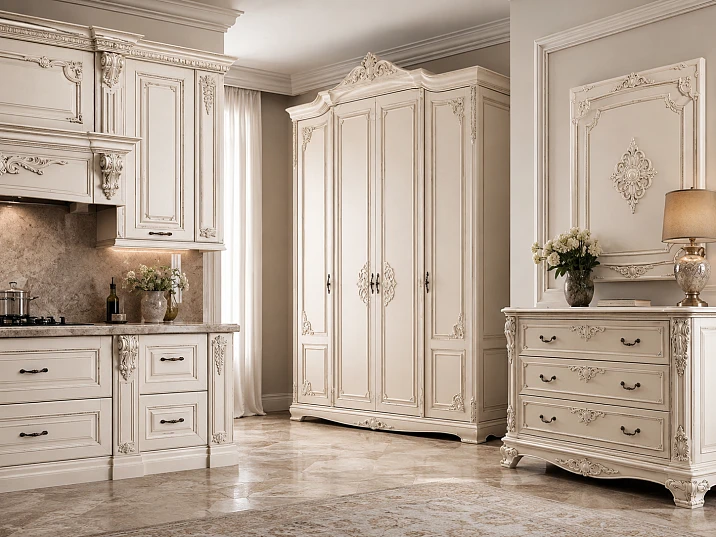
A beautifully designed kitchen or piece of furniture is rarely defined by color alone. The proportions of cabinet doors, the relationship between raised and recessed surfaces, the position of hardware, and the quality of decorative details all contribute to how the finished piece is perceived.
A plain cabinet door may be perfectly functional yet visually unremarkable. Add a carefully proportioned ornamental applique, a narrow molding frame, or a pair of sculptural accents, and the same surface can acquire the character of traditional architectural millwork.
This is where polyurethane cabinet appliques offer significant design possibilities.
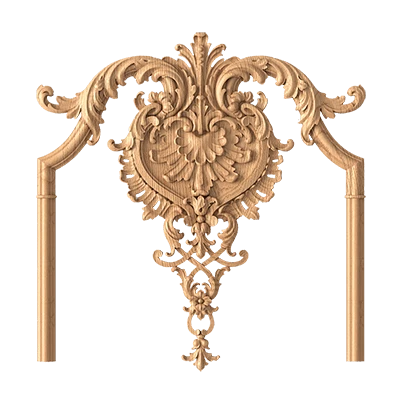
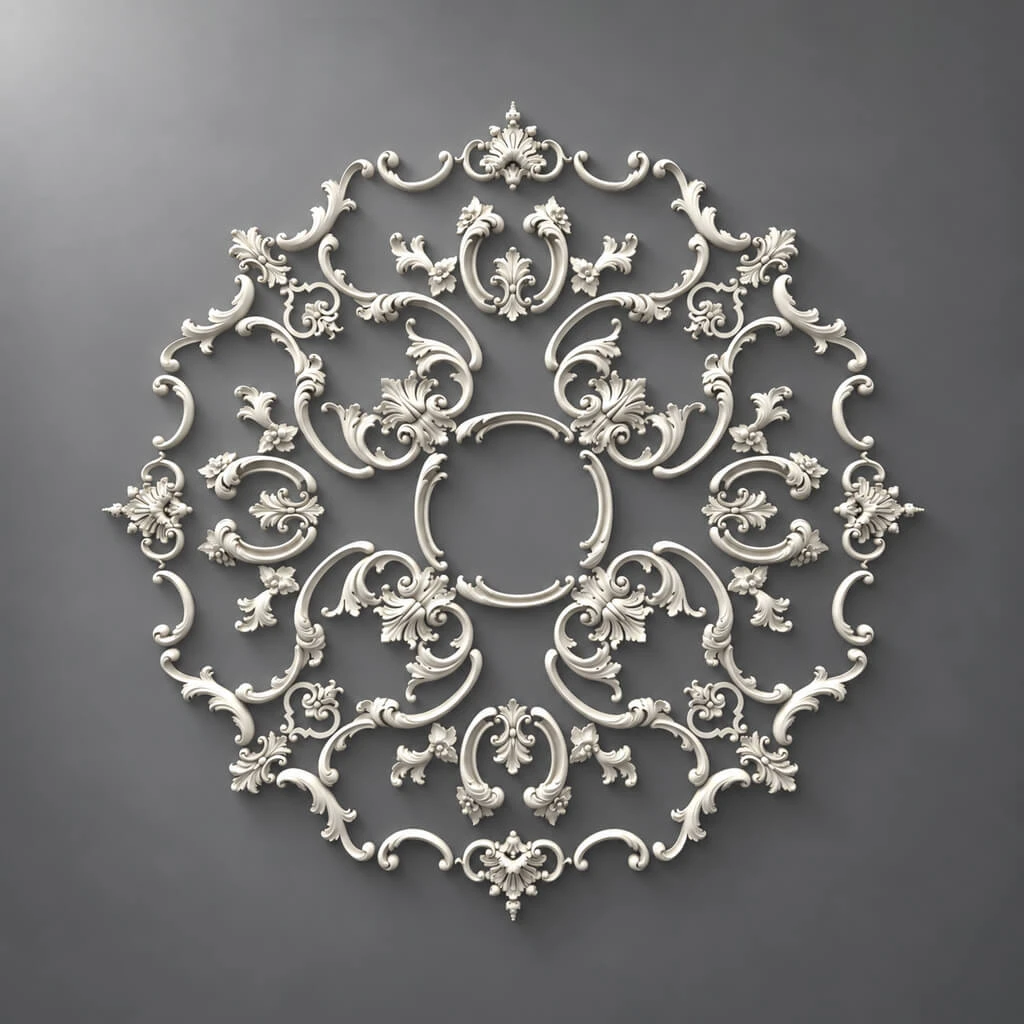
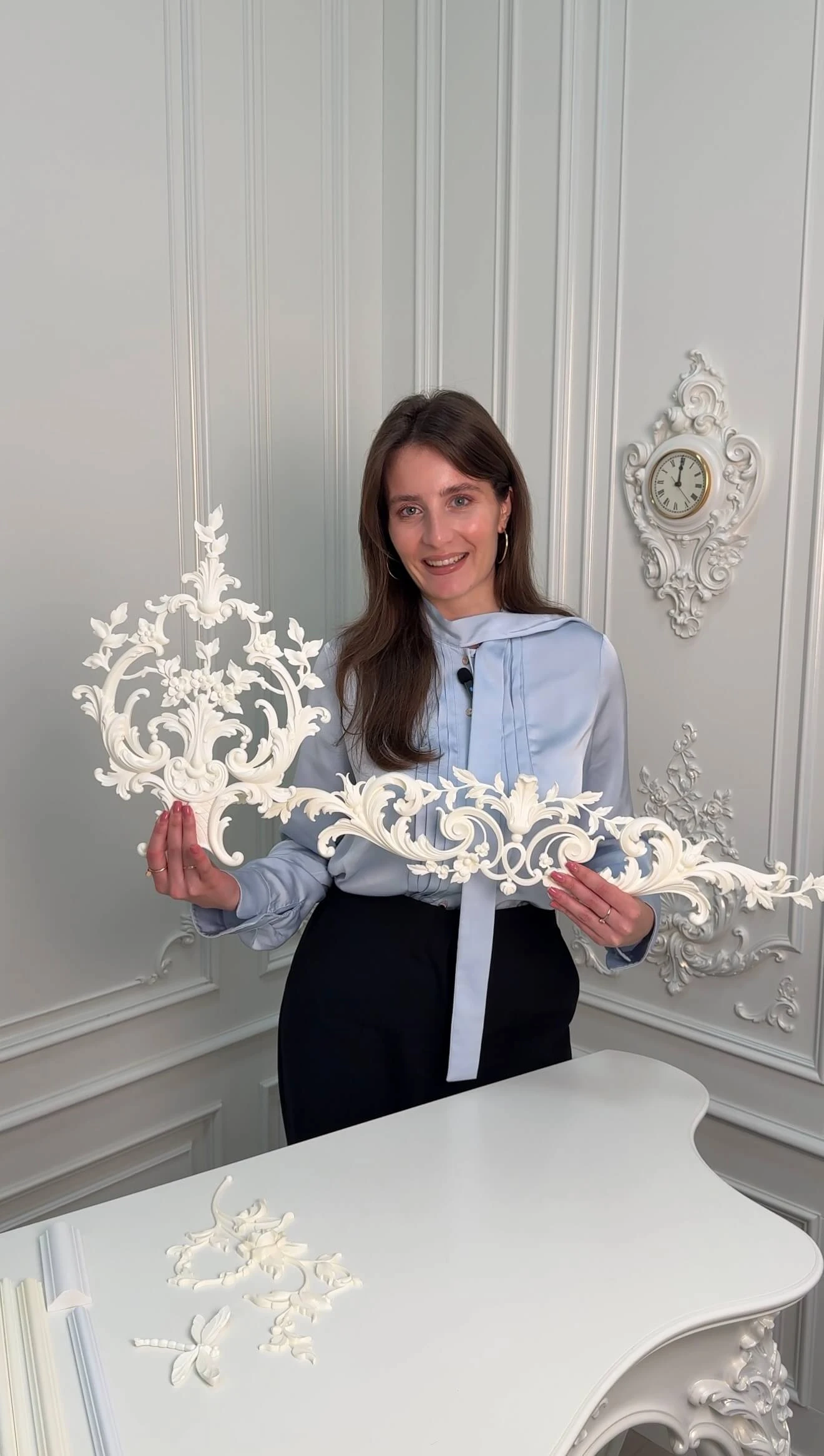
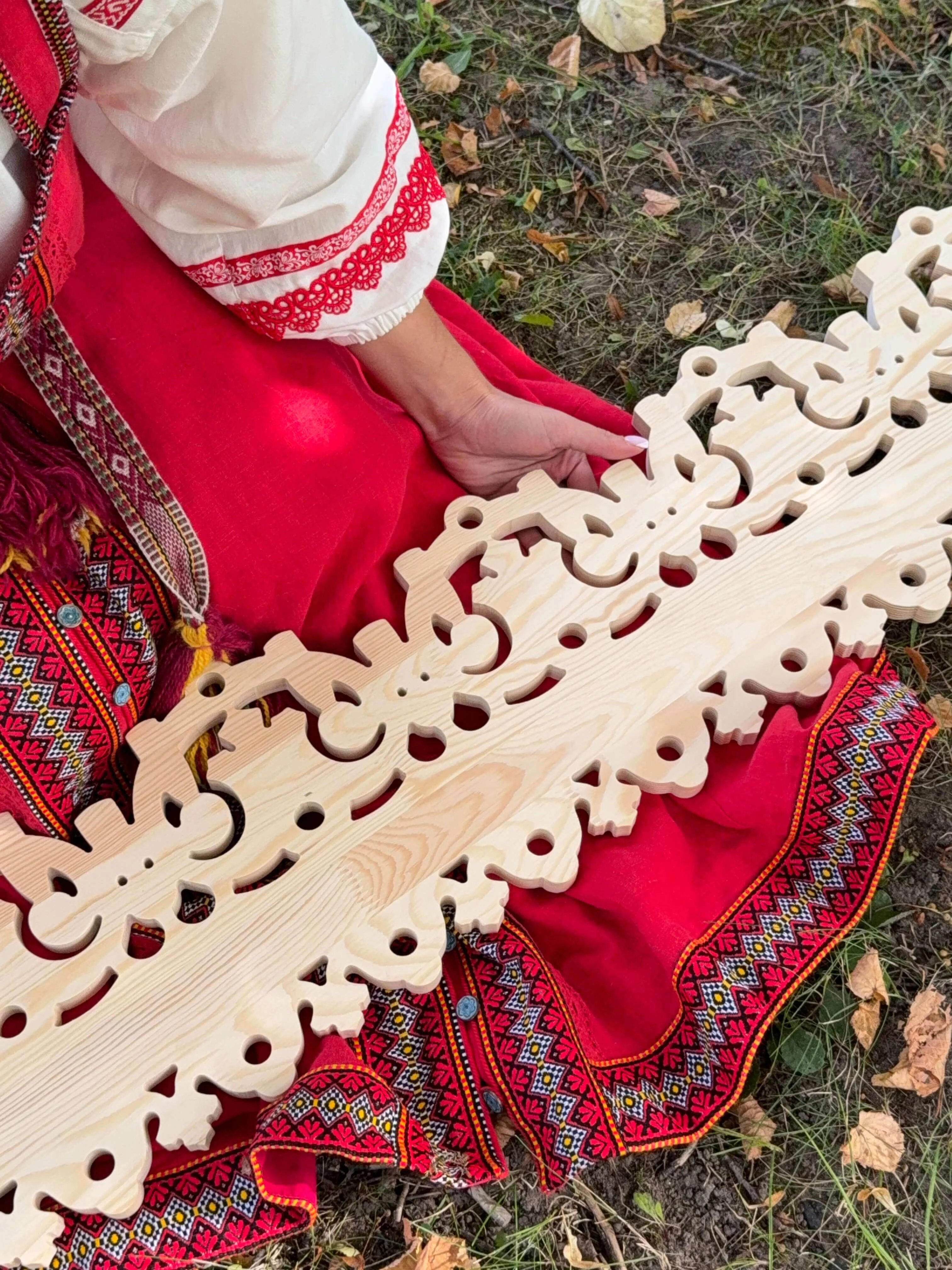
These lightweight decorative elements reproduce sculptural forms associated with classical woodcarving and ornamental furniture construction. They can introduce floral motifs, scrollwork, rosettes, geometric details, and other raised patterns to kitchen cabinet doors, drawer fronts, wardrobes, dressers, built-in cabinetry, and furniture panels.
Unlike carved solid wood, polyurethane decoration is primarily intended for painted applications. When the applique, cabinet door, and surrounding molding are finished as a coordinated system, the result can resemble custom decorative millwork without requiring every ornament to be carved or machined individually.
However, successful cabinet decoration involves more than attaching an attractive ornament to a door.
The applique must correspond to the scale of the cabinet front. Its projection must allow doors and drawers to operate freely. The decorative arrangement should relate to handles, hinges, frames, and neighboring cabinets. The adhesive must be compatible with the actual cabinet finish, and the completed surface must tolerate the cleaning and handling conditions associated with everyday furniture use.
These considerations are especially important in kitchens, where cabinetry is exposed to frequent contact, cooking residue, humidity changes, and repeated operation.
This guide explains how to choose, position, install, and paint decorative cabinet appliques, with detailed recommendations for kitchen cabinet doors, drawer fronts, wardrobes, dressers, and other furniture.
It also examines real products from the STAVROS polyurethane onlays and appliques collection, providing practical examples for interior designers, cabinetmakers, furniture refinishers, and homeowners throughout the United States.
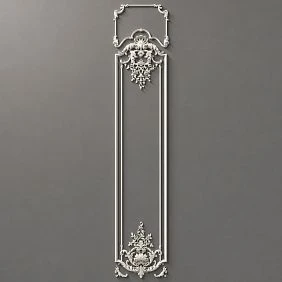
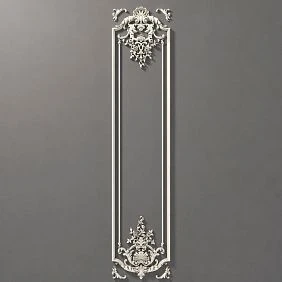
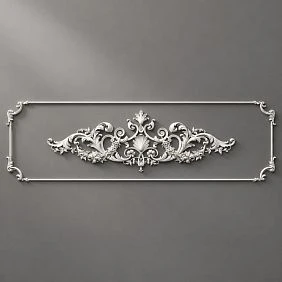
What Are Polyurethane Cabinet Appliques?
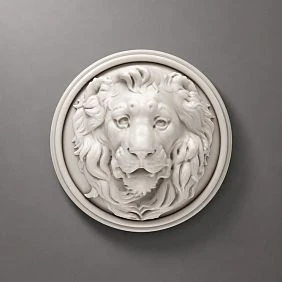
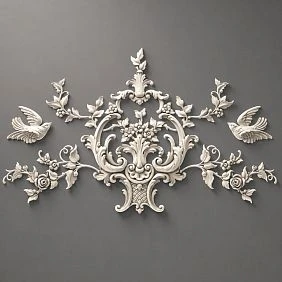
A cabinet applique is a decorative element attached to the visible surface of a cabinet door, drawer front, or furniture panel.
The ornament may be positioned at the center of the panel, near an upper edge, within a decorative molding frame, or as part of a symmetrical composition.
Cabinet appliques can be manufactured from carved wood, molded polyurethane, resin, plaster, or other materials.
Polyurethane appliques are manufactured using molds that reproduce three-dimensional decorative patterns.
This allows multiple identical pieces to be produced with consistent geometry.
In furniture design, these pieces are often described as:
Cabinet appliques
Decorative cabinet onlays
Polyurethane furniture onlays
Ornamental furniture appliques
Cabinet door appliques
Decorative furniture embellishments
Furniture molding appliques
Although these terms overlap, they describe several different ornamental formats.
A small rosette can act as a central decorative accent.
An elongated applique can reinforce the vertical proportions of a wardrobe door.
A floral ornament can become the focal point of a framed cabinet panel.
A series of matching corner appliques can introduce classical detailing to a cabinet front.
The common characteristic is that the decoration is applied to an existing or newly manufactured furniture surface.
Cabinet Appliques vs. Cabinet Molding
These products perform different architectural functions.
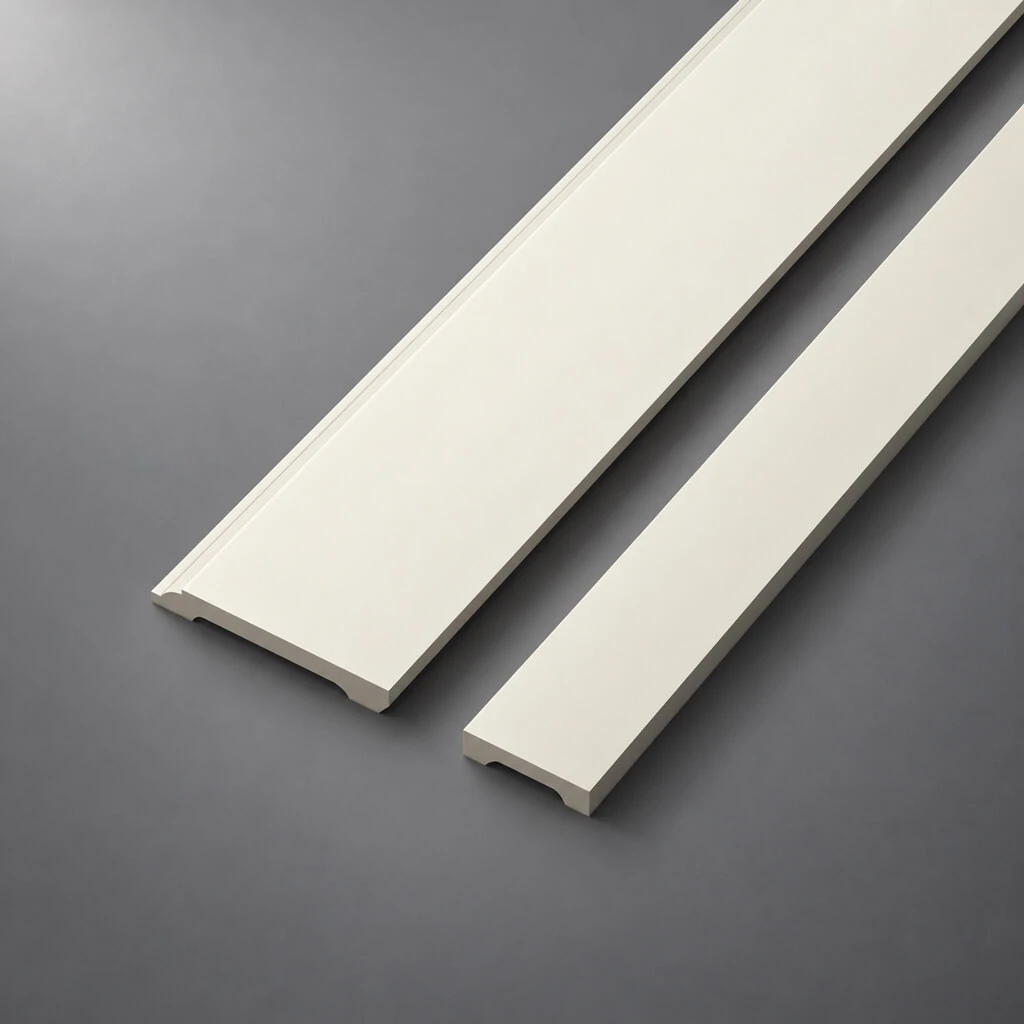
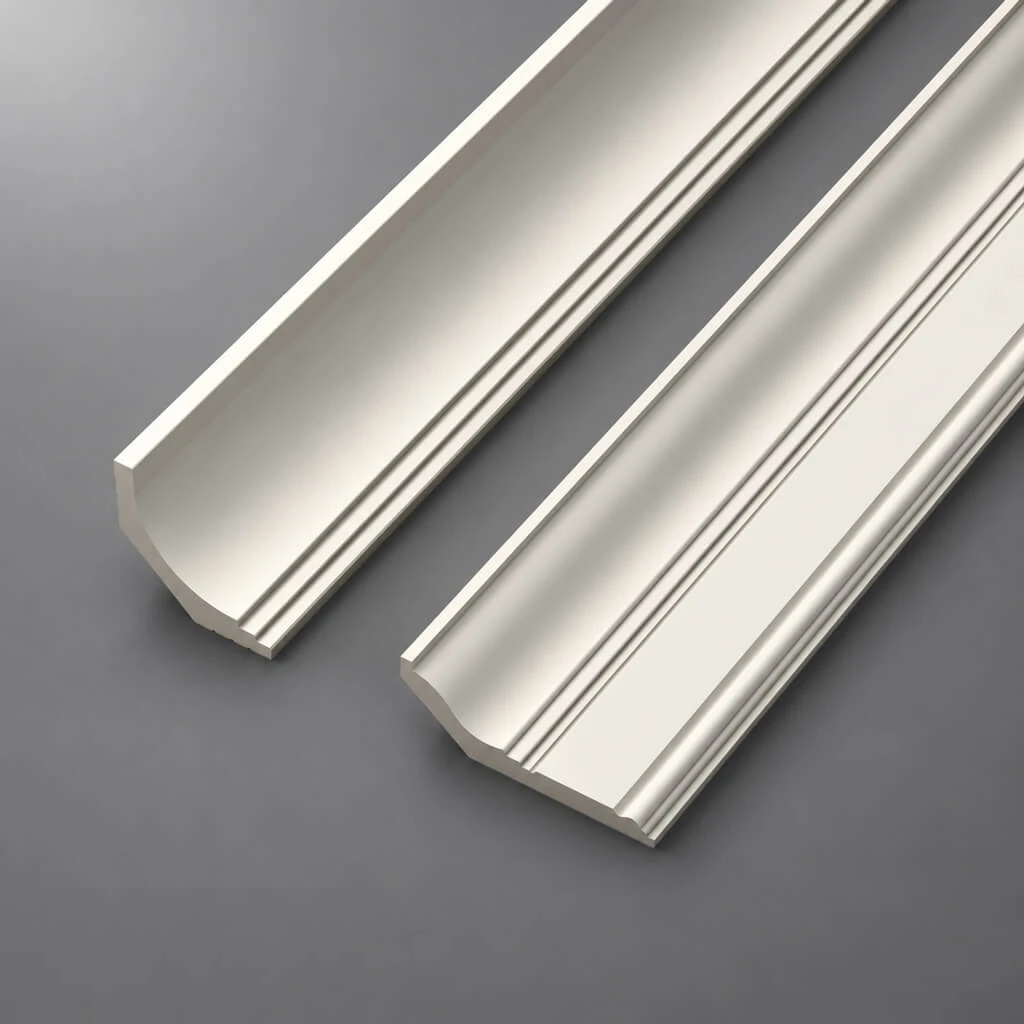
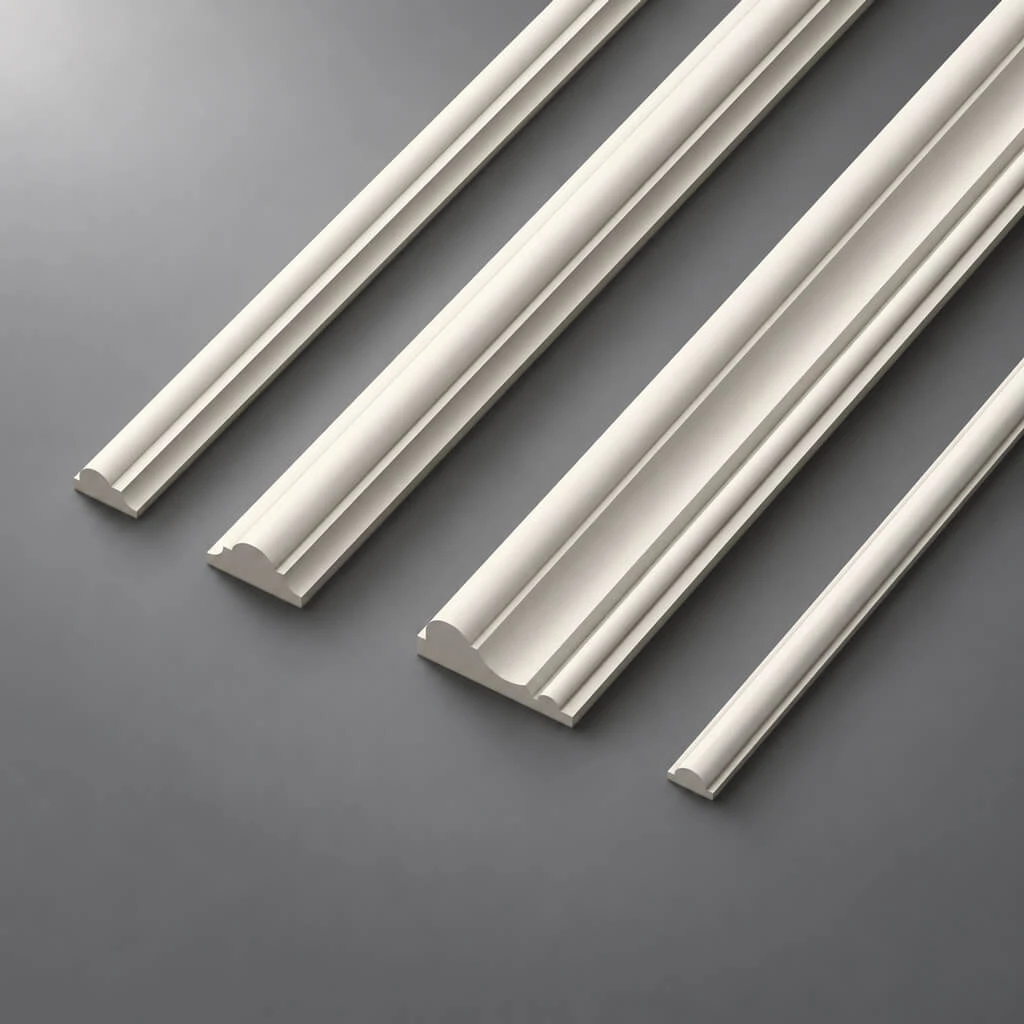
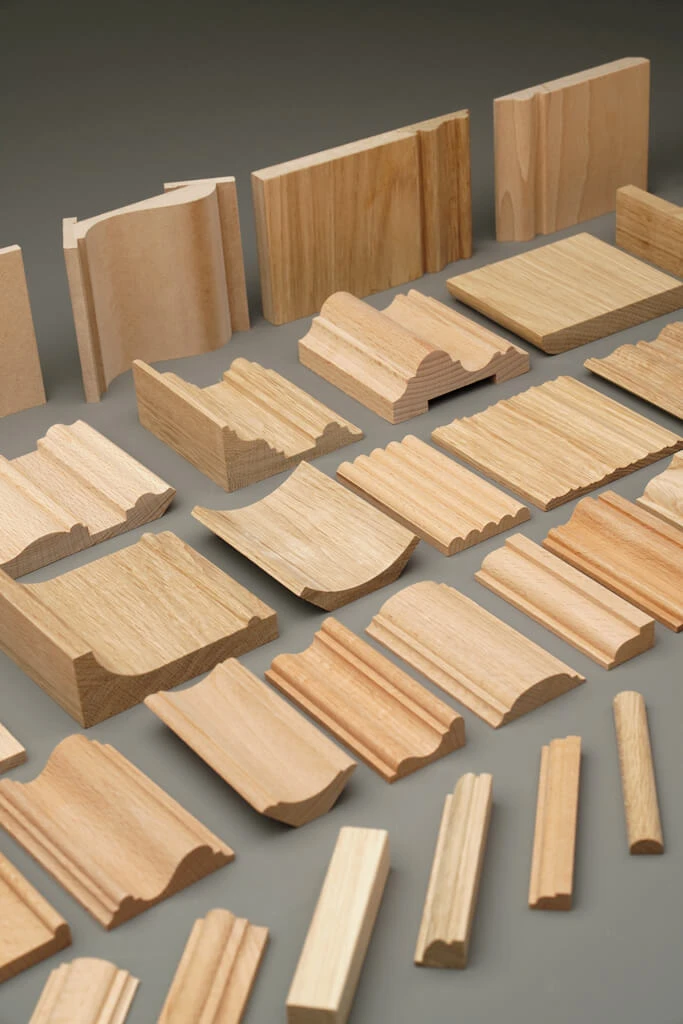
Cabinet molding is typically a continuous linear profile. It creates borders, frames, divisions, and transitions.
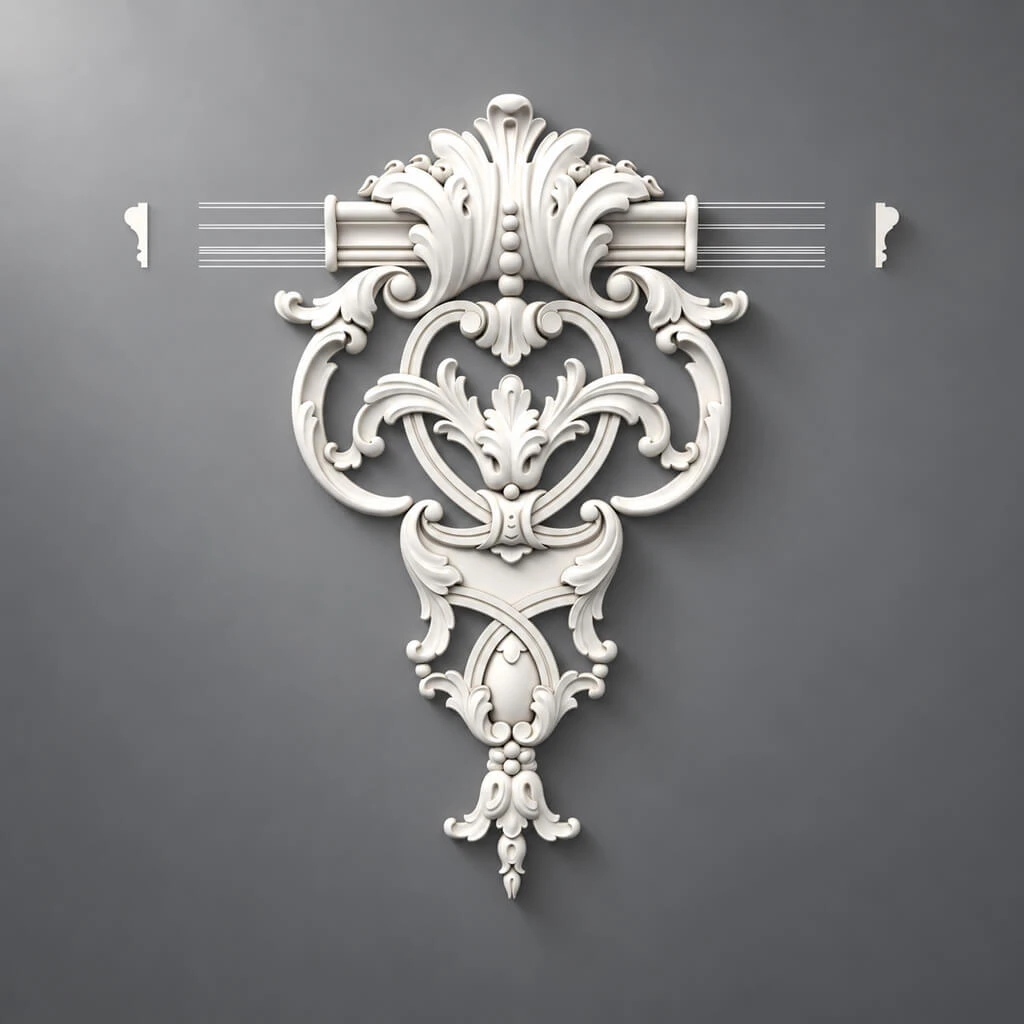
Cabinet appliques are individual ornamental elements. They introduce sculptural detail at selected locations.
A decorative furniture composition frequently combines both.
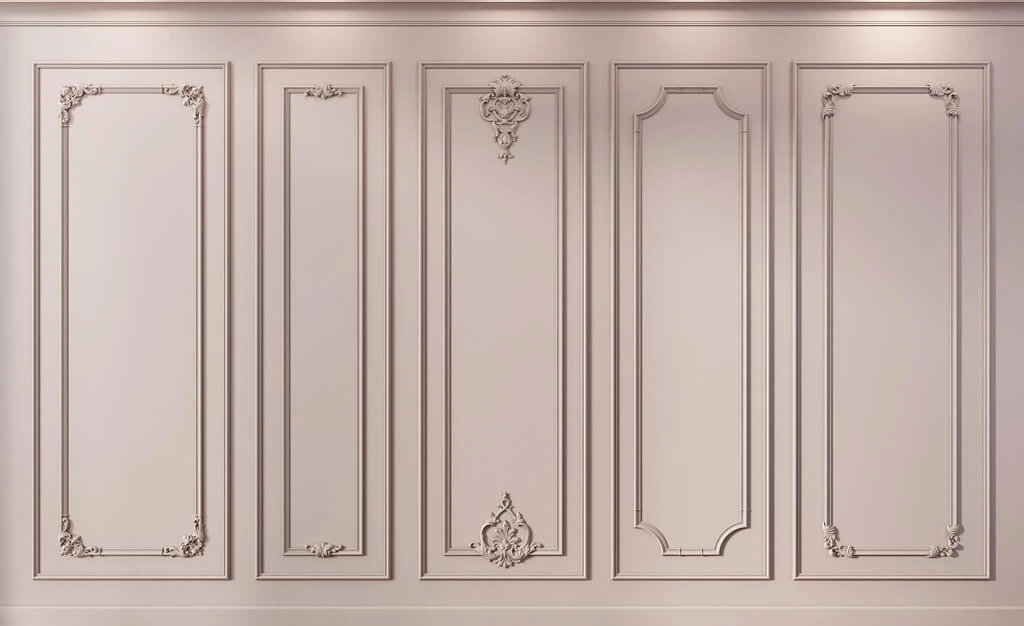
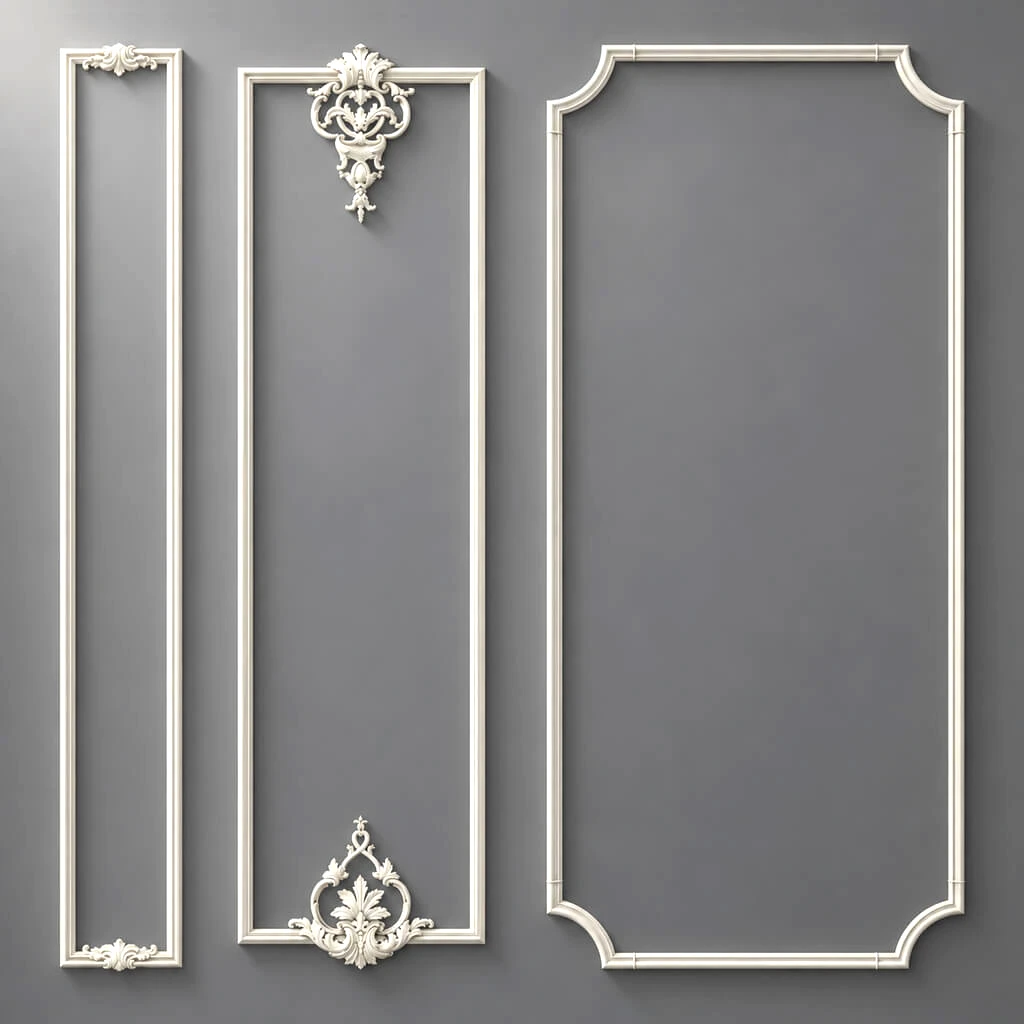
For example, four straight polyurethane molding lengths can form a rectangular frame on a kitchen cabinet door.
A floral applique may then be installed in the upper central portion of that frame.
The molding establishes the geometry.
The applique introduces artistic emphasis.
The result is more coherent than a collection of unrelated decorative pieces.
Наша фабрика также производит:
Смотреть весь Каталог продукции
Appliques vs. Functional Cabinet Hardware
Decorative onlays should not be confused with cabinet handles, door pulls, hinges, protective bumpers, or other functional hardware.
Although an ornamental applique may resemble a handle or decorative hardware plate, it should not be assumed suitable for gripping, pulling, or load-bearing use.
Its primary role is visual.
Cabinet hardware must continue to perform its intended function independently.
Получить консультацию
Why Use Polyurethane Onlays for Cabinets?
Polyurethane is particularly useful in painted furniture applications because it allows detailed relief to be repeated without relying on natural wood grain or individual carving.
Consistent Ornamental Detail
Traditional carved furniture may contain elaborate decorative motifs.
A symmetrical cabinet design can require multiple matching leaves, scrolls, rosettes, and ornamental panels.
Hand-carving every component introduces additional fabrication work.
Molded polyurethane allows a series of identical decorative elements to be specified and reproduced consistently.
This is valuable for kitchen cabinets, where several doors may need the same ornament.
Relatively Low Weight
Decorative polyurethane components are generally lighter than comparable solid plaster ornament, although their weight depends on size and formulation.
This can simplify handling and placement on suitable cabinet surfaces.
However, the weight of the decorative element is not the only installation consideration.
Adhesive compatibility, substrate strength, door construction, and repeated movement are also important.
Suitable for Paint-Grade Furniture
One of the strongest applications for polyurethane onlays is painted cabinetry.
The ornament can receive a compatible primer and finish coat to coordinate with the surrounding door.
White, cream, sage green, navy, charcoal, muted blue, and other painted finishes can all be considered.
A unified finish can make the applique appear to belong to the original furniture design rather than being added afterward.
Repetition Across Multiple Cabinet Fronts
A kitchen may contain twelve or more doors and drawer fronts.
Consistent ornament placement helps establish a unified design language.
Using matching polyurethane appliques allows the decorative motif to repeat across the cabinetry.
The size and position may vary according to the individual door, but the ornament can remain stylistically consistent.
Flexibility for Furniture Refinishing
Polyurethane furniture appliques are also useful in suitable furniture renovation projects.
An existing painted dresser can receive new decorative details.
Plain wardrobe doors can be transformed into more elaborate panel compositions.
A basic nightstand can acquire traditional ornamental accents.
However, the original finish must provide a suitable bonding surface, and the completed design must not interfere with furniture operation.
Polyurethane vs. Wood Appliques for Furniture
Polyurethane and carved wood can create similar decorative silhouettes, but they have different material characteristics.
The correct choice depends primarily on the intended finish and the project's design requirements.
| Selection factor | Polyurethane applique | Carved wood applique |
|---|---|---|
| Primary visual character | Molded ornamental relief | Authentic carved wood |
| Natural wood grain | No | Yes |
| Paint-grade applications | Well suited with compatible preparation | Well suited with appropriate preparation |
| Transparent stain-grade finish | Does not provide natural wood appearance | Suitable where the wood species and finish are appropriate |
| Ornamental consistency | Repeated molded details | Depends on manufacturing method |
| Weight | Often relatively lightweight | Depends on wood species and dimensions |
| Installation | Compatible adhesive or approved method | Woodworking adhesive or specified attachment |
| Moisture behavior | Product-dependent polymer properties | Wood responds to humidity changes |
| Best applications | Painted cabinet ornament and decorative furniture | Stained, clear-finished, and carved furniture |
When Polyurethane Is the Better Choice
Polyurethane is particularly attractive when the furniture is intended to receive an opaque painted finish.
For example, a kitchen with white painted MDF cabinet doors may use polyurethane appliques to introduce classical relief.
The decorative elements and cabinet fronts can be finished in a coordinated color.
This can produce a consistent appearance across multiple doors.
When Wood Is Preferable
If the project emphasizes visible walnut, oak, cherry, or another natural wood species, carved wood is often more appropriate.
Natural wood appliques can be stained or finished to coordinate with the surrounding wood.
Polyurethane does not reproduce authentic grain simply through the application of transparent stain.
Faux-finishing techniques can imitate wood color, but they do not make the material equivalent to solid wood.
Combining Materials
Painted furniture may combine polyurethane decorative elements with wood or MDF components.
This can be effective when the surface preparation, adhesive, and finish are compatible.
For example, a primed MDF cabinet door may receive polyurethane molding and a central floral applique.
After appropriate preparation, the complete assembly may be finished with a suitable cabinet enamel.
However, different materials can move differently with temperature and humidity.
Joint design and finishing should account for those differences.
Types of Decorative Polyurethane Appliques for Cabinets
The shape of the ornament determines how it should be used.
Central Cabinet Appliques
Central appliques create a focal point within the cabinet panel.
They may be symmetrical floral motifs, classical cartouches, geometric medallions, or sculptural ornaments.
A central applique is most effective when the surrounding panel contains enough negative space.
The ornament should not occupy the entire available surface unless the design deliberately calls for a densely decorated composition.
Floral Cabinet Onlays
Floral appliques are commonly associated with traditional, French-inspired, romantic, and neoclassical furniture.
They may feature flowers, leaves, vines, and decorative scrollwork.
Their organic contours can soften the strict geometry of rectangular cabinet doors.
Floral patterns are particularly effective on painted cabinets where the ornament is revealed through light and shadow.
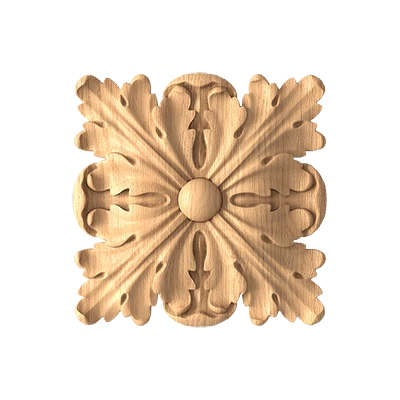
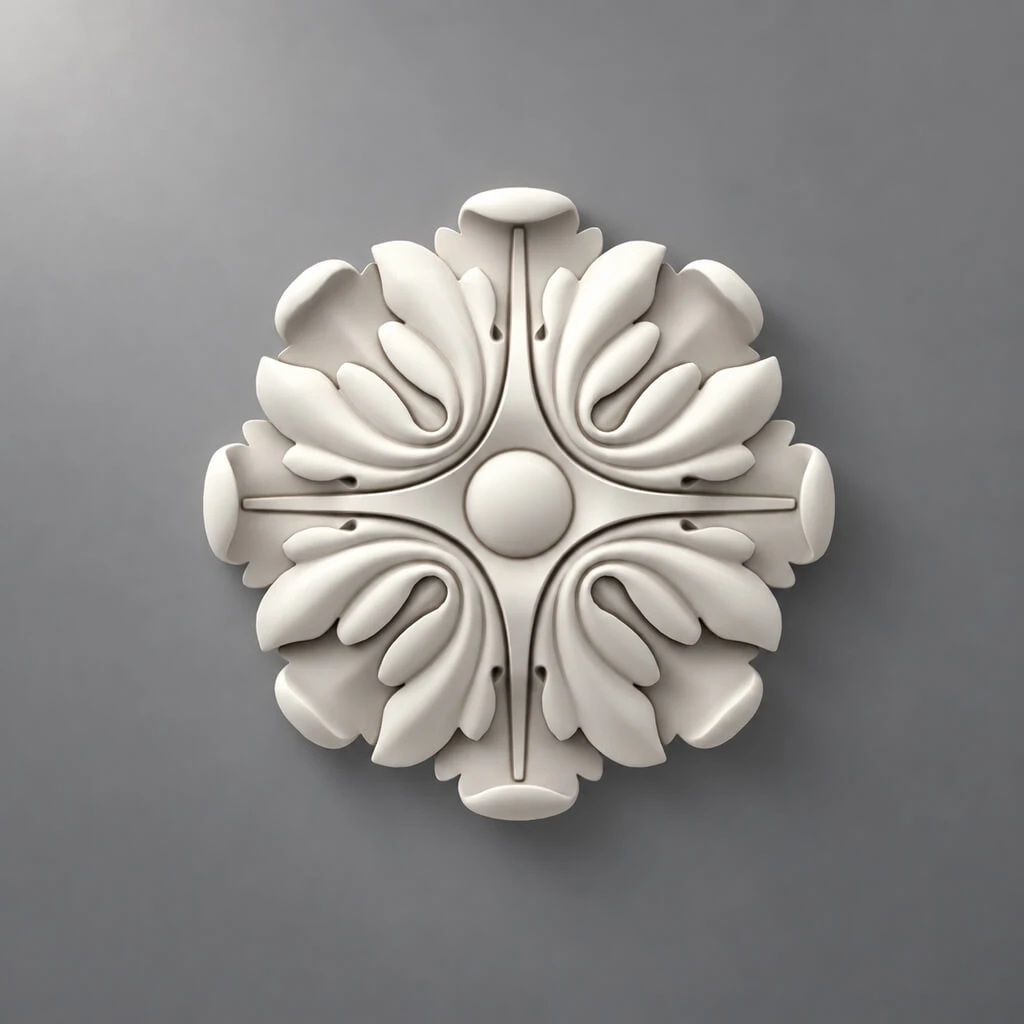
Decorative Rosettes
Rosettes are compact ornaments organized around a central point.
They may be circular, square, or another symmetrical shape.
Small rosettes can work well on drawer fronts, furniture panels, and selected cabinet details.
A repeated rosette motif can create a consistent rhythm across a dresser or sideboard.
Vertical Furniture Appliques
Elongated appliques reinforce the vertical proportions of tall surfaces.
They are particularly suitable for wardrobe doors, pantry cabinets, tall built-ins, and other narrow architectural fields.
A vertical ornament can establish a focal axis without filling the entire door with decoration.
Corner Appliques
Decorative corner elements are positioned at the intersections of molding frames.
They may include symmetrical blocks or left- and right-hand ornamental designs.
When used with compatible molding profiles, corner appliques can create a more elaborate framed cabinet front.
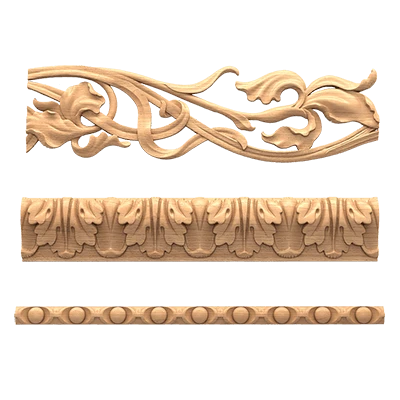
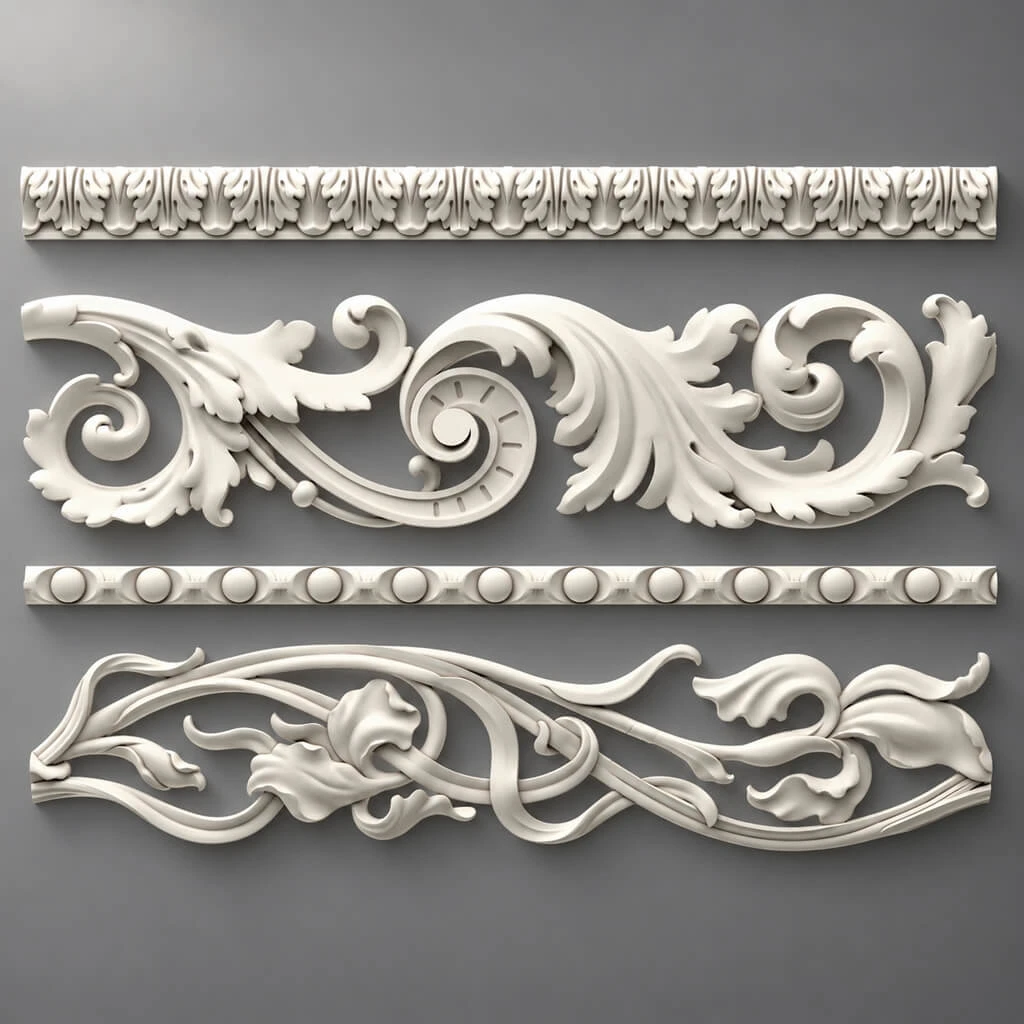
Ornamental Friezes
A decorative frieze is a horizontal ornamental strip.
In cabinetry, it may be used above a row of doors, across a built-in furniture unit, or along a decorative upper section.
The pattern should coordinate with the molding and other appliques.
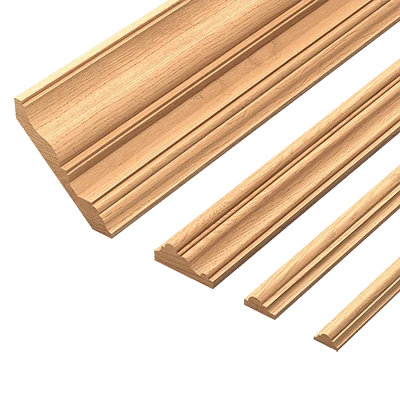
Decorative Moldings for Cabinet Frames
Linear profiles provide the architectural structure for the appliques.
The STAVROS polyurethane molding collection includes profiles that can be considered for furniture fronts and decorative framing.
The appropriate width depends on the size of the panel and the intended design.
Where Polyurethane Cabinet Appliques Work Best
Different furniture types require different decorative approaches.
A small kitchen drawer and a tall wardrobe door should not use the same ornament in the same way.
Kitchen Cabinet Doors
Kitchen cabinets are among the most demanding applications.
Doors are opened frequently, cleaned regularly, and exposed to cooking residue.
Decorative elements should therefore have suitable surface finishes, secure attachment, and proportions that do not interfere with everyday use.
A compact central applique can work well on a painted cabinet door.
For more elaborate designs, the applique may be combined with a molding frame.
Drawer Fronts
Drawer fronts generally have less vertical space than cabinet doors.
Their decorative design must account for the handle or pull.
A small rosette or compact applique may provide sufficient ornament.
Large projecting details are usually less appropriate for shallow drawer fronts or locations where users frequently touch the surface.
Wardrobe Doors
Wardrobe doors often provide large vertical surfaces.
This creates opportunities for elongated appliques and multi-panel decorative systems.
A tall wardrobe door may contain two framed fields, with a central ornament in one or both areas.
Dressers and Chests of Drawers
A dresser is defined by repeated horizontal elements.
Decorative appliques should reinforce that rhythm.
Matching ornaments may be installed at consistent positions across similarly sized drawers.
Where drawer dimensions differ, the ornament size or number may need adjustment.
Nightstands and Small Cabinets
Compact furniture generally benefits from restrained decoration.
A single small applique may be more effective than a large sculptural composition.
The ornament must leave sufficient space around handles, edges, and other details.
Built-In Cabinets and Furniture Portals
Large built-in furniture systems can combine multiple decorative layers.
A complete composition may include cabinet door frames, central onlays, decorative corners, upper molding, and a frieze.
The challenge is maintaining a clear visual hierarchy.
Not every surface needs the same amount of ornament.
Polyurethane Appliques for Kitchen Cabinets
The kitchen deserves special consideration because its decorative surfaces must withstand more demanding conditions than furniture in many other rooms.
Upper Cabinet Doors
Upper cabinets are generally positioned close to eye level.
Their ornament is therefore viewed at relatively short distances.
Large, deeply sculptural appliques can make small upper doors appear crowded.
For many kitchens, compact decorative elements or narrow molding frames provide a better balance.
A small central applique may work well on a taller upper cabinet.
On a short cabinet above a refrigerator or range hood, a more restrained decorative arrangement may be preferable.
Lower Cabinet Doors
Lower cabinet doors can accommodate decorative frames and modest central ornaments.
However, the position of hardware matters.
If the handle is close to the upper corner, the applique should not interfere with the user's grip.
The door should be opened through its normal range to check for contact with adjacent cabinets, appliances, and countertops.
Wide Drawer Fronts
Wide drawers provide a horizontal decorative field.
A compact central applique can create a balanced accent.
A symmetrical pair of small ornaments may also work when the drawer is sufficiently wide.
For a drawer measuring 30 inches wide and 10 inches high, a relatively compact applique can establish a focal point without dominating the entire front.
For a 5-inch-high drawer, even a modest 3.5-inch-tall ornament may be excessive.
The decorative element must be selected according to the actual usable area.
Pantry Cabinets and Tall Units
Tall kitchen cabinets provide larger surfaces.
A vertical applique can reinforce their proportions.
The design may also incorporate upper and lower molding frames.
For tall pantry doors, the applique should relate to the handle location and any existing panel divisions.
Cabinet Doors Near Ovens and Cooktops
Polyurethane decorative elements should not be installed indiscriminately near concentrated heat sources.
The product's temperature limitations, adhesive requirements, and surrounding appliance clearances must be considered.
A decorative applique installed directly beside a hot oven vent or another heat-intensive location may be unsuitable.
Verify the actual product and appliance requirements.
Kitchen Cleaning Requirements
Deep floral relief contains recesses that can collect dust and cooking residue.
A highly ornate applique may be attractive but require more careful cleaning.
For frequently handled cabinet fronts, consider relatively smooth contours and restrained projection.
The final paint should also be appropriate for cabinet use.
A durable, cleanable coating can be more important than an elaborate ornamental finish.
STAVROS Polyurethane Cabinet Appliques: Product Comparison
Choosing actual products by their dimensions is more reliable than selecting ornaments solely from photographs.
The STAVROS catalog includes compact decorative appliques, floral ornaments, elongated compositions, and larger decorative onlays.
The following examples illustrate different furniture applications.
| Product | Approximate dimensions | Decorative application |
|---|---|---|
| NPU-112 | 1.57 × 2.44 × 0.28 in | Compact cabinet and drawer accents |
| NPU-300 | 2.17 × 3.50 × 0.31 in | Small to medium furniture panels |
| NPU-301 | 2.72 × 3.19 × 0.31 in | Cabinet door and drawer decoration |
| NPU-496 | 1.81 × 1.81 × 0.71 in | Compact sculptural flower accent |
| NPU-245, smaller version | 4.33 × 3.46 × 0.39 in | Medium furniture fronts |
| NPU-245, larger version | 6.30 × 5.00 × 0.55 in | Larger decorative cabinet panels |
| NPU-501 | 2.28 × 11.81 × 0.43 in | Tall cabinet and wardrobe doors |
Dimensions are shown as width × height × projection where applicable. Review the individual product drawings to confirm orientation before specifying a layout.
NPU-112: Compact Polyurethane Applique for Cabinet Details
The STAVROS NPU-112 polyurethane applique measures approximately 1.57 × 2.44 × 0.28 inches.
Its compact format makes it useful for small decorative fields.
Potential applications include cabinet door accents, drawer-front decoration, and restrained ornamental furniture details.
On a relatively narrow cabinet door, NPU-112 can introduce decorative relief without requiring a large frame.
For a series of matching cabinet fronts, the same ornament may be repeated at a consistent location.
NPU-300: Decorative Furniture Onlay
The STAVROS NPU-300 polyurethane furniture onlay measures approximately 2.17 × 3.50 × 0.31 inches.
Its vertically oriented proportions make it suitable for cabinet doors and furniture panels where a modest decorative centerpiece is required.
It can be positioned within a narrow molding frame or used as an independent accent.
For painted neoclassical cabinetry, its size provides a useful balance between ornament and negative space.
NPU-301: Balanced Ornament for Cabinet Fronts
The STAVROS NPU-301 polyurethane applique measures approximately 2.72 × 3.19 × 0.31 inches.
Its nearly square proportions create a relatively balanced decorative field.
This makes it suitable for medium-sized cabinet panels and selected drawer-front applications.
A central NPU-301 ornament could be used on a painted door with a simple molding frame.
Its shallow relief may help preserve a restrained architectural appearance.
NPU-496: Compact Floral Rosette
The STAVROS NPU-496 polyurethane floral applique measures approximately 1.81 × 1.81 × 0.71 inches.
The ornament resembles a stylized flower.
Although relatively compact in width and height, it has more pronounced projection than several other small appliques.
That dimension matters.
A 0.71-inch projection may be appropriate for a decorative cabinet feature but could interfere with tight clearances or frequently used hardware.
The product is best evaluated as a deliberate sculptural accent rather than a universally suitable drawer decoration.
NPU-245: Two Sizes for Different Furniture Proportions
The STAVROS NPU-245 decorative polyurethane applique is available in two nominal sizes.
The smaller option measures approximately 4.33 × 3.46 × 0.39 inches.
The larger option measures approximately 6.30 × 5.00 × 0.55 inches.
Having two sizes within one ornamental design can help maintain consistency across furniture fronts of different dimensions.
For example, a smaller version might be used on ordinary cabinet doors, while the larger version is reserved for a central pantry cabinet or prominent furniture panel.
The result is a coordinated design that varies in scale without introducing unrelated ornament.
NPU-501: Vertical Applique for Tall Cabinets
The STAVROS NPU-501 polyurethane onlay measures approximately 2.28 × 11.81 × 0.43 inches.
Its elongated geometry makes it particularly relevant to wardrobe doors, tall kitchen cabinets, and vertical furniture panels.
Instead of creating a small focal point, the ornament reinforces the height of the surface.
It may be positioned along the central axis of a tall cabinet door or within an elongated molding frame.
The surrounding negative space is especially important.
A vertical ornament should have enough room above and below it to remain visually distinct from adjacent trim.
How to Choose the Right Applique Size
Selecting the correct ornament is a matter of proportion.
The first step is to measure the usable decorative area of the cabinet front.
This is not necessarily the same as the full width and height of the door.
Handles, hinges, existing rails, recessed panels, and edge clearances may reduce the available space.
Begin With the Visible Panel
For a flat slab door, the decorative field may occupy most of the visible front.
For a Shaker cabinet door, the usable central field is generally limited by the surrounding rails and stiles.
An applique intended for a recessed panel must fit within that panel and account for any change in surface depth.
Preserve Negative Space
An ornament becomes more legible when enough undecorated surface remains around it.
For example, a 4-inch-wide applique can appear proportionate on an 18-inch-wide cabinet door.
The same ornament may overwhelm a 6-inch-wide narrow cabinet front.
There is no universal percentage that determines the correct relationship.
The required negative space depends on the ornament's silhouette, projection, and surrounding frame.
Consider Visual Weight
Two ornaments with identical outside dimensions may have different visual impact.
A delicate open floral composition can appear relatively light.
A solid compact ornament with deep relief may appear heavier.
The selection should therefore consider both dimensions and sculptural density.
Match the Ornament to the Cabinet Style
A highly ornate acanthus motif generally works best with classical or richly detailed cabinetry.
A restrained floral applique may suit neoclassical and transitional designs.
A compact geometric ornament may work in selected Art Deco-inspired furniture.
Do not choose solely by size.
The ornament must belong to the same visual language as the cabinet.
Cabinet Hardware Clearance: The Most Important Technical Check
An applique that looks beautiful when the cabinet is closed may cause problems during normal operation.
Raised decorative elements change the effective profile of the cabinet front.
This is particularly important with full-overlay doors, inset doors, tight cabinet spacing, and certain hinge systems.
Cabinet Door Handles
The applique should not occupy the normal grip area.
If the cabinet uses a vertical pull, test whether fingers can comfortably reach the handle.
A projecting floral ornament placed directly behind or beside the pull may interfere with use.
Drawer Pulls
For drawer fronts, the handle often occupies the central area.
A decorative applique may need to be positioned above, below, or beside the hardware.
Where the drawer is shallow, a smaller ornament may be preferable.
Cabinet Hinges
Modern concealed hinges can allow doors to open through substantial angles.
As the door moves, its outer surface and nearby raised details may approach adjacent cabinets or other components.
Check the complete opening motion, not only the closed position.
The required clearance depends on the hinge system, cabinet construction, door thickness, and decorative projection.
Adjacent Cabinet Doors
A full-overlay cabinet door may have a narrow reveal beside the adjacent door.
A raised applique positioned near the edge could collide with a neighboring door during opening.
Allow sufficient clearance and test the actual movement.
Appliances and Drawers
Cabinet doors and drawers located near ovens, dishwashers, refrigerator doors, or other appliances may have additional clearance requirements.
Decorative elements should not interfere with appliance operation.
A Practical Clearance Test
Before permanent installation, position the applique on the cabinet front using a temporary mock-up or removable tape.
Close and open the door or drawer through its normal movement.
Check the clearance from adjacent components.
Pay particular attention to the maximum projection of the ornament.
This test can prevent damage and avoid costly modifications after painting.
Decorative Appliques for Shaker Cabinets
Shaker cabinet doors are widely used in American kitchens.
Their characteristic construction usually includes a flat center panel surrounded by relatively simple rails and stiles.
This geometry provides a useful architectural framework for decorative elements.
Adding a Central Applique
A small ornamental applique can be placed within the recessed center panel.
The design should remain balanced and leave sufficient space around the edges.
A compact product such as NPU-112 or NPU-300 may be suitable, depending on the actual panel dimensions.
Respect the Recessed Panel
The ornament must be compatible with the panel surface.
Some Shaker doors contain floating center panels that move slightly within the surrounding frame.
Attaching a decorative element across the joint between a floating panel and the rails or stiles can create problems.
Keep the applique within a suitable stable surface and follow the cabinet manufacturer's requirements.
Avoid Excessive Ornamentation
The simplicity of Shaker cabinetry is one of its defining characteristics.
Adding too many decorative elements can undermine that simplicity.
A single central accent or a restrained motif repeated on selected doors often works better than a heavily ornamented composition on every front.
Shaker vs. Traditional Raised-Panel Cabinets
Traditional raised-panel cabinetry already contains pronounced relief.
An additional applique should complement the existing geometry rather than compete with it.
In some cases, a small central ornament is sufficient.
In others, the raised panel is already visually complete and does not need further decoration.
Polyurethane Appliques for Flat Slab Cabinet Doors
Flat slab doors provide greater freedom because the entire face is relatively uninterrupted.
They are particularly suitable for applied molding frames.
The Classical Single-Frame Design
A simple rectangular frame can be created with narrow polyurethane molding.
A decorative applique may be positioned along the central axis.
This gives the flat slab door a more traditional appearance.
The STAVROS MLDPU-001 polyurethane molding measures approximately 0.39 inches wide with a 0.24-inch projection.
Its small cross-section is useful when a restrained decorative border is desired.
The Stronger Neoclassical Frame
For a more pronounced panel outline, consider the STAVROS MLDPU-002 polyurethane molding.
The profile measures approximately 0.87 inches wide with a 0.43-inch projection.
This creates stronger visual definition.
The larger profile may be suitable for wider cabinet doors or significant furniture panels.
Combining the Frame and Central Ornament
The molding provides the architectural boundary.
The applique provides the focal point.
A successful composition should have a clear hierarchy.
For example, a relatively simple molding frame might contain one medium-sized floral ornament.
A more elaborate frame may require a smaller central detail.
The objective is to avoid making every component compete for attention.
Decorative Corner Blocks for Cabinet Molding Frames
Mitered corners provide a continuous molding profile.
Decorative corner blocks offer another approach.
They turn the corners into intentional ornamental features.
The STAVROS molding decoration collection includes corner components for compatible profiles.
One example is the MLDPU-1U-1.1 polyurethane corner ornament.
It measures approximately 3.82 × 3.82 × 0.39 inches.
The product is designed for use with the MLDPU-001 and MLD-001-MG molding systems.
It can be used in a decorative frame where the corner is intended to become a visible architectural accent.
However, its dimensions may be substantial relative to a small cabinet door.
Before using such a corner block on furniture, check the available frame dimensions and the relationship to the central ornament.
A large decorative corner may occupy too much of a narrow cabinet panel.
For compact furniture, simple mitered molding corners may provide a better result.
Polyurethane Onlays for Wardrobe Doors and Tall Cabinets
Tall doors introduce a different proportional problem.
A small ornament may appear insignificant on a surface more than 80 inches high.
At the same time, covering the entire door with large relief elements can make the design unnecessarily heavy.
Use Vertical Composition
A vertical applique can reinforce the door's natural proportions.
For example, the STAVROS NPU-501 ornament has a height of approximately 11.81 inches.
Its elongated form can work within a tall central decorative field.
Two-Panel Wardrobe Design
A traditional tall wardrobe door may be divided into two decorative fields.
The upper field can be shorter.
The lower field may be taller.
This creates a hierarchy that resembles classical door and cabinet millwork.
An ornamental applique may be positioned in the upper panel, where it can act as a focal point.
Coordinate the Hardware
Tall wardrobe doors often use long vertical handles.
These handles may occupy the same visual axis as an elongated ornament.
Before choosing the applique, determine the handle position.
If the hardware is already installed, the decorative layout should respond to it.
Match Adjacent Doors
When several wardrobe doors are placed side by side, consistency is essential.
Matching appliques should be positioned at the same height.
If the wardrobe includes doors of different widths, use related ornaments or adjust their placement deliberately.
Do not automatically center ornaments independently on every door if doing so disrupts the overall architectural rhythm.
Decorating Dresser and Drawer Fronts
Drawers create a repeated horizontal composition.
The decorative system should reinforce that rhythm.
Centered Appliques
A compact applique may be positioned on the centerline of each drawer.
This creates an ordered sequence.
However, the handle must be included in the layout.
If a central pull occupies the same position, the ornament may need to move above or below it.
Symmetrical Pairs
Wide drawers can accommodate a pair of matching appliques.
This may work particularly well on traditional dressers with two separate drawer pulls.
The ornaments should relate to the hardware positions.
Different Drawer Heights
A dresser may contain small upper drawers and larger lower drawers.
Using exactly the same applique on every drawer is not always appropriate.
A small ornament may work on the upper drawers.
The lower drawers may support a larger related motif.
Alternatively, leave the smallest drawers undecorated.
Drawer Front Thickness and Construction
Decorative components must be attached to a suitable surface.
Do not assume that thin decorative fronts can safely accommodate arbitrary mechanical fasteners.
For lightweight polyurethane appliques, a compatible adhesive may be appropriate.
The substrate, finish, and repeated operation must be considered.
A Practical Cabinet Design Example: Eight Painted Kitchen Doors
Consider a kitchen with eight flat cabinet doors.
Each door measures 18 inches wide and 30 inches high.
The design calls for one decorative molding frame on each door, with a small central applique.
Step 1: Establish the Frame Margins
Suppose the outer edge of each frame is positioned 3 inches from the left and right edges of the door.
The frame width becomes:
18 − 3 − 3 = 12 inches.
Suppose the top and bottom margins are 4 inches.
The frame height becomes:
30 − 4 − 4 = 22 inches.
This produces a 12 × 22-inch frame.
Step 2: Calculate the Molding Perimeter
The perimeter of one frame is:
2 × (12 + 22) = 68 inches.
For eight doors:
8 × 68 = 544 inches.
That equals approximately 45.3 linear feet of molding.
Step 3: Evaluate Stock Length
Suppose the project uses MLDPU-001 molding supplied in nominal 102.36-inch lengths.
The theoretical length-only minimum is:
544 ÷ 102.36 = approximately 5.31 pieces.
Rounded up, that is six stock lengths.
However, the final quantity must be confirmed through a cutting schedule accounting for the individual 12-inch and 22-inch pieces, saw kerf, miters, and possible errors.
An additional stock length may be a reasonable project reserve.
Step 4: Select the Applique
Each of the eight frames requires one central ornament.
A product such as NPU-300 may be considered because of its relatively compact size.
The order would require eight matching appliques.
Step 5: Check Hardware Clearance
Mark the position of the handle on each door.
Confirm that the molding and applique do not interfere with the grip area or opening motion.
The actual decorative layout may need to be adjusted.
Step 6: Prepare the Finishing Specification
If the complete cabinet system will be painted, specify compatible preparation, bonding materials, primer, and cabinet enamel.
The final finish should create a consistent appearance across the door, molding, and applique.
Step 7: Prepare the Purchasing List
The preliminary decorative order includes:
Straight polyurethane molding according to the verified cutting schedule.
Eight matching central appliques.
Compatible adhesive.
Suitable filler or joint treatment.
Primer where required.
Cabinet-grade finish paint.
If ornamental frame corner blocks are added, the cutting schedule and component quantities must be revised.
How to Install Polyurethane Appliques on Cabinet Doors
A reliable installation requires careful preparation and an adhesive system compatible with both materials.
Cabinet doors may be manufactured from painted wood, MDF, plywood, laminate, thermofoil-coated materials, or other finished composites.
These surfaces do not all behave identically.
Step 1: Identify the Cabinet Surface
Determine the type of cabinet front and its existing finish.
An unfinished MDF panel is different from a factory-coated laminate door.
A previously painted wood door may require different preparation from a thermofoil-coated panel.
The adhesive must be suitable for both the polyurethane ornament and the actual receiving surface.
Some factory finishes may not provide reliable adhesion without special preparation.
Do not assume that a general construction adhesive will bond securely to every cabinet coating.
Step 2: Remove the Door When Practical
For many refinishing projects, removing cabinet doors provides better control.
The door can be placed horizontally on a suitable work surface.
This makes measuring, positioning, bonding, and painting easier.
Label each door and its hardware before removal.
This simplifies reassembly and helps preserve the original hinge adjustments.
Step 3: Clean the Surface
Cabinet fronts, especially in kitchens, may contain accumulated grease and cleaning residue.
Clean the intended bonding area using a method appropriate to the existing finish.
Allow the surface to dry completely.
Do not apply adhesive over unstable coatings, dust, grease, or other contamination.
Step 4: Prepare the Finish
Some existing cabinet finishes may require light abrasion or another manufacturer-approved preparation method.
The objective is to create a reliable bonding surface without damaging the substrate.
For glossy factory finishes, test the proposed adhesive system before proceeding with the complete project.
If a finish is peeling, bubbling, or separating from the cabinet panel, the underlying problem must be corrected.
Attaching an applique to a failing finish does not create a durable installation.
Step 5: Mark the Position
Measure the cabinet front.
Identify the intended decorative centerline.
Mark the location of the applique.
For a framed panel, check the relationship between the ornament and the molding.
Use a suitable square or template to verify symmetry.
Step 6: Dry-Fit the Applique
Place the decorative element on the cabinet without adhesive.
Check the surrounding margins.
Inspect the design from normal viewing distance.
Confirm that the ornament does not interfere with handles, pulls, edges, or adjacent doors.
Step 7: Select a Compatible Adhesive
Use an adhesive approved for the selected polyurethane product and cabinet substrate.
A suitable adhesive may be a compatible acrylic, hybrid polymer, or other formulation specifically approved for the materials involved.
Do not choose solely by the product's marketing description.
Verify its bonding requirements, cure time, and compatibility with the existing coating.
Step 8: Apply the Adhesive
Apply the adhesive to the intended bonding surfaces according to the manufacturer's instructions.
The correct bead pattern depends on the applique geometry and the adhesive system.
Avoid excessive adhesive that may spread beyond the ornament.
Remove residue according to the manufacturer's recommendations.
Step 9: Position and Secure the Ornament
Place the applique on the marked location.
Check its alignment.
Use suitable temporary support if required.
For horizontal cabinet doors during installation, the workpiece may remain undisturbed until the adhesive develops sufficient strength.
For vertical installations, additional temporary support may be necessary.
Step 10: Allow the Adhesive to Cure
Follow the specified curing period.
A cabinet door is exposed to repeated movement and handling.
The bond should not be subjected to normal use before the adhesive has cured sufficiently.
Step 11: Inspect the Installation
Check the perimeter of the applique.
Look for gaps, raised edges, adhesive residue, and alignment problems.
Correct any defects before painting.
Step 12: Prepare for Finishing
If the decorative element is factory-primed, follow the specified coating instructions.
Repaired areas or exposed material may require spot priming.
The entire cabinet surface should be prepared according to the selected paint system.
How to Paint Polyurethane Cabinet Appliques
Painting is one of the most important stages in decorative furniture production.
The finish determines whether the applique appears integrated with the cabinet or remains visually separate.
Should You Paint Before or After Installation?
For a complete painted cabinet renovation, the final finish is often best applied after the decorative elements have been attached and the joints prepared.
This produces a more consistent appearance.
However, certain designs may benefit from applying a preliminary coat to difficult-to-reach portions of the ornament before installation.
The bonding surfaces must remain suitable for the adhesive.
A prepainted back surface can interfere with adhesion if the adhesive is not designed to bond to that coating.
The correct sequence depends on the materials and finishing system.
Use a Suitable Cabinet Primer
Factory-primed polyurethane may already be ready for compatible topcoats.
Unprimed ornaments or repaired areas may need additional preparation.
Cabinet doors may require a different bonding primer from the decorative polyurethane element.
For existing cabinet finishes, adhesion testing is especially important.
Choose a Durable Cabinet Finish
High-quality water-based acrylic cabinet coatings and compatible waterborne enamels are commonly used for painted kitchen cabinetry.
Select a product suitable for the actual substrate and the intended cleaning requirements.
A cabinet-grade coating should provide appropriate adhesion, resistance to ordinary handling, and a finish that can be maintained.
Matte, Satin, and Semi-Gloss Finishes
Matte finishes create a relatively subdued appearance.
Satin offers more light reflection and is often useful for painted cabinetry.
Semi-gloss can emphasize the sculptural relief but may make surface imperfections more visible.
The best finish depends on the design and performance requirements.
Preserve Fine Ornamental Detail
Apply controlled coats.
Do not allow excessive paint to accumulate in floral recesses or narrow grooves.
A small angled brush may be useful for detailed areas.
A smooth-finish mini roller can help with adjacent flat cabinet surfaces.
Professional spray finishing may be appropriate for large projects, provided the coating system and application conditions support it.
Allow Proper Curing
Dry-to-touch time is not the same as full coating cure.
Cabinet doors should not be reassembled or returned to heavy use before the finish has reached the required condition.
Follow the paint manufacturer's instructions.
Can Polyurethane Appliques Be Used on Laminate and Thermofoil Cabinets?
These surfaces require special care.
Laminate and thermofoil finishes may be more difficult to bond and repaint than suitably prepared conventional wood or MDF surfaces.
Laminate Cabinets
Some laminate surfaces can be painted or bonded using specialized preparation and compatible products.
However, the adhesive system should be tested.
Do not assume that an ordinary water-based mounting adhesive will provide reliable adhesion to a smooth laminate surface.
Thermofoil Cabinets
Thermofoil cabinet doors have a bonded surface film.
If the film is peeling or delaminating, attaching decorative appliques over it is generally not a reliable solution.
The film itself may separate from the underlying cabinet panel.
Repair, refacing, or replacement of the front may be more appropriate.
Factory-Finished Doors
Cabinets supplied with durable factory coatings may require special preparation.
Some finishes are difficult to bond or repaint.
Before modifying new or expensive cabinetry, confirm the manufacturer's recommendations and any implications for the product warranty.
Combining Polyurethane Appliques With Cabinet Molding
A coordinated decorative system can create a stronger result than isolated appliques.
The most effective compositions typically have three levels.
Primary Geometry: The Molding Frame
The frame establishes the structure of the cabinet front.
It defines the decorative field and provides a consistent relationship to the edges.
A relatively narrow profile is often suitable for smaller cabinet doors.
A wider profile may be appropriate for tall pantry cabinets or large furniture panels.
Secondary Ornament: The Applique
The central applique introduces decorative character.
It should correspond to the frame's dimensions and architectural style.
A small floral motif can support a restrained neoclassical composition.
A larger ornamental piece can create a stronger traditional effect.
Tertiary Details: Corners and Additional Accents
Decorative corner elements may add another layer of ornament.
However, not every cabinet front requires them.
A simple frame with one central applique may be more refined than a design in which every corner and border is heavily decorated.
Coordinating STAVROS Components
The STAVROS polyurethane molding profiles can be combined with suitable appliques from the decorative onlays collection.
For ornamental frame intersections, explore STAVROS molding corner decorations.
Check the dimensions and compatibility of every component.
Products intended for large architectural walls are not automatically appropriate for compact cabinet fronts.
Decorative Cabinet Styles for American Interiors
The correct applique depends on the furniture's design language.
Traditional American Cabinets
Traditional kitchens often use framed cabinet doors, symmetrical compositions, and restrained classical decoration.
A small floral applique can introduce additional character.
The ornament should support the cabinetry rather than overwhelm it.
French Country Kitchens
French country cabinetry may feature soft painted colors, decorative paneling, and botanical ornament.
Polyurethane appliques with floral or scroll motifs can reinforce this character.
Warm white, cream, muted green, and other restrained colors are suitable options.
Neoclassical Furniture
Neoclassical cabinetry emphasizes symmetry, proportion, and controlled ornament.
A rectangular molding frame with one central applique can create an elegant result.
Repetition across matching doors is important.
Victorian-Inspired Furniture
Victorian-inspired furniture can accommodate more elaborate relief.
Decorative rosettes, floral patterns, and sculptural appliques may be used in larger combinations.
The ornament must still correspond to the size of the furniture.
Art Deco-Inspired Cabinets
Art Deco decoration generally emphasizes geometric relationships and stylized forms.
Select ornamental elements that reinforce the geometry.
Not every floral applique will suit this style.
Modern Transitional Kitchens
Transitional kitchens combine traditional details with contemporary forms.
A restrained applique may be used selectively on a pantry door, furniture-style island, or prominent cabinet.
Leaving the remaining doors relatively simple can preserve visual balance.
Common Mistakes When Decorating Cabinets With Polyurethane Appliques
Several mistakes can undermine an otherwise promising furniture design.
Choosing Appliques That Are Too Large
An oversized ornament can dominate a small cabinet front.
Always compare the outside dimensions of the applique with the usable decorative field.
Ignoring Hardware Placement
An applique placed too close to a handle can make the cabinet uncomfortable to use.
Plan hardware and decoration together.
Ignoring the Door Opening Motion
Raised elements can interfere with adjacent doors or cabinetry.
Test the full movement before installation.
Using Decorative Wall Profiles Without Checking Scale
A molding that looks appropriate on a large wall may be too substantial for a small cabinet door.
Furniture decoration generally requires careful control of profile width and projection.
Attaching Over Grease or Loose Paint
Cabinet finishes must be properly prepared.
A decorative element can detach if the underlying coating fails.
Using an Incompatible Adhesive
Polyurethane compatibility alone is not sufficient.
The adhesive must also bond to the cabinet's actual surface.
Painting Without Proper Surface Preparation
Factory finishes, primers, and polyurethane ornaments may have different coating requirements.
Plan the entire finishing system.
Using Too Many Different Ornaments
Mixing unrelated floral, geometric, and classical motifs can create visual confusion.
A limited ornamental vocabulary usually produces a more coherent result.
Ignoring Cleaning Requirements
Highly detailed relief can collect grease and dust.
Consider the location and expected maintenance.
Buying Without a Quantity Schedule
Multiple cabinet doors and drawers require consistent product selection.
Prepare a schedule showing the exact SKU and quantity for every front.
Caring for Decorative Polyurethane Cabinet Fronts
Routine maintenance helps preserve the appearance of painted decorative cabinetry.
Remove dust with a soft cloth or suitable brush.
For kitchen cabinets, clean the surfaces using a method compatible with the selected paint.
Avoid aggressive solvents and abrasive cleaning products.
Pay particular attention to recessed floral details where dust or cooking residue can accumulate.
Inspect decorative elements periodically for loose edges or damaged coatings.
Small surface defects may be repaired using compatible materials and touch-up paint.
If an applique becomes loose, determine why the bond failed before reattaching it.
The underlying cause may involve contamination, coating failure, adhesive incompatibility, or damage to the receiving surface.
Frequently Asked Questions About Polyurethane Cabinet Appliques
What Are Cabinet Appliques?
Cabinet appliques are decorative elements attached to cabinet doors, drawer fronts, or furniture panels.
They introduce raised ornament such as floral motifs, scrollwork, rosettes, and other decorative forms.
Can Polyurethane Appliques Be Used on Kitchen Cabinets?
Yes, suitable polyurethane decorative elements can be used on kitchen cabinet fronts.
The installation and finishing system must be compatible with the cabinet surface and expected kitchen conditions.
Are Polyurethane Onlays Better Than Wood Appliques?
Polyurethane is useful for consistent molded ornament and paint-grade applications.
Wood is preferable when authentic natural grain or stain-grade furniture is required.
The better choice depends on the intended design and finish.
Can You Add Appliques to Existing Cabinet Doors?
In many cases, yes.
However, the existing finish must be sound and compatible with the adhesive and paint system.
Factory coatings, laminate surfaces, and thermofoil doors may require additional evaluation.
What Is the Best Glue for Polyurethane Cabinet Appliques?
Use an adhesive approved for both the polyurethane product and the actual cabinet surface.
The correct choice depends on the substrate and finish.
Test compatibility before installing the complete project.
Can Polyurethane Appliques Be Painted?
Many polyurethane decorative products are intended for painting.
Confirm the product's factory surface preparation and use a compatible coating system.
Should Appliques Be Painted Before or After Installation?
For a unified cabinet finish, the final coat is commonly applied after installation and joint preparation.
Prepainting may be useful in certain applications, but the bonding surfaces must remain compatible with the adhesive.
Can Polyurethane Appliques Be Used on Shaker Cabinets?
Yes, suitable compact ornaments can be incorporated into Shaker-style cabinetry.
The decorative elements should respect the center panel, surrounding rails and stiles, and overall restrained design.
Can You Put Appliques on Drawer Fronts?
Yes.
Small decorative appliques can be used on suitable drawer fronts.
Select the ornament according to the available space, hardware position, and projection.
What Size Applique Should I Use on a Cabinet Door?
There is no universal size.
Measure the usable decorative field and consider the ornament's width, height, projection, and visual density.
Leave enough space around the ornament for it to remain distinct.
Can You Use Polyurethane Appliques on Tall Wardrobe Doors?
Yes.
Elongated ornaments can be particularly effective on tall doors.
The STAVROS NPU-501 is one example of a vertically oriented polyurethane decorative element.
Can Polyurethane Appliques Be Stained Like Wood?
Polyurethane does not have natural wood grain.
Opaque painting and specialized faux finishes are generally more appropriate when a wood-like decorative appearance is desired.
For authentic stained wood, choose a suitable wood applique.
Do Polyurethane Appliques Require Primer?
That depends on whether the product is factory-primed and on the selected paint.
Unprimed surfaces and repaired areas may require additional preparation.
Can Cabinet Appliques Be Used Near an Oven?
Only where the product, adhesive, and coating system are suitable for the expected temperatures and appliance clearances.
Do not assume that decorative polyurethane is appropriate near concentrated heat.
Can Decorative Cabinet Appliques Be Removed Later?
Removal may be possible, but adhesive-installed ornaments can damage the underlying finish or cabinet surface.
The modification should not be assumed fully reversible.
Where Can I Buy Polyurethane Cabinet Appliques?
STAVROS offers polyurethane onlays, decorative furniture appliques, molding profiles, and ornamental components for suitable painted furniture applications.
Explore the STAVROS polyurethane onlays and appliques catalog to compare designs and dimensions.
Buy Polyurethane Cabinet Appliques From STAVROS
A successful cabinet decoration project begins with a clear specification.
The decorative element must correspond to the size of the cabinet front, the intended furniture style, the hardware arrangement, and the selected finish.
STAVROS offers polyurethane decorative products that can be used in coordinated furniture and interior compositions.
For compact ornament, consider the NPU-112 polyurethane applique or NPU-300 decorative onlay.
For another medium-sized decorative option, explore the NPU-301 polyurethane applique.
For a sculptural floral accent, the NPU-496 polyurethane flower ornament provides a compact but more projecting detail.
For furniture fronts requiring a choice of ornament size, examine the NPU-245 decorative applique.
For tall wardrobe doors and larger vertical panels, the NPU-501 polyurethane onlay provides an elongated composition.
These products can be coordinated with STAVROS polyurethane molding and decorative molding corner elements.
What to Verify Before Purchasing
Confirm the product's material, dimensions, projection, orientation, and intended mounting surface.
Check whether the item is factory-primed or requires additional preparation.
Review the installation and finishing requirements.
For multi-door projects, prepare a product schedule showing the quantity and position of every applique.
Confirm availability and delivery conditions before ordering.
For U.S. projects, international shipping availability, import arrangements, and the total delivered cost should be verified directly with STAVROS.
Conclusion: Cabinet Appliques Turn Simple Furniture Into a Coordinated Design
Polyurethane cabinet appliques provide an effective way to introduce decorative relief into suitable painted cabinetry and furniture.
Their strongest application is not simply adding ornament to a surface. It is creating a deliberate relationship between the cabinet's geometry, hardware, decorative molding, and finish.
A small floral applique can refine a painted kitchen cabinet door.
A vertical ornament can emphasize the proportions of a wardrobe.
Repeated motifs can establish rhythm across a dresser.
A coordinated system of molding frames and appliques can transform plain slab doors into furniture with a more traditional architectural character.
The essential principle is proportion.
Choose the ornament according to the cabinet's dimensions and intended style. Preserve adequate space around the detail. Check operational clearances. Use compatible adhesive and finishing materials. Maintain consistency across repeated doors and drawer fronts.
The most successful decorative cabinetry is not the cabinetry with the greatest amount of ornament. It is the cabinetry in which every decorative detail appears to belong.
Explore the STAVROS polyurethane cabinet appliques, furniture onlays, and decorative molding collection to create coordinated decorative systems for kitchen cabinets, wardrobes, dressers, and custom furniture.