Article Contents:
- What's included in a stucco decor kit made of polyurethane and MDF
- Polyurethane stucco for walls: what this material is
- Primed MDF in decor: why it's needed
- Why polyurethane and MDF are combined in one kit
- Stucco decor kit for painting: what this means
- How polyurethane and MDF look after painting
- How polyurethane stucco differs from gypsum stucco
- How MDF differs from wood in decorative elements
- How to install polyurethane and MDF stucco decor
- How to choose paint for a painting kit
- Where is it better to use a polyurethane and MDF kit
- In the living room
- In the bedroom
- In the entryway
- In the study
- In commercial interiors
- When to choose polyurethane moldings and when a ready-made kit
- Mistakes when choosing stucco decor material
- What to clarify before buying a kit
- What is important to know before buying: final overview
- Choose a stucco decor kit made of polyurethane and primed MDF
- Frequently Asked Questions
- What is better for stucco decor: polyurethane or MDF?
- Can polyurethane wall moldings be painted?
- What does primed MDF decor mean?
- How Does Polyurethane Moldings Differ from Gypsum?
- How is MDF different from wood in decor?
- Is a set of stucco decor for painting suitable for an apartment?
- Can stucco decor be painted in the color of the wall?
- What should I clarify before buying a set of stucco decor?
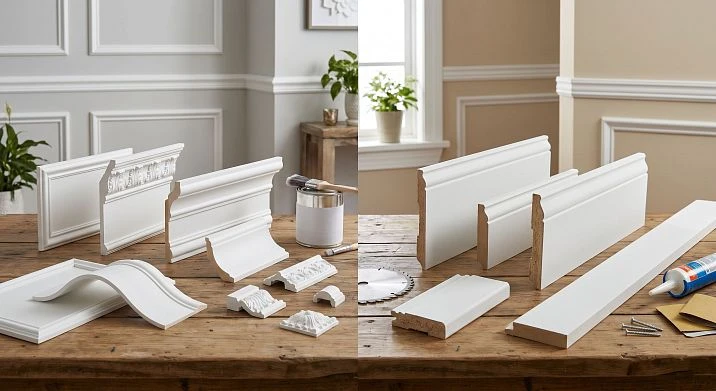
When you look at a beautifully decorated wall with stucco decor, the first thing you think about is how difficult and expensive it is. But here's the paradox: right now, whenSculptural wall decorationhas become available in ready-made sets, the main question has shifted. People choose style, size, collection — and almost don't think about the material. But in vain. Because everything depends on what the decor is made of: how to install it, how to paint it, how it will look in a year, and what the wall will be like after finishing.
Before purchasingset of stucco decor for paintingit's important to understand: polyurethane and primed MDF are not just names in the specifications. These are different materials with different tasks, different behavior on the wall, and different final results. Their combination in one set is not an accident, but a thoughtful decision. And the better the buyer understands this logic, the more accurately they choose and the cleaner their wall looks after renovation.
In this article — everything you need to know about polyurethane, primed MDF, their differences from plaster and wood, about installation, painting, and how to choose the rightpolyurethane MDF stucco decorfor a specific task.
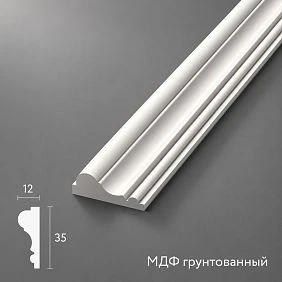
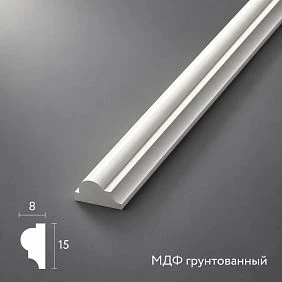

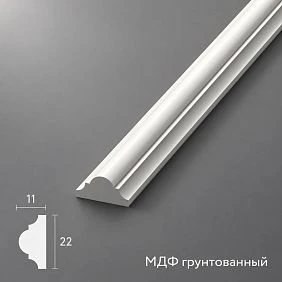
What is included in the polyurethane and MDF stucco decor kit
Let's start simple: what exactly does the buyer receive when ordering a ready-made kit? At first glance — a set of parts. In reality — a well-thought-out system where each element has its place in the overall composition.
A typical Ready-made set of stucco decor for the wall includes:
-
moldings — linear decorative elements that form the contour and frame;
-
corner elements — parts for joining moldings at a right angle;
-
center overlays — relief details that form an accent inside or outside the frame;
-
decorative overlays — ornamental details that complicate and enliven the composition;
-
frame elements — flat MDF parts that create the basis of the composition;
-
MDF base or MDF elements are flat planar parts with a primed surface for painting.
A key point: you are not buying individual parts by weight, but a complete composition. In a good set, everything is already calculated: proportions, material compatibility, and the compatibility of the relief with the geometry. All you have to do is correctly measure the wall, mark it, install it, and paint it.
Exactly thereforeset of wall moldingsmade of polyurethane and primed MDF is a ready-made solution for turnkey renovation, not a construction set with an open ending.




Polyurethane wall moldings: what is this material
Polyurethane is a polymer material with a unique combination of properties: it is lightweight, elastic, durable, and perfectly reproduces fine relief. That is whypolyurethane wall moldinghas become the basis of modern interior sets.
What makes polyurethane indispensable in stucco decor?
Relief without loss of detail. Polyurethane holds its shape perfectly even in thin and complex ornaments. Leaves, curls, architectural profiles, fine carvings — all of this is accurately reproduced in a polyurethane product and does not crumble over time, unlike plaster.
Low weight.Polyurethane Interior Decorationsignificantly lighter than plaster counterparts. This is critical for wall mounting: a lightweight element does not require additional wall reinforcement, is fixed faster with glue, and does not create a load on the base.
Flexibility in installation. PolyurethaneMoldings for wallseasily cut to length, can be adjusted to non-standard sizes, and if necessary, slightly bent. This provides freedom when working with real rooms where walls are rarely perfectly straight.
Surface for painting. PolyurethanePolyurethane decorative appliquesand moldings come with a ready surface that can be painted without additional priming. After painting, the relief is revealed through the play of light and shadow — this looks especially expressive with side lighting.
Stability of geometry. Unlike wood, polyurethane does not warp or crack with changes in humidity and temperature. Parts retain their shape after installation, and joints remain even.
Polyurethane wall decorworks well in classic interiors, neoclassicism, modern apartments with architectural frames on walls, in hallways and bedrooms. It fits organically where expressive but not overloaded decor is needed.
Our factory also produces:
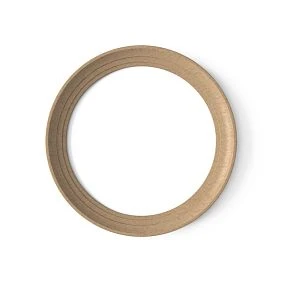
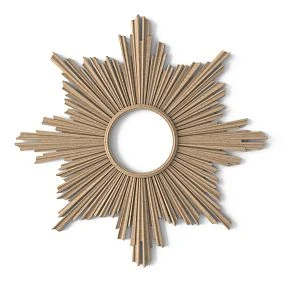
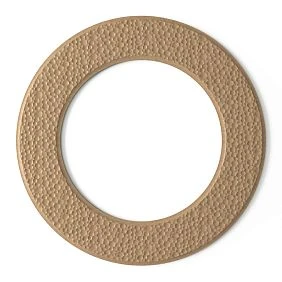
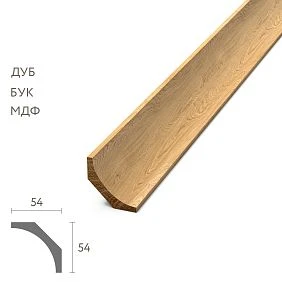
Primed MDF in decor: why it is needed
MDF — medium-density fiberboard — is used in decorative sets where even, stable geometry and a clean surface are important. Primed MDF in decor means that the board has already undergone factory processing: the surface is sanded, a primer is applied, and the element is ready for final painting.
Why is MDF specifically needed, and not, for example, polyurethane or plywood?
Perfect flatness. MDF has a homogeneous structure and, with proper production, provides a perfectly even surface. For planar elements — bases of frame compositions, wide background panels, geometric inserts — this is fundamentally important. It isprimed MDF decorcreates that pure geometry which cannot be reproduced with the same precision from relief materials.
A primed surface simplifies finishing. An element that leaves the factory already with a primed surface does not require additional preparation before painting. You install it, treat the joints — and paint immediately.
Stability during storage and installation. High-quality primed wall decormade of MDF does not warp or delaminate when stored properly. This is important for linear elements that must lie in the same plane as the wall.
Clean finish for painting. MDF wall elementsafter painting provide a smooth, uniform surface without pores or irregularities typical, for example, of wood. This is exactly the effect needed for interior decor, where a neat painted surface matters, not natural texture.
The use of primed MDF is especially justified in sets where geometry is paramount: straight frames, even rectangular inserts, horizontal panel strips. Where polyurethane provides relief and ornament, MDF ensures a clean geometric base.
Get Consultation
Why polyurethane and MDF are combined in one set
This is one of the most important questions that is rarely asked out loud, but it hangs in the air for almost every buyer. Why combine two different materials in one set?
The answer is simple and logical: polyurethane and MDF do not compete — they complement each other.
Let's see how this works in practice. Let's take a typical wall composition: a rectangular frame with moldings and a central ornamental accent. Moldings are linear profiled elements with relief. Corner overlays are shaped, with floral ornament. The central rosette is a volumetric detail with complex relief. All of this is —Polyurethane overlays and moldings. Polyurethane is indispensable here because only it allows you to accurately reproduce the relief shape, preserve it during production, transportation, and installation.
But the background plane inside the frame or the wide base under the entire composition — that is already a task for primed MDF. Smooth, clean, stable. Without pores, without relief, without knots and fibers. Perfect for final painting.
Together, these materials give a result that neither of them could provide on their own: the decorativeness of relief polyurethane parts + a neat, smooth MDF base = a single wall composition that, after painting, is perceived as a solid architectural detail.
It is in this logic that you should consider thepolyurethane MDF stucco set before purchasing: not "which is better," but "what is responsible for what."
Set of stucco decor for painting: what it means
The phrase "ready to paint" sounds simple, but in practice it contains several important meanings that are worth understanding before purchasing.
The elements do not have a final color. Most ready-made sets of decorative molding for painting come in white or primed form. This is not a drawback — it is freedom. You decide what the final color will be: matching the wall, slightly lighter, more contrasting, or completely white on a colored background.
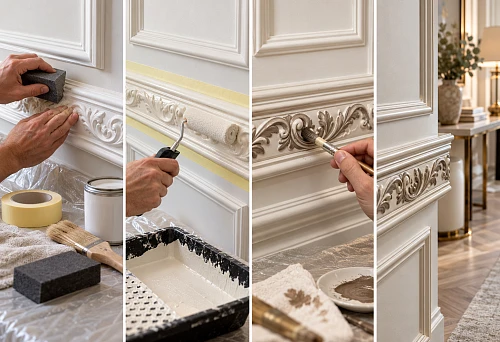
Installation precedes painting. The logic of the process is as follows: first you install Stucco decor for walls for painting, then treat the joints, perform final joint putty, if necessary — sand, prime, and only then paint. This means that the decor is literally embedded into the overall wall finish and becomes its part — visually inseparable.
Painting in one tone with the wall is the most winning technique. When Molding for painting is painted together with the wall in a single color, the interior acquires architectural depth without visual overload. The relief is revealed through the play of shadows, not through color contrast. This is elegant, restrained, and works well in almost any style.
Contrast painting enhances the accent. If you want to emphasize the decor, it is painted in a color different from the wall: white on a dark wall, vanilla on gray, patina on a light background. For more details on how to choose a combination, read our article stucco decor in the color of the wall or contrasting.
Joints need to be prepared. This is a mandatory step. Even the highest quality elements have joints during installation, and it is their careful treatment that determines the final quality of the wall. An uneven joint is a noticeable defect after painting. A properly sealed one is invisible.
What polyurethane and MDF look like after painting
This question worries many — especially those who see the set only in white, unpainted form in photos. How will the perception change after the final finish?
Let's break it down by materials.
After painting, polyurethane elements become part of the overall finish. The reliefpolyurethane wall moldingsand overlays are revealed through light and shadow: the more pronounced the relief and the more active the lighting, the more plastic the part looks. Under side lighting, the ornament literally "comes to life" — soft shadows appear, adding depth and volume. Under directed overhead light, the relief becomes more graphic.
After painting, MDF elements provide a calm, smooth, uniform surface. No texture, no pores. This is good: such a background is needed for frame compositions and geometric inserts. MDF works as a "quiet" part of the decor, which does not overpower the relief details but highlights them.
Important: the quality of the result is determined by four factors. First — the evenness of the wall under the decor. Second — the accuracy of installation and joint treatment. Third — proper preparation for painting. Fourth — the choice of paint and application technique. None of them can be ignored.
When painted in a single tone with the wall,Wall-mounted stucco decorit looks soft and architectural. With contrasting painting, frames and ornaments become a bright accent. Both options work — it's important to choose the one that suits your interior.
How polyurethane stucco differs from gypsum
Comparing polyurethane to gypsum is one of the most common questions. And the answer is not reduced to "one is better than the other." Each material has its own area of application.
| Criterion | Polyurethane | Gypsum |
|---|---|---|
| Weight | Lightweight | Heavy |
| Installation | Easier for wall elements | More often requires complex preparation |
| Relief | Suitable for decorative details in ready-made kits | Well conveys classic handcrafted stucco |
| Repairability | Depends on the element and finish | Restoration is possible but requires experience |
| Where it is convenient | Apartments, quick renovations, ready-made kits | Restoration, historical interiors, custom stucco |
| Final effect | After painting, it looks like part of the wall | Traditional material for classic stucco |
Why is polyurethane more convenient for modern ready-made kits? First, weight. Plaster stucco is heavier — and this creates limitations when installing on drywall walls, porous bases, or in new buildings where structural load is undesirable. Second, reproducibility of details:Polyurethane wall decoris produced industrially, each detail is identical to another. This is important for wall compositions where identical elements are needed. Third, ease of cutting and fitting.
Plaster remains indispensable where it comes to restoration of historical interiors, individual handwork, and objects with traditional material requirements. In ordinary residential renovations — apartments, new buildings, country houses —Polyurethane wall moldingswins based on the overall set of characteristics.
How MDF differs from wood in decorative elements
The second material question that should be honestly addressed: why is MDF used in decorative kits instead of solid wood?
| Criterion | Primed MDF | Wood |
|---|---|---|
| Surface | Smooth, prepared for finishing | Depends on the wood species, cut, and processing |
| Geometry | Convenient for flat parts | May have natural texture and pattern |
| Painting | Good for painting without priming | Requires preparation for the desired finish |
| Visual effect | Clean painted surface | Natural or painted texture |
| Where to use | Interior kits for painting | Carved decor, furniture elements, natural textures |
Wood is a beautiful and noble material. But in wall stucco decor for painting, it loses to MDF in several aspects. The main point: natural wood has pores, fibers, and texture that appear as unevenness and inconsistencies when painted. For furniture or a carved accent, this can be an advantage. For an even painted background in a stucco kit, it is unnecessary.
In addition, wood reacts to changes in humidity: it warps, dries out, and gaps form at the joints. High-qualityprimed MDF decorwhen stored and installed correctly, is more stable in a residential environment.
The conclusion is simple: primed MDF is appropriate where a smooth painted element with clean geometry is needed, without the task of showing natural texture.
How to install stucco decor from polyurethane and MDF
Installation is where the material meets reality. And here it is important to understand the logic of the process, not just "stick and paint."
General sequence of work withmolded decoration made of polyurethane:
-
Check the wall dimensions. Measure the height, width, account for sockets, switches, sconces, baseboards. For details on how to account for electrical, see the articlemolded decor for a wall with sockets and switches.
-
Make markings. Apply an accurate layout of the composition on the wall: where the moldings will be, where the MDF base, where the corner elements and overlays. A level and tape measure are essential tools.
-
Try on the elements without glue. Lay out the parts, make sure everything matches in size and fits together correctly.
-
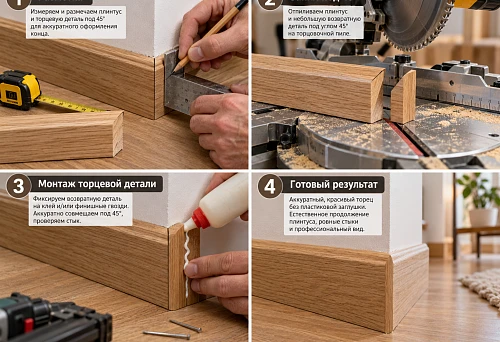
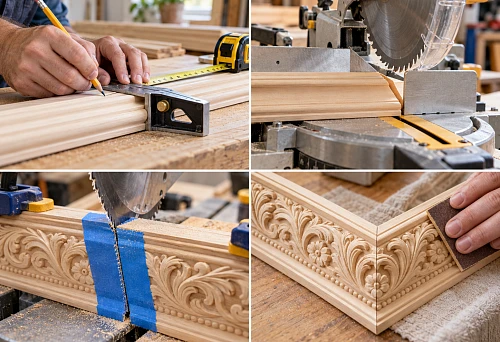
Trim elements if necessary.Polyurethane wall moldingscut with a fine-tooth hacksaw or a miter saw. MDF elements — with a circular saw or jigsaw.
-
Secure the elements. Forinstallation of MDF stucco moldingis done using special sealant adhesive or liquid nails, combined with additional mechanical fasteners for heavy parts. How to install polyurethane stucco molding — use polyurethane adhesive or construction adhesive as recommended by the manufacturer.
-
Treat the joints. Finishing putty for joints is a mandatory step. This is where many lose quality: a poorly treated joint is visible after painting.
-
Prepare the surface for painting. Sanding, if necessary — additional priming.
-
Perform the final painting.
Complex multi-elementwall compositions from ready-made stucco molding kitsare best left to a professional. Simple frame kits with straight moldings are quite manageable for an experienced hobbyist.
Important: installation depends not only on the material of the decor, but also on the wall base. Drywall, plaster, concrete — each has its own requirements for adhesive and fasteners.
How to choose paint for a paint-ready kit
This is a practical question that often remains unanswered until the very last moment — when the decor is already installed and needs painting. It's better to decide it in advance.
A few important guidelines:
Paint is selected based on room conditions and base type. For living spaces with normal humidity, high-quality water-based acrylic paints are suitable. For kitchens and bathrooms — compositions with increased moisture resistance. For children's rooms — those with appropriate environmental safety certification. Choose the composition based on the base and the decor manufacturer's recommendations.
Gloss level affects the perception of relief. Matte and semi-matte finishes makestucco decor for paintingCalmer — the relief is softer, the shadows are not sharp. Satin and semi-gloss coatings enhance the plasticity of the relief, making it more expressive. Gloss — maximally emphasizes the shape, but requires perfect surface preparation, otherwise it will reveal all defects.
The decor is painted together with the wall. This is the standard and most correct approach formolded decor in the color of the wall: a single color, a single application technique, a single level of gloss. The wall and decor merge into a single surface.
With contrast painting — two colors, two layers. First the wall is painted, then the decor. Or vice versa, with surface protection using painter's tape. Requires precision and patience.
Don't give advice without reference to a specific material. This rule applies here too: there is no universal paint "for polyurethane." There is a correctly selected composition for a specific base, under specific conditions. Consult with the paint seller, clarify which material it is intended for.
Where is it best to use a set of polyurethane and MDF
Polyurethane stucco decor for an apartment is suitable for a wide variety of rooms. Let's consider where it works best.
In the living room
An accent wall behind the sofa is a classic solution.Stucco decor for the wall behind the sofa, ready for painting adds depth and architectural quality to the interior without heavy structures. It works well both in the TV area and in the area with a console or mirror.
In the bedroom
Polyurethane stucco for the bedroom is one of the most popular requests. The wall at the head of the bed with a frame composition of moldings and an MDF base creates a soft, calm accent.Stucco decor for the wall near the bed, ready for paintingin the wall color — an ideal solution for neoclassical or modern interiors.
In the hallway
Laconic vertical compositions, frames on piers, decor near a mirror or console. The hallway is often small, so the correct scale of elements and well-thought-outwall composition from ready-made kits.
In the study
A decorative frame behind the desk, a classic background of moldings, an architectural panel — all of this creates the necessary business or representative tone.Stucco wall decor for turnkey renovationis especially appropriate here.
In commercial interiors
Salons, showrooms, lobbies, reception offices — everywhere where an expressive but neat decorative background is important.Polyurethane decor in the wall coloror in a light contrast creates a professional, restrainedly luxurious atmosphere without extra costs.
When is it better to choose polyurethane moldings, and when a ready-made kit
This is a practical distinction that saves time and money when chosen correctly.
A ready-made stucco decoration kit is the optimal solution when:
-
a complete, well-thought-out composition is needed;
-
there is no time or desire to select and assemble elements independently;
-
a predictable result without design experiments is important;
-
the wall size matches the standard parameters of the kit;
-
you want to maintain a specific style.
IndividualMoldings made of polyurethaneis the best choice when:
-
a simple frame or a single contour is needed;
-
non-standard wall: many sockets, protrusions, doors;
-
I want to create a custom layout for my own dimensions;
-
requires a maximally concise decor without accent details.
More about choosing between these two approaches — in the article a ready-made set of stucco decor or individual moldings.
Mistakes when choosing the material of stucco decor
This is the section worth reading before purchase — not after the kit is already installed and something goes wrong.
Choosing only by photo, without reading the composition. A beautiful photo says nothing about the material, weight, surface, and installation. Study the specifications.
Not considering that the decor needs to be painted. Some buyers expect the decor to already have a finished look. This is not the case: Wall stucco decor set requires painting after installation.
Not checking if the decor is suitable for a specific wall. Wall dimensions, location of sockets and switches, presence of sconces — all this needs to be considered in advance.
Not thinking through joints and finishing. Joints are visible under paint if not treated. This is the most common installation mistake.
Expecting polyurethane to behave like plaster. These are different materials with different application logic. Polyurethane is not "cheap plaster", it is an independent modern material.
Choosing too complex a relief without understanding installation. Complex multi-element sets require experience. If you are installing for the first time, start with minimalist collections.
Not accounting for sockets, switches, and sconces. More on this in the article.molded decor for a wall with sockets and switches.
Not taking measurements before purchasing. Measuring and drawing a diagram on paper is a mandatory step before ordering. A size error = extra expense.
Not coordinating the material with the installer before installation. If you plan professional installation, agree on the set composition and fastener type in advance.
Mixing elements from different collections without an overall concept. A random mix of styles and scales destroys the unity of the composition. How to choose a collection — in the article.How to choose the STAVROS stucco decor collection for walls.
What to clarify before purchasing a set
Checklist for a confident purchase:
-
Exact set composition — how many elements, which ones, and what sizes;
-
Dimensions of each element — check against the actual wall dimensions;
-
Material of each element — whether polyurethane or MDF;
-
Primed surface or not — is additional preparation needed before painting;
-
Is final painting required — or are there options with a ready-made coating;
-
Installation recommendations — which glue, which fasteners, on which bases;
-
How to treat joints — sealant, putty, what exactly the manufacturer recommends;
-
Is the set suitable for the required wall — considering sockets, switches, doorways;
-
How it combines with baseboards and cornices — more details in the articlehow to combine stucco decor with baseboards and cornices;
-
Are there additional elements in the collection — in case you need to expand or refine the composition.
What is important to know before purchasing: a final overview
Polyurethane includedWall molding decorationis responsible for relief, ornamentation, and decorative expressiveness. Primed MDF provides smooth planar bases, clean geometry, and a neat surface for painting. Together, they deliver a result that neither material can achieve alone.
The correct sequence of thinking before purchasing: first — the task (what the wall should do in this room), then — the style and scale of the decor, and only then — the material. When you understand that polyurethane is needed for relief details, and MDF for smooth elements to be painted, the choice becomes precise and informed.
After paintingstucco decor made of polyurethane and MDFshould look like part of the wall, not like a glued set of parts. This result is achieved through careful installation, proper joint treatment, and competent painting.
Don't forget to calculate the dimensions in advance, study the electrical layout, and choose the appropriate collection. Read the article on how to calculate decor and moldings for a wallhow to calculate moldings and stucco decor for a wall.
Choose a set of stucco decor made of polyurethane and primed MDF
The STAVROS catalog features ready-made sets of stucco decor for painting,Polyurethane wall moldings, Polyurethane decorative appliquesand elements for wall compositions in classic, neoclassical, and modern interiors. STAVROS manufactures products from European polyurethane with clear relief, stable geometry, and a primed surface ready for final painting.
Each kit is a thoughtfully designed system of elements, not a random set of parts. You get a ready-made wall solution: moldings, overlays, corner and center pieces with factory precision and compatibility.
Frequently asked questions
What is better for stucco decor: polyurethane or MDF?
These materials solve different tasks. Polyurethane is indispensable for relief decorative elements — profiled moldings, ornamented overlays, corner rosettes. Primed MDF is well-suited for flat surface elements for painting: background panels, frame bases, geometric inserts. In a good kit, both materials work together, complementing each other.
Can polyurethane wall stucco be painted?
Yes, and that is exactly what it is most often used for. Polyurethane wall stucco for paintingare installed, joints are processed, and if necessary, additionally primed and painted in one or two coats. The paint is chosen according to the manufacturer's recommendation, taking into account the room conditions.
What does primed MDF decor mean?
These are MDF elements whose surface is already prepared at the factory: sanded and primed. Suchprimed MDF decordoes not require additional factory processing — you install it, process the joints, and paint it.
How does polyurethane molding differ from gypsum molding?
Polyurethane is significantly lighter than plaster and more convenient for wall installation, especially in modern apartments and new buildings. Plaster is traditionally used in classic stucco, restoration, and work with historical interiors. For ready-made interior kits, polyurethane wins in terms of weight, reproducibility of details, and ease of installation.
How does MDF differ from wood in decor?
MDF is used for smooth painted elements where natural texture is not needed. After painting, the MDF surface is uniform, without pores or fibers. Wood is chosen when natural texture, carved character, or a furniture element with visible structure is important.
Is a set of stucco decor suitable for painting for an apartment?
Yes. Ready-madewall stucco decor kits for painting are perfect for residential apartments, new buildings, country houses, and commercial interiors. It is important to plan in advance the wall dimensions, electrical work, installation, and final painting.
Can stucco decor be painted the same color as the wall?
Yes. Painting in a single tone with the wall is one of the most expressive and professional techniques. The decor becomes an architectural detail of the wall, the relief is revealed through the play of shadows, and the interior gains depth without visual overload.
What should be clarified before purchasing a stucco decor kit?
You need to clarify the composition and dimensions of the kit, the material of each element, the surface readiness for painting, installation recommendations, how to treat the joints, and whether the kit is suitable for a specific wall considering electrical work and furniture. More details on calculation are in the article how to calculate moldings and stucco decor for a wall.