


























Article Contents:
- What Is a Corbel?
- Corbel vs. Bracket: What Americans Usually Mean
- The Most Important Rule: Decorative Does Not Mean Load-Bearing
- Why Polyurethane Is Useful for Decorative Corbels
- Where Decorative Corbels Work Best
- Under decorative shelves
- Under fireplace mantels
- At kitchen hoods and range surrounds
- At cabinet transitions
- At doorways and openings
- Under cornices and projecting trim
- On walls as pure architectural accents
- Height
- Width
- Projection
- Relief depth
- Classical and Neoclassical
- French and Baroque-inspired interiors
- Victorian and traditional American interiors
- Transitional interiors
- Modern and contemporary interiors
- What is a polyurethane corbel?
- Are polyurethane corbels structural?
- What is the difference between a corbel and a bracket?
- Where can polyurethane corbels be used?
- Can I use a decorative corbel under a heavy mantel?
- How do I choose the correct size?
- How far apart should corbels be?
- Should corbels match the wall color?
- Can polyurethane corbels be painted?
- Can I use polyurethane corbels in a kitchen?
- Can I use them in a bathroom?
- Can polyurethane corbels be used outdoors?
- Do corbels have to match crown molding?
- Can corbels work in a modern interior?
- Can I install them myself?
- Where can I browse STAVROS polyurethane corbels?
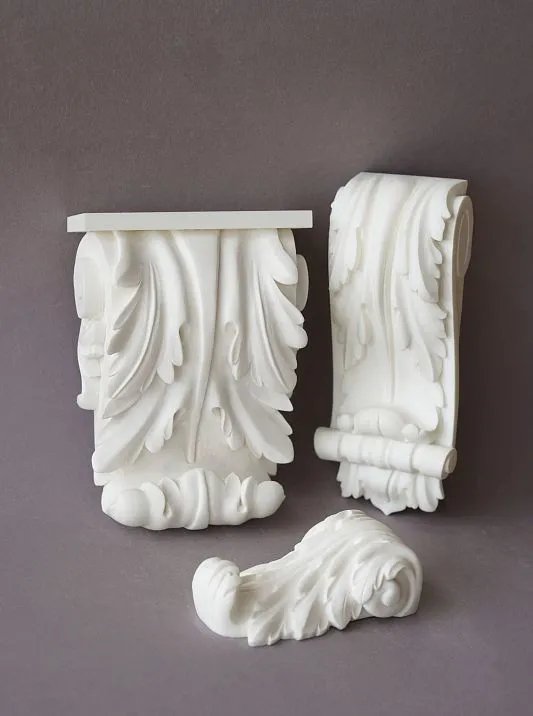
Corbels are small architectural elements with an unusually large visual effect. Installed beneath a shelf, mantel, projecting trim, doorway detail, cabinet, or decorative ledge, they can make an otherwise flat composition feel constructed, grounded, and intentional. In traditional architecture they read as visible support. In contemporary interiors they can be used more selectively—as sculptural punctuation, as a transition between horizontal and vertical surfaces, or as a way to introduce one controlled classical reference into an otherwise restrained room.
For the U.S. market, the most useful search and specification language is usually polyurethane corbels and decorative brackets. “Corbel” tends to be the more architectural term, while “bracket” is broader and may refer to anything from a decorative support shape to a genuinely load-bearing shelf bracket. That distinction matters. The STAVROS KRPU range should be treated as architectural decoration unless a specific product is explicitly documented and rated for structural loading. A polyurethane corbel can create the visual language of support without becoming the structural support itself.
This is the central idea of the article: choose decorative corbels as part of an architectural composition, not as substitute engineering. The real structural system—wall framing, anchors, shelf cleats, cabinet blocking, mantel supports, or other load-bearing components—should carry the load. The corbel then refines the transition, conceals the structural logic, or gives the finished assembly the proportion and character the room needs.
The best result comes from treating the corbel the way an architect would: study the object it appears to support, understand the viewing distance, choose the correct width, height, projection, and relief, coordinate the ornament with nearby moldings, and plan the finish before installation. A beautifully molded corbel that is too small, too deep, too ornate, or badly placed can make a room look less resolved. A well-chosen one can make an ordinary shelf, opening, or wall composition feel permanent and architectural.


What Is a Corbel?
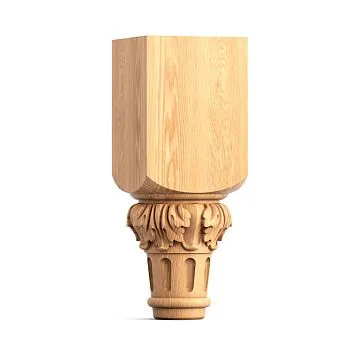
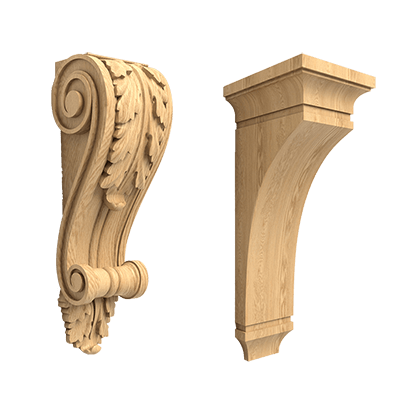
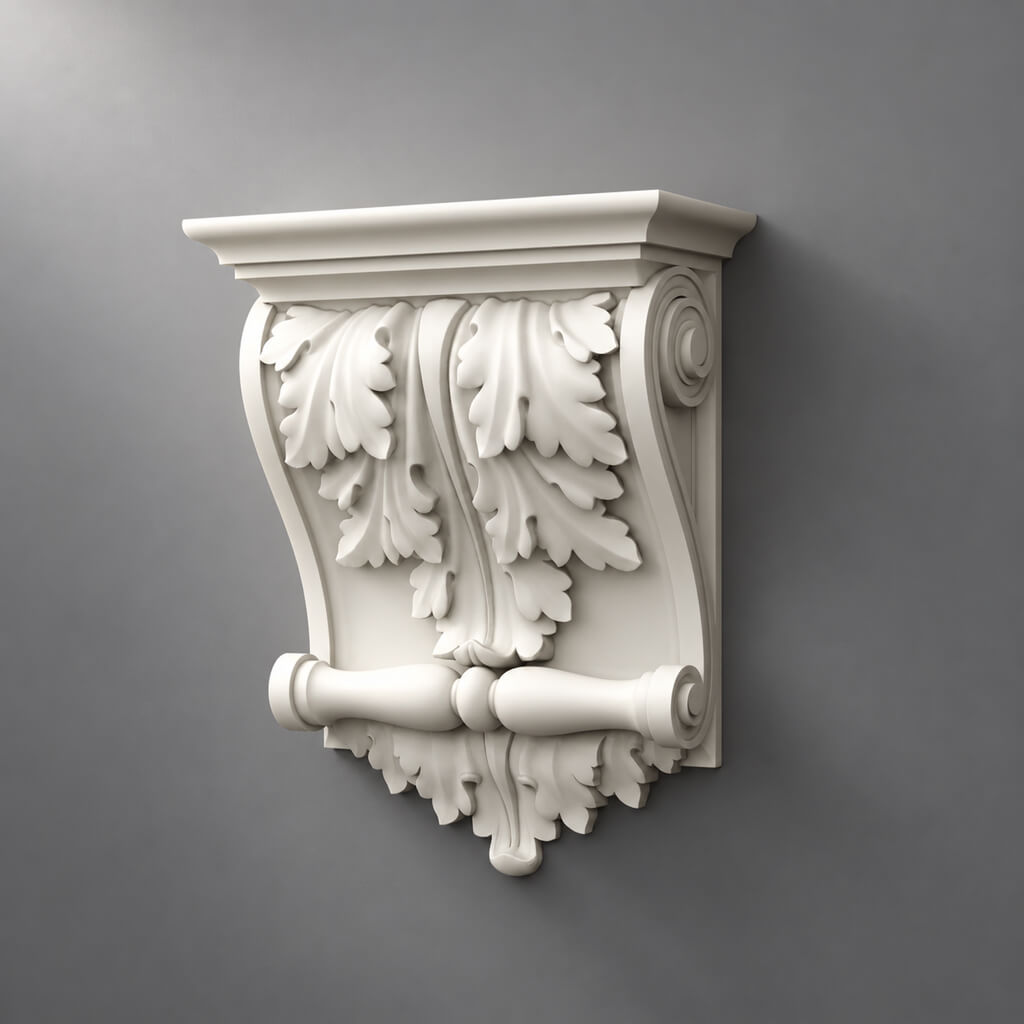
A corbel is traditionally a projecting architectural element that appears to support weight above it. Historically, corbels were carved from stone or wood and could genuinely participate in construction. They supported balconies, cornices, beams, arches, shelves, and roof elements. Because the support was visible, builders and carvers naturally turned it into decoration.
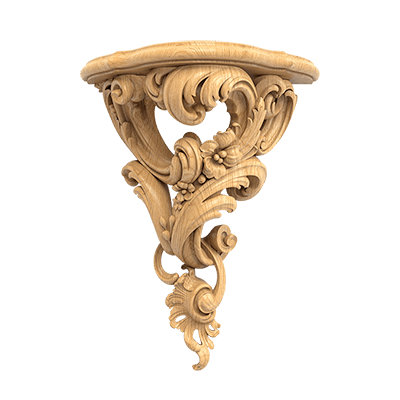
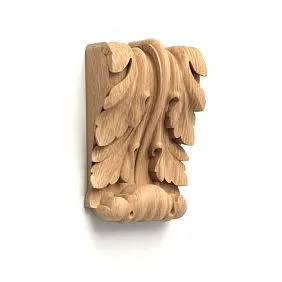
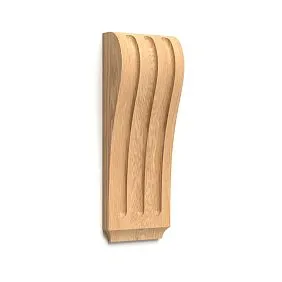
That history explains the shape. A corbel usually has a vertical back, a projection at the top, and a profile that visually transfers the “weight” of the supported element back toward the wall. The profile may be a simple curve, an S-shaped scroll, a stepped geometric form, a leaf, acanthus composition, volute, shell, floral cluster, or figurative element.
In a modern interior, the visual logic remains even when the piece is not structural. A polyurethane corbel can sit beneath a floating-looking mantel, under a decorative shelf, at the side of a hood surround, beneath a wide interior cornice, or at the transition between a pilaster and an entablature. The eye reads the element as support, and that perception gives the composition gravity.

Corbel vs. Bracket: What Americans Usually Mean
In everyday U.S. product language, “corbel” and “bracket” overlap, but they are not always interchangeable. A bracket may be structural or decorative, and the word is used across many trades: shelving hardware, metal fabrication, cabinetry, framing, electrical work, mechanical systems, and decorative trim. A corbel is more specifically associated with an architectural support form.
For decorative polyurethane, both terms are useful. Shoppers search for polyurethane brackets, but the stronger architectural search cluster is built around “corbel.” For a U.S.-facing article or product category, it is therefore wise to lead with corbels and use brackets as a secondary term.
There is also a stylistic difference in how people imagine the words. “Bracket” often suggests a more functional, angular, or hardware-like object. “Corbel” suggests carved or molded architecture. In classical, traditional, French, Victorian, Mediterranean, Neoclassical, or transitional interiors, “corbel” is usually the clearer design term.
Наша фабрика также производит:



Смотреть весь Каталог продукции
The Most Important Rule: Decorative Does Not Mean Load-Bearing
The original Russian article treats polyurethane brackets as if they could be calculated for meaningful structural loads. That is not the correct assumption for the current STAVROS decorative range. Unless a product has explicit engineering documentation, stated load capacity, approved attachment requirements, and a use case that identifies it as structural, treat it as decorative.
This distinction protects both the design and the building. A heavy stone mantel, thick wood shelf, countertop overhang, cabinetry, or other loaded element should be supported by construction designed for that load. The structural support may be hidden inside the wall, built into the cabinet, provided by metal brackets, attached to studs, or carried by another engineered system.
The decorative corbel can then be installed over, under, or around that system so the finished project has architectural depth without asking a molded decorative component to do a job it was not designed to perform.
This approach is common in high-quality finish work. The visual element and the structural element do not have to be the same object. Separating them gives the designer greater freedom while keeping the engineering honest.
Получить консультацию
Why Polyurethane Is Useful for Decorative Corbels
Traditional corbels can be made from carved wood, cast stone, plaster, metal, or other materials. Polyurethane occupies a useful position because it can reproduce complex molded relief while remaining comparatively light and paintable.
That reduced weight matters during installation. Corbels are often mounted high on walls, beneath cornices, at fireplace height, under cabinetry, or in other places where the installer must hold the part accurately while checking alignment. A lighter decorative element is easier to position and temporarily support than a heavy stone or plaster piece.
Polyurethane also lends itself to repeated decorative detail. If a room needs four, six, eight, or twelve matching corbels, consistency matters. A repeated acanthus leaf, volute, bead, or geometric detail should look intentional across the composition.
Paintability is another design advantage. A polyurethane corbel can be painted to disappear into the surrounding millwork, match a wall, imitate stone, echo painted cabinetry, or receive decorative glazing and metallic accents. The same basic form can therefore work in very different palettes.
Where Decorative Corbels Work Best
Corbels are versatile because they occupy a transition zone. They make the most sense where one element appears to project from another. The clearer that projection, the more natural the corbel feels.
Under decorative shelves
A shelf is one of the most familiar applications. The corbel gives the shelf a visible architectural base. Even when the shelf is actually supported by concealed hardware, the decorative corbel makes the assembly look traditional and substantial.
The key is scale. A narrow shelf with a massive corbel looks top-heavy. A deep shelf with tiny decorative elements looks visually unsupported. The apparent relationship should make sense even when the corbel is not carrying the load.
Under fireplace mantels
Corbels can transform a simple mantel shelf into a more complete fireplace composition. They can connect the horizontal mantel to vertical pilasters, side panels, stone surrounds, or painted millwork.
Again, the decorative piece should not be assumed to carry the mantel. A heavy mantel requires its own rated support. The corbel should be selected for visual proportion and installed as a finish element.
At kitchen hoods and range surrounds
Traditional kitchens often use corbel forms beneath projecting hood surrounds or decorative shelves. In this context the corbel helps the upper architecture feel integrated with cabinetry.
Consider grease, heat, cleaning access, and finish durability when placing any decorative element near a cooking area. Keep the corbel outside zones where it would interfere with required clearances, ventilation, appliance service, or cleaning.
At cabinet transitions
Corbels can be used where upper cabinetry meets a decorative shelf, where a furniture-style cabinet projects beyond adjacent units, or where a built-in is intended to read like architectural millwork rather than modular cabinetry.
In a painted kitchen, a polyurethane corbel finished in the same color as the cabinetry can look integrated into the millwork. In a mixed-material kitchen, it can instead match wall trim or another architectural finish.
At doorways and openings
A decorative corbel can sit beneath an entablature, pediment, or projecting header above a doorway. Used in pairs, corbels can give the opening a more formal vertical-to-horizontal transition.
This is especially effective when the opening already has pilasters or substantial casing. A tiny corbel added to a thin modern casing usually feels arbitrary. The surrounding trim needs enough visual weight to justify the element.
Under cornices and projecting trim
Corbels can create rhythm beneath a broad cornice or decorative ledge. Repetition makes the architecture feel deliberate, but spacing is critical. Too many pieces create noise; too few may look accidental.
When the project includes related polyurethane moldings, compare the depth and ornament before finalizing the corbel. The elements do not need to match exactly, but they should share a compatible visual language.
On walls as pure architectural accents
Not every corbel needs an actual shelf above it. Corbels can be used as terminal details at the base of an arch, beneath a decorative frame, as part of a wall panel composition, or as visual supports for a purely decorative ledge.
In this application, the corbel is almost sculptural. The question becomes not “what does it support?” but “what transition does it complete?”
How to Choose the Right Size
Size is one of the most important variables because corbels are three-dimensional. Height alone is not enough. You need to consider width, vertical height, projection from the wall, and relief depth.
Height
Height determines how much vertical space the corbel occupies. A tall corbel can visually connect a shelf or mantel to a lower architectural feature. A short corbel reads more like a concentrated accent.
On a fireplace, for example, a tall corbel may create a continuous transition from the mantel toward side pilasters. On a small wall shelf, the same piece would overwhelm the composition.
Width
Width should relate to the element above it. If a corbel is much wider than the shelf edge, the joint can look clumsy. If it is extremely narrow relative to a thick mantel, it may appear weak.
With paired corbels, width also affects the remaining open space between them. That negative space should feel intentional.
Projection
Projection is the distance the corbel extends from the wall. This dimension has an enormous visual effect because it determines the side profile and the strength of the shadow.
A shallow corbel reads almost like relief decoration. A deep corbel feels more structural and sculptural. In a narrow passage, projection also affects circulation, so do not treat it as a purely decorative dimension.
Relief depth
Highly sculpted corbels may project locally beyond their basic profile. Deep leaves, scrolls, or floral details produce stronger shadow. In rooms with high ceilings or long viewing distances, that can be an advantage. At close range, extremely deep ornament can feel visually heavy.
Use a Mockup Before You Buy
The fastest way to avoid scale mistakes is to mock up the corbel in the actual room. Cut a side profile from cardboard, foam board, or heavy paper. Tape it in place beneath the shelf or mantel and view it from normal positions.
For paired corbels, mark both locations. Check how the spacing relates to the shelf ends, fireplace opening, cabinet doors, or doorway width. A pair that looks correct in a product photo may feel too close together or too far apart in your room.
Mockups are particularly valuable when deciding between two adjacent sizes. The difference between a refined architectural detail and an oversized decorative object may be only a few inches of projection.
Proportion Under a Shelf
When a decorative corbel appears beneath a shelf, the eye reads three relationships at once: shelf thickness, shelf depth, and corbel size.
A thick shelf can support a more substantial corbel. A thin shelf usually needs a lighter profile. If the shelf projects deeply from the wall, a deeper corbel may look appropriate, even if the structural load is actually carried by concealed brackets.
Do not automatically align the front edge of the corbel with the front edge of the shelf. Sometimes a slightly recessed corbel creates a cleaner shadow line. In other cases—especially traditional work—the near alignment of shelf and corbel projection creates a stronger classical profile.
Before installation, draw or mock up a side elevation. It is easier to correct proportion on paper than after the wall is finished.
How Far From the Ends Should Corbels Be Placed?
There is no universal offset because shelf length, end treatment, corbel width, and style vary. The placement should look structurally plausible and visually balanced.
On a short shelf, corbels often sit relatively close to the ends because there is little span to manage visually. On a long mantel, placing them slightly farther inward can create a stronger frame around the center opening.
A useful process is to mark three alternatives with painter’s tape: close to the ends, moderate inset, and more central. Photograph each option from the room entrance. The camera can reveal awkward spacing that the eye overlooks while you are standing close to the wall.
Pairs, Triplets, and Repetition
Most decorative corbels are used in pairs, which naturally creates symmetry. But long shelves, broad cornices, or architectural bands may use three or more pieces.
With three corbels, the center piece becomes a strong compositional decision. It can reinforce the centerline of a cabinet, range, mantel, or window. If the architecture does not have a meaningful center, an odd-number arrangement can look forced.
For repeated corbels under a long ledge, equal spacing usually works best. Measure from centerline to centerline rather than from edge to edge, especially if the corbels have curved or irregular profiles.
Rhythm matters as much as the object itself. Repetition can make a relatively small corbel feel architectural because the eye reads the sequence as a system.
Choosing Style: Start With the Room, Not the Corbel
A highly carved corbel can be beautiful and still be wrong for the room. Style should be read from the larger architectural vocabulary.
Classical and Neoclassical
Acanthus leaves, volutes, scrolls, bead details, formal symmetry, and restrained floral ornament all belong naturally in classical and Neoclassical work. The difference is density: Neoclassical compositions often benefit from clearer geometry and more controlled ornament than Baroque or Rococo schemes.
When choosing among polyurethane decorative corbels, compare the motif to nearby crown molding, wall frames, pilasters, capitals, and furniture. One repeated leaf form or scroll can be enough to create continuity.
French and Baroque-inspired interiors
These rooms can support richer carving, deeper scrolls, shells, leaf clusters, and more animated profiles. Corbels may feel almost sculptural.
The danger is overloading every surface. If the mantel, mirror, wall panels, and chandelier are already highly ornamental, the corbels may need to be simpler than you first expect.
Victorian and traditional American interiors
Traditional American interiors can accommodate carved-looking brackets beneath shelves, hoods, built-ins, and fireplace mantels. Proportion is more important than historical purity. The corbel should support the overall woodwork or painted trim language.
Transitional interiors
Transitional design works best with simplified classical forms: broad curves, restrained scrolls, clean edges, and moderate relief. The corbel should provide architectural substance without turning the room into a period interior.
Modern and contemporary interiors
A corbel can work in a modern room when it is used deliberately. Choose a simplified profile, paint it to match the wall or cabinetry, and let the silhouette provide interest.
One pair of sculptural corbels under a floating shelf can create useful contrast against otherwise minimal surfaces. The effect is strongest when the rest of the room remains edited.
Corbels and Wall Paneling
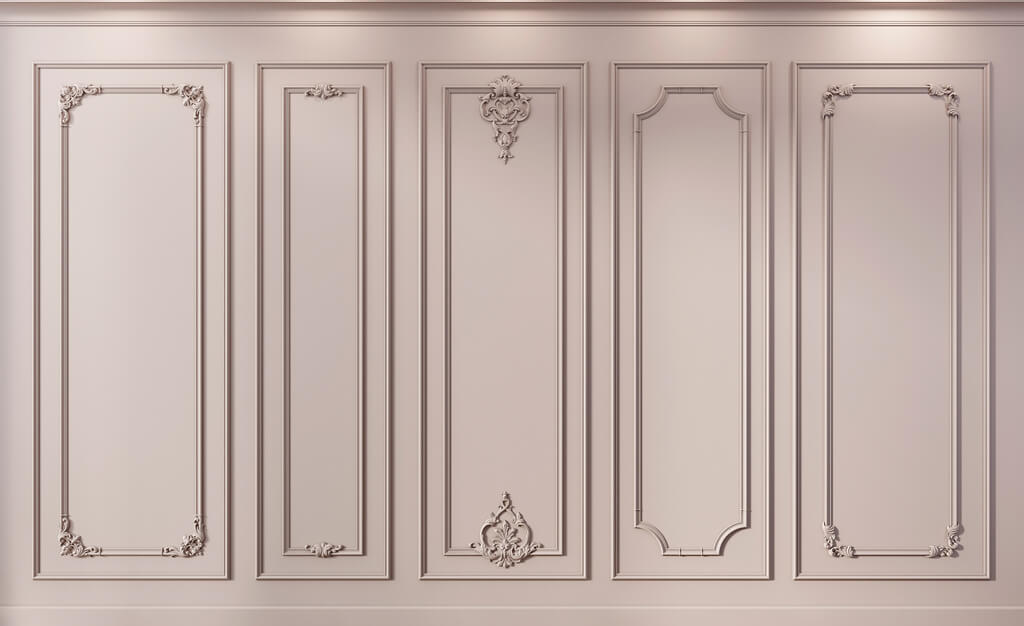
Decorative corbels often look more convincing when the wall around them already has architectural structure. Panel molding, wainscoting, or framed wall compositions create that context.
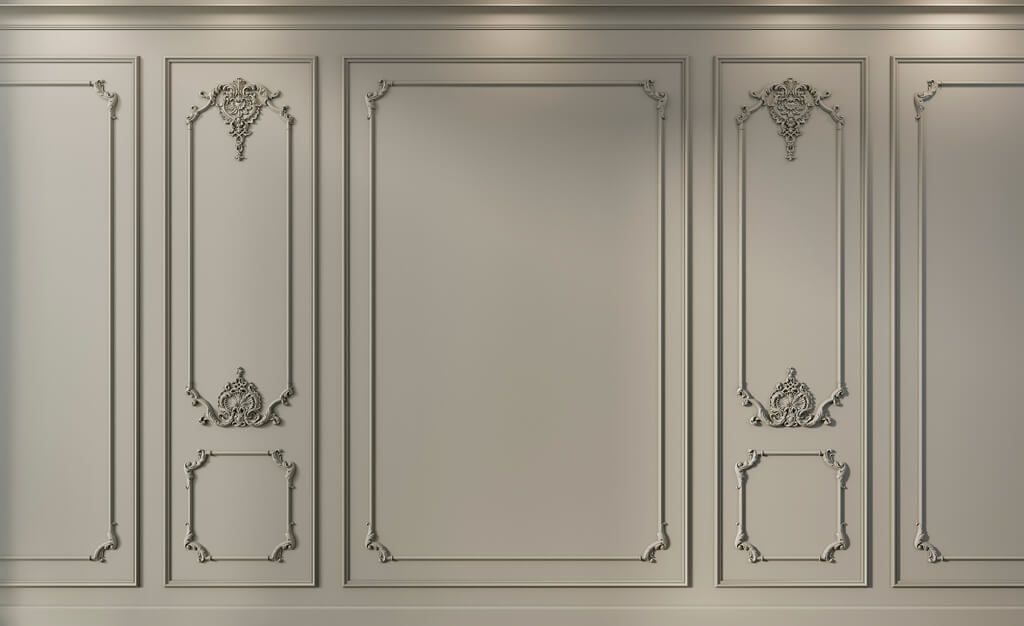
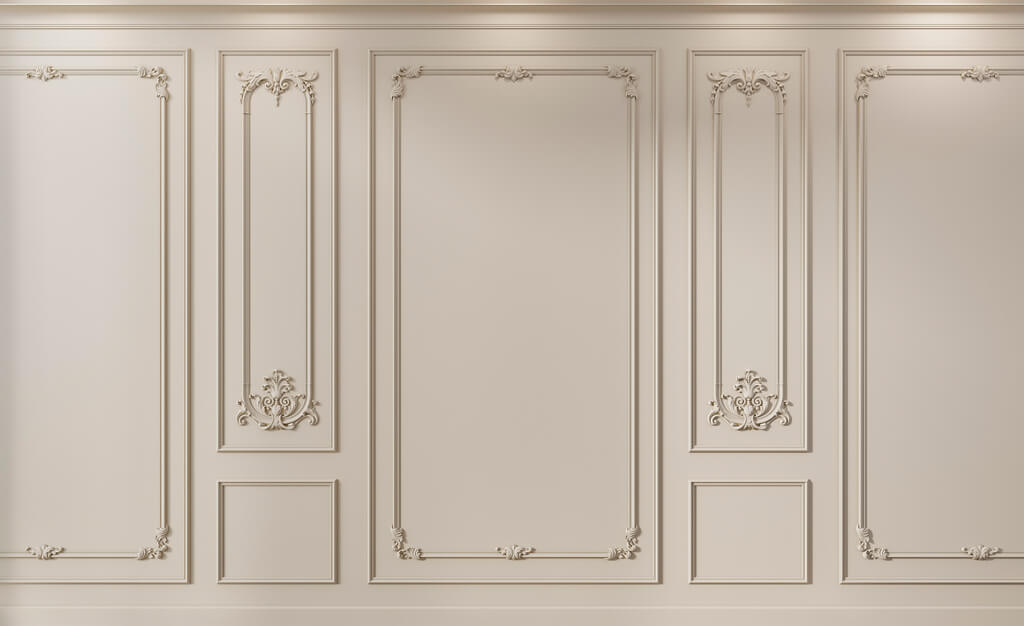
If the room includes polyurethane wall decor, consider whether the corbel should align with panel stiles, pilasters, or the edges of a central wall composition. Alignment creates order even when the motifs are different.
A common mistake is to center corbels only beneath the shelf while ignoring the wall panel grid. If the shelf, corbels, and paneling all use different centerlines, the wall can feel visually unstable.
Corbels and Trim
Linear trim establishes the “grammar” of a room: horizontal bands, vertical frames, and transitions between surfaces. Corbels act like punctuation within that grammar.
If a project uses polyurethane trim molding, check the relative scale. Very fine trim paired with massive corbels may look mismatched. A broader or deeper trim profile can support a more substantial bracket form.
You do not need to repeat the exact same ornament. Matching every motif can make a room feel overly coordinated. It is usually enough to match the level of detail, geometric character, and visual weight.
Corbels Around Doorways and Arches
Doorways are natural locations for decorative brackets because they already contain a vertical-to-horizontal transition. A corbel can sit beneath an extended header, entablature, pediment, or projecting lintel.
For a narrow opening, keep the corbel proportionate to the casing. For a grand opening with pilasters, the corbel can be more substantial and may even act as the transition between pilaster and entablature.
In arched openings, corbels can mark the spring line—the point where the arch begins—or support decorative horizontal trim near the arch base. This is a strong architectural gesture and should be aligned carefully on both sides.
Corbels at Fireplaces
A fireplace already has a powerful center, so corbels can add hierarchy without needing to create one from scratch. They can sit beneath the mantel shelf, connect to side pilasters, or support a decorative overmantel composition.
Pay attention to code-required clearances around combustible materials and heat-producing appliances. A decorative element should never be installed simply because it “fits” visually. Fireplace manufacturer instructions, local code, wall construction, heat exposure, and finish system all matter.
For gas or wood-burning fireplaces, confirm the permissible location of decorative materials before installation. Treat the corbel as finish architecture, not as a structural or fire-protection component.
Corbels in Kitchens
In kitchens, corbels often appear under hood surrounds, shelves, extended countertop details, or furniture-style cabinetry. Because kitchens combine architecture, furniture, appliances, heat, grease, water, and daily cleaning, placement should be practical.
A deeply carved corbel directly beside a cooktop may become difficult to clean. The same element under a decorative upper shelf farther from cooking splatter may be much more successful.
When the corbel is used beneath a countertop overhang, do not treat it as structural unless the entire support system is specifically engineered for that purpose. The countertop should have verified support independent of decorative assumptions.
Corbels in Bathrooms
Painted polyurethane can work visually in bathrooms, particularly beneath decorative shelves, vanity details, or wall compositions. But high-humidity rooms require attention to the complete finish system: wall substrate, adhesive, primer, paint, caulk, ventilation, and cleaning products.
A small powder room is an especially good place for decorative corbels because the room can support a concentrated architectural gesture. A pair beneath a narrow shelf or console can create a strong focal point without requiring extensive molding throughout the room.
Corbels in Bedrooms and Dressing Rooms
Bedrooms usually benefit from a quieter use of architectural decoration. Small or medium corbels can frame a built-in shelf, support the visual logic of a headboard surround, or appear beneath a decorative ledge.
Dressing rooms and closets offer another useful application. A furniture-style built-in can use corbels at the transition between tall cabinet towers and an upper cornice, making the cabinetry read more like permanent architecture.
Corbels in Commercial Interiors
Restaurants, hotels, retail boutiques, salons, showrooms, and hospitality interiors often use decorative corbels because they create character quickly. Repeated elements can establish a strong visual identity without requiring custom carved wood throughout the space.
Commercial projects should still separate decoration from structure. A display shelf carrying merchandise requires real support. A decorative corbel can conceal or complement that support but should not be assigned an undocumented load.
Decorative Corbels and Perceived Structure
One reason corbels are so effective is psychological. People understand support forms instinctively. When they see a projecting shelf with a corbel beneath it, the composition feels stable—even if hidden hardware carries the actual load.
Designers can use that perception intentionally. In a room with floating elements, adding corbels can make the architecture feel more grounded. In a formal interior, they can reinforce the sense that the room is built from layered, substantial components.
This is why the shape of the corbel matters. The profile should visually “transfer” the weight of the element above back to the wall. A decorative piece whose geometry seems unrelated to the shelf or ledge may look applied rather than architectural.
How to Choose Projection for Narrow Spaces
Projection is easy to underestimate when shopping online because front-view photographs flatten the object. In a hallway, stair landing, narrow kitchen aisle, or beside a doorway, a deep corbel can protrude into circulation.
Measure from the finished wall surface to the deepest point of the proposed corbel. Then compare that dimension with nearby furniture, door swings, cabinet fronts, walkways, and trim.
A shallow corbel can provide the visual idea of support without physically occupying much space. This is often the better choice in compact interiors.
How to Choose Corbels for High Ceilings
High ceilings increase viewing distance, which means small relief can disappear. Larger corbels with stronger silhouette and deeper carving often read better in tall rooms.
Do not simply enlarge every dimension proportionally. A very deep corbel high on a wall may cast strong shadows or look overly heavy. Study the front silhouette and projection separately.
In a double-height room, test the corbel from the main floor and any upper level. The element may be seen from above as well as below, which makes the top profile and installation transitions more important.
Paint: Make the Corbel Part of the Architecture
The most seamless finish is often to paint the corbel the same color and sheen as the trim, wall paneling, mantel, or cabinetry around it. This makes the piece read as part of the built environment rather than as an accessory.
White, warm white, cream, and soft neutral finishes remain common because they allow relief to be defined by shadow. But darker monochromatic finishes can be equally effective. A charcoal corbel against charcoal millwork can look sculptural and contemporary.
Before painting, confirm the product’s supplied finish and manufacturer recommendations. Use compatible primer and paint systems. Avoid applying so much coating that fine molded detail becomes soft.
Decorative Painting and Patina
Corbels are particularly well suited to layered finishes because their relief creates natural high and low points.
A glaze can settle into recesses and deepen shadows. Dry brushing can catch raised edges. Metallic accents can emphasize leaves, volutes, or bead details. Faux-stone finishes can make a molded element visually relate to a fireplace surround or stone-like wall treatment.
The best decorative finishing is selective. Covering every raised point in gold or every recess in dark glaze can flatten the hierarchy of the ornament. Choose a few features to emphasize and let the rest remain quiet.
Can Polyurethane Corbels Be Made to Look Like Wood?
They can be painted to suggest wood, but the success of that approach depends on the room and viewing distance. If the goal is convincing exposed natural wood at close range, carved wood may be the more authentic material choice.
If the corbel is installed high on a wall, under a mantel, or in a painted architectural composition, faux-wood finishing can be effective. A layered base color, glaze, and directional graining can create warmth without requiring a solid-wood part.
Do not confuse visual imitation with material identity. If natural wood is central to the design concept, specify wood. If the priority is ornamental form and painted finish, polyurethane may be the better fit.
Installation Begins With the Substrate
The wall surface matters as much as the corbel. Decorative polyurethane should be installed on a stable, clean, properly prepared substrate using attachment methods appropriate to the product and wall construction.
Dust, loose paint, chalking coatings, grease, wallpaper, failing compound, and unstable plaster can all compromise adhesion. If the wall surface is not sound, repair it before decorative installation.
Dry-fit every corbel before applying adhesive. Check contact points, wall flatness, orientation, paired alignment, and the relationship to the shelf or trim above.
Layout: Mark First, Glue Later
With paired corbels, establish a level horizontal reference and a vertical centerline for each piece. Do not measure one side and assume the other side will match by eye.
If the corbels sit beneath a shelf, install or at least locate the shelf first. Mark the exact finished edges, then position the corbels relative to that geometry.
For repeated installations, make a template or story stick. A reusable spacer ensures consistent center-to-center spacing and reduces accumulated measuring error.
Adhesive Selection
Use an adhesive that is compatible with the polyurethane product and the substrate. The correct choice may differ for drywall, painted plaster, concrete, wood, or another finish.
Follow current manufacturer recommendations for bead size, open time, pressing, temporary support, cure time, and cleanup. Generic “construction adhesive” advice is not enough because formulations vary.
For large decorative pieces, temporary bracing or tape may be needed while adhesive cures. The goal is to prevent movement without damaging the surface or distorting alignment.
Should Decorative Corbels Be Screwed to the Wall?
That depends on the specific product, size, substrate, and installation instructions. Mechanical assistance can be appropriate in some finish applications, but it should not be improvised in a way that damages the molded element or creates false confidence about load capacity.
If screws are used as part of a manufacturer-approved or contractor-designed installation, they are supporting the decorative attachment—not converting an unrated decorative corbel into a structural bracket.
Finishing the Joint
Once installed, inspect the perimeter under raking light. Small gaps at the wall can make even a beautifully molded part look applied.
Use a compatible filler or caulk where appropriate, maintaining the crisp outline of the corbel. Excess material should not smear over fine relief.
After curing, touch up the finish so the transition between wall and corbel looks intentional. In a monochromatic installation, this step is what makes the element read as part of the millwork.
Exterior Use Requires Product-Specific Confirmation
There is U.S. search interest in phrases such as “exterior corbels polyurethane,” but that does not mean every polyurethane corbel is automatically suitable for exterior installation.
Exterior exposure introduces UV light, rain, freeze-thaw cycles, temperature movement, wind, substrate movement, sealant requirements, and different attachment conditions. The specific SKU, coating, adhesive, and installation system must be confirmed for exterior use.
Do not move an interior decorative product outdoors based only on the material name. “Polyurethane” describes a broad family of materials and formulations. Product documentation is what establishes suitability.
Choosing Corbels for Exterior-Looking Interior Architecture
If you like the scale of exterior brackets but are working indoors, larger decorative corbels can create the same substantial visual language without actual weather exposure.
This can be effective in great rooms, large kitchens, timber-inspired interiors, wide fireplace surrounds, or commercial spaces where small decorative elements would disappear.
Again, check projection carefully. A bracket that looks appropriately substantial in a two-story room may be awkward in a normal-height corridor.
How to Use Corbels Without Making the Interior Feel “Old”
Corbels are historical forms, but they do not force an interior into a historical style. The key is reduction.
Use fewer elements. Choose cleaner profiles. Paint them the same color as surrounding architecture. Avoid combining ornate corbels with every other traditional device at once. Let the corbel provide one moment of depth.
A contemporary interior with smooth cabinetry and a simple stone shelf can accommodate a pair of restrained corbels if their geometry is quiet and the finish is monochromatic.
How to Use Corbels in a Fully Classical Interior
In a classical room, corbels can participate in a larger order. They can relate to pilasters, capitals, crown molding, wall panels, entablatures, door casings, ceiling medallions, and symmetrical furniture placement.
The goal is not to maximize ornament. It is to maintain hierarchy. Large architectural elements should dominate; corbels should clarify transitions.
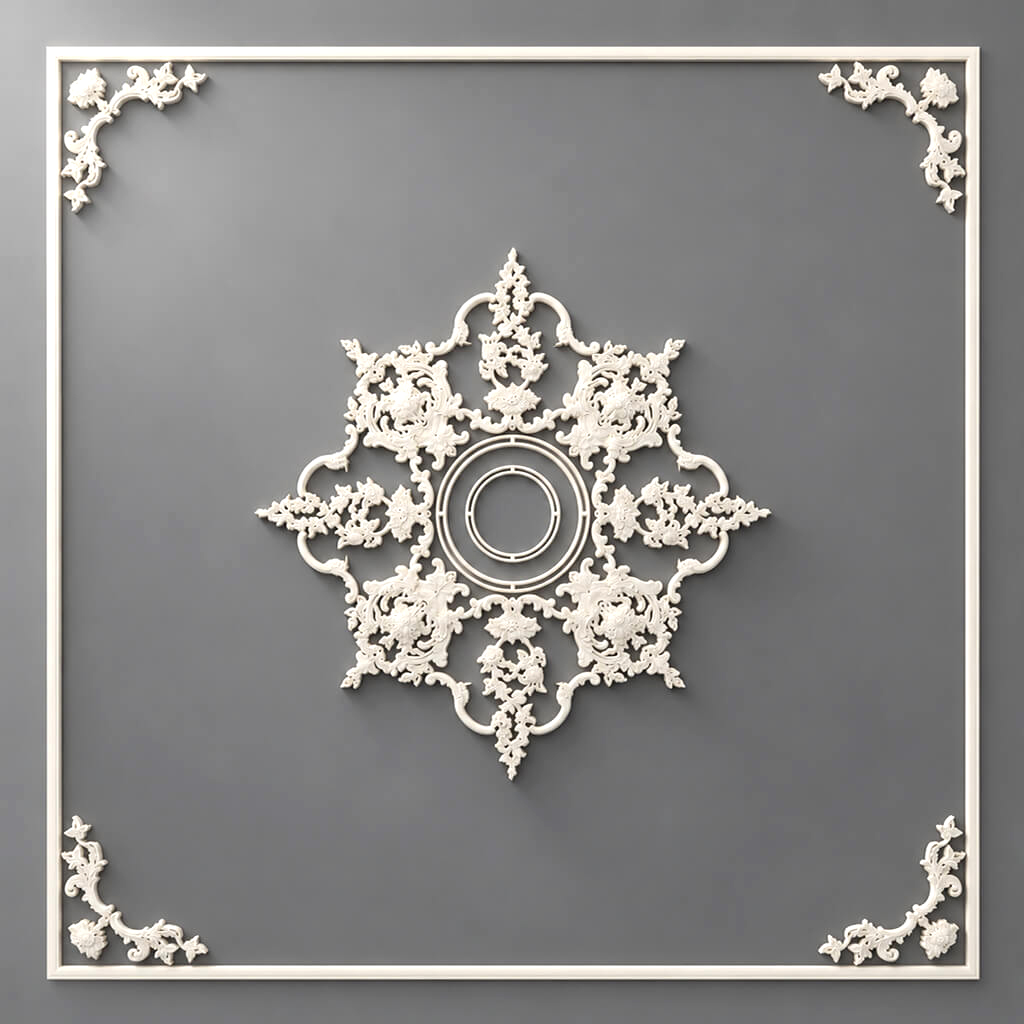
If the project already includes a polyurethane ceiling medallion, compare its decorative vocabulary with the corbels. Similar leaf forms, scroll directions, or levels of relief can make the room feel coherent even when the pieces come from different product families.
Corbels and Pilasters
Corbels can visually terminate or transition from pilaster-like verticals into horizontal architecture. This is useful at doorways, fireplace surrounds, built-ins, and wall compositions.
When used with pilasters, align the corbel width carefully. A corbel dramatically narrower than the pilaster may appear weak; one much wider may look unstable unless the entablature above justifies the change.
The relationship should be studied in elevation. Draw the full composition rather than selecting each component independently.
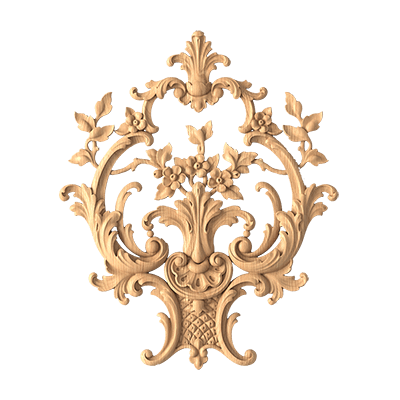
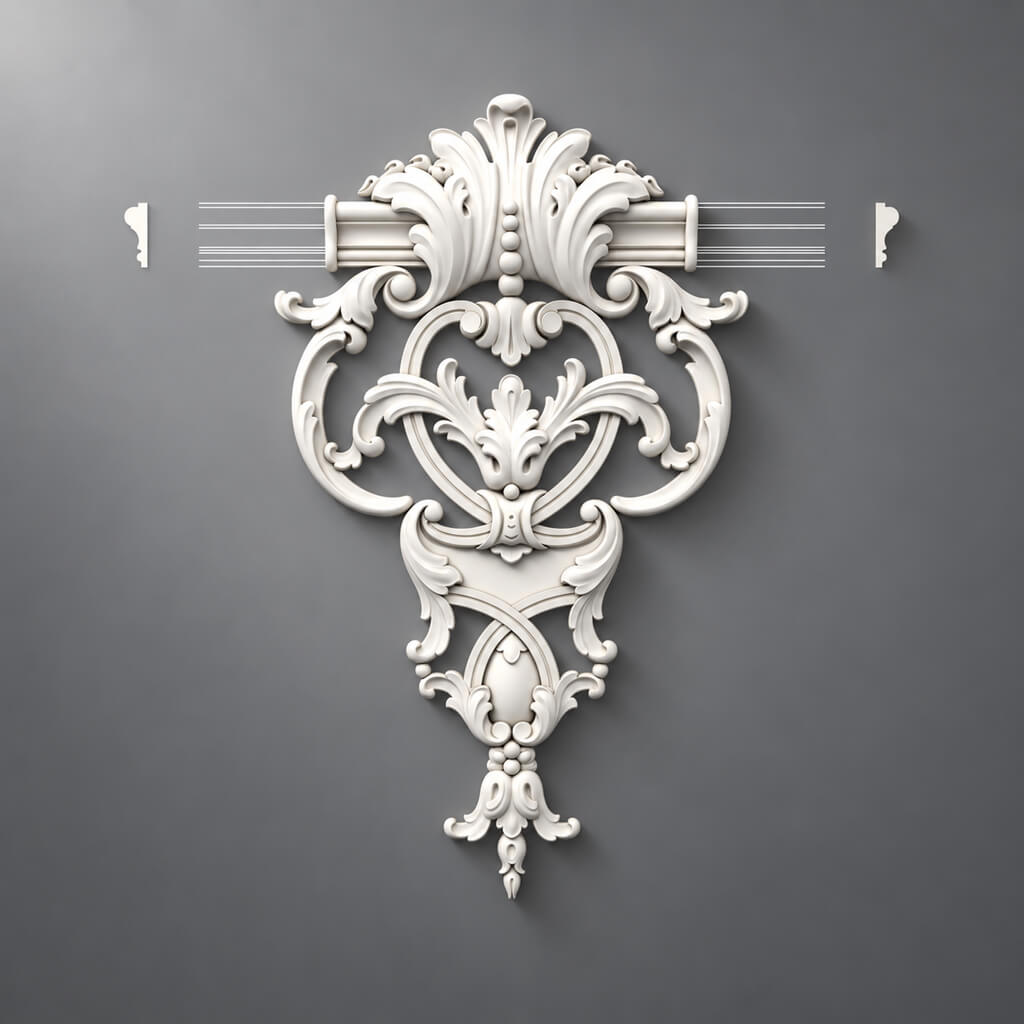
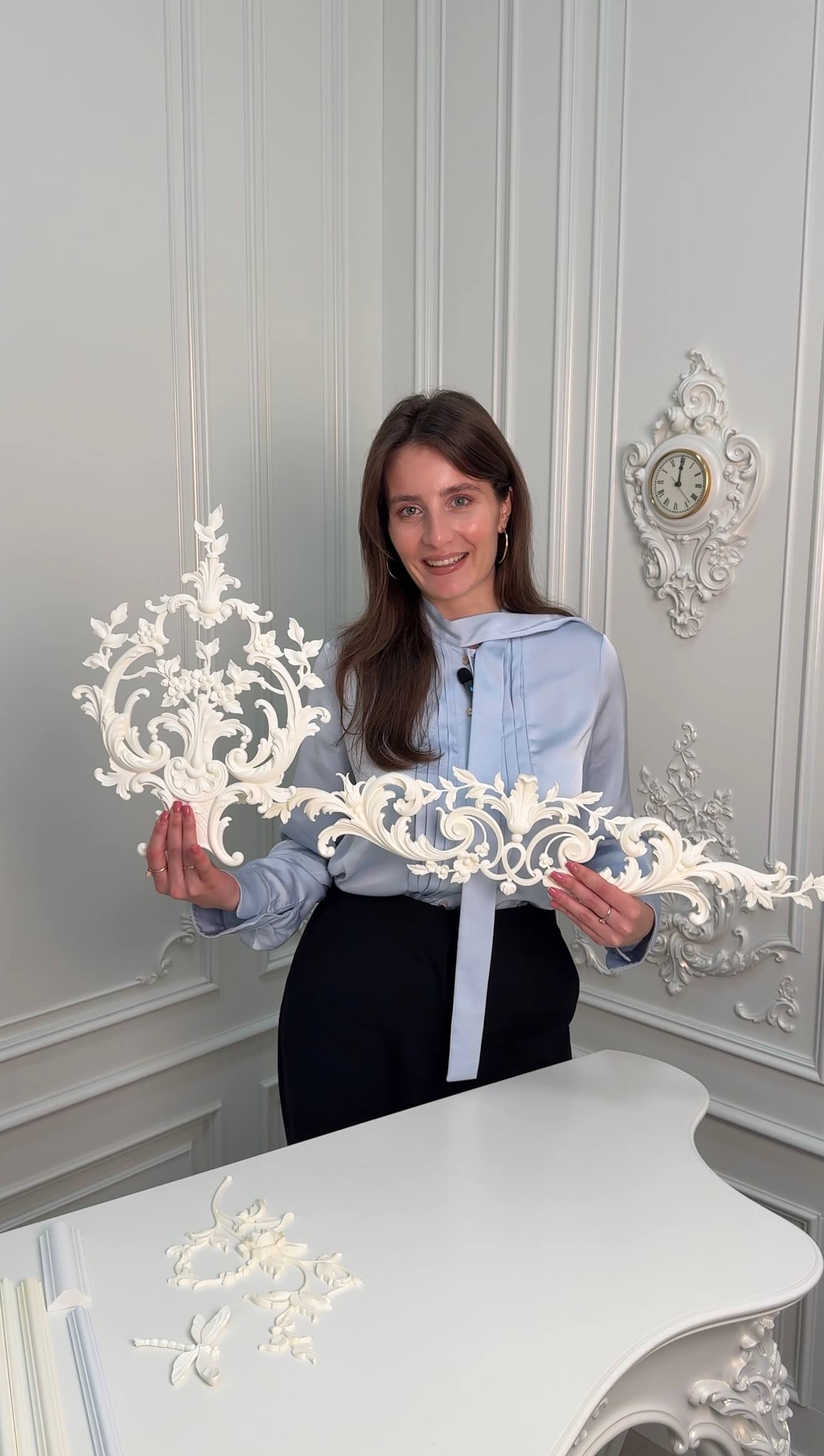
Corbels and Decorative Appliques
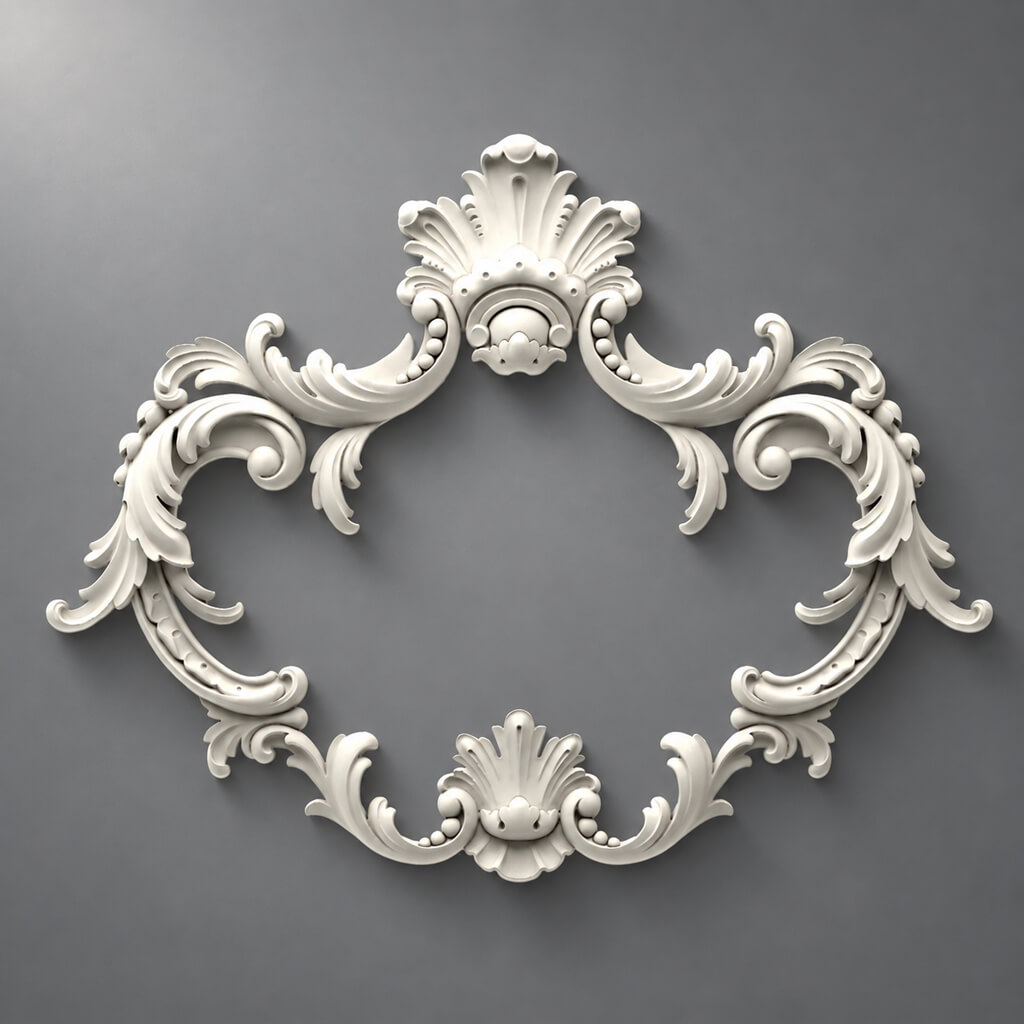
Corbels provide depth; appliques provide surface ornament. Used together, they can create layered decoration without requiring every component to project far from the wall.
For example, a mantel could use a pair of corbels beneath the shelf and a centered applique on the overmantel panel. The corbels establish structural rhythm, while the applique creates a central decorative focus.
Within the broader STAVROS range, polyurethane decorative elements can be coordinated with corbels when the design calls for a more complete composition.
How Designers Should Specify Decorative Corbels
A professional specification should include more than a product photo. At minimum, document:
- manufacturer and product number;
- material;
- overall height;
- overall width;
- maximum projection;
- orientation;
- quantity;
- pairing or repetition pattern;
- wall substrate;
- attachment method per manufacturer guidance;
- required joint finishing;
- primer and paint system;
- final color and sheen;
- whether the piece is decorative only;
- separate structural support requirements for shelves, mantels, counters, or cabinets;
- exterior-use confirmation if applicable.
That final distinction—decorative versus structural—should appear clearly in project documents. It prevents a finish carpenter, cabinet installer, or contractor from assuming the corbel is intended to carry a load.
How Contractors Should Sequence the Work
Good sequencing prevents damaged paint, misalignment, and redundant work.
- Confirm the actual structural support for the shelf, mantel, cabinet, or ledge.
- Complete framing or blocking.
- Confirm finished wall plane.
- Locate shelf or horizontal element.
- Dry-fit corbels and mark centerlines.
- Prepare substrate.
- Install decorative corbels according to product guidance.
- Finish perimeter joints.
- Prime and paint or touch up.
- Install or complete the visible horizontal element if sequencing requires it.
Some projects will reverse steps depending on access and finish conditions, but the important principle is to coordinate structural work before decorative work.
For Homeowners: What to Measure Before Ordering
Before choosing a corbel, record these dimensions:
- overall shelf or mantel length;
- shelf thickness;
- shelf depth;
- wall height;
- distance to nearby trim or cabinets;
- planned corbel centerlines;
- available maximum projection;
- desired vertical height of the corbel;
- distance from each corbel to the shelf end;
- clearance from door swings, walkways, switches, outlets, or appliances.
Photograph the wall straight on and from an angle. Those images make it easier to evaluate projection and scale.
A Practical Selection Workflow
- Define the visual role. Is the corbel under a shelf, mantel, cabinet, opening, or purely decorative ledge?
- Confirm structural support separately. Decide what actually carries weight.
- Measure the horizontal element. Width, depth, and thickness determine the visual scale.
- Establish the corbel envelope. Decide maximum height, width, and projection.
- Choose style. Classical, transitional, restrained, floral, scroll, or geometric.
- Mock up the size. Use cardboard or tape.
- Check paired placement. Confirm spacing and symmetry.
- Coordinate with nearby trim. Compare molding depth and ornament density.
- Plan paint and finish. Match architecture or create intentional contrast.
- Verify installation conditions. Substrate, adhesive, access, and curing support.
Understanding U.S. Search Language
American shoppers do not use one perfect phrase for this category. The strongest confirmed group in the current research is polyurethane corbel / polyurethane corbels. Related wording such as urethane corbel appears in the same general demand family.
Smaller but confirmed commercial variants include polyurethane corbels and brackets, polyurethane bracket, and polyurethane decorative corbels.
A buyer who is already close to purchase may search buy polyurethane corbels. That phrase signals commercial intent, but a useful product category still needs clear dimensions, material identification, product photography, and application guidance. Search wording gets the user to the page; good product information helps them make the decision.
Why We Do Not Repeat the Main Keyword Everywhere
A technical design article should sound like a designer, architect, contractor, or informed homeowner wrote it—not like a list of keyword variants.
Once the exact term has established the subject, natural language can do the rest: corbel, decorative bracket, architectural support form, molded detail, projecting ornament, wall bracket, mantel bracket, shelf accent, classical support, relief decoration.
This makes the article more readable while keeping the semantic field clear. Internal links should also be selective. Repeating the same exact-match anchor dozens of times does not make the advice more useful.
Common Mistake #1: Assuming the Corbel Carries the Shelf
This is the most important mistake to avoid. Decorative appearance is not a load rating.
If a shelf will hold books, stone, electronics, dishes, or other meaningful weight, design a proper support system. Let the decorative corbel complete the visual composition.
Common Mistake #2: Buying Too Small
Small corbels often look attractive in close-up photography because the ornament fills the frame. Installed beneath a long mantel or large hood, however, they can disappear.
Always evaluate the element in relation to the object above it and the viewing distance.
Common Mistake #3: Buying Too Deep
Projection can create problems in narrow rooms and circulation zones. A corbel that looks elegant from the front may extend several inches farther than expected.
Check side-view dimensions before ordering.
Common Mistake #4: Ignoring the Wall Grid
Corbels should align with something: shelf ends, cabinet stiles, wall-panel divisions, pilasters, a mantel opening, or another architectural axis.
Random placement makes even a high-quality element look applied.
Common Mistake #5: Mixing Decorative Languages
A Baroque corbel, Art Deco chandelier, rustic beam, minimalist trim, and Victorian wall panel can coexist in an intentionally eclectic room—but without a strong concept, the mixture looks accidental.
Choose one dominant architectural language and let secondary elements support it.
Common Mistake #6: Overusing Corbels
Because they are relatively small, it is easy to add too many. Under every shelf, every cabinet, every opening, and every ledge, they lose impact.
Use corbels where they explain a transition or reinforce a focal point. Leave other areas quiet.
Common Mistake #7: Painting Away the Detail
Heavy paint application can soften fine molded relief. Multiple thick coats may fill small recesses and reduce shadow.
Use controlled coats and preserve the geometry that made the corbel worth choosing.
Common Mistake #8: Treating Exterior Use as Automatic
Not every polyurethane decorative element is approved for outdoor use. Verify the specific product, coating, adhesive, and installation system before exterior placement.
Common Mistake #9: Choosing From the Front View Only
A corbel is a three-dimensional object. Always review side profile, projection, and top condition if available.
The side view often determines whether the piece feels elegant or bulky in the actual room.
Common Mistake #10: Designing the Corbel Before the Shelf
The horizontal element above should usually drive the proportion. Select the shelf, mantel, cabinet, hood, or ledge first—or at least define its dimensions—then choose the corbel.
Polyurethane vs. Wood Corbels
Wood is ideal when the project wants visible grain, stained finish, authentic carving, or structural woodworking that is designed accordingly. It is a material with warmth and depth that cannot be perfectly imitated by paint.
Polyurethane is attractive when the goal is detailed molded ornament, consistent repetition, lower decorative weight, and a painted architectural finish.
Neither material is universally better. Choose according to visual intent, finish, installation, and project requirements.
Polyurethane vs. Plaster
Plaster can produce beautiful traditional detail and is appropriate for historic or artisan interiors. It is heavier and more brittle, and installation practices differ.
Polyurethane offers a lighter molded alternative that can be easier to handle in renovation and repeated installation. If the goal is authentic restoration, plaster may still be the right material. If the goal is practical painted decorative architecture, polyurethane may be more efficient.
Polyurethane vs. Stone
Stone corbels can be structural or decorative depending on design, and they have a mass and surface character that polyurethane cannot literally duplicate.
Polyurethane can reproduce the visual idea of carved stone through form and finish without the same weight. This can be useful when the design wants the language of stone carving but the wall and installation strategy favor a lighter decorative element.
Frequently Asked Questions
What is a polyurethane corbel?
It is a molded decorative architectural element shaped like a traditional corbel or bracket. It is typically used beneath shelves, mantels, cabinetry, cornices, openings, or decorative ledges to create the appearance of architectural support and add relief.
Are polyurethane corbels structural?
Do not assume so. The current STAVROS KRPU decorative range should be treated as decorative unless a specific SKU includes explicit structural documentation and load ratings. Provide real structural support for loaded shelves, mantels, counters, and cabinetry.
What is the difference between a corbel and a bracket?
“Bracket” is a broad term that may describe structural hardware or decoration. “Corbel” is more specifically associated with an architectural projecting support form. In U.S. decorative-molding language, both terms are used, but “corbel” is usually more precise for ornamental architecture.
Where can polyurethane corbels be used?
Common interior locations include beneath decorative shelves, fireplace mantels, range-hood surrounds, built-in cabinetry, wide trim, door entablatures, wall compositions, and projecting decorative ledges.
Can I use a decorative corbel under a heavy mantel?
Yes as decoration, but the mantel should have its own properly designed support system. Do not rely on an unrated decorative corbel to carry significant weight.
How do I choose the correct size?
Compare the corbel height, width, and projection with the shelf or mantel dimensions, room scale, and viewing distance. Make a full-size cardboard or tape mockup before ordering if possible.
How far apart should corbels be?
Spacing depends on the composition. Pairs should relate to shelf ends, fireplace openings, cabinet divisions, or wall-panel axes. Repeated corbels should usually use consistent center-to-center spacing.
Should corbels match the wall color?
They can. Painting corbels the same color as surrounding millwork or wall architecture often produces the most integrated result. Contrast and decorative finishes are also possible when they support the design concept.
Can polyurethane corbels be painted?
Yes, but follow the product’s current preparation and coating recommendations. Thin, controlled paint layers preserve relief better than heavy coats.
Can I use polyurethane corbels in a kitchen?
Yes as decorative architecture, provided their placement does not interfere with appliance clearances, ventilation, cleaning, heat conditions, or required structural support.
Can I use them in a bathroom?
They can be considered for humid interiors, but the substrate, adhesive, primer, paint, caulk, and room ventilation all need to be suitable for the environment.
Can polyurethane corbels be used outdoors?
Only when the specific product and installation system are confirmed for exterior conditions. Do not assume all polyurethane decor is exterior-rated.
Do corbels have to match crown molding?
No. They should coordinate in scale, detail level, and style, but exact motif matching is unnecessary. A room often looks more sophisticated when related elements share a visual language without being identical.
Can corbels work in a modern interior?
Yes. Choose a simplified profile, use fewer pieces, and consider a monochromatic finish. One restrained pair can provide architectural depth without making the room feel historical.
Can I install them myself?
Possibly, depending on size, substrate, access, and product instructions. Accurate layout, proper surface preparation, compatible adhesive, and temporary support are the key practical issues. If the project involves heavy shelves, mantels, counters, or other structural work, separate that task from decorative installation.
Where can I browse STAVROS polyurethane corbels?
You can compare current polyurethane corbels and decorative bracket forms in the STAVROS relief-decoration catalog. Review individual product dimensions and details before specifying a model.
Final Design Principle: The Corbel Should Explain the Architecture
The strongest decorative corbel is not simply the most ornate one. It is the one that makes the surrounding architecture feel more logical.
Under a shelf, it should visually connect the shelf to the wall. Under a mantel, it should reinforce the fireplace hierarchy. At a doorway, it should clarify the transition between vertical casing and horizontal entablature. Beneath a cornice, repeated corbels should establish rhythm. In a modern interior, a restrained pair should add depth without overwhelming the room.
That is why good selection begins with the project rather than the product. Measure the element above. Confirm the real structural support. Study the wall grid. Decide how much projection the room can accept. Compare the ornament with nearby molding. Create a mockup. Plan the paint. Then choose the corbel.
For U.S. search language, polyurethane corbels is the clearest primary phrase, while bracket terminology remains useful as a secondary variant. But search terminology is only the beginning. What determines the quality of the finished room is proportion, placement, alignment, finish, and an honest separation between visual support and structural support.
When those decisions are right, a small molded element can make a shelf, mantel, built-in, or doorway feel as though it belongs to the architecture rather than merely being attached to it. That is the real value of the corbel: not decoration for decoration’s sake, but a precise architectural transition that gives the room depth, rhythm, and a sense of permanence.