
























Article Contents:
- Wooden overlay N-479 96×84×17 mm: what the card confirms
- Polyurethane overlay NPU-479 96×84×17 mm: where the match is truly exact
- N-479 and NPU-479: the same size does not yet make them the same mounting part
- The paper template 96×84 mm can be kept, but the mounting template — not automatically
- The depth of 17 mm matches: what this really gives the designer
- Decorative overlays for furniture: what to check on the finished facade before changing the material
- Example: a 500 mm facade and a 96 mm butterfly in the center
- Wooden N-479 for enamel: after painting, it still remains wooden
- N-479 Standard or Prestige: the sanding decision disappears when switching to NPU-479
- Oak
- Oak
- Option A — keep N-479
- Option B — replace the set with NPU-479
- Option C — mix materials
- What is the size of the wooden N-479?
- What is the size of NPU-479?
- What is N-479 made of?
- What is NPU-479 made of?
- How much does the wooden N-479 cost?
- Does the same size make these pads interchangeable?
- Can I keep the old paper template 96×84 mm?
- Can I keep the old glue pattern?
- Can I install N-479 and NPU-479 on two symmetrical doors?
- What to do if the facade is already prepared for the wooden N-479?
- Where to buy the wooden N-479?
- Where to buy NPU-479?
- Where to see other wooden decorative overlays?
- Where to see polyurethane overlays?
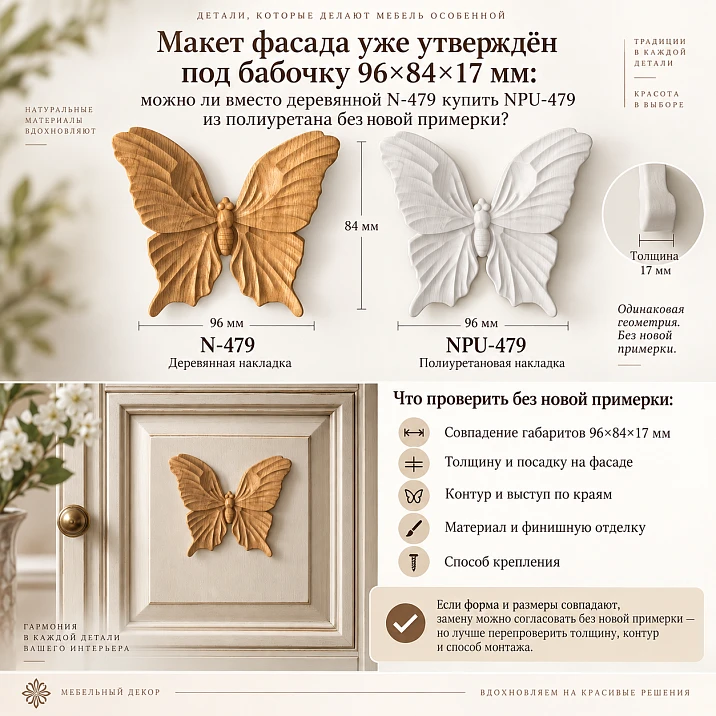
The furniture facade is already designed. The drawing includes a decorative butterfly measuring 96×84×17 mm, centered on the door axis, the clearance to the handle is checked, and the free space around the element satisfies the designer. Initially, the project specified the wooden N-479, but before ordering, the NPU-479 made of polyurethane with the same three nominal dimensions — 96×84×17 mm — is available.
Can I simply replace the article number and keep the old installation project?
Overall dimensions — partially yes. Mounting assembly — no, it needs to be rechecked. Matching A×B×C means that both parts occupy the same nominal rectangular volume by their main dimensions. But from this one cannot automatically conclude that the back surface, contact area with the facade, relief, adhesive application method, weight, or preparation technology for painting are the same.
Therefore, when replacing the wooden N-479 with the polyurethane NPU-479, you can keep the already verified position on the facade and the original 96×84 mm template, but before paying for the new item you need to compare the drawings, physical fit, finishing system, and installation method.
If the project remains wooden, you can buy the wooden overlay N-479. If the project is deliberately switched to polyurethane, check the separate product page and buy the polyurethane overlay NPU-479.
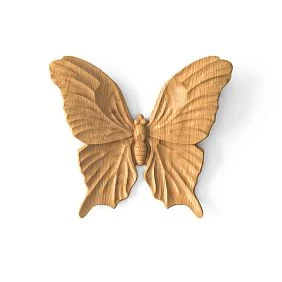
Wooden overlay N-479 96×84×17 mm: what the product page confirms
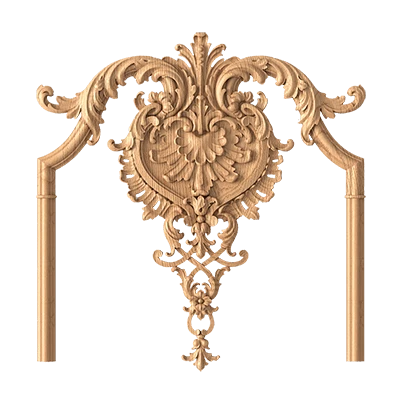
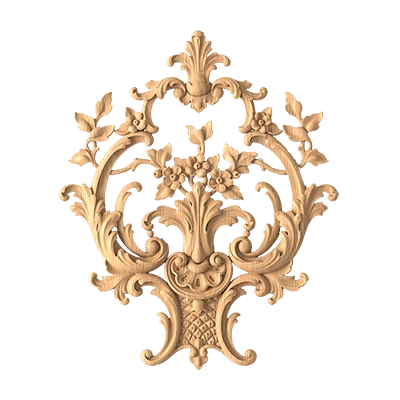
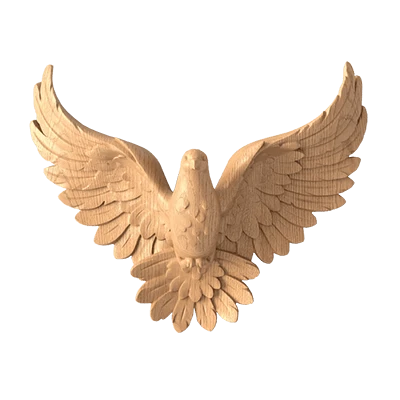
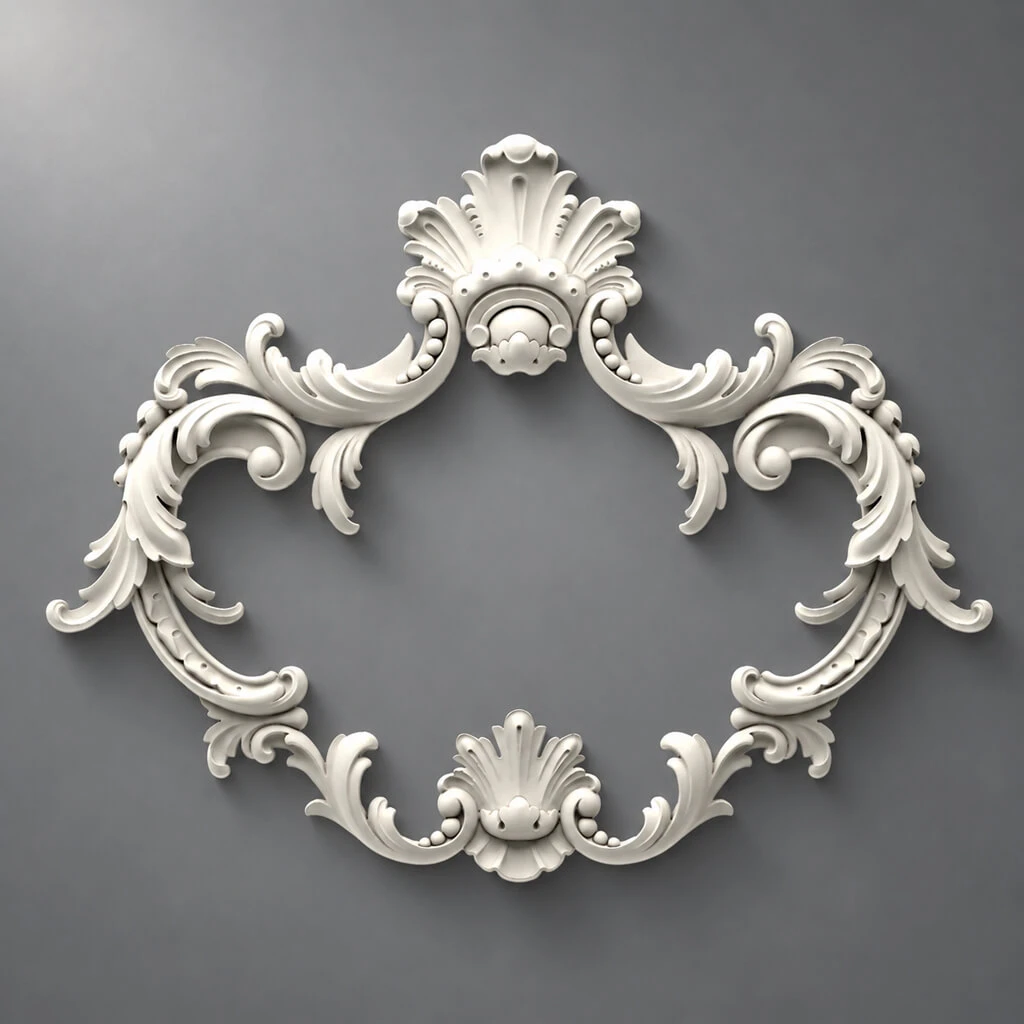
N-479 is a carved wooden overlay in the shape of a butterfly.
Size:
A×B×C = 96×84×17 mm.
Material:
- Beech;
- Oak.
Grinding quality:
- Standard;
- Prestige.
For the selected beech Standard version, the product page shows the preparation “For enamel.”
Current price matrix:
| Execution N-479 | Price |
|---|---|
| Beech / Standard | 830 ₽ |
| Beech / Prestige | 1 340 ₽ |
| Oak / Standard | 940 ₽ |
| Oak / Prestige | 1 390 ₽ |
Average production time for unavailable item is 5–10 days.
The card allows the use of N-479 on furniture, doors, walls, and facades. For our article, the furniture scenario is key: the butterfly is already integrated into the layout of a specific facade.
Working specification:
N-479 / 96×84×17 mm / beech or oak / Standard or Prestige / preparation ___ / quantity ___ pcs. / facade F___
Entry:
butterfly 96×84×17
is insufficient because for this size there is at least one more separate product item made of a different material.
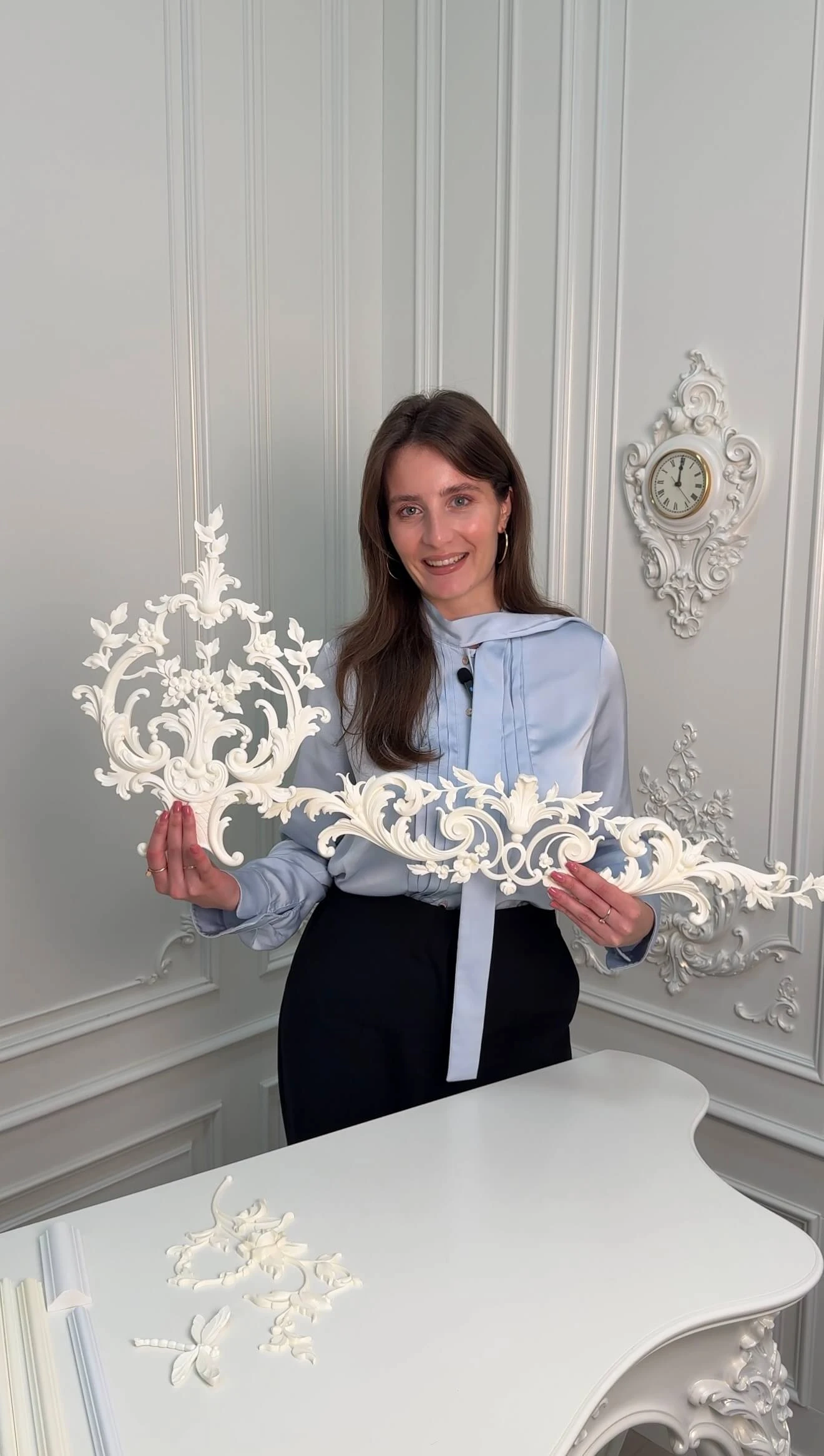

Polyurethane overlay NPU-479 96×84×17 mm: where the match is truly exact
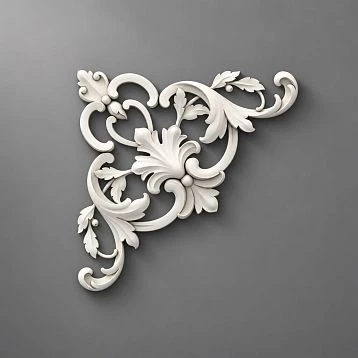
NPU-479 is a separate polyurethane overlay, also shaped like a butterfly.
Its nominal size:
96×84×17 mm.
Therefore, the cards match in three main dimensions:
| Parameter | N-479 | NPU-479 |
|---|---|---|
| A | 96 мм | 96 мм |
| B | 84 мм | 84 мм |
| C | 17 мм | 17 мм |
| Material | Beech / Oak | Polyurethane |
This is a useful coincidence.
If the designer has already verified that the 96×84 mm rectangle fits between the handle, the edge of the panel, and the adjacent door leaf, this part of the work does not need to be started from scratch.
If 96 mm is allocated on the facade along one axis and 84 mm along the other, NPU-479 falls into the same dimensional envelope by nominal size.
But then the technical part begins, where matching numbers alone are not enough.
Our factory also produces:
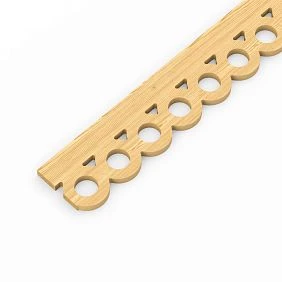
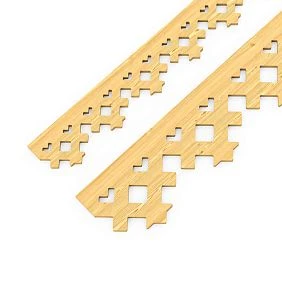
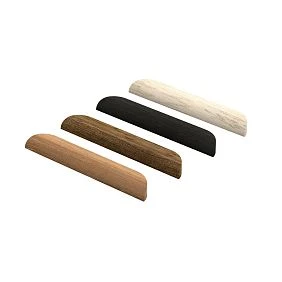
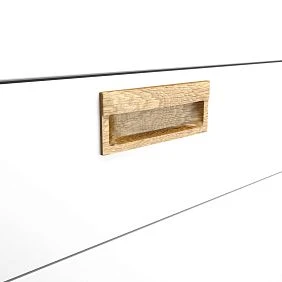

N-479 and NPU-479: the same size does not yet make them the same mounting part
A×B×C answers the question:
what overall nominal size does the product occupy?
But it does not answer the questions:
- is the shape of the reverse side the same;
- is the actual contact area the same;
- is the relief distributed the same;
- does the product touch the facade the same;
- is the same adhesive applicable;
- is the surface prepared the same;
- does the base behave the same when painted;
- is the mass the same.
None of these parameters can be derived solely from the numbers 96×84×17.
Therefore, the dangerous wording looks like this:
The size is the same — just change N-479 to NPU-479.
Correct:
The dimensions are the same; check the mounting and finishing unit NPU-479 separately.
This exact line should appear in the project before replacing the material.
Get Consultation
The paper template 96×84 mm can be kept, but the mounting template — not automatically
Imagine that the designer has already printed a paper rectangle 96×84 mm and applied it to the facade.
With its help, the following were checked:
- the center of the element;
- distance to the handle;
- indent from the edge;
- the distance to the panel;
- free field;
- symmetry relative to the adjacent sash.
Such a template remains useful for NPU-479 as well, because the nominal A and B are the same.
But if this template additionally marks:
- glue zones;
- contact points;
- back surface contour;
- mechanical fastening points;
these marks cannot be transferred to the polyurethane version without verification.
That is, it is useful to split the documentation into two layers:
overall template 96×84 — keep;
mounting template — confirm again.
The 17 mm depth matches: what this really gives the designer
Both overlays have a C dimension of 17 mm.
This is important for the initial check of the decor's protrusion relative to the facade plane.
For example, if a handle runs next to the butterfly and the designer has already verified the visual scale of a 17 mm thick element, the nominal size does not change.
But one cannot automatically claim that the entire relief of two products matches point for point.
C=17 mm confirms the overall size along the third axis, not the identity of each ornament protrusion.
Therefore, in a symmetrical project, physical fitting still remains useful.
Decorative overlays for furniture: what to check on a finished facade before changing the material
If the facade has already been produced, replacing the article requires more careful checking than at the sketch stage.
Need to inspect:
- facade material;
- existing coating;
- handle location;
- panel or milling;
- gap between the doors;
- neighboring door;
- opening trajectory;
- position of the decorative element;
- nominal projection 17 mm.
The opening trajectory is especially important.
If two doors pass close to each other, the element's dimensions are checked not only statically but also during movement.
For a general selection, you can Buy decorative furniture overlays in the wooden category, but the finished facade requires checking the specific selected article.
Example: facade 500 mm and butterfly 96 mm centered
Let's take a simple dimensional calculation.
Facade width:
500 mm.
Nominal decor width:
96 mm.
Free field:
500 − 96 = 404 mm.
When centering:
404 / 2 = 202 mm.
We get 202 mm on each side.
If N-479 is replaced with NPU-479, this calculation by nominal width remains valid.
But it says nothing about how exactly the polyurethane part fits against the facade.
This is a good example of what part of the design work is transferred and what is not.
Wooden N-479 under enamel: after painting, it still remains wooden
Common everyday logic:
If both N-479 and NPU-479 are painted with white enamel, they will become identical.
The color can indeed be approximated.
But the base remains different.
N-479 is wood.
NPU-479 is polyurethane.
A wooden blank has its own preparation, sanding, and priming technology. A polyurethane one has its own.
Therefore, the same finish color does not turn two materials into one technological system.
This is especially important for a furniture maker who receives an already approved finishing map and tries to replace the product at the last moment.
N-479 Standard or Prestige: the sanding decision disappears when switching to NPU-479
For N-479, there is a separate choice of sanding quality.
Beech:
830 ₽ Standard
и
1 340 ₽ Prestige.
The difference:
510 RUB per one overlay.
Oak:
940 ₽ Standard
и
1 390 ₽ Prestige.
The difference:
450 ₽.
For four wooden butterflies:
Beech
Standard:
4 × 830 = 3 320 ₽.
Prestige:
4 × 1 340 = 5 360 ₽.
Oak
Standard:
4 × 940 = 3 760 ₽.
Prestige:
4 × 1 390 = 5 560 ₽.
When switching to polyurethane NPU-479, this wooden fork regarding sanding is no longer transferred automatically. This is another proof that the same size does not mean the same product specification.
NPU-479 made of polyurethane for painting: N-479 technology cannot be transferred
A polyurethane overlay can be used for subsequent decorative finishing, but choose the primer and paint based on the principle:
"it worked on N-479, so it will work here too"
is incorrect.
Need to consider:
- material NPU-479;
- facade material;
- the surface condition;
- type of previously applied coating;
- instructions of the selected primer;
- compatibility of the finishing system.
This is especially important if the facade is already painted.
The adhesive and primer must be compatible not only with the overlay, but also with the actual coating of the furniture part.
When it makes more sense to keep the wooden N-479 in the project
N-479 is reasonable to keep if the project is fundamentally based on wooden decor.
For example:
- the remaining overlays are already made of wood;
- a unified material system is important;
- the project requires beech or oak;
- the finishing chart is prepared specifically for wood;
- the first part of the set has already been ordered;
- the furniture maker has already approved the installation of N-479.
In such a situation, replacing with NPU-479 solely because the size matches creates additional work without an obvious design reason.
If options are still being selected, it is possible buy wooden carved overlays in the general category.
When it makes sense to switch the project to NPU-479
NPU-479 should be considered if switching to polyurethane decor is a deliberate decision, not a random replacement of a single missing part.
For example:
- the entire set of decorative elements is switched to polyurethane;
- the finishing system will be re-approved;
- the installation has been verified for the polyurethane overlay;
- the designer physically compared the relief;
- wood material is no longer a project requirement.
For a wide selection, you can polyurethane moldings buy through the corresponding catalog.
In this case, NPU-479 becomes an independent design choice, not a "substitute because the numbers matched."
Two identical butterflies on two facades: can you place N-479 on the left and NPU-479 on the right?
Let's imagine a symmetrical dresser.
A wooden N-479 is already installed on the left door.
For the right side, there is no such part, but NPU-479 is available.
The nominal dimension matches.
Can materials be mixed?
Technically, this option cannot be prohibited by a single article, but it needs to be checked much more carefully.
Compare:
- actual relief;
- shadows;
- color after finishing;
- gloss;
- surface;
- installation;
- visual symmetry from the main viewpoint.
On two symmetrical facades, a small difference can be more noticeable than on two elements in different rooms.
Therefore, for a paired composition, it is more logical to decide in advance:
both sides wooden or both sides polyurethane?
The mixed option should be left only after a real fitting.
What to do if one wooden N-479 has already been purchased but not yet installed
This is the best moment to reconsider the decision.
While the facade is not prepared for specific installation, you can physically compare N-479 and NPU-479.
Useful order:
- attach both parts to the same facade;
- align the centers;
- compare the outer contour;
- check the relief;
- view from the side;
- evaluate the shadow;
- check the back side;
- only then choose the material for the entire pair.
If the second N-479 is available and the wooden system already suits you, it is simpler not to change the project.
If the NPU-479 fits better visually and technologically, the set can be switched to polyurethane before installation begins.
Buy wooden carved overlays in one batch or replace the entire set with polyurethane
For several identical facades, there are three normal scenarios.
Option A — keep N-479
All butterflies are ordered from wood in one agreed configuration.
Option B — replace the set with NPU-479
All elements are converted to polyurethane before installation.
Option C — mix materials
Such a decision is made only after physical comparison and confirmation by the designer.
The riskiest scenario:
buy part N-479, part NPU-479 and hope that the same size automatically gives the same result.
Size is only one layer of compatibility.
Installation of N-479 and NPU-479: same sizes do not mean same adhesive
Do not assign the same mounting compound just because the pads are the same size.
First, check:
- pad material;
- facade material;
- presence of primer or enamel;
- condition of the base;
- whether the pad itself is painted;
- instructions for the chosen adhesive;
- permissibility of working over the existing coating.
To make a selection, you can use the section materials for installing decorative pads, but the specific compound must match the actual pair of materials.
The article deliberately does not name a universal adhesive for both versions: without facade data, this would be unsubstantiated advice.
If the facade is already drilled or prepared for N-479
This is an important edge case.
If installation N-479 was approved and the furniture maker has already performed holes, cutouts, or other irreversible operations, changing the article becomes riskier.
Need to check again:
- does the new part match the existing points;
- does it cover the prepared area;
- are old holes not visible;
- is the back surface suitable;
- is the chosen mounting method acceptable for polyurethane.
The match of 96×84×17 does not answer these questions.
If preparation has already been done, the decision to replace should be made not by the buyer, but by the furniture maker or designer.
What to send to the designer before replacing N-479 with NPU-479
Minimum package:
Original item: N-479
New product: NPU-479
Dimensions of both: 96×84×17 mm
Facade: material ___
Facade coating: ___
Quantity: ___
Position on facade: according to existing layout
Requires confirmation: relief, back surface, finish, installation, and admissibility of replacement.
Additionally attached:
- drawings of two products;
- photo of the facade;
- paper template 96×84;
- photo of the main viewpoint;
- data on the handle and adjacent elements.
This way, the designer gets a specific question, not an abstract one:
"Is polyurethane instead of wood okay?"
When it's too late to change wooden N-479 to NPU-479
Replacement requires special caution if:
- the facade is already irreversibly prepared for N-479;
- the mounting assembly is confirmed only for wood;
- the remaining overlays are already made or installed from wood;
- the finishing system is approved only for N-479;
- the client does not want to re-confirm the relief;
- physical fitting showed a noticeable visual difference.
under these conditions, keeping the wooden version is often simpler than re-approving the project.
when the same size 96×84×17 really saves work
the matching dimensions still provide real benefit.
no need to redo:
- search for free space on the facade;
- recalculate the primary rectangle 96×84;
- change the composition center only because of the overall size;
- reconsider the main margins around the element;
- Re-evaluate the nominal projection of 17 mm.
That is, part of the layout is preserved.
This is why NPU-479 is a logical candidate for comparison with N-479.
But the size saves overall work, not eliminates technical verification.
What to put in the cart after the final decision
If a wooden system is chosen:
N-479 / 96×84×17 / beech or oak / Standard or Prestige / quantity ___ / finish ___ / installation agreed ___
If polyurethane is chosen:
NPU-479 / 96×84×17 / polyurethane / quantity ___ / painting system ___ / installation agreed ___
If the decision has not been made yet, you should not automatically buy both versions just "just in case".
First, you can compare cards and drawings, then — if necessary — a physical sample.
Dry fit of N-479 and NPU-479: what to check before gluing and painting
If it is possible to obtain both parts before the final decision, the most useful stage is a dry fit on the actual facade.
The overlay is not glued or painted. It is temporarily applied along the approved axis and checked:
- whether the external scale matches the 96×84 mm mock-up;
- whether the relief reads the same;
- whether the visual center shifts;
- whether there is enough free space to the handle;
- whether the 17 mm protrusion conflicts with adjacent elements;
- how the shadow looks under side lighting;
- Is a butterfly perceived the same at a distance of one to two meters?
If the facade is paired, fitting is done on both doors at once.
First N-479 on the left and right, then NPU-479 on the left and right, then — only if this is really being considered — a mixed version.
This way, the designer evaluates not a photo of the product, but the actual composition.
It is especially useful to photograph the facade frontally and at an angle after each fitting. Photos help compare options without the memory effect.
Already painted facade: why replacing the material requires a separate check of the substrate
If the facade is already coated with enamel or varnish, the installation issue becomes more complicated.
You need to understand what the overlay will be glued to:
- to the enamel itself;
- to the primer after local preparation;
- to the clean facade material;
- to the previously prepared area.
The same size of N-479 and NPU-479 does not answer this question.
Moreover, you cannot automatically sand down or dissolve the existing coating without consulting the furniture maker. An error can damage not the overlay, but the expensive facade itself.
Therefore, for finished furniture, the order is better as follows:
- determine the material and coating of the facade;
- choose a specific overlay;
- get recommendations for a compatible mounting compound;
- test the technology on an inconspicuous sample or test surface;
- only then mount the decorative element.
Symmetry matters more than identical article numbers only on paper.
Suppose there are four identical facades on the cabinet.
In the original design, each should have a butterfly 96×84×17 mm.
If two N-479 units are already purchased, and the remaining two are offered to be replaced with NPU-479, there is a temptation to split the set in half.
But for symmetrical furniture, not only the size of each element matters, but also the repeatability of the entire group.
Before mixing materials, you need to check:
- whether the contour reads the same;
- whether the depth of shadows matches;
- whether the surface looks the same after finishing;
- whether there is any difference under side lighting;
- Are the edges of the thread perceived the same way?
- Does the visual weight of the pair remain unchanged?
If the difference is noticeable, it is better to either reorder all wooden N-479, or switch the entire set to NPU-479 before installation.
A mixed system is justified only when, after a real fitting, it looks like a unified project rather than a forced replacement.
How to record the decision in the furniture specification
After choosing the material, it must be written down so that the next project participant does not revert to the old version.
For wood:
N-479 / 96×84×17 mm / beech or oak / Standard or Prestige / quantity ___ / facades F1–F___ / installation agreed / finish ___
For polyurethane:
NPU-479 / 96×84×17 mm / polyurethane / quantity ___ / facades F1–F___ / installation agreed / finish ___
If the replacement occurred after project approval, it is better not to simply delete the old line, but to mark it:
N-479 — canceled, do not use. Replaced with NPU-479 after repeated fitting.
So the purchaser, painter, and furniture maker will not work according to different versions of the bill of quantities.
When the same size does not save money
The match of 96×84×17 can save time on the dimensional layout, but does not necessarily reduce the total project cost.
When changing the material, additional work may appear:
- re-fitting;
- a new test paint-out;
- a different primer system;
- new adhesive;
- adjustment of the already prepared facade;
- dismantling of a previously installed part.
Therefore, you need to compare not only the price of one overlay.
Project formula:
product + preparation + finishing + installation + possible facade rework.
If the wooden N-479 is already approved and the technical scheme is ready, switching to NPU-479 may be more expensive in terms of work, even if the polyurethane part itself costs less.
Conversely, if installation has not yet started, the entire series is switched to polyurethane in advance and the technology is approved, additional costs may be minimal.
That is why it is better to make the decision before the first irreversible action on the facade.
Mistakes when replacing N-479 with NPU-479
Mistake: considering the 96×84×17 match as full interchangeability. The dimensions match, but the mounting characteristics require separate verification.
Mistake: transferring the glue template from the wooden overlay to the polyurethane one. The back surface and material compatibility need to be re-checked.
Mistake: considering the same white paint as the same technology. The substrates are different.
Mistake: mixing N-479 and NPU-479 on symmetrical facades without a trial fit. The relief and shadows may be perceived differently.
Error: changing the article number after preparing holes without checking. The nominal size does not guarantee that mounting points will match.
Error: using a broad commercial query as proof of SKU properties. Specific characteristics are taken only from the product cards themselves.
How to decide: N-479 or NPU-479
Is the project fundamentally wooden?
→ Keep N-479.
Is a specific wood species needed — beech or oak?
→ N-479.
Is the project being switched to polyurethane decor?
→ Consider NPU-479.
Is it necessary to preserve a 96×84 mm space on the facade?
→ Both products fit the nominal size.
Need to save the old wiring diagram without checking?
→ No, a single dimension table is not enough.
Will there be different materials on the two symmetrical facades?
→ First, a physical fitting.
Is the facade already prepared for N-479?
→ Agree on the replacement with the cabinetmaker before purchasing NPU-479.
Questions before purchasing N-479 and NPU-479
What is the size of the wooden N-479?
96×84×17 mm.
What is the size of NPU-479?
Also 96×84×17 mm.
What is N-479 made of?
in beech or oak.
What is NPU-479 made of?
made of polyurethane.
How much does the wooden N-479 cost?
At the time of check: beech Standard — 830 ₽, beech Prestige — 1,340 ₽, oak Standard — 940 ₽, oak Prestige — 1,390 ₽.
Does the same size make these overlays interchangeable?
No. It confirms the matching nominal dimension, but not the mounting geometry and technology.
Can I keep the old paper template 96×84 mm?
Yes, for checking the location and offsets.
Can I keep the old glue pattern?
Not automatically.
Can I install N-479 and NPU-479 on two symmetrical doors?
Only after visual and editing check.
What to do if the facade is already prepared for the wooden N-479?
First show the new NPU-479 to the cabinetmaker and confirm compatibility with the existing preparation.
Where to buy the wooden N-479?
In the card of the carved overlay N-479 STAVROS.
Where to buy NPU-479?
In the card of the polyurethane overlay NPU-479 STAVROS.
Where to see other wooden decorative overlays?
In the category of wooden carved overlays STAVROS.
Where to see polyurethane overlays?
In the category of molded decor made of polyurethane STAVROS.