




































































Article Contents:
- Why an apartment looks cheaper than its actual value
- Wooden baseboard: a quick way to make the bottom of the wall neater
- Why a wooden baseboard changes the first impression
- When to choose a high baseboard
- When a calm narrow profile is better
- How a baseboard helps an apartment look finished
- Ceiling cornice: how to remove the feeling of a "bare box"
- Why decorate the joint between the wall and ceiling
- When you need a wooden cornice
- How a cornice affects interior photos
- Light profile or expressive: how not to miss the mark
- Wooden slats: an accent wall for photos, showings, and listings
- Why one accent wall is better than decor everywhere
- Reiki in the TV zone
- Slats behind the sofa and at the headboard
- Slats in the hallway
- Furniture handles: the cheapest way to update a kitchen, wardrobe, and dresser
- Why handles completely change the perception of furniture
- How to choose handles for your apartment interior
- Handles without coating: freedom of color
- Large staple or button: what to choose for home staging
- Legs and supports: how old furniture starts to look lighter
- Visual lightness: why it matters during a showing
- Legs for a cabinet: which ones are suitable
- Uncoated furniture legs: tint to match the interior
- Furniture support: when exactly it is needed
- Underframe: if you need to quickly assemble a beautiful dining area
- What is a base and why it is more important than it seems
- Underframe for a dining table: how to choose for an apartment
- Dining area for apartment photos: a few secrets
- Wooden beam and layout: when an architectural accent is needed
- Wooden beam: for which properties it is appropriate
- When a beam is unnecessary
- Wooden layout: neat lines where slats don't fit
- What to buy first if the budget is limited
- Home staging mistakes with wooden details
- FAQ - answers to popular questions
- Which details make an apartment look more expensive the fastest?
- What to replace before selling an apartment: baseboard, handles, or lighting?
- Are wooden slats suitable for a rental apartment?
- Is it worth changing furniture handles before showing an apartment?
- Which baseboard to choose for a rental apartment?
- What is better for a quick lunch zone: legs or under-table supports?
- How not to overload an apartment with wooden decor before selling?
- Which wooden elements are best to buy in one style?
- About the Company STAVROS
There are apartments that sell in a week. And there are apartments that sit in databases for three months — with the same square footage, same floor, same price. The difference between them is not the area or the district. The difference is in how the apartment looks. In photos, at showings, in the first thirty seconds when the buyer or renter makes their verdict.
Apartment home staging is preparing a home for sale or rent by working with visual details. Without major renovations. Without replacing furniture. Without expensive redevelopments. Sometimes — in a few days and with a budget that fits within reasonable limits. And one of the most precise tools in this work is wooden details: baseboards, cornices, slats, handles, legs, supports, under-table supports. They create a feeling of completeness, quality, and a thoughtful interior.
This article is a practical guide. No fluff, no general words. About what exactly to buy, where to place it, and why it works.
Why an apartment looks cheaper than its actual value
Before changing anything, you need to understand what exactly spoils the impression. An experienced home stager enters an apartment and sees the weak spots in a minute. Let's list the main ones.
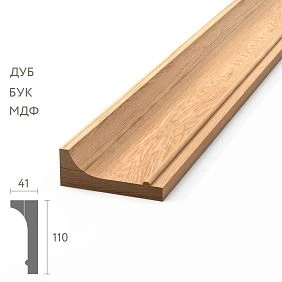
Cheap plastic baseboard. White PVC baseboard 40 mm high is a signal of budget renovation. It yellows, cracks, pulls away from the wall, loses its shape. In photos, it looks even worse than in real life. And it is what is seen in the lower part of every interior shot.
Bare walls without a single accent. Empty smooth walls are not minimalism. They are incompleteness. Minimalism is when every element is in its place and says something specific. A bare wall is when there is no element at all.
Random furniture fittings. Different handles on the kitchen and chest of drawers. One cabinet has no handle at all. The sofa legs are plastic, the bedside table has metal ones, and the chest of drawers has none at all. All of this creates the feeling that the apartment was assembled from whatever was available, rather than from what was intended.
Unfinished joint between the ceiling and wall. This is called a "bare box." No cornice, no molding — just a right angle. That's how it was in Soviet apartments. But in 2024–2026, this reads as an unfinished renovation.
The furniture looks temporary. The sofa without legs sits directly on the floor. The bedside table without supports looks heavy and grounded. The dining table without an expressive base is just a horizontal plane on something. All of this reduces the visual value of the space.
The interior looks bad in photos. This is critical when selling or renting: 90% of decisions are made based on the listing, and the listing is the photos. If the frame has no expressive elements, no depth, no accents — the photo won't catch attention, and the apartment won't be noticed.
This is where home staging works. And it's precisely here that wooden details give the most accurate and fastest result.



Wooden baseboard: a quick way to make the bottom of the wall neater
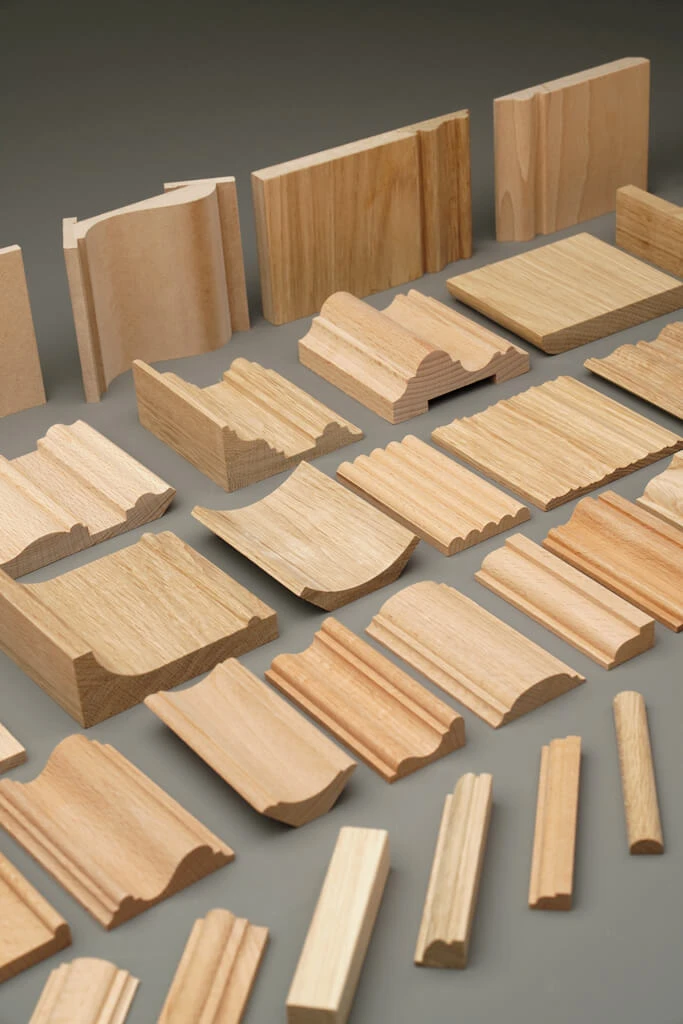
Let's start with the most underestimated interior element. Ask anyone — and most will say that a baseboard is a trifle. But it's this trifle that runs along the entire perimeter of every room. It's present in every interior photo at the bottom. It's the first thing you see when glancing at the lower part of the wall.
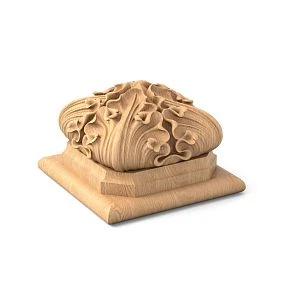
Our factory also produces:







Why a wooden baseboard changes the first impression
The difference between a plastic baseboard costing 60 rubles per meter and wooden baseboard one made of solid wood is not just a difference in material. It's a difference in the signal the apartment sends.
A wooden baseboard says: here they thought about the details. Here they made a choice. Here they did it right.
A plastic one says something else. And the buyer feels it, even if they can't articulate it.
Get Consultation
When to choose a tall baseboard
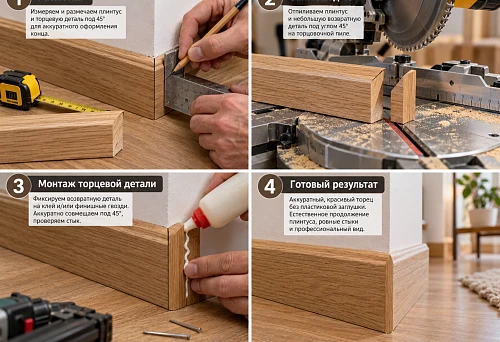
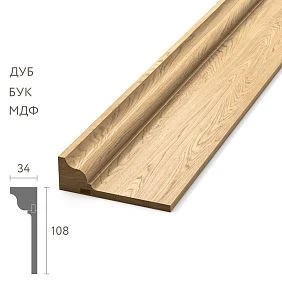
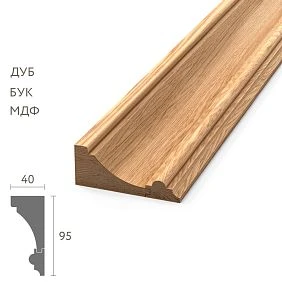
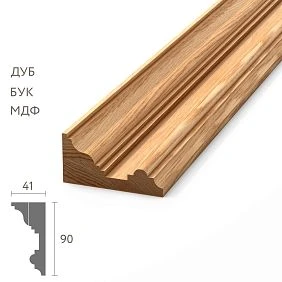
High with a classic profile creates a sense of solidity, reliability. — from 100 mm and above — is appropriate in rooms with ceilings of 2.8 m or higher. It works as a full architectural element: visually raises the ceiling, gives the room scale and completeness.
For a living room for sale or rent, this is a strong move. A guest enters, sees a properly designed lower zone, and the room immediately seems larger and more expensive.
When a calm narrow profile is better
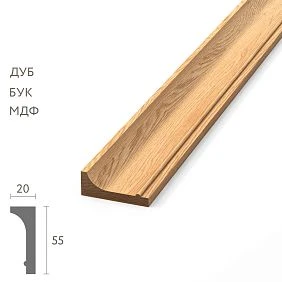
In small apartments — studios, one-bedrooms, small bedrooms — a tall baseboard can feel overwhelming. Here, the right choice is a smooth profile of 60–80 mm without excessive relief. It is neat, doesn't catch the eye, but still creates that finished lower contour that distinguishes a decent apartment from budget housing.
For rental apartments — a practical solid wood profile with a good lacquer coating. It will withstand wet cleaning, tenant turnover, and accidental contact without losing its appearance.
How a baseboard helps an apartment look finished
When Wooden baseboard matches the shade of door trims and flooring — the room gains unity. This is exactly what home stagers call a 'readable interior': a space where everything is in its place and everything responds to each other. Such an interior looks good in photos and inspires buyer trust.
Ceiling cornice: how to eliminate the feeling of a 'bare box'
Look at any apartment with quality renovation — and you will see a cornice. Look at an apartment that looks unfinished despite good renovation — and it won't be there. This is no coincidence.
Why design the junction of wall and ceiling
The right angle between wall and ceiling is a geometric boundary. In architecture, such boundaries are typically marked. A cornice marks the upper boundary of the wall. It says: here the wall ends, here the ceiling begins, and it's beautiful.
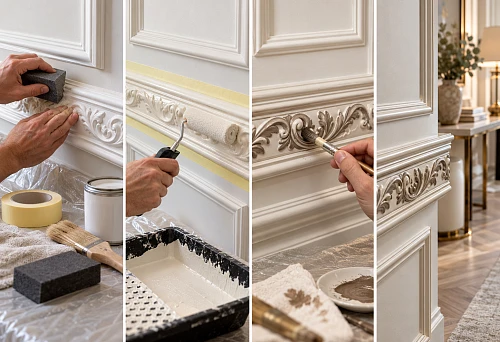
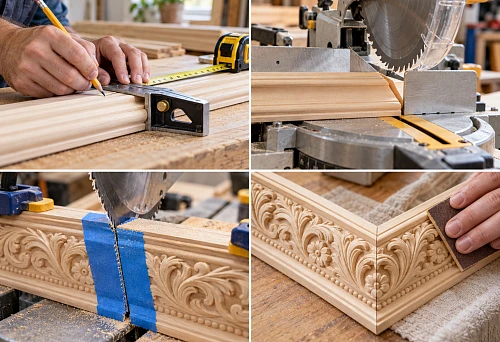
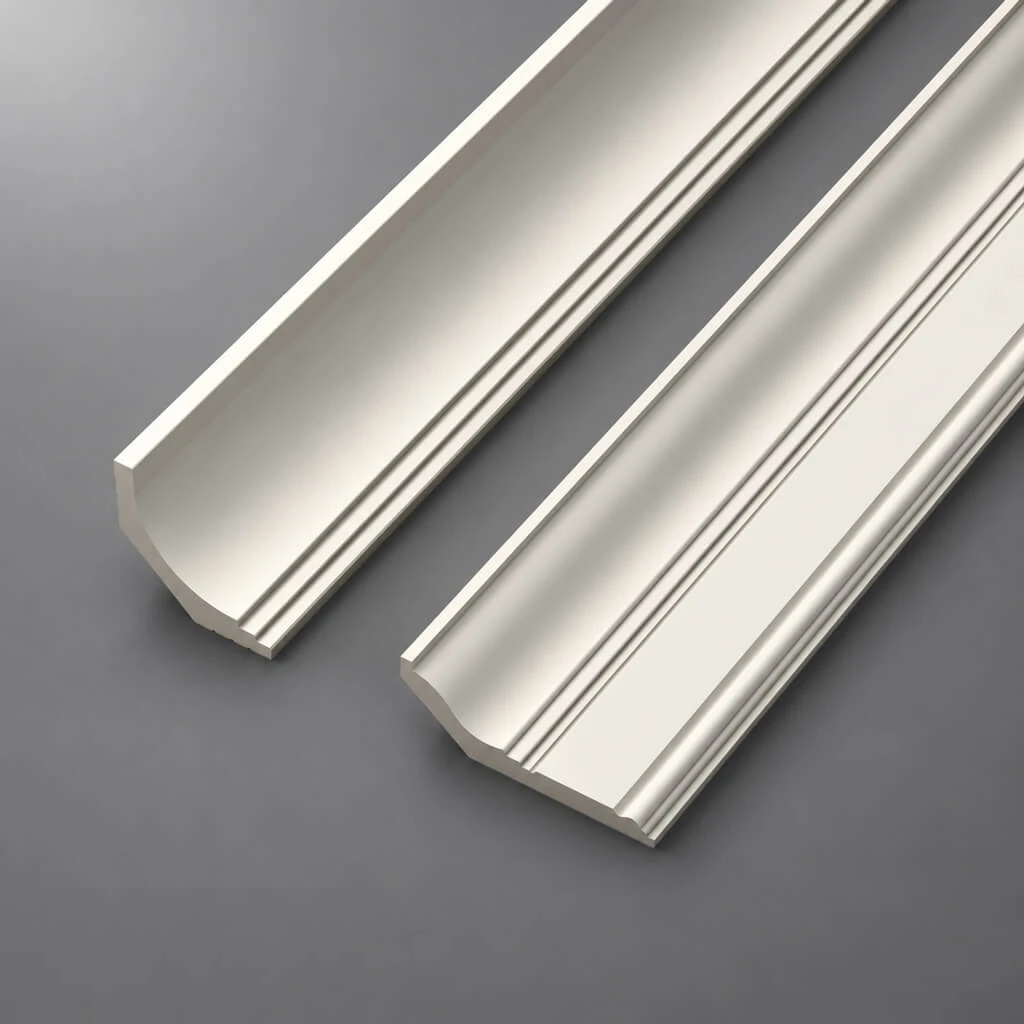
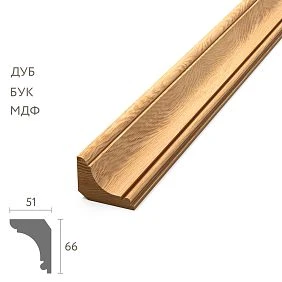
Ceiling cornice made of solid wood — this is a detail that, at a cost of several thousand rubles per room, delivers an effect that looks like an expensive renovation in photos. That's why home stagers love cornices: the 'price/visual result' ratio here is one of the best.
When a wooden cornice is needed
wooden cornice is appropriate where wooden elements are already present in the interior: wooden baseboard, slats on the wall, wooden handles or legs. Wood to wood — this is material unity that reads as a well-thought-out interior.
For a classic apartment — a cornice with a moderately complex profile, with one or two ledges. For a modern interior — a laconic angular profile without decoration. For a country house or apartments with high ceilings — a more expressive multi-tiered cornice.
How a cornice affects interior photos
The upper contour of the room is what a photographer captures in every wide-angle shot. If there is a cornice, it creates depth and scale. If not, the ceiling and wall merge, and the space looks flat. This is a technical detail of interior photography well known to realtors working with professional photographers.
Subtle or expressive profile: how not to miss the mark
For a small apartment and low ceilings — a cornice no higher than 60–80 mm. A large cornice with a 2.5 m ceiling will create a 'ceiling pressing down' effect. For an apartment with ceilings of 3 m and higher — a cornice from 100 mm, which allows for a richer profile.
Wooden slats: an accent wall for photos, showings, and listings
If the baseboard and cornice are the frame of the interior, then the slats on the wall are the painting inside that frame. One strong accent on one wall can completely change the perception of the room.
Why one accent wall is better than decor everywhere
This is the main rule of home staging when working with slats: do not put slats on all walls. One wall is the main accent. The rest are a neutral background. Then the space reads as consciously designed, not overloaded.
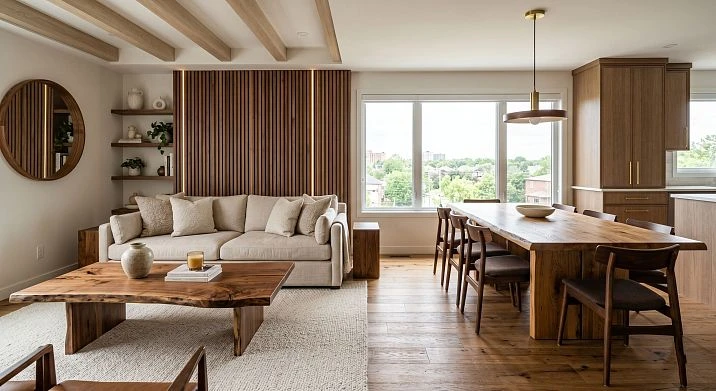
wooden planks on the wall they are especially effective in the context of home staging because they are photogenic. Vertical slats create depth in the frame, add texture, and break up the uniform plane of the wall. A professional photographer loves slats — they always look advantageous.
Reiki in the TV zone
The wall behind the TV is the first area any visitor to the living room looks at. Vertical decorative wooden planks here give an instant result: the wall ceases to be just a wall and becomes an architectural backdrop for all the furniture in the area. In photos, this works much better than wallpaper or paint.
Slats behind the sofa and at the headboard
The wall behind the sofa is the second most important accent in the living room. Here, the slats create a "backrest" for the entire space: the sofa begins to feel like part of a unified composition, rather than an object randomly placed against the wall.
In the bedroom, slats are placed at the head of the bed. This serves as a replacement for a headboard if the bed doesn't have one, or as an addition to it. Vertical slats in shades of warm oak or light beech at the headboard make the bedroom cozy and "sellable," even in small apartments.
Reiki in the hallway
The hallway is the first room a buyer or renter sees. If there's an accent wall with slats here, the first impression is already won. Vertical slats in a narrow corridor visually raise the ceiling and add depth that physically isn't there.
Furniture handles: the cheapest way to update a kitchen, wardrobe, and dresser
Here's a provocative thesis: replacing furniture handles in the kitchen is one of the few actions in home staging that delivers maximum visual results with minimal cost. And that's not an exaggeration.
Why handles completely change the perception of furniture
A five-year-old kitchen set with cheap plastic handles looks old. The same set with new wooden furniture handles solid wood handles looks updated and stylish. The set itself hasn't changed—the detail that is seen and touched every day has changed.
This works not only for the kitchen. A dresser in the bedroom, a wardrobe in the hallway, a TV stand—anywhere there is a facade and a handle, replacement yields noticeable results.
How to choose handles to match the apartment's interior
Rule one — unity. All Furniture Handles furniture in one room should be from the same series or at least from the same material. Different handles on different pieces of furniture create chaos that is immediately noticeable.
Rule two — connection with wooden elements. If the room has a light beech wood baseboard, the handles should be in the same tone or from a similar wood species. If the baseboard is dark oak, handles in a dark shade will support the system.
Uncoated handles: freedom of color
Wooden furniture handle uncoated handles are blanks for custom staining. This is not a semi-finished product — it's a tool. You paint the handle exactly in the shade you need: to match the doors, baseboard, or slats. The result is a perfect match that cannot be achieved with a ready-made coating.
For home staging, this is especially valuable: you can quickly align all wooden details of the apartment into one color system.
Large bracket or knob: what to choose for home staging
For the kitchen and wardrobe — a horizontal bracket handle 96–128 mm long. It is comfortable to grip and looks good on wide facades.
For small drawers of a chest, nightstand, or compact cabinets — a round or square knob handle. It is laconic, does not protrude from the plane, and gives furniture a neat look.
In the context of home staging, it is better to choose neutral shapes without excessive decor. The buyer should easily project themselves into this interior, rather than viewing details as too personal.
Legs and supports: how old furniture starts to look lighter
Furniture without legs presses on the floor. It looks heavy, bulky, disproportionate. Furniture on legs is light, airy, appropriate. This is not an aesthetic judgment — these are the laws of visual perception.
Visual lightness: why it matters in staging
When a buyer or renter enters a room, their gaze first assesses the volume of the space. Furniture standing directly on the floor visually 'eats up' the area. Furniture on legs 80 mm or higher opens up the space underneath — and the room appears larger.
furniture legs made of solid wood — this is a detail that is easy to install on existing furniture. Sofa, dresser, nightstand, console in the hallway — replacing legs takes an hour and requires no tools more complex than a screwdriver.
Legs for a nightstand: which ones are suitable
Legs for chests — the most popular request in this category, and the reason is clear: a TV stand, a nightstand in the bedroom, a nightstand in the hallway — this is furniture that is on display in most apartments. The optimal height for nightstand legs in the context of home staging is 80–120 mm. This is enough for the furniture to look light, but not so much that the nightstand seems unstable.
Shape — conical or straight, without unnecessary decoration. For a modern interior — conical legs with a slight bevel, they provide dynamism and lightness. For classic or neoclassical — turned legs with a grip.
Furniture legs without coating: tint to match the interior
furniture legs without coating — this is the same story as with handles without coating. You get the opportunity to precisely match the desired shade. This is especially important when the apartment has a wooden floor — the legs can be tinted close to its shade, and the furniture will 'fit' into the space organically.
Furniture support: when exactly it's needed
furniture leg — this is not the same as a leg. A support bears distributed load and is installed under heavy furniture: massive sofas, large dressers, heavy sideboards, work desks. It is wider, more stable, and designed for static weight.
For home staging, a support is especially appropriate when creating a dining area — the next section covers this.
Table base: when you need to quickly assemble a beautiful dining area
A dining table is an object around which an entire scene unfolds during a property showing. The buyer sees the table and mentally places their family around it. The renter looks at the table and thinks about breakfasts. It's not just furniture — it's a lifestyle in that apartment.
That's why the dining area in home staging requires special attention. And one of the most effective solutions here is the table base.
What is an apron and why it is more important than it seems
A table base is the supporting structure of a table: either a frame base on four legs, a central column, or an X-shaped cross. The stability of the entire structure and the visual image of the dining area depend on it.
Buy a pedestal made of solid wood and placing a beautiful tabletop on it — this is one of the best ways to quickly create a dining area 'from scratch' for an apartment for sale or rent. You get a ready-made solution that looks like custom furniture, but without the cost of individual production.
Table base for a dining table: how to choose for an apartment
Base for Dining Tables is chosen based on several factors.
Size: for a tabletop of 120×80 cm, a frame with four legs is sufficient. For a tabletop of 180×90 cm, a wider frame with a crossbar or additional support is needed.
Shape: for a round table — a central column base or a cross base. For a rectangular table — a frame. A round table in the kitchen-living room of a small apartment looks more advantageous: it does not overload the space and is easier to move around.
Style: for a modern apartment — a minimalist base with straight legs. For neoclassicism — with turned elements. For loft — with metal inserts in the joints.
Dining area for apartment photos: a few secrets
The dining area looks better in photos when the table is set — even symbolically. A few plates, a small vase, a tablecloth. But all this fades if the base itself the base for a table is unattractive or unstable. A good solid wood base is the foundation that works for you even without decor.
Wooden beam and layout: when an architectural accent is needed
There are apartments where baseboards, cornices, slats, and handles are a sufficient system for home staging. And there are spaces that need a stronger accent — an architectural element that makes the interior memorable.
Wooden beam: for which properties it is suitable
Wooden beam — this is an element that works in several scenarios.
A country house or dacha before sale. A beam on the ceiling of the living room or kitchen-dining room is an emotional anchor. A buyer of suburban housing seeks warmth, naturalness, and a sense of home. A wooden beam instantly creates this.
An apartment or condo in a new building with high ceilings. A space with ceilings of 3.2 m and higher is an opportunity to install a beam without the risk of lowering the space. One transverse beam above the transition between the kitchen and living room zones an open space without walls and costs fundamentally less than any other zoning.
An apartment with 'loft' pretensions. Currently, loft aesthetics are used not only in factory apartments. In any apartment with exposed brick or concrete elements, a wooden beam is organic and works for the image.
When a beam is unnecessary
A small apartment with ceilings of 2.5 m. Here, a beam will create a feeling of pressure and reduce the perceived volume. Not needed.
An apartment in a classic style without wooden accents. If everything else is white walls, neutral laminate, standard furniture, a beam will look foreign.
Wooden layout: neat lines where slats are not suitable
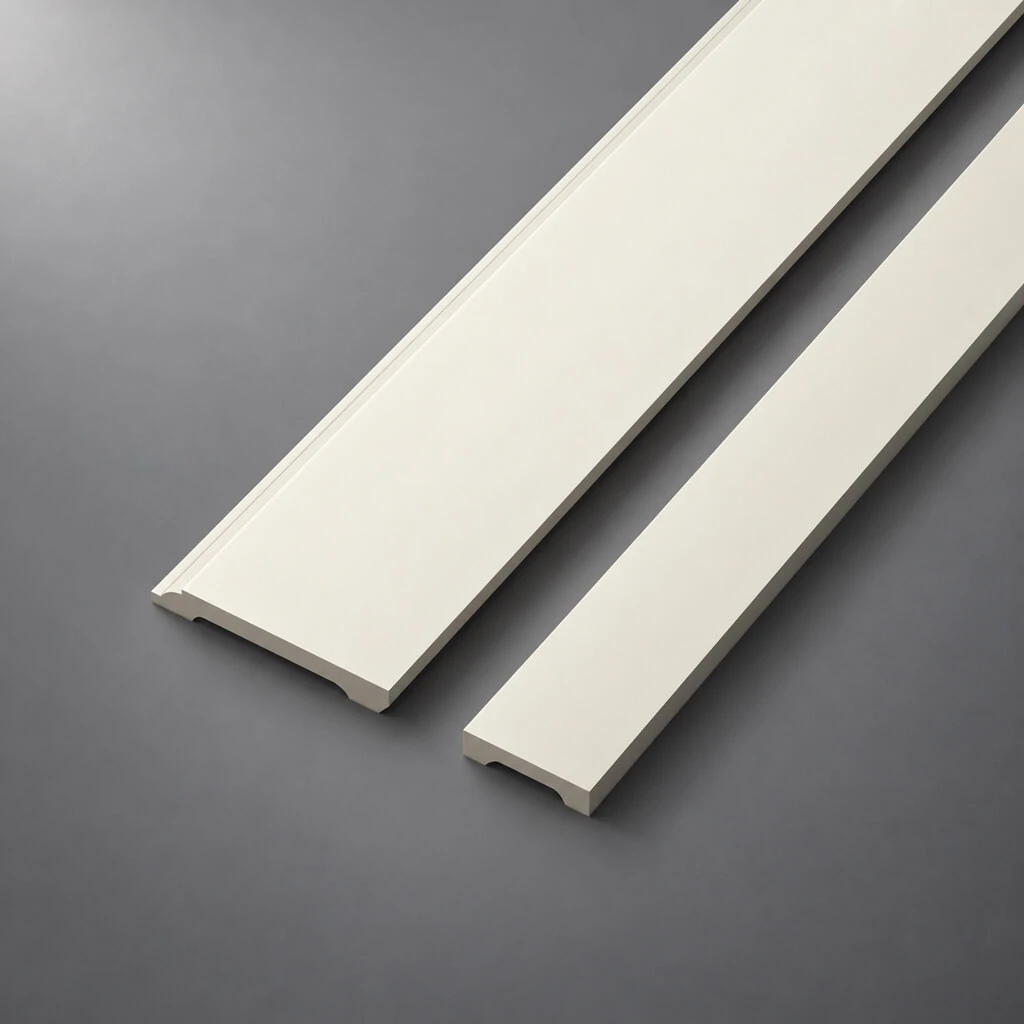
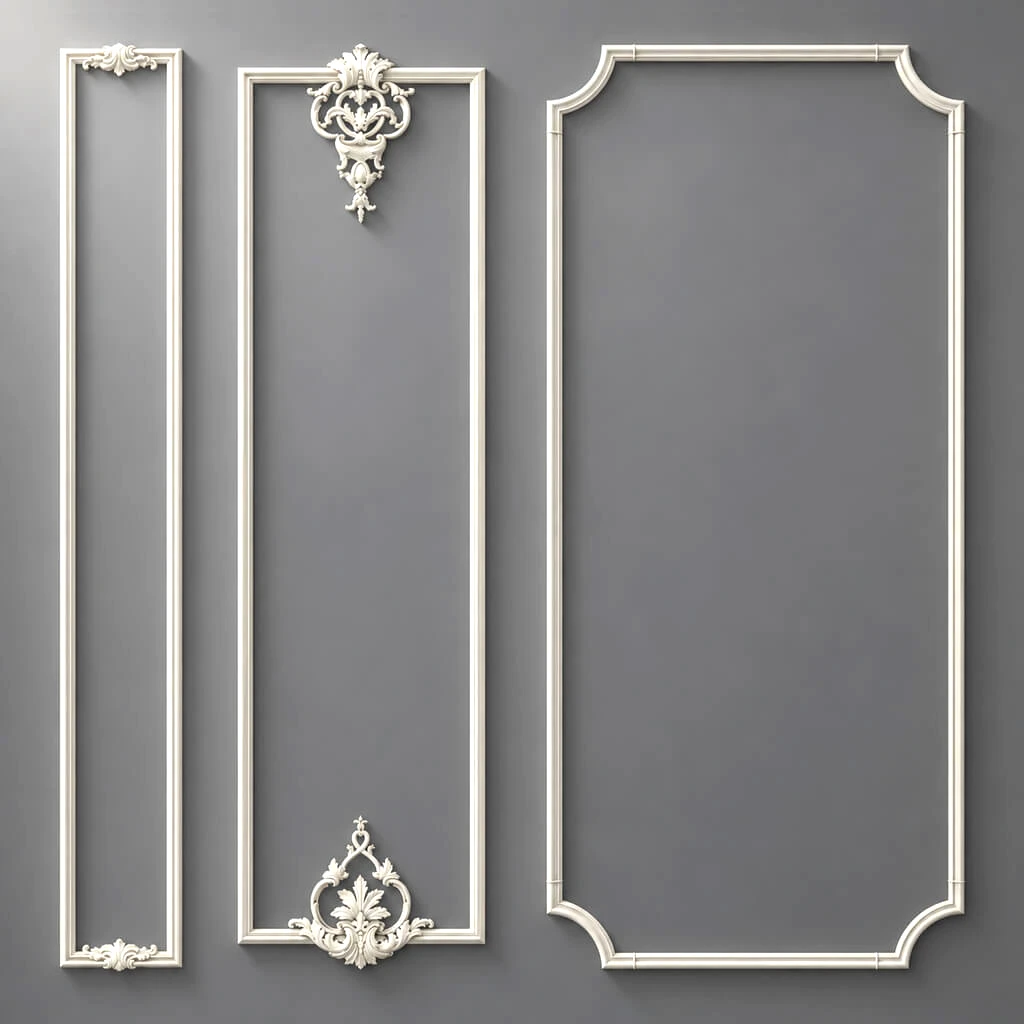
Wooden molding — these are thin flat planks from which rectangular frames are formed on the wall. They work where slats would create too voluminous a relief: in small rooms, bedrooms, around mirrors and openings.
For home staging, layout is a way to decorate a wall without significant investment. Frames made of wooden layout around a mirror in the hallway or behind the headboard of a bed give a feeling of expensive decor on a modest budget.
What to buy first if the budget is limited
A practical rating for those preparing an apartment for sale or rent and wanting to set priorities correctly.
1. Furniture handles. The fastest and most affordable effect. Replacing handles on the kitchen and dresser takes a few hours and costs significantly less than any other intervention. The result in the photo is immediate.
2. Wooden baseboard. If the apartment has cheap plastic baseboards, this is the first replacement. A wooden baseboard in one room (living room or kitchen-living room) changes the impression of the entire property.
3. Slats on one accent wall. One wall — the TV area or the wall behind the sofa. Wooden slats are installed without special tools, quickly, and provide a powerful photogenic effect.
4. Legs or supports for the cabinet and dresser. If the furniture stands without legs — install wooden ones. Fast, cheap, visually changes the perception completely.
5. Underframe for the dining area. If the apartment doesn't have a proper dining table — assemble one based on a ready-made underframe and tabletop. This is quick and creates a full-fledged dining area.
6. Ceiling cornice. If the budget allows — a cornice in the living room creates a sense of completeness and expensive renovation. With a low budget — this item can be postponed, but not excluded.
Home staging mistakes with wooden details
Home staging is an art of moderation. This is where most non-professional mistakes occur.
-
Too much decor at once. Slats everywhere, cornice, moldings, beam, layout — all in one apartment. The effect is the opposite: the apartment looks overloaded, not expensive.
-
Different wood shades without a system. Warm walnut in the living room, cold oak in the kitchen, cherry in the bedroom — that's three different apartments inside one. The buyer feels discomfort without even understanding why.
-
Expensive cornice with cheap handles. The reverse situation: invested in the upper contour, but the kitchen handles remained plastic. The eye always drops lower — and finds the weak spot there.
-
Slats without connection to furniture. The slats are installed, but the furniture doesn't rhyme with them. Neither in shade nor in style. As a result, the slats hang as a separate element, not part of a unified picture.
-
Baseboard bought after door installation. If the trim and baseboard are made of different materials and different shades — it's immediately visible. The rule is simple: buy the baseboard together with the trim or after they are already installed.
-
Massive elements in a small apartment. Wide cornice, thick slats, large beams in a studio — this is not a "rich interior", it's a reduction of space. The scale of decor should match the scale of the room.
-
The interior looks bad in photos. All changes are for the sake of the photo. If after home staging the room is beautiful in real life but unexpressive in the picture — the work is half done. Always check the result with a camera.
FAQ — answers to popular questions
Which details make an apartment look more expensive visually the fastest?
Furniture handles and wooden baseboard are the two elements with the best price-to-effect ratio in home staging. Handles change the perception of all furniture. The baseboard gathers the perimeter of each room into a single frame.
What to replace before selling an apartment: baseboard, handles, or lighting?
If the budget is limited — first handles, then baseboard. Lighting is the third priority, but it affects the perception of everything else: good lighting will multiply the effect of wooden details many times over.
Are wooden slats suitable for a rental apartment?
Yes, provided the final finish is done correctly. decorative wooden planks With a high-quality lacquer coating, they are resistant to wet cleaning, accidental touches, and tenant turnover. They require no special care.
Is it worth changing furniture handles before showing an apartment?
Yes, and it's one of the most cost-effective actions. New wooden handles on the kitchen set and dresser completely change the perception of the furniture — it starts to look updated and stylish without replacing the furniture itself.
Which baseboard to choose for a rental apartment?
Wooden baseboard Solid wood with a smooth profile and high-quality lacquer coating. Height — 70–100 mm. Without deep grooves — they collect dirt. The smooth surface is easy to clean and maintains its appearance through tenant changes.
What is better for a quick dining area: legs or a pedestal?
For a dining table — Base for Dining TablesA pedestal provides rigidity and stability that cannot be achieved with four separate legs for a large tabletop. Legs are for a lightweight cabinet or a small coffee table.
How not to overload an apartment with wooden decor before selling?
One accent rule per room. Living room — slats on one wall. Kitchen — new handles. Hallway — baseboard and console legs. Each room — one main move, everything else supports.
Which wooden elements are best to buy in one style?
Minimum system: baseboard, handles, legs. If you can expand — add slats and cornice. All elements must be from the same wood species or with the same tint. Solid Wood Items within the same manufacturer's line — the best guarantee of compatibility.
About the company STAVROS
All the wooden parts discussed in this article are produced by STAVROS — a Russian full-cycle manufacturer. Baseboards, cornices, slats, handles, legs, supports, under-tables, and beams made of solid oak, beech, pine, and other species — all in one catalog, with matched profiles and a unified tinting system.
STAVROS works with private buyers, designers, home stagers, and real estate agents. Here you can select a complete set of wooden parts for one apartment or an entire property — and be confident that the baseboard matches the handles, the slats match the legs, and the cornice matches the overall interior system.
If you are preparing an apartment for sale or rent and want a result, not just to spend a budget — start with the STAVROS catalog. Here the parts are not random. Here everything is a system.